Results by title
4127 books match the query 'Science' and 980 start with t
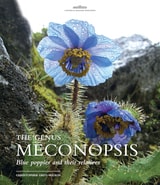
The Genus Meconopsis
Blue poppies and their relativesChristopher Grey-Wilson
Royal Botanic Gardens, Kew, 2015
The Genus Meconopsis is the first major revision of the genus since 1934 and the only monograph on the genus in existence. This fully revised text incorporates the discovery of nearly thirty new species with decades of new scholarship. The book is extensively illustrated with striking color photographs and botanical paintings. Species descriptions that include habitat and variation within the genus, as well as detailed distribution maps, make this ideal for botanists, horticulturalists, and gardeners alike.
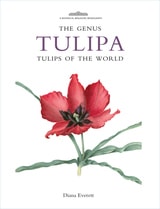
The Genus Tulipa
Tulips of the WorldDiana Everett
Royal Botanic Gardens, Kew, 2013
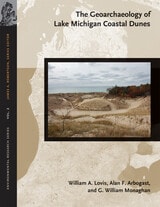
The Geoarchaeology of Lake Michigan Coastal Dunes
William A. Lovis, Alan F. Arbogast, and G. William Monaghan
Michigan State University Press, 2012
Complex sets of environmental factors have interacted over the past 5,000 years to affect how changes in climate, temperature, relative precipitation, and the levels of Lake Michigan influence the preservation of archaeological sites in coastal sand dunes along Lake Michigan. As a collaboration between earth scientists, archaeologists, and geoarchaeologists, this study draws on a wealth of research and multidisciplinary insights to explore the conditions necessary to safeguard ancient human settlements in these landscapes. A variety of contemporary and innovative techniques, including numerous dating methods and approaches, were employed to determine when and for how long sand dunes were active and when and for how long archaeological sites were occupied. Knowledge of dune processes and settlement patterns not only affects archaeological interpretations, but it is also consummately important to land planners responsible for managing heritage archaeological sites in the Lake Michigan coastal zone.
The Geographic Mosaic of Coevolution
John N. Thompson
University of Chicago Press, 2005
Picking up where his influential The Coevolutionary Process left off, John N. Thompsonsynthesizes the state of a rapidly developing science that integrates approaches from evolutionary ecology, population genetics, phylogeography, systematics, evolutionary biochemistry and physiology, and molecular biology. Using models, data, and hypotheses to develop a complete conceptual framework, Thompson also draws on examples from a wide range of taxa and environments, illustrating the expanding breadth and depth of research in coevolutionary biology.
The Geographical Imagination in America, 1880-1950
Susan Schulten
University of Chicago Press, 2001
The Geography of Manitoba
Its Land and its PeopleJohn Welsted
University of Manitoba Press, 1996
The Geography of Wisconsin
John A. Cross and Kazimierz J. Zaniewski
University of Wisconsin Press, 2022
- physical features: bedrock geology, glaciation, landforms, soils, climate, and vegetation
- cultural landscapes: population density, ethnic populations, demographics, and political affiliations
- economic activity: agriculture, forestry, mining, manufacturing, transportation, recreation, and tourism
The George Reserve Deer Herd
Population Ecology of a K-Selected SpeciesDale R. McCullough
University of Michigan Press, 1979

The Gerbil in Behavioral Investigations
Mechanisms of Territoriality and Olfactory CommunicationBy Del Thiessen and Pauline Yahr
University of Texas Press, 1977
In this comprehensive account of olfactory communication and territorial behavior in the Mongolian gerbil, Del Thiessen and PaulineYahr provide the first detailed study of the neurological and physiological mechanisms that control these basic functions. In addition to explaining the links between hormones, genes, olfactory cues, and territorial acts, they also offer a more general picture of gerbil behavior, as well as a brief look at other mammalian species that communicate social status by way of olfactory messages.
Territorial behavior, as defined by the authors, includes all acts that are restricted to a particular area and are crucial for successful reproduction. In the Mongolian gerbil, and probably in other mammals as well, territoriality is controlled by sex hormones acting on specific areas of the central nervous system. Hormones from the gonads apparently act in the brain by altering the genetic apparatus controlling biochemicals used in neural communication. Without these hormones, the animal is socially inert and unable to transmit genes to the next generation. The authors conclude from the results of over ten years of investigation that the most complex social interactions depend on the integrity of the hormone system and its constant tuning by olfactory stimuli.
The book incorporates a review of all previously known studies of gerbil behavior and representative data for many other scent-marking species. A stereotaxic brain atlas for the gerbil is a feature that will be especially helpful to other researchers. The book's eclectic nature should make it valuable to anyone concerned with territorial behavior, hormones and behavior, or brain processes, as well as to those who are specifically interested in the Mongolian gerbil.
The Gestation of German Biology
Philosophy and Physiology from Stahl to SchellingJohn H. Zammito
University of Chicago Press, 2017
In The Gestation of German Biology, historian of ideas John Zammito presents a different version of the emergence of the field, one that takes on both Foucault and Mayr and emphasizes the scientific progress throughout the eighteenth century that led to the recognition of the need for a special science. The embrace of the term biology around 1800, Zammito shows, was the culmination of a convergence between natural history and human physiology that led to the development of comparative physiology and morphology—the foundations of biology. Magisterial in scope, Zammito’s book offers nothing less than a revisionist history of the field, with which anyone interested in the origins of biology will have to contend.
The Global Pigeon
Colin Jerolmack
University of Chicago Press, 2013
The Golden Age of Botanical Art
Martyn Rix
University of Chicago Press, 2012
The Good Life in the Scientific Revolution
Descartes, Pascal, Leibniz, and the Cultivation of VirtueMatthew L. Jones
University of Chicago Press, 2006
Amid the unrest, dislocation, and uncertainty of seventeenth-century Europe, readers seeking consolation and assurance turned to philosophical and scientific books that offered ways of conquering fears and training the mind—guidance for living a good life.
The Good Life in the Scientific Revolution presents a triptych showing how three key early modern scientists, René Descartes, Blaise Pascal, and Gottfried Leibniz, envisioned their new work as useful for cultivating virtue and for pursuing a good life. Their scientific and philosophical innovations stemmed in part from their understanding of mathematics and science as cognitive and spiritual exercises that could create a truer mental and spiritual nobility. In portraying the rich contexts surrounding Descartes’ geometry, Pascal’s arithmetical triangle, and Leibniz’s calculus, Matthew L. Jones argues that this drive for moral therapeutics guided important developments of early modern philosophy and the Scientific Revolution.
The Great Ages of Discovery
How Western Civilization Learned About a Wider WorldStephen J. Pyne
University of Arizona Press, 2021
Historian and MacArthur Fellow Stephen J. Pyne identifies three great ages of discovery in his fascinating new book. The first age of discovery ranged from the early 15th to the early 18th century, sketched out the contours of the globe, aligned with the Renaissance, and had for its grandest expression the circumnavigation of the world ocean. The second age launched in the latter half of the 18th century, spanning into the early 20th century, carrying the Enlightenment along with it, pairing especially with settler societies, and had as its prize achievement the crossing of a continent. The third age began after World War II, and, pivoting from Antarctica, pushed into the deep oceans and interplanetary space. Its grand gesture is Voyager’s passage across the solar system. Each age had in common a galvanic rivalry: Spain and Portugal in the first age, Britain and France—followed by others—in the second, and the USSR and USA in the third.
With a deep and passionate knowledge of the history of Western exploration, Pyne takes us on a journey across hundreds of years of geographic trekking. The Great Ages of Discovery is an interpretive companion to what became Western civilization’s quest narrative, with the triumphs and tragedies that grand journey brought, the legacies of which are still very much with us.
The Great Basin Seafloor
Exploring the Ancient Oceans of the Desert WestFrank DeCourten
University of Utah Press, 2022
Written for a nontechnical audience, this book interprets the rock record left by more than 500 million years of oceanic activity, when mud and sand accumulated and solidified to produce today’s Great Basin across parts of modern Utah, Nevada, and California. DeCourten deciphers clues within exposed slopes and canyons to reconstruct the vanished seafloor and its volcanic events and examines fossils to reveal once-thriving ancient marine communities. Supplemental material is available online to serve as a field guide for readers wishing to explore this ancient ocean themselves as they travel through the region.
The Great Derangement
Climate Change and the UnthinkableAmitav Ghosh
University of Chicago Press, 2016
The extreme nature of today’s climate events, Ghosh asserts, make them peculiarly resistant to contemporary modes of thinking and imagining. This is particularly true of serious literary fiction: hundred-year storms and freakish tornadoes simply feel too improbable for the novel; they are automatically consigned to other genres. In the writing of history, too, the climate crisis has sometimes led to gross simplifications; Ghosh shows that the history of the carbon economy is a tangled global story with many contradictory and counterintuitive elements.
Ghosh ends by suggesting that politics, much like literature, has become a matter of personal moral reckoning rather than an arena of collective action. But to limit fiction and politics to individual moral adventure comes at a great cost. The climate crisis asks us to imagine other forms of human existence—a task to which fiction, Ghosh argues, is the best suited of all cultural forms. His book serves as a great writer’s summons to confront the most urgent task of our time.
The Great Devonian Controversy
The Shaping of Scientific Knowledge among Gentlemanly SpecialistsMartin J. S. Rudwick
University of Chicago Press, 1985
"After a superficial first glance, most readers of good will and broad knowledge might dismiss [this book] as being too much about too little. They would be making one of the biggest mistakes in their intellectual lives. . . . [It] could become one of our century's key documents in understanding science and its history."—Stephen Jay Gould, New York Review of Books
"Surely one of the most important studies in the history of science of recent years, and arguably the best work to date in the history of geology."—David R. Oldroyd, Science
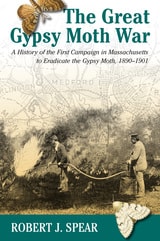
The Great Gypsy Moth War
A History of the First Campaign in Massachusetts to Eradicate the Gypsy Moth, 1890-1901Robert J. Spear
University of Massachusetts Press, 2005
During the Civil War, when the supply of cotton from southern fields was disrupted, the owners of northern textile mills looked elsewhere for raw fiber. One source was silk. Among those experimenting with silkworm production was a Frenchman named Etienne Leopold Trouvelot, who had settled outside of Boston. It was Trouvelot who imported the gypsy moths and inadvertently allowed them to escape. Soon the invasion was on and a counteroffensive was required.
Spear reveals the turbulent undercurrents in the eradication campaign when the enthusiasm of the entomologists in charge turned into desperation upon the discovery that their alien adversary was much tougher than they thought. Fighting a war they could not win and dared not lose, the leaders of the campaign resorted to political maneuvering, cheap tricks, and outright misrepresentation to maintain a façade of success, urging the Commonwealth to continue funding the war long after any chance of victory had faded.
More than just reviewing the important events of this historic episode, Spear tells the story in an engaging way, often through the first-hand accounts of those who were directly involved. Much of what Spear has written is new, the recounting is lively, and the information he presents shows that almost all of the previous beliefs about the campaign to eradicate the gypsy moths are myths. In the process, he also traces the rise of modern economic entomology and the birth of the pesticide industry.
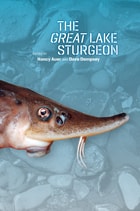
The Great Lake Sturgeon
Nancy Auer and Dave Dempsey
Michigan State University Press, 2013
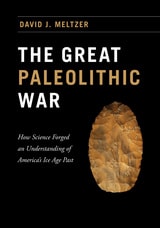
The Great Paleolithic War
How Science Forged an Understanding of America's Ice Age PastDavid J. Meltzer
University of Chicago Press, 2015
In The Great Paleolithic War, David J. Meltzer tells the story of a scientific quest that set off one of the longest-running feuds in the history of American anthropology, one so vicious at times that anthropologists were deliberately frightened away from investigating potential sites. Through his book, we come to understand how and why this controversy developed and stubbornly persisted for as long as it did; and how, in the process, it revolutionized American archaeology.
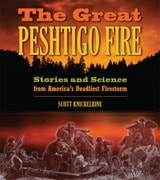
The Great Peshtigo Fire
Stories and Science from America’s Deadliest FireScott Knickelbine
Wisconsin Historical Society Press, 2012
On the night of October 8, 1871, a whirlwind of fire swept through northeastern Wisconsin, destroying the bustling frontier town of Peshtigo. Trees, buildings, and people burst into flames. Metal melted. Sand turned into glass. People thought the end of the world had come. When the “tornado of fire” was over, 2,500 people were dead, and Peshtigo was nothing but a smoking ruin. It was the deadliest wildfire in U.S. history.
The Great Peshtigo Fire: Stories and Science from America’s Deadliest Firestorm explores the history, science, and legacy of the 1871 Peshtigo Fire at a fourth-grade reading level. Readers will learn about the history of settlement, agriculture, and forestry in 19th-century Wisconsin. This illuminating text covers a diverse range of topics that will enrich the reader’s understanding of the Peshtigo Fire, including the building and land-use practices of the time that made the area ripe for such a fire, the weather patterns that fostered widespread fires throughout the upper Midwest in the summer and fall of 1871, and exciting first-person accounts that vividly bring the `victims’ stories to life. Connections made between the Peshtigo Fire and the history of fire prevention in the United States encourage critical thinking about issues that remain controversial to this day, such as planned burns and housing development restrictions near forested areas. The Great Peshtigo Fire: Stories and Science from America’s Deadliest Firestorm will inform and captivate its readers as it journeys through the horrifying history of the Peshtigo Fire.

The Great Plains
A Fire SurveyStephen J. Pyne
University of Arizona Press, 2017
Early descriptions of the Great Plains often focus on a vast, grassy expanse that was either burnt or burning. The scene continued to burn until the land was plowed under or grazed away and broken by innumerable roads and towns. Yet, where the original landscape has persisted, so has fire, and where people have sought to restore something of that original setting, they have had to reinstate fire. This has required the persistence or creation of a fire culture, which in turn inspired schools of science and art that make the Great Plains today a regional hearth for American fire.
Volume 5 of To the Last Smoke introduces a region that once lay at the geographic heart of American fire, and today promises to reclaim something of that heritage. After all these years, the Great Plains continue to bear witness to how fires can shape contemporary life, and vice versa. In this collection of essays, Stephen J. Pyne explores how this once most regularly and widely burned province of North America, composed of various subregions and peoples, has been shaped by the flames contained within it and what fire, both tame and feral, might mean for the future of its landscapes.
Included in this volume:
- How wildland and rural fire have changed from the 19th century to the 21st century
- How fire is managed in the nation’s historic tallgrass prairies, from Texas to South Dakota, from Illinois to Nebraska
- How fire connects with other themes of Great Plains life and culture
- How and why Texas has returned to the national narrative of landscape fire
The Greatest Scientific Gamble
A Story of Impossible Odds, Rival Scientists, and the Atomic BombMichael Joseloff
Michigan State University Press, 2026
During World War II, a group of physicists who had once been close friends found themselves on opposite sides of a deadly race. German scientist Werner Heisenberg and American physicists Robert Oppenheimer, Enrico Fermi, and Sam Goudsmit were all leading figures in nuclear research. But after the attack on Pearl Harbor, their shared passion for science turned into a high-stakes competition to build the world’s first atomic bomb—a weapon that could determine the outcome of the war. Heisenberg had a two-year head start, and the possibility that Nazi Germany might beat the Allies to the bomb terrified American scientists. The Manhattan Project, led by U.S. Army General Leslie Groves, became a massive effort to catch up. Fear of Heisenberg haunted Manhattan Project scientists. At one point, Groves even approved plans to bomb Heisenberg’s lab and assassinate him to stop Germany’s progress. Meanwhile, Sam Goudsmit led a secret military unit tasked with tracking down Heisenberg and uncovering the truth about the Nazi nuclear program. What they found would surprise everyone. The Greatest Scientific Gamble tells the dramatic and little-known story of how personal relationships, wartime fear, and scientific ambition collided in the race to unlock the power of the atom.

The Green Archipelago
Forestry in Preindustrial JapanConrad Totman
Ohio University Press, 1998
This inaugural volume in the Ohio University Press Series in Ecology and History is the paperback edition of Conrad Totman’s widely acclaimed study of Japan’s environmental policies over the centuries.
Professor Totman raises the critical question of how Japan’s steeply mountainous woodland has remained biologically healthy despite centuries of intensive exploitation by a dense human population that has always been dependent on wood and other forest products. Mindful that in global terms this has been a rare outcome, and one that bears directly on Japan’s recent experience as an affluent, industrial society, Totman examines the causes, forms, and effects of forest use and management in Japan during the millennium to 1870. He focuses mainly on the centuries after 1600 when the Japanese found themselves driven by their own excesses into programs of woodland protection and regenerative forestry.
The Green Revolution in the Global South
Science, Politics, and Unintended ConsequencesR. Douglas Hurt
University of Alabama Press, 2020
The Green Revolution was devised to increase agricultural production worldwide, particularly in the developing world. Agriculturalists employed anhydrous ammonia and other fertilizing agents, mechanical tilling, hybridized seeds, pesticides, herbicides, and a multitude of other techniques to increase yields and feed a mushrooming human population that would otherwise suffer starvation as the world’s food supply dwindled.
In The Green Revolution in the Global South: Science, Politics, and Unintended Consequences, R. Douglas Hurt demonstrates that the Green Revolution did not turn out as neatly as scientists predicted. When its methods and products were imported to places like Indonesia and Nigeria, or even replicated indigenously, the result was a tumultuous impact on a society’s functioning. A range of factors—including cultural practices, ethnic and religious barriers, cost and availability of new technologies, climate, rainfall and aridity, soil quality, the scale of landholdings, political policies and opportunism, the rise of industrial farms, civil unrest, indigenous diseases, and corruption—entered into the Green Revolution calculus, producing a series of unintended consequences that varied from place to place. As the Green Revolution played out over time, these consequences rippled throughout societies, affecting environments, economies, political structures, and countless human lives.
Analyzing change over time, almost decade by decade, Hurt shows that the Green Revolution was driven by the state as well as science. Rather than acknowledge the vast problems with the Green Revolution or explore other models, Hurt argues, scientists and political leaders doubled down and repeated the same missteps in the name of humanity and food security. In tracing the permutations of modern science’s impact on international agricultural systems, Hurt documents how, beyond increasing yields, the Green Revolution affected social orders, politics, and lifestyles in every place its methods were applied—usually far more than once.

The Guitar
Tracing the Grain Back to the TreeChris Gibson and Andrew Warren
University of Chicago Press, 2021
Guitars inspire cult-like devotion: an aficionado can tell you precisely when and where their favorite instrument was made, the wood it is made from, and that wood’s unique effect on the instrument’s sound. In The Guitar, Chris Gibson and Andrew Warren follow that fascination around the globe as they trace guitars all the way back to the tree. The authors take us to guitar factories, port cities, log booms, remote sawmills, Indigenous lands, and distant rainforests, on a quest for behind-the-scenes stories and insights into how guitars are made, where the much-cherished guitar timbers ultimately come from, and the people and skills that craft those timbers along the way.
Gibson and Warren interview hundreds of people to give us a first-hand account of the ins and outs of production methods, timber milling, and forest custodianship in diverse corners of the world, including the Pacific Northwest, Madagascar, Spain, Brazil, Germany, Japan, China, Hawaii, and Australia. They unlock surprising insights into longer arcs of world history: on the human exploitation of nature, colonialism, industrial capitalism, cultural tensions, and seismic upheavals. But the authors also strike a hopeful note, offering a parable of wider resonance—of the incredible but underappreciated skill and care that goes into growing forests and felling trees, milling timber, and making enchanting musical instruments, set against the human tendency to reform our use (and abuse) of natural resources only when it may be too late. The Guitar promises to resonate with anyone who has ever fallen in love with a guitar.
The Gulf of California
Biodiversity and ConservationRichard C. Brusca
University of Arizona Press, 2010
Few places in the world can claim such a diversity of species as the Gulf of California (Sea of Cortez), with its 6,000 recorded animal species estimated to be half the number actually living in its waters. So rich are the Gulf's water that over a half-million tons of seafood are taken from them annually—and this figure does not count the wasted by-catch, which would triple or quadruple that tonnage. This timely book provides a benchmark for understanding the Gulf's extraordinary diversity, how it is threatened, and in what ways it is—or should be—protected.
In spite of its dazzling richness, most of the Gulf's coastline now harbors but a pale shadow of the diversity that existed just a half-century ago. Recommendations based on sound, careful science must guide Mexico in moving forward to protect the Gulf of California.
This edited volume contains contributions by twenty-four Gulf of California experts, from both sides of the U.S.-Mexico border. From the origins of the Gulf to its physical and chemical characteristics, from urgently needed conservation alternatives for fisheries and the entire Gulf ecosystem to information about its invertebrates, fishes, cetaceans, and sea turtles, this thought-provoking book provides new insights and clear paths to achieve sustainable use solidly based on robust science. The interdisciplinary, international cooperation involved in creating this much-needed collection provides a model for achieving success in answering critically important questions about a precious but rapidly disappearing ecological treasure.
The Halle Orphanage as Scientific Community
Observation, Eclecticism, and Pietism in the Early EnlightenmentKelly Joan Whitmer
University of Chicago Press, 2015
The Halle Orphanage as Scientific Community calls into question a long-standing tendency to view German Pietists as anti-science and anti-Enlightenment, arguing that these tendencies have drawn attention away from what was actually going on inside the orphanage. Whitmer shows how the orphanage’s identity as a scientific community hinged on its promotion of philosophical eclecticism as a tool for assimilating perspectives and observations and working to perfect one’s abilities to observe methodically. Because of the link between eclecticism and observation, Whitmer reveals, those teaching and training in Halle’s Orphanage contributed to the transformation of scientific observation and its related activities in this period.
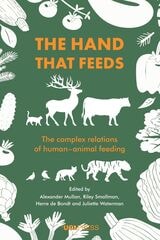
The Hand that Feeds
The Complex Relations of Human-Animal FeedingEdited by Alexander Mullan, Riley Smallman, Herre de Bondt, and Juliette Waterman
University College London, 2025
Feeding animals is never a neutral act—whether in zoos, farms, backyards, or city streets, it shapes relationships, environments, and even entire ecosystems. The Hand that Feeds takes a deeper look into the complex and often-overlooked dynamics of human-animal feeding, moving beyond its utilitarian functions to explore the emotional, ethical, and ecological entanglements it creates. Through case studies spanning history to the present, this work discloses how feeding alters animal behaviors and reflects broader cultural and moral values. Why do we nurture some animals while exterminating others? How do feeding practices blur the lines between wild and domesticated life? What happens when acts of care lead to unintended harm?
Addressing everything from garden bird feeders to contested urban wildlife policies, the authors illuminate the deep significance of food in human-animal interactions. An invigorating read for scholars in environmental studies, anthropology, and history, The Hand that Feeds challenges us to reconsider the act of feeding as a powerful force in shaping multispecies worlds.

The Healthiest City
Milwaukee and the Politics of Health ReformJudith W. Leavitt
University of Wisconsin Press, 1996
Between 1850 and 1900, Milwaukee’s rapid population growth also gave rise to high death rates, infectious diseases, crowded housing, filthy streets, inadequate water supplies, and incredible stench. The Healthiest City shows how a coalition of reform groups brought about community education and municipal action to achieve for Milwaukee the title of “the healthiest city” by the 1930s. This highly praised book reminds us that cutting funds and regulations for preserving public health results in inconvenience, illness, and even death.
“A major work. . . . Leavitt focuses on three illustrative issues—smallpox, garbage, and milk, representing the larger areas of infectious disease, sanitation, and food control.”—Norman Gevitz, Journal of the American Medical Association
“Leavitt’s research provides additional evidence . . . that improvements in sanitation, living conditions, and diet contributed more to the overall decline in mortality rates than advances in medical practice. . . . A solid contribution to the history of urban reform politics and public health.”—Jo Ann Carrigan, Journal of American History
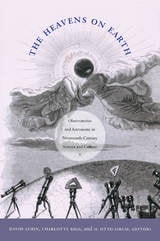
The Heavens on Earth
Observatories and Astronomy in Nineteenth-Century Science and CultureDavid Aubin, Charlotte Bigg, and H. Otto Sibum, eds.
Duke University Press, 2010
The contributors examine “observatory techniques” developed and used not only in connection with observatories but also by instrument makers in their workshops, navy officers on ships, civil engineers in the field, and many others. These techniques included the calibration and coordination of precision instruments for making observations and taking measurements; methods of data acquisition and tabulation; and the production of maps, drawings, and photographs, as well as numerical, textual, and visual representations of the heavens and the earth. They also encompassed the social management of personnel within observatories, the coordination of international scientific collaborations, and interactions with dignitaries and the public. The state observatory occupied a particularly privileged place in the life of the city. With their imposing architecture and ancient traditions, state observatories served representative purposes for their patrons, whether as symbols of a monarch’s enlightened power, a nation’s industrial and scientific excellence, or republican progressive values. Focusing on observatory techniques in settings from Berlin, London, Paris, and Rome to Australia, Russia, Thailand, and the United States, The Heavens on Earth is a major contribution to the history of science.
Contributors: David Aubin, Charlotte Bigg, Guy Boistel, Theresa Levitt, Massimo Mazzotti, Ole Molvig, Simon Schaffer, Martina Schiavon , H. Otto Sibum, Richard Staley, John Tresch, Simon Werrett, Sven Widmalm
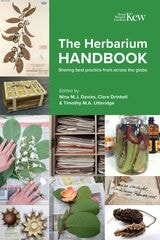
The Herbarium Handbook
Edited by Nina M. J. Davies, Clare Drinkell, and Timothy M. A. Utteridge
Royal Botanic Gardens, Kew, 2023
The Herbarium Handbook has been an important reference for herbarium collections care and management since it was first published in 1989. Based on standard herbarium practices and personal experience from experts at the Royal Botanic Gardens, Kew, the book also draws on examples from partners and collaborators around the world, making it accessible and adaptable for all herbarium practitioners. The book covers everything from creating herbarium collections to preparing and caring for specimens, managing a herbarium building, and public engagement and outreach. It is the essential reference for anyone working in this field.
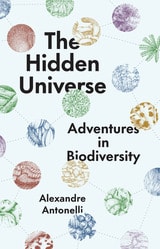
The Hidden Universe
Adventures in BiodiversityAlexandre Antonelli
University of Chicago Press, 2022
We are now living in an environmental emergency. As climate change, habitat loss, and other threats have placed almost one-fifth of all species on Earth at risk of extinction in the coming decades, a deeper understanding of biodiversity has never been more important. Biodiversity encompasses the rich variety of all life on Earth—the building blocks of life that provide invaluable sources of food, medicine, clothing, building materials, and more.
Marking the arrival of a bold new voice in popular science, The Hidden Universe shows readers what’s at stake in the fight to protect and restore biodiversity, but also what can and should be done now to protect our planet and ourselves for the future. As director of science at one of the world’s largest research organizations in plant and fungal sciences, Brazilian-born scientist Alexandre Antonelli is ideally suited to reveal the wonders of biodiversity at a genetic, species, and ecosystem level—what biodiversity is, how it works, and why it is the most important tool in our battle against climate change. Antonelli offers recommendations for large-scale political changes, as well as smaller, practical steps that readers can implement in their own lives and homes. With Antonelli as our guide, The Hidden Universe helps us imagine a future where biodiversity is not just preserved but cherished.
The Highlands Controversy
Constructing Geological Knowledge through Fieldwork in Nineteenth-Century BritainDavid R. Oldroyd
University of Chicago Press, 1990
Oldroyd uses archival material and his own extensive reconstruction of the nineteenth-century fieldwork in a case study showing how detailed maps and sections made it possible to understand the exceptionally complex geological structure of the Highlands
An invaluable addition to the history of geology, The Highlands Controversy also makes important contributions to our understanding of the social and conceptual processes of scientific work, especially in times of heated dispute.
The History of Cartography, Volume 3 (Replacement Volume)
Cartography in the European Renaissance, Part 1Edited by David Woodward
University of Chicago Press, 2007
Cartography in the European Renaissance treats the period from 1450 to 1650, long considered the most important in the history of European mapping. This period witnessed a flowering in the production of maps comparable to that in the fields of literature and fine arts. Scientific advances, appropriations of classical mapping techniques, burgeoning trade routes—all such massive changes drove an explosion in the making and using of maps. While this volume presents detailed histories of mapping in such well-documented regions as Italy and Spain, it also breaks significant new ground by treating Renaissance Europe in its most expansive geographical sense, giving careful attention to often-neglected regions like Scandinavia, East-Central Europe, and Russia, and by providing innovative interpretive essays on the technological, scientific, cultural, and social aspects of cartography.
Lavishly illustrated with more than a thousand maps, many in color, the two volumes of Cartography in the European Renaissance will be the unsurpassable standard in its field, both defining it and propelling it forward.
The History of Cartography, Volume 3 (Replacement Volume)
Cartography in the European Renaissance, Part 2Edited by David Woodward
University of Chicago Press, 2007
Cartography in the European Renaissance treats the period from 1450 to 1650, long considered the most important in the history of European mapping. This period witnessed a flowering in the production of maps comparable to that in the fields of literature and fine arts. Scientific advances, appropriations of classical mapping techniques, burgeoning trade routes—all such massive changes drove an explosion in the making and using of maps. While this volume presents detailed histories of mapping in such well-documented regions as Italy and Spain, it also breaks significant new ground by treating Renaissance Europe in its most expansive geographical sense, giving careful attention to often-neglected regions like Scandinavia, East-Central Europe, and Russia, and by providing innovative interpretive essays on the technological, scientific, cultural, and social aspects of cartography.
Lavishly illustrated with more than a thousand maps, many in color, the two volumes of Cartography in the European Renaissance will be the unsurpassable standard in its field, both defining it and propelling it forward.
The History of Cartography, Volume Four
Cartography in the European EnlightenmentEdited by Matthew H. Edney and Mary Sponberg Pedley
University of Chicago Press, 2020
The social and intellectual changes that swept Enlightenment Europe also transformed many of its mapmaking practices. A new emphasis on geometric principles gave rise to improved tools for measuring and mapping the world, even as large-scale cartographic projects became possible under the aegis of powerful states. Yet older mapping practices persisted: Enlightenment cartography encompassed a wide variety of processes for making, circulating, and using maps of different types. The volume’s more than four hundred encyclopedic articles explore the era’s mapping, covering topics both detailed—such as geodetic surveying, thematic mapping, and map collecting—and broad, such as women and cartography, cartography and the economy, and the art and design of maps. Copious bibliographical references and nearly one thousand full-color illustrations complement the detailed entries.
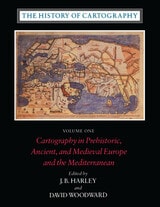
The History of Cartography, Volume One
Cartography in Prehistoric, Ancient, and Medieval Europe and the MediterraneanEdited by J. B. Harley and David Woodward
University of Chicago Press, 1987
Volume One addresses the prehistorical and historical mapping traditions of premodern Europe and the Mediterranean world. A substantial introductory essay surveys the historiography and theoretical development of the history of cartography and situates the work of the multi-volume series within this scholarly tradition. Cartographic themes include an emphasis on the spatial-cognitive abilities of Europe's prehistoric peoples and their transmission of cartographic concepts through media such as rock art; the emphasis on mensuration, land surveys, and architectural plans in the cartography of Ancient Egypt and the Near East; the emergence of both theoretical and practical cartographic knowledge in the Greco-Roman world; and the parallel existence of diverse mapping traditions (mappaemundi, portolan charts, local and regional cartography) in the Medieval period.
Throughout the volume, a commitment to include cosmographical and celestial maps underscores the inclusive definition of "map" and sets the tone for the breadth of scholarship found in later volumes of the series.
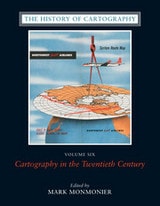
The History of Cartography, Volume Six
Cartography in the Twentieth CenturyEdited by Mark Monmonier
University of Chicago Press, 2015
The twentieth century is a pivotal period in map history. The transition from paper to digital formats led to previously unimaginable dynamic and interactive maps. Geographic information systems radically altered cartographic institutions and reduced the skill required to create maps. Satellite positioning and mobile communications revolutionized wayfinding. Mapping evolved as an important tool for coping with complexity, organizing knowledge, and influencing public opinion in all parts of the globe and at all levels of society. Volume 6 covers these changes comprehensively, while thoroughly demonstrating the far-reaching effects of maps on science, technology, and society—and vice versa.
The lavishly produced volume includes more than five hundred articles accompanied by more than a thousand images. Hundreds of expert contributors provide both original research, often based on their own participation in the developments they describe, and interpretations of larger trends in cartography. Designed for use by both scholars and the general public, this definitive volume is a reference work of first resort for all who study and love maps.
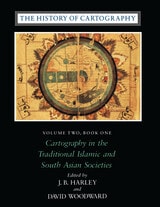
The History of Cartography, Volume Two, Book One
Cartography in the Traditional Islamic and South Asian SocietiesEdited by J. B. Harley and David Woodward
University of Chicago Press, 1992
"[The six-volume set] is certain to be the standard reference for all subsequent scholarship. The editors . . . have assembled and analyzed a vast collection of knowledge. . . . If the first volume is an indication, the complete set will be comprehensive and judicious." —John Noble Wilford, New York Times Book Review
"As well as enlarging the mind and lifting the spirits through the sheer magnitude of its endeavor, the collection delights the senses. The illustrations are exquisite: browsing fingers will instinctively alight on the sheaf of maps reproduced on stock slightly thicker than that of the text. The maps are so beguiling in the tantalizing glimpses they offer of other, seemingly incomprehensible, worlds, that the sight of them will stir the connoisseur in even the most-guarded scholar." —Ronald Rees, Geographical Review
"The corpus it brings to light, along with the extensive references, bibliography, and exhaustive appendices containing valuable comments about many of the pieces discussed, together make this book an important resource for the scholar."—Robert Provin, Professional Geographer
"This volume is a landmark of new research and will certainly contribute to further discoveries, translations, interpretations, inventories, more precise dating and the construction of stemmata." —Christian Jacob, Cartographica
"In seeking to characterize the cartography of premodern Islamic and south Asian societies, the editors offer the image of an archipelago of cartographically conscious islands in a silent sea. The research potential which they have revealed is clearly vast and underappreciated, with many islands still to be discovered or enlarged. This important book, does more, therefore, than plug a huge gap in cartographic historiography. It provides the foundation for crosscultural cartographic research in two major world regions."-Jeffrey Stone, Ecumene
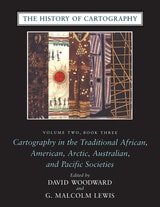
The History of Cartography, Volume Two, Book Three
Cartography in the Traditional African, American, Arctic, Australian, and Pacific SocietiesEdited by David Woodward and G. Malcolm Lewis
University of Chicago Press, 1998
"The maps in this book provide an evocative picture of how indigenous peoples view and represent their worlds. They illuminate not only questions of material culture but also the cognitive systems and social motivations that underpin them" (from the introduction).
Although they are often rendered in forms unfamiliar to Western eyes, maps have existed in most cultures. In this latest book of the acclaimed History of Cartography, contributors from a broad variety of disciplines collaborate to describe and address the significance of traditional cartographies. Whether painted on rock walls in South Africa, chanted in a Melanesian ritual, or fashioned from palm fronds and shells in the Marshall Islands, all indigenous maps share a crucial role in representing and codifying the spatial knowledge of their various cultures. Some also serve as repositories of a group's sacred or historical traditions, while others are exquisite art objects.
The indigenous maps discussed in this book offer a rich resource for disciplines such as anthropology, archaeology, art history, ethnology, geography, history, psychology, and sociology. Copious illustrations and carefully researched bibliographies enhance the scholarly value of this definitive reference.
The History of Cartography, Volume Two, Book Two
Cartography in the Traditional East and Southeast Asian SocietiesEdited by J. B. Harley and David Woodward
University of Chicago Press, 1994
Volume 2, book 2, considers the cartographic traditions of China, Korea, Japan, Vietnam, Tibet, Burma, Thailand, Laos, Malaysia, Indonesia, Brunei, and the Philippines, presenting significant new research and interpretation of archaeological, literary, and graphic sources. Richly illustrated with forty color plates and over five hundred black and white illustrations, the book includes a number of rare and elaborate maps, many previously unpublished.

The History of Continental Philosophy
Edited by Alan D. Schrift
University of Chicago Press, 2010
From Kant to Kierkegaard, from Hegel to Heidegger, continental philosophers have indelibly shaped the trajectory of Western thought since the eighteenth century. Although much has been written about these monumental thinkers, students and scholars lack a definitive guide to the entire scope of the continental tradition. The most comprehensive reference work to date, this eight-volume History of Continental Philosophy will both encapsulate the subject and reorient our understanding of it. Beginning with an overview of Kant’s philosophy and its initial reception, the History traces the evolution of continental philosophy through major figures as well as movements such as existentialism, phenomenology, hermeneutics, and poststructuralism. The final volume outlines the current state of the field, bringing the work of both historical and modern thinkers to bear on such contemporary topics as feminism, globalization, and the environment. Throughout, the volumes examine important philosophical figures and developments in their historical, political, and cultural contexts.
The first reference of its kind, A History of Continental Philosophy has been written and edited by internationally recognized experts with a commitment to explaining complex thinkers, texts, and movements in rigorous yet jargon-free essays suitable for both undergraduates and seasoned specialists. These volumes also elucidate ongoing debates about the nature of continental and analytic philosophy, surveying the distinctive, sometimes overlapping characteristics and approaches of each tradition. Featuring helpful overviews of major topics and plotting road maps to their underlying contexts, A History of Continental Philosophy is destined to be the resource of first and last resort for students and scholars alike.
The History of the Royal Botanic Gardens Kew
Ray Desmond
Royal Botanic Gardens, Kew, 2007
Kew's heritage - the herbarium, art and architecture, from Kew Palace and Burton's great Palm House to the Princess of Wales Conservatory, state of the art laboratories and new Davies Alpine House - is illustrated and described, together with the events leading to its UNESCO World Heritage Site status in 2003. Lastly, it is a social history of the Gardens, and of the scientists, architects, designers and gardeners who have made Kew.
Detailed appendices and bibliography have been updated, and two new chapters added, bringing the book up to date as the authoritative reference work on Kew, its history and function.
The Holistic Inspiration of Physics
The Underground History of Electromagnetic TheoryDusek, Val
Rutgers University Press, 1999
While many books have claimed parallels between modern physics and Eastern philosophy, none have dealt with the historical influences of both Chinese traditional thought and non-mechanistic, holistic western thought on the philosophies of the scientists who developed electromagnetic field theory. In The Holistic Inspirations of Physics, R. Valentine Dusek asks: to what extent is classical field theory a product of organic and holistic philosophies and frameworks?
Electromagnetic theory has been greatly influenced by holistic worldviews, Dusek posits, and he highlights three alternative scientific systems that made the development of electromagnetic theory possible: medieval Chinese science, Western Renaissance occultism, and the German romantic traditions. He situates these "alternative" approaches in their social context and background, and traces their connection with components of “accepted” physical science in relation to a number of social movements and philosophical theories.
Readers will learn of specific contributions made by these alternative traditions, such as the Chinese inventing the compass and discovering the earth's magnetic field and magnetic declination. Western alchemical ideas of active forces and "occult" influences contributed to Newton's theory of gravitation force as action at a distance, rather as a result of purely mechanical collisions and contact action.
Dusek also describes the extent to which women's culture supplied (often without credit) the philosophical background ideas that were absorbed into mainstream field theory.

The House on Ipswich Marsh
Exploring the Natural History of New EnglandWilliam Sargent
University Press of New England, 2015
The Human Animal in Western Art and Science
Martin Kemp
University of Chicago Press, 2007
From the lazy, fiddling grasshopper to the sneaky Big Bad Wolf, children’s stories and fables enchant us with their portrayals of animals who act like people. But the comparisons run both ways, as metaphors, stories, and images—as well as scientific theories—throughout history remind us that humans often act like animals, and that the line separating them is not as clear as we’d like to pretend.
Here Martin Kemp explores a stunning range of images and ideas to demonstrate just how deeply these underappreciated links between humans and other fauna are embedded in our culture. Tracing those interconnections among art, science, and literature, Kemp leads us on a dazzling tour of Western thought, from Aristotelian physiognomy and its influence on phrenology to the Great Chain of Being and Darwinian evolution. We learn about the racist anthropology underlying a familiar Degas sculpture, see paintings of a remarkably simian Judas, and watch Mowgli, the man-child from Kipling’s The Jungle Book, exhibit the behaviors of the beasts who raised him. Like a kaleidoscope, Kemp uses these stories to refract, reconfigure, and echo the essential truth that the way we think about animals inevitably inflects how we think about people, and vice versa.
Loaded with vivid illustrations and drawing on sources from Hesiod to La Fontaine, Leonardo to P. T. Barnum, The Human Animal in Western Art and Science is a fascinating, eye-opening reminder of our deep affinities with our fellow members of the animal kingdom.
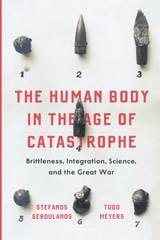
The Human Body in the Age of Catastrophe
Brittleness, Integration, Science, and the Great WarStefanos Geroulanos and Todd Meyers
University of Chicago Press, 2018
In The Human Body in the Age of Catastrophe, Stefanos Geroulanos and Todd Meyers uncover a fascinating story of how medical scientists came to conceptualize the body as an integrated yet brittle whole. Responding to the harrowing experience of the Great War, the medical community sought conceptual frameworks to understand bodily shock, brain injury, and the vast differences in patient responses they occasioned. Geroulanos and Meyers carefully trace how this emerging constellation of ideas became essential for thinking about integration, individuality, fragility, and collapse far beyond medicine: in fields as diverse as anthropology, political economy, psychoanalysis, and cybernetics.
Moving effortlessly between the history of medicine and intellectual history, The Human Body in the Age of Catastrophe is an intriguing look into the conceptual underpinnings of the world the Great War ushered in.
The Humane Metropolis
People and Nature in the 21st-Century CityRutherford H. Platt
University of Massachusetts Press, 2006
Four-fifths of Americans now live in the nation's sprawling metropolitan areas, and half of the world's population is now classified as “urban.” As cities become the dominant living environment for humans, there is growing concern about how to make such places more habitable, more healthy and safe, more ecological, and more equitable—in short, more “humane.”
This book explores the prospects for a more humane metropolis through a series of essays and case studies that consider why and how urban places can be made greener and more amenable. Its point of departure is the legacy of William H. Whyte (1917-1999), one of America's most admired urban thinkers. From his eyrie high above Manhattan in the offices of the Rockefeller Brothers Fund, Whyte laid the foundation for today's “smart growth” and “new urbanist” movements with books such as The Last Landscape (1968). His passion for improving the habitability of cities and suburbs is reflected in the diverse grassroots urban design and regreening strategies discussed in this volume.
Topics examined in this book include urban and regional greenspaces, urban ecological restoration, social equity, and green design. Some of the contributors are recognized academic experts, while others offer direct practical knowledge of particular problems and initiatives. The editor's introduction and epilogue set the individual chapters in a broader context and suggest how the strategies described, if widely replicated, may help create more humane urban environments.
In addition to Rutherford H. Platt, contributors to the volume include Carl Anthony, Thomas Balsley, Timothy Beatley, Eugenie L. Birch, Edward J. Blakely, Colin M. Cathcart, Steven E. Clemants, Christopher A. De Sousa, Steven N. Handel, Peter Harnik, Michael C. Houck, Jerold S. Kayden, Albert LaFarge, Andrew Light, Charles E. Little, Anne C. Lusk, Thalya Parilla, Deborah E. Popper, Frank J. Popper, Mary V. Rickel, Cynthia Rosenzweig, Robert L. Ryan, Laurin N. Sievert, Andrew G. Wiley-Schwartz, and Ann Louise Strong.
Included in the back of the book is a DVD of a 22-minute film created by Ted White, which serves as a companion to the text.
The Humble Approach Revised Edition
Scientists Discover GodJohn Marks Templeton
Templeton Press, 1998
For generations the discoveries of science tended to challenge the very existence of God. Templeton makes a striking argument for just the opposite point of view. He goes to the writings of many of the world's leading scientific thinkers—as diverse in background as Albert Einstein and Teilhard de Chardin—and discovers them in awe of the universe, perceiving the hand of Divine mystery at work.
The Humble Approach teaches that man can discover and comprehend only a few of the infinite aspects of God's nature, never enough to form a comprehensive theology. The humble approach may be a science still in its infancy, but it seeks to develop a way of knowing God appropriate to His greatness and our littleness.