Results by title
22279 books match the query 'Social Science' and 356 start with u
Urban Bush Women
Twenty Years of African American Dance Theater, Community Engagement, and Working It OutNadine George-Graves
University of Wisconsin Press, 2010
Nadine George-Graves presents a comprehensive history of Urban Bush Women since their founding in 1984. She analyzes their complex work, drawing on interviews with current and former dancers and her own observation of and participation in Urban Bush Women rehearsals. This illustrated book captures the grace and power of the dancers in motion and provides an absorbing look at an innovative company that continues to raise the bar for socially conscious dance.
Urban Centers and Rural Contexts in Late Antiquity
Thomas S. Burns
Michigan State University Press, 2001
While ancient literature and the physical remains of cities attest to the power that urban values held over the lives of their inhabitants, the rural areas in which the majority of imperial citizens lived have not been well served by the historical record. Only recently have archeological excavations and integrated field surveys sufficiently enhanced our knowledge of the rural contexts to demonstrate the continuing interdependence of urban centers and rural communities in Late Antiquity. These new data call into question the conventional view that this interdependence progressively declined as a result of governmental crises, invasions, economic dislocation, and the success of Christianization.
The essays in this volume require us to abandon the search for a single model of urban and rural change; to reevaluate the cities and towns of the Empire as centers of habitation, rather than archeological museums; and to reconsider the evidence of continuous and pervasive cultural change across the countryside. Deploying a wide range of material as well as literary evidence, the authors provide access not only into the world of élites, but also to the scarcely known lives of those without a voice in the literature, those men and women who worked in the shops, labored in the fields, and humbled themselves before their gods. They bring us closer to the complexity of life in late ancient communities and, in consequence, closer to both urban and rural citizens.
Urban Childhoods
Growing up in Inequality and HopeEdited by Claire Cameron
University College London, 2025
Bringing together insights from critical childhood studies, urban studies, and child public health, Urban Childhoods examines the distinct experiences of children growing up in English cities with an emphasis on centering the voices of children and their families. The volume explores how to prioritize children’s wellbeing in urban planning, focusing primarily on children’s definitions of what they need to thrive: stable relationships, access to engaging activities, and having a voice in decisions that affect their lives. Alongside the more theoretical literature on urban childhood, authors regularly reference strategies from a major prevention program conducted in two English cities between 2019 and 2025.
Urban Disorder and the Shape of Belief
The Great Chicago Fire, the Haymarket Bomb, and the Model Town of PullmanCarl Smith
University of Chicago Press, 1994
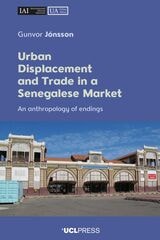
Urban Displacement and Trade in a Senegalese Market
An Anthropology of EndingsGunvor Jónsson
University College London, 2024
The Malian market at the terminus in Dakar was bulldozed in 2009 and, following the privatization of the railway, passenger services in Senegal soon ceased altogether. The consequences were felt especially by women traders who had traveled the line since its inauguration, making the terminus in Dakar the center of a thriving network of traders and migrants. To examine the fates of those whose livelihoods were destroyed or disrupted, Gunvor Jónsson spent a year with the women evicted from the terminus. Urban Displacement and Trade in a Senegalese Market explores what happens at the end of urban displacement, when people find themselves scattered in sometimes unfamiliar surroundings, trying to pick up the pieces and create something meaningful.
In this book, Jónsson argues that rupture and ensuing displacement do not produce a clean slate where identities, networks, and histories must be produced from scratch. When evicted, traders and their markets do not simply vanish into thin air. The book examines not only what is lost but what emerges when a dense node, such as the terminus, is dissolved and fragmented. The ethnography of the traders reveals that the aftermath of eviction in cities may lead to diasporic forms of consciousness and identity formations. Displacement, whether on a local or global scale, demands difficult adjustments, and people’s capacities to adapt to new circumstances and environments vary. This book uncovers the different capacities and variations in traders’ reactions to displacement.
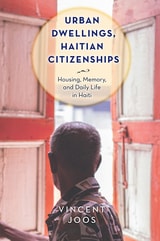
Urban Dwellings, Haitian Citizenships
Housing, Memory, and Daily Life in HaitiVincent Joos
Rutgers University Press, 2022
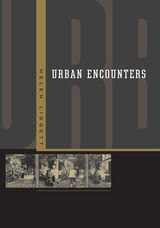
Urban Encounters
Helen Liggett
University of Minnesota Press, 2003
In words and photographs, reimagining the city as lived space
In contrast to Walter Benjamin, Henri Lefebvre, and other European thinkers engaged with the concept of the urban, American intellectuals tend to envision the modern city as a dystopia, their perception of urban life influenced by negative stereotypes and fictional depictions in popular culture. In Urban Encounters, Helen Liggett challenges this fatalism by approaching the city as a vibrant, lived space. Combining a sophisticated critique of the urban with striking, street-level images, Liggett reclaims the human experience of the city.
Liggett’s “encounters” with the urban are sequences of images and text that combine the joy of observing with the pleasure of making connections. For Liggett, this entails recognizing both beauty and danger. Alternately complementing and complicating her text, Liggett’s photographs capture the small details—the gestures, glances, and reflections—that together compose the urban experience. As a whole, Urban Encounters reimagines the city as a site of profound engagement with life.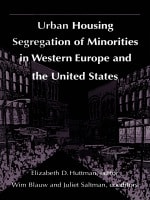
Urban Housing Segregation of Minorities in Western Europe and the United States
Elizabeth Huttman, Juliet Saltman and Wim Blauw, eds.
Duke University Press, 1991
The collection begins with a review of the historical development of housing segregation in these countries, describing current housing conditions, concentration of housing in each country’s leading cities, minority populations and the housing they occupy—specifically public, nonprofit, and owner-occupied dwellings. When focusing on the United States, the contributors assess housing segregation, antisegregation measures, and institutional racism toward blacks in the Midwest and South, and toward Mexican-Americans throughout American cities. Chapters dealing with Western Europe include housing segregation of South Asian and West Indian immigrants in Britain, immigrants in Sweden, Turkish, and Yugoslav “guest workers” in West Germany, and Algerian and other Arab groups in France. The book concludes with discussions of public housing policies; suburban desegregation, resegregation, and integration maintenance programs; specific integration stabilization programs; and desegregation efforts in one specific place.
Contributors. Elizabeth Huttman, Michal Arend, Cihan Arin, Maurice Blanc, Wim Blauw, Ger Mik, Clyde McDaniels, Jürgen Friedrichs, Hannes Alpheis, John M. Goering, Len Gordon, Albert Mayer, Rosemary Helper, Barry V. Johnston, Terry Jones, Valerie Karn, Göran Lindberg, Anna Lisa Lindén, Deborah Phillips, Dennis Keating, Juliet Saltman, Alan Murie
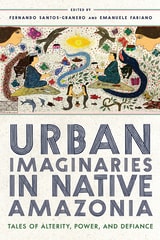
Urban Imaginaries in Native Amazonia
Tales of Alterity, Power, and DefianceFernando Santos-Granero
University of Arizona Press, 2023
Featuring analysis from historical, ethnological, and philosophical perspectives, contributors seek to explain the imaginaries’ widespread diffusion, as well as their influence in present-day migration and urbanization. Above all, it underscores how these urban imaginaries allow Indigenous Amazonians to express their concerns about power, alterity, domination, and defiance.
Contributors
Natalia Buitron
Philippe Erikson
Emanuele Fabiano
Fabiana Maizza
Daniela Peluso
Fernando Santos-Granero
Pirjo Kristiina Virtanen
Robin M. Wright
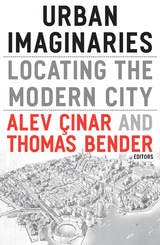
Urban Imaginaries
Locating the Modern CityAlev Cinar
University of Minnesota Press, 2007
For millennia, the city stood out against the landscape, walled and compact. This concept of the city was long accepted as adequate for characterizing the urban experience. However, the nature of the city, both real and imagined, has always been more permeable than this model reveals.
The essays in Urban Imaginaries respond to this condition by focusing on how social and physical space is conceived as both indefinite and singular. They emphasize the ways this space is shared and thus made into urban culture. Urban Imaginaries offers case studies on cities in Brazil, Israel, Turkey, Lebanon, and India, as well as in the United States and France, and in doing so blends social, cultural, and political approaches to better understand the contemporary urban experience.
Contributors: Margaret Cohen, Stanford U; Camilla Fojas, De Paul U; Beatriz Jaguaribe, Federal U of Rio de Janeiro; Anthony D. King, SUNY Binghamton; Mark LeVine, U of California, Irvine; Srirupa Roy, U of Massachusetts, Amherst; Seteney Shami, Social Science Research Council; AbdouMaliq Simone, New School U; Maha Yahya; Deniz Yükseker, Koç U, Istanbul.
Alev Çinar is associate professor of political science and public administration at Bilkent University, Turkey. Thomas Bender is university professor of the humanities and history at New York University.
Urban Indians of Arizona
Phoenix, Tucson, and FlagstaffJoyotpaul Chaudhuri
University of Arizona Press, 1974
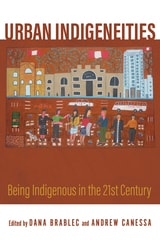
Urban Indigeneities
Being Indigenous in the Twenty-First CenturyDana Brablec
University of Arizona Press, 2023
Today a majority of Indigenous peoples live in urban areas: they are builders and cleaners, teachers and lawyers, market women and masons, living in towns and cities surrounded by the people and pollution that characterize life for most individuals in the twenty-first century. Despite this basic fact, the vast majority of studies on Indigenous peoples concentrate solely on rural Indigenous populations.
Aiming to highlight these often-overlooked communities, this is the first book to look at urban Indigenous peoples globally and present the urban Indigenous experience—not as the exception but as the norm. The contributing essays draw on a wide range of disciplines, including sociology, anthropology, architecture, land economy, and area studies, and are written by both Indigenous and non-Indigenous scholars. The analysis looks at Indigenous people across the world and draws on examples not usually considered within the study of indigeneity, such as Fiji, Japan, and Russia.
Indigeneity is often seen as being “authentic” when it is practiced in remote rural areas, but these essays show that a vigorous, vibrant, and meaningful indigeneity can be created in urban spaces too. The book challenges many of the imaginaries and tropes of what constitutes “the Indigenous” and offers perspectives and tools to understand a contemporary Indigenous urban reality. As such, it is a must-read for anyone interested in the real lives of Indigenous people today.
Contributors
Aiko Ikemura Amaral
Chris Andersen
Giuliana Borea
Dana Brablec
Andrew Canessa
Sandra del Valle Casals
Stanislav Saas Ksenofontov
Daniela Peluso
Andrey Petrov
Marya Rozanova-Smith
Kate Stevens
Kanako Uzawa
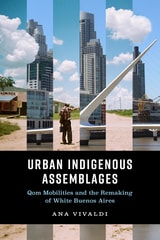
Urban Indigenous Assemblages
Qom Mobilities and the Remaking of White Buenos AiresAna Vivaldi
Vanderbilt University Press, 2025
Over the past two decades, Latin American politicians and activists have reckoned with their nations’ histories of racism, forced displacement of native peoples, and inequality by acknowledging Indigenous communities as peoples preexisting the modern states. In Argentina—a nation long fixated on presenting itself as “white” and “European”—this shift has been dramatic. After decades of erasure and racism toward Indigenous peoples, Argentinian civil society is identifying Indigenous groups as not just an element from the past, but as nations central to the country’s culturally plural and multiracial identity.
In Urban Indigenous Assemblages, Ana Vivaldi considers how Argentina’s urban Indigenous population fits into this recent political and social movement. To do this, she focuses on how the Qom Indigenous people—whose traditional territories are in northern Argentina—have moved to Buenos Aires, made homes in shantytowns alongside other migrants, and remade urban space by building Indigenous lives in the city. Starting from a Qom barrio in Greater Buenos Aires, Vivaldi traces how Qom peoples’ travels to rural communities and movement across the city create complex networks and produce an urban life always in connection to other places. She argues that urban racialized indigeneities represent sites of contradictory relations visible and invisible to state actors and hypervisible to development agencies, as the Qom are expected to prove their authenticity and remove themselves from important relationships with nonwhite neighbors to access rights and recognition.
Based on eighteen months of fieldwork, this book analyzes the historical process that created the barrio: the constant remaking of this Indigenous space in interaction with state institutions and NGOs, the links between the barrio and northern Argentina through travels “far out” to rural communities in the Chaco, and the expansion of “Indigenous territories” beyond bounded location.
Urban Inequality
Evidence From Four CitiesAlice O'Connor
Russell Sage Foundation, 2001

Urban Land Use Planning, Fifth Edition
Philip R. Berke, David R. Godschalk, and Edward J. Kaiser, with Daniel A. Rodriguez
University of Illinois Press, 2006
Divided into three sections, this edition of Urban Land Use Planning deftly balances an authoritative, up-to-date discussion of current practices with a vision of what land use planning should become. It explores the societal context of land use planning and proposes a model for understanding and reconciling the divergent priorities among competing stakeholders; it explains how to build planning support systems to assess future conditions, evaluate policy choices, create visions, and compare scenarios; and it sets forth a methodology for creating plans that will influence future land use change.
Discussions new to the fifth edition include how to incorporate the three Es of sustainable development (economy, environment, and equity) into sustainable communities, methods for including livability objectives and techniques, the integration of transportation and land use, the use of digital media in planning support systems, and collective urban design based on analysis and public participation.
Urban Lawyers
The New Social Structure of the BarJohn P. Heinz, Robert L. Nelson, Rebecca L. Sandefur, and Edward O. Laumann
University of Chicago Press, 2005
Drawing on extensive interviews with Chicago lawyers, the authors demonstrate how developments in the profession have affected virtually every aspect of the work and careers of urban lawyers-their relationships with clients, job tenure and satisfaction, income, social and political values, networks of professional connections, and patterns of participation in the broader community. Yet despite the dramatic changes, much remains the same. Stratification of income and power based on gender, race, and religious background, for instance, still maintains inequality within the bar.
The authors of Urban Lawyers conclude that organizational priorities will likely determine the future direction of the legal profession. And with this landmark study as their guide, readers will be able to make their own informed predictions.
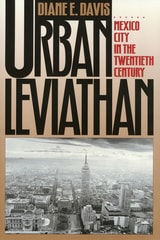
Urban Leviathan
Mexico City in the Twentieth CenturyDiane E. Davis
Temple University Press, 1994
Why, Diane Davis asks, has Mexico City, once known as the city of palaces, turned into a sea of people, poverty, and pollution? Through historical analysis of Mexico City, Davis identifies political actors responsible for the uncontrolled industrialization of Mexico's economic and social center, its capital city. This narrative biography takes a perspective rarely found in studies of third-world urban development: Davis demonstrates how and why local politics can run counter to rational politics, yet become enmeshed, spawning ineffective policies that are detrimental to the city and the nation.
The competing social and economic demand of the working poor and middle classes and the desires of Mexico's ruling Partido Revolucionario Institutional (PRI) have led to gravely diminished services, exorbitant infrastructural expenditures, and counter-productive use of geographic space. Though Mexico City's urban transport system has evolved over the past seven decades from trolley to bus to METRO (subway), it fails to meet the needs of the population, despite its costliness, and is indicative of the city's disastrous and ill-directed overdevelopment. Examining the political forces behind the thwarted attempts to provide transportation in the downtown and sprawling outer residential areas, Davis analyzes the maneuverings of local and national politicians, foreign investors, middle classes, agency bureaucrats, and various factions of the PRI.
Looking to Mexico's future, Davis concludes that growing popular dissatisfaction and frequent urban protests demanding both democratic reform and administrative autonomy in the capital city suggest an unstable future for corporatist politics and the PRI's centralized one-party government.
Urban Life in Contemporary China
Martin King Whyte and William L. Parish
University of Chicago Press, 1984
Urban Lowlands
A History of Neighborhoods, Poverty, and PlanningSteven T. Moga
University of Chicago Press, 2020
In Urban Lowlands, Steven T. Moga looks closely at the Harlem Flats in New York City, Black Bottom in Nashville, Swede Hollow in Saint Paul, and the Flats in Los Angeles, to interrogate the connections between a city’s actual landscape and the poverty and social problems that are often concentrated at its literal lowest points. Taking an interdisciplinary perspective on the history of US urban development from the nineteenth to the mid-twentieth century, Moga reveals patterns of inequitable land use, economic dispossession, and social discrimination against immigrants and minorities. In attending to the landscapes of neighborhoods typically considered slums, Moga shows how physical and policy-driven containment has shaped the lives of the urban poor, while wealth and access to resources have been historically concentrated in elevated areas—truly “the heights.” Moga’s innovative framework expands our understanding of how planning and economic segregation alike have molded the American city.
Urban Lowlands
A History of Neighborhoods, Poverty, and PlanningSteven T. Moga
University of Chicago Press, 2020
Interrogates the connections between a city’s physical landscape and the poverty and social problems that are often concentrated at its literal lowest points.
In Urban Lowlands, Steven T. Moga looks closely at the Harlem Flats in New York City, Black Bottom in Nashville, Swede Hollow in Saint Paul, and the Flats in Los Angeles, to interrogate the connections between a city’s actual landscape and the poverty and social problems that are often concentrated at its literal lowest points. Taking an interdisciplinary perspective on the history of US urban development from the nineteenth to the mid-twentieth century, Moga reveals patterns of inequitable land use, economic dispossession, and social discrimination against immigrants and minorities. In attending to the landscapes of neighborhoods typically considered slums, Moga shows how physical and policy-driven containment has shaped the lives of the urban poor, while wealth and access to resources have been historically concentrated in elevated areas—truly “the heights.” Moga’s innovative framework expands our understanding of how planning and economic segregation alike have molded the American city.
Urban Margins
Envisioning the Contemporary Global South, Volume 26Kamran Asdar Ali and Martina Rieker, eds.
Duke University Press, 0
“Urban Margins” explores the complex processes through which citizens produce and negotiate these marginalized landscapes and in turn are informed by them. Focusing on Douala in Cameroon and Dakar in Senegal, one essay discusses how the state’s failure to provide for its citizens has led many to turn to informal networks and affiliations—whether kin-based, local, translocal, gendered, religious, or secular—for survival. Rendering the urban landscape of these cities in terms of these networks and the ways that they shape a citizen’s interaction with the city, the essay considers the political possibilities for African cities where diverse multilingual and ethnic populations face the challenges, pitfalls, and compromises of coexistence. Examining how female migrant workers negotiate various spaces within the urban landscape of the free trade zone outside of Colombo, Sri Lanka, another essay details how the city represents a site of personal autonomy and political possibilities for both women and men. One contributor addresses the city of Ramallah in the embattled West Bank—the de facto Palestinian capital and the only cosmopolitan space within the occupied territories—to consider how the Palestinian urban middle class remains haunted by the “unmodern” within its own history and present. Another surveys changes in the cultural significance of roads, forts, and town walls in Bahla, Oman, in the aftermath of the country’s 1970 coup d’etat.
Contributors. Kamran Asdar Ali, Allen Feldman, Sandya Hewamanne, Mandana E. Limbert, Rosalind Morris, Martina Rieker, AbdouMaliq Simone, Lisa Taraki

Urban Music Governance
What Busking Can Teach Us about Data, Policy and Our CitiesJess Reia
Intellect Books, 2025
What happens when precarious urban cultural laborers take data collection, laws, and policymaking into their own hands? Buskers have been part of our cities for hundreds of years, but they remain invisible to governments and in datasets. From nuisance to public art, this cultural practice can help us understand the politics of data collection, archives, regulatory frameworks, and urban planning. Busking also responds to underlying questions on the boundaries of the rights to the city, and who has a voice in shaping how our cities are planned and governed.
A transnational exploration of street performance, Urban Music Governance examines the intricate limits of legality, data visibility, and resistance from the perspective of those working at the social and regulatory margins of society. Based on a decade of fieldwork in Rio de Janeiro and Montreal, this book offers a lively account of why such an often-overlooked practice matters today.
By investigating the role of busking in contemporary society, Urban Music Governance presents an original interdisciplinary study that exposes how power dynamics in policymaking decide issues of access—and exclusion—around us, above and below ground.
Urban Neighborhoods in a New Era
Revitalization Politics in the Postindustrial CityClarence N. Stone and Robert P. Stoker
University of Chicago Press, 2015
While not denying the hurdles that community revitalization still faces, the contributors ultimately put forth a strong case that a more hospitable local milieu can be created for making neighborhood policy. In examining the course of experiences from an earlier period of redevelopment to the present postindustrial city, this book opens a window on a complex process of political change and possibility for reform.
Urban Nightlife
Entertaining Race, Class, and Culture in Public SpaceMay, Reuben A. Buford
Rutgers University Press, 2014
Watch video now. (http://www.youtube.com/watch?v=VCs1xExStPw).
Urban Nightmares
The Media, The Right, And The Moral Panic Over The CitySteve Macek
University of Minnesota Press, 2006
Urban Policy in the Time of Obama
James DeFilippis
University of Minnesota Press, 2016
With his background as a community organizer and as a state legislator representing Chicago’s South Side, Barack Obama became America’s most “urban” president since Teddy Roosevelt. But what has been his record in dealing with the issues most impacting our metropolitan areas today? Looking past the current administration, what are the future prospects of the nation’s cities, and how have they been shaped by our policies in this century? Seeking to answer these questions, the contributors to Urban Policy in the Time of Obama explore a broad range of policy arenas that shape, both directly and indirectly, metropolitan areas and urbanization processes.
This volume reveals the Obama administration’s surprisingly limited impact on cities, through direct policy initiatives such as Strong Cities, Strong Communities, Promise Neighborhoods, and Choice Neighborhood Initiatives. There has been greater impact with broader policies that shape urban life and governance, including immigration reform, education, and health care.
Closing with Cedric Johnson’s afterword illuminating the Black Lives Matter movement and what its broader social context says about city governance in our times, Urban Policy in the Time of Obama finds that most of the dominant policies and policy regimes of recent years have fallen short of easing the ills of America’s cities, and calls for a more equitable and just urban policy regime.
Contributors: Rachel G. Bratt, Tufts University; Christine Thurlow Brenner, University of Massachusetts Boston; Karen Chapple, University of California, Berkeley; James Fraser, Vanderbilt University; Edward G. Goetz, University of Minnesota; Dan Immergluck, Georgia Tech; Amy T. Khare, University of Chicago; Robert W. Lake, Rutgers University; Pauline Lipman, University of Illinois at Chicago; Lorraine C. Minnite, Rutgers University–Camden; Kathe Newman, Rutgers University; Deirdre Oakley, Georgia State; Frances Fox Piven, City University of New York; Hilary Silver, Brown University; Janet Smith, University of Illinois at Chicago; Preston H. Smith II, Mount Holyoke College; Todd Swanstrom, University of Missouri–St. Louis; Nik Theodore, University of Illinois at Chicago; J. Phillip Thompson, MIT.

Urban Regimes and Strategies
Building Europe's Central Executive District in BrusselsAlex G. Papadopoulos
University of Chicago Press, 1996
In Brussels, Belgium—since 1957 home to the European Union—such change is taking place. Observing the change, Alexis G. Papadopoulos explores a new geographical concept, the Central Executive District. This urban form is significantly different from the Central Business District, its conventional counterpart. Drawing on game and rational choice theories, spatial analysis, and land economics, the author analyzes how the landscape of the city's center has evolved over the last three decades under the influence of successive coalitions of local and foreign elites. He describes how foreign diplomats, international corporate executives, and real-estate developers cooperate with one another to carry out major urban projects in the face of resistance from local neighborhood groups, conservationists, and political factions.
This study makes a substantial contribution to geography and urban studies both for its implications about the future of world cities like New York, London, and Paris and for its original application of the notion of cooperative regimes.

Urban Solidarity
Gender, Mobility, and the Unfinished Politics of Buen VivirJulie Gamble
University of Texas Press, 0
An exploration of how the citizens of Quito created community via transportation systems in spite of political crisis.
Between 2007 and 2017, Ecuadoreans breathed the air of revolution. Their national project, spearheaded by Democratic Socialist president Rafael Correa, was known as buen vivir—good living. Both a discourse and a development strategy, buen vivir promoted interdependence with and among working-class and marginalized people. And public investment shifted toward shared infrastructure, especially transit. Yet much work was still to be done when Correa left office, and Ecuador has since seen retrenchment.
Urban Solidarity explores and interprets buen vivir’s afterlife, as local organizers in the capital Quito sustain and build the interdependence agenda in the midst of state retreat. Since the IMF forced the government to cancel fuel subsidies, residents have responded by developing impressive carsharing (taxirutas) and shared-cycling resources. These efforts are markedly feminist as well, prioritizing women’s safety and independence as they travel about the city to earn money and care for their families. Gamble argues that buen vivir planted the seed of a new politics, that could once again inspire state action. For now, the people of Quito continue to foster the solidarity foundational to a good life.
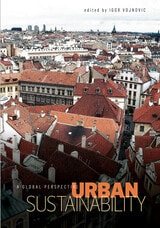
Urban Sustainability
A Global PerspectiveIgor Vojnovic
Michigan State University Press, 2012
More than half the world’s population currently lives in urban areas, and virtually all of the world’s population growth over the next three decades is expected to be in cities. What impact will this growth have on the environment? What can we do now to pave the way for resource longevity? Sustainability has received considerable attention in recent years, though conceptions of the term remain vague. Using a wide array of cities around the globe as case studies, this timely book explores the varying nature of global urban-environmental stresses and the complexities involved in defining sustainability policies. Working with six core themes, the editor examines the past, present, and future of urban sustainability within local, national, and global contexts.
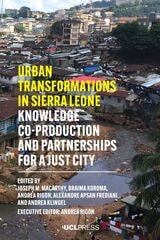
Urban Transformations in Sierra Leone
Knowledge Co-Production and Partnerships for a Just CityEdited by Joseph M. Macarthy, Braima Koroma, Andrea Rigon, Alexandre Apsan Frediani, and Andrea Klingel
University College London, 2024
With a population of over one million, Freetown, Sierra Leone faces serious challenges with service provisions, housing, infrastructure, employment, and climate change. In 2015, the Sierra Leone Urban Research Centre (SLURC) was established to address these challenges through research, capacity building, and advocacy. Urban Transformations in Sierra Leone shares SLURC’s progress, articulating its key findings and reflections on the partnerships it helped enable.
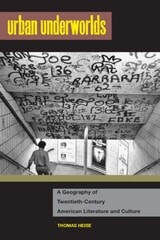
Urban Underworlds
A Geography of Twentieth-Century American Literature and CultureHeise, Thomas
Rutgers University Press, 2010
The quarantining of minority cultures helped to promote white, middle-class privilege. Following a diverse array of literary figures who differ with the assessment of the underworld as the space of the monstrous Other, Heise contends that it is a place where besieged and neglected communities are actively trying to take possession of their own neighborhoods.
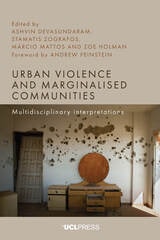
Urban Violence and Marginalised Communities
Multidisciplinary InterpretationsEdited by Ashvin Devasundaram, Stamatis Zografos, Márcio Mattos, and Zoe Holman
University College London, 2026
An accessible, informative, and intrepid insight into urban violence through a decolonial and multidisciplinary lens.
Placing peripheralized people at its center, Urban Violence and Marginalised Communities unpacks how urban violence must be understood from multiple points of view, namely through the distinct perspectives of powerholders, decision-makers, law enforcers, urban planners, creative artists, and particularly from the lived standpoint of less empowered communities. Combining social science approaches with explorations in film, media, and the performing arts, the volume challenges conventional, stereotypical, and reductive definitions and conceptions of urban violence by placing local marginalized communities at the forefront of a multilogue and embracing inclusive, innovative, and unconventional analytical and practical approaches and frameworks. A diverse cohort of contributors offers policy-focused counternarratives and potential solutions to systematized forms of overt, covert, and hybrid forms of urban violence(s).
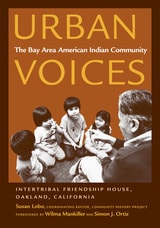
Urban Voices
The Bay Area American Indian CommunitySusan Lobo, Coordinating Editor, Community History Project; Forewords by Wilma Mankiller and Simon J. Ortiz
University of Arizona Press, 2002
Urbanism and Empire in Roman Sicily
By Laura Pfuntner
University of Texas Press, 2019
Sicily has been the fulcrum of the Mediterranean throughout history. The island’s central geographical position and its status as ancient Rome’s first overseas province make it key to understanding the development of the Roman Empire. Yet Sicily’s crucial role in the empire has been largely overlooked by scholars of classical antiquity, apart from a small number of specialists in its archaeology and material culture.
Urbanism and Empire in Roman Sicily offers the first comprehensive English-language overview of the history and archaeology of Roman Sicily since R. J. A. Wilson’s Sicily under the Roman Empire (1990). Laura Pfuntner traces the development of cities and settlement networks in Sicily in order to understand the island’s political, economic, social, and cultural role in Rome’s evolving Mediterranean hegemony. She identifies and examines three main processes traceable in the archaeological record of settlement in Roman Sicily: urban disintegration, urban adaptation, and the development of alternatives to urban settlement. By expanding the scope of research on Roman Sicily beyond the bounds of the island itself, through comparative analysis of the settlement landscapes of Greece and southern Italy, and by utilizing exciting evidence from recent excavations and surveys, Pfuntner establishes a new empirical foundation for research on Roman Sicily and demonstrates the necessity of including Sicily in broader historical and archaeological studies of the Roman Empire.
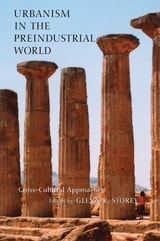
Urbanism in the Preindustrial World
Cross-Cultural ApproachesEdited by Glenn R. Storey
University of Alabama Press, 2006
This work employs a subset of preindustrial cities on many continents to answer questions archaeologists grapple with concerning the populating and growth of cities before industrialization. It further explores how scholars differently conceive and execute their research on the population of cities. The subject cities are in Greece, Mesoamerica, the Andes, Italy, Egypt, Africa, United States, Denmark, and China. This broad sample provides a useful framework for answers to such questions as “Why did people agglomerate into cities?” and “What population size and what age of endurance constitute a city?”
The study covers more than population magnitude and population makeup, the two major frameworks of urban demography. The contributors combine their archaeological and historical expertise to reveal commonalities, as well as theoretical extrapolations and methodological approaches, at work here and outside the sample.
Urbanism in the Preindustrial World is a unique study revealing the variety of factors involved in the coalescing and dispersal of populations in preindustrial times.
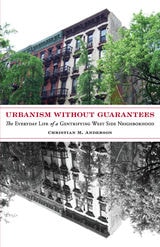
Urbanism without Guarantees
The Everyday Life of a Gentrifying West Side NeighborhoodChristian M. Anderson
University of Minnesota Press, 2020
A unique more-than-capitalist take on urban dynamics
Vigilante action. Renegades. Human intrigue and the future at stake in New York City. In Urbanism without Guarantees, Christian M. Anderson offers a new perspective on urban dynamics and urban structural inequality based on an intimate ethnography of on-the-ground gentrification.
The book is centered on ethnographic work undertaken on a single street in Clinton/Hell’s Kitchen in New York City—once a site of disinvestment, but now rapidly gentrifying. Anderson examines the everyday strategies of residents to preserve the quality of life of their neighborhood and to define and maintain their values of urban living—from picking up litter and reporting minor concerns on the 311 hotline to hiring a private security firm to monitor the local public park. Anderson demonstrates how processes such as investment and gentrification are constructed out of the collective actions of ordinary people, and challenges prevalent understandings of how place-based civic actions connect with dominant forms of political economy and repressive governance in urban space.
Examining how residents are pulled into these systems of gentrification, Anderson proposes new ways to think and act critically and organize for transformation of a place—in actions that local residents can start to do wherever they are.
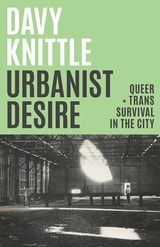
Urbanist Desire
Queer and Trans Survival in the CityDavy Knittle
University of Minnesota Press, 2026
How writers and artists have used city planning strategies to push back against harm
Black queer feminist thinker Audre Lorde famously declared that “the master’s tools will never dismantle the master’s house.” This language is normally understood as a metaphor, but as author Davy Knittle argues in this provocative book, queer and trans activists have long used the tools of city planning and urban design to create written and visual art that critiques those in power and offers points of resilience to their own communities.
A close look at the ways queer and trans writers and artists resisted predatory redevelopment in New York City from 1950 to 2020, Urbanist Desire draws on the work of James Schuyler, June Jordan, David Wojnarowicz, Julian Talamantez Brolaski, and Zeyn Joukhadar, exploring how they intervened in major political flashpoints like the War on Poverty, the AIDS-era housing crisis, and gentrification in Brooklyn and Queens. Presenting a new cultural history of New York City, Knittle explains how urban change and the more-than-human life of cities have been foundational concerns for queer and trans cultural production since the 1950s.
Ending with analysis of the 2022 speculative novel Everything for Everyone: An Oral History of the New York Commune, 2052–2072, Urbanist Desire looks to the past to imagine a better future for New York City and for all marginalized people. Knittle demonstrates how to move past a recuperative response to harm and toward one that can change the structure of society by documenting how queer and trans activists have engaged the strategies of planning and design to address spatial, social, and economic inequality.
Retail e-book files for this title are screen-reader friendly with images accompanied by short alt text and/or extended descriptions.

Ursula
Maria Firmina dos Reis, Translated by Cristina Ferreira Pinto-Bailey
Tagus Press, 2021

Us Against Them
Ethnocentric Foundations of American OpinionDonald R. Kinder and Cindy D. Kam
University of Chicago Press, 2009
Ethnocentrism—our tendency to partition the human world into in-groups and out-groups—pervades societies around the world. Surprisingly, though, few scholars have explored its role in political life. Donald Kinder and Cindy Kam fill this gap with Us Against Them, their definitive explanation of how ethnocentrism shapes American public opinion.
Arguing that humans are broadly predisposed to ethnocentrism, Kinder and Kam explore its impact on our attitudes toward an array of issues, including the war on terror, humanitarian assistance, immigration, the sanctity of marriage, and the reform of social programs. The authors ground their study in previous theories from a wide range of disciplines, establishing a new framework for understanding what ethnocentrism is and how it becomes politically consequential. They also marshal a vast trove of survey evidence to identify the conditions under which ethnocentrism shapes public opinion. While ethnocentrism is widespread in the United States, the authors demonstrate that its political relevance depends on circumstance. Exploring the implications of these findings for political knowledge, cosmopolitanism, and societies outside the United States, Kinder and Kam add a new dimension to our understanding of how democracy functions.

Us and Them
The Science of IdentityDavid Berreby
University of Chicago Press, 2008
In this award-winning book, David Berreby describes how twenty-first-century science is addressing these age-old questions. Ably linking neuroscience, social psychology, anthropology, and other fields, Us and Them investigates humanity’s “tribal mind” and how this alters our thoughts, affects our health, and is manipulated for good and ill. From the medical effects of stress to the rhetoric of politics, our perceptions of group identity affect every part of our lives. Science, Berreby argues, shows how this part of human nature is both unexpectedly important and surprisingly misunderstood.
Humans need our tribal sense—it tells us who we are, how we should behave, and links us to others as well as the past and future. Some condemn this instinct, while others celebrate it. Berreby offers in Us and Them a third alternative: how we can accept and understand our inescapable tribal mind.
“[A] brave book. . . . Berreby’s quest is to understand what he sees as a fundamental human urge to classify and identify with ‘human kinds.’”—Henry Gee, Scientific American
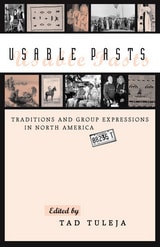
Usable Pasts
Traditions and Group Expressions in North AmericaTad Tuleja
Utah State University Press, 1997

Use-Wear Analysis of Flaked Stone Tools
Patrick C. Vaughan
University of Arizona Press, 1985
Uses of the Folk, Volume 2002
Karl Hagstrom Miller and Ellen Noonan, eds.
Duke University Press, 0
The essays explore a variety of incarnations of "the folk," from the contested meanings of folk dance in creating a national culture in twentieth-century Haiti and Nicaragua, to the ways that the London Museum’s collection of artifacts challenged early-twentieth-century British notions of gender, labor, and citizenship, to the production of urban folklore in New York City. The Uses of the Folk identifies folk culture of the past and present as an important site of ongoing struggle—one affecting all scholars who draw on folk or vernacular culture in their work.
Contributors. Adina Back, Jordanna Bailkin, Regina Bendix, Katherine Borland, Sally Charnow, Peggy P. Hargis, Georgina Hickey, John Howard, Shafali Lal, R. J. Lambrose, Ronald Radano, Kate Ramsey, Gerald Shenk, David Takacs, David Waldstreicher, Daniel Walkowitz, Steve Zeitlin
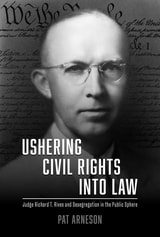
Ushering Civil Rights into Law
Judge Richard T. Rives and Desegregation in the Public SpherePat Arneson
University of Alabama Press, 2026
Illuminates the life and legacy of a federal jurist from Alabama, an unexpected but ardent defender of equal rights for all citizens under the law
Ushering Civil Rights into Law: Judge Richard T. Rives and Desegregation in the Public Sphere by Pat Arneson is a long-overdue exploration of one of the most consequential yet overlooked figures of the modern Civil Rights Movement. As debates over judicial philosophy and Civil Rights continue, Judge Richard T. Rives’s story serves as a powerful reminder of the judiciary’s role in shaping a more just society.
A native of Montgomery, Alabama, Judge Richard T. Rives served on the US Court of Appeals for the Fifth Circuit during the height of America’s battle over racial segregation. Once aligned with segregationist views, Rives underwent a profound evolution, emerging as a key legal architect of desegregation. His landmark ruling on behalf of the court in Browder v. Gayle ended segregation on Montgomery’s public buses and expanded the scope of Brown v. Board of Education beyond education. Rives’s decisions invalidated the legal underpinnings of Jim Crow laws and furthered equality in public education, voting rights, and jury selection. Writing for the court, Rives authored legal precedents that fundamentally reshaped the nation.
Through archival research, Arneson examines the cultural and political pressures Rives faced, the legal strategies he employed, and the lasting impact of his work. Constitutional rights remain a flashpoint in American discourse. Ushering Civil Rights into Law reveals how one judge’s principled stance helped define the legal landscape of modern Civil Rights and underscores the enduring significance of his legacy.
Using Media for Social Innovation
Aneta Podkalicka and Ellie Rennie
Intellect Books, 2018
Using and Curating Archaeological Collections
S. Terry Childs
University Press of Colorado, 2019
Utah at the Beginning of the New Millennium
A Demographic PerspectiveZick and Smith
University of Utah Press, 2006
Utah’s leading social scientists and population-related scholars draw on their specific areas of expertise and analyze Utah’s population using recent sources of data such as the 2000 U.S. Census. The chapters are organized into three broad topical sections: the foundations of Utah’s population (basic demographics), how the nature of the population affects our daily lives (quality of life issues), and the public policy challenges that will face Utah’s leaders (emerging issues).
Utatlán
The Constituted Community of the K'iche' Maya of Q'umarkajThomas F. Babcock
University Press of Colorado, 2012
Most information available on Utatlán focuses on the ceremonial center and ignores the city of the commoners. Using the archaeological data, Utatlán attempts to determine the boundaries of the community and to characterize subdivisions within it. Evidence of indigenous nonelite houses, rich burials, and grave goods unlike those found in contemporary sites reveals information about the supporting residence zone. In addition, Babcock applies the concept of "constituted community," interpreting the archaeological data from a prehistoric context, and proposes a theoretical framework for interpreting prehistoric sites with respect to urbanism and political complexity.
Utatlán: The Constituted Community of the K'iche' Maya of Q'umarkaj will be of interest to students and scholars of Mesoamerican anthropology, archaeology, and ethnohistory.

Ute Tales
Anne Smith
University of Utah Press, 1992
These distinctive animal and human tales offer a rich source of Ute culture for anyone interested in the peoples of the Great Basin. The 102 stories here are ribald, sometimes violent, yet delicately balanced and full of humor. In addition to Smith’s transcriptions from Ute storytellers, Ute Tales contains photographs made in 1909 by Edward Sapir and in 1936 by Alden Hayes.
Utopia Limited
The Sixties and the Emergence of the PostmodernMarianne DeKoven
Duke University Press, 2004
DeKoven rigorously analyzes a broad array of cultural and political texts important in the sixties—from popular favorites such as William S. Burroughs’s Naked Lunch to political manifestoes including The Port Huron Statement, the founding document of SDS (Students for a Democratic Society). She examines texts that overtly discuss the conflict in Vietnam, Black Power, and second-wave feminism—including Frances FitzGerald’s Fire in the Lake, James Baldwin’s The Fire Next Time, and Shulamith Firestone’s The Dialectic of Sex; experimental pieces such as The Living Theatre’s Paradise Now; influential philosophical works including Roland Barthes’s Mythologies and Herbert Marcuse’s One-Dimensional Man; and explorations of Las Vegas, the prime location of postmodernity. Providing extensive annotated bibliographies on both the sixties and postmodernism, Utopia Limited is an invaluable resource for understanding the impact of that tumultuous decade on the present.