Results by title
1563 books match the query 'African American & Black Studies' and 65 start with w
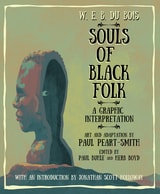
W. E. B. Du Bois Souls of Black Folk
A Graphic InterpretationW. E. B. Du Bois (1868-1963)
Rutgers University Press, 2023
“The problem of the twentieth century is the problem of the color line.” These were the prescient words of W. E. B. Du Bois’s influential 1903 book The Souls of Black Folk. The preeminent Black intellectual of his generation, Du Bois wrote about the trauma of seeing the Reconstruction era’s promise of racial equality cruelly dashed by the rise of white supremacist terror and Jim Crow laws. Yet he also argued for the value of African American cultural traditions and provided inspiration for countless civil rights leaders who followed him. Now artist Paul Peart-Smith offers the first graphic adaptation of Du Bois’s seminal work.
Peart-Smith’s graphic adaptation provides historical and cultural contexts that bring to life the world behind Du Bois’s words. Readers will get a deeper understanding of the cultural debates The Souls of Black Folk engaged in, with more background on figures like Booker T. Washington, the advocate of black economic uplift, and the Pan-Africanist minister Alexander Crummell. This beautifully illustrated book vividly conveys the continuing legacy of The Souls of Black Folk, effectively updating it for the era of the 1619 Project and Black Lives Matter.

W. E. B. Du Bois
Revolutionary Across the Color LineBill V. Mullen
Pluto Press, 2016
Du Bois was born in Massachusetts in 1868, just three years after formal emancipation of America’s slaves. In his extraordinarily long and active political life, he would emerge as the first black man to earn a PhD from Harvard; surpass Booker T. Washington as the leading advocate for African American rights; co-found the NAACP, and involve himself in anti-imperialist and anti-colonial struggles across Asia and Africa. Beyond his Civil Rights work, Mullen also examines Du Bois's attitudes towards socialism, the USSR, China’s Communist Revolution, and the intersectional relationship between capitalism, poverty and racism.
An accessible introduction to a towering figure of American Civil Rights, perfect for anyone wanting to engage with Du Bois’s life and work.
Waking from the Dream
The Struggle for Civil Rights in the Shadow of Martin Luther King, Jr.David L. Chappell
Duke University Press, 2016
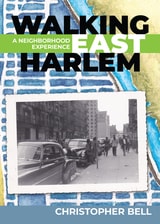
Walking East Harlem
A Neighborhood ExperienceChristopher Bell
Rutgers University Press, 2025
Now East Harlem native Christopher Bell takes you on a tour of his beloved neighborhood. He takes you on three separate walking tours, each visiting a different part of East Harlem and each full of stories about its theaters, museums, art spaces, schools, community centers, churches, mosques, and synagogues. You’ll also learn about the famous people who lived in El Barrio, such as actress Cecily Tyson, opera singer Marian Anderson, portrait artist Alice Neel, incomparable poet Julia De Burgos, and King of Latin Music Tito Puente.
Lavishly illustrated with over fifty photos, Walking East Harlem points out not only the many architectural and cultural landmarks in the neighborhood but also the historical buildings that have since been demolished. Whether you are a tourist or a resident, this guide will give you a new appreciation for El Barrio’s exciting history, cultural diversity, and continued artistic vibrancy.
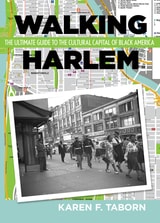
Walking Harlem
The Ultimate Guide to the Cultural Capital of Black AmericaTaborn, Karen
Rutgers University Press, 2018
This illustrated guide takes readers on five separate walking tours of Harlem, covering ninety-one different historical sites. Alongside major tourist destinations like the Apollo Theater and the Abyssinian Baptist Church, longtime Harlem resident Karen Taborn includes little-known local secrets like Jazz Age speakeasies, literati, political and arts community locales. Drawing from rare historical archives, she also provides plenty of interesting background information on each location.
This guide was designed with the needs of walkers in mind. Each tour consists of eight to twenty-nine nearby sites, and at the start of each section, readers will find detailed maps of the tour sites, as well as an estimated time for each walk. In case individuals would like to take a more leisurely tour, it provides recommendations for restaurants and cafes where they can stop along the way.
Walking Harlem gives readers all the tools they need to thoroughly explore over a century’s worth of this vital neighborhood’s cultural, political, religious, and artistic heritage. With its informative text and nearly seventy stunning photographs, this is the most comprehensive, engaging, and educational walking tour guidebook on one of New York’s historic neighborhoods.

Wandering
Philosophical Performances of Racial and Sexual FreedomSarah Jane Cervenak
Duke University Press, 2014
Watching Race
Television and the Struggle for BlacknessHerman Gray
University of Minnesota Press, 1997
Watching While Black Rebooted!
The Television and Digitality of Black AudiencesBeretta E. Smith-Shomade
Rutgers University Press, 2024
Chapters rethink such historically significant programs as Roots and Underground, such seemingly innocuous programs as Soul Food, and such contemporary and culturally complicated programs as Being Mary Jane and Atlanta. The book makes a case for the centrality of these programs while always recognizing the racial dynamics that continue to shape Black representation on the small screen. Painting a decidedly introspective portrait across forty years of Black television, Watching While Black Rebooted sheds much-needed light on under examined demographics, broadens common audience considerations, and gives deference to the preferences of audiences and producers of Black-targeted programming.
Watching While Black
Centering the Television of Black AudiencesSmith-Shomade, Beretta E
Rutgers University Press, 2013
2013 Choice Outstanding Academic Title
Television scholarship has substantially ignored programming aimed at Black audiences despite a few sweeping histories and critiques. In this volume, the first of its kind, contributors examine the televisual diversity, complexity, and cultural imperatives manifest in programming directed at a Black and marginalized audience.
Watching While Black considers its subject from an entirely new angle in an attempt to understand the lives, motivations, distinctions, kindred lines, and individuality of various Black groups and suggest what television might be like if such diversity permeated beyond specialized enclaves. It looks at the macro structures of ownership, producing, casting, and advertising that all inform production, and then delves into television programming crafted to appeal to black audiences—historic and contemporary, domestic and worldwide.
Chapters rethink such historically significant programs as Roots and Black Journal, such seemingly innocuous programs as Fat Albert and bro’Town, and such contemporary and culturally complicated programs as Noah’s Arc, Treme, and The Boondocks. The book makes a case for the centrality of these programs while always recognizing the racial dynamics that continue to shape Black representation on the small screen. Painting a decidedly introspective portrait across forty years of Black television, Watching While Black sheds much-needed light on under-examined demographics, broadens common audience considerations, and gives deference to the the preferences of audiences and producers of Black-targeted programming.
Waves of Decolonization
Discourses of Race and Hemispheric Citizenship in Cuba, Mexico, and the United StatesDavid Luis-Brown
Duke University Press, 2008
Luis-Brown traces unfolding narratives of decolonization across a broad range of texts. He explores how Martí and Du Bois, known as the founders of Cuban and black nationalisms, came to develop anticolonial discourses that cut across racial and national divides. He illuminates how cross-fertilizations among the Harlem Renaissance, Mexican indigenismo, and Cuban negrismo in the 1920s contributed to broader efforts to keep pace with transformations unleashed by ongoing conflicts over imperialism, and he considers how those transformations were explored in novels by McKay of Jamaica, Jesús Masdeu of Cuba, and Miguel Ángel Menéndez of Mexico. Focusing on ethnography’s uneven contributions to decolonization, he investigates how Manuel Gamio, a Mexican anthropologist, and Zora Neale Hurston each adapted metropolitan social science for use by writers from the racialized periphery.

Way Down in the Hole
Race, Intimacy, and the Reproduction of Racial Ideologies in Solitary ConfinementAngela J. Hattery
Rutgers University Press, 2023
Way Down the Hole Video 1 (https://youtu.be/UuAB63fhge0)
Way Down the Hole Video 2 (https://youtu.be/TwEuw1cTrcQ)
Way Down the Hole Video 3 (https://youtu.be/bOcBv_UnHIs)
Way Down the Hole Video 4 (https://youtu.be/cx_l1S8D77c)

We Ain't What We Was
Civil Rights in the New SouthFrederick M. Wirt
Duke University Press, 1997
Wirt uses multiple indicators—interviews with leaders, attitude tests of children, content analysis of newspapers, school records, and voting and job data—to record what has changed in the Deep South as a result of the 60s revolution in civil rights. Although racism continues to exist in Panola, Wirt maintains that the current generation of southerners is sharply distinguished from its predecessors, and he effectively documents the transformations in individuals and institutions. In a time of increasing popular challenges to the use of law in support of civil liberties, or the place of the federal government to effect necessary social change, this book testifies to the great changes, both public and personal, that were brought about by the strong implementation of civil rights law over thirty years ago. "We Ain’t What We Was" shows that adaptation to change was not overnight, not final, but gradual and always persistent.

We All Got History
The Memory Books of Amos WebberNick Salvatore
University of Illinois Press, 2006
Lost for over a hundred years until their rediscovery by Nick Salvatore, Amos Webber’s “Thermometer Books” recorded six decades of the daily experiences of a black freeman in nineteenth-century Philadelphia and Worcester, Massachusetts. These diaries form the basis for Salvatore’s vital portrait of an everyday hero who struggled unrelentingly for his people in a land that still considered blacks to be less than human.
In We All Got History, we see Amos Webber working as a janitor; rescuing fugitive slaves on the Underground Railroad; marching triumphantly into Richmond with the Fifth Massachusetts Cavalry; and active in the religious and fraternal organizations that became the cement of the African American community. What emerges from this moving history is not only a picture of Webber the man, but also of the vibrant African American culture that nurtured him.
We Belong Here
Gentrification, White Spacemaking, and a Black Sense of PlaceShani Adia Evans
University of Chicago Press, 2025
In We Belong Here, sociologist Shani Adia Evans offers an intimate look at gentrification from the inside, documenting the reactions of Albina residents as the racial demographics of their neighborhood shift. As White culture becomes centered in Northeast, Black residents recount their experiences with what Evans refers to as “White watching,” the questioning look on the faces of White people they encounter, which conveys an exclusionary message: “What are you doing here?” This, Evans shows, is a prime example of what she calls “White spacemaking”: the establishment of White space—spaces in which Whiteness is assumed to be the norm and non-Whites are treated with suspicion—in formerly non-White neighborhoods. Evans also documents Black residents’ efforts to create and maintain places for Black belonging in White-dominated Portland. While gentrification typically describes socioeconomic changes that may have racial implications, White spacemaking allows us to understand racism as a primary mechanism of neighborhood change. We Belong Here illuminates why gentrification and White spacemaking should be examined as intersecting, but not interchangeable, processes of neighborhood change.
We Could Not Fail
The First African Americans in the Space ProgramBy Richard Paul and Steven Moss
University of Texas Press, 2015
The Space Age began just as the struggle for civil rights forced Americans to confront the long and bitter legacy of slavery, discrimination, and violence against African Americans. Presidents John F. Kennedy and Lyndon Johnson utilized the space program as an agent for social change, using federal equal employment opportunity laws to open workplaces at NASA and NASA contractors to African Americans while creating thousands of research and technology jobs in the Deep South to ameliorate poverty. We Could Not Fail tells the inspiring, largely unknown story of how shooting for the stars helped to overcome segregation on earth.
Richard Paul and Steven Moss profile ten pioneer African American space workers whose stories illustrate the role NASA and the space program played in promoting civil rights. They recount how these technicians, mathematicians, engineers, and an astronaut candidate surmounted barriers to move, in some cases literally, from the cotton fields to the launching pad. The authors vividly describe what it was like to be the sole African American in a NASA work group and how these brave and determined men also helped to transform Southern society by integrating colleges, patenting new inventions, holding elective office, and reviving and governing defunct towns. Adding new names to the roster of civil rights heroes and a new chapter to the story of space exploration, We Could Not Fail demonstrates how African Americans broke the color barrier by competing successfully at the highest level of American intellectual and technological achievement.
We See with the Skin
On Zora Neale Hurston's MethodologyRoshanak Kheshti
Duke University Press, 2026
We Shall Be Free!
Black Communist Protests in Seven VoicesWalter T. Howard
Temple University Press, 2013
Howard draws on FBI files, Moscow documents, and the records of the U.S. Communist Party. He surveys these black Communists addressing a wide range of vital issues such as the Great Depression, World War II, genocide and the Cold War.
We Shall Be Free! presents an important section of the African American community whose thought has been minimized, discounted, or overlooked altogether by the historical profession in general.
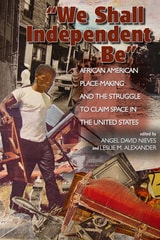
We Shall Independent Be
African American Place-Making and the Struggle to Claim Space in the United StatesAngel David Nieves
University Press of Colorado, 2008
Contributors define space to include physical, social, and intellectual sites throughout the Northern and Southern regions of the United States, ranging from urban milieus to the suburbs and even to swamps and forests. They explore under-represented locations such as burial grounds, courtrooms, schools, and churches. Moreover, contributors demonstrate how Black consciousness and ideology challenged key concepts of American democracy - such as freedom, justice, citizenship, and equality - establishing African American space in social and intellectual areas.
Ultimately, "We Shall Independent Be " recovers the voices of African American men and women from the antebellum United States through the present and chronicles their quest to assert their right to a place in American society. By identifying, examining, and telling the stories of contested sites, this volume demonstrates the power of African American self-definition and agency in the process of staking a physical and ideological claim to public space
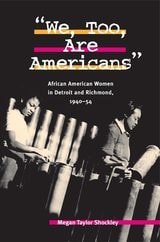
We, Too, Are Americans
African American Women in Detroit and Richmond, 1940-54Megan Taylor Shockley
University of Illinois Press, 2003
As demands on them intensified, the women working to provide American troops with clothing, medical supplies, and other services became increasingly aware of their key role in the war effort. A considerable number of the African Americans among them began to use their indispensability to leverage demands for equal employment, welfare and citizenship benefits, fair treatment, good working conditions, and other considerations previously denied them.
Shockley shows that as these women strove to redefine citizenship, backing up their claims to equality with lawsuits, sit-ins, and other forms of activism, they were forging tools that civil rights activists would continue to use in the years to come.
Wealth Accumulation and Communities of Color in the United States
Current IssuesJessica Gordon Nembhard and Ngina Chiteji, Editors
University of Michigan Press, 2010
--Kilolo Kijakazi, Ph.D., The Ford Foundation
"An important contribution to the economics literature on wealth and to our understanding of racial and ethnic inequality. This book adds to our knowledge and understanding of the wealth positions of Latinos, Asian Americans, Hawaiians, and Native Americans and places this information in the context of black-white wealth inequality."
--Cecilia A. Conrad, Department of Economics, Pomona College
--Patrick L. Mason, Department of Economics, Florida State University
"This edited volume takes up an important, indeed, fundamental, topic, bringing together leading scholars to assess wealth accumulation among people of color. No other book or research report covers as many groups of color as appear in this volume, devoting chapters to African Americans, Latinos, Native Americans, Asian Americans, and Native Hawaiians. The result is a noteworthy achievement." --Michael Sherraden, Benjamin E. Youngdahl Professor of Social Development, Washington University in St. Louis
Jessica Gordon Nembhard is Assistant Professor and Economist, African American Studies Department, and co-founder of the Democracy Collaborative at the University of Maryland, College Park. Her work on the history of black cooperatives is well known in progressive circles.
Ngina Chiteji is Associate Professor of Economics, Skidmore College. She was a Visiting Assistant Research Scholar at The Democracy Collaborative, University of Maryland, College Park.
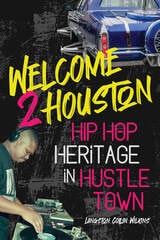
Welcome 2 Houston
Hip Hop Heritage in Hustle TownLangston Collin Wilkins
University of Illinois Press, 2023
A vivid journey through a southern hip hop bastion, Welcome 2 Houston offers readers an inside look at a unique musical culture.
West of Jim Crow
The Fight against California's Color LineLynn M. Hudson
University of Illinois Press, 2020
Lynn M. Hudson deepens our understanding of the practices that African Americans in the West deployed to dismantle Jim Crow in the quest for civil rights prior to the 1960s. Faced with institutionalized racism, black Californians used both established and improvised tactics to resist and survive the state's color line. Hudson rediscovers forgotten stories like the experimental all-black community of Allensworth, the California Ku Klux Klan's campaign of terror against African Americans, the bitter struggle to integrate public swimming pools in Pasadena and elsewhere, and segregationists' preoccupation with gender and sexuality.
Western Fictions, Black Realities
Meanings of Blackness and ModernitiesIsabel Soto
Michigan State University Press, 2012
This anthology interrogates two salient concepts in studying the black experience. Ushered in with the age of New World encounters, modernity emerged as brutal and complex, from its very definition to its manifestations. Equally challenging is blackness, which is forever dangling between the range of uplifting articulations and insidious degradation. The essays in Western Fictions address the conflicting confluences of these two terms. Questioning Eurocentric and mainstream American interpretations, they reveal the diverse meanings of modernities and blackness from a wide range of milieus of the black experience. Interdisciplinary and wide-ranging in thematic and epochal scope, they use theoretical and empirical studies of a range of subjects to demonstrate that, indeed, blackness is relevant for understanding modernities and vice versa.
What Had Happened Was
Therí Alyce Pickens
Duke University Press, 2025

What's My Name
Black Vernacular IntellectualsGrant Farred
University of Minnesota Press, 2003
Whom does society consider an intellectual and on what grounds? Antonio Gramsci’s democratic vision of intelligence famously suggested that “all men are intellectuals,” yet within academic circles and among the general public, intellectuals continue to be defined by narrow, elite criteria.
In this study of four celebrated citizens of the African diaspora—American boxer Muhammad Ali, West Indian Marxist critic C. L. R. James, British cultural theorist Stuart Hall, and Jamaican musician Bob Marley—Grant Farred develops a new category of engaged thinker: the vernacular intellectual. Extending Gramsci’s concept of the organic intellectual, Farred conceives of vernacular intellectuals as individuals who challenge social injustice from inside and outside traditional academic or political spheres. Muhammad Ali, for example, is celebrated as much for his dazzling verbal skills and courageous political stands as for his pugilistic talents; Bob Marley’s messages of liberation are as central to his popularity as his lyrical and melodic sophistication. Neither man is described as an intellectual, yet both perform crucial intellectual functions: shaping how people see the world, oppose hegemony, and understand their own history. In contrast, the careers of C. L. R. James and Stuart Hall reflect a dynamic blend of the traditional and the vernacular. Conventionally trained and situated, James and Hall examine racism, history, and the lasting impact of colonialism in ways that draw on both established scholarship and more popular cultural experiences.
Challenging existing paradigms, What’s My Name offers an expansive and inclusive vision of intellectual activity that is as valid and meaningful in the boxing ring, the press conference, and the concert hall as in academia.
When Race Becomes Real
Black and White Writers Confront Their Personal HistoriesEdited by Bernestine Singley
Southern Illinois University Press, 2002
When Race Becomes Real is a critically acclaimed collection that pushes the boundaries of current discussions about race. In these personal and evocative essays, thirty contemporary black and white writers describe their own intimate experiences with race and discrimination, taking an unflinching look at both society and themselves. The result is an incisive and powerful anthology that rethinks what it means to be black—and white—in the modern world.
Only through frank and tough conversation, Singley tells us, can America hope to realize its goals of justice and racial equality. This collection opens that much needed honest dialogue, exploring a wide range of racial experiences in relation to a myriad of topics: from crime and religion to humor, history, and desire. Readers will find within these pages examinations of the roots of racial beliefs and the origins of the language and rules that have heretofore governed discussion; analysis of the reasons behind our reticence to discuss the subject openly; and suggestions for solutions to the problems that plague open racial discourse. The writers of When Race Becomes Real demonstrate the progress that can be made when our ingrained wariness on the subject of race is abandoned, and we instead confront the issue openly and personally. Included are contributions by a variety of authors, from Pulitzer Prize winners such as Robert Coles, Leonard Pitts, and Natalie Angier to popular writers and emerging voices. In each essay the author sweeps aside the cautious rules that often dominate racial discussions to address what race really means in the twenty-first century.
When Race Becomes Real directly tackles one of our most taboo subjects with bravery, wit, and emotion. Sometimes shocking, sometimes amusing but always honest, this collection encourages readers to move beyond the ineffective reluctance and objectivity that hinder contemporary conversations and in doing so forge a new path in racial consciousness.
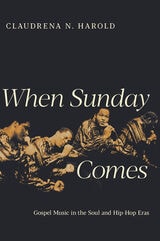
When Sunday Comes
Gospel Music in the Soul and Hip-Hop ErasClaudrena N. Harold
University of Illinois Press, 2020
Weaving insightful analysis into a collective biography of gospel icons, When Sunday Comes explores the music's essential place as an outlet for African Americans to express their spiritual and cultural selves.
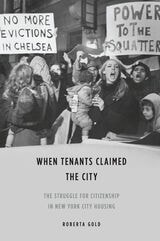
When Tenants Claimed the City
The Struggle for Citizenship in New York City HousingRoberta Gold
University of Illinois Press, 2014
In postwar America, not everyone wanted to move out of the city and into the suburbs. For decades before World War II, New York's tenants had organized to secure renters' rights. After the war, tenant activists raised the stakes by challenging the newly-dominant ideal of homeownership in racially segregated suburbs. They insisted that renters as well as owners had rights to stable, well-maintained homes, and they proposed that racially diverse urban communities held a right to remain in place--a right that outweighed owners' rights to raise rents, redevelop properties, or exclude tenants of color. Further, the activists asserted that women could participate fully in the political arenas where these matters were decided.
Grounded in archival research and oral history, When Tenants Claimed the City: The Struggle for Citizenship in New York City Housing shows that New York City's tenant movement made a significant claim to citizenship rights that came to accrue, both ideologically and legally, to homeownership in postwar America. Roberta Gold emphasizes the centrality of housing to the racial and class reorganization of the city after the war; the prominent role of women within the tenant movement; and their fostering of a concept of "community rights" grounded in their experience of living together in heterogeneous urban neighborhoods.
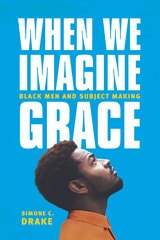
When We Imagine Grace
Black Men and Subject MakingSimone C. Drake
University of Chicago Press, 2016
In When We Imagine Grace, Drake borrows from Toni Morrison’s Beloved to bring imagination to the center of black masculinity studies—allowing individual black men to exempt themselves and their fates from a hateful, ignorant society and open themselves up as active agents at the center of their own stories. Against a backdrop of crisis, Drake brings forth the narratives of black men who have imagined grace for themselves. We meet African American cowboy, Nat Love, and Drake’s own grandfather, who served in the first black military unit to fight in World War II. Synthesizing black feminist and black masculinity studies, Drake analyzes black fathers and daughters, the valorization of black criminals, the black entrepreneurial pursuits of Marcus Garvey, Berry Gordy, and Jay-Z, and the denigration and celebration of gay black men: Cornelius Eady, Antoine Dodson, and Kehinde Wiley. With a powerful command of its subjects and a passionate dedication to hope, When We Imagine Grace gives us a new way of seeing and knowing black masculinity—sophisticated in concept and bracingly vivid in telling.
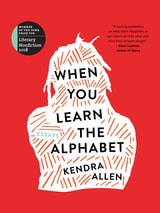
When You Learn the Alphabet
Kendra Allen
University of Iowa Press, 2019
These dynamics strive for some semblance of accountability, and the essays within this collection are used as displays of deep unlearning and restoring—balancing trauma and humor, poetics and reality, forgiveness and resentment.
When You Learn the Alphabet allots space for large moments of tenderness and empathy for all black bodies—but especially all black woman bodies—space for the underrepresented humanity and uncared for pain of black girls, and space to have the opportunity to be listened to in order to evolve past it.

When and Where They Enter
Black Women's Candidate Emergence at the State LevelJamil S. Scott-Cummings
University of Michigan Press, 2027
While Black women are often called the backbone of American democracy, their journeys to political office remain understudied. When and Where They Enter offers a way to develop our understanding of the women transforming American politics. By focusing on state-level elections, it explores what motivates Black women to run for public office, the biases they navigate in the public eye, and the structural factors that help or hinder their path to victory.
By deliberately departing from traditional, single-axis models of political ambition, Jamil Scott-Cummings frames candidate emergence through an explicit intersectional lens, treating Black women’s political agency as a dynamic interplay between psychological motivations, institutional factors, personal characteristics, and race-gender bias. She introduces a new conceptual model that challenges standard strategic entry theories: the intentional candidacy framework. Incorporating experiments, observational data, and elite interviews, When and Where They Enter offers robust empirical evidence of how race-gender identity shapes modern electoral supply. An essential read for voters, changemakers, and future leaders, the book offers a roadmap for understanding identity, power, and the future of political representation in America.
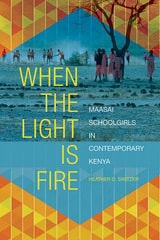
When the Light Is Fire
Maasai Schoolgirls in Contemporary KenyaHeather D. Switzer
University of Illinois Press, 2018
Heather D. Switzer's interviews with over one hundred Kenyan Maasai schoolgirls challenge the widespread view of education as a silver bullet solution to global poverty. In their own voices, the girls offer incisive insights into their commitments, aspirations, and desires. Switzer weaves this ethnographic material into an astute analysis of historical literature, education and development documents, and theoretical literature. Maasai schoolgirls express a particular knowledge about themselves and provocative hopes for their futures. Yet, as Switzer shows, new opportunities force them to face, and navigate, new vulnerabilities and insecurities within a society that is itself in flux.

When the Smoke Cleared
Attica Prison Poems and JournalCeles Tisdale, editor
Duke University Press, 2022
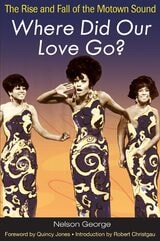
Where Did Our Love Go?
The Rise and Fall of the Motown SoundNelson George. Foreword by Quincy Jones, Introduction by Robert Christgau.
University of Illinois Press, 2007
Gordy's uncanny instinct for finding extraordinary talent--from performers and musicians to songwriters and producers—packed the label's roster with a who's who of historic artists and hitmakers. Here is the story of the Supremes and superstar Diana Ross, of the towering solo acts Marvin Gaye and Stevie Wonder, of vocal groups led by the Temptations and Four Tops, of the phenomenal Jackson Five and Michael Jackson, and of singer/songwriter and Motown executive Smokey Robinson. Up front about Gordy's manipulative and complex relationships with his artists, George reveals the inner workings of how Motown conducted its business. He also offers portraits of the Funk Brothers and other musicians who played the unforgettable songs.
George's preface shows how Motown influenced a later generation of young artists and music moguls, including R. Kelly, D'Angelo, Sean Combs, and Russell Simmons.
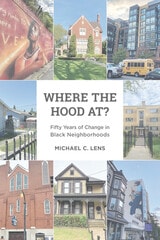
Where the Hood At?
Fifty Years of Change in Black NeighborhoodsMichael C. Lens
Russell Sage Foundation, 2024
Hip hop music was born out of Black neighborhoods in the 1970s and has evolved alongside them. In Where the Hood At? Lens uses rap’s growth and influence across the country to frame discussions about the development and conditions of Black neighborhoods. Lens finds that social and economic improvement in Black neighborhoods since the 1970s has been slow. However, how well Black neighborhoods are doing varies substantially by region. Overall, Black neighborhoods in the South are doing well and growing quickly. Washington D.C. and Atlanta, in particular, stand out as centers of Black affluence. Black neighborhoods in the Midwest and the Rust Belt, on the other hand, are particularly disadvantaged. The welfare of Black neighborhoods is related not only to factors within neighborhoods, such as the unemployment rate, but also to characteristics of the larger metropolitan area, such as overall income inequality. Lens finds that while gentrification is increasingly prevalent, it is growing slowly, and is not as pressing an issue as public discourse would make it seem. Instead, concentrated disadvantage is by far the most common and pressing problem in Black neighborhoods.
Lens argues that Black neighborhoods represent urban America’s greatest policy failures, and that recent housing policies have only had mild success. He provides several suggestions for policies with the goal of uplifting Black neighborhoods. One radical proposal is enacting policies and programs, such as tax breaks for entrepreneurs or other small business owners, that would encourage Black Americans to move back to the South. Black Americans migrating South would have a better chance at moving to an advantaged Black neighborhood as improving neighborhood location is higher when moving across regions. It would also help Black Americans expand their political and economic power. He also suggests a regional focus for economic development policies, particularly in the Midwest where Black neighborhoods are struggling the most. One way to boost economic development would be to move federal agencies to the area. He also calls for building more affordable housing in Black suburbs. Black poverty is lower in suburbs than in central cities, so increasing housing in Black suburbs would allow Black households to relocate to more advantaged neighborhoods, which research has shown leads to improved life outcomes.
Where the Hood At? is a remarkable and comprehensive account of Black neighborhoods that helps us to better understand the places and conditions that allow them flourish or impedes their advancement.
Whispered Consolations
Law and Narrative in African American LifeJon-Christian Suggs
University of Michigan Press, 2000
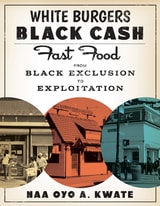
White Burgers, Black Cash
Fast Food from Black Exclusion to ExploitationNaa Oyo A. Kwate
University of Minnesota Press, 2023
The long and pernicious relationship between fast food restaurants and the African American community
- James Beard Foundation: James Beard Media Award for Reference, History, and Scholarship — Winner
- Urban Affairs Association Best Book in Urban Affairs — Winner
- Association for Humanist Sociology Betty and McClung Lee Book Award — Winner
- Black Caucus of the American Library Association — Honor, Nonfiction category
- Museum of African American History Stone Book Award — Shortlist
- Business History Conference: Hagley Prize — Finalist
- Association for the Study of Food and Society: ASFS Book Award — Winner
- Society for the Study of Social Problems: Eduardo Bonilla-Silva Outstanding Book Award — Winner
- Foreword: INDIES — Silver winner, History category
Today, fast food is disproportionately located in Black neighborhoods and marketed to Black Americans through trgeted advertising. But throughout much of the twentieth century, fast food was developed specifically for White urban and suburban customers, purposefully avoiding Black spaces. In White Burgers, Black Cash, Naa Oyo A. Kwate traces the evolution in fast food from the early 1900s to the present, from its long history of racist exclusion to its current damaging embrace of urban Black communities.
Fast food has historically been tied to the country’s self-image as the land of opportunity and is marketed as one of life’s simple pleasures, but a more insidious history lies at the industry’s core. White Burgers, Black Cash investigates the complex trajectory of restaurant locations from a decided commitment to Whiteness to the disproportionate densities that characterize Black communities today. Kwate expansively charts fast food’s racial and spatial transformation and centers the cities of Chicago, New York City, and Washington, D.C., in a national examination of the biggest brands of today, including White Castle, KFC, Burger King, McDonald’s, and more.
Deeply researched, compellingly told, and brimming with surprising details, White Burgers, Black Cash reveals the inequalities embedded in America’s popular national food tradition.
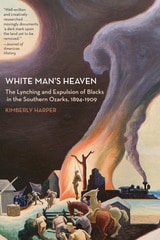
White Man's Heaven
The Lynching and Expulsion of Blacks in the Southern Ozarks, 1894-1909Kimberly Harper
University of Arkansas Press, 2010
White Rebels in Black
German Appropriation of Black Popular CulturePriscilla Layne
University of Michigan Press, 2018

White Scholars/African American Texts
Edited by Lisa A. Long
Rutgers University Press, 2005
What makes someone an authority? What makes one person's knowledge more credible than another's? In the ongoing debates over racial authenticity, some attest that we can know each other's experiences simply because we are all "human," while others assume a more skeptical stance, insisting that racial differences create unbridgeable gaps in knowledge.
Bringing new perspectives to these perennial debates, the essays in this collection explore the many difficulties created by the fact that white scholars greatly outnumber black scholars in the study and teaching of African American literature. Contributors, including some of the most prominent theorists in the field as well as younger scholars, examine who is speaking, what is being spoken and what is not, and why framing African American literature in terms of an exclusive black/white racial divide is problematic and limiting.
In highlighting the "whiteness" of some African Americanists, the collection does not imply that the teaching or understanding of black literature by white scholars is definitively impossible. Indeed such work is not only possible, but imperative. Instead, the essays aim to open a much needed public conversation about the real and pressing challenges that white scholars face in this type of work, as well as the implications of how these challenges are met.
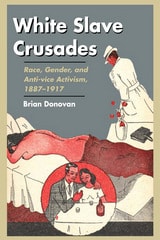
White Slave Crusades
Race, Gender, and Anti-vice Activism, 1887-1917Brian Donovan
University of Illinois Press, 2005
Focusing on the intersection of race, gender, and sex in the antiprostitution campaigns, Brian Donovan analyzes the reactions of native-born whites to new immigrant groups in Chicago, to African Americans in New York City, and to Chinese immigrants in San Francisco. Donovan shows how reformers employed white slavery narratives of sexual danger to clarify the boundaries of racial categories, allowing native-born whites to speak of a collective "us" as opposed to a "them." These stories about forced prostitution provided an emotionally powerful justification for segregation, as well as other forms of racial and sexual boundary maintenance in urban America.
White Violence and Black Response
From Reconstruction to MontgomeryHerbert Shapiro
University of Massachusetts Press, 1988
We are taught that America is a society based on respect for the law and orderly procedures. That the Constitution stands as a safeguard of individual freedom, and the courts and the police are supposedly established to enforce the law. When a controversial issue arises in the American fabric, it is to be resolved not in the streets but through the democratic processes of elections. Yet, for blacks these liberal values have been turned into their opposites. The courts have most often stood silent in the face of racist violence or have turned their wrath against the victims, not the perpetrators; the police have protected the mob rather than the mobbed and have often either aided the lynchers or displayed amazing inability to identify them. Where race is concerned, legislative or judicial action to deal with controversial issues has often come late and been partial in nature, while white violence has continued to terrorize black Americans without hindrance.
In White Violence and Black Response: From Reconstruction to Montgomery, Herbert Shapiro explores the depths of violence generated by white racism and the irony of the American association with violence as a behavior of black people. Citing the nation's political leadership, educational institutions, and news media as institutions that fail to educate Americans about the oppressive social conditions that have root in these criminal acts, Shapiro is able to expose the ways in which white supremacy operates within American institutions and the responses by black people in this powerful read.
Whitewashing Uncle Tom's Cabin
Nineteenth-Century Women Novelists Respond to StoweJoy Jordan-Lake
Vanderbilt University Press, 2005
Who Gets the Good Jobs?
Combating Race and Gender DisparitiesCherry, Robert
Rutgers University Press, 2001
Racial and gender employment inequalities are alive and well today. In 2000, the U.S. government offered $508 million to settle more than one thousand lawsuits brought against the federally funded Voice of America by female workers. At the same time, African American employees of Coca-Cola sued their employer, citing the large number of minorities in low-paying jobs, with just a handful at top levels. Even Alan Greenspan has urged firms to eliminate the “distortions that arise as a result of discrimination.”
The political agenda regarding this issue is polarized. Many conservative economists claim that financial considerations have led businesses to hire minorities because such practices increase profits. In opposition, many liberal economists believe businesses will hire minorities only if forced to do so by equal employment opportunity policies. Robert Cherry bridges these two positions, arguing that there is some truth to the positive effect of the profit motive, but that market forces alone are not enough to eliminate employment and earnings disparities.
Cherry surveys the political and economic forces that influenced labor market practices in the nineteenth and twentieth centuries, focusing on the employment barriers African Americans, women, and immigrants encounter. He then assesses the effects of 1960s civil rights legislation and finds that improvements have been substantial, primarily for college-educated African Americans and women; therefore, he recommends that equal employment opportunity policies be strengthened. Cherry demonstrates how the promotion of full employment can further the advancement of working-class African Americans and women.
Who Got the Camera?
A History of Rap and RealityEric Harvey
University of Texas Press, 2021
Reality first appeared in the late 1980s—in the sense not of real life but rather of the TV entertainment genre inaugurated by shows such as Cops and America’s Most Wanted; the daytime gabfests of Geraldo, Oprah, and Donahue; and the tabloid news of A Current Affair. In a bracing work of cultural criticism, Eric Harvey argues that reality TV emerged in dialog with another kind of entertainment that served as its foil while borrowing its techniques: gangsta rap. Or, as legendary performers Ice Cube and Ice-T called it, “reality rap.”
Reality rap and reality TV were components of a cultural revolution that redefined popular entertainment as a truth-telling medium. Reality entertainment borrowed journalistic tropes but was undiluted by the caveats and context that journalism demanded. While N.W.A.’s “Fuck tha Police” countered Cops’ vision of Black lives in America, the reality rappers who emerged in that group’s wake, such as Snoop Doggy Dogg and Tupac Shakur, embraced reality’s visceral tabloid sensationalism, using the media's obsession with Black criminality to collapse the distinction between image and truth. Reality TV and reality rap nurtured the world we live in now, where politics and basic facts don’t feel real until they have been translated into mass-mediated entertainment.

Whose Art Is It?
Jane Kramer
Duke University Press, 1994
This compelling narrative raises questions about community and public art policies, about stereotypes and multiculturalism. With wit, drama, sympathy, and circumspection, Kramer draws the reader into the multicultural debate, challenging our assumptions about art, image, and their relation to community. Her portrait of the South Bronx takes the argument to its grass roots—provocative, surprising in its contradictions and complexities and not at all easy to resolve.
Accompanied by an introduction by Catharine R. Stimpson exploring the issues of artistic freedom, "political correctness," and multiculturalism, Whose Art Is It? is a lively and accessible introduction to the ongoing debate on representation and private expression in the public sphere.
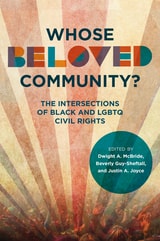
Whose Beloved Community?
The Intersections of Black and LGBTQ Civil RightsEdited by Dwight A. McBride, Beverly Guy-Sheftall, and Justin A. Joyce
University of Illinois Press, 2026
Martin Luther King Jr.’s idea of “the beloved community” focused on the hoped-for new relationship between the oppressor and the oppressed after the success of a nonviolent movement. But the vision excluded, and sometimes still excludes, LGBTQIA+ people and Black women.
The editors curate essays that see beloved community as a generative space that centers justice. Taking inspiration from the radical moral vision of figures like Bayard Rustin and Audre Lorde, the contributors look at how Black queer, feminist, and trans thought and practice can cultivate belonging across lines of race, gender, sexuality, class, and region. Essayists use a variety of disciplinary and methodological perspectives that includes archival recovery, institutional critique, cultural analysis, ethnography, and political theory. The contributors define beloved community for themselves while offering entry points—through art, culture, activism, policy, pedagogy, and theory—for exploring what it means to belong, to resist, and to build.
Expansive and interdisciplinary, <i>Whose Beloved Community?</i> begins the process of advancing toward truly inclusive communities that are more honest, more complex, and more loving.
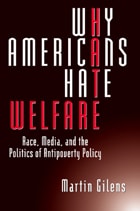
Why Americans Hate Welfare
Race, Media, and the Politics of Antipoverty PolicyMartin Gilens
University of Chicago Press, 1999
"With one out of five children currently living in poverty and more than 100,000 families with children now homeless, Gilens's book is must reading if you want to understand how the mainstream media have helped justify, and even produce, this state of affairs." —Susan Douglas, The Progressive
"Gilens's well-written and logically developed argument deserves to be taken seriously." —Choice
"A provocative analysis of American attitudes towards 'welfare.'. . . [Gilens] shows how racial stereotypes, not white self-interest or anti-statism, lie at the root of opposition to welfare programs." -Library Journal
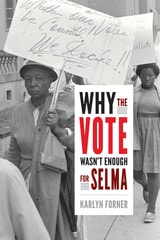
Why the Vote Wasn't Enough for Selma
Karyn Forner
Duke University Press, 2017
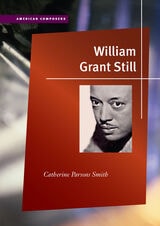
William Grant Still
Catherine Parsons Smith
University of Illinois Press, 2008
Catherine Parsons Smith’s biography tracks the composer's interrelated careers in popular and concert music. Still’s artistic journey took him from conservatory study with George W. Chadwick to collaborating with Langston Hughes, working as a commercial arranger and composer on Broadway and radio, arranging for artists like Sophie Tucker and Artie Shaw, and serving as the recording director for the first Black-owned record label. But despite his prolific production and multidimensional talents, Still endured financial struggles and declining attention to his work.