Results by title
3576 books match the query 'American' and 207 start with w
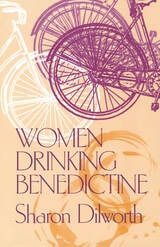
WOMEN DRINKING BENEDICTINE
Sharon Dilworth
The Ohio State University Press, 1998
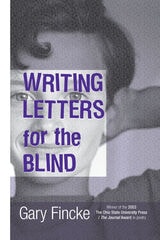
WRITING LETTERS FOR THE BLIND
Gary Fincke
The Ohio State University Press, 2003
These poems begin in the coming-of-age moments that change us by forcing recognition of physical weakness, the power of sex, the importance of family, the presence of evil, and the prevalence of mortality. The book opens with narratives taken primarily from childhood and then, divided by long poem sequences, moves to adulthood and confrontation with the identity we acquire through close relationships and the pressures of our appetites, finally ending with what reads as a universal prayer of redemption.
Writing Letters for the Blind presents the reader with visions of this world and all its beauty and sordidness, joy and disappointment. This poet reports the breaking news just in from the heart and soul, and the body as well. “My father has taught me the beatitudes of sight,” Fincke tells us, always aware of what we owe to those who brought us here. He stays up through the starry darkness in the insomnia of one who feels it his duty to pay passionate attention, a poet engaged in “the basic defense of simple things.”
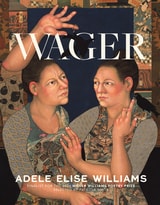
Wager
Adele Elise Williams
University of Arkansas Press, 2024
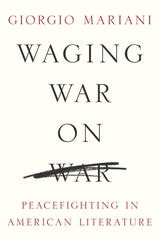
Waging War on War
Peacefighting in American LiteratureGiorgio Mariana
University of Illinois Press, 2015
Giorgio Mariani rigorously engages with the essential question of what makes a text explicitly anti-war. Ranging from Emerson and Joel Barlow to Maxine Hong Kingston and Tim O'Brien, Waging War on War explores why sustained attempts at identifying the anti-war text's formal and philosophical features seem to always end at an impasse. Mariani moves a step beyond to construct a theoretical model that invites new inquiries into America's nonviolent, nonconformist tradition even as it challenges the ways we study U.S. warmaking and the cultural reactions to it. In the process, he shows how the ideal of nonviolence and a dislike of war have been significant, if nonhegemonic, features of American culture since the nation's early days.
Ambitious and nuanced, Waging War on War at last defines anti-war literature while exploring the genre's role in an assertive peacefighting project that offered--and still offers--alternatives to violence.
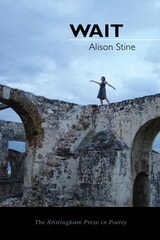
Wait
Alison Stine
University of Wisconsin Press, 2011
In a small town under a spell, a child bride prays for the sheriff’s gun. Iron under a bed stops a nightmare. The carousel artist can carve only birds. Part fairy tale and part gothic ballad, Wait spans a single year: the year before a young woman’s marriage. Someone is always watching—from the warehouse, from the woods. And on the outskirts of town, someone new is waiting.
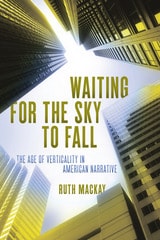
Waiting for the Sky to Fall
The Age of Verticality in American NarrativeRuth Mackay
The Ohio State University Press, 2016
With this study, Mackay asks: In what oblique ways has verticality leaked into American narrative? Why do metaphors of up and down recur across the twentieth century? With close readings of Jonathan Safran Foer’s Extremely Loud and Incredibly Close, Winsor McCay’s comic strip Little Nemo in Slumberland, Upton Sinclair’s Oil! and its film rendering There Will Be Blood, Allen Ginsberg’s poetic dissections of the nuclear bomb, and Leslie Marmon Silko’s imagining of flight in Almanac of the Dead, this interdisciplinary study culminates with a discussion of Philippe Petit’s tightrope walk between the Twin Towers. Waiting for the Sky to Fall examines how vertical representation cleaves to, and often transforms the associations of, specific events that are physically and visually disorienting, disquieting, or even traumatic.
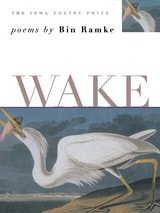
Wake
Bin Ramke
University of Iowa Press, 1999
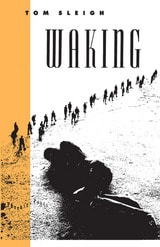
Waking
Tom Sleigh
University of Chicago Press, 1990
". . . . it takes a book like Tom Sleigh's Waking to remind us of all that was most innately stirring and necessary about the confessional insurrection. . . . in Waking Sleigh proves himself worthy of spinning gold thread from the straw of sincerity, elevating his so-called confessions from the merely revealing to the durably revelatory."—David Barber, Poetry
"[Sleigh] is a consummate stylist whose formal control and exploitation of convention is graceful and calm. And yet it is from the calm and steady control that some of Sleigh's most emotionally powerful moments are acheived. . . .Waking is one of the strongest collections of poems to appear in the last few years."—Michael Collier, Partisan Review
"Tom Sleigh's second book of poems, Waking is so fine one can hardly do justice to it in a review. The second poem, 'Ending,' is a remarkable piece of work which introduces the notion of the 'hook'—which hooks us to life even while it kills us. It is a presence of painful mortality which haunts the rest of the book."—Liz Rosenberg, New York Times Book Review
"Waking handsomely and affirmatively demonstrates its own clean and demanding premise: one's imagination is awakened to life by the burden of mortality. One reads in these poems a view not of the poet's suffering, but of our own temporal joys and sorrows."—Jay Meek, Hungry Mind Review
"With the publication of Waking, his second collection of poems, Tom Sleigh establishes his voice among the strongest of his generation. A poet of subject and craft, his skill allows him to avoid the slackness of much free verse and, at the same time, break free of the stiff old numbers in order to create a spoken language of rhythmic intensity and eloquence. . . . In this book Tom Sleigh's vigilance provides his readers with an invaluable gift: we can wake our lives."—Stuart Dischell, Boston Review
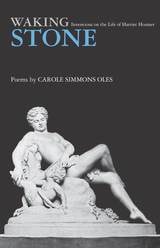
Waking Stone
Inventions on the Life of Harriet HosmerCarole Simmons Oles
University of Arkansas Press, 2006
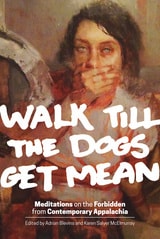
Walk Till the Dogs Get Mean
Meditations on the Forbidden from Contemporary AppalachiaAdrian Blevins
Ohio University Press, 2015
In Walk Till the Dogs Get Mean, Adrian Blevins and Karen Salyer McElmurray collect essays from today’s finest established and emerging writers with roots in Appalachia. Together, these essays take the theme of silencing in Appalachian culture, whether the details of that theme revolve around faith, class, work, or family legacies.
In essays that take wide-ranging forms—making this an ideal volume for creative nonfiction classes—contributors write about families left behind, hard-earned educations, selves transformed, identities chosen, and risks taken. They consider the courage required for the inheritances they carry.
Toughness and generosity alike characterize works by Dorothy Allison, bell hooks, Silas House, and others. These writers travel far away from the boundaries of a traditional Appalachia, and then circle back—always—to the mountains that made each of them the distinctive thinking and feeling people they ultimately became. The essays in Walk Till the Dogs Get Mean are an individual and collective act of courage.
Contributors:
Dorothy Allison, Rob Amberg, Pinckney Benedict, Kathryn Stripling Byer, Sheldon Lee Compton, Michael Croley, Richard Currey, Joyce Dyer, Sarah Einstein, Connie May Fowler, RJ Gibson, Mary Crockett Hill, bell hooks, Silas House, Jason Howard, David Huddle, Tennessee Jones, Lisa Lewis, Jeff Mann, Chris Offutt, Ann Pancake, Jayne Anne Phillips, Melissa Range, Carter Sickels, Aaron Smith, Jane Springer, Ida Stewart, Jacinda Townsend, Jessie van Eerden, Julia Watts, Charles Dodd White, and Crystal Wilkinson.
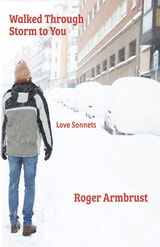
Walked Through Storm to You
Love SonnetsRoger Armbrust
Parkhurst Brothers, Inc., 2022
In this book of 126 sonnets, the poet invites us to walk with him as his creative sense takes us through every mood of nature on earth, and to the universe beyond. Imagery’s connections turn hearing 2 a.m. rain into Hemingway’s and James Dickey’s typewriter keys, leading the poet to write. Each poem seems to meld us to relationships.
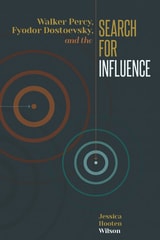
Walker Percy, Fyodor Dostoevsky, and the Search for Influence
Jessica Hooten Wilson
The Ohio State University Press, 2017
From Dostoevsky, Percy learned how to captivate his non-Christian readership with fiction saturated by a Christian vision of reality. Not only was his method of imitation in line with this Christian faith but also the aesthetic mode and very content of his narratives centered on his knowledge of Christ. The influence of Dostoevsky on Percy, then, becomes significant as a modern case study for showing the illusion of artistic autonomy and long-held, Romantic assumptions about artistic originality. Ultimately, Wilson suggests, only by studying the good that came before can one translate it in a new voice for the here and now.
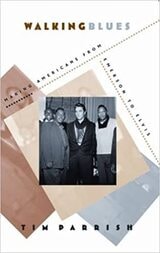
Walking Blues
Making Americans from Emerson to ElvisTimothy Parrish
University of Massachusetts Press, 2009
This is the central question addressed by Tim Parrish in this imaginative interdisciplinary study. Working in the tradition of the blues, an art form based on the adaptation of cultural past to present, Parrish seeks to show what happens when we think of American identity not as some transcendental entity or essence, but as an ongoing process. At the core of his analysis is an appreciation of the rich legacy of pragmatism, a distinctly American frame of mind that sees truth as an act rather than an object, as a matter of doing rather than being. While the philosophical roots of pragmatism can be found in the writings of Ralph Waldo Emerson, William and Henry James, and Horace Kallen, the same intellectual approach informs the work of writers such as Ralph Ellison, Mary Antin, and Philip Roth as well as creative artists such as Son House, Elvis Presley, and James Brown. What all of these figures share, according to Parrish, is a recognition of the intrinsic connection between thought and action that has allowed Americans to define who they are through what they do.
Walking Blues accounts for our cultural diversity without either insisting that we are all the same or denying that we have anything in common. Far from glossing over difference, Parrish shows how our American social, racial, and ethnic conflicts often mark the starting point for the various acts of creation through which we make—and remake—ourselves as Americans.
Walking Towards Walden
A Pilgrimage in Search of PlaceJohn Hanson Mitchell
University Press of New England, 2015
Walking with Eve in the Loved City
PoemsRoy Bentley
University of Arkansas Press, 2018
Finalist, 2018 Miller Williams Poetry Prize
Walking with Eve in the Loved City is an ambitious collection. Using a variety of male figures—Jeff Goldblum, Ringo Starr, the poet’s uncle Billy, to name a few—these poems skillfully interrogate masculinity and its cultural artifacts, searching for a way to reconcile reverence for the father figure with a crisis of faith about the world as run by men. And yet, despite the gravity of the subjects these poems engage, this is a hopeful, frequently funny book that encourages the reader to look deeply at the world, and then to laugh if she can.
Roy Bentley often accomplishes this work through a careful balancing of honesty and misdirection, as when in the poem “Can’t Help Falling in Love” the real drama of the narrative—the appearance of an affair between the speaker’s father and a drive-in restaurant carhop—operates as a backdrop for the eight-year-old speaker’s puerile attraction to the woman; or when the vampire Nosferatu (a frequent figure in the poems) materializes in a trailer park, his immortality becoming a lens through which to process the speaker’s righteous anger about wealth and poverty.
God too features prominently—as does doubt. Drawing from the vernacular of his childhood, Bentley accesses the simultaneous austerity and lyrical opulence of the King James Bible to invent stories in which the last note struck is often a call to pay kinder attention. More than anything, these poems serve as humanistic advocates, using the power of narrative—film, interview, imagination, memoir—to highlight how people matter.
Walking with Eve in the Loved City invites the reader to join in this watching and witnessing, to take part in renewing how we see.
Wallace Stevens And The Apocalyptic Mode
Woodland, Malcolm
University of Iowa Press, 2005
This study begins with an examination of the textual and generic issues surrounding apocalypse, culminating in the idea of apocalyptic language as a form of “discursive mastery” over the mayhem of events. Woodland provides an informative religious/historical discussion of apocalypse and, engaging with such critics as Parker, Derrida, and Fowler, sets forth the paradoxes and complexities that eventually challenge any clear dualities between apocalyptic and antiapocalyptic thinking.
Woodland then examines some of Stevens’s wartime essays and poems and describes Stevens’s efforts to salvage a sense of self and poetic vitality in a time of war, as well as his resistance to the possibility of cultural collapse. Woodland discusses the major postwar poems “Credences of Summer” and “The Auroras of Autumn” in separate chapters, examining the interaction of (anti)apocalyptic modes with, respectively, pastoral and elegy.
The final chapter offers a perspective on Stevens’s place in literary history by examining the work of a contemporary poet, Jorie Graham, whose poetry quotes from Stevens’s oeuvre and shows other marks of his influence. Woodland focuses on Graham's 1997 collection The Errancy and shows that her antiapocalyptic poetry involves a very different attitude toward the possibility of a radical break with a particular cultural or aesthetic stance.
Wallace Stevens and the Apocalyptic Mode, offering a new understanding of Stevens’s position in literary history, will greatly interest literary scholars and students.
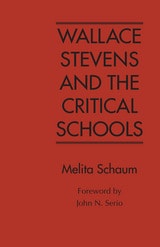
Wallace Stevens and the Critical Schools
Melita C. Schaum
University of Alabama Press, 1988
Wallace Stevens and the Critical Schools reveals a field marked by conflict and contradiction, both within and among critical works in their attempts to explicate and appropriate this major American poet. Stevens’ changing reception among the critical schools reveals much about the shifting nature of American literature and criticism in this century and illuminates the often polemical process of literary canon formation. Each chapter of this book examines a particular aspect of the 20th-century critical involvement with Wallace Stevens’ poetry, introduced by a discussion of the poet’s work as an arena for the convergence of modern critical tendencies and concerns.
First, the author examines the avant-garde milieu of early 20th-century modernism, which implicated Stevens in its melee of affiliations and enmities and which influenced critics’ ambivalent responses to his early work. She traces the critical controversies of the poet’s emergence before and during the 1920s, specifically the clash between New Humanism and aestheticism, and demonstrates how the quality of irony in Stevens’ work became a part of the critics’ general repertoire in their assessment of this poet.
The 1930s, 1940s, and 1950s were decades during which Stevens criticism became dominated by the New Critical ideology. The turn toward deconstruction in Stevens criticism stands in part as a response to the New Critical dilemma, seen in the manner in which such critics as J. Hillis Miller and Joseph Riddel appropriated the concept of “decreation” to explain the sense of rupture in Stevens’ late poetry yet brought that concept to its logical end in a deconstructive paradigm.
Finally, Schaum identifies four major theoretical approaches to Stevens in the past two decades that continue to inform and direct the field of critical dissent and exploration in the 1980s. Such theories as Bloomian misprision, versions of hermeneutic criticism, redefinitions of the deconstructive enterprise, and the contemporary call for a new historicism continue the battle to appropriate Stevens as the “hard prize” of critical aims and investigations.
Wallace Stevens and the Limits of Reading and Writing
Bart Eeckhout
University of Missouri Press, 2002
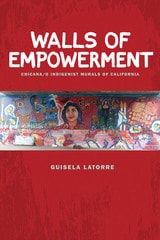
Walls of Empowerment
Chicana/o Indigenist Murals of CaliforniaBy Guisela Latorre
University of Texas Press, 2008
Exploring three major hubs of muralist activity in California, where indigenist imagery is prevalent, Walls of Empowerment celebrates an aesthetic that seeks to firmly establish Chicana/o sociopolitical identity in U.S. territory. Providing readers with a history and genealogy of key muralists' productions, Guisela Latorre also showcases new material and original research on works and artists never before examined in print.
An art form often associated with male creative endeavors, muralism in fact reflects significant contributions by Chicana artists. Encompassing these and other aspects of contemporary dialogues, including the often tense relationship between graffiti and muralism, Walls of Empowerment is a comprehensive study that, unlike many previous endeavors, does not privilege non-public Latina/o art. In addition, Latorre introduces readers to the role of new media, including performance, sculpture, and digital technology, in shaping the muralist's "canvas."
Drawing on nearly a decade of fieldwork, this timely endeavor highlights the ways in which California's Mexican American communities have used images of indigenous peoples to raise awareness of the region's original citizens. Latorre also casts murals as a radical force for decolonization and liberation, and she provides a stirring description of the decades, particularly the late 1960s through 1980s, that saw California's rise as the epicenter of mural production. Blending the perspectives of art history and sociology with firsthand accounts drawn from artists' interviews, Walls of Empowerment represents a crucial turning point in the study of these iconographic artifacts.
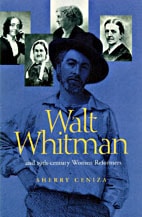
Walt Whitman and Nineteenth-Century Women Reformers
Sherry Ceniza
University of Alabama Press, 1999
WINNER OF THE ELIZABETH AGEE PRIZE IN AMERICAN LITERATURE
Examining Whitman’s poetic development through the documented influence of nineteenth‑century women reformers.
Walt Whitman and 19th-Century Women Reformers documents Whitman's friendships with women during the 1850s, the decade of Whitman's most creative period. The book reveals startling connections between the first three editions of Leaves of Grass and the texts generated by the women he knew during this period, many of whom were radical activists in the women's rights movement.
Sherry Ceniza argues that Whitman's editions of Leaves became progressively more radically 'feminist' as he followed the women's rights movement during the 1850s and that he was influenced by what he called the 'true woman of the new aggressive type . . . woman under the new dispensation.' Ceniza documents the progression of the National Woman's Rights movement through the lives and writings of three of its leaders- Abby Hills Price, Paulina Wright Davis, and Ernestine L. Rose. By juxtaposing the texts written by these women with Leaves, Ceniza shows that Whitman used many of the same arguments and rhetorical gestures as his female activist friends.
The book also discusses the influence of women engaged in women's rights outside the National Woman's Rights organization. And Ceniza's opening chapter is devoted to a fresh interpretation of the life and thought of another strong-minded woman who influenced the poet's writing-Louisa Van Velsor Whitman, Walt Whitman's mother.
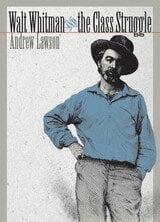
Walt Whitman and the Class Struggle
Andrew Lawson
University of Iowa Press, 2006
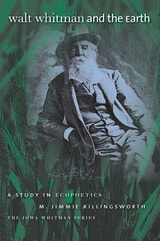
Walt Whitman and the Earth
A Study of EcopoeticsM. Jimmie Killingsworth
University of Iowa Press, 2005
It grows such sweet things out of such corruptions,
It turns harmless and stainless on its axis, with such endless successions of diseas’d corpses,
It distills such exquisite winds out of such infused fetor,
It renews with such unwitting looks its prodigal, annual, sumptuous crops,
It gives such divine materials to men, and accepts such leavings from them at last.
—Walt Whitman, from “This Compost”
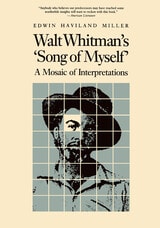
Walt Whitman's "Song of Myself"
A Mosaic of InterpretationsEdwin Haviland Miller
University of Iowa Press, 1991
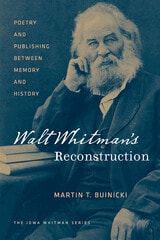
Walt Whitman's Reconstruction
Poetry and Publishing between Memory and HistoryMartin T. Buinicki
University of Iowa Press, 2012
For Walt Whitman, living and working in Washington, D.C., after the Civil War, Reconstruction meant not only navigating these tumultuous years alongside his fellow citizens but also coming to terms with his own memories of the war. Just as the work of national reconstruction would continue long past its official end in 1877, Whitman’s own reconstruction would continue throughout the remainder of his life as he worked to revise his poetic project—and his public image—to incorporate the disasters that had befallen the Union. In this innovative and insightful analysis of the considerable poetic and personal reimagining that is the hallmark of these postwar years, Martin Buinicki reveals the ways that Whitman reconstructed and read the war.
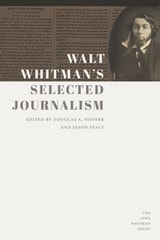
Walt Whitman's Selected Journalism
Walt Whitman
University of Iowa Press, 2015
Walt Whitman’s Selected Journalism covers Whitman’s early years as a part-time editorialist and ambivalent schoolteacher between 1838 and 1841. After 1841, it follows his work as a dedicated full-time newspaperman and editor, most prominently at the New York Aurora and the Brooklyn Daily Eagle between 1842 and 1848. After 1848 and up to the Civil War, Whitman’s journalism shows his slow transformation from daily newspaper editor to poet. This volume gathers journalism from throughout these early years in his career, focusing on reporting, reviews, and editorials on politics and democratic culture, the arts, and the social debates of his day. It also includes some of Whitman’s best early reportage, in the form of the short, personal pieces he wrote that aimed to give his readers a sense of immediacy of experience as he guided them through various aspects of daily life in America’s largest metropolis.
Over time, journalism’s limitations pushed Whitman to seek another medium to capture and describe the world and the experience of America with words. In this light, today’s readers of Whitman are doubly indebted to his career in journalism. In presenting Whitman-the-journalist in his own words here, and with useful context and annotations by renowned scholars, Walt Whitman’s Selected Journalism illuminates for readers the future poet’s earliest attempts to speak on behalf of and to the entire American republic.

Walt Whitman's Songs of Male Intimacy and Love
"Live Oak, with Moss" and "Calamus"Whitman, Walt
University of Iowa Press, 2011
In his 1859 “Live Oak, with Moss,” Walt Whitman’s unpublished sheaf of twelve poems on manly passion, the poet dreams of a city where men who love men can live and love openly. The revised “Live Oak, with Moss” poems became “Calamus,” Whitman’s cluster of poems on “adhesive” and manly love, comradeship, and democracy, in Leaves of Grass. Commemorating both the first publication of the “Calamus” poems and the little-known manuscript of notebook poems out of which the “Calamus” cluster grew, Whitman scholar Betsy Erkkila brings together in a single edition for the first time the “Live Oak, with Moss” poems, the 1860 “Calamus” poems, and the final 1881 “Calamus” poems. In addition to honoring the sesquicentennial of the “Calamus” cluster, she celebrates the ongoing legacy of Whitman’s songs of manly passion, sex, and love.
The volume begins with Whitman’s elegantly handwritten manuscript of the “Live Oak, with Moss” poems, printed side by side with a typeset transcription and followed by a facsimile of the 1860 version of the “Calamus” poems. The concluding section reprints the final version of the “Calamus” poems from the 1881 edition of Leaves of Grass. In an afterword, Erkkila discusses the radical nature of these poems in literary, sexual, and social history; the changes Whitman made in the “Live Oak” and “Calamus” poems in the post–Civil War and Reconstruction years; the literary, political, and other contests surrounding the poems; and the constitutive role the poems have played in the emergence of modern heterosexual and homosexual identity in the United States and worldwide. The volume closes with a selected bibliography of works that have contributed to the critical and interpretive struggles around Whitman’s man-loving life.
One hundred and fifty years after Whitman’s brave decision to speak publicly about a fully realized democracy, his country is still locked in a struggle over the rights of homosexuals. These public battles have been at the very center of controversies over the life, work, and legacy of Walt Whitman, America’s (and the world’s) major poet of democracy and its major singer of what he called “manly love” in all its moods. Together the poems in this omnibus volume affirm his creation of a radical new language designed to convey and affirm the poet’s man love.
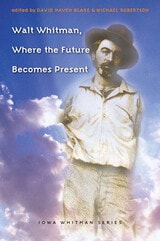
Walt Whitman, Where the Future Becomes Present
David Haven Blake
University of Iowa Press, 2008
Walt Whitman, Where the Future Becomes Present invigorates Whitman studies by garnering insights from a diverse group of writers and intellectuals. Writing from the perspectives of art history, political theory, creative writing, and literary criticism, the contributors place Whitman in the center of both world literature and American public life. The volume is especially notable for being the best example yet published of what the editors call the New Textuality in Whitman studies, an emergent mode of criticism that focuses on the different editions of Whitman’s poems as independent works of art.
Written one hundred fifty years after the book’s publication, these timely, innovative responses to Leaves of Grass confirm that the future of Whitman’s poems is vital to our present.
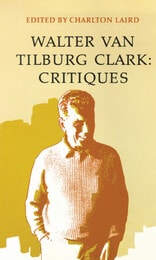
Walter Van Tilburg Clark
CritiquesCharlton Laird
University of Nevada Press, 1983
Beginning in 1849, Alfred Doten recorded his life in minute detail for more than 54 years. His revealing daily accounts of the West's lusty mining frontier included tales of lynching, vigilante justice, shootings in the street, grand opera and theatre, stock manipulations, seances, musical soirees, and general "jollifications." Clark selected and edited the most valuable portions of Doten's massive diaries. He said he knew of no other account, fact or fiction, that so graphically presented the tragic course of a single representative life through the violent transformations brought about by the California Gold Rush and the Nevada Silver Boom.
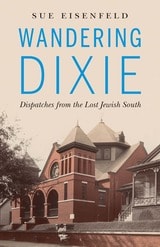
Wandering Dixie
Dispatches from the Lost Jewish SouthSue Eisenfeld
The Ohio State University Press, 2020
From South Carolina to Arkansas, she explores the small towns where Jewish people once lived and thrived. She visits the site of her distant cousin and civil rights activist Andrew Goodman’s murder during 1964’s Freedom Summer. She also talks with the only Jews remaining in some of the “lost” places, from Selma to the Mississippi Delta to Natchitoches, and visits areas with no Jewish community left—except for an old temple or overgrown cemetery. Eisenfeld follows her curiosity about Jewish Confederates and casts an unflinching eye on early southern Jews’ participation in slavery. Her travels become a journey of revelation about our nation’s fraught history and a personal reckoning with the true nature of America.
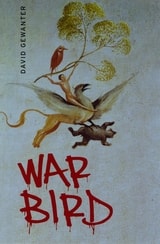
War Bird
David Gewanter
University of Chicago Press, 2009
From Three at 4:43
And here comes my friend, limping on
his heavy boot, the heel come off. A cobbler's shop
appears, and I buy the black nails, the dwarf's hammer, glue and strapping.
I work hard on it, bending there
until he speaks and walks on.
But as he is dead, his voice and step
make no sound.
In his third book of poems, David Gewanter takes on wartime America, showing our personal costs and inextricable complicities. The constructs of our social lives, the conventions of our political values, the ambitions of our private fantasies—all these collide comically and tragically. Here, the far right marries the far left, and the sacred is undone by the profane. Gewanter's ironic vision pulls together details from science, history, philosophy, the disappearing dailies, and the emotional life of an engaged and singular mind into poems on the move with tense rhythms, rich correspondences, and daring hairpin turns. War Bird gives the lie to the shining moral complacencies of the homefront. Unsettling yet radiant, this collection is a book for troubled times, for what Whitman called, in “1861,” our “hurrying, crashing, sad, distracted year.”
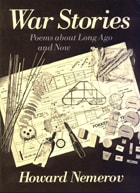
War Stories
Poems about Long Ago and NowHoward Nemerov
University of Chicago Press, 1987
"These new poems of Howard Nemerov are the poems of a master at his best. What is more, they are accessible. They speak out in a beautiful unclouded voice of the experience of a flyer of the Second World War. Although as 'war poems' they take their place among the best of that genre, they resonate far beyond their history with an arresting immediacy."—Karl Shapiro
"Nemerov is the poet of our sanity, his the vision of the heroic ordinary. . . . Forty years after W. W. II, Nemerov's experiences in that war translate into timeless poetry. . . . Nemerov's poetry will outlast our generation: to read it now is to take part in something of ourselves and our world that will—and should—endure."—The Virginia Quarterly Review
"Throughout all his verse, formal language sets up a proscenium, keeping sentiment at a distance. In this elegant theatre, he tells stories that always, first, are works of art."—Denise Low, Kansas City Star
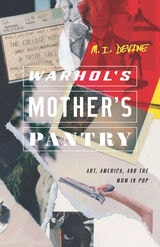
Warhol's Mother's Pantry
Art, America, and the Mom in PopM. I. Devine
The Ohio State University Press, 2020
“What are these fragments we’ve Jersey Shored against our ruin?” asks M. I. Devine, remixing T. S. Eliot, in this dizzying collection of essays that pays homage to the cultural forms that hold us steady. These fragments are stored in Warhol’s Mother’s Pantry, which takes us deep beneath the surfaces of pop to explore our shared quest for meaning today. Julia Warhola, an immigrant who arrived as the US was closing its borders a century ago, is the muse of reuse in these essays that cross boundaries—between now and then, high and low. She is the mom in pop who cut tin cans into flowers and taught Andy (and us) how to reshape and redeem our world. In essays as lyrical, witty, and experimental as the works they cover, Devine offers a new account of pop humanism. How we cut new things from the traditions we’re given, why we don’t stop believin’ (and carry on, wayward sons) when so much is stacked against us. Here are Leonard Cohen’s last songs and Molly Bloom’s last words; Vampire Weekend’s Rostam and Philip Larkin too; Stevie Smith, John Donne, and Kendrick Lamar; sonnets and selfies; early cinema and post–9/11 film, pop hooks, and pop art. In Devine’s hands, these literary and cultural artifacts are provocatively reassembled into an urgent and refreshing history that refuses to let its readers forget where pop came from and where it can go.

Washington Irving’s Contributions to the Corrector
Martin Roth, EditorIntroduction by Martin Roth
University of Minnesota Press, 1968
Washington Irving's Contributions to the Corrector was first published in 1968. Minnesota Archive Editions uses digital technology to make long-unavailable books once again accessible, and are published unaltered from the original University of Minnesota Press editions.
This volume makes available, for the first time in collected form, a series of sketches by Washington Irving which were published anonymously in a political newspaper, The Corrector, in 1804. The Corrector, a short-lived political sheet, was published in New York City by Washington Irving's brother Peter Irving. While it has been assumed that Washington Irving contributed to the periodical, the present collection represents the first attempt to identify his contributions.
The collection contains forty-five pieces by Washington Irving. In addition, Professor Roth provides a literary and historical background in a lengthy introduction, as well as annotations for each selection, giving the documentary evidence on which the attribution of authorship is based.
Washington Irving's sketches for The Corrector were written as campaign literature for Aaron Burr in the New York gubernatorial election of 1804. As Professor Roth points out, they are filled with low and indecent abuse, and they contradict accepted notions of Irving's literary character. The view of Irving from the nineteenth century onward has been that of a gentle, genial, and dignified personality, and his excursions in low invective or slapstick have generally been dismissed as accidents or exceptions to his read nature. The editor places this body of Irving's work in the perspective of traditional invective and traces its relationship to other comic and satiric writing of the eighteenth century.
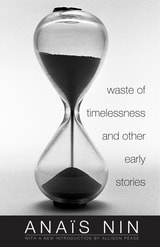
Waste of Timelessness and Other Early Stories
Anaïs Nin
Ohio University Press, 2017
Written when Anaïs Nin was in her twenties and living in France, the stories collected in Waste of Timelessness contain many elements familiar to those who know her later work as well as revelatory, early clues to themes developed in those more mature stories and novels. Seeded with details remembered from childhood and from life in Paris, the wistful tales portray artists, writers, strangers who meet in the night, and above all, women and their desires.
These experimental and deeply introspective missives lay out a central theme of Nin’s writing: the contrast between the public and private self. The stories are taut with unrealized sexual tension and articulate the ways that language and art can shape reality. Nin’s deft humor, ironic wit, and ecstatic prose display not only superb craftsmanship but also the author’s own constant balancing act between feeling and rationality, vulnerability and strength. Perhaps more than any other writer of the twentieth century, she mastered that act and wrote about it on her own terms, defying the literary and social norms of the time.
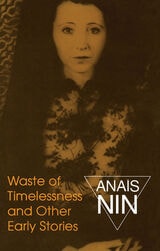
Waste of Timelessness and Other Early Stories
And Other Early StoriesAnaïs Nin
Ohio University Press, 1993
These stories precede all of Nin’s published work to date. In them are many sources of the more mature work that collectors and growing writers can appreciate.
Written when Anaïs Nin was in her twenties and living in Louveciennes, France, these stories contain many elements that will delight her readers: details remembered from childhood, of life in Paris, the cafés, theatres; characters including dancers, artists, writers, women who devote themselves to their work and visions as well as romance, strangers met in the night; themes such as the scruples of lovers, the search for brilliant, imaginative living; the writer’s experimentation with exotic words like “sybaritic” and “violaceous”. In the craft of these stories readers are treated to a deft sense of humor, ironic wit, much conversation as well as ecstatic prose, and surprise endings. Throughout all, the Nin personality shines, a wonderful mixture of feeling and rationality, of vulnerability and strength.
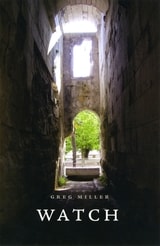
Watch
Greg Miller
University of Chicago Press, 2009
Strasbourg
The yellow and green rose, and the pink rock,
The chestnuts blooming, the cobblestone square,
Our Lady’s tower rising everywhere,
Dark timbered fronts; the mechanical clock
Whose rooster crows three times for Peter’s flock,
The Apostles, the old man’s and the child’s share
Of time—aspire I’d say to make me stare
And stop. I praise what I might otherwise mock,
The locked contingencies, the stock of losses,
Bright liquidity everywhere channeled,
A storied cityscape of destinies
Averted as when, turning, a young Turk tosses
His hands in the air and my chest’s pummeled,
“My brother, forgive me!” and my thoughts freeze.
In Watch, Greg Miller describes a fresh purposefulness in his life and achieves a new level of poetic thinking and composition in his writing. Artfully combining the religious and secular worldviews in his own sense of human culture, Miller complicates our understanding of all three. The poems in Watch sift layers of natural and human history across several continents, observing paintings, archeological digs, cityscapes, seascapes, landscapes—all in an attempt to envision a clear, grounded spiritual life. Employing an impressive array of traditional meters and various kinds of free verse, Miller’s poems celebrate communities both invented and real.
Praise for Iron Wheel
“Miller demonstrates that what Eliot said about reading a poem may be equally true of writing them: the best thing ‘is to be very, very intelligent’ and intelligence is not the same as erudition. Whether the world is made, found, or named, Miller offers an engaging portrait of things as they are.’’—David Orr, Poetry
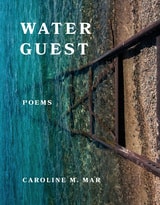
Water Guest
Caroline M. Mar
University of Wisconsin Press, 2025
Raising questions of inheritance, the conundrum of land ownership, and the violence of history, Mar gives voice to the lost writing of Chinese laborers and silent communion to those of us still here—immigrant and Indigenous, settler and resister. This engaging collection finds acceptance, if not resolution, through the questions themselves.
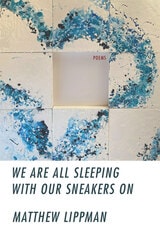
We Are All Sleeping with Our Sneakers On
Matthew Lippman
Four Way Books, 2024
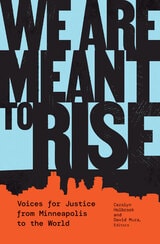
We Are Meant to Rise
Voices for Justice from Minneapolis to the WorldCarolyn Holbrook
University of Minnesota Press, 2021
A brilliant and rich gathering of voices on the American experience of this past year and beyond, from Indigenous writers and writers of color from Minnesota
In this significant collection, Indigenous writers and writers of color bear witness to one of the most unsettling years in the history of the United States. Essays and poems vividly reflect and comment on the traumas we endured in 2020, beginning with the arrival of the COVID-19 pandemic crisis, deepened by the blatant murder of George Floyd by Minneapolis police officers and the uprisings that immersed our city into the epicenter of passionate, worldwide demands for justice. In inspired and incisive writing these contributors speak unvarnished truths not only to the original and pernicious racism threaded through the American experience but also to the deeply personal, in essays about family, loss, food culture, economic security, and mental health. Their call and response is united here to rise and be heard.
We Are Meant to Rise lifts up the astonishing variety of BIPOC writers in Minnesota. From authors with international reputations to newly emerging voices, it features people from many cultures, including Indigenous Dakota and Anishinaabe, African American, Hmong, Somali, Afghani, Lebanese, Korean, Vietnamese, Japanese, Puerto Rican, Colombian, Mexican, transracial adoptees, mixed race, and LGBTQ+ perspectives. Most of the contributors have participated in More Than a Single Story, a popular and insightful conversation series in Minneapolis that features Indigenous and people of color speaking on what most concerns their communities.
We Are Meant to Rise meets the events of the day, the year, the centuries before, again and again, with powerful testament to the intrinsic and unique value of the human voice.
Contributors: Suleiman Adan, Mary Moore Easter, Louise Erdrich, Anika Fajardo, Safy-Hallan Farah, Said Farah, Sherrie Fernandez-Williams, Pamela R. Fletcher Bush, Shannon Gibney, Kathryn Haddad, Tish Jones, Ezekiel Joubert III, Douglas Kearney, Ed Bok Lee, Ricardo Levins Morales, Arleta Little, Resmaa Menakem, Tess Montgomery, Ahmad Qais Munhazim, Melissa Olson, Alexs Pate, Bao Phi, Mona Susan Power, Samantha Sencer-Mura, Said Shaiye, Erin Sharkey, Sun Yung Shin, Michael Torres, Diane Wilson, Kao Kalia Yang, and Kevin Yang.
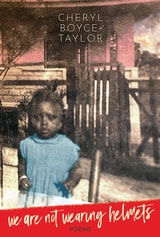
We Are Not Wearing Helmets
PoemsCheryl Boyce-Taylor
Northwestern University Press, 2022
Born in Trinidad and having grown up in Queens, Boyce‑Taylor creates a framework for her own experience out of the life experiences and work of beloved Black women in history. She salutes the women who have lifted her, including Audre Lorde, Fannie Lou Hamer, Ntozake Shange, and Winnie Mandela, as well as her mother, Eugenia Boyce, and her beloved daughter‑in‑law, Deisha Head Taylor.
The poems in this collection are unapologetic, fierce, and confrontational while remaining caring and intimate. They stand strong in the face of adversity and boldly demand what is owed while still honoring and cherishing what is loved.
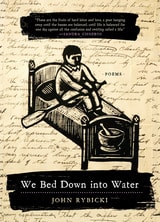
We Bed Down into Water
PoemsJohn Rybicki
Northwestern University Press, 2008
John Rybicki offers up an unafraid set of poems in this charged book of verse. We Bed Down Into Water is rich with imagery of family, love, illness, death, and, indeed, water, which seeps in throughout the pages: rivers, pools, rain, and tears. His moving stories, in both prose and verse, struggle to hang on to a vision of the world that can still allow benevolence, luck, and laughter. In this, the collection embodies a contradiction: it is a tender book of fury, a book of bleak hopefulness.
Rybicki’s work is steeped in challenge: the biological and spiritual challenge posed by his beloved’s recurrent cancer or the daily challenges of an adopted child who could be, all too easily, lost. He spins these phenomenal struggles into a lyrical book that offers hope and awakens the reader into a new way of seeing.
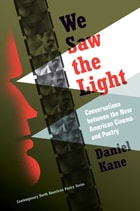
We Saw the Light
Conversations between New American Cinema and PoetryDaniel Kane
University of Iowa Press, 2009
Drawing on unpublished correspondences and personal interviews with key figures in the innovative poetry and film communities, Daniel Kane’s stunningly erudite and accessible work not only provides a fresh look at avant-garde poetry and film but also encourages readers to rethink the artistic scenes of the 1960s and today. We Saw the Light will reframe the very way we talk about how film influences poetry and force us to think anew about the radical ways in which art is created and in turn influences subsequent work.
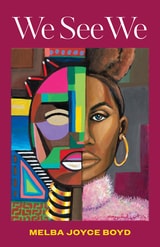
We See We
Melba Joyce Boyd
University of Michigan Press, 2027
Michigan poet laureate Melba Joyce Boyd’s tenth poetry collection, We See We, is a deeply emplaced volume, grounded in Boyd’s hometown of Detroit. The book takes its title from a poem in the collection dedicated to the late photographer, photojournalist, and filmmaker Hugh Grannum, who trained his camera on Black Detroit. Boyd takes a similar approach in this volume, collecting poems “about seeing our collective selves within our interconnected individual lives.” Divided into two sections—Inflexions and Elegies—the poems evoke Detroit’s past and present through works about Romare Bearden at the Detroit Institute of Arts, Idlewild, the 1967 Detroit Rebellion, Aretha Franklin, John Sinclair, and the varied lives of people Boyd knew and loved who demonstrate that you do not have to be famous to have historical impact. As former Michigan poet laureate Nandi Comer writes in the interview that concludes the volume, the poems in this collection are “filled with artists, friends, elders, and collaborators,” making the poems in the collection into “an education in Detroit’s artistic life.”
We Who Love to Be Astonished
Experimental Women's Writing and Performance PoeticsLaura Hinton
University of Alabama Press, 2001
The first critical volume devoted to the full range of women's postmodern works
We Who Love to Be Astonished collects a powerful group of previously unpublished essays to fill a gap in the critical evaluation of women's contributions to postmodern experimental writing. Contributors include Alan Golding, Aldon Nielsen, and Rachel Blau DuPlessis; discussions include analyses of the work of Kathleen Fraser, Harryette Mullen, and Kathy Acker, among others. The editors take as their title a line from the work of Lyn Hejinian, one of the most respected of innovative women poets writing today.
The volume is organized into four sections: the first two seek to identify, from two different angles, the ways women of different sociocultural backgrounds are exploring their relationships to their cultures' inherited traditions; the third section investigates the issue of visuality and the problems and challenges it creates; and the fourth section expands on the role of the body as material and performance.
The collection will breach a once irreconcilable divide between those who theorize about women's writing and those who focus on formalist practice. By embracing "astonishment" as the site of formalist-feminist investigation, the editors seek to show how form configures feminist thought, and, likewise, how feminist thought informs words and letters on a page. Students and scholars of avant-garde poetry, women's writing, and late-20th-century American literature will welcome this lively discussion.
We-Narratives
Collective Storytelling in Contemporary FictionNatalya Bekhta
The Ohio State University Press, 2020
Natalya Bekhta’s We-Narratives: Collective Storytelling in Contemporary Fiction analyzes a storytelling form shaped by the pronoun “we,” probing the tensions between individuality and collectivity in more recent narratives in English. Despite a growing interest in collective characters and the we-form in narratology and beyond, narrative theory has not yet done justice to the plural voice in fiction. In fact, the formulation of a poetics of collective expression needs clear theoretical conventions and a reassessment of established concepts in order to approach plural voices and agents on their own terms. We-Narratives addresses this demand by distinguishing between indicative and performative uses of the first-person plural pronoun in fiction and by identifying formal and rhetorical possibilities of stories told by group narrators.
What does it mean for a multitude to speak as one? How can a truly collective narrative voice be achieved or lost? What are its aesthetic and political repercussions? In order to tackle these questions, Bekhta reads a range of contemporary novels and short stories by Jeffrey Eugenides, Joshua Ferris, Toby Litt, Zakes Mda, Joyce Carol Oates, and Julie Otsuka. She also focuses on narrative innovation by Margaret Atwood, William Faulkner, and Susan Sontag. These narratives feature group protagonists and narrators and therefore offer insight into collective narrative discourse and focalization, construction of communal knowledge and unreliability. We-narrative, taken as a distinct storytelling form, illuminates fiction’s expressive potential and nuances models of narrative analysis.
Weaving the Boundary
Karenne Wood
University of Arizona Press, 2016
This focused, accessible collection carries readers into a deep and intimate understanding of the natural world, the power of language, and the interconnectedness of life. Untold stories are revealed through documented events in various tribal histories, and indictments of destructive encounters between Western colonialism and Native peoples are juxtaposed with a lyric voice that gently insists on reweaving the past, honoring women and all life, creating a sovereign space for indigenous experience. Wood writes, “Nothing was discovered. Everything was already loved.”
Political yet universal, Weaving the Boundary tells of love and betrayal, loss and forgiveness. Wood intertwines important and otherwise untold stories and histories with a heightened sense of awareness of Native peoples’ issues and present realities.
Moving from elegy to evocations of hope and desire, the poems call for respect toward Mother Earth and feminine sensibility. One hears in this collection a longing to be carried deeper into the world, to return to tradition, to nature, to truth, to an innate belonging in the “weaving” of all life.
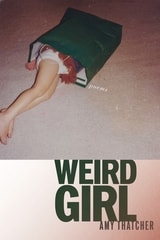
Weird Girl
PoemsAmy Thatcher
The Ohio State University Press, 2027
Poems that confront faith, sexuality, mother-daughter relationships, and the patriarchy to celebrate weird girls everywhere.
Amy Thatcher’s Weird Girl recasts female saints as quirky, transgressive characters, examines the sometimes-bizarre landscape of American girlhood, and reckons with classism and self-definition on the fringes of acceptability. With gusto and humor, Thatcher confronts the taboo—the intrusive, macabre, violent, obsessive, and lonely. Rooted in a working-class Philadelphia Catholic upbringing and embracing the unconventional and the unrefined, this collection captures the experiences of a first-generation college student, the grief of losing a difficult mother, the grandeur and swoon of religious ecstasy, and a girl’s struggle against systems of male power. Weird Girl is a collection for the dreamers, the oddballs, and the resilient ones who have learned to thrive in their own offbeat light: where vulnerability is strength and the most authentic stories are often the most peculiar.
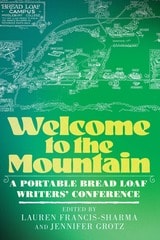
Welcome to the Mountain
A Portable Bread Loaf Writers' ConferenceLauren Francis-Sharma
Four Way Books, 2026
What do Truman Capote, Joan Didion, Archibald MacLeish, and Robert Hayden have in common? They are among the impressive array of American writers who have contributed to the legacy of the Bread Loaf Writers’ Conference in the last one hundred years.
To commemorate this esteemed institution’s centennial, Welcome to the Mountain recreates the experience of being in a writerly community that celebrates literature and invests in literary apprenticeship. This volume, edited by Lauren Francis-Sharma and Jennifer Grotz, comprises an extraordinary sampling of work from the historical to the contemporary, including lectures and readings first delivered at Bread Loaf. Its expansive range showcases everything from highly celebrated texts to rarer pieces and insightful musings by Toni Morrison, Brigit Pegeen Kelly, Randall Kenan, Czesław Miłosz, Julia Alvarez, and so many more.
Welcome to the Mountain tells the endless and thrilling stories of how writers become writers and how literary traditions evolve through our conversations with each other. Through this extraordinary book, we invite readers to make themselves at home in the rich landscape of American letters.
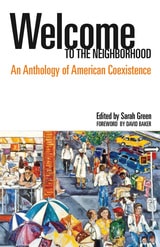
Welcome to the Neighborhood
An Anthology of American CoexistenceSarah Green
Ohio University Press, 2019
How to live with difference—not necessarily in peace, but with resilience, engagement, and a lack of vitriol—is a defining worry in America at this moment. The poets, fiction writers, and essayists (plus one graphic novelist) who contributed to Welcome to the Neighborhood don’t necessarily offer roadmaps to harmonious neighboring. Some of their narrators don’t even want to be neighbors. Maybe they grieve, or rage. Maybe they briefly find resolution or community. But they do approach the question of what it means to be neighbors, and how we should do it, with open minds and nuance.
The many diverse contributors give this collection a depth beyond easy answers. Their attentions to the theme of neighborliness as an ongoing evolution offer hope to readers: possible pathways for rediscovering community, even just by way of a shared wish for it. The result is an enormously rich resource for the classroom and for anyone interested in reflecting on what it means to be American today, and how place and community play a part.
Contributors include Leila Chatti, Rita Dove, Jonathan Escoffery, Rebecca Morgan Frank, Amina Gautier, Ross Gay, Mark Halliday, Joy Harjo, Edward Hirsch, Marie Howe, Sonya Larson, Dinty W. Moore, Robert Pinsky, Christine Schutt, and many more.

Welcome to the Neighborhood
An Anthology of American CoexistenceSarah Green
Ohio University Press, 2001
How to live with difference—not necessarily in peace, but with resilience, engagement, and a lack of vitriol—is a defining worry in America at this moment. The poets, fiction writers, and essayists (plus one graphic novelist) who contributed to Welcome to the Neighborhood don’t necessarily offer roadmaps to harmonious neighboring. Some of their narrators don’t even want to be neighbors. Maybe they grieve, or rage. Maybe they briefly find resolution or community. But they do approach the question of what it means to be neighbors, and how we should do it, with open minds and nuance.
The many diverse contributors give this collection a depth beyond easy answers. Their attentions to the theme of neighborliness as an ongoing evolution offer hope to readers: possible pathways for rediscovering community, even just by way of a shared wish for it. The result is an enormously rich resource for the classroom and for anyone interested in reflecting on what it means to be American today, and how place and community play a part.
Contributors include Leila Chatti, Rita Dove, Jonathan Escoffery, Rebecca Morgan Frank, Amina Gautier, Ross Gay, Mark Halliday, Joy Harjo, Edward Hirsch, Marie Howe, Sonya Larson, Dinty W. Moore, Robert Pinsky, Christine Schutt, and many more.