Results by title
935 books match the query 'Ancient' and 26 start with w
Wages, Welfare Costs and Inflation in Classical Athens
William T. Loomis
University of Michigan Press, 1999
Individual chapters critically examine each surviving wage or other payment in thirteen job categories, including public office holders; soldiers and sailors; priests, oracles, and seers; overseers, architects, and other salaried construction personnel; and prostitutes and pimps. Three additional chapters then consider whether there was a "standard wage," inflation and deflation in Athens, and the implications of these conclusions for the hotly debated question about the nature of the Athenian economy.
This is the first comprehensive study of Athenian labor and welfare costs since August Böckh's Die Staatshaushaltung der Athener (1886). An updated critical study has been much needed, to take account of the greatly expanded evidence (Aristotle's Constitution of the Athenians, more than a dozen other papyrus texts and hundreds of inscriptions), and the uneven quality of the sources. This collection allows William T. Loomis to argue--contrary to prevailing scholarly opinion--that there never was a "standard wage" at Athens.
"This volume will be a significant contribution to all studies of ancient Greek civilization." --Alan L. Boegehold, Brown University
William Loomis is Visiting Professor of Classics, University of Michigan.
Wandering in Ancient Greek Culture
Silvia Montiglio
University of Chicago Press, 2005
Attitudes toward wandering have evolved in accordance with cultural perspectives, causing some characterizations to persist while others have faded. For instance, the status of wanderers in Greek societies varied from outcasts and madmen to sages, who were recognized as mystical, even divine. Examining the act of wandering through many lenses, Wandering in Ancient Greek Culture shows how the transformation of the wanderer coincided with new perceptions of the world and of travel and invites us to consider its definition and import today.
War, Women, and Druids
Eyewitness Reports and Early Accounts of the Ancient CeltsBy Philip Freeman
University of Texas Press, 2002
"The ancient Celts capture the modern imagination as do few other people of classical times. Naked barbarians charging the Roman legions, Druids performing sacrifices of unspeakable horror, women fighting beside their men and even leading armies—these, along with stunning works of art, are the images most of us call to mind when we think of the Celts," observes Philip Freeman. "And for the most part, these images are firmly based in the descriptions handed down to us by the Greek and Roman writers."
This book draws on the firsthand observations and early accounts of classical writers to piece together a detailed portrait of the ancient Celtic peoples of Europe and the British Isles. Philip Freeman groups the selections (ranging from short statements to longer treatises) by themes—war, feasting, poetry, religion, women, and the Western Isles. He also presents inscriptions written by the ancient Celts themselves. This wealth of material, introduced and translated by Freeman to be especially accessible to students and general readers, makes this book essential reading for everyone fascinated by the ancient Celts.
Warfare, Ritual, and Symbol in Biblical and Modern Contexts
Brad E. Kelle
SBL Press, 2014
New perspectives on Israelite warfare for biblical studies, military studies, and social theory
Contributors investigate what constituted a symbol in war, what rituals were performed and their purpose, how symbols and rituals functioned in and between wars and battles, what effects symbols and rituals had on insiders and outsiders, what ways symbols and rituals functioned as instruments of war, and what roles rituals and symbols played in the production and use of texts.
Features:
- Thirteen essays examine war in textual, historical, and social contexts
- Texts from the Hebrew Bible are read in light of ancient Near Eastern texts and archaeology
- Interdisciplinary studies make use of contemporary ritual and social theory
Water Distribution in Ancient Rome
The Evidence of FrontinusHarry B. Evans
University of Michigan Press, 1997
What Did the Romans Know?
An Inquiry into Science and WorldmakingDaryn Lehoux
University of Chicago Press, 2012
What Has Athens to Do with Jerusalem?
Timaeus and Genesis in CounterpointJaroslav Pelikan
University of Michigan Press, 1997
When Egypt Ruled the East
George Steindorff and Keith C. Steele
University of Chicago Press, 1963
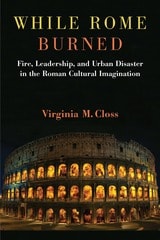
While Rome Burned
Fire, Leadership, and Urban Disaster in the Roman Cultural ImaginationVirginia M. Closs
University of Michigan Press, 2020
Working in the increasingly repressive environment of the early principate, Roman authors frequently employed “figured” speech and mythopoetic narratives to address politically risky topics. In response to shifting political and social realities, the literature of the early imperial period reimagines and reanimates not just historical fires, but also archetypal and mythic representations of conflagration. Throughout, the author engages critically with the growing subfield of disaster studies, as well as with theoretical approaches to language, allusion, and cultural memory.
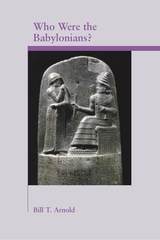
Who Were the Babylonians?
Bill T. Arnold
SBL Press, 2004
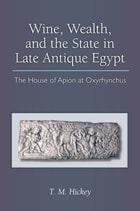
Wine, Wealth, and the State in Late Antique Egypt
The House of Apion at OxyrhynchusT. M. Hickey
University of Michigan Press, 2012
The "glorious house" of the senatorial family of the Flavii Apiones is the best documented economic entity of the Roman Empire during the fifth through seventh centuries, that critical period of transition between the classical world and the Middle Ages. For decades, the rich but fragmentary manuscript evidence that this large agricultural estate left behind, preserved for 1,400 years by the desiccating sands of Egypt, has been central to arguments concerning the agrarian and fiscal history of Late Antiquity, including the rise of feudalism.
Wine, Wealth, and the State in Late Antique Egypt is the most authoritative synthesis concerning the economy of the Apion estate to appear to date. T. M. Hickey examines the records of the family's wine production in the sixth century in order to shed light on ancient economic practices and economic theory, as well as on the wine industry and on estate management. Based on careful study of the original manuscripts, including unpublished documents from the estate archive, he presents controversial conclusions, much at odds with the "top down" models currently dominating the scholarship.
Wisdom from the Late Bronze Age
Yoram Cohen
SBL Press, 2013
With Blood in Their Eyes
Thomas Cobb
University of Arizona Press, 2013
Winner, Spur Award for Best Western Long Novel (Western Writers of America) and Southwest Book Award (Border Regional Library Association)
On February 10, 1918, John Power woke to the sound of bells and horses’ hooves. He was sharing a cabin near the family mine with his brother Tom and their father Jeff; hired man Tom Sisson was also nearby. Then gunfire erupted, and so began the day when the Power brothers engaged the Graham County Sheriff’s Department in the bloodiest shootout in Arizona history.
Now Thomas Cobb, author of Crazy Heart and Shavetail, has taken up the story in this powerful and meticulously researched nonfiction novel. What seems at first a simple tale of crime and pursuit takes on much greater meaning and complexity as the story traces the past lives of the main characters and interconnects them—all leading back to the deadly confrontation that begins the book. Cobb cunningly weaves the story of the Power brothers’ escape with flashbacks of the boys’ father’s life and his struggle to make a living ranching, logging, and mining in the West around the turn of the century. Deftly drawn characters and cleverly concealed motivations work seamlessly to blend a compelling family history with a desperate story of the brothers as they attempt to escape.
Grappling with themes of loyalty, masculinity, technology, and honor, this sweeping saga reveals the passion and brutality of frontier life in Arizona a hundred years ago. Richly authentic and beautifully written, With Blood in Their Eyes breathes dramatic new life into this nearly forgotten episode of the American West.
Women in Fragments
Alternative Histories of the Roman RepublicJessica H. Clark
University of Wisconsin Press, 2026
Our sources of knowledge about women in the ancient Roman Republic are flawed. Roman historians were uniformly male, as were most historians of ancient Rome until quite recently. In the historiography handed down by Enlightenment-era scholars, women generally played marginal and often sexualized roles, relegated to the footnotes by historians who assumed the Roman Republic to be fully androcentric. The evidence, however, suggests otherwise. In this detailed and insightful volume, Jessica H. Clark returns to the source material to gain insight into how Roman men understood the lives, roles, and contributions of the women they wrote about.
Reexamining the puzzle pieces of ancient literature, Clark proposes that the earliest Roman historians represented women in complex ways, revealing their appreciation of women’s communities and women’s engagement in the project of the Republic, in contrast to the attitudes assumed by scholars in the eighteenth and nineteenth centuries. She attributes those scholars’ assumptions to the social and political circumstances of their own times and demonstrates how these assumptions have continued to inform our own perceptions of Roman women and therefore Roman society more generally. This study ultimately uncovers not only the women of the Roman Republic but also how modern preconceptions have distorted their image and the stories we tell about ancient Rome.
Women in Roman Republican Drama
Edited by Dorota Dutsch, Sharon L. James, and David Konstan
University of Wisconsin Press, 2015
Women of Assur and Kanesh
Texts from the Archives of Assyrian MerchantsCécile Michel
SBL Press, 2020
Vivid sources for reconstructing the lives of Assyrian women
In this collection Cécile Michel translates into English texts related to wives and daughters of merchants and to their activities in nineteenth-century BCE Aššur and Kaneš. Discovered in excavations of the Old Assyrian private archives at Kültepe (ancient Kaneš) in Central Anatolia, these letters sent from Aššur reflect the preeminent role of Assyrian women within the family and in the domestic economy, as well as their contribution to long-distance trade. Contracts and other legal texts excavated at Kültepe attest to Assyrian and Anatolian women as parties in marriage and divorce contracts, last wills, loans, and purchase contracts. These unique finds paint a vivid portrait of women who aspire to be socially respected and provide a rare opportunity to reconstruct their daily lives as both businesswomen and housewives.
Features
- More than three hundred letters and documents transliterated and translated with commentary
- An overview of the study of women and gender in Assyriology
- A reconstruction of women's roles as textile producers, investors, and creditors within a long-distance commercial network
Cécile Michel is Senior Researcher at the National Center for Scientific Research (CNRS, France) and Professor at Hamburg University (Germany). She is a member of the international group of scholars in charge of the decipherment of the 23,000 tablets found at Kültepe (ancient Kaneš) and of the Kültepe archaeological team. She is the coeditor of and contributor to The Role of Women in Work and Society in the Ancient Near East (2016), Textile Terminologies from the Orient to the Mediterranean and Europe, 1000 BC to 1000 AD (2017), and Mathematics, Administrative and Economic Activities in Ancient Worlds (2020).
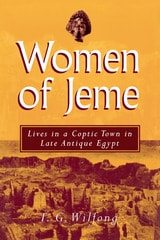
Women of Jeme
Lives in a Coptic Town in Late Antique EgyptT.G. Wilfong
University of Michigan Press, 2002
Contrary to the submissive, demure ideals for women proposed by the religious writers of Christian Egypt, the evidence from Jeme points to a more complex, dynamic situation. Women were active in the home, but some also played important and visible parts in the religious and economic life of their community. A bishop's attempts to monitor the behavior of the women in his district, the intricate inheritance dispute between an aunt and her niece, one woman's pious donations of murals to a church, three women's agonized decisions to give up their children to the local monastery, and the transactions of a family of women moneylenders--all these episodes paint a vivid picture of life in a Coptic town.
Although the remains of Jeme have long been known to scholars, little synthetic work has been done on this rich source for social history in Egypt before and after the Muslim conquests. The Women of Jeme is the first book-length study of the evidence. It will be of interest to Egyptologists and papyrologists, as well as to scholars of Coptic studies, early Christianity, social history and women's studies. The book assumes no prior knowledge of the subject, and the author has taken care to make it accessible to anyone with an interest in the ancient world.
T. G. Wilfong is Assistant Professor of Egyptology and Assistant Curator for Greco-Roman Egypt, University of Michigan.
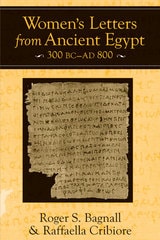
Women's Letters from Ancient Egypt, 300 BC-AD 800
Roger S. Bagnall and Raffaella Cribiore
University of Michigan Press, 2015
More than three hundred letters written in Greek and Egyptian by women in Egypt in the millennium from Alexander the Great to the Arab conquest survive on papyrus and pottery. These letters were written by women from various walks of life and shed light on critical social aspects of life in Egypt after the pharaohs. Roger S. Bagnall and Raffaella Cribiore collect the best preserved of these letters in translation and set them in their paleographic, linguistic, social, and economic contexts. As a result, Women's Letters from Ancient Egypt, 300 BC-AD 800, provides a sense that these women's habits, interests, and means of expression were a product more of their social and economic standing than of specifically gender-related concerns or behavior.
Women's Letters from Ancient Egypt, 300 BC-AD 800, takes the reader through theoretical discussions about the handwriting and language of the letters, the education and culture of the writers, and the writers' everyday concerns and occupations, as well as comparing these letters to similar letters from later historical periods. For each letter, discussion focuses on handwriting, language, and content; in addition, numerous illustrations help the reader to see the variety of handwritings. Most of this material has never been available in English translation before, and the letters have never previously been considered as a single body of material.
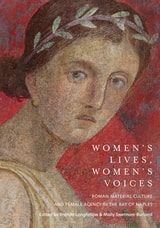
Women's Lives, Women's Voices
Roman Material Culture and Female Agency in the Bay of NaplesEdited by Brenda Longfellow and Molly Swetnam-Burland
University of Texas Press, 2021
Literary evidence is often silent about the lives of women in antiquity, particularly those from the buried cities of Pompeii and Herculaneum. Even when women are considered, they are often seen through the lens of their male counterparts. In this collection, Brenda Longfellow and Molly Swetnam-Burland have gathered an outstanding group of scholars to give voice to both the elite and ordinary women living on the Bay of Naples before the eruption of Vesuvius.
Using visual, architectural, archaeological, and epigraphic evidence, the authors consider how women in the region interacted with their communities through family relationships, businesses, and religious practices, in ways that could complement or complicate their primary social roles as mothers, daughters, and wives. They explore women-run businesses from weaving and innkeeping to prostitution, consider representations of women in portraits and graffiti, and examine how women expressed their identities in the funerary realm. Providing a new model for studying women in the ancient world, Women’s Lives, Women’s Voices brings to light the day-to-day activities of women of all classes in Pompeii and Herculaneum.
Wondrous Curiosities
Ancient Egypt at the British MuseumStephanie Moser
University of Chicago Press, 2006
When the British Museum opened its doors more than two centuries ago, scores of visitors waited eagerly outside for a first glimpse of ancient relics from Egypt, Greece, and Rome. Even today, in this age of satellite television and high-speed Internet access, museums maintain their unique allure, continuing to play a vital role in connecting us with little-known terrains and the deep mysteries of our historical past. That’s because, as Stephanie Moser argues in Wondrous Curiosities, museum displays don’t just transmit knowledge—they actually create it.
Based on her exploration of the British Museum’s world-famous collection of Egyptian antiquities, this pioneering study reveals the powerful role of museums in shaping our understanding of science, culture, and history. Drawing on guidebooks and archival documents, Moser demonstrates that this British exhibition of ancient Egyptian artifacts was central to the way we came to define the remarkable society that produced them. And she also reveals the specific strategies—such as using pattern and symmetry, juxtaposing different types of objects, and singling out particular items—that the British Museum and others used, and still use, in representing the past. With a wealth of illustrations and a detailed account of how the museum acquired and displayed its Egyptian collections, Wondrous Curiosities will fascinate curators and scholars of British history, Egyptology, art history, archaeology, and the history of science.
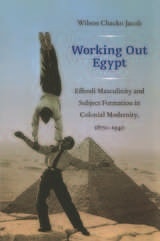
Working Out Egypt
Effendi Masculinity and Subject Formation in Colonial Modernity, 1870–1940Wilson Chacko Jacob
Duke University Press, 2011
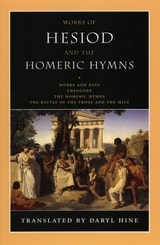
Works of Hesiod and the Homeric Hymns
Including Theogony and Works and DaysEdited by Daryl Hine
University of Chicago Press, 2004
In Works of Hesiod and the Homeric Hymns, highly acclaimed poet and translator Daryl Hine brings to life the words of Hesiod and the world of Archaic Greece. While most available versions of these early Greek writings are rendered in prose, Hine's illuminating translations represent these early classics as they originally appeared, in verse. Since prose was not invented as a literary medium until well after Hesiod's time, presenting these works as poems more closely approximates not only the mechanics but also the melody of the originals.
This volume includes Hesiod's Works and Days and Theogony, two of the oldest non-Homeric poems to survive from antiquity. Works and Days is in part a farmer's almanac—filled with cautionary tales and advice for managing harvests and maintaining a good work ethic—and Theogony is the earliest comprehensive account of classical mythology—including the names and genealogies of the gods (and giants and monsters) of Olympus, the sea, and the underworld. Hine brings out Hesiod's unmistakable personality; Hesiod's tales of his escapades and his gritty and persuasive voice not only give us a sense of the author's own character but also offer up a rare glimpse of the everyday life of ordinary people in the eighth century BCE.
In contrast, the Homeric Hymns are more distant in that they depict aristocratic life in a polished tone that reveals nothing of the narrators' personalities. These hymns (so named because they address the deities in short invocations at the beginning and end of each) are some of the earliest examples of epyllia, or short stories in the epic manner in Greek.
This volume unites Hine's skillful translations of the Works of Hesiod and the Homeric Hymns—along with Hine's rendering of the mock-Homeric epic The Battle of the Frogs and the Mice—in a stunning pairing of these masterful classics.
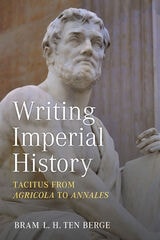
Writing Imperial History
Tacitus from Agricola to AnnalesBram L. H. ten Berge
University of Michigan Press, 2023
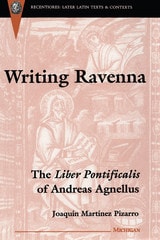
Writing Ravenna
The Liber Pontificalis of Andreas AgnellusJoaquin Martinez Pizarro
University of Michigan Press, 1995
Writing Ravenna is an attempt to deal with this work's literary significance and specifically with what it tells us about the creation and circulation of narrative in the Early Middle Ages. The book's first chapter analyzes the ways in which the local and international interests of the Ravenna clergy are reflected in the design, genre, and narrative rhetoric of the Liber. The second chapter characterizes the specific textuality, given that the Liber was composed for oral delivery. The final chapter offers translations of the four most interesting narrative sequences in the Liber, followed by full analyses of sources, narrative technique, and ideological aims.
Writing Ravenna will be of interest to a broad spectrum of scholars, including art historians, scholars of late antiquity and the Early Middle Ages, religious historians, and literary critics.
Joaquin Martinez Pizarro is Associate Professor of English, State University of New York at Stony Brook. He is also the author of A Rhetoric of the Scene: Dramatic Narrative in the Early Middle Ages.
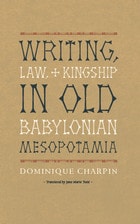
Writing, Law, and Kingship in Old Babylonian Mesopotamia
Dominique Charpin
University of Chicago Press, 2010
Ancient Mesopotamia, the fertile crescent between the Tigris and Euphrates rivers in what is now western Iraq and eastern Syria, is considered to be the cradle of civilization—home of the Babylonian and Assyrian empires, as well as the great Code of Hammurabi. The Code was only part of a rich juridical culture from 2200–1600 BCE that saw the invention of writing and the development of its relationship to law, among other remarkable firsts.
Though ancient history offers inexhaustible riches, Dominique Charpin focuses here on the legal systems of Old Babylonian Mesopotamia and offers considerable insight into how writing and the law evolved together to forge the principles of authority, precedent, and documentation that dominate us to this day. As legal codes throughout the region evolved through advances in cuneiform writing, kings and governments were able to stabilize their control over distant realms and impose a common language—which gave rise to complex social systems overseen by magistrates, judges, and scribes that eventually became the vast empires of history books. Sure to attract any reader with an interest in the ancient Near East, as well as rhetoric, legal history, and classical studies, this book is an innovative account of the intertwined histories of law and language.

Written to the Lamanites
Indigenous Perspectives on Mormon Narratives of IndigeneityFarina King and Michael Ing
University of Utah Press, 2027