Results by title
1677 books match the query 'Archaeology' and 46 start with w
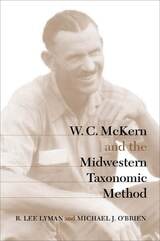
W. C. McKern and the Midwestern Taxonomic Method
Written by R. Lee Lyman and Michael J. O'Brien
University of Alabama Press, 2002
Explores W. C. McKern's use of Linnaean taxonomy as the model for development of a pottery classification system
By the early 20th century, North American archaeologists had found evidence of a plethora of prehistoric cultures displaying disparate geographic and chronological distributions. But there were no standards or algorithms for specifying when a culture was distinct or identical to another in a nearby or distant region.
Will Carleton McKern of the Milwaukee Public Museum addressed this fundamental problem of cultural classification beginning in 1929. He modeled his solution—known as the Midwestern Taxonomic Method—on the Linnaean biological taxonomy because he wanted the ability to draw historical and cultural "relationships" among cultures. McKern was assisted during development of the method by Carl E. Guthe, Thorne Deuel, James B. Griffin, and William Ritchie.
This book studies the 1930s correspondence between McKern and his contemporaries as they hashed out the method's nuances. It compares the several different versions of the method and examines the Linnaean biological taxonomy as it was understood and used at the time McKern adapted it to archaeological problems. Finally, this volume reveals how and why the method failed to provide the analytical solution envisioned by McKern and his colleagues and how it influenced the later development of Americanist archaeology.
WF16
Excavations at an Early Neolithic Settlement in Southern JordanSteven Mithen
Council for British Research in the Levant, 2018
Wages, Welfare Costs and Inflation in Classical Athens
William T. Loomis
University of Michigan Press, 1999
Individual chapters critically examine each surviving wage or other payment in thirteen job categories, including public office holders; soldiers and sailors; priests, oracles, and seers; overseers, architects, and other salaried construction personnel; and prostitutes and pimps. Three additional chapters then consider whether there was a "standard wage," inflation and deflation in Athens, and the implications of these conclusions for the hotly debated question about the nature of the Athenian economy.
This is the first comprehensive study of Athenian labor and welfare costs since August Böckh's Die Staatshaushaltung der Athener (1886). An updated critical study has been much needed, to take account of the greatly expanded evidence (Aristotle's Constitution of the Athenians, more than a dozen other papyrus texts and hundreds of inscriptions), and the uneven quality of the sources. This collection allows William T. Loomis to argue--contrary to prevailing scholarly opinion--that there never was a "standard wage" at Athens.
"This volume will be a significant contribution to all studies of ancient Greek civilization." --Alan L. Boegehold, Brown University
William Loomis is Visiting Professor of Classics, University of Michigan.
War Essays
Zainab Bahrani
University College London, 2025
In War Essays, Zainab Bahrani delivers a powerful reckoning of the destruction of Iraq’s cultural heritage in the wake of the 2003 invasion by weaving together personal experience and a critique of the enduring colonial practices of archaeology. Across two decades of essays, she examines the war’s devastating impact not only on human lives but also on Iraq’s historical landscapes, monuments, and memory, situating heritage loss within the broader geopolitics of the Middle East.
Bahrani confronts the prevailing narratives about the war, exposing how imperial violence extends beyond the battlefield to target history itself and reshaping the discipline of archaeology. By combining eyewitness testimony with theoretical inquiry, this book reflects on the role of intellectuals and historians in times of war and interrogates the responsibility of those who document conflict and its aftermath. Essential reading for scholars of Middle Eastern studies and archaeology, War Essays offers a unique and deeply personal perspective on the lasting scars of war and the fragile relationship between history and memory.
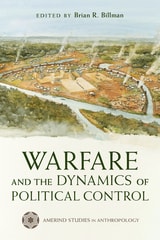
Warfare and the Dynamics of Political Control
Edited by Brian R. Billman
University of Arizona Press, 2025
Warfare and the Dynamics of Political Control draws on a wealth of interdisciplinary perspectives to explore how conflict shapes the establishment and maintenance of political institutions, from small-scale societies to expansive empires. The book examines the material and ideological factors that drive warfare, the organization of combatants, the ways leaders use violence to consolidate power, and how groups resist political domination in times of conflict. By posing critical questions about the efficacy of strategies and the varied outcomes of conflict-driven power struggles, this volume offers profound insights into the dynamics of political control throughout history.
Bringing together case studies from diverse regions and time periods, Warfare and the Dynamics of Political Controlilluminates the multifaceted nature of political violence. The volume includes discussions of human sacrifice, slave-taking, ideological signaling, and military strategy and tactics. The case studies reveal how different forms of political violence influence societal structures. From the fortifications of the Māori in New Zealand to the city walls of early historic India, each contribution provides a detailed analysis of how warfare has been used to both to challenge and to establish political hierarchies. Featuring examples from small foraging communities to large empires across various regions and time periods, the book offers a wide-ranging exploration of how different groups have used and resisted political violence.
This essential work contributes to our understanding of the intersections between conflict and political power, making it a vital resource for scholars of anthropology, archaeology, political science, and history.
Warfare and the Fall of a Fortified Center
Archaeological Investigations at AguatecaTakeshi Inomata
Vanderbilt University Press, 2006
VIMA Series #3
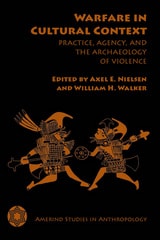
Warfare in Cultural Context
Practice, Agency, and the Archaeology of ViolenceEdited by Axel E. Nielsen and William H. Walker
University of Arizona Press, 2009
However, contributors argue, this model-and-evidence approach has given rise to multiple competing hypotheses and ambiguity rather than to full, coherent explanations of what turns out to be surprisingly complex acts of war. The chapters in Warfare in Cultural Context contend that agency and culture, inherited values and dispositions (such as religion and other cultural practices), beliefs, and institutions are always woven into the conduct of war.
This revealing book focuses on the ways that specific people construed their interests and life projects, and their problems and possibilities, and consequently chose among alternative courses of action. Using archaeological and ethnohistorical data from various parts of the world, the contributors explore the multiple avenues for the cultural study of warfare that these ideas make possible. Contributions focus on cultural aspects of warfare in Mesoamerica, South America, North America, and Southeast Asia. Case studies include warfare among the Maya, Inca, southwestern Pueblos, Mississippian cultures, and the Enga of Papua New Guinea.
Wari Imperialism in Middle Horizon Peru
Katharina J. Schreiber with a foreword by Jeffrey R. Parsons
University of Michigan Press, 1992
Wasita in a Lebanese Context
Social Exchange among Villagers and OutsidersFrederick Charles Huxley
University of Michigan Press, 1978
Water Distribution in Ancient Rome
The Evidence of FrontinusHarry B. Evans
University of Michigan Press, 1997
Water and Ritual
The Rise and Fall of Classic Maya RulersBy Lisa J. Lucero
University of Texas Press, 2006
In the southern Maya lowlands, rainfall provided the primary and, in some areas, the only source of water for people and crops. Classic Maya kings sponsored elaborate public rituals that affirmed their close ties to the supernatural world and their ability to intercede with deities and ancestors to ensure an adequate amount of rain, which was then stored to provide water during the four-to-five-month dry season. As long as the rains came, Maya kings supplied their subjects with water and exacted tribute in labor and goods in return. But when the rains failed at the end of the Classic period (AD 850-950), the Maya rulers lost both their claim to supernatural power and their temporal authority. Maya commoners continued to supplicate gods and ancestors for rain in household rituals, but they stopped paying tribute to rulers whom the gods had forsaken.
In this paradigm-shifting book, Lisa Lucero investigates the central role of water and ritual in the rise, dominance, and fall of Classic Maya rulers. She documents commoner, elite, and royal ritual histories in the southern Maya lowlands from the Late Preclassic through the Terminal Classic periods to show how elites and rulers gained political power through the public replication and elaboration of household-level rituals. At the same time, Lucero demonstrates that political power rested equally on material conditions that the Maya rulers could only partially control. Offering a new, more nuanced understanding of these dual bases of power, Lucero makes a compelling case for spiritual and material factors intermingling in the development and demise of Maya political complexity.
Wearing Culture
Dress and Regalia in Early Mesoamerica and Central AmericaHeather Orr
University Press of Colorado, 2014
Documenting the elaborate practices of costume, adornment, and body modification in Panama, Costa Rica, Nicaragua, Honduras, Oaxaca, the Soconusco region of southern Mesoamerica, the Gulf Coast Olmec region (Olman), and the Maya lowlands, this book demonstrates that adornment was used as a tool for communicating status, social relationships, power, gender, sexuality, behavior, and political, ritual, and religious identities. Despite considerable formal and technological variation in clothing and ornamentation, the early indigenous cultures of these regions shared numerous practices, attitudes, and aesthetic interests. Contributors address technological development, manufacturing materials and methods, nonfabric ornamentation, symbolic dimensions, representational strategies, and clothing as evidence of interregional sociopolitical exchange.
Focusing on an important period of cultural and artistic development through the lens of costuming and adornment, Wearing Culture will be of interest to scholars of pre-Hispanic and pre-Columbian studies.
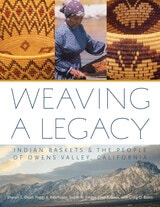
Weaving A Legacy - Paper
Indian Baskets and the People of Owens Valley, CaliforniaSharon Dean
University of Utah Press, 2005
Situated on the western edge of the Great Basin between the Sierra Nevada and White-Inyo mountain ranges, Owens Valley has been home for thousands of years to the Owens Valley Paiute and their southern neighbors, the Panamint Shoshone. The willow baskets both groups created are noteworthy for their complex construction and durability, and their materials and designs reflected available resources as well as the seminomadic existence that characterized life in the Great Basin for generations.
Since the mid-nineteenth-century arrival of non-Indians into the Valley, the baskets have changed. Weaving a Legacy places those changes in the context of the region’s dramatic social history. In addition, the volume closely examines basketry techniques and technology, historic weavers and their lineages, contemporary weavers, and basket collectors.
The text is extensively illustrated with black-and-white photographs of people, landscapes, and baskets. Among the legacies of these baskets are the stories they evoke, many of which the authors recount in this beautiful work.
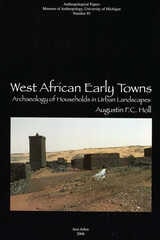
West African Early Towns
Archaeology of Households in Urban LandscapesAugustin F. C. Holl
University of Michigan Press, 2006
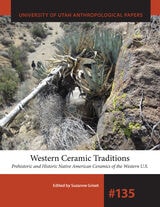
Western Ceramic Traditions
Prehistoric and Historic Native American Ceramics of the Western U.S.Edited by Suzanne Griset
University of Utah Press, 2021
This volume is dedicated to studies of plainwares—the undecorated ceramics that make up the majority of prehistoric ceramic assemblages worldwide. Early analyses of ceramics focused on changes in decorative design elements to establish chronologies and cultural associations. With the development of archaeometric techniques that allow direct dating of potsherds and identification of their elemental composition and residues, plainwares now provide a new source of information about the timing, manufacture, distribution, and use of ceramics.
This book investigates plainwares from the far west, stretching into the Great Basin and the northwestern and southwestern edges of Arizona. Contributors use and explain recent analytical methods, including neutron activation, electron microprobe analysis, and thin-section optical mineralogy. They examine native ceramic traditions and how they were influenced by the Spanish mission system, and they consider the pros and cons of past approaches to ware typology, presenting a vision of how plainware analysis can be improved by ignoring the traditional “typological” approach of early ceramicists working with decorated wares.
This work provides a much-needed update to plainware studies, with new hypotheses and data that will help set the stage for future research.
Western Pueblo Identities
Regional Interaction, Migration, and TransformationAndrew I. Duff
University of Arizona Press, 2002
Using comparative data from the Upper Little Colorado and Zuni regions, Duff demonstrates differences in patterns of interaction within and between regions with different population densities. He then links these differences to such factors as occupational history, immigrant populations, the negotiation of social identities, and the emergence of new ritual systems. Following abandonments in the Four Corners area in the late 1200s, immigrants with different historical backgrounds occupied many Western Pueblo regions—in contrast to the Hopi and Zuni regions, which had more stable populations and deeper historical roots.
Duff uses chemical analyses of ceramics to document exchange among several communities within these regions, showing that people in less densely settled regions were actively recruited by residents of the Hopi and Zuni regions to join their settlements. By the time of the arrival of the Spaniards, two distinct social and territorial groups—the Hopi and Zuni peoples—had emerged from this scattering of communities. Duff's new interpretations, along with new data on ceramic exchange patterns, suggest that interaction is a better way to measure identity than more commonly used criteria. His work offers new perspectives on the role of ritual in social organization and on identity formation in Pueblo IV society and is rich in implications for the study of other sedentary, middle-range societies.
What Is Archaeology?
An Essay on the Nature of Archaeological ResearchPaul Courbin
University of Chicago Press, 1988
Courbin examines this movement, its latent philosophy, its methods and their application, its theories, and its results. He declares that the record shows a devastating failure. The New Archeologists, he contends, may have developed scientific hypotheses, but in most cases they failed to carry out what is necessary to test their theories, thus contradicting the very goals they had set for the discipline.
Reevaluating the field as a whole, Courbin asks, What is archaeology? He distinguishes it from such related fields as history and anthropology, emphatically arguing that the primary task of archaeology is what the archaeologist alone can accomplish: the establishment of facts—stratigraphies, time sequences, and identification tools, bones, potsherds, and so on. When archaeological findings lead to historical or anthropological conclusions, as they very often do, archaeologists must be aware that this involves a specific change in their work; they are no longer archaeologists proper. The archaeologist's work, Courbin stresses, is not a humble auxiliary of anthropology or history, but the foundation upon which historians and anthropologists of ancient civilizations will build and without which their theories cannot but collapse. What Is Archaeology? was originally published in French in 1982.
What Is Paleolithic Art?
Cave Paintings and the Dawn of Human CreativityJean Clottes
University of Chicago Press, 2016
In this book, Jean Clottes, one of the most renowned figures in the study of cave paintings, pursues an answer to this “why” of Paleolithic art. While other books focus on particular sites and surveys, Clottes’s work is a contemplative journey across the world, a personal reflection on how we have viewed these paintings in the past, what we learn from looking at them across geographies, and what these paintings may have meant—what function they may have served—for their artists. Steeped in Clottes’s shamanistic theories of cave painting, What Is Paleolithic Art? travels from well-known Ice Age sites like Chauvet, Altamira, and Lascaux to visits with contemporary aboriginal artists, evoking a continuum between the cave paintings of our prehistoric past and the living rock art of today. Clottes’s work lifts us from the darkness of our Paleolithic origins to reveal, by firelight, how we think, why we create, why we believe, and who we are.
What Mean These Bones?
Studies in Southeastern BioarchaeologyEdited by Mary Lucas Powell, Patricia S. Bridges, and Ann Marie Wagner Mires
University of Alabama Press, 1991
A Dan Josselyn Memorial Publication
Until recently, archaeological projects that included analysis of human remains had often lacked active collaboration between archaeologists and physical anthropologists from the planning stages onward. During the 1980s, a conjunctive approach developed; known as "bioarchaeology," it draws on the methodological and theoretical strengths of the two subdisciplines to bridge a perceived communications gap and promote a more comprehensive understanding of prehistoric and historic cultures.
This volume addresses questions of human adaptation in a variety of cultural contexts, with a breadth not found in studies utilizing solely biological or artifactual data. These nine case studies from eight Southeastern states cover more than 4,000 years of human habitation, from Archaic hunter-gatherers in Louisiana and Alabama to Colonial planters and slaves in South Carolina. Several studies focus upon variations in health between or within late prehistoric agricultural societies. For example, the discovery that reliance upon maize as a dietary staple did not result invariably in poor health, as claimed by earlier studies, either for entire populations or, in ranked societies, for the non-elite majority, has fostered a new appreciation for the managerial wisdom of the Mississippian peoples, as well as for their agricultural skills.
What the Bones Tell Us
Jeffrey H. Schwartz
University of Arizona Press, 1997
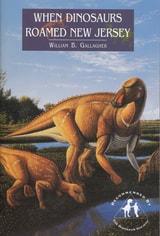
When Dinosaurs Roamed New Jersey
William B. Gallagher
Rutgers University Press, 1997
Did you know that Benjamin Franklin examined the first dinosaur bone in America from Woodbury, Gloucester County, in 1787--decades before the word dinosaur was even coined? Or that when the first reasonably complete dinosaur skeleton in the world was unearthed in Haddonfield, Camden County, in 1858, it was a major scientific breakthrough which forced paleontologists to completely revise their picture of dinosaur anatomy? Few people know that New Jersey is the nursery of American vertebrate paleontology!
When Dinosaurs Roamed New Jersey provides a succinct and readable history of the geology and paleontology of New Jersey from the time the region was covered by Cambrian seas, 543 million years ago, to the Pleistocene Ice Age only 10-15,000 years ago. William Gallagher tells the stories of professional and amateur fossil hunters, their discoveries, and their impact on the history of paleontological thought. He points out places in New Jersey and nearby where specimens characteristic of each era were found. He shows how fossil evidence found in the state is helping paleontologists uncover the ecological interactions and behavior of dinosaurs, and discusses such ongoing scientific controversies as the reason for the extinction of the dinosaurs.
From tracking dinosaur footprints across the Newark basin, to digging for the last dinosaurs in the greensands of South Jersey, to finding a mushroom in ancient amber in East Brunswick, this book is the ideal introduction to the Garden State's fossils and prehistory.
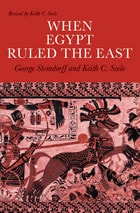
When Egypt Ruled the East
George Steindorff and Keith C. Steele
University of Chicago Press, 1963
When Is a Kiva?
And Other Questions About Southwestern ArchaeologyWatson Smith; Edited by Raymond H. Thompson
University of Arizona Press, 1990
Contents:
The Vitality of the Hopi Way: Mural Decorations from Ancient Hopi Kivas
Pit House and Kiva Pitfalls: When Is a Kiva?
D-Shaped Features: The Kiva at Site 4
The Kiva Beneath the Altar: Room 788
"Ethnology Itself Carried Back": Extent of Ethnographic Studies Among the Pueblos
Birds of a Feather: Feathers
Pots on the Kiva Wall: Ceremonial Bowls
The Potsherd Paradigm: Analysis of Hooks, Scrolls, and Keys
A School for Cracked Pots: Schools, Pots, and Potters; The Jeddito School
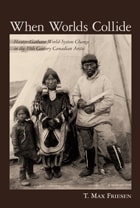
When Worlds Collide
Hunter-Gatherer World-System Change in the 19th Century Canadian ArcticT. Max Friesen
University of Arizona Press, 2013
Max Friesen has adapted and expanded world-system theory in order to develop a model that explains how hunter-gatherer interaction networks, or world-systems, are structured—and why they change. He has utilized this model to better understand the development of Inuvialuit society in the western Canadian Arctic over a 500-year span, from the pre-contact period to the early twentieth century.
As Friesen combines local archaeological data with more extensive ethnographic and archaeological evidence from the surrounding region, a picture emerges of a dynamic Inuvialuit world-system characterized by bounded territories, trade, warfare, and other forms of interaction. This world-system gradually intensified as the impacts of Euroamerican colonial activities increased. This intensification, Friesen suggests, was based on pre-existing Inuvialuit social and economic structures rather than on patterns imposed from outside. Ultimately, this intense interacting network collapsed near the end of the nineteenth century. When Worlds Collide offers a new way to comprehend small-scale world-systems from the point of view of indigenous people. Its approach will prove valuable for understanding hunter-gatherer societies around the globe.
When Writing Met Art
From Symbol to StoryBy Denise Schmandt-Besserat
University of Texas Press, 2007
Denise Schmandt-Besserat opened a major new chapter in the history of literacy when she demonstrated that the cuneiform script invented in the ancient Near East in the late fourth millennium BC—the world's oldest known system of writing—derived from an archaic counting device. Her discovery, which she published in Before Writing: From Counting to Cuneiform and How Writing Came About, was widely reported in professional journals and the popular press. In 1999, American Scientist chose How Writing Came About as one of the "100 or so Books that shaped a Century of Science."
In When Writing Met Art, Schmandt-Besserat expands her history of writing into the visual realm of communication. Using examples of ancient Near Eastern writing and masterpieces of art, she shows that between 3500 and 3000 BC the conventions of writing—everything from its linear organization to its semantic use of the form, size, order, and placement of signs—spread to the making of art, resulting in artworks that presented complex visual narratives in place of the repetitive motifs found on preliterate art objects. Schmandt-Besserat then demonstrates art's reciprocal impact on the development of writing. She shows how, beginning in 2700-2600 BC, the inclusion of inscriptions on funerary and votive art objects emancipated writing from its original accounting function. To fulfill its new role, writing evolved to replicate speech; this in turn made it possible to compile, organize, and synthesize unlimited amounts of information; and to preserve and disseminate information across time and space.
Schmandt-Besserat's pioneering investigation of the interface between writing and art documents a key turning point in human history, when two of our most fundamental information media reciprocally multiplied their capacities to communicate. When writing met art, literate civilization was born.
When the Earth Was New
Memory, Materiality, and Numic RitualAlex K. Ruuska
University of Utah Press, 2025
In When the Earth Was New, Alex K. Ruuska explores riveting multigenerational memories of Numic-speaking communities that extend back, potentially, to the late Pleistocene. These diverse oral traditions describe geological, climatic, and ecological events that occurred over thousands of years and were passed down across many generations. Through the examination of place-based memories and the architecture of Numic knowledge, Ruuska demonstrates convergences of oral traditions, ethnography, ethnohistory, archaeology, and geology.
When the Earth Was New critically compares and considers multiple forms of knowledge that contribute to overlapping as well as disparate understandings of both recent and distant pasts in the regions of California, the Great Basin, and the Colorado Plateau. It works at balancing key themes in these regions’ histories within a more holistic framework, exploring ancient and modern strands of knowledge with the assistance of twenty-four Tribes and Consolidated Organizations.
Where Women Work
A Study of Yoruba Women in the Marketplace and in the HomeNiara Sudarkasa
University of Michigan Press, 1973
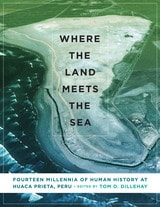
Where the Land Meets the Sea
Fourteen Millennia of Human History at Huaca Prieta, PeruEdited by Tom D. Dillehay
University of Texas Press, 2017
Huaca Prieta—one the world’s best-known, yet least understood, early maritime mound sites—and other Preceramic sites on the north coast of Peru bear witness to the beginnings of civilization in the Americas. Across more than fourteen millennia of human occupation, the coalescence of maritime, agricultural, and pastoral economies in the north coast settlements set in motion long-term biological and cultural transformations that led to increased social complexity and food production, and later the emergence of preindustrial states and urbanism. These developments make Huaca Prieta a site of global importance in world archaeology.
This landmark volume presents the findings of a major archaeological investigation carried out at Huaca Prieta, the nearby mound Paredones, and several Preceramic domestic sites in the lower Chicama Valley between 2006 and 2013 by an interdisciplinary team of more than fifty international specialists. The book’s contributors report on and analyze the extensive material records from the sites, including data on the architecture and spatial patterns; floral, faunal, and lithic remains; textiles; basketry; and more. Using this rich data, they build new models of the social, economic, and ontological practices of these early peoples, who appear to have favored cooperation and living in harmony with the environment over the accumulation of power and the development of ruling elites. This discovery adds a crucial new dimension to our understanding of emergent social complexity, cosmology, and religion in the Neolithic period.
Where the Wind Blows Us
Practicing Critical Community Archaeology in the Canadian NorthNatasha Lyons
University of Arizona Press, 2013
Lyons offers an extended case study of her work with the Inuvialuit community of the Canadian Western Arctic. She documents the development of this longstanding research relationship and presents both the theoretical and practical products of the work to date. Integrating knowledge drawn from archaeology, ethnography, oral history, and community interviews, Lyons utilizes a multivocal approach that actively listens to Inuvialuit speak about their rich and textured history.
The overall significance of this volume lies in outlining a method of practicing archaeology that embraces local ways of knowing with a critically constructed and evolving methodology that is responsive to community needs. It will serve as a handbook to mine for elements of critical practice, a model of community-based archaeology, and a useful set of concepts and examples for classroom study.
White Mountain Redware
A Pottery Tradition of East-Central Arizona and Western New MexicoRoy L. Carlson
University of Arizona Press, 1970
White Roads of the Yucatán
Changing Social Landscapes of the Yucatec MayaJustine M. Shaw
University of Arizona Press, 2008
Why Those Who Shovel Are Silent
A History of Local Archaeological Knowledge and LaborAllison Mickel
University Press of Colorado, 2020
Why Those Who Shovel Are Silent is based on six years of in-depth ethnographic work with current and former site workers at two major Middle Eastern archaeological sites—Petra, Jordan, and Çatalhöyük, Turkey—combined with thorough archival research. Author Allison Mickel describes the nature of the knowledge that locally hired archaeological laborers exclusively possess about artifacts, excavation methods, and archaeological interpretation, showing that archaeological workers are experts about a wide range of topics in archaeology. At the same time, Mickel reveals a financial incentive for site workers to pretend to be less knowledgeable than they actually are, as they risk losing their jobs or demotion if they reveal their expertise.
Despite a recent proliferation of critical research examining the history and politics of archaeology, the topic of archaeological labor has not yet been substantially examined. Why Those Who Shovel Are Silent employs a range of advanced qualitative, quantitative, and visual approaches and offers recommendations for archaeologists to include more diverse expert perspectives and produce more nuanced knowledge about the past. It will appeal to archaeologists, science studies scholars, and anyone interested in challenging the concept of “unskilled” labor.
Willard Z. Park's Notes on the Northern Paiute of Western Nevada, 1933-1940
UUAP 114Catherine S. Fowler
University of Utah Press, 1989
With Grit and Determination
A Century of Change for Women in Great Basin and American ArchaeologyEdited by Suzanne Eskenazi and Nicole M. Herzog
University of Utah Press, 2020
Women of Jeme
Lives in a Coptic Town in Late Antique EgyptT.G. Wilfong
University of Michigan Press, 2002
Contrary to the submissive, demure ideals for women proposed by the religious writers of Christian Egypt, the evidence from Jeme points to a more complex, dynamic situation. Women were active in the home, but some also played important and visible parts in the religious and economic life of their community. A bishop's attempts to monitor the behavior of the women in his district, the intricate inheritance dispute between an aunt and her niece, one woman's pious donations of murals to a church, three women's agonized decisions to give up their children to the local monastery, and the transactions of a family of women moneylenders--all these episodes paint a vivid picture of life in a Coptic town.
Although the remains of Jeme have long been known to scholars, little synthetic work has been done on this rich source for social history in Egypt before and after the Muslim conquests. The Women of Jeme is the first book-length study of the evidence. It will be of interest to Egyptologists and papyrologists, as well as to scholars of Coptic studies, early Christianity, social history and women's studies. The book assumes no prior knowledge of the subject, and the author has taken care to make it accessible to anyone with an interest in the ancient world.
T. G. Wilfong is Assistant Professor of Egyptology and Assistant Curator for Greco-Roman Egypt, University of Michigan.
Women's Ritual in Formative Oaxaca
Figurine-making, Divination, Death and the AncestorsJoyce Marcus
University of Michigan Press, 1998

Wood Quay
The Clash over Dublin's Viking PastBy Thomas F. Heffernan
University of Texas Press, 1988
An urban archaeologist working anywhere in the world can imagine this scenario: armed with a small digging tool and a soft brush, the archaeologist stands at a freshly cut trench facing off a construction crew driving bulldozers. At stake is the past—the discovery and preservation of our history. Across the gap is the future—progress and new buildings for a modern world. A battle ensues. It happened in Dublin in the early 1960s.
While investigating and salvage-excavating the site for a new municipal office complex, archaeologists made one of the most important and exciting discoveries in Ireland’s history. Buried beneath the present-day city of Dublin was the original Viking settlement from the ninth or tenth century, in an extraordinary state of preservation: houses, undecayed wood, domestic furniture, jewelry, toys, tools, works of art, coins, plots, paths, a veritable map of the medieval town. Because of its impressive size and state of preservation, the site known as Wood Quay was not an “ordinary” kind of archaeological discovery, nor was the battle that followed typical.
What made Wood Quay unique was that its defender was not the archaeological authority—the National Museum of Ireland—as is usually the case, but rather a spontaneously formed movement of thousands of Dubliners. While the museum was ready to turn the site over to the city’s developers after routine salvage work had been done, a group of prominent literary and political figures seized Wood Quay, holding it for almost a month and preventing bulldozers from moving in. Realizing the significance of the find, the people of Dublin took charge and kept the builders at bay for eight years. At the same time, they were able to press the museum to return to its archaeological work there. Archaeologists ultimately were able to complete good maps of a large portion of the site and recover between one and two million artifacts.
Today, the completed Dublin civic office complex stands on the Wood Quay site, fully landscaped and without a trace of the archaeological gold mine that once lay buried below. What does remain, however, is the memory of the powerful impact the citizens of Dublin had in demanding and establishing the connection through Wood Quay to their medieval roots.
Of interest to archaeologists, historic preservationists, and city planners alike, this fascinating and beautifully written account will also engage the general reader.
Wooden Ritual Artifacts from Chaco Canyon, New Mexico
The Chetro Ketl CollectionR. Gwinn Vivian, Dulce N. Dodgen, and Gayle H. Hartmann
University of Arizona Press, 1978
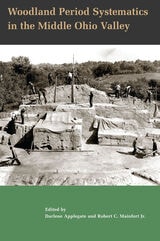
Woodland Period Systematics in the Middle Ohio Valley
Edited by Darlene Applegate and Robert C. Mainfort Jr.
University of Alabama Press, 2005
The important questions are diverse. What criteria are useful in defining periods and cultural types, and over what spatial and temporal boundaries do those criteria hold? How can we accommodate regional variation in the development and expression of traits used to delineate periods and cultural types? How does the concept of tradition relate to periods and cultural types? Is it prudent to equate culture types with periods? Is it prudent to equate archaeological cultures with ethnographic cultures? How does the available taxonomy hinder research? Contributing authors address these issues and others in the context of their Middle Ohio Valley Woodland Period research
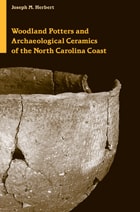
Woodland Potters and Archaeological Ceramics of the North Carolina Coast
Joseph M. Herbert
University of Alabama Press, 2009
The first comprehensive study of the meaning of pottery as a social activity in coastal North Carolina.
Pottery types, composed of specific sets of attributes, have long been defined for various periods and areas of the Atlantic coast, but their relationships and meanings have not been explicitly examined. In exploring these relationships for the North Carolina coast, this work examines the manner in which pottery traits cross-cut taxonomic types, tests the proposition that communities of practice existed at several scales, and questions the fundamental notion of ceramic types as ethnic markers.
Ethnoarchaeological case studies provide a means of assessing the mechanics of how social structure and gender roles may have affected the transmission of pottery-making techniques and how socio-cultural boundaries are reflected in the distribution of ceramic traditions. Another very valuable source of information about past practices is replication experimentation, which provides a means of understanding the practical techniques that lie behind the observable traits, thereby improving our understanding of how certain techniques may have influenced the transmission of traits from one potter to another. Both methods are employed in this study to interpret the meaning of pottery as an indicator of social activity on the North Carolina coast.
Works in Stone
Contemporary Perspectives on Lithic AnalysisMichael J. Shott
University of Utah Press, 2014
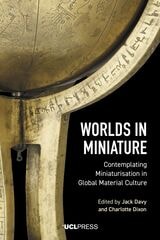
Worlds in Miniature
Contemplating Miniaturisation in Global Material CultureEdited by Jack Davy and Charlotte Dixon
University College London, 2019
Beginning with an introduction by the editors, which offers a guide to studying and comparing miniatures, the following chapters include studies of miniature Neolithic stone circles on Exmoor, Ancient Egyptian miniature assemblages, miniaturization under colonialism as practiced by the Makah People of Washington State, miniature watercraft from India, miniaturized contemporary tourist art of the Warao people of Venezuela, and dioramas on display in the Science Museum. Interspersing the chapters are interviews with miniature-makers, including two miniature boat builders at the National Maritime Museum, Cornwall and a freelance architectural model maker. The interdisciplinary nature of the volume makes it suitable reading for anthropologists, historians, archaeologists, artists, and researchers in related fields across the social sciences.
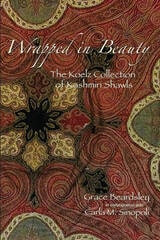
Wrapped in Beauty
The Koelz Collection of Kashmiri ShawlsGrace Beardsley in collaboration with Carla M. Sinopoli
University of Michigan Press, 2005
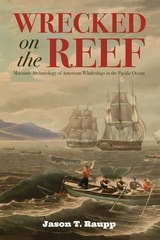
Wrecked on the Reef
Maritime Archaeology of American Whaleships in the Pacific OceanJason T. Raupp
University of Alabama Press, 2025
Take to the sea on this maritime archaeological exploration of nineteenth-century American whaling ships
American whaleships of the early nineteenth century were more than ocean-going vessels—they were complex workplaces, designed for long-term voyages, round-the-clock labor, and the large-scale extraction of marine resources. In Wrecked on the Reef, maritime archaeologist Jason T. Raupp presents a pioneering study of these ships as mobile production platforms, rooted in the logic of industrial capitalism operating far from land.
Drawing on shipwreck sites from the central Pacific region, Raupp offers a rare archaeological look at everyday life aboard nineteenth-century whaling vessels during the so-called “Golden Age” of whaling. He examines the tools used to hunt and process whales, the strict labor hierarchies onboard, and the physical evidence of diverse, often vulnerable crews who lived and worked under demanding conditions. By combining maritime and industrial archaeology, Raupp reveals how these ships functioned not just as transportation, but as full-scale factories at sea.
Chapters trace the rise of Pacific whaling, the importance of Hawaii as a supply and repair hub, the design and mechanics of whaleships, and the dangerous work crews performed in extreme isolation. Raupp shows how these ships were not only technological marvels of their time, but also part of a much larger system of labor, risk, and ocean-based resource extraction that fueled American expansion into the Pacific.
By exploring whaleships as floating work sites, Raupp offers readers a deeper understanding of maritime labor, capitalism, and imperialism in the nineteenth century. Wrecked on the Reef charts a new course in the study of labor and landscape at sea, providing significant contributions to maritime archaeology, industrial history, and environmental humanities.
Writing Workplace Cultures
An Archaeology of Professional WritingJim Henry
Southern Illinois University Press, 2000
In Writing Workplace Cultures: An Archaeology of Professional Writing, Jim Henry analyzes eighty-three workplace writing ethnographies composed over seven years in a variety of organizations. He views the findings as so many shards in an archaeology on professional writing at the beginning of the twenty-first century.
These ethnographies were composed by either practicing or aspiring writers participating in a Master’s program in professional writing and editing. Henry solicited the writers' participation in "informed intersubjective research" focused on issues and questions of their own determination. Most writers studied their own workplace, composing "auto-ethnographies" that problematize these workplaces' local cultures even as they depict writing practices within them.
Henry establishes links between current professional writing practices and composition instruction as both were shaped by national economic development and local postsecondary reorganization throughout the twentieth century. He insists that if we accept basic principles of social constructionism, the text demonstrates ways in which writers "write" workplace cultures to produce goods and services whose effects go far beyond the immediate needs of its clients.
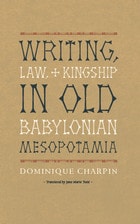
Writing, Law, and Kingship in Old Babylonian Mesopotamia
Dominique Charpin
University of Chicago Press, 2010
Ancient Mesopotamia, the fertile crescent between the Tigris and Euphrates rivers in what is now western Iraq and eastern Syria, is considered to be the cradle of civilization—home of the Babylonian and Assyrian empires, as well as the great Code of Hammurabi. The Code was only part of a rich juridical culture from 2200–1600 BCE that saw the invention of writing and the development of its relationship to law, among other remarkable firsts.
Though ancient history offers inexhaustible riches, Dominique Charpin focuses here on the legal systems of Old Babylonian Mesopotamia and offers considerable insight into how writing and the law evolved together to forge the principles of authority, precedent, and documentation that dominate us to this day. As legal codes throughout the region evolved through advances in cuneiform writing, kings and governments were able to stabilize their control over distant realms and impose a common language—which gave rise to complex social systems overseen by magistrates, judges, and scribes that eventually became the vast empires of history books. Sure to attract any reader with an interest in the ancient Near East, as well as rhetoric, legal history, and classical studies, this book is an innovative account of the intertwined histories of law and language.