Results by title
1415 books match the query 'Medical' and 43 start with w
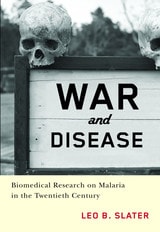
War and Disease
Biomedical Research on Malaria in the Twentieth CenturyLeo B. Slater
Rutgers University Press, 2009
A massive undertaking, the antimalarial program was to biomedical research what the Manhattan Project was to the physical sciences.
A volume in the Critical Issues in Health and Medicine series, edited by Rima D. Apple and Janet Golden.
War's Waste
Rehabilitation in World War I AmericaBeth Linker
University of Chicago Press, 2011

Warmed by Windchill
A Tiny Colt’s Fight for LifeJeffrey L. Tucker; Foreword by Carolyn L. Stull, PhD
University of Wisconsin Press, 2013
One bitterly cold winter afternoon, a nine-month-old colt—extremely weak, starving, left to die—was frozen to the rock-hard white landscape of a northern Wisconsin pasture. His whinny for help barely carried through thirty-mile-an-hour winds lashing snow and ice against his thin coat. But somewhere inside him a light refused to go out.
The colt's call for help was answered, and that light inspired a worldwide response to his story. The struggle of the little colt, called Windchill by his rescuers, was reported widely, and soon 1.2 million people were following Windchill's progress on a blog and webcam.
Warmed by Windchill tells how Jeffrey L. Tucker, owner of nearby Raindance Farms, and Kathi Davis, owner of a horse training operation co-located at Raindance, rescued and cared for the colt, aided by an outpouring of assistance. Donations of money, feed, blankets, and other supplies streamed in as round-the-clock volunteers tried to save Windchill. Warmed by Windchill is both heartening and heartbreaking.
Wasted Wombs
Navigating Reproductive Interruptions in CameroonErica van der Sijpt
Vanderbilt University Press, 2017
Providing an intimate look into these processes, Wasted Wombs shows how Gbigbil women constantly shift their interpretations of when a pregnancy starts, what it contains, and what is lost in case of a reproductive interruption, in contrast to Western conceptions of fertility and loss. Depending on the context and on their life aspirations—be it marriage and motherhood, or an educational trajectory and employment, or profitable sexual affairs with so-called "big fish"—women negotiate and manipulate the meanings and effects of reproductive interruptions. Paradoxically, they often do so while portraying themselves as powerless. Wasted Wombs carefully analyzes such tactics in relation to the various social predicaments that emerge around reproductive interruptions, as well as the capricious workings of women's physical bodies.
Ways of Knowing
A New History of Science, Technology, and MedicineJohn V. Pickstone
University of Chicago Press, 2001
Covering an incredibly wide range of subjects, from minerals and machines to patients and pharmaceuticals, and from experimental physics to genetic engineering, Pickstone's Ways of Knowing challenges the reader to reexamine traditional conceptualizations of the history, philosophy, and social studies of science, technology, and medicine.

Weaving the Threads of Life
The Khita Gyn-Eco-Logical Healing Cult among the YakaRené Devisch
University of Chicago Press, 1993
Drawing on many years among urban and rural Yaka, Devisch analyzes their understanding of existence as a fabric of firmly but delicately interwoven threads of nature, body, and society. The fertility healing ritual calls forth forces, feelings, and meanings that allow women to rejoin themselves to the complex pattern of social and cosmic life. These elaborate rites—whether simulating mortal agony and rebirth, gestation and delivery, or flowering and decay; using music and dance, steambath or massage, dream messages or scarification—are not based on symbols of traditional beliefs. Rather, Devisch shows, the rites themselves generate forces and meaning, creating and shaping the cosmic, physical, and social world of their participants.
In contrast to current theoretical methods such as postmodern or symbolical interpretation, Devisch's praxiological approach is unique in also using phenomenological insights into the intent and results of anthropological fieldwork. This innovative work will have ramifications beyond African studies, reaching into the anthropology of medicine and the body, comparative religious history, and women's studies.
Well Satisfied with My Position
The Civil War Journal of Spencer BonsallEdited by Michael A. Flannery and Katherine H. Oomens
Southern Illinois University Press, 2007
Well Satisfied with My Position offers a first-person account of army life during the Civil War’s Peninsula Campaign and Battle of Fredericksburg. Spencer Bonsall, who joined the 81st Pennsylvania Infantry as a hospital steward, kept a journal from March 1862 until March 1863, when he abruptly ceased writing. Editors Michael A. Flannery and Katherine H. Oomens place his experiences in the context of the field of Civil War medicine and continue his story in an epilogue.
Trained as a druggist when he was in his early twenties, Bonsall traveled the world, spent eight years on a tea plantation in India, and settled in Philadelphia, where he worked in the city surveyor’s office. But in March 1862, when he was in his mid-forties, the lure of serving his country on the battlefield led Bonsall to join the 81st Pennsylvania Infantry as a hospital steward.
Bonsall enjoyed his life with the Union army at first, comparing bivouacking in the woods to merely picnicking on a grand scale. “We are about as jolly a set of old bachelors as can be found in Virginia,” Bonsall wrote. But his first taste of the aftermath of battle at Fair Oaks and the Seven Days’ Battles in Virginia changed his mind about the joys of soldiering—though he never lost his zeal for the Union cause.
Bonsall details the camp life of a soldier from firsthand experience, outlines the engagements of the 81st, and traces the Battle of Fredericksburg and the Peninsula Campaign. He records facts not available elsewhere about camp conditions, attitudes toward Union generals and Confederate soldiers, and troop movements.
From the end of June to late October 1862, Bonsall’s illness kept him from writing in his journal. He picked up the record again in December 1862, just before the Battle of Fredericksburg, Virginia, in which the Union suffered a staggering 10,200 casualties and the 81st Pennsylvania lost more than half its men. He vividly describes the bloody aftermath. Bonsall’s horse was shot out from underneath him at the battle of Gettysburg, injuring him seriously and ending his military career. Although he was listed as “sick in hospital” on the regiment’s muster rolls, he was labeled a deserter in the U.S. Army records. Indeed, after recovery from his injuries, Bonsall walked away from the army to resume life in Philadelphia with his wife and child.
Published for the first time, Bonsall’s journal offers an unusually personal glimpse into the circumstances and motives of a man physically ruined by the war. Seventeen illustrations, including some drawn by Bonsall himself, help bring this narrative to life.
What Are Stem Cells?
Definitions at the Intersection of Science and PoliticsJohn Lynch
University of Alabama Press, 2011
What Do I Say?
Talking with Patients about SpiritualityElizabeth Johnston-Taylor
Templeton Press, 2007
•How do I answer a "why" question?
•What do I say to a patient who believes a miracle will happen to cure them?
•What if I'm not religious? How can I talk about it?
What Freud Didn't Know
A Three-Step Practice for Emotional Well-Being through Neuroscience and PsychologyStokes, Timothy B
Rutgers University Press, 2009
What Freud Didn't Know, well-supported by research and groundbreaking in theory, combines neuroscience and psychology to explain how the amygdala region of the brain evolved to unconsciously record, store, and activate emotional memory loops and imagery associated with painful events, especially those of childhood. This book is the first to bring together diverse, post-Freudian discoveries to produce a coherent three-step practice for understanding problematic aspects of the human mind which can be mastered easily, in a clinical or self-help setting. Stokes explores recent breakthroughs, many in marked contrast to Freud's views, which will change how we view psychological and emotional problems and their treatments.
Grounded in current theories about brain circuitry, What Freud Didn't Know integrates ideas about mindfulness, habitual thinking, and insight imagery and provides readers with the tools to rescript their personal narratives for psychological well-being. As an alternative approach to treating stress, most types of depression, anxiety, and phobias without prescription drugs, Stokes's three-step practice can be used to build resiliency and inner peace.
What Kind of Mother
A ReckoningJudy Sandler
West Virginia University Press, 2026
A mother’s memoir that reckons with her son’s descent into severe mental illness. What appears to be substance use disorder in high school later becomes a dual diagnosis as bipolar disorder emerges. Her son soon grows disillusioned with prescribed pharmaceuticals and participates in a residential treatment program that assists people in forgoing medication altogether. However, the program ultimately ejects him from the community for the very behaviors that the medication once managed. The book chronicles Sandler's initial denial of her truth, her painful awakening to mental illness in her family, and her eventual acceptance that she cannot save her son—only he can save himself.
What Matters in Medicine
Lessons from a Life in Primary CareDavid Loxterkamp, MD
University of Michigan Press, 2013
Primary care has come into the limelight with the passage of the Patient Protection and Affordable Care Act, the unchecked and unsustainable rise in American health care expenditures, and the crest of Baby Boomers who are now Medicare-eligible and entering the most health care–intensive period of their lives. Yet how much is really known about primary care? What Matters in Medicine: Lessons from a Life in Primary Care is a look at the past, present, and future of general practice, which is not only the predecessor to the modern primary care movement, but its foundation. Through memoir and conversation, Dr. David Loxterkamp reflects on the heroes and role models who drew him to family medicine and on his many years in family practice in a rural Maine community, and provides a prescription for change in the way that doctors and patients approach their shared contract for good health and a happy life. This book will be useful to those on both sides of primary care, doctors and patients alike.
What Nostalgia Was
War, Empire, and the Time of a Deadly EmotionThomas Dodman
University of Chicago Press, 2017
What Nostalgia Was unearths that history. Thomas Dodman begins his story in Basel, where a nineteen-year-old medical student invented the new diagnosis, modeled on prevailing notions of melancholy. From there, Dodman traces its spread through the European republic of letters and into Napoleon's armies, as French soldiers far from home were diagnosed and treated for the disease. Nostalgia then gradually transformed from a medical term to a more expansive cultural concept, one that encompassed Romantic notions of the aesthetic pleasure of suffering. But the decisive shift toward its contemporary meaning occurred in the colonies, where Frenchmen worried about racial and cultural mixing came to view moderate homesickness as salutary. An afterword reflects on how the history of nostalgia can help us understand the transformations of the modern world, rounding out a surprising, fascinating tour through the history of a durable idea.

What Would You Do?
Juggling Bioethics and EthnographyCharles L. Bosk
University of Chicago Press, 2008
Renowned sociologist Charles L. Bosk has been observing medical care for thirty-five years. In What Would You Do? he brings his extensive experience to bear on these questions while reflecting on the ethical dilemmas that his own ethnographic research among surgeons and genetic counselors has provoked. Bosk considers whether the consent given to ethnographers by their subjects can ever be fully voluntary and informed. He questions whether promises of confidentiality and anonymity can or should be made. And he wonders if social scientists overestimate the benefits of their work while downplaying the risks.
Vital for practitioners of both the newly prominent field of bioethics and the long-established craft of ethnography, What Would You Do? will also engross anyone concerned with how our society addresses difficult health care issues.

What the River Said
A Novelsandra cavallo miller
University of Nevada Press, 2021
In this riveting third book of the Dr. Abby Wilmore series, Dr. Abby returns to her medical clinic in Grand Canyon National Park. Happy to be reunited with her staff and her partner, Dr. John Pepper, Abby is back treating park visitors and personnel as well as local residents. However, a wave of heart attacks among apparently healthy hikers creates a new puzzle, and soon there are rumors of people using performance-enhancing drugs. Abby’s situation deteriorates when a new female friend suddenly disappears, and Abby berates herself for missing the woman’s depression.
As Abby struggles with the disappearance of her friend, Dr. Pepper is preoccupied by a mysterious threat from his past and becomes badly
injured in an apparent fall. While he recuperates, Abby takes over much of the clinic work while they provide a home for Pepper’s troubled teenage niece and an adopted stray dog.
Abby soon discovers that there is something more sinister behind the recent troubling events. In this exhilarating follow-up to The Color of Rock and Where Light Comes and Goes, Abby must learn to confront her past in order to stand up for the ones she loves.
Wheeling and Dealing
Living with Spinal Cord InjuryEsther Isabelle Wilder
Vanderbilt University Press, 2006
Meghan is a high-level quadriplegic, living alone, who uses a power wheelchair and requires daily attendant care. She laments, "There are so many people who think we're asexual, we're not pretty, and we're creeps and weirdoes." To dispel this myth, she envisions a fashion show of women in wheelchairs parading down a runway. Meghan has been involved in a number of sexual relationships since sustaining her injury. While she doesn't think her disability has diminished her sexual pleasure, she feels that it has affected her sexual performance: "Well, you can't move it. You can't, like, bump and grind."
In 32 unusually frank in-depth interviews like these, the men and women in this book freely discuss their sex lives, their beliefs about God, how they want others to treat them, and whether they want to walk again. In each chapter the author presents their complex voices and comprehensive research about different facets of spinal cord injury (SCI).
Wheeling and Dealing explores the extent to which people with spinal cord injury locate their challenges in their physical impairments or in the social environment. Some disagree with those disability activists who focus almost exclusively on the latter, but the author examines this issue in depth.
Topics include:
--Physical health from degrees of loss of function to problems like pressure sores, temperature regulation, and bladder control.
--The stages of psychological adjustment and rehabilitation.
--Obstacles to sexual intimacy, treatment of erectile dysfunction, and new sources of sexual pleasure and emotional intimacy.
--Religion and spirituality.
--Social and political beliefs, with those with SCI weighing in on everything from welfare services to embryonic stem cell research.
--Dating, marriage, and parenting.
--Friendship networks and social supports; concerns about transportation and accessibility; stigma.
--Education, employment, and economic consequences.
This book is the recipient of the 2004 Norman L. and Roselea J. Goldberg Prize from Vanderbilt University Press for the best project in the area of medicine.
When Care is Conditional
Immigrants and the U.S. Safety NetDani Carrillo
Russell Sage Foundation, 2024
Through in-depth interviews with Latinx immigrants in northern California, Carrillo examines three circumstances—place, gender, and immigration status—that intersect to influence an individual’s access to health care, food assistance, and other benefits. She demonstrates that place of residence affects undocumented immigrants’ ability to get care since more services are available in urban areas, where many immigrants cannot afford to live, than suburban areas, where public transportation is limited. She also shows that while both men and women who are undocumented have difficulty obtaining care, men often confront more challenges. Undocumented women who are pregnant or mothers are eligible for some government safety net programs and rely on informal coethnic networks or a “guiding figure”—a relative, friend, neighbor, or coworker—who explains how to get care and makes them feel confident in accessing it. Most undocumented men, in contrast, are not eligible for public programs except in a medical emergency and often lack someone to guide them directly to care. Men sometimes steer one another to jobs through worker centers—where they may learn about various services and take advantage of those that increase their employability, like English or computer classes—but a culture of masculinity leads them to downplay medical problems and seek health care only in a crisis.
As undocumented immigrants navigate this exclusionary system, Carrillo finds that they resist the rhetoric stigmatizing them as lawbreakers. Dismissing the importance of “papers” and highlighting their work ethic, they question the fairness of U.S. immigration policies and challenge ideas about who deserves care.
Carrillo offers concrete recommendations, such as improving labor conditions and reexamining benefit eligibility, to increase access to care for not only undocumented immigrants but also people who have been excluded because of their race, criminal record, gender identity, sexual orientation, or disability. She argues that working with and across populations creates a powerful form of solidarity in advocating for inclusive care.
When Care Is Conditional provides compelling insights into how safety net and immigration policies intersect to affect people’s everyday lives and calls for a cultural shift so that the United States can provide unconditional care for all.
When Death Is on the Horizon
Temporality, Finitude, and Care Toward Life’s EndAnnemarie Samuels
Rutgers University Press, 2026
The urge to engage with finitude is increasingly central in our present apocalyptic time of political and ecological turmoil. Aging populations and the rapid development of advanced, but expensive, technologies to ever further postpone death pose significant healthcare challenges for societies around the world. In these times, how do people care when the end of life is near? How do they orient toward death? Do they see death as an absolute end, and if not, what sort of horizon does death present? Questioning taken for granted assumptions about end-of-life care, When Death Is on the Horizon analyzes how people approach death in a wide variety of geographical locations and social contexts. Through in-depth ethnographic case studies, it shows how people orient toward, beyond, and away from death, and how they do so within a world marked by historic and ongoing socio-political and structural inequalities.
This book is also freely available online as an open access digital edition.
When Roe Fell
How Barriers, Inequities, and Systemic Failures of Justice in Abortion Became VisibleKatrina Kimport
Rutgers University Press, 2026
When Sickness Heals
The Place of Religious Belief in HealthcareSiroj Sorajjakool
Templeton Press, 2006
In When Sickness Heals, Dr. Siroj Sorajjakool draws on more than ten years of studies on health benefits in relation to spirituality, especially focusing on the function of "meaning." He expounds on his theory that healing is primarily the function of meaning, and meaning transcends sickness and even death itself. He concludes that what people ultimately seek in life is the healing of their souls.
Sorajjakool brings many Eastern and Western resources to his conversation on health, meaning, and healing. He incorporates the perspectives of theologians and philosophers like Paul Tillich, Carl Jung, Søren Kierkegaard, Raimundo Panikkar, Dietrich Bonhoeffer, and John Macquarrie; as well as references to religious texts, including yin and yang, and alchemy.
A clear, distinct understanding of spirituality in clinical contexts is presented, with an argument for the role of meaning in the healing process, based on evidence that there may be healing even in the face of death. Sorajjakool identifies the transitional processes people may go through as they seek to make sense of their experiences during a health crisis. He suggests an alternative approach to spiritual assessment and provides methods of spiritual care that speak to the soul.
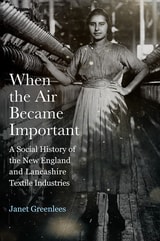
When the Air Became Important
A Social History of the New England and Lancashire Textile IndustriesJanet Greenlees
Rutgers University Press, 2019

Where Light Comes and Goes
A NovelSandra Cavallo Miller
University of Nevada Press, 2020
Book 2 in the Dr. Abby Wilmore Series
Where Light Comes and Goes brings back Dr. Abby Wilmore, the young family physician who was the protagonist of Miller’s first novel, The Color of Rock. Abby has accepted the directorship of a summer clinic in Yellowstone National Park where she hopes to expand her medical skills. She arrives to find herself working above the increasingly restless Yellowstone supervolcano, treating visitors, staff, and locals, all while evading the advances of a lecherous concession manager and maintaining a long-distance relationship with her partner who stays at the Grand Canyon Clinic. As tremors in the park escalate and the lakes seethe with bubbling gases, Abby learns that some-one is mysteriously killing the bison.
What follows is an engrossing mystery unfolding in a spectacular setting with rich, quirky, and endearing characters and unexpected plot turns. While an overworked Abby makes new friends among her clinic staff and patients, tension builds as the volcano seems to be moving closer to a major eruption and the bison killings become more frequent. Soon, Abby finds herself in mortal danger as the story races to a thrilling and unexpected conclusion.
Sandra Cavallo Miller demonstrated in The Color of Rock that she is a gifted storyteller. Where Light Comes and Goes deftly combines a gripping mystery set in the accurately depicted routine of a busy medical practice amid the wonders of Yellowstone’s magnificent scenery and wildlife. This is entertaining reading at its best.

Where No One Should Live
A NovelSandra Cavallo Miller
University of Nevada Press, 2021
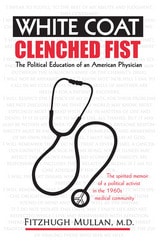
White Coat, Clenched Fist
The Political Education of an American PhysicianFitzhugh Mullan, M.D.
University of Michigan Press, 2006
In the sixties, Fitzhugh Mullan was an activist in the civil rights struggle. While in medical school, Mullan was shocked by gaps in what the students learned, and the lack of humanity in the classroom. Later, Dr. Mullan was outraged at the conditions he discovered when he began to practice. He helped found the Student Health Organization, organized the Controversial Medical Collective at Lincoln Hospital in the Bronx, and struggled to offer improved medical care to those who needed it most and could afford it least.
This landmark book charts the state of medical school and practices in the 1960s and 70s. This new edition is updated with a preface in which Dr. Mullan reflects on the changes in the medical field over the last thirty-plus years.
Fitzhugh Mullan is Murdock Head Professor of Medicine and Health Policy at George Washington University. He worked at the U.S. Public Health Service where he attained the rank of Assistant Surgeon General (1991-1996). Dr. Mullan is the co-founder of the National Coalition for Cancer Survivorship and the author of numerous books, including Plagues and Politics: The Story of the United States Public Health Service, and his most recent book, Narrative Matters: The Power of the Personal Essay in Health Policy.
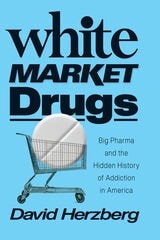
White Market Drugs
Big Pharma and the Hidden History of Addiction in AmericaDavid Herzberg
University of Chicago Press, 2020
These markets are widely acknowledged but no one has explained how they became so central to the medical system in a nation famous for its “drug wars”—until now. Drawing from federal, state, industry, and medical archives alongside a wealth of published sources, Herzberg re-connects America’s divided drug history, telling the whole story for the first time. He reveals that the driving question for policymakers has never been how to prohibit the use of addictive drugs, but how to ensure their availability in medical contexts, where profitability often outweighs public safety. Access to white markets was thus a double-edged sword for socially privileged consumers, even as communities of color faced exclusion and punitive drug prohibition. To counter this no-win setup, Herzberg advocates for a consumer protection approach that robustly regulates all drug markets to minimize risks while maintaining safe, reliable access (and treatment) for people with addiction.
Accomplishing this requires rethinking a drug/medicine divide born a century ago that, unlike most policies of that racially segregated era, has somehow survived relatively unscathed into the twenty-first century.
By showing how the twenty-first-century opioid crisis is only the most recent in a long history of similar crises of addiction to pharmaceuticals, Herzberg forces us to rethink our most basic ideas about drug policy and addiction itself—ideas that have been failing us catastrophically for over a century.
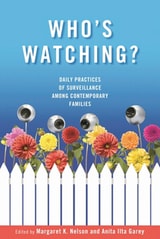
Who's Watching?
Daily Practices of Surveillance among Contemporary FamiliesMargaret K. Nelson
Vanderbilt University Press, 2009
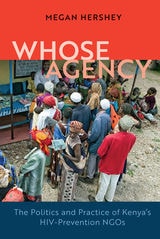
Whose Agency
The Politics and Practice of Kenya's HIV-Prevention NGOsMegan Hershey
University of Wisconsin Press, 2019
By focusing on one particular type of NGO—those organized to help prevent the spread and transmission of HIV in Kenya—Megan Hershey interrogates the ways these organizations achieve (or fail to achieve) their planned outcomes. Along the way, she examines the slippery slope that is often used to define “success” based on meeting donor-set goals versus locally identified needs. She also explores the complex network of bureaucratic requirements at both the national and local levels that affect the delicate relationships NGOs have with the state. Drawing on extensive, original quantitative and qualitative research, Whose Agency serves as a much-needed case study for understanding the strengths and shortcomings of participatory development and community engagement.
Why Surgeons Struggle with Work-Hour Reforms
James E. Coverdill
Vanderbilt University Press, 2021
Why Surgeons Struggle with Work-Hour Reforms focuses on general surgeons, a historically long-hour specialty, who fiercely opposed the reforms and are among the least compliant. Why do surgeons struggle with the reforms? Why do they continue to work long hours and view the act of doing so as reasonable if not quintessentially professional? Although the analysis is situated in the growing scientific literature on the consequences of fatigue, the authors do not adjudicate between the claims of surgeons and reform advocates about the effects of long work hours on patient or provider safety. Rather, the aim is to explore and explain how aspects of the occupational culture of surgeons and the social organization of surgical training and practice interlock to impede the reforms.
Wide Branches, Deep Roots
How Appalachian Wisdom Can Help in the Fight for a Sustainable FutureJessica M Jones
West Virginia University Press, 2026
To be Appalachian is to define oneself in terms of a place. Where we’re from plays a tremendous role in who we are, through storytelling about our homeplaces and the people who have loved them. However, what goes largely unaddressed is how this love of place can contribute to sustainability within the region, which has notoriously faced on-going environmental threats from extraction industries. The reality is that our relationship with the environment is thorny and intertwined with our identities, histories, and economic realities. The authors in the collection get down among the thorns to explore what sustainability means in Appalachia and how we can utilize the power of traditional folkways to achieve it.
This collection of over thirty pieces explores the connections between Appalachia’s stories, traditions, and modern events and the pathway to regional sustainability. The contributors — writers and scholars — examine how our definitions of sustainability have been formed, the power of education to encourage or inhibit it, and what moves are being made toward efficacy in the future. They also offer specific actions readers can take to better understand and build sustainability where they live.
Contributors: Greg Bealer, Luc Biscan-White, David Blackmore, Aysha Bodenhamer, Ivy Brashear, Matthew Calloway, Nicole Drewitz-Crockett, Christina Fisanick, Deborah Fleming, Amanda V. Garner, Karie Gunter-Seymour, Richard Hague, Amanda E. Hayes, Lockie Hunter, Jessica M. Jones, Kristen LeFevers, Sarah Long, Meghan Moore-Hubbard, Barbara Marie Minney, Jessica Radicic, Elizabeth Emmerth Rexroad, Barbara Sabol, Larry Smith, Patrice Stank, Taylor Nasim Stone, Paul Thomas, Elizabeth Tussey, and Betsy Weems.
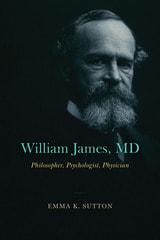
William James, MD
Philosopher, Psychologist, PhysicianEmma K. Sutton
University of Chicago Press, 2023
William James is known as a nineteenth-century philosopher, psychologist, and psychical researcher. Less well-known is how his interest in medicine influenced his life and work, driving his ambition to change the way American society conceived of itself in body, mind, and soul. William James, MD offers an account of the development and cultural significance of James’s ideas and works, and establishes, for the first time, the relevance of medical themes to his major lines of thought.
James lived at a time when old assumptions about faith and the moral and religious possibilities for human worth and redemption were increasingly displaced by a concern with the medically “normal” and the perfectibility of the body. Woven into treatises that warned against humanity’s decline, these ideas were part of the eugenics movement and reflected a growing social stigma attached to illness and invalidism, a disturbing intellectual current in which James felt personally implicated. Most chronicles of James’s life have portrayed a distressed young man, who then endured a psychological or spiritual crisis to emerge as a mature thinker who threw off his pallor of mental sickness for good. In contrast, Emma K. Sutton draws on his personal correspondence, unpublished notebooks, and diaries to show that James considered himself a genuine invalid to the end of his days. Sutton makes the compelling case that his philosophizing was not an abstract occupation but an impassioned response to his own life experiences and challenges. To ignore the medical James is to misread James altogether.
Willing and Unable
Doctors' Constraints in Abortion CareLori R. Freedman
Vanderbilt University Press, 2010
Structural barriers to the mainstream practice of abortion effectively institutionalize the buck-passing of abortion patients to abortion clinics. As the author notes, "Public-health-minded HMOs and physician practices could significantly change the world of abortion care if they stopped outsourcing it."
Drawing from forty in-depth interviews, the book presents a challenge to a commonly held assumption that physicians decide whether or not to provide abortion based on personal ideology. Physician narratives demonstrate how their choices around learning, doing, and even having abortions themselves disrupt the pro-choice/pro-life moral and political binary.
Wired Together
The Montreal Neurological Institute and the Origins of NeuroscienceYvan Prkachin
University of Chicago Press, 2026
Wired Together explains the rise of neuroscience by tracing the history of the Montreal Neurological Institute (MNI) and the men and women who transformed it into neuroscience’s most innovative and productive research site. Opened by neurosurgeon Wilder Penfield in 1934, the MNI pioneered the surgical treatment of epilepsy and transformed the operating theater into a new kind of scientific laboratory for investigating the functions of the brain. But more than that, the MNI became a crucial site for forming new interdisciplinary practices. These involved, as Yvan Prkachin puts it, wiring together new assemblies of physicians, surgeons, and scientists into a growing network that made possible the emergence of an interdisciplinary science of the brain.
Wired Together also traces how the MNI and its network of scientists spread this new interdisciplinary neuroscience to the rest of the world. Prkachin uncovers the surprising history of some of the most important neuroscientific organizations, discoveries, theories, and instruments from their beginnings in Montreal through the complex international networks of the post-war sciences. In doing so, he tells the stories of the most crucial and least understood characters from early neuroscience—such as Brenda Milner, Donald Hebb, Herbert Jasper, Molly Harrower, and David Hubel—as well as the surprising origins of scientific practices and ideas like sensory deprivation, multiple forms of memory, and artificial neural networks.
With Shaking Hands
Aging with Parkinson's Disease in America's HeartlandSolimeo, Samantha
Rutgers University Press, 2009
At the heart of With Shaking Hands is the account of elder Americans in rural Iowa who have been diagnosed with PD. With a focus on the impact of chronic illness on an aging population, Samantha Solimeo combines clear and accessible prose with qualitative and quantitative research to demonstrate how PD accelerates, mediates, and obscures patterns of aging. She explores how ideas of what to expect in older age influence and direct interpretations of one's body.
This sensitive and groundbreaking work unites theories of disease with modern conceptions of the body in biological and social terms. PD, like other chronic disorders, presents a special case of embodiment which challenge our thinking about how such diseases should be researched and how they are experienced.
With a Little Help from Our Friends
Creating Community as We Grow OlderBeth Baker
Vanderbilt University Press, 2014
• a mobile home cooperative in small-town Oregon
• a senior artists colony in Los Angeles
• neighbors helping neighbors in "Villages" or "naturally occurring retirement communities"
• intentional cohousing communities
• best friends moving in together
• multigenerational families that balance togetherness and privacy
• niche communities including such diverse groups as retired postal workers, gays and lesbians, and Zen Buddhists
Drawing on new research showing the importance of social support to healthy aging and the risks associated with loneliness and isolation, the author encourages the reader to plan for a future with strong connections. Baker explores whether individuals in declining health can really stay rooted in their communities through the end of life and concludes by examining the challenge of expanding the home-care workforce and the potential of new technologies like webcams and assistive robots.
This book is the recipient of the annual Norman L. and Roselea J. Goldberg Prize for the best project in the area of medicine.
Within Reason
A Liberal Public Health for an Illiberal TimeSandro Galea
University of Chicago Press, 2023
A provocative chronicle of how US public health has strayed from its liberal roots.
The Covid-19 response was a crucible of politics and public health—a volatile combination that produced predictably bad results. As scientific expertise became entangled with political motivations, the public-health establishment found itself mired in political encampment.
It was, as Sandro Galea argues, a crisis of liberalism: a retreat from the principles of free speech, open debate, and the pursuit of knowledge through reasoned inquiry that should inform the work of public health.
Across fifty essays, Within Reason chronicles how public health became enmeshed in the insidious social trends that accelerated under Covid-19. Galea challenges this intellectual drift towards intolerance and absolutism while showing how similar regressions from reason undermined social progress during earlier eras. Within Reason builds an incisive case for a return to critical, open inquiry as a guiding principle for the future public health we want—and a future we must work to protect.
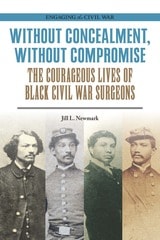
Without Concealment, Without Compromise
The Courageous Lives of Black Civil War SurgeonsJill L. Newmark
Southern Illinois University Press, 2023
Of some twelve thousand Union Civil War surgeons, only fourteen were Black men. This book is the first-ever comprehensive exploration of their lives and service. Jill L. Newmark’s outstanding research uncovers stories hidden for more than 150 years, illuminating the unique experiences of proud, patriotic men who fought racism and discrimination to attend medical school and serve with the U.S. military. Their efforts and actions influenced societal change and forged new pathways for African Americans.
Individual biographies bring to light Alexander T. Augusta, who challenged discriminatory laws; William P. Powell Jr., who pursued a military pension for twenty-five years; Anderson R. Abbott, a friend of Elizabeth Keckley’s; John van Surly DeGrasse, the only Black surgeon to serve on the battlefield; John H. Rapier Jr., an international traveler; Richard H. Greene, the only Black surgeon known to have served in the Navy; Willis R. Revels, a preacher; Benjamin A. Boseman, a politician and postmaster; and Charles B. Purvis, who taught at Howard University. Information was limited for five other men, all of whom broke educational barriers by attending medical schools in the United States: Cortlandt Van Rensselaer Creed, William B. Ellis, Alpheus W. Tucker, Joseph Dennis Harris, and Charles H. Taylor.
Newmark presents all available information about the surgeons’ early lives, influences, education, Civil War service, and post-war experiences. Many of the stories overlap, as did the lives of the men. Each man, through his service as a surgeon during the war and his lifelong activism for freedom, justice, and equality, became a catalyst of change and a symbol of an emancipated future.
Women Physicians and Professional Ethos in Nineteenth-Century America
Carolyn Skinner
Southern Illinois University Press, 2014
Women physicians in nineteenth-century America faced a unique challenge in gaining acceptance to the medical field as it began its transformation into a professional institution. The profession had begun to increasingly insist on masculine traits as signs of competency. Not only were these traits inaccessible to women according to nineteenth-century gender ideology, but showing competence as a medical professional was not enough. Whether women could or should be physicians hinged mostly on maintaining their femininity while displaying the newly established standard traits of successful practitioners of medicine.
Women Physicians and Professional Ethos provides a unique example of how women influenced both popular and medical discourse. This volume is especially notable because it considers the work of African American and American Indian women professionals. Drawing on a range of books, articles, and speeches, Carolyn Skinner analyzes the rhetorical practices of nineteenth-century American women physicians. She redefines ethos in a way that reflects the persuasive efforts of women who claimed the authority and expertise of the physician with great difficulty.
Descriptions of ethos have traditionally been based on masculine communication and behavior, leaving women’s rhetorical situations largely unaccounted for. Skinner’s feminist model considers the constraints imposed by material resources and social position, the reciprocity between speaker and audience, the effect of one rhetor’s choices on the options available to others, the connections between ethos and genre, the potential for ethos to be developed and used collectively by similarly situated people, and the role ethos plays in promoting social change. Extending recent theorizations of ethos as a spatial, ecological, and potentially communal concept, Skinneridentifies nineteenth-century women physicians’ rhetorical strategies and outlines a feminist model of ethos that gives readers a more nuanced understanding of how this mode of persuasion operates for all speakers and writers.
Women and Borderline Personality Disorder
Symptoms and StoriesWirth-Cauchon, Janet
Rutgers University Press, 2000
At the beginning of the twentieth century, “hysteria” was a medical or psychiatric diagnosis applied primarily to women. In fact, the term itself comes from the Greek, meaning “wandering womb.” We have since learned, however, that this diagnosis evolved from certain assumptions about women’s social roles and mental characteristics, and is no longer in use.
The modern equivalent of hysteria, however, may be borderline personality disorder, defined as “a pervasive pattern of instability of self-image, interpersonal relationships, and mood, beginning in early adulthood and present in a variety of contexts.” This diagnosis is applied to women so much more often than to men that feminists have begun to raise important questions about the social, cultural, and even the medical assumptions underlying this “illness.” Women are said to be “unstable” when they may be trying to reconcile often contradictory and conflicting social expectations.
In Women and Borderline Personality Disorder, Janet Wirth-Cauchon presents a feminist cultural analysis of the notions of “unstable” selfhood found in case narratives of women diagnosed with borderline personality disorder. This exploration of contemporary post-Freudian psychoanalytic notions of the self as they apply to women’s identity conflicts is an important contribution to the literature on social constructions of mental illness in women and feminist critiques of psychiatry in general.
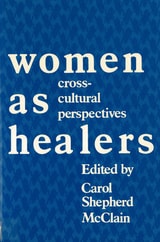
Women as Healers
Cross-Cultural PerspectivesMcClain, Carol Shepherd
Rutgers University Press, 1989
In Women as Healers, thirteen contributors explore the intersection of feminist anthropology and medical anthropology in eleven case studies of women in traditional and emergent healing roles in diverse parts of the world. In a spectrum of healing roles ranging from family healers to shamans, diviner-mediums, and midwives, women throughout the world pursue strategic ends through healing, manipulate cultural images to effect cures and explain misfortune, and shape and are shaped by the social and political contexts in which they work. In an introductory chapter, Carol Shepherd McClain traces the evolution of ideas in medical anthropology and in the anthropology of women that have both constrained and expanded our understanding of the significance of gender to healing-one of the most fundamental and universal of human activities.
The contributors include Carol Shepherd McClain, Ruthbeth Finerman, Carolyn Nordstrom, Carole H. Browner, William Wedenoja, Marjery Foz, Barbara Kerewsky-Halpern, Laurel Kendall, Merrill Signer, Roberto Garcia, Edward C. Green, Carolyn Sargent, and Margaret Reid.
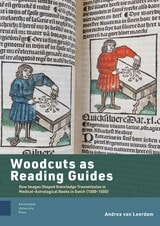
Woodcuts as Reading Guides
How Images Shaped Knowledge Transmission in Medical-Astrological Books in Dutch (1500-1550)Andrea van Leerdam
Amsterdam University Press, 2024
For this book Andrea van Leerdam received the Victorine van Schaick publicatieprijs 2024 and the Menno Hertzberger aanmoedigingsprijs 2026.
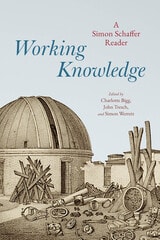
Working Knowledge
A Simon Schaffer ReaderSimon Schaffer
University of Chicago Press, 2026
Working Knowledge is the first English-language collection of essays by Simon Schaffer, coauthor of Leviathan and the Air-Pump, a landmark text in the history of science. Though the latter may be his most famous book, Schaffer is also renowned for seminal articles on Isaac Newton and the cultures of popular spectacle, nineteenth-century physics and its practices of labor discipline and standardization, the history of anthropology and collecting, and the globe-spanning cultural interactions that have shaped modern science. Working Knowledge compiles these well-known pieces alongside newer selections, making them accessible in a single place and representing the huge scope and impact of Schaffer’s oeuvre.
The Reader divides sixteen of Schaffer’s articles across five thematic sections, which take up timely issues like the turn toward global histories of science; the intersection of science and capitalism; the interaction between bodies and machines; and the connection between science, politics, and the environment. Eight new essays by notable historians such as Adrian Johns, Lissa Roberts, and Steven Shapin bring Schaffer’s pieces into discussion with current scholarship. Illustrations and brief commentaries by Schaffer and the artist Adam Lowe, a longtime collaborator, are included throughout the volume.
Bringing together essential articles that were previously scattered across several publications, Working Knowledge is an insightful introduction to Schaffer and his ever-relevant writing.
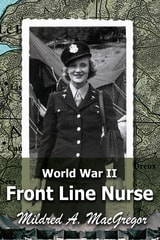
World War II Front Line Nurse
Mildred A. MacGregor
University of Michigan Press, 2008
In late 1942, along with so many others who signed up to support the war effort, thirty-year-old Mildred Radawiec left a comfortable position as a nurse at the University of Michigan Hospital and postponed her marriage to a soon-to-be doctor to volunteer as a surgical nurse in the major battle theaters of the war. Radawiec was one of thirty volunteers from the hospital surgical staff that comprised the University of Michigan Unit, the 298th General Hospital, as the University of Michigan Hospital was called.
Radawiec's first-person history recounts her wartime experience with sharp detail and grace and sets the stage for a you-are-there experience---from the thrill of signing up and shipping out; to the harrowing ocean crossing and the arduous trip through the Sahara; to dangerous air raids and moving at a moment's notice, often at night with the lights off to avoid attacks. Radawiec was near Omaha Beach in France soon after D-Day, June 6, 1944, and details stories of marathon stints assisting the injured on the front lines as they poured in by the hundreds. Radawiec also traveled to Belgium and Germany and set up in the area near Aachen in the fall of 1944. In Germany she experienced Buzz Bombs---pilotless flying bombs---and even witnessed the death of a fellow nurse in a bombing attack in which medics brought in wounded soldiers by the truckload. Radawiec also leavens her story with uplifting tales of heroism and courage and intersperses the narrative with poignant letters from her family and fiancé.
This stirring personal account of war will mesmerize anyone interested in World War II history and women's too-often-overlooked role in it.