Results by title
1106 books match the query 'Memoirs' and 58 start with w
Waiting for Buddy Guy
Chicago Blues at the CrossroadsAlan Harper
University of Illinois Press, 2016
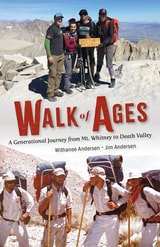
Walk of Ages
A Generational Journey from Mt. Whitney to Death ValleyWithanee Andersen
University of Nevada Press, 2024
With hopes of being listed in the Guinness Book of World Records, Jim led the first documented walk from the highest to lowest point in the contiguous United States in 1974. He lived, albeit just barely, to tell the tale to his daughter, sparking a desire in Withanee to retrace his steps in his honor. In 2017, she took on the incredible task of recreating Jim’s legacy trek of 131 miles with the help of divine intervention, ice-cold beer, and her parents, who were following along as the support party.
Walk of Ages humorously relates the parallel journey of an epic adventure told from two perspectives—a daughter’s difficult quest, and a father who supports her through it while recalling his own experiences from four decades earlier. Throughout this momentous odyssey, readers will realize how a once-in-a-generation adventure leads to life-changing transformation, and that the bond between father and daughter knows no bounds.
Walking Distance
Pilgrimage, Parenthood, Grief, and Home RepairsDavid Hlavsa
Michigan State University Press, 2015
Though walking more than 400 miles across the north of Spain turned out to be more difficult than they had anticipated, after a series of misadventures, including a brief stay in a Spanish hospital, they arrived in Santiago. Shortly after their return to Seattle, Lisa became pregnant, and the hardships of the Camino were no comparison to what followed: the stillbirth of their first son and Lisa’s harrowing second pregnancy.
Walking Distance is a moving and disarmingly funny book, a good story with a happy ending—the safe arrival of David and Lisa’s second son, Benjamin. David and Lisa get more than they bargained for, but they also get exactly what they wanted: a child, a solid marriage, and a richer life.
Walking Home Ground
In the Footsteps of Muir, Leopold, and DerlethRobert Root
Wisconsin Historical Society Press, 2017
When longtime author Robert Root moves to a small town in southeast Wisconsin, he gets to know his new home by walking the same terrain traveled by three Wisconsin luminaries who were deeply rooted in place—John Muir, Aldo Leopold, and August Derleth. Root walks with Muir at John Muir State Natural Area, with Leopold at the Shack, and with Derleth in Sac Prairie; closer to home, he traverses the Ice Age Trail, often guided by such figures as pioneering scientist Increase Lapham. Along the way, Root investigates the changes to the natural landscape over nearly two centuries, and he chronicles his own transition from someone on unfamiliar terrain to someone secure on his home ground.In prose that is at turns introspective and haunting, Walking Home Ground inspires us to see history’s echo all around us: the parking lot that once was forest; the city that once was glacier. "Perhaps this book is an invitation to walk home ground," Root tells us. "Perhaps, too, it’s a time capsule, a message in a bottle from someone given to looking over his shoulder even as he tries to examine the ground beneath his feet."

Walter's Perspective
A Memoir of Fifty Years in Chicago TV NewsWalter Jacobson, Foreword by Bill Kurtis
Southern Illinois University Press, 2012
This highly readable book provides a unique glimpse into the rough-and-tumble Chicago news business as seen through the eyes of one of its legendary players. From his first news job working as a legman for Daily News columnist Jack Mabley in the 1950s to his later role as a news anchor and political commentator at CBS-owned WBBM, Walter Jacobson battled along the front lines of an industry undergoing dramatic changes. While it is ultimately Jacobson’s story, a memoir of a long and distinguished (and sometimes highly controversial) career, it is also an insider’s account of the inner workings of Chicago television news, including the ratings games, the process of defining news and choosing stories, the media’s power and its failures, and the meddling by corporate and network executives.
As a reporter, Jacobson was regularly contentious and confrontational. He was fired on a number of occasions and was convicted of libeling tobacco company Brown and Williamson, resulting in a multimillion-dollar federal court judgment against him and CBS. Yet it was this gutsy attitude that put him at the top of the news game. With an engaging writing style, Jacobson recollects his interactions with Chicago mayors Richard J. and Richard M. Daley, Jane Byrne, Harold Washington, and Rahm Emanuel; recounts his coverage of such fascinating news stories as the violent 1968 Democratic National Convention and the execution of convicted mass murderer John Wayne Gacy; and recalls his reporting on and interviews with Louis Farrakhan, governors George Ryan and Rod Blagojevich, and Barack Obama. More than a memoir, Walter’s Perspective is the extraordinary journey of one reporter whose distinctive career followed the changing face of Chicago’s local news.
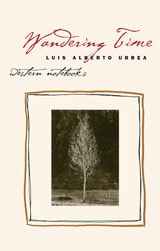
Wandering Time
Western NotebooksLuis Alberto Urrea
University of Arizona Press, 1999
Fleeing a failed marriage and haunted by ghosts of his past, Luis Alberto Urrea jumped into his car and headed west. Driving cross-country with a cat named Rest Stop, Urrea wandered the West from one year’s spring through the next.
Hiking into aspen forests where leaves “shiver and tinkle like bells” and poking alongside creeks in the Rockies, he sought solace and wisdom. In the forested mountains he learned not only the names of trees—he learned how to live. As nature opened Urrea’s eyes, writing opened his heart. In journal entries that sparkle with discovery, Urrea ruminates on music, poetry, and the landscape. With wonder and spontaneity, he relates tales of marmots, geese, bears, and fellow travelers. He makes readers feel mountain air “so crisp you feel you could crunch it in your mouth” and reminds us all to experience the magic and healing of small gestures, ordinary people, and common creatures.
Urrea has been heralded as one of the most talented writers of his generation. In poems, novels, and nonfiction, he has explored issues of family, race, language, and poverty with candor, compassion, and often astonishing power. Wandering Time offers his most intimate work to date, a luminous account of his own search for healing and redemption.
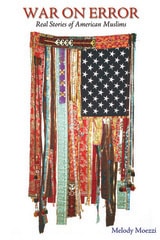
War on Error
Real Stories of American MuslimsMelody Moezzi
University of Arkansas Press, 2007
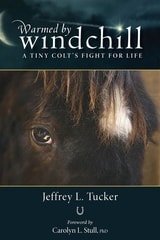
Warmed by Windchill
A Tiny Colt’s Fight for LifeJeffrey L. Tucker; Foreword by Carolyn L. Stull, PhD
University of Wisconsin Press, 2013
One bitterly cold winter afternoon, a nine-month-old colt—extremely weak, starving, left to die—was frozen to the rock-hard white landscape of a northern Wisconsin pasture. His whinny for help barely carried through thirty-mile-an-hour winds lashing snow and ice against his thin coat. But somewhere inside him a light refused to go out.
The colt's call for help was answered, and that light inspired a worldwide response to his story. The struggle of the little colt, called Windchill by his rescuers, was reported widely, and soon 1.2 million people were following Windchill's progress on a blog and webcam.
Warmed by Windchill tells how Jeffrey L. Tucker, owner of nearby Raindance Farms, and Kathi Davis, owner of a horse training operation co-located at Raindance, rescued and cared for the colt, aided by an outpouring of assistance. Donations of money, feed, blankets, and other supplies streamed in as round-the-clock volunteers tried to save Windchill. Warmed by Windchill is both heartening and heartbreaking.
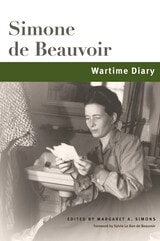
Wartime Diary
Simone de Beauvoir; Translation and Notes by Anne Deing Cordero; Edited by Margaret A. Simons and Sylvie Le Bon de Beauvoir; Foreword by Sylvie Le Bon de Beauvoir
University of Illinois Press, 2021
Provocative insights into Beauvoir's philosophical and personal development during wartime
Written from September 1939 to January 1941, Simone de Beauvoir’s Wartime Diary gives English readers unabridged access to a scandalous text that threatened to overturn traditional views of Beauvoir’s life and work.
Beauvoir's clandestine affair with Jacques Bost and sexual relationships with various young women challenge the conventional picture of Beauvoir as the devoted companion of Jean-Paul Sartre. At the same time, her account of completing her novel She Came to Stay at a time when Sartre had just begun Being and Nothingness questions the traditional view of Beauvoir’s novel as merely illustrating Sartre’s philosophy.
Wartime Diary also traces Beauvoir's philosophical transformation as she broke from the prewar solipsism of She Came to Stay in favor of the postwar political engagement of The Second Sex. Beauvoir's emerging existentialist ethics reflect the dramatic collective experiences of refugees fleeing German invasion and life under Nazi occupation. The evolution of her thought also reveals the courageous reaffirmation of her individuality in constructing a humanist ethics of freedom and solidarity.
This edition also features previously unpublished material, including her musings about consciousness and order, recommended reading lists, and notes on labor unions. In providing new insights into Beauvoir’s philosophical development, the Wartime Diary promises to rewrite a crucial chapter of Western philosophy and intellectual history.
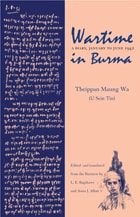
Wartime in Burma
A Diary, January to June 1942Theippan Maung Wa
Ohio University Press, 2009
This diary, begun after the Japanese attack on Pearl Harbor and covering the invasion of Burma up to June 1942, is a moving account of the dilemmas faced by the well-loved and prolific Burmese author Theippan Maung Wa (a pseudonym of U Sein Tin) and his family. At the time of the Japanese invasion, U Sein Tin was deputy secretary in the Ministry of Home and Defense Affairs. An Oxford-trained member of the Indian Civil Service, working for the British administration on the eve of the invasion, he lived with his wife and three small children in Rangoon.
Wartime in Burma is a stirring memoir that presents a personal account of U Sein Tin’s feelings about the war, his anxiety for the safety of his family, the bombing of Rangoon, and what happened to them during the next six chaotic months of the British retreat. The author and his family leave Rangoon to live in a remote forest in Upper Burma with several other Burmese civil servants, their staff, and valuable possessions—rich pickings for robbers. His diary ends abruptly on June 5, his forty-second birthday; U Sein Tin was murdered on June 6 by a gang of Burmese bandits. The diary pages, scattered on the floor of the house, were rescued by his wife and eventually published in Burma in 1966. What survives is a unique account that shines new light on the military retreat from Burma.

We All Got History
The Memory Books of Amos WebberNick Salvatore
University of Illinois Press, 2006
Lost for over a hundred years until their rediscovery by Nick Salvatore, Amos Webber’s “Thermometer Books” recorded six decades of the daily experiences of a black freeman in nineteenth-century Philadelphia and Worcester, Massachusetts. These diaries form the basis for Salvatore’s vital portrait of an everyday hero who struggled unrelentingly for his people in a land that still considered blacks to be less than human.
In We All Got History, we see Amos Webber working as a janitor; rescuing fugitive slaves on the Underground Railroad; marching triumphantly into Richmond with the Fifth Massachusetts Cavalry; and active in the religious and fraternal organizations that became the cement of the African American community. What emerges from this moving history is not only a picture of Webber the man, but also of the vibrant African American culture that nurtured him.
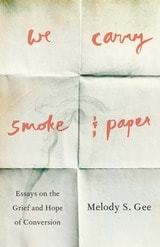
We Carry Smoke and Paper
Essays on the Grief and Hope of ConversionMelody S. Gee
University of Iowa Press, 2024
In essays that explore the parallels between conversion and language acquisition, isolated liturgies, cultural inheritances, stalled initiations, disrupted storytelling, and adoption, Gee examines conversion’s grief and hope, losses and gains, hauntings and promises. We Carry Smoke and Paper is a memoir about what we owe to those who sacrifice everything for us, and it is about the many conversions in a lifetime that turn our heads via whispers and shouts, calling us to ourselves.
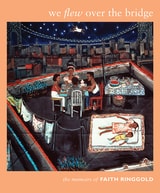
We Flew over the Bridge
The Memoirs of Faith RinggoldFaith Ringgold
Duke University Press, 2005
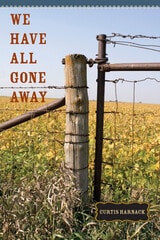
We Have All Gone Away
Curtis Harnack
University of Iowa Press, 1973
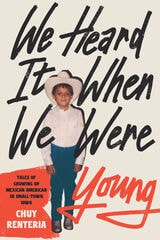
We Heard It When We Were Young
Renteria, Chuy
University of Iowa Press, 2021
Renteria looks past the public celebrations of diversity to dive into the private tensions of a community reflecting the changing American landscape. There are culture clashes, breakdancing battles, fistfights, quinceañeras, vandalism, adventures on bicycles, and souped-up lowriders, all set to an early 2000s soundtrack. Renteria and his friends struggle to find their identities and reckon with intergenerational trauma and racism in a town trying to do the same. A humorous and poignant reflection on coming of age, We Heard It When We Were Young puts its finger on a particular cultural moment at the turn of the millennium.
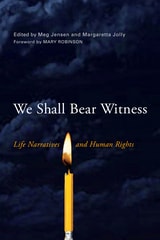
We Shall Bear Witness
Life Narratives and Human RightsEdited by Meg Jensen and Margaretta Jolly, Foreword by Mary Robinson
University of Wisconsin Press, 2014
In We Shall Bear Witness, editors Meg Jensen and Margaretta Jolly assemble moving personal accounts from those who have endured persecution, imprisonment, and torture; meditations on experiences of injustice and protest by creative writers and filmmakers; and innovative research on ways that digital media, commodification, and geopolitics are shaping what is possible to hear and say. The book’s primary sections—testimony, recognition, representation, and justice—evoke the key stages in turning experience into a human rights life story and attend to such diverse and varied arts as autobiography, documentary film, report, oral history, blog, and verbatim theater. The result is a groundbreaking book that sensitively examines how life and rights narratives have become so powerfully entwined. Also included is an innovative guide to teaching human rights and life narrative in the classroom.
We Take Our Cities with Us
A MemoirSorayya Khan
The Ohio State University Press, 2022
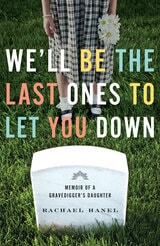
We'll Be the Last Ones to Let You Down
Memoir of a Gravedigger’s DaughterRachael Hanel
University of Minnesota Press, 2013
Rachael Hanel’s name was inscribed on a gravestone when she was eleven years old. Yet this wasn’t at all unusual in her world: her father was a gravedigger in the small Minnesota town of Waseca, and death was her family’s business. Her parents were forty-two years old and in good health when they erected their gravestone—Rachael’s name was simply a branch on the sprawling family tree etched on the back of the stone. As she puts it: I grew up in cemeteries.
And you don’t grow up in cemeteries—surrounded by headstones and stories, questions, curiosity—without becoming an adept and sensitive observer of death and loss as experienced by the people in this small town. For Rachael Hanel, wandering among tombstones, reading the names, and wondering about the townsfolk and their lives, death was, in many ways, beautiful and mysterious. Death and mourning: these she understood. But when Rachael’s father—Digger O’Dell—passes away suddenly when she is fifteen, she and her family are abruptly and harshly transformed from bystanders to participants. And for the first time, Rachael realizes that death and grief are very different.
At times heartbreaking and at others gently humorous and uplifting, We’ll Be the Last Ones to Let You Down presents the unique, moving perspective of a gravedigger’s daughter and her lifelong relationship with death and grief. But it is also a masterful meditation on the living elements of our cemeteries: our neighbors, friends, and families—the very histories of our towns and cities—and how these things come together in the eyes of a young girl whose childhood is suffused with both death and the wonder of the living.
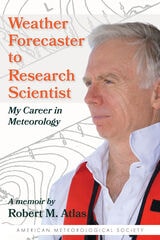
Weather Forecaster to Research Scientist
My Career in MeteorologyRobert M. Atlas
American Meteorological Society, 2022
As a young child, Robert M. Atlas would often look up at the sky, observe the clouds, and ask his parents questions about the weather. That early interest sparked a career in meteorology that took place during a period of rapid development in the field. Weather Forecaster to Research Scientist follows his decades-long career and his innovative research, which led to improvements in the understanding and prediction of extreme weather.
Atlas’s journey begins with his start as an apprentice forecaster for the US Weather Bureau during a time when satellite meteorology and operational numerical weather prediction were just in their infancy. Weather Forecaster to Research Scientist also traces his experiences as an operational forecaster in the US Air Force, discusses his pioneering work on ocean surface winds using satellites, and describes his leadership of scientific organizations within NASA and NOAA as well as his experiences teaching at several universities. An engaging account of a distinguished career, this book will appeal to students, educators, weather forecasters, scientists, and weather enthusiasts alike.
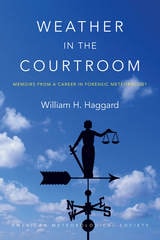
Weather in the Courtroom
Memoirs from a Career in Forensic MeteorologyWilliam H. Haggard
American Meteorological Society, 2016
For a society enthralled by courtroom drama, forensics, and natural disasters, Weather in the Courtroom is a perfect storm: an exciting inside scoop on legendary court cases where the weather may—or may not—have played a crucial role. Haggard explores both the meteorological facts and human stories of a variety of high-profile cases among the hundreds in which, after retiring from the government, he served as an expert witness. Were the disappearance of Alaskan Congressman Nick Begich’s plane on October 16, 1972; the collapse of Tampa Bay’s Skyway Bridge on May 9, 1980; and the crash of Delta Flight 191 in Dallas/Fort Worth on August 2, 1985, natural or human-caused disasters? Haggard’s recounting of these and other litigations reveals just how critical the interpretation of weather and climate data in the courtroom is to our understanding of what happened—and who, if anyone, is at fault.
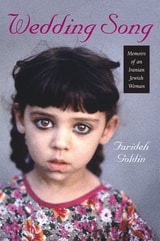
Wedding Song
Memoirs of an Iranian Jewish WomanFarideh Goldin
Brandeis University Press, 2004
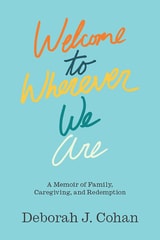
Welcome to Wherever We Are
A Memoir of Family, Caregiving, and RedemptionDeborah J. Cohan
Rutgers University Press, 2020
ESS Public Sociology Award
Recommended Book in Domestic Violence by DomesticShelters.org
How do you go about caregiving for an ill and elderly parent with a lifelong history of abuse and control, intertwined with expressions of intense love and adoration? How do you reconcile the resulting ambivalence, fear, and anger?
Welcome to Wherever We Are is a meditation on what we hold onto, what we let go of, how we remember others and ultimately how we’re remembered. Deborah Cohan shares her story of caring for her father, a man who was simultaneously loud, gentle, loving and cruel and whose brilliant career as an advertising executive included creating slogans like “Hey, how ‘bout a nice Hawaiian punch?” Wrestling with emotional extremes that characterize abusive relationships, Cohan shows how she navigated life with a man who was at once generous and affectionate, creating magical coat pockets filled with chocolate kisses when she was a little girl, yet who was also prone to searing, vicious remarks like “You’d make my life easier if you’d commit suicide.”
In this gripping memoir, Cohan tells her unique personal story while also weaving in her expertise as a sociologist and domestic abuse counselor to address broader questions related to marriage, violence, divorce, only children, intimacy and loss. A story most of us can relate to as we reckon with past and future choices against the backdrop of complicated family dynamics, Welcome to Wherever We Are is about how we might come to live our own lives better amidst unpredictable changes through grief and healing.
Questions for Discussion (https://d3tto5i5w9ogdd.cloudfront.net/wp-content/uploads/2020/05/11140346/Cohan_Discussion.docx)
Wet Earth and Dreams
A Narrative of Grief and RecoveryJane Lazarre
Duke University Press, 1998
As she contends with the pain and many indignities of her treatment for cancer, Lazarre realizes that successful medical treatment will only be part of her healing process. Her own illness becomes the vehicle for coming to terms with key moments of loss and grief—the death of a beloved therapist from breast cancer, her brother-in-law’s death from AIDS, a traumatic disappointment in her work life, and the unresolved pain of being a motherless child. The gift of Lazarre’s writing is her ability to transform her narratives of grief and loss into a story whose power to heal lies in its ability to penetrate the unconscious and give voice to the elusive truths hidden there. Through her writing, Lazarre is able to embrace grief—even her own inarticulate grief as a child—and find her way through the story to a restored sense of wholeness.
In Wet Earth and Dreams Jane Lazarre once again proves herself to be both companion and guide through some of the most difficult challenges life has to offer. As always, she draws strength not only from sustaining friendship and love, but also from her own faith in the power of storytelling to make bearable the seemingly unbearable. Lazarre’s bravely and beautifully written account of grief, illness, and death is at the last a celebration of the redemptive possibilities of the creative spirit.

What Doesn't Kill Me Makes Me Weirder and Harder to Relate To
A MemoirMary Lucia
University of Minnesota Press, 2025
An iconic rock DJ of the Twin Cities tells her harrowing story of being stalked while living her very public life
What’s it like to be in the public spotlight when it just might get you killed? For Mary Lucia, becoming a wildly popular rock DJ meant connecting with a multitude of fans through a shared love of music and deep cuts. But for one listener, that connection became a dangerous obsession, catapulting Lucia into the terrifying three-year nightmare that she chronicles in this raw, wry, and profoundly courageous memoir. With electrifying wit and anger, Lucia shares her experience of navigating constant terror while life absurdly goes on: interview rock stars, curate a radio show song list, judge high school battles of the band, kick a drug addiction cold turkey . . . all while fearing what might be waiting in her mailbox or who might be waiting on her front step or at her back door.
Lucia was no stranger to inappropriate or weird contact from fans, but things turned sinister when ten pounds of raw meat were delivered to her at work, followed by a steady stream of ominous letters, cards, packages, and messages. When the letters included threats to her dogs’ safety, she tried to get help, but without a name and return address on these communications there was nothing she could do. As the stalker’s actions escalated, Lucia felt more and more isolated. Police responding to her 911 calls were insensitive and dismissive, and even her friends implied that being stalked was just a hazard of her high-profile job and her high-energy personality. No one seemed to take seriously the danger she faced.
Inseparable from this ordeal is the story of how Mary Lucia became the notorious radio malcontent known by so many avid listeners. From the good, bad, and weird of growing up in her eccentric family to drugs, death, and dogs, Lucia finally shares her life on her own terms in What Doesn’t Kill Me Makes Me Weirder and Harder to Relate To. Applying her signature dark humor to her own traumatic experiences, Lucia’s memoir is idiosyncratic, bold, and—ironically—relatable.
Retail e-book files for this title are screen-reader friendly with images accompanied by short alt text and/or extended descriptions.
What Drowns the Flowers in Your Mouth
A Memoir of BrotherhoodRigoberto González
University of Wisconsin Press, 2018
Descending into a dark emotional space that compromises their mental and physical health, the brothers eventually find hope in aiding each other. This is an honest and revealing window into the complexities of Latino masculinity, the private lives of men, and the ways they build strength under the weight of grief, loss, and despair.
What Is Africa to Me?
Fragments of a True-to-Life AutobiographyMaryse Condé
Seagull Books, 2017
What Is Africa to Me? traces the late 1950s to 1968, chronicling Condé’s life in Sékou Touré’s Guinea to her time in Kwame N’Krumah’s Ghana, where she rubbed shoulders with Malcolm X, Che Guevara, Julius Nyerere, and Maya Angelou. Accusations of subversive activity resulted in Condé’s deportation from Ghana. Settling down in Sénégal, Condé ended her African years with close friends in Dakar, including filmmakers, activists, and Haitian exiles, before putting down more permanent roots in Paris.
Condé’s story is more than one of political upheaval, however; it is also the story of a mother raising four children as she battles steep obstacles, of a Guadeloupean seeking her identity in Africa, and of a young woman searching for her freedom and vocation as a writer. What Is Africa to Me? is a searing portrait of a literary genius—it should not be missed.
What the Butler Winked At
Being the Life and Adventures of Eric Horne, ButlerEric Horne
Westholme Publishing, 2011
A Memoir of the Real Downton Abbey Experience
Eric Horne served as a butler in some of the great English country manors from the 1860s until just after World War I, when many of the families whose heirs died in battle were forced to sell off their homes. Born in Southampton, Horne came from a humble family who valued education. Horne excelled in school and wished to go to sea, but lacking his parents’ permission, he instead ended up as a footboy for a local household. Over the years, Horne moved up in the service of the aristocracy: his goal was to become butler to the king of England, a position he very nearly secured. He did end up in the service of several distinguished households for many decades, and upon his retirement in 1922, he decided to write his memoir. Horne is a unique voice; not only did he have intimate contact with his employers and the household staff, he also possessed literary talent, so that his account provides authentic detail as well as shrewd—and often witty—views of the aristocracy, the servants, and their activities. Horne is not sentimental though; he does not think that he used his life wisely, having never learned a true trade. He reveals the plight of the servant class, where once a butler lost his employment—particularly following the devastation of World War I—he was likely to end up in a poorhouse, because employers did not usually provide pensions and servants were rarely able to save enough money to survive on their own. What the Butler Winked At is a fascinating and essential account of life in a country house during the height of the Victorian and Edwardian eras.
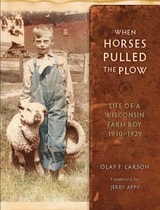
When Horses Pulled the Plow
Life of a Wisconsin Farm Boy, 1910–1929Olaf F. Larson
University of Wisconsin Press, 2011

When You Dare to Say Yes
Jill Derby and Nevada ActivismJill Derby
University of Nevada Press, 2024
Derby’s account of the awakening of her post-college experience living abroad and stories of her global travels infuse this memoir with an international perspective and entertaining vignettes. Ultimately, Derby shares her personal understanding of the transformative power of living among different cultures.
When You Learn the Alphabet
Kendra Allen
University of Iowa Press, 2019
These dynamics strive for some semblance of accountability, and the essays within this collection are used as displays of deep unlearning and restoring—balancing trauma and humor, poetics and reality, forgiveness and resentment.
When You Learn the Alphabet allots space for large moments of tenderness and empathy for all black bodies—but especially all black woman bodies—space for the underrepresented humanity and uncared for pain of black girls, and space to have the opportunity to be listened to in order to evolve past it.
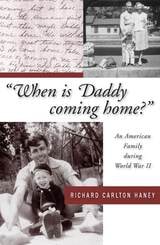
When is Daddy Coming Home?
An American Family during World War IIRichard Carlton Haney
Wisconsin Historical Society Press, 2024
World War II was coming to a close in Europe and Richard Haney was only four years old when the telegram arrived at his family's home in Janesville, Wisconsin. That moment, when Haney learned of his father's death in the final months of fighting, changed his and his mother's lives forever.
In this powerful book, Haney explores the impact of war on an American family. He skillfully weaves together those memories with his parents' wartime letters and his mother's recollections to create a unique blend of history and memoir. Through his father's letters he reveals the war's effect on a man who fought in the Battle of the Bulge with the 17th Airborne but wanted nothing more than to return home. Haney illuminates life on the home front in small-town America as well, describing how profoundly the war changed such communities.
With When Is Daddy Coming Home?, Richard Haney makes an exceptional contribution to the literature on the Greatest Generation—one that is both devastatingly personal and representative of what families all over America endured during that testing time.
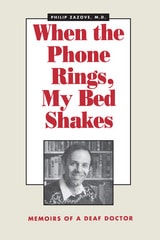
When the Phone Rings, My Bed Shakes
The Memoirs of a Deaf DoctorPhilip Zazove
Gallaudet University Press, 1993
Born almost totally deaf, Philip Zazove has spent his entire life beating the odds first by excelling in public schools during an era when most deaf children went to special schools, then by aspiring to become a medical doctor. When the Phone Rings, My Bed Shakes is the remarkable story of his determination and achievement in realizing his dreams.
Despite his stellar record at Northwestern University, Zazove was rejected by a host of medical schools. This only caused him to press harder, which won him acceptance at Rutgers University. He transferred to Washington University in St. Louis where, again against all advice, he decided to specialize in family practice. In vignettes of his patients, some amusing, others moving, he reveals the dedication and humanity that have made him a respected and well-loved doctor. His story will inspire all who read it.
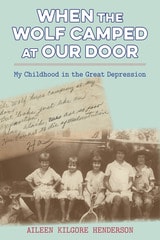
When the Wolf Camped at Our Door
My Childhood in the Great DepressionAileen Kilgore Henderson
University of Alabama Press, 2022
Recounts the hardships and joys the Kilgore family and their neighbors experienced in a close-knit southern rural community during the Great Depression
As the Great Depression tightened its grip on the world, six members of the Kilgore family were living in a cramped farmhouse in Brookwood, Alabama. Crops didn’t grow well, food was scarce, shoes were in short supply, and the few clothes they had were all hand-me-downs. The Kilgores struggled to make ends meet, cobbling together odd jobs and working the land by hand.
Despite all of this, young Aileen thought life was full of hope. She longed to hold on to it and scribbled down daily events on whatever odds and ends of paper she could find. In her new memoir, When the Wolf Camped at Our Door, Aileen Kilgore Henderson creates a vivid portrait of what life was like for so many living in the rural South during the Depression. The book begins when Aileen is ten years old and follows her into her teenage years over the course of twenty-seven episodic chapters. Drawing on her girlhood diaries and told through the charismatic voice of her younger self, Henderson’s nuanced storytelling sheds light on the common struggle for survival during a time when people were at their most vulnerable.
Against the backdrop of a world where hard work and harsh conditions like hunger, privation, sickness, and early death were everyday realities, Henderson’s stories are nevertheless tinged with young Aileen’s lively sense of humor and optimistic faith in people and in the promise of life despite trying circumstances. We follow her rambles in the woods, her visits with friends, a trip to a fortune teller, and a search for the Howton Horror, a mysterious monster rumored to live deep in the Alabama backwoods.
When the World Explodes
EssaysAmy Lee Scott
The Ohio State University Press, 2025
Where the North Sea Touches Alabama
Allen C. Shelton
University of Chicago Press, 2013
A few years later, 180 miles away from Keim’s grave, a bulldozer operator uncovered a pine coffin in an old beaver swamp down the road from Allen C. Shelton’s farm. He quickly reburied it, but Shelton, a friend of Keim’s who had a suitcase of his unfinished projects, became convinced that his friend wasn’t dead and fixed in the ground, but moving between this world and the next in a traveling coffin in search of his incomplete work.
In Where the North Sea Touches Alabama, Shelton ushers us into realms of fantasy, revelation, and reflection, paced with a slow unfurling of magical correspondences. Though he is trained as a sociologist, this is a genre-crossing work of literature, a two-sided ethnography: one from the world of the living and the other from the world of the dead.
What follows isn’t a ghost story but an exciting and extraordinary kind of narrative. The psycho-sociological landscape that Shelton constructs for his reader is as evocative of Kafka, Bataille, and Benjamin as it is of Weber, Foucault, and Marx. Where the North Sea Touches Alabama is a work of sociological fictocriticism that explores not only the author’s relationship to the artist but his physical, historical, and social relationship to northeastern Alabama, in rare style.
Where the Strange Roads Go Down
Mary del Villar and Fred del Villar; Foreword by Susan Hardy Aiken
University of Arizona Press, 1999
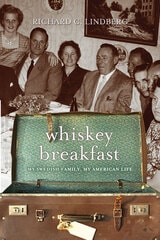
Whiskey Breakfast
My Swedish Family, My American LifeRichard C. Lindberg
University of Minnesota Press, 2011
Chicago in the 1920s: Clark Street was the city’s last Swedetown, a narrow corridor of weather-beaten storefronts, coal yards, and taverns running along the north side of the city and the locus of Swedish community life in Chicago during the first half of the twentieth century. It represented a way station for a generation of working-class immigrants escaping the hardships of the old country for the promise of a brighter new day in a halfway house of sorts, perched between the old and new lands. For Richard C. Lindberg, whose Swedish immigrant parents and grandparents settled there, it was also the staging ground for an intensely personal, multigenerational, coming-of-age drama based on the struggles of two disparate families—their dreams and their depravities, their victories and their failures.
Whiskey Breakfast is Lindberg’s captivating tale of life as a first-generation baby-boomer Swedish American, caught between the customs of a land he had never been to and the desire to conform and fit into a troubled existence, tragically scarred by alcoholism, divorce, and peer abuse. But it is also a powerful and intimate portrait of his immigrant ancestors, and especially of his father, Oscar—a contractor and master builder who helped develop Chicago’s post–World War II suburbs. A paradoxical man, known to some as a socialist, an anarchist, and a serious drinker, Oscar would carry with him to the grave a sixty-two-year-old family secret, a secret that for Lindberg lies at the very heart of the great Swedish unrest that drove his father and countless other men and women out of Sweden and onward to America.
Masterfully blending autobiography with immigrant history, Whiskey Breakfast surrounds Lindberg’s family story with Swedish cultural history and politics, as well as remarkable Chicago history and how Clark Street and Swedetown became, and in many ways remain, a center of Swedish immigrants’ social and cultural life. Far from a eulogy for an idealized past, Lindberg has crafted a moving and sobering memoir of a young man’s struggle to come to terms with his father and himself, his immigrant heritage, and his native home.
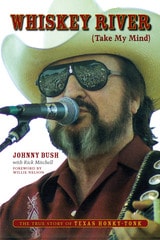
Whiskey River (Take My Mind)
The True Story of Texas Honky-TonkBy Johnny Bush with Rick Mitchell
University of Texas Press, 2007
When it comes to Texas honky-tonk, nobody knows the music or the scene better than Johnny Bush. Author of Willie Nelson's classic concert anthem "Whiskey River," and singer of hits such as "You Gave Me a Mountain," "Undo the Right," "Jim, Jack and Rose," and "I'll Be There," Johnny Bush is a legend in country music, a singer-songwriter who has lived the cheatin', hurtin', hard-drinkin' life and recorded some of the most heart-wrenching songs about it. He has one of the purest honky-tonk voices ever to come out of Texas. And Bush's career has been just as dramatic as his songs—on the verge of achieving superstardom in the early 1970s, he was sidelined by a rare vocal disorder that he combated for thirty years. But, survivor that he is, Bush is once again filling dance halls across Texas and inspiring a new generation of musicians who crave the authenticity—the "pure D" country—that Johnny Bush has always had and that Nashville country music has lost.
In Whiskey River (Take My Mind), Johnny Bush tells the twin stories of his life and of Texas honky-tonk music. He recalls growing up poor in Houston's Kashmere Gardens neighborhood and learning his chops in honky-tonks around Houston and San Antonio—places where chicken wire protected the bandstand and deadly fights broke out regularly. Bush vividly describes life on the road in the 1960s as a band member for Ray Price and Willie Nelson, including the booze, drugs, and one-night stands that fueled his songs but destroyed his first three marriages. He remembers the time in the early 1970s when he was hotter than Willie and on the fast track to superstardom—until spasmodic dysphonia forced his career into the slow lane. Bush describes his agonizing, but ultimately successful struggle to keep performing and rebuild his fan base, as well as the hard-won happiness he has found in his personal life.
Woven throughout Bush's autobiography is the never-before-told story of Texas honky-tonk music, from Bob Wills and Floyd Tillman to Junior Brown and Pat Green. Johnny Bush has known almost all the great musicians, past and present, and he has wonderful stories to tell. Likewise, he offers shrewd observations on how the music business has changed since he started performing in the 1950s—and pulls no punches in saying how Nashville music has lost its country soul. For everyone who loves genuine country music, Johnny Bush, Willie Nelson, and stories of triumph against all odds, Whiskey River (Take My Mind) is a must-read.
Whispers and Shadows
A Naturalist’s MemoirJerry Apps
Wisconsin Historical Society Press, 2015
Combining his signature lively storytelling and careful observations of nature, Apps draws on a lifetime of experiences, from his earliest years growing up on a central Wisconsin farm to his current ventures as gardener, tree farmer, and steward of wetlands, prairies, and endangered Karner blue butterflies. He also takes inspiration from the writings of Aldo Leopold, Annie Dillard, Henry David Thoreau, Sigurd Olson, Ralph Waldo Emerson, John Muir, Barbara Kingsolver, Wendell Berry, Richard Louv, and Rachel Carson. With these eloquent essays, Jerry Apps reminds us to slow down, turn off technology, and allow our senses to reconnect us to the natural world. For it is there, he writes, that “I am able to return to a feeling I had when I was a child, a feeling of having room to stretch my arms without interfering with another person, a feeling of being a small part of something much larger than I was, and I marvel at the idea.”
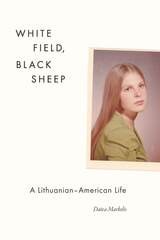
White Field, Black Sheep
A Lithuanian-American LifeDaiva Markelis
University of Chicago Press, 2010
Her parents never really explained what a D.P. was. Years later Daiva Markelis learned that “displaced person” was the designation bestowed upon European refugees like her mom and dad who fled communist Lithuania after the war. Growing up in the Chicago suburb of Cicero, though, Markelis had only heard the name T.P., since her folks pronounced the D as a T: “In first grade we had learned about the Plains Indians, who had lived in tent-like dwellings made of wood and buffalo skin called teepees. In my childish confusion, I thought that perhaps my parents weren’t Lithuanian at all, but Cherokee. I went around telling people that I was the child of teepees.” So begins this touching and affectionate memoir about growing up as a daughter of Lithuanian immigrants.
Markelis was raised during the 1960s and 1970s in a household where Lithuanian was the first language. White Field, Black Sheep derives much of its charm from this collision of old world and new: a tough but cultured generation that can’t quite understand the ways of America and a younger one weaned on Barbie dolls and The Brady Bunch, Hostess cupcakes and comic books, The Monkees and Captain Kangaroo. Throughout, Markelis recalls the amusing contortions of language and identity that animated her childhood. She also humorously recollects the touchstones of her youth, from her First Communion to her first game of Twister. Ultimately, she revisits the troubles that surfaced in the wake of her assimilation into American culture: the constricting expectations of her family and community, her problems with alcoholism and depression, and her sometimes contentious but always loving relationship with her mother.
Deftly recreating the emotional world of adolescence, but overlaying it with the hard-won understanding of adulthood, White Field, Black Sheep is a poignant and moving memoir—a lively tale of this Lithuanian-American life.
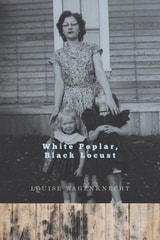
White Poplar, Black Locust
Louise Wagenknecht
Oregon State University Press, 2021
Originally published by the University of Nebraska Press in 2003, this first book in Louise Wagenknecht’s trilogy about life in the Klamath Mountains is now available through Oregon State University Press, together with Light on the Devils (2011) and Shadows on the Klamath (2021).
Why I Left the Amish
A MemoirSaloma Miller Furlong
Michigan State University Press, 2011
There are two ways to leave the Amish—one is through life and the other through death. When Saloma Miller Furlong’s father dies during her first semester at Smith College, she returns to the Amish community she had left twenty four years earlier to attend his funeral. Her journey home prompts a flood of memories. Now a mother with grown children of her own, Furlong recalls her painful childhood in a family defined by her father’s mental illness, her brother’s brutality, her mother’s frustration, and the austere traditions of the Amish—traditions Furlong struggled to accept for years before making the difficult decision to leave the community. In this personal and moving memoir, Furlong traces the genesis of her desire for freedom and education and chronicles her conflicted quest for independence. Eloquently told, Why I Left the Amish is a revealing portrait of life within—and without—this frequently misunderstood community.
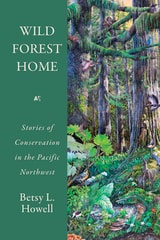
Wild Forest Home
Stories of Conservation in the Pacific NorthwestBetsy L. Howell
University of Utah Press, 2024
The twenty-five essays in Wild Forest Home chronicle Howell’s career and personal experiences studying the wildlife of the Pacific Northwest during the litigious listing of the northern spotted owl and marbled murrelet under the Endangered Species Act and the Clinton administration’s adoption of the seminal 1994 Northwest Forest Plan. Meanwhile, Howell toiled on fire crews, searched for rare species, helped to monitor fishers reintroduced to the Olympic Peninsula, tested amphibians for deadly diseases, became a writer, and mourned the deaths of her parents. This captivating memoir seamlessly blends story and science to reveal a unique portrait of the struggles and joys of one wildlife biologist.
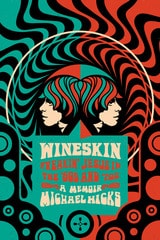
Wineskin
Freakin’ Jesus in the ‘60s and ‘70sMichael Hicks
Signature Books, 2022
Michael Hicks’s story is a tale studded with awkward episodes of sex, drugs, and rock and roll (not necessarily in that order), along with alcohol, sci-fi, theft, radical politics, cartooning, halfway houses, and the musical avant-garde. The one constant is the brooding figure of Jesus Christ behind Hicks’s various personal reclamations and metamorphoses, often via methods admittedly off the books. While many readers know Hicks as a Mormon academic—thirty-five years a professor of music at Brigham Young University—Wineskin excavates the path, from boyhood to a PhD, that led him toward a faith that is both primitively Christian and highmindedly Mormon.
With Courage and Common Sense
Memoirs from the Older Women's Legacy CirclesEdited by Susan Wittig Albert and Dayna Finet
University of Texas Press, 2003
Women who were sixty or older at the turn of the twenty-first century have lived through some of recent history's most momentous moments—and yet these women often believe that their personal lives and stories are insignificant, not worthy of being recorded for future generations. To change that perception and capture some of these life stories before they are lost, the Story Circle Network, a national organization dedicated to helping women write about their lives, developed the Older Women's Legacy (OWL) Circle Memoir Workshops. During the first two years of the project (1998-2000), nearly 500 older women participated in workshops that offered them the opportunity and encouragement to reflect on and create written records of their lives.
With Courage and Common Sense presents an extensive selection of memoirs from the OWL Circle project. Organized thematically, they describe women's experiences of identity, place, work, family life, love and marriage, loss and healing, adventures great and small, major historical events, and legacies to keep and pass along. Taken as a whole, the memoirs chronicle far-reaching changes in the ways that women participated in the world during the twentieth century. They show how women learned to surmount obstacles, to courageously make the most of the opportunities that came their way, and to move quietly and wisely beyond the limits that were imposed upon them.
Within, Without
On Two CitiesIlya Kaminsky and Piotr Florczyk
Seagull Books, 2026
Within, Without: On Two Cities presents two essays by Eastern European–born poets and translators, Ilya Kaminsky and Piotr Florczyk, now based in the United States. Revisiting their respective hometowns—Odesa and Kraków—they grapple with questions of history, identity, and belonging. What does it mean for an immigrant or refugee to return? Can one ever truly go back to a homeland that has since been transformed? Kaminsky and Florczyk chart a path forward by embracing the complexities of their transnational and translingual identities, as artists and as human beings.
Witness to the Young Republic
A Yankee’s Journal, 1828–1870Benjamin Brown. French
University Press of New England, 2002
Woman House
Essays and AssemblagesLauren W. Westerfield
University of Massachusetts Press, 2026
Winner of the National Indie Excellence Award in Memoir and the National Indie Excellence Awards Juror's Choice Prize
A compelling and inventive memoir exploring how pain and pleasure are passed down through generations of women
For years, Lauren W. Westerfield looked back at her childhood as an imaginative playscape lovingly crafted by her artist mother. But in truth, theirs was always a fraught relationship, close yet turbulent. It wouldn’t be until her mid-twenties that Westerfield would learn that her mother was assaulted while living as a single woman in 1970s Los Angeles, or until her mid-thirties when caretaking for her now chronically ill mother during pandemic lockdown would reveal how that earlier incident and its ripple effects had shaped both their lives.
The essays and assemblages in this book plumb the depths of two women’s experiences, exploring the pain and pleasure they find in their bodies, in culture, and in their own art. Violence, beauty, and love reverberate and dissipate and shape the forms and psyches of these two profoundly connected family members. At once raw and refined, narrative and lyrical, nostalgic and blunt, the stories and images presented here explore Westerfield’s life—from childhood to adulthood—passing through innocence, self-discovery and familial tethers. In unpacking her mother’s history and the complexities of their relationship, Westerfield finds herself confronted with her own story: one grounded in a yearning for agency and individuation, of a body and mind groomed to be at odds with one another, of a feminist politics examining deeply rooted patriarchal understandings of beauty, control, and power.
Part memoir, part critical sense-making, part reckoning with family, identity, illness, addiction, art, and inheritance, Woman House draws on diverse inspirations in an attempt to recontextualize the female body—in danger, in pleasure, in portraiture, in proximity, in resistance—and challenge the structures that silence and restrict female expression.
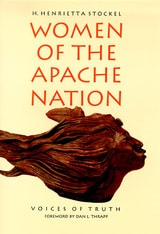
Women Of The Apache Nation
Voices Of TruthH. Henrietta Stockel
University of Nevada Press, 1993
Stockel sheds light on some of the mysteries surrounding traditional and contemporary Chiricahua Apache culture. Each of the women interviewed emphasizes the importance of storytelling and ritual in preserving Apache heritage. Many ceremonies are still practiced today. In this book, the voices of the Chiricahua women are heard, individually and collectively, describing their history, its effects on them today, and their lives and their hopes for the future.
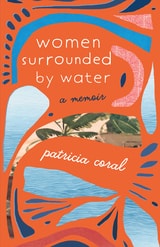
Women Surrounded by Water
A MemoirPatricia Coral
The Ohio State University Press, 2024