Results by title
1668 books match the query 'Popular culture' and 49 start with w
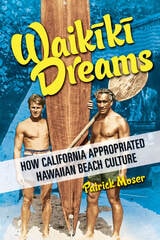
Waikiki Dreams
How California Appropriated Hawaiian Beach CulturePatrick Moser
University of Illinois Press, 2024
Despite a genuine admiration for Native Hawaiian culture, white Californians of the 1930s ignored authentic relationships with Native Hawaiians. Surfing became a central part of what emerged instead: a beach culture of dressing, dancing, and acting like an Indigenous people whites idealized.
Patrick Moser uses surfing to open a door on the cultural appropriation practiced by Depression-era Californians against a backdrop of settler colonialism and white nationalism. Recreating the imagined leisure and romance of life in Waikīkī attracted people buffeted by economic crisis and dislocation. California-manufactured objects like surfboards became a physical manifestation of a dream that, for all its charms, emerged from a white impulse to both remove and replace Indigenous peoples. Moser traces the rise of beach culture through the lives of trendsetters Tom Blake, John “Doc” Ball, Preston “Pete” Peterson, Mary Ann Hawkins, and Lorrin “Whitey” Harrison while also delving into California’s control over images of Native Hawaiians via movies, tourism, and the surfboard industry.
Compelling and innovative, Waikīkī Dreams opens up the origins of a defining California subculture.
Wake the Town and Tell the People
Dancehall Culture in JamaicaNorman C. Stolzoff
Duke University Press, 2000
Norman C. Stolzoff brings a fan’s enthusiasm to his broad perspective on dancehall, providing extensive interviews, original photographs, and anthropological analysis from eighteen months of fieldwork in Kingston. Stolzoff argues that this enormously popular musical genre expresses deep conflicts within Jamaican society, not only along lines of class, race, gender, sexuality, and religion but also between different factions struggling to gain control of the island nation’s political culture. Dancehall culture thus remains a key arena where the future of this volatile nation is shaped. As his argument unfolds, Stolzoff traces the history of Jamaican music from its roots in the late eighteenth century to 1945, from the addition of sound systems and technology during the mid-forties to early sixties, and finally through the post-independence years from the early sixties to the present.
Wake the Town and Tell the People offers a general introduction for those interested in dancehall music and culture. For the fan or musicologist, it will serve as a comprehensive reference book.
Walking Shadows
Orson Welles, William Randolph Hearst, and Citizen KaneJohn Evangelist Walsh
University of Wisconsin Press, 2004
Citizen Kane portrayed the ruthless career of an all-powerful magnate bearing (not accidentally) a striking resemblance to Hearst, who immediately tried to kill the picture. John Evangelist Walsh here illuminates the conflict between these two outsize personalities and for the first time brings Hearst’s vengeful anti-Kane campaign to the fore. Walsh provides thorough documentation, supplemental notes, and an extended bibliography.

Wallbangin'
Graffiti and Gangs in L.A.Susan A. Phillips
University of Chicago Press, 1999
Anthropologist Susan Phillips enters the lives of the African-American and Chicano gang members to write a comprehensive guide to their symbolic and visual expression. She not only decodes the graffiti—explaining how, for instance, gang boundaries are visually delimited and how "memorial" graffiti functions—but she also places it in the context of the changing urban landscapes within the city. Graffiti, she argues, is inextricably linked to political change, to race, and to art, and she demonstrates how those connections are played out in contemporary L.A. Wallbangin' is, on this level, an iconography of street imagery. But it is also a very personal narrative about entering the world of L.A. street gangs—a world of pride, enemies, affirmation, and humanity where gang members use graffiti to redefine their social and political position in society.
To many outsiders, graffiti is cryptic, senseless scribbling. But Phillips explains it as an ingenious and creative solution to the disenfranchisement felt by those who produce it. With personal narratives, provocative photography, and contemporary voices, Wallbangin' unlocks the mysteries behind street-level ideologies and their visual manifestations.

Wanted Dead or Alive
THE AMERICAN WEST IN POPULAR CULTUREEdited by Richard Aquila
University of Illinois Press, 1996
Wanted Dead or Alive presents the first-ever comprehensive look at how the American West has been depicted in popular culture. Following Richard Aquila's introduction, which examines the birth and growth of the pop culture West in the context of American history, noted experts explore developments in popular Western fiction, major forms of live Western entertainment, trends in Western movies and television shows, images of the West in popular music, and visual images of the West in popular art and advertising. For the reader on the trail of even more information, each section of the book concludes with suggestions for further reading.
War in Pieces
"War on Terror" Media and the Fracturing of American IdentityRenée Laurel Pastel
Rutgers University Press, 2027
War in Pieces considers media representations of the first phase of the “War on Terror,” set between 2001 and 2013. The book argues that the central figures around which narratives of the conflicts cohered—the war journalist, the active-duty service member, the veteran, and the military family—served to mask the loss of the myth of a unified American national identity and embodied the negotiation of cultural anxieties. Offering a theory of narrative figuration that draws into conversation repetitions and differences across media forms (fiction and nonfiction films, television shows, and online videos), this book breaks down how these figures contributed to a continued sense of unified national identity even as different audiences came away with divergent understandings. This book frames these questions in terms of how US media packaged the “War on Terror” for future cultural memory even as the conflicts continued.
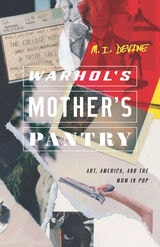
Warhol's Mother's Pantry
Art, America, and the Mom in PopM. I. Devine
The Ohio State University Press, 2020
“What are these fragments we’ve Jersey Shored against our ruin?” asks M. I. Devine, remixing T. S. Eliot, in this dizzying collection of essays that pays homage to the cultural forms that hold us steady. These fragments are stored in Warhol’s Mother’s Pantry, which takes us deep beneath the surfaces of pop to explore our shared quest for meaning today. Julia Warhola, an immigrant who arrived as the US was closing its borders a century ago, is the muse of reuse in these essays that cross boundaries—between now and then, high and low. She is the mom in pop who cut tin cans into flowers and taught Andy (and us) how to reshape and redeem our world. In essays as lyrical, witty, and experimental as the works they cover, Devine offers a new account of pop humanism. How we cut new things from the traditions we’re given, why we don’t stop believin’ (and carry on, wayward sons) when so much is stacked against us. Here are Leonard Cohen’s last songs and Molly Bloom’s last words; Vampire Weekend’s Rostam and Philip Larkin too; Stevie Smith, John Donne, and Kendrick Lamar; sonnets and selfies; early cinema and post–9/11 film, pop hooks, and pop art. In Devine’s hands, these literary and cultural artifacts are provocatively reassembled into an urgent and refreshing history that refuses to let its readers forget where pop came from and where it can go.
Warring Souls
Youth, Media, and Martyrdom in Post-Revolution IranRoxanne Varzi
Duke University Press, 2006
Highlighting trends that belie the government’s claim that Islamic values have taken hold—including rising rates of suicide, drug use, and sex outside of marriage—Varzi argues that by concentrating on images and the performance of proper behavior, the government’s campaign to produce model Islamic citizens has affected only the appearance of religious orthodoxy, and that the strictly religious public sphere is partly a mirage masking a profound crisis of faith among many Iranians. Warring Souls is a powerful account of contemporary Iran made more vivid by Varzi’s inclusion of excerpts from the diaries she maintained during her research and from journal entries written by Iranian university students with whom she formed a study group.
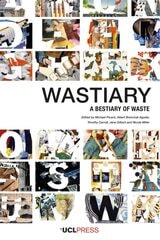
Wastiary
A Bestiary of WasteEdited by Michael Picard, Albert Brenchat-Aguilar, Timothy Carroll, Jane Gilbert, and Nicola Miller
University College London, 2023
Wastiary: A Bestiary of Waste is a creative exercise that occupies letters, numbers, and symbols of Western academic language to compose a list of thirty-five short entries on the uncomfortable but pressing topic of waste in the contemporary world. The collection is richly illustrated with artwork, photography, collage, and mixed media and conveys the message that various forms of waste and pollution have achieved a beast-like or untamable quality, at times pungently transferring to considerations of “the human,” or humans treated as waste.
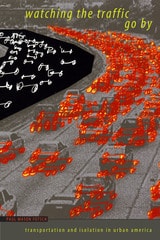
Watching the Traffic Go By
Transportation and Isolation in Urban AmericaBy Paul Mason Fotsch
University of Texas Press, 2007
2007 — Jane Jacobs Urban Communication Publication Award – Urban Communication Foundation
As twentieth-century city planners invested in new transportation systems to deal with urban growth, they ensured that the automobile rather than mass transit would dominate transportation. Combining an exploration of planning documents, sociological studies, and popular culture, Paul Fotsch shows how our urban infrastructure developed and how it has shaped American culture ever since.
Watching the Traffic Go By emphasizes the narratives underlying our perceptions of innovations in transportation by looking at the stories we have built around these innovations. Fotsch finds such stories in the General Motors "Futurama" exhibit at the 1939 World's Fair, debates in Munsey's magazine, films such as Double Indemnity, and even in footage of the O. J. Simpson chase along Los Angeles freeways.
Juxtaposed with contemporaneous critiques by Lewis Mumford, Theodor Adorno, and Max Horkheimer, Fotsch argues that these narratives celebrated new technologies that fostered stability for business and the white middle class. At the same time, transportation became another system of excluding women and the poor, especially African Americans, by isolating them in homes and urban ghettos.
A timely, interdisciplinary analysis, Watching the Traffic Go By exposes the ugly side of transportation politics through the seldom-used lens of popular culture.

Watteau's Shepherds
The Detective Novel in Britain, 1914–1940LeRoy Lad Panek
University of Wisconsin Press, 1979
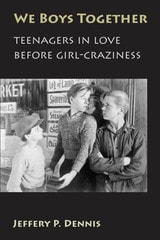
We Boys Together
Teenagers in Love Before Girl-CrazinessJeffery P. Dennis
Vanderbilt University Press, 2007
This book explores romantic relationships between teenage boys as they were portrayed before, during, and immediately after World War II. The author takes the reader through a rich landscape of media -- sci fi pulps, comics, adventure stories, tales of teen sleuths, boys' serial novels, wartime bestsellers, and movies populated by many types of male adolescents: Boys Next Door, Adventure Boys, Jungle Boys, and Lost Boys. In Hollywood movies, Boys Next Door like Jackie Cooper, Ronald Sinclair, and Jimmy Lydon were constantly falling in love, but not with girls. In serial novels, Jungle Boys like Bomba, Sorak, and Og Son of Fire swung through the trees to rescue teenage boys, not teenage girls. In comic strips and on the radio, Adventure Boys like Don Study, Jack Armstrong, and Tim Tyler formed lasting romantic partnerships with other boys or men. Lost Boys like Frankie Darro, Leo Gorcey, and Billy Halop starred in dozens of movies about pairs of poor urban teenagers sticking together, with never a girl in sight.
Welcome to Dragon Talk
Inspiring Conversations about Dungeons & Dragons and the People Who Love to Play ItShelly Mazzanoble
University of Iowa Press, 2022
Shelly and Greg recount some of their most inspiring interviews and illuminate how their guests use the core tenets of the game in everyday life. An A-list actor defends D&D by baring his soul (and his muscles) on social media. A teacher in a disadvantaged district in Houston creates a D&D club that motivates students to want to read and think analytically. A writer and live-streamer demonstrates how D&D–inspired communication breaks barriers and empowers people of color. Readers will see why Dungeons & Dragons has remained such a pop culture phenomenon and how it has given this disparate and growing community the inspiration to flourish and spread some in-game magic into the real world.

West Germany under Construction
Politics, Society, and Culture in the Adenauer EraRobert G. Moeller, Editor
University of Michigan Press, 1997
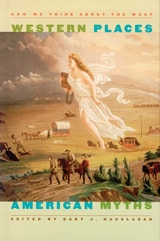
Western Places, American Myths
How We Think About The WestGary J. Hausladen
University of Nevada Press, 2006
In Western Places, American Myths: How We Think About the West, geographer Gary J. Hausladen brings together leading scholars to consider how popular perceptions about the West contribute to our understanding of the region’s geography. Topics include ranching, gambling, cinema, the National Park System, and the roles of minorities in Western expansion. The essays are divided into three sections. “Continuity and Change” addresses themes that are relevant to the entire region including the relationship between the American West and the academic field of historical geography. In part two, “Enduring Regional Voices,” the essays depart from predominantly white Euro-American male interpretations to study other perspectives, namely those of women, Mormons, Mexican Americans, and Native Americans. “The West as Visionary Place” investigates the culture of the region.
Drawing from diverse media, contributors explore various images and their contributions to our understanding about the American West. In the final chapter, key western movies are used to examine the issues of settlement and utopianism, as well as empire and territorial expansion. As a collection, these twelve essays reflect the eclectic nature of Western scholarship, examining diverse topics—some historical, some contemporary—from sometimes conflicting perspectives, with widely divergent scope and voices. Western Places, American Myths brings together geography, history, popular culture, and a comprehensive view of the region, bridging the humanities and social sciences.
What Gender Is, What Gender Does
Judith Roof
University of Minnesota Press, 2016
What Gender Is, What Gender Does provides a forceful new paradigm for considering genders. With depth and insight, Judith Roof argues that genders are much more than binary. And they are constantly morphing: they are conscious and unconscious, simultaneously conventional and idiosyncratic. At any moment, more than one gender dynamic is at work in any individual.
Roof’s interpretation of genders isn’t content with either biological duality or endlessly open performativity, and what results is a nuanced and surprising representation of gender—an account that captures the complexities of lived experience as well as lived ideology. For Roof, genders are interacting sets of operations that link individual desires to multiple, shifting manifestations of sociocultural positioning and self-presentation. Thus, “to gender” is to signal, mask, suggest, mislead, and simplify the uncontainable chaos of desires characteristic of subjects but roundly contained by society.
Drawing illustrative material from contemporary popular culture productions, including My Big Fat Greek Wedding, Spider-Man, Shrek, Shallow Hal, Sex and the City, Bridesmaids, Bond films, and “bromance” movies, What Gender Is, What Gender Does demonstrates how the persistent conflation of gender and sexual difference is, on the one hand, a simple taxonomic urge and, on the other, a cover that offers the security of identity in place of the frustrations and fears of the real asymmetries of personal power dynamics.

What’s the Matter with the Internet?
Mark Poster
University of Minnesota Press, 2001
A provocative investigation into the social and cultural implications of the Internet by a leading cultural critic.
As the Internet has become more and more a part of our daily lives, responses to its impact on culture and society have tended toward the extremes, hopeful or pessimistic. Fears that the Internet undermines community, inhibits social interaction, exacerbates economic and racial divisions, and facilitates greater state or corporate intrusion into our lives are balanced by excitement about the transformative qualities of the new medium and its potential to stimulate individual creativity, inspire new social forms, and further democratization.
In What’s the Matter with the Internet?, leading cultural theorist Mark Poster offers a sophisticated and astute assessment of the potential the new medium has to redefine culture and politics. Avoiding the mindless hype and meaningless jargon that has characterized much of the debate about the future of the Web, he details what truly distinguishes the Internet from other media and the implications these novel properties have for such vital issues as authorship, national identity and global citizenship, the fate of ethnicity and race, and democracy. Arguing that the Internet demands a social and cultural theory appropriate to the specific qualities of cyberspace, Poster reformulates the ideas of thinkers associated with our understanding of postmodern culture and the media (including Foucault, Deleuze, Heidegger, Baudrillard, and Derrida) to account for and illuminate the virtual world, paying particular attention to its political dimensions and the nature of identity. In this innovative analysis, Poster acknowledges that although the colonization of the Internet by corporations and governments does threaten to retard its capacity to bring about genuine change, the new medium is still capable of transforming both contemporary social practices and the way we see the world and ourselves.
When Law Goes Pop
The Vanishing Line between Law and Popular CultureRichard K. Sherwin
University of Chicago Press, 2000
"Sherwin offers insightful, intriguing analyses of movies and other cultural products. His examination of legal discourse and popular culture will inform, enlighten, and even entertain."—William Halton, The Law and Politics Book Review
"[Sherwin's] knowledge of how media culture affects the courtroom is valuable, as is his rigorous examination. Can we prevent America's legal system from going 'pop'—losing its legitimacy by becoming just another part of popular culture? Given America's courtroom obsession . . . it's about time someone did some explaining."—Julie Scelfo, Brill's Content
"[A] brilliant analysis of the jury system in our media-saturated age. . . . [D]iscerning readers will see a truly integrative intelligence at work, proposing possible solutions rather than simply bemoaning problems."—Publishers Weekly
When Pigs Could Fly and Bears Could Dance
A History of the Soviet CircusMiriam Neirick
University of Wisconsin Press, 2012
For more than seven decades the circuses enjoyed tremendous popularity in the Soviet Union. How did the circus—an institution that dethroned figures of authority and refused any orderly narrative structure—become such a cultural mainstay in a state known for blunt and didactic messages? Miriam Neirick argues that the variety, flexibility, and indeterminacy of the modern circus accounted for its appeal not only to diverse viewers but also to the Soviet state. In a society where government-legitimating myths underwent periodic revision, the circus proved a supple medium of communication.
Between 1919 and 1991, it variously displayed the triumph of the Bolshevik revolution, the beauty of the new Soviet man and woman, the vulnerability of the enemy during World War II, the prosperity of the postwar Soviet household, and the Soviet mission of international peace—all while entertaining the public with the acrobats, elephants, and clowns. With its unique ability to meet and reconcile the demands of both state and society, the Soviet circus became the unlikely darling of Soviet culture and an entertainment whose usefulness and popularity stemmed from its ambiguity.
When Russia Learned to Read
Literacy and Popular Literature, 1861-1917Jeffrey Brooks
Northwestern University Press, 2003
With a new introduction that underscores its relevance to a post-Soviet Russia, When Russia Learned to Read addresses the question of Russia's common heritage with the liberal democratic market societies of Western Europe and the United States. This prize-winning book also exposes the unsuspected complexities of a mass culture little known and less understood in the West. Jeffrey Brooks brings out the characteristically Russian aspect of the nation's popular writing as he ranges through chapbooks, detective stories, newspaper serials, and women's fiction, tracing the emergence of secular, rational, and cosmopolitan values along with newly minted notions of individual initiative and talent. He shows how crude popular tales and serials of the era find their echoes in the literary themes of Dostoevsky, Tolstoy, and other great Russian writers, as well as in the current renaissance of Russian detective stories and thrillers.

Where Is the Light Coming From
Essays on Art and Regular PeopleDan Kois
Duke University Press, 2027

Whispered Consolations
Law and Narrative in African American LifeJon-Christian Suggs
University of Michigan Press, 2000
Whispers in the Echo Chamber
Folklore and the Role of Conspiracy Theory in Contemporary SocietyEdited by Jesse A. Fivecoate and Andrea Kitta
University of Wisconsin Press, 2025
This timely volume complements studies from political science, sociology, psychology, history, and more, while also crucially calling for the field of folklore studies to engage more assertively with conspiracy theories as a genre. Focusing on modern iterations of sometimes quite ancient conspiracy motifs and themes, the editors and contributors forcibly illustrate the crucial relevance of this prevalent and influential form of folklore in today’s interconnected world.
Contributors: Matthew D. Atkinson, John Bodner, Ian Brodie, Darin DeWitt, Bill Ellis, Jesse A. Fivecoate, Sandra Grady, David Guignion, Pavan Holur, Andrea Kitta, Afsane Rezaei, Vwani Roychowdhury, Lisa M. Ruch, Shadi Shahsavari, Timothy R. Tangherlini, Jeannie Banks Thomas, Anika Wilson
White Rebels in Black
German Appropriation of Black Popular CulturePriscilla Layne
University of Michigan Press, 2018

Who's Who in Research
Cultural StudiesIntellect Books
Intellect Books, 2013
Why I Buy
Self, Taste, and Consumer Society in AmericaRami Gabriel
Intellect Books, 2013
Why Stories Matter
The Political Grammar of Feminist TheoryClare Hemmings
Duke University Press, 2011
Why We Can't Have Nice Things
Social Media’s Influence on Fashion, Ethics, and PropertyMinh-Ha T. Pham
Duke University Press, 2022

Why Would Anyone Do That?
Lifestyle Sport in the Twenty-First CenturyStephen C. Poulson
Rutgers University Press, 2016
Wild Nevada
Testimonies on Behalf of the DesertRoberta Moore
University of Nevada Press, 2005
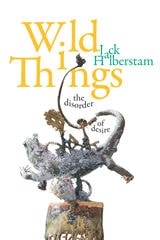
Wild Things
The Disorder of DesireJack Halberstam
Duke University Press, 2020

Willa Cather and Material Culture
Real-World Writing, Writing the Real WorldEdited by Janis P. Stout
University of Alabama Press, 2004
Willa Cather and Material Culture is a collection of 11 new essays that tap into a recent and resurgent interest among Cather scholars in addressing her work and her career through the lens of cultural studies. One of the volume's primary purposes is to demonstrate the extent to which Cather did participate in her culture and to correct the commonplace view of her as a literary connoisseur set apart from her times.
The contributors explore both the objects among which Cather lived and the objects that appear in her writings, as well as the commercial constraints of the publishing industry in which her art was made and marketed. Essays address her relationship to quilts both personally and as symbols in her work; her contributions to domestic magazines such as Home Monthly and Woman's Home Companion; the problematic nature of Hollywood productions of her work; and her efforts and successes as a businesswoman. By establishing the centrality of material matters to her writing, these essays contribute to the reclaiming of Cather as a modernist and highlight the significance of material culture, in general, to the study of American literature.

Wingless Flights
Appalachian Women in FictionDanny L. Miller
University of Wisconsin Press, 1996
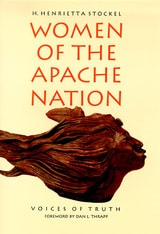
Women Of The Apache Nation
Voices Of TruthH. Henrietta Stockel
University of Nevada Press, 1993
Stockel sheds light on some of the mysteries surrounding traditional and contemporary Chiricahua Apache culture. Each of the women interviewed emphasizes the importance of storytelling and ritual in preserving Apache heritage. Many ceremonies are still practiced today. In this book, the voices of the Chiricahua women are heard, individually and collectively, describing their history, its effects on them today, and their lives and their hopes for the future.
Women Times Three
Writers, Detectives, ReadersKathleen Gregory Klein
University of Wisconsin Press, 1995
The eleven essays concentrate new attention on the trio of reader, writer, and text when all three are modified by the terms “woman” and “mystery.”
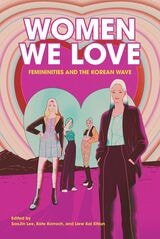
Women We Love
Femininities and the Korean WaveEdited by Soojin Lee, Kate Korroch, and Kai Khiun Liew
Hong Kong University Press, 2023
Women We Love is an edited collection exploring femininities in and around the Korean Wave since 2000. While studies on the Korean Wave are abundant, there is a dearth of analysis about the female-identifying stars, characters, and fans who shape and lead this crucial cultural movement. Using “women” as an inclusive term extending to all those who self-define as women, this collection of essays examines the role of women in K-pop and K-drama industries and fandom spaces, encompassing crucial intersectional topics such as queering of gender, dissemination of media, and fan culture.
The audience for Women We Love will reflect the contributors to this text; they are K-pop and K-drama fans, queer, international; they are also academics of Asian histories, sociology, gender and sexuality, art history, and visual culture. The chapters are playful, intersectional, and will be adapted well into syllabi for media studies, gender studies, visual culture studies, sociology, and contemporary global history.
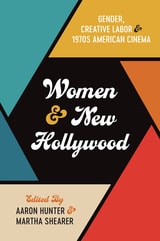
Women and New Hollywood
Gender, Creative Labor, and 1970s American CinemaAaron Hunter
Rutgers University Press, 2023
Women and New Hollywood revises our understanding of this important era in American film by examining the contributions that women made not only as directors, but also as screenwriters, editors, actors, producers, and critics. Including essays on film history, film texts, and the decade’s film theory and criticism, this collection showcases the rich and varied cinematic products of women’s creative labor, as well as the considerable barriers they faced. It considers both women working within and beyond the Hollywood film industry, reconceptualizing New Hollywood by bringing it into dialogue with other American cinemas of the 1970s. By valuing the many forms of creative labor involved in film production, this collection offers exciting alternatives to the auteurist model and new ways of appreciating the themes and aesthetics of 1970s American film.
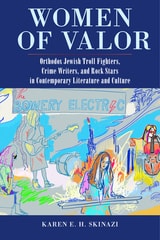
Women of Valor
Orthodox Jewish Troll Fighters, Crime Writers, and Rock Stars in Contemporary Literature and CultureKaren E. H. Skinazi
Rutgers University Press, 2018
Media portrayals of Orthodox Jewish women frequently depict powerless, silent individuals who are at best naive to live an Orthodox lifestyle, and who are at worst, coerced into it. Karen E. H. Skinazi delves beyond this stereotype in Women of Valor to identify a powerful tradition of feminist literary portrayals of Orthodox women, often created by Orthodox women themselves. She examines Orthodox women as they appear in memoirs, comics, novels, and movies, and speaks with the authors, filmmakers, and musicians who create these representations. Throughout the work, Skinazi threads lines from the poem “Eshes Chayil,” the Biblical description of an Orthodox “Woman of Valor.” This proverb unites Orthodoxy and feminism in a complex relationship, where Orthodox women continuously question, challenge, and negotiate Orthodox and feminist values. Ultimately, these women create paths that unite their work, passions, and families under the framework of an “Eshes Chayil,” a woman who situates religious conviction within her own power.
Women's Life-Writing
Finding Voice, Building CommunityLinda S. Coleman
University of Wisconsin Press, 1997
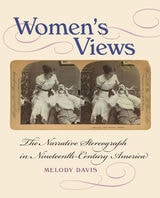
Women's Views
The Narrative Stereograph in Nineteenth-Century AmericaMelody Davis
University of Massachusetts Press, 2015
In this remarkable book, Melody Davis analyzes the underexamined genre of narrative stereoviews and their audiences. Because stereoviews were created for and marketed primarily to middle-class women in domestic settings, Davis argues that they represent one of the best sources for addressing the flow of historical change in women's lives. By analyzing dozens of stereoviews—including depictions of gender stereotypes, power dynamics, comical or sentimental situations, and scenes of both serious and playful innuendo—Davis energetically spins a broad history of the real social, sexual, and economic changes in the lives of American women. Her close reading and rich contextualization of these compelling vernacular objects bridge the gaps between the private viewing that took place within the home and the outside world of consumption and power that women were gradually entering.
Illustrated with more than one hundred stereographs and including a three-dimensional viewer, this book will appeal to readers with an interest in U.S. women's history, the history of photography, visual and cultural studies, and American studies.
Women, Celebrity, and Literary Culture between the Wars
By Faye Hammill
University of Texas Press, 2007
As mass media burgeoned in the years between the first and second world wars, so did another phenomenon—celebrity. Beginning in Hollywood with the studio-orchestrated transformation of uncredited actors into brand-name stars, celebrity also spread to writers, whose personal appearances and private lives came to fascinate readers as much as their work. Women, Celebrity, and Literary Culture between the Wars profiles seven American, Canadian, and British women writers—Dorothy Parker, Anita Loos, Mae West, L. M. Montgomery, Margaret Kennedy, Stella Gibbons, and E. M. Delafield—who achieved literary celebrity in the 1920s and 1930s and whose work remains popular even today.
Faye Hammill investigates how the fame and commercial success of these writers—as well as their gender—affected the literary reception of their work. She explores how women writers sought to fashion their own celebrity images through various kinds of public performance and how the media appropriated these writers for particular cultural discourses. She also reassesses the relationship between celebrity culture and literary culture, demonstrating how the commercial success of these writers caused literary elites to denigrate their writing as "middlebrow," despite the fact that their work often challenged middle-class ideals of marriage, home, and family and complicated class categories and lines of social discrimination.
The first comparative study of North American and British literary celebrity, Women, Celebrity, and Literary Culture between the Wars offers a nuanced appreciation of the middlebrow in relation to modernism and popular culture.
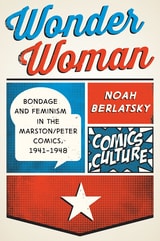
Wonder Woman
Bondage and Feminism in the Marston/Peter Comics, 1941-1948Berlatsky, Noah
Rutgers University Press, 2015
Comics expert Noah Berlatsky takes us on a wild ride through the Wonder Woman comics of the 1940s, vividly illustrating how Marston’s many quirks and contradictions, along with the odd disproportionate composition created by illustrator Harry Peter, produced a comic that was radically ahead of its time in terms of its bold presentation of female power and sexuality. Himself a committed polyamorist, Marston created a universe that was friendly to queer sexualities and lifestyles, from kink to lesbianism to cross-dressing. Written with a deep affection for the fantastically pulpy elements of the early Wonder Womancomics, from invisible jets to giant multi-lunged space kangaroos, the book also reveals how the comic addressed serious, even taboo issues like rape and incest.
Wonder Woman
New edition with full color illustrationsBerlatsky, Noah
Rutgers University Press, 2017
Comics expert Noah Berlatsky takes us on a wild ride through the Wonder Woman comics of the 1940s, vividly illustrating how Marston’s many quirks and contradictions, along with the odd disproportionate composition created by illustrator Harry Peter, produced a comic that was radically ahead of its time in terms of its bold presentation of female power and sexuality. Himself a committed polyamorist, Marston created a universe that was friendly to queer sexualities and lifestyles, from kink to lesbianism to cross-dressing. Written with a deep affection for the fantastically pulpy elements of the early Wonder Woman comics, from invisible jets to giant multi-lunged space kangaroos, the book also reveals how the comic addressed serious, even taboo issues like rape and incest.
Wonder Woman: Bondage and Feminism in the Marston/Peter Comics 1941-1948 reveals how illustrator and writer came together to create a unique, visionary work of art, filled with bizarre ambition, revolutionary fervor, and love, far different from the action hero symbol of the feminist movement many of us recall from television.
Woody on Rye
Jewishness in the Films and Plays of Woody AllenEdited by Vincent Brook and Marat Grinberg
Brandeis University Press, 2013
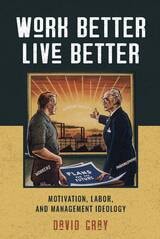
Work Better, Live Better
Motivation, Labor, and Management IdeologyDavid A. Gray
University of Massachusetts Press, 2020
In the United States, a strong work ethic has long been upheld as a necessity, and tributes to motivation abound—from the motivational posters that line the walls of the workplace to the self-help gurus who draw in millions of viewers online. Americans are repeatedly told they can achieve financial success and personal well-being by adopting a motivated attitude toward work. But where did this obsession come from? And whose interests does it serve?
Work Better, Live Better traces the rise of motivational rhetoric in the workplace across the expanse of two world wars, the Great Depression, and the Cold War. Beginning in the early twentieth century, managers recognized that force and coercion—the traditional tools of workplace discipline—inflamed industrial tensions, so they sought more subtle means of enlisting workers' cooperation. David Gray demonstrates how this “motivational project” became a highly orchestrated affair as managers and their allies deployed films, posters, and other media, and drew on the ideas of industrial psychologists and advertising specialists to advance their quests for power at the expense of worker and union interests.
Workers of the World, Enjoy!
Aesthetic Politics from Revolutionary Syndicalism to the Global Justice MovementKenneth H. Tucker, Jr.
Temple University Press, 2012
The aesthetic politics of social movements turn public life into a public stage, where mutual displays of performance often trump rational debate, and urban streets become sites of festivals and carnival. In his penetrating new book, Workers of the World, Enjoy!, Kenneth Tucker provides a new model for understanding social change in our image-saturated and aesthetically charged world. As emotional and artistic images inform our perceptions and evaluation of politics, art and performance often provide new and creative ways of understanding self and society.
Spanning the nineteenth, twentieth, and twenty-first centuries, Workers of the World, Enjoy! uses examples from major social movements that have dramatically changed the dominant capitalist society—often in the name of labor. Tucker investigates how class and culture develop as he raises questions about what it means for public life and social movements when politics and drama come together.
Tucker catalogues how aesthetic politics influences social movements—from French Revolutionary syndicalism and fascism to the selling of the President and the street theater of the contemporary global justice movement. He also discusses the work of political theorists including Jurgen Habermas, Jeffrey Alexander, and Nancy Fraser to critique the ways public sphere has been studied.
Working Time
Essays on Poetry, Culture, and TravelJane Miller
University of Michigan Press, 1992
The essays consider notions of time, duration, narrative, documentary, and history in American poetry, and view poetry in the light of developments in feminism, postmodern theory, and contemporary poetic practice. In addition to poetry, Miller investigates a range of cultural products and art forms, including film, video, photography, painting, sculpture, music, and the Madonna phenomenon.

Working on Earth
Class and Environmental JusticeChristina Robertson
University of Nevada Press, 2015
The authors challenge prevailing cultural narratives that separate ecological and human health from the impacts of modern industrial capitalism. Essay themes range from how human survival is linked to nature to how the use and abuse of nature benefit the wealthy elite at the expense of working-class people and the working poor as well as how climate change will affect cultures deeply rooted in the land.
Ultimately, Working on Earth calls for a working-class ecology as an integral part of achieving just and sustainable human development.
Wrangling Women
Humor and Gender in the American WestKristin M. McAndrews
University of Nevada Press, 2008
Kristin McAndrews states that she “began to suspect that the reason there was so little scholarship on women’s humor was that male researchers didn’t understand it, or perhaps they didn’t recognize it.” To examine the humor of one group of women, she conducted interviews with Winthrop’s female wranglers, collecting stories about their lives as workers and as members of their community. For all these women, professional success depends on courage, ingenuity, a sense of humor, and a facility with language—as well as on an ability to perform within the traditional gender stereotypes evoked by their town’s Wild west image.