Results by title
388 books match the query 'War' and 57 start with w
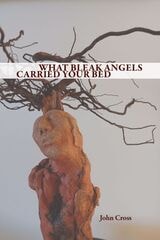
WHAT BLEAK ANGELS CARRIED YOUR BED
John Cross
Omnidawn, 2026
John Cross’s WHAT BLEAK ANGELS CARRIED YOUR BED opens in exile and st(r)ays there. The character Mathias, a trickster who opens this collection, wakes with a primal utterance and startled vision born of commotion. Bewildered by the noise of our culture, he finds brief glimpses of meaning in fleeting, slippery moments. Mathias navigates life in exile, exploring the depths of his situation through the beat of his song and stutter, which manifests in a deranging of language and finds a foothold in cosmic disorder. A “scavenger for armor” in a world of loss and wreckage, he feels the terror of existence while holding onto the promise of a “breath still audible at near dark.”
The second half of the book opens in the harsh light of a sun that “pushes down on our feet” and implores that we witness our world. In this brightness, Cross conjures shadows from his own memory and confronts a world where a president throws “his people to the wolves.” These poems move through the world in wonder, offering an elegiac hushed prayer to all that we are losing in a changing environment, to “the oriole ascending / the palo verde of bee vibration . . . & Mitchell’s satyr butterfly.”
WHAT BLEAK ANGELS CARRIED YOUR BED is the winner of the 2023 Omnidawn Poetry Open Contest, selected by Maw Shein Win.
War & Terror
Feminist PerspectivesEdited by Karen Alexander and Mary Hawkesworth
University of Chicago Press, 2008

War No More
Eliminating Conflict in the Nuclear AgeRobert Hinde and Joseph Rotblat
Pluto Press, 2003
Written by Nobel Peace prize winner and former nuclear physicist Joseph Rotblat, who was involved in the creation of the first atom bomb, and biologist/ psychologist Robert Hinde, War No More provides expert insight into the nature of modern warfare - including weapons of mass destruction. Examining the key factors that contribute to conflict, the authors explain how best to approach a peaceful future.
If war is ever to be eliminated, we must address key issues such as the gap between rich and poor; have fully effective arms controls, and above all we must have better education. The authors emphasise the United Nations - as well as NGOs, religious groups, and grassroots movements - also have important parts to play.
War Of Conquest
How it was Waged Here in MexicoArthur J. O. Anderson
University of Utah Press, 1978
War and American Life
Reflections on Those Who Serve and SacrificeJames Wright
Brandeis University Press, 2022
An engaging collection of essays focusing on American veterans.
War and American Life is a book of essays and reflections by celebrated historian and former marine James Wright, who has been active as an advocate, teacher, and scholar. Featuring both previously published pieces and new essays, the book considers veterans in America and the ways in which our society needs better to understand who they are and what they have done on the nation’s behalf—and the responsibilities that follow this recognition.
War and Collapse
World War I and the Ottoman StateEdited by M. Hakan Yavuz with Feroz Ahmad
University of Utah Press, 2015
War and Diplomacy
The Russo-Turkish War of 1877-1878 and the Treaty of BerlinM Hakan Yavuz
University of Utah Press, 2011
Combining different disciplinary perspectives, War and Diplomacy argues that the key events that portended the beginning of the end of the multiethnic Ottoman Empire were the The Russo-Turkish War of 1877–1878 and the Treaty of Berlin. The essays in this volume analyze how the war and the treaty permanently transformed the political landscape both in the Balkans and in the Caucasus. The treaty marked the end of Ottoman hegemony in the Balkans by formally recognizing the independence or de facto sovereignty of Romania, Serbia, and Montenegro, and the autonomy of Bulgaria.
By introducing the unitary nation-state as the new organizing concept, the treaty planted the seeds of future conflict, from the Balkan Wars of 1912–1913 and the First World War to the recent civil wars and ethnic cleansing in former Yugoslavia. The magnitude of the defeat of the Ottoman Empire by Russia—and eventually by the other great powers—and the human, material, and territorial losses that followed proved fatal to the project of Muslim liberal reform and modernization that the Ottoman state had launched in the middle of the 19th century.
War and Diplomacy offers the first comparative examination of the treaty and its socio-political implications for the Balkans and the Caucasus by utilizing the theoretical tools and approaches of political science, sociology, history, and international relations. Representing the latest scholarship in the field of study, this volume documents the proceedings of a conference on the Treaty of Berlin that was held at the University of Utah in 2010. It provides an important contribution to understanding the historical background of these events.
War and Diplomacy documents the proceedings of the first of three conferences:
1878 Treaty of Berlin (in 2010)
Balkan Wars (in 2011)
World War I (in 2012)
Proceedings of the final two conferences will also be published by the University of Utah Press.
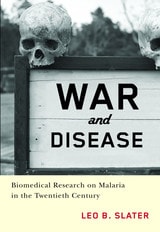
War and Disease
Biomedical Research on Malaria in the Twentieth CenturyLeo B. Slater
Rutgers University Press, 2009
A massive undertaking, the antimalarial program was to biomedical research what the Manhattan Project was to the physical sciences.
A volume in the Critical Issues in Health and Medicine series, edited by Rima D. Apple and Janet Golden.
War and Empire
The American Way of LifePaul L. Atwood
Pluto Press, 2010
In this provocative study, Paul Atwood attempts to show Americans that their history is one of constant wars of aggression and imperial expansion.
In his long teaching career, Atwood has found that most students know virtually nothing about America's involvement in the wars of the 20th century, let alone those prior to World War I. War and Empire aims to correct this, clearly and persuasively explaining US actions in every major war since the declaration of independence. The book shows that, far from being dragged reluctantly into foreign entanglements, America's leaders have always picked its battles in order to increase their influence and power, with little regard for the American soldiers and 'enemy' civilians killed or made to suffer in the process.
This book is an eye-opening introduction to the American way of life for undergraduate students of American history, politics and international relations.
War and Nationalism
The Balkan Wars, 1912–1913, and Their Sociopolitical ImplicationsM Hakan Yavuz
University of Utah Press, 2013
This interdisciplinary volume stands as a critique of the standard discourse regarding the Balkan Wars and effectively questions many of the assumptions of prevailing modern nation-state histories, which have long privileged the ethno-religious dimensions present in the Balkans. The authors go to great lengths in demonstrating the fluidity of social, geographical, and cultural boundaries before 1912 and call into question the “nationalist watershed” notion that was artificially imposed by manipulative historiography and political machinations following the end of fighting in 1913.
War and Nationalism will be of interest to scholars looking to enrich their own understanding of an overshadowed historical event and will serve as a valuable contribution to courses on Ottoman and European history.
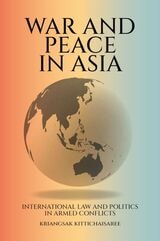
War and Peace in Asia
International Law and Politics in Armed ConflictsKriangsak Kittichaisaree
National University of Singapore Press, 2026
How do Asian states navigate the complex terrain between international legal obligations and strategic national interests in matters of war and peace? What justifications are invoked to wage war, and what are the legal frameworks used to restore peace? Do bilateral settlements comply with and support the development of international law, or do they undermine it? This comprehensive study examines conflict and peace-building across Asia since 1945, providing a distinctly Asian perspective on international law and relations.
War and Peace in Asia considers how Asian history, including the region's experience of colonialism, shapes ideas of international order. Kriangsak Kittichaisaree considers rules against the threat or use of force; management of sovereignty disputes over borders and territories; insurgencies or conflicts arising from groups seeking self-determination; annexations of one State’s territory by another State; conflicts under the guise of “humanitarian intervention” and the Responsibility to Protect (R2P) doctrine; self-defense against terrorists and non-state actors who are driven by ideology; and armed intervention by invitation. The book offers scholars, policymakers, and practitioners crucial insights into conflict dynamics in this geopolitically volatile region.
War and Peace in International Rivalry
Paul F. Diehl and Gary Goertz
University of Michigan Press, 2001
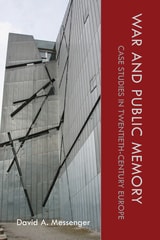
War and Public Memory
Case Studies in Twentieth-Century EuropeDavid A. Messenger
University of Alabama Press, 2020
In order to understand the history of twentieth-century Europe, we must first appreciate and accept how different societies and cultures remember their national conflicts. We must also be aware of the ways that those memories evolve over time. In War and Public Memory: Case Studies in Twentieth-Century Europe, Messenger outlines the relevant history of war and its impact on different European nations and assesses how and where the memory of these conflicts emerges in political and public discourse and in the public sphere and public spaces of Europe.
The case studies presented emphasize the major wars fought on European soil as well as the violence perpetrated against civilian populations. Each chapter begins with a brief overview of the conflict and then proceeds with a study of how memory of that struggle has entered into public consciousness in different national societies. The focus throughout is on collective social, cultural, and public memory, and in particular how memory has emerged in public spaces throughout Europe, such as parks, museums, and memorial sites.
Messenger discusses memories of the First World War for both the victors and the vanquished as well as their successor states. Other events discussed include the Bolshevik Revolution and subsequent conflicts in the former Soviet Union, the Armenian genocide, the collapse of Yugoslavia, the legacy of the civil war in Spain, Germanys reckoning with its Nazi past, and the memory of occupation and the Holocaust in France and Poland.
War and Rights
The Impact of War on Political and Civil RightsDavid L. Rousseau
University of Michigan Press, 2021
Warfare in Europe contributed to the development of the modern state. In response to external conflict, state leaders raised armies and defended borders. The centralization of power, the development of bureaucracies, and the integration of economies all maximized revenue to support war. But how does a persistent external threat affect the development of a strong state? The “Garrison State” hypothesis argues that states that face a severe security threat will become autocracies. Conversely, the “Extraction School,” argues that warfare indirectly promotes the development of democratic institutions.
Execution of large-scale war requires the mobilization of resource and usually reluctant populations. In most cases, leaders must extend economic or political rights in exchange for resolving the crisis. Large-scale warfare thus expands political participation in the long run. The authors use empirical statistical modeling to show that war decreases rights in the short term, but the longer and bigger a war gets, the rights of the citizenry expand with the conflict. The authors test this argument through historical case studies—Imperial Russia, Austro-Hungarian Dual Monarchy, African Americans in World War I and II, and the Tirailleurs Senegalese in World War I—through the use of large-N statistical studies—Europe 1900–50 and Global 1893–2011—and survey data. The results identify when, where, and how war can lead to the expansion of political rights.
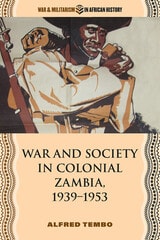
War and Society in Colonial Zambia, 1939–1953
Alfred Tembo
Ohio University Press, 2021
Written from a Zambian perspective, this leading study shows how the British colony of Northern Rhodesia (later Zambia) organized and deployed human, military, and natural resources during and after the Second World War.
The Second World War brought unprecedented pressures to bear on Britain’s empire, which then included colonial Northern Rhodesia. Through new archival materials and oral histories, War and Society in Colonial Zambia tells—from an African perspective—the story of how the colony organized its human and natural resources on behalf of the imperial government.
Alfred Tembo first examines government propaganda and recruitment of personnel for the Northern Rhodesia Regiment, which served in East Africa, Palestine, Ceylon, Burma, and India. Later, Zambia’s economic contribution to the Allied war effort would foreground the central importance of the colony’s mining industry as well as its role as supplier of rubber and beeswax following the fall of the Southeast Asian colonies to the Japanese in early 1942. Finally, Tembo presents archival and oral evidence about life on the home front, including the social impact of wartime commodity shortages, difficulties posed by incoming Polish refugees, and the more interventionist forms of colonial governance that these circumstances engendered.
War and Wartime Changes
The Transformation of Arkansas, 1940–1945C. Calvin Smith
University of Arkansas Press, 1986
This is a lively history of specific social, political, ad economic changes that all-out war brought to the home front in mid-America. Drawing from letters to the editor in local and state papers, from editorials, from personal interviews, and from the manuscript collections left by state political leaders, Calvin Smith brings into focus the impact of wartime not only upon agricultural and business economics but also upon particular social groups and the lives of individuals.
The war generated the beginnings of a rights revolution in black communities throughout the nation. The author takes a careful look at the resulting strain on relations between the state’s black and white citizens. No less important is the consideration of Japanese Americans from the West Coast who were relocated to camps in Arkansas, and of the Jehovah’s Witnesses who would not take part in the war effort either on the battlefield or at home.
War and Wartime Changes illuminates a fascinating and sometimes embarrassing segment of history which until now has not been presented in a single, cohesive work. The author details the unique experiences Arkansas had at this time as well as the patriotism its citizens felt for their country.
Here is the story for the historian, for every student of society and its ways, and for anyone who wants to understand or remember the patriotic fervor of Americans during World War II. Calvin Smith has created, with persistent and imaginative research, a rare admixture of nostalgia and solid scholarship.
War and an Irish Town
Eamonn McCann
Pluto Press, 1993
He witnessed the gradual transformation of the civil rights movement from a mild campaign for 'British Democracy' to an all-out military assault on the British state. This new edition updates the last edition (1980) with an additional introduction covering the last thirteen years.
War and an Irish Town is a trenchant, powerful narrative which reaches an unequivocal conclusion: 'There can be no internal solution to the Northern Ireland problem. The existence of the northern state is the problem'.
War and the Liberal Conscience
Howard, Michael
Rutgers University Press, 1987
For centuries liberal minded men have been horrified by the pain and waste of war. From Erasmus, who saw war above all as a product of stupidity, to the Marxists who see it as a matter of class conflict, they have produced social theories to account for its occurrence and have tried to devise means to end it.
Their prescriptions have been various. The central view of the Enlightenment was that wars would end when the ambitions of princes could be curbed by the sanity of ordinary men. At first the commercial classes seemed to be the new force that would produce this happy state, but by the end of the nineteenth century they themselves (the ‘capitalists’) were being stigmatized as the instigators of war.
Similarly, the nineteenth-century liberals at first believed that the rise of the new independent nation-states of Europe would lead to a permanent peace as the wishes of the masses (naturally peace-loving) were able to express themselves. Again, the supposed agents of peace were soon seen as a prime cause of wars.
Despite these contradictions there have been certain continuing themes in the search for a means to end wars, and one of the most enlightening things in this book is they way in which it is possible to see how these themes recur in subtly different forms in different periods of history. Professor Howard traces them from the renaissance to our own time, through the social, political and intellectual groups that gave birth to them.
Throughout the whole story runs the continuing contrast between those who hoped to find a single cause for the disease, leading to a lasting cure, and those who understood that, in Professor Howard’s words, ‘this was a task which needs to be tackled afresh every day of our lives’...
War and the State
The Theory of International PoliticsR. Harrison Wagner
University of Michigan Press, 2010
War and the State exposes the invalid arguments employed in the unproductive debate about Realism among international relations scholars, as well as the common fallacy of sharply distinguishing between conflict among states and conflict within them. As R. Harrison Wagner demonstrates, any understanding of international politics must be part of a more general study of the relationship between political order and organized violence everywhere--as it was in the intellectual tradition from which modern-day Realism was derived. War and the State draws on the insights from Wagner's distinguished career to create an elegantly crafted essay accessible to both students and scholars.
"Possibly the most important book on international relations theory since Kenneth Waltz's Theory of International Politics."
---James Fearon, Stanford University
"This is one of the best books on international relations theory I have read in a very long time. It is required reading for any student of modern IR theory. Once again, Wagner has shown himself to be one of the clearest thinkers in the field today."
---Robert Powell, Robson Professor of Political Science, University of California, Berkeley
"Painting on a vast canvas, and tackling and integrating topics such as state formation, domestic politics, and international conflict, R. Harrison Wagner's War and the State offers many brilliant insights into the nature of international relations and international conflict. War and the State compellingly highlights the importance of constructing rigorous and valid theorizing and sets a high standard for all students of international relations. The field has much to gain if scholars follow the trail blazed by Wagner in this book."
---Hein Goemans, University of Rochester
R. Harrison Wagner is Professor of Government at the University of Texas.
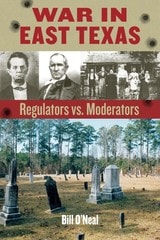
War in East Texas
Bill O'Neal
University of North Texas Press, 2006
War in Modern US History
A Transatlantic PerspectiveOlivier Burtin and Hélène Solot
Ohio University Press, 2027
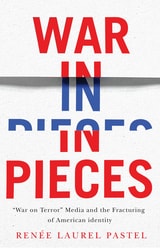
War in Pieces
"War on Terror" Media and the Fracturing of American IdentityRenée Laurel Pastel
Rutgers University Press, 2027
War in Pieces considers media representations of the first phase of the “War on Terror,” set between 2001 and 2013. The book argues that the central figures around which narratives of the conflicts cohered—the war journalist, the active-duty service member, the veteran, and the military family—served to mask the loss of the myth of a unified American national identity and embodied the negotiation of cultural anxieties. Offering a theory of narrative figuration that draws into conversation repetitions and differences across media forms (fiction and nonfiction films, television shows, and online videos), this book breaks down how these figures contributed to a continued sense of unified national identity even as different audiences came away with divergent understandings. This book frames these questions in terms of how US media packaged the “War on Terror” for future cultural memory even as the conflicts continued.
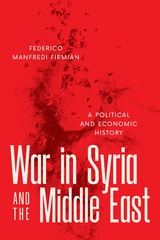
War in Syria and the Middle East
A Political and Economic HistoryFederico Manfredi Firmian
University of Texas Press, 2025
A wide-ranging examination of the causes of war in Syria and the Middle East.
In War in Syria and the Middle East, Federico Manfredi Firmian uses historical, political, and economic lenses to examine how Syria’s civil war is part of a broad pattern of social breakdown increasingly prevalent across the Arab and Islamic worlds. This expansive book argues that many conflicts across the Middle East today are rooted in fundamental ideological divides that originated with European imperialism. In Syria, the iniquities of French rule gave way to the radicalism of the Arab Socialist Baʿth Party, which promised to dismantle imperial legacies and capitalist logics through nationalizations, land redistribution, and central planning.
Baʿthist Syria, however, ultimately failed to provide a viable alternative to capitalism. In fact, its failures, and the failures of other revolutionary regimes of socialist inspiration, provided an opening for armed Islamist movements to challenge both secular authoritarian rule and US foreign policies—ultimately leading to civil war. Combining a multidisciplinary approach with fieldwork, War in Syria and the Middle East argues for a global perspective on a pressing, ongoing conflict.
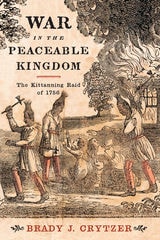
War in the Peaceable Kingdom
The Kittanning Raid of 1756Brady J. Crytzer
Westholme Publishing, 2016
On the morning of September 8, 1756, a band of about three hundred volunteers of a newly created Pennsylvania militia led by Lt. Col. John Armstrong crept slowly through the western Pennsylvania brush. The night before they had reviewed a plan to quietly surround and attack the Lenape, or Delaware, Indian village of Kittanning. The Pennsylvanians had learned that several prominent Delaware who had led recent attacks on frontier settlements as well as a number of white prisoners were at the village. Seeking reprisal, Armstrong’s force successfully assaulted Kittanning, killing one of the Delaware they sought, but causing most to flee—along with their prisoners. Armstrong then ordered the village burned. The raid did not achieve all of its goals, but it did lead to the Indians relocating their villages further away from the frontier settlements. However, it was a major victory for those Pennsylvanians—including some Quaker legislators—who believed the colony must be able to defend itself from outside attack, whether from the French, Indians, or another colony.
In War in the Peaceable Kingdom: The Kittanning Raid of 1756, historian Brady J. Crytzer follows the two major threads that intertwined at Kittanning: the French and Indian War that began in the Pennsylvania frontier, and the bitter struggle between pacifist Quakers and those Quakers and others—most notably, Benjamin Franklin—who supported the need to take up arms. It was a transformational moment for the American colonies. Rather than having a large, pacifist Pennsylvania in the heart of British North America, the colony now joined the others in training soldiers for defense. Ironically, it would be Pennsylvania soldiers who, in the early days of the American Revolution, would be crucial to the survival of George Washington’s army.
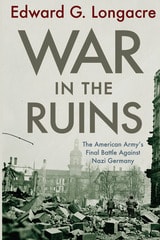
War in the Ruins
The American Army's Final Battle Against Nazi GermanyEdward G. Longacre
Westholme Publishing, 2010
The Last Major Combat for American Troops in Germany During the Final Days of World War II
By April 1945, the last German counteroffensive in the west had been defeated, the vaunted Siegfried Line was no more, the Rhine River had been crossed, and major German cities were being bombed relentlessly. The war in Europe appeared to be in its final stages. As American and British armies overran central Germany, the Russians were smashing their way from the east toward Berlin. Optimism reigned up and down the Allied lines. But as the American Army’s 100th Infantry Division pushed along the west bank of the Neckar River across from bomb-shattered Heilbronn, resistance unexpectedly stiffened. In that 700-year-old city, a major industrial and communications center still operating for the benefit of the Nazi war machine, Hitler’s subordinates had battened down for a last-ditch stand. For sheer ferocity, it would exceed anything the now-battle-hardened Americans had experienced. Here, American troops faced a grueling campaign of house-to-house fighting, with Hitler Youth, Volkssturm militia, and an SS division attempting to stop the American advance at this critical sector of the European theater. Having been repeatedly targeted by Alllied aircraft, the city resembled a vast, Hellish ruin, and as American soldiers inched their way forward, they encountered booby traps, withering sniper fire, deadly Panzerfaust rounds, and a fanatical enemy. The nine-day battle for Heilbronn would be the last major combat for American troops in Europe. Within three weeks of their securing the city, Hitler would be dead and Germany defeated.
In War in the Ruins: The American Army’s Final Battle Against Nazi Germany, Edward G. Longacre recounts this neglected but essential chapter in the history of World War II, describing the 100th Division’s swift but grueling advance through the Vosges Mountains, their Rhine River crossing, the assault on the historic Maginot Line, and the ominous approach to Heilbronn. The author then describes the entire bitter battle and its aftermath, using private letters, journals, German and American action reports, and other primary source material, to establish War in the Ruins as an essential volume in the history of World War II in Europe.

War in the Villages
The U.S. Marine Corps Combined Action PlatoonsTed Easterling
University of North Texas Press, 2021
War on Autism
On the Cultural Logic of Normative ViolenceAnne McGuire
University of Michigan Press, 2016
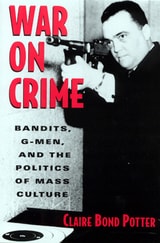
War on Crime
Bandits, G-Men, and the Politics of Mass CulturePotter, Claire Bond
Rutgers University Press, 1998
Anxieties about crime today have become a familiar route for the creation of new government agencies and the extension of state authority. It is important to remember the original "war on crime" in the 1930s-and the opportunities it afforded to New Dealers and established bureaucrats like J. Edgar Hoover-as scholars grapple with the ways states assert influence over populations, local authority, and party politics while they pursue goals such as reducing popular violence and protecting private property.
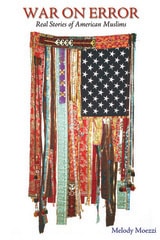
War on Error
Real Stories of American MuslimsMelody Moezzi
University of Arkansas Press, 2007
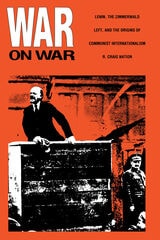
War on War
Lenin, the Zimmerwald Left, and the Origins of Communist InternationalismR. Craig Nation
Duke University Press, 1989
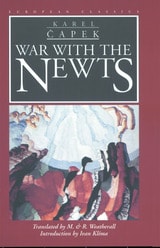
War with the Newts
Karel Capek
Northwestern University Press, 1996
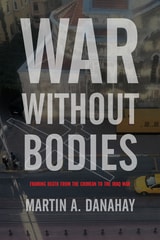
War without Bodies
Framing Death from the Crimean to the Iraq WarMartin Danahay
Rutgers University Press, 2022
Analyzing poetry, photographs, video and video games the book illustrates the ways in which war was framed in these different historical contexts. It examines the cultural assumptions that influenced the reception of images of war and discusses how death and damage to bodies was made acceptable to the public. War Without Bodies aims to heighten awareness of how acceptance of war is coded into texts and how active resistance to such hidden messages can help prevent future unnecessary wars.
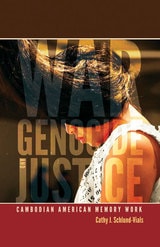
War, Genocide, and Justice
Cambodian American Memory WorkCathy J. Schlund-Vials
University of Minnesota Press, 2012
In the three years, eight months, and twenty days of the Khmer Rouge’s deadly reign over Cambodia, an estimated 1.7 million Cambodians perished as a result of forced labor, execution, starvation, and disease. Despite the passage of more than thirty years, two regime shifts, and a contested U.N. intervention, only one former Khmer Rouge official has been successfully tried and sentenced for crimes against humanity in an international court of law to date. It is against this background of war, genocide, and denied justice that Cathy J. Schlund-Vials explores the work of 1.5-generation Cambodian American artists and writers.
Drawing on what James Young labels “memory work”—the collected articulation of large-scale human loss—War, Genocide, and Justice investigates the remembrance work of Cambodian American cultural producers through film, memoir, and music. Schlund-Vials includes interviews with artists such as Anida Yoeu Ali, praCh Ly, Sambath Hy, and Socheata Poeuv. Alongside the enduring legacy of the Killing Fields and post-9/11 deportations of Cambodian American youth, artists potently reimagine alternative sites for memorialization, reclamation, and justice. Traversing borders, these artists generate forms of genocidal remembrance that combat amnesic politics and revise citizenship practices in the United States and Cambodia.
Engaged in politicized acts of resistance, individually produced and communally consumed, Cambodian American memory work represents a significant and previously unexamined site of Asian American critique.
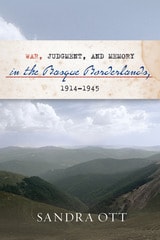
War, Judgment, and Memory in the Basque Borderlands, 1914-1945
Sandra Ott
University of Nevada Press, 2008
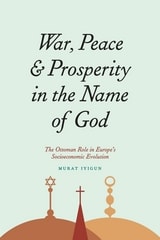
War, Peace, and Prosperity in the Name of God
The Ottoman Role in Europe's Socioeconomic EvolutionMurat Iyigun
University of Chicago Press, 2015
War, Peace, and Prosperity in the Name of God turns the focus on the “big three monotheisms”—Judaism, Islam, and Christianity—to consider these questions. Chronicling the relatively rapid spread of the Abrahamic religions among the Old World, Murat Iyigun shows that societies that adhered to a monotheistic belief in that era lasted longer, suggesting that monotheism brought some sociopolitical advantages. While the inherent belief in one true god meant that these religious communities had sooner or later to contend with one another, Iyigun shows that differences among them were typically strong enough to trump disagreements within. The book concludes by documenting the long-term repercussions of these dynamics for the organization of societies and their politics in Europe and the Middle East.
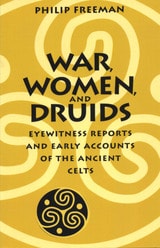
War, Women, and Druids
Eyewitness Reports and Early Accounts of the Ancient CeltsBy Philip Freeman
University of Texas Press, 2002
"The ancient Celts capture the modern imagination as do few other people of classical times. Naked barbarians charging the Roman legions, Druids performing sacrifices of unspeakable horror, women fighting beside their men and even leading armies—these, along with stunning works of art, are the images most of us call to mind when we think of the Celts," observes Philip Freeman. "And for the most part, these images are firmly based in the descriptions handed down to us by the Greek and Roman writers."
This book draws on the firsthand observations and early accounts of classical writers to piece together a detailed portrait of the ancient Celtic peoples of Europe and the British Isles. Philip Freeman groups the selections (ranging from short statements to longer treatises) by themes—war, feasting, poetry, religion, women, and the Western Isles. He also presents inscriptions written by the ancient Celts themselves. This wealth of material, introduced and translated by Freeman to be especially accessible to students and general readers, makes this book essential reading for everyone fascinated by the ancient Celts.
Warfare, Ritual, and Symbol in Biblical and Modern Contexts
Brad E. Kelle
SBL Press, 2014
New perspectives on Israelite warfare for biblical studies, military studies, and social theory
Contributors investigate what constituted a symbol in war, what rituals were performed and their purpose, how symbols and rituals functioned in and between wars and battles, what effects symbols and rituals had on insiders and outsiders, what ways symbols and rituals functioned as instruments of war, and what roles rituals and symbols played in the production and use of texts.
Features:
- Thirteen essays examine war in textual, historical, and social contexts
- Texts from the Hebrew Bible are read in light of ancient Near Eastern texts and archaeology
- Interdisciplinary studies make use of contemporary ritual and social theory
Warless Societies and the Origin of War
Raymond C. Kelly
University of Michigan Press, 2000
Kelly addresses fundamental questions concerning the trinity of interrelationship between human nature, war, and the constitution of society: Is war a primordial and pervasive feature of human existence or a set of practices that arose at a certain time in our recent prehistoric past? Are there peaceful societies in which war is absent and, if so, what are they like and how do they differ from warlike societies? Do the critical differentiating features pertain to child-rearing practices, to modes of conflict resolution, to social and economic inequality, to resource competition, or to the constitution of social groups?
As the conclusions of such an inquiry are central to our conceptions of human nature, the book will interest a wide range of readers, from those curious about the origins of collective violence to those studying the roles social institutions play in society.
Raymond C. Kelly is Professor of Anthropology, University of Michigan.
We Refused to Die
My time as a prisoner of war in Bataan and Japan, 1942-1945Gene S Jacobsen
University of Utah Press, 2004
In engaging, direct prose, Jacobsen’s three-and-a-half year experience as a prisoner of war takes the reader on a brutal and harrowing march through hatred and forgiveness, fortitude and freedom. We Refused to Die is an honest memoir that shines light on one of history’s darkest moments.
What Nostalgia Was
War, Empire, and the Time of a Deadly EmotionThomas Dodman
University of Chicago Press, 2017
What Nostalgia Was unearths that history. Thomas Dodman begins his story in Basel, where a nineteen-year-old medical student invented the new diagnosis, modeled on prevailing notions of melancholy. From there, Dodman traces its spread through the European republic of letters and into Napoleon's armies, as French soldiers far from home were diagnosed and treated for the disease. Nostalgia then gradually transformed from a medical term to a more expansive cultural concept, one that encompassed Romantic notions of the aesthetic pleasure of suffering. But the decisive shift toward its contemporary meaning occurred in the colonies, where Frenchmen worried about racial and cultural mixing came to view moderate homesickness as salutary. An afterword reflects on how the history of nostalgia can help us understand the transformations of the modern world, rounding out a surprising, fascinating tour through the history of a durable idea.
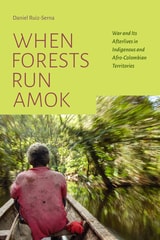
When Forests Run Amok
War and Its Afterlives in Indigenous and Afro-Colombian TerritoriesDaniel Ruiz-Serna
Duke University Press, 2023
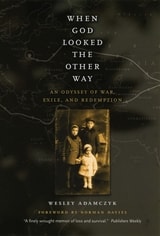
When God Looked the Other Way
An Odyssey of War, Exile, and RedemptionWesley Adamczyk
University of Chicago Press, 2004
Adamczyk was a young Polish boy when he was deported with his mother and siblings from their comfortable home in Luck to Soviet Siberia in May of 1940. His father, a Polish Army officer, was taken prisoner by the Red Army and eventually became one of the victims of the Katyn massacre, in which tens of thousands of Polish officers were slain at the hands of the Soviet secret police. The family's separation and deportation in 1940 marked the beginning of a ten-year odyssey in which the family endured fierce living conditions, meager food rations, chronic displacement, and rampant disease, first in the Soviet Union and then in Iran, where Adamczyk's mother succumbed to exhaustion after mounting a harrowing escape from the Soviets. Wandering from country to country and living in refugee camps and the homes of strangers, Adamczyk struggled to survive and maintain his dignity amid the horrors of war.
When God Looked the Other Way is a memoir of a boyhood lived in unspeakable circumstances, a book that not only illuminates one of the darkest periods of European history but also traces the loss of innocence and the fight against despair that took root in one young boy. It is also a book that offers a stark picture of the unforgiving nature of Communism and its champions. Unflinching and poignant, When God Looked the Other Way will stand as a testament to the trials of a family during wartime and an intimate chronicle of episodes yet to receive their historical due.
“A finely wrought memoir of loss and survival.”—Publishers Weekly
“Adamczyk’s unpretentious prose is well-suited to capture that truly awful reality.” —Andrew Wachtel, Chicago Tribune Books
“Mr. Adamczyk writes heartfelt, straightforward prose. . . . This book sheds light on more than one forgotten episode of history.”—Gordon Haber, New York Sun
“One of the most remarkable World War II sagas I have ever read. It is history with a human face.”—Andrew Beichman, Washington Times
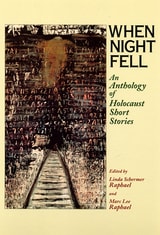
When Night Fell
An Anthology of Holocaust Short StoriesLinda Schermer Raphael and Marc Lee Raphael
Rutgers University Press, 1999
Both survivors of the Holocaust and those who were not there agree that it is impossible to tell what happened as the Nazi Final Solution was put into effect. No writing can adequately imagine the concentration camps, ghettos, and death camps. And that is precisely why writers must tell-and retell-what happened there.
In When Night Fell: An Anthology of Holocaust Short Stories, Linda Schermer Raphael and Marc Lee Raphael have collected twenty-six short stories that tell of the human toll of the Holocaust on those who survived its horrors, as well as later generations touched by its memory. The stories are framed by discussion of the current debate about who owns the Holocaust and who is entitled to speak about it.
Some of the stories included here are by internationally acclaimed authors. Others may be new to many readers. When Night Fell is a fitting memorial to this genocidal horror, putting eloquent voice to human endurance that is-almost-beyond words.
White City, Black City
Architecture and War in Tel Aviv and JaffaSharon Rotbard
Pluto Press, 2015
White Jacket, or The World in a Man-of-War
Volume Five, Scholarly EditionHerman Melville
Northwestern University Press, 1970
Already that same summer Melville had written Redburn, and he regarded the books as "two jobs, which I have done for money--being forced to it, as other men are to sawing wood." The reviewers were not as hard on White-Jacket as Melville himself was. The English liked its praise of British seamen. The Americans were more interested in Melville's attack on naval abuses, particularly flogging, and his advocacy of humanitarian causes. Soon Melville was acclaimed the best sea writer of the day.
Part autobiography, part epic fiction, White-Jacket remains a brilliantly imaginative social novel by one of the great writers of the sea. This text of the novel is an Approved Text of the Center for Editions of American Authors (Modern Language Association of America).
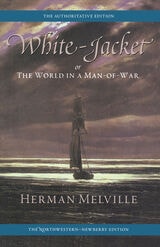
White-Jacket; or, The World in a Man-of-War
Volume FiveHerman Melville
Northwestern University Press, 2000
Already that same summer Melville had written Redburn, and he regarded the books as "two jobs, which I have done for money--being forced to it, as other men are to sawing wood." The reviewers were not as hard on White-Jacket as Melville himself was. The English liked its praise of British seamen. The Americans were more interested in Melville's attack on naval abuses, particularly flogging, and his advocacy of humanitarian causes. Soon Melville was acclaimed the best sea writer of the day.
Part autobiography, part epic fiction, White-Jacket remains a brilliantly imaginative social novel by one of the great writers of the sea. This text of the novel is an Approved Text of the Center for Editions of American Authors (Modern Language Association of America).

Why Misread A Cloud
Emily Carlson
Tupelo Press, 2022
— from the Judge’s Citation by Kimiko Hahn
Why Misread a Cloud takes its name from clouds of ash and smoke in wartime which appear to the author as a “storm, blown over the sea.” Both an exploration of the mind’s ability to turn what is into something else, in order to survive, and the mind’s ability to resist the effects of psychosocial warfare—imposed by the military and the police. “Who wants you to be afraid” the poet’s friend asks as he “added sugar to his tea.” The realization this question brings enables the poet to explore forces that separate us from one another and ways we rise up within ourselves to move through fear toward love.
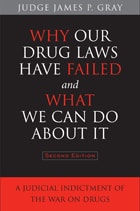
Why Our Drug Laws Have Failed and What We Can Do About It
A Judicial Indictment of the War on DrugsJames Gray
Temple University Press, 2011
Our drug prohibition policy is hopeless, just as Prohibition, our alcohol prohibition policy, was before it. Today there are more drugs in our communities and at lower prices and higher strengths than ever before.
We have built large numbers of prisons, but they are overflowing with non-violent drug offenders. The huge profits made from drug sales are corrupting people and institutions here and abroad. And far from being protected by our drug prohibition policy, our children are being recruited by it to a lifestyle of drug use and drug selling.
Judge Gray’s book drives a stake through the heart of the War on Drugs. After documenting the wide-ranging harms caused by this failed policy, Judge Gray also gives us hope. We have viable options. The author evaluates these options, ranging from education and drug treatment to different strategies for taking the profit out of drug-dealing.
Many officials will not say publicly what they acknowledge privately about the failure of the War on Drugs. Politicians especially are afraid of not appearing "tough on drugs." But Judge Gray’s conclusions as a veteran trial judge and former federal prosecutor are reinforced by the testimonies of more than forty other judges nationwide.

Willard W. Waller on the Family, Education, and War
Willard W. Waller
University of Chicago Press, 1970
Waller's explorations of role behavior, especially in his writings on marriage and education, shocked academia and are still provocative today. In his direct, perceptive, often cynical style, he penetrated the facades of the most respected social institutions. He made use of the case study method; many of Waller's case studies were lifted directly from his own experiences, particularly from the agonies of his own divorce and from the disappointments of his initial teaching experience. He also drew fresh insights from the personal experiences of his colleagues and students, hardly a traditional procedure.
This volume is the first unified presentation of Waller's writings, covering in depth his work on family, education, and war. It also includes his shorter, but equally vivid, discussions on social problems such as crime and on the conflict between insight and scientific method.
Since Waller's private life was so intimately bound to his public work, an understanding of his personal history reveals much about the development and dilemma of sociologists in the United States. In their Introduction editors Goode, Mitchell, and Furstenberg reconstruct the life of this complex American thinker.
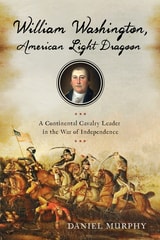
William Washington, American Light Dragoon
A Continental Cavalry Leader in the War of IndependenceDaniel Murphy
Westholme Publishing, 2014
William Washington began the war as a captain of Virginia Militia, was commissioned a junior officer in the Continental Infantry, and slowly rose to field command in the Continental Light Dragoons where he built one of the hardest hitting cavalry regiments to serve in the war. His chief adversary Lord Cornwallis commented, “There could be no more formidable antagonist in a charge, at the head of his cavalry, than Colonel William Washington.” Despite his connection to the commander-in-chief, he suffered his fair share of setbacks, and his relationships varied with not only his legendary cousin George, but many well-known figures of the Revolution including, Henry Lee, Casimir Pulaski, Nathanael Greene, and Daniel Morgan. Relying largely on firsthand accounts and period letters, in William Washington: American Light Dragoon: A Continental Cavalry Leader in the War of Independence, author and avid equestrian Daniel Murphy blends these primary sources with his own working knowledge of period drill, tactics, and terrain to deliver a more complete view of William Washington’s actions throughout the conflict. This perspective traces the often overlooked role of cavalry in the American Revolution and sheds new light on many pivotal battles in of the war, including Trenton, Cowpens, Guilford Courthouse, Hobkirk’s Hill, and William Washington’s final action at Eutaw Springs.