Results by title
18284 books match the query 'United States' and 882 start with w
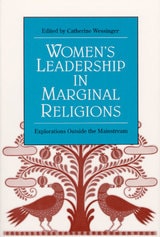
Women's Leadership in Marginal Religions
EXPLORATIONS OUTSIDE THE MAINSTREAMEdited by Catherine Wessinger
University of Illinois Press, 1993
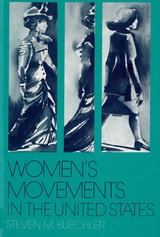
Women's Movements in the United States
Woman Suffrage, Equal Rights, and BeyondBuechler, Steven M
Rutgers University Press, 1990
Steven Buecheler has written a comparative sociological analysis of the woman suffrage movement (1840s-1920) and the contemporary women’s movement (1960s to the present). His identification of similarities and differences between these movements reveals persistent feminist issues over time as well as the distinctive concerns of each movement in the sociohistorical context. Buecheler compares these two movements in terms of their origins, organizations, ideologies, class and racial diversities, countermovement’s, and outcomes. He uses resource mobilization theory.
Buecheler explains why women’s movements arise, the forms of organization they adopt, the diversity of ideologies they espouse, and the class and racial composition of women’s movements. He also helps us to understand the roots of countermovements, as well as the mixture of successes and failures that has characterized both past and present women’s movements. While recognizing both the setbacks and the victories of the contemporary movement, Buecheler identifies grounds for relative optimism about the lasting consequences of this ongoing mobilization.
Buechler also explores the complex relationship between social change and social movements. Rapid change both enables and constricts the potential for collective action, which in turn reshapes social structure, By studying long-lived moments in a comparative framework, Buechler sheds light on the broader dialectical relation between agency and structure that is embodied in movement efforts at social change.
Women's Political Voice
How Women are Transforming the Practice and Study of PoliticsJanet Flammang
Temple University Press, 1997
This book accomplishes four major tasks:
*It provides a comprehensive critical history of the changing research on politics and the changing nature of the political science discipline.
*It analyzes the course of women's political activism in the United States.
*It develops a rich case study of women's politics in Northern California's Silicon Valley, an area once nicknamed "the feminist capital of the nation."
*It examines coalitions and divisions within the women's movement with sensitivity to minority politics, as in the chapter subtitled, "The Hard Work of Sisterhood."
Women's Political Voice record the transformative politics of the women's movement and, simultaneously, urges political scientists to ask new questions and to adopt new methods.
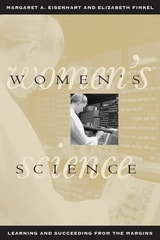
Women's Science
Learning and Succeeding from the MarginsMargaret A. Eisenhart and Elizabeth Finkel
University of Chicago Press, 1998
Women's Science offers a dramatic counterpoint not only to these findings but also to the related, narrow assumption that "real science" only occurs in research and laboratory investigation. This book describes women engaged with science or engineering at the margins: an innovative high school genetics class; a school-to-work internship for prospective engineers, an environmental action group, and a nonprofit conservation agency. In these places—where people use or rely on science for public, social, or community purposes—the authors found a remarkably high proportion of women. Moreover, these women were successful at learning and using technical knowledge, they advanced in roughly equal percentages to men, and they generally enjoyed their work.
Yet, even in these more marginal workplaces, women had to pay a price. Working outside traditional laboratories, they enjoy little public prestige and receive significantly less financial compensation. Although most employers claimed to treat men and women equally, women in fact only achieved success when they acted like male professionals.
Women's Science is an original and provocative contribution that expands our conception of scientific practice as it reconfigures both women's role in science and the meaning of science in contemporary society.

Women's Studies for the Future
Foundations, Interrogations, PoliticsEdited by Elizabeth Lapovsky Kennedy and Agatha Beins
Rutgers University Press, 2005
Established as an academic field in the 1970s, women’s studies is a relatively young but rapidly growing area of study. Not only has the number of scholars working in this subject expanded exponentially, but women’s studies has become institutionalized, offering graduate degrees and taking on departmental status in many colleges and universities. At the same time, this field—formed in the wake of the feminist movement—is finding itself in a precarious position in what is now often called a “post-feminist” society. This raises challenging issues for faculty, students, and administrators. How must the field adjust its goals and methods to continue to affect change in the future?
Bringing together essays by newcomers as well as veterans to the field, this essential volume addresses timely questions including:
- Without a unitary understanding of the subject, woman, what is the focus of women’s studies?
- How can women’s studies fulfill the promise of interdisciplinarity?
- What is the continuing place of activism in women’s studies?
- What are the best ways to think about, teach, and act upon the intersections of race, class, gender, disability, nation, and sexuality?
Offering innovative models for research and teaching and compelling new directions for action, Women’s Studies for the Future ensures the continued relevance and influence of this developing field.
Women's Studies on Its Own
A Next Wave Reader in Institutional ChangeRobyn Wiegman, ed.
Duke University Press, 2002
Since the 1970s, Women's Studies has grown from a volunteerist political project to a full-scale academic enterprise. Women's Studies on Its Own assesses the present and future of the field, demonstrating how institutionalization has extended a vital, ongoing intellectual project for a new generation of scholars and students.
Women’s Studies on Its Own considers the history, pedagogy, and curricula of Women’s Studies programs, as well as the field’s relation to the managed university. Both theoretically and institutionally grounded, the essays examine the pedagogical implications of various divisions of knowledge—racial, sexual, disciplinary, geopolitical, and economic. They look at the institutional practices that challenge and enable Women’s Studies—including interdisciplinarity, governance, administration, faculty review, professionalism, corporatism, fiscal autonomy, and fiscal constraint. Whether thinking about issues of academic labor, the impact of postcolonialism on Women’s Studies curricula, or the relation between education and the state, the contributors bring insight and wit to their theoretical deliberations on the shape of a transforming field.
Contributors. Dale M. Bauer, Kathleen M. Blee, Gloria Bowles, Denise Cuthbert, Maryanne Dever, Anne Donadey, Laura Donaldson, Diane Elam, Susan Stanford Friedman, Judith Kegan Gardiner, Inderpal Grewal, Sneja Gunew, Miranda Joseph, Caren Kaplan, Rachel Lee, Devoney Looser, Jeanette McVicker, Minoo Moallem, Nancy A. Naples, Jane O. Newman, Lindsey Pollak, Jean C. Robinson, Sabina Sawhney, Jael Silliman, Sivagami Subbaraman, Robyn Warhol, Marcia Westkott, Robyn Wiegman, Bonnie Zimmerman
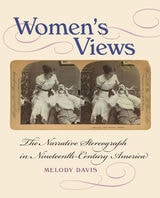
Women's Views
The Narrative Stereograph in Nineteenth-Century AmericaMelody Davis
University of Massachusetts Press, 2015
In this remarkable book, Melody Davis analyzes the underexamined genre of narrative stereoviews and their audiences. Because stereoviews were created for and marketed primarily to middle-class women in domestic settings, Davis argues that they represent one of the best sources for addressing the flow of historical change in women's lives. By analyzing dozens of stereoviews—including depictions of gender stereotypes, power dynamics, comical or sentimental situations, and scenes of both serious and playful innuendo—Davis energetically spins a broad history of the real social, sexual, and economic changes in the lives of American women. Her close reading and rich contextualization of these compelling vernacular objects bridge the gaps between the private viewing that took place within the home and the outside world of consumption and power that women were gradually entering.
Illustrated with more than one hundred stereographs and including a three-dimensional viewer, this book will appeal to readers with an interest in U.S. women's history, the history of photography, visual and cultural studies, and American studies.

Women's Voices, Women's Lives
Documents in Early American HistoryUniversity Press of New England, 1998
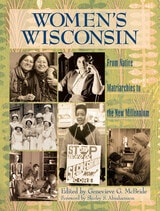
Women's Wisconsin
From Native Matriarchies to the New MillenniumEdited by Genevieve G. McBride
Wisconsin Historical Society Press, 2005
Women's Wisconsin: From Native Matriarchies to the New Millennium, a women's history anthology published on Women's Equality Day 2005, made history as the first single-source history of Wisconsin women. This unique tome features dozens of excerpts of articles as well as primary sources, such as women's letters, reminiscences, and oral histories, previously published over many decades in the Wisconsin Magazine of History and other Wisconsin Historical Society Press publications.
Editor and historian Genevieve G. McBride provides the contextual commentary and overarching analysis to make the history of Wisconsin women accessible to students, scholars, and lifelong learners.
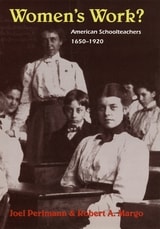
Women's Work?
American Schoolteachers, 1650-1920Joel Perlmann and Robert A. Margo
University of Chicago Press, 2001
In Women's Work the authors blend newly available quantitative evidence with historical narrative to show that distinctive regional school structures and related cultural patterns account for the initial regional difference, while a growing recognition that women could handle the work after they temporarily replaced men during the Civil War helps explain this widespread shift to female teachers later in the century. Yet despite this shift, a significant gender gap in pay and positions remained. This book offers an original and thought-provoking account of a remarkable historical transition.
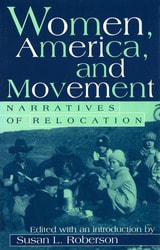
Women, America, and Movement
Narratives of RelocationEdited & Intro by Susan L. Roberson
University of Missouri Press, 1998
Since the colonial days, American women have traveled, migrated, and relocated, always faced with the challenge of reconstructing their homes for themselves and their families. Women, America, and Movement offers a journey through largely unexplored territory—the experiences of migrating American women. These narratives, both real and imagined, represent a range of personal and critical perspectives; some of the women describe their travels as expansive and freeing, while others relate the dreadful costs and sacrifices of relocating.
Despite the range of essays featured in this study, the writings all coalesce around the issues of politics, poetry, and self- identity described by Adrienne Rich as the elements of the "politics of location," treated here as the politics of relocation. The narratives featured in this book explore the impact of race, class, and sexual economics on migratory women, their self-identity, and their roles in family and social life. These issues demonstrate that in addition to geographic place, ideology is itself a space to be traversed.
By examining the writings of such women as Louise Erdrich, Zora Neale Hurston, and Gertrude Stein, the essayists included in this volume offer a variety of experiences. The book confronts such issues as racist politicking against Native Americans, African Americans, and Asian immigrants; sexist attitudes that limit women to the roles of wife, mother, and sexual object; and exploitation of migrants from Appalachia and of women newly arrived in America.
These essays also delve into the writings themselves by looking at what happens to narrative structure as authors or their characters cross geographic boundaries. The reader sees how women writers negotiate relocation in their texts and how the written word becomes a place where one finds oneself.
Women, Autobiography, Theory
A ReaderEdited by Sidonie A. Smith and Julia Watson
University of Wisconsin Press, 1998
Women, Autobiography, Theory is the first comprehensive guide to the burgeoning field of women’s autobiography, drawing into one volume the most significant theoretical discussions on women’s life writing of the last two decades.
The authoritative introduction by Sidonie Smith and Julia Watson surveys writing about women’s lives from the women’s movement of the late 1960s to the present. It also relates theoretical positions in women’s autobiography studies to postmodern, poststructuralist, postcolonial, and feminist analyses.
The essays from thirty-nine prominent critics and writers include many considered classics in this field. They explore narratives across the centuries and from around the globe, including testimonios, diaries, memoirs, letters, trauma accounts, prison narratives, coming-out stories, coming-of-age stories, and spiritual autobiographies. A list of more than two hundred women’s autobiographies and a comprehensive bibliography of critical scholarship in women’s autobiography provide invaluable information for scholars, teachers, and readers.
Women, Compulsion, Modernity
The Moment of American NaturalismJennifer L. Fleissner
University of Chicago Press, 2004
Fleissner shows that this era's expanding opportunities for women were inseparable from the same modern developments—industrialization, consumerism—typically believed to constrain human freedom. With Women, Compulsion, and Modernity, Fleissner creates a new language for the strange way the writings of the time both broaden and question individual agency.
Women, Gays, and the Constitution
The Grounds for Feminism and Gay Rights in Culture and LawDavid A. J. Richards
University of Chicago Press, 1998
Richards argues that both movements are extensions of rights-based dissent, rooted in antebellum abolitionist feminism that condemned both American racism and sexism. He sees the progressive role of such radical dissent as an emancipated moral voice in the American constitutional tradition. He examines the role of dissident African Americans, Jews, women, and homosexuals in forging alternative visions of rights-based democracy. He also draws special attention to Walt Whitman's visionary poetry, showing how it made space for the silenced and subjugated voices of homosexuals in public and private culture.
According to Richards, contemporary feminism rediscovers and elaborates this earlier tradition. And, similarly, the movement for gay rights builds upon an interpretation of abolitionist feminism developed by Whitman in his defense, both in poetry and prose, of love between men. Richards explores Whitman's impact on pro-gay advocates, including John Addington Symonds, Havelock Ellis, Edward Carpenter, Oscar Wilde, and André Gide. He also discusses other diverse writers and reformers such as Margaret Sanger, Franz Boas, Elizabeth Stanton, W. E. B. DuBois, and Adrienne Rich.
Richards addresses current controversies such as the exclusion of homosexuals from the military and from the right to marriage and concludes with a powerful defense of the struggle for such constitutional rights in terms of the principles of rights-based feminism.
Women, Gender, and Technology
Edited by Mary Frank Fox, Deborah G. Johnson, and Sue V. Rosser
University of Illinois Press, 2006
An interdisciplinary investigation of the co-creation of gender and technology
Each of the ten chapters in Women, Gender, and Technology explores a different aspect of how gender and technology work--and are at work--in particular domains, including film narratives, reproductive technologies, information technology, and the profession of engineering. The volume's contributors include representatives of over half a dozen different disciplines, and each provides a novel perspective on the foundational idea that gender and technology co-create one another. Together, their articles provide a window on to the rich and complex issues that arise in the attempt to understand the relationship between these profoundly intertwined notions.
Women, Money, and the Law
Nineteenth-Century Fiction, Gender, and the CourtsJoyce W. Warren
University of Iowa Press, 2005
Women, Politics and Change
Louise A. Tilly
Russell Sage Foundation, 1990
Women, Power, and Dissent in the Hills of Carolina
Mary K. Anglin
University of Illinois Press, 2002
Women, Power, and Dissent in the Hills of Carolina is a unique and impassioned exploration of gender, labor, and resistance in western North Carolina. Based on eight months of field research in a mica manufacturing plant and the surrounding rural community, as well as oral histories of women who worked in mica houses in the early twentieth century, this landmark study canvasses the history of the mica industry and the ways it came to be organized around women's labor.
Mary K. Anglin's investigation of working women's lives in the plant she calls "Moth Hill Mica Company" reveals the ways women have contributed to household and regional economies for more than a century. Without union support or recognition as skilled laborers, these women developed alternate strategies for challenging the poor working conditions, paltry wages, and corporate rhetoric of Moth Hill. Utilizing the power of memory and strong family and community ties, as well as their own interpretations of gender and culture, the women have found ways to "boss themselves."
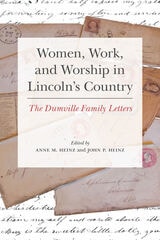
Women, Work, and Worship in Lincoln's Country
The Dumville Family LettersEdited by Anne M. Heinz and John P. Heinz
University of Illinois Press, 2016
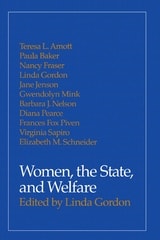
Women, the State, and Welfare
Edited by Linda Gordon
University of Wisconsin Press, 1990
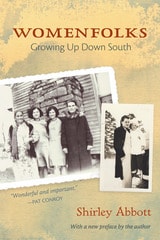
Womenfolks
Growing Up Down SouthShirley Abbott
University of Arkansas Press, 2017
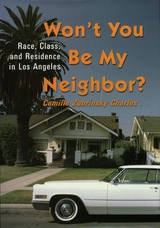
Won't You be My Neighbor
Race, Class, and Residence in Los AngelesCamille Zubrinksy Charles
Russell Sage Foundation, 2006

Wonder Shows
Performing Science, Magic, and Religion in AmericaNadis, Fred
Rutgers University Press, 2005
Imagine a stage full of black cats emitting electrical sparks, a man catching bullets with his teeth, or an evangelist jumping on a transformer to shoot bolts of lightning through his fingertips. These and other wild schemes were part of the repertoire of showmen who traveled from city to city, making presentations that blended science with myth and magic.
In Wonder Shows, Fred Nadis offers a colorful history of these traveling magicians, inventors, popular science lecturers, and other presenters of “miracle science” who revealed science and technology to the public in awe-inspiring fashion. The book provides an innovative synthesis of the history of performance with a wider study of culture, science, and religion from the antebellum period to the present.
It features a lively cast of characters, including electrical “wizards” Nikola Tesla and Thomas Alva Edison, vaudeville performers such as Harry Houdini, mind readers, UFO cultists, and practitioners of New Age science. All of these performers developed strategies for invoking cultural authority to back their visions of science and progress. The pseudo-science in their wonder shows helped promote a romantic worldview that called into question the absolute authority of scientific materialism while reaffirming the importance of human spirituality. Nadis argues that the sensation that these entertainers provided became an antidote to the alienation and dehumanization that accompanied the rise of modern America.
Although most recent defenders of science are prone to reject wonder, considering it an ally of ignorance and superstition, Wonder Shows demonstrates that the public’s passion for magic and meaning is still very much alive. Today, sales continue to be made and allegiances won based on illusions that products are unique, singular, and at best, miraculous. Nadis establishes that contemporary showmen, corporate publicists, advertisers, and popular science lecturers are not that unlike the magicians and mesmerists of years ago.
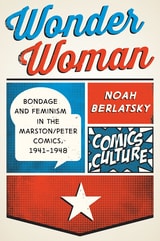
Wonder Woman
Bondage and Feminism in the Marston/Peter Comics, 1941-1948Berlatsky, Noah
Rutgers University Press, 2015
Comics expert Noah Berlatsky takes us on a wild ride through the Wonder Woman comics of the 1940s, vividly illustrating how Marston’s many quirks and contradictions, along with the odd disproportionate composition created by illustrator Harry Peter, produced a comic that was radically ahead of its time in terms of its bold presentation of female power and sexuality. Himself a committed polyamorist, Marston created a universe that was friendly to queer sexualities and lifestyles, from kink to lesbianism to cross-dressing. Written with a deep affection for the fantastically pulpy elements of the early Wonder Womancomics, from invisible jets to giant multi-lunged space kangaroos, the book also reveals how the comic addressed serious, even taboo issues like rape and incest.
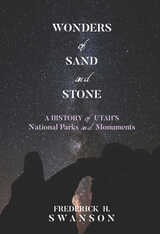
Wonders of Sand and Stone
A History of Utah's National Parks and MonumentsFrederick H. Swanson
University of Utah Press, 2020
Drawing on extensive historical research, Swanson presents little-known accounts of people who saw in these sculptured landscapes something worth protecting. Readers are introduced to the region’s early explorers, scientists, artists, and travelers as well as the local residents and tourism promoters who worked with the National Park Service to build the system of parks and monuments we know today, when Utah’s national parks and monuments face multiple challenges from increased human use and from development outside their borders. As scientists continue to uncover the astonishing diversity of life in these desert and mountain landscapes, and archaeologists and Native Americans document their rich cultural resources, the management of these federal lands remains critically important. Swanson provides us with a detailed and timely background to advance and inform discussions about what form that management should take.

Wood Works
Edwin Bingham
Oregon State University Press, 1997
Woodrow Wilson
USABrian Morton
Haus Publishing, 2008
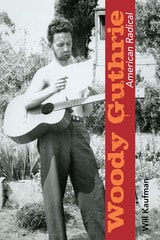
Woody Guthrie, American Radical
Will Kaufman
University of Illinois Press, 2011

Woody on Rye
Jewishness in the Films and Plays of Woody AllenEdited by Vincent Brook and Marat Grinberg
Brandeis University Press, 2013

Wordplay for Kids
A Sourcebook of Poems, Rhymes, and Read-AloudsTim Wadham
American Library Association, 2015

Words Marked by a Place
Local Histories in Central OregonJarold Ramsey
Oregon State University Press, 2018
While telling these local stories, Jarold Ramsey explores alternative ways of engaging history in the act of writing, breaking new ground by discovering and exploring primary sources that bear on the region’s colorful but little-known past. Throughout the collection, he interrogates “local history” as a subject. What is local history? How is it related to mainstream academic history? What are legitimate ways of doing it? How do the details of what we call local history inform “history-at-large,” and vice-versa?
From the opening narrative concerning Lieutenant Henry Larcom Abbot’s “Railroad Survey” of the region in 1855 to the concluding account of Lieutenant Robert Cranston’s last months and dramatic death, when his “Airacobra” fighter plane crashed near Madras in 1944, Words Marked by a Place sheds new light on the ongoing story of central Oregon by illuminating forgotten corners of its past. Through both theory and example, it represents an important contribution to the history of the region and the endeavors of local historians, wherever they happen to work.

Words That Make New Jersey History
A Primary Source Reader, revised and expanded editionEdited by Howard L. Green
Rutgers University Press, 2006
New to this expanded edition is the text of James McGreevey's "I am a Gay American" speech, as well as entries about the Abbott v. Burke court ruling mandating that New Jersey equalize funding of urban and suburban schools districts, sprawl and its effects on water supply, and the state's economic boom in the 1990s.
A balanced survey of New Jersey's history presented in the context of a changing nation, this volume is well suited to general readers who want to explore the primary sources of the state's past, and to U.S. history students at the high school and college levels.
Words for the Taking
The Hunt for a PlagiaristNeal Bowers
Southern Illinois University Press, 2007
In January 1992, poet Neal Bowers received a phone call that changed his life. He learned his poems had been stolen and published under another name. Bowers hired a copyright lawyer and a private detective, and they began the agonizing hunt to track down the person who stole his creative work.
Bowers was dealing with more than the theft of words. He uncovered the plagiarist’s unsavory past when he found convicted child molester David Jones, who published the poems using the name David Sumner.
Determined to hold the plagiarist accountable, Bowers is drawn into a bizarre game of catch-me-if-you-can. His odyssey introduces him to the legal system and a sympathetic female detective, reveals the reactions of fellow poets, and provokes a flood of nationwide publicity and a deluge of letters from strangers interested in the case. Letters from Bowers’s attorney to Jones and phone conversations between the two produce unsatisfactory results. In the end, the plagiarist is not punished, and Bowers deals with the loss of friends, derision from his colleagues, and trouble in his marriage.
Words for the Taking: The Hunt for a Plagiarist, first published in 1997, is as much a commentary on our cultural view of plagiarism as it is a real-life detective story. Bowers’s wry and disturbing account of being the victim of a serial plagiarist offers unexpected twists and startling revelations. This updated edition presents a final consideration of the bizarre case and remains the only book to offer a personal account of the effects of plagiarism.
Ten years after the original publication, Neal Bowers finds his life as a writer altered in ways he could never have foreseen. His responses to the series of events show his vulnerability as an artist and his adjustment to being a victim. In a new chapter, Bowers describes his renewed quest in 2006 for a resolution and explains why he chose to give up writing poetry.
This beautifully written case study about the discovery and attempted resolution of an intellectual crime will appeal to academicians and general readers alike who care about language, the state of poetry, and intellectual property in contemporary America.

Words of Protest, Words of Freedom
Poetry of the American Civil Rights Movement and EraJeffrey Lamar Coleman, ed.
Duke University Press, 2012
Some of the poems address crucial movement-related events—such as the integration of the Little Rock schools, the murders of Emmett Till and Medgar Evers, the emergence of the Black Panther party, and the race riots of the late 1960s—and key figures, including Martin Luther King Jr., Malcolm X, and John and Robert Kennedy. Other poems speak more broadly to the social and political climate of the times. Along with Jeffrey Lamar Coleman's headnotes, the poems recall the heartbreaking and jubilant moments of a tumultuous era. Altogether, more than 150 poems by approximately 100 poets showcase the breadth of the genre of civil rights poetry.
Selected contributors. Maya Angelou, W. H. Auden, Amiri Baraka, Gwendolyn Brooks, Lucille Clifton Lawrence Ferlinghetti, Allen Ginsberg, Langston Hughes, June Jordan, Philip Levine, Audre Lorde, Robert Lowell, Pauli Murray, Huey P. Newton, Adrienne Rich, Sonia Sanchez, Léopold Sédar Senghor, Derek Walcott, Alice Walker, Yevgeny Yevtushenko

Words to Our Now
Imagination and DissentThomas Glave
University of Minnesota Press, 2007
In these lyrical and powerful essays, Thomas Glave draws on his experiences as a politically committed, gay Jamaican American to deliver a condemnation of the prejudices, hatreds, and inhumanities that persist in the United States and elsewhere. Exposing the hypocrisies of liberal multiculturalism, Glave offers instead a politics of heterogeneity in which difference informs the theory and practice of democracy. At the same time, he experiments with language to provide a model of creative writing as a tool for social change. From the death of black gay poet Essex Hemphill to the revelations of abuse at Abu Ghraib, Glave puts forth an ethical understanding of human rights to make vital connections across nations, races, genders, and sexualities.
Thomas Glave is assistant professor of English at SUNY Binghamton. He is author of Whose Song? and Other Stories.
Words, Works, and Ways of Knowing
The Breakdown of Moral Philosophy in New England before the Civil WarSara Paretsky
University of Chicago Press, 2016
What’s less well-known is that before Paretsky began her writing career, she earned a PhD in history from the University of Chicago with a dissertation on moral philosophy and religion in New England in the early and mid-nineteenth century. Now, for the first time, fans of Paretsky can read that earliest work, Words, Works, and Ways of Knowing.
Paretsky here analyzes attempts by theologians at Andover Seminary, near Boston, to square and secure Calvinist religious beliefs with emerging knowledge from history and the sciences. She carefully shows how the open-minded scholasticism of these theologians paradoxically led to the weakening of their intellectual credibility as conventional religious belief structures became discredited, and how this failure then incited reactionary forces within Calvinism. That conflict between science and religion in the American past is of interest on its face, but it also sheds light on contemporary intellectual battles.
Rounding out the book, leading religious scholar Amanda Porterfield provides an afterword discussing where Paretsky’s work fits into the contemporary study of religion. And in a sobering—sometimes shocking—preface, Paretsky paints a picture of what it was like to be a female graduate student at the University of Chicago in the 1970s. A treat for Paretsky’s many fans, this book offers a glimpse of the development of the mind behind the mysteries.
Word’s Out
Gay Men’s EnglishWilliam Leap
University of Minnesota Press, 1996
The first book-length analysis of the language used by gay men.
Do gay men communicate with each other differently than they do with straight people? If they do, how is “gay men’s English” different from “straight English”? In Word’s Out, William Leap addresses these questions in an entertaining account that looks at gay men’s English as a cultural and a linguistic phenomenon.
Whereas previous studies of “gay language” have centered almost entirely on vocabulary, word history, and folklore, Word's Out focuses on the linguistic practices-cooperation, negotiation, and risk taking-that underlie gay men’s conversations, storytelling, verbal dueling, self-description, and construction of outrageous references. Leap “reads” conversations for covert and overt signs of gay men's English, using anecdotes drawn from gay dinner parties, late-night airplane flights, restaurants, department stores, and gourmet shops, and from other all-gay and gay/straight settings. He incorporates material from life-story narratives and other interviews and discussions with gay men, from gay magazines, newspapers, and books, and from events in his own life. The topics addressed include establishing the gay identities of “suspect gays,” recollections of gay childhood, erotic negotiation in health club locker rooms, and gay men’s language of AIDS. Leap shows how gay English speakers use language to create gay-centered spaces within public places, to protect themselves when speaking with strangers, and to establish common interests when speaking with “suspect gays,” and explores why learning gay English is a critical component in gay men’s socialization and entry into gay culture. Provocative and potentially controversial, Word's Out provides fascinating insight into the politics of gay experience by exploring the connections between language and daily experience in gay men's lives.
Work Better, Live Better
Motivation, Labor, and Management IdeologyDavid A. Gray
University of Massachusetts Press, 2020
In the United States, a strong work ethic has long been upheld as a necessity, and tributes to motivation abound—from the motivational posters that line the walls of the workplace to the self-help gurus who draw in millions of viewers online. Americans are repeatedly told they can achieve financial success and personal well-being by adopting a motivated attitude toward work. But where did this obsession come from? And whose interests does it serve?
Work Better, Live Better traces the rise of motivational rhetoric in the workplace across the expanse of two world wars, the Great Depression, and the Cold War. Beginning in the early twentieth century, managers recognized that force and coercion—the traditional tools of workplace discipline—inflamed industrial tensions, so they sought more subtle means of enlisting workers' cooperation. David Gray demonstrates how this “motivational project” became a highly orchestrated affair as managers and their allies deployed films, posters, and other media, and drew on the ideas of industrial psychologists and advertising specialists to advance their quests for power at the expense of worker and union interests.
Work Requirements
Race, Disability, and the Print Culture of Social WelfareTodd Carmody
Duke University Press, 2022
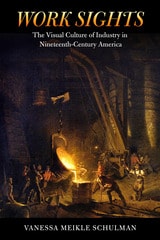
Work Sights
The Visual Culture of Industry in Nineteenth-Century AmericaVanessa Meikle Schulman
University of Massachusetts Press, 2015
Ranging across the fields of art history, visual studies, the history of technology, and American studies, Work Sights captures both the richness of nineteenth-century American visual culture and the extent to which Americans had begun to perceive their country as a modern nation connected by a web of interlocking technological systems.
Work Without End
Abandoning Shorter Hours for the Right to WorkBenjamin Kline Hunnicutt
Temple University Press, 1990

Work and Community in the Jungle
Chicago's Packinghouse Workers, 1894-1922James R. Barrett
University of Illinois Press, 1987
Work and Family in the United States
A Critical Review and Agenda for Research and PolicyRosabeth Moss Kanter
Russell Sage Foundation, 1977
Work in Black and White
Striving for the American DreamEnobong Hannah Branch
Russell Sage Foundation, 2022
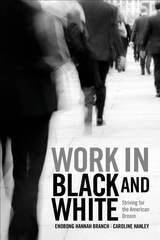
The ability to achieve economic security through hard work is a central tenet of the American Dream, but significant shifts in today’s economy have fractured this connection. While economic insecurity has always been a reality for some Americans, Black Americans have historically long experienced worse economic outcomes than Whites. In Work in Black and White, sociologists Enobong Hannah Branch and Caroline Hanley draw on interviews with 80 middle-aged Black and White Americans to explore how their attitudes and perceptions of success are influenced by the stories American culture has told about the American Dream – and about who should have access to it and who should not.
Branch and Hanley find that Black and White workers draw on racially distinct histories to make sense of today’s rising economic insecurity. White Americans have grown increasingly pessimistic and feel that the American Dream is now out of reach, mourning the loss of a sense of economic security which they took for granted. But Black Americans tend to negotiate their present insecurity with more optimism, since they cannot mourn something they never had. All educated workers bemoaned the fact that their credentials no longer guarantee job security, but Black workers lamented the reality that even with an education, racial inequality continues to block access to good jobs for many.
The authors interject a provocative observation into the ongoing debate over opportunity, security, and the American Dream: Among policymakers and the public alike, Americans talk too much about education. The ways people navigate insecurity, inequality, and uncertainty rests on more than educational attainment. The authors call for a public policy that ensures dignity in working conditions and pay while accounting for the legacies of historical inequality.
Americans want the game of life to be fair. While the survey respondents expressed common ground on the ideal of meritocracy, opinions about to achieve economic security for all diverge along racial lines, with the recognition – or not – of differences in current and past access to opportunity in America.
Work in Black and White is a call to action for meaningful policies to make the premise of the American Dream a reality.
Work!
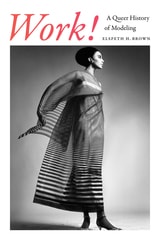
A Queer History of ModelingElspeth H. Brown
Duke University Press, 2019
Work, Family, and Faith
Rural Southern Women in the Twentieth CenturyEdited & Intro by Melissa Walker & Rebecca Sharpless
University of Missouri Press, 2006
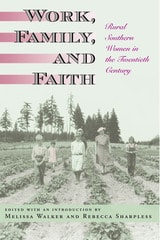
As the American South changed around them, becoming more urban and industrialized, some women struggled to help their families survive in the increasingly large-scale and commercial agricultural economy, while other women eagerly seized opportunities to engage in rural reform, get better educations, and work at off-farm jobs. Whether they moved to the cities or stayed on the farms, most of these women continued to struggle against poverty and relied on tradition and inner strength to get by.
This well-researched, sharply focused, and keenly insightful collection of essays takes readers across the twentieth-century South, from rural roadside stands to tobacco fields to Sloss-Sheffield Steel’s “Sloss Quarters” in Birmingham. Covering the full scope of southern rural women’s varied lives, this book will be of particular value to anyone interested in sociology, women’s studies, or southern history.
Work, Fight, or Play Ball
How Bethlehem Steel Helped Baseball's Stars Avoid World War IEcenbarger, William
Temple University Press, 2024
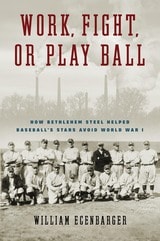
Some players used the steel mill and shipyard leagues to avoid wartime military duty, irking Major League owners, who saw their rosters dwindling. Bethlehem Steel President Charles Schwab (no relation to the financier) saw the league as a means to stave off employee and union organizing. Most fans loudly criticized the ballplayers, but nevertheless showed up to watch the action on the diamond.
Ecenbarger traces the 1918 Steel League’s season and compares the fates of the players who defected to industry or continued to play stateside with the travails of the Major Leaguers, such as Christy Mathewson, Ty Cobb, and Grover Cleveland Alexander, who served during the war.
Work, Fight, or Play Ball reveals the home field advantage brought on by the war, which allowed companies to profit from Major League players.
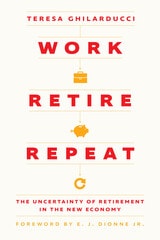
Work, Retire, Repeat
The Uncertainty of Retirement in the New EconomyTeresa Ghilarducci
University of Chicago Press, 2024
A damning portrait of the dire realities of retirement in the United States—and how we can fix it.
While the French went on strike in 2023 to protest the increase in the national retirement age, workers in the United States have all but given up on the notion of dignified retirement for all. Instead, Americans—whose elders face the highest risk of poverty compared to workers in peer nations—are fed feel-good stories about Walmart clerks who can finally retire because a customer raised the necessary funds through a GoFundMe campaign.
Many argue that the solution to the financial straits of American retirement is simple: people need to just work longer. Yet this call to work longer is misleading in a multitude of ways, including its endangering of the health of workers and its discrimination against people who work in lower-wage occupations. In Work, Retire, Repeat, Teresa Ghilarducci tells the stories of elders locked into jobs—not because they love to work but because they must.
But this doesn’t need to be the reality. Work, Retire, Repeat shows how relatively low-cost changes to how we finance and manage retirement will allow people to truly choose how they spend their golden years.
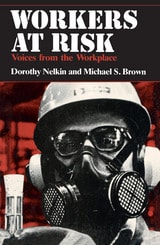
Workers At Risk
Voices from the WorkplaceDorothy Nelkin and Michael S. Brown
University of Chicago Press, 1984
More than seventy of them speak here of their jobs, their health, and the difficult choices they face in coming to grips with the responsibilities, risks, fears, and satisfactions of their work. Some struggle for information and acknowledgment of their health risks; others struggle to put out of their minds the dangers they know too well. Through extensive interviews, the authors have captured in these voices that double bind of the chemical worker: "If I had known that it would be that lethal, that it could give me or one of my children cancer, I would have refused to work. But it's a matter of survival and we just don't consider all these things. Meanwhile, we've got to make money to survive."
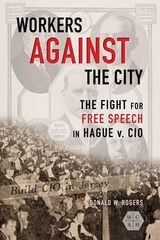
Workers against the City
The Fight for Free Speech in Hague v. CIODonald W. Rogers
University of Illinois Press, 2020
Clear-eyed and comprehensive, Workers against the City revises the view of a milestone case that continues to impact Americans' constitutional rights today.