Results by title
22279 books match the query 'Social Science' and 963 start with w
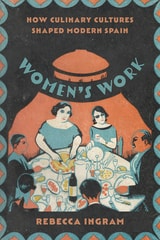
Women’s Work
How Culinary Cultures Shaped Modern SpainRebecca Ingram
Vanderbilt University Press, 2022
We are living in a moment in which famous chefs, Michelin stars, culinary techniques, and gastronomical accolades attract moneyed tourists to Spain from all over the world. This has prompted the Spanish government to declare its cuisine as part of Spanish patrimony. Even with this widespread global attention, we know little about how Spanish cooking became a litmus test for demonstrating Spain's modernity and, relatedly, the roles ascribed to the modern Spanish women responsible for daily cooking.
Efforts to articulate a new, modern Spain infiltrated writing in multiple genres and media. Women's Work offers a sharp reading of diverse sources, placed in their historical context, that yields a better understanding of the roles of food within an inherently uneven modernization process. Further, author Rebecca Ingram's perceptive critique reveals the paradoxical messages women have navigated, even in texts about a daily practice that shaped their domestic and work lives. Women's Work posits that this is significant because of the degree to which domestic activities, including cooking, occupied women's daily lives, even while issues like their fitness as citizens and participation in the public sphere were hotly debated. At the same time, progressive intellectuals from diverse backgrounds began to invoke Spanish cooking and eating as one measure of Spanish modernity.
Women's Work shows how culinary writing engaged these debates and reached women at the site of much of their daily labor—the kitchen—and, in this way, shaped their thinking about their roles in modernizing Spain.
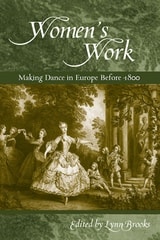
Women’s Work
Making Dance in Europe before 1800Edited by Lynn Matluck Brooks
University of Wisconsin Press, 2007
Through dance, women asserted power in spheres largely dominated by men: the court, the theater, and the church. As women’s dance worlds intersected with men’s, their lives and visions were supported or opposed, creating a complex politics of creative, spiritual, and political expression. From a women’s religious order in the thirteenth-century Low Countries that used dance as a spiritual rite of passage to the salon culture of eighteenth-century France where dance became an integral part of women’s cultural influence, the writers in this volume explore the meaning of these women’s stories, performances, and dancing bodies, demonstrating that dance is truly a field across which women have moved with finesse and power for many centuries past.
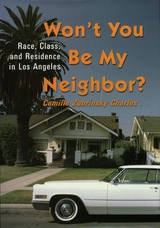
Won't You be My Neighbor
Race, Class, and Residence in Los AngelesCamille Zubrinksy Charles
Russell Sage Foundation, 2006
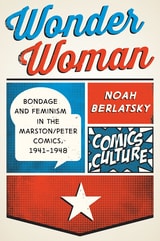
Wonder Woman
Bondage and Feminism in the Marston/Peter Comics, 1941-1948Berlatsky, Noah
Rutgers University Press, 2015
Comics expert Noah Berlatsky takes us on a wild ride through the Wonder Woman comics of the 1940s, vividly illustrating how Marston’s many quirks and contradictions, along with the odd disproportionate composition created by illustrator Harry Peter, produced a comic that was radically ahead of its time in terms of its bold presentation of female power and sexuality. Himself a committed polyamorist, Marston created a universe that was friendly to queer sexualities and lifestyles, from kink to lesbianism to cross-dressing. Written with a deep affection for the fantastically pulpy elements of the early Wonder Womancomics, from invisible jets to giant multi-lunged space kangaroos, the book also reveals how the comic addressed serious, even taboo issues like rape and incest.
Wonder Woman
New edition with full color illustrationsBerlatsky, Noah
Rutgers University Press, 2017
Comics expert Noah Berlatsky takes us on a wild ride through the Wonder Woman comics of the 1940s, vividly illustrating how Marston’s many quirks and contradictions, along with the odd disproportionate composition created by illustrator Harry Peter, produced a comic that was radically ahead of its time in terms of its bold presentation of female power and sexuality. Himself a committed polyamorist, Marston created a universe that was friendly to queer sexualities and lifestyles, from kink to lesbianism to cross-dressing. Written with a deep affection for the fantastically pulpy elements of the early Wonder Woman comics, from invisible jets to giant multi-lunged space kangaroos, the book also reveals how the comic addressed serious, even taboo issues like rape and incest.
Wonder Woman: Bondage and Feminism in the Marston/Peter Comics 1941-1948 reveals how illustrator and writer came together to create a unique, visionary work of art, filled with bizarre ambition, revolutionary fervor, and love, far different from the action hero symbol of the feminist movement many of us recall from television.
Wondrous Curiosities
Ancient Egypt at the British MuseumStephanie Moser
University of Chicago Press, 2006
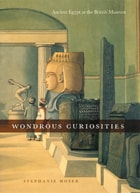
When the British Museum opened its doors more than two centuries ago, scores of visitors waited eagerly outside for a first glimpse of ancient relics from Egypt, Greece, and Rome. Even today, in this age of satellite television and high-speed Internet access, museums maintain their unique allure, continuing to play a vital role in connecting us with little-known terrains and the deep mysteries of our historical past. That’s because, as Stephanie Moser argues in Wondrous Curiosities, museum displays don’t just transmit knowledge—they actually create it.
Based on her exploration of the British Museum’s world-famous collection of Egyptian antiquities, this pioneering study reveals the powerful role of museums in shaping our understanding of science, culture, and history. Drawing on guidebooks and archival documents, Moser demonstrates that this British exhibition of ancient Egyptian artifacts was central to the way we came to define the remarkable society that produced them. And she also reveals the specific strategies—such as using pattern and symmetry, juxtaposing different types of objects, and singling out particular items—that the British Museum and others used, and still use, in representing the past. With a wealth of illustrations and a detailed account of how the museum acquired and displayed its Egyptian collections, Wondrous Curiosities will fascinate curators and scholars of British history, Egyptology, art history, archaeology, and the history of science.
Wood Quay
The Clash over Dublin's Viking PastBy Thomas F. Heffernan
University of Texas Press, 1988
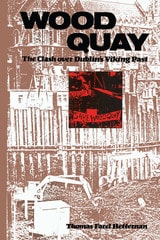
An urban archaeologist working anywhere in the world can imagine this scenario: armed with a small digging tool and a soft brush, the archaeologist stands at a freshly cut trench facing off a construction crew driving bulldozers. At stake is the past—the discovery and preservation of our history. Across the gap is the future—progress and new buildings for a modern world. A battle ensues. It happened in Dublin in the early 1960s.
While investigating and salvage-excavating the site for a new municipal office complex, archaeologists made one of the most important and exciting discoveries in Ireland’s history. Buried beneath the present-day city of Dublin was the original Viking settlement from the ninth or tenth century, in an extraordinary state of preservation: houses, undecayed wood, domestic furniture, jewelry, toys, tools, works of art, coins, plots, paths, a veritable map of the medieval town. Because of its impressive size and state of preservation, the site known as Wood Quay was not an “ordinary” kind of archaeological discovery, nor was the battle that followed typical.
What made Wood Quay unique was that its defender was not the archaeological authority—the National Museum of Ireland—as is usually the case, but rather a spontaneously formed movement of thousands of Dubliners. While the museum was ready to turn the site over to the city’s developers after routine salvage work had been done, a group of prominent literary and political figures seized Wood Quay, holding it for almost a month and preventing bulldozers from moving in. Realizing the significance of the find, the people of Dublin took charge and kept the builders at bay for eight years. At the same time, they were able to press the museum to return to its archaeological work there. Archaeologists ultimately were able to complete good maps of a large portion of the site and recover between one and two million artifacts.
Today, the completed Dublin civic office complex stands on the Wood Quay site, fully landscaped and without a trace of the archaeological gold mine that once lay buried below. What does remain, however, is the memory of the powerful impact the citizens of Dublin had in demanding and establishing the connection through Wood Quay to their medieval roots.
Of interest to archaeologists, historic preservationists, and city planners alike, this fascinating and beautifully written account will also engage the general reader.

Wooden Ritual Artifacts from Chaco Canyon, New Mexico
The Chetro Ketl CollectionR. Gwinn Vivian, Dulce N. Dodgen, and Gayle H. Hartmann
University of Arizona Press, 1978
Woodland Period Systematics in the Middle Ohio Valley
Edited by Darlene Applegate and Robert C. Mainfort Jr.
University of Alabama Press, 2005
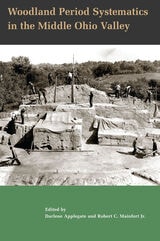
The important questions are diverse. What criteria are useful in defining periods and cultural types, and over what spatial and temporal boundaries do those criteria hold? How can we accommodate regional variation in the development and expression of traits used to delineate periods and cultural types? How does the concept of tradition relate to periods and cultural types? Is it prudent to equate culture types with periods? Is it prudent to equate archaeological cultures with ethnographic cultures? How does the available taxonomy hinder research? Contributing authors address these issues and others in the context of their Middle Ohio Valley Woodland Period research

Woodland Potters and Archaeological Ceramics of the North Carolina Coast
Joseph M. Herbert
University of Alabama Press, 2009
The first comprehensive study of the meaning of pottery as a social activity in coastal North Carolina.
Pottery types, composed of specific sets of attributes, have long been defined for various periods and areas of the Atlantic coast, but their relationships and meanings have not been explicitly examined. In exploring these relationships for the North Carolina coast, this work examines the manner in which pottery traits cross-cut taxonomic types, tests the proposition that communities of practice existed at several scales, and questions the fundamental notion of ceramic types as ethnic markers.
Ethnoarchaeological case studies provide a means of assessing the mechanics of how social structure and gender roles may have affected the transmission of pottery-making techniques and how socio-cultural boundaries are reflected in the distribution of ceramic traditions. Another very valuable source of information about past practices is replication experimentation, which provides a means of understanding the practical techniques that lie behind the observable traits, thereby improving our understanding of how certain techniques may have influenced the transmission of traits from one potter to another. Both methods are employed in this study to interpret the meaning of pottery as an indicator of social activity on the North Carolina coast.

Woody on Rye
Jewishness in the Films and Plays of Woody AllenEdited by Vincent Brook and Marat Grinberg
Brandeis University Press, 2013
Word Images
New Perspectives on Canícula and Other Works by Norma Elia CantúEdited by Gabriella Gutiérrez y Muhs; Foreword by María Herrera-Sobek
University of Arizona Press, 2017
Contributors:
Steven W. Bender
Aurora Chang
Vanessa Fonseca
Gabriella Gutiérrez y Muhs
María Herrera-Sobek
Ellen McCracken
María Esther Quintana Millamoto
Aldo Ulisses Reséndiz Ramírez
Rose Rodríguez-Rabin
Jesús Rosales
Carlos Sibaja García
María Socorro Tabuenca
Juan Velasco
Word Toys
Poetry and TechnicsBrian Kim Stefans
University of Alabama Press, 2017
With the ascent of digital culture, new forms of literature and literary production are thriving that include multimedia, networked, conceptual, and other as-yet-unnamed genres while traditional genres and media—the lyric, the novel, the book—have been transformed. Word Toys: Poetry and Technics is an engaging and thought-provoking volume that speculates on a range of poetic, novelistic, and programmed works that lie beyond the language of the literary and which views them instead as technical objects.
Brian Kim Stefans considers the problems that arise when discussing these progressive texts in relation to more traditional print-based poetic texts. He questions the influence of game theory and digital humanities rhetoric on poetic production, and how non-digital works, such as contemporary works of lyric poetry, are influenced by the recent ubiquity of social media, the power of search engines, and the public perceptions of language in a time of nearly universal surveillance.
Word Toys offers new readings of canonical avant-garde writers such as Ezra Pound and Charles Olson, major successors such as Charles Bernstein, Alice Notley, and Wanda Coleman, mixed-genre artists including Caroline Bergvall, Tan Lin, and William Poundstone, and lyric poets such as Harryette Mullen and Ben Lerner. Writers that trouble the poetry/science divide such as Christian Bök, and novelists who have embraced digital technology such as Mark Z. Danielewski and the elusive Toadex Hobogrammathon, anchor reflections on the nature of creativity in a world where authors collaborate, even if unwittingly, with machines and networks. In addition, Stefans names provocative new genres—among them the nearly formless “undigest” and the transpacific “miscegenated script”—arguing by example that interdisciplinary discourse is crucial to the development of scholarship about experimental work.
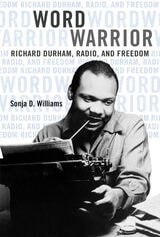
Word Warrior
Richard Durham, Radio, and FreedomSonja D. Williams
University of Illinois Press, 2015
In Word Warrior, award-winning radio producer Sonja D. Williams draws on archives and hard-to-access family records, as well as interviews with family and colleagues like Studs Terkel and Toni Morrison, to illuminate Durham's astounding career. Durham paved the way for black journalists as a dramatist and a star investigative reporter and editor for the pioneering black newspapers the Chicago Defender and Muhammed Speaks. Talented and versatile, he also created the acclaimed radio series Destination Freedom and Here Comes Tomorrow and wrote for popular radio fare like The Lone Ranger. Incredibly, his energies extended still further--to community and labor organizing, advising Chicago mayoral hopeful Harold Washington, and mentoring generations of activists.
Incisive and in-depth, Word Warrior tells the story of a tireless champion of African American freedom, equality, and justice during an epoch that forever changed a nation.
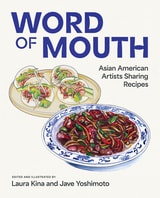
Word of Mouth
Asian American Artists Sharing RecipesLaura Kina
University of Arkansas Press, 2025
Conceived during the 2020 COVID-19 lockdown and the accompanying rise in anti-Asian bigotry, Word of Mouth: Asian American Artists Sharing Recipes is an artists’ cookbook featuring stories and artwork from twenty-three Asian American and Asian diaspora artists from across the United States, with contributions that range from Los Angeles–based performance artist Kristina Wong’s “Recipe for Political Action” to New Orleans–based painter Francis Wong’s family recipe for stir-fried Szechuan alligator.
Word of Mouth was first published as an online exhibition through the Virtual Asian American Art Museum. This print version features a new introduction by art historian Michelle Yee, expanded essays, and brand-new recipes. Each contribution is accompanied by an original illustration and enriched by the artist’s reflections on how their cuisine has been impacted by histories of war, migration, relocation, labor, or mixing.
A pandemic project turned illustrated cookbook, this unique collection disrupts genre expectations to celebrate how artists use food to nurture and sustain their diverse communities and artistic practices as well as to build connection during times of isolation, grief, and loss.
Words and Worlds Turned Around
Indigenous Christianities in Colonial Latin AmericaDavid Tavárez
University Press of Colorado, 2017
A sophisticated, state-of-the-art study of the remaking of Christianity by indigenous societies, Words and Worlds Turned Around reveals the manifold transformations of Christian discourses in the colonial Americas. The book surveys how Christian messages were rendered in indigenous languages; explores what was added, transformed, or glossed over; and ends with an epilogue about contemporary Nahuatl Christianities.
In eleven case studies drawn from eight Amerindian languages—Nahuatl, Northern and Valley Zapotec, Quechua, Yucatec Maya, K'iche' Maya, Q'eqchi' Maya, and Tupi—the authors address Christian texts and traditions that were repeatedly changed through translation—a process of “turning around” as conveyed in Classical Nahuatl. Through an examination of how Christian terms and practices were made, remade, and negotiated by both missionaries and native authors and audiences, the volume shows the conversion of indigenous peoples as an ongoing process influenced by what native societies sought, understood, or accepted.
The volume features a rapprochement of methodologies and assumptions employed in history, anthropology, and religion and combines the acuity of of methodologies drawn from philology and historical linguistics with the contextualizing force of the ethnohistory and social history of Spanish and Portuguese America.
Contributors: Claudia Brosseder, Louise M. Burkhart, Mark Christensen, John F. Chuchiak IV, Abelardo de la Cruz, Gregory Haimovich, Kittiya Lee, Ben Leeming, Julia Madajczak, Justyna Olko, Frauke Sachse, Garry Sparks
Words and Worlds
A Lexicon for Dark TimesVeena Das and Didier Fassin, editors
Duke University Press, 2021
Contributors. Banu Bargu, Veena Das, Alex de Waal, Didier Fassin, Peter Geschiere, Behrooz Ghamari-Tabrizi, Caroline Humphrey, Ravi Kanbur, Julieta Lemaitre, Uday S. Mehta, Jan-Werner Müller, Jonathan Pugh, Elizabeth F. Sanders, Todd Sanders
Words in Motion
Toward a Global LexiconCarol Gluck and Anna Lowenhaupt Tsing, eds.
Duke University Press, 2009
Such words as security in Brazil, responsibility in Japan, community in Thailand, and hijāb in France changed the societies in which they moved even as the words were changed by them. Some words threatened to launch wars, as injury did in imperial Britain’s relations with China in the nineteenth century. Others, such as secularism, worked in silence to agitate for political change in twentieth-century Morocco. Words imposed or imported from abroad could be transformed by those who wielded them to oppose the very powers that first introduced them, as happened in Turkey, Indonesia, and the Philippines. Taken together, this selection of fourteen essays reveals commonality as well as distinctiveness across modern societies, making the world look different from the interdisciplinary and transnational perspective of “words in motion.”
Contributors. Mona Abaza, Itty Abraham, Partha Chatterjee, Carol Gluck, Huri Islamoglu, Claudia Koonz, Lydia H. Liu, Driss Maghraoui, Vicente L. Rafael, Craig J. Reynolds, Seteney Shami, Alan Tansman, Kasian Tejapira, Anna Lowenhaupt Tsing
Words in Space and Time
A Historical Atlas of Language Politics in Modern Central EuropeTomasz Kamusella
Central European University Press, 2022
With forty-two extensively annotated maps, this atlas offers novel insights into the history and mechanics of how Central Europe’s languages have been made, unmade, and deployed for political action. The innovative combination of linguistics, history, and cartography makes a wealth of hard-to-reach knowledge readily available to both specialist and general readers. It combines information on languages, dialects, alphabets, religions, mass violence, or migrations over an extended period of time.
The story first focuses on Central Europe’s dialect continua, the emergence of states, and the spread of writing technology from the tenth century onward. Most maps concentrate on the last two centuries. The main storyline opens with the emergence of the Western European concept of the nation, in accord with which the ethnolinguistic nation-states of Italy and Germany were founded. In the Central European view, a “proper” nation is none other than the speech community of a single language. The Atlas aspires to help users make the intellectual leap of perceiving languages as products of human history and part of culture. Like states, nations, universities, towns, associations, art, beauty, religions, injustice, or atheism—languages are artefacts invented and shaped by individuals and their groups.

Words in Transit
Stories of ImmigrantsIlan Stavans
University of Massachusetts Press, 2016
Gathered together in a beautifully designed book that showcases Beth Reynolds's photographic portraits of each immigrant, these oral histories illuminate the many paths leading to the Pioneer Valley and demonstrate the shared experience among those seeking a new life in a foreign land. Storytellers include a massage therapist from Ireland, a Fulbright scholar from Palestine, a health educator from Taiwan, a literature professor from Spain, and a yoga teacher from Romania. Other participants hail from far-flung places including Haiti, Jamaica, El Salvador, Côte d'Ivoire, the Dominican Republic, Bhutan, Laos, Syria, Cambodia, Sri Lanka, Nepal, Congo, Slovenia, Iraq, and Ukraine. Introduced by the renowned scholar of translation and global literature Ilan Stavans, these stories testify to the resilience, bravery, and hopefulness of western New England émigrés. Proceeds from this book go to scholarships for immigrants at Holyoke Community College.
Words like Water
Queer Mobilization and Social Change in ChinaFugazzola, Caterina
Temple University Press, 2023
Words like Water explores the nonconfrontational strategies the tongzhi movement uses in contemporary China. Caterina Fugazzola analyzes tongzhi organizers’ conceptualizations of, and approaches to, social change, explaining how they avoid the backlash that meets Western tactics, such as protests, confrontation, and language about individual freedoms. In contrast, the groups’ intentional use of community and family-oriented narratives, discourses, and understandings of sexual identity are more effective, especially in situations where direct political engagement is not possible.
Providing on-the-ground stories that examine the social, cultural, and political constraints and opportunities, Words like Water emphasizes the value of discursive flexibility that allows activists to adapt to changing social and political conditions.
Words of Passage
National Longing and the Imagined Lives of Mexican MigrantsBy Hilary Parsons Dick
University of Texas Press, 2018
Migration fundamentally shapes the processes of national belonging and socioeconomic mobility in Mexico—even for people who never migrate or who return home permanently. Discourse about migrants, both at the governmental level and among ordinary Mexicans as they envision their own or others’ lives in “El Norte,” generates generic images of migrants that range from hardworking family people to dangerous lawbreakers. These imagined lives have real consequences, however, because they help to determine who can claim the resources that facilitate economic mobility, which range from state-sponsored development programs to income earned in the North.
Words of Passage is the first full-length ethnography that examines the impact of migration from the perspective of people whose lives are affected by migration, but who do not themselves migrate. Hilary Parsons Dick situates her study in the small industrial city of Uriangato, in the state of Guanajuato. She analyzes the discourse that circulates in the community, from state-level pronouncements about what makes a “proper” Mexican to working-class people’s talk about migration. Dick shows how this migration discourse reflects upon and orders social worlds long before—and even without—actual movements beyond Mexico. As she listens to men and women trying to position themselves within the migration discourse and claim their rights as “proper” Mexicans, she demonstrates that migration is not the result of the failure of the Mexican state but rather an essential part of nation-state building.
Words of Witness
Black Women's Autobiography in the Post-<i>Brown</i> EraAngela A. Ards
University of Wisconsin Press, 2015
Exploring works by the critically acclaimed June Jordan and Edwidge Danticat, as well as by popular and emerging authors such as Melba Beals, Rosemary Bray, and Eisa Davis, Ards demonstrates how each text asserts countermemories to official—and often nostalgic—understandings of the civil rights and Black Power movements. She situates each writer as activist-citizen, adopting and remaking particular roles—warrior, “the least of these,” immigrant, hip-hop head—to crystallize a range of black feminist responses to urgent but unresolved political issues.
Words of the Real People
Alaska Native Literature in TranslationEdited by Ann Fienup-Riordan and Lawrence D. Kaplan
University of Alaska Press, 2007
Words to Our Now
Imagination and DissentThomas Glave
University of Minnesota Press, 2007
In these lyrical and powerful essays, Thomas Glave draws on his experiences as a politically committed, gay Jamaican American to deliver a condemnation of the prejudices, hatreds, and inhumanities that persist in the United States and elsewhere. Exposing the hypocrisies of liberal multiculturalism, Glave offers instead a politics of heterogeneity in which difference informs the theory and practice of democracy. At the same time, he experiments with language to provide a model of creative writing as a tool for social change. From the death of black gay poet Essex Hemphill to the revelations of abuse at Abu Ghraib, Glave puts forth an ethical understanding of human rights to make vital connections across nations, races, genders, and sexualities.
Thomas Glave is assistant professor of English at SUNY Binghamton. He is author of Whose Song? and Other Stories.
Word’s Out
Gay Men’s EnglishWilliam Leap
University of Minnesota Press, 1996
The first book-length analysis of the language used by gay men.
Do gay men communicate with each other differently than they do with straight people? If they do, how is “gay men’s English” different from “straight English”? In Word’s Out, William Leap addresses these questions in an entertaining account that looks at gay men’s English as a cultural and a linguistic phenomenon.
Whereas previous studies of “gay language” have centered almost entirely on vocabulary, word history, and folklore, Word's Out focuses on the linguistic practices-cooperation, negotiation, and risk taking-that underlie gay men’s conversations, storytelling, verbal dueling, self-description, and construction of outrageous references. Leap “reads” conversations for covert and overt signs of gay men's English, using anecdotes drawn from gay dinner parties, late-night airplane flights, restaurants, department stores, and gourmet shops, and from other all-gay and gay/straight settings. He incorporates material from life-story narratives and other interviews and discussions with gay men, from gay magazines, newspapers, and books, and from events in his own life. The topics addressed include establishing the gay identities of “suspect gays,” recollections of gay childhood, erotic negotiation in health club locker rooms, and gay men’s language of AIDS. Leap shows how gay English speakers use language to create gay-centered spaces within public places, to protect themselves when speaking with strangers, and to establish common interests when speaking with “suspect gays,” and explores why learning gay English is a critical component in gay men’s socialization and entry into gay culture. Provocative and potentially controversial, Word's Out provides fascinating insight into the politics of gay experience by exploring the connections between language and daily experience in gay men's lives.
Work Better, Live Better
Motivation, Labor, and Management IdeologyDavid A. Gray
University of Massachusetts Press, 2020
In the United States, a strong work ethic has long been upheld as a necessity, and tributes to motivation abound—from the motivational posters that line the walls of the workplace to the self-help gurus who draw in millions of viewers online. Americans are repeatedly told they can achieve financial success and personal well-being by adopting a motivated attitude toward work. But where did this obsession come from? And whose interests does it serve?
Work Better, Live Better traces the rise of motivational rhetoric in the workplace across the expanse of two world wars, the Great Depression, and the Cold War. Beginning in the early twentieth century, managers recognized that force and coercion—the traditional tools of workplace discipline—inflamed industrial tensions, so they sought more subtle means of enlisting workers' cooperation. David Gray demonstrates how this “motivational project” became a highly orchestrated affair as managers and their allies deployed films, posters, and other media, and drew on the ideas of industrial psychologists and advertising specialists to advance their quests for power at the expense of worker and union interests.
Work Of Cities
Susan E. Clarke
University of Minnesota Press, 1998
Examines the new role of cities in a global economy.
Are cities obsolete relics of an earlier era? In this pathbreaking book, Susan E. Clarke and Gary L. Gaile contend that contrary to this conventional wisdom, cities are growing in importance. Far from irrelevant, local governments are vital political arenas for the new work of cities-empowering their citizens to adapt and serve as catalysts for the global economy.
Using Robert Reich’s The Work of Nations as a point of departure, the authors argue that globalism, coupled with increasing disparities of wealth and power, changes not only the work of nations but also the role of communities. Clarke and Gaile begin by detailing the transformation of the United States to a postindustrial economy situated in a “global web.” They then examine the emergence of local entrepreneurial policy choices in the context of economic and political restructuring and in the absence of federal resources. Using empirical data to test assumptions about what leads cities to choose new policies, Clarke and Gaile explore local context through four case studies: Cleveland, Tacoma, Syracuse, and Jacksonville. They discuss human capital as the linchpin of globalization, arguing that analytical ability, information skills, and the capacity to innovate are all key to wealth creation. In conclusion, they contend that inattention to the decline in human and social capital will ultimately undermine any local development efforts-unless local policymakers craft responses to globalization that integrate rather than isolate citizens.The Work of Cities is both bold and nuanced, pragmatic yet compassionate in its recommendations. It is essential reading for anyone who cares about the fate of our metropolitan communities and the people who live there. 0-8166-2892-0 Cloth $47.95xx0-8166-2893-9 Paper $18.95240 pages 9 tables, 2 figures 5 7/8 x 9 July Globalization and Community Series, volume 1Translation inquiries: University of Minnesota Press
Work Requirements
Race, Disability, and the Print Culture of Social WelfareTodd Carmody
Duke University Press, 2022
Work and Family in the United States
A Critical Review and Agenda for Research and PolicyRosabeth Moss Kanter
Russell Sage Foundation, 1977
Work and the Carceral State
Jon Burnett
Pluto Press, 2022
During 2019-20 in England and Wales, over 17 million hours of labor were carried out by more than 12,500 people incarcerated in prisons, while many people in immigration detention centers were also put to work. These people constitute a sub-waged, captive workforce who are frequently discarded by the state when done with.
Work and the Carceral State examines these forms of work as part of a broader exploration of the relationship between criminalization, criminal justice, immigration policy and labor, tracing their lineage through the histories of transportation and banishment, of houses of correction and prisons, to the contemporary production of work.
Criminalization has been used to enforce work and to discipline labor throughout the history of England and Wales. This book demands that we recognise the carceral state as operating at the frontier of labor control in the 21st century.
Work in Black and White
Striving for the American DreamEnobong Hannah Branch
Russell Sage Foundation, 2022
The ability to achieve economic security through hard work is a central tenet of the American Dream, but significant shifts in today’s economy have fractured this connection. While economic insecurity has always been a reality for some Americans, Black Americans have historically long experienced worse economic outcomes than Whites. In Work in Black and White, sociologists Enobong Hannah Branch and Caroline Hanley draw on interviews with 80 middle-aged Black and White Americans to explore how their attitudes and perceptions of success are influenced by the stories American culture has told about the American Dream – and about who should have access to it and who should not.
Branch and Hanley find that Black and White workers draw on racially distinct histories to make sense of today’s rising economic insecurity. White Americans have grown increasingly pessimistic and feel that the American Dream is now out of reach, mourning the loss of a sense of economic security which they took for granted. But Black Americans tend to negotiate their present insecurity with more optimism, since they cannot mourn something they never had. All educated workers bemoaned the fact that their credentials no longer guarantee job security, but Black workers lamented the reality that even with an education, racial inequality continues to block access to good jobs for many.
The authors interject a provocative observation into the ongoing debate over opportunity, security, and the American Dream: Among policymakers and the public alike, Americans talk too much about education. The ways people navigate insecurity, inequality, and uncertainty rests on more than educational attainment. The authors call for a public policy that ensures dignity in working conditions and pay while accounting for the legacies of historical inequality.
Americans want the game of life to be fair. While the survey respondents expressed common ground on the ideal of meritocracy, opinions about to achieve economic security for all diverge along racial lines, with the recognition – or not – of differences in current and past access to opportunity in America.
Work in Black and White is a call to action for meaningful policies to make the premise of the American Dream a reality.
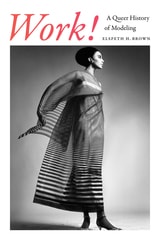
Work!
A Queer History of ModelingElspeth H. Brown
Duke University Press, 2019
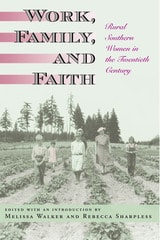
Work, Family, and Faith
Rural Southern Women in the Twentieth CenturyEdited & Intro by Melissa Walker & Rebecca Sharpless
University of Missouri Press, 2006
As the American South changed around them, becoming more urban and industrialized, some women struggled to help their families survive in the increasingly large-scale and commercial agricultural economy, while other women eagerly seized opportunities to engage in rural reform, get better educations, and work at off-farm jobs. Whether they moved to the cities or stayed on the farms, most of these women continued to struggle against poverty and relied on tradition and inner strength to get by.
This well-researched, sharply focused, and keenly insightful collection of essays takes readers across the twentieth-century South, from rural roadside stands to tobacco fields to Sloss-Sheffield Steel’s “Sloss Quarters” in Birmingham. Covering the full scope of southern rural women’s varied lives, this book will be of particular value to anyone interested in sociology, women’s studies, or southern history.
Work, Retire, Repeat
The Uncertainty of Retirement in the New EconomyTeresa Ghilarducci
University of Chicago Press, 2024
A damning portrait of the dire realities of retirement in the United States—and how we can fix it.
While the French went on strike in 2023 to protest the increase in the national retirement age, workers in the United States have all but given up on the notion of dignified retirement for all. Instead, Americans—whose elders face the highest risk of poverty compared to workers in peer nations—are fed feel-good stories about Walmart clerks who can finally retire because a customer raised the necessary funds through a GoFundMe campaign.
Many argue that the solution to the financial straits of American retirement is simple: people need to just work longer. Yet this call to work longer is misleading in a multitude of ways, including its endangering of the health of workers and its discrimination against people who work in lower-wage occupations. In Work, Retire, Repeat, Teresa Ghilarducci tells the stories of elders locked into jobs—not because they love to work but because they must.
But this doesn’t need to be the reality. Work, Retire, Repeat shows how relatively low-cost changes to how we finance and manage retirement will allow people to truly choose how they spend their golden years.
Work, Retire, Repeat
The Uncertainty of Retirement in the New EconomyTeresa Ghilarducci
University of Chicago Press, 2024
A damning portrait of the dire realities of retirement in the United States—and how we can fix it.
While the French went on strike in 2023 to protest the increase in the national retirement age, workers in the United States have all but given up on the notion of dignified retirement for all. Instead, Americans—whose elders face the highest risk of poverty compared to workers in peer nations—are fed feel-good stories about Walmart clerks who can finally retire because a customer raised the necessary funds through a GoFundMe campaign.
Many argue that the solution to the financial straits of American retirement is simple: people need to just work longer. Yet this call to work longer is misleading in a multitude of ways, including its endangering of the health of workers and its discrimination against people who work in lower-wage occupations. In Work, Retire, Repeat, Teresa Ghilarducci tells the stories of elders locked into jobs—not because they love to work but because they must.
But this doesn’t need to be the reality. Work, Retire, Repeat shows how relatively low-cost changes to how we finance and manage retirement will allow people to truly choose how they spend their golden years.
Worker Participation
Lessons from Worker Co-ops of the Pacific NorthwestJohn Pencavel
Russell Sage Foundation, 2001
Workers Like All the Rest of Them
Domestic Service and the Rights of Labor in Twentieth-Century ChileElizabeth Quay Hutchison
Duke University Press, 2022
Workers from the North
Plantations, Bolivian Labor, and the City in Northwest ArgentinaBy Scott Whiteford
University of Texas Press, 1981
International migration between countries in Latin America became increasingly important during the twentieth century, but for a long time it was the subject of only limited research. Scott Whiteford sets the Argentina-Bolivia experience in historical perspective by examining the macrolevel factors that influenced social change in both countries and brought streams of migration into Argentina. Seasonal labor, the expansion of capitalist agriculture, international migration, and urbanization are central topics in this in-depth study of Bolivian migrants in Northwest Argentina.
Whiteford’s vivid portrayal of the lives and working conditions of the migrants is based on two years of research during which he lived with the workers on a sugar plantation and, after the harvest, accompanied them to other farms and to the city of Salta in their search for more work. He traces the development of plantation agriculture in Northwest Argentina and the processes by which the plantation gained access to cheap labor and maintained control over it.
As Bolivians migrated to Argentina in ever greater numbers, many recruited for the harvest remained. Whiteford’s analysis of the diverse strategies employed by workers and their families to support themselves during the post-harvest season is a major contribution to migration literature. The four distinct but related patterns of migration that he describes created a labor reserve that transcends rural/urban designations, one that is utilized by employers in both the countryside and the city.
Workers of All Colors Unite
Race and the Origins of American SocialismLorenzo Costaguta
University of Illinois Press, 2023
Costaguta charts the socialist movement’s journey through the conflict and down a path that ultimately abandoned scientific racism in favor of an internationalist class-focused and racial-conscious American socialism. As he shows, the shift relied on a strong immigrant influence personified by the cosmopolitan Marxist thinker and future IWW cofounder Daniel De Leon. The class-focused movement that emerged became American socialism’s most common approach to race in the twentieth century and beyond.
Workers of the World, Enjoy!
Aesthetic Politics from Revolutionary Syndicalism to the Global Justice MovementKenneth H. Tucker, Jr.
Temple University Press, 2012
The aesthetic politics of social movements turn public life into a public stage, where mutual displays of performance often trump rational debate, and urban streets become sites of festivals and carnival. In his penetrating new book, Workers of the World, Enjoy!, Kenneth Tucker provides a new model for understanding social change in our image-saturated and aesthetically charged world. As emotional and artistic images inform our perceptions and evaluation of politics, art and performance often provide new and creative ways of understanding self and society.
Spanning the nineteenth, twentieth, and twenty-first centuries, Workers of the World, Enjoy! uses examples from major social movements that have dramatically changed the dominant capitalist society—often in the name of labor. Tucker investigates how class and culture develop as he raises questions about what it means for public life and social movements when politics and drama come together.
Tucker catalogues how aesthetic politics influences social movements—from French Revolutionary syndicalism and fascism to the selling of the President and the street theater of the contemporary global justice movement. He also discusses the work of political theorists including Jurgen Habermas, Jeffrey Alexander, and Nancy Fraser to critique the ways public sphere has been studied.

Workfare or Fair Work
Women, Welfare, and Government Work ProgramsNancy E Rose
Rutgers University Press, 1995
Can the welfare system in the United States accord people dignity? That question is often left out of the current debates over welfare and workfare. In this provocative book, Nancy Rose argues that the United States has been successful in the past––notably during the New Deal and in the 1970s––at shaping programs that gave people “fair work.”
However, as Rose documents, those innovative job creation programs were voluntary and were mainly directed at putting men back to work. Women on welfare, and especially women of color, continue to be forced into a very different kind of program: mandatory, punitive, and demeaning. Such workfare programs are set up for failure. They rarely train women for jobs with futures, they ignore the needs of the women’s families, and they do not pay an honest wage. They perpetuate poverty rather than prevent it.
Rose uses the history of U.S. job creation programs to show alternatives to mandatory workfare. Any effort to redesign welfare in America needs to pay close attention to the lessons drawn from this perceptive analysis of the history of women, welfare, and work. This is an indispensable book for students, scholars, policymakers, politicians, and activists––for everyone who knows the system is broken and wants to fix it.

Workin' It
Women Living Through Drugs and CrimeLeon Pettiway
Temple University Press, 1997
These are the words with which Margaret, a thirty-three-year-old cocaine-using prostitute, begins her story. In this book, she and four other women, all inner-city hustlers, describe their lives, how they came to be where they are, and where they hope to go.
Margaret, Charlie, Virginia, Tracy, and Laquita are all drug users who are involved in regular criminal activity: prostitution, burglary, shoplifting, robbery, drug selling, petty theft, and various kinds of fraud. Four of the women are black; one is white and Puerto Rican. While all five have been involved in same-sex relationships, three are primarily straight and two are primarily lesbian. They come from working-class or welfare families; some women characterize their mothers as strict, abusive, intolerant, and distant while other mothers are characterized as being concerned, religious, and loving. The women talk frankly about their drug use, their sexual and criminal activities, their childhoods, their personal relationships with their families of origin, children, partners, their fears and future goals, and the ordinary trappings of their lives.
While these accounts describe lives lived at the margins of society, they also reveal women who practice self-evaluation. These are women who have a deep understanding of individual accountability and responsibility. These accounts are connected by themes of violence and poverty, but they are also connected by the variety and richness of these women's lives. The women also assert a control over their activities and talk of independent judgment in terms that we imagine are reserved for men. There is a tendency in criminology to treat the data generated by research on men as fundamentally true for women as well. By allowing female law-breakers to describe their lives in their own way, Pettiway underlines not only their differences from men but also their differences from each other.
However, their stories also reveal their common humanity and their profound will to survive despite all obstacles. These women manage to live self-defined and self-validated lives in a world even more turbulent than that of their mainstream sisters. They share a web of experiences created out of race and ethnicity, sexual orientation, drug use, and urbanization that provides them with meaning and courage. They speak movingly about guilt and responsibility, about rape and intimacy, and about ambition and despair. Through their stories we can grasp the traumas and turning points that lead us all to make bad decisions as well as those ideals and inspirations that can help to redeem us.
Workin' on the Chain Gang
Shaking Off the Dead Hand of HistoryWalter Mosley
University of Michigan Press, 2006
A passionate examination of the social and economic injustices that continue to shackle the American people
Praise for Workin’ on the Chain Gang:
“. . . bracing and provocative. . . .”
—Publishers Weekly
“. . . clear-sighted . . . Mosley offers chain-breaking ideas. . . .”
—Los Angeles Times Book Review
“[A] thoroughly potent dismantling of Yanqui capitalism, the media, and the entertainment business, and at the same time a celebration of rebellion, truth as a tool for emancipation, and much else besides. . . .”
—Toronto Globe and Mail
“Workin’ on the Chain Gang excels at expressing feelings of ennui that transcend race. . . . beautiful language and penetrating insights into the necessity of confronting the past.”
—Washington Post
“Mosley eloquently examines what liberation from consumer capitalism might look like. . . . readers receptive to a progressive critique of the religion of the market will value Mosley’s creative contribution.”
—Booklist
Walter Mosley’s most recent essay collection is Life Out of Context, published in 2006. He is the best-selling author of the science fiction novel Blue Light, five critically acclaimed mysteries featuring Easy Rawlins, the blues novel RL’s Dream, a finalist for the NAACP Award in Fiction, and winner of the Black Caucus of the American Library Association’s Literary Award. His books have been translated into twenty languages. He lives in New York.
Clyde Taylor is Professor of Africana Studies at NYU’s Gallatin School and author of The Mask of Art: Breaking the Aesthetic Contract—Film and Literature.
Working Communally
Patterns and PossibilitiesDavid G. French
Russell Sage Foundation, 1975
Working Difference
Women's Working Lives in Hungary and Austria, 1945-1995Éva Fodor
Duke University Press, 2003
Fodor brings qualitative and quantitative analyses to bear, combining statistical analyses of survey data, interviews with women managers in both countries, and archival materials including those from the previously classified archives of the Hungarian communist party and transcripts from sessions of the Austrian Parliament. She shows how women's access to power varied in degree and operated through different principles and mechanisms in accordance with the stratification systems of the respective countries. In Hungary women's mobility was curtailed by political means (often involving limited access to communist party membership), while in Austria women's professional advancement was affected by limited access to educational institutions and the labor market. Fodor discusses the legacies of Austria's and Hungary's "gender regimes" following the demise of state socialism and during the process of integration into the European Union.

Working Knowledge
Skill and Community in a Small ShopDouglas Harper
University of Chicago Press, 1987
Working Law
Courts, Corporations, and Symbolic Civil RightsLauren B. Edelman
University of Chicago Press, 2016
One reason for the limited success of antidiscrimination policies, argues Lauren B. Edelman, is that the law regulating companies is broad and ambiguous, and managers therefore play a critical role in shaping what it means in daily practice. Often, what results are policies and procedures that are largely symbolic and fail to dispel long-standing patterns of discrimination. Even more troubling, these meanings of the law that evolve within companies tend to eventually make their way back into the legal domain, inconspicuously influencing lawyers for both plaintiffs and defendants and even judges. When courts look to the presence of antidiscrimination policies and personnel manuals to infer fair practices and to the presence of diversity training programs without examining whether these policies are effective in combating discrimination and achieving racial and gender diversity, they wind up condoning practices that deviate considerably from the legal ideals.
Working Like a Homosexual
Camp, Capital, CinemaMatthew Tinkcom
Duke University Press, 2002
With a special emphasis on the tensions between high and low forms of culture and between good and bad taste, Matthew Tinkcom offers a new vision of queer politics and aesthetics that is critically engaged with Marxist theories of capitalist production. He argues that camp—while embracing the cheap, the scorned, the gaudy, the tasteless, and what Warhol called “the leftovers” of artistic production—is a mode of intellectual production and a critical philosophy of modernity as much as it is an expression of a dissident sex/gender difference. From Minnelli’s musicals and the “everyday glamour” of Warhol’s films to Anger’s experimental films and Waters’s “trash aesthetic,” Tinkcom demonstrates how camp allowed these gay men to design their own relationship to labor and to history in a way that protected them from censure even as they struggled to forge a role for themselves within a system of “value” that failed to recognize them.
Working Musicians
Labor and Creativity in Film and Television ProductionTimothy D. Taylor
Duke University Press, 2023