Results by title
18284 books match the query 'United States' and 882 start with w
World Politics and International Law
Francis Anthony Boyle
Duke University Press, 1985
In the second part, the author dissects the Entebbe raid, where Israeli forces rescued a group of hostages being detained by hijackers at a Ugandan airport. His analysis shows the deficiencies of the international system in dealing with such a complex issue, where several contradictory principles of international law could be applied and were defended by various protagonists.
The third part starts with a parallel problem--the Iranian hostages crisis, where a group of U.S. officials found themselves in an unprecedented situation of being captured by a band of students. A critical analysis of the handling of this problem by the Carter Administration is followed by vignettes of other crises faced by the Administration and by its successor, the Reagan Administration. This part is less analytical and more prescriptive. The author is no long satisfied with pointing out what went wrong; instead, he departs from the usual hands-off policy of political scientists and tries to indicate how much better each situation could have been handled if the decision makers had been paying more attention to international law and international organizations. The theme is slowly developed that in the long run national interest is better served not by practicing power politics and relying on the use of threat of force but by strengthening those international institutions that can provide a neutral environment for first slowing down a crisis and then finding an equitable solution acceptable to most of the parties in conflict.
The value of this book lies primarily in giving the reader a real insight into several important issues of today that are familiar to most people only from newspaper headlines and television news. While not everybody can agree with all his criticisms of the mistakes of various governments, there is an honest attempt by the author to present issues impartially and to let the blame fall where it may. Being both an international lawyer and a political scientist, the author has had the advantage of combining the methodology of these two social sciences into a rich tapestry with some startling shades and tones.
World War II Front Line Nurse
Mildred A. MacGregor
University of Michigan Press, 2008
In late 1942, along with so many others who signed up to support the war effort, thirty-year-old Mildred Radawiec left a comfortable position as a nurse at the University of Michigan Hospital and postponed her marriage to a soon-to-be doctor to volunteer as a surgical nurse in the major battle theaters of the war. Radawiec was one of thirty volunteers from the hospital surgical staff that comprised the University of Michigan Unit, the 298th General Hospital, as the University of Michigan Hospital was called.
Radawiec's first-person history recounts her wartime experience with sharp detail and grace and sets the stage for a you-are-there experience---from the thrill of signing up and shipping out; to the harrowing ocean crossing and the arduous trip through the Sahara; to dangerous air raids and moving at a moment's notice, often at night with the lights off to avoid attacks. Radawiec was near Omaha Beach in France soon after D-Day, June 6, 1944, and details stories of marathon stints assisting the injured on the front lines as they poured in by the hundreds. Radawiec also traveled to Belgium and Germany and set up in the area near Aachen in the fall of 1944. In Germany she experienced Buzz Bombs---pilotless flying bombs---and even witnessed the death of a fellow nurse in a bombing attack in which medics brought in wounded soldiers by the truckload. Radawiec also leavens her story with uplifting tales of heroism and courage and intersperses the narrative with poignant letters from her family and fiancé.
This stirring personal account of war will mesmerize anyone interested in World War II history and women's too-often-overlooked role in it.
World War II and Mexican American Civil Rights
Edited by Richard Griswold del Castillo
University of Texas Press, 2008
World War II marked a turning point for Mexican Americans that fundamentally changed their expectations about how they should be treated by the greater U.S. society. The experiences of fighting alongside white Americans in the military, as well as of working in factory jobs for wages equal to those of Anglo workers, made Mexican Americans less willing to tolerate the second-class citizenship that had been their lot before the war. Having proven their loyalty and "Americanness" during World War II, Mexican Americans in the postwar years wanted to have the civil rights they knew they had earned.
In this book, Richard Griswold del Castillo and Richard Steele investigate how the World War II experiences of Mexican Americans galvanized their struggle for civil rights and how the U.S. government responded to the needs and aspirations of Mexican Americans. The authors demonstrate, for example, that the U.S. government "discovered" Mexican Americans during World War II and set about addressing some of their problems as a way of forestalling a sense of grievance and disaffection that might have made the Mexican American community unwilling to support the war effort. The authors also show that, as much or more than governmental programs, the personal wartime experiences of Mexican Americans formed their civil rights consciousness. The book concludes with a selection of key essays and historical documents from the World War II period that collectively gives a first-person understanding of the civil rights struggles of Mexican Americans.
World War II and Nevada
The Silver State's Contribution to VictoryCharles Weller
University of Nevada Press, 2024
World War II and Nevada is an in-depth examination of the state’s role in the war. Nevada’s geographic location, land, sky, mineral resources, and the sacrifices of its people were crucial to victory—and transformed the state. The war brought the first significant development of the gaming industry; the introduction of a huge, permanent military presence; the diversification of its population; and a shift in political and economic power within the region.
Nevada’s previously unexamined role in the internment of Japanese Americans is explored, and so too is the role of women and minority groups in support of the war. The book concludes with a comprehensive list of those killed, wounded, or made prisoners of war during the conflict.
Weller provides the most thorough analysis of Nevada’s war effort to date and historians will find the book a valuable addition to their World War II history collections.
World War II and the Cold War
The Rhetoric of Hearts and Minds, Volume VIIIMartin J. Medhurst
Michigan State University Press, 2018
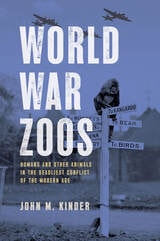
World War Zoos
Humans and Other Animals in the Deadliest Conflict of the Modern AgeJohn M. Kinder
University of Chicago Press, 2025
As Europe lurched into war in 1939, zookeepers started killing their animals. On September 1, as German forces invaded Poland, Warsaw began with its reptiles. Two days later, workers at the London Zoo launched a similar spree, dispatching six alligators, seven iguanas, sixteen southern anacondas, six Indian fruit bats, a fishing cat, a binturong, a Siberian tiger, five magpies, an Alexandrine parakeet, two bullfrogs, three lion cubs, a cheetah, four wolves, and a manatee over the next few months. Zoos worldwide did the same. The reasons were many, but the pattern was clear: The war that was about to kill so many people started by killing so many animals. Why? And how did zoos, nevertheless, not just survive the war but play a key role in how people did, too?
A harrowing yet surprisingly uplifting chronicle, Kinder’s World War Zoos traces how zoos survived the deadliest decades of global history, from the Great Depression, through the terrors of World War II, to the dawn of the Cold War. More than anything before or since, World War II represented an existential threat to the world’s zoological institutions. Some zoos were bombed; others bore the indignities of foreign occupation. Even zoos that were spared had to wrestle with questions rarely asked in public: What should they do when supplies ran low? Which animals should be killed to protect the lives of others? And how could zoos justify keeping dangerous animals that might escape and run wild during an aerial attack?
Zoos in wartime reveal the shared vulnerabilities of humans and animals during periods of social unrest and environmental peril. World War II–era zoos offered people ways to think about and grapple with imprisonment, powerlessness, and degradation. Viewed today, the story of zoos during World War II can be read as an allegory of twenty-first-century crises, as the effects of climate change threaten all life across the planet.
A one-of-a-kind history, World War Zoos is the story of how the world’s zoos survived the deadliest conflict of the twentieth century—and what was lost along the way.
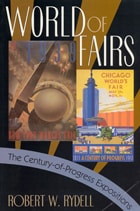
World of Fairs
The Century-of-Progress ExpositionsRobert W. Rydell
University of Chicago Press, 1993
World of Fairs continues Robert W. Rydell's unique cultural history—begun in his acclaimed All the World's a Fair—this time focusing on the interwar exhibitions. He shows how the ideas of a few—particularly artists, architects, and scientists—were broadcast to millions, proclaiming the arrival of modern America—a new empire of abundance build on old foundations of inequality.
Rydell revisits several fairs, highlighting the 1926 Philadelphia Sesquicentennial, the 1931 Paris Colonial Exposition, the 1933-34 Chicago Century of Progress Exposition, the 1935-36 San Diego California Pacific Exposition, the 1936 Dallas Texas Centennial Exposition, the 1937 Cleveland Great Lakes and International Exposition, the 1939-40 San Francisco Golden Gate International Exposition, the 1939-40 New York World's Fair, and the 1958 Brussels Universal Exposition.
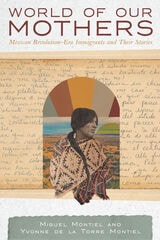
World of Our Mothers
Mexican Revolution–Era Immigrants and Their StoriesMiguel Montiel and Yvonne de la Torre Montiel
University of Arizona Press, 2022
While the women share a historic immigration journey, each story provides unique details and circumstances that testify to the diversity of the immigrant experience. The oral histories, a project more than forty years in the making, let these women speak for themselves, while historical information is added to support and illuminate the women’s voices.
The book, which includes a foreword by Irasema Coronado, director of the School of Transborder Studies, and Chris Marin, professor emeritus, both at Arizona State University, is divided into four parts. Part 1 highlights the salient events of the Revolution; part 2 presents an overview of what immigrants inherited upon their arrival to the United States; part 3 identifies challenges faced by immigrant families; and part 4 focuses on stories by location—Arizona mining towns, Phoenix barrios, and Midwestern colonias—all communities that immigrant women helped create. The book concludes with ideas on how readers can examine their own family histories. Readers are invited to engage with one another to uncover alternative interpretations of the immigrant experience and through the process connect one generation with another.
Worldmaking
Race, Performance, and the Work of CreativityDorinne Kondo
Duke University Press, 2018
Worlds Apart
Bosnian Lessons for Global SecuritySwanee Hunt
Duke University Press, 2011
Worlds at the End
Los Angeles, Infrastructure, and the Apocalyptic ImaginationPacharee Sudhinaraset
Temple University Press, 2024
Worlds at the End analyzes destruction, rupture, and continuance through texts ranging from Karen Tei Yamashita’s Tropic of Orange, which considers racial colonial infrastructure, to the work of Diné poet Esther Belin, which illuminates how the separation between the Indian reservation and LA is part of a broader infrastructural network of termination. And she unpacks Octavia Butler’s post-apocalyptic novel, Parable of the Sower, where LA’s freeways and roadways are routes of forced migration, colonization, and flight.
Tearing down existing institutions that marginalize people of color and moving past them, Worlds at the End highlights the imaginaries of those subjugated, racialized, and made other, for whom modernity, freedom, and progress meant violence, brutality, and relegation to the status of devalued surplus populations. As Sudhinaraset deftly shows, the apocalypse marks moments of historical and spatial transition, offering stories of doomsdays that will give rise to resurgence and regeneration.
Worse than the Devil
Anarchists, Clarence Darrow, and Justice in a Time of TerrorDean A. Strang
University of Wisconsin Press, 2013
Largely overlooked for almost a century, the compelling story of this case emerges vividly in this meticulously researched book by Dean A. Strang. In its focus on a moment when patriotism, nativism, and terror swept the nation, Worse than the Devil exposes broad concerns that persist even today as the United States continues to struggle with administering criminal justice to newcomers and outsiders.
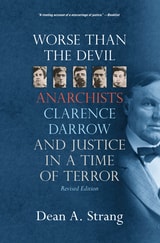
Worse than the Devil
Anarchists, Clarence Darrow, and Justice in a Time of TerrorDean A. Strang
University of Wisconsin Press, 2016
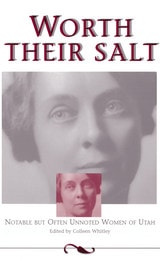
Worth Their Salt
Colleen Whitley
Utah State University Press, 1996
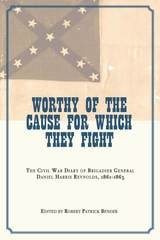
Worthy of the Cause for Which They Fight
The Civil War Diary of Brigadier General Harris Reynolds, 1861-1865Robert Patrick Bender
University of Arkansas Press, 2011
Wounded I Am More Awake
Finding Meaning after TerrorJulia Lieblich
Vanderbilt University Press, 2012
This gripping account raises questions for healers, survivors, and readers striving to understand the reality of war and the aftermath of terror. Is it possible to find meaning after enduring crimes against humanity? Can people heal after trauma?
Human rights journalist Julia Lieblich takes the reader through Boskailo's early years under Tito to the wars when friends turned on friends. She documents his harrowing experiences in the camps, where the men he once joined for coffee murder his best friend from childhood.
But the story does not end there. Boskailo moves to the United States and decides to become a psychiatrist so he can guide survivors through the long-term process of restoring hope. Today, inspired by the late psychiatrist and Holocaust survivor Viktor Frankl, Boskailo uses his own experience to help patients mourn their losses and find meaning in the aftermath of terror.
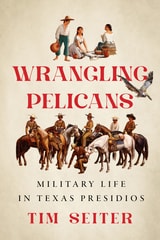
Wrangling Pelicans
Military Life in Texas PresidiosTim Seiter
University of Texas Press, 2025
2026 Excellence in Historic Preservation Award, Daughters of the American Revolution
2026 Summerlee Book Prize, Center for History and Culture of Southeast Texas and the Upper Gulf Coast
2026 Tejano Book Prize, Tejano Genealogy Society of Austin (TGSA)
A richly detailed history of daily life for colonial Spanish soldiers surviving on the eighteenth-century Texas Gulf Coast.
In 1775, Spanish King Carlos III ordered the capture of American pelicans for his wildlife park in Madrid. The command went to the only Spanish fort on the Texas coast—Presidio Nuestra Señora de Loreto de la Bahía in present-day Goliad. But the overworked soldiers stationed at the fort had little interest indulging a king an ocean away. Their days were consumed with guarding their community against powerful Indigenous peoples and managing the demands of frontier life. The royal order went ignored.
Wrangling Pelicans brings to life the world of Presidio La Bahía’s Hispano soldiers, whose duties ranged from heated warfare to high-stakes diplomacy, while their leisure pursuits included courtship, card playing, and cockfighting. It highlights the lives of presidio women and reveals the ways the Spanish legal system was used by and against the soldiers as they continually negotiated their roles within the empire and their community. Although they were agents of the Spanish crown, soldiers at times defied their king and even their captain as they found ways to assert their autonomy. Offering a fresh perspective on colonial Texas, Wrangling Pelicans recreates the complexities of life at the empire’s edge, where survival mattered more than royal decrees.
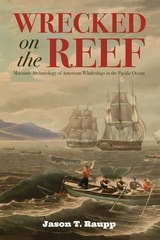
Wrecked on the Reef
Maritime Archaeology of American Whaleships in the Pacific OceanJason T. Raupp
University of Alabama Press, 2025
Take to the sea on this maritime archaeological exploration of nineteenth-century American whaling ships
American whaleships of the early nineteenth century were more than ocean-going vessels—they were complex workplaces, designed for long-term voyages, round-the-clock labor, and the large-scale extraction of marine resources. In Wrecked on the Reef, maritime archaeologist Jason T. Raupp presents a pioneering study of these ships as mobile production platforms, rooted in the logic of industrial capitalism operating far from land.
Drawing on shipwreck sites from the central Pacific region, Raupp offers a rare archaeological look at everyday life aboard nineteenth-century whaling vessels during the so-called “Golden Age” of whaling. He examines the tools used to hunt and process whales, the strict labor hierarchies onboard, and the physical evidence of diverse, often vulnerable crews who lived and worked under demanding conditions. By combining maritime and industrial archaeology, Raupp reveals how these ships functioned not just as transportation, but as full-scale factories at sea.
Chapters trace the rise of Pacific whaling, the importance of Hawaii as a supply and repair hub, the design and mechanics of whaleships, and the dangerous work crews performed in extreme isolation. Raupp shows how these ships were not only technological marvels of their time, but also part of a much larger system of labor, risk, and ocean-based resource extraction that fueled American expansion into the Pacific.
By exploring whaleships as floating work sites, Raupp offers readers a deeper understanding of maritime labor, capitalism, and imperialism in the nineteenth century. Wrecked on the Reef charts a new course in the study of labor and landscape at sea, providing significant contributions to maritime archaeology, industrial history, and environmental humanities.
Wrecked
Deinstitutionalization and Partial Defenses in State Higher Education PolicyBarrett J. Taylor
Rutgers University Press, 2022
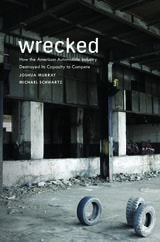
Wrecked
How the American Automobile Industry Destroyed Its Capacity to CompeteJoshua Murray
Russell Sage Foundation, 2019
Today Japanese and many European automakers produce higher quality cars at lower cost than their American counterparts thanks to a flexible form of production characterized by long-term sole suppliers, assembly and supply plants located near each other, and just-in-time delivery of raw materials. While this style of production was, in fact, pioneered in the U.S. prior to World War II, in the years after the war, American automakers deliberately dismantled this system. As Murray and Schwartz show, flexible production accelerated innovation but also facilitated workers’ efforts to unionize plants and carry out work stoppages. To reduce the efficacy of strikes and combat the labor militancy that flourished between the Depression and the postwar period, the industry dispersed production across the nation, began maintaining large stockpiles of inventory, and eliminated single sourcing. While this restructuring of production did ultimately reduce workers’ leverage, it also decreased production efficiency and innovation. The U.S. auto industry has struggled ever since to compete with foreign automakers, and formerly thriving motor cities have suffered the consequences of mass deindustrialization.
Murray and Schwartz argue that new business models that reinstate flexible production and prioritize innovation rather than cheap labor could stem the outsourcing of jobs and help revive the auto industry. By clarifying the historical relationships between production processes, organized labor, and industrial innovation, Wrecked provides new insights into the inner workings and decline of the U.S. auto industry.
Wrecked
The Edmund Fitzgerald and the Sinking of the American EconomyThomas M Nelson
Michigan State University Press, 2025
Wrecks of Human Ambition
A History of Utah's Canyon Country to 1936Nelson, Paul T.
University of Utah Press, 0
Most of the previous works regarding the history of this unique region have focused on either early exploration or twentieth-century controversies that erupted over mineral and water development and the creation of national parks and wilderness areas. This volume fills a gap in existing histories by focusing on early historical themes from the confrontation between Euro-Christian ideals and this challenging landscape. It centers on three interconnected interpretations of the area that unfolded when visitors from green, well-watered, productive lands approached this desert. The Judeo-Christian obligation to “make the desert bloom,” encompassed ideas of millenarianism and of Indian conversion and acculturation as well as the Old Testament symbolism of the “garden” and the “desert.” It was embodied in the efforts of Spanish missionaries who came to the canyon country from the 1500s to the 1700s, and in the experiences of Mormon settlers from about 1850 to 1909. Another conflicting sentiment saw the region simply as bad land to avoid, an idea strongly held by U.S. government explorers in the 1850s. This conclusion too was reinforced by the experiences of those who attempted to settle and exploit this country. Finally, though, the rise of tourism brought new ideas of wilderness reverence to the canyon country. The bad lands became valuable precisely because they were so distinct from traditionally settled landscapes.
In pursuing the conflict between Euro-Christian ideals and an arid, rugged, resistant landscape of deserts and canyons, Paul Nelson provides in clear, engaging language the most detailed examination yet published of colonial Spain’s encounter with the region and lays out some of Mormonism’s rare failures in settling the arid West.
Wrestlin' Jacob
A Portrait of Religion in Antebellum Georgia and the Carolina Low CountryErskine Clarke
University of Alabama Press, 2000
Wrestling with God, scripture, and conscience in the nineteenth‑century South
First published in 1979, Wrestlin’ Jacob offers important insights into the intersection of black and white religious history in the South. Erskine Clarke provides two arenas—one urban and one rural—that show what happened when white ministers tried to bring black slaves into the fold of Christianity. Clarke illustrates how the good intentions—and vain illusions—of the white preachers, coupled with the degradation and cultural strength of the slaves, played a significant role in the development of black churches in the South.
From 1833 to 1847, Reverend Charles Colcock Jones served as an itinerant minister to slaves on the rice and cotton plantations in Liberty County, Georgia. The aim of Jones, and of the largely Puritan-descended slave owners, was to harvest not only good Christians but also obedient and hard-working slaves. At the same time, similar efforts were under way in cosmopolitan Charleston, South Carolina. Charleston permitted blacks to worship only under the supervision of whites, and partially as a result, whites and blacks worshiped together in ways that would be unheard of later in the segregated South.
Clarke examines not only the white ministers’ motivation in their missionary work but also the slaves’ reasons for becoming a part of the church. He addresses the important issue of the continuity of African traditions with the religious life of slaves and provides a significant introduction to the larger issues of slavery and religion in the South.
Wrestling to Rasslin'
Ancient Sport to American SpectacleGerald W. Morton and George M. O'Brien
University of Wisconsin Press, 1985
Wrestling with Diversity
Sanford Levinson
Duke University Press, 2003
Although most discussions of diversity have focused on race and ethnicity, Levinson is particularly interested in religious diversity and its implications. Why, he asks, do arguments for racial and ethnic diversity not also counsel a concern to achieve religious diversity within a student body? He considers the propriety of judges drawing on their religious views in making legal decisions and the kinds of questions Senators should feel free to ask nominees to the federal judiciary who have proclaimed the importance of their religion in structuring their own lives. In exploring the sense in which Sandy Koufax can be said to be a “Jewish baseball player,” he engages in broad reflections on professional identity. He asks whether it is desirable, or even possible, to subordinate merely "personal" aspects of one’s identity—religion, political viewpoints, gender—to the impersonal demands of the professional role. Wrestling with Diversity is a powerful interrogation of the assumptions and contradictions underlying public life in a multicultural world.
Wrestling with God
The Courts' Tortuous Treatment of ReligionPatrick M. Garry
Catholic University of America Press, 2006
Wrestling with Starbucks
Conscience, Capital, CappuccinoFellner, Kim
Rutgers University Press, 2008
Armed with an open mind and a sense of humor, Fellner takes readers on an expedition into the muscle and soul of the coffee company. She finds a corporation filled with contradictions: between employee-friendly processes and anti-union practices; between an internationalist vision and a longing for global dominance; between community individuality and cultural hegemony. On a daily basis Starbucks walks a fine line. It must be profitable enough to please Wall Street and principled enough to please social justice advocates. Although observers might argue that the company has done well at achieving a balance, Starbucks's leaders run the risk of satisfying neither constituency and must constantly justify themselves to both.
Through the voices of Central American coffee farmers, officers at corporate headquarters, independent café owners, unionists, baristas, traders, global justice activists, and consumers, Fellner explores the forces that affect Starbucks's worth and worthiness. Along the way, she subjects her own unabashedly progressive perspective to scrutiny and emerges with a compelling and unexpected look at Starbucks, the global economy, our economic convictions, and the values behind our morning cup of joe.

Wrigley Field
The Long Life and Contentious Times of the Friendly ConfinesStuart Shea
University of Chicago Press, 2014
In Wrigley Field: The Long Life and Contentious Times of the Friendly Confines, Stuart Shea provides a detailed and fascinating chronicle of this living historic landmark. The colorful history revealed in Wrigley Field shows how the stadium has evolved through the years to meet the shifting priorities of its owners and changing demands of its fans. While Wrigley Field today seems irreplaceable, we learn that from game one it has been the subject of endless debates over its future, its design, and its place in the neighborhood it calls home. To some, it is a hallowed piece of baseball history; to others, an icon of mismanagement and ineptitude. Shea deftly navigates the highs and lows, breaking through myths and rumors. And with another transformation imminent, he brings readers up to date on negotiations, giving much-needed historical context to the maneuvering.
Wrigley Field is packed with facts, stories, and surprises that will captivate even the most fair-weather fan. From dollar signs (the Ricketts family paid $900 million for the team and stadium in 2009), to exploding hot dog carts (the Cubs lost that game 6–5), to the name of Billy Sianis’s curse-inducing goat (Sonovia), Shea uncovers the heart of the stadium’s history. As the park celebrates its centennial, Wrigley Field continues to prove that its colorful and dramatic history is more interesting than any of its mythology.
Write Your Way In
Crafting an Unforgettable College Admissions EssayRachel Toor
University of Chicago Press, 2017
The good news? You already have the “secret sauce” for crafting a compelling personal essay: your own experiences and your unique voice.
More than twenty million students apply to college every year; many of them look similar in terms of test scores, grades, courses taken, extracurricular activities. Admissions officers wade through piles of files. As an applicant, you need to think about what will interest an exhausted reader. What can you write that will make her argue to admit you instead of the thousands of other applicants?
A good essay will be conversational and rich in vivid details, and it could only be written by one person—you. This book will help you figure out how to find and present the best in yourself. You’ll acquire some useful tools for writing well—and may even have fun—in the process.
Writers of Conviction
The Personal Politics of Zona Gale, Dorothy Canfield Fisher, Rose Wilder Lane, and Josephine HerbstJulia C. Ehrhardt
University of Missouri Press, 2004
Writers of the Black Chicago Renaissance
Edited by Steven C. Tracy
University of Illinois Press, 2011
The volume covers a vast collection of subjects, including many important writers such as Richard Wright, Gwendolyn Brooks, and Lorraine Hansberry as well as cultural products such as black newspapers, music, and theater. The book includes individual entries by experts on each subject; a discography and filmography that highlight important writers, musicians, films, and cultural presentations; and an introduction that relates the Harlem Renaissance, the White Chicago Renaissance, the Black Chicago Renaissance, and the Black Arts Movement.
Contributors are Robert Butler, Robert H. Cataliotti, Maryemma Graham, James C. Hall, James L. Hill, Michael Hill, Lovalerie King, Lawrence Jackson, Angelene Jamison-Hall, Keith Leonard, Lisbeth Lipari, Bill V. Mullen, Patrick Naick, William R. Nash, Charlene Regester, Kimberly Ruffin, Elizabeth Schultz, Joyce Hope Scott, James Smethurst, Kimberly M. Stanley, Kathryn Waddell Takara, Steven C. Tracy, Zoe Trodd, Alan Wald, Jamal Eric Watson, Donyel Hobbs Williams, Stephen Caldwell Wright, and Richard Yarborough.
Writing Across Difference
Theory and InterventionJames Rushing Daniel
Utah State University Press, 2021
No text in composition has made such a sweeping attempt to place the multiple areas of translingualism, anti-racism, anticolonialism, interdisciplinarity, and disability into conversation or to represent the field as broadly unified around the concept of difference. The chapters in this book specifically explore how monolingual ideology is maintained in institutions and how translingual strategies can (re)include difference; how narrative-based interventions can promote writing across difference in classrooms and institutions by complicating dominant discourses; and how challenging dominant logics of class, race, ability, and disciplinarity can present opportunities for countering divisiveness.
Writing Across Difference offers writing scholars a sustained intellectual encounter with the crisis of difference and foregrounds the possibilities such an encounter offers for collective action toward a more inclusive and equitable society. It presents a variety of approaches for intervening in classrooms and institutions in the interest of focalizing, understanding, negotiating, and bridging difference. The book will be a valuable resource to those disturbed by the bigotry, violence, and fanaticism that mark our political culture and who are seeking inspiration, models, and methods for collective response.
Contributors: Anis Bawarshi, Jonathan Benda, Megan Callow, James Rushing Daniel, Cherice Escobar Jones, Laura Gonzales, Juan Guerra, Stephanie Kerschbaum, Katie Malcolm, Nadya Pittendrigh, Mya Poe, Candice Rai, Iris Ruiz, Ann Shivers-McNair, Neil Simpkins, Alison Y. L. Stephens, Sumyat Thu, Katherine Xue, Shui-yin Sharon Yam
Writing Against Reform
Aesthetic Realism in the Progressive EraArielle Zibrak
University of Massachusetts Press, 2024
Throughout the Progressive Era, reform literature became a central feature of the American literary landscape. Works like Upton Sinclair’s The Jungle, Charlotte Perkins Gilman’s “The Yellow Wall-Paper,” and Jacob Riis’s How the Other Half Lives topped bestseller lists and jolted middle-class readers into action.
While realism and social reform have a long-established relationship, prominent writers of the period such as Henry James, Edith Wharton, James Weldon Johnson, Rebecca Harding Davis, and Kate Chopin resisted explicit political rhetoric in their own works and critiqued reform aesthetics, which too often rang hollow. Arielle Zibrak reveals that while these writers were often seen as indifferent to the political currents of their time, their work is a part of a little explored debate on the relationship between literature and politics at the heart of Progressive Era publishing. Examining the critique of reform aesthetics within the tradition of American realist literature of the late nineteenth and early twentieth centuries, Writing Against Reform promises to change the way we think about the fiction of this period and many of America’s leading writers.
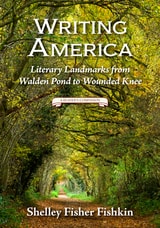
Writing America
Literary Landmarks from Walden Pond to Wounded Knee (A Reader's Companion)Fishkin, Shelley Fisher
Rutgers University Press, 2015
American novelist E.L. Doctorow once observed that literature “endows places with meaning.” Yet, as this wide-ranging new book vividly illustrates, understanding the places that shaped American writers’ lives and their art can provide deep insight into what makes their literature truly meaningful.
Published on the eve of the 50th anniversary of the Historic Preservation Act, Writing America is a unique, passionate, and eclectic series of meditations on literature and history, covering over 150 important National Register historic sites, all pivotal to the stories that make up America, from chapels to battlefields; from plantations to immigration stations; and from theaters to internment camps. The book considers not only the traditional sites for literary tourism, such as Mark Twain’s sumptuous Connecticut home and the peaceful woods surrounding Walden Pond, but also locations that highlight the diversity of American literature, from the New York tenements that spawned Abraham Cahan’s fiction to the Texas pump house that irrigated the fields in which the farm workers central to Gloria Anzaldúa’s poetry picked produce. Rather than just providing a cursory overview of these authors’ achievements, acclaimed literary scholar and cultural historian Shelley Fisher Fishkin offers a deep and personal reflection on how key sites bore witness to the struggles of American writers and inspired their dreams. She probes the global impact of American writers’ innovative art and also examines the distinctive contributions to American culture by American writers who wrote in languages other than English, including Yiddish, Chinese, and Spanish.
Only a scholar with as wide-ranging interests as Shelley Fisher Fishkin would dare to bring together in one book writers as diverse as Gloria Anzaldúa, Nicholas Black Elk, David Bradley, Abraham Cahan, S. Alice Callahan, Raymond Chandler, Frank Chin, Elizabeth Cook-Lynn, Countee Cullen, Frederick Douglass, Paul Laurence Dunbar, Jessie Fauset, William Faulkner, F. Scott Fitzgerald, Allen Ginsberg, Jovita González, Rolando Hinojosa, Langston Hughes, Zora Neale Hurston, Lawson Fusao Inada, James Weldon Johnson, Erica Jong, Maxine Hong Kingston, Irena Klepfisz, Nella Larsen, Emma Lazarus, Sinclair Lewis, Genny Lim, Claude McKay, Herman Melville, N. Scott Momaday, William Northup, John Okada, Miné Okubo, Simon Ortiz, Américo Paredes, John P. Parker, Ann Petry, Tomás Rivera, Wendy Rose, Morris Rosenfeld, John Steinbeck, Harriet Beecher Stowe, Henry David Thoreau, Mark Twain, Yoshiko Uchida, Tino Villanueva, Nathanael West, Walt Whitman, Richard Wright, Hisaye Yamamoto, Anzia Yezierska, and Zitkala-Ša.
Leading readers on an enticing journey across the borders of physical places and imaginative terrains, the book includes over 60 images, and extended excerpts from a variety of literary works. Each chapter ends with resources for further exploration. Writing America reveals the alchemy though which American writers have transformed the world around them into art, changing their world and ours in the process.
Writing Assessment, Social Justice, and the Advancement of Opportunity
Mya Poe
University Press of Colorado, 2018
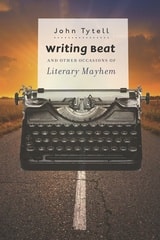
Writing Beat and Other Occasions of Literary Mayhem
John Tytell
Vanderbilt University Press, 2014
Approaching the history of post-war twentieth century American literature, and in particular the Beat literary movement of Kerouac, Ginsberg, Burroughs, and others, Tytell finds himself uniquely positioned as an eyewitness to many of these stories. In this book, he shares his insight with the reader. As he interviewed, drank, traveled, and survived countless moments with some of these literary legends, Tytell discovered much about the craft of nonfiction, biography, and the nature of history. Writing Beat demonstrates, through Tytell's growth as a professor and historian of the Beats, lessons learned and hazards encountered for those aspiring to become writers themselves.
As we approach the sixtieth anniversary of Allen Ginsberg's Howl, Writing Beat reminds us writers do not spring to life fully formed, and the struggle to get to literature can be a blast.
Writing Centers and Racial Justice
A Guidebook for Critical PraxisTalisha Haltiwanger Morrison
Utah State University Press, 2023
In five thematically organized sections—Countering Racism and Colonialism in Higher Education; Recruitment, Hiring, and Retention; Tutor Education and Professional Development; Engaging with Campus and Community; and Holding Our Professional Organizations Accountable—scholars from a variety of institutions, both large and small, public and private, present critical reflection and concrete guidance on anti-racist writing center administrative policies and practices. Several chapters include sample materials, such as course syllabi, consultant education activities, and recruitment materials, to help current and aspiring writing center administrators implement changes in their own contexts.
Writing Centers and Racial Justice is the first book to offer clear and actionable advice on how writing centers and their staff can take up racial or social justice work that will result in real sustainable change. Writing center directors, professionals, and tutors, as well as administrators and decision makers at the institutional level, will benefit from this thoughtful and effective text.
Writing Centers and the New Racism
A Call for Sustainable Dialogue and ChangeLaura Greenfield and Karen Rowan
Utah State University Press, 2011
Laura Greenfield and Karen Rowan have created a rich resource for writing center tutors, administrators, and scholars. Motivated by a scholarly interest in race, literacy, and pedagogy, and by an ethical commitment to antiracism work, contributors address a series of related questions: How does institutionalized racism in American education shape the culture of literacy and language education in the writing center? How does racism operate in the discourses of writing center scholarship and lore, and in what ways are writing centers unwittingly complicit in racist practices? How can they meaningfully operationalize antiracist work? How do they persevere through the difficulty and messiness of negotiating race and racism in their daily practice?
The conscientious, nuanced attention to race in Writing Centers and the New Racism is meant to model what it means to be bold in engagement with these hard questions and to spur the kind of sustained, productive, multivocal, and challenging dialogue that, with a few important exceptions, has been absent from the field.
Writing Childbirth
Women’s Rhetorical Agency in Labor and OnlineKim Hensley Owens
Southern Illinois University Press, 2015
Women seeking to express concerns about childbirth or to challenge institutionalized medicine by writing online birth plans or birth stories exercise rhetorical agency in undeniably feminist ways. In Writing Childbirth: Women’s Rhetorical Agency in Labor and Online, author Kim Hensley Owens explores how women create and use everyday rhetorics in planning for, experiencing, and writing about childbirth.
Drawing on medical texts, popular advice books, and online birth plans and birth stories, as well as the results of a childbirth writing survey, Owens considers how women’s agency in childbirth is sanctioned, and how it is not. She examines how women’s rhetorical choices in writing interact with institutionalized medicine and societal norms. Writing Childbirth reveals the contradictory messages women receive about childbirth, their conflicting expectations about it, and how writing and technology contribute to and reconcile these messages and expectations.
Demonstrating the value of extending rhetorical investigations of health and medicine beyond patient-physician interactions and the discourse of physicians, Writing Childbirth offers fresh insight into feminist rhetorical agency and technology and expands our understanding of the rhetorics of health and medicine.
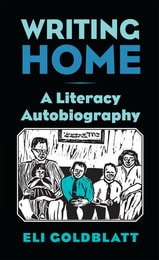
Writing Home
A Literacy AutobiographyEli Goldblatt
Southern Illinois University Press, 2012
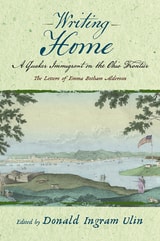
Writing Home
A Quaker Immigrant on the Ohio Frontier; the Letters of Emma Botham AldersonDonald Ingram Ulin
Bucknell University Press, 2020
Introductions and notes situate the letters in relation to their critical, biographical, literary, and historical contexts. Editor Donald Ulin discusses the relationship between Alderson’s letters and her sister Mary Howitt’s Our Cousins in Ohio (1849), a remarkable instance of transatlantic literary collaboration.
Writing Home offers an unparalleled opportunity for studying immigrant correspondence due to Alderson’s unusually well-documented literary and religious affiliations. The notes and introductions provide background on nearly all the places, individuals, and events mentioned in the letters.
Published by Bucknell University Press. Distributed worldwide by Rutgers University Press.
Writing Human Rights
The Political Imaginaries of Writers of ColorCrystal Parikh
University of Minnesota Press, 2017
The legal texts and aspirational ideals of human rights are usually understood and applied in a global context with little bearing on the legal discourse, domestic political struggles, or social justice concerns within the United States. In Writing Human Rights, Crystal Parikh uses the international human rights regime to read works by contemporary American writers of color—Toni Morrison, Chang-rae Lee, Ana Castillo, Aimee Phan, and others—to explore the conditions under which new norms, more capacious formulations of rights, and alternative kinds of political communities emerge.
Parikh contends that unlike humanitarianism, which views its objects as victims, human rights provide avenues for the creation of political subjects. Pairing the ethical deliberations in such works as Beloved and A Gesture Life with human rights texts like the United Nations Convention Against Torture, she considers why principles articulated as rights in international conventions and treaties—such as the right to self-determination or the right to family—are too often disregarded at home. Human rights concepts instead provide writers of color with a deeply meaningful method for political and moral imagining in their literature.
Affiliating transnational works of American literature with decolonization, socialist, and other political struggles in the global south, this book illuminates a human rights critique of idealized American rights and freedoms that have been globalized in the twenty-first century. In the absence of domestic human rights enforcement, these literatures provide a considerable repository for those ways of life and subjects of rights made otherwise impossible in the present antidemocratic moment.
Writing Instruction in Nineteenth-Century American Colleges
James A. Berlin. Foreword by Donald C. Stuart
Southern Illinois University Press, 1984
Defining a rhetoric as a social invention arising out of a particular time, place, and set of circumstances, Berlin notes that “no rhetoric—not Plato’s or Aristotle’s or Quintilian’s or Perelman’s—is permanent.” At any given time several rhetorics vie for supremacy, with each attracting adherents representing various views of reality expressed through a rhetoric.
Traditionally rhetoric has been seen as based on four interacting elements: “reality, writer or speaker, audience, and language.” As emphasis shifts from one element to another, or as the interaction between elements changes, or as the definitions of the elements change, rhetoric changes. This alters prevailing views on such important questions as what is appearance, what is reality.
In this interpretive study Berlin classifies the three 19th-century rhetorics as classical, psychological-epistemological, and romantic, a uniquely American development growing out of the transcendental movement. In each case studying the rhetoric provides insight into society and the beliefs of the people.
Writing Like a Woman
Alicia Ostriker
University of Michigan Press, 1983
Writing Majors
Eighteen Program ProfilesGreg Giberson
Utah State University Press, 2015
The writing major is among the most exciting scenes in the evolving American university. Writing Majors is a collection of firsthand descriptions of the origins, growth, and transformations of eighteen different programs. The chapters provide useful administrative insight, benchmark information, and even inspiration for new curricular configurations from a range of institutions.
A practical sourcebook for those who are building, revising, or administering their own writing majors , this volume also serves as a historical archive of a particular instance of growth and transformation in American higher education. Revealing bureaucratic, practical, and institutional matters as well as academic ideals and ideologies, each profile includes sections providing a detailed program review and rationale, an implementation narrative, and reflection and prospection about the program.
Documenting eighteen stories of writing major programs in various stages of formation, preservation, and reform and exposing the contingencies of their local and material constitution, Writing Majors speaks as much to the “how to” of building writing major programs as to the larger “what,” “why,” and “how” of institutional growth and change.
Writing Not Writing
Poetry, Crisis, and ResponsibilityTom Fisher
University of Iowa Press, 2017
Writing Not Writing both confirms this question into which crisis puts poetry and explores alternative modes of “response” and “responsibility” that poetry makes possible. Reading the silences of Oppen, Carl Rakosi, and Bob Kaufman, the renunciation of Laura Riding, and other more contemporary instances of poetic abnegation, Tom Fisher explores silence, refusal, and disavowal as political and ethical modes of response in a time of continuous crisis. Through a turn away from writing, these poets offer strategies of refusal and departure that leave anagrammatical hollows behind, activating the negational capacities of writing and aesthetics to disrupt the empire of sense, speech, and agency.
Fisher’s work is both an engaging and detailed analysis of four individual poets who left poetry behind and a theoretically provocative exploration of the political and ethical possibilities of silence, not-doing, and disavowal. In lucid but nuanced terms, Fisher makes the case that, from at least modernism forward, poetry is marked by refusals of speech and sense in order to open possibilities of response outside conventional forms of responsibility.
Writing Out My Heart
Selections from the Journal of Frances E. Willard, 1855-96Edited by Carolyn De Swarte Gifford
University of Illinois Press, 1995
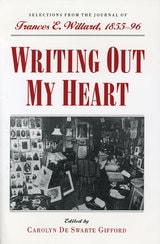
Frances E. Willard's powerful leadership of the Woman's Christian Temperance Union (WCTU) made her one of the most commanding figures in the reform movements of the nineteenth century. World renowned and a force to be reckoned with, Willard grappled publicly and private with difficult issues, including temperance, slavery, women's rights, and her own sexuality. These selections from her forty-nine-volume journal reveal the private and confidential side of Willard for the first time. She comes to life in these pages--a person of character, passion, and self-determination who came to represent the woman of the dawning era.
Supplemented by an in-depth introduction and generous annotations, Writing Out My Heart sheds new light on an extraordinary individual and the lives of women in nineteenth-century America.
Writing Placement in Two-Year Colleges
The Pursuit of Equity in Postsecondary EducationJessica Nastal
University Press of Colorado, 2023
Writing Program Architecture
Thirty Cases for Reference and ResearchBryna Siegel Finer
Utah State University Press, 2017
Writing Program Architecture offers an unprecedented abundance of information concerning the significant material, logistical, and rhetorical features of writing programs. Presenting the realities of thirty diverse and award-winning programs, contributors to the volume describe reporting lines, funding sources, jurisdictions, curricula, and other critical programmatic matters and provide insight into their program histories, politics, and philosophies.
Each chapter opens with a program snapshot that includes summary demographic and historical information and then addresses the profile of the WPA, program conception, population served, funding, assessment, technology, curriculum, and more. The architecture of the book itself makes comparison across programs and contexts easy, not only among the programs described in each chapter but also between the program in any given chapter and the reader’s own program. An online web companion to the book includes access to the primary documents that have been of major importance to the development or sustainability of the program, described in a “Primary Document” section of each chapter.
The metaphor of architecture allows us to imagine the constituent parts of a writing program as its foundation, beams, posts, scaffolding—the institutional structures that, alongside its people, anchor a program to the ground and keep it standing. The most extensive resource on program structure available to the field, Writing Program Architecture illuminates structural choices made by leaders of exemplary programs around the United States and provides an authoritative source of standard practice that a WPA might use to articulate programmatic choices to higher administration.
Contributors: Susan Naomi Bernstein, Remica Bingham-Risher, Brent Chappelow, Malkiel Choseed, Angela Clark-Oates, Patrick Clauss, Emily W. Cosgrove, Thomas Deans, Bridget Draxler, Leigh Ann Dunning, Greg A. Giberson, Maggie Griffin Taylor, Paula Harrington, Sandra Jamieson, Marshall Kitchens, Michael Knievel, Amy Lannin, Christopher LeCluyse, Sarah Liggett, Deborah Marrott, Mark McBeth, Tim McCormack, John McCormick, Heather McGrew, Heather McKay, Heidi A. McKee, Julianne Newmark, Lori Ostergaard, Joannah Portman-Daley, Jacqueline Preston, James P. Purdy, Ben Rafoth, Dara Regaignon, Nedra Reynolds, Shirley Rose, Bonnie Selting, Stacey Sheriff, Steve Simpson, Patricia Sullivan, Kathleen Tonry, Sanford Tweedie, Meg Van Baalen-Wood, Shevaun Watson, Christy I. Wenger, Lisa Wilkinson, Candace Zepeda
Writing Revolution
Hispanic Anarchism in the United StatesEdited by Christopher J. Castañeda and Montse Feu
University of Illinois Press, 2019