Results by title
28167 books match the query 'History' and 1118 start with w
Women of the Far Right
The Mothers' Movement and World War IIGlen Jeansonne
University of Chicago Press, 1996
Unlike leftist antiwar movements, the mothers' movement was not pacifist; its members opposed the war on Germany because they regarded Hitler as an ally against the spread of atheistic communism. They also differed from leftist women in their endorsement of patriarchy and nationalism. God, they believed, wanted them to fight the New Deal liberalism that imperiled their values and the internationalists, communists, and Jews, whom they saw as subjugating Christian America.
Jeansonne examines the motivations of these women, the political and social impact of their movement, and their collaborations with men of the far right and also with mainstream isolationists such as Charles Lindbergh. Drawing on files kept by the FBI and other confidential documents, this book sheds light on the history of the war era and on women's place within the far right.
Women of the Left Bank
Paris, 1900-1940By Shari Benstock
University of Texas Press, 1986
Now available in a durable paperback edition, Shari Benstock's critically acclaimed, best-selling Women of the Left Bank is a fascinating exploration of the lives and works of some two dozen American, English, and French women whose talent shaped the Paris expatriate experience in the century's early years.
This ambitious historical, biographical, and critical study has taken its place among the foremost works of literary criticism. Maurice Beebe calls it "a distinguished contribution to modern literary history." Jane Marcus hails it as "the first serious literary history of the period and its women writers, making along the way no small contribution to our understanding of the relationships between women artists and their male counterparts, from Henry James to Hemingway, Joyce, Picasso, and Pound."
Women of the Mexican Countryside, 1850-1990
Creating Spaces, Shaping TransitionsHeather Fowler-Salamini
University of Arizona Press, 1994
Drawing on Mexican community studies, gender studies, and rural studies, these essays overturn the stereotypes of Mexican peasant women by exploring the complexity of their lives and roles and examining how these have changed over time. The book emphasizes the active roles of women in the periods of civil war, 1854-76, and the commercialization of agriculture, 1880-1910. It highlights their vigorous responses to the violence of revolution, their increased mobility, and their interaction with state reforms in the period from 1910 to 1940. The final essays focus on changing gender relations in the countryside under the impact of rapid urbanization and industrialization since 1940. Because histories of Latin American women have heretofore neglected rural areas, this volume will serve as a touchstone for all who would better understand women's lives in a region of increasing international economic importance. Women of the Mexican Countryside demonstrates that, contrary to the peasant stereotype, these women have accepted complex roles to meet constantly changing situations.
CONTENTS
I—Women and Agriculture in Nineteenth-Century Mexico
1. Exploring the Origins of Democratic Patriarchy in Mexico: Gender and Popular Resistance in the Puebla Highlands, 1850-1876, Florencia Mallon
2. "Cheaper Than Machines": Women and Agriculture in Porfirian Oaxaca (1880-1911), Francie R. Chassen-López
3. Gender, Work, and Coffee in C¢rdoba, Veracruz, 1850-1910, Heather Fowler-Salamini
4. Gender, Bridewealth, and Marriage: Social Reproduction of Peons on Henequen Haciendas in Yucatán (1870-1901), Piedad Peniche Rivero
II—Rural Women and Revolution in Mexico
5. The Soldadera in the Mexican Revolution: War and Men's Illusions, Elizabeth Salas
6. Rural Women's Literacy and Education During the Mexican Revolution: Subverting a Patriarchal Event?, Mary Kay Vaughan
7. Doña Zeferina Barreto: Biographical Sketch of an Indian Woman from the State of Morelos, Judith Friedlander
8. Seasons, Seeds, and Souls: Mexican Women Gardening in the American Mesilla (1900-1940), Raquel Rubio Goldsmith
III—Rural Women, Urbanization, and Gender Relations
9. Three Microhistories of Women's Work in Rural Mexico, Patricia Arias
10. Intergenerational and Gender Relations in the Transition from a Peasant Economy to a Diversified Economy, Soledad González Montes
11. From Metate to Despate: Rural Women's Salaried Labor and the Redefinition of Gendered Spaces and Roles, Gail Mummert
12. Changes in Rural Society and Domestic Labor in Atlixco, Puebla (1940-1990), Maria da Glória Marroni de Velázquez
13. Antagonisms of Gender and Class in Morelos, Mexico, JoAnn Martin
Women of the Renaissance
Margaret L. King
University of Chicago Press, 1991
Utilizing the perspectives of social, church, and intellectual history, King looks at women of all classes, in both usual and unusual settings. She first describes the familial roles filled by most women of the day—as mothers, daughters, wives, widows, and workers. She turns then to that significant fraction of women in, and acted upon, by the church: nuns, uncloistered holy women, saints, heretics, reformers,and witches, devoting special attention to the social and economic independence monastic life afforded them. The lives of exceptional women, those warriors, queens, patronesses, scholars, and visionaries who found some other place in society for their energies and strivings, are explored, with consideration given to the works and writings of those first protesting female subordination: the French Christine de Pizan, the Italian Modesta da Pozzo, the English Mary Astell.
Of interest to students of European history and women's studies, King's volume will also appeal to general readers seeking an informative, engaging entrance into the Renaissance period.
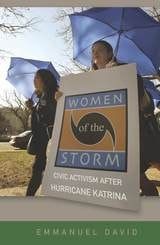
Women of the Storm
Civic Activism after Hurricane KatrinaEmmanuel David
University of Illinois Press, 2017
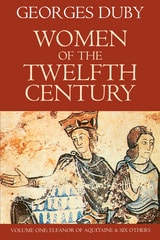
Women of the Twelfth Century, Volume 1
Eleanor of Aquitaine and Six OthersGeorges Duby
University of Chicago Press, 1997
The historical personages include Eleanor of Aquitaine whose several marriages brought her wealth and autonomy; the virtuous Héloïse; and the visionary recluse Juette. Duby also studies the literary figures of St. Marie-Madeleine, a composite figure who personified the essential female traits of frailty, ardent love, and evangelicalism; Iseut, literary beloved of Tristan; and two other emblematic figures, Dorée d'Amour and Phénix—women who became ladies through chivalrous love.
Provocative, informative, and entertaining, this book offers new insight on courtly love and the representations of women under medieval patriarchy.
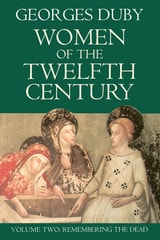
Women of the Twelfth Century, Volume 2
Remembering the DeadGeorges Duby
University of Chicago Press, 1997
The first section outlines the ways in which the dead—in both memory and legend—served to bond noble society in the twelfth century. Drawing on the Gesta by Dudo of Saint Quentin, the second section reflects on the roles that wives, concubines, and other women played during times of war and in the great exchanges of power that established the grand lineages of the Middle Ages. The third section reconstructs women as wives, mothers, and widows through the work of Lambert, Priest of Ardres.
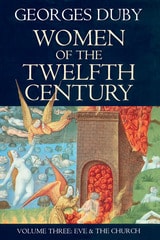
Women of the Twelfth Century, Volume 3
Eve and the ChurchGeorges Duby
University of Chicago Press, 1998
Drawing on these writings, Duby describes how women were thought to embody particular sins, such as sorcery, disobedience, and licentiousness. He evaluates Eve's role in man's fall from grace in the Garden of Eden and analyzes the reasoning behind the view that women are unstable, curious, frivolous creatures. He also notes that these charges are leveled against women, even as praise is heaped upon them for the conventional virtues they exhibit in their roles as wives and mothers.
As the final installment in Duby's three-volume study of French noblewomen of the twelfth century, Eve and the Church is the last work of this superb historian. It will be of interest to scholars of medieval history and women's history as well as to anyone interested in current debates about women and religion.
Georges Duby (1919-1996) was a member of the Académie française and for many years held the distinguished chair in medieval history at the Collège de France. His books include The Three Orders; The Age of Cathedrals; The Knight, the Lady, and the Priest; Love and Marriage in the Middle Ages; and History Continues, all published by the University of Chicago Press.
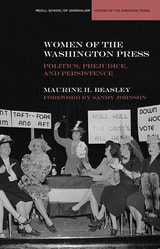
Women of the Washington Press
Politics, Prejudice, and PersistenceMaurine H. Beasley
Northwestern University Press, 2012
Women of the Washington Press argues that for nearly two centuries women journalists have persisted in their efforts to cover politics in the nation’s capital in spite of blatant prejudice and restrictive societal attitudes. They have been held back by the difficulties of combining two competing roles – those of women and journalists. As a group they have not agreed among themselves on feminist goals, while declaring that they aspire to be seen as professional journalists, not as advocates of a particular ideology. Still, they have brought a different perspective to the news, as they have fought hard to prove that they are capable of covering political issues just like male journalists. Over the years women have networked with each other and carved out areas of expertise – such as reporting of politically-oriented social events and coverage of first ladies – that men disdained, while they pressed to gain entrance to sex-segregated institutions like the National Press Club. Attempting to merge the personal and the political, they have raised issues like sexual harassment that men journalists left untouched. At a point today where they represent about half of accredited correspondents, women still face shifting barriers that make it difficult to combine the roles of both women and journalists in Washington, but they are continuing to broaden the definition of political journalism.
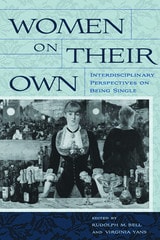
Women on Their Own
Interdisciplinary Perspectives on Being SingleEdited by Rudolph M. Bell and Virginia Yans
Rutgers University Press, 2007
Modern American culture has raised generations of women who believed that their true and most important role in society was to get married and have children. Anything short of this role was considered abnormal, unfulfilling, and suspect. This female stereotype has been exploited and perpetuated by some key films in the late 40's and early 50's. But more recently we have seen a shift in the cultural view of the spinster. The erosion of the traditional nuclear family, as well as a larger range of acceptable life choices, has caused our perceptions of unmarried women to change. The film industry has reflected this shift with updated stereotypes that depict this cultural trend. The shift in the way we perceive spinsters is the subject of current academic research which shows that a person's perception of particular societal roles influences the amount of stress or depression they experience when in that specific role. Further, although the way our culture perceives spinsters and the way the film industry portrays them may be evolving, we still are still left with a negative stereotype.
Themes of choice and power have informed the lives of single women in all times and places. When considered at all in a scholarly context, single women have often been portrayed as victims, unhappily subjected to forces beyond their control. This collection of essays about "women on their own" attempts to correct that bias, by presenting a more complex view of single women in nineteenth- and twentieth-century United States and Europe.
Topics covered in this book include the complex and ambiguous roles that society assigns to widows, and the greater social and financial independence that widows have often enjoyed; widow culture after major wars; the plight of homeless, middle-class single women during the Great Depression; and comparative sociological studies of contemporary single women in the United States, Britain, Ireland, and Cuba.
Composed of papers presented to the Rutgers Center for Historical Analysis project on single women, this collection incorporates the work of specialists in anthropology, art history, history, and sociology. It is deeply connected with the emerging field of singleness studies (to which the RCHA has contributed an Internet-based bibliography of more than 800 items). All of the essays are new and have not been previously published.

Women on the Defensive
Living through Conservative TimesSylvia Bashevkin
University of Chicago Press, 1998
Prevailing accounts of the fate of women's movements in that decade ascribe their hardships to a postfeminist ideology or the result of a "backlash" against women, particularly in America. Sylvia Bashevkin's study excavates, however, a much more complex situation. By identifying the policies and goals held in common by feminists in all three countries and tracing their collision course with the conservative policies of the three administrations, she is able to document setbacks but also some progress, despite the right-of-center leaders. She also challenges the assumption that organized interests in the United States are less vulnerable in hard times than those in parliamentary systems, finding that the elections of Ronald Reagan, Brian Mulroney, and Margaret Thatcher had similar effects on both sides of the Atlantic. Her comparative analysis reveals that the policies of current leaders, while marginally better than their predecessors, will not allow women and women's movements to regain lost ground.
Organized thematically, rather than by country, Women on the Defensive describes the difficult relationship between feminists and conservatives during a time of bitter ideological and policy battles when the vibrant social movements of the 1960s and 1970s were seriously threatened.
Women's Activist Organizing in US History
A University of Illinois Press AnthologyCompiled by Dawn Durante; Introduction by Deborah Gray White
University of Illinois Press, 2022
Insightful and provocative, Women’s Activist Organizing in US History draws on both classic texts and recent bestsellers to reveal the breadth of activism by women in the United States in the nineteenth and twentieth centuries.
Contributors: Daina Ramey Berry, Melinda Chateauvert, Tiffany M. Gill, Nancy A. Hewitt, Treva B. Lindsey, Anne Firor Scott, Charissa J. Threat, Anne M. Valk, Lara Vapnek, and Deborah Gray White
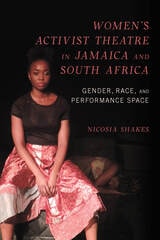
Women's Activist Theatre in Jamaica and South Africa
Gender, Race, and Performance SpaceNicosia M. Shakes
University of Illinois Press, 2023
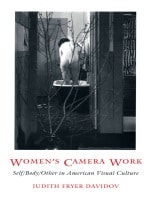
Women's Camera Work
Self/Body/Other in American Visual CultureJudith Fryer Davidov
Duke University Press, 1998
Women’s Camera Work ranges from American women’s photographic practices during the nineteenth and early twentieth centuries to a study of landscape photography. Using contemporary cultural studies discourse to critique influential male-centered historiography and the male-dominated art world, Davidov exhibits the work of these women; tells their absorbing stories; and discusses representations of North American Indians, African Americans, Asian Americans, and the migrant poor. Evaluating these photographers’ distinct contributions to constructions of Americanness and otherness, she helps us to discover the power of reading images closely, and to learn to see through these women’s eyes.
In presenting one of the most important strands of American photography, this richly illustrated book will interest students of American visual culture, women’s studies, and general readers alike.
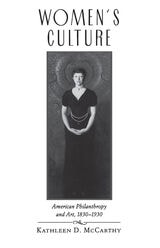
Women's Culture
American Philanthropy and Art, 1830-1930Kathleen D. McCarthy
University of Chicago Press, 1991
Women's History in Global Perspective, Volume 1
Edited by Bonnie G. Smith
University of Illinois Press, 2004
The American Historical Association's Committee on Women Historians commissioned some of the pioneering figures in women's history to prepare essays in their respective areas of expertise. Volume 1 of the three-volume series addresses the comparative themes that the editors and contributors see as central to understanding women's history around the world. Authors like Margaret Strobel, Alice Kessler-Harris, and Mrinalini Sinha provide overviews of the theory and practice of women's and gender history and analyze family history, nationalism, and work. Editor Bonnie G. Smith rounds out the collection with essays on religion, race, ethnicity, and the different varieties of feminism.
Authoritative and wide-ranging, Women's History in Global Perspective, Volume 1, offers an invaluable resource on the thought and methods of a generation's leading figures in feminist scholarship.
Contributors: Marjorie Bingham, Julia Clancy-Smith, Susan Kent, Alice Kessler-Harris, Mary Jo Maynes, Pamela Scully, Mrinalini Sinha, Margaret Strobel, and Ann B. Waltner
Women's History in Global Perspective, Volume 2
Edited by Bonnie G. Smith
University of Illinois Press, 2005
In Volume 2 of Women's History in Global Perspective, Bonnie G. Smith curates more essays by pioneering thinkers on issues that have shaped the history of women, this time with a focus on particular places and particular eras. The collection examines women from prehistory to ancient civilizations in Egypt, Israel, India, and beyond; a survey of women history in China, Japan, and Korea; women and gender in South and South East Asia; medieval women; women and gender in Colonial Latin America; and the history of women in the United States to 1865.
Inclusive and wide-ranging, Women's History in Global Perspective, Volume 2, offers an invaluable collection of feminist scholarship on overlooked and marginalized topics.
Contributors: Judith M. Bennett, Kathleen Brown, Brady Hughes, Sarah Shaver Hughes, Susan Mann, Barbara N. Ramusack, and Ann Twinam.
Women's History in Global Perspective, Volume 3
Edited by Bonnie G. Smith
University of Illinois Press, 2005
The concluding volume of Women's History in Global Perspective discusses contemporary trends in gender and women's history. Bonnie G. Smith edits essays that include women and gender in the history of sub-Saharan Africa and Middle Eastern women since the rise of Islam. Other contributors offer a transnational approach to women in early and modern Europe; look at women's history in Russia and the Soviet Union; discuss the national period in Latin American women's history; and provide a global perspective on women in North American history after 1865.
Contributors: Bonnie S. Anderson, Ellen Dubois, Barbara Engel, Cheryl Johnson-Odim, Nikki R. Keddie, Asunción Lavrin, and Judith P. Zinsser
Women's Irony
Rewriting Feminist Rhetorical HistoriesTarez Samra Graban
Southern Illinois University Press, 2015
In Women’s Irony: Rewriting Feminist Rhetorical Histories, author Tarez Samra Graban synthesizes three decades of feminist scholarship in rhetoric, linguistics, and philosophy to present irony as a critical paradigm for feminist rhetorical historiography that is not linked to humor, lying, or intention. Using irony as a form of ideological disruption, this innovative approach allows scholars to challenge simplistic narratives of who harmed, and who was harmed, throughout rhetorical history.
Three case studies of women’s political discourse between 1600 and 1900—examining the work of Anne Askew, Anne Hutchinson, and Helen M. Gougar—demonstrate how reading historical texts ironically complicates the theoretical relationships between women and agency, language and history, and archival location and memory. Interwoven throughout are shorter case studies from twentieth-century performances, revealing irony’s consciousness-raising potential for the present and the future.
Ultimately, Women’s Irony suggests alternative ways to question women’s histories and consider how contemporary feminist discourse might be better historicized. Graban challenges critical methods in rhetoric, asking scholars in rhetoric and its related disciplines—composition, communication, and English studies—to rethink how they produce historical knowledge and use archives to recover women’s performances in political situations.
Women's Leadership in Marginal Religions
EXPLORATIONS OUTSIDE THE MAINSTREAMEdited by Catherine Wessinger
University of Illinois Press, 1993
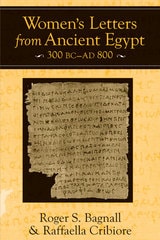
Women's Letters from Ancient Egypt, 300 BC-AD 800
Roger S. Bagnall and Raffaella Cribiore
University of Michigan Press, 2015
More than three hundred letters written in Greek and Egyptian by women in Egypt in the millennium from Alexander the Great to the Arab conquest survive on papyrus and pottery. These letters were written by women from various walks of life and shed light on critical social aspects of life in Egypt after the pharaohs. Roger S. Bagnall and Raffaella Cribiore collect the best preserved of these letters in translation and set them in their paleographic, linguistic, social, and economic contexts. As a result, Women's Letters from Ancient Egypt, 300 BC-AD 800, provides a sense that these women's habits, interests, and means of expression were a product more of their social and economic standing than of specifically gender-related concerns or behavior.
Women's Letters from Ancient Egypt, 300 BC-AD 800, takes the reader through theoretical discussions about the handwriting and language of the letters, the education and culture of the writers, and the writers' everyday concerns and occupations, as well as comparing these letters to similar letters from later historical periods. For each letter, discussion focuses on handwriting, language, and content; in addition, numerous illustrations help the reader to see the variety of handwritings. Most of this material has never been available in English translation before, and the letters have never previously been considered as a single body of material.
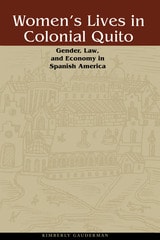
Women's Lives in Colonial Quito
Gender, Law, and Economy in Spanish AmericaBy Kimberly Gauderman
University of Texas Press, 2003
What did it mean to be a woman in colonial Spanish America? Given the many advances in women's rights since the nineteenth century, we might assume that colonial women had few rights and were fully subordinated to male authority in the family and in society—but we'd be wrong. In this provocative study, Kimberly Gauderman undermines the long-accepted patriarchal model of colonial society by uncovering the active participation of indigenous, mestiza, and Spanish women of all social classes in many aspects of civil life in seventeenth-century Quito.
Gauderman draws on records of criminal and civil proceedings, notarial records, and city council records to reveal women's use of legal and extra-legal means to achieve personal and economic goals; their often successful attempts to confront men's physical violence, adultery, lack of financial support, and broken promises of marriage; women's control over property; and their participation in the local, interregional, and international economies. This research clearly demonstrates that authority in colonial society was less hierarchical and more decentralized than the patriarchal model suggests, which gave women substantial control over economic and social resources.
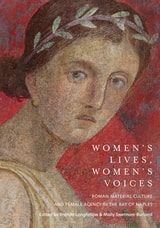
Women's Lives, Women's Voices
Roman Material Culture and Female Agency in the Bay of NaplesEdited by Brenda Longfellow and Molly Swetnam-Burland
University of Texas Press, 2021
Literary evidence is often silent about the lives of women in antiquity, particularly those from the buried cities of Pompeii and Herculaneum. Even when women are considered, they are often seen through the lens of their male counterparts. In this collection, Brenda Longfellow and Molly Swetnam-Burland have gathered an outstanding group of scholars to give voice to both the elite and ordinary women living on the Bay of Naples before the eruption of Vesuvius.
Using visual, architectural, archaeological, and epigraphic evidence, the authors consider how women in the region interacted with their communities through family relationships, businesses, and religious practices, in ways that could complement or complicate their primary social roles as mothers, daughters, and wives. They explore women-run businesses from weaving and innkeeping to prostitution, consider representations of women in portraits and graffiti, and examine how women expressed their identities in the funerary realm. Providing a new model for studying women in the ancient world, Women’s Lives, Women’s Voices brings to light the day-to-day activities of women of all classes in Pompeii and Herculaneum.

Women's Movement in international perspective
Latin America and BeyondMaxine Molyneux
University of London Press, 2003
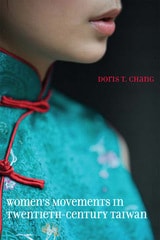
Women's Movements in Twentieth-Century Taiwan
Doris Chang
University of Illinois Press, 2008
This book is the first in English to consider women's movements and feminist discourses in twentieth-century Taiwan. Doris T. Chang examines the way in which Taiwanese women in the twentieth century selectively appropriated Western feminist theories to meet their needs in a modernizing Confucian culture. She illustrates the rise and fall of women's movements against the historical backdrop of the island's contested national identities, first vis-à-vis imperial Japan (1895-1945) and later with postwar China (1945-2000).
In particular, during periods of soft authoritarianism in the Japanese colonial era and late twentieth century, autonomous women's movements emerged and operated within the political perimeters set by the authoritarian regimes. Women strove to replace the "Good Wife, Wise Mother" ideal with an individualist feminism that meshed social, political, and economic gender equity with the prevailing Confucian family ideology. However, during periods of hard authoritarianism from the 1930s to the 1960s, the autonomous movements collapsed.
The particular brand of Taiwanese feminism developed from numerous outside influences, including interactions among an East Asian sociopolitical milieu, various strands of Western feminism, and even Marxist-Leninist women's liberation programs in Soviet Russia. Chinese communism appears not to have played a significant role, due to the Chinese Nationalists' restriction of communication with the mainland during their rule on post-World War II Taiwan.
Notably, this study compares the perspectives of Madame Chiang Kai-shek, whose husband led as the president of the Republic of China on Taiwan from 1949 to 1975, and Hsiu-lien Annette Lu, Taiwan's vice president from 2000 to 2008. Delving into period sources such as the highly influential feminist monthly magazine Awakening as well as interviews with feminist leaders, Chang provides a comprehensive historical and cross-cultural analysis of the struggle for gender equality in Taiwan.
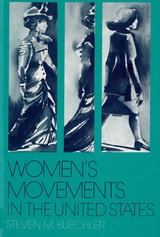
Women's Movements in the United States
Woman Suffrage, Equal Rights, and BeyondBuechler, Steven M
Rutgers University Press, 1990
Steven Buecheler has written a comparative sociological analysis of the woman suffrage movement (1840s-1920) and the contemporary women’s movement (1960s to the present). His identification of similarities and differences between these movements reveals persistent feminist issues over time as well as the distinctive concerns of each movement in the sociohistorical context. Buecheler compares these two movements in terms of their origins, organizations, ideologies, class and racial diversities, countermovement’s, and outcomes. He uses resource mobilization theory.
Buecheler explains why women’s movements arise, the forms of organization they adopt, the diversity of ideologies they espouse, and the class and racial composition of women’s movements. He also helps us to understand the roots of countermovements, as well as the mixture of successes and failures that has characterized both past and present women’s movements. While recognizing both the setbacks and the victories of the contemporary movement, Buecheler identifies grounds for relative optimism about the lasting consequences of this ongoing mobilization.
Buechler also explores the complex relationship between social change and social movements. Rapid change both enables and constricts the potential for collective action, which in turn reshapes social structure, By studying long-lived moments in a comparative framework, Buechler sheds light on the broader dialectical relation between agency and structure that is embodied in movement efforts at social change.
Women's Organizations and Democracy in South Africa
Contesting AuthorityShireen Hassim
University of Wisconsin Press, 2006
The transition to democracy in South Africa was one of the defining events in twentieth-century political history. The South African women’s movement is one of the most celebrated on the African continent. Shireen Hassim examines interactions between the two as she explores the gendered nature of liberation and regime change. Her work reveals how women’s political organizations both shaped and were shaped by the broader democratic movement. Alternately asserting their political independence and giving precedence to the democratic movement as a whole, women activists proved flexible and remarkably successful in influencing policy. At the same time, their feminism was profoundly shaped by the context of democratic and nationalist ideologies. In reading the last twenty-five years of South African history through a feminist framework, Hassim offers fresh insights into the interactions between civil society, political parties, and the state.
Hassim boldly confronts sensitive issues such as the tensions between autonomy and political dependency in feminists’ engagement with the African National Congress (ANC) and other democratic movements, and black-white relations within women’s organizations. She offers a historically informed discussion of the challenges facing feminist activists during a time of nationalist struggle and democratization.
Winner, Victoria Schuck Award for best book on women and politics, American Political Science Association
“An exceptional study, based on extensive research. . . . Highly recommended.”—Choice
“A rich history of women’s organizations in South African . . . . [Hassim] had observed at first hand, and often participated in, much of what she described. She had access to the informants and private archives that so enliven the narrative and enrich the analysis. She provides a finely balanced assessment.”—Gretchen Bauer, African Studies Review

Women's Political Activism in Palestine
Peacebuilding, Resistance, and SurvivalSophie Richter-Devroe
University of Illinois Press, 2018
Richter-Devroe's ethnographic approach draws from revealing in-depth interviews and participant observation in Palestine. The result: a forceful critique of mainstream conflict resolution methods and the failed woman-to-woman peacebuilding projects so lauded around the world. The liberal faith in dialogue as core of "the political" and the assumption that women's "nurturing" nature makes them superior peacemakers, collapse in the face of past and ongoing Israeli state violences.
Instead, women confront Israeli settler colonialism directly and indirectly in their popular and everyday acts of resistance. Richter-Devroe's analysis zooms in on the intricate dynamics of daily life in Palestine, tracing the emergent politics that women articulate and practice there. In shedding light on contemporary gendered "politics from below" in the region, the book invites a rethinking of the workings, shapes, and boundaries of the political.
Women's Political Voice
How Women are Transforming the Practice and Study of PoliticsJanet Flammang
Temple University Press, 1997
This book accomplishes four major tasks:
*It provides a comprehensive critical history of the changing research on politics and the changing nature of the political science discipline.
*It analyzes the course of women's political activism in the United States.
*It develops a rich case study of women's politics in Northern California's Silicon Valley, an area once nicknamed "the feminist capital of the nation."
*It examines coalitions and divisions within the women's movement with sensitivity to minority politics, as in the chapter subtitled, "The Hard Work of Sisterhood."
Women's Political Voice record the transformative politics of the women's movement and, simultaneously, urges political scientists to ask new questions and to adopt new methods.
Women's Ritual in Formative Oaxaca
Figurine-making, Divination, Death and the AncestorsJoyce Marcus
University of Michigan Press, 1998
Women's Speaking Justified and Other Pamphlets
Margaret Fell
Iter Press, 2018
The Other Voice in Early Modern Europe - The Toronto Series, volume 65
Women's Transborder Cinema
Authorship, Stardom, and Filmic Labor in South AsiaEsha Niyogi De
University of Illinois Press, 2024
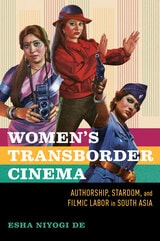
Can we write women’s authorial roles into the history of industrial cinema in South Asia? How can we understand women’s creative authority and access to the film business infrastructure in this postcolonial region? Esha Niyogi De draws on rare archival and oral sources to explore these questions from a uniquely comparative perspective, delving into examples of women holding influential positions as stars, directors, and producers across the film industries in India, Pakistan, and Bangladesh.
De uses film tropes to examine the ways women directors and film entrepreneurs claim creative control within the contexts of anti-colonial nationalism and global capitalism. The region’s fictional cinemas have become staging grounds for postcolonialism, with colonial and local hierarchies merged into new imperial formations. De’s analysis shows how the gendered intersections of inequity and opportunity shape women’s fiction filmmaking while illuminating the impact of state and market formations on the process.
Innovative and essential, Women’s Transborder Cinema examines the works of South Asia’s women filmmakers from a regional perspective.
Women's Utopias of the Eighteenth Century
Alessa Johns
University of Illinois Press, 2003
The most studied utopias have been proposed by men, but during the eighteenth century a group of reform-oriented female novelists put forth a series of work that expressed their views of, and their reservations about, ideal societies. In Women's Utopias of the Eighteenth Century, Alessa Johns examines the utopian communities envisaged by Mary Astell, Sarah Fielding, Mary Hamilton, Sarah Scott, and other writers from Britain and continental Europe, uncovering the ways in which they resembled--and departed from--traditional utopias.
Johns demonstrates that while traditional visions tended to look back to absolutist models, women's utopias quickly incorporated emerging liberal ideas that allowed far more room for personal initiative and gave agency to groups that were not culturally dominant, such as the female writers themselves. Women's utopias, Johns argues, were reproductive in nature. They had the potential to reimagine and perpetuate themselves.
Women's Views
The Narrative Stereograph in Nineteenth-Century AmericaMelody Davis
University of Massachusetts Press, 2015
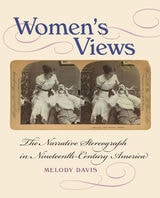
In this remarkable book, Melody Davis analyzes the underexamined genre of narrative stereoviews and their audiences. Because stereoviews were created for and marketed primarily to middle-class women in domestic settings, Davis argues that they represent one of the best sources for addressing the flow of historical change in women's lives. By analyzing dozens of stereoviews—including depictions of gender stereotypes, power dynamics, comical or sentimental situations, and scenes of both serious and playful innuendo—Davis energetically spins a broad history of the real social, sexual, and economic changes in the lives of American women. Her close reading and rich contextualization of these compelling vernacular objects bridge the gaps between the private viewing that took place within the home and the outside world of consumption and power that women were gradually entering.
Illustrated with more than one hundred stereographs and including a three-dimensional viewer, this book will appeal to readers with an interest in U.S. women's history, the history of photography, visual and cultural studies, and American studies.

Women's Voices, Women's Lives
Documents in Early American HistoryUniversity Press of New England, 1998
Women's Wisconsin
From Native Matriarchies to the New MillenniumEdited by Genevieve G. McBride
Wisconsin Historical Society Press, 2005
Women's Wisconsin: From Native Matriarchies to the New Millennium, a women's history anthology published on Women's Equality Day 2005, made history as the first single-source history of Wisconsin women. This unique tome features dozens of excerpts of articles as well as primary sources, such as women's letters, reminiscences, and oral histories, previously published over many decades in the Wisconsin Magazine of History and other Wisconsin Historical Society Press publications.
Editor and historian Genevieve G. McBride provides the contextual commentary and overarching analysis to make the history of Wisconsin women accessible to students, scholars, and lifelong learners.
Women's Words
Essay on French SingularityMona Ozouf
University of Chicago Press, 1997
Ozouf uses the woman's portrait, traditionally a male genre, to portray ten French women of letters whose lives span the period from the eve of the French Revolution to the resurgence of the feminist movement in the late twentieth century. She studies the letters and memoirs of Mme du Deffand, Mme de Charrière, Mme Roland, Mme de Staël, Mme de Rémusat, George Sand, Hubertine Auclert, Colette, Simone Weil, and Simone de Beauvoir. Rejecting the male constructions of femininity typical of this genre, Ozouf restores these women's voices in order to study their own often-conflicted attitudes toward education, marriage, motherhood, sex, and work, as well as the dilemma of writing in a literary world that did not support women's work.
Ozouf claims that a uniquely French feminism informed these women's lives, one that stems from the great egalitarian spirit of the French Revolution and is more tolerant of difference than its American counterparts. She argues that as a result, modern French culture has not isolated women from men in the same ways as American and British cultures have done.

Women's Work in Post-war Italy
An Oral and Filmic HistoryFlora Derounian
Intellect Books, 2023
Women’s Work in Post-War Italy explores women’s labor following World War II and Italy’s new republic. War and national reconstruction have typically been framed as masculine undertakings in Italy, but Flora Derounian shifts that frame to investigate the labor that Italian women were doing at this critical time of political, social, and ideological change, as well as how it was viewed by society and by women workers themselves. Drawing on original oral history interviews, Derounian compares women’s own words with the very different ways they were pictured in film, giving voice to the under-represented, and exposing the profound difference that work made to women’s lives.
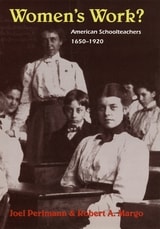
Women's Work?
American Schoolteachers, 1650-1920Joel Perlmann and Robert A. Margo
University of Chicago Press, 2001
In Women's Work the authors blend newly available quantitative evidence with historical narrative to show that distinctive regional school structures and related cultural patterns account for the initial regional difference, while a growing recognition that women could handle the work after they temporarily replaced men during the Civil War helps explain this widespread shift to female teachers later in the century. Yet despite this shift, a significant gender gap in pay and positions remained. This book offers an original and thought-provoking account of a remarkable historical transition.
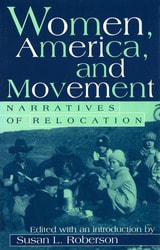
Women, America, and Movement
Narratives of RelocationEdited & Intro by Susan L. Roberson
University of Missouri Press, 1998
Since the colonial days, American women have traveled, migrated, and relocated, always faced with the challenge of reconstructing their homes for themselves and their families. Women, America, and Movement offers a journey through largely unexplored territory—the experiences of migrating American women. These narratives, both real and imagined, represent a range of personal and critical perspectives; some of the women describe their travels as expansive and freeing, while others relate the dreadful costs and sacrifices of relocating.
Despite the range of essays featured in this study, the writings all coalesce around the issues of politics, poetry, and self- identity described by Adrienne Rich as the elements of the "politics of location," treated here as the politics of relocation. The narratives featured in this book explore the impact of race, class, and sexual economics on migratory women, their self-identity, and their roles in family and social life. These issues demonstrate that in addition to geographic place, ideology is itself a space to be traversed.
By examining the writings of such women as Louise Erdrich, Zora Neale Hurston, and Gertrude Stein, the essayists included in this volume offer a variety of experiences. The book confronts such issues as racist politicking against Native Americans, African Americans, and Asian immigrants; sexist attitudes that limit women to the roles of wife, mother, and sexual object; and exploitation of migrants from Appalachia and of women newly arrived in America.
These essays also delve into the writings themselves by looking at what happens to narrative structure as authors or their characters cross geographic boundaries. The reader sees how women writers negotiate relocation in their texts and how the written word becomes a place where one finds oneself.

Women, Autobiography, Theory
A ReaderEdited by Sidonie A. Smith and Julia Watson
University of Wisconsin Press, 1998
Women, Autobiography, Theory is the first comprehensive guide to the burgeoning field of women’s autobiography, drawing into one volume the most significant theoretical discussions on women’s life writing of the last two decades.
The authoritative introduction by Sidonie Smith and Julia Watson surveys writing about women’s lives from the women’s movement of the late 1960s to the present. It also relates theoretical positions in women’s autobiography studies to postmodern, poststructuralist, postcolonial, and feminist analyses.
The essays from thirty-nine prominent critics and writers include many considered classics in this field. They explore narratives across the centuries and from around the globe, including testimonios, diaries, memoirs, letters, trauma accounts, prison narratives, coming-out stories, coming-of-age stories, and spiritual autobiographies. A list of more than two hundred women’s autobiographies and a comprehensive bibliography of critical scholarship in women’s autobiography provide invaluable information for scholars, teachers, and readers.
Women, Celebrity, and Literary Culture between the Wars
By Faye Hammill
University of Texas Press, 2007
As mass media burgeoned in the years between the first and second world wars, so did another phenomenon—celebrity. Beginning in Hollywood with the studio-orchestrated transformation of uncredited actors into brand-name stars, celebrity also spread to writers, whose personal appearances and private lives came to fascinate readers as much as their work. Women, Celebrity, and Literary Culture between the Wars profiles seven American, Canadian, and British women writers—Dorothy Parker, Anita Loos, Mae West, L. M. Montgomery, Margaret Kennedy, Stella Gibbons, and E. M. Delafield—who achieved literary celebrity in the 1920s and 1930s and whose work remains popular even today.
Faye Hammill investigates how the fame and commercial success of these writers—as well as their gender—affected the literary reception of their work. She explores how women writers sought to fashion their own celebrity images through various kinds of public performance and how the media appropriated these writers for particular cultural discourses. She also reassesses the relationship between celebrity culture and literary culture, demonstrating how the commercial success of these writers caused literary elites to denigrate their writing as "middlebrow," despite the fact that their work often challenged middle-class ideals of marriage, home, and family and complicated class categories and lines of social discrimination.
The first comparative study of North American and British literary celebrity, Women, Celebrity, and Literary Culture between the Wars offers a nuanced appreciation of the middlebrow in relation to modernism and popular culture.
Women, Compulsion, Modernity
The Moment of American NaturalismJennifer L. Fleissner
University of Chicago Press, 2004
Fleissner shows that this era's expanding opportunities for women were inseparable from the same modern developments—industrialization, consumerism—typically believed to constrain human freedom. With Women, Compulsion, and Modernity, Fleissner creates a new language for the strange way the writings of the time both broaden and question individual agency.
Women, Family, and Ritual in Renaissance Italy
Christiane Klapisch-Zuber
University of Chicago Press, 1987
Women, Gender and Fascism in Europe, 1919-45
Passmore, Kevin
Rutgers University Press, 2003
What attracts women to far-right movements that appear to denigrate their rights?
This question has vexed feminist scholars for decades and has led to many lively debates in the academy. In this context, during the 1980s, the study of women, gender, and fascism in twentieth-century Europe took off, pioneered by historians such as Claudia Koonz and Victoria de Grazia. This volume makes an exciting contribution to the evolving body of work based upon these earlier studies, bringing emerging scholarship on Central and Eastern Europe alongside that of more established Western European historiography on the topic.
Women, Gender and Fascism in Europe, 191945 features fourteen essays covering Serbia, Croatia, Yugoslavia, Romania, Hungary, Latvia, and Poland in addition to Germany, Italy, France, Spain, and Britain, and a conclusion that pulls together a European-wide perspective. As a whole, the volume provides a compelling comparative examination of this important topic through current research, literature reviews, and dialogue with existing debates. The essays cast new light on questions such as womens responsibility for the collapse of democracy in interwar Europe, the interaction between the womens movement and the extreme right, and the relationships between conceptions of national identity and gender.

Women, Gender, and the Palace Households in Ottoman Tunisia
By Amy Aisen Kallander
University of Texas Press, 2013
In this first in-depth study of the ruling family of Tunisia in the eighteenth and nineteenth centuries, Kallander investigates the palace as a site of familial and political significance. Through extensive archival research, she elucidates the domestic economy of the palace as well as the changing relationship between the ruling family of Tunis and the government, thus revealing how the private space of the palace mirrored the public political space.
“Instead of viewing the period as merely a precursor to colonial occupation and the nation-state as emphasized in precolonial or nationalist histories, this narrative moves away from images of stagnation and dependency to insist upon dynamism,” Kallander explains. She delves deep into palace dynamics, comparing them to those of monarchies outside of the Ottoman Empire to find persuasive evidence of a global modernity. She demonstrates how upper-class Muslim women were active political players, exerting their power through displays of wealth such as consumerism and philanthropy. Ultimately, she creates a rich view of the Husaynid dynastic culture that will surprise many, and stimulate debate and further research among scholars of Ottoman Tunisia.

Women, History, and Theory
The Essays of Joan KellyJoan Kelly
University of Chicago Press, 1986
Women, Jews and Muslims in the Texts of Reconquest Castile
Louise Mirrer
University of Michigan Press, 1996
This volume is the first in the field of medieval Hispanic studies to reexamine the canon in the light of recent critical work on language, gender, power, and the effects of domination. It shows how the texts imaginarily liberate Christian women from the authority of their husbands, in order to demonstrate how women's access to the discourses of power leads to tragedy and ruin for the men who fail to silence them.
Women, Jews, and Muslims in the Texts of Reconquest Castile makes the argument that dominant-"other" struggle, waged on the terrains of gender, religion, and war, is the most appropriate paradigm for discussing literary texts produced in the last centuries of reconquest. More than any other culture, medieval Spain reminds us of the provisional nature of national, religious, and sexual identity.
Exploring the gendering of subjects in society, the volume will be of interest to those in cultural and gender studies, Hispanic studies, medieval studies, and Middle Eastern studies. All texts are translated, and maps and illustrations help orient the reader.
Louise Mirrer is Professor and Chair, Department of Spanish and Portuguese, University of Minnesota.

Women, Money, and the Law
Nineteenth-Century Fiction, Gender, and the CourtsJoyce W. Warren
University of Iowa Press, 2005

Women, Mysticism, and Hysteria in Fin-de-Siècle Spain
Jennifer Smith
Vanderbilt University Press, 2021
Author Jennifer Smith also directs modern historians to the writings of Emilia Pardo Bazán (1851-1921) as a thinker whose work points out mysticism's subversive potential in terms of the patriarchal order. Pardo Bazán, unlike her male counterparts, rejected the hysteria diagnosis and promoted mysticism as a path for women's personal development and self-realization.