Results by title
28167 books match the query 'History' and 1118 start with w
Writing Like a Woman
Alicia Ostriker
University of Michigan Press, 1983
Writing Lives in the Eighteenth Century
Tanya M. Caldwell
Bucknell University Press, 2020
Published by Bucknell University Press. Distributed worldwide by Rutgers University Press.
Writing Mormon History 2
Authors' Stories Behind Their WorksGeisner, Joseph W.
Signature Books, 2024
Like its predecessor, Writing Mormon History, this book delves into the captivating narratives of multiple historians as they unfold the backstories of their various publishing endeavors. The authors detail their journeys in crafting influential books, articles, newspaper pieces, and anthologies that have significantly shaped our comprehension of Mormon history. Beyond the polished final products that readers typically encounter, the book explores the driving forces compelling authors to explore their topics and the sacrifices they make along the way.
The volume invites readers to ponder the motivations that fuel an author’s commitment to rigorous research and writing, and sheds light on the substantial time, ranging from minutes to long hours, invested in the sources they cite. Through these narratives, readers gain an appreciation for the dedication and passion that goes into the making of historical scholarship.
Whether you're an avid historian, a student of history, a scholar, or an aspiring author, Writing Mormon History 2 offers an important glimpse into the minds of these writers. This anthology provides a unique opportunity to connect with the human stories behind the academic works that have left an indelible mark on our understanding of Mormon history.
Writing National Cinema
Film Journals and Film Culture in PeruJeffrey Middents
Dartmouth College Press, 2009
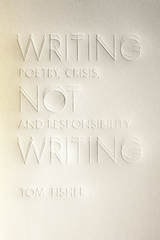
Writing Not Writing
Poetry, Crisis, and ResponsibilityTom Fisher
University of Iowa Press, 2017
Writing Not Writing both confirms this question into which crisis puts poetry and explores alternative modes of “response” and “responsibility” that poetry makes possible. Reading the silences of Oppen, Carl Rakosi, and Bob Kaufman, the renunciation of Laura Riding, and other more contemporary instances of poetic abnegation, Tom Fisher explores silence, refusal, and disavowal as political and ethical modes of response in a time of continuous crisis. Through a turn away from writing, these poets offer strategies of refusal and departure that leave anagrammatical hollows behind, activating the negational capacities of writing and aesthetics to disrupt the empire of sense, speech, and agency.
Fisher’s work is both an engaging and detailed analysis of four individual poets who left poetry behind and a theoretically provocative exploration of the political and ethical possibilities of silence, not-doing, and disavowal. In lucid but nuanced terms, Fisher makes the case that, from at least modernism forward, poetry is marked by refusals of speech and sense in order to open possibilities of response outside conventional forms of responsibility.
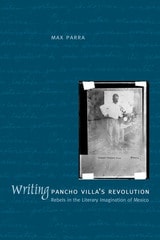
Writing Pancho Villa's Revolution
Rebels in the Literary Imagination of MexicoBy Max Parra
University of Texas Press, 2006
The 1910 Mexican Revolution saw Francisco "Pancho" Villa grow from social bandit to famed revolutionary leader. Although his rise to national prominence was short-lived, he and his followers (the villistas) inspired deep feelings of pride and power amongst the rural poor. After the Revolution (and Villa's ultimate defeat and death), the new ruling elite, resentful of his enormous popularity, marginalized and discounted him and his followers as uncivilized savages. Hence, it was in the realm of culture rather than politics that his true legacy would be debated and shaped.
Mexican literature following the Revolution created an enduring image of Villa and his followers. Writing Pancho Villa's Revolution focuses on the novels, chronicles, and testimonials written from 1925 to 1940 that narrated Villa's grassroots insurgency and celebrated—or condemned—his charismatic leadership. By focusing on works by urban writers Mariano Azuela (Los de abajo) and Martín Luis Guzmán (El águila y la serpiente), as well as works closer to the violent tradition of northern Mexican frontier life by Nellie Campobello (Cartucho), Celia Herrera (Villa ante la historia), and Rafael F. Muñoz (¡Vámonos con Pancho Villa!), this book examines the alternative views of the revolution and of the villistas. Max Parra studies how these works articulate different and at times competing views about class and the cultural "otherness" of the rebellious masses. This unique revisionist study of the villista novel also offers a deeper look into the process of how a nation's collective identity is formed.
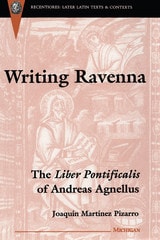
Writing Ravenna
The Liber Pontificalis of Andreas AgnellusJoaquin Martinez Pizarro
University of Michigan Press, 1995
Writing Ravenna is an attempt to deal with this work's literary significance and specifically with what it tells us about the creation and circulation of narrative in the Early Middle Ages. The book's first chapter analyzes the ways in which the local and international interests of the Ravenna clergy are reflected in the design, genre, and narrative rhetoric of the Liber. The second chapter characterizes the specific textuality, given that the Liber was composed for oral delivery. The final chapter offers translations of the four most interesting narrative sequences in the Liber, followed by full analyses of sources, narrative technique, and ideological aims.
Writing Ravenna will be of interest to a broad spectrum of scholars, including art historians, scholars of late antiquity and the Early Middle Ages, religious historians, and literary critics.
Joaquin Martinez Pizarro is Associate Professor of English, State University of New York at Stony Brook. He is also the author of A Rhetoric of the Scene: Dramatic Narrative in the Early Middle Ages.
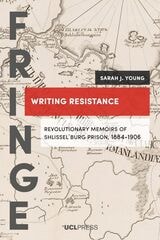
Writing Resistance
Revolutionary Memoirs of Shlissel´burg Prison, 1884-1906Sarah J. Young
University College London, 2021
In 1884, sixty-eight prisoners convicted of terrorism and revolutionary activity were transferred to a new maximum-security prison at Shlissel´burg Fortress near St. Petersburg. Inhuman conditions in the prison caused severe mental and physical deterioration among the prisoners, and over half died. However, the survivors fought back to reform the prison and improve the inmates’ living conditions. Their memoirs enshrined their experience in revolutionary mythology and served as an indictment of the Tsarist autocracy’s loss of moral authority. This book features three of these memoirs—translated into English for the first time—as well as an introductory essay that analyzes the memoirs’ construction of a collective narrative of resilience, resistance, and renewal. The first extended study of these memoirs in English, this book uncovers an important episode in the history of political imprisonment. It will be of interest to scholars and students of the Russian revolution, carceral history, penal practice and behaviors, and prison and life writing.
Writing Revolution
Hispanic Anarchism in the United StatesEdited by Christopher J. Castañeda and Montse Feu
University of Illinois Press, 2019
Writing That Breaks Stones
African Child Soldier NarrativesJoya Uraizee
Michigan State University Press, 2020
Writing Their Bodies
Restoring Rhetorical Relations at the Carlisle Indian SchoolSarah Klotz
Utah State University Press, 2020
This approach tracks the relationship between curriculum and resistance and enumerates an anti-assimilationist methodology for teachers and scholars of writing in contemporary classrooms. From the Carlisle archive emerges the concept of a rhetoric of relations, a set of Native American communicative practices that circulates in processes of intercultural interpretation and world-making. Klotz explores how embodied and material practices allowed Indigenous rhetors to maintain their cultural identities in the off-reservation boarding school system and critiques the settler fantasy of benevolence that propels assimilationist models of English education.
Writing Their Bodies moves beyond language and literacy education where educators standardize and limit their students’ means of communication and describes the extraordinary expressive repositories that Indigenous rhetors draw upon to survive, persist, and build futures in colonial institutions of education.
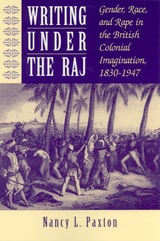
Writing Under the Raj
Gender, Race, and Rape in the British Colonial Imagination, 1830-1947Nancy L. Paxton
Rutgers University Press, 1999
Writing Under the Raj is the first study to challenge the long-held critical assumption that the rape of colonizing women by colonized men was the first, or the only, rape script in British colonial literature. Nancy Paxton asks why rape disappears in British literature about English domestic life in the 1790s and charts its reappearance in British literature about India written between 1830 and 1947. Paxton displays the hybrid qualities of familiar novels like Kipling’s Kim and Forster’s A Passage to India by situating them in a richly detailed cultural context that reveals the dynamic relationship between metropolitan British literature and novels written by men and women who lived in the colonial contact zone of British India throughout this period.
Drawing on current feminist and gender theory as well as a wide range of historical and cultural sources, Paxton identifies four different “scripts” about interracial and intraracial rape that appear in novels about India during the period of British rule. Surveying more than thirty canonized and popular Anglo-Indian novels, Paxton shows how the treatment of rape reflects basic conflicts in the social and sexual contracts defining British and Indian women’s relationship to the nation state throughout the period. This study reveals how and why novels written after the Indian Uprising of 1857 popularized the theme of English women victimized by Indian men. Paxton demonstrates how all these novels reflect unresolved ideological and symbolic conflicts in British ideas about sex, violence, and power.
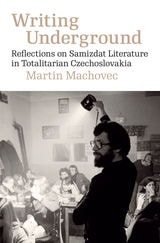
Writing Underground
Reflections on Samizdat Literature in Totalitarian CzechoslovakiaMartin Machovec
Karolinum Press, 2019
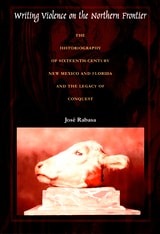
Writing Violence on the Northern Frontier
The Historiography of Sixteenth-Century New Mexico and Florida and the Legacy of ConquestJosé Rabasa
Duke University Press, 2000
To advance his argument Rabasa analyzes visual and verbal representations, colonialist programs, and the theories of colonization that informed the historiography of sixteenth-century New Mexico and Florida, which includes the territory from the Pacific coast to Kansas, and from present-day Florida to Tennessee and Arkansas. Using little-known materials from the northern borderlands of Spanish imperial expansion, Rabasa works to complicate notions of violence and their relationship to writing. Understood in juxtaposition with modern texts on postcolonial theory, his description of the dual function of these colonial texts—to represent material acts of violence and to act as violence itself—also emphasizes the lingering effects of this phenomenon in contemporary intellectual work and everyday life. In this way Writing Violence on the Northern Frontier serves not only as an explanation of what colonialist texts do but also instigates new ways of thinking about colonial discourse.
This book will interest scholars of colonial studies and early North American history, as well as a broader audience interested in interdisciplinary perspectives on the topic of racial, ethnic, and literary violences.
Writing Wars
Authorship and American War Fiction, WWI to PresentDavid F. Eisler
University of Iowa Press, 2022
2024 Senators Bob and Elizabeth Dole Biennial Award for Distinguished Book in Veterans Studies, winner
Who writes novels about war? For nearly a century after World War I, the answer was simple: soldiers who had been there. The assumption that a person must have experienced war in the flesh in order to write about it in fiction was taken for granted by writers, reviewers, critics, and even scholars.
Contemporary American fiction tells a different story. Less than half of the authors of contemporary war novels are veterans. And that’s hardly the only change. Today’s war novelists focus on the psychological and moral challenges of soldiers coming home rather than the physical danger of combat overseas. They also imagine the consequences of the wars from non-American perspectives in a way that defies the genre’s conventions. To understand why these changes have occurred, David Eisler argues that we must go back nearly fifty years, to the political decision to abolish the draft. The ramifications rippled into the field of cultural production, transforming the foundational characteristics— authorship, content, and form—of the American war fiction genre.
Writing Western History
Essays on Major Western HistoriansRichard W. Etulain
University of Nevada Press, 2002
Writing Without Words
Alternative Literacies in Mesoamerica and the AndesElizabeth Hill Boone and Walter D. Mignolo, eds.
Duke University Press, 1994
The contributors--who include art historians, anthropologists, and literary theorists--examine the ways in which ancient Mesoamerican and Andean peoples conveyed meaning through hieroglyphic, pictorial, and coded systems, systems inseparable from the ideologies they were developed to serve. We see, then, how these systems changed with the European invasion, and how uniquely colonial writing systems came to embody the post-conquest American ideologies. The authors also explore the role of these early systems in religious discourse and their relation to later colonial writing.
Bringing the insights from Mesoamerica and the Andes to bear on a fundamental exchange among art history, literary theory, semiotics, and anthropology, the volume reveals the power contained in the medium of writing.
Contributors. Elizabeth Hill Boone, Tom Cummins, Stephen Houston, Mark B. King, Dana Leibsohn, Walter D. Mignolo, John Monaghan, John M. D. Pohl, Joanne Rappaport, Peter van der Loo

Writing Women in Central America
Gender and the Fictionalization of HistoryLaura Barbas-Rhoden
Ohio University Press, 2003
What is the relationship between history and fiction in a place with a contentious past? And of what concern is gender in the telling of stories about that past?
Writing Women in Central America explores these questions as it considers key Central American texts. This study analyzes how authors appropriate history to confront the rhetoric of the state, global economic powers, and even dissident groups within their own cultures. Laura Barbas-Rhoden winds a common thread in the literary imaginations of Claribel Alegría, Rosario Aguilar, Gioconda Belli, and Tatiana Lobo and shows how these writers offer provocative supplements to the historical record.
Writing Women in Central America considers more than a dozen narratives in which the authors craft their own interpretations of history to make room for women, indigenous peoples, and Afro-Latin Americans. Some of the texts reveal silences in the narratives of empire- and nation-building. Others reinterpret events to highlight the struggle of marginalized peoples for dignity and humanity in the face of oppression. All confront the ways in which stories have been told about the past.
Yet ultimately, Professor Barbas-Rhoden asserts, all concern the present and the future. As seen in Writing Women in Central America, though their fictions are historical, the writers direct their readers beyond the present toward a more just future for all who live in Central America.
Writing Women's Communities
The Politics and Poetics of Contemporary Multi-Genre AnthologiesCynthia G. Franklin
University of Wisconsin Press, 1997
Beginning in the 1980s, a number of popular and influential anthologies organized around themes of shared identity—Nice Jewish Girls, This Bridge Called My Back, Home Girls, and others—have brought together women’s fiction and poetry with journal entries, personal narratives, and transcribed conversations. These groundbreaking multi-genre anthologies, Cynthia G. Franklin demonstrates, have played a crucial role in shaping current literary studies, in defining cultural and political movements, and in building connections between academic and other communities.
Exploring intersections and alliances across the often competing categories of race, class, gender, and sexuality, Writing Women’s Communities contributes to current public debates about multiculturalism, feminism, identity politics, the academy as a site of political activism, and the relationship between literature and politics.

Writing Wrongs
W.D. King
Temple University Press, 1997
Writing Wrongs: The Work of Wallace Shawn is a close and personal look into the life and literary work of the man whom Joseph Papp called "a dangerous writer." As the son of the late William Shawn, renowned editor of The New Yorker, Wallace Shawn was born into privilege and trained to thoroughly liberal values, but his plays relentlessly question the liberal faith in individualism and common decency. In an uncompromising way that is all his own, Shawn registers the shock of the new.
In works such as Aunt Dan and Lemon, My Dinner with Andre, and The Designated Mourner, he wrenches out of place all of the usual, comfortable mechanisms by which we operate as audiences. Perhaps our discomfort and struggle to understand a play might provoke some change in the way we see ourselves and behave in relation to others -- but Shawn offers little in the way of solace.
W.D. King's incisive critiques of the plays and inquiry into the life and times of their author develop a portrait of Shawn as a major figure in contemporary theater.
Writing across Cultures
Narrative Transculturation in Latin AmericaAngel Rama
Duke University Press, 2012
In Writing across Cultures, Rama extends the Cuban anthropologist Fernando Ortiz's theory of transculturation far beyond Cuba, bringing it to bear on regional cultures across Latin America, where new cultural arrangements have been forming among indigenous, African, and European societies for the better part of five centuries. Rama applies this concept to the work of the Peruvian novelist, poet, and anthropologist José María Arguedas, whose writing drew on both Spanish and Quechua, Peru's two major languages and, by extension, cultures. Rama considered Arguedas's novel Los ríos profundos (Deep Rivers) to be the most accomplished example of narrative transculturation in Latin America. Writing across Cultures is the second of Rama's books to be translated into English.
Writing across the Color Line
U.S. Print Culture and the Rise of Ethnic Literature, 1877-1920Lucas A. Dietrich
University of Massachusetts Press, 2020
Writing across the Color Line details how this body of literature was selected for publication, edited, manufactured, advertised, and distributed, even as it faced hostile criticism and frequent misinterpretation by white readers. Shedding light on the transformative potential of multiethnic literature and the tenacity of racist attitudes that dominated the literary marketplace, Dietrich proves that Native American, African American, Latinx, Asian American, and Irish American writers of the period relied on self-caricature, tricksterism, and the careful control of authorial personae to influence white audiences.
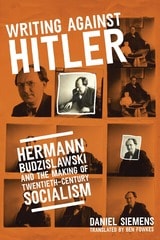
Writing against Hitler
Hermann Budzislawski and the Making of Twentieth-Century SocialismDaniel Siemens, Translated by Ben Fowkes
University of Wisconsin Press, 2025
Through the twin stories of a highly ambitious figure and the legendary publication he headed, Siemens charts the course of the intellectual Left’s rise and decline in power during the decades that shaped the political divides of the mid-twentieth century. Crucially, his account challenges the widely held belief that post-1989 German unification has represented a victory over the traumas of the past. Instead, Siemens shows the complexity of different strains of socialist thought and activity and reveals the contested place of Nazi Germany’s exiles at the center of Cold War Germany’s cultural history.
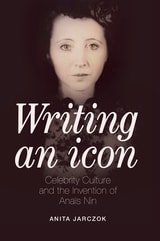
Writing an Icon
Celebrity Culture and the Invention of Anaïs NinAnita Jarczok
Ohio University Press, 2017
Anaïs Nin, the diarist, novelist, and provocateur, occupied a singular space in twentieth-century culture, not only as a literary figure and voice of female sexual liberation but as a celebrity and symbol of shifting social mores in postwar America. Before Madonna and her many imitators, there was Nin; yet, until now, there has been no major study of Nin as a celebrity figure.
In Writing an Icon, Anita Jarczok reveals how Nin carefully crafted her literary and public personae, which she rewrote and restyled to suit her needs and desires. When the first volume of her diary was published in 1966, Nin became a celebrity, notorious beyond the artistic and literary circles in which she previously had operated. Jarczok examines the ways in which the American media appropriated and deconstructed Nin and analyzes the influence of Nin’s guiding hand in their construction of her public persona.
The key to understanding Nin’s celebrity in its shifting forms, Jarczok contends, is the Diary itself, the principal vehicle through which her image has been mediated. Combining the perspectives of narrative and cultural studies, Jarczok traces the trajectory of Nin’s celebrity, the reception of her writings. The result is an innovative investigation of the dynamic relationships of Nin’s writing, identity, public image, and consumer culture.
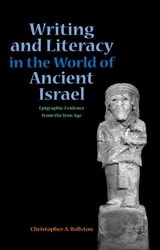
Writing and Literacy in the World of Ancient Israel
Epigraphic Evidence from the Iron AgeChristopher A. Rollston
SBL Press, 2010
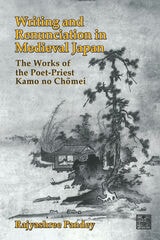
Writing and Renunciation in Medieval Japan
The Works of the Poet-Priest Kamo no ChomeiRajyashree Pandey
University of Michigan Press, 1998
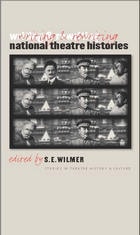
Writing and Rewriting National Theatre Histories
S.E. Wilmer
University of Iowa Press, 2004
Writing and School Reform
Writing Instruction in the Age of Common Core and Standardized TestingJoanne Addison
University Press of Colorado, 2017
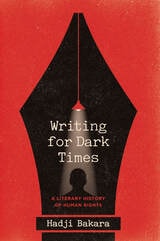
Writing for Dark Times
A Literary History of Human RightsHadji Bakara
University of Chicago Press, 2026
A history of human rights that places writers and their ideas at its center.
At Amnesty International’s headquarters in London hangs a large copy of Seamus Heaney’s “From the Republic of Conscience,” a poem that touches on neither imprisonment nor torture but instead suggests that acts of literary creation are themselves a form of human rights work, important for bringing new things into the world rather than removing evil from it. Why does a poem about the power of creation stand at the center of an organization known for publicizing atrocity? What can it tell us about human rights?
Hadji Bakara’s Writing for Dark Times tells the story of the writer’s distinct place in the history of human rights. It argues that the relationship between the creative work of writing and the pursuit of universal rights is an important but misunderstood dimension of both literary and human rights history over the past century. Following a diverse cast of writers from the First World War through the end of the Cold War, including Bertolt Brecht, Anna Seghers, Archibald MacLeish, Albert Camus, Czeslaw Milosz, Ngũgĩ wa Thiong’o, Seamus Heaney, Nadine Gordimer, and J.M. Coetzee, Bakara shows how their efforts to theorize and support human rights were bound up with changing ideas about the place of their own work in the world––the work of writing. And across the twentieth century, the book reveals, two central ideas about writing took shape around the politics of human rights. Writing creates something new and inspires the will for change.
For those who study human rights, Writing for Dark Times offers both an archive and a method for better understanding the influence of writers on the historical development of the concept. For those in literary studies, the book provides a new account of how human rights shaped the politics of twentieth-century literature. Few books have made as vivid a case for literature’s relevance to our most exalted ideals and institutions.
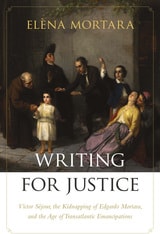
Writing for Justice
Victor Séjour, the Kidnapping of Edgardo Mortara, and the Age of Transatlantic EmancipationsElèna Mortara
Dartmouth College Press, 2015
Writing for the Street, Writing in the Garret
Melville, Dickinson, and Private PublicationMichael Kearns
The Ohio State University Press, 2010
Although Herman Melville and Emily Dickinson differed dramatically in terms of their lives and writing careers, they shared not only a distaste for writing “for the street” (mass readership) but a preference for the intimate writer–reader relationship created by private publication, especially in the form of manuscripts. In Writing for the Street, Writing in the Garret: Melville, Dickinson, and Private Publication, Michael Kearns shows that this distaste and preference were influenced by American copyright law, by a growing tendency in America to treat not only publications but their authors as commodities, and by the romantic stereotype of the artist (usually suffering in a garret) living only for her or his own work.
Writing from the Edge of the World
The Memoirs of Darien, 1514-1527Gonzalo Fernandez de Oviedo
University of Alabama Press, 2006
Writing in the Academic Disciplines, Second Edition
A Curricular HistoryDavid R. Russell. Foreword by Elaine P. Maimon
Southern Illinois University Press, 2002
“To understand the ways students learn to write, we must go beyond the small and all too often marginalized component of the curriculum that treats writing explicitly and look at the broader, though largely tacit traditions students encounter in the whole curriculum,” explains David R. Russell, in the introduction to this singular study. The updated edition provides a comprehensive history of writing instruction outside general composition courses in American secondary and higher education, from the founding public secondary schools and research universities in the 1870s, through the spread of the writing-across-the-curriculum movement in the 1980s, through the WAC efforts in contemporary curriculums.
Writing in the Air
Heterogeneity and the Persistence of Oral Tradition in Andean LiteraturesAntonio Cornejo Polar
Duke University Press, 2013
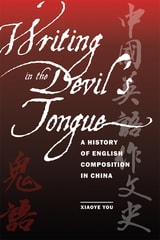
Writing in the Devil's Tongue
A History of English Composition in ChinaXiaoye You
Southern Illinois University Press, 2010
Winner, CCCC Outstanding Book Award
Until recently, American composition scholars have studied writing instruction mainly within the borders of their own nation, rarely considering English composition in the global context in which writing in English is increasingly taught. Writing in the Devil’s Tongue challenges this anachronistic approach by examining the history of English composition instruction in an East Asian country. Author Xiaoye You offers scholars a chance to observe how a nation changed from monolingual writing practices to bilingual writing instruction in a school setting.
You makes extensive use of archival sources to help trace bilingual writing instruction in China back to 1862, when English was first taught in government schools. Treating the Chinese pursuit of modernity as the overarching theme, he explores how the entry of Anglo-American rhetoric and composition challenged and altered the traditional monolithic practice of teaching Chinese writing in the Confucian spirit. The author focuses on four aspects of this history: the Chinese negotiation with Anglo-American rhetoric, their search for innovative approaches to instruction, students’ situated use of English writing, and local scholarship in English composition.
Unlike previous composition histories, which have tended to focus on institutional, disciplinary, and pedagogical issues, Writing in the Devil’s Tongue brings students back to center stage by featuring several passages written by them in each chapter. These passages not only showcase rhetorical and linguistic features of their writings but also serve as representative anecdotes that reveal the complex ways in which students, responding to their situations, performed multivalent, intercultural discourses. In addition, You moves out of the classroom and into the historical, cultural, and political contexts that shaped both Chinese writing and composing practices and the pedagogies that were adopted to teach English to Chinese in China. Teachers, students, and scholars reading this book will learn a great deal about the political and cultural impact that teaching English composition has had in China and about the ways in which Chinese writing and composition continues to be shaped by rich and diverse cultural traditions and political discourses.
In showcasing the Chinese struggle with teaching and practicing bilingual composition, Writing in the Devil’s Tongue alerts American writing scholars and teachers to an outdated English monolingual mentality and urges them to modify their rhetorical assumptions, pedagogical approaches, and writing practices in the age of globalization.
Writing in the Margins
The Ethics of Expatriation from Lawrence to OndaatjeMarilyn Adler Papayanis
Vanderbilt University Press, 2005
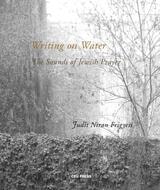
Writing on Water
The Sounds of Jewish PrayerJudit Niran Frigyesi
Central European University Press, 2018
Writing on Water grasps the phenomenon of sound in prayer, that is, a meaning in sounds and soundscapes, and a musical essence in the act of praying.
The impetus for the book arose from the author’s fieldwork among traditional Jews during the era of communism in Budapest and Prague. In that period the Jewish religion and Jewishness in general were supressed and rituals became semi-secret and turned inward. The book is a witness to these communities and their rituals, but it goes beyond documentation. The uniqueness of the sounds of the rituals compelled the author to try to comprehend how melodies and soundscapes became the sustaining/protective environment, as well as the vehicle, for the expression of a world-orientation—in a situation where open discourse was inconceivable.
The book is based on extensive interviews, musical recordings, photographs and scholarly analyses. It is unique in its choice of communities, its wealth of original documents, and its novel interpretation of sound.
Writing on Water is creative non-fiction. The presentation is evocative and poetic, but at the same time it transmits knowledge. The book can aid research and serve in courses in philosophy, religion, music, ethnomusicology, anthropology, aesthetics, Jewish studies, folklore, oral history, and performance studies. It is also a work of art and literature.
Writing the Caribbean in Magazine Time
Katerina Gonzalez Seligmann
Rutgers University Press, 2021
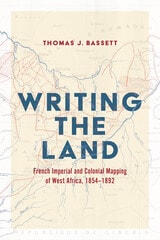
Writing the Land
French Imperial and Colonial Mapping of West Africa, 1854–1892Thomas J. Bassett
University of Chicago Press, 2027
Reveals the intertwined nature of imperial mapping and map history through the making of the colony of French Soudan in nineteenth-century West Africa.
Thomas J. Bassett’s Writing the Land argues that mapping played a key role in France’s territorial conquest of Africa, and that the process of imperial expansion and colonization shaped map history by influencing how maps were constructed, circulated, and used. Analyzing military and surveying campaigns over half a century in an area that became the colony of French Soudan, Bassett focuses on the social and spatial problems that surveyors and mapmakers tried to solve in the process of territorial conquest, as well as the conflicts that arose as they pursued their goals.
In their efforts to obtain this territory, French military leaders, cartographers, and expedition members came into continual contact with local Africans, with whom they negotiated and clashed. Often, imperial officers relied on intermediaries to navigate West African geography, drawing on the knowledge of political authorities, interpreters, guides, and long-distance traders; the maps they produced are inextricable from these interactions. Ultimately, Bassett claims, examining the processes of mapping in the context of these encounters leads us to understand these maps anew as Euro-African constructions, ones that emerge from a complex process of exchange and domination.
Writing the Past, Inscribing the Future
History as Prophecy in Colonial JavaNancy K. Florida
Duke University Press, 1995
Babad Jaka Tingkir, the historical prophecy that Writing the Past, Inscribing the Future translates and reads, is uniquely suited for such a study. Composing an engaging history of the emergence of Islamic power in central Java around the turn of the sixteenth century, Babad Jaka Tingkir was written from the vantage of colonial exile to contest the more dominant dynastic historical traditions of nineteenth-century court literature. Florida reveals how this history’s episodic form and focus on characters at the margins of the social order work to disrupt the genealogical claims of conventional royal historiography—thus prophetically to open the possibility of an alternative future.
Writing the Pioneer Woman
Janet Floyd
University of Missouri Press, 2002
Focusing on a series of autobiographical texts, published and private, well known and obscure, Writing the Pioneer Woman examines the writing of domestic life on the nineteenth-century North American frontier. In an attempt to determine the meanings found in the pioneer woman's everyday writings—from records of recipes to descriptions of washing floors—Janet Floyd explores domestic details in the autobiographical writing of British and Anglo-American female emigrants.
Floyd argues that the figure of the pioneer housewife has been a significant one within general cultural debates about the home and the domestic life of women, on both sides of the Atlantic. She looks at the varied ideological work performed by this figure over the last 150 years and at what the pioneer woman signifies and has signified in national cultural debates concerning womanhood and home.
The autobiographies under discussion are not only of homemaking but also of emigration. Equally, these texts are about the enterprise of emigration, with several of them written to advise prospective emigrants. Using the insights of diaspora and migration theory, Floyd shows that these writings portray a far subtler role for the pioneer woman than is suggested by previous scholars, who often see her either as participating directly in the overall domestication of colonial space or as being strictly marginal to that process.
Written in response to the highly critical discussion of the attitudes and activities of female "civilizers" within "New" Western history and postcolonial studies, Writing the Pioneer Woman will be a valuable addition to the burgeoning discussion of the literature of domesticity.
Writing the Record
The Village Voice and the Birth of Rock CriticismDevon Powers
University of Massachusetts Press, 2013
During the mid-1960s, a small group of young journalists made it their mission to write about popular music, especially rock, as something worthy of serious intellectual scrutiny. Their efforts not only transformed the perspective on the era's music but revolutionized how Americans have come to think, talk, and write about popular music ever since.
In Writing the Record, Devon Powers explores this shift by focusing on The Village Voice, a key publication in the rise of rock criticism. Revisiting the work of early pop critics such as Richard Goldstein and Robert Christgau, Powers shows how they stood at the front lines of the mass culture debates, challenging old assumptions and hierarchies and offering pioneering political and social critiques of the music. Part of a college-educated generation of journalists, Voice critics explored connections between rock and contemporary intellectual trends such as postmodernism, identity politics, and critical theory. In so doing, they became important forerunners of the academic study of popular culture that would emerge during the 1970s.
Drawing on archival materials, interviews, and insights from media and cultural studies, Powers not only narrates a story that has been long overlooked but also argues that pop music criticism has been an important channel for the expression of public intellectualism. This is a history that is particularly relevant today, given the challenges faced by criticism of all stripes in our current media environment. Powers makes the case for the value of well-informed cultural criticism in an age when it is often suggested that “everyone is a critic.”
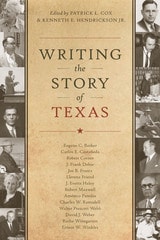
Writing the Story of Texas
Edited by Patrick L. Cox and Kenneth E. Hendrickson Jr.
University of Texas Press, 2013
The history of the Lone Star state is a narrative dominated by larger-than-life personalities and often-contentious legends, presenting interesting challenges for historians. Perhaps for this reason, Texas has produced a cadre of revered historians who have had a significant impact on the preservation (some would argue creation) of our state’s past. An anthology of biographical essays, Writing the Story of Texas pays tribute to the scholars who shaped our understanding of Texas’s past and, ultimately, the Texan identity.
Edited by esteemed historians Patrick Cox and Kenneth Hendrickson, this collection includes insightful, cross-generational examinations of pivotal individuals who interpreted our history. On these pages, the contributors chart the progression from Eugene C. Barker’s groundbreaking research to his public confrontations with Texas political leaders and his fellow historians. They look at Walter Prescott Webb’s fundamental, innovative vision as a promoter of the past and Ruthe Winegarten’s efforts to shine the spotlight on minorities and women who made history across the state. Other essayists explore Llerena Friend delving into an ambitious study of Sam Houston, Charles Ramsdell courageously addressing delicate issues such as racism and launching his controversial examination of Reconstruction in Texas, Robert Cotner—an Ohio-born product of the Ivy League—bringing a fresh perspective to the field, and Robert Maxwell engaged in early work in environmental history.
Writing the Trail
Five Women's Frontier NarrativesDeborah Lawrence
University of Iowa Press, 2006
Writing through Boyhood in the Long Eighteenth Century
Age, Gender, and WorkChantel Lavoie
University of Delaware Press, 2024
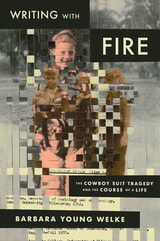
Writing with Fire
The Cowboy Suit Tragedy and the Course of a LifeBarbara Young Welke
University of Chicago Press, 2026
A cultural and legal history intertwined with a deeply emotional meditation on the course of life, memory, and the documents that define us.
During the 1940s and 1950s, an untold number of American children suffered devastating injuries when the fur-like fabric on the chaps of their Gene Autry–branded cowboy playsuits exploded into flame. Barbara Young Welke was researching this history when her teenage daughter unexpectedly died.
The shock of Welke’s loss transformed her understanding of the children and their families. Her experience also led her to question the norms of scholarship and of writing. Historians are trained to separate the personal from the intellectual, to be suspicious of emotion. These and other norms are embedded in and reinforced by the calling card of academics, the curriculum vitae. Welke wondered how that cold document—with its literal meaning, “the course of life”—had become a form that excludes so much of what gives life meaning. What impact did that have on what we know, how we know it, and how we understand ourselves? Similarly, Welke wondered, what might we see if we looked at the history of the cowboy suit tragedy as more than a matter of lawsuits brought by grieving families? Here, Welke traces the making, marketing, and selling of the cowboy suits; the lengths the defendants went to avoid and limit liability; and the meaning of the injuries, deaths, and legal settlements in the course of these children’s and families’ lives.
Writing with Fire interweaves the histories of the cowboy suit tragedy and the curriculum vitae. Grounded in archival and legal research, oral histories, and letters Welke wrote her daughter following her death, Welke offers an inimitable examination of trauma, law, autobiography, and identity. The result is revelatory and unforgettable: a provocative historical reflection on life and death, depression and war, markets and families, law, power, and precarity in modern America.
Writing, Law, and Kingship in Old Babylonian Mesopotamia
Dominique Charpin
University of Chicago Press, 2010
Ancient Mesopotamia, the fertile crescent between the Tigris and Euphrates rivers in what is now western Iraq and eastern Syria, is considered to be the cradle of civilization—home of the Babylonian and Assyrian empires, as well as the great Code of Hammurabi. The Code was only part of a rich juridical culture from 2200–1600 BCE that saw the invention of writing and the development of its relationship to law, among other remarkable firsts.
Though ancient history offers inexhaustible riches, Dominique Charpin focuses here on the legal systems of Old Babylonian Mesopotamia and offers considerable insight into how writing and the law evolved together to forge the principles of authority, precedent, and documentation that dominate us to this day. As legal codes throughout the region evolved through advances in cuneiform writing, kings and governments were able to stabilize their control over distant realms and impose a common language—which gave rise to complex social systems overseen by magistrates, judges, and scribes that eventually became the vast empires of history books. Sure to attract any reader with an interest in the ancient Near East, as well as rhetoric, legal history, and classical studies, this book is an innovative account of the intertwined histories of law and language.
Writings
Saint John of Damascus
Catholic University of America Press, 1958
Writings of Warner Mifflin
Forgotten Quaker Abolitionist of the Revolutionary EraGary B. Nash
University of Delaware Press, 2021
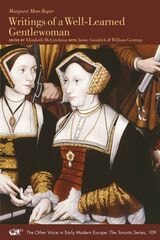
Writings of a Well-Learned Gentlewoman
Margaret More Roper
Iter Press, 2024
Margaret More Roper (1505–44) was, at the age of nineteen, the first early modern woman writer in Tudor England and the first nonroyal woman to have a book printed in the English language. As the eldest daughter of Sir Thomas More, Roper received a cutting-edge education in Latin and Greek that was virtually unprecedented for a woman. Besides gaining an international reputation for her outstanding erudition, Roper served as More’s confidante during his imprisonment. Her correspondence from this period offers valuable insight into a key moment in English history.
This Other Voice series edition recognizes Margaret More Roper as a notable historical figure in her own right and as one of the most learned women of her time. It publishes all her extant writings in modernized spelling, with annotations, a glossary, and a current bibliography of studies about her.