Results by title
2194 books match the query 'Women's Studies' and 222 start with w
Women and Politics in Latin America
Craske, Nikki
Rutgers University Press, 1999
This book provides a comprehensive view of women's political participation in Latin America. Focusing on the latter half of the twentieth century, it examines five different arenas of action and debate: political institutions, workplaces, social movements, revolutions, and feminisms. Nikki Craske explores the ways in which women have become more effective in the public arena as the context of politics has altered.
Craske demonstrates how gender relations shape political institutions and practices while simultaneously being shaped by them. She examines the moments when women's action has challenged received ideas, and had a significant impact on the political life of Latin American nations. Women remain heavily underrepresented in political lie, despite their important role in popular movements against authoritarianism, Craske states, and posits that the economy is a substantial constraint on women's political participation. This powerful book analyzes the gains made since the 1950s while scrutinizing the challenges and difficulties which still constrain women's political participation.
Women and Politics in the Age of the Democratic Revolution
Harriet B. Applewhite and Darline G. Levy, Editors
University of Michigan Press, 1993
Women and Power in Zimbabwe
Promises of FeminismCarolyn Martin Shaw
University of Illinois Press, 2015
Using history, literature, participant observation, and interviews, Carolyn Martin Shaw surveys Zimbabwean feminisms from the colonial era to today. She examines how actions as clearly disparate as baking scones for self-protection, carrying guns in the liberation, and feeling morally superior to men represent sources of female empowerment. She also presents the ways women across Zimbabwean society--rural and urban, professional and domestic--accommodated or confronted post-independence setbacks. Finally, Shaw offers perspectives on the ways contemporary Zimbabwean women depart from the prevailing view that feminism is a Western imposition having little to do with African women.
The result of thirty years of experience, Women and Power in Zimbabwe addresses the promises of feminism and femininity for generations of African women.
Women and Regulation
Challenging the Status QuoEdited by Sara R. Rinfret and Michelle C. Pautz
Temple University Press, 2026
Are female food safety inspectors treated differently than men? What do women contribute to the creation and implementation of public policy in the United States? The editors of and contributors to Women in Regulation, all experts in public policy and public administration, analyze the role women (and stakeholders) play in bureaucracies in environmental, budgetary, and other sectors of the U.S. federal, state, and local governments, plus relevant examples from around the world.
Women in Regulation examines the impact of regulatory policy delegation, as well as the actors and processes involved in administrative rulemaking, compliance, and implementation. The book considers representative bureaucracy, organizational stereotypes, emotional labor, and advancement barriers to argue why studying women and regulation is of value. Regulatory case studies focus on topics ranging from water and energy to executive leadership. Chapters also include reflective exercises and prompts for classroom engagement that challenge readers to consider implications for regulatory policy in the future.
Amplifying the underheard voices in policy and implementation, Women in Regulation provides a more holistic picture of regulatory practices.
Contributors: Saman Afshan, Ashley English, Katherine Hoener, Nicole Humphrey, Ekaterina Levintova, Li-Yin Liu, Sean McCandless, Bruce D. McDonald III, Denise Scheberle, Natalie L. Smith, Manuel P. Teodoro, and the editors
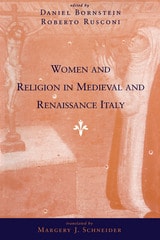
Women and Religion in Medieval and Renaissance Italy
Edited by Daniel Bornstein and Roberto Rusconi
University of Chicago Press, 1996
These essays explore the involvement of women in religious life throughout northern and central Italy and trace the evolution of communities of pious women as they tried to achieve their devotional goals despite the strictures of the ecclesiastical hierarchy. The contributors examine relations between holy women, their devout followers, and society at large.
Including contributions from leading figures in a new generation of Italian historians of religion, this book shows how women were able to carve out broad areas of influence by carefully exploiting the institutional church and by astutely manipulating religious percepts.

Women and Rhetoric between the Wars
Ann George, M. Elizabeth Weiser, and Janet Zepernick
Southern Illinois University Press, 2013
In Women and Rhetoric between the Wars, editors Ann George, M. Elizabeth Weiser, and Janet Zepernick have gathered together insightful essays from major scholars on women whose practices and theories helped shape the field of modern rhetoric. Examining the period between World War I and World War II, this volume sheds light on the forgotten rhetorical work done by the women of that time. It also goes beyond recovery to develop new methodologies for future research in the field.
Collected within are analyses of familiar figures such as Jane Addams, Amelia Earhart, Helen Keller, and Bessie Smith, as well as explorations of less well known, yet nevertheless influential, women such as Zitkala-Ša, Jovita González, and Florence Sabin. Contributors evaluate the forces in the civic, entertainment, and academic scenes that influenced the rhetorical praxis of these women. Each essay presents examples of women’s rhetoric that move us away from the “waves” model toward a more accurate understanding of women’s multiple, diverse rhetorical interventions in public discourse. The collection thus creates a new understanding of historiography, the rise of modern rhetorical theory, and the role of women professionals after suffrage. From celebrities to scientists, suffragettes to academics, the dynamic women of this volume speak eloquently to the field of rhetoric studies today.
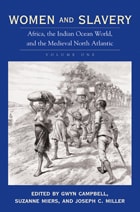
Women and Slavery, Volume One
Africa, the Indian Ocean World, and the Medieval North AtlanticGwyn Campbell
Ohio University Press, 2007
Women enslaved in the Americas came to bear highly gendered reputations among whites—as “scheming Jezebels,” ample and devoted “mammies,” or suffering victims of white male brutality and sexual abuse—that revealed more about the psychology of enslaving than about the courage and creativity of the women enslaved. These strong images of modern New World slavery contrast with the equally expressive virtual invisibility of the women enslaved in the Old—concealed in harems, represented to meddling colonial rulers as “wives” and “nieces,” taken into African families and kin-groups in subtlely nuanced fashion.
Women and Slavery presents papers developed from an international conference organized by Gwyn Campbell.
Volume 1 Contributors: Sharifa Ahjum, Richard B. Allen, Katrin Bromber, Gwyn Campbell, Catherine Coquery-Vidrovitch, Jan-Georg Deutsch, Timothy Fernyhough, Philip J. Havik, Elizabeth Grzymala Jordan, Martin A. Klein, George Michael La Rue, Paul E. Lovejoy, Fred Morton, Richard Roberts, Kirsten A. Seaver
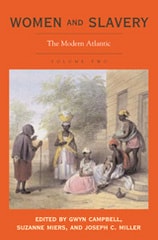
Women and Slavery, Volume Two
The Modern AtlanticGwyn Campbell
Ohio University Press, 2008
Women enslaved in the Americas came to bear highly gendered reputations among whites—as “scheming Jezebels,” ample and devoted “mammies,” or suffering victims of white male brutality and sexual abuse—that revealed more about the psychology of enslaving than about the courage and creativity of the women enslaved. These strong images of modern New World slavery contrast with the equally expressive virtual invisibility of the women enslaved in the Old—concealed in harems, represented to meddling colonial rulers as “wives” and “nieces,” taken into African families and kin-groups in subtlely nuanced fashion.
Volume 2 Contributors: Henrice Altin,k Laurence Brown, Myriam Cottias, Laura F. Edwards, Richard Follett, Tara Inniss, Barbara Krauthamer, Joseph C. Miller, Bernard Moitt, Kenneth Morgan, Claire Robertson, Marsha Robinson, Felipe Smith, and Mariza de Carvalho Soares.

Women and Sports in the United States
A Documentary ReaderEdited by Jaime Schultz, Jean O’Reilly, and Susan K. Cahn
Dartmouth College Press, 2018

Women and Stepfamilies
Voices of Anger and Loveedited by Nan Bauer Maglin and Nancy Schniedewind
Temple University Press, 1990
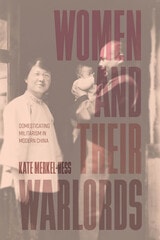
Women and Their Warlords
Domesticating Militarism in Modern ChinaKate Merkel-Hess
University of Chicago Press, 2024
In Women and Their Warlords, historian Kate Merkel-Hess examines the lives and personalities of the female relatives of the military rulers who governed regions of China from 1916 to 1949. Posing for candid photographs and sitting for interviews, these women did not merely advance male rulers’ agendas. They advocated for social and political changes, gave voice to feminist ideas, and shaped how the public perceived them. As the first publicly political partners in modern China, the wives and concubines of Republican-era warlords changed how people viewed elite women’s engagement in politics. Drawing on popular media sources, including magazine profiles and gossip column items, Merkel-Hess draws unexpected connections between militarism, domestic life, and state power in this insightful new account of gender and authority in twentieth-century China.
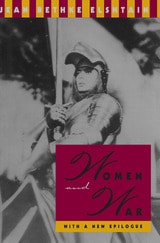
Women and War
Jean Bethke Elshtain
University of Chicago Press, 1995

Women and Water
Menstruation in Jewish Life and LawEdited by Rahel Wasserfall
Brandeis University Press, 1999
Women and Welfare
Theory and Practice in the United States and EuropeHirschmann, Nancy J
Rutgers University Press, 2001
The social welfare state is believed by many to be one of the great achievements of Western democracy in the twentieth century. It institutionalized for the first time a collective commitment to improving individual life chances and social well-being. However, as we move into a new century, the social welfare state everywhere has come under increasing pressure, raising serious doubts about its survival.
Featuring essays by experts from a variety of fields, including law, comparative politics, sociology, economics, cultural studies, philosophy, and political theory, Women and Welfare represents an interdisciplinary, multimethodological and multicultural feminist approach to recent changes in the welfare system of Western industrialized nations. The broad perspective, from the philosophical to the quantitative, provides an excellent overview of the subject and the most recent scholarly literature. The volume offers a crosscultural analysis of welfare “reform” in the 1990s, visions of what a “woman-friendly” welfare state requires, and an examination of theoretical and policy questions feminists and concerned others should be asking.

Women and the Animal Rights Movement
Emily Gaarder
Rutgers University Press, 2011
Animal rights is one of the fastest growing social movements today. Women greatly outnumber men as activists, yet surprisingly, little has been written about the importance and impact of gender on the movement. Women and the Animal Rights Movement combats stereotypes of women activists as mere sentimentalists by exploring the political and moral character of their advocacy on behalf of animals.
Emily Gaarder analyzes the politics of gender in the movement, incorporating in-depth interviews with women and participant observation of animal rights organizations, conferences, and protests to describe struggles over divisions of labor and leadership. Controversies over PETA advertising campaigns that rely on women's sexuality to "sell" animal rights illustrate how female crusaders are asked to prioritize the cause of animals above all else. Gaarder underscores the importance of a paradigm shift in the animal liberation movement, one that seeks a more integrated vision of animal rights that connects universally to other issues--gender, race, economics, and the environment--highlighting that many women activists recognize and are motivated by the connection between the oppression of animals and other social injustices.
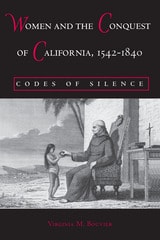
Women and the Conquest of California, 1542-1840
Codes of SilenceVirginia M. Bouvier
University of Arizona Press, 2001

Women and the Everyday City
Public Space in San Francisco, 1890–1915Jessica Ellen Sewell
University of Minnesota Press, 2011
Focusing on women's everyday use of streetcars, shops, restaurants, and theaters, Sewell reveals the impact of women on these public places-what women did there, which women went there, and how these places were changed in response to women's presence. Using the diaries of three women in San Francisco-Annie Haskell, Ella Lees Leigh, and Mary Eugenia Pierce, who wrote extensively on their everyday experiences-Sewell studies their accounts of day trips to the city and combines them with memoirs, newspapers, maps, photographs, and her own observations of the buildings that exist today to build a sense of life in San Francisco at this pivotal point in history.
Women and the Press
The Struggle for EqualityPatricia Bradley
Northwestern University Press, 2005
Women at Michigan
The "Dangerous Experiment," 1870s to the PresentRuth Bordin
University of Michigan Press, 2001

Women at Work in Twenty-First-Century European Cinema
Barbara Mennel
University of Illinois Press, 2019
Barbara Mennel delves into the ways these films about female labor capture the tension between feminist advances and their appropriation by capitalism in a time of ongoing transformation. Looking at independent and genre films from a cross-section of European nations, Mennel sees a focus on economics and work adapted to the continent's varied kinds of capitalism and influenced by concepts in second-wave feminism. More than ever, narratives of work put female characters front and center--and female directors behind the camera. Yet her analysis shows that each film remains a complex mix of progressive and retrogressive dynamics as it addresses the changing nature of work in Europe.

Women for President
Media Bias in Eight CampaignsErika Falk
University of Illinois Press, 2007
When Hillary Clinton announced her 2008 bid for president she was the Democratic front-runner. Despite this, she received less coverage than Barack Obama, who trailed her in the polls. Such a disparity is indicative of the gender bias the media has demonstrated in covering women candidates since the first woman ran for America’s highest office in 1872. Tracing the campaigns of eight women who ran for president through 2004--Victoria Woodhull, Belva Lockwood, Margaret Chase Smith, Shirley Chisholm, Patricia Schroeder, Lenora Fulani, Elizabeth Dole, and Carol Moseley Braun--Erika Falk finds little progress in the fair treatment of women candidates. A thorough comparison of the women’s campaigns to those of their male opponents reveals a worrisome trend of sexism in press coverage--a trend that still persists today.
While women have been elected to the highest offices in countries such as England, Germany, and India, the idea that a woman could be president of the United States provokes scoffs and ridicule. The press portrays female candidates as unviable, unnatural, and incompetent, and often ignores or belittles women instead of reporting their ideas and intent. Since voters learn most details about presidential candidates through media outlets, Falk asserts that this prevailing bias calls into question the modern democratic assumption that men and women have comparable access to positions of power.
Women for President
Media Bias in Nine CampaignsErika Falk
University of Illinois Press, 2010
Newly updated to examine Hillary Clinton's formidable 2008 presidential campaign, Women for President analyzes the gender bias the media has demonstrated in covering women candidates since the first woman ran for America's highest office in 1872. Tracing the campaigns of nine women who ran for president through 2008--Victoria Woodhull, Belva Lockwood, Margaret Chase Smith, Shirley Chisholm, Patricia Schroeder, Lenora Fulani, Elizabeth Dole, Carol Moseley Braun, and Hillary Clinton--Erika Falk finds little progress in the fair treatment of women candidates. The press portrays female candidates as unviable, unnatural, and incompetent, and often ignores or belittles women instead of reporting their ideas and intent. This thorough comparison of men's and women's campaigns reveals a worrisome trend of sexism in press coverage--a trend that still persists today.
Women in 1900
Gateway to the Political Economy of the 20th CenturyChristine E. Bose
Temple University Press, 2001
Women in American Journalism
A New HistoryJan Whitt
University of Illinois Press, 2007
Whitt explores the lives of women reporters who achieved significant historical recognition, such as Ida Tarbell and Ida Wells-Barnett. Investigating the often blurry boundary between journalism and literature, she explains how this fluid distinction has actually limited how many scholars perceive the contributions of authors such as Joan Didion and Susan Orlean. Whitt also highlights the work of important novelists, including Willa Cather, Katherine Anne Porter, and Eudora Welty, to shed light on how their work as journalists informed their highly successful fiction.
This study also offers a survey of contributions women have made to the alternative presses, including the environmental press and civil rights activism. Whitt examines important figures in the early feminist press such as Caroline Churchill, editor and reporter for Denver’s Queen Bee, and Betty Wilkins of Kansas City’s Call. Finally, through newsletters, newspapers, magazines, and journals, she traces the history of the lesbian press and points out the ways in which it indicates that the alternative press is thriving.

Women in Contemporary Culture
Roles and identities in France and SpainEdited by Lesley Twomey
Intellect Books, 2000
Women in German Expressionism
Gender, Sexuality, ActivismAnke Finger and Julie Shoults, Editors
University of Michigan Press, 2023
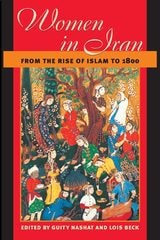
Women in Iran from the Rise of Islam to 1800
Edited by Guity Nashat and Lois Beck
University of Illinois Press, 2003
Focusing on a region wider than today's nation-state of Iran, this book explores developments in the spheres that most affect women: gender constructs, family structure, community roles, education, economic participation, Islamic practices and institutions, politics, and artistic representations.
The contributors to this volume are prominent international scholars working in this field, and each draws on decades of research to address the history of Iranian women within the context of his or her area of expertise. This broad framework allows for a thorough and nuanced examination of the history of a complex society.
Women in Politics in the American City
Myra Holman
Temple University Press, 2014
This book provides the first comprehensive evaluation of the influence of gender on the behavior of mayors and city council members in the United States. Holman considers the effects of gender in local, urban politics and analyzes how a leader's gender does-and does not-influence policy preferences, processes, behavior, and outcomes.
Holman effectively uses original survey data to evaluate policy attitudes, combined with observations of city council meetings and interviews with leaders and community members. In doing so, she demonstrates the importance of considering the gender of leaders in local office.
Women in Politics in the American City emphasizes that the involvement of women in local politics does matter and that it has significant consequences for urban policy as well as state and local democracy.

Women in Revolutionary Paris, 1789-1795
Edited and translated by Darlene Gay Levy, Harriet Branson Applewhite, and Mary Durham Johnson
University of Illinois Press, 1979
"This unique collection of documents will be a boon to teachers of history and to scholars of the French Revolution. . . . Recommended."
-- Library Journal
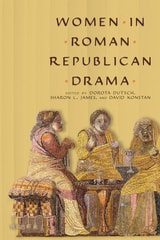
Women in Roman Republican Drama
Edited by Dorota Dutsch, Sharon L. James, and David Konstan
University of Wisconsin Press, 2015
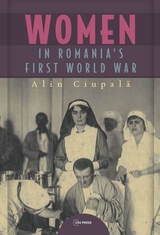
Women in Romania’s First World War
Alin Ciupalã
Central European University Press, 2025
Beyond women’s contribution to the war, the book also examines the effects of the First World War on gender roles in Romania. Feminist leaders expected that a wartime “training service” would entitle women to a life with full rights as citizens. Yet after the war, the situation returned to “normal,” and women largely continued to be excluded from the public sphere.
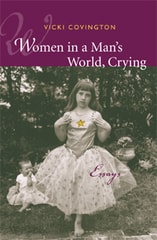
Women in a Man's World, Crying
EssaysVicki Covington
University of Alabama Press, 2002
This thoughtful, engaging collection examines resilience, identity, and inequality in the modern workplace produced by one of the nation's most observant and incisive writers.
This collection of warm, heartfelt essays from award-winning novelist Vicki Covington chronicles the multitude of "in between" moments in the writer's life. These are her stolen moments in between the writing of four novels-Gathering Home, Bird of Paradise, Night Ride Home, and The Last Hotel for Women; in between coauthoring the edgy memoir Cleaving: The Story of a Marriage with her husband Dennis Covington; in between raising two daughters; in between her husband's struggle with cancer and the author's own heart attack; in between a life full of trials and triumphs, disappointments and celebrations - moments that, as Covington demonstrates here, are always rich and revealing.
In the title essay, the author questions why all seven middle-class women who live on her street confess at a neighborhood cookout that in the past 48 hours each of them has cried. In "A Southern Thanksgiving," Covington reflects on the "family dance" that is Thanksgiving in the South: "In the North they put their crazy family members in institutions, but in the South we put them in the living room for everyone to enjoy." In "My Mother's Brain," the author recounts the onset of Alzheimer's in her mother and how, with the spread of the disease, an untapped vein of love is revealed.
Some of these essays were written as weekly newspaper columns for the Birmingham News. Others were written for specific literary occasions, such as the First Annual Eudora Welty Symposium. They are divided into six thematic sections: "Girls and Women," "Neighborhood," "Death," "The South," "Spiritual Matters," and “Writing.”
Throughout, as Covington casts her candid, attentive eye on a situation, confusion yields to comprehension, fear flourishes into faith, and anger flows into understanding. In memorializing the small moments of her life, she finds that they are far from peripheral; indeed, they are central to a life full of value and meaning.
Women in the Club
Gender and Policy Making in the SenateMichele L. Swers
University of Chicago Press, 2013
In the run-up to the 2012 presidential election, Democrats and Republicans were locked in a fierce battle for the female vote. Democrats charged Republicans with waging a “war on women,” while Republicans countered that Democratic policies actually undermined women’s rights. The women of the Senate wielded particular power, planning press conferences, appearing on political programs, and taking to the Senate floor over gender-related issues such as workplace equality and reproductive rights.
The first book to examine the impact of gender differences in the Senate, Women in the Club is an eye-opening exploration of how women are influencing policy and politics in this erstwhile male bastion of power. Gender, Michele L. Swers shows, is a fundamental factor for women in the Senate, interacting with both party affiliation and individual ideology to shape priorities on policy. Women, for example, are more active proponents of social welfare and women’s rights. But the effects of gender extend beyond mere policy preferences. Senators also develop their priorities with an eye to managing voter expectations about their expertise and advancing their party’s position on a given issue. The election of women in increasing numbers has also coincided with the evolution of the Senate as a highly partisan institution. The stark differences between the parties on issues pertaining to gender have meant that Democratic and Republican senators often assume very different roles as they reconcile their policy views on gender issues with the desire to act as members of partisan teams championing or defending their party’s record in an effort to reach various groups of voters.
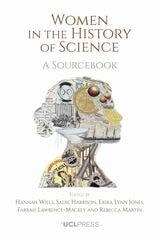
Women in the History of Science
A SourcebookEdited by Hannah Wills, Sadie Harrison, Erika Lynn Jones, Rebecca Martin, Farrah Lawrence-Mackey
University College London, 2023
Women in the History of Science brings together primary sources that highlight women’s involvement in scientific knowledge production around the world. Including texts, images, and objects, the primary sources are each accompanied by an explanatory text, questions to prompt discussion, and a bibliography to aid further research. Arranged by time period, from 1200 BCE to the twenty-first century, and covering twelve inclusive and far-reaching themes, this book is an invaluable companion to students and lecturers alike in exploring women’s history in the fields of science, technology, mathematics, medicine, and culture.
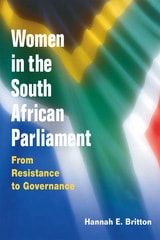
Women in the South African Parliament
FROM RESISTANCE TO GOVERNANCEHannah Evelyn Britton
University of Illinois Press, 2005
Although the international press closely chronicled the dismantling of South Africa's apartheid policies, it paid little attention to the unique role women from a variety of political parties played in establishing the new government. Utilizing interviews, participant observation, and archival research, Women in the South African Parliament tells an inspiring story of liberation, showing how these women achieved electoral success, learned to work with lifelong enemies, and began to transform Parliament by creating more space for women's voices during a critical time in the life of their democracy.
Arguing from her detailed analysis of the strategies and political tactics used by these South African women, both individually and collectively, Hannah Britton contends that, contrary claims in earlier studies of the developing world, mobilization by women prior to a transition to democracy can lead to gains after the transition--including improvements in constitutional mandates, party politics, and representation. At the same time, Britton demonstrates that not even national leadership can ensure power for all women and that many who were elected to South Africa's first democratic parliament declined to run again, feeling they could have a greater impact working in their own communities.
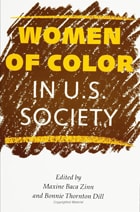
Women of Color in U.S. Society
edited by Maxine Baca Zinn and Bonnie Thornton Dill
Temple University Press, 1993
The theme of race, class, and gender as interlocking systems of oppression unites these original essays about the experience of women of color—African Americans, Latinas, Native Americans, and Asian Americans. The contributing scholars discuss the social conditions that simultaneously oppress women of color and provide sites for opposition.
Though diverse in their focus, the essays uncover similar experiences in the classroom, workplace, family, prison, and other settings. Working-class women, poor women, and professional women alike experience subordination, restricted participation in social institutions, and structural placement in roles with limited opportunities.
How do women survive, resist, and cope with these oppressive structures? Many articles tell how women of color draw upon resources from their culture, family, kin, and community. Others document defenses against cultural assaults by the dominant society—Native American mothers instilling tribal heritage in their children; African American women engaging in community work; and Asian American women opposing the patriarchy of their own communities and the stereotypes imposed by society at large.
These essays challenge some of our basic assumptions about society, revealing that experiences of inequality are not only diverse but relational.
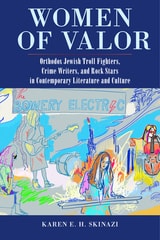
Women of Valor
Orthodox Jewish Troll Fighters, Crime Writers, and Rock Stars in Contemporary Literature and CultureKaren E. H. Skinazi
Rutgers University Press, 2018
Media portrayals of Orthodox Jewish women frequently depict powerless, silent individuals who are at best naive to live an Orthodox lifestyle, and who are at worst, coerced into it. Karen E. H. Skinazi delves beyond this stereotype in Women of Valor to identify a powerful tradition of feminist literary portrayals of Orthodox women, often created by Orthodox women themselves. She examines Orthodox women as they appear in memoirs, comics, novels, and movies, and speaks with the authors, filmmakers, and musicians who create these representations. Throughout the work, Skinazi threads lines from the poem “Eshes Chayil,” the Biblical description of an Orthodox “Woman of Valor.” This proverb unites Orthodoxy and feminism in a complex relationship, where Orthodox women continuously question, challenge, and negotiate Orthodox and feminist values. Ultimately, these women create paths that unite their work, passions, and families under the framework of an “Eshes Chayil,” a woman who situates religious conviction within her own power.
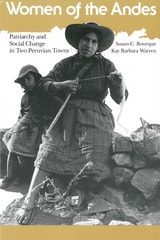
Women of the Andes
Patriarchy and Social Change in Two Peruvian TownsSusan C. Bourque and Kay Barbara Warren
University of Michigan Press, 1981
Pilar is a capable, energetic merchant in the small, Peruvian highland settlement of Chiuchin. Genovena, an unmarried day laborer in the same town, faces an impoverished old age without children to support her. Carmen is the wife of a prosperous farmer in the agricultural community of Mayobamba, eleven thousand feet above Chiuchin in the Andean sierra. Mariana, a madre soltera—single mother—without a husband or communal land of her own, also resides in Mayobamba.
These lives form part of an interlocking network that the authors carefully examine in Women of the Andes. In doing so, they explore the riddle of women’s structural subordination by analyzing the social, political, and economic realities of life in Peru. They examine theoretical explanations of sexual hierarchies against the backdrop of life histories. The result is a study that pinpoints the mechanisms perpetuating sexual repression and traces the impact of social change and national policy on women’s lives.
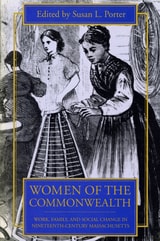
Women of the Commonwealth
Work, Family, and Social Change in Ninteenth-Century MassachusettsSusan L. Porter
University of Massachusetts Press, 1996
These essays reflect the complexity and richness of current scholarship in women's history. Informed by a variety of source materials and methodologies, the ten chapters break down a generalized construct of “womanhood” to explore the dynamics between gender, race, ethnicity, and class.
The first section of the book focuses on women's work, paid and unpaid, and the effects of class, ethnicity, and gender on the structure of the job market and on power relations within the family. The second section revisits the concept of “sisterhood” by looking at women in relation to their families, social and cultural networks, and civic and private institutions. The editor's introduction sets the essays in the current historiographical context of women's studies and provides a bibliographical essay for the nonspecialist reader.
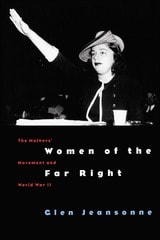
Women of the Far Right
The Mothers' Movement and World War IIGlen Jeansonne
University of Chicago Press, 1996
Unlike leftist antiwar movements, the mothers' movement was not pacifist; its members opposed the war on Germany because they regarded Hitler as an ally against the spread of atheistic communism. They also differed from leftist women in their endorsement of patriarchy and nationalism. God, they believed, wanted them to fight the New Deal liberalism that imperiled their values and the internationalists, communists, and Jews, whom they saw as subjugating Christian America.
Jeansonne examines the motivations of these women, the political and social impact of their movement, and their collaborations with men of the far right and also with mainstream isolationists such as Charles Lindbergh. Drawing on files kept by the FBI and other confidential documents, this book sheds light on the history of the war era and on women's place within the far right.
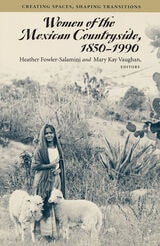
Women of the Mexican Countryside, 1850-1990
Creating Spaces, Shaping TransitionsHeather Fowler-Salamini
University of Arizona Press, 1994
Drawing on Mexican community studies, gender studies, and rural studies, these essays overturn the stereotypes of Mexican peasant women by exploring the complexity of their lives and roles and examining how these have changed over time. The book emphasizes the active roles of women in the periods of civil war, 1854-76, and the commercialization of agriculture, 1880-1910. It highlights their vigorous responses to the violence of revolution, their increased mobility, and their interaction with state reforms in the period from 1910 to 1940. The final essays focus on changing gender relations in the countryside under the impact of rapid urbanization and industrialization since 1940. Because histories of Latin American women have heretofore neglected rural areas, this volume will serve as a touchstone for all who would better understand women's lives in a region of increasing international economic importance. Women of the Mexican Countryside demonstrates that, contrary to the peasant stereotype, these women have accepted complex roles to meet constantly changing situations.
CONTENTS
I—Women and Agriculture in Nineteenth-Century Mexico
1. Exploring the Origins of Democratic Patriarchy in Mexico: Gender and Popular Resistance in the Puebla Highlands, 1850-1876, Florencia Mallon
2. "Cheaper Than Machines": Women and Agriculture in Porfirian Oaxaca (1880-1911), Francie R. Chassen-López
3. Gender, Work, and Coffee in C¢rdoba, Veracruz, 1850-1910, Heather Fowler-Salamini
4. Gender, Bridewealth, and Marriage: Social Reproduction of Peons on Henequen Haciendas in Yucatán (1870-1901), Piedad Peniche Rivero
II—Rural Women and Revolution in Mexico
5. The Soldadera in the Mexican Revolution: War and Men's Illusions, Elizabeth Salas
6. Rural Women's Literacy and Education During the Mexican Revolution: Subverting a Patriarchal Event?, Mary Kay Vaughan
7. Doña Zeferina Barreto: Biographical Sketch of an Indian Woman from the State of Morelos, Judith Friedlander
8. Seasons, Seeds, and Souls: Mexican Women Gardening in the American Mesilla (1900-1940), Raquel Rubio Goldsmith
III—Rural Women, Urbanization, and Gender Relations
9. Three Microhistories of Women's Work in Rural Mexico, Patricia Arias
10. Intergenerational and Gender Relations in the Transition from a Peasant Economy to a Diversified Economy, Soledad González Montes
11. From Metate to Despate: Rural Women's Salaried Labor and the Redefinition of Gendered Spaces and Roles, Gail Mummert
12. Changes in Rural Society and Domestic Labor in Atlixco, Puebla (1940-1990), Maria da Glória Marroni de Velázquez
13. Antagonisms of Gender and Class in Morelos, Mexico, JoAnn Martin
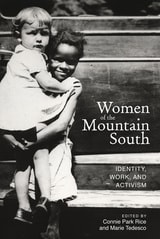
Women of the Mountain South
Identity, Work, and ActivismConnie Park Rice
Ohio University Press, 2015
Scholars of southern Appalachia have largely focused their research on men, particularly white men. While there have been a few important studies of Appalachian women, no one book has offered a broad overview across time and place. With this collection, editors Connie Park Rice and Marie Tedesco redress this imbalance, telling the stories of these women and calling attention to the varied backgrounds of those who call the mountains home.
The essays of Women of the Mountain South debunk the entrenched stereotype of Appalachian women as poor and white, and shine a long-overdue spotlight on women too often neglected in the history of the region. Each author focuses on a particular individual or group, but together they illustrate the diversity of women who live in the region and the depth of their life experiences. The Mountain South has been home to Native American, African American, Latina, and white women, both rich and poor. Civil rights and gay rights advocates, environmental and labor activists, prostitutes, and coal miners—all have lived in the place called the Mountain South and enriched its history and culture.
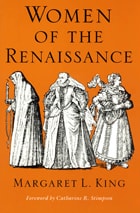
Women of the Renaissance
Margaret L. King
University of Chicago Press, 1991
Utilizing the perspectives of social, church, and intellectual history, King looks at women of all classes, in both usual and unusual settings. She first describes the familial roles filled by most women of the day—as mothers, daughters, wives, widows, and workers. She turns then to that significant fraction of women in, and acted upon, by the church: nuns, uncloistered holy women, saints, heretics, reformers,and witches, devoting special attention to the social and economic independence monastic life afforded them. The lives of exceptional women, those warriors, queens, patronesses, scholars, and visionaries who found some other place in society for their energies and strivings, are explored, with consideration given to the works and writings of those first protesting female subordination: the French Christine de Pizan, the Italian Modesta da Pozzo, the English Mary Astell.
Of interest to students of European history and women's studies, King's volume will also appeal to general readers seeking an informative, engaging entrance into the Renaissance period.
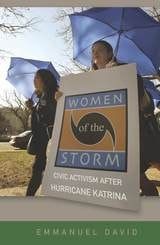
Women of the Storm
Civic Activism after Hurricane KatrinaEmmanuel David
University of Illinois Press, 2017
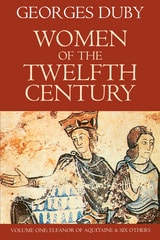
Women of the Twelfth Century, Volume 1
Eleanor of Aquitaine and Six OthersGeorges Duby
University of Chicago Press, 1997
The historical personages include Eleanor of Aquitaine whose several marriages brought her wealth and autonomy; the virtuous Héloïse; and the visionary recluse Juette. Duby also studies the literary figures of St. Marie-Madeleine, a composite figure who personified the essential female traits of frailty, ardent love, and evangelicalism; Iseut, literary beloved of Tristan; and two other emblematic figures, Dorée d'Amour and Phénix—women who became ladies through chivalrous love.
Provocative, informative, and entertaining, this book offers new insight on courtly love and the representations of women under medieval patriarchy.
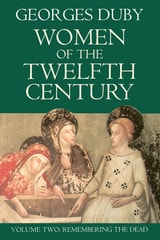
Women of the Twelfth Century, Volume 2
Remembering the DeadGeorges Duby
University of Chicago Press, 1997
The first section outlines the ways in which the dead—in both memory and legend—served to bond noble society in the twelfth century. Drawing on the Gesta by Dudo of Saint Quentin, the second section reflects on the roles that wives, concubines, and other women played during times of war and in the great exchanges of power that established the grand lineages of the Middle Ages. The third section reconstructs women as wives, mothers, and widows through the work of Lambert, Priest of Ardres.
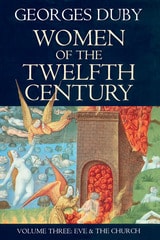
Women of the Twelfth Century, Volume 3
Eve and the ChurchGeorges Duby
University of Chicago Press, 1998
Drawing on these writings, Duby describes how women were thought to embody particular sins, such as sorcery, disobedience, and licentiousness. He evaluates Eve's role in man's fall from grace in the Garden of Eden and analyzes the reasoning behind the view that women are unstable, curious, frivolous creatures. He also notes that these charges are leveled against women, even as praise is heaped upon them for the conventional virtues they exhibit in their roles as wives and mothers.
As the final installment in Duby's three-volume study of French noblewomen of the twelfth century, Eve and the Church is the last work of this superb historian. It will be of interest to scholars of medieval history and women's history as well as to anyone interested in current debates about women and religion.
Georges Duby (1919-1996) was a member of the Académie française and for many years held the distinguished chair in medieval history at the Collège de France. His books include The Three Orders; The Age of Cathedrals; The Knight, the Lady, and the Priest; Love and Marriage in the Middle Ages; and History Continues, all published by the University of Chicago Press.

Women of the Upper Class
Susan A. Ostrander
Temple University Press, 1986
In the series Women in the Political Economy, edited by Ronnie J. Steinberg.
Women of the Washington Press
Politics, Prejudice, and PersistenceMaurine H. Beasley
Northwestern University Press, 2012
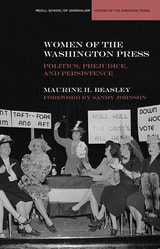
Women of the Washington Press argues that for nearly two centuries women journalists have persisted in their efforts to cover politics in the nation’s capital in spite of blatant prejudice and restrictive societal attitudes. They have been held back by the difficulties of combining two competing roles – those of women and journalists. As a group they have not agreed among themselves on feminist goals, while declaring that they aspire to be seen as professional journalists, not as advocates of a particular ideology. Still, they have brought a different perspective to the news, as they have fought hard to prove that they are capable of covering political issues just like male journalists. Over the years women have networked with each other and carved out areas of expertise – such as reporting of politically-oriented social events and coverage of first ladies – that men disdained, while they pressed to gain entrance to sex-segregated institutions like the National Press Club. Attempting to merge the personal and the political, they have raised issues like sexual harassment that men journalists left untouched. At a point today where they represent about half of accredited correspondents, women still face shifting barriers that make it difficult to combine the roles of both women and journalists in Washington, but they are continuing to broaden the definition of political journalism.
Women on Ice
Methamphetamine Use among Suburban WomenMiriam Boeri
Rutgers University Press, 2013
2013 Choice Outstanding Academic Title
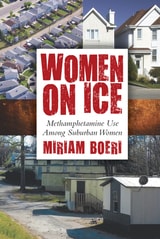
Methamphetamine (ice, speed, crystal, shard) has been called epidemic in the United States. Yet few communities were ready for increased use of methamphetamine by suburban women. Women on Ice is the first book to study exclusively the lives of women who use the drug and its effects on their families.
In-depth interviews with women in the suburban counties of one of the largest metropolitan areas in the U.S. chronicle the details of their initiation into methamphetamine, the turning points into problematic drug use, and for a few, their escape from lives veering out of control. Their life course and drug careers are analyzed in relation to the intersecting influences of social roles, relationships, social/political structures, and political trends. Examining the effects of punitive drug policy, inadequate social services, and looming public health risks, including HIV/AIDS and hepatitis C, the book gives voice to women silenced by shame.
Boeri introduces new and developing concepts in the field of addiction studies and proposes policy changes to more broadly implement initiatives that address the problems these women face. She asserts that if we are concerned that the war on drugs is a war on drug users, this book will alert us that it is also a war on suburban families.