Results by title
23 books match the query 'Berlin (Germany)'
An American in Hitler's Berlin
Abraham Plotkin's Diary, 1932-33Abraham Plotkin; Edited & with an introduction by Catherine Collomp & Bruno Grop
University of Illinois Press, 2007
Compared to the writings of other American observers of the Third Reich, Plotkin's diary is unique in style, scope, themes, and time span. Most accounts of Hitler's rise to power emphasize political institutions by focusing on the Nazi party's clashes with other political forces. In contrast, Plotkin is especially attentive to socioeconomic factors, providing an alternative view from the left that stems from his access to key German labor and socialist leaders. Chronologically, the diary reports on the moment when Hitler's seizure of power was not yet inevitable and when leaders on the left still believed in a different outcome of the crisis, but it also includes Plotkin's account of the complete destruction of German labor in May 1933.
An Underground Life
Memoirs of a Gay Jew in Nazi BerlinGad Beck; written with Frank Heibert, translated by Allison Brown
University of Wisconsin Press, 2000
Berlin Sports
Spectacle, Recreation, and Media in Germany’s MetropolisHeather L. Dichter
University of Arkansas Press, 2024
This book begins with a long-distance equestrian race in the 1890s and continues with the role of media in spectacle, celebrity, urban life, and gender from the 1890s to the 1920s.It then turns to grassroots sport participation and spectatorship as well as sport diplomacy at the elite international level during the postwar period and the years of German division. Next, it explores recreational sport associations within the context of immigration and youth counterculture. It concludes with the 2015 European Maccabi Games, an international Jewish sports festival through which Berlin sought to grapple with the infamous 1936 Olympics and showcase Berlin as a cosmopolitan and multicultural city. Taken together, the book’s scholarly essays on all of these sporting endeavors reveal the rich and varied sporting culture in Berlin and yield fresh insights into spectacle, recreation, and media in the city.
Berlin and the Cold War
Seth Givens; Ingo Trauschweizer
Ohio University Press, 2024
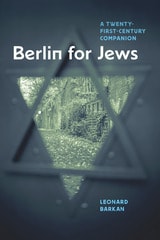
Berlin for Jews
A Twenty-First-Century CompanionLeonard Barkan
University of Chicago Press, 2016
Barkan, voraciously curious and witty, offers a self-deprecating guide to the history of Jewish life in Berlin, revealing how, beginning in the early nineteenth century, Jews became prominent in the arts, the sciences, and the city’s public life. With him, we tour the ivy-covered confines of the Schönhauser Allee cemetery, where many distinguished Jewish Berliners have been buried, and we stroll through Bayerisches Viertel, an elegant neighborhood created by a Jewish developer and that came to be called Berlin’s “Jewish Switzerland.” We travel back to the early nineteenth century to the salon of Rahel Varnhagen, a Jewish society doyenne, who frequently hosted famous artists, writers, politicians, and the occasional royal. Barkan also introduces us to James Simon, a turn-of-the-century philanthropist and art collector, and we explore the life of Walter Benjamin, who wrote a memoir of his childhood in Berlin as a member of the assimilated Jewish upper-middle class. Throughout, Barkan muses about his own Jewishness, while celebrating the rich Jewish culture on view in today’s Berlin.
A winning, idiosyncratic travel companion, Berlin for Jews offers a way to engage with German history, to acknowledge the unspeakable while extolling the indelible influence of Jewish culture.
Couplings
Peter Schneider
University of Chicago Press, 1998
"A little Don Giovanni, a little café sociology, a little laboratory science, a little Berlin wit—it's a pleasant mix."—Suzanne Ruta, New York Times Book Review
"With its poignant valedictory to its protagonists' waning youth and its rueful placing of them in the firing line of history, Couplings achieves a balance of light and dark that is utterly persuasive."—Michael Upchurch, San Francisco Chronicle Book Review
Good-bye to the Mermaids
A Childhood Lost in Hitler's BerlinKarin Finell
University of Missouri Press, 2026
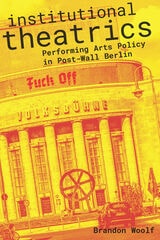
Institutional Theatrics
Performing Arts Policy in Post-Wall BerlinBrandon Woolf
Northwestern University Press, 2021
2022 Outstanding Book Award Finalist from the Association for Theater in Higher Education (ATHE)
In a city struggling to determine just how neoliberal it can afford to be, what kinds of performing arts practices and institutions are necessary—and why?
Since the fall of the Berlin Wall, political and economic agendas in the reunified German capital have worked to dismantle long-standing traditions of state‑subsidized theater even as the city has redefined itself as a global arts epicenter. Institutional Theatrics charts the ways theater artists have responded to these shifts and crises both on- and offstage, offering a method for rethinking the theater as a vital public institution.
What is the future of the German theater, grounded historically in large ensembles, extensive repertoires, and auteur directors? Examining the restructuring of Berlin’s theatrical landscape and most prominent performance venues, Brandon Woolf argues that cultural policy is not simply the delegation and distribution of funds. Instead, policy should be thought of as an artistic practice of institutional imagination. Woolf demonstrates how performance can critique its patron institutions in order to transform the relations between the stage and the state, between the theater and the infrastructures of its support. Bold, nuanced, and rigorously documented, Institutional Theatrics offers new insights about art, its administration, and the forces that influence cultural production.
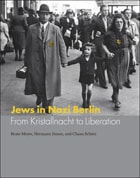
Jews in Nazi Berlin
From Kristallnacht to LiberationEdited by Beate Meyer, Hermann Simon, and Chana Schütz
University of Chicago Press, 2009
Though many of the details of Jewish life under Hitler are familiar, historical accounts rarely afford us a real sense of what it was like for Jews and their families to live in the shadow of Nazi Germany’s oppressive racial laws and growing violence. With Jews in Nazi Berlin, those individual lives—and the constant struggle they required—come fully into focus, and the result is an unprecedented and deeply moving portrait of a people.
Drawing on a remarkably rich archive that includes photographs, objects, official documents, and personal papers, the editors of Jews in Nazi Berlin have assembled a multifaceted picture of Jewish daily life in the Nazi capital during the height of the regime’s power. The book’s essays and images are divided into thematic sections, each representing a different aspect of the experience of Jews in Berlin, covering such topics as emigration, the yellow star, Zionism, deportation, betrayal, survival, and more. To supplement—and, importantly, to humanize—the comprehensive documentary evidence, the editors draw on an extensive series of interviews with survivors of the Nazi persecution, who present gripping first-person accounts of the innovation, subterfuge, resilience, and luck required to negotiate the increasing brutality of the regime.
A stunning reconstruction of a storied community as it faced destruction, Jews in Nazi Berlin renders that loss with a startling immediacy that will make it an essential part of our continuing attempts to understand World War II and the Holocaust.
Lyric Novella
Annemarie Schwarzenbach
Seagull Books, 2011
Schwarzenbach’s clear, psychologically acute prose makes this novella an evocative narrative, with many intriguing parallels to her own life.
Annemarie Schwarzenbach—journalist, novelist, antifascist, archaeologist, and traveler—has become a European cult figure for bohemian free spirits since the rediscovery of her works in the late 1980s. Lyric Novella is her story of a young man’s obsession with a Berlin variété actress. Despite having his future career mapped out for him in the diplomatic service, the young man begins to question all his family values under Sibylle’s spell. His family, future, and social standing become irrelevant when set against his overriding compulsion to pick her up every night from the theater so they can go for a drive. Bringing the story back to her own life, Schwarzenbach admitted after publication that her hero was in fact a young woman, not a man, leaving little doubt that Lyric Novella is a literary tale of lesbian love during socially and politically turbulent times.
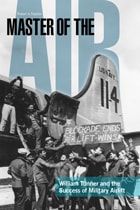
Master of the Air
William Tunner and the Success of Military AirliftRobert A. Slayton
University of Alabama Press, 2010
Into this difficult situation the US placed General William Henry Tunner. He was given a task that seemed doomed to failure—to supply a major city by air with everything it needed to survive from food to a winter’s supply of coal—and made it a brilliant success, astonishing the world in a major public relations defeat for the Soviets, and demonstrating the unexpected capacity of air fleets in a postwar world.

Murder Scenes
Normality, Deviance, and Criminal Violence in Weimar BerlinSace Elder
University of Michigan Press, 2010
---Kenneth Ledford, Case Western Reserve University
No Such Country
Essays toward HomeElmar Lueth
University of Iowa Press, 2002
Rabbi Esriel Hildesheimer and the Creation of a Modern Jewish Orthodoxy
David Ellenson
University of Alabama Press, 1990
Tradition, Modernity, and the Making of Modern Orthodoxy.
For many histories of Modern Orthodox Judaism, Rabbi Samson Raphael Hirsch stands as the primary architect of the movement's encounter with modernity. In Rabbi Esriel Hildesheimer and the Creation of a Modern Jewish Orthodoxy, distinguished scholar David Ellenson expands that narrative by recovering the life, thought, and enduring influence of one of Hirsch's most important contemporaries. Through a careful examination of Rabbi Esriel Hildesheimer's writings, leadership, educational initiatives, and responses to the social and intellectual challenges of nineteenth-century Europe, Ellenson demonstrates how Hildesheimer helped forge a model of Orthodoxy that remained firmly committed to Jewish tradition while engaging constructively with the modern world.
Set against a period of profound cultural, political, and religious transformation, this volume explores the tensions confronting European Jewry as modernization, secular education, religious pluralism, and changing political realities reshaped Jewish communal life. Ellenson shows how Hildesheimer addressed these challenges not through rigid isolation but through a pragmatic and intellectually sophisticated approach that balanced fidelity to halakhah with openness to selected aspects of modern culture and scholarship. His vision helped establish a framework for Modern Orthodoxy that continues to influence contemporary Jewish thought and practice.
Beyond its biographical focus, the study provides broader insights into the emergence of Modern Orthodoxy as a religious and intellectual movement. By illuminating Hildesheimer's efforts to integrate traditional scholarship with contemporary realities, Ellenson offers readers a deeper understanding of how Judaism has negotiated the relationship between heritage and change. The result is both a compelling portrait of an influential rabbinic figure and an important examination of the forces that shaped modern Jewish religious identity.
Rabbi Esriel Hildesheimer and the Creation of a Modern Jewish Orthodoxy is essential reading for scholars and students of Jewish studies, religious studies, theology, European history, intellectual history, and modern Judaism. It will also appeal to rabbis, educators, and general readers seeking to understand the historical roots of contemporary Orthodox Jewish life and the ongoing dialogue between tradition and modernity.
Revolutionary Berlin
A Walking GuideNathaniel Flakin
Pluto Press, 2022
Few European cities can boast a history as storied and tumultuous as that of Berlin. For more than 150 years it has been at the center of revolutionary politics; of era-defining struggles between the Left and the Right. It has been bombed, rebuilt and carved in two.
In Revolutionary Berlin, veteran tour guide Nathaniel Flakin invites you to stand in the places where this history was written, and to follow in the footsteps of those who helped write it. Through nine self-guided tours illustrated with maps and photographs, readers enter the heady world of 19th century anti-colonial struggles, the 1918 November Revolution and the 1987 May Day riots - encountering the city's workers, queer community and radical women along the way.
The first English-language guidebook to tell the story of Berlin's radical history, this is a must-have for Berliners and visitors alike.
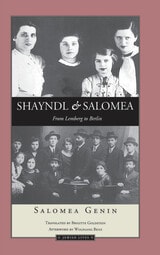
Shayndl and Salomea
From Lemberg to BerlinSalomea Genin
Northwestern University Press, 1997
Genin's richly detailed portrait shows the effects of a family's struggle—personal, religious, social, and for their very survival—against the shadow of the Nazi rise to power.

Street Scenes
Brecht, Benjamin and BerlinNicolas Whybrow
Intellect Books, 2004
Bertolt Brecht, meanwhile, stands as one of the principal thinkers about art and politics in the 20th century. The "Street Scene" model, which was the foundation for his theory of an epic theatre, relied precisely on establishing a connection between art's functioning and everyday life. His preoccupation with the ceaselessness of change, an impulse implying rupture and movement as the key characteristics informing the development of a democratic cultural identity, correlates resonantly with the notion of an ever-evolving city.
Premised on an understanding of performance as the articulation of movement in space, Street Scenes interrogates what kind of "life" is permitted to "flow" in the "new Berlin." Central to this method is the flaneur figure, a walker of streets who provides detached observations on the revealing "detritus of modern urban existence." Walter Benjamin, himself a native of Berlin as well as friend and seminal critic of Brecht, exercised the practice in exemplary form in his portrait of the city One-Way Street.
Street Scenes offers various points of entry for the reader, including those interested in: theatre, performance, visual art, architecture, theories of everyday life and culture, and the politics of identity. Ultimately, it is an interdisciplinary book, which strives to establish the 'porosity' of areas of theory and practice rather than hard boundaries.
The Ghosts of Berlin
Confronting German History in the Urban LandscapeBrian Ladd
University of Chicago Press, 2018
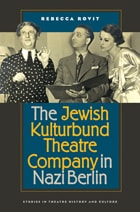
The Jewish Kulturbund Theatre Company in Nazi Berlin
Rebecca Rovit
University of Iowa Press, 2012
The Kulturbund’s directors were repeatedly caught between escalating demands from their Nazi overseers and from their own Jewish constituents. By examining why and how an all-Jewish repertory theatre could coexist with the Nazi regime, Rovit raises broader questions about the nature of art in an environment of coercion and isolation, artistic integrity and adaptability, and community and identity.
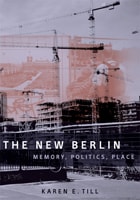
The New Berlin
Memory, Politics, PlaceKaren E. Till
University of Minnesota Press, 2005
“The New Berlin is a notable contribution to human geography and to the interdisciplinary literature on social memory and place making. Till’s methods and scholarship have provided the conceptual groundwork for the exploration and development of place making, social memory, and spatial haunting through the particular practices and politics of the new Berlin. Her readable style is marked by a narrative economy in which every word and sentence serves the larger purposes of the book. I recommend this book to anyone—student, scholar, or practitioner—who is interested in the social dynamics of memory formation and place making.” —The Professional Geographer
“This book is a well-written ‘first-hand’ account, though it also thoroughly covers academic literature, contemporary news accounts, and archival records.” —German Studies Review
“Karen E. Till's The New Berlin describes the modern metropolis and the ghosts of the past that it has to deal with.” —German World
“Well illustrated and copiously footnoted, this is a cutting-edge study of the power of identity-construction/analysis. Highly recommended.” —CHOICE
To Zenzi
Robert L. Shuster
New Issues Poetry and Prose, 2021
Shuttling between the insanity of the Führer’s bunker and the chaotic streets, Tobias must contend with a scheming Martin Bormann, a deceitful deserter, the Russian onslaught, and his own compounding despair—all while falling for Zenzi, a girl of Jewish descent (a mischling) who relays secret news of death camps and convinces Tobias to make a treacherous escape to the Americans.
With thrilling risks in plotting and prose, with moments of pathos and absurdity, Shuster richly conjures a mad, tragic world.
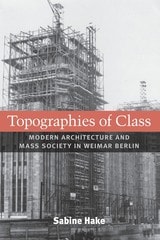
Topographies of Class
Modern Architecture and Mass Society in Weimar BerlinSabine Hake
University of Michigan Press, 2010
In Topographies of Class, Sabine Hake explores why Weimar Berlin has had such a powerful hold on the urban imagination. Approaching Weimar architectural culture from the perspective of mass discourse and class analysis, Hake examines the way in which architectural projects; debates; and representations in literature, photography, and film played a key role in establishing the terms under which contemporaries made sense of the rise of white-collar society.
Focusing on the so-called stabilization period, Topographies of Class maps out complex relationships between modern architecture and mass society, from Martin Wagner's planning initiatives and Erich Mendelsohn's functionalist buildings, to the most famous Berlin texts of the period, Alfred Döblin's city novel Berlin Alexanderplatz (1929) and Walter Ruttmann's city film Berlin, Symphony of the Big City (1927). Hake draws on critical, philosophical, literary, photographic, and filmic texts to reconstruct the urban imagination at a key point in the history of German modernity, making this the first study---in English or German---to take an interdisciplinary approach to the rich architectural culture of Weimar Berlin.
Sabine Hake is Professor and Texas Chair of German Literature and Culture at the University of Texas at Austin. She is the author of numerous books, including German National Cinema and Popular Cinema of the Third Reich.
Cover art: Construction of the Karstadt Department Store at Hermannplatz, Berlin-Neukölln. Courtesy Bildarchiv Preeussischer Kulturbesitz / Art Resource, NY
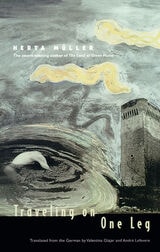
Traveling on One Leg
Herta Muller
Northwestern University Press, 2010
Winner, 2009 Nobel Prize in Literature
Irene is a fragile woman born to a German family in Romania, who has recently emigrated from her native country to West Germany. Politically and socially isolated, Irene moves within the orbit of three troubled men, while simultaneously embarking on an inner exploration of exile, homeland, and identity.