Results by title

32 books match the query 'Celebrities'
cover of Asian Celebrity Cultures in the Digital Age

Asian Celebrity Cultures in the Digital Age

Edited by Jian Xu, Glen Donnar, and Divya Garg

Hong Kong University Press, 2025

An interdisciplinary study of Asian celebrity culture and digital media.

Asian Celebrity Cultures in the Digital Age represents the first comprehensive study on the transformations of celebrity cultures in increasingly globalized and digitalized Asian societies. It discusses relations between Asian celebrities and digital media across emerging phenomena in celebrity practices, cultures, politics, fandom, and economies. Highlighting original case studies from prominent Asian societies, including India, China, Hong Kong, the Philippines, Singapore, Vietnam, Indonesia, Thailand, South Korea, and Japan, this book sheds much-needed light on the de-Westernization and internationalization of celebrity studies and is essential reading for scholars and students in celebrity, fandom, digital media and communication, and cultural studies. 
[more]
cover of Batman Saves the Congo: How Celebrities Disrupt the Politics of Development

Batman Saves the Congo

How Celebrities Disrupt the Politics of Development

Alexandra Cosima Budabin

University of Minnesota Press, 2021

How celebrity strategic partnerships are disrupting humanitarian space

Can a celebrity be a “disrupter,” promoting strategic partnerships to bring new ideas and funding to revitalize the development field—or are celebrities just charismatic ambassadors for big business? Examining the role of the rich and famous in development and humanitarianism, Batman Saves the Congo argues that celebrities do both, and that understanding why and how yields insight into the realities of neoliberal development. 

In 2010, entertainer Ben Affleck, known for his superhero performance as Batman, launched the Eastern Congo Initiative to bring a new approach to the region’s development. This case study is central to Batman Saves the Congo. Affleck’s organization operates with special access, diversified funding, and significant support of elites within political, philanthropic, development, and humanitarian circuits. This sets it apart from other development organizations. With his convening power, Affleck has built partnerships with those inside and outside development, staking bipartisan political ground that is neither charity nor aid but “good business.” Such visible and recognizable celebrity humanitarians are occupying the public domain yet not engaging meaningfully with any public, argues Batman Saves the Congo. They are an unruly bunch of new players in development who amplify business solutions. 

As elite political participants, celebrities shape development practices through strategic partnerships that are both an innovative way to raise awareness and funding for neglected causes and a troubling trend of unaccountable elite leadership in North–South relations. Batman Saves the Congo helps illuminate the power of celebritized business solutions and the development contexts they create. 

[more]
cover of Celebrities and Publics in the Internet Era

Celebrities and Publics in the Internet Era

Sharon Marcus, special issue editor

Duke University Press, 0
The contributors to "Celebrities and Publics in the Internet Era" ask how new digital media platforms such as search engines, Twitter, Facebook, Instagram, and YouTube have qualitatively changed celebrity culture. Drawing on a wide range of examples, from the luxury selfies of micro-celebrities like Kane Lim to performance artist Marina Abramovic’s collaborations with Jay-Z and Lady Gaga, from the karaoke standard in shows like American Idol to Syrian singer Assala’s media battle with the Assad regime, from the "emotion economy" of reality TV to the influence of network entrepreneurs like Tim O’Reilly, the essays in this special issue identify core structural features that contribute to the development of a new theory of celebrity.
[more]
cover of Celebrity And Power: Fame and Contemporary Culture

Celebrity And Power

Fame and Contemporary Culture

P. David Marshall

University of Minnesota Press, 1997

The celebrity is an ambiguous figure in contemporary culture. Simultaneously celebrated and denigrated, stars represent not only the embodiment of success, but also the ultimate construction of false value. They are a peculiar form of public subjectivity that negotiates the tension between a democratic culture of access and a consumer capitalist culture of excess. Celebrity and Power examines this dynamic, questioning the cultural forces behind our need to become endlessly embroiled with the construction and collapse of celebrities.Through detailed analysis of figures from Tom Cruise to Oprah Winfrey to the commercial pop music sensation New Kids on the Block, author and cultural critic P. David Marshall investigates the general public’s desire to associate with celebrity. He examines various kinds of stars, questioning the needs each type fulfills in our lives and relating these needs to particular entertainment media. Marshall asks why enigmatic, distant stars populate the silver screen while television constructs approachable “everyman” figures and popular music features audience-identified celebrity personalities. He looks at the significance of stars who amass cultlike followings as well as those who appear to prompt outright rejection.Celebrity and Power identifies the forces that have enveloped the development of democratic culture and their partial resolution through a redefined public sphere populated by celebrities. Marshall argues that the new concern with the masses that characterizes modern capitalism promotes figures who can be seen as part of the crowd but who are articulated as individuals. As such, they provide a model of self-differentiation that furthers an economy in which product consumption is thought to bestow individualism and personality.Bridging the fields of media studies, film studies, communications, and popular culture, Marshall’s volume is a unique resource for students and researchers in all of these disciplines as well as for the general reader.P. David Marshall is director of the Media and Cultural Studies Centre in the Department of English, University of Queensland in Australia.
[more]
cover of Celebrity Culture and the Entertainment Industry in Asia: Use of Celebrity and its Influence on Society, Culture and Communication

Celebrity Culture and the Entertainment Industry in Asia

Use of Celebrity and its Influence on Society, Culture and Communication

By Vivienne Leung, Kimmy Cheng, and Tommy Tse

Intellect Books, 2017

Offering rare insight into the world of celebrity and media in China and beyond, Celebrity Culture and the Entertainment Industry in Asia looks closely at the dynamics of stardom and celebrity endorsement in the region and examines its impact on marketing and media.
 
Through first-hand interviews with celebrities and entertainment industry practitioners, the authors discuss the social, cultural, and economic influences of celebrity. Dialogues with celebrities such as Kwok-Leung Kam, Bob Lam, Denise Ho, Hilary Tsui, and Francis Mak provide insider accounts of celebrity formation, management, and marketing in Hong Kong and Mainland China, as well as South Korea and Taiwan.
 
[more]
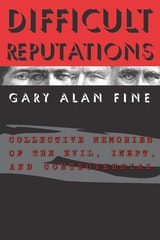
cover of Difficult Reputations: Collective Memories of the Evil, Inept, and Controversial

Difficult Reputations

Collective Memories of the Evil, Inept, and Controversial

Gary Alan Fine

University of Chicago Press, 2001

We take reputations for granted. Believing in the bad and the good natures of our notorious or illustrious forebears is part of our shared national heritage. Yet we are largely ignorant of how such reputations came to be, who was instrumental in creating them, and why. Even less have we considered how villains, just as much as heroes, have helped our society define its values.
Presenting essays on America's most reviled traitor, its worst president, and its most controversial literary ingénue (Benedict Arnold, Warren G. Harding, and Lolita), among others, sociologist Gary Alan Fine analyzes negative, contested, and subcultural reputations. Difficult Reputations offers eight compelling historical case studies as well as a theoretical introduction situating the complex roles in culture and history that negative reputations play.

Arguing the need for understanding real conditions that lead to proposed interpretations, as well as how reputations are given meaning over time, this book marks an important contribution to the sociologies of culture and knowledge.

[more]
cover of Evita, Inevitably: Performing Argentina's Female Icons Before and After Eva Perón

Evita, Inevitably

Performing Argentina's Female Icons Before and After Eva Perón

Jean Graham-Jones

University of Michigan Press, 2014
Evita, Inevitably sheds new light on the history and culture of Argentina by examining the performances and reception of the country’s most iconic female figures, in particular, Eva Perón, who rose from poverty to become a powerful international figure. The book links the Evita legend to a broader pattern of female iconicity from the mid-nineteenth century onward, reading Evita against the performances of other female icons: Camila O’Gorman, executed by firing squad over her affair with a Jesuit priest; Difunta Correa, a devotional figure who has achieved near-sainthood; cumbia-pop performer Gilda; the country’s patron saint, the Virgin of Luján; and finally, Argentina’s president, Cristina Fernández de Kirchner. Employing the tools of discursive, visual, and performance analysis, Jean Graham-Jones studies theatrical performance, literature, film, folklore, Catholic iconography, and Internet culture to document the ways in which these “femicons” have been staged.
[more]
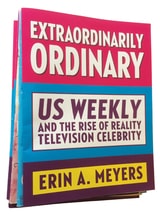
cover of Extraordinarily Ordinary: Us Weekly and the Rise of Reality Television Celebrity

Extraordinarily Ordinary

Us Weekly and the Rise of Reality Television Celebrity

Erin A. Meyers

Rutgers University Press, 2020
Extraordinarily Ordinary offers a critical analysis of the production of a distinct form of twenty-first century celebrity constructed through the exploding coverage of reality television cast members in Us Weekly magazine. Erin A. Meyers connects the economic and industrial forces that helped propel Us Weekly to the top of the celebrity gossip market in the early 2000s with the ways in which reality television cast members fit neatly into the social and cultural norms that shaped the successful gossip formulas of the magazine. Us Weekly’s construction of the “extraordinarily ordinary” celebrity within its gossip narratives is a significant symptom of the broader intensification of discourses of ordinariness and the private in the production of contemporary celebrity, in which fame is paradoxically grounded in “just being yourself” while simultaneously defining what the “right” sort of self is in contemporary culture. 
 
[more]
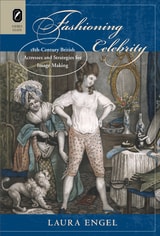
cover of Fashioning Celebrity: Eighteenth-Century British Actresses and Strategies for Image Making

Fashioning Celebrity

Eighteenth-Century British Actresses and Strategies for Image Making

Laura Engel

The Ohio State University Press, 2011
This volume takes a new approach to the study of late eighteenth-century British actresses by examining the significance of leading actresses’ autobiographical memoirs, portraits, and theatrical roles together as significant strategies for shaping their careers.
 
In an era when acting was considered a suspicious profession for women, eighteenth-century actresses were “celebrities” in a society obsessed with fashion, gossip, and intrigue. Fashioning Celebrity: Eighteenth-Century British Actresses and Strategies for Image Making, by Laura Engel, considers the lives and careers of four actresses: Sarah Siddons, Mary Robinson, Mary Wells, and Fanny Kemble. Using conventions of the era’s portraiture, fashion, literature, and the theater in order to create their personas on and off stage, these actresses provided a series of techniques for fashioning celebrity that still survive today.
 
By emphasizing the importance of reading narratives through visual and theatrical frameworks and visual and theatrical representations through narrative models, Engel demonstrates the ways in which actresses’ identities were imagined through a variety of discourses that worked dialectically to construct their complex self-representations.
 
Fashioning Celebrity suggests that eighteenth-century practices of self-promotion mirror contemporary ideas about marketing, framing, and selling the elusive self, providing a way to begin to chart a history of our contemporary obsession with fame and our preoccupation with the rise and fall of famous women.
[more]
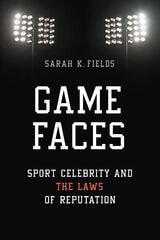
cover of Game Faces: Sport Celebrity and the Laws of Reputation

Game Faces

Sport Celebrity and the Laws of Reputation

Sarah K. Fields

University of Illinois Press, 2016
Sports figures cope with a level of celebrity once reserved for the stars of stage and screen. In Game Faces , Sarah K. Fields looks at the legal ramifications of the cases brought by six of them--golfer Tiger Woods, quarterback Joe Montana, college football coach Wally Butts, baseball pitchers Warren Spahn and Don Newcombe, and hockey enforcer Tony Twist--when faced with what they considered attacks on their privacy and image. Placing each case in its historical and legal context, Fields examines how sports figures in the U.S. have used the law to regain control of their image. As she shows, decisions in the cases significantly affected the evolution of laws related to privacy, defamation, and publicity--areas pertinent to the lives of the famous sports figure and the non-famous consumer alike. She also tells the stories of why the plaintiffs sought relief in the courts, uncovering motives that delved into the heart of issues separating individual rights from the public's perceived right to know. A fascinating exploration of a still-evolving phenomenon, Game Faces is an essential look at the legal playing fields that influence our enjoyment of sports.
[more]
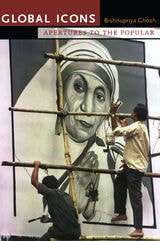
cover of Global Icons: Apertures to the Popular

Global Icons

Apertures to the Popular

Bishnupriya Ghosh

Duke University Press, 2011

A widely disseminated photograph of Phoolan Devi, India’s famous bandit queen, surrendering to police forces in 1983 became an emotional touchstone for Indians who saw the outlaw as a lower-caste folk hero. That affective response was reignited in 1994 with the release of a feature film based on Phoolan Devi’s life. Despite charges of murder, arson, and looting pending against her, the bandit queen was elected to India’s parliament in 1996. Bishnupriya Ghosh considers Phoolan Devi, as well as Mother Teresa and Arundhati Roy, the prize winning author turned environmental activist, to be global icons: highly visible public figures capable of galvanizing intense affect and sometimes even catalyzing social change. Ghosh develops a materialist theory of global iconicity, taking into account the emotional and sensory responses that these iconic figures elicit, the globalized mass media through which their images and life stories travel, and the multiple modernities within which they are interpreted. The collective aspirations embodied in figures such as Barack Obama, Eva Perón, and Princess Diana show that Ghosh’s theory applies not just in South Asia but around the world.
[more]
cover of Indigenous Celebrity: Entanglements with Fame

Indigenous Celebrity

Entanglements with Fame

Jennifer Adese

University of Manitoba Press, 2021

[more]
cover of Infinite Variety: The Life and Legend of the Marchesa Casati

Infinite Variety

The Life and Legend of the Marchesa Casati

Scot D. Ryersson

University of Minnesota Press, 2004
For the first three decades of the twentieth century, the Marchesa Casati astounded Europe: nude servants gilded in gold leaf attended her; bizarre wax mannequins sat as guests at her dining table; and she was infamous for her evening strolls, naked beneath her furs, parading cheetahs on diamond-studded leashes. Artists painted, sculpted, and photographed her; poets praised her strange beauty. Among them were Gabriele D’Annunzio, Man Ray, Jean Cocteau, Cecil Beaton, and American writers Tennessee Williams, Jack Kerouac, and Ezra Pound. Couturiers Fortuny, Poiret, and Erté dressed her. Some became lovers, others awestruck admirers, but all were influenced by this extraordinary muse. The extravagance ended in 1930 when Casati was more than twenty-five million dollars in debt. Fleeing to London, she spent her final flamboyant years there until her death in 1957. Now nearly a half-century later, Casati’s fashion legacy continues to inspire such designers as John Galliano, Karl Lagerfeld, and Tom Ford. Fully authorized and accurate, this is the fantastic story of the Marchesa Luisa Casati.Scot D. Ryersson is an award-winning freelance writer, illustrator, and graphic designer. He lives in New Jersey.Michael Orlando Yaccarino is a freelance writer specializing in international genre film, fashion, music, and unconventional historical figures. He lives in New Jersey.
[more]
cover of Inventing Loreta Velasquez: Confederate Soldier Impersonator, Media Celebrity, and Con Artist

Inventing Loreta Velasquez

Confederate Soldier Impersonator, Media Celebrity, and Con Artist

William C. Davis

Southern Illinois University Press, 2016

She went by many names—Mary Ann Keith, Ann Williams, Lauretta Williams, and more—but history knows her best as Loreta Janeta Velasquez, a woman who claimed to have posed as a man to fight for the Confederacy. In Inventing Loreta Velasquez, acclaimed historian William C. Davis delves into the life of one of America’s early celebrities, peeling back the myths she herself created to reveal a startling and even more implausible reality.

This groundbreaking biography reveals a woman quite different from the public persona she promoted. In her bestselling memoir, The Woman in Battle, Velasquez claimed she was an emphatic Confederate patriot, but in fact she never saw combat. Instead, during the war she manufactured bullets for the Union and persuaded her Confederate husband to desert the Army.

After the Civil War ended, she wore many masks, masterminding ambitious confidence schemes worth millions, such as creating a phony mining company, conning North Carolina residents to back her financially in a fake immigration scheme, and attracting investors to build a railroad across western Mexico. With various husbands, Velasquez sought her fortune both in the American West and in the Klondike, though her endeavors cost one husband his life. She also became a social reformer advocating on behalf of better prison conditions, the Cuban revolt against Spain, and the plight of Cuban refugees. Further, Velasquez was one of the first women to venture into journalism and presidential politics. Always a sensational press favorite, she displayed throughout her life an uncanny ability to manipulate popular media and to benefit from her fame in a way that prefigured celebrities of our own time, including using her testimony in a Congressional inquiry about Civil War counterfeiting as a means of promoting her latest business ventures.

So little has been known of Velasquez’s real life that some postmodern scholars have glorified her as a “woman warrior” and used her as an example in cross-gender issues and arguments concerning Hispanic nationalism. Davis firmly refutes these notions by bringing the historical Velasquez to the surface. The genuine story of Velasquez’s life is far more interesting than misguided interpretations and her own fanciful inventions.
[more]
cover of Just Like Us: Digital Debates on Feminism and Fame

Just Like Us

Digital Debates on Feminism and Fame

Caitlin E. Lawson

Rutgers University Press, 2023

In Just Like Us: Digital Debates on Feminism and Fame, Caitlin E. Lawson examines the rise of celebrity feminism, its intersections with digital culture, and its complicated relationships with race, sexuality, capitalism, and misogyny. Through in-depth analyses of debates across social media and news platforms, Lawson maps the processes by which celebrity culture, digital platforms, and feminism transform one another. As she analyzes celebrity-centered stories ranging from “The Fappening” and the digital attack on actress Leslie Jones to stars’ activism in response to #MeToo, Lawson demonstrates how celebrity culture functions as a hypervisible space in which networked publics confront white feminism, assert the value of productive anger in feminist politics, and seek remedies for women’s vulnerabilities in digital spaces and beyond. Just Like Us asserts that, together, celebrity culture and digital platforms form a crucial discursive arena where postfeminist logics are unsettled, opening up more public, collective modes of holding individuals and groups accountable for their actions.
 
[more]
cover of Legends of the Slow Explosion: Eleven Modern Lives

Legends of the Slow Explosion

Eleven Modern Lives

Baron Wormser

Tupelo Press, 2018

Multi-genre literary master Baron Wormser’s new book is about people from the mid-twentieth century whose lives created ripple effects beyond their individuality. Including electrifying portraits of Rosa Parks, Hannah Arendt, Miles Davis, Audrey Hepburn, Willem de Kooning, among others, these are not conventional “biographical” essays. Wormser has created a molten, multi-dimensional prose that brings a reader into the visceral presence of these human catalysts.
[more]
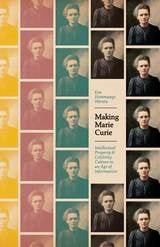
cover of Making Marie Curie: Intellectual Property and Celebrity Culture in an Age of Information

Making Marie Curie

Intellectual Property and Celebrity Culture in an Age of Information

Eva Hemmungs Wirtén

University of Chicago Press, 2015

In many ways, Marie Curie represents modern science. Her considerable lifetime achievements—the first woman to be awarded a Nobel Prize, the only woman to be awarded the Prize in two fields, and the only person to be awarded Nobel Prizes in multiple sciences—are studied by schoolchildren across the world. When, in 2009, the New Scientist carried out a poll for the “Most Inspirational Female Scientist of All Time,” the result was a foregone conclusion: Marie Curie trounced her closest runner-up, Rosalind Franklin, winning double the number of Franklin’s votes. She is a role model to women embarking on a career in science, the pride of two nations—Poland and France—and, not least of all, a European Union brand for excellence in science.

Making Marie Curie explores what went into the creation of this icon of science. It is not a traditional biography, or one that attempts to uncover the “real” Marie Curie. Rather, Eva Hemmungs Wirtén, by tracing a career that spans two centuries and a world war, provides an innovative and historically grounded account of how modern science emerges in tandem with celebrity culture under the influence of intellectual property in a dawning age of information. She explores the emergence of the Curie persona, the information culture of the period that shaped its development, and the strategies Curie used to manage and exploit her intellectual property. How did one create and maintain for oneself the persona of scientist at the beginning of the twentieth century? What special conditions bore upon scientific women, and on married women in particular? How was French identity claimed, established, and subverted? How, and with what consequences, was a scientific reputation secured?

In its exploration of these questions and many more, Making Marie Curie provides a composite picture not only of the making of Marie Curie, but the making of modern science itself.
[more]
cover of Making Stars: Biography and Celebrity in Eighteenth-Century Britain

Making Stars

Biography and Celebrity in Eighteenth-Century Britain

Nora Nachumi

University of Delaware Press, 2022
In bringing biography and celebrity together, the essays in Making Stars interrogate contemporary and current understandings of each. Although biography was not invented in the eighteenth century, the period saw the emergence of works that focus on individuals who are interesting as much, if not more, for their everyday, lived experience than for their status or actions. At the same time, celebrity emerged as public fascination for the private lives of publicly visible individuals. Biography and celebrity are mutually constitutive, but in complex and varied ways that this volume unpacks. Contributors to this volume present us a picture of eighteenth-century celebrity that was mediated across multiple sites, demonstrating that eighteenth-century celebrity culture in Britain was more pervasive, diverse and, in many ways, more egalitarian, than previously supposed.
[more]
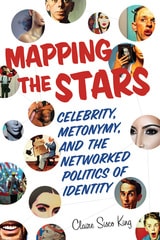
cover of Mapping the Stars: Celebrity, Metonymy, and the Networked Politics of Identity

Mapping the Stars

Celebrity, Metonymy, and the Networked Politics of Identity

Claire Sisco King

The Ohio State University Press, 2023

Often dismissed as trivial or even “trash,” celebrity culture offers a unique way of considering what it means to be human. In Mapping the Stars, Claire Sisco King shows how close analysis of the complex and sometimes contradictory forms of celebrity culture can challenge dominant ideas about selfhood. In particular, as a formation that develops across time, mediums, and texts, celebrity is useful for demonstrating how humanness is defined by relationality, contingency, and even vulnerability.

King considers three stars with popular and controversial personas: Norman Rockwell, Will Smith, and Kim Kardashian. Working in very different contexts and with very different public images, these figures nonetheless share a consistent, if not conspicuous, interest in celebrity as a construct. Offering intertextual readings of their public images across such sites as movie posters, magazines, cinema, and social media—and deploying rhetorical theories of metonymy (a linguistic device linking signifiers by shared associations)—King argues that these stars’ self-reflexive attention to the processes by which celebrity is created and constrained creates opportunities for reframing public discourse about what it means to be famous and what it means to be a person.
[more]
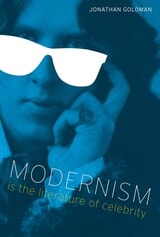
cover of Modernism Is the Literature of Celebrity

Modernism Is the Literature of Celebrity

By Jonathan Goldman

University of Texas Press, 2011

The phenomenon of celebrity burst upon the world scene about a century ago, as movies and modern media brought exceptional, larger-than-life personalities before the masses. During the same era, modernist authors were creating works that defined high culture in our society and set aesthetics apart from the middle- and low-brow culture in which celebrity supposedly resides. To challenge this ingrained dichotomy between modernism and celebrity, Jonathan Goldman offers a provocative new reading of early twentieth-century culture and the formal experiments that constitute modernist literature's unmistakable legacy. He argues that the literary innovations of the modernists are indeed best understood as a participant in the popular phenomenon of celebrity.

Presenting a persuasive argument as well as a chronicle of modernism's and celebrity's shared history, Modernism Is the Literature of Celebrity begins by unraveling the uncanny syncretism between Oscar Wilde's writings and his public life. Goldman explains that Wilde, in shaping his instantly identifiable public image, provided a model for both literary and celebrity cultures in the decades that followed. In subsequent chapters, Goldman traces this lineage through two luminaries of the modernist canon, James Joyce and Gertrude Stein, before turning to the cinema of mega-star Charlie Chaplin. He investigates how celebrity and modernism intertwine in the work of two less obvious modernist subjects, Jean Rhys and John Dos Passos. Turning previous criticism on its head, Goldman demonstrates that the authorial self-fashioning particular to modernism and generated by modernist technique helps create celebrity as we now know it.
[more]
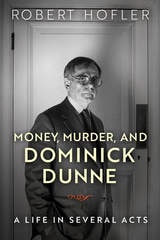
cover of Money, Murder, and Dominick Dunne: A Life in Several Acts

Money, Murder, and Dominick Dunne

A Life in Several Acts

Robert Hofler

University of Wisconsin Press, 2019

Dominick Dunne seemed to live his entire adult life in the public eye, but in this biography Robert Hofler reveals a conflicted, enigmatic man who reinvented himself again and again. As a television and film producer in the 1950s–1970s, hobnobbing with Humphrey Bogart and Natalie Wood, he found success and crushing failure in a pitiless Hollywood. As a Vanity Fair journalist covering the lives of the rich and powerful, he mesmerized readers with his detailed coverage of spectacular murder cases—O.J. Simpson, the Menendez brothers, Michael Skakel, Phil Spector, and Claus von Bülow. He had his own television show, Dominick Dunne's Power, Privilege, and Justic. His five best-selling novels, including The Two Mrs. Grenvilles, People Like Us, and An Inconvenient Woman, were inspired by real lives and scandals. The brother of John Gregory Dunne and brother-in-law of Joan Didion, he was a friend and confidante of many literary luminaries. Dunne also had the ear of some of the world's most famous women, among them Princess Diana, Nancy Reagan, Liz Smith, Barbara Walters, and Elizabeth Taylor.

Dunne admitted to inventing himself, and it was that public persona he wrote about in his own memoir, The Way We Lived Then. Left out of that account, but brought to light here, were his intense rivalry with his brother John Gregory, the gay affairs and relationships he had throughout his marriage and beyond, and his fights with editors at Vanity Fair. Robert Hofler also reveals the painful rift in the family after the murder of Dominick's daughter, Dominique—compounded by his coverage of her killer's trial, which launched his career as a reporter.
[more]
cover of Professor Superstar: Fandom and Anti-Fandom of Academia

Professor Superstar

Fandom and Anti-Fandom of Academia

Mel Stanfill

University of Michigan Press, 2026
Examining celebrity and fan studies together, Professor Superstar argues that academia shares key traits with fandom, including collective emotional investment, shared interpretation of texts, and identity formation. Universities are often seen as isolated from everyday life, creating an atmosphere of both fascination and resentment. Some academics even go on to become field-specific microcelebrities. Some celebrate their influence while others resent their prominence, leading to both fandom and anti-fandom and reflecting broader social struggles as universities become battlegrounds for economic and political debates. The audiences engaging with academia extend beyond the students and faculty directly involved, creating multiple and conflicting interpretations of what academia represents. Public perceptions of academia are shaped less by its reality than by competing narratives about its role in society. By taking these dynamics seriously, we can better understand the cultural forces shaping both admiration and hostility toward higher education.
[more]
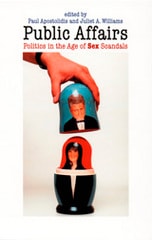
cover of Public Affairs: Politics in the Age of Sex Scandals

Public Affairs

Politics in the Age of Sex Scandals

Paul Apostolidis and Juliet A. Williams, eds.

Duke University Press, 2004

Public affairs—or sex scandals—involving prominent politicians are as revealing of American culture as they are of individual peccadillos. Implicated in their unfolding are a broad range of institutions, trends, questions, and struggles, including political parties, Hollywood, the Christian right, new communications technologies, the restructuring of corporate media, feminist and civil rights debates, and the meaning of public life in the “society of the spectacle.” The contributors to Public Affairs examine, from a variety of perspectives, how political sex scandals take shape, gain momentum, and alter the U.S. political and cultural landscape.

The essays in Public Affairs reflect on a number of sex scandals while emphasizing the Clinton/Lewinsky affair, certainly the most avidly followed and momentous sex scandal in American political history. Leading scholars situate contemporary public affairs in the context not only of earlier sex scandals in American politics (such as Thomas Jefferson’s and Sally Hemings’s affair), but also of more purely political scandals (including Teapot Dome and Watergate) and sex scandals centered around public figures other than politicians (such as the actor Hugh Grant and the minister Jimmy Swaggart). Some essays consider the Clinton affair in light of feminist and anti-racist politics, while others discuss the dynamics of scandals as major media events. By charting a critical path through the muck of scandal rather than around it, Public Affairs illuminates why sex scandals have become such a prominent feature of American public life.

Contributors. Paul Apostolidis, Jodi Dean, Joshua Gamson, Theodore J. Lowi, Joshua D. Rothman, George Shulman, Anna Marie Smith, Jeremy Varon, Juliet A. Williams
[more]
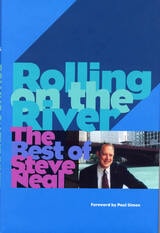
cover of Rolling on the River: The Best of Steve Neal

Rolling on the River

The Best of Steve Neal

Steve Neal. Foreword by Paul Simon

Southern Illinois University Press, 1999

"There are few places where the game [of politics] is played with more intensity than in Chicago," notes Steve Neal, who has covered that city's politics since 1979.


The longtime political columnist for the Chicago Sun-Times, Neal covered Jane M. Byrne's election in 1979 as the city's first woman mayor and Harold Washington's 1983 triumph as Chicago's first African American mayor. Even people who are not interested in politics are drawn to Neal's column because of his hard-hitting style and lucid insights. Rolling on the River is the first published collection of his work.


In these pages, you'll meet the state legislator who never met a special interest he did not like, an alderman groveling to a mob boss, and the prosecutor who gained notoriety as a publicity hound. Of a junketing congressman, Neal writes: "Instead of sending out a congressional newsletter, [he] ought to be sending his constituents 'Wish you were here' postcards of sandy beaches."


Neal's beat is politics, but his interests are rich and varied. He also writes about sports, music, literature, and film with a point of view that is fresh and original. Neal shows how Muhammad Ali became the heavyweight champion who transcended sports and how Sid Luckman changed football. He writes of Kenny Washington's importance in breaking professional football's color barrier and Steve Prefontaine's courage in taking on the little gray men of the sports establishment. Neal chronicles Paul Robeson's struggles: "His name became a great whisper. . . . The injustices against Paul Robeson have not been righted."


Nobel laureate Saul Bellow tells Neal that comedy is the bright hope of American fiction because it is too difficult for writers in this country to grasp the worst of the human condition. Neal tells why Frank Sinatra called Chicago his kind of town and also shows how the city inspires the poetry of Gwendolyn Brooks.


Neal, a former White House correspondent, shares his perspective as one of the few reporters to have interviewed Ronald Reagan in four different decades. He recalls spending an evening with Richard M. Nixon, defends Harry Truman's most controversial decision, and writes from Ireland of John F. Kennedy's enduring legacy in the nation of his ancestors. Neal portrays William Jefferson Clinton as the "world's oldest teenager."


With vivid imagery, Neal makes his subjects come alive. Mayor Richard M. Daley is likened to Forrest Gump, and the legendary boxing announcer Ben Bentley is hailed as the last of the Damon Runyon characters.


Tough but fair. Illuminating. Compassionate. That's the best of Steve Neal.



[more]
cover of Spectacular Disappearances: Celebrity and Privacy, 1696-1801

Spectacular Disappearances

Celebrity and Privacy, 1696-1801

Julia H. Fawcett

University of Michigan Press, 2016
How can people in the spotlight control their self-representations when the whole world seems to be watching? The question is familiar, but not new. Julia Fawcett examines the stages, pages, and streets of eighteenth-century London as England's first modern celebrities performed their own strange and spectacular self-representations.  They include the enormous wig that actor Colley Cibber donned in his comic role as Lord Foppington--and that later reappeared on the head of Cibber's cross-dressing daughter, Charlotte Charke. They include the black page of Tristram Shandy, a memorial to the parson Yorick (and author Laurence Sterne), a page so full of ink that it cannot be read. And they include the puffs and prologues that David Garrick used to heighten his publicity while protecting his privacy; the epistolary autobiography, modeled on the sentimental novel, of Garrick's protégée George Anne Bellamy; and the elliptical poems and portraits of the poet, actress, and royal courtesan Mary Robinson, a.k.a. Perdita.

Linking all of these representations is a quality that Fawcett terms "over-expression," the unique quality that allows celebrities to meet their spectators' demands for disclosure without giving themselves away. Like a spotlight so brilliant it is blinding, these exaggerated but illegible self-representations suggest a new way of understanding some of the key aspects of celebrity culture, both in the eighteenth century and today. They also challenge divides between theatrical character and novelistic character in eighteenth-century studies, or between performance studies and literary studies today. The book provides an indispensable history for scholars and students in celebrity studies, performance studies, and autobiography—and for anyone curious about the origins of the eighteenth-century self.
[more]
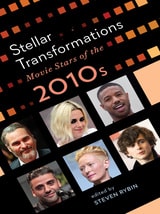
cover of Stellar Transformations: Movie Stars of the 2010s

Stellar Transformations

Movie Stars of the 2010s

Steven Rybin

Rutgers University Press, 2022
Stellar Transformations: Movie Stars of the 2010s circles around questions of stardom, performance, and their cultural contexts in ways that remind us of the alluring magic of stars while also bringing to the fore the changing ways in which viewers engaged with them during the last decade. A salient idea that guides much of the collection is the one of transformation, expressed in these pages as the way in which post-millennial movie stars are in one way or another reshaping ideas of performance and star presence, either through the self-conscious revision of aspects of their own personas or in redirecting or progressing some earlier aspect of the culture. Including a diverse lineup of stars such as Oscar Isaac, Kristen Stewart, Tilda Swinton, and Tyler Perry, the chapters in Stellar Transformations paint the portrait of the meaning of star images during the complex decade of the 2010s, and in doing so will offer useful case studies for scholars and students engaged in the study of stardom, celebrity, and performance in cinema.
[more]
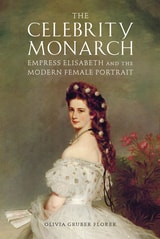
cover of The Celebrity Monarch: Empress Elisabeth and the Modern Female Portrait

The Celebrity Monarch

Empress Elisabeth and the Modern Female Portrait

Olivia Gruber Florek

University of Delaware Press, 2023
Empress Elisabeth of Austria (1837-1898), wife of Habsburg Emperor Francis Joseph I, was celebrated as the most beautiful woman in Europe. Glamorous painted portraits by Franz Xaver Winterhalter and widely collected photographs spread news of her beauty, and the twentieth-century German-language film trilogy Sissi (1955-57) cemented this legacy. Despite the enduring fascination with the empress, art historians have never considered Elisabeth’s role in producing her public portraiture or the influence of her creation. The Celebrity Monarch reveals how portraits of Elisabeth transformed monarchs from divinely appointed sovereigns to public personalities whose daily lives were consumed by spectators. With resources ranging from the paintings of Gustav Klimt and Elisabeth’s private collection of celebrity photography to twenty-first century collages and films by T. J. Wilcox, this book positions Elisabeth herself as the primary engineer of her public image and argues for the widespread influence of her construction on both modern art and the emerging phenomenon of celebrity.
 
[more]
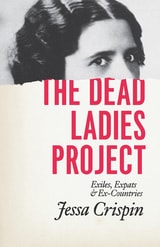
cover of The Dead Ladies Project: Exiles, Expats, and Ex-Countries

The Dead Ladies Project

Exiles, Expats, and Ex-Countries

Jessa Crispin

University of Chicago Press, 2015

When Jessa Crispin was thirty, she burned her settled Chicago life to the ground and took off for Berlin with a pair of suitcases and no plan beyond leaving. Half a decade later, she’s still on the road, in search not so much of a home as of understanding, a way of being in the world that demands neither constant struggle nor complete surrender.
          
The Dead Ladies Project is an account of that journey—but it’s also much, much more. Fascinated by exile, Crispin travels an itinerary of key locations in its literary map, of places that have drawn writers who needed to break free from their origins and start afresh. As she reflects on William James struggling through despair in Berlin, Nora Barnacle dependant on and dependable for James Joyce in Trieste, Maud Gonne fomenting revolution and fostering myth in Dublin, or Igor Stravinsky starting over from nothing in Switzerland, Crispin interweaves biography, incisive literary analysis, and personal experience into a rich meditation on the complicated interactions of place, personality, and society that can make escape and reinvention such an attractive, even intoxicating proposition.
         
Personal and profane, funny and fervent, The Dead Ladies Project ranges from the nineteenth century to the present, from historical figures to brand-new hangovers, in search, ultimately, of an answer to a bedrock question: How does a person decide how to live their life?
[more]
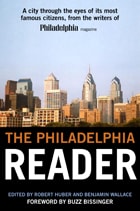
cover of The Philadelphia Reader

The Philadelphia Reader

Robert Huber

Temple University Press, 2006
Do you love Philadelphia? Do you love good writing? Well, this is the book for you. It's about the people of Philadelphia--the good, the fine, and the imperfect. Yes, the sports heroes are here--Mike Schmidt, Julius ("Dr. J.") Erving. And the politicians--Ed Rendell, John Street. And the moguls--Brian Roberts, Comcast honcho. And the would-be moguls--Mark Yagalla, world-class embezzler. And so many more, including--writing in their own words--Terry Gross, Patti LaBelle, W. Wilson Goode, Sr., Judy Wicks, Judith Rodin, and Smarty Jones (proving that this horse is no one-trick pony). And so many more--25 of them in all. The people--and the horse--who have meant something to this city during the last 20 years. Ripped from the pages of Philadelphia magazine (well, OK, carefully removed and lovingly pasted into this book), here are profiles of the people who made an era.
[more]
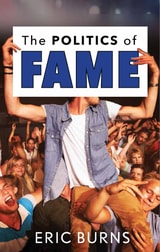
cover of The Politics of Fame

The Politics of Fame

Burns, Eric

Rutgers University Press, 2019

Celebrities can come from many different realms: film, music, politics, sports. But what do all these major celebrities have in common? What elevates them to the status of household names while their equally talented peers remain in relative obscurity? Is it just a question of charisma, or does fame depend more on the collective fantasies of fans than the actual accomplishments of celebrities?
 
In search of answers, cultural historian Eric Burns delves deep into the biographies of some of the most famous figures in American history, from Benjamin Franklin to Fanny Kemble, Elvis Presley to Gene Tierney, and Michael Jordan to Oprah Winfrey. Through these case studies, he considers the evolution of celebrity throughout the ages. More controversially, he questions the very status of fame in the twenty-first century, an era in which thousands of minor celebrities have seen their fifteen minutes in the spotlight.
 
The Politics of Fame is a provocative and entertaining look at the lives and afterlives of America’s most beloved celebrities as well as the mad devotion they inspired. It raises important questions about what celebrity worship reveals about the worshippers—and about the state of the nation itself
[more]
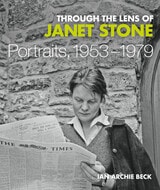
cover of Through the Lens of Janet Stone: Portraits, 1953-1979

Through the Lens of Janet Stone

Portraits, 1953-1979

Ian Archie Beck

Bodleian Library Publishing, 2018

The wife of the distinguished engraver Reynolds Stone, Janet Stone established a kind of literary salon in the idyllic setting of the old Rectory at Litton Cheney in West Dorset, where their wide circle of friends could visit, work, and flourish. Janet’s photographs of these occasions feature informal portraits from the mid-twentieth century of many of the leading cultural figures and personalities of the day.
            Included between these pages are portraits of the composers, actors, novelists, poets, and philosophers in the Stones’ milieu—from Benjamin Britten to Siegfried Sassoon and Frances Partridge—as well as members of the Stone family. Although not a trained photographer, Janet instinctively knew to click the shutter when her subjects were off-guard and at their most informal, capturing an array of candid shots—like one of John Bayley trying on a headscarf and a young Daniel Day-Lewis dressed up as a knight.
            These unique portraits offer beguiling insight into a special set of circumstances: an idyllic place and time and a group of people drawn together by two contrasting but complimentary personalities, the shy genius of Reynolds met by the outgoing style and glamour of Janet Stone.
[more]
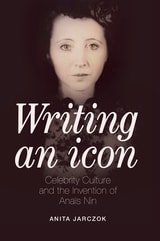
cover of Writing an Icon: Celebrity Culture and the Invention of Anaïs Nin

Writing an Icon

Celebrity Culture and the Invention of Anaïs Nin

Anita Jarczok

Ohio University Press, 2017

Anaïs Nin, the diarist, novelist, and provocateur, occupied a singular space in twentieth-century culture, not only as a literary figure and voice of female sexual liberation but as a celebrity and symbol of shifting social mores in postwar America. Before Madonna and her many imitators, there was Nin; yet, until now, there has been no major study of Nin as a celebrity figure.

In Writing an Icon, Anita Jarczok reveals how Nin carefully crafted her literary and public personae, which she rewrote and restyled to suit her needs and desires. When the first volume of her diary was published in 1966, Nin became a celebrity, notorious beyond the artistic and literary circles in which she previously had operated. Jarczok examines the ways in which the American media appropriated and deconstructed Nin and analyzes the influence of Nin’s guiding hand in their construction of her public persona.

The key to understanding Nin’s celebrity in its shifting forms, Jarczok contends, is the Diary itself, the principal vehicle through which her image has been mediated. Combining the perspectives of narrative and cultural studies, Jarczok traces the trajectory of Nin’s celebrity, the reception of her writings. The result is an innovative investigation of the dynamic relationships of Nin’s writing, identity, public image, and consumer culture.

[more]