Results by title
42 books match the query 'Child welfare'
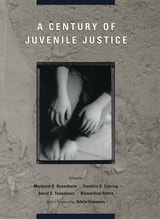
A Century of Juvenile Justice
Edited by Margaret K. Rosenheim, Franklin E. Zimring, David S. Tanenhaus, and Be
University of Chicago Press, 2002
A Century of Juvenile Justice is the first standard, comprehensive and comparative reference work to span the history and current state of juvenile justice. An extraordinary assemblage of leading authorities have produced a accessible, illustrated document, designed as a reference for everyone from probation personnel and police to students, educators, lawyers, and social workers.
Editors' introductions place into context each of the book's five sections, which consider the history of the ideas around which the system was organized and the institutions and practices that resulted; the ways in which this set of institutions and practices interacts with other aspects of government policy toward children in the U.S. and in other nations; and also the ways in which changing social and legal meanings of childhood and youth have continued to influence juvenile justice. The doctrine and institutions of juvenile justice in Europe, Japan, England, and Scotland are profiled in depth to show the range of modern responses to youth crime and child endangerment. This comparative material provides a fresh basis for judging the direction of policy in the U.S.
Margaret K. Rosenheim is the Helen Ross professor Emerita in the School of Social Service Administration of the University of Chicago. Franklin Zimring is Professor of Law and Director of the Earl Warren Legal Institute at the University of California, Berkeley. David S. Tanenhaus is Assistant Professor of History at the University of Nevada, Las Vegas. Bernardine Dohrn is Director of the Children and Family Justice Center of Northwestern University Law School.
Contributors:
Anthony Bottoms
Jaap Doek
Bernardine Dohrn
Peter Edelman
John Eekelaar
David Farrington
Frank Furstenberg
Michael Grossberg
John Laub
Paul Lerman
Rolf Loeber
Akira Morita
Margaret K. Rosenheim
Elizabeth Scott
David S. Tanenhaus
Lee Teitelbaum
Mark Testa
Franklin E. Zimring
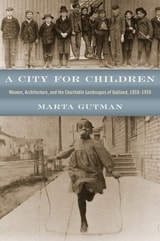
A City for Children
Women, Architecture, and the Charitable Landscapes of Oakland, 1850-1950Marta Gutman
University of Chicago Press, 2014
In A City for Children, Marta Gutman focuses on the use and adaptive reuse of everyday buildings in Oakland, California, to make the city a better place for children. She introduces us to the women who were determined to mitigate the burdens placed on working-class families by an indifferent industrial capitalist economy. Often without the financial means to build from scratch, women did not tend to conceive of urban land as a blank slate to be wiped clean for development. Instead, Gutman shows how, over and over, women turned private houses in Oakland into orphanages, kindergartens, settlement houses, and day care centers, and in the process built the charitable landscape—a network of places that was critical for the betterment of children, families, and public life. The industrial landscape of Oakland, riddled with the effects of social inequalities and racial prejudices, is not a neutral backdrop in Gutman’s story but an active player. Spanning one hundred years of history, A City for Children provides a compelling model for building urban institutions and demonstrates that children, women, charity, and incremental construction, renovations, alterations, additions, and repurposed structures are central to the understanding of modern cities.

A Right to Childhood
The U.S. Children's Bureau and Child Welfare, 1912-46Kriste Lindenmeyer
University of Illinois Press, 1997
for their political agendas as Americans try to determine the role--if
any--of the federal government in the lives of children. But what is the
history of child welfare policy in the United States? What can we learn
from the efforts to found the U.S. Children's bureau in 1903 and its eventual
dismemberment in 1946?
This is the first history of the Children's Bureau and the first in-depth
examination of federal child welfare policy from the perspective of that
agency. Its goal was to promote "a right to childhood," and
Kriste Lindenmeyer unflinchingly examines the successes--and the failures--of
the Bureau. She analyzes infant and maternal mortality, the promotion
of child health care, child labor reform, and the protection of children
with "special needs" from the Bureau's inception through the
Depression, and through all the legislation that impacted on its work
for children. The meaningful accomplishments and the demise of the Children's
Bureau have much to tell parents, politicians, and policy-makers everywhere.
America's Children
Resources from Family, Government, and the EconomyDonald J. Hernandez
Russell Sage Foundation, 1993

Britain's War on Poverty
Jane Waldfogel
Russell Sage Foundation, 2010
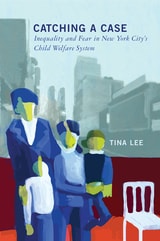
Catching a Case
Inequality and Fear in New York City's Child Welfare SystemLee, Tina
Rutgers University Press, 2016
Child Welfare Revisited
An Africentric PerspectiveEverett, Joyce E
Rutgers University Press, 2004
Why are there proportionally more African American children in foster care than white children? Why are white children often readily adoptable, while African American children are difficult to place? Are these imbalances an indication of institutional racism or merely a coincidence?
In this revised and expanded edition of the classic volume, Child Welfare, twenty-one educators call attention to racial disparities in the child welfare system by demonstrating how practices that are successful for white children are often not similarly successful for African American children. Moreover, contributors insist that policymakers and care providers look at African American family life and child-development from a culturally-based Africentric perspective. Such a perspective, the book argues, can serve as a catalyst for creativity and innovation in the formulation of policies and practices aimed at improving the welfare of African American children.
Child Welfare Revisited offers new chapters on the role of institutional racism and economics on child welfare; the effects of substance abuse, homelessness, HIV/AIDS, and domestic violence; and the internal strengths and challenges that are typical of African American families. Bringing together timely new developments and information, this book will continue to be essential reading for all child welfare policymakers and practitioners.

Children of Afghanistan
The Path to PeaceEdited by Jennifer Heath and Ashraf Zahedi
University of Texas Press, 2014
The first comprehensive look at youth living in a country attempting to rebuild itself after three decades of civil conflict, Children of Afghanistan relies on the research and fieldwork of twenty-one experts to cover an incredible range of topics. Focusing on the full scope of childhood, from birth through young adulthood, this edited volume examines a myriad of issues: early childhood socialization in war and peace; education, literacy, vocational training, and apprenticeship; refugee life; mental and physical health, including disabilities and nutrition; children’s songs, folktales, and art; sports and play; orphans; life on the streets; child labor and children as family breadwinners; child soldiers and militarization; sexual exploitation; growing up in prison; marriage; family violence; and other issues vital to understanding, empowerment, and transformation.
Children of Afghanistan is the first volume that not only attempts to analyze the range of challenges facing Afghan children across class, gender, and region but also offers solutions to the problems they face. With nearly half of the population under the age of fifteen, the future of the country no doubt lies with its children. Those who seek peace for the region must find solutions to the host of crises that have led the United Nations to call Afghanistan “the worst place on earth to be born.” The authors of Children of Afghanistan provide child-centered solutions to rebuilding the country’s cultural, social, and economic institutions.
Children of the Dragonfly
Native American Voices on Child Custody and EducationRobert Bensen
University of Arizona Press, 2001
Native American children have long been subject to removal from their homes for placement in residential schools and, more recently, in foster or adoptive homes. The governments of both the United States and Canada, having reduced Native nations to the legal status of dependent children, historically have asserted a surrogate parentalism over Native children themselves.
Children of the Dragonfly is the first anthology to document this struggle for cultural survival on both sides of the U.S.-Canadian border. Through autobiography and interviews, fiction and traditional tales, official transcripts and poetry, these voices— Seneca, Cherokee, Mohawk, Navajo, and many others— weave powerful accounts of struggle and loss into a moving testimony to perseverance and survival. Invoking the dragonfly spirit of Zuni legend who helps children restore a way of life that has been taken from them, the anthology explores the breadth of the conflict about Native childhood.
Included are works of contemporary authors Sherman Alexie, Joy Harjo, Luci Tapahonso, and others; classic writers Zitkala-Sa and E. Pauline Johnson; and contributions from twenty important new writers as well. They take readers from the boarding school movement of the 1870s to the Sixties Scoop in Canada and the Indian Child Welfare Act of 1978 in the United States. They also spotlight the tragic consequences of racist practices such as the suppression of Indian identity in government schools and the campaign against Indian childbearing through involuntary sterilization.
CONTENTS
Part 1. Traditional Stories and Lives
Severt Young Bear (Lakota) and R. D. Theisz, To Say "Child"
Zitkala-Sa (Yankton Sioux), The Toad and the Boy
Delia Oshogay (Chippewa), Oshkikwe's Baby
Michele Dean Stock (Seneca), The Seven Dancers
Mary Ulmer Chiltoskey (Cherokee), Goldilocks Thereafter
Marietta Brady (Navajo), Two Stories
Part 2. Boarding and Residential Schools
Embe (Marianna Burgess), from Stiya: or, a Carlisle Indian Girl at Home
Black Bear (Blackfeet), Who Am I?
E. Pauline Johnson (Mohawk), As It Was in the Beginning
Lee Maracle (Stoh:lo), Black Robes
Gordon D. Henry, Jr. (White Earth Chippewa), The Prisoner of Haiku
Luci Tapahonso (Navajo), The Snakeman
Joy Harjo (Muskogee), The Woman Who Fell from the Sky
Part 3. Child Welfare and Health Services
Problems That American Indian Families Face in Raising Their Children, United States Senate, April 8 and 9, 1974
Mary TallMountain (Athabaskan), Five Poems
Virginia Woolfclan, Missing Sister
Lela Northcross Wakely (Potawatomi/Kickapoo), Indian Health
Sherman Alexie (Spokane/Coeur d'Alene), from Indian Killer
Milton Lee (Cheyenne River Sioux) and Jamie Lee, The Search for Indian
Part 4. Children of the Dragonfly
Peter Cuch (Ute), I Wonder What the Car Looked Like
S. L. Wilde (Anishnaabe), A Letter to My Grandmother
Eric Gansworth (Onondaga), It Goes Something Like This
Kimberly Roppolo (Cherokee/Choctaw/Creek), Breeds and Outlaws
Phil Young (Cherokee) and Robert Bensen, Wetumka
Lawrence Sampson (Delaware/Eastern Band Cherokee), The Long Road Home
Beverley McKiver (Ojibway), When the Heron Speaks
Joyce carlEtta Mandrake (White Earth Chippewa), Memory Lane Is the Next Street Over
Alan Michelson (Mohawk), Lost Tribe
Patricia Aqiimuk Paul (Inupiaq), The Connection
Terry Trevor (Cherokee/Delaware/Seneca), Pushing up the Sky
Annalee Lucia Bensen (Mohegan/Cherokee), Two Dragonfly Dream Songs
Children of the Great Recession
Irwin Garfinkel
Russell Sage Foundation, 2016
Several contributors examine the recession’s impact on the economic well-being of families, including changes to income, poverty levels, and economic insecurity. Irwin Garfinkel and Natasha Pilkauskas find that in cities with high unemployment rates during the recession, incomes for families with a college-educated mother fell by only about 5 percent, whereas families without college degrees experienced income losses three to four times greater. Garfinkel and Pilkauskas also show that the number of non-college-educated families enrolled in federal safety net programs—including Medicaid, the Earned Income Tax Credit, and the Supplemental Nutrition Assistance Program (or food stamps)—grew rapidly in response to the Great Recession.
Other researchers examine how parents’ physical and emotional health, relationship stability, and parenting behavior changed over the course of the recession. Janet Currie and Valentina Duque find that while mothers and fathers across all education groups experienced more health problems as a result of the downturn, health disparities by education widened. Daniel Schneider, Sara McLanahan and Kristin Harknett find decreases in marriage and cohabitation rates among less-educated families, and Ronald Mincy and Elia de la Cruz-Toledo show that as unemployment rates increased, nonresident fathers’ child support payments decreased. William Schneider, Jeanne Brooks-Gunn, and Jane Waldfogel show that fluctuations in unemployment rates negatively affected parenting quality and child well-being, particularly for families where the mother did not have a four-year college degree.
Although the recession affected most Americans, Children of the Great Recession reveals how vulnerable parents and children paid a higher price. The research in this volume suggests that policies that boost college access and reinforce the safety net could help protect disadvantaged families in times of economic crisis.
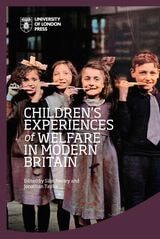
Children’s Experiences of Welfare in Modern Britain
Edited by Siân Pooley and Jonathan Taylor
University of London Press, 2021
Children’s Experiences of Welfare in Modern Britain demonstrates how the young have been integral to the creation, delivery, and impact of welfare. The book brings together the very latest research on welfare as provided by the state, charities, and families in nineteenth- and twentieth-century Britain. The ten chapters consider a wide range of investments in young people’s lives, including residential institutions, Commonwealth emigration schemes, hospitals and clinics, schools, social housing, and familial care. Drawing upon thousands of personal testimonies and oral histories—including a wealth of writing by children themselves—the book shows that we can only understand the history and impact of welfare if we listen to children’s experiences.
Cradle to Kindergarten
A New Plan to Combat InequalityAjay Chaudry
Russell Sage Foundation, 2017
The U.S. government invests less in children under the age of five than do most other developed nations. Most working families must seek private childcare, which means that children from low-income households, who would benefit most from high-quality early education, are the least likely to attend them. Existing policies, such as pre-kindergarten in some states are only partial solutions. To address these deficiencies, the authors propose to overhaul the early care system, beginning with a federal paid parental leave policy that provides both mothers and fathers with time and financial support after the birth of a child. They also advocate increased public benefits, including an expansion of the child care tax credit, and a new child care assurance program that subsidizes the cost of early care for low- and moderate-income families. They also propose that universal, high-quality early education in the states should start by age three, and a reform of the Head Start program that would include more intensive services for families living in areas of concentrated poverty and experiencing multiple adversities from the earliest point in these most disadvantaged children’s lives. They conclude with an implementation plan and contend that these reforms are attainable within a ten-year timeline.
Reducing educational and economic inequalities requires that all children have robust opportunities to learn, fully develop their capacities, and have a fair shot at success. Cradle to Kindergarten presents a blueprint for fulfilling this promise by expanding access to educational and financial resources at a critical stage of child development.
Crying for Our Elders
African Orphanhood in the Age of HIV and AIDSKristen E. Cheney
University of Chicago Press, 2017
Through ethnographic fieldwork and collaborative research with children in Uganda, Cheney traces how the “best interest” principle that governs children’s’ rights can stigmatize orphans and leave children in the post-antiretroviral era even more vulnerable to exploitation. She details the dramatic effects this has on traditional family support and child protection and stresses child empowerment over pity. Crying for Our Elders advances current discussions on humanitarianism, children’s studies, orphanhood, and kinship. By exploring the unique experience of AIDS orphanhood through the eyes of children, caregivers, and policymakers, Cheney shows that despite the extreme challenges of growing up in the era of HIV/AIDS, the post-ARV generation still holds out hope for the future.
Disputing Discipline
Child Protection, Punishment, and Piety in Zanzibar SchoolsFranziska Fay
Rutgers University Press, 2021
Fathers' Fair Share
Helping Poor Men Manage Child Support and FatherhoodEarl S. Johnson
Russell Sage Foundation, 1999

Feminism and Motherhood in Germany, 1800-1914
Ann Taylor Allen
Rutgers University Press, 1991
European historians have noted the prominent role of the maternal ethic -- the idea that woman's role as mother extends into society as a whole -- in the theory and practice of German feminism from 1840 to 1914. This body of ideas, however, has seldom been taken seriously. German feminism has been interpreted as a political strategy, not as an intellectual tradition. Historians have portrayed German feminists as conservative, in contrast to their liberal counterparts in other countries who were more likely to campaign for equal rights. Ann Allen revises these views by analyzing German feminism as an attempt to create a symbolic framework for understanding the world rather than simply to attain practical results. She examines the relationship between the experiences of individual female activists and the evolving intellectual traditions of German culture and of international feminism.
Women thought their maternal role led to empowerment and ethical authority. The role gave them the legitimacy to give speeches, to organize reform movements, and to build feminist institutions. They campaigned for infant welfare and the expansion of state responsibility for the welfare of mothers and children. German feminists responded to central public issues, including revolution, national unification, and urbanization. They worked to transform both public and private worlds by extending their ethical values, developed in the family, to political and social issues.
To make her argument, Allen examines the lives and work of the women who were important to the history of German feminism. They centered their careers on issues relating to motherhood and childcare. Allen relates their stories to a broader theme: the relationship of women's experience, under specific historical conditions, to the development of feminist ideology and practice.
Allen assesses the historical significance of German feminism in the context of German history and of similar feminist movements in other countries, particularly the U.S. Allen calls for the ideas of German feminists to be judged with reference to the specific, local conditions under which they developed, rather than to essentialist notions of feminism. Some historians have identified equal rights ideologies as progressive and maternalist ones as conservative. But the women themselves did not perceive the antithesis between these two forms of ideology.
For Better and For Worse
Welfare Reform and the Well-Being of Children and FamiliesGreg J. Duncan
Russell Sage Foundation, 2001
Formative Years
Children's Health in the United States, 1880-2000Alexandra Minna Stern and Howard Markel, Editors
University of Michigan Press, 2004
Much has changed in the lives of children, and in the health care provided to them, over the past century. Formative Years explores how children's lives have become increasingly medicalized, traces the emergence of the fields of pediatrics and child health, and offers fascinating case studies of important and timely issues.
With contributions from historians and physicians, this collection illuminates some of the most important transformations in children's health in the United States since the 1880s. Opening with a history of pediatrics as a medical specialty, the book addresses such topics as the formulation of normal growth curves, Better Babies contests at county fairs, the "discovery" of the sexual abuse of children, and the political radicalism of the founder of pediatrics, Dr. Abraham Jacobi.
One of the first long-term historical and analytical overviews of pediatrics and child health in the twentieth century, Formative Years will be a welcome addition to several fields, including the history of medicine and technology, the history of childhood, modern U.S. history, women's history, and American studies. It also has ramifications for policymakers concerned with child welfare and development and poses important questions about the direction of children's health in the twenty-first century.
Imagined Orphans
Poor Families, Child Welfare, and Contested Citizenship in LondonMurdoch, Lydia
Rutgers University Press, 2006
With his dirty, tattered clothes and hollowed-out face, Oliver Twist is the enduring symbol of the young indigent spilling out of orphanages and haunting the streets of late-nineteenth-century London. Although poor children were often portrayed as real-life Oliver Twists—either orphaned or abandoned by unworthy parents—they in fact frequently maintained contact and were eventually reunited with their families.
In Imagined Orphans, Lydia Murdoch focuses on this discrepancy between the representation and the reality of children’s experiences within welfare institutions—a discrepancy that she argues stems from conflicts over middle- and working-class notions of citizenship that arose in the 1870s and persisted until the First World War. Reformers’ efforts to depict poor children as either orphaned or endangered by abusive or “no-good” parents fed upon the poor’s increasing exclusion from the Victorian social body. Reformers used the public’s growing distrust and pitiless attitude toward poor adults to increase charity and state aid to the children.
With a critical eye to social issues of the period, Murdoch urges readers to reconsider the complex situations of families living in poverty. While reformers’ motivations seem well intentioned, she shows how their methods solidified the public’s antipoor sentiment and justified a minimalist welfare state that engendered a cycle of poverty. As they worked to fashion model citizens, reformers’ efforts to protect and care for children took on an increasingly imperial cast that would continue into the twentieth century.
Indicators of Children's Well-Being
Robert M. Hauser
Russell Sage Foundation, 1997
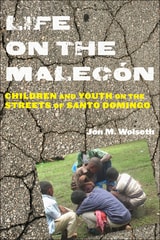
Life on the Malecón
Children and Youth on the Streets of Santo DomingoJon M. Wolseth
Rutgers University Press, 2013
Life on the Malecón is a narrative ethnography of the lives of street children and youth living in Santo Domingo, Dominican Republic, and the non-governmental organizations that provide social services for them. Writing from the perspective of an anthropologist working as a street educator with a child welfare organization, Jon M. Wolseth follows the intersecting lives of children, the institutions they come into contact with, and the relationships they have with each other, their families, and organization workers.
Often socioeconomic conditions push these children to move from their homes to the streets, but sometimes they themselves may choose the allure of the perceived freedoms and opportunities that street life has to offer. What they find, instead, is violence, disease, and exploitation—the daily reality through which they learn to maneuver and survive. Wolseth describes the stresses, rewards, and failures of the organizations and educators who devote their resources to working with this population.
The portrait of Santo Domingo’s street children and youth population that emerges is of a diverse community with variations that may be partly related to skin color, gender, and class. The conditions for these youth are changing as the economy of the Dominican Republic changes. Although the children at the core of this book live and sleep on avenues and plazas and in abandoned city buildings, they are not necessarily glue- and solvent-sniffing beggars or petty thieves on the margins of society. Instead, they hold a key position in the service sector of an economy centered on tourism.
Life on the Malecón offers a window into the complex relationships children and youth construct in the course of mapping out their social environment. Using a child-centered approach, Wolseth focuses on the social lives of the children by relating the stories that they themselves tell as well as the activities he observes.
Mother-Work
Women, Child Welfare, and the State, 1890-1930Molly Ladd-Taylor
University of Illinois Press, 1994
Early in the twentieth century, maternal and child welfare evolved from a private family responsibility into a matter of national policy. Molly Ladd-Taylor explores both the private and public aspects of child-rearing, using the relationship between them to cast new light on the histories of motherhood, the welfare state, and women's activism in the United States.
Ladd-Taylor argues that mother-work, "women's unpaid work of reproduction and caregiving," motivated women's public activism and "maternalist" ideology. Mothering experiences led women to become active in the development of public health, education, and welfare services. In turn, the advent of these services altered mothering in many ways, including the reduction of the infant mortality rate.
Poor Kids in a Rich Country
America's Children in Comparative PerspectiveLee Rainwater
Russell Sage Foundation, 2003
Poor Relations
The Children of the State in Illinois, 1818-1990Joan Gittens
University of Illinois Press, 1994
This comprehensive history traces the care of dependent, delinquent,
and disabled children in Illinois from the early nineteenth century to
current times, focusing on the dilemmas raised by both public intervention
and the lack of it. Joan Gittens explores the inadequacies of a system
that has allowed problems in the public care of children to recur regularly
but at the same time insists that the state's own history makes it clear
that the potential for improvements exists.
Poverty, Charity, and Motherhood
Maternal Societies in Nineteenth-Century FranceChristine Adams
University of Illinois Press, 2010
Preventing Child Maltreatment in the U.S.
American Indian and Alaska Native PerspectivesRoyleen J Ross
Rutgers University Press, 2022
This book is part of a concentrated series of books that examines child maltreatment across minoritized, cultural groups.Specifically, this volume addresses American Indian and Alaska Native populations. However, in an effort to contextualize the experiences of 574 federally recognized tribes and 50+ state recognized tribes, as well as villages, the authors focus on populations within rural and remote regions and discuss the experiences of some tribal communities throughout US history. It should be noted that established research has primarily drawn attention to the pervasive problems impacting Indigenous individuals, families, and communities. Aligned with an attempt to adhere to a decolonizing praxis, the authors share information in a strength-based framework for the Indigenous communities discussed within the text. The authors review federally funded programs (prevention, intervention, and treatment) that have been adapted for tribal communities (e.g., Safecare) and include cultural teachings that address child maltreatment. The intention of this book is to inform researchers, practitioners, policy makers, and advocates about the current state of child maltreatment from an Indigenous perspective.
Preventing Child Maltreatment in the U.S.
Multicultural ConsiderationsMilton A Fuentes
Rutgers University Press, 2022
Preventing Child Maltreatment in the U.S.
The Black Community PerspectiveMelissa Phillips
Rutgers University Press, 2022
Preventing Child Maltreatment in the U.S.
The Latinx Community PerspectiveEsther J. Calzada
Rutgers University Press, 2022
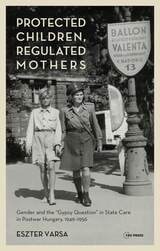
Protected Children, Regulated Mothers
Gender and the "Gypsy Question" in State Care in Postwar Hungary, 1949–1956Eszter Varsa
Central European University Press, 2021
Protected Children, Regulated Mothers examines child protection in Stalinist Hungary as a part of twentieth-century East Central, Eastern, and Southeastern European history. Across the communist bloc, the prewar foster care system was increasingly replaced after 1945 by institutionalization in residential homes. This shift was often interpreted as a further attempt to establish totalitarian control. However, this study—based on hundreds of children's case files and interviews with institution leaders, teachers, and people formerly in state care—provides a new perspective. Rather than being merely a tool of political repression, state care in postwar Hungary was often shaped by the efforts of policy actors and educators to address the myriad of problems engendered by the social and economic transformations that emerged after World War II. This response built on, rather than broke with, earlier models of reform and reformatory education. Yet child protection went beyond safeguarding and educating children; it also focused on parents, particularly lone mothers, regulating not only their entrance to paid work but also their sexuality. In so doing, children's homes both reinforced and changed existing cultural and social patterns, whether about gendered division of work or the assimilation of minorities. Indeed, a major finding of the book is that state socialist child protection continued a centuries-long national project of seeking a “solution to the Gypsy question,” rooted in efforts to eliminate the perceived “workshyness” of Roma.
Saving Our Children From Poverty
What the United States Can Learn From FranceBarbara R. Bergmann
Russell Sage Foundation, 1996
Securing the Future
Investing in Children From Birth to CollegeSheldon Danziger
Russell Sage Foundation, 2000
Somebody's Children
The Politics of Transracial and Transnational AdoptionLaura Briggs
Duke University Press, 2012
The dramatic expansion of transracial and transnational adoption since the 1950s, Briggs argues, was the result of specific and profound political and social changes, including the large-scale removal of Native children from their parents, the condemnation of single African American mothers in the context of the civil rights struggle, and the largely invented "crack babies" scare that inaugurated the dramatic withdrawal of benefits to poor mothers in the United States. In Guatemala, El Salvador, and Argentina, governments disappeared children during the Cold War and then imposed neoliberal economic regimes with U.S. support, making the circulation of children across national borders easy and often profitable. Concluding with an assessment of present-day controversies surrounding gay and lesbian adoptions and the struggles of immigrants fearful of losing their children to foster care, Briggs challenges celebratory or otherwise simplistic accounts of transracial and transnational adoption by revealing some of their unacknowledged causes and costs.
Targeting Investments in Children
Fighting Poverty When Resources Are LimitedEdited by Phillip B. Levine and David J. Zimmerman
University of Chicago Press, 2010
A substantial number of American children experience poverty: about 17 percent of those under the age of eighteen meet the government’s definition, and the proportion is even greater within minority groups. Childhood poverty can have lifelong effects, resulting in poor educational, labor market, and physical and mental health outcomes for adults. These problems have long been recognized, and there are numerous programs designed to alleviate or even eliminate poverty; as these programs compete for scarce resources, it is important to develop a clear view of their impact as tools for poverty alleviation.
Targeting Investments in Children tackles the problem of evaluating these programs by examining them using a common metric: their impact on earnings in adulthood. The volume’s contributors explore a variety of issues, such as the effect of interventions targeted at children of different ages, and study a range of programs, including child care, after-school care, and drug prevention. The results will be invaluable to educational leaders and researchers as well as policy makers.
The Dead End Kids of St. Louis
Homeless Boys and the People Who Tried to Save ThemBonnie Stepenoff
University of Missouri Press, 2021
The Future of the Family
Daniel Patrick Moynihan
Russell Sage Foundation, 2004
The Kindness of Strangers
The Abandonment of Children in Western Europe from Late Antiquity to the RenaissanceJohn Boswell
University of Chicago Press, 1998

The Orphans of Byzantium
Child Welfare in the Christian EmpireTimothy S. Miller
Catholic University of America Press, 2003

The Rights of the Defenseless
Protecting Animals and Children in Gilded Age AmericaSusan J. Pearson
University of Chicago Press, 2011
In 1877, the American Humane Society was formed as the national organization for animal and child protection. Thirty years later, there were 354 anticruelty organizations chartered in the United States, nearly 200 of which were similarly invested in the welfare of both humans and animals. In The Rights of the Defenseless, Susan J. Pearson seeks to understand the institutional, cultural, legal, and political significance of the perceived bond between these two kinds of helpless creatures, and the attempts made to protect them.
Unlike many of today’s humane organizations, those Pearson follows were delegated police powers to make arrests and bring cases of cruelty to animals and children before local magistrates. Those whom they prosecuted were subject to fines, jail time, and the removal of either animal or child from their possession. Pearson explores the limits of and motivation behind this power and argues that while these reformers claimed nothing more than sympathy with the helpless and a desire to protect their rights, they turned “cruelty” into a social problem, stretched government resources, and expanded the state through private associations. The first book to explore these dual organizations and their storied history, The Rights of the Defenseless will appeal broadly to reform-minded historians and social theorists alike.
Vietnam's Children in a Changing World
Rachel Burr
Rutgers University Press, 2006
Like the majority of children living in the global South today, a large number of Vietnamese youths work to help support their families. International human rights organizations have focused on these children, seeking to bring their lives into line with an understanding of childhood that is generally accepted in the developed world.
In this ethnographic study, Rachel Burr draws on her daily observations of working children in Hanoi and argues that these youngsters are misunderstood by the majority of agencies that seek to help them. Most aid programs embrace a model of childhood that is based on Western notions of individualism and bountiful resources. They further assume that this model is universally applicable even in cultures that advocate a collective sense of self and in countries that do not share the same economic advantages.
Burr presents the voices and experiences of Vietnamese children in the streets, in a reform school, and in an orphanage to show that workable solutions have become lost within the rhetoric propagated by aid organizations. The reality of providing primary education or adequate healthcare for all children, for instance, does not stand a chance of being achieved until adequate resources are put in place. Yet, organizations preoccupied with the child rights agenda are failing to acknowledge the distorted global distribution of wealth in favor of Western nations.
Offering a unique, firsthand look at the experiences of children in contemporary Vietnam, this book also provides a broad analysis of how internationally led human rights agendas are often received at the local level.
When Are You Coming Home?
How Young Children Cope When Parents Go to JailHilary Cuthrell
Rutgers University Press, 2023
Who's Watching?
Daily Practices of Surveillance among Contemporary FamiliesMargaret K. Nelson
Vanderbilt University Press, 2009