Results by title
11 books match the query 'Ethics, Ancient'
A Commentary on Cicero, De Officiis
Andrew R. Dyck
University of Michigan Press, 1997
Composed in haste shortly before Cicero's death, de Officiis has exercised enormous influence over the centuries. It is all the more surprising that Andrew R. Dyck's volume is the first detailed English commentary on the work written in this century. It deals with the problems of the Latin text (taking account of Michael Winterbottom's new edition), it delineates the work's structure and sometimes elusive train of thought, clarifies the underlying Greek and Latin concepts, and provides starting points for approaching the philosophical and historical problems that de Officiis raises.
A work of major importance for classicists, philosophers, and ancient historians, this Commentary will be an invaluable companion to all readers of Cicero's last philosophical work.
Andrew R. Dyck is Professor of Classics, University of California, Los Angeles.
Publication of this volume is supported by a grant from the National Endowment for the Humanities.
Law and the Good Life
On the Political Philosophy of AristotleRobert C. Bartlett
University of Chicago Press, 2026
A fresh reading of the relationship between moral and political philosophy in Aristotle’s thought.
Our democracies promise the rights to life, liberty, and the pursuit of happiness—at least, within the confines of the law. Yet the law is an ineffective guide to the good life; laws can be arbitrary, even immoral. What other limit, then, should direct us as we pursue our own fulfillment?
In Law and the Good Life, philosopher Robert C. Bartlett examines Aristotle’s consideration of this question. Rather than defer to authority, Aristotle invites us to ground ourselves in moral virtue and intellectual fulfillment, an argument he develops in both Politics and Nicomachean Ethics. As political creatures, Aristotle tells us, we are capable of moral action and therefore must embrace that capacity; at the same time, as rational creatures, we must understand what is true, even without regard to action. In taking these insights together, Bartlett offers a new reading of Aristotle’s political philosophy, one he hopes might serve as a prudent lodestar in our own turbulent times.
Necessity, Cause and Blame
Perspectives on Aristotle's TheoryRichard Sorabji
University of Chicago Press, 2006
“Necessity, Cause and Blame would be counted by all as one of Sorabji’s finest. The book is essential for philosophers—both specialists on the Greeks and modern thinkers about free will—and also compelling for non-specialists.”—Martha Nussbaum
“Original and important . . . The book relates Aristotle’s discussions to both the contemporary debates on determinism and causation and the ancient ones. It is especially detailed on Stoic arguments about necessity . . . and on the social and legal background to Aristotle’s thought.”—Choice
“It is difficult to convey the extraordinary richness of this book. . . . A Greekless philosopher could read it with pleasure . . . At the same time, its learning and scholarship are enormous.”—G. E. M. Anscombe, Times Literary Supplement
On Benefits
Lucius Annaeus Seneca
University of Chicago Press, 2011
Lucius Annaeus Seneca (4 BCE–65 CE) was a Roman Stoic philosopher, dramatist, statesman, and advisor to the emperor Nero, all during the Silver Age of Latin literature. The Complete Works of Lucius Annaeus Seneca is a fresh and compelling series of new English-language translations of his works in seven accessible volumes. Edited by world-renowned classicists Elizabeth Asmis, Shadi Bartsch, and Martha C. Nussbaum, this engaging collection restores Seneca—whose works have been highly praised by modern authors from Desiderius Erasmus to Ralph Waldo Emerson—to his rightful place among the classical writers most widely studied in the humanities.
On Benefits, written between 56 and 64 CE, is a treatise addressed to Seneca’s close friend Aebutius Liberalis. The longest of Seneca’s works dealing with a single subject—how to give and receive benefits and how to express gratitude appropriately—On Benefits is the only complete work on what we now call “gift exchange” to survive from antiquity. Benefits were of great personal significance to Seneca, who remarked in one of his later letters that philosophy teaches, above all else, to owe and repay benefits well.
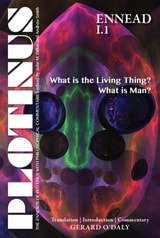
PLOTINUS Ennead I.1
What is the Living Thing? What is Man?: Translation with an Introduction and CommentaryGerard O'Daly
Parmenides Publishing, 2017
Ennead I.1 is a succinct and concentrated analysis of key themes in Plotinus' psychology and ethics. It focuses on the soul-body relation, discussing various Platonic, Aristotelian, and Stoic views before arguing that there is only a soul-trace in the body (forming with the body a “compound”), while the reasoning soul itself is impassive and flawless. The soul-trace hypothesis is used to account for human emotions, beliefs, and perceptions, and human fallibility in general. Its problematic relation to our rational powers, as well as the question of moral responsibility, are explored. Plotinus develops his original and characteristic concept of the self or “we,” which is so called because it is investigated as something common to all humans (rather than a private individual self), and because it is multiple, referring to the reasoning soul or to the “living thing” composed of soul-trace and body. Plotinus explores the relation between the “we” and consciousness, and also its relation to the higher metaphysical entities, the Good, and Intellect.
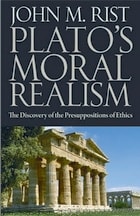
Plato's Moral Realism
The Discovery of the Presuppositions of EthicsJohn M. Rist
Catholic University of America Press, 2012

Practical Reason, Aristotle, and Weakness of the Will
Norman O. Dahl
University of Minnesota Press, 1984
Practical Reason, Aristotle, and Weakness of the Will was first published in 1984. Minnesota Archive Editions uses digital technology to make long-unavailable books once again accessible, and are published unaltered from the original University of Minnesota Press editions.
One of the central problems in recent moral philosophy is the apparent tension between the "practical" or "action-guiding" side of moral judgments and their objectivity. That tension would not exist if practical reason existed (if reason played a substantial role in producing motivation) and if recognition of obligation were one of the areas in which practical reason operated. In Practical Reason, Aristotle, and the Weakness of the Will,Norman Dahl argies that, despite widespread opinion to the contrary, Aristotle held a position on practical reason that both provides an objective basis for ethics and satisfies an important criterion of adequacy—that it acknowledges genuine cases of weakness of the will. In arguing for this, Dahl distinguishes Aristotle's position from that of David Hume, who denied the existence of practical reason. An important part of his argument is an account of the role that Aristotle allowed the faculty nous to play in the acquisition of general ends. Relying both on this argument and on an examination of passages from Aristotle's ethics and psychology, Dahl argues that Aristotle recognized that a genuine conflict of motives can occur in weakness of the will. This provides him with the basis for an interpretation that finds Aristotle acknowledging genuine cases of weakness of the will.
Dahl's arguments have both a philosophical and a historical point. He argues that Aristotle's position on practical reason deserves to be taken seriously, a conclusion he reinforces by comparing that position with more recent attempts, by Kant, Nagel, and Rawls, to base ethics on practical reason.
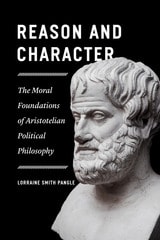
Reason and Character
The Moral Foundations of Aristotelian Political PhilosophyLorraine Smith Pangle
University of Chicago Press, 2020
A close and selective commentary on Aristotle’s Nicomachean Ethics, offering a novel interpretation of Aristotle’s teachings on the relation between reason and moral virtue.
What does it mean to live a good life or a happy life, and what part does reason play in the quest for fulfillment? Lorraine Smith Pangle shows how Aristotle’s arguments for virtue as the core of happiness and for reason as the guide to virtue emerge in response to Socrates’s paradoxical claim that virtue is knowledge and vice is ignorance.
Against Socrates, Aristotle does justice to the effectual truth of moral responsibility—that our characters do indeed depend on our own voluntary actions. But he also incorporates Socratic insights into the close interconnection of passion and judgment and the way passions and bad habits work not to overcome knowledge that remains intact but to corrupt the knowledge one thinks one has. Reason and Character presents fresh interpretations of Aristotle’s teaching on the character of moral judgment and moral choice, on the way reason finds the mean—especially in justice—and on the relation between practical and theoretical wisdom.
The Emerging Good in Plato's Philebus
John V. Garner
Northwestern University Press, 2017
John V. Garner convincingly refines previous interpretations and uncovers a profound thesis in the Philebus: genuine learners find value not only in stable being but also in the process of becoming. Further, since genuine learning arises in pluralistic communities where people form and inform one another, those who are truly open to learning are precisely those who actively shape the betterment of humanity.
The Emerging Good in Plato’s "Philebus" thus connects the Philebus’s grand philosophical ideas about the order of values, on the one hand, to its intimate and personal account of the experience of learning, on the other. It shows that this dialogue, while agreeing broadly with themes in more widely studied works by Plato such as the Republic, Gorgias, and Phaedo, also develops a unique way of salvaging the whole of human life, including our ever-changing nature.
The Greeks and Us
Essays in Honor of Arthur W. H. AdkinsEdited by Robert B. Louden and Paul Schollmeier
University of Chicago Press, 1996
The timely subjects addressed by the contributors include the relation between literature and moral understanding, moral and nonmoral values, and the contemporary meaning of ancient Greek ethics. The volume also includes an essay from the late Adkins himself illustrating his methodology in an analysis of the "Speech of Lysias" in Plato's Phaedrus.
The Greeks and Us will interest all those concerned with how ancient moral values do or do not differ from our own.
Contributors include Arthur W. H. Adkins, Stephanie Nelson, Martha C. Nussbaum, Paul Schollmeier, James Boyd White, Bernard Williams, and Lee Yearley.
Commentaries by Wendy Doniger, Charles M. Gray, David Grene, Robert B. Louden, Richard Posner, and Candace Vogler.
The Rhetoric of Morality and Philosophy
Plato's Gorgias and PhaedrusSeth Benardete
University of Chicago Press, 1991
The Rhetoric of Morality and Philosophy, one of the most groundbreaking works of twentieth-century Platonic studies, is now back in print for a new generation of students and scholars to discover. In this volume, distinguished classicist Seth Benardete interprets and pairs two important Platonic dialogues, the Gorgias and the Phaedrus, illuminating Socrates’ notion of rhetoric and Plato’s conception of morality and eros in the human soul.
Following his discussion of the Gorgias as a dialogue about the rhetoric of morality, Benardete turns to the Phaedrus as a discourse about genuine rhetoric, namely the science of eros, or true philosophy. This novel interpretation addresses numerous issues in Plato studies: the relation between the structure of the Gorgias and the image of soul/city in the Republic, the relation between the structure of Phaedrus and the concept of eros, and Socrates’ notion of ignorance, among others.