Results by title
230 books match the query 'Government relations' and 30 start with a
A Culture's Catalyst
Historical Encounters with Peyote and the Native American Church in CanadaFannie Kahan
University of Manitoba Press, 2016
A History of Navajo Nation Education
Disentangling Our Sovereign BodyWendy Shelly Greyeyes; Foreword by Kevin K. Washburn
University of Arizona Press, 2022
On the heels of the fiftieth anniversary of the founding of the Department of Diné Education, this important education history explains how the current Navajo educational system is a complex terrain of power relationships, competing agendas, and jurisdictional battles influenced by colonial pressures and tribal resistance. An iron grip of colonial domination over Navajo education remains, thus inhibiting a unified path toward educational sovereignty. In providing the historical roots to today’s challenges, Wendy Shelly Greyeyes clears the path and provides a go-to reference to move discussions forward.
A Nation Rising
Hawaiian Movements for Life, Land, and SovereigntyNoelani Goodyear-Ka'opua, Ikaika Hussey, and Erin Kahunawaika'ala Wright, eds.
Duke University Press, 2014
Contributors. Noa Emmett Aluli, Ibrahim G. Aoudé, Kekuni Blaisdell, Joan Conrow, Noelani Goodyear-Ka'opua, Edward W. Greevy, Ulla Hasager, Pauahi Ho'okano, Micky Huihui, Ikaika Hussey, Manu Ka‘iama, Le‘a Malia Kanehe, J. Kehaulani Kauanui, Anne Keala Kelly, Jacqueline Lasky, Davianna Pomaika'i McGregor, Nalani Minton, Kalamaoka'aina Niheu, Katrina-Ann R. Kapa'anaokalaokeola Nakoa Oliveira, Jonathan Kamakawiwo'ole Osorio, Leon No'eau Peralto, Kekailoa Perry, Puhipau, Noenoe K. Silva, D. Kapua‘ala Sproat, Ty P. Kawika Tengan, Mehana Blaich Vaughan, Kuhio Vogeler, Erin Kahunawaika’ala Wright
A Nation of Villages
Riot and Rebellion in the Mexican Huasteca, 1750-1850Michael T. Ducey
University of Arizona Press, 2004
He asks not just why villagers revolted but how their discontent fit into the political drama of early national Mexico. Ducey shows how the war offered opportunities for villagers to settle scores with members of the local elite as peasants discovered new ways of imagining the state. They were far from being the isolated traditionalists who occasionally rebelled against political or economic change described in older scholarship. At least until the 1848-1850 Caste War, political disputes were more important than land.
This region’s peasants were both remarkably diverse and politically astute. Villagers adapted colonial political culture and later republican ideas to fashion local institutions that fit their own needs. Over the course of a hundred years, peasant tactics and political discourse evolved in a constant dialogue with the changing political climate, shifting from rhetorical statements of loyalty to the king to proclamations of federalism and their rights as citizens. A Nation of Villages ably demonstrates that rural villagers were more aware of elite ideologies than urban rulers were of the villagers’ political ideas. This long-term analysis of one region illuminates how rural people helped shape the republican state.
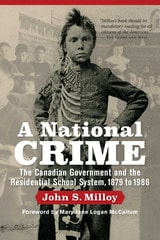
A National Crime
The Canadian Government and the Residential School System 2nd editionJohn S. Milloy
University of Manitoba Press, 2017
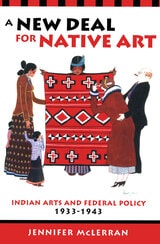
A New Deal for Native Art
Indian Arts and Federal Policy, 1933-1943Jennifer McLerran
University of Arizona Press, 2009
In A New Deal for Native Art, Jennifer McLerran reveals how positioning the native artist as a pre-modern Other served the goals of New Deal programs—and how this sometimes worked at cross-purposes with promoting native self-sufficiency. She describes federal policies of the 1930s and early 1940s that sought to generate an upscale market for Native American arts and crafts. And by unraveling the complex ways in which commodification was negotiated and the roles that producers, consumers, and New Deal administrators played in that process, she sheds new light on native art’s commodity status and the artist’s position as colonial subject.
In this first book to address the ways in which New Deal Indian policy specifically advanced commodification and colonization, McLerran reviews its multi-pronged effort to improve the market for Indian art through the Indian Arts and Crafts Board, arts and crafts cooperatives, murals, museum exhibits, and Civilian Conservation Corps projects. Presenting nationwide case studies that demonstrate transcultural dynamics of production and reception, she argues for viewing Indian art as a commodity, as part of the national economy, and as part of national political trends and reform efforts.
McLerran marks the contributions of key individuals, from John Collier and Rene d’Harnoncourt to Navajo artist Gerald Nailor, whose mural in the Navajo Nation Council House conveyed distinctly different messages to outsiders and tribal members. Featuring dozens of illustrations, A New Deal for Native Art offers a new look at the complexities of folk art “revivals” as it opens a new window on the Indian New Deal.
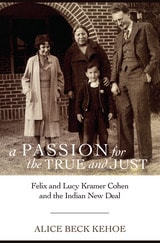
A Passion for the True and Just
Felix and Lucy Kramer Cohen and the Indian New DealAlice Beck Kehoe
University of Arizona Press, 2014
Kehoe argues that, due to anti-Semitism in 1930s America, Cohen could not speak for his legislation before Congress, and that Collier, an upper-class WASP, became the spokesman as well as the administrator. According to the author, historians of the Indian New Deal have not given due weight to Cohen’s work, nor have they recognized its foundation in his liberal secular Jewish culture. Both Felix and Lucy Cohen shared a belief in the moral duty of mitzvah, creating a commitment to the “true and the just” that was rooted in their Jewish intellectual and moral heritage, and their Social Democrat principles.
A Passion for the True and Just takes a fresh look at the Indian New Deal and the radical reversal of US Indian policies it caused, moving from ethnocide to retention of Indian homelands. Shifting attention to the Jewish tradition of moral obligation that served as a foundation for Felix and Lucy Kramer Cohen (and her professor Franz Boas), the book discusses Cohen’s landmark contributions to the principle of sovereignty that so significantly influenced American legal philosophy.
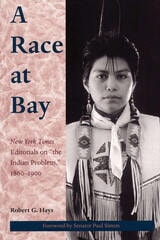
A Race at Bay
New York Times Editorials on "the Indian Problem," 1860 - 1900Robert G. Hays. Foreword by Paul Simon
Southern Illinois University Press, 1997
Robert G. Hays chronicles the "Indian problem" precisely as it was explained to Americans through the editorial columns of the New York Times between 1860 and 1900, the years when battles between white settlers and Native Americans split a nation and its spirit apart.
Covering the final forty-one years of the nineteenth century, Hays’s collection of Times editorials gives readers what current accounts cannot: perspectives by contemporary writers with unique insights into the public images of Native Americans and their place in a nation bent on expansion. The authentic voices of a national newspaper’s daily record speak with an urgency both immediate and real.
These editorials express the unbridled bitterness and raw ambition of a nation immersed in an agenda of conquest. They also resonate with the struggle to find a common ground. Some editorials are patronizing and ironic: "Yet it seems pitiful to cage so fine a savage among a herd of vulgar criminals in a penitentiary." Others include a willingness to poke fun: "Many persons on the platform were astonished to find that an ‘illiterate barbarian’ could handle the weapon of sarcasm. The truth is that the Indians spoke far better than ninety-nine out of a hundred members of congress." And yet others evince an attitude of respect, which set the tone for reconciling national ambition with natural rights.
In some instances, the Times allowed Native Americans to tell their own stories, as in this eloquent, moving account of the testimony of Satanta, the warrior chief of the Kiowas: "A certain dim foreboding of the Indians’ fate swept across his mind, and in its passage lit his eyes up with a fierce light, and his voice rose to a pitch of frenzy as he exclaimed: ‘We don’t want to settle—I love to roam over the prairie; there I am free and happy."
History demonstrates that the costs of owning one’s soil and one’s destiny remain without measure. Many of the problems blocking the progress of Native Americans continue unsolved: unemployment, infant mortality, suicide, crime, alcoholism, and poverty. Following such works as Helen Hunt Jackson’s A Century of Dishonor and Dee Brown’s Bury My Heart at Wounded Knee, Hays looks back on the records of national history for the roots of our challenges today.
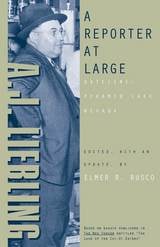
A Reporter At Large
Dateline: Pyramid Lake, NevadaAj Liebling
University of Nevada Press, 1999
Liebling recorded the litigation over the fate of the Pyramid Lake Reservation lands in a series of articles published in The New Yorker in 1955. Reprinted here in their entirety, the essays discuss the affair in detail, following it from the shores of the lake to the halls of Congress, and introducing readers to the colorful world of 1950s Nevada. This is a valuable record of one of Nevada’s most enduring and significant debates over the uses of the land and the precious water that nourishes it. Introduction by Elmer R. Rusco.
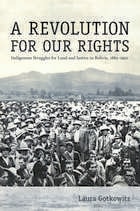
A Revolution for Our Rights
Indigenous Struggles for Land and Justice in Bolivia, 1880-1952Laura Gotkowitz
Duke University Press, 2008
Gotkowitz combines an emphasis on national political debates and congresses with a sharply focused analysis of Indian communities and large estates in the department of Cochabamba. The fragmented nature of Cochabamba’s Indian communities and the pioneering significance of its peasant unions make it a propitious vantage point for exploring contests over competing visions of the nation, justice, and rights. Scrutinizing state authorities’ efforts to impose the law in what was considered a lawless countryside, Gotkowitz shows how, time and again, indigenous activists shrewdly exploited the ambiguous status of the state’s pro-Indian laws to press their demands for land and justice. Bolivian indigenous and social movements have captured worldwide attention during the past several years. By describing indigenous mobilization in the decades preceding the revolution of 1952, A Revolution for Our Rights illuminates a crucial chapter in the long history behind present-day struggles in Bolivia and contributes to an understanding of indigenous politics in modern Latin America more broadly.

Aazheyaadizi
Worldview, Language, and the Logics of DecolonizationMark D. Freeland
Michigan State University Press, 2020

Aboriginal Resource Use in Canada
Historical and Legal AspectsKerry Abel
University of Manitoba Press, 1991
Alaska Natives & American Laws
David Case
University of Alaska Press, 2002
Alaska Natives and American Laws
Third EditionDavid S. Case and David A. Voluck
University of Alaska Press, 2012
Now in its third edition, Alaska Natives and American Laws is still the only work of its kind, canvassing federal law and its history as applied to the indigenous peoples of Alaska. Covering 1867 through 2011, the authors offer lucid explanations of the often-tangled history of policy and law as applied to Alaska’s first peoples. Divided conceptually into four broad themes of indigenous rights to land, subsistence, services, and sovereignty, the book offers a thorough and balanced analysis of the evolution of these rights in the forty-ninth state.
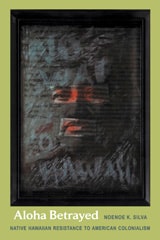
Aloha Betrayed
Native Hawaiian Resistance to American ColonialismNoenoe K. Silva
Duke University Press, 2004
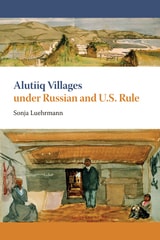
Alutiiq Villages under Russian and U.S. Rule
Sonja Luehrmann
University of Alaska Press, 2009

American Indian Activism
ALCATRAZ TO THE LONGEST WALKEdited by Troy Johnson; Joane Nagel; and Duane Champagne
University of Illinois Press, 1997
In this volume, some of the dominant scholars in the field chronicle and analyze Native American activism of the 1960s and 1970s. Much of what is included here began as a special issue of the American Indian Culture and Research Journal; the introduction has been extensively modified and one chapter deleted. Importantly, the new first chapter provides extended background and historical analysis of the Alcatraz takeover and discusses its place in contemporary Indian activism.
Contributors include: Karren Baird-Olson, LaNada Boyer, Edward D. Castillo, Duane Champagne, Ward Churchill, Vine Deloria, Jr., Tim Findley, Jack D. Forbes, Adam (Nordwall) Fortunate Eagle, Lenny Foster, John Garvey, George P. Horse Capture, Troy Johnson, Luis S. Kemnitzer, Woody Kipp, Joane Nagel, Robert A. Rundstrom, Steve Talbot
American Indian History on Trial
Historical Expertise in Tribal LitigationE. Richard Hart
University of Utah Press, 2017
Hart, a historian who has testified in cases that have resulted in roughly a billion dollars in judgments, uses specific cases to explain at length what kind of historical research and documentation is necessary for tribes seeking to protect and claim their rights under United States law. He demonstrates the legal questions that Native Americans face by exploring the cultural history and legal struggles of six Indian nations. He recounts how these were addressed by expert testimony grounded in thorough historical understanding, research, and argumentation. The case studies focus on the Wenatchi, Coeur d’Alene, Hualapai, Amah Mutsun, Klamath, and Zuni peoples but address issues relevant to many American tribes.
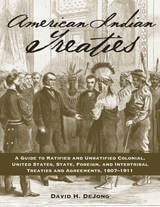
American Indian Treaties
A Guide to Ratified and Unratified Colonial, United States, State, Foreign, and Intertribal Treaties and Agreements, 1607-1911David DeJong
University of Utah Press, 2015
When it comes to American Indian treaties, the American polity too often forgets the realities of history. Prevailing perceptions are often not only inaccurate but also premised on outright falsehoods. Treaty-making was profoundly influenced by tribal conceptions of diplomacy. Colonial and early U.S. treaties especially were clothed in ritual, metaphor, and covenants that emphasized the sacred nature and purpose of diplomacy and represented a time when tribal nations were equal partners. To understand the nature and meaning of tribal treaties one needs to read them and recognize their sacred pledges and meaning, which are still relevant today.
This volume examines intertribal treaties and treaty-making and provides understanding of both the agreements and the diplomatic protocols in which they were enmeshed. It summarizes colonial Indian treaty discourse, intertribal treaties and diplomacy, the different eras of ratified and unratified U.S. treaties, foreign and state treaties with Indian nations, and the Indian agreements that followed the cessation of official treaty-making. It provides extensive lists of over 1,500 Indian treaties from all tribal diplomatic eras and includes dates, participants, purposes, and references.

American Indians
William T. Hagan
University of Chicago Press, 1993
"The author has reduced the long story—often as tangled as a five-year-old's fishing line—into a brief, clear, and highly interesting book. . . . A remarkable achievement."—San Francisco Chronicle
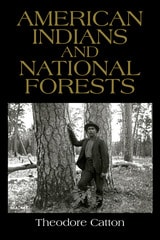
American Indians and National Forests
Theodore Catton
University of Arizona Press, 2016
Marginalized in American society and long denied a seat at the table of public land stewardship, American Indian tribes have at last taken their rightful place and are making themselves heard. Weighing indigenous perspectives on the environment is an emerging trend in public land management in the United States and around the world. The Forest Service has been a strong partner in that movement over the past quarter century.
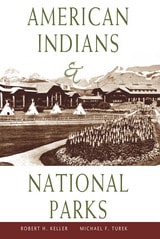
American Indians and National Parks
Robert H. Keller and Michael F. Turek
University of Arizona Press, 1998
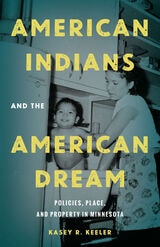
American Indians and the American Dream
Policies, Place, and Property in MinnesotaKasey R. Keeler
University of Minnesota Press, 2023
Understanding the processes and policies of urbanization and suburbanization in American Indian communities
Nearly seven out of ten American Indians live in urban areas, yet studies of urban Indian experiences remain scant. Studies of suburban Natives are even more rare. Today’s suburban Natives, the fastest-growing American Indian demographic, highlight the tensions within federal policies working in tandem to move and house differing groups of people in very different residential locations. In American Indians and the American Dream, Kasey R. Keeler examines the long history of urbanization and suburbanization of Indian communities in Minnesota.
At the intersection of federal Indian policy and federal housing policy, American Indians and the American Dream analyzes the dispossession of Indian land, property rights, and patterns of home ownership through programs and policies that sought to move communities away from their traditional homelands to reservations and, later, to urban and suburban areas. Keeler begins this analysis with the Homestead Act of 1862, then shifts to the Indian Reorganization Act in the early twentieth century, the creation of Little Earth in Minneapolis, and Indian homeownership during the housing bubble of the early 2000s.
American Indians and the American Dream investigates the ways American Indians accessed homeownership, working with and against federal policy, underscoring American Indian peoples’ unequal and exclusionary access to the way of life known as the American dream.
Cover alt text: Vintage photo of Native person bathing smiling child in the sink of a midcentury kitchen. Title in yellow.
American Indians
Fourth EditionWilliam T. Hagan and Daniel M. Cobb
University of Chicago Press, 2012
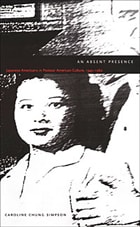
An Absent Presence
Japanese Americans in Postwar American Culture, 1945-1960Caroline Chung Simpson
Duke University Press, 2001
Simpson argues that when popular journals or social theorists engaged the topic of Japanese American history or identity in the Cold War era they did so in a manner that tended to efface or diminish the complexity of their political and historical experience. As a result, the shadowy figuration of Japanese American identity often took on the semblance of an “absent presence.” Individual chapters feature such topics as the case of the alleged Tokyo Rose, the Hiroshima Maidens Project, and Japanese war brides. Drawing on issues of race, gender, and nation, Simpson connects the internment episode to broader themes of postwar American culture, including the atomic bomb, McCarthyism, the crises of racial integration, and the anxiety over middle-class gender roles.
By recapturing and reexamining these vital flashpoints in the projection of Japanese American identity, Simpson fills a critical and historical void in a number of fields including Asian American studies, American studies, and Cold War history.
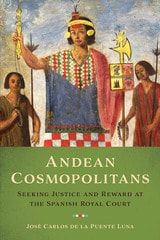
Andean Cosmopolitans
Seeking Justice and Reward at the Spanish Royal CourtBy José Carlos de la Puente Luna
University of Texas Press, 2018
Winner, Premio Flora Tristán Al Mejor Libro, Peru Section, Latin American Studies Association, 2019
After the Spanish victories over the Inca claimed Tawantinsuyu for Charles V in the 1530s, native Andeans undertook a series of perilous trips from Peru to the royal court in Spain. Ranging from an indigenous commoner entrusted with delivering birds of prey for courtly entertainment to an Inca prince who spent his days amid titles, pensions, and other royal favors, these sojourners were both exceptional and paradigmatic. Together, they shared a conviction that the sovereign’s absolute authority would guarantee that justice would be done and service would receive its due reward. As they negotiated their claims with imperial officials, Amerindian peoples helped forge the connections that sustained the expanding Habsburg realm’s imaginary and gave the modern global age its defining character.
Andean Cosmopolitans recovers these travelers’ dramatic experiences, while simultaneously highlighting their profound influences on the making and remaking of the colonial world. While Spain’s American possessions became Spanish in many ways, the Andean travelers (in their cosmopolitan lives and journeys) also helped to shape Spain in the image and likeness of Peru. De la Puente brings remarkable insights to a narrative showing how previously unknown peoples and ideas created new power structures and institutions, as well as novel ways of being urban, Indian, elite, and subject. As indigenous people articulated and defended their own views regarding the legal and political character of the “Republic of the Indians,” they became state-builders of a special kind, cocreating the colonial order.
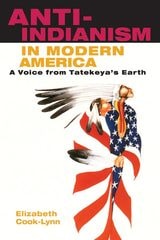
Anti-Indianism in Modern America
A Voice from Tatekeya's EarthElizabeth Cook-Lynn
University of Illinois Press, 2000
Addressing Native American studies past, present, and future, the essays in New Indians, Old Wars tackle the discipline head-on, presenting a radical revision of the popular view of the American West in the process. Instead of luxuriating in the West's past glories or accepting the widespread historians' view of it as a shared place, Elizabeth Cook-Lynn argues that the American West should be fundamentally understood as stolen.
Cook-Lynn says that the Indian Wars of Resistance to the nineteenth- and twentieth-century colonial effort to seize native lands and resources must be given standing in the face of the ever-growing imperial narrative of America--because the terror the world is now witnessing may be the direct consequence of events which began in America's earliest dealings with the natives of this continent. Cook-Lynn's story examines the ongoing and perennial relationship of conflict between colonizers and indigenous people, and it is a story that every American must read.
Cook-Lynn understands that the story of the American West teaches the political language of land theft and tyranny. She argues that to remedy this situation, Native American studies must be considered and pursued as its own discipline, rather than as a subset of history or anthropology. She makes an impassioned claim that such a shift, not merely an institutional or theoretical change, could allow Native American studies to play an important role in defending the sovereignty of indigenous nations today.
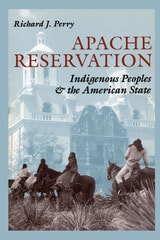
Apache Reservation
Indigenous Peoples and the American StateBy Richard J. Perry
University of Texas Press, 1993
"Indian reservations" were the United States' ultimate solution to the "problem" of what to do with native peoples who already occupied the western lands that Anglo settlers wanted. In this broadly inclusive study, Richard J. Perry considers the historical development of the reservation system and its contemporary relationship to the American state, with comparisons to similar phenomena in Canada, Australia, and South Africa.
The San Carlos Apache Reservation of Arizona provides the lens through which Perry views reservation issues. One of the oldest and largest reservations, its location in a minerals- and metals-rich area has often brought it into conflict with powerful private and governmental interests. Indeed, Perry argues that the reservation system is best understood in terms of competition for resources among interest groups through time within the hegemony of the state. He asserts that full control over their resources—and hence, over their lives—would address many of the Apache's contemporary economic problems.
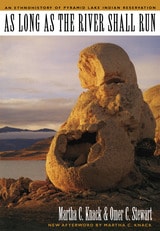
As Long As The River Shall Run
An Ethnohistory Of Pyramid Lake Indian ReservationMartha C. Knack
University of Nevada Press, 1999

At the Risk of Being Heard
Identity, Indigenous Rights, and Postcolonial StatesBartholomew Dean and Jerome M. Levi, Editors
University of Michigan Press, 2003
Combining rich ethnographic descriptions with clear theoretical analyses, At the Risk of Being Heard considers the paradoxical challenges and opportunities confronting indigenous peoples at the dawn of the twenty-first century. In the face of state-sanctioned violence, indigenous peoples encounter considerable risks when asserting their rights, especially to self-determination. Yet, if they remain silent or absent from new arenas of power, hiding in marginalized homelands or cultural practices, they risk being invisible to those allies that would aid them in their struggles for survival.
At the Risk of Being Heard offers needed insights for individuals working on issues of governance, sustainable development, resource management, globalization, and indigenous affairs. It will undoubtedly appeal to undergraduate and graduate students in anthropology, sociology, history, political science, peace studies, and to those students in courses that explore relationships among postcolonial states, indigenous peoples, and human rights.
Bartholomew Dean is Assistant Professor of Anthropology, University of Kansas. Jerome M. Levi is Associate Professor of Anthropology, Carleton College.