Results by title
39 books match the query 'Graphic Arts'
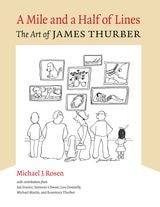
A Mile and a Half of Lines
The Art of James ThurberMichael J. Rosen, with contributions from Ian Frazier, Seymour Chwast, Liza Donnelly, Michael Maslin, and Rosemary Thurber
The Ohio State University Press, 2019
Including some 260 drawings, this collection is the first comprehensive focus on his work as an artist, a cartoonist, and an illustrator. With commentary from a host of preeminent cartoonists and writers, including Ian Frazier, Seymour Chwast, and Michael Maslin, A Mile and a Half of Lines celebrates the significance of Thurber’s spontaneous, unstudied, and novel drawing style that not only altered the nature of American cartooning but also expanded the very possibilities of an illustrated line. Coinciding with the first major retrospective of Thurber’s art presented by the Columbus Museum of Art in 2019, A Mile and a Half of Lines showcases both classic Thurber as well as visual material never before seen in print.
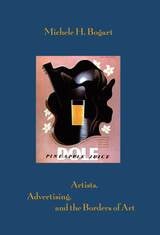
Artists, Advertising, and the Borders of Art
Michele H. Bogart
University of Chicago Press, 1995
From the turn of the century through the 1950s, the explosive growth of popular magazines and national advertising offered artists new sources of income and new opportunities for reaching huge audiences. Bogart shows how, at the same time, this change in the marketplace also forced a rethinking of the purpose of the artistic enterprise itself. She examines how illustrators such as Howard Pyle, Charles Dana Gibson, and Norman Rockwell claimed their identities as artists within a market-oriented framework. She looks at billboard production and the growing schism between "art" posters and billboard advertisements; at the new roles of the art director; at the emergence of photography as the dominant advertising medium; and at the success of painters in producing "fine art" for advertising during the 1930s and 1940s.
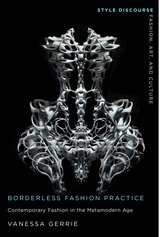
Borderless Fashion Practice
Contemporary Fashion in the Metamodern AgeVanessa Gerrie
Rutgers University Press, 2023
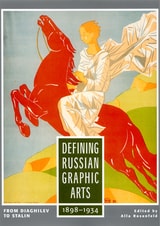
Defining Russian Graphic Arts
From Diaghilev to Stalin, 1898-1934Rosenfeld, Alla
Rutgers University Press, 1999
Defining Russian Graphic Arts explores the energy and innovation of Russian graphic arts during the period which began with the explosion of artistic creativity initiated by Serge Diaghilev at the end of the nineteenth century and which ended in the mid-1930s with Stalin's devastating control over the arts. This beautifully illustrated book represents the development of Russian graphic arts as a continuum during these forty years, and places Suprematism and Constructivism in the context of the other major, but lesser-known, manifestations of early twentieth-century Russian art.
The book includes such diverse categories of graphic arts as lubki (popular prints), posters and book designs, journals, music sheets, and ephemera. It features not only standard types of printed media and related studies and maquettes, but also a number of watercolor and gouache costume and stage designs.
About 100 works borrowed from the National Library of Russia and the Research Museum of the Academy of Fine Arts in St. Petersburg, Russia-many seen here for the first time outside of Russia-are featured in this book. Additional works have been drawn from the Zimmerli Art Museum, The New York Public Library, and from other public and private collections. Together they provide a rare opportunity to view and learn about a wide variety of artists, from the acclaimed to the lesser known.
This book is a companion volume to an exhibition appearing at the Jane Voorhees Zimmerli Art Museum at Rutgers University.
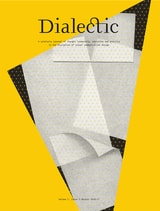
Dialectic
A Scholarly Journal of Thought Leadership, Education and Practice in the Discipline of Visual Communication Design Volume I, Issue I - Winter 2016-17Keith M Owens and Michael Gibson
Michigan Publishing Services, 2017
examination of issues that affect design education, research,
and inquiry into their effects on the practice of design. Michigan
Publishing, the hub of scholarly publishing at the University of Michigan,
publishes Dialectic on behalf of the AIGA (American Institute of
Graphic Arts) Design Educators Community (DEC).
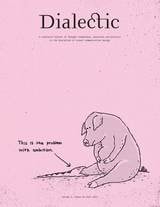
Dialectic
A Scholarly Journal of Thought Leadership, Education and Practice in the Discipline of Visual Communication Design Volume I, Issue II - Fall 2017Michael R. Gibson and Keith M. Owens (Editors)
Michigan Publishing Services, 2017
examination of issues that affect design education, research,
and inquiry into their effects on the practice of design. Michigan
Publishing, the hub of scholarly publishing at the University of Michigan,
publishes Dialectic on behalf of the AIGA (American Institute of
Graphic Arts) Design Educators Community (DEC).
Digital Typography
Donald E. Knuth
CSLI, 1998
Discovering Design
Explorations in Design StudiesEdited by Richard Buchanan and Victor Margolin
University of Chicago Press, 1995
The contributors (Gianfranco Zaccai, Albert Borgmann, Richard Buchanan, Augusto Morello, Tufan Orel, Nigel Cross, Victor Margolin, Langdon Winner, Carl Mitcham, Tony Fry, and Ezio Manzini) focus on three broad themes that form a sequence of fundamental issues: how to shape design as a subject matter, how to distinguish the activity of designing in the complex world of action, and how to address the basic questions of value and responsibility that persistently arise in the discussion and practice of design. The editors' introduction provides a useful overview of these questions and offers a multidisciplinary framework for design studies. The essays discuss such topics as the relation of aesthetics to technology, the place of design in social action, the role of the consumer in design decisions, and the need for ethical practice in contemporary design. Manzini's concluding essay shows how the issue of ethics should connect responsible behavior to decisions made every day in the manufacture of objects.
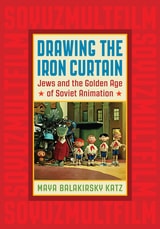
Drawing the Iron Curtain
Jews and the Golden Age of Soviet AnimationMaya Balakirsky Katz
Rutgers University Press, 2016
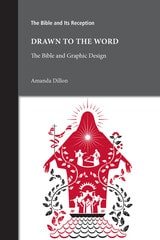
Drawn to the Word
The Bible and Graphic DesignAmanda Dillon
SBL Press, 2021
A unique study of lectionaries and graphic design as a site of biblical reception
How artists portrayed the Bible in large canvas paintings is frequently the subject of scholarly exploration, yet the presentation of biblical texts in contemporary graphic designs has been largely ignored. In this book Amanda Dillon engages multimodal analysis, a method of semiotic discourse, to explore how visual composition, texture, color, directionality, framing, angle, representations, and interactions produce potential meanings for biblical graphic designs. Dillon focuses on the artworks of two American graphic designers—the woodcuts designed by Meinrad Craighead for the Roman Catholic Sunday Missal and Nicholas Markell’s illustrations for the worship books of the Evangelical Lutheran Church in America—to present the merits of multimodal analysis for biblical reception history.
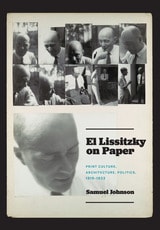
El Lissitzky on Paper
Print Culture, Architecture, Politics, 1919–1933Samuel Johnson
University of Chicago Press, 2024
Russian artist El Lissitzky’s work spans painting, photography, theatrical and exhibition design, architecture, graphic design, typography, and literature. He was active in the Jewish cultural renaissance, formed an artists’ collective with Kazimir Malevich, was a key figure in the dissemination of early Soviet art in Western Europe, and designed propaganda for the Stalin regime. With such a varied history and body of work, scholars have often struggled to identify the core principles that tied his diverse oeuvre together.
In El Lissitzky on Paper, Samuel Johnson argues that Lissitzky’s commitment to creating works on paper is a constant that unites his endeavors. Paper played a key role in the utopian projects that informed Lissitzky’s work, and the artist held a commitment to print as the premier medium of immediate public exchange. Johnson analyzes and contextualizes this idea against the USSR’s strict management of this essential resource and the growth of new media communications, including the telephone, telegraph, and film.
With this book, Johnson presents a significant contribution to scholarship on this major artist, revealing new connections between Lissitzky’s work in architecture and visual art and bringing to light sources from largely unstudied Russian archives.

From Submarines to Suburbs
Selling a Better America, 1939–1959Cynthia Lee Henthorn
Ohio University Press, 2006
From Submarines to Suburbs surveys the development, strategy, and effect of these campaigns over a span of twenty pivotal years. Cynthia Lee Henthorn takes a close look at how pre-fabricated suburban houses, high-tech kitchens, and miracle products developed from war-related industries were promoted as the hygienic solutions for establishing this better America, one led by the captains of free enterprise.
As Henthorn demonstrates, wartime advertising and marketing strategies tying consumer prosperity to war were easily adapted in the Cold War era, when a symbiotic relationship between military standing and standards of living intensified in a culture dependent on defense spending. Were the efforts to engineer a better America successful? Using documentary evidence in the form of numerous advertisements, From Submarines to Suburbs stands as a significant contribution to understanding how today’s “better” America evolved.
Glossary of Typesetting Terms
Richard Eckersley, Richard Angstadt, Charles M. Ellertson, and Richard Hendel
University of Chicago Press, 1994
Prepared by a team of leading professionals—a designer, an editor, compositors, and production managers—this glossary will be valuable to anyone who works in publishing or printing for its definitions of typographical terms and concise treatment of typographical style.
The glossary adds important details to discussions of typography that are covered more generally in editorial style guides such as The Chicago Manual of Style. It is indispensable to anyone who prepares text for a living, including those who implement their own typesetting decisions with the aid of word-processing and page-layout software.
This manual furnishes a common technical vocabulary for specialists and nonspecialists alike. More than 900 entries provide up-to-date meanings for traditional terms like kerning,bleed, and thumbnail and definitions of new phrases like global search and replace,H & J (hyphenation and justification), and idiot file that have been developed to describe the role of computer technology in typesetting.
Eight appendixes offer additional guidance. The house style sheets of a major typesetter provide a sample checklist of items that affect the way in which words are composed into professional-quality type. Other appendixes cover families of type, the parts of a book, diagrams of the parts of a letter, coding and marking a manuscript in the precise language of typesetters, writing specifications for tables, proofreaders’ marks, and special characters.
No other reference book makes the vocabulary and practices of contemporary typesetting so accessible.
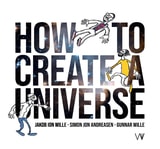
How to Create a Universe
Jakob Ion Wille, Simon Jon Andreasen, and Gunnar Wille
University of Westminster Press, 2025
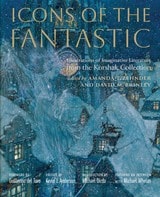
Icons of the Fantastic
Illustrations of Imaginative Literature from The Korshak CollectionAmanda T. Zehnder
University of Delaware Press, 2025
Winner of the 2026 PIA MidAmerica GraphEx Award for Best of Category, Hardcover Book Binding
Finalist for the 2026 Locus Awards in the Illustrated and Art Books category
"The Korshak Collection is a portrait and biography of a man and his family, who once looked upon the dark skies and saw Immortals, gods hunting in the storm clouds. Stephen Korshak decided to dedicate his life to tell us all how the thunder sounded and preserve the outlines of the cosmos for the awe of us all. Enjoy, believe—be amazed." —Guillermo del Toro, from the Foreword
Icons of the Fantastic: Illustrations of Imaginative Literature from the Korshak Collection features artwork by pioneering artists from over 160 years of published works of science fiction and fantasy. The illustrations in the collection appeared on the covers of timeless novels such as the Tarzan series by Edgar Rice Burroughs and classic pulp magazines from the 1930s through 1960s, such as Amazing Stories and Weird Tales. They accompany images of mischievous satyrs, ethereal mermaids, and spell-casting witches for texts ranging from The Tempest, Don Quixote, and Alice's Adventures in Wonderland to works by Edgar Allan Poe and H. G. Wells. Alongside essays about famous illustrators such as Arthur Rackham and Aubrey Beardsley, contributors engage in a critical reassessment of understudied artists such as José Segrelles, Wladyslaw Benda, Margaret Brundage, and Hannes Bok. The book includes a foreword by Guillermo del Toro, a preface by Kevin J. Anderson, an introduction by Michael Dirda, and an interview with renowned contemporary illustration artist Michael Whelan.
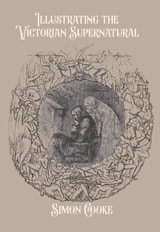
Illustrating the Victorian Supernatural
Simon Cooke
Ohio University Press, 0
A detailed study of Victorian supernaturalism in book and magazine illustrations and cartoons
Illustrating the Victorian Supernatural explores written and visual texts through which the original Victorian readership encountered and navigated their experience of supernaturalism. Looking across the nineteenth century, Simon Cooke investigates illustrative responses to well-known texts by writers such as Charles Dickens and Henry James while also examining responses to less familiar ghost stories by female authors such as M. E. Braddon and Amelia Edwards. The mix of familiar and unfamiliar carries forward into the selection of artists, both those in the mainstream—John Leech, George Cruikshank, Dante Gabriel Rossetti, John Everett Millais—and others whose names are lost to modern readers and whose work deserves to be better known.
The study addresses two main questions: how illustration responded to key literary texts and how graphic designs related to contemporary contexts of race, gender, and class and to the workings of the supernatural itself. The first chapter focuses on satirical writings about ghosts and ghostliness and the various ways illustrators depicted that mockery. Chapter 2 traces artistic responses to Dickens’s writing of the supernatural as a mode of psychological investigation. Chapter 3 looks at class and gender and the problematic practice of male artists illustrating female-authored ghost stories. The fourth chapter examines satirical cartoons’ deployment of supernatural imagery to anatomize issues of imperialism and race. Finally, chapter 5 examines how neo-Victorian artists have revisited the classic texts and taken up the themes established by their forebears.

Japan and American Children's Books
A JourneySybille Jagusch
Rutgers University Press, 2021
For generations, children’s books provided American readers with their first impressions of Japan. Seemingly authoritative, and full of fascinating details about daily life in a distant land, these publications often presented a mixture of facts, stereotypes, and complete fabrications.
This volume takes readers on a journey through nearly 200 years of American children’s books depicting Japanese culture, starting with the illustrated journal of a boy who accompanied Commodore Matthew Perry on his historic voyage in the 1850s. Along the way, it traces the important role that representations of Japan played in the evolution of children’s literature, including the early works of Edward Stratemeyer, who went on to create such iconic characters as Nancy Drew. It also considers how American children’s books about Japan have gradually become more realistic with more Japanese-American authors entering the field, and with texts grappling with such serious subjects as internment camps and the bombing of Hiroshima and Nagasaki.
Drawing from the Library of Congress’s massive collection, Sybille A. Jagusch presents long passages from many different types of Japanese-themed children’s books and periodicals—including travelogues, histories, rare picture books, folktale collections, and boys’ adventure stories—to give readers a fascinating look at these striking texts.
Published by Rutgers University Press, in association with the Library of Congress.
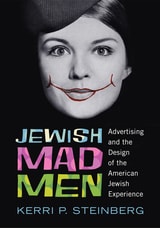
Jewish Mad Men
Advertising and the Design of the American Jewish ExperienceSteinberg, Kerri P
Rutgers University Press, 2015
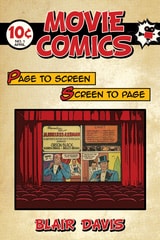
Movie Comics
Page to Screen/Screen to PageDavis, Blair
Rutgers University Press, 2017
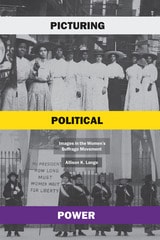
Picturing Political Power
Images in the Women’s Suffrage MovementAllison K. Lange
University of Chicago Press, 2020
For as long as women have battled for equitable political representation in America, those battles have been defined by images—whether illustrations, engravings, photographs, or colorful chromolithograph posters. Some of these pictures have been flattering, many have been condescending, and others downright incendiary. They have drawn upon prevailing cultural ideas of women’s perceived roles and abilities and often have been circulated with pointedly political objectives.
Picturing Political Power offers perhaps the most comprehensive analysis yet of the connection between images, gender, and power. In this examination of the fights that led to the ratification of the Nineteenth Amendment in 1920, Allison K. Lange explores how suffragists pioneered one of the first extensive visual campaigns in modern American history. She shows how pictures, from early engravings and photographs to colorful posters, proved central to suffragists’ efforts to change expectations for women, fighting back against the accepted norms of their times. In seeking to transform notions of womanhood and win the right to vote, white suffragists emphasized the compatibility of voting and motherhood, while Sojourner Truth and other leading suffragists of color employed pictures to secure respect and authority. Picturing Political Power demonstrates the centrality of visual politics to American women’s campaigns throughout the nineteenth and early twentieth centuries, revealing the power of images to change history.
Poetries - Politics
A Celebration of Language, Art, and LearningJenevieve DeLosSantos
Rutgers University Press, 2023
Reproduced in full color and with the accompanying poems in both their original language and a translation, this catalogue commemorates the incredible creative spirit of the project and provides a new way of contemplating these great poetic works.
Postmodern Advertising in Japan
Seduction, Visual Culture, and the Tokyo Art Directors ClubOry Bartal
Dartmouth College Press, 2015
Recasting a Craft
St. Louis Typefounders Respond to IndustrializationRobert A. Mullen
Southern Illinois University Press, 2005
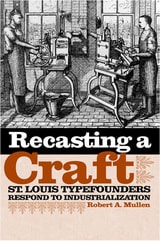
In the nineteenth and early twentieth centuries, type for newspapers and books was set one letter at a time, and the manufacturers of the metal type used in the printing trade were called typefounders. This prominent yet rarely documented industry was essential to the development of modern American publishing and was particularly prevalent in St. Louis. In Recasting a Craft: St. Louis Typefounders Respond to Industrialization, Robert A. Mullen recognizes the city’s significant contributions to typefounding and details how the craft fundamentally changed through mechanization, growth, and the creation of a large conglomerate.
Like many trades of the nineteenth and early twentieth centuries that were eventually lost to industrialization, the typefoundries of St. Louis grew from small shops to factories with organized labor. Mullen describes three distinct periods of the industry that emerged in St. Louis’s typefounding trade: the early struggles in establishing the industry there, the period of intense competition and creative enterprise, and the proliferation of new companies that appealed to those customers who felt alienated by the monopolizing older companies.
Mullen discusses at length the technological, social, and demographic foundations of the immense growth of the trade in the nineteenth century, identifying the changes in typographical design and the demand for it in the new era of advertising. He also profiles the workers, working conditions, and labor issues—such as the failed industry-wide strike of 1903—that emerged as the craft of typefounding entered the industrial age. More than two hundred type designs that originated with the St. Louis firms are listed in an appendix with examples of each face. The volume also contains a list of the catalogs of the St. Louis typefoundries known to exist in the public and academic libraries of the United States.
Ronald Searle in Le Monde
Ronald Searle
University of Chicago Press, 2002
Since 1995, Searle has plied his sardonic trade on the coveted op-ed pages of the French daily newspaper Le Monde. This book presents more than a hundred of the best of these cartoons, ranging across politics, the new Europe, the nature of the contemporary economy, social games, and various "angels," both benign and mischievous. Whether skewering the greed of the rich with images of men in suits padding each other's pockets with cash or conducting business under the table, or making a poignant comment about how much harder peace has to work than war to stay in the same place, Searle displays the same pungent, incisive, yet infinitely humane wit. The deceptive simplicity of his lines and shadings combine with meticulously observed details of dress, background, and facial expression to produce arresting images that convey his messages powerfully and beautifully.
By turns delightful, amusing, and disturbing, but always deeply thought provoking, Searle's work reaches well beyond the specific occasion that inspired a given cartoon to illuminate key aspects of public life in the West at the end of the millennium. This book contains twenty-five illustrations not found in the French edition, together with a new preface for English-speaking readers written by Searle himself.

Sceno-Graphic Techniques
W. Oren Parker
Southern Illinois University Press, 1987
The first book to bring together the drafting techniques, descriptive geometry, engineering drawing, and graphics of perspective needed to plan and execute a setting for the theatre.
Parker presents these elements in a logical three-part format. “The Language of Lines” offers a study of drafting techniques, conventions, and symbols peculiar to the theatre; “Graphic Solutions” deals with the graphic problem-solving often needed to draw and make the frequent irregular forms of present-day scene design; and “Perspective in the Theatre” treats the two-dimensional perspective of the designer’s sketch and the three-dimensional perspective required for an illusion or stylistic concept.
Screen to Screen
The Poster Art of Austin City LimitsAustin City Limits
University of Texas Press, 2025
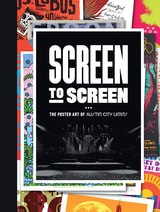
From Billie Eilish to Cassandra Wilson, Elvis Costello to Pearl Jam, many of the world’s most beloved musicians have entertained us on Austin City Limits. And for the past couple of decades, each performance recorded on the ACL stage has inspired a special bonus: an original, eye-catching screen-printed poster, commissioned by the show’s producer, Austin PBS, and designed by some of their favorite graphic artists from all over the world.
Screen to Screen celebrates the 50th anniversary of Austin’s premier gig, presenting every poster in brilliant full color alongside dazzling ACL concert photography and reminiscences from Neko Case, Leon Bridges, and other luminaries. Exciting, evocative, and always unique, the posters are accompanied by insightful creative discussion from several designers, including Mark Pedini and Diana Sudyka, and the book itself is designed by the award-winning, Austin-based firm Preacher Co. Introduced by long-time ACL producer Terry Lickona and with a foreword from Willie Nelson—whom you might remember from the pilot episode, taped half a century ago—this collection brings a piece of Austin and music history to life in vivid color.
Selling Women's History
Packaging Feminism in Twentieth-Century American Popular CultureWestkaemper, Emily
Rutgers University Press, 2017
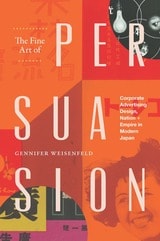
The Fine Art of Persuasion
Corporate Advertising Design, Nation, and Empire in Modern JapanGennifer Weisenfeld
Duke University Press, 2025
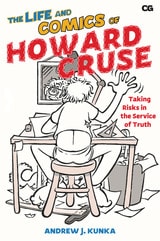
The Life and Comics of Howard Cruse
Taking Risks in the Service of TruthAndrew J. Kunka
Rutgers University Press, 2022
The Life and Comics of Howard Cruse tells the remarkable story of how a self-described “preacher’s kid” from Birmingham, Alabama, became the so-called “Godfather of Gay Comics.” This study showcases a remarkable fifty-year career that included working in the 1970s underground comics scene, becoming founding editor of the groundbreaking anthology series Gay Comix, and publishing the graphic novel Stuck Rubber Baby, partially based on his own experience of coming of age in the Civil Rights era.
Through his exploration of Cruse’s life and work, Andrew J. Kunka also chronicles the dramatic ways that gay culture changed over the course of Cruse’s lifetime, from Cold War-era homophobia to the gay liberation movement to the AIDS crisis to the legalization of gay marriage. Highlighting Cruse’s skills as a trenchant satirist and social commentator, Kunka explores how he cast a queer look at American politics, mainstream comics culture, and the gay community’s own norms.
Lavishly illustrated with a broad selection of comics from Cruse’s career, this study serves as a perfect introduction to this pioneering cartoonist, as well as an insightful read for fans who already love how his work sketched a new vision of gay life.
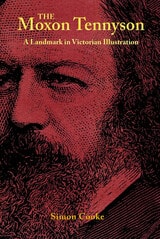
The Moxon Tennyson
A Landmark in Victorian IllustrationSimon Cooke
Ohio University Press, 2021
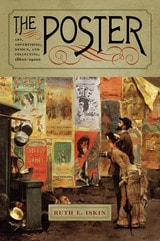
The Poster
Art, Advertising, Design, and Collecting, 1860s–1900sRuth E. Iskin
Dartmouth College Press, 2014
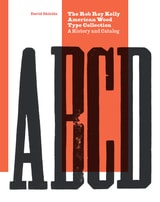
The Rob Roy Kelly American Wood Type Collection
A History and CatalogDavid Shields
University of Texas Press, 2022
2023 50 Books | 50 Covers Award, The American Institute of Graphic Arts (AIGA)
2024 Honorable Mention, Design Awards, Graphis
2024 Finalist, Typography Competition, Communication Arts Magazine
A beautifully illustrated exploration of the Rob Roy Kelly American Wood Type Collection.
The Rob Roy Kelly Wood Type Collection is a comprehensive collection of wood type manufactured and used for printing in nineteenth-century America. Comprising nearly 150 typefaces of various sizes and styles, it was amassed by noted design educator and historian Rob Roy Kelly starting in 1957 and is now held by the University of Texas. Although Kelly himself published a 1969 book on wood type and nineteenth-century typographic history, there has been little written about the creation of the wood type forms, the collection, or Kelly.
In this book, David Shields rigorously updates and expands upon Kelly’s historical information about the types, clarifying the collection’s exact composition and providing a better understanding of the stylistic development of wood type forms during the nineteenth century. Using rich materials from the period, Shields provides a stunning visual context that complements the textual history of each typeface. He also highlights the non-typographic material in the collection—such as borders, rules, ornaments, and image cuts—that have not been previously examined. Featuring over 300 color illustrations, this written history and catalog is bound to spark renewed interest in the collection and its broader typographic period.
The Visual Elements—Abstraction
A Handbook for Communicating Science and EngineeringFelice C. Frankel
University of Chicago Press, 2026
For anyone interested in visual communication, a training guide for evaluating and developing visual representations for the big ideas in science and technology, essential skills for journal submissions, grant applications, and public understanding.
As a scientist, engineer, or other researcher, you may have written an abstract. In a paragraph, you explain the purpose of your research, your approach, the questions you have asked and answered, and your work’s impact. The abstract is a summary and an invitation—to read the paper, attend your talk, and join you in your thinking. You may even have been asked to create a visual abstract—a single image—to achieve the same goals. As a designer or public information officer, you may have had a similar brief—to explain a compelling subject with a visual for a journal cover or press release. And yet, this important skill—devising visual metaphors—isn’t typically taught. With her decades of experience creating compelling images and instructing MIT researchers, award-winning photographer and science communicator Felice C. Frankel helps readers evaluate and create their own visual abstractions.
Like in her other books in the Visual Elements series, on photography and design, Frankel asks readers to evaluate different choices—for example, in conveying the uncertainty of a hurricane’s path or the organization of the Standard Model for elementary particles. But in Abstraction, she offers more. With examples from science, engineering, and beyond, the book helps readers consider and evaluate the visuals around them and determine how they work and when they fail: Is this representation the best for communication? Will these abstractions encourage others to engage with my work? Will they mislead? Will they help my ideas evolve? Frankel invites researchers to think about the many meanings behind their images—and, in turn, to think more deeply about their research.
The Visual Elements—Design
A Handbook for Communicating Science and EngineeringFelice C. Frankel
University of Chicago Press, 2024
In this short handbook, award-winning science communicator Felice C. Frankel offers a quick guide for scientists and engineers who want to share—and better understand—their research by designing compelling graphics for journal submissions, grant applications, presentations, and posters. Like all the books in the Visual Elements series, this handbook is also a training tool for researchers. Distilling her celebrated books and courses to the essentials, Frankel shows scientists and engineers, from students to primary investigators, the importance of thinking visually. This crucial volume in the Visual Elements series offers a wealth of engaging design examples. Case studies and advice from designers at prestigious publications and researchers’ own before-and-after examples show how even the smallest changes—to color, type, composition, and layering—can greatly improve communication. Ideal for researchers who want a foothold for presenting and preparing their work for everything from conferences to publications, the book explains the steps for creating a concise and communicative graphic to highlight the most important aspects of research—and to clarify researchers’ own thinking. The resulting book is an essential element of any scientist’s, engineer’s, or designer’s library.
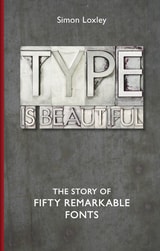
Type is Beautiful
The Story of Fifty Remarkable FontsSimon Loxley
Bodleian Library Publishing, 2016
Type is Beautiful traces the history of fifty remarkable fonts. Thoroughly researched and visually exciting, it takes readers through the story of each font’s creation and distinct characteristics, as well as why it succeeded or failed. Some of the fonts were commissioned for major commercial or cultural projects. Edward Johnston’s iconic Johnston Sans, for instance, was created for the London Underground and remained there exclusively until a redesign in the 1980s. Other fonts became culturally significant unintentionally. The designer of the controversial Comic Sans created the typeface to fill the need for a font to fit the speech bubbles for a Microsoft program, never expecting it to become one of the world’s favorite—and most-maligned—fonts. Along the way, Loxley gives readers an unforgettable cast of characters, including Johannes Gutenberg, William Caslon, Nicolas Jenson, Stanley Morison, William Morris, and Thomas Cobden-Sanderson, the English artist and bookbinder who famously “bequeathed” the unique metal type created for his failed Doves Press to the Thames, casting the type into the river to prevent its future use.
Brimming with fascinating facts, Type is Beautiful is a highly informative and entertaining trip through a lesser-known aspect of history that turns out to have major significance for print and design culture. From Blackletter to Baskerville and Bodoni, you will find yourself looking at fonts with a newfound appreciation.
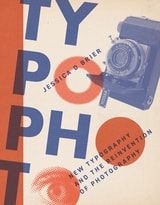
Typophoto
New Typography and the Reinvention of Photographybrier
University of Minnesota Press, 2025
Unveiling the avant-garde fusion of photography and modern graphic design
The concept Typophoto, the synthesis of photography and typography, was coined by renowned Bauhaus artist and theorist László Moholy-Nagy and played a foundational role in the modernist graphic design movement known as the New Typography. Jessica D. Brier examines how Typophoto was embraced by early graphic designers—a group who ultimately reinvented photography as a tool of modern consumerism.
Typophoto embodied designers’ belief in photography as an efficient form of visual communication, merging the material and the visual by abstracting both typographic and photographic form and transmuting photography into graphic material through the halftone process. Uniquely situating 1920s advertising discourse alongside avant-garde theory and significant interwar photographic concepts, Brier positions Typophoto as an analytical framework for considering how photography—as process, image, material, and metaphor—was effectively reconceived through the professionalization of graphic design in Europe and the United States. This was particularly true in Germany, where the capitalist ethos driving the country’s economic recovery bolstered the belief that graphics could create ideal reader-consumers.
Tracing Typophoto from its inception through New Typography’s experiments with the medium, Brier demonstrates how photography was used as a tool for manipulating perception as it became a visual language of modern life.

Watch this Space
Exploring Cinematic Intersections Between the Body, Architecture and the CityEdited by Howard Griffin and Maciej Stasiowski
Intellect Books, 2024
Watch this Space examines key emerging and evolving practices, theories, and methodologies that operate in the blurred boundary between spatial design disciplines and moving image studies more broadly. The collection is premised on the argument that the understanding of “space” in these areas continues to expand, reaching the point in which it blurs with multiple other disciplines including media art, cultural studies, art practice, and more. The result of this evolving interdisciplinary understating of space in design disciplines and moving image studies is an expanded field of haptic-visual practice and theory that can be investigated as both a material and an image-based construct.
The work engages with an evolving set of ideas, underlining how each of its primary discipline areas now increasingly incorporates tools and methodologies from each other’s fields. For example, architects routinely engage with cinematic practice as a means of exploring space; cultural theorists inspect filmic space as a two-dimensional surrogate of the real; media artists incorporate knowledge of spatial design in video installations; and filmmakers create spaces on screen that are informed by architectural theory. This all follows what can be defined as a discursive turn in our view of spatial relationships across disciplines which, by definition, is complex, eclectic, occasionally contradictory, and at times characterized by surprising confluences.
The varied essays collected here explore the diversity of how we today define, understand, and engage with notions of the body in architectural–urban space. It does so through a triadic structure that progresses from haptic relationships of the body in architectural space, through film readings of represented space in mainstream cinema, to experimental spatial projects inspired by film and the moving image. This tripartite structure specifically encourages a look across disciplines, broadening architectural, urbanist, media, and cinematic concerns through insightful case studies.
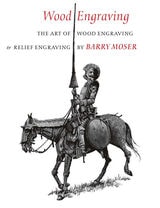
Wood Engraving
The Art of Wood Engraving and Relief EngravingBarry Moser
Brandeis University Press, 2021
Written and illustrated by master wood engraver Barry Moser, this primer on the art of wood engraving is filled with valuable knowledge including how to prepare a printing block; how to think in the medium’s properties of line, shape, and ink; and how to transfer a drawing onto a block. It also offers practical advice on which tools to use for a project and which ink works best. A highly illustrated guide to this art form, Wood Engraving will be useful to experienced and beginner engravers alike. This book features stunning examples of Moser’s art and skill to admire and inspire.
World War and World Peace in the Age of Digital Capitalism
By Christian Fuchs
University of Westminster Press, 2025
In World War and World Peace in the Age of Digital Capitalism, Christian Fuchs asks: how do violence and war manifest themselves in global digital capitalism? How do digital capitalism and digital technologies manifest themselves in violence and warfare? What are the prospects for world peace today?
To prevent world war and advance world peace we need a better understanding of war and violence and their contexts and causes. We need to ask what war is, what violence is, what war and peace look like today and how they have changed in the 21st century. This book addresses these urgent questions and provides possible answers.