Results by title
16 books match the query 'Historical archaeology'
A Historical Archaeology of Jerusalem
Bronze and Iron AgesYuval Gadot
SBL Press, 2026
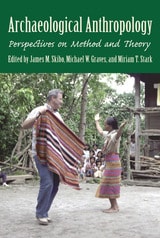
Archaeological Anthropology
Perspectives on Method and TheoryEdited by James M. Skibo, Michael W. Graves, and Miriam T. Stark
University of Arizona Press, 2014
In this collection of twelve new chapters, four generations of Longacre protégés show how they are building upon and developing but also modifying the theoretical paradigm that remains at the core of Americanist archaeology. The contributions focus on six themes prominent in Longacre’s career: the intellectual history of the field in the late twentieth century, archaeological methodology, analogical inference, ethnoarchaeology, cultural evolution, and reconstructing ancient society.
More than a comprehensive overview of the ideas developed by one of the most influential scholars in the field, however, Archaeological Anthropology makes stimulating contributions to contemporary research. The contributors do not unequivocally endorse Longacre’s ideas; they challenge them and expand beyond them, making this volume a fitting tribute to a man whose robust research and teaching career continues to resonate.
Cult Archaeology and Creationism
Understanding Pseudoscientific Beliefs about the PastFrancis B. Harrold
University of Iowa Press, 1995
UFOs and aliens, unexplained mysteries, religious cults, diffusion, creationism. We are all familiar with beliefs about human life that lie outside traditional scientific boundaries. Notions such as these are considered reasonable by vast numbers of us in the Western world, in our modern “technological” and “educated” cultures.
Understanding why this should be so and how we as a society might deal with these widespread pseudoscientific beliefs are the subjects at the heart of this study. The authors—specialists in anthropology, archaeology, sociology, psychology, and history—explore creationism, which claims that there is evidence to support a literal interpretation of the origins of the world and of humanity as narrated in the Book of Genesis, and cult archaeology, which encompasses a wide range of fantastic beliefs about our past.
Cult Archaeology and Creationism contains several essays on the history of pseudoscientific beliefs and their current manifestations as well as the results of a unique research project in which students at five campuses across the country were asked about their beliefs and about such background factors as their school experience and religious faith. This expanded edition also includes two new essays, one on Afrocentrism and another that views cult archaeology and creationism in the 1990s and beyond.
Digging New Jersey's Past
Historical Archaeology in the Garden StateVeit, Richard F
Rutgers University Press, 2002
Richard Veit takes readers on a well-organized guided tour through four hundred years of Garden State development as seen through archaeology in Digging New Jerseys Past. This illustrated guidebook takes readers to some of the states most interesting discoveries and tells us what has been learned or is being learned from them. The diverse array of archaeological sites, drawn from all parts of the state, includes a seventeenth-century Dutch trading post, the site of the Battle of Monmouth, the gravemarkers of freed slaves, and a 1920s railroad roundhouse, among others.
Veit begins by explaining what archaeologists do: How do they know where to dig? What sites are likely to yield important information? How do archaeologists excavate a site? How are artifacts cataloged, stored, and interpreted? He then moves through the states history, from the contact of first peoples and explorers, to colonial homesteads, Revolutionary War battlefields, cemeteries, railroads, and factories. Veit concludes with some thoughts about the future of archaeological research in New Jersey and with suggestions on ways that interested individuals can become involved in the field.
Evolutionary Ecology and Archaeology
Applications to Problems in Human Evolution and PrehistoryJack M Broughton
University of Utah Press, 2009
Each of the twenty-four contributions represents a key benchmark in the field. Chapters are grouped by substantive topic and/or time period. Each of the following sections includes an introduction by the editors:
• Early Hominid Evolution and Behavior
• Pleistocene Foragers and Colonists
• Post-Glacial Adaptations
• Food Production Strategies
• Cooperation and Competition in Complex Societies
This volume’s broad range of research will foster sustained development of evolutionary ecology, and like Darwin’s work nearly 150 years ago will open wide fields of understanding of human prehistory.
Historical Archaeology and the Latter-day Saint Past
Benjamin C. Pykles
Utah State University Press, 2025
The Arrington Lecture series, established in honor of one of the twentieth-century American West’s most distinguished historians, Leonard Arrington, has become a leading forum for prominent scholars to address topics related to Latter-day Saint history. Utah State University hosts the Leonard J. Arrington Mormon History Lecture Series through the Merrill-Cazier Library’s Special Collections and Archives.
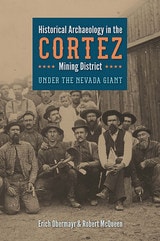
Historical Archaeology in the Cortez Mining District
Under the Nevada GiantErich Obermayr
University of Nevada Press, 2025
Readers interested in the archaeology of the West, mining history, and the history of Nevada will find this book fascinating.
Household Chores and Household Choices
Theorizing the Domestic Sphere in Historical ArchaeologyEdited by Kerri S. Barile and James C. Brandon
University of Alabama Press, 2004
Discusses the concepts of “home,” “house,” and “household” in past societies
Because archaeology seeks to understand past societies, the concepts of "home," "house," and "household" are important. Yet they can be the most elusive of ideas. Are they the space occupied by a nuclear family or by an extended one? Is it a built structure or the sum of its contents? Is it a shelter against the elements, a gendered space, or an ephemeral place tied to emotion? We somehow believe that the household is a basic unit of culture but have failed to develop a theory for understanding the diversity of households in the historic (and prehistoric) periods.
In an effort to clarify these questions, this volume examines a broad range of households—a Spanish colonial rancho along the Rio Grande, Andrew Jackson's Hermitage in Tennessee, plantations in South Carolina and the Bahamas, a Colorado coal camp, a frontier Arkansas farm, a Freedman's Town eventually swallowed by Dallas, and plantations across the South—to define and theorize domestic space. The essays devolve from many disciplines, but all approach households from an archaeological perspective, looking at landscape analysis, excavations, reanalyzed collections, or archival records. Together, the essays present a body of knowledge that takes the identification, analysis, and interpretation of households far beyond current conceptions.
Negotiating the Past in the Past
Identity, Memory, and Landscape in Archaeological ResearchNorman Yoffee
University of Arizona Press, 2008
Despite our keen eye for discerning historical spin doctors operating today, it has been only in recent years that archaeologists have begun exploring in detail how the past was used in the past itself. This volume of ten original works brings critical insight to this frequently overlooked dimension of earlier societies. Drawing on the concepts of identity, memory, and landscape, the contributors show how these points of entry can lead to substantially new accounts of how people understood their lives and why things changed as they did.
Chapters include the archaeologies of the eastern Mediterranean, including Mesopotamia, Iran, Greece, and Rome; prehistoric Greece; Achaemenid and Hellenistic Armenia; Athens in the Roman period; Nubia and Egypt; medieval South India; and northern Maya Quintana Roo. The contributors show how and why, in each society, certain versions of the past were promoted while others were aggressively forgotten for the purpose of promoting innovation, gaining political advantage, or creating a new group identity.
Commentaries by leading scholars Lynn Meskell and Jack Davis blend with newer voices to create a unique set of essays that is diverse but interrelated, exceptionally researched, and novel in its perspectives.
CONTENTS
1. Peering into the Palimpsest: An Introduction to the Volume
Norman Yoffee
2. Collecting, Defacing, Reinscribing (and Otherwise Performing) Memory in the Ancient World
Catherine Lyon Crawford
3. Unforgettable Landscapes: Attachments to the Past in Hellenistic Armenia
Lori Khatchadourian
4. Mortuary Studies, Memory, and the Mycenaean Polity
Seth Button
5. Identity under Construction in Roman Athens
Sanjaya Thakur
6. Inscribing the Napatan Landscape: Architecture and Royal Identity
Lindsay Ambridge
7. Negotiated Pasts and the Memorialized Present in Ancient India: Chalukyas of Vatapi
Hemanth Kadambi
8. Creating, Transforming, Rejecting, and Reinterpreting Ancient Maya Urban Landscapes: Insights from Lagartera and Margarita
Laura P. Villamil
9. Back to the Future: From the Past in the Present to the Past in the Past
Lynn Meskell
10. Memory Groups and the State: Erasing the Past and Inscribing the Present in the Landscapes of the Mediterranean and Near East
Jack L. Davis
About the Editor
About the Contributors
Index
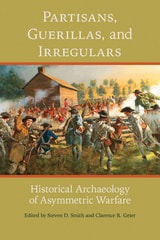
Partisans, Guerillas, and Irregulars
Historical Archaeology of Asymmetric WarfareEdited by Steven D. Smith and Clarence R. Geier
University of Alabama Press, 2019
Essays that explore the growing field of conflict archaeology
Within the last twenty years, the archaeology of conflict has emerged as a valuable subdiscipline within anthropology, contributing greatly to our knowledge and understanding of human conflict on a global scale. Although archaeologists have clearly demonstrated their utility in the study of large-scale battles and sites of conventional warfare, such as camps and forts, conflicts involving asymmetric, guerilla, or irregular warfare are largely missing from the historical record.
Partisans, Guerillas, and Irregulars: Historical Archaeology of Asymmetric Warfare presents recent examples of how historical archaeology can contribute to a better understanding of asymmetric warfare. The volume introduces readers to this growing study and to its historic importance. Contributors illustrate how the wide range of traditional and new methods and techniques of historiography and archaeology can be applied to expose critical actions, sacrifices, and accomplishments of competing groups representing opposing philosophies and ways of life, which are otherwise lost in time.
The case studies offered cover significant events in American and world history, including the French and Indian War, the American Revolution, Indian wars in the Southeast and Southwest, the Civil War, Reconstruction, Prohibition, and World War II. All such examples used here took place at a local or regional level, and several were singular events within a much larger and more complex historic movement. While retained in local memory or tradition, and despite their potential importance, they are poorly, and incompletely addressed in the historic record. Furthermore, these conflicts took place between groups of significantly different cultural and military traditions and capabilities, most taking on a “David vs. Goliath” character, further shaping the definition of asymmetric warfare.
The Archaeology of Institutional Life
Edited by April M. Beisaw and James G. Gibb
University of Alabama Press, 2008
Institutions pervade social life. They express community goals and values by defining the limits of socially acceptable behavior. Institutions are often vested with the resources, authority, and power to enforce the orthodoxy of their time. But institutions are also arenas in which both orthodoxies and authority can be contested. Between power and opposition lies the individual experience of the institutionalized. Whether in a boarding school, hospital, prison, almshouse, commune, or asylum, their experiences can reflect the positive impact of an institution or its greatest failings. This interplay of orthodoxy, authority, opposition, and individual experience are all expressed in the materiality of institutions and are eminently subject to archaeological investigation.
A few archaeological and historical publications, in widely scattered venues, have examined individual institutional sites. Each work focused on the development of a specific establishment within its narrowly defined historical context; e.g., a fort and its role in a particular war, a schoolhouse viewed in terms of the educational history of its region, an asylum or prison seen as an expression of the prevailing attitudes toward the mentally ill and sociopaths. In contrast, this volume brings together twelve contributors whose research on a broad range of social institutions taken in tandem now illuminates the experience of these institutions. Rather than a culmination of research on institutions, it is a landmark work that will instigate vigorous and wide-ranging discussions on institutions in Western life, and the power of material culture to both enforce and negate cultural norms.
The Archaeology of Slavery
A Comparative Approach to Captivity and CoercionEdited by Lydia Wilson Marshall
Southern Illinois University Press, 2014
Plantation sites, especially those in the southeastern United States, have long dominated the archaeological study of slavery. These antebellum estates, however, are not representative of the range of geographic locations and time periods in which slavery has occurred. As archaeologists have begun to investigate slavery in more diverse settings, the need for a broader interpretive framework is now clear.
The Archaeology of Slavery: A Comparative Approach to Captivity and Coercion, edited by Lydia Wilson Marshall, develops an interregional and cross-temporal framework for the interpretation of slavery. Contributors consider how to define slavery, identify it in the archaeological record, and study it as a diachronic process from enslavement to emancipation and beyond.
Essays cover the potential material representations of slavery, slave owners’ strategies of coercion and enslaved people’s methods of resisting this coercion, and the legacies of slavery as confronted by formerly enslaved people and their descendants. Among the peoples, sites, and periods examined are a late nineteenth-century Chinese laborer population in Carlin, Nevada; a castle slave habitation at San Domingo and a more elite trading center at nearby Juffure in the Gambia; two eighteenth-century plantations in Dominica; Benin’s Hueda Kingdom in the seventeenth and eighteenth centuries; plantations in Zanzibar; and three fugitive slave sites on Mauritius—an underground lava tunnel, a mountain, and a karst cave.
This essay collection seeks to analyze slavery as a process organized by larger economic and social forces with effects that can be both durable and wide-ranging. It presents a comparative approach that significantly enriches our understanding of slavery.
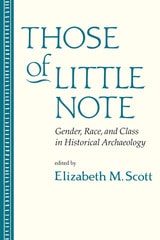
Those of Little Note
Gender, Race, and Class in Historical ArchaeologyElizabeth M. Scott
University of Arizona Press, 1994
I--Introduction
1. Through the Lens of Gender: Archaeology, Inequality, and Those "Of Little Note" / Elizabeth M. Scott
II--Native American and African American Communities
2. Cloth, Clothing, and Related Paraphernalia: A Key to Gender Visibility in the Archaeological Record of Russian America / Louise M. Jackson
3. "We Took Care of Each Other Like Families Were Meant To": Gender, Social Organization, and Wage Labor Among the Apache at Roosevelt / Everett Bassett
4. The House of the Black Burghardts: An Investigation of Race, Gender, and Class at the W. E. B. DuBois Boyhood Homesite / Nancy Ladd Muller
III--All Male and Predominantly Male Communities
5. "With Manly Courage": Reading the Construction of Gender in a 19th-Century Religious Community / Elizabeth Kryder-Reid
6. The Identification of Gender at Northern Military Sites of the Late 18th Century / David R. Starbuck
7. Class, Gender Strategies, and Material Culture in the Mining West / Donald L. Hardesty
IV--Working Women in Urban Communities
8. Mrs. Starr's Profession / Donna J. Seifert
9. Diversity and 19th-Century Domestic Reform: Relationships Among Classes and Ethnic Groups / Suzanne M. Spencer-Wood
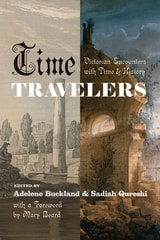
Time Travelers
Victorian Encounters with Time and HistoryEdited by Adelene Buckland and Sadiah Qureshi
University of Chicago Press, 2020
Out of their discoveries, new histories emerged, giving rise to fresh debates, while seemingly well-known histories were thrown into confusion by novel tools and methods of scrutiny. If in the eighteenth century the study of the past had been the province of a handful of elites, new technologies and economic development in the nineteenth century meant that the past, in all its brilliant detail, was for the first time the property of the many, not the few. Time Travelers is a book about the myriad ways in which Victorians approached the past, offering a vivid picture of the Victorian world and its historical obsessions.
Time in Archaeology
Time Perspectivism RevisitedSimon Holdaway
University of Utah Press, 2011
The point of departure for this volume lies in the post-tumultuous times of processual archaeology, in the 1970s and 1980s, when Geoff Bailey, Lewis Binford, David Clarke, Robert Dunnell, Robert Foley, and Michael Schiffer, among others, initiated a deconstruction of time as used in archaeology. Here, the authors further this deconstruction.
Time in Archaeology was originally convened as an electronic symposium held at the Society of American Archaeology meetings in 2003. The result is a tightly focused group of papers that provide both a historical background to the development of the ideas of time perspectivism as well as a range of case studies that illustrate where scholars have taken the ideas. This book demonstrates the importance of concepts of time with excellent discussions and perspectives from twelve scholars working in vastly different arenas. It is a rigorous examination of the assumptions we make and the impacts of those assumptions. After reading this you may never think about time in quite the same way.
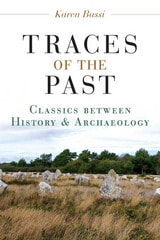
Traces of the Past
Classics between History and ArchaeologyKaren Bassi
University of Michigan Press, 2016
Aimed at classicists, literary scholars, ancient historians, cultural historians, and archaeological theorists, the book combines three areas of research: time as a feature of narrative structure in literary theory; the concept of “the past itself” in the philosophy of history; and the ontological status of material objects in archaeological theory. Each of five central chapters explores how specific protoarchaeological narratives—from the fate of Zeus’ stone in Hesiod’s Theogony to the contest between words and objects in Aristophanes’ Frogs—both expose and attempt to bridge this gap. Throughout, the book serves as a response to Herodotus’ task in writing the Histories, namely, to ensure that “the past deeds of men do not fade with time.”