Results by title
31 books match the query 'Intelligence & Espionage'
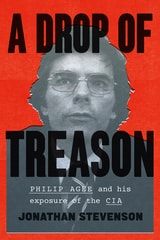
A Drop of Treason
Philip Agee and His Exposure of the CIAJonathan Stevenson
University of Chicago Press, 2021
The first biography of this contentious, legendary man, Jonathan Stevenson’s A Drop of Treason is a thorough portrait of Agee and his place in the history of American foreign policy and the intelligence community during the Cold War and beyond. Unlike mere whistleblowers, Agee exposed American spies by publicly blowing their covers. And he didn’t stop there—his was a lifelong political struggle that firmly allied him with the social movements of the global left and against the American project itself from the early 1970s on. Stevenson examines Agee’s decision to turn, how he sustained it, and how his actions intersected with world events.
Having made profound betrayals and questionable decisions, Agee lived a rollicking, existentially fraught life filled with risk. He traveled the world, enlisted Gabriel García Márquez in his cause, married a ballerina, and fought for what he believed was right. Raised a conservative Jesuit in Tampa, he died a socialist expat in Havana. In A Drop of Treason, Stevenson reveals what made Agee tick—and what made him run.
Abuse of Power
How Cold War Surveillance and Secrecy Policy Shaped the Response to 9/11Authored by Athan Theoharis
Temple University Press, 2011
Athan Theoharis, long a respected authority on surveillance and secrecy, established his reputation for meticulous scholarship with his work on the loyalty security program developed under Truman and McCarthy. In Abuse of Power, Theoharis continues his investigation of U.S. government surveillance and historicizes the 9/11 response.
Criticizing the U.S. government's secret activities and policies during periods of "unprecedented crisis," he recounts how presidents and FBI officials exploited concerns about foreign-based internal security threats.
Drawing on information sequestered until recently in FBI records, Theoharis shows how these secret activities in the World War II and Cold War eras expanded FBI surveillance powers and, in the process, eroded civil liberties without substantially advancing legitimate security interests.
Passionately argued, this timely book speaks to the costs and consequences of still-secret post-9/11 surveillance programs and counterintelligence failures. Ultimately, Abuse of Power makes the case that the abusive surveillance policies of the Cold War years were repeated in the government's responses to the September 11 attacks.
American Surveillance
Intelligence, Privacy, and the Fourth AmendmentAnthony Gregory
University of Wisconsin Press, 2016
Anthony Gregory challenges such simplifications, offering a nuanced history and analysis of these difficult issues. He highlights the complexity of the relationship between the gathering of intelligence for national security and countervailing efforts to safeguard individual privacy. The Fourth Amendment prohibiting unreasonable searches and seizures offers no panacea, he finds, in combating assaults on privacy—whether by the NSA, the FBI, local police, or more mundane administrative agencies. Given the growth of technology, together with the ambiguities and practical problems of enforcing the Fourth Amendment, advocates for privacy protections need to work on multiple policy fronts.
“This fascinating review of the shifts and accretions of American law and culture is filled with historical surprises and twenty-first-century shocks, so beneficial in an era of gross American ahistoricality and cultural acquiescence to the technological state. Every flag-waving patriot, every dissenter, every judge and police officer, every small-town mayor and every president should read America Surveillance. We have work to do!”—Lt. Col. Karen U. Kwiatkowski, (Ret.), former Senior Operations Staff Officer, Office of the Director, National Security Agency
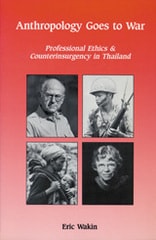
Anthropology Goes to War
Professional Ethics and Counterinsurgency in ThailandEric Wakin
University of Wisconsin Press, 1998
Now back in print, Eric Wakin's Anthropology Goes to War is the first comprehensive study of what became known as the Thailand Controversy—and a timely reminder of a debate whose echoes may be heard in our own time.

Anti-Communism in Britain During the Early Cold War
A Very British Witch-HuntMatthew Gerth
University of London Press, 2022
The Cold War produced in many countries a form of political repression and societal paranoia which often infected governmental and civic institutions. In the West, the driving catalyst for the phenomenon was anti-communism. While much has been written on the post-war American red scare commonly known as McCarthyism, the domestic British response to the “red menace” during the early Cold War has until now received little attention. Anti-communism in Britain During the Early Cold War is the first book to examine how British Cold War anti-communism transpired and manifested as McCarthyism raged across the Atlantic.
Drawing from a wealth of archival material, this book demonstrates that while policymakers and politicians in Britain sought to differentiate their anti-communist initiatives from the “witch hunt hysteria” occurring in the United States, they were often keen to conduct—albeit less publicly—their own hunts as well. Through analyzing how domestic anti-communism exhibited itself in state policies, political rhetoric, party politics, and the trade union movement, Matthew Gerth argues that an overreaction to the communist threat occurred. In striking detail, this book describes a nation at war with a specific political ideology and its willingness to use a variety of measures to either disrupt or eradicate its influence.
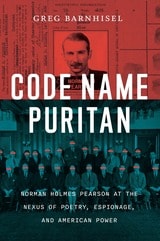
Code Name Puritan
Norman Holmes Pearson at the Nexus of Poetry, Espionage, and American PowerGreg Barnhisel
University of Chicago Press, 2024
Although his impact on twentieth-century American cultural life was profound, few people know the story of Norman Holmes Pearson. Pearson’s life embodied the Cold War alliances among US artists, scholars, and the national-security state that coalesced after World War II. As a Yale professor and editor, he helped legitimize the study of American culture and shaped the public’s understanding of literary modernism—significantly, the work of women poets such as Hilda Doolittle and Gertrude Stein. At the same time, as a spy, recruiter, and cultural diplomat, he connected the academy, the State Department, and even the CIA.
In Code Name Puritan, Greg Barnhisel maps Pearson’s life, from his childhood injury that led to a visible, permanent disability to his wartime counterespionage work neutralizing the Nazis’ spy network to his powerful role in the cultural and political heyday sometimes called the American Century. Written with clarity and informed by meticulous research, Barnhisel’s revelatory portrait of Pearson details how his unique experiences shaped his beliefs about the American character, from the Puritans onward.
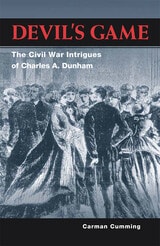
Devil's Game
The Civil War Intrigues of Charles A. DunhamCarman Cumming
University of Illinois Press, 2003
The first book-length study of one of the Civil War's most outlandish and mysterious characters
Devil's Game traces the amazing career of Charles A. Dunham, Civil War spy, forger, journalist, and master of dirty tricks. Writing for a variety of New York papers under alternate names, Dunham routinely faked stories, created new identities, and later boldly cast himself to play those roles. He achieved his greatest infamy when he was called to testify in Washington concerning Abraham Lincoln's assassination. Many parts of Dunham's career remain shadowy, but Cumming offers the first detailed tour of Dunham's convoluted, high-stakes, international deceits, including his effort to sell Lincoln on plans for a raid to capture Jefferson Davis.
Exhaustively researched and unprecedented in depth, this carefully crafted assessment of Dunham's motives, personality, and the complex effects of his schemes changes assumptions about covert operations during the Civil War.
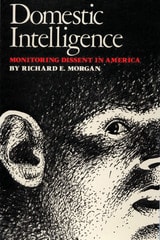
Domestic Intelligence
Monitoring Dissent in AmericaBy Richard E. Morgan
University of Texas Press, 1980
The 1970s revealed a number of infamous and sometimes illegal practices used by federal law enforcement agencies to monitor political dissent in the United States. In the aftermath of Watergate the revelation of serious abuses created distrust of virtually all domestic intelligence operations and led to vigorous efforts at reform.
Richard E. Morgan emphasizes the importance of guarding against an overreaction to the disclosures of the mid-1970s. While acknowledging the need for many of the recent reforms that seek to establish accountability, guarantee privacy, and protect dissent, he cautions against limitations on domestic intelligence gathering that could seriously hamper government's ability to prevent crime, particularly terrorism.
Domestic Intelligence has several major objectives: to trace the way in which government agencies became involved with domestic intelligence gathering; to review the controversies and abuses associated with these agencies, especially the FBI, the CIA, and the NSA; to discuss the constitutionality of domestic intelligence collection; to review intelligence reforms adopted; and to suggest additional reforms.
This volume is concerned with the tension between the need to protect privacy and political dissent and the need for the government to protect the community. Morgan concludes that intelligence operations aimed at anticipating criminal activity are necessary in a complex, highly vulnerable society, and that these operations can be conducted responsibly with proper guidelines and oversight mechanisms.
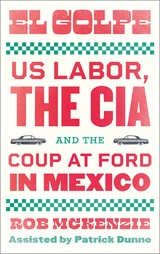
El Golpe
US Labor, the CIA, and the Coup at Ford in MexicoRob McKenzie
Pluto Press, 2022
'Early in my research, a friend with excellent knowledge of the United Auto Workers internal operations told me, "Don't give up. They are hiding something"…'
It's 1990, and US labor is being outsourced to Mexico. Rumors of a violent confrontation at the Mexican Ford Assembly plant on January 8 reach the United Auto Workers (UAW) union in the US: nine employees had been shot by a group of drunken thugs and gangsters, in an act of political repression which changed the course of Mexican and US workers' rights forever.
Rob McKenzie was working at the Ford Twin Cities Assembly plant in Minnesota when he heard of the attack. He didn't believe the official story, and began a years-long investigation to uncover the truth. His findings took him further than he expected - all the way to the doors of the CIA.
Virtually unknown outside of Mexico, the full story of 'El Golpe', or 'The Coup', is a dark tale of political intrigue that still resonates today.
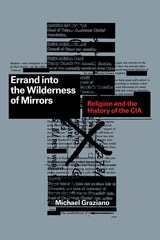
Errand into the Wilderness of Mirrors
Religion and the History of the CIAMichael Graziano
University of Chicago Press, 2021
Michael Graziano’s intriguing book fuses two landmark titles in American history: Perry Miller’s Errand into the Wilderness (1956), about the religious worldview of the early Massachusetts colonists, and David Martin’s Wilderness of Mirrors (1980), about the dangers and delusions inherent to the Central Intelligence Agency. Fittingly, Errand into the Wilderness of Mirrors investigates the dangers and delusions that ensued from the religious worldview of the early molders of the Central Intelligence Agency. Graziano argues that the religious approach to intelligence by key OSS and CIA figures like “Wild” Bill Donovan and Edward Lansdale was an essential, and overlooked, factor in establishing the agency’s concerns, methods, and understandings of the world. In a practical sense, this was because the Roman Catholic Church already had global networks of people and safe places that American agents could use to their advantage. But more tellingly, Graziano shows, American intelligence officers were overly inclined to view powerful religions and religious figures through the frameworks of Catholicism. As Graziano makes clear, these misconceptions often led to tragedy and disaster on an international scale. By braiding the development of the modern intelligence agency with the story of postwar American religion, Errand into the Wilderness of Mirrors delivers a provocative new look at a secret driver of one of the major engines of American power.
Food Justice Now!
Deepening the Roots of Social StruggleJoshua Sbicca
University of Minnesota Press, 2018
A rallying cry to link the food justice movement to broader social justice debates
The United States is a nation of foodies and food activists, many of them progressives, and yet their overwhelming concern for what they consume often hinders their engagement with social justice more broadly. Food Justice Now! charts a path from food activism to social justice activism that integrates the two. It calls on the food-focused to broaden and deepen their commitment to the struggle against structural inequalities both within and beyond the food system.
In an engrossing, historically grounded, and ethnographically rich narrative, Joshua Sbicca argues that food justice is more than just a myopic focus on food, allowing scholars and activists alike to investigate the causes behind inequities and evaluate and implement political strategies to overcome them. Focusing on carceral, labor, and immigration crises, Sbicca tells the stories of three California-based food movement organizations, showing that when activists use food to confront neoliberal capitalism and institutional racism, they can creatively expand how to practice and achieve food justice.
Sbicca sets his central argument in opposition to apolitical and individual solutions, discussing national food movement campaigns and the need for economically and racially just food policies—a matter of vital public concern with deep implications for building collective power across a diversity of interests.
Global Narratives of Russian Disinformation
Edited by Muriel Fischer, Sandra Frimmel, Nanina Graf, Iryna Herasimovich, Sylvia Sasse
Diaphanes, 2026
Disinformation, conspiracy narratives, and propaganda are not only manipulative forms of communication with the intention to deceive, but also a field of global collective narratives. Russia is an important player in this field. From the Cold War to the present day, we can observe how (pro-)Russian narratives are regionally tailored, internationally disseminated, and appropriated by various political, economic, or cultural actors for their own purposes.
While some narratives might originate from literary fantasy, science fiction, or national myths, others draw on historical narratives and reproduce them. Russia often claims an anti-imperialist, anti-fascist, or postcolonial intention in order to conceal its own imperialism and fascism.
The contributions in this book document these narratives in their respective geographical and historical contexts. They examine narrative practices and their history, the interplay of global address, and local appropriation as well as affects and effects within political discourse.
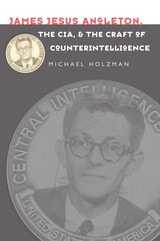
James Jesus Angleton, the CIA, and the Craft of Counterintelligence
Michael Holzman
University of Massachusetts Press, 2008
As chief of counterintelligence for the Central Intelligence Agency from the early 1950s to the early 1970s, James Jesus Angleton built a formidable reputation. Although perhaps best known for leading the agency's notorious “Molehunt”—the search for a Soviet spy believed to have infiltrated the upper levels of the American government—Angleton also played a key role in the U.S. intervention in the Italian election of 1948, in Israel's development of nuclear weapons, and in the management of the CIA's investigation of the assassination of John F. Kennedy. He later led CIA efforts to contain the Vietnam-era antiwar movement, including the campaign to destroy the liberal Catholic magazine Ramparts.
In this deeply researched biography, Michael Holzman uses Angleton's story to illuminate the history of the CIA from its founding in the late 1940s to the mid-1970s. Like many of his colleagues in the CIA, James Angleton learned the craft of espionage during World War II as an officer in the Office of Strategic Services (OSS), where he became a friend and protégé of the British double agent Kim Philby. Yet Angleton's approach to counterintelligence was also influenced by his unusual Mexican American family background and his years at Yale as a student of the New Critics and publisher of modernist poets. His marriage to Cicely d'Autremont and the couple's friendship with E. E. and Marion Cummings became part of a network of cultural connections that linked the U.S. secret intelligence services and American writers and artists during the postwar period.
Drawing on a broad range of sources, including previously unexamined archival documents, personal letters, and interviews, Holzman looks beneath the surface of Angleton's career to reveal the sensibility that governed not only his personal aims and ambitions but those of the organization he served and helped shape.
Multiculturalism and the Politics of Guilt
Toward a Secular TheocracyPaul Edward Gottfried
University of Missouri Press, 2003
Mutant Ecologies
Manufacturing Life in the Age of Genomic CapitalErica Borg
Pluto Press, 2022
How capitalism is reconfiguring the very texture of life
Mutant Ecologies traces the spinning of new synthetic threads into the web of life. It is a critical cartography of the shifting landscapes of capital accumulation conjured by recent developments in genomic science, genome editing, and the biotech industry.
CRISPR crops, fast-growing salmons, heat-resistant Slick™ cows, Friendly™ Mosquitoes, humanized mice, pigs growing human organs – these are but a few of the dazzling new life-forms that have recently emerged from corporate and university laboratories around the world, all promising to lubricate the circuits of capital accumulation in distinct ways. The deliberate induction of genetic mutations is increasingly central to business operations in a number of sectors, from agriculture to pharmaceuticals.
While the Nobel Committee recently proclaimed the life sciences to have entered 'a new epoch', the authors show how these technological innovations continue to operate within a socio-historical context defined by the iron rules of capitalist competition and exploitation. Capital no longer contents itself by simply appropriating the living bodies of plants and animals. It purposefully designs its internal metabolism, and in that way, it redesigns the countless living vectors that constitute the global biosphere. It is driving a biological revolution, which will ripple through the everyday lives of people everywhere.
My Life as a Spy
Investigations in a Secret Police FileKatherine Verdery
Duke University Press, 2018
On Record
Files and Dossiers in American LifeStanton Wheeler
Russell Sage Foundation, 1970
Policing America’s Empire
The United States, the Philippines, and the Rise of the Surveillance StateAlfred W. McCoy
University of Wisconsin Press, 2009
But security techniques bred in the tropical hothouse of colonial rule were not contained, McCoy shows, at this remote periphery of American power. Migrating homeward through both personnel and policies, these innovations helped shape a new federal security apparatus during World War I. Once established under the pressures of wartime mobilization, this distinctively American system of public-private surveillance persisted in various forms for the next fifty years, as an omnipresent, sub rosa matrix that honeycombed U.S. society with active informers, secretive civilian organizations, and government counterintelligence agencies. In each succeeding global crisis, this covert nexus expanded its domestic operations, producing new contraventions of civil liberties—from the harassment of labor activists and ethnic communities during World War I, to the mass incarceration of Japanese Americans during World War II, all the way to the secret blacklisting of suspected communists during the Cold War.
“With a breathtaking sweep of archival research, McCoy shows how repressive techniques developed in the colonial Philippines migrated back to the United States for use against people of color, aliens, and really any heterodox challenge to American power. This book proves Mark Twain’s adage that you cannot have an empire abroad and a republic at home.”—Bruce Cumings, University of Chicago
“This book lays the Philippine body politic on the examination table to reveal the disease that lies within—crime, clandestine policing, and political scandal. But McCoy also draws the line from Manila to Baghdad, arguing that the seeds of controversial counterinsurgency tactics used in Iraq were sown in the anti-guerrilla operations in the Philippines. His arguments are forceful.”—Sheila S. Coronel, Columbia University
Predator Empire
Drone Warfare and Full Spectrum DominanceIan G. R. Shaw
University of Minnesota Press, 2016
What does it mean for human beings to exist in an era of dronified state violence? How can we understand the rise of robotic systems of power and domination? Focusing on U.S. drone warfare and its broader implications as no other book has to date, Predator Empire argues that we are witnessing a transition from a labor-intensive “American empire” to a machine-intensive “Predator Empire.”
Moving from the Vietnam War to the War on Terror and beyond, Ian G. R. Shaw reveals how changes in military strategy, domestic policing, and state surveillance have come together to enclose our planet in a robotic system of control. The rise of drones presents a series of “existential crises,” he suggests, that are reengineering not only spaces of violence but also the character of the modern state. Positioning drone warfare as part of a much longer project to watch and enclose the human species, he shows that for decades—centuries even—human existence has slowly but surely been brought within the artificial worlds of “technological civilization.” Instead of incarcerating us in prisons or colonizing territory directly, the Predator Empire locks us inside a worldwide system of electromagnetic enclosure—in which democratic ideals give way to a system of totalitarian control, a machinic “rule by Nobody.”
As accessibly written as it is theoretically ambitious, Predator Empire provides up-to-date information about U.S. drone warfare, as well as an in-depth history of the rise of drones.
Success and Failure in Limited War
Information and Strategy in the Korean, Vietnam, Persian Gulf, and Iraq WarsSpencer D. Bakich
University of Chicago Press, 2014
Traditional assessments of wartime strategy focus on the relationship between the military and civilians, but Bakich argues that we must take into account the information flow patterns among top policy makers and all national security organizations. By examining the fate of American military and diplomatic strategy in four limited wars, Bakich demonstrates how not only the availability and quality of information, but also the ways in which information is gathered, managed, analyzed, and used, shape a state’s ability to wield power effectively in dynamic and complex international systems.
Utilizing a range of primary and secondary source materials, Success and Failure in Limited War makes a timely case for the power of information in war, with crucial implications for international relations theory and statecraft.
Surveillance and Spies in the Civil War
Exposing Confederate Conspiracies in America’s HeartlandStephen E. Towne
Ohio University Press, 2015
Surveillance, Volume 23
Richard Maxwell
Duke University Press, 0
One article looks at the emergence of the biometrics industries and its effect on surveillance systems and businesses. Another addresses the labor of surveillance and how surveillance work and policy affect the homeland security workforce. Various geographic areas are highlighted in several essays, including those on sex workers in Bengal, local surveillance in Turkey, and welfare surveillance and resistance in Appalachian Ohio. Additional themes include historical modes of surveillance, processes of legitimation for intensifying surveillance, and cultural representations of surveillance.
Contributors. Kelly A. Gates, Swati Ghosh, John Gilliom, Margaret Morganroth Gullette, Richard Maxwell, Laikwan Pang, David J. Phillips, Michael J. Shapiro, Çagatay Topal
The Broken Seal
"Operation Magic" and the Secret Road to Pearl HarborLadislas Farago
Westholme Publishing, 1967
“In this fascinating account. . . . Mr. Farago’s investigation suggests that the real villain was the system itself.”—New York Times
“In this well-written and informative account. . . Mr. Farago provides many new facts from both American and Japanese sources.”—Library Journal
“A good history of Japanese and American code-breaking operations between 1921 and December 7, 1941. . . . Farago is important because in this technical study of cryptology he has arrived independently at the same general conclusion as did the non-revisionist diplomatic historians: there was no plot by Roosevelt or his advisers.”—Choice
“His conclusions should act as a corrective to the enthusiasts who claim that intelligence always provides the complete answer.”—Times Literary Supplement
The Broken Seal: The Story of “Operation Magic” and the Pearl Harbor Disaster explores the questions of why, if the United States knew the Japanese codes, did we not anticipate the December 7, 1941 surprise attack and how did the Japanese spy system in Hawaii operate? As a chief of research and planning in the Special Warfare Branch of the Office of Naval Intelligence, the author had access to both Japanese and American classified material to write this study. The author’s intent was to independently ascertain the validity of earlier claims that the Pearl Harbor attack could have been avoided. The result is an eminently readable and engrossing story, first published in 1968, of the relationship between America and Japan in the interwar years and the relentless cat-and-mouse intelligence game conducted by both sides. Despite more recent suppositions that there was a conspiracy among American and British officials to ignore warnings of a Japanese attack that had been gleaned from deciphered diplomatic codes in order to force America into a world war, the author confirms that human error and misjudgment and the actual state of intelligence interpretation at the time made an accurate assessment of Japanese intentions impossible.
The CIA in Hollywood
How the Agency Shapes Film and TelevisionBy Tricia Jenkins
University of Texas Press, 2016
What’s your impression of the CIA? A bumbling agency that can’t protect its own spies? A rogue organization prone to covert operations and assassinations? Or a dedicated public service that advances the interests of the United States? Astute TV and movie viewers may have noticed that the CIA’s image in popular media has spanned this entire range, with a decided shift to more positive portrayals in recent years. But what very few people know is that the Central Intelligence Agency has been actively engaged in shaping the content of film and television, especially since it established an entertainment industry liaison program in the mid-1990s.
The CIA in Hollywood offers the first full-scale investigation of the relationship between the Agency and the film and television industries. Tricia Jenkins draws on numerous interviews with the CIA’s public affairs staff, operations officers, and historians, as well as with Hollywood technical consultants, producers, and screenwriters who have worked with the Agency, to uncover the nature of the CIA’s role in Hollywood. In particular, she delves into the Agency’s and its officers’ involvement in the production of The Agency, In the Company of Spies, Alias, The Recruit, The Sum of All Fears, Enemy of the State, Syriana, The Good Shepherd, and more. Her research reveals the significant influence that the CIA now wields in Hollywood and raises important and troubling questions about the ethics and legality of a government agency using popular media to manipulate its public image.
The Communist Party in Maryland, 1919-57
Vernon L. Pedersen
University of Illinois Press, 2001
Bolsheviks in Baltimore charts the uneven transformation of Baltimore's fledgling Communists into underground revolutionaries in the 1920s. Pedersen documents the mercurial careers of local organizers, their devotion to the Soviet cause, and their efforts to convert the Party from a hodgepodge of ethnic groups to an effective instrument of class interests. He also tracks the public's changing perception of the Communists, from amused unconcern to alarm, and details how the Ober antisubversive law and the HUAC hearings of the 1950s dismantled the Party from without while planting seeds of paranoia that destroyed it from within.
Behind the public fear of a Communist conspiracy against the U.S. government, Pedersen finds a party fractured by conflicting agendas, ineffectual leadership, and unstable membership. However, he also uncovers new evidence that Communists in the United States, acting on Soviet orders, used their influence in unions and front groups to sway American foreign policy in ways that benefited the Soviet Union. He documents the consolidation of an espionage apparatus in Baltimore and demonstrates that while espionage activities may have involved only a few individuals, all Party members shared an attitude of willing support for the activities of the Soviet Union that made these covert practices possible.
Paying tribute to the fervor and the effort dedicated by the Maryland Communists, often at the expense of their own physical and financial well-being, to a cause that ultimately failed them, Bolsheviks in Baltimore assesses an ambiguous legacy of admirable social vision, haphazard international conspiracy, and fierce internal conflict.
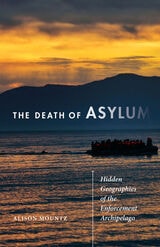
The Death of Asylum
Hidden Geographies of the Enforcement ArchipelagoAlison Mountz
University of Minnesota Press, 2020
Investigating the global system of detention centers that imprison asylum seekers and conceal persistent human rights violations
Remote detention centers confine tens of thousands of refugees, asylum seekers, and undocumented immigrants around the world, operating in a legal gray area that hides terrible human rights abuses from the international community. Built to temporarily house eight hundred migrants in transit, the immigrant “reception center” on the Italian island of Lampedusa has held thousands of North African refugees under inhumane conditions for weeks on end. Australia’s use of Christmas Island as a detention center for asylum seekers has enabled successive governments to imprison migrants from Asia and Africa, including the Sudanese human rights activist Abdul Aziz Muhamat, held there for five years.
In The Death of Asylum, Alison Mountz traces the global chain of remote sites used by states of the Global North to confine migrants fleeing violence and poverty, using cruel measures that, if unchecked, will lead to the death of asylum as an ethical ideal. Through unprecedented access to offshore detention centers and immigrant-processing facilities, Mountz illustrates how authorities in the United States, the European Union, and Australia have created a new and shadowy geopolitical formation allowing them to externalize their borders to distant islands where harsh treatment and deadly force deprive migrants of basic human rights.
Mountz details how states use the geographic inaccessibility of places like Christmas Island, almost a thousand miles off the Australian mainland, to isolate asylum seekers far from the scrutiny of humanitarian NGOs, human rights groups, journalists, and their own citizens. By focusing on borderlands and spaces of transit between regions, The Death of Asylum shows how remote detention centers effectively curtail the basic human right to seek asylum, forcing refugees to take more dangerous risks to escape war, famine, and oppression.
The Family Jewels
The CIA, Secrecy, and Presidential PowerBy John Prados
University of Texas Press, 2014
In December 1974, a front-page story in the New York Times revealed the explosive details of illegal domestic spying by the Central Intelligence Agency. This included political surveillance, eavesdropping, detention, and interrogation. The revelation of illegal activities over many years shocked the American public and led to investigations of the CIA by a presidential commission and committees in both houses of Congress, which found evidence of more abuse, even CIA plans for assassinations. Investigators and the public soon discovered that the CIA abuses were described in a top-secret document agency insiders dubbed the “Family Jewels.” That document became ground zero for a political firestorm that lasted more than a year. The “Family Jewels” debacle ultimately brought about greater congressional oversight of the CIA, but excesses such as those uncovered in the 1970s continue to come to light.
The Family Jewels probes the deepest secrets of the CIA and its attempts to avoid scrutiny. John Prados recounts the secret operations that constituted “Jewels” and investigators’ pursuit of the truth, plus the strenuous efforts—by the agency, the executive branch, and even presidents—to evade accountability. Prados reveals how Vice President Richard Cheney played a leading role in intelligence abuses and demonstrates that every type of “Jewel” has been replicated since, especially during the post-9/11 war on terror. The Family Jewels masterfully illuminates why these abuses are endemic to spying, shows that proper relationships are vital to control of intelligence, and advocates a system for handling “Family Jewels” crises in a democratic society.
With a new epilogue that discusses former CIA employee Edward Snowden’s revelation of massive covert surveillance by the NSA, this powerful accounting of intelligence abuses committed by the CIA from the Cold War through the war on terror reveals why such abuses and attempts to conceal them are endemic to spying and proposes how a democratic nation can rein in its spymasters.
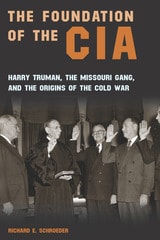
The Foundation of the CIA
Harry Truman, The Missouri Gang, and the Origins of the Cold WarRichard E. Schroeder
University of Missouri Press, 2017
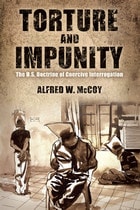
Torture and Impunity
The U.S. Doctrine of Coercive InterrogationAlfred W. McCoy
University of Wisconsin Press, 2012
During the Cold War, McCoy argues, the U.S. Central Intelligence Agency covertly funded psychological experiments designed to weaken a subject’s resistance to interrogation. After the 9/11 terrorist attacks, the CIA revived these harsh methods, while U.S. media was flooded with seductive images that normalized torture for many Americans. Ten years later, the U.S. had failed to punish the perpetrators or the powerful who commanded them, and continued to exploit intelligence extracted under torture by surrogates from Somalia to Afghanistan. Although Washington has publicly distanced itself from torture, disturbing images from the prisons at Abu Ghraib and Guantanamo are seared into human memory, doing lasting damage to America’s moral authority as a world leader.
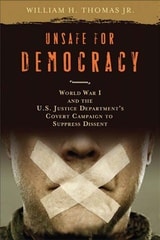
Unsafe for Democracy
World War I and the U.S. Justice Department's Covert Campaign to Suppress DissentWilliam H. Thomas Jr.
University of Wisconsin Press, 2009
“Recommended for all libraries.”—Frederic Krome, Library Journal
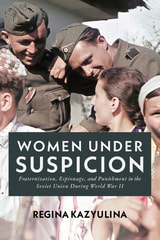
Women Under Suspicion
Fraternization, Espionage, and Punishment in the Soviet Union During World War IIRegina Kazyulina
University of Wisconsin Press, 2025