Results by title
1445 books match the query 'Life Sciences' and 103 start with a
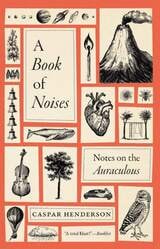
A Book of Noises
Notes on the AuraculousCaspar Henderson
University of Chicago Press, 2023
The crackling of a campfire. The scratch, hiss, and pop of a vinyl record. The first glug of wine as it is poured from a bottle. These are just a few of writer Caspar Henderson’s favorite sounds. In A Book of Noises, Henderson invites readers to use their ears a little better—to tune in to the world in all its surprising noisiness.
Describing sounds from around the natural and human world, the forty-eight essays that make up A Book of Noises are a celebration of all things “auraculous.” Henderson calls on his characteristic curiosity to explore sounds related to humans (anthropophony), other life (biophony), the planet (geophony), and space (cosmophony). Henderson finds the beauty in everyday sounds, like the ringing of a bell, the buzz of a bee, or the “earworm” songs that get stuck in our heads. A Book of Noises also explores the marvelous, miraculous sounds we may never get the chance to hear, like the deep boom of a volcano or the quiet, rustling sound of the Northern Lights.
A Book of Noises will teach readers to really listen to the sounds of the world around them, to broaden and deepen their appreciation of the humans, animals, rocks, and trees simultaneously broadcasting across the whole spectrum of sentience.
A Cultural History of Heredity
Staffan Müller-Wille and Hans-Jörg Rheinberger
University of Chicago Press, 2012
It was only around 1800 that heredity began to enter debates among physicians, breeders, and naturalists. Soon thereafter it evolved into one of the most fundamental concepts of biology. Here Staffan Müller-Wille and Hans-Jörg Rheinberger offer a succinct cultural history of the scientific concept of heredity. They outline the dramatic changes the idea has undergone since the early modern period and describe the political and technological developments that brought about these changes.
Müller-Wille and Rheinberger begin with an account of premodern theories of generation, showing that these were concerned with the procreation of individuals rather than with hereditary transmission. The authors reveal that when hereditarian thinking first emerged, it did so in a variety of cultural domains, such as politics and law, medicine, natural history, breeding, and anthropology. Müller-Wille and Rheinberger then track theories of heredity from the late nineteenth century—when leading biologists considered it in light of growing societal concerns with race and eugenics—through the rise of classical and molecular genetics in the twentieth century, to today, as researchers apply sophisticated information technologies to understand heredity. What readers come to see from this exquisite history is why it took such a long time for heredity to become a prominent concept in the life sciences and why it gained such overwhelming importance in those sciences and the broader culture over the last two centuries.

A Field Guide to a New Meta-field
Bridging the Humanities-Neurosciences DivideEdited by Barbara Maria Stafford
University of Chicago Press, 2011
Barbara Stafford is a pioneering art historian whose research has long helped to bridge the divide between the humanities and cognitive sciences. In A Field Guide to a New Meta-Field, she marshals a distinguished group of thinkers to forge a ground-breaking dialogue between the emerging brain sciences, the liberal arts, and social sciences.
Stafford’s book examines meaning and mental function from this dual experimental perspective. The wide-ranging essays included here—from Frank Echenhofer’s foray into shamanist hallucinogenic visions to David Bashwiner’s analysis of emotion and danceability—develop a common language for implementing programmatic and institutional change. Demonstrating how formerly divided fields are converging around shared issues, A Field Guide to a New Meta-Field maps a high-level, crossdisciplinary adventure from one of our leading figures in visual studies.
A Field Guide to the Familiar
Learning to Observe the Natural WorldGale Lawrence
Brandeis University Press, 1998
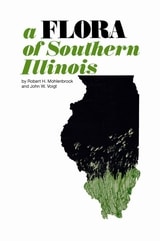
A Flora of Southern Illinois
Robert H. Mohlenbrock
Southern Illinois University Press, 1974
This book will be of particular interest to those interested in applied fields of biology, such as conservation, forestry, and wild life. The southern twelve counties of Illinois, a total of 4,355square miles, comprise the area covered in this book. It is an area in which both northern and southern flora specimens abound. A wide variety of plant species grow in this area, and nearly 200 new plants not formerly identified with this area have been included in the listings.
Especially valuable to amateur botanists, the book is an important manual in identifying the plants that make up the native scenery of this region. Seventy-seven illustrations aid in identifying and understanding the plant communities.
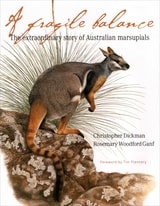
A Fragile Balance
The Extraordinary Story of Australian MarsupialsChristopher Dickman
University of Chicago Press, 2007
Marsupials are nearly synonymous with Australia. Although one of these enigmatic pouched mammals—the opossum—inhabits the United States and another 80 or so thrive in South America, some 220 species are confined to the Australasian region. In Australia, marsupials are the most diverse and dominant indigenous species, from the wallaby and the wombat to the kangaroo and koala.
The extraordinary story of these fascinating animals, A Fragile Balance provides the most up-to-date information on marsupials without losing sight of the unique set of circumstances that led them to prevalence Down Under. Covering all marsupial species in Australia, the book uses an evolutionary framework to interpret the marsupial’s biological traits. Each species account includes a basic biological description, a range map, and a measure of conservation status. The accounts are bounded by general chapters on biology, natural history, cultural history, and conservation. A Fragile Balance is the first book to emphasize interactions between and among marsupials, as well as between humans and marsupials.
Combining the expertise of renowned biologist Christopher Dickman with the artistic talents of illustrator Rosemary Woodford Ganf, A Fragile Balance will be a much celebrated reference for mammalogists worldwide, as well as for readers interested in Australian natural and cultural history.

A Guide to the Spring Flowers of Minnesota
Carl Rosendahl
University of Minnesota Press, 1937
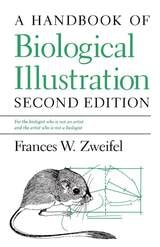
A Handbook of Biological Illustration
Frances W. Zweifel
University of Chicago Press, 1988
This book is designed to help biologists who must create their own illustrations and artists who are confronted with unfamiliar biological subjects. The author, an experienced biological illustrator, gives practical instructions and advice on the consideration of size and of printing processes, choice of materials, methods for saving time and labor, drawing techniques, lettering methods, and mounting and packing the finished illustrations. She explains how to produce clear and attractive charts, graphs, and maps, so essential to science publications. Though this primer does not cover photographic techniques, it does include advice on retouching, cropping, and mounting photographs and on using photographs of biological subjects as aids in drawing. This second edition is updated to reflect the many technological changes in art materials and printing processes that have occurred since the book's first publication, and it includes an entirely new chapter on planning, designing, and mounting the poster presentations that have become an essential part of conferences held by scientific societies. Also included are the requirements and conventions peculiar to biological illustration and a bibliography of useful reference works.
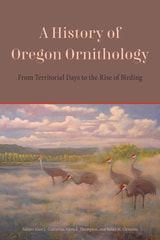
A History of Oregon Ornithology
From Territorial Days to the Rise of BirdingAlan L. Contreras
Oregon State University Press, 2022
Editors Alan Contreras, Vjera Thompson, and Nolan Clements have assembled chapters exploring the differences and interplay between the amateur and professional study of birds, along with discussions of early birding societies, notable observers, and ornithological studies. It includes significant chapters on Charles Bendire, William L. Finley, Ira Gabrielson, Stanley Jewett, and David B. Marshall. It also notes the sometimes-overlooked contributions of women to our expanding knowledge of western birds. Special attention is paid to the development of seabird observation, the impact of the Internet, and the rise of digital resources for bird observers.
Intended for readers interested in the history of Oregon, the history of scientific explorations in the west, and the origins of modern birding and field ornithology, A History of Oregon Ornithology offers a detailed and entertaining tour of how birds were first observed and studied by explorers in what is now Oregon.
A Key to Pacific Grasses
W. D. Clayton and Neil Snow
Royal Botanic Gardens, Kew, 2010
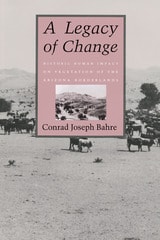
A Legacy of Change
Historic Human Impact on Vegetation in the Arizona BorderlandsConrad Joseph Bahre
University of Arizona Press, 1991
Geographer Conrad Bahre now challenges the view that these vegetation changes are due to climatic change. Correlating his own field research with archival records and photographs, Bahre demonstrates that most of the changes follow some type of human disturbance, such as cattle grazing, fuelwood cutting, wildfire suppression, agriculture, and road construction. Indeed, all available evidence suggests that Anglo settlement brought unprecedented changes to the land.
Vegetation change in the American West has long been an issue of concern. This careful scrutiny of one corner of that region—one of the most ecologically diverse areas of the United States—shows how poorly understood is the relationship between human activities and vegetation. More important, it introduces new techniques for differentiating between natural and anthropogenic factors effecting vegetation change that can be used to help ecologists understand vegetation dynamics worldwide.
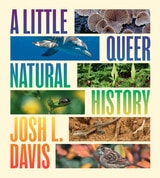
A Little Queer Natural History
Josh L. Davis
University of Chicago Press, 2024
From a pair of male swans raising young to splitgill mushrooms with over 23,000 mating types, sex in the natural world is wonderfully diverse. Josh L. Davis considers how, for many different organisms—animals, plants, and fungi included—sexual reproduction and sex determination rely on a surprisingly complex interaction among genes, hormones, environment, and chance. As Davis introduces us to fascinating biological concepts like parthenogenesis (virgin birth), monoecious plants (individuals with separate male and female flowers), and sex-reversed genitals, we see turtle hatchlings whose sex is determined by egg temperature; butterflies that embody male and female biological tissue in the same organism; and a tomato that can reproduce three different ways at the same time. Davis also reveals animal and plant behaviors in nature that researchers have historically covered up or explained away, like queer sex among Adélie penguins or bottlenose dolphins, and presents animal behaviors that challenge us to rethink our assumptions and prejudices. Featuring fabulous sex-fluid fishes and ant, wasp, and bee queens who can choose both how they want to have sex and the sex of their offspring, A Little Queer Natural History offers a larger lesson: that the diversity we see in our own species needs no justification and represents just a fraction of what exists in the natural world.
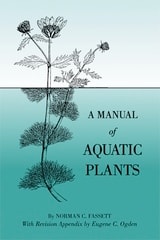
A Manual of Aquatic Plants
Norman C. Fassett; Revised Appendix by Eugene C. Ogden
University of Wisconsin Press, 2006
A Manual of Aquatic Plants can be said to be a classic; it made the identification of aquatic plants in sterile as well as in flowering or fruiting condition as simple as possible, and covers a region from Minnesota to Missouri and eastward to the Gulf of St. Lawrence and Virgina.
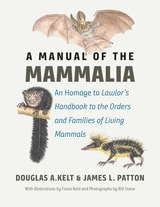
A Manual of the Mammalia
An Homage to Lawlor’s “Handbook to the Orders and Families of Living Mammals”Douglas A. Kelt and James L. Patton
University of Chicago Press, 2020
The taxonomy of recent mammals has lately undergone tremendous revision, but it has been decades since the last update to Timothy E. Lawlor’s acclaimed identification guide the Handbook to the Orders and Families of Living Mammals. Integrating the latest advances in research, Douglas A. Kelt and James L. Patton provide this long-overdue update in their new, wholly original work, A Manual of the Mammalia.
Complemented by global range maps, high-resolution photographs of skulls and mandibles by Bill Stone, and the outstanding artwork of Fiona Reid, this book provides an overview of biological attributes of each higher taxon while highlighting key and diagnostic characters needed to identify skulls and skins of all recent mammalian orders and most families. Kelt and Patton also place taxa in their currently understood supra-familial clades, and discuss current challenges in higher mammal taxonomy. Including a comprehensive review of mammalian anatomy to provide a foundation for understanding all characters employed throughout, A Manual of the Mammalia is both a user-friendly handbook for students learning to identify higher mammal taxa and a uniquely comprehensive, up-to-date reference for mammalogists and mammal-lovers from across the globe.
A Monograph on the Genus Heuchera
Carl Rosendahl
University of Minnesota Press, 1936
A Natural History of Time
Pascal Richet
University of Chicago Press, 2007
The quest to pinpoint the age of the Earth is nearly as old as humanity itself. For most of history, people trusted mythology or religion to provide the answer, even though nature abounds with clues to the past of the Earth and the stars. In A Natural History of Time, geophysicist Pascal Richet tells the fascinating story of how scientists and philosophers examined those clues and from them built a chronological scale that has made it possible to reconstruct the history of nature itself.
Richet begins his story with mythological traditions, which were heavily influenced by the seasons and almost uniformly viewed time cyclically. The linear history promulgated by Judaism, with its story of creation, was an exception, and it was that tradition that drove early Christian attempts to date the Earth. For instance, in 169 CE, the bishop of Antioch, for instance declared that the world had been in existence for “5,698 years and the odd months and days.”
Until the mid-eighteenth century, such natural timescales derived from biblical chronologies prevailed, but, Richet demonstrates, with the Scientific Revolution geological and astronomical evidence for much longer timescales began to accumulate. Fossils and the developing science of geology provided compelling evidence for periods of millions and millions of years—a scale that even scientists had difficulty grasping. By the end of the twentieth century, new tools such as radiometric dating had demonstrated that the solar system is four and a half billion years old, and the universe itself about twice that, though controversial questions remain.
The quest for time is a story of ingenuity and determination, and like a geologist, Pascal Richet carefully peels back the strata of that history, giving us a chance to marvel at each layer and truly appreciate how far our knowledge—and our planet—have come.
A Natural History of the New World
The Ecology and Evolution of Plants in the AmericasAlan Graham
University of Chicago Press, 2010
The paleoecological history of the Americas is as complex as the region is broad: stretching from the Arctic Circle to Tierra del Fuego, the New World features some of the most extraordinary vegetation on the planet. But until now it has lacked a complete natural history. Alan Graham remedies that with A Natural History of the New World. With plants as his scientific muse, Graham traces the evolution of ecosystems, beginning in the Late Cretaceous period (about 100 million years ago) and ending in the present, charting their responses to changes in geology and climate.
By highlighting plant communities’ roles in the environmental history of the Americas, Graham offers an overdue balance to natural histories that focus exclusively on animals. Plants are important in evolution’s splendid drama. Not only are they conspicuous and conveniently stationary components of the Earth’s ecosystems, but their extensive fossil record allows for a thorough reconstruction of the planet’s paleoenvironments. What’s more, plants provide oxygen, function as food and fuel, and provide habitat and shelter; in short, theirs is a history that can speak to many other areas of evolution.
A Natural History of the New World is an ambitious and unprecedented synthesis written by one of the world’s leading scholars of botany and geology.
A Planet of Viruses
Carl Zimmer
University of Chicago Press, 2011
For years, scientists have been warning us that a pandemic was all but inevitable. Now it's here, and the rest of us have a lot to learn.
Fortunately, science writer Carl Zimmer is here to guide us. In this compact volume, he tells the story of how the smallest living things known to science can bring an entire planet of people to a halt--and what we can learn from how we've defeated them in the past.
Planet of Viruses covers such threats as Ebola, MERS, and chikungunya virus; tells about recent scientific discoveries, such as a hundred-million-year-old virus that infected the common ancestor of armadillos, elephants, and humans; and shares new findings that show why climate change may lead to even deadlier outbreaks. Zimmer’s lucid explanations and fascinating stories demonstrate how deeply humans and viruses are intertwined. Viruses helped give rise to the first life-forms, are responsible for many of our most devastating diseases, and will continue to control our fate for centuries. Thoroughly readable, and, for all its honesty about the threats, as reassuring as it is frightening, A Planet of Viruses is a fascinating tour of a world we all need to better understand.
A Planet of Viruses
Second EditionCarl Zimmer
University of Chicago Press, 2015
Fortunately, science writer Carl Zimmer is here to guide us. In this compact volume, he tells the story of how the smallest living things known to science can bring an entire planet of people to a halt--and what we can learn from how we've defeated them in the past.
Planet of Viruses covers such threats as Ebola, MERS, and chikungunya virus; tells about recent scientific discoveries, such as a hundred-million-year-old virus that infected the common ancestor of armadillos, elephants, and humans; and shares new findings that show why climate change may lead to even deadlier outbreaks. Zimmer’s lucid explanations and fascinating stories demonstrate how deeply humans and viruses are intertwined. Viruses helped give rise to the first life-forms, are responsible for many of our most devastating diseases, and will continue to control our fate for centuries. Thoroughly readable, and, for all its honesty about the threats, as reassuring as it is frightening, A Planet of Viruses is a fascinating tour of a world we all need to better understand.
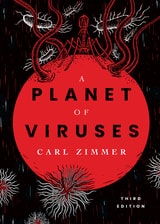
A Planet of Viruses
Third EditionCarl Zimmer
University of Chicago Press, 2021
Fully revised and updated, with new illustrations and a new chapter about coronaviruses and the spread of Covid-19, this third edition of Carl Zimmer’s A Planet of Viruses pulls back the veil on this hidden world. It presents the latest research on how viruses hold sway over our lives and our biosphere, how viruses helped give rise to the first life-forms, how viruses are producing new diseases, how we can harness viruses for our own ends, and how viruses will continue to control our fate as long as life endures.
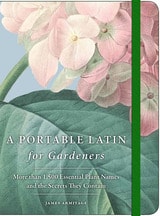
A Portable Latin for Gardeners
More than 1,500 Essential Plant Names and the Secrets They ContainJames Armitage
University of Chicago Press, 2017
A Portable Latin for Gardeners is the perfect quick reference for working in the garden, shopping for plants, or doing botanical research—and no prior knowledge of Latin is required. The 1,500 terms are grouped by categories, making it easy to describe color, size, form, habitat, scent, taste, and time. Gardeners will make new connections and discoveries in a way standard alphabetical lists simply don’t allow. Alternately, gardeners who want to look up a particular term can jump right into the alphabetical index. Each entry includes the different forms of the term, a basic pronunciation guide, the definition, and an example plant species.
Rich botanical illustrations make this guide as beautiful as it is useful, while a durable flexi-bound cover means the book can withstand both days in the garden and evenings on the nightstand.
A Practical Guide to the Marine Animals of Northeastern North America
Leland W Pollock
Rutgers University Press, 1998
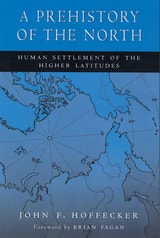
A Prehistory of the North
Human Settlement of the Higher LatitudesHoffecker, John F
Rutgers University Press, 2004
Early humans did not simply drift northward from their African origins as their abilities to cope with cooler climates evolved. The initial settlement of places like Europe and northern Asia, as well as the later movement into the Arctic and the Americas, actually occurred in relatively rapid bursts of expansion. A Prehistory of the North is the first full-length study to tell the complex story, spanning almost two million years, of how humans inhabited some of the coldest places on earth.
In an account rich with illustrations, John Hoffecker traces the history of anatomical adaptations, diet modifications, and technological developments, such as clothing and shelter, which allowed humans the continued ability to push the boundaries of their habitation. The book concludes by showing how in the last few thousand years, peoples living in the circumpolar zone—with the exception of western and central Siberia—developed a thriving maritime economy.
Written in nontechnical language, A Prehistory of the North provides compelling new insights and valuable information for professionals and students.
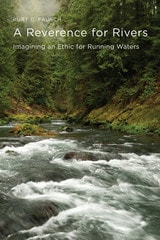
A Reverence for Rivers
Imagining an Ethic for Running WatersKurt D. Fausch
Oregon State University Press, 2025
In A Reverence for Rivers, Kurt Fausch draws on his experience as a stream ecologist, his interest in Indigenous cultures, and a thoughtful consideration of environmental ethics to explore human values surrounding freshwater ecosystems. Focusing on seven rivers across the globe—from the Salmon River in Oregon to the Sarufutsu River in Japan—he examines the growing ethical dilemmas threatening our rivers, including increasing demands for water, habitat fragmentation, overfishing, and deepening climate change.
How do we decide which rivers deserve legal protection? What is our right to water as humans? And how do we foster resilient rivers? Through a combination of scientific expertise and thoughtful observations of the natural world, Fausch translates the science of rivers into accessible language for readers and begins to address these questions. He weaves deep Indigenous histories throughout the book and includes personal visits to tribal lands to explore the traditional values held by several Indigenous groups. Fausch reminds us that our connection to rivers is personal and grounded in specific places, flowing from the stories we carry about our relationships with and responsibilities to these rivers.
In a final essay Fausch ponders Aldo Leopold’s statement that “nothing so important as an ethic is ever written,” but instead evolves in the minds of a thinking community. A Reverence for Rivers speaks to both the mind and the heart, offering perspectives so that we might begin to imagine and create an ethic for living with and caring for the running waters on which we rely for so much.
A Systematic Study of The Lizards of The Deppei Group (Genus Cnemidophorus) in Mexico and Guatemala
By William E. Duellman and John Wellman
University of Michigan Press, 1960

A Third Window
Natural Life beyond Newton and DarwinRobert W. Ulanowicz
Templeton Press, 2009
Thus far, the dominant paradigms through which modern scientists have viewed nature have been structured primarily around Newtonian and Darwinian approaches. As theoretical ecologist Robert E. Ulanowicz observes in his new work, A Third Window, neither of these models is sufficient for explaining how real change—in the form of creative advance or emergence—takes place in nature.
Drawing on the writings of Walter Elsasser, Karl Popper, Gregory Bateson, Robert Rosen, and Alfred North Whitehead, as well as his own experience as a theoretical ecologist, Ulanowicz offers a new set of axioms for how nature behaves. Chance and disarray in natural processes are shown to be necessary conditions for real change. Randomness is shown to contribute richness and autonomy to the natural world.
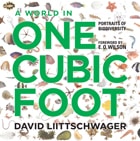
A World in One Cubic Foot
Portraits of BiodiversityDavid Liittschwager
University of Chicago Press, 2012
For A World in One Cubic Foot, esteemed nature photographer David Liittschwager took a bright green metal cube—measuring precisely one cubic foot—and set it in various ecosystems around the world, from Costa Rica to Central Park. Working with local scientists, he measured what moved through that small space in a period of twenty-four hours. He then photographed the cube’s setting and the plant, animal, and insect life inside it—anything visible to the naked eye. The result is a stunning portrait of the amazing diversity that can be found in ecosystems around the globe. Many organisms captured in Liittschwager’s photographs have rarely, if ever, been presented in their full splendor to the general reader, and the singular beauty of these images evocatively conveys the richness of life around us and the essential need for its conservation. The breathtaking images are accompanied by equally engaging essays that speak to both the landscapes and the worlds contained within them, from distinguished contributors such as Elizabeth Kolbert and Alan Huffman, in addition to an introduction by E. O. Wilson. After encountering this book, you will never look at the tiniest sliver of your own backyard or neighborhood park the same way; instead, you will be stunned by the unexpected variety of species found in an area so small.
A World in One Cubic Foot puts the world accessibly in our hands and allows us to behold the magic of an ecosystem in miniature. Liittschwager’s awe-inspiring photographs take us to places both familiar and exotic and instill new awareness of the life that abounds all around.
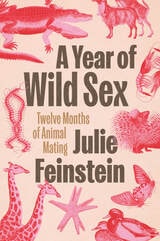
A Year of Wild Sex
Twelve Months of Animal MatingJulie Feinstein
University of Chicago Press, 2026
An eye-opening, unexpected year of animals' most intimate encounters.
It was a chance meeting with mating silverfish behind her bathroom cabinet that made biologist Julie Feinstein more curious about, well, the birds and the bees. How do other animals have sex? How do turtles do it? Or starfish without obvious sex organs? What about dangerous animals, like alligators? Or those historically associated with sex, like an oyster or a stork? What if all the animals that we see in zoos, TV ads, and children’s books, she wondered, had sex lives as seemingly strange as those of silverfish?
Feinstein’s humorous, accessible, and deeply researched text answers these and other questions on nature’s most surprising sexual behaviors, including firefly suitors bearing nutritious “nuptial gifts” and post-copulatory slug penis amputations. She raises an eyebrow at all the mammals—from goats to giraffes—that incorporate urine into courtship. She explains the complex interactions of amorous cockroaches and their equally complex genitalia. She laments that dyeing poison dart frog tadpoles sometimes commit cannibalism for a better shot at growing up and then, eventually, coupling up. In this little black book of animal sex, Feinstein guides readers through the year, drawing connections that illuminate the associations between animals’ mating behaviors and our monthly calendars. She details some animals’ peak bursts of activity, such as Atlantic white shrimp spawning in July, porcupines breeding in October, and bald eagles, decorators extraordinaires, working on their nests in December. Scorpions enter whimsically under the astrological sign of Scorpio in November, and when a holiday nears, she explains the mating nitty-gritty of species with deep cultural connections to a specific day, like New Year storks, Thanksgiving turkeys, or Christmas reindeer. Presenting a pair of animals for each month, Feinstein offers an entertaining and illuminating Noah’s ark and a year of wacky, unbelievable, truly wild sex.
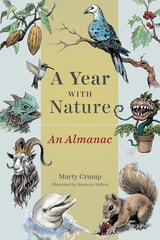
A Year with Nature
An AlmanacMarty Crump
University of Chicago Press, 2018
With Crump, we mark the publication of classics like Carson’s Silent Spring and White’s Charlotte’s Web, and even the musical premiere of Tchaikovsky’s Swan Lake. We note the discovery of the structure of DNA and the mountain gorilla, the rise of citizen science projects, and the work of people who’ve shaped how we view and protect nature—from Aristotle to E. O. Wilson. Some days feature US celebrations, like National Poinsettia Day and National Cat Day; others highlight country-specific celebrations, like Australia’s Wombat Day and Thailand’s Monkey Buffet Festival, during which thousands of macaques feast on an ornately arranged spread of fruits and vegetables. Crump also highlights celebrations that span borders, from World Wildlife Conservation Day to International Mountain Day and global festivities for snakes, sea turtles, and chocolate. Interweaving fascinating facts on everything from jellyfish bodies to monthly birth flowers with folkloric entries featuring the Loch Ness Monster, unicorns, and ancient Greek, Roman, and Egyptian mythology, the almanac is as exhaustive as it is enchanting.
A Year with Nature celebrates the wonder and beauty of our natural world as we have expressed it in visual arts, music, literature, science, natural history, and everyday experience. But more than this, the almanac’s vignettes encourage us to contemplate how we can help ensure that future generations will be able to enjoy the landscapes and rich biodiversity we so deeply cherish.
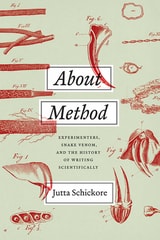
About Method
Experimenters, Snake Venom, and the History of Writing ScientificallyJutta Schickore
University of Chicago Press, 2017
About Method shows that methodological advancement throughout history has not been simply a steady progression toward better, more sophisticated and improved methodologies of experimentation. Rather, it was a progression in awareness of the obstacles and limitations that scientists face in developing strategies to probe the myriad unknown complexities of nature. The first long-term history of this development and of snake venom research, About Method offers a major contribution to integrated history and philosophy of science.
Acanthaceae to Myricaceae
Water Willows to Wax MyrtlesRobert H. Mohlenbrock
Southern Illinois University Press, 2008
Veteran botanist, scientific author, and professor Robert H. Mohlenbrock brings the full depth of his expertise and scholarship to his latest book, Acanthaceae to Myricaceae: Water Willows to Wax Myrtles, the third of four volumes in the Aquatic and Standing Water Plants of the Central Midwest series. This easy-to-use illustrated reference guide covers aquatic and standing water plants for the states of Iowa, Illinois, Indiana, Ohio, Kansas, Missouri, Nebraska, and Kentucky (excluding the biologically distinct Cumberland Mountain region of eastern Kentucky), from spearmint to wintergreen, from aster to waterwort.
The volume identifies, describes, and organizes species in three groups, including truly aquatic plants, which spend their entire life with their vegetative parts either completely submerged or floating on the water’s surface; emergents, which are usually rooted under water with their vegetative parts standing above the water’s surface; and wetland plants, which live most or all of their lives out of water, but which can live at least three months in water.
Mohlenbrock lists the taxa alphabetically, and within each taxon, he describes the species with the scientific names he deems most appropriate (indicating if his opinion differs from that of the U.S. Fish and Wildlife Service), common names, identification criteria, line drawings, geographical distribution, habitat description, and official U.S. Fish and Wildlife Service wetlands designation as described by the National Wetland Inventory Section in 1988.
Acanthaceae to Myricaceae is an essential reference for state and federal employees who deal with environmental conservation and mitigation issues in aquatic and wetland plants. It is also a useful guide for students and instructors in college and university courses focusing on the identification of aquatic and wetland plants.
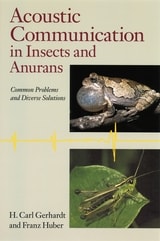
Acoustic Communication in Insects and Anurans
Common Problems and Diverse SolutionsH. Carl Gerhardt and Franz Huber
University of Chicago Press, 2002
H. Carl Gerhardt and Franz Huber address these questions among many others, drawing on research from bioacoustics, behavior, neurobiology, and evolutionary biology to present the first integrated approach to the study of acoustic communication in insects and anurans. They highlight both the common solutions that these very different groups have evolved to shared challenges, such as small size, ectothermy (cold-bloodedness), and noisy environments, as well as the divergences that reflect the many differences in evolutionary history between the groups. Throughout the book Gerhardt and Huber also provide helpful suggestions for future research.

Across the Bridge
Understanding the Origin of the VertebratesHenry Gee
University of Chicago Press, 2018
As Gee shows, even as scientific advances have falsified a variety of theories linking these groups, the extant relatives of vertebrates are too few for effective genetic analysis. Moreover, the more we learn about the species that do remain—from sea-squirts to starfish—the clearer it becomes that they are too far evolved along their own courses to be of much use in reconstructing what the latest invertebrate ancestors of vertebrates looked like. Fossils present yet further problems of interpretation. Tracing both the fast-changing science that has helped illuminate the intricacies of vertebrate evolution as well as the limits of that science, Across the Bridge helps us to see how far the field has come in crossing the invertebrate-to-vertebrate divide—and how far we still have to go.
Adaptation in Metapopulations
How Interaction Changes EvolutionMichael J. Wade
University of Chicago Press, 2016
With Adaptation in Metapopulations, Michael J. Wade explores a key component of this new understanding of evolution: interaction. Synthesizing decades of work in the lab and in the field in a book both empirically grounded and underpinned by a strong conceptual framework, Wade looks at the role of interaction across scales from gene selection to selection at the level of individuals, kin, and groups. In so doing, he integrates molecular and organismal biology to reveal the true complexities of evolutionary dynamics from genes to metapopulations.
Advances in Legume Science
R. J. Summerfield and A. H. Bunting
Royal Botanic Gardens, Kew, 2001
Advances in Legume Systematics Part 8
Legumes of Economic ImportanceB. Pickersgill and J. M. Lock
Royal Botanic Gardens, Kew, 1996

Advances in Legume Systematics Part 5. The Nitrogen Factor
J. L. Sprent and D. McKey
Royal Botanic Gardens, Kew, 1994
Advances in Legume Systematics Part 7. Phylogeny
M. D. Crisp and J. J. Doyal
Royal Botanic Gardens, Kew, 1995
Advances in the Zoology of Tapeworms, 1950-1970
Robert A. Wardle
University of Minnesota Press, 0
This volume is a sequel to the comprehensive study by Professors Robert A. Wardle and James A. McLeod, The Zoology of Tapeworms, published by the University of Minnesota Press in 1952. The new book is based on research and publications which have become available since the earlier volume was published.
While much of the information in the earlier book was devoted to the identification, description, and classification of families, genera, and species, research efforts in the last two decades have been focused in new directions. Although some researchers have been engaged in revising the original classification in the light of new findings, others have been exploring specificity, serology, and genetics, and have undertaken studies of host-parasite relationships, pathogenesis, and therapeutics in the treatment of tapeworm infestation. These investigations have been facilitated by laboratory techniques which were not available for earlier studies.Following introductory chapters on the recent expansion of tapeworm research and the phylogeny of tapeworms, the authors devote a chapter each to 21 orders of tapeworms. The material is based on a survey of the literature including more than 2,000 papers on tapeworm zoology published since 1950. Chapters on laboratory propagation and on therapeutics complete the text, and there is an extensive list of references. Many drawings illustrate the text.
Aesthetics of Discomfort
Conversations on Disquieting ArtFrederick Aldama and Herbert Lindenberger
University of Michigan Press, 2016
African Plants
Biodiversity Taxonomy and UsesJ. Timberlake and S. Kativu
Royal Botanic Gardens, Kew, 1999
After Eden
The Evolution of Human DominationKirkpatrick Sale
Duke University Press, 2006
In After Eden, Kirkpatrick Sale answers these questions in a radically new way. Integrating research in paleontology, archaeology, and anthropology, he points to the beginning of big-game hunting as the origin of Homo sapiens’ estrangement from the natural world. Sale contends that a new, recognizably modern human culture based on the hunting of large animals developed in Africa some 70,000 years ago in response to a fierce plunge in worldwide temperature triggered by an enormous volcanic explosion in Asia. Tracing the migration of populations and the development of hunting thousands of years forward in time, he shows that hunting became increasingly adversarial in relation to the environment as people fought over scarce prey during Europe’s glacial period between 35,000 and 10,000 years ago. By the end of that era, humans’ idea that they were the superior species on the planet, free to exploit other species toward their own ends, was well established.
After Eden is a sobering tale, but not one without hope. Sale asserts that Homo erectus, the variation of the hominid species that preceded Homo sapiens and survived for nearly two million years, did not attempt to dominate the environment. He contends that vestiges of this more ecologically sound way of life exist today—in some tribal societies, in the central teachings of Hinduism and Buddhism, and in the core principles of the worldwide environmental movement—offering redemptive possibilities for ourselves and for the planet.
After Preservation
Saving American Nature in the Age of HumansEdited by Ben A. Minteer and Stephen J. Pyne
University of Chicago Press, 2015
Ben A. Minteer and Stephen J. Pyne bring together a stunning consortium of voices comprised of renowned scientists, historians, philosophers, environmental writers, activists, policy makers, and land managers to negotiate the incredible challenges that environmentalism faces. Some call for a new, post-preservationist model, one that is far more pragmatic, interventionist, and human-centered. Others push forcefully back, arguing for a more chastened and restrained vision of human action on the earth. Some try to establish a middle ground, while others ruminate more deeply on the meaning and value of wilderness. Some write on species lost, others on species saved, and yet others discuss the enduring practical challenges of managing our land, water, and air.
From spirited optimism to careful prudence to critical skepticism, the resulting range of approaches offers an inspiring contribution to the landscape of modern environmentalism, one driven by serious, sustained engagements with the critical problems we must solve if we—and the wild garden we may now keep—are going to survive the era we have ushered in.
Contributors include: Chelsea K. Batavia, F. Stuart (Terry) Chapin III, Norman L. Christensen, Jamie Rappaport Clark, William Wallace Covington, Erle C. Ellis, Mark Fiege, Dave Foreman, Harry W. Greene, Emma Marris, Michelle Marvier, Bill McKibben, J. R. McNeill, Curt Meine, Ben A. Minteer, Michael Paul Nelson, Bryan Norton, Stephen J. Pyne, Andrew C. Revkin, Holmes Rolston III, Amy Seidl, Jack Ward Thomas, Diane J. Vosick, John A. Vucetich, Hazel Wong, and Donald Worster.
Agaves of Continental North America
Howard Scott Gentry
University of Arizona Press, 1982
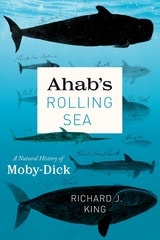
Ahab's Rolling Sea
A Natural History of "Moby-Dick"Richard J. King
University of Chicago Press, 2019
A revelation for Moby-Dick devotees and neophytes alike, Ahab’s Rolling Sea is a chronological journey through the natural history of Melville’s novel. From white whales to whale intelligence, giant squids, barnacles, albatross, and sharks, Richard J. King examines what Melville knew from his own experiences and the sources available to a reader in the mid-1800s, exploring how and why Melville might have twisted what was known to serve his fiction. King then climbs to the crow’s nest, setting Melville in the context of the American perception of the ocean in 1851—at the very start of the Industrial Revolution and just before the publication of On the Origin of Species. King compares Ahab’s and Ishmael’s worldviews to how we see the ocean today: an expanse still immortal and sublime, but also in crisis. And although the concept of stewardship of the sea would have been entirely foreign, if not absurd, to Melville, King argues that Melville’s narrator Ishmael reveals his own tendencies toward what we would now call environmentalism.
Featuring a coffer of illustrations and an array of interviews with contemporary scientists, fishers, and whale watch operators, Ahab’s Rolling Sea offers new insight not only into a cherished masterwork and its author but also into our evolving relationship with the briny deep—from whale hunters to climate refugees.
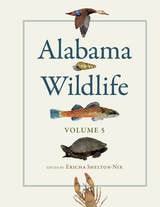
Alabama Wildlife, Volume 5
Edited by Ericha Shelton-Nix
University of Alabama Press, 2017
Alabama Wildlife, Volume 5 offers a comprehensive update and provides a wealth of new information concerning changes and developments relative to the conservation status of wild animal populations of the state that have occurred in the decade since publication of the previous four volumes in 2004. Enhancements include the addition of any new or rediscovered taxon, species priority status changes, and taxonomic changes, plus the addition of the crayfishes, which were left out previously because so little was known about these understudied taxa.
A complete taxonomic checklist is included, which lists each imperiled taxon along with its priority designation followed by detailed species accounts. The eighty-four crayfish species accounts are comprised of a physical description (including a photograph, when available), distribution map, habitat summary, key life history, ecological information, basis for its status classification, and specific conservation and management recommendations. This revised expansion of the Alabama Wildlife set will be helpful to those seeking to broaden their knowledge of Alabama’s vast wildlife resources and will greatly influence future studies in the conservation of many of the imperiled species.
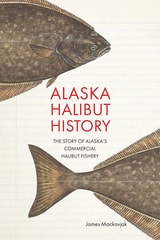
Alaska Halibut History
The Story of Alaska's Commercial Halibut FisheryJames Mackovjak
University of Alaska Press, 2027
Alaska Halibut History—the latest installment in James Mackovjak’s Alaska fisheries series—chronicles one of the grandest and most storied fisheries in the region. Author of Alaska Codfish Chronicle and Alaska Herring History, Mackovjak tells the story of the flatfish that has long been a favorite among chefs globally. A staple in the diet of many Native populations, the halibut has also played a key role in Indigenous mythology across the northern Pacific region. Tracing the evolution of Alaska’s halibut fishery over time, Mackovjak reveals the cultural, economic, and environmental impact of halibut fishing in Alaska and the fish’s vital role in commercial, sport, and subsistence fishing within the state.
Mackovjak considers the organization and chronology of halibut fishery as well as the various factors that have affected fishery management over the years, such as bycatch (the portion of commercial fishing catch that includes animals other than the target species), guided sportfishing, fishermen’s unionization, technological and environmental changes, and major world events. Through detailed analysis and exploration of government reports and fisheries publications, Alaska Halibut History offers a glimpse into the development of the modern-day halibut fishery and the nuances of and challenges behind providing the fish so often seen on a menu. It is an indispensable work for anyone interested in the halibut and fishing in the northern Pacific region.
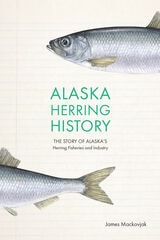
Alaska Herring History
The Story of Alaska’s Herring Fisheries and Industryby James Mackovjak
University of Alaska Press, 2022
The book is divided into three parts based on the purposes for which herring have been harvested. Part I is a history of the reduction (fertilizer/fish meal/fish oil) and cured (salted) herring industries and the
bait-herring fisheries; part II is a history of the roe-herring fisheries in Southeast Alaska, Prince William Sound, Kodiak Island, lower Cook Inlet, Togiak, and Norton Sound; and part III is a history of the herring spawn-on-kelp industry. Historical and contemporary photos and illustrations—as well as graphs and charts that help summarize the development and, in some cases, the demise of the fisheries—augment this detailed look at the evolution of Alaska's herring fisheries.
Balancing scientific details, historical facts, and personal anecdotes from experts in the field, Alaska Herring History will be of interest to historians, social scientists, biologists, and fishery managers and makes an important contribution to Alaska fisheries literature.
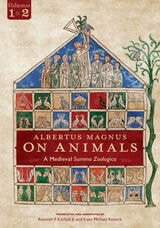
Albertus Magnus On Animals V1 2
A Medieval Summa Zoologica Revised EditionKenneth F. Kitchell Jr.and Irven Michael Resnick
The Ohio State University Press, 2018
In his work De animalibus, Albert integrated the vast amount of information on nature that had come down to him in previous centuries: the exposition of Michael Scotus’s translation from the Arabic of Aristotle’s books on the natural world (Books 1–19), Albert’s own revisions to Aristotle’s teachings (Books 20–21), and a “dictionary” of animals appropriated largely from the De natura rerum of Thomas of Cantimpré (Books 22–26). Albert’s comprehensive treatise on living things was acknowledged as the reputable authority in biology for almost five hundred years.
In this translated and annotated edition, Kenneth F. Kitchell Jr. and Irven Michael Resnick illuminate the importance of this work, allowing Albert’s magnum opus to be better understood and more widely appreciated than ever before. Broken into two volumes (Books 1–10 and 11–26),Albertus Magnus On Animals is a veritable medieval scientific encyclopedia, ranging in topics from medicine, embryology, and comparative anatomy to women, hunting and everyday life, commerce, and much more—an essential work for historians, medievalists, scientists, and philosophers alike.
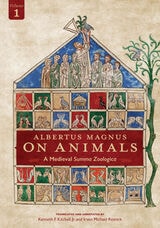
Albertus Magnus On Animals V1
A Medieval Summa Zoologica Revised EditionAlbertus Magnus, Edited by Kenneth F. Kitchell Jr.and Irven Michael Resnick
The Ohio State University Press, 2018
In his work De animalibus, Albert integrated the vast amount of information on nature that had come down to him in previous centuries: the exposition of Michael Scotus’s translation from the Arabic of Aristotle’s books on the natural world (Books 1–19), Albert’s own revisions to Aristotle’s teachings (Books 20–21), and a “dictionary” of animals appropriated largely from the De natura rerum of Thomas of Cantimpré (Books 22–26). Albert’s comprehensive treatise on living things was acknowledged as the reputable authority in biology for almost five hundred years.
In this translated and annotated edition, Kenneth F. Kitchell Jr. and Irven Michael Resnick illuminate the importance of this work, allowing Albert’s magnum opus to be better understood and more widely appreciated than ever before. Broken into two volumes (Books 1–10 and 11–26),Albertus Magnus On Animals is a veritable medieval scientific encyclopedia, ranging in topics from medicine, embryology, and comparative anatomy to women, hunting and everyday life, commerce, and much more—an essential work for historians, medievalists, scientists, and philosophers alike.