Results by title
28 books match the query 'Mayors'
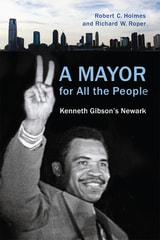
A Mayor for All the People
Kenneth Gibson's NewarkRobert C. Holmes
Rutgers University Press, 2020
In 1970, Kenneth Gibson was elected as Newark, New Jersey’s first African-American mayor, a position he held for an impressive sixteen years. Yet even as Gibson served as a trailblazer for black politicians, he presided over a troubled time in the city’s history, as Newark’s industries declined and its crime and unemployment rates soared.
This book offers a balanced assessment of Gibson’s leadership and his legacy, from the perspectives of the people most deeply immersed in 1970s and 1980s Newark politics: city employees, politicians, activists, journalists, educators, and even fellow big-city mayors like David Dinkins. The contributors include many of Gibson’s harshest critics, as well as some of his closest supporters, friends, and family members—culminating in an exclusive interview with Gibson himself, reflecting on his time in office.
Together, these accounts provide readers with a compelling inside look at a city in crisis, a city that had been rocked by riots three years before Gibson took office and one that Harper’s magazine named “America’s worst city” at the start of his second term. At its heart, it raises a question that is still relevant today: how should we evaluate a leader who faced major structural and economic challenges, but never delivered all the hope and change he promised voters?
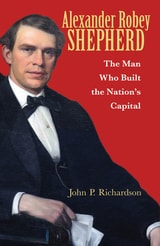
Alexander Robey Shepherd
The Man Who Built the Nation’s CapitalJohn P. Richardson
Ohio University Press, 2016
With Alexander Robey Shepherd, John P. Richardson gives us the first full-length biography of his subject, who as Washington, D.C.’s, public works czar (1871–74) built the infrastructure of the nation’s capital in a few frenetic years after the Civil War. The story of Shepherd is also the story of his hometown after that cataclysm, which left the city with churned-up streets, stripped of its trees, and exhausted.
An intrepid businessman, Shepherd became president of Washington’s lower house of delegates at twenty-seven. Garrulous and politically astute, he used every lever to persuade Congress to realize Peter L’Enfant’s vision for the capital. His tenure produced paved and graded streets, sewer systems, trees, and gaslights, and transformed the fetid Washington Canal into one of the city’s most stately avenues. After bankrupting the city, a chastened Shepherd left in 1880 to develop silver mines in western Mexico, where he lived out his remaining twenty-two years.
In Washington, Shepherd worked at the confluence of race, party, region, and urban development, in a microcosm of the United States. Determined to succeed at all costs, he helped force Congress to accept its responsibility for maintenance of its stepchild, the nation’s capital city.
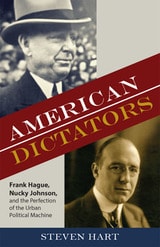
American Dictators
Frank Hague, Nucky Johnson, and the Perfection of the Urban Political MachineHart, Steven
Rutgers University Press, 2013
One man was tongue-tied and awkward around women, in many ways a mama's boy at heart, although his reputation for thuggery was well earned. The other was a playboy, full of easy charm and ready jokes, his appetite for high living a matter of public record. One man tolerated gangsters and bootleggers as long as they paid their dues to his organization. The other was effectively a gangster himself, so crooked that he hosted a national gathering of America's most ruthless killers. One man never drank alcohol. The other, from all evidence, seldom drank anything else.
American Dictators is the dual biography of two of America’s greatest political bosses: Frank Hagueand Enoch “Nucky” Johnson. Packed with compelling information and written in an informal, sometimes humorous style, the book shows Hague and Johnson at the peak of their power and the strength of their political machines during the years of Prohibition and the Great Depression. Steven Hart compares how both men used their influence to benefit and punish the local citizenry, amass huge personal fortunes, and sometimes collaborate to trounce their enemies.
Similar in their ruthlessness, both men were very different in appearance and temperament. Hague, the mayor of Jersey City, intimidated presidents and wielded unchallenged power for three decades. He never drank and was happily married to his wife for decades. He also allowed gangsters to run bootlegging and illegal gambling operations as long as they paid protection money. Johnson, the political boss of Atlantic City, and the inspiration for the hit HBO series Boardwalk Empire, presided over corruption as well, but for a shorter period of time. He was notorious for his decadent lifestyle. Essentially a gangster himself, Johnson hosted the infamous Atlantic City conference that fostered the growth of organized crime.
Both Hague and Johnson shrewdly integrated otherwise disenfranchised groups into their machines and gave them a stake in political power. Yet each failed to adapt to changing demographics and circumstances. In American Dictators, Hart paints a balanced portrait of their accomplishments and their failures.
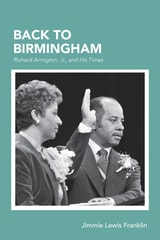
Back To Birmingham
Richard Arrington, Jr., and His TimesJimmie Lewis Franklin
University of Alabama Press, 1989
During the 1960s, Birmingham, Alabama was the central battleground in the struggle for human rights in the American South. As one of the most segregated cities in the United States, the city of Birmingham became infamous for its suppression of civil rights and for official and vigilante violence against its African American citizens, most notoriously the use of explosives in the Sixteenth Street Baptist Church bombing and the bombing of the home of Reverend Fred Shuttlesworth.
In October of 1979, Birmingham elected its first Black mayor, Richard Arrington Jr. He was born in the rural town of Livingston, Alabama. His family moved to Birmingham when he was a child. A man of quiet demeanor, he was nevertheless destined to bring to fruition many of the fundamental changes that the Civil Rights Movement had demanded. This is his story. Not a conventional political or Civil Rights history, Back to Birmingham is the story of a man who demonstrated faith in his region and people. The work illuminates Arrington's sense of place, a quality that enables a person to claim sentimentally a portion of the natural and human environment. Franklin passionately underscores the importance of the attachment of Southern Blacks to their land and place.
Back to Birmingham will appeal to both the general reader and the serious student of American society. The book endeavors to bridge the gap between popular and scholarly history. It is guided by the assumption that Americans of whatever description can find satisfaction in comprehending social change and that they are buoyed by the individual triumph of those who beat the odds.

Big Bill Thompson, Chicago, and the Politics of Image
Douglas Bukowski
University of Illinois Press, 1998
A brilliant chameleon of a politician, Thompson could move from pro- to anti-prohibition, from opposing the Chicago Teachers Federation to opposing a superintendent hostile to it, from being anti-Catholic to winning, in huge numbers, the Catholic vote. Shape-shifter extraordinaire, Thompson stayed in power by repeatedly altering his political image. In Big Bill Thompson, Chicago, and the Politics of Image, Douglas Bukowski captures the essence of this wily urban politico as no other biographer or historian has. Using materials accessible only thanks to the Freedom of Information Act, Bukowski has fashioned an unforgettable story of a volatile Chicago leader and his era. And he does it with such grace and in such an irresistible style that readers will yearn to visit the local speakeasy and lift a glass to colorful politicians gone by.
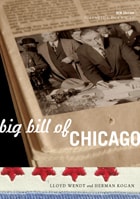
Big Bill of Chicago
Lloyd Wendt and Herman Kogan
Northwestern University Press, 2005
To some he was a humanitarian and builder. Others scorned him as a fake and friend of gangsters with "the carcass of a rhinoceros and the brain of a baboon." This rollicking history traces the rise of William Hale "Big Bill" Thompson, Chicago's famous reform mayor, from his upper class roots to his years as a teenaged cowboy, from his fame as a star athlete to the years as a master politician in a world where the ward boss ruled and whiskey for the voters cost a quarter a shot. Big Bill of Chicago profiles the whole brawling arena of city politics from the turn of the century to the Prohibition Era. It is a primer in the way American politics worked-and works-and a map along the countless winding ways even the dirtiest deal can lead to something great.
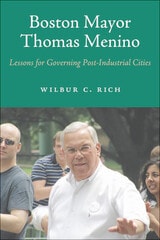
Boston Mayor Thomas Menino
Lessons for Governing Post-Industrial CitiesWilbur C. Rich
University of Massachusetts Press, 2023
Hailed as one of Boston’s most beloved mayors and its longest serving, Thomas Menino (1942–2014) deftly managed the city’s finances and transformed Boston into the hub of innovation that it is today. During his time in office, Boston embraced modern industrial growth and moved forward with noteworthy developments that altered neighborhoods, while also facing ongoing racial strife, challenges of unaffordable housing, and significant public union negotiations.
Mayors in modern American cities occupy unique positions as government leaders who need to remain active parts of their communities in addition to being tasked with fixing neighborhood issues, managing crises, and keeping schools and public infrastructure on course. Situating news coverage alongside interviews with the mayor and his administration, political scientist Wilbur C. Rich chronicles Menino’s time in office while also considering his personal and professional background, his larger-than-life personality, and his ambitions. Menino’s approach to these challenges and opportunities offers enduring lessons to anyone interested in urban government and political leadership.
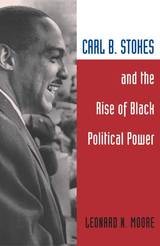
Carl B. Stokes and the Rise of Black Political Power
Leonard N. Moore
University of Illinois Press, 2002
In this wide-ranging political biography, Leonard N. Moore examines the convictions and alliances that brought Stokes to power. Impelled by the problems plaguing Cleveland's ghettos in the decades following World War II, Stokes and other Clevelanders questioned how the sit-ins and marches of the civil rights movement could correct the exclusionary zoning practices, police brutality, substandard housing, and de facto school segregation that African Americans in the country's northern urban centers viewed as evidence of their oppression.
As civil unrest in the country's ghettos turned to violence in the 1960s, Cleveland was one of the first cities to heed the call of Malcolm X's infamous "The Ballot or the Bullet" speech. Understanding the importance of controlling the city's political system, Cleveland's blacks utilized their substantial voting base to put Stokes in office in 1967.
Stokes was committed to showing the country that an African American could be an effective political leader. He employed an ambitious and radically progressive agenda to clean up Cleveland's ghettos, reform law enforcement, move public housing to middle-class neighborhoods, and jump-start black economic power. Hindered by resistance from the black middle class and the Cleveland City Council, spurned by the media and fellow politicians who deemed him a black nationalist, and unable to prove that black leadership could thwart black unrest, Stokes finished his four years in office with many of his legislative goals unfulfilled.
Focusing on Stokes and Cleveland, but attending to themes that affected many urban centers after the second great migration of African Americans to the North, Moore balances Stokes's failures and successes to provide a thorough and engaging portrait of his life and his pioneering contributions to a distinct African American political culture that continues to shape American life.
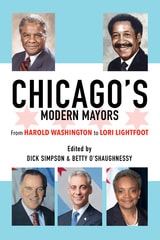
Chicago’s Modern Mayors
From Harold Washington to Lori LightfootEdited by Dick Simpson and Betty O'Shaughnessy
University of Illinois Press, 2024
Chicago’s transformation into a global city began at City Hall. Dick Simpson and Betty O’Shaughnessy edit in-depth analyses of the five mayors that guided the city through this transition beginning with Harold Washington’s 1983 election: Washington, Eugene Sawyer, Richard M. Daley, Rahm Emmanuel, and Lori Lightfoot. Though the respected political science, sociologist, and journalist contributors approach their subjects from distinct perspectives, each essay addresses three essential issues: how and why each mayor won the office; whether the City Council of their time acted as a rubber stamp or independent body; and the ways the unique qualities of each mayor’s administration and accomplishments influenced their legacy.
Filled with expert analysis and valuable insights, Chicago’s Modern Mayors illuminates a time of transition and change and considers the politicians who--for better and worse--shaped the Chicago of today.
Color of Law
A NovelDavid Milofsky
University Press of Colorado, 2000
Conservative Counterrevolution
Challenging Liberalism in 1950s MilwaukeeTula A. Connell
University of Illinois Press, 2016
First Son
The Biography of Richard M. DaleyKeith Koeneman
University of Chicago Press, 2013
"Mayor Richard M. Daley dropped the bomb at a routine news conference at City Hall on Tuesday. With no prelude or fanfare, Mr. Daley announced that he would not seek re-election when his term expires next year. 'Simply put, it's time,' he said." New York Times, September 7, 2010
With those four words, an era ended. After twenty-two years, the longest-serving and most powerful mayor in the history of Chicago—and, arguably, America—stepped down, leaving behind a city that was utterly transformed, and a complicated legacy we are only beginning to evaluate.
With Koeneman as our guide, we follow young Daley from his beginnings as an average Bridgeport kid thought to lack his father's talent and charisma to his unlikely transformation into an iron-fisted leader. Daley not only escaped the giant shadow of his father but also transformed Chicago from a gritty, post-industrial Midwestern capital into a beautiful, sophisticated global city widely recognized as a model for innovative metropolises throughout the world.
But in spite of his many accomplishments, Richard M. Daley's record is far from flawless. First Son sets the dramatic improvement of certain parts of the city against the persistent realities of crime, financial stress , failing public housing, and dysfunctional schools. And it reveals that while in many ways Daley broke with the machine politics of his father, he continued to reward loyalty with favors, use the resources of city government to overwhelm opponents, and tolerate political corruption.
A nuanced portrait of a complex man, First Son shows Daley to be sensitive yet tough, impatient yet persistent, a street-smart fighter and detail-driven policy expert who not only ran Chicago, but was Chicago.
Fortune and Faith in Old Chicago
A Dual Biography of Mayor Augustus Garrett and Seminary Founder Eliza Clark GarrettCharles H. Cosgrove
Southern Illinois University Press, 2020
This engaging biography of Augustus Garrett and Eliza Clark Garrett tells two equally compelling stories: an ambitious man’s struggle to succeed and the remarkable spiritual journey of a woman attempting to overcome tragedy. By contextualizing the couple’s lives within the rich social, political, business, and religious milieu of Chicago’s early urbanization, author Charles H. Cosgrove fills a gap in the history of the city in the mid-nineteenth century.
The Garretts moved from the Hudson River Valley to a nascent Chicago, where Augustus made his fortune in the land boom as an auctioneer and speculator. A mayor during the city’s formative period, Augustus was at the center of the first mayoral election scandal in Chicago. To save his honor, he resigned dramatically and found vindication in his reelection the following year. His story reveals much about the inner workings of Chicago politics and business in the antebellum era.
The couple had lost three young children to disease, and Eliza arrived in Chicago with deep emotional scars. Her journey exemplifies the struggles of sincere, pious women to come to terms with tragedy in an age when most people attributed unhappy events to divine punishment. Following Augustus’s premature death, Eliza developed plans to devote her estate to founding a women’s college and a school for ministerial training, and in 1853 she endowed a Methodist theological school, the Garrett Biblical Institute (now the Garrett-Evangelical Theological Seminary), thereby becoming the first woman in North America to found an institution of higher learning.
In addition to illuminating our understanding of Chicago from the 1830s to the 1850s, Fortune and Faith in Old Chicago explores American religious history, particularly Presbyterianism and Methodism, and its attention to gender shows how men and women experienced the same era in vastly different ways. The result is a rare, fascinating glimpse into old Chicago through the eyes of two of its important early residents.
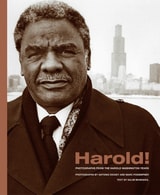
Harold!
Photographs from the Harold Washington YearsPhotographs by Antonio Dickey and Marc PoKempner, text by Salim Muwakkil
Northwestern University Press, 2007
Antonio Dickey and Marc PoKempner were there with Washington throughout 1982-87, Dickey as his campaign and personal photographer and PoKempner on assignment for the New York Times, People, and Time, capturing the force of his personality and the inspiration he brought to Chicago. Their photographs have become the definitive documentation of the Harold years and were featured in the Chicago Historical Society’s 2003–2004 exhibit “Harold Washington: The Man and the Movement.” They were there for his underdog rise, his win, his first term, and his untimely death just seven months into his second term. The year 2007 marks the twentieth anniversary of Washington’s death, and this loving tribute in words and pictures will keep his message alive for future generations.
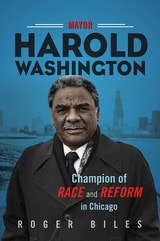
Mayor Harold Washington
Champion of Race and Reform in ChicagoRoger Biles
University of Illinois Press, 2020
Mayors and Money
Fiscal Policy in New York and ChicagoEster R. Fuchs
University of Chicago Press, 1992
Mayors and Schools
Minority Voices and Democratic Tensions in Urban EducationStefanie Chambers
Temple University Press, 2006
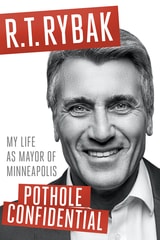
Pothole Confidential
My Life as Mayor of MinneapolisR.T. Rybak
University of Minnesota Press, 2016
A pajama party at the Minneapolis–St. Paul International Airport inadvertently helped launch R.T. Rybak’s political career (imagine a rumba line one hundred protesters long chanting, “We deserve to sleep, hey!”), but his earliest lessons in leadership occurred during his childhood. Growing up in a middle-class neighborhood, attending private school with students who had much more than he did, spending evenings at his family’s store in an area where people lived with much less, he witnessed firsthand the opportunity and injustice of the city he called home.
In a memoir that is at once a political coming-of-age story and a behind-the-scenes look at the running of a great city, the three-term mayor takes readers into the highs and lows and the daily drama of a life inextricably linked with Minneapolis over the past fifty years. With refreshing candor and insight, Rybak describes his path through journalism, marketing, and community activism that led to his unlikely (to him, at least) primary election—on September 11, 2001. His personal account of the challenges and crises confronting the city over twelve years, including the tragic collapse of the I-35W bridge, the rising scourge of youth violence, and the bruising fight over a ban on gay marriage (with Rybak himself conducting the first such ceremony at City Hall on August 1, 2013), is also an illuminating, often funny depiction of learning the workings of the job, frequently on the fly, while trying to keep up with his most important constituency, his family.
As bracing as the “fresh air” campaign that swept him into office, Rybak’s memoir is that rare document from a politician: one more concerned with the people he served and the issues of his time than with burnishing his own credentials. As such, it reflects what leadership truly looks like.
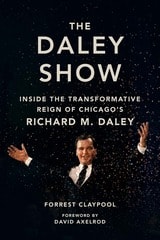
The Daley Show
Inside the Transformative Reign of Chicago's Richard M. DaleyForrest Claypool; Foreword by David Axelrod
University of Illinois Press, 2024
American cities once had mayors who actually governed.
For twenty-two years, Richard M. Daley ran Chicago with the type of authority that is unthinkable today. He reshaped downtown, triggered a jobs boom, delivered the iconic Millennium Park, turned around troubled public schools, and slashed violent crime to 40-year lows. He outfoxed Republican legislators to retain control of O’Hare Airport and expand it into the nation’s premier international aviation hub. Leveraging carefully built national political ties, he sidelined a powerful nemesis to tear down Chicago’s infamous public housing projects.
Rebuilding parts of his father’s legendary political machine through brazen (and illegal) patronage deals, he centralized power to a remarkable degree, cut deals behind closed doors, racked up piles of debt, and made long-term bets whose consequences are still unfolding.
This is not simply a biography. It is a challenge to contemporary urban orthodoxy:
Do cities thrive because of strong, decisive leaders—or despite them?
Through vivid storytelling, this book exposes how Daley consolidated power, aligned business and labor, navigated crises, survived damaging scandals, and imposed discipline on a sprawling city. It dares readers to reconsider what kind of leadership modern American cities truly need.
The Making of a Mexican American Mayor
Mario Garcia
University of Arizona Press, 1999
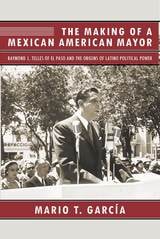
The Making of a Mexican American Mayor
Raymond L. Telles of El Paso and the Origins of Latino Political PowerMario T. García
University of Arizona Press, 2018
In the border metropolis of El Paso, more than half the population is Mexican American, yet this group had been denied effective political representation. Mexican Americans broke this barrier and achieved the “politics of status” through Telles’s stunning 1957 victory. This book captures the excitement of that long-awaited election.
The Making of a Mexican American Mayor also examines Telles’s story as a microcosm of the history of Mexican Americans before and after World War II—the Mexican American Generation. As mayor and ambassador, Telles symbolized this generation’s striving for political participation, and his legacy is evident in the growing number of Latinas/os holding office today.
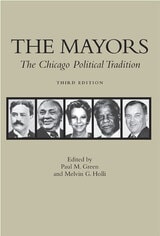
The Mayors, 3rd Edition
The Chicago Political TraditionEdited by Paul M. Green and Melvin G. Holli
Southern Illinois University Press, 2005
The Mayors: The Chicago Political Tradition taps America’s most qualified observers to scrupulously assess the city’s mayors within the vigorous and tumultuous history of Chicago government. This revised and updated edition features extensive commentary on the enduring mayoral influence of Richard M. Daley.
“In the seventeen years since The Mayors was first published,” editors Paul M. Green and Melvin G. Holli write in the Preface to this edition, “Chicago politics has become more genteel, more docile, and more predictable. This dampening of the city’s once red-hot political coals is due to domination by one man: Mayor Richard M. Daley.” Also providing a political roadmap through the complex and fascinating labyrinth of Chicago politics are essays on other recent mayors: Richard J. Daley, Michael A. Bilandic, Jane M. Byrne, and Harold Washington.
Green and Holli’s popular study maintains that the key to the mayor’s office is power: the power to reward and the power to punish that comes with occupying the fifth floor of city hall in Chicago. Beginning with Joseph Medill, the Tribune publisher who guided the city in its rise from the ashes after the Great Fire of 1871, The Mayors takes readers through the terms of some of the city’s most colorful leaders: from the progressive Carter Harrison II and the radical Edward F. Dunne to the politically reticent Fred A. Busse and the loudmouth Big Bill Thompson. The essays collectively tell a riveting story of structures wherein aggressive power brokers surmount even massive corruption and scandal, and those who fail to seize the office’s inherent authority have short, uncomfortable tenures.
In addition to Green and Holli, contributors include David L. Protess, Edward R. Kantowicz, John D. Buenker, Maureen A. Flanagan, Douglas Bukowski, John R. Schmidt, Roger Biles, Arnold R. Hirsch, William J. Grimshaw, Monroe Anderson, Steve Neal, Steve Rhodes, and Laura S. Washington.
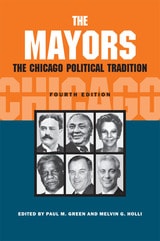
The Mayors
The Chicago Political Tradition, fourth editionEdited by Paul M. Green and Melvin G. Holli
Southern Illinois University Press, 2013
Chicago’s mayoral history is one of corruption and reform, scandal and ambition. This well-researched volume, more relevant than ever twenty-five years after its first edition, presents an intriguing and informative glimpse into the fascinating lives and legacies of Chicago’s most influential leaders.
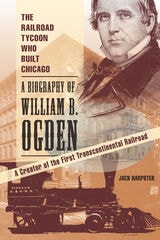
The Railroad Tycoon Who Built Chicago
A Biography of William B. OgdenJack Harpster
Southern Illinois University Press, 2009
William Butler Ogden was a pioneer railroad magnate, one of the earliest founders and developers of the city of Chicago, and an important influence on U.S. westward expansion. His career as a businessman stretched from the streets of Chicago to the wilds of the Wisconsin lumber forests, from the iron mines of Pennsylvania to the financial capitals in New York and beyond. Jack Harpster’s The Railroad Tycoon Who Built Chicago: A Biography of William B. Ogden is the first chronicle of one of the most notable figures in nineteenth-century America.
Harpster traces the life of Ogden from his early experiences as a boy and young businessman in upstate New York to his migration to Chicago, where he invested in land, canal construction, and steamboat companies. He became Chicago’s first mayor, built the city’s first railway system, and suffered through the Great Chicago Fire. His diverse business interests included real estate, land development, city planning, urban transportation, manufacturing, beer brewing, mining, and banking, to name a few. Harpster, however, does not simply focus on Ogden’s role as business mogul; he delves into the heart and soul of the man himself.
The Railroad Tycoon Who Built Chicago is a meticulously researched and nuanced biography set against the backdrop of the historical and societal themes of the nineteenth century. It is a sweeping story about one man’s impact on the birth of commerce in America. Ogden’s private life proves to be as varied and interesting as his public persona, and Harpster weaves the two into a colorful tapestry of a life well and usefully lived.
The Urban Voter
Group Conflict and Mayoral Voting Behavior in American CitiesKaren M. Kaufmann
University of Michigan Press, 2004
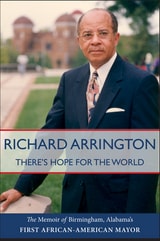
There's Hope for the World
The Memoir of Birmingham, Alabama's First African American MayorRichard Arrington
University of Alabama Press, 2008
On a sultry September morning in 1955, a young African American man, the son of share croppers, boarded a Greyhound bus in Birmingham, Alabama, to leave his home state for the first time in his life. He was headed for the University of Detroit on a teaching scholarship from MilesCollege. Richard Arrington could not have guessed then that his future as a teacher would be postponed for decades by big-city politics--and that he would serve a record-setting five terms as chief executive of Alabama’s largest city.
Under Arrington’s leadership, Birmingham rebuilt itself from a foundering, steel-driven industrial center to one of the most diversified metropolitan areas in the Southeast, with an economy fueled by health care, biomedical research, engineering, telecommunications, and banking. As mayor, Arrington’s economic legacy is impressive. When he left office, Birmingham boasted a record number of jobs and the lowest unemployment rate in its history. Additionally, Birmingham had built the strongest tax base in Alabama, expanded its city limits by 60 square miles, reduced crime to its lowest level in 25 years, and funded a $260 million school construction program. Today Birmingham is financially sound and is the only city in the Southeast with a $100 million endowment fund.
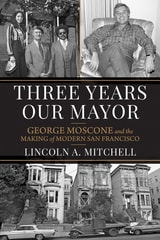
Three Years Our Mayor
George Moscone and the Making of Modern San FranciscoLincoln A. Mitchell
University of Nevada Press, 2025
Moscone was also a very colorful character who, in addition to being a successful politician, was a charming and charismatic bon vivant who was deeply embedded in the fabric and culture of San Francisco. He grew up the only son of a single mother in Cow Hollow when it was a working class, largely Italian American neighborhood, and he became the kind of politician who knew bartenders, playground attendants, small business owners, and neighborhood activists in every corner of the city. Moscone’s life and the history of San Francisco during the middle half of the twentieth century are deeply intertwined.
Through illustrating the life of Moscone, author Lincoln A. Mitchell explores how today’s San Francisco came into being. Moscone—through his work in the State Senate, victory in the very divisive 1975 mayor’s race, and brief tenure as mayor—was a key figure in the city’s evolution. The politics surrounding Moscone’s election as mayor, governance of the city, and tragic death are still relevant issues. Moscone was a groundbreaking politician whose life was cut short, but his influence on San Francisco can still be felt today.
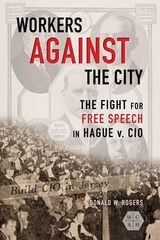
Workers against the City
The Fight for Free Speech in Hague v. CIODonald W. Rogers
University of Illinois Press, 2020
Clear-eyed and comprehensive, Workers against the City revises the view of a milestone case that continues to impact Americans' constitutional rights today.