Results by title
153 books match the query 'Metaphysics' and 20 start with a
A Commentary on Jean-Paul Sartre's Being and Nothingness
Joseph S. Catalano
University of Chicago Press, 1985
A Contemporary Introduction to Thomistic Metaphysics
Michael Gorman
Catholic University of America Press, 2023
A Short Treatise on the Metaphysics of Tsunamis
Jean-Pierre Dupuy
Michigan State University Press, 2015
Jean-Pierre Dupuy asks whether, from Lisbon to Sumatra, mankind has really learned nothing about evil. When moral crimes are unbearably great, he argues, our ability to judge evil is gravely impaired, and the temptation to regard human atrocity as an attack on the natural order of the world becomes irresistible. This impulse also suggests a kind of metaphysical ruse that makes it possible to convert evil into fate, only a fate that human beings may choose to avoid. Postponing an apocalyptic future will depend on embracing this paradox and regarding the future itself in a radically new way.
The American edition of Dupuy’s classic essay, first published in 2005, also includes a postscript on the 2011 nuclear accident that occurred in Japan, again as the result of a tsunami.
A Study of Dialectic in Plato's Parmenides
Eric Sanday
Northwestern University Press, 2014
Acquaintance, Knowledge, and Logic
New Essays on Bertrand Russell's "The Problems of Philosophy"Edited and with an Introduction by Donovan Wishon and Bernard Linsky
CSLI, 2015
After Parmenides
Idealism, Realism, and Epistemic ConstructivismTom Rockmore
University of Chicago Press, 2021
In After Parmenides, Tom Rockmore takes us all the way back to the beginning of Western philosophy, when Parmenides asserted that thought and being are the same. This idea created a division between what the mind constructs as knowable entities and the idea that there is also a mind-independent real, which we can know or fail to know. Rockmore argues that we need to give up on the idea of knowing the real as it is, and instead focus on the objects of cognition that our mind constructs. Though we cannot know mind-independent objects as they “really” are, we can and do know objects as they appear to us.
After Parmenides charts the continual engagement with these ideas of the real and the knowable throughout philosophical history from Plato and Aristotle to Descartes, Kant, Fichte, Hegel, Schopenhauer, Marx, and others. This ambitious book shows how new connections can be made in the history of philosophy when it is reread through a new lens.
Alien Phenomenology, or What It’s Like to Be a Thing
Ian Bogost
University of Minnesota Press, 2012
Humanity has sat at the center of philosophical thinking for too long. The recent advent of environmental philosophy and posthuman studies has widened our scope of inquiry to include ecosystems, animals, and artificial intelligence. Yet the vast majority of the stuff in our universe, and even in our lives, remains beyond serious philosophical concern.
In Alien Phenomenology, or What It’s Like to Be a Thing, Ian Bogost develops an object-oriented ontology that puts things at the center of being—a philosophy in which nothing exists any more or less than anything else, in which humans are elements but not the sole or even primary elements of philosophical interest. And unlike experimental phenomenology or the philosophy of technology, Bogost’s alien phenomenology takes for granted that all beings interact with and perceive one another. This experience, however, withdraws from human comprehension and becomes accessible only through a speculative philosophy based on metaphor.
Providing a new approach for understanding the experience of things as things, Bogost also calls on philosophers to rethink their craft. Drawing on his own background as a videogame designer, Bogost encourages professional thinkers to become makers as well, engineers who construct things as much as they think and write about them.
Altarity
Mark C. Taylor
University of Chicago Press, 1987
In Altarity, Taylor develops a genealogy of otherness and difference that is based on the principle of creative juxtaposition. Rather than relying on a historical or chronological survey of crucial moments in modern philosophical thinking, he explores the complex question of difference through the strategies of contrast, resonance, and design. Taylor brings together the work of thinkers as diverse as Hegel, Heidegger, Merleau-Ponty, Lacan, Bataille, Kristeva, Levinas, Blanchot, Derrida, and Kierkegaard to fashion a broad intellectual scheme.
Situated in an interdisciplinary discourse, Altarity signifies a harnessing of continental and American habits of intellectual thought and illustrates the singularity that emerges from such a configuration. As such, the book functions as a mirror of our intellectual moment and offers the academy a rigorous way of acknowledging the limitations of its own interpretive practices.
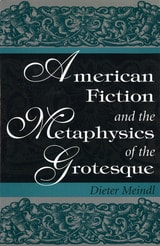
American Fiction and the Metaphysics of the Grotesque
Dieter Meindl
University of Missouri Press, 1996
By synthesizing Kayser's and Bakhtin's views of the grotesque and Heidegger's philosophy of Being, American Fiction and the Metaphysics of the Grotesque seeks to demonstrate that American fiction from Poe to Pynchon has tried to convey the existential dimension: the pre-individual totality or flow of life, which defines itself against the mind and its linguistic capacity. Dieter Meindl shows how the grotesque, through its self-contradictory nature, has been instrumental in expressing this reality-conception, an antirationalist stance in basic agreement with existential thought. The historical validity of this new metaphysics, which grants precedence to Being--the context of cognition--over the cognizant subject, must be upheld in the face of deconstructive animadversions upon any metaphysics of presence. The notion of decentering the subject, Meindl argues, did not originate with deconstruction.
The existential grotesque confirms the protomodernist character of classic American fiction. Meindl traces its course through a number of well-known texts by Melville, James, Gilman, Anderson, Faulkner, and O'Connor, among others. To convey life conceived as motion, these writers had to capture--that is, immobilize--it in their art: an essentially distortive and, therefore, grotesque device. Melville's "Bartleby," dealing with a mort vivant, is the seminal text in this mode of indirectness. As opposed to the existential grotesque, which grants access to a preverbal realm, the linguistic grotesque of postmodern fiction works on the assumption that all reality is referable to language in a textual universe.
American Fiction and the Metaphysics of the Grotesque will significantly alter our understanding of certain traditions in American literature.
An Essay on Facts
Kenneth Russel Olson
CSLI, 1987
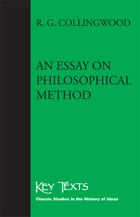
An Essay on Philosophical Method
R.G. Collingwood
St. Augustine's Press, 2011
“My best book in matter, in style. I may call it my only book.”
An Essay on Philosophical Method contains the most sustained discussion in the twentieth century of the subject matter and method of philosophy and an unparalleled explanation of why philosophy has a distinctive domain of enquiry that differs from that of the sciences of nature.
Collingwood’s mature work of metaphysics seeks to overhaul the notion of philosophical method, assigning philosophy the task of “thinking out the idea of an object that shall completely satisfy the demands of reason.” The Essay is particularly interesting as an embodiment of the idealistic metaphysics Collingwood abandoned in later life.
This edition (a reprint of the 1933 edition) of the Essay focuses on Collingwood’s contribution to metaphilosophy and locates his argument for the autonomy of philosophy against the twentieth-century trend to naturalize its subject matter. Collingwood argues that the distinctions which philosophers make, for example, between the concepts of duty and utility in moral philosophy, or between the concepts of mind and body in the philosophy of mind, are not empirical taxonomies that cut nature at the joints but semantic distinctions to which there may correspond no empirical classes. This identification of philosophical distinctions with semantic distinctions provides the basis for an argument against the naturalization of the subject matter of philosophy for it entails that not all concepts are empirical concepts and not all classifications are empirical classifications. Collingwood’s explanation of why philosophy has a distinctive subject matter thus constitutes a clear challenge to the project of radical empiricism.
“One of the finest restatements in contemporary British philosophy of a Platonic and Hegelian metaphysic viewed from a modern standpoint.” – Times Literary Supplement
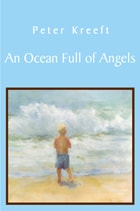
An Ocean Full of Angels
The Autobiography of 'Isa Ben AdamPeter Kreeft
St. Augustine's Press, 2011
Analogy after Aquinas
Domenic D'Ettore
Catholic University of America Press, 2018
Anamnesis
On the Theory of History and PoliticsEric Voegelin, Edited & Translated by Gerhart Niemeyer
University of Missouri Press, 1990
Anamnesis pulls together those materials that focus most sharply upon the development of Eric Voegelin's philosophy of consciousness. Voegelin is considered one of the most influential and profound philosophers of our time and has had an enormous impact on contemporary intellectual life.
Anchors in the Heavens
The Metaphysical Infrastructure of Human LifeRémi Brague
St. Augustine's Press, 2017
Our own world is more like this scenario than we at first may be inclined to admit, not least in the fact that, mutatis mutandis, we seem to be struggling to come up with a good answer. The problem, says Rémi Brague, is fundamentally a metaphysical one. Now, mention of ‘metaphysics’ in decent society these days is likely to elicit a smile or an unimpressed shrug. If there is a shelf with that label on it in your typical bookstore you are as likely to find guides to crystals, chakras, or hemp care there as you are treatises by Aristotle, Aquinas, or Kant. And, in spite of the ongoing revival of academic interest in metaphysics, it remains a rather specialist domain, a marginal sub-discipline in departments of philosophy, be they analytical or continental in cast. If you should take it too seriously, you’ll lose your bearings in the real world, and you’ll go adrift in some ethereal sea of dreams.
It is, in a word, irrelevant – right?
Wrong, Brague writes. Sustained reflection on the nature of being, undertaken in the hope that something can indeed be said about it, was for millennia considered to be among the most important of intellectual pursuits, and not without reason. With his characteristic combination of erudition and wit, Brague takes us on a sweeping tour of the discipline’s varying fortunes, from its early Athenian practitioners through its Jewish, Muslim, and Christian heirs, to the chorus of critics who in the last few centuries succeeded in putting an end to its dominance.
But the questions that metaphysics was asking, Brague shows, did not disappear with its demise, and so, whether implicitly or explicitly, metaphysics itself has resisted relegation to the history books. For the nature of being, and especially our relationship to it, has continued to haunt its triumphant critics. One quintessentially metaphysical claim above all, as Brague suggests, seems to have horrified them: the doctrine that all that is, insofar as it is, is good. And yet, in rejecting the “convertibility” of the “transcendentals” of being and goodness, critics of the old metaphysics – Voltaire, Kant, Schopenhauer, Nietzsche, Heidegger, Carnap, and Levinas among them – in their own ways offered metaphysical counter-claims, even as they turned increasingly anthropological in their interests.
They also raised the stakes. For, whether the denial of the goodness of being can legitimately be attributed some causal responsibility for a world in which our species could rapidly and deliberately ensure its own extinction, this is the world we live in, and that denial does form the basis of the intellectual background from which we tend to begin our speculations. If we need to be able to articulate reasons for our project not to end, then we also need to rethink the rejection that we have come to take for granted.
What Brague offers us here is not a narrative of decline, not a Jeremiad, not a nostalgic lament for the thought-world of a bygone era, but a sympathetic outline of some of the major tensions in the philosophical underpinnings of the modernity that we all inhabit. As such, it forms a part of his ongoing effort take modernity “more seriously than it takes itself”, to expose its hidden foundations, and to push it to its logical conclusions. In so doing, he hopes to help clarify where it is that we are going as a species, and to ensure that wherever it is, there is room for us humans in it.
Animals, Mind, and Matter
The Inside StoryJosephine Donovan
Michigan State University Press, 2022
Antigone as Political Philosophy
Gregor Moder, Tanja Dominko
Northwestern University Press, 2026
Offering a new perspective on Sophocles’s Antigone as a model for reimagining humanity’s future—and its end
Why read Antigone today? The premise of this accessible, essayistic work is that humanity finds itself at a crossroads, where it must reinvent itself or perish—a condition similar to Antigone’s own. Rereading Antigone via Hegel’s engagement with the text can help us understand what it means for a human age to come to an end: that is, to think of our age as an episode whose collapse is also an engine of historical change.
Gregor Moder argues that the task of humanity today may not be to defend the minimal remnants of our civilization but to say farewell to it—to give it a proper burial. As Moder explicates, the central problem of this foundational tragedy lies in the positions of brother and sister, man and woman, representing human and divine law and the institutions of the state and the family. Through a fresh reading of both Sophocles’s play and Hegel’s productive reworking of the Greek myth, Moder’s analysis shows that sometimes the only way through deep social contradictions is in unraveling the framework that has constructed them.
Aquinas on the Divine Ideas as Exemplar Causes
Gregory T. Doolan
Catholic University of America Press, 2008
Aristotle's Ontology of Change
Mark Sentesy
Northwestern University Press, 2020
Aristotle may be the only thinker to propose a noncircular definition of change. With his landmark argument that change did, in fact, exist, Aristotle challenged established assumptions about what it is and developed a set of conceptual frameworks that continue to provide insight into the nature of reality. This groundbreaking work on change, however, has long been interpreted through a Platonist view of change as unreal. By offering a comprehensive reexamination of Aristotle’s pivotal arguments, and establishing his positive ontological conception of change, Sentesy makes a significant contribution to scholarship on Aristotle, ancient philosophy, the history and philosophy of science, and metaphysics.
Aztec Philosophy
Understanding a World in MotionJames Maffie
University Press of Colorado, 2014
Aztec Philosophy focuses on the ways Aztec metaphysics—the Aztecs’ understanding of the nature, structure and constitution of reality—underpinned Aztec thinking about wisdom, ethics, politics,\ and aesthetics, and served as a backdrop for Aztec religious practices as well as everyday activities such as weaving, farming, and warfare. Aztec metaphysicians conceived reality and cosmos as a grand, ongoing process of weaving—theirs was a world in motion. Drawing upon linguistic, ethnohistorical, archaeological, historical, and contemporary ethnographic evidence, Maffie argues that Aztec metaphysics maintained a processive, transformational, and non-hierarchical view of reality, time, and existence along with a pantheistic theology.
Aztec Philosophy will be of great interest to Mesoamericanists, philosophers, religionists, folklorists, and Latin Americanists as well as students of indigenous philosophy, religion, and art of the Americas.