Results by title
44 books match the query 'Migration, Internal'
A Little More Freedom
African Americans Enter the Urban Midwest, 1860–1930Jack S. Blocker
The Ohio State University Press, 2008

A Return to Servitude
Maya Migration and the Tourist Trade in CancúnM. Bianet Castellanos
University of Minnesota Press, 2010
A Return to Servitude is an ethnography of Maya migration within Mexico that analyzes the foundational role indigenous peoples play in the development of the modern nation-state. Focusing on tourism in the Yucatán Peninsula, M. Bianet Castellanos examines how Cancún came to be equated with modernity, how this city has shaped the political economy of the peninsula, and how indigenous communities engage with this vision of contemporary life. More broadly, she demonstrates how indigenous communities experience, resist, and accommodate themselves to transnational capitalism.
Tourism and the social stratification that results from migration have created conflict among the Maya. At the same time, this work asserts, it is through engagement with modernity and its resources that they are able to maintain their sense of indigeneity and community.
Against Their Will
The History and Geography of Forced Migrations in the USSRPavel Polian
Central European University Press, 2003

AlabamaNorth
African-American Migrants, Community, and Working-Class Activism in Cleveland, 1915-45Kimberley L. Phillips
University of Illinois Press, 1999
Langston Hughes called it "a great dark tide from the South": the unprecedented influx of blacks into Cleveland that gave the city the nickname "Alabama North." Kimberley L. Phillips reveals the breadth of working class black experiences and activities in Cleveland and the extent to which these were shaped by traditions and values brought from the South.
Migrants' moves north established complex networks of kin and friends and infused Cleveland with a highly visible southern African American culture. Phillips examines the variety of black fraternal, benevolent, social, and church-based organizations that working class migrants created and demonstrates how these groups prepared the way for new forms of individual and collective activism in workplaces and the city. Giving special consideration to the experiences of working class black women, AlabamaNorth reveals how migrants' expressions of tradition and community gave them a new consciousness of themselves as organized workers and created the underpinning for new forms of black labor activism.
American Diaspora
Poetry of DisplacementVirgil Suarez
University of Iowa Press, 2001
Diaspora constitutes a powerful descriptor for the modern condition of the contemporary poet, the spokesperson for the psyche of America. The poems in American Diaspora: Poetry of Displacement focus on the struggles and pleasures of creating a home-physical and mental-out of displacement, exile, migration, and alienation.
To fully explore the concept of diaspora, the editors have broadened the scope of their definition to include not only the physical act of moving and immigration but also the spiritual and emotional dislocations that can occur-as for Emily Dickinson and other poets-even in a life spent entirely in one location.
v

Anyplace But Here
Arna Bontemps & Jack Conroy
University of Missouri Press, 1997
Originally published in 1945 as They Seek a City, this classic was revised and expanded in 1966 to include chapters on Marcus Garvey, the Black Muslims, Malcolm X, and the racial disturbances in Detroit, Chicago, and Watts. Filled with stories about real men and women who sought a new life in the North, Anyplace But Here depicts the theme of hope, undercut by disappointment, and hope renewed as it details the African American's search for a home.
Apple Pie and Enchiladas
Latino Newcomers in the Rural MidwestBy Ann V. Millard and Jorge Chapa
University of Texas Press, 2004
The sudden influx of significant numbers of Latinos to the rural Midwest stems from the recruitment of workers by food processing plants and small factories springing up in rural areas. Mostly they work at back-breaking jobs that local residents are not willing to take because of the low wages and few benefits. The region has become the scene of dramatic change involving major issues facing our country—the intertwining of ethnic differences, prejudice, and poverty; the social impact of a low-wage workforce resulting from corporate transformations; and public policy questions dealing with economic development, taxation, and welfare payments.
In this thorough multidisciplinary study, the authors explore both sides of this ethnic divide and provide the first volume to focus comprehensively on Latinos in the region by linking demographic and qualitative analysis to describe what brings Latinos to the area and how they are being accommodated in their new communities. The fact is that many Midwestern communities would be losing population and facing a dearth of workers if not for Latino newcomers. This finding adds another layer of social and economic complexity to the region's changing place in the global economy. The authors look at how Latinos fit into an already fractured social landscape with tensions among townspeople, farmers, and others. The authors also reveal the optimism that lies in the opposition of many Anglos to ethnic prejudice and racism.

Becoming Educated
A Midwest StorySimone C. Drake
The Ohio State University Press, 2026
Becoming Educated is Simone C. Drake’s engaging and bold memoir about race, class, gender, and the meaning of education in the urban Midwest. Drake, a scholar of literature, culture, and law, uses her own story as a Black girl attending recently desegregated Columbus public schools in the 1980s and 1990s to explore the United States’ most entrenched social problems and how local systems have tried to combat them. From starting kindergarten the year after an Ohio court decision called for busing to end school segregation, to climbing the ranks of academia, to her decision to send her sons to highly rated but largely white suburban schools, Drake weaves a lively and erudite accounting of her identity formation as an “integration guinea pig.” She punctuates her story with rich evocations of the music, TV, and film that shaped her generation, powerful reflections on relevant works by Black writers and artists from Dawoud Bey to Jay-Z, and images of her own artwork. This prismatic book is a must-read for Gen Xers, Midwesterners, and Americans of any race wanting to think more deeply about how our nation’s educational systems—and by extension, all of us—must reckon with inequalities past and present.
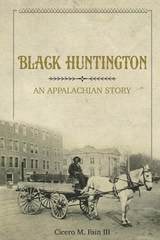
Black Huntington
An Appalachian StoryCicero M. Fain III
University of Illinois Press, 2019
How African Americans thrived in a West Virginia city
By 1930, Huntington had become West Virginia's largest city. Its booming economy and relatively tolerant racial climate attracted African Americans from across Appalachia and the South. Prosperity gave these migrants political clout and spurred the formation of communities that defined black Huntington--factors that empowered blacks to confront institutionalized and industrial racism on the one hand and the white embrace of Jim Crow on the other. Cicero M. Fain III illuminates the unique cultural identity and dynamic sense of accomplishment and purpose that transformed African American life in Huntington. Using interviews and untapped archival materials, Fain details the rise and consolidation of the black working class as it pursued, then fulfilled, its aspirations. He also reveals how African Americans developed a host of strategies--strong kin and social networks, institutional development, property ownership, and legal challenges--to defend their gains in the face of the white status quo. Eye-opening and eloquent, Black Huntington makes visible another facet of the African American experience in Appalachia.
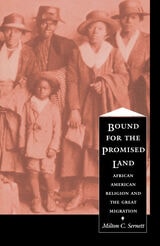
Bound For the Promised Land
African American Religion and the Great MigrationMilton C. Sernett
Duke University Press, 1997
Drawing on a range of sources—interviews, government documents, church periodicals, books, pamphlets, and articles—Sernett shows how the mass migration created an institutional crisis for black religious leaders. He describes the creative tensions that resulted when the southern migrants who saw their exodus as the Second Emancipation brought their religious beliefs and practices into northern cities such as Chicago, and traces the resulting emergence of the belief that black churches ought to be more than places for "praying and preaching." Explaining how this social gospel perspective came to dominate many of the classic studies of African American religion, Bound for the Promised Land sheds new light on various components of the development of black religion, including philanthropic endeavors to "modernize" the southern black rural church. In providing a balanced and holistic understanding of black religion in post–World War I America, Bound for the Promised Land serves to reveal the challenges presently confronting this vital component of America’s religious mosaic.
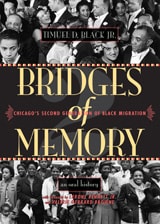
Bridges of Memory Volume 2
Chicago's Second Generation of Black MigrationTimuel Black
Northwestern University Press, 2008
In the second volume of Bridges of Memory, historian Timuel D. Black Jr. continues his conversations with African-Americans who migrated to Chicago from the South in search of economic, social, and cultural opportunities. With his trademark gift for interviewing, Black-himself the son of first-generation migrants to Chicago-guides these individual discussions with ease, resulting in first-person narratives that are informative and entertaining.
Picking up where the first book left off, volume 2 introduces the reader to more members of the first wave of migration and also members of the second generation, the children of those who came in the first wave. In telling their stories, the interviewees paint a vivid picture of the thriving and tight-knit Chicago community formerly known as the Black Belt—today's historic Bronzeville neighborhood. They bring to life the role of family, religion, business, music, and, most of all, the hopes, dreams, and perseverance that enabled a group of people to establish a successful community within a larger society that seemed determined to keep them from success. The experiences of these diverse and vivid personalities often illustrate the role that racial prejudice has played in shaping the specific arcs of their lives. But personal histories such as these are not just chronicles of frustration and despair; more important these narratives reveal an unwavering dedication to breaking the color line and a tireless pursuit of their right to the promise of America.
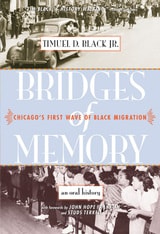
Bridges of Memory
Chicago's First Wave of Black MigrationTimuel D. Black Jr.
Northwestern University Press, 2005
Co-published with the DuSable Museum of African American History
Recipient of 2007 The Hyde Park Historical Society Paul Cornell Award
A collection of interviews with African Americans who came to Chicago from the South. In their first great migration to Chicago that began during World War I, African Americans came from the South seeking a better life--and fleeing a Jim Crow system of racial prejudice, discrimination, and segregation. What they found was much less than what they'd hoped for, but it was much better than what they'd come from--and in the process they set in motion vast changes not only in Chicago but also in the whole fabric of American society. This book, the first of three volumes, revisits this momentous chapter in American history with those who lived it.
Oral history of the first order, Bridges of Memory lets us hear the voices of those who left social, political, and economic oppression for political freedom and opportunity such as they'd never known--and for new forms of prejudice and segregation. These children and grandchildren of ex-slaves found work in the stockyards and steel mills of Chicago, settled and started small businesses in the "Black Belt" on the South Side, and brought forth the jazz, blues, and gospel music that the city is now known for. Historian Timuel D. Black, Jr., himself the son of first-generation migrants to Chicago, interviews a wide cross-section of African Americans whose remarks and reflections touch on issues ranging from fascism to Jim Crow segregation to the origin of the blues. Their recollections comprise a vivid record of a neighborhood, a city, a society, and a people undergoing dramatic and unprecedented changes.

Caught Between Borders
Response Strategies of the Internally DisplacedEdited by Marc Vincent and Birgitte Refslund Sorensen
Pluto Press, 2001

Homing Instincts
Dionisia Morales
Oregon State University Press, 2018
Although Morales migrated from one North American coast to another, the questions she raises are relevant to migrations of any scale and place, whether across town or around the world. What does it mean to be a newcomer? Who has the right to claim a sense of place? What is gained or lost when we try to fit in? In a world where people are migrating more than ever for social, economic, personal, and political reasons, these questions take on a new urgency.
A wife and mother as well as a professional writer and editor, Morales writes with grace and resolve about a broad range of topics, including pregnancy, people watching, rock climbing, and bee colony collapse. She channels a spirit of adventure and adaptability while acknowledging how certain habits and mindsets are indelibly ingrained and are—like it or not—forever part of where, what, and who we call home.
As issues of migration and social integration play out in national and international politics, Morales provides a personal lens through which readers can appreciate that at one time or another we have all been in the process of arriving. Homing Instincts is a remarkable debut from a gifted prose stylist. It will be warmly received by lovers of the essay form and anyone who has sought, or still seeks, a place to call home.

Imperial Imaginings
The Dean C. Worcester Photographic Collection of the PhilippinesCarla M Sinopoli
University of Michigan Press, 2021
In the Aftermath of Migration
Renegotiating Ancient Identity in Southeastern ArizonaAnna A. Neuzil
University of Arizona Press, 2008
This research explores the social changes that took place in the Safford and Aravaipa valleys during the thirteenth through the fifteenth centuries A.D. as a result of an influx of migrants from the Kayenta and Tusayan regions of northeastern Arizona. Focusing on domestic architecture and ceramics, the author evaluates how migration affects the expression of identity of both migrant and indigenous populations in the Safford and Aravaipa valleys and provides a model for research in other areas where migration played an important role.
Archaeologists interested in the Greater Southwest will find a wealth of information on these little-known valleys that provides contextualization for this important and intriguing time period, and those interested in migration in the ancient past will find a useful case study that goes beyond identifying incidents of migration to understanding its long-lasting implications for both migrants and the local people they impacted.
Keeping Heart
A Memoir of Family Struggle, Race, and MedicineOtis Trotter
Ohio University Press, 2015
“After saying our good-byes to friends and neighbors, we all got in the cars and headed up the hill and down the road toward a future in Ohio that we hoped would be brighter,” Otis Trotter writes in his affecting memoir, Keeping Heart: A Memoir of Family Struggle, Race, and Medicine.
Organized around the life histories, medical struggles, and recollections of Trotter and his thirteen siblings, the story begins in 1914 with his parents, Joe William Trotter Sr. and Thelma Odell Foster Trotter, in rural Alabama. By telling his story alongside the experiences of his parents as well as his siblings, Otis reveals cohesion and tensions in twentieth-century African American family and community life in Alabama, West Virginia, and Ohio.
This engaging chronicle illuminates the journeys not only of a black man born with heart disease in the southern Appalachian coalfields, but of his family and community. It fills an important gap in the literature on an underexamined aspect of American experience: the lives of blacks in rural Appalachia and in the nonurban endpoints of the Great Migration. Its emotional power is a testament to the importance of ordinary lives.
Kings And Clans
Ijwi Island And The Lake Kivu Rift, 1780-1840David Newbury
University of Wisconsin Press, 1992
Drawing on detailed ethnographic observations of the social and ritual organizations of Ijwi society, an extensive body of oral data, and evidence from written sources, Newbury shows that the clans of Ijwi were not static formations, nor did the establishment of a royal family on the island emerge from military conquest and internal social breakdown. Instead, clan identities changed over time, and these changes actually facilitated the creation of kingship on Ijwi. Through a detailed examination of succession struggles, of local factors influencing the outcome of such struggles, and of specific clan participation in public rituals that legitimize royalty, Newbury’s study illustrates the importance of clan identities in both the creation of state power and its reproduction over time.
Knock at the Door of Opportunity
Black Migration to Chicago, 1900-1919Christopher Robert Reed
Southern Illinois University Press, 2014
Disputing the so-called ghetto studies that depicted the early part of the twentieth century as the nadir of African American society, this thoughtful volume by Christopher Robert Reed investigates black life in turn-of-the-century Chicago, revealing a vibrant community that grew and developed on Chicago’s South Side in the early 1900s. Reed also explores the impact of the fifty thousand black southerners who streamed into the city during the Great Migration of 1916–1918, effectively doubling Chicago’s African American population. Those already residing in Chicago’s black neighborhoods had a lot in common with those who migrated, Reed demonstrates, and the two groups became unified, building a broad community base able to face discrimination and prejudice while contributing to Chicago’s growth and development.
Reed not only explains how Chicago’s African Americans openly competed with white people for jobs, housing and an independent political voice but also examines the structure of the society migrants entered and helped shape. Other topics include South Side housing, black politics and protest, the role of institutionalized religion, the economic aspects of African American life, the push for citizenship rights and political power for African Americans, and the impact of World War I and the race riot of 1919. The first comprehensive exploration of black life in turn-of-the-century Chicago beyond the mold of a ghetto perspective, this revealing work demonstrates how the melding of migrants and residents allowed for the building of a Black Metropolis in the 1920s.
2015 ISHS Superior Achievement Award
Land Hunger
Ohio and the Western FrontiersMansel G. Blackford
Ohio University Press, 2025
Land of Hope
Chicago, Black Southerners, and the Great MigrationJames R. Grossman
University of Chicago Press, 1989
Making the Heartland Quilt
A Geographical History of Settlement and Migration in Early-Nineteenth-Century IllinoisDouglas K. Meyer
Southern Illinois University Press, 2000
In Making the Heartland Quilt, Douglas K. Meyer reconstructs the settlement patterns of thirty-three immigrant groups and confirms the emergence of discrete culture regions and regional way stations. Meyer argues that midcontinental Illinois symbolizes a historic test strip of the diverse population origins that unfolded during the Great Migration. Basing his research on the 1850 U.S. manuscript schedules, Meyer dissects the geographical configurations of twenty-three native and ten foreign-born adult male immigrant groups who peopled Illinois. His historical geographical approach leads to the comprehension of a new and clearer map of settlement and migration history in the state.
Meyer finds that both cohesive and mixed immigrant settlements were established. Balkan-like immigrant enclaves or islands were interwoven into evolving local, regional, and national settlement networks. The midcontinental location of Illinois, its water and land linkages, and its lengthy north-south axis enhanced cultural diversity. The barrier effect of Lake Michigan contributed to the convergence and mixing of immigrants. Thus, Meyer demonstrates, Illinois epitomizes midwestern dichotomies: northern versus southern; native-born versus foreign-born; rural versus urban; and agricultural versus manufacturing.
Migration and Residential Mobility in the United States
Larry Long
Russell Sage Foundation, 1988
Migration
Changing the WorldGuy Arnold
Pluto Press, 2011
Constant migration is a worldwide phenomenon that creates sharp divisions between those who accept the need for migrants and welcome the contributions they make and those who oppose them on xenophobic grounds. Guy Arnold provides a comprehensive survey of the consequences of migration.
Arnold studies both the massive internal migrations in China and India that drive economic development and the influx of cheap labour into the advanced economies of the USA and EU. He shows that migrants are essential to advanced countries, filling skills gaps and bolstering ageing and static populations. He argues that the constant flow of people in all directions should be welcomed as a positive assault upon outdated, narrow nationalism.
Packed with statistics that support the argument that migration is a force for positive change, Arnold's analysis will be an excellent resource for journalists, policy makers and students of sociology, human geography and anthropology.
Mixtec Transnational Identity
Laura Velasco Ortiz
University of Arizona Press, 2005
Mobility and Migration in Ancient Mesoamerican Cities
M. Charlotte Arnauld
University Press of Colorado, 2024
In a series of data-rich chapters that address specific evidence for movement in their respective study areas, an international group of scholars assesses mobility through the isotopic and demographic analysis of human remains, stratigraphic identification of gaps in occupation, and local intensification of water capture in the Maya lowlands. Others examine migration through the integration of historic and archaeological evidence in Michoacán and Yucatán and by registering how daily life changed in response to the influx of new people in the Basin of Mexico.
Offering a range of critical insights into the vital and under-studied role that mobility and migration played in complex agrarian societies, Mobility and Migration in Ancient Mesoamerican Cities will be of value to Mesoamericanist archaeologists, ethnohistorians, and bioarchaeologists and to any scholars working on complex societies.
Contributors:
Jaime J. Awe, Meggan Bullock, Sarah C. Clayton, Andrea Cucina, Véronique Darras, Nicholas P. Dunning, Mélanie Forné, Marion Forest, Carolyn Freiwald, Elizabeth Graham, Nancy Gonlin, Julie A. Hoggarth, Linda Howie, Elsa Jadot, Kristin V. Landau, Eva Lemonnier, Dominique Michelet, David Ortegón Zapata, Prudence M. Rice, Thelma N. Sierra Sosa, Michael P. Smyth, Vera Tiesler, Eric Weaver
Mobility and Modernity
Migration in Germany, 1820-1989Steve Hochstadt
University of Michigan Press, 1999
Movement, Connectivity, and Landscape Change in the Ancient Southwest
Margaret C. Nelson
University Press of Colorado, 2026
Particular attention is paid to the various ways that archaeology can and should contribute to contemporary social and environmental issues. Contributors come together to provide a synthetic volume on current research and possibilities for future explorations. Moving forward, they argue that archaeologists must continue to include researchers from across political and disciplinary boundaries and enhance collaboration with Native American groups.
This book will be of interest to professional and academic archaeologists, as well as students working in the field of the American Southwest.
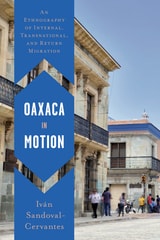
Oaxaca in Motion
An Ethnography of Internal, Transnational, and Return MigrationIván Sandoval-Cervantes
University of Texas Press, 2022
Migration is typically seen as a transnational phenomenon, but it happens within borders, too. Oaxaca in Motion documents a revealing irony in the latter sort: internal migration often is global in character, motivated by foreign affairs and international economic integration, and it is no less transformative than its cross-border analogue.
Iván Sandoval-Cervantes spent nearly two years observing and interviewing migrants from the rural Oaxacan town of Santa Ana Zegache. Many women from the area travel to Mexico City to work as domestics, and men are encouraged to join the Mexican military to fight the US-instigated “war on drugs” or else leave their fields to labor in industries serving global supply chains. Placing these moves in their historical and cultural context, Sandoval-Cervantes discovers that migrants’ experiences dramatically alter their conceptions of gender, upsetting their traditional notions of masculinity and femininity. And some migrants bring their revised views with them when they return home, influencing their families and community of origin. Comparing Oaxacans moving within Mexico to those living along the US West Coast, Sandoval-Cervantes clearly demonstrates the multiplicity of answers to the question, “Who is a migrant?”
Restless Nation
Starting Over in AmericaJames M. Jasper
University of Chicago Press, 2000
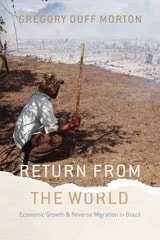
Return from the World
Economic Growth and Reverse Migration in BrazilGregory Duff Morton
University of Chicago Press, 2024
In Return from the World, anthropologist Gregory Duff Morton traces the migrations of Brazilian workers who leave a thriving labor market and return to their home villages to become peasant farmers. Morton seeks to understand what it means to turn one’s back deliberately on the promise of economic growth.
Giving up their positions in factories, at construction sites, and as domestic workers, these migrants travel thousands of miles back to villages without running water or dependable power. There, many take up subsistence farming. Some become activists with the MST, Brazil’s militant movement of landless peasants. Bringing their stories vividly to life, Morton dives into the dreams and disputes at play in finding freedom in the shared rejection of growth.
See How We Roll
Enduring Exile between Desert and Urban AustraliaMelinda Hinkson
Duke University Press, 2021
Separate Destinations
Migration, Immigration, and the Politics of PlacesJames G. Gimpel
University of Michigan Press, 1999
Southern Migrants, Northern Exiles
Chad Berry
University of Illinois Press, 2000
Southern out-migration drew millions of southern workers to the steel mills, automobile factories, and even agricultural fields and orchards of Ohio, Indiana, Michigan, and Illinois. Through vivid oral histories, Chad Berry explores the conflict between migrants' economic success and their "spiritual exile" in the North. He documents the tension between factory owners who welcomed cheap, naive southern laborers and local "native" workers who greeted migrants with suspicion and hostility. He examines the phenomenon of "shuttle migration," in which migrants came north to work during the winter and returned home to plant spring crops on their southern farms. He also explores the impact of southern traditions--especially the southern evangelical church and "hillbilly" music--brought north by migrants.
Berry argues that in spite of being scorned by midwesterners for violence, fecundity, intoxication, laziness, and squalor, the vast majority of southern whites who moved to the Midwest found the economic prosperity they were seeking. By allowing southern migrants to assess their own experiences and tell their own stories, Southern Migrants, Northern Exiles refutes persistent stereotypes about migrants' clannishness, life-style, work ethic, and success in the North.

Staging Migrations toward an American West
From Ida B. Wells to Rhodessa JonesMarta Effinger-Crichlow
University Press of Colorado, 2014
Four case studies consider how the featured women—activist Ida B. Wells, singer Sissieretta "Black Patti” Jones, World War II black female defense-industry workers, and performance artist Rhodessa Jones—imagined and experienced the American West geographically and symbolically at different historical moments. Dissecting the varied ways they used migration to survive in the world from the viewpoint of theater and performance theory, Effinger-Crichlow reconceptualizes the migration histories of black women in nineteenth- and twentieth-century America.
This interdisciplinary study expands the understanding of the African American struggle for unconstrained movement and full citizenship in the United States and will interest students and scholars of American and African American history, women and gender studies, theater, and performance theory.
Swallows and Settlers
The Great Migration from North China to ManchuriaThomas R. Gottschang and Diana Lary
University of Michigan Press, 2000
The Colonization of the Amazon
By Anna Luiza Ozorio de Almeida
University of Texas Press, 1992
Deforestation in the Amazon, one of today's top environmental concerns, began during a period of rapid colonization in the 1970s. Throughout that decade, Anna Luiza Ozorio de Almeida, a Stanford-trained economist, conducted a complex and massive economic study of what was going on in the Amazon, who was investing what, what was gained, and what it cost in all its aspects. The Colonization of the Amazon, the resulting work, brings together information on the physical, demographic, institutional, and economic dimensions of directed settlement in the Amazon Basin and raises significant questions about the gains and losses of the settlers, the reasons for these outcomes, and the economic rationale behind the devastation of the rainforest.
Particularly illuminating is Almeida's exploration of the role of the frontier in Brazil and her distinction between types of migrants and migrations. She concludes that the political costs avoided by not undertaking agrarian reform are being paid by devastating the Amazon, with the conflict between distribution and conservation steadily worsening. Today, it can no longer be circumvented.
The Culture of Migration in Southern Mexico
By Jeffrey H. Cohen
University of Texas Press, 2004
Migration is a way of life for many individuals and even families in the Mexican state of Oaxaca. Some who leave their rural communities go only as far as the state capital, while others migrate to other parts of Mexico and to the United States. Most send money back to their communities, and many return to their homes after a few years. Migration offers Oaxacans economic opportunities that are not always available locally—but it also creates burdens for those who stay behind.
This book explores the complex constellation of factors that cause rural Oaxacans to migrate, the historical and contemporary patterns of their migration, the effects of migration on families and communities, and the economic, cultural, and social reasons why many Oaxacans choose not to migrate. Jeffrey Cohen draws on fieldwork and survey data from twelve communities in the central valleys of Oaxaca to give an encompassing view of the factors that drive migration and determine its outcomes. He demonstrates conclusively that, while migration is an effective way to make a living, no single model can explain the patterns of migration in southern Mexico.
The Pariahs of Yesterday
Breton Migrants in ParisLeslie Page Moch
Duke University Press, 2012
The Second Great Emancipation
The Mechanical Cotton Picker, Black Migration, and How They Shaped the Modern SouthDonald Holley
University of Arkansas Press, 2000
In The Second Great Emancipation, Donald Holley uses statistical and narrative analysis to demonstrate that farm mechanization occurred in the Delta region of Arkansas, Louisiana, and Mississippi after the region’s population of farm laborers moved away for new opportunities. Rather than pushing labor off the land, Holley argues, the mechanical cotton picker enabled the continuation of cotton cultivation in the post-plantation era, opening the door for the civil rights movement, while ushering a period of prosperity into the South.
The St. Louis African American Community and the Exodusters
Bryan M. Jack
University of Missouri Press, 2021
In the aftermath of the Civil War, thousands of former slaves made their way from the South to the Kansas plains. Called “Exodusters,” they were searching for their own promised land. Bryan Jack now tells the story of this American exodus as it played out in St. Louis, a key stop in the journey west.
Many of the Exodusters landed on the St. Louis levee destitute, appearing more as refugees than as homesteaders, and city officials refused aid for fear of encouraging more migrants. To the stranded Exodusters, St. Louis became a barrier as formidable as the Red Sea, and Jack tells how the city’s African American community organized relief in response to this crisis and provided the migrants with funds to continue their journey.
The St. Louis African American Community and the Exodusters tells of former slaves such as George Rogers and Jacob Stevens, who fled violence and intimidation in Louisiana and Mississippi. It documents the efforts of individuals in St. Louis, such as Charlton Tandy, Moses Dickson, and Rev. John Turner, who reached out to help them. But it also shows that black aid to the Exodusters was more than charity. Jack argues that community support was a form of collective resistance to white supremacy and segregation as well as a statement for freedom and self-direction—reflecting an understanding that if the Exodusters’ right to freedom of movement was limited, so would be the rights of all African Americans. He also discusses divisions within the African American community and among its leaders regarding the nature of aid and even whether it should be provided.
In telling of the community’s efforts—a commitment to civil rights that had started well before the Civil War—Jack provides a more complete picture of St. Louis as a city, of Missouri as a state, and of African American life in an era of dramatic change. Blending African American, southern, western, and labor history, The St. Louis African American Community and the Exodusters offers an important new lens for exploring the complex racial relationships that existed within post-Reconstruction America.
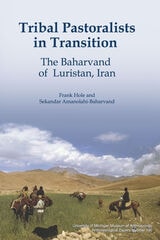
Tribal Pastoralists in Transition
The Baharvand of Luristan, IranFrank Hole and Sekandar Amanolahi-Baharvand
University of Michigan Press, 2021
Supplementary videos (on the migration, weaving, harvesting, and the bazaars) can be found on Fulcrum (fulcrum.org/UMMAA).

Volunteer Forty-Niners
Tennesseans and the California Gold RushWalter T. Durham
Vanderbilt University Press, 1997
In Volunteer Forty-Niners, Walter T. Durham provides the first comprehensive examination of the role Tennessee and Tennesseans played in creating a new state and a new society on the West Coast. Drawing from such archival sources and personal narratives in letters and diaries, public records, and newspaper reports, Durham has woven a wealth of information into his recounting of their adventures. He follows many of the emigrants into the mines and details the activities of others in commerce and government. In the process, he shows that Tennesseans made an enormous contribution to the beginnings of government in California. Among the many offices they held were governor, assemblyman, sheriff, state senator, secretary of state, state treasurer, controller, U.S. senator, U.S. marshal, U.S. surveyor general and Indian commissioner.
What That Pig Said to Jesus
On the Uneasy Permanence of Immigrant LifePhilip Garrison
University of Utah Press, 2017
Philip Garrison says his book of essays is “in praise of mixed feelings,” particularly the mixed feelings he and his neighbors have toward the places they came from. His neighborhood is the Columbia Plateau, one of many North American nodes of immigration. Following a meandering, though purposeful trail, Garrison catches hillbillies and newer Mexican arrivals in ambiguous, wary encounters on a set four hundred years in the making, built on a foundation of Native American displacement. Garrison is the product of the earlier surge of new arrivals: from the 1930s to the 1970s, those he calls hillbillies left such mid-nation states as Arkansas, Missouri, Oklahoma, Kansas, and the Dakotas for the West. The more recent wave, from 1990 to 2010, came mostly from the central plateau of Mexico. These are folks with whom Garrison communes in multiple ways. Anecdotes from sources as varied as pioneer diaries, railroad promotions, family Bibles, Wikipedia, and local gossip “portray the region's immigration as a kind of identity makeover, one that takes the form first of breakdown, then of reassembly, and finally of renewal.” Garrison’s mix of slangy memoir and anthropological field notes shines light on the human condition in today’s West.