Results by title
30 books match the query 'New Orleans (La.)'
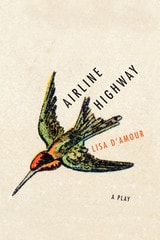
Airline Highway
A PlayLisa D'Amour
Northwestern University Press, 2016
Airline Highway is a rollicking play that, with great insight, humor, and subtlety, examines a tight knit community of "outsiders" over the course of a single, legendary day. The Hummingbird Hotel is the figurative or literal home for a group of strippers, French Quarter service workers, hustlers, and poets who are bound together by their bad luck, bad decisions, and complete lack of pretense. Presiding over them is Miss Ruby, a beloved former burlesque performer who has requested a funeral before she dies. As the people whose lives she has touched gather to celebrate her, they must face themselves, each other, and the consequences of the choices they have made. Airline Highway shows us the tenuous hold that community, authenticity, and real-time ritual have on a rapidly gentrifying New Orleans.

Beatrice of Bayou Têche
Alice Ilgenfritz Jones
University of Wisconsin Press, 2001
Beatrice of Bayou Têche is a work of great historical and artistic interest: a late-nineteenth-century novel by a white woman about a black woman artist-protagonist. As the introduction for this reprint edition shows, Alice Ilgenfritz Jones was the first white woman to take an extended interest in the intersection of creativity, race, and gender. In Beatrice, Jones seeks to unveil the relationships between white and African Americans during the twenty years before the Civil War by following her mixed-race protagonist from her childhood as a slave in New Orleans through her career as a free woman and inspired painter and opera singer. Beatrice renders the white author’s effort to find a place for the mixed-race woman in relation to paradigms of creativity that are not only gendered but racialized. In the process, it exposes the fault lines of ideology and literary convention that underlie attempts to negotiate issues of race, gender, and creativity in late nineteenth-century America.
Black New Orleans, 1860-1880
John W. Blassingame
University of Chicago Press, 1976
“Blending historical and sociological perspectives, and drawing with skill and imagination upon a variety of sources, [Blassingame] offers fresh insights into an oft-studied period of Southern history. . . . In both time and place the author has chosen an extraordinarily revealing vantage point from which to view his subject. ”—Neil R. McMillen, American Historical Review
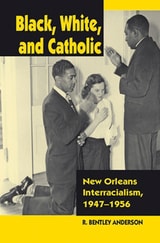
Black, White, and Catholic
New Orleans Interracialism, 1947-1956R. Bentley Anderson
Vanderbilt University Press, 2005
Anderson leads readers through the tumultuous years just after World War II when the Roman Catholic Church in the American South struggled to reconcile its commitment to social justice with the legal and social heritage of Jim Crow society. Though these early efforts at reform, by and large, failed, they did serve to galvanize Catholic supporters and opponents of the Civil Rights Movement and provided a model for more successful efforts at desegregation in the '60s.
As a Jesuit himself, Anderson has access to archives that remain off-limits to other scholars. His deep knowledge of the history of the Catholic Church also allows him to draw connections between this historical period and the present. In the resistance to desegregation, Anderson finds expression of a distinctly American form of Catholicism, in which lay people expect Church authorities to ratify their ideas and beliefs in an almost democratic fashion. The conflict he describes is as much between popular and hierarchical models of the Church as between segregation and integration.
This book has been made possible through a grant from the Louisiana Endowment for the Humanities, a state affiliate of the National Endowment for the Humanities.
Bounded Lives, Bounded Places
Free Black Society in Colonial New Orleans, 1769–1803Kimberly S. Hanger
Duke University Press, 1997
Drawing on rare archives in Louisiana and Spain, Hanger reconstructs the world of late-eighteenth-century New Orleans from the perspective of its free black residents, and documents the common experiences and enterprises that helped solidify libres’ sense of group identity. Over the course of three and a half decades of Spanish rule, free people of African descent in New Orleans made their greatest advances in terms of legal rights and privileges, demographic expansion, vocational responsibilities, and social standing. Although not all blacks in Spanish New Orleans yearned for expanded opportunity, Hanger shows that those who did were more likely to succeed under Spain’s dominion than under the governance of France, Great Britain, or the United States.
The advent of U.S. rule brought restrictions to both manumission and free black activities in New Orleans. Nonetheless, the colonial libre population became the foundation for the city’s prosperous and much acclaimed Creoles of Color during the antebellum era.
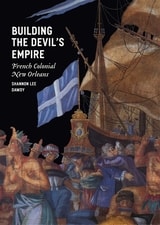
Building the Devil's Empire
French Colonial New OrleansShannon Lee Dawdy
University of Chicago Press, 2008
Building the Devil’s Empire is the first comprehensive history of New Orleans’s early years, tracing the town’s development from its origins in 1718 to its revolt against Spanish rule in 1768. Shannon Lee Dawdy’s picaresque account of New Orleans’s wild youth features a cast of strong-willed captives, thin-skinned nobles, sharp-tongued women, and carousing travelers. But she also widens her lens to reveal the port city’s global significance, examining its role in the French Empire and the Caribbean, and she concludes that by exemplifying a kind of rogue colonialism—where governments, outlaws, and capitalism become entwined—New Orleans should prompt us to reconsider our notions of how colonialism works.
"[A] penetrating study of the colony's founding."—Nation
“A brilliant and spirited reinterpretation of the emergence of French New Orleans. Dawdy leads us deep into the daily life of the city, and along the many paths that connected it to France, the North American interior, and the Greater Caribbean. A major contribution to our understanding of the history of the Americas and of the French Atlantic, the work is also a model of interdisciplinary research and analysis, skillfully bringing together archival research, archaeology, and literary analysis.”—Laurent Dubois, Duke University
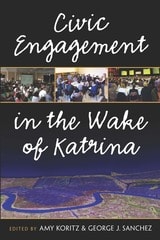
Civic Engagement in the Wake of Katrina
Amy Koritz and George J. Sanchez, editors
University of Michigan Press, 2009
"Civic engagement has been underrated and overlooked. Koritz and Sanchez illuminate the power of what community engagement through art and culture revitalization can do to give voice to the voiceless and a sense of being to those displaced."
---Sonia BasSheva Mañjon, Wesleyan University
"This profound and eloquent collection describes and assesses the new coalitions bringing a city back to life. It's a powerful call to expand our notions of culture, social justice, and engaged scholarship. I'd put this on my 'must read' list."
---Nancy Cantor, Syracuse University
"Civic Engagement in the Wake of Katrina is a rich and compelling text for thinking about universities and the arts amid social crisis. Americans need to hear the voices of colleagues who were caught in Katrina's wake and who responded with commitment, creativity, and skill."
---Peter Levine, CIRCLE (The Center for Information & Research on Civic Learning & Engagement)
This collection of essays documents the ways in which educational institutions and the arts community responded to the devastation wrought by Hurricane Katrina. While firmly rooted in concrete projects, Civic Engagement in the Wake of Katrina also addresses the larger issues raised by committed public scholarship. How can higher education institutions engage with their surrounding communities? What are the pros and cons of "asset-based" and "outreach" models of civic engagement? Is it appropriate for the private sector to play a direct role in promoting civic engagement? How does public scholarship impact traditional standards of academic evaluation? Throughout the volume, this diverse collection of essays paints a remarkably consistent and persuasive account of arts-based initiatives' ability to foster social and civic renewal.
Amy Koritz is Director of the Center for Civic Engagement and Professor of English at Drew University.
George J. Sanchez is Professor of American Studies and Ethnicity and History at the University of Southern California.
Front and rear cover designs, photographs, and satellite imagery processing by Richard Campanella.
digitalculturebooks is an imprint of the University of Michigan Press and the Scholarly Publishing Office of the University of Michigan Library dedicated to publishing innovative and accessible work exploring new media and their impact on society, culture, and scholarly communication. Visit the website at www.digitalculture.org.
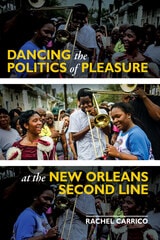
Dancing the Politics of Pleasure at the New Orleans Second Line
Rachel Carrico
University of Illinois Press, 2024
On many Sundays, Black New Orleanians dance through city streets in Second Lines. These processions invite would-be spectators to join in, grooving to an ambulatory brass band for several hours. Though an increasingly popular attraction for tourists, parading provides the second liners themselves with a potent public expression of Black resistance.
Rachel Carrico examines the parading bodies in motion as a form of negotiating and understanding power. Seeing pleasure as a bodily experience, Carrico reveals how second liners’ moves link joy and liberation, self and communal identities, play and dissent, and reclamations of place. As she shows, dancers’ choices allow them to access the pleasure of reclaiming self and city through motion and rhythm while expanding a sense of the possible in the present and for the future.
In-depth and empathetic, Dancing the Politics of Pleasure at the New Orleans Second Line blends analysis with a chorus of Black voices to reveal an indelible facet of Black culture in the Crescent City.
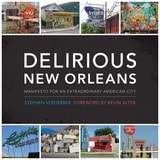
Delirious New Orleans
Manifesto for an Extraordinary American CityBy Stephen Verderber
University of Texas Press, 2008
Winner, Abbott Lowell Cummings Prize, Vernacular Architecture Forum, 2010
From iconic neighborhoods such as the French Quarter and the Garden District to more economically modest but no less culturally vibrant areas, architecture is a key element that makes New Orleans an extraordinary American city. Delirious New Orleans began as a documentary project to capture the idiosyncratic vernacular architecture and artifacts—vintage mom-and-pop businesses, roadside motels, live music clubs, neon signs, wall murals, fast-food joints, and so on—that helped give the city's various neighborhoods their unique character. But because so many of these places and artifacts were devastated by Hurricane Katrina, Delirious New Orleans has become both a historical record of what existed in the past and a blueprint for what must be rebuilt and restored to retain the city's unique multicultural landscape.
Stephen Verderber starts with the premise that New Orleans's often-overlooked neighborhoods imbue the city with deep authenticity as a place. He opens Delirious New Orleans with a photo-essay that vividly presents this vernacular architecture and its artifacts, both before Katrina and in its immediate aftermath. In the following sections of the book, which are also heavily illustrated, Verderber takes us on a tour of the city's commercial vernacular architecture, as well as the expressive folk architecture of its African American neighborhoods. He discusses how the built environment was profoundly shaped by New Orleans's history of race and class inequities and political maneuvering, along with its peculiar, below-sea-level geography. Verderber also considers the aftermath of Katrina and the armada of faceless FEMA trailers that have, at least temporarily and by default, transformed this urban landscape.
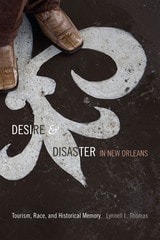
Desire and Disaster in New Orleans
Tourism, Race, and Historical MemoryLynnell L. Thomas
Duke University Press, 2014
Finding Higher Ground
A Life Of TravelsCatharine Savage Brosman
University of Nevada Press, 2003
Essayist Catharine Savage Brosman explores the relationship of human beings to their environment, traveling from American deserts to dense European urban settings. Whether sipping wine in a Parisian café, partying with the jet set in Aspen, or contemplating the arid desert West that she loves, Brosman inhabits these settings, and many others, with a sense of adventure and discovery. To read these essays is to enjoy the company of a lively, thoughtful, original mind. Brosman’s "higher ground" is that place we all seek, where we can find and express our own best selves.
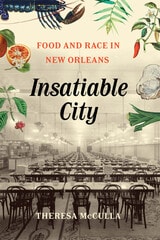
Insatiable City
Food and Race in New OrleansTheresa McCulla
University of Chicago Press, 2024
A history of food in the Crescent City that explores race, power, social status, and labor.
In Insatiable City, Theresa McCulla probes the overt and covert ways that the production of food and the discourse about it both created and reinforced many strains of inequality in New Orleans, a city significantly defined by its foodways. Tracking the city’s economy from nineteenth-century chattel slavery to twentieth-century tourism, McCulla uses menus, cookbooks, newspapers, postcards, photography, and other material culture to limn the interplay among the production and reception of food, the inscription and reiteration of racial hierarchies, and the constant diminishment and exploitation of working-class people. The consumption of food and people, she shows, was mutually reinforced and deeply intertwined. Yet she also details how enslaved and free people of color in New Orleans used food and drink to carve paths of mobility, stability, autonomy, freedom, profit, and joy. A story of pain and pleasure, labor and leisure, Insatiable City goes far beyond the task of tracing New Orleans's culinary history to focus on how food suffuses culture and our understandings and constructions of race and power.

Mocking Desire
Drago Jancar
Northwestern University Press, 1998
Gregor Gradnik, a Slovenian writer, enters the sensual and seething life of New Orleans to teach a creative writing class at a university. Gregor at first acts as only an observer, yet seductive New Orleans soon draws him into a series of bizarre erotic, professional, and social relationships. A profound and entertaining work, Mocking Desire provides the English-speaking world with the perfect introduction to one of Eastern Europe's leading writers.
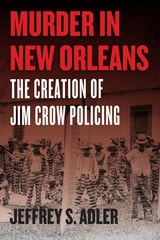
Murder in New Orleans
The Creation of Jim Crow PolicingJeffrey S. Adler
University of Chicago Press, 2019
New Orleans in the 1920s and 1930s was a deadly place. In 1925, the city’s homicide rate was six times that of New York City and twelve times that of Boston. Jeffrey S. Adler has explored every homicide recorded in New Orleans between 1925 and 1940—over two thousand in all—scouring police and autopsy reports, old interviews, and crumbling newspapers. More than simply quantifying these cases, Adler places them in larger contexts—legal, political, cultural, and demographic—and emerges with a tale of racism, urban violence, and vicious policing that has startling relevance for today.
Murder in New Orleans shows that whites were convicted of homicide at far higher rates than blacks leading up to the mid-1920s. But by the end of the following decade, this pattern had reversed completely, despite an overall drop in municipal crime rates. The injustice of this sharp rise in arrests was compounded by increasingly brutal treatment of black subjects by the New Orleans police department. Adler explores other counterintuitive trends in violence, particularly how murder soared during the flush times of the Roaring Twenties, how it plummeted during the Great Depression, and how the vicious response to African American crime occurred even as such violence plunged in frequency—revealing that the city’s cycle of racial policing and punishment was connected less to actual patterns of wrongdoing than to the national enshrinement of Jim Crow. Rather than some hyperviolent outlier, this Louisiana city was a harbinger of the endemic racism at the center of today’s criminal justice state. Murder in New Orleans lays bare how decades-old crimes, and the racially motivated cruelty of the official response, have baleful resonance in the age of Black Lives Matter.
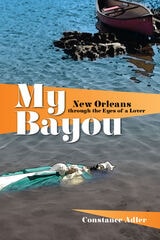
My Bayou
New Orleans through the Eyes of a LoverConstance Adler
Michigan State University Press, 2012
A vividly described and intensely personal memoir, My Bayou charts a personal and spiritual transformation along the fabled banks of Bayou Saint John in New Orleans. When Constance Adler moves to New Orleans, she begins what becomes a lasting love affair with the city, and especially the bayou—a living entity and the beating heart of local culture. Rites of passage, celebrations, mysterious accidents, and magic all take place on its banks, leading Adler to a vibrant awareness of the power of being part of a community. That faith is tested in the wake of Hurricane Katrina, and is ultimately proven right, as Bayou Saint John begins to rebuild.
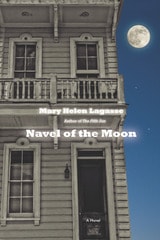
Navel of the Moon
A NovelMary Helen Lagasse
Northwestern University Press, 2015
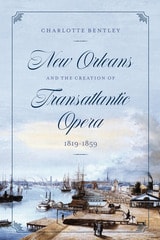
New Orleans and the Creation of Transatlantic Opera, 1819–1859
Charlotte Bentley
University of Chicago Press, 2022
New Orleans and the Creation of Transatlantic Opera, 1819–1859 explores the thriving operatic life of New Orleans in the first half of the nineteenth century, drawing out the transatlantic connections that animated it. By focusing on a variety of individuals, their extended webs of human contacts, and the materials that they moved along with them, this book pieces together what it took to bring opera to New Orleans and the ways in which the city’s operatic life shaped contemporary perceptions of global interconnection. The early chapters explore the process of bringing opera to the stage, taking a detailed look at the management of New Orleans’s Francophone theater, the Théâtre d’Orléans, as well as the performers who came to the city and the reception they received. But opera’s significance was not confined to the theater, and later chapters of the book examine how opera permeated everyday life in New Orleans, through popular sheet music, novels, magazines and visual culture, and dancing in its many ballrooms. Just as New Orleans helped to create transatlantic opera, opera in turn helped to create the city of New Orleans.
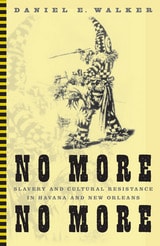
No More, No More
Slavery And Cultural Resistance In Havana And New OrleansDaniel E. Walker
University of Minnesota Press, 2004
An illuminating look at the festival performances of slaves in Havana and New Orleans
However urban slave societies might have differed from their rural counterparts, they still relied on a concerted assault on the psychological, social, and cultural identity of their African-descended inhabitants to maintain power and control. This ambitious book looks at how people of African descent in two such societies—Havana and New Orleans in the nineteenth century—created and maintained their own forms of cultural resistance to the slave regime’s assault and, in the process, put forth autonomous views of self and the social landscape.
In Havana’s annual Día de Reyes festival and in the weekly activities that took place at New Orleans’s Congo Square, author Daniel Walker identifies specific cultural beliefs and activities that Africans brought to the New World and modified in order to withstand and contest the dehumanizing effects of oppression. No More, No More crosses disciplinary boundaries as well, elucidating the economic, social, cultural, and demographic operations at work in two cities and the wide-scale efforts at cultural resistance embodied in public performances.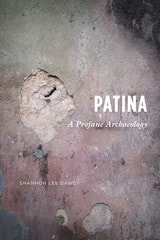
Patina
A Profane ArchaeologyShannon Lee Dawdy
University of Chicago Press, 2016
In Patina, anthropologist Shannon Lee Dawdy examines what was lost and found through the destruction of Hurricane Katrina. Tracking the rich history and unique physicality of New Orleans, she explains how it came to adopt the nickname “the antique city.” With innovative applications of thing theory, Patina studies the influence of specific items—such as souvenirs, heirlooms, and Hurricane Katrina ruins—to explore how the city’s residents use material objects to comprehend time, history, and their connection to one another. A leading figure in archaeology of the contemporary, Dawdy draws on material evidence, archival and literary texts, and dozens of post-Katrina interviews to explore how the patina aesthetic informs a trenchant political critique. An intriguing study of the power of everyday objects, Patina demonstrates how sharing in the care of a historic landscape can unite a city’s population—despite extreme divisions of class and race—and inspire civil camaraderie based on a nostalgia that offers not a return to the past but an alternative future.
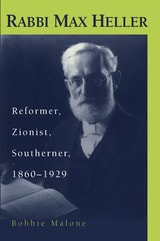
Rabbi Max Heller
Reformer, Zionist, Southerner, 1860-1929Barbara S. Malone
University of Alabama Press, 1997
Max Heller was a man of both passionate conviction and inner contradiction. He sought to be at the center of current affairs, not as a spokesperson of centrist opinion, but as an agitator or mediator, constantly struggling to find an acceptable path as he confronted the major issues of the day--racism and Jewish emancipation in eastern Europe, nationalism and nativism, immigration and assimilation. Heller's life experience provides a distinct vantage point from which to view the complexity of race relations in New Orleans and the South and the confluence of cultures that molded his development as a leader. A Bohemian immigrant and one of the first U.S.-trained rabbis, Max Heller served for 40 years as spiritual leader of a Reform Jewish congregation in New Orleans--at that time the largest city in the South. Far more than a congregational rabbi, Heller assumed an activist role in local affairs, Reform Judaism, and the Zionist movement, maintaining positions often unpopular with his neighbors, congregants, and colleagues. His deep concern for social justice led him to question two basic assumptions that characterized his larger social milieu--segregation and Jewish assimilation.
Heller, a consummate Progressive with clear vision and ideas substantially ahead of their time, led his congregation, his community, Reform Jewish colleagues, and Zionist sympathizers in a difficult era.
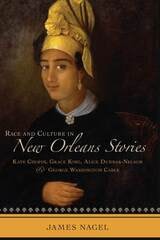
Race and Culture in New Orleans Stories
Kate Chopin, Grace King, Alice Dunbar-Nelson, and George Washington CableJames Nagel
University of Alabama Press, 2013
Race and Culture in New Orleans Stories is a study of four volumes of interrelated short stories set in New Orleans and the surrounding Louisiana bayous: Kate Chopin’s Bayou Folk; George Washington Cable’s Old Creole Days; Grace King’s Balcony Stories; and Alice Dunbar-Nelson’s The Goodness of St. Rocque and Other Stories. James Nagel argues that the conflicts and themes in these stories cannot be understood without a knowledge of the unique historical context of the founding of Louisiana, its four decades of rule by the Spanish, the Louisiana Purchase and the resulting cultural transformations across the region, Napoleonic law, the Code Noir, the plaçage tradition, the immigration of various ethnic and natural groups into the city, and the effects of the Civil War and Reconstruction. All of these historical factors energize and enrich the fiction of this important region.
The literary context of these volumes is also central to understanding their place in literary history. They are short-story cycles—collections of short fiction that contain unifying settings, recurring characters or character types, and central themes and motifs. They are also examples of the “local color” tradition in fiction, a movement that has been much misunderstood. Nagel maintains that regional literature was meant to be the highest form of American writing, not the lowest, and its objective was to capture the locations, folkways, values, dialects, conflicts, and ways of life in the various regions of the country in order to show that the lives of common citizens were sufficiently important to be the subject of serious literature.
Finally, Nagel shows that New Orleans provided a profoundly rich and complex setting for the literary exploration of some of the most crucial social problems in America, including racial stratification, social caste, economic exploitation, and gender roles, all of which were undergoing rapid transformation at the end of the nineteenth century and the beginning of the twentieth.
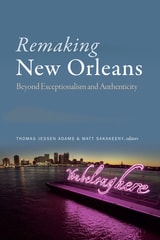
Remaking New Orleans
Beyond Exceptionalism and AuthenticityThomas J. Adams and Matt Sakakeeny, editors
Duke University Press, 2019
Contributors. Thomas Jessen Adams, Vincanne Adams, Vern Baxter, Maria Celeste Casati Allegretti, Shannon Lee Dawdy, Rien Fertel, Megan French-Marcelin, Cedric G. Johnson, Alecia P. Long, Vicki Mayer, Toby Miller, Sue Mobley, Marguerite Nguyen, Aaron Nyerges, Adolph Reed Jr., Helen A. Regis, Matt Sakakeeny, Heidi Schmalbach, Felipe Smith, Bryan Wagner
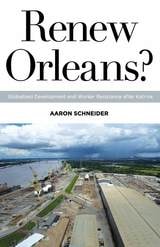
Renew Orleans?
Globalized Development and Worker Resistance after KatrinaAaron Schneider
University of Minnesota Press, 2018
Urban development after disaster, the fading of black political clout, and the onset of gentrification
Like no other American city, New Orleans since Hurricane Katrina offers powerful insight into issues of political economy in urban development and, in particular, how a city’s character changes after a disaster that spurs economic and political transition. In New Orleans, the hurricane upset an existing stalemate among rival factions of economic and political elites, and its aftermath facilitated the rise of a globally oriented faction of local capital.
In Renew Orleans? Aaron Schneider shows how some city leaders were able to access fragmented local institutions and capture areas of public policy vital to their development agenda. Through interviews and surveys with workers and advocates in construction, restaurants, shipyards, and hotel and casino cleaning, Schneider contrasts sectors prioritized during post-Katrina recovery with neglected sectors. The result is a fine-grained view of the way labor markets are structured to the advantage of elites, emphasizing how dual development produces wealth for the few while distributing poverty and exclusion to the many on the basis of race, gender, and ethnicity.
Schneider shows the way exploitation operates both in the workplace and the community, tracing working-class resistance that joins struggles for dignity at home and work. In the process, working classes and popular sectors put forth their own alternative forms of development.
Showdown in Desire
The Black Panthers Take a Stand in New OrleansOrissa Arend
University of Arkansas Press, 2009
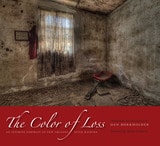
The Color of Loss
An Intimate Portrait of New Orleans after KatrinaPhotographs and introduction by Dan Burkholder
University of Texas Press, 2008
The devastation of New Orleans after Hurricane Katrina has been imprinted in our collective visual memory by thousands of images in the media and books of dramatic photographs by Robert Polidori, Larry Towell, Chris Jordan, Debbie Fleming Caffrey, and others. New Orleanians want the world to see and respond to the destruction of their city and the suffering of its people—and yet so many images of so much destruction threaten a visual and emotional overload that would tempt us to avert our eyes and become numb.
In The Color of Loss, Dan Burkholder presents a powerful new way of seeing the ravaged homes, churches, schools, and businesses of New Orleans. Using an innovative digital photographic technology called high dynamic range (HDR) imaging, in which multiple exposures are artistically blended to bring out details in the shadows and highlights that would be hidden in conventional photographs, he creates images that are almost like paintings in their richness of color and profusion of detail. Far more intense and poetic than purely documentary photographs, Burkholder's images lure viewers to linger over the artifacts of people's lives—a child's red wagon abandoned in a mud-caked room, a molding picture of Jesus—to fully understand the havoc thrust upon the people of New Orleans.
In the deserted, sinisterly beautiful rooms of The Color of Loss, we see how much of the splendor and texture of New Orleans washed away in the flood. This is the hidden truth of Katrina that Dan Burkholder has revealed.
The Fifth Sun
Mary Helen Lagasse
Northwestern University Press, 2004
Winner of the 3rd Annual Miguel Mármol Prize from Curbstone Press, Mary Helen Lagasse's The Fifth Sun is an inspiring story of an immigrant who struggles valiantly for a better life for herself and her family. A young Mexican woman, Mercedes, leaves her village to work as a housemaid in New Orleans. This fast-paced novel takes us through her adventures in New Orleans, her marriage, her struggle to raise her children, her deportation, and her attempt to re-cross the river and be reunited with her children.
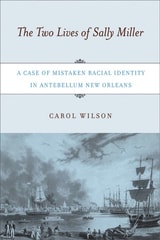
The Two Lives of Sally Miller
A Case of Mistaken Racial Identity in Antebellum New OrleansWilson, Carol
Rutgers University Press, 2007
In 1843, the Louisiana Supreme Court heard the case of a slave named Sally Miller, who claimed to have been born a free white person in Germany. Sally, a very light-skinned slave girl working in a New Orleans caf, might not have known she had a case were it not for a woman who recognized her as Salom Muller, with whom she had emigrated from Germany over twenty years earlier. Sally decided to sue for her freedom, and was ultimately freed, despite strong evidence contrary to her claim.
In The Two Lives of Sally Miller, Carol Wilson explores this fascinating legal case and its reflection on broader questions about race, society, and law in the antebellum South. Why did a court system known for its extreme bias against African Americans help to free a woman who was believed by many to be a black slave? Wilson explains that while the notion of white enslavement was shocking, it was easier for society to acknowledge that possibility than the alternative-an African slave who deceived whites and triumphed over the system.
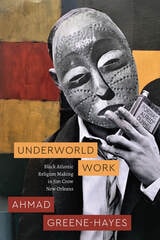
Underworld Work
Black Atlantic Religion Making in Jim Crow New OrleansAhmad Greene-Hayes
University of Chicago Press, 2025
When Zora Neale Hurston traveled to New Orleans, she encountered a religious underworld, a beautiful anarchy of spiritual life. In Underworld Work, Ahmad Greene-Hayes follows Hurston on a journey through the rich tapestry of Black religious expression from emancipation through Jim Crow. He looks within and beyond the church to recover the diverse leadership of migrants, healers, dissidents, and queer people who transformed their marginalized homes, bars, and street corners into sacred space.
Greene-Hayes shows how, while enclosed within an anti-black world, these outcasts embraced Africana esotericisms—ancestral veneration, faith healing, spiritualized sex work, and more—to conjure a connection to freer worlds past and yet to come. In recovering these spiritual innovations, Underworld Work celebrates the resilience and creativity of Africana religions.
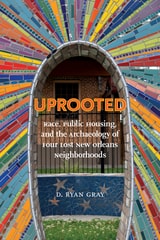
Uprooted
Race, Public Housing, and the Archaeology of Four Lost New Orleans NeighborhoodsD. Ryan Gray
University of Alabama Press, 2020
The archaeology of four New Orleans neighborhoods that were replaced by public housing projects
Uprooted: Race, Public Housing, and the Archaeology of Four Lost New Orleans Neighborhoods uses archaeological research on four neighborhoods that were razed during the construction of public housing in World War II–era New Orleans. Although each of these neighborhoods was identified as a “slum” historically, the material record challenges the simplicity of this designation. D. Ryan Gray provides evidence of the inventiveness of former residents who were marginalized by class, color, or gender and whose everyday strategies of survival, subsistence, and spirituality challenged the city’s developing racial and social hierarchies.
These neighborhoods initially appear to have been quite distinct, ranging from the working-class Irish Channel, to the relatively affluent Creole of Color–dominated Lafitte area, to the former location of Storyville, the city’s experiment in semilegal prostitution. Archaeological and historical investigations suggest that race was the crucial factor in the areas’ selection for clearance. Each neighborhood manifested a particular perceived racial disorder, where race intersected with ethnicity, class, or gender in ways that defied the norms of Jim Crow segregation.
Gray’s research makes use of both primary documents—including census records, city directories, and even the brothel advertising guides called “Blue Books”—and archaeological data to examine what this entailed at a variety of scales, reconstructing narratives of the households and communities affected by clearance. Public housing, both in New Orleans and elsewhere, imposed a new kind of control on urban life that had the effect of making cities both more segregated and less equal. The story of the neighborhoods that were destroyed provides a reminder that their erasure was not an inevitable outcome, and that a more equitable and just city is still possible today. A critical examination of the rise of public housing helps inform the ongoing debates over its demise, especially in light of the changing face of post-Katrina New Orleans.
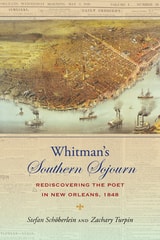
Whitman's Southern Sojourn
Rediscovering the Poet in New Orleans, 1848Stefan Schöberlein
University of Iowa Press, 2025
Far from some brief escape, New Orleans was a significant milestone in Whitman’s development as a political firebrand, as well as a major step for a professional journalist on the rise. Through a wealth of new texts, contexts, and personalities, Stefan Schöberlein and Zachary Turpin paint a vivid picture of a writer on the verge of Leaves of Grass, embracing the contradictions and the multitudes of New Orleans.