Results by title
8811 books match the query 'Political Science' and 626 start with a
A A Political Space
Reading The Global Through Clayoquot SoundWarren Magnusson
University of Minnesota Press, 2002
An innovative look at the convergence of global trends and local struggles in this out-of-the-way place.
On the remote outer coast of Vancouver Island in British Columbia, Clayoquot Sound might seem to be situated at the periphery of contemporary power and authority. And yet, as the disputed land of native peoples and the contentious site of corporate logging in one of the world’s last remaining temperate rain forests, Clayoquot Sound is also squarely in the middle of global politics today. These authors develop a new way of making sense of the rapidly changing character of political life in our day, revealing the political problems and possibilities inherent in the convergence of the global and the local so dramatically enacted in Clayoquot Sound.
Contributors: Umeek of Ahousaht (E. Richard Atleo), Malaspina U College, British Columbia; William Chaloupka, U of Montana; Thom Kuehls, Weber State U; Timothy W. Luke, Virginia Polytechnic; R. Michael M’Gonigle, U of Victoria; Catriona Sandilands, York U, Toronto; Gary C. Shaw, California State U, Stanislaus; R. B. J. Walker, Keele U, UK; Sharon Zukin, Brooklyn College and CUNY.rights: CAN
A Bibliography of Chinese Language Materials on the People's Communes
Ma Wei-yi
University of Michigan Press, 1982
A Billion Black Anthropocenes or None
Kathryn Yusoff
University of Minnesota Press, 2018
Rewriting the “origin stories” of the Anthropocene
No geology is neutral, writes Kathryn Yusoff. Tracing the color line of the Anthropocene, A Billion Black Anthropocenes or None examines how the grammar of geology is foundational to establishing the extractive economies of subjective life and the earth under colonialism and slavery. Yusoff initiates a transdisciplinary conversation between feminist black theory, geography, and the earth sciences, addressing the politics of the Anthropocene within the context of race, materiality, deep time, and the afterlives of geology.
Forerunners is a thought-in-process series of breakthrough digital works. Written between fresh ideas and finished books, Forerunners draws on scholarly work initiated in notable blogs, social media, conference plenaries, journal articles, and the synergy of academic exchange. This is gray literature publishing: where intense thinking, change, and speculation take place in scholarship.
A Blueprint for Worker Solidarity
Class Politics and Community in WisconsinNaomi R Williams
University of Illinois Press, 2025
Naomi R Williams traces the journeys of two local activists to highlight how people can support democracy and economic freedom in the twenty-first century. In Racine, ideas of class and race shifted but remained strong. The broad-based class politics that emerged drew on racial analysis, vigilant organizing, and agile labor leadership that organized more people. Unionized workers in turn won political power while uniting to resist conservative and corporate attacks. Charting Racine’s transition, Williams breaks down how worker solidarity persevered and presents lessons that can provide valuable guidance for today’s generation of activists.
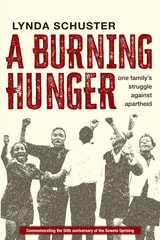
A Burning Hunger
One Family’s Struggle Against ApartheidLynda Schuster
Ohio University Press, 2006
Reissued for the 50th anniversary of the Soweto Uprising, A Burning Hunger reveals how one family’s courage ignited resistance and forever changed South Africa.
If the Mandelas were the generals in the fight for black liberation, the Mashininis were the foot soldiers. Theirs is a story of exile, imprisonment, torture, and loss, but also of dignity, courage, and strength in the face of appalling adversity. Originally published in Great Britain to critical acclaim, A Burning Hunger: One Family’s Struggle Against Apartheid tells a deeply moving human story and is one of the seminal books about the struggle against apartheid.
This family, Joseph and Nomkhitha Mashinini and their thirteen children, became immersed in almost every facet of the liberation struggle—from guerrilla warfare to urban insurrection. Although Joseph and Nomkhitha were peaceful citizens who had never been involved in politics, five of their sons became leaders in the antiapartheid movement. When the students of Soweto rose up in 1976 to protest a new rule making Afrikaans the language of instruction, they were led by charismatic young Tsietsi Mashinini. Scores of students were shot down and hundreds were injured. Tsietsi’s actions on that day set in motion a chain of events that would forever change South Africa, define his family, and transform their lives.
A Burning Hunger shows the human catastrophe that plagued generations of black Africans in the powerful story of one religious and law-abiding Soweto family. Basing her narrative on extensive research and interviews, Lynda Schuster richly portrays this remarkable family and in so doing reveals black South Africa during a time of momentous change.
A COVID Charter, A Better World
Toby Miller
Rutgers University Press, 2021
A COVID Charter, A Better World outlines the steps needed to reform public policies and fix the structural vulnerabilities that the current pandemic has made so painfully clear. Leading scholar Toby Miller argues that we must resist neoliberalism’s tendency to view health in terms of individual choices and market-driven solutions, because that fails to preserve human rights. He addresses the imbalance of geopolitical power to explain how we arrived at this point and shows that the pandemic is more than just a virus—it’s a social disease. By examining how the U.S., Britain, Mexico, and Colombia have responded to the COVID-19 crisis, Miller investigates corporate, scientific, and governmental decision-making and the effects those decisions have had on disadvantaged local communities. Drawing from human rights charters ratified by various international organizations, he then proposes a COVID charter, calling for a new world that places human lives above corporate profits.

A Call for Heresy
Why Dissent Is Vital to Islam and AmericaAnouar Majid
University of Minnesota Press, 2007
A Call for Heresy discovers unexpected common ground in one of the most inflammatory issues of the twenty-first century: the deepening conflict between the Islamic world and the United States. Moving beyond simplistic answers, Anouar Majid argues that the Islamic world and the United States are both in precipitous states of decline because, in each, religious, political, and economic orthodoxies have silenced the voices of their most creative thinkers—the visionary nonconformists, radicals, and revolutionaries who are often dismissed, or even punished, as heretics.
The United States and contemporary Islam share far more than partisans on either side admit, Majid provocatively argues, and this “clash of civilizations” is in reality a clash of competing fundamentalisms. Illustrating this point, he draws surprising parallels between the histories and cultures of Islam and the United States and their shortsighted suppression of heresy (zandaqa in Arabic), from Muslim poets and philosophers like Ibn Rushd (known in the West as Averroës) to the freethinker Thomas Paine, and from Abu Bakr Razi and Al-Farabi to Thomas Jefferson and Abraham Lincoln. He finds bitter irony in the fact that Islamic culture is now at war with a nation whose ideals are losing ground to the reactionary forces that have long condemned Islam to stagnation.
The solution, Majid concludes, is a long-overdue revival of dissent. Heresy is no longer a contrarian’s luxury, for only through encouraging an engaged and progressive intellectual tradition can the nations reverse their decline and finally work together for global justice and the common good of humanity.
Anouar Majid is founding chair and professor of English at the University of New England and the author of Freedom and Orthodoxy: Islam and Difference in the Post-Andalusian Age; Unveiling Traditions: Postcolonial Islam in a Polycentric World; and Si Yussef, a novel. He is also cofounder and editor of Tingis, a Moroccan-American magazine of ideas and culture.
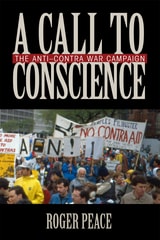
A Call to Conscience
The Anti-Contra War CampaignRoger Peace
University of Massachusetts Press, 2012
Unlike earlier U.S. interventions in Latin America, the Reagan administration's attempt to overthrow the Sandinista government of Nicaragua during the 1980s was not allowed to proceed quietly. Tens of thousands of American citizens organized and agitated against U.S. aid to the counterrevolutionary guerrillas, known as “contras.” Believing the Contra War to be unnecessary, immoral, and illegal, they challenged the administration's Cold War stereotypes, warned of “another Vietnam,” and called on the United States to abide by international norms.
A Call to Conscience offers the first comprehensive history of the anti–Contra War campaign and its Nicaragua connections. Roger Peace places this eight-year campaign in the context of previous American interventions in Latin America, the Cold War, and other grassroots oppositional movements. Based on interviews with American and Nicaraguan citizens and leaders, archival records of activist organizations, and official government documents, this book reveals activist motivations, analyzes the organizational dynamics of the anti–Contra War campaign, and contrasts perceptions of the campaign in Managua and Washington.
Peace shows how a variety of civic groups and networks—religious, leftist, peace, veteran, labor, women's rights—worked together in a decentralized campaign that involved extensive transnational cooperation.

A Cardboard Castle?
An Inside History of the Warsaw Pact, 1955-1991The National Security Archive Mastny
Central European University Press, 2005
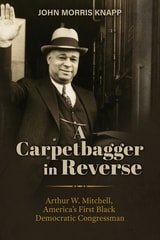
A Carpetbagger in Reverse
Arthur W. Mitchell, America's First Black Democratic CongressmanJohn Morris Knapp
University of Alabama Press, 2025
From Alabama to Congress—Arthur W. Mitchell’s fight for justice rewrote the rules of Black political power.
A Carpetbagger in Reverse offers a landmark reassessment of the life, career, and accomplishments of groundbreaking Congressman Arthur W. Mitchell, the first Black Democrat elected to Congress and the only Black member of Congress during his four terms of service from 1935 to 1943.
Born to former enslaved people in Alabama in 1883, Mitchell studied with Booker T. Washington at Tuskegee Institute and later moved to Washington DC and became a lawyer. He continued his career in Chicago, where the Great Migration had helped transform the city’s South Side into a vibrant, multiracial enclave.
As a congressman, Mitchell helped to create an enduring alliance between Black Americans and the Democratic party. Seeing his primary role as representing the South’s disempowered Black population, his belief that solutions to the region’s racial problems should arise from a new cadre of locally trained leaders brought him into frequent, vituperative conflict with the NAACP, the Republican Party, and the Black press. The first Black lawyer to argue successfully before the Supreme Court, his unanimous victory in Mitchell v. United States would have long-term consequences for the Civil Rights Movement.
A Carpetbagger in Reverse is the first publication significantly based on Mitchell’s papers, an essential and often overlooked source of insights about the development of Black political and culture life in the 1930s and 1940s.
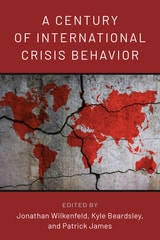
A Century of International Crisis Behavior
Edited by Jonathan Wilkenfeld, Kyle Beardsley, and Patrick James
University of Michigan Press, 2026
Perhaps more than ever, we need to invest in the study of the causes and consequences of crises. Since its founding in 1975, the International Crisis Behavior (ICB) Project has aimed to better equip academics, policymakers, and the next generation of engaged citizens to make sense of why crises arise and how they can be more effectively managed and prevented. The ICB Project’s data holdings consist of full-length qualitative case studies, along with an expanding range of quantitative datasets that include information regarding the characteristics of the states in crisis, crisis behavior, attempts at third-party crisis management, the role of nonstate actors, and the system-level context.
A Century of International Crisis Behavior summarizes the evolving patterns of international crisis behavior in the more than 500 cases cataloged since 1918, provides an accounting of the state of the scholarship to make sense of the patterns, and presents new findings that advance our understanding. Chapters are grouped according to their level of analysis: studies of systems, dyads, and states. The authors highlight what we have learned and what we have yet to learn regarding the prevention, escalation, and de-escalation of international crises.
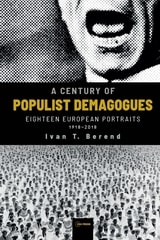
A Century of Populist Demagogues
Eighteen European Portraits, 1918–2018Ivan T. Berend
Central European University Press, 2020
The renowned historian Ivan T. Berend discusses populist demagoguery through the presentation of eighteen politicians from twelve European countries spanning World War I to the present. Berend defines demagoguery, reflects on its connections with populism, and examines the common features and differences in the demagogues’ programs and language.
Mussolini and Hitler, the “model demagogues,” are only briefly discussed, as is the election of Donald Trump in the United States and its impact on Europe. The eighteen detailed portraits include two communists, two fascists, and several right-wing and anti-EU politicians, extending across the full range of demagoguery. The author covers Béla Kun, the leader of the Hungarian Soviet Republic in 1919, weaving through Codreanu and Gömbös from the 1930s, on to Stahremberg and Haider in Austria, and then more broadly throughout Europe from Ceaușescu, Milošević, Tuđjman, Izetbegović, Berlusconi, Wilders, to the two Le Pens, Farage, and Boris Johnson, Orbán and the two Kaczyńskis. Each case includes an analysis of the time and place and is illustrated with quotations from the demagogues’ speeches.
This book is a warning about the continuing threat of populist demagogues both for their subjects and for history itself. Berend insists on the crucial importance for Europe to understand the reality behind their promises and persuasive language as imperative to impeding their success.
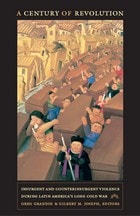
A Century of Revolution
Insurgent and Counterinsurgent Violence during Latin America's Long Cold WarGreg Grandin and Gilbert M. Joseph, eds.
Duke University Press, 2010
Contributors. Michelle Chase, Jeffrey L. Gould, Greg Grandin, Lillian Guerra, Forrest Hylton, Gilbert M. Joseph, Friedrich Katz, Thomas Miller Klubock, Neil Larsen, Arno J. Mayer, Carlota McAllister, Jocelyn Olcott, Gerardo Rénique, Corey Robin, Peter Winn
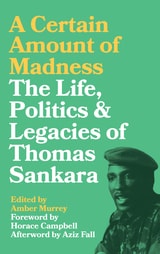
A Certain Amount of Madness
The Life Politics and Legacies of Thomas SankaraAmber Murrey
Pluto Press, 2018
This book looks at Sankara's political philosophies and legacies and their relevance today. Analyses of his synthesis of Pan-Africanism and humanist Marxist politics, as well as his approach to gender, development, ecology and decolonisation offer new insights to Sankarist political philosophies. Critical evaluations of the limitations of the revolution examine his relationship with labour unions and other aspects of his leadership style. His legacy is revealed by looking at contemporary activists, artists and politicians who draw inspiration from Sankarist thought in social movement struggles today, from South Africa to Burkina Faso.
In the 30th anniversary of his assassination, this book illustrates how Sankara's political praxis continues to provide lessons and hope for decolonisation struggles today.
A Citizen's Guide to Grassroots Campaigns
Barry, Jan
Rutgers University Press, 2000
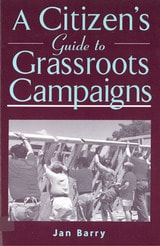
Civic movements are essential to Americans’ freedom and quality of life. Active citizens have led the way from the American Revolution to urban renewal. But fiery emotions and good intentions without skillful organization can lead to frustrated civic involvement. How can individual concerns be transformed into effective community action?
Jan Barry provides a pragmatic, common-sense handbook to civic action. Using case studies from his home state of New Jersey, Barry has crafted what he calls a “guidebook for creative improvement on the American dream.” He dissects civic actions such as environmental campaigns, mutual-help groups, neighborhood improvement projects, and a grassroots peace mission to Russia. Looking for patterns to explain successes and failures, Barry includes his own experiences as a Vietnam veteran peace activist to inspire and coach fledgling activists. The result is a wealth of practical, non-partisan information on membership recruitment, organizational skills, public speaking, lobbying, publicity, conflict resolution, and more. Rising above any particular political, social, or religious beliefs, Barry shows would-be activists how to confront one enduring truth —“Democracy is a lot harder to do than it is to talk about or fight over.”
A City within a City
The Black Freedom Struggle in Grand Rapids, MichiganTodd E Robinson
Temple University Press, 2012
A City within a City cogently argues that the post-war political reform championed by local Republicans transformed the city's racial geography, creating a racialized "city within a city," featuring a system of "managerial racism" designed to keep blacks in declining inner-city areas. As Robinson indicates, this bold, provocative framework for understanding race relations in Grand Rapids has broader implications for illuminating the twentieth-century African American urban experience in secondary cities.
A Civil Economy
Transforming the Marketplace in the Twenty-First CenturySeveryn T. Bruyn
University of Michigan Press, 2000
A Cold War State of Mind
Brainwashing and Postwar American SocietyMatthew W. Dunne
University of Massachusetts Press, 2013
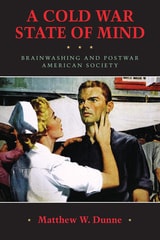
First popularized during the 1950s, the concept of “brainwashing” is often viewed as an example of Cold War paranoia, an amusing relic of a bygone era. Yet as Matthew W. Dunne shows in this study, over time brainwashing came to connote much more than a sinister form of Communist mind control, taking on broader cultural and political meanings.
Moving beyond well-known debates over Korean War POWs and iconic cultural texts like The Manchurian Candidate, Dunne explores the impact of the idea of brainwashing on popular concerns about freedom, individualism, loyalty, and trust in authority. By the late 1950s the concept had been appropriated into critiques of various aspects of American life such as an insistence on conformity, the alleged “softening” of American men, and rampant consumerism fueled by corporate advertising that used “hidden” or “subliminal” forms of persuasion. Because of these associations and growing anxieties about the potential misuse of psychology, concerns about brainwashing contributed to a new emphasis on individuality and skepticism toward authority in the 1960s. The notion even played an unusual role in the 1968 presidential race, when Republican frontrunner George Romney's claim that he had been “brainwashed” about the Vietnam War by the Johnson administration effectively destroyed his campaign.
In addition to analyzing the evolving meaning of brainwashing over an extended period of time, A Cold War State of Mind explores the class and gender implications of the idea, such as the assumption that working-class POWs were more susceptible to mind control and that women were more easily taken in by the manipulations of advertisers.
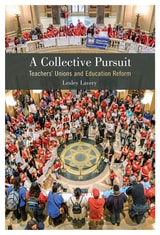
A Collective Pursuit
Teachers' Unions and Education ReformLesley Lavery
Temple University Press, 2020
Teachers’ unions are the organizations responsible for safeguarding the conditions of teachers’ employment. Union supporters claim strong synergies between teachers’ interests and students’ interests, but critics of unions insist that the stance of teachers in collective bargaining may disadvantage students as unions reduce the power of administrators to manage, remove, reward or retain excellent teachers.
In A Collective Pursuit, Lesley Laveryunpacks how teachers’ unions today are fighting for contracts that allow them to earn a decent living and build “schools all students deserve.” She explains the form and function of the nation’s largest teachers’ unions. Lavery then explores unionization campaigns in the Twin Cities charter schools. A Collective Pursuit also examines teacher strikes and contract negotiations, school finance and finance reform, and district and union attempts to address racial achievement gaps, to provide a context for understanding the economic, political, and demographic forces that inspire teachers to improve conditions for students.
A Collective Pursuit emphasizes that while teachers’ unions serve a traditional, economic role, they also provide a vast array of valuable services to students, educators, parents, and community members.

A Common Law for Europe
Barbara Pasa
Central European University Press, 2005
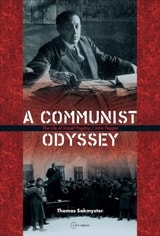
A Communist Odyssey
The life of József Pogány/John PepperThomas Sakmyster
Central European University Press, 2012
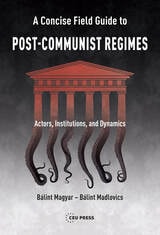
A Concise Field Guide to Post-Communist Regimes
Actors, Institutions, and DynamicsBálint Madlovics
Central European University Press, 2022
While the literature of hybrid regimes has given up the presumption that post-communist countries must democratize, its language and concepts still mostly relate to Western democracies. Magyar and Madlovics strongly argue for a vocabulary and grammar tailored to the specifics of the region. In 120 theses they unfold a conceptual framework with (1) a typology of post-communist regimes and (2) a detailed presentation of ideal-type actors and the political, economic, and social phenomena in these regimes. The book is a more digestible companion to the 800-page The Anatomy of Post-Communist Regimes (CEU Press, 2020), which was a detailed theoretical study with plenty of empirical illustrations.
Each of the 120 theses contains a statement and its concise discussion supported by illustrative tables, figures, and QR-codes that connect the interested reader to the more detailed analysis in the Anatomy. In a condensed variety, this book has kept the holistic approach of the Anatomy and treats the spheres of political, market, and communal action as parts of a single, coherent whole. The endeavor to synthesize a vast range of ideas does not, however, result in a too complicated text. On the contrary, freed from the implicit presumptions of democracy theory, the new terminology yields a readily usable toolkit of unambiguous means of expression to speak about post-communism.

A Conspiratorial Life
Robert Welch, the John Birch Society, and the Revolution of American ConservatismEdward H. Miller
University of Chicago Press, 2021
Though you may not know his name, Robert Welch (1899-1985)—founder of the John Birch Society—is easily one of the most significant architects of our current political moment. In A Conspiratorial Life, the first full-scale biography of Welch, Edward H. Miller delves deep into the life of an overlooked figure whose ideas nevertheless reshaped the American right.
A child prodigy who entered college at age 12, Welch became an unlikely candy magnate, founding the company that created Sugar Daddies, Junior Mints, and other famed confections. In 1958, he funneled his wealth into establishing the organization that would define his legacy and change the face of American politics: the John Birch Society. Though the group’s paranoiac right-wing nativism was dismissed by conservative thinkers like William F. Buckley, its ideas gradually moved from the far-right fringe into the mainstream. By exploring the development of Welch’s political worldview, A Conspiratorial Life shows how the John Birch Society’s rabid libertarianism—and its highly effective grassroots networking—became a profound, yet often ignored or derided influence on the modern Republican Party. Miller convincingly connects the accusatory conservatism of the midcentury John Birch Society to the inflammatory rhetoric of the Tea Party, the Trump administration, Q, and more. As this book makes clear, whether or not you know his name or what he accomplished, it’s hard to deny that we’re living in Robert Welch’s America.

A Conspiratorial Life
Robert Welch, the John Birch Society, and the Revolution of American ConservatismEdward H. Miller
University of Chicago Press, 2021
This is an auto-narrated audiobook edition of this book.
The first full-scale biography of Robert Welch, who founded the John Birch Society and planted some of modern conservatism’s most insidious seeds.
Though you may not know his name, Robert Welch (1899-1985)—founder of the John Birch Society—is easily one of the most significant architects of our current political moment. In A Conspiratorial Life, the first full-scale biography of Welch, Edward H. Miller delves deep into the life of an overlooked figure whose ideas nevertheless reshaped the American right.
A child prodigy who entered college at age 12, Welch became an unlikely candy magnate, founding the company that created Sugar Daddies, Junior Mints, and other famed confections. In 1958, he funneled his wealth into establishing the organization that would define his legacy and change the face of American politics: the John Birch Society. Though the group’s paranoiac right-wing nativism was dismissed by conservative thinkers like William F. Buckley, its ideas gradually moved from the far-right fringe into the mainstream. By exploring the development of Welch’s political worldview, A Conspiratorial Life shows how the John Birch Society’s rabid libertarianism—and its highly effective grassroots networking—became a profound, yet often ignored or derided influence on the modern Republican Party. Miller convincingly connects the accusatory conservatism of the midcentury John Birch Society to the inflammatory rhetoric of the Tea Party, the Trump administration, Q, and more. As this book makes clear, whether or not you know his name or what he accomplished, it’s hard to deny that we’re living in Robert Welch’s America.
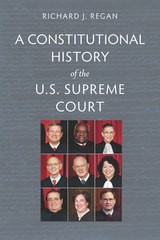
A Constitutional History of the U.S. Supreme Court
Richard Regan
Catholic University of America Press, 2015
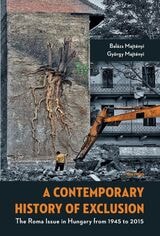
A Contemporary History of Exclusion
The Roma Issue in Hungary from 1945 to 2015György Majtényi
Central European University Press, 2016
A Contest of Ideas
Capital, Politics and LaborNelson Lictenstein
University of Illinois Press, 2013
These incisive writings link the fate of the labor movement to the transformations in the shape of world capitalism, to the rise of the civil rights movement, and to the activists and intellectuals who have played such important roles. Tracing broad patterns of political thought, Lichtenstein offers important perspectives on the relationship of labor and the state, the tensions that sometimes exist between a culture of rights and the idea of solidarity, and the rise of conservatism in politics, law, and intellectual life. The volume closes with portraits of five activist intellectuals whose work has been vital to the conflicts that engage the labor movement, public policy, and political culture.
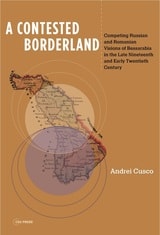
A Contested Borderland
Competing Russian and Romanian Visions of Bessarabia in the Second Half of the 19th and Early 20th CenturyAndrei Cusco
Central European University Press, 2017
A Crime of Self-Defense
Bernhard Goetz and the Law on TrialGeorge P. Fletcher
University of Chicago Press, 1990
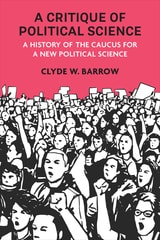
A Critique of Political Science
A History of the Caucus for a New Political ScienceClyde W. Barrow
University of Michigan Press, 2026
A Critique of Political Science distinguishes between the discipline of political science (methods and concepts) and the profession of political science (persons and institutions) to move disciplinary history beyond its current form as intellectual history toward a politics of political science. The book argues that understanding the development of a discipline requires the same type of theoretical analysis that political scientists apply to other political institutions. By examining universities and professional associations as political institutions, this approach puts political struggles and ideological conflict at the very core of disciplinary history. In reviewing 50 years of debate, controversy, and in-fighting in the political science profession, the book serves as a critique of the profession and the discipline of political science, which remains woefully disengaged from the concerns of ordinary citizens, particularly the working class and the poor throughout the world.
A Culture of Corruption?
Coping with Government in Post-communist EuropeWilliam L. Miller
Central European University Press, 2001
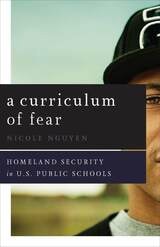
A Curriculum of Fear
Homeland Security in U.S. Public SchoolsNicole Nguyen
University of Minnesota Press, 2016
Welcome to Milton High School, where fear is a teacher’s best tool and every student is a soldier in the war on terror. A struggling public school outside the nation’s capital, Milton sat squarely at the center of two trends: growing fear of resurgent terrorism and mounting pressure to run schools as job training sites. In response, the school established a specialized Homeland Security program.
A Curriculum of Fear takes us into Milton for a day-to-day look at how such a program works, what it means to students and staff, and what it says about the militarization of U.S. public schools and, more broadly, the state of public education in this country. Nicole Nguyen guides us through a curriculum of national security–themed classes, electives, and internships designed through public-private partnerships with major defense contractors like Northrop Grumman and federal agencies like the NSA. She introduces us to students in the process of becoming a corps of “diverse workers” for the national security industry, learning to be “vigilant” citizens; and she shows us the everyday realities of a program intended to improve the school, revitalize the community, and eliminate the achievement gap.
With reference to critical work on school militarization, neoliberal school reform, the impact of the global war on terror on everyday life, and the political uses of fear, A Curriculum of Fear maps the contexts that gave rise to Milton’s Homeland Security program and its popularity. Ultimately, as the first ethnography of such a program, the book provides a disturbing close encounter with the new normal imposed by the global war on terror—a school at once under siege and actively preparing for the siege itself.
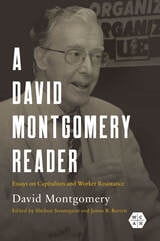
A David Montgomery Reader
Essays on Capitalism and Worker ResistanceDavid Montgomery. Edited by Shelton Stromquist and James R. Barrett
University of Illinois Press, 2024
A foundational figure in modern labor history, David Montgomery both redefined and reoriented the field. This collection of Montgomery’s most important published and unpublished articles and essays draws from the historian’s entire five-decade career.
Taken together, the writings trace the development of Montgomery’s distinct voice and approach while providing a crucial window into an era that changed the ways scholars and the public understood working people’s place in American history. Three overarching themes and methods emerge from these essays: that class provided a rich reservoir of ideas and strategies for workers to build movements aimed at claiming their democratic rights; that capital endured with the power to manage the contours of economic life and the capacities of the state but that workers repeatedly and creatively mounted challenges to the terms of life and work dictated by capital; and that Montgomery’s method grounded his gritty empiricism and the conceptual richness of his analysis in the intimate social relations of production and of community, neighborhood, and family life.

A Death-Dealing Famine
The Great Hunger in IrelandChristine Kinealy
Pluto Press, 1997
A Decolonial Feminism
Francoise Verges
Pluto Press, 2021
A Deeper Freedom
Liberal Democracy as an Everyday MoralityCharles W. Anderson
University of Wisconsin Press, 2002
Today those who believe in liberal democracy must reexamine and reaffirm their commitments. Here, Charles Anderson probes our urgent concerns and questions. Even those who believe that liberal democracy is the best form of government may think that liberal individualism leads to selfishness, permissiveness, and irresponsibility. Many would teach a cultural or religious counter-ethic to offset the excesses of freedom.
Grounding his view in classic philosophic and religious ideals, Anderson argues that a deeper vision of individuality and freedom can lead to both a sound public philosophy and a worthy personal ethic. In the same way that we as humans try to understand our place in nature and the cosmos, Anderson seeks to understand how we, as unique individuals, can understand our place among our fellow humans. Beginning with friendship and love, he extends his inquiry to the relationships of teaching, community, work, and democracy. Anderson shows how the natural desire of free people to find meaning in relationships with one another can lead to depth and fullness both in private and public life.
A Democracy of Distinction
Aristotle and the Work of PoliticsJill Frank
University of Chicago Press, 2004
Moving back and forth between Aristotle's writings and contemporary legal and political theory, Frank breathes new life into our conceptions of property, justice, and law by viewing them not only as institutions but as dynamic activities as well. Frank's innovative approach to Aristotle stresses his appreciation of the tensions and complexities of politics so that we might rethink and reorganize our own political ideas and practices. A Democracy of Distinction will be of enormous value to classicists, political scientists, and anyone interested in revitalizing democratic theory and practice.
A Democratic Constitution for Public Education
Paul T. Hill and Ashley E. Jochim
University of Chicago Press, 2014
Most reformers focus on who should control education, but Hill and Jochim show that who governs is less important than determining what powers they have. They propose a Civic Education Council—a democratic body subject to checks and balances that would define the boundaries of its purview as well as each school’s particular freedoms. They show how such a system would prevent regulations meant to satisfy special interests and shift the focus to the real task at hand: improving school performance. Laying out the implications of such a system for parents, students, teachers, unions, state and federal governments, and courts, they offer a vision of educational governance that stays true to—and draws on the strengths of—one of the greatest democratic tools we have ever created.
A Democratic Enlightenment
The Reconciliation Image, Aesthetic Education, Possible PoliticsMorton Schoolman
Duke University Press, 2020
A Democratic Theory of Judgment
Linda M. G. Zerilli
University of Chicago Press, 2016
Zerilli deftly outlines the limitations of existing debates, both those that concern themselves with the impossibility of judging across cultures and those that try to find transcendental, rational values to anchor judgment. Looking at Kant through the lens of Arendt, Zerilli develops the notion of a public conception of truth, and from there she explores relativism, historicism, and universalism as they shape feminist approaches to judgment. Following Arendt even further, Zerilli arrives at a hopeful new pathway—seeing the collapse of philosophical criteria for judgment not as a problem but a way to practice judgment anew as a world-building activity of democratic citizens. The result is an astonishing theoretical argument that travels through—and goes beyond—some of the most important political thought of the modern period.
A Dictatorship of Relativism ?
Symposium in Response to Cardinal Ratzinger’s Last Homily, Volume 13Jeffrey M. Perl, ed.
Duke University Press, 0
One essay relates the arguments of Ratzinger to those of two other German scholars—the conservative political theorist Ernst Wolfgang Böckenförde and the liberal philosopher and sociologist Jürgen Habermas—since all three men assume that social order depends on the existence of doctrinal authority (divine or otherwise). The contributors here argue for an intellectual and social life free of the desire for an “infantilizing” authority. One proposes that the Christian god is a relativist who prefers limitation and ambiguity; another, initially in agreement with Ratzinger about the danger relativism poses to faith and morals, then argues that this danger is what makes relativism valuable. The issue closes with the first English translation of an extract from a book on Catholic-Jewish relations by Cardinal Carlo Maria Martini, one of the Catholic Church’s most progressive figures.
Contributors. David Bloor, Daniel Boyarin, Mary Baine Campbell, Lorraine Daston, Arnold I. Davidson, John Forrester, Kenneth J. Gergen, Simon Goldhill, Jeffrey F. Hamburger, Julia Kristeva, Carlo Maria Cardinal Martini, Christopher Norris, Joseph Cardinal Ratzinger, Richard Shusterman, Barbara Herrnstein Smith, Jeffrey Stout, Gianni Vattimo
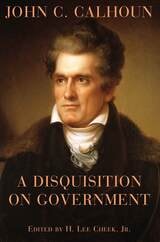
A Disquisition on Government
John C. Calhoun
St. Augustine's Press, 2007
This volume provides the most economical and textually accurate version of Calhoun’s Disquisition available today. As a treatise, the Disquisition is one of the greatest and most enduring works of American politial thought, and a text of seminal importance to all students of American politics, history, philosophy, and law. In the Disquisition, Calhoun believed he had laid a “solid foundation for political science” through revitalizing popular rule. To complete his theoretical and practical mission, Calhoun attempts to explain the best example of the diffusion of authority and cultivation of liberty: the American Constitution. The fundamental law of the American republic provided, after all, the “interior structure” for regulating the shape and scope of government. As a guide for the states and the general government, the Constitution was also part of the “organism” that limited the centralization of authority and allowed for genuine popular rule; and it was Calhoun’s exposition of the connection between the moral demands of a properly constituted concept of popular rule and the need for practical ordering principles that is articulated in this book.
Calhoun presents a theory of politics that is both original and in accord with the mainstream of the American political tradition. More than any other thinker of his period, Calhoun sought to explain the enduring qualities of American political thought in light of the troubled world of the mid-nineteenth century. Unlike other theorists who had preceded and would follow Calhoun, both American and European, he did not seek to invent a new mode of philosophical speculation or a “grand theory” for the human sciences. Instead, he attempted to offer a refinement of classical, medieval, and modern notions regarding the relationship between government and the social order. As an effort in philosophical retrenchment, the Disquisition strengthened many pre-existing conceptions regarding political liberty and popular rule within the American regime, while offering such insight with a view toward the future that awaited America. Calhoun’s attempt in the Disquisition to reconcile the good of popular rule with ethical requirements have singular relevance to the many nations in the twenty-first century now engaged, despite the ethnic animosities threatening their destruction, in building post-ideological, civilized political and social orders, especially the peoples of Central and Eastern Europe, Russia, and Africa.
A Documentary History of Communism and the World
From Revolution to CollapseEdited by Robert V. Daniels
Brandeis University Press, 1994
A Documentary History of Communism in Russia
From Lenin to GorbachevEdited by Robert V. Daniels
University Press of New England, 2001
A Drop of Treason
Philip Agee and His Exposure of the CIAJonathan Stevenson
University of Chicago Press, 2021
The first biography of this contentious, legendary man, Jonathan Stevenson’s A Drop of Treason is a thorough portrait of Agee and his place in the history of American foreign policy and the intelligence community during the Cold War and beyond. Unlike mere whistleblowers, Agee exposed American spies by publicly blowing their covers. And he didn’t stop there—his was a lifelong political struggle that firmly allied him with the social movements of the global left and against the American project itself from the early 1970s on. Stevenson examines Agee’s decision to turn, how he sustained it, and how his actions intersected with world events.
Having made profound betrayals and questionable decisions, Agee lived a rollicking, existentially fraught life filled with risk. He traveled the world, enlisted Gabriel García Márquez in his cause, married a ballerina, and fought for what he believed was right. Raised a conservative Jesuit in Tampa, he died a socialist expat in Havana. In A Drop of Treason, Stevenson reveals what made Agee tick—and what made him run.
A Duel of Giants
Bismarck, Napoleon III, and the Origins of the Franco-Prussian WarDavid Wetzel
University of Wisconsin Press, 2001
Combining impeccable scholarship and literary elegance, David Wetzel depicts the drama of machinations and passions that exploded in a war that forever changed the face of European history.

A Fan’s Votes
Mass Democratic Politics as Spectator SportDavid Henkin
Prickly Paradigm Press, 2027
A Feminist Reading of Debt
Luci Cavallero
Pluto Press, 2021
***Winner of an English PEN Award 2021***
In this sharp intervention, authors Lucí Cavallero and Verónica Gago defiantly develop a feminist understanding of debt, showing its impact on women and members of the LGBTQ+ community and examining the relationship between debt and social reproduction.
Exploring the link between financial activity and the rise of conservative forces in Latin America, the book demonstrates that debt is intimately linked to gendered violence and patriarchal notions of the family. Yet, rather than seeing these forces as insurmountable, the authors also show ways in which debt can be resisted, drawing on concrete experiences and practices from Latin America and around the world.
Featuring interviews with women in Argentina and Brazil, the book reveals the real-life impact of debt and how it falls mainly on the shoulders of women, from the household to the wider effects of national debt and austerity. However, through discussions around experiences of work, prisons, domestic labour, agriculture, family, abortion and housing, a narrative of resistance emerges.
Translated by Liz Mason-Deese.
A Feminist Reading of Debt
Luci Cavallero
Pluto Press, 2021
***Winner of an English PEN Award 2021***
"Of great value to those interested in the financialisation of everyday life and social reproduction."—LSE Review of Books
In this sharp evaluation and call to action, authors Lucí Cavallero and Verónica Gago defiantly develop a feminist understanding of debt, showing its impact on women and members of the LGBTQ+ community and examining the relationship between debt and social reproduction.
Exploring the link between financial activity and the rise of conservative forces in Latin America, the book demonstrates that debt is intimately linked to gendered violence and patriarchal notions of the family. Yet, rather than seeing these forces as insurmountable, the authors also show ways in which debt can be resisted, drawing on concrete experiences and practices from Latin America and around the world. Chapters include:
*Debt and Social Reproduction
*Debt as a “Counter-revolution” of Everyday Life
*The writing on the Body of Women
*Neither Victims not Entrepreneurs
*Feminist Insubordination and Fascist Neoliberalism
*The Patriarchy Has My Missing Contributions
*Hunger and Gender Mandates
*Us Against Debt
The authors state in their Introduction, “Our investigations and activism show that there is an urgent need to develop a specifically feminist analysis of finance. Here we do so by bringing together methodological elements, political hypotheses, and narratives of practices elaborated by the feminist movement that are challenging finance.”
Featuring interviews with women in Argentina and Brazil, the book reveals the real-life impact of debt and how it falls mainly on the shoulders of women, from the household to the wider effects of national debt and austerity. However, through discussions around experiences of work, prisons, domestic labor, agriculture, family, abortion and housing, a narrative of resistance emerges.
A Fire Bell in the Past
The Missouri Crisis at 200, Volume I, Western Slavery, National ImpasseJeffrey L. Pasley
University of Missouri Press, 2021
Drawing on the participants in two landmark conferences held at the University of Missouri and the City University of New York, this first of two volumes finds myriad new perspectives on the Missouri Crisis. Celebrating Missouri’s bicentennial the scholarly way, with fresh research and unsparing analysis, this eloquent collection of essays from distinguished historians gives the epochal struggle over Missouri statehood its due as a major turning point in American history.
Contributors include the editors, Christa Dierksheide, David N. Gellman, Sarah L. H. Gronningsater, Robert Lee, Donald Ratcliffe, Andrew Shankman, Anne Twitty, John R. Van Atta, and David Waldstreicher.