Results by title
37 books match the query 'Political planning'
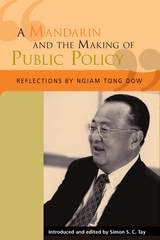
A Mandarin and the Making of Public Policy
ReflectionsTong Dow Ngiam
National University of Singapore Press, 2001

A Nation Fragmented
The Public Agenda in the Information AgeJill Edy
Temple University Press, 2019
The transformation from an undifferentiated public to a surfeit of interest groups has become yet another distinguishing feature of the increasing polarization of American politics. Jill Edy and Patrick Meirick contend that the media has played a key role in this splintering. A Nation Fragmented reveals how the content and character of the public agenda has transformed as the media environment evolved from network television and daily newspapers in the late 1960s to today’s saturated social media world with 200 cable channels.
The authors seek to understand what happened as the public’s sense of shared priorities deteriorated. They consider to what extent our public agenda has “fallen apart” as attention to news has declined, and to what extent we have been “driven apart” by changes in the issue agendas of news. Edy and Meirick also show how public attention is limited and spread too thin except in cases where a highly consistent news agenda can provoke a more focused public agenda.
A Nation Fragmented explores the media’s influence and political power and, ultimately, how contemporary democracy works.
Administrative Burden
Policymaking by Other MeansPamela Herd
Russell Sage Foundation, 2018
Winner of the 2020 Outstanding Book Award Presented by the Public and Nonprofit Section of the National Academy of Management
Winner of the 2019 Louis Brownlow Book Award from the National Academy of Public Administration
Through in-depth case studies of federal programs and controversial legislation, the authors show that administrative burdens are the nuts-and-bolts of policy design. Regarding controversial issues such as voter enfranchisement or abortion rights, lawmakers often use administrative burdens to limit access to rights or services they oppose. For instance, legislators have implemented administrative burdens such as complicated registration requirements and strict voter-identification laws to suppress turnout of African American voters. Similarly, the right to an abortion is legally protected, but many states require women seeking abortions to comply with burdens such as mandatory waiting periods, ultrasounds, and scripted counseling. As Herd and Moynihan demonstrate, administrative burdens often disproportionately affect the disadvantaged who lack the resources to deal with the financial and psychological costs of navigating these obstacles.
However, policymakers have sometimes reduced administrative burdens or shifted them away from citizens and onto the government. One example is Social Security, which early administrators of the program implemented in the 1930s with the goal of minimizing burdens for beneficiaries. As a result, the take-up rate is about 100 percent because the Social Security Administration keeps track of peoples’ earnings for them, automatically calculates benefits and eligibility, and simply requires an easy online enrollment or visiting one of 1,200 field offices. Making more programs and public services operate this efficiently, the authors argue, requires adoption of a nonpartisan, evidence-based metric for determining when and how to institute administrative burdens, with a bias toward reducing them. By ensuring that the public’s interaction with government is no more onerous than it need be, policymakers and administrators can reduce inequality, boost civic engagement, and build an efficient state that works for all citizens.
Advice and Consent
The Development of the Policy SciencesPeter DeLeon
Russell Sage Foundation, 1988

Agendas and Instability in American Politics
Frank R. Baumgartner and Bryan D. Jones
University of Chicago Press, 1993
Short-term, single-issue analyses of public policy, the authors contend, give a narrow and distorted view of public policy as the result of a cozy arrangement between politicians, interest groups, and the media. Baumgartner and Jones upset these notions by focusing on several issues—including civilian nuclear power, urban affairs, smoking, and auto safety—over a much longer period of time to reveal patterns of stability alternating with bursts of rapid, unpredictable change.
A welcome corrective to conventional political wisdom, Agendas and Instability revises our understanding of the dynamics of agenda-setting and clarifies a subject at the very center of the study of American politics.
Agendas and Instability in American Politics, Second Edition
Frank R. Baumgartner and Bryan D. Jones
University of Chicago Press, 2009
When Agendas and Instability in American Politics appeared fifteen years ago, offering a profoundly original account of how policy issues rise and fall on the national agenda, the Journal of Politics predicted that it would “become a landmark study of public policy making and American politics.” That prediction proved true and, in this long-awaited second edition, Bryan Jones and Frank Baumgartner refine their influential argument and expand it to illuminate the workings of democracies beyond the United States.
The authors retain all the substance of their contention that short-term, single-issue analyses cast public policy too narrowly as the result of cozy and dependable arrangements among politicians, interest groups, and the media. Jones and Baumgartner provide a different interpretation by taking the long view of several issues—including nuclear energy, urban affairs, smoking, and auto safety—to demonstrate that bursts of rapid, unpredictable policy change punctuate the patterns of stability more frequently associated with government. Featuring a new introduction and two additional chapters, this updated edition ensures that their findings will remain a touchstone of policy studies for many years to come.
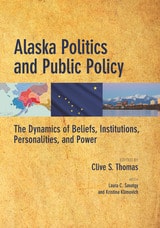
Alaska Politics and Public Policy
The Dynamics of Beliefs, Institutions, Personalities, and PowerEdited by Clive S. Thomas, with Laura Savatgy and Kristina Klimovich
University of Alaska Press, 2016
This book, the most comprehensive on the subject to date, focuses on the question of how beliefs, institutions, personalities, and power interact to shape Alaska politics and public policy. Drawing on these interactions, the contributors explain how and why certain issues get dealt with successfully and others unsuccessfully, and why some issues are taken up quickly while others are not addressed at all. This comprehensive guide to the political climate of Alaska will be essential to anyone studying the politics of America’s largest—and in some ways most unusual—state.
Deliberative Choices
Debating Public Policy in CongressGary Mucciaroni and Paul J. Quirk
University of Chicago Press, 2006
Mucciaroni and Quirk argue that in fashioning the claims they use in debate, legislators make a strategic trade-off between boosting their rhetorical force and ensuring their ability to withstand scrutiny. Using three case studies—welfare reform, repeal of the estate tax, and telecommunications deregulation—the authors show how legislators’ varying responses to such a trade-off shape the issues they focus on, the claims they make, and the information they provide in support of those claims.
Mucciaroni and Quirk conclude that congressional debate generally is only moderately realistic and informed. It often trades in half-truths, omissions, and sometimes even outright falsehoods. Yet some debates are highly informative. Moreover, the authors believe it’s possible to improve congressional deliberation, and they recommend reforms designed to do so.

Democracy, Governance, and Growth
Stephen Knack, Editor
University of Michigan Press, 2003
The difference between developmental success and failure in this view has little to do with natural resource availability, climate, aid, or developed nations' policies. Rather, it is largely a function of whether incentives within a given society steer wealth-maximizing individuals toward producing new wealth or toward diverting it from others. The chapters, seminal essays written by Mancur Olson and his IRIS Center colleagues, provide theoretical and/or empirical underpinnings for the emerging consensus that differences in the way governments and societies are organized have enormous implications for the structure of incentives faced by politicians, bureaucrats, investors, and workers, which in turn determines the level of a nation's material well-being.
Overall this volume applies tools and concepts from the "New Institutional Economics" to some of the major issues in economic development. It will be of interest to scholars and students of various disciplines--including political science, law, and sociology as well as economics--interested in the determinants of economic development and global economic change. The book will also be of interest to many aid practitioners, particularly those working in anticorruption and public sector reform issues.
Stephen Knack is Senior Research Economist, Development Research Group, the World Bank.

Democratic Laboratories
Policy Diffusion among the American StatesAndrew Karch
University of Michigan Press, 2010
"Observers have long marveled at the spread of ideas and policies from state to state in American democracy. But why and how do politicians, professionals, and citizens in one state take inspiration from national policy debates and imitate, resist, and rework legislative models from other states? For the first time in this important new book, Andrew Karch analyzes in depth the process of policy 'diffusion' across the states, offering a nuanced and powerful framework to explain one of the most important and recurrent features of U.S. politics."
---Theda Skocpol, Victor S. Thomas Professor of Government and Sociology, Harvard University
"Karch does two things with remarkable skill. First, he makes sense of the copious literature on policy diffusion and extends that literature in a very fruitful way. Second, he conducts the most thorough and methodologically sound empirical study of policy diffusion to date, using both qualitative and quantitative analysis. This book is so well written and thoughtful that it will likely stimulate a whole new wave of study of state policy and its diffusion."
---Chris Mooney, editor of State Politics and Policy Quarterly
"Democratic Laboratories goes beyond standard 'diffusion of innovation' approaches to analyze the complex interaction of interstate and intrastate political forces that shapes policy change. The book is a major contribution to the study of American federalism---and a very good read."
---Kent Weaver, Brookings Institution
---Virginia Gray, University of North Carolina, Chapel Hill
"Democratic Laboratories is the seminal work on policy diffusion among the American states. Rigorously designed and well written, it is the new starting place for anyone interested in this important topic. The findings are copious and loaded with insights into the future of this valuable research."
---Harrell Rodgers, Professor and Chair, Department of Political Science, University of Houston
Andrew Karch is Assistant Professor of Government at the University of Texas at Austin.

Divided Power
The Presidency, Congress, and the Formation of American Foreign PolicyDonald R. Kelley
University of Arkansas Press, 2005

Does Local Government Matter?
How Urban Policies Shape Civic EngagementElaine B. Sharp
University of Minnesota Press, 2012
Until recently, policy evaluation has mostly meant assessing whether government programs raise reading levels, decrease teen pregnancy rates, improve air quality levels, lower drunk-driving rates, or achieve any of the other goals that government programs are ostensibly created to do. Whether or not such programs also have consequences with respect to future demands for government action and whether government programs can heighten—or dampen—citizen involvement in civic activities are questions that are typically overlooked.
This book applies such questions to local government. Employing policy feedback theory to a series of local government programs, Elaine B. Sharp shows that these programs do have consequences with respect to citizens’ political participation. Unlike other feedback theory investigations, which tend to focus on federal government programs, Sharp’s looks at a broad range of policy at the local level, including community policing programs, economic development for businesses, and neighborhood empowerment programs.
With this clear-eyed analysis, Sharp finds that local governments’ social program activities actually dampen participation of the have-nots, while cities’ development programs reinforce the political involvement of already-privileged business interests. Meanwhile, iconic urban programs such as community policing and broader programs of neighborhood empowerment fail to enhance civic engagement or build social capital at the neighborhood level; at worst, they have the potential to deepen divisions—especially racial divisions—that undercut urban neighborhoods.
Governing Narratives
Symbolic Politics and Policy ChangeHugh T. Miller
University of Alabama Press, 2012

Hard Choices
Challenging the Singapore ConsensusEdited by Sudhir Thomas Vadaketh and Donald Low
National University of Singapore Press, 2014
But the policy and political conundrums that Singapore faces today are complex and defy easy answers. Confronted with a political landscape that is likely to become more contested, how should the government respond? What reforms should it pursue? This collection of essays suggests that a far-reaching and radical rethinking of the country's policies and institutions is necessary, even if it weakens the very consensus that enabled Singapore to succeed in its first fifty years.
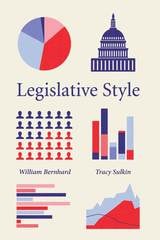
Legislative Style
William Bernhard and Tracy Sulkin
University of Chicago Press, 2018
Bernhard and Sulkin have developed a systematic approach for looking at legislative style through a variety of criteria, including the number of the bills passed, number of speeches given, amount of money raised, and the percentage of time a legislator voted in line with his or her party. Applying this to ten congresses, representing twenty years of congressional data, from 1989 to 2009, they reveal that legislators’ activity falls within five predictable styles. These styles remain relatively consistent throughout legislators’ time in office, though a legislator’s style can change as career goals evolve, as well as with changes to individual or larger political interests, as in redistricting or a majority shift. Offering insight into a number of enduring questions in legislative politics, Legislative Style is a rich and nuanced account of legislators’ activity on Capitol Hill.
Lobbying and Policy Change
Who Wins, Who Loses, and WhyFrank R. Baumgartner, Jeffrey M. Berry, Marie Hojnacki, David C. Kimball, and Beth L. Leech
University of Chicago Press, 2009
During the 2008 election season, politicians from both sides of the aisle promised to rid government of lobbyists’ undue influence. For the authors of Lobbying and Policy Change, the most extensive study ever done on the topic, these promises ring hollow—not because politicians fail to keep them but because lobbies are far less influential than political rhetoric suggests.
Based on a comprehensive examination of ninety-eight issues, this volume demonstrates that sixty percent of recent lobbying campaigns failed to change policy despite millions of dollars spent trying. Why? The authors find that resources explain less than five percent of the difference between successful and unsuccessful efforts. Moreover, they show, these attempts must overcome an entrenched Washington system with a tremendous bias in favor of the status quo.
Though elected officials and existing policies carry more weight, lobbies have an impact too, and when advocates for a given issue finally succeed, policy tends to change significantly. The authors argue, however, that the lobbying community so strongly reflects elite interests that it will not fundamentally alter the balance of power unless its makeup shifts dramatically in favor of average Americans’ concerns.
Lobbying the Autocrat
The Dynamics of Policy Advocacy in NondemocraciesMax Grömping and Jessica C. Teets, Editors
University of Michigan Press, 2023
Although authoritarian countries often repress independent citizen activity, lobbying by civil society organizations is actually a widespread phenomenon. Using case studies such as China, Russia, Belarus, Cambodia, Malaysia, Montenegro, Turkey, and Zimbabwe, Lobbying the Autocrat shows that citizen advocacy organizations carve out niches in the authoritarian policy process, even influencing policy outcomes. The cases cover a range of autocratic regime types (one-party, multi-party, personalist) on different continents, and encompass different systems of government to explore citizen advocacy ranging from issues such as social welfare, women’s rights, election reform, environmental protection, and land rights. They show how civil society has developed adaptive capacities to the changing levels of political repression and built resilience through ‘tactful contention’ strategies. Thus, within the bounds set by the authoritarian regimes, adaptive lobbying may still bring about localized responsiveness and representation.
However, the challenging conditions of authoritarian advocacy systems identified throughout this volume present challenges for both advocates and autocrats alike. The former are pushed by an environment of constant threat and uncertainty into a precarious dance with the dictator: just the right amount of acquiescence and assertiveness, private persuasion and public pressure, and the flexibility to change quickly to suit different situations. An adaptive lobbyist survives and may even thrive in such conditions, while others often face dire consequences. For the autocrat on the other hand, the more they stifle the associational sphere in an effort to prevent mass mobilization, the less they will reap the informational benefits associated with it. This volume synthesizes the findings of the comparative cases to build a framework for understanding how civil society effectively lobbies inside authoritarian countries.
Mandates, Parties, and Voters
How Elections Shape the FutureJames H Fowler and Oleg Smirnov
Temple University Press, 2007
Most research on two-party elections has considered the outcome as a single, dichotomous event: either one or the other party wins. In this groundbreaking book, James Fowler and Oleg Smirnov investigate not just who wins, but by how much, and they marshal compelling evidence that mandates-in the form of margin of victory-matter. Using theoretical models, computer simulation, carefully designed experiments, and empirical data, the authors show that after an election the policy positions of both parties move in the direction preferred by the winning party-and they move even more if the victory is large. In addition, Fowler and Smirnov not only show that the divergence between the policy positions of the parties is greatest when the previous election was close, but also that policy positions are further influenced by electoral volatility and ideological polarization.
This pioneering book will be of particular interest to political scientists, game theoreticians, and other scholars who study voting behavior and its short-term and long-range effects on public policy.

Massachusetts Politics and Public Policy
Studies in Power and LeadershipRichard A. Hogarty
University of Massachusetts Press, 2002
Hogarty examines both the process of policymaking and the complexities of on-the-ground implementation, identifying the various participants and their roles and strategies. He describes power struggles that are entangled in intricate webs of personal and political relationships, and explores their historical antecedents.
Based on an extensive review of newspaper and media accounts, a survey of the surprisingly scanty professional literature, a close scrutiny of public documents, and dozens of personal interviews, the book addresses such topics as the delivery of mental health services, urban transportation, environmental protection, public safety, welfare, corrections, the death penalty, public higher education, ethnic politics, and state ethics reform. Hogarty analyzes the shifting problems of accountability that arise when public services are provided by a variety of political actors and organizations with a wide range of ideological motivations and social and cultural commitments.

Moving from the Margins
A Chicana Voice on Public PolicyAdela de la Torre
University of Arizona Press, 2002
Addressing immigration, education, health care, and economic and political concerns, Adela de la Torre provides a distinctly Chicana perspective that often differs from that of mainstream readers and voters. Drawn from the author's syndicated column in the Los Angeles Times along with writings from other publications, Moving from the Margins includes incisive and often provocative commentaries that provide insights into the roots of ethnic tensions in the Golden State.
The book also includes readers' reactions to the articles, creating a dialogue of ideas while confronting fears of what many Americans view as an alien culture. Whether addressing entitlements granted to noncitizens, the future of public schools, or access to health care, de la Torre challenges readers to move beyond their own frame of reference and consider new points of view. The issues she faces have shaped today's California—and they also lie at the heart of urban public policy in America for the twenty-first century.
PRESIDENTIAL AGENDA
SOURCES OF EXECUTIVE INFLUENCE IN CONGRESSROGER T LAROCCA
The Ohio State University Press, 2006
Larocca develops a theoretical model that explains how the president can raise the public salience of issues in his major addresses, long accepted as one of the president’s strongest agenda-setting tools. He also develops a theoretical model that explains how control over executive agency expertise yields a more reliable and persistent influence on the congressional agenda than presidential addresses.
The Presidential Agenda tests these theoretical models with an innovative empirical study of presidential agenda setting. Using data from all House and Senate Commerce Committee bills from 1979 to 2002, Larocca converts information about bills into information about policy issues and then traces the path of presidential influence through the committee and floor stages of legislative consideration.
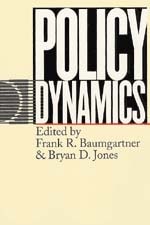
Policy Dynamics
Edited by Frank R. Baumgartner and Bryan D. Jones
University of Chicago Press, 2002
To investigate these questions, Policy Dynamics draws on the most extensive data set yet compiled for public policy issues in the United States. Spanning the past half-century, these data make it possible to trace policies and legislation, public and media attention to them, and governmental decisions over time and across institutions. Some chapters analyze particular policy areas, such as health care, national security, and immigration, while others focus on institutional questions such as congressional procedures and agendas and the differing responses by Congress and the Supreme Court to new issues.
Policy Dynamics presents a radical vision of how the federal government evolves in response to new challenges-and the research tools that others may use to critique or extend that vision.
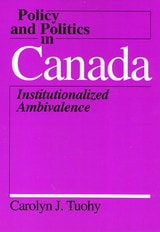
Policy Politics Canada
Carolyn J. Tuohy
Temple University Press, 1992
At a time when Canadian political institutions are being fundamentally questioned, this book provides a comparative perspective on the distinctive features of the Canadian policy process hich have enabled conflict to be resolved in the past. In comparison with other Western industrial nations, Canada's policies in some arenas appear as models of workable compromise; in others, they stand out as marked by continuing irresolution. In this first book-length treatment of Canadian public policy in comparative perspective, Carolyn Tuohy focuses on constitutional change, health care delivery, industrial relations and labor market policy, economic development and adjustment, oil and gas policy, and minority language rights.
What distinguishes Canada's characteristic policy process is its quintessential ambivalence: ambivalence about the appropriate role of the state, about definitions of political community, and about individual and collective values and conceptions of rights. Embedded in the country's political institutions, it has deep roots in Canada's relationship to the United States, its history of English-French tensions, and its regional diversity.
Examining in particular the delicate federal-provincial division of power and the legislative-judicial relationship, Tuohy discusses how the constitutional debates of the 1980s and 1990s are testing Canada's institutions to resolve conflict.
In the series Policy and Politics in Industrial States, edited by Douglas E. Ashford, Peter J. Katzenstein, and T.J. Pempel.
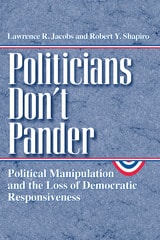
Politicians Don't Pander
Political Manipulation and the Loss of Democratic ResponsivenessLawrence R. Jacobs and Robert Y. Shapiro
University of Chicago Press, 2000
In this provocative and engagingly written book, the authors argue that the reality is quite the opposite. In fact, when not facing election, contemporary presidents and members of Congress routinely ignore the public's policy preferences and follow their own political philosophies, as well as those of their party's activists, their contributors, and their interest group allies. Politicians devote substantial time, effort, and money to tracking public opinion, not for the purposes of policymaking, but to change public opinion—to determine how to craft their public statements and actions to win support for the policies they and their supporters want.
Taking two recent, dramatic episodes—President Clinton's failed health care reform campaign, and Newt Gingrich's "Contract with America"—as examples, the authors show how both used public opinion research and the media to change the public's mind. Such orchestrated displays help explain the media's preoccupation with political conflict and strategy and, the authors argue, have propelled levels of public distrust and fear of government to record highs.
Revisiting the fundamental premises of representative democracy, this accessible book asks us to reexamine whether our government really responds to the broad public or to the narrower interests and values of certain groups. And with the 2000 campaign season heating up, Politicians Don't Pander could not be more timely.
"'Polling has turned leaders into followers,' laments columnist Marueen Dowd of The New York Times. Well, that's news definitely not fit to print say two academics who have examined the polls and the legislative records of recent presidents to see just how responsive chief executives are to the polls. Their conclusion: not much. . . . In fact, their review and analyses found that public opinion polls on policy appear to have increasingly less, not more, influence on government policies."—Richard Morin, The Washington Post

Politics in the Trenches
Citizens, Politicians, and the Fate of DemocracyThomas J. Volgy
University of Arizona Press, 2001
Now ask Tom Volgy. This former mayor of a major western city, who is also a political scientist, contends that most elected officials are the very opposite of what the public thinks: honest, hardworking people whose real work goes unnoticed by most of their constituents and the media.
Volgy has interviewed more than 300 elected officials—mayors, city council members, legislators—from all over the United States to offer a decidedly contrarian view of politics. He explores the lives and working conditions of elected officials at the local level— the area of democracy closest to the public— to show that officeholders are for the most part average citizens, not the slick lawyers or political pros we usually imagine them to be. Most are motivated by a sense of civic duty, and they often work for token salaries, yet once elected they give up their personal lives and fall prey to every conceivable brickbat of public and media outrage.
In Politics in the Trenches, Volgy shows what really happens behind the scenes of government. He contrasts perception with reality regarding the rewards and perks of office. He examines the process of experimentation in the political laboratory and shows how the news media distort it. He provides a case study of homelessness to illustrate the system's constraints and limitations. And he offers a chapter on a typical week in office that will be an eye-opener for most readers.
Although admittedly there are many flaws in the democratic political process, observes Volgy, all are correctable as long as citizens believe in the essential worth of the system itself. His book offers a fresh perspective on democratic governance and tackles tough issues such as campaign finance reform, urging citizens to understand the process before they condemn its players out of hand. More than that, this is a call to action, warning us that we could lose true democracy if we don't get involved.
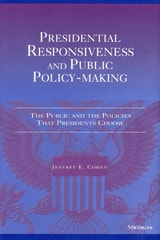
Presidential Responsiveness and Public Policy-Making
The Publics and the Policies that Presidents ChooseJeffrey E. Cohen
University of Michigan Press, 1999
We expect a president to respond to public opinion as an elected official in a democracy. Indeed, the president needs public support to overcome opposition to his policies in Congress and the bureaucracy. At the same time the president may want to pursue policies that do not have widespread support. How does public opinion affect presidential policy making? Jeffrey Cohen finds that presidents are responsive to the public in selecting issues to focus on. If an issue has captured the interest of the people, then the president will focus on that issue. Cohen finds that having chosen to work on an issue, presidents pay less attention to public opinion when making a policy. The president will try to maintain control over the details of the policy so that the outcome fits his policy agenda. Cohen examines the way presidents from Eisenhower through Clinton have dealt with public opinion in policy making. He uses case studies of issues such as Clinton and gays in the military, Bush and the extension of unemployment benefits, and Kennedy and cutting the income tax, to explore the relationship between presidents and public opinion. In addition Cohen uses a quantitative analysis of State of the Union addresses and positions on roll call votes of presidents from Eisenhower through George Bush to test his theories. This book should appeal to political scientists and historians interested in the presidency and in public opinion, as well as general readers interested in the history of the American presidency.

Public Policy and Community
Activism and Governance in TexasEdited by Robert H. Wilson
University of Texas Press, 1997
The decentralization of public policy from the federal government to state and local governments offers increased opportunities for ordinary citizens to participate directly in public policymaking. Yet these opportunities may not be equally shared. Due to a variety of factors, low-income citizens have long been denied a meaningful role in the public life and governance of our country.
By contrast, the essays in this volume explore how low-income citizens have successfully affected public policy. The book is built around six case studies, all from Texas, that cover education finance and reform, local infrastructure provision, environmental protection, and indigent health care.
This research illuminates several issues of national importance, including how communities gain standing and recognition for themselves and their issues, how policy agendas are defined, how communities mobilize technical and institutional resources, and how they form coalitions and alliances to accomplish their goals.
Reconceiving Decision-Making in Democratic Politics
Attention, Choice, and Public PolicyBryan D. Jones
University of Chicago Press, 1994
Individuals and political systems alike, Jones argues, tend to be attentive to only one issue at a time. Using numerous examples from elections, public opinion polls, congressional deliberations, and of bureaucratic decision-making, he shows how shifting attentiveness can and does alter choices and political outcomes—even when underlying preferences remain relatively fixed. An individual, for example, may initially decide to vote for a candidate because of her stand on spending but change his vote when he learns of her position on abortion, never really balancing the two options.
Strategic Politicians, Institutions, and Foreign Policy
Randolph M. Siverson, Editor
University of Michigan Press, 1998

The Biden School and the Engaged University of Delaware, 1961-2021
Daniel Rich
University of Delaware Press, 2023

The European Union
A Critical GuideSteven P. McGiffen
Pluto Press, 2006
This revised and updated edition offers a well-illustrated analysis of each of the EU¹s major policy areas, and covers arguments both for and against the EU. McGiffen explores subjects including enlargement, internal and external security, the Euro, trade, the environment, employment, transport and regional policy. He explains how and why the debate about membership is frequently and falsely presented as if it were a conflict between 'nationalism' and Œinternationalism', and argues instead that the EU is merely one of a number of possible solutions to the the economic and political problems facing Europe.
Published in association with Spectre.
Steve McGiffen is a writer, author and consultant. Until recently he worked for the United Left Group in the European Parliament and the Socialist Party of the Netherlands. He is editor of Spectre, a radical left website which can be read at www.spectrezine.org, His previous books include Biotechnology (Pluto Press, 2005).
The Politics of Attention
How Government Prioritizes ProblemsBryan D. Jones and Frank R. Baumgartner
University of Chicago Press, 2005
Analyzing fifty years of data, Jones and Baumgartner's book is the first study of American politics based on a new information-processing perspective. The authors bring together the allocation of attention and the operation of governing institutions into a single model that traces public policies, public and media attention to them, and governmental decisions across multiple institutions.
The Politics of Attention offers a groundbreaking approach to American politics based on the responses of policymakers to the flow of information. It asks how the system solves, or fails to solve, problems rather than looking to how individual preferences are realized through political action.
The Politics of Herding Cats
When Congressional Leaders FailJohn Lovett
University of Michigan Press, 2021
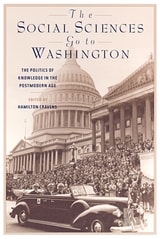
The Social Sciences Go to Washington
The Politics of Knowledge in the Postmodern AgeEdited by Hamilton Cravens
Rutgers University Press, 2003
What happens when the allegedly value-free social sciences enter the national political arena? In The Social Sciences Go to Washington, scholars examine the effects of the massive influx of sociologists, demographers, economists, educators, and others to the federal advisory process in the postwar period. Essays look at how these social scientists sought to change existing policies in welfare, public health, urban policy, national defense, environmental policy, and science and technology policy, and the ways they tried to influence future policies.
Policymakers have been troubled that followers of postmodernism have questioned the legitimacy of scientific and political authority to speak for the desires of social groups. As the social sciences increasingly become expressions of individual preferences, the contributors ask, how can they continue to be used to set public policy for us all?
This collection is a useful resource for anyone studying the relationship between science and the government in the postwar years.

Think Tanks in America
Thomas Medvetz
University of Chicago Press, 2012
Varieties of Civic Innovation
Deliberative, Collaborative, Network, and Narrative ApproachesJennifer Girouard
Vanderbilt University Press, 2014
Women in Politics in the American City
Myra Holman
Temple University Press, 2014
This book provides the first comprehensive evaluation of the influence of gender on the behavior of mayors and city council members in the United States. Holman considers the effects of gender in local, urban politics and analyzes how a leader's gender does-and does not-influence policy preferences, processes, behavior, and outcomes.
Holman effectively uses original survey data to evaluate policy attitudes, combined with observations of city council meetings and interviews with leaders and community members. In doing so, she demonstrates the importance of considering the gender of leaders in local office.
Women in Politics in the American City emphasizes that the involvement of women in local politics does matter and that it has significant consequences for urban policy as well as state and local democracy.