Results by title
44 books match the query 'Regional Planning'
Atlanta Unbound
Enabling Sprawl through Policy and PlanningCarlton Wade Basmajian
Temple University Press, 2015
Bridging a Great Divide
The Battle for the Columbia River GorgeKathie Durbin
Oregon State University Press, 2013
In Bridging a Great Divide, award-winning environmental journalist Kathie Durbin draws on interviews, correspondence, and extensive research to tell the story of the major shifts in the Gorge since the Act’s passage. Sweeping change has altered the Gorge’s landscape: upscale tourism and outdoor recreation, gentrification, the end of logging in national forests, the closing of aluminum plants, wind farms, and a population explosion in the metropolitan area to its west. Yet, to the casual observer, the Gorge looks much the same as it did twenty-five years ago.
How can we measure the success of the Columbia River Gorge National Scenic Area Act? In this insightful and revealing history, Durbin suggests that the answer depends on who you are: a small business owner, an environmental watchdog group, a chamber of commerce. The story of the Columbia River Gorge National Scenic Area is the story of the Pacific Northwest in microcosm, as the region shifts from a natural-resource-based economy to one based on recreation, technology, and quality of life.
Chicago
Metropolis of the Mid-Continent, 4th EditionIrving Cutler. Foreword by James F. Marran
Southern Illinois University Press, 2006
Chicago: Metropolis of the Mid-Continent provides a comprehensive portrayal of the growth and development of Chicago from the mudhole of the prairie to today’s world-class city. This completely revised fourth edition skillfully weaves together the geography, history, economy, and culture of the city and its suburbs with a special emphasis on the role of the many ethnic and racial groups that comprise the “real Chicago” of its neighborhoods. Cutler demonstrates how the geography of “Chicagoland” and the influx of a diverse population spurred transportation, industrial technology, the economy, and sporadic planning to foster rapid urban growth, which brought both great progress and severe problems.
Through insightful analysis, Cutler also traces the demographic and societal changes to Chicago, critically examining such problems as the environment, education, racial tension, crime, welfare, housing, employment, and transportation. Richly illustrated with nearly three hundred drawings, photos, maps, and tables, the volume includes six appendices with sections dedicated to Chicago facts, population growth and income data, weather and climate, significant dates, and historic sites.
City and Regime in the American Republic
Stephen L. Elkin
University of Chicago Press, 1987
The present workings of American urban political institutions are, Elkin maintains, characterized by a close relationship between politicians and businessmen, a relationship that promotes neither political equality nor effective social problem-solving. Elkin pays particular attention to the issue of land-use in his analysis of these failures of popular control in traditional city politics. Urban political institutions, however, are not just instruments for the dispensing of valued outcomes or devices for social problem-solving—they help to form the citizenry. Our present institutions largely define citizens as interest group adversaries and do little to encourage them to focus on the commercial public interest of the city. Elkin concludes by proposing new institutional arrangements that would be better able to harness the self-interested behavior of individuals for the common good of a commercial republic.
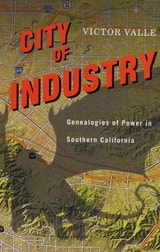
City of Industry
Genealogies of Power in Southern CaliforniaValle, Victor
Rutgers University Press, 2011
Valle investigated an untapped archive of Industry's built landscape, media coverage, and public records, including sealed FBI reports, to uncover a cascading series of scandals. A kaleidoscopic view of the corruption that resulted when local land owners, media barons, and railroads converged to build the city, this suspenseful narrative explores how new governmental technologies and engineering feats propelled the rationality of privatization using their property-owning servants as tools.
Valle's tale of corporate greed begins with the city's founder James M. Stafford and ends with present day corporate heir, Edward Roski Jr., the nation's biggest industrial developerùco-owner of the L.A. Staples Arena and possible future owner of California's next NFL franchise. Not to be forgotten in Valle's captivating story are Latino working class communities living within Los Angeles's distribution corridors, who suffer wealth disparities and exposure to air pollution as a result of diesel-burning trucks, trains, and container ships that bring global trade to their very doorsteps. They are among the many victims of City of Industry.
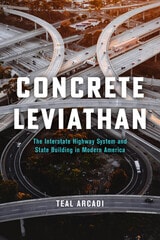
Concrete Leviathan
The Interstate Highway System and State Building in Modern AmericaTeal Arcadi
University of Chicago Press, 2026
Offers an insightful new way to understand the construction and consequences of the US interstate highway system, expanding and revising the common story.
In Concrete Leviathan, historian Teal Arcadi denaturalizes the interstate highway system, interrogating the ideologies, fiscal mechanisms, and legal tools that led to the construction of a vast and permanent physical infrastructure—and then made it all but impossible to change course. Arcadi argues that the US interstate highway system was built by an unaccountable regime of law and political economy that systematically created and insulated structures of governance. The power of these administrative and physical structures has been such that even when people have mobilized to oppose or try to change them, their protests have tended only to reveal the extent and power of the infrastructural state.
At the same time, Concrete Leviathan shows how resistance to this infrastructure’s inequities generated new democratic ideas and practices, pointing toward more participatory structures of government and more equitable models of state building.
Conflict in the Great Outdoors
Toward Understanding and Managing for Diverse Sportsmen PreferencesHobson Bryan, Jr.
University of Alabama Press, 2008
Managing nature’s playground—where diversity meets design.
A major problem of outdoor recreation management addressed in Hobson Bryan’s Conflict in the Great Outdoors is the difficulty in identifying sportsmen subgroups having distinctive preferences and expectations as to the composition of the “quality” outdoor experience. Land-use managers and planners are faced with the problem of matching resources with more users having increasingly specific motivations. Bryan applies his theory of variations within a leisure activity by addressing what sportsmen do and why they do it in various activities such as mountain climbing, hunting, canoeing, skiing, and backpacking.
DESIGNING MODERN AMERICA
THE REGIONAL PLANNING ASSOCIATION OF AMERICA AND ITS MEMBERSEdward K. Spann
The Ohio State University Press, 1996
This fascinating book examines the Regional Planning Association of America (RPAA), a loosely organized association of ambitious and influential planners who hoped to guide the new urban and industrial developments of the early twentieth century and thereby design a radically improved America. After discussing the roots of this effort in the Progressive and World War I periods, Edward K. Spann traces the development of the RPAA from its formation in 1923 through the decades of its greatest effort (which ended in 1934) to its decline and ultimate demise in the late 1930s. Taking a biographical approach and drawing on both published works and private correspondence, the book focuses on the richly varied thoughts and activities of the leading members of the RPAA regarding significant aspects of urban and regional planning.
The members of the RPAA discussed here include Charles Harris Whitaker, Frederick L. Ackerman, Robert D. Kohn, Benton MacKaye, Clarence Stein, Lewis Mumford, Henry Wright, Robert Bruere, Stuart Chase, Edith Elmer Wood, and Catherine Bauer. Spann threads together the philosophies and work of these individuals by focusing on important points in the movement's history, such as the emergence of a community housing movement in World War I, the development of Benton MacKaye's seminal idea of the Appalachian Trail as an instrument for rural reconstruction, and Lewis Mumford's efforts to foster the idealism he thought necessary for successful planning. Spann also looks at Clarence Stein's work with regional planning in New York State during the governorship of Alfred E. Smith; the birth of the RPAA and its early publicity efforts, which culminated in the famous regional planning issue of Survey Graphic; the RPAA's differences with the Regional Plan of New York; the relationship between the RPAA and Franklin Delano Roosevelt during the Great Depression; and the early years of the Tennessee Valley Authority.
This work should appeal not only to students of city and regional planning, of architecture, and of environmentalism, but to all those interested in the intellectual developments of the period between 1914 and 1938, especially as they relate to an important phase of modernization in the United States.
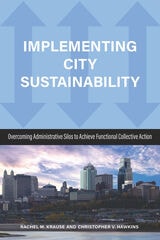
Implementing City Sustainability
Overcoming Administrative Silos to Achieve Functional Collective ActionRachel M. Krause and Christopher V. Hawkins
Temple University Press, 2021
Implementing City Sustainability examines the structures and processes that city governments employ to pursue environmental, social, and economic well-being within their communities. As American cities adopt sustainability objectives, they are faced with the need to overcome fuzzy-boundary, coordination, and collective action challenges to achieve successful implementation.
Sustainability goals often do not fit neatly into traditional city government structures, which tend to be organized around specific functional responsibilities, such as planning, public works, parks and recreation, and community development. The authors advance a theory of Functional Collective Action and apply it to local sustainability to explain how cities can—and in some cases do—organize to successfully administer changes to achieve complex objectives that transcend these organizational separations. Implementing City Sustainability uses a mixed-method research design and original data to provide a national overview of cities’ sustainability arrangements, as well as eight city case studies highlighting different means of organizing to achieve functional collective action.
By focusing not just on what cities are doing to further sustainability, but also on how they are doing it, the authors show how administrative structure enables—or inhibits—cities to overcome functional divides and achieve successful outcomes.
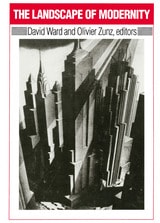
Landscape of Modernity
Essays on New York City, 1900-1940David Ward
Russell Sage Foundation, 1992

Living on the Edge of the Gulf
The West Florida and Alabama CoastDavid M. Bush, Norma J. Longo, William J. Neal, Luciana S. Esteves, Orrin H. Pilkey, Deborah F. Pilkey, Craig A. Webb
Duke University Press, 2001
The Gulf coast of Florida and Alabama is a fragile combination of barrier islands, low-lying marshes, and highly erodable mainland shores. In addition to sea-level rise, winter storms, and altered sediment supplies, hurricanes frequently damage or destroy the human developments and infrastructures that line this coast. Indeed, a single storm can cause billions of dollars in losses. Memories of such hurricanes as Camille, Frederic, Opal, and Andrew cause great concern for residents and property owners alike; events of equal magnitude are always just beyond the horizon and the uninformed have much to lose.
The authors of Living on the Edge of the Gulf seek to counteract potential loss by providing an illustrated introduction to coastal processes, a history of hazards for the region, and risk-reduction guidance in the form of site evaluations, community mitigation techniques, and storm-resistant construction practices. Risk maps that focus on individual coastal beaches are designed to assist property owners, community planners, and officials in prudent decision making, while a review of coastal regulations helps owners to understand and navigate various permit requirements.
This latest book in the Living with the Shore series replaces the earlier guide Living with the West Florida Shore and supplements the Alabama portion of Living with the Alabama/Mississippi Shore.

Major Infrastructure Planning and Delivery
Exploring Nationally Significant Infrastructure Projects (NSIPs) in England and WalesBen Clifford and Janice Morphet
University College London, 2023
Nationally Significant Infrastructure Projects (NSIPs) are the major UK projects involving power stations and large renewable energy schemes, motorways, railways, and a range of other high profile, high impact, and sometimes controversial development schemes, including some closely linked to the United Kingdom’s transition to Net Zero. This book explains where the separate system for governing major infrastructure came from and how it operates in practice, with a particular focus on the relationship between planning, consent, and delivery of these infrastructure projects.
Detailed case studies of the A14 highway, Thames Tideway super sewer, Galloper offshore windfarm, and Progress Power station, drawing on research by the authors, illustrate issues of the often-overlooked continuing role of local government, the engagement of local communities and stakeholders, and the modification of schemes between consent and construction.
Confronting ongoing government planning reform, increased concern about climate change, and still unresolved consequences of Brexit, as well as timeless debates like over national need versus local impact, this timely book offers rich detail on the particular approach to major infrastructure planning in England but also speaks to wider issues around the governance of development and implementation of government policy under late capitalism.
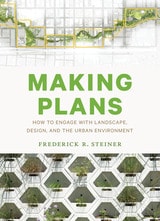
Making Plans
How to Engage with Landscape, Design, and the Urban EnvironmentBy Frederick R. Steiner
University of Texas Press, 2018
“Community and regional planning involve thinking ahead and formally envisioning the future for ourselves and others,” according to Frederick R. Steiner. “Improved plans can lead to healthier, safer, and more beautiful places to live for us and other species. We can also plan for places that are more just and more profitable. Plans can help us not only to sustain what we value but also to transcend sustainability by creating truly regenerative communities, that is, places with the capacity to restore, renew, and revitalize their own sources of energy and materials.”
In Making Plans, Steiner offers a primer on the planning process through a lively, firsthand account of developing plans for the city of Austin and the University of Texas campus. As dean of the UT School of Architecture, Steiner served on planning committees that addressed the future growth of the city and the university, growth that inevitably overlapped because of UT’s central location in Austin. As he walks readers through the planning processes, Steiner illustrates how large-scale planning requires setting goals and objectives, reading landscapes, determining best uses, designing options, selecting courses for moving forward, taking actions, and adjusting to changes. He also demonstrates that planning is an inherently political, sometimes messy, act, requiring the intelligence and ownership of the affected communities. Both wise and frank, Making Plans is an important philosophical and practical statement on planning by a leader in the field.
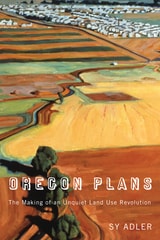
Oregon Plans
The Making of an Unquiet Land Use RevolutionSy Adler
Oregon State University Press, 2012
"Adler's story is about unusual conditions, purposeful action, dynamic personalities, and the messiness of democratic and bureaucratic processes. His conclusions reveal much about how Oregonians defined liveability in the late twentieth century." —William L. Lang, from the Preface
Philadelphia
Neighborhoods, Division, and Conflict in a Post-Industrial CityCarolyn Adams
Temple University Press, 1993
Planning for Rural Resilience
Coping with Climate Change and Energy FuturesWayne J. Caldwell
University of Manitoba Press, 2015
Planning the Urban Region
A Comparative Study of Policies and OrganizationsPeter Self
University of Alabama Press, 1982
In tandem with an analysis of the basic purpose and rationale of urban planning, Peter Self discusses the achievements and failures of different types of planning authorities. Planning the Urban Region surveys in turn the planning of city governments, metro governments, and regional bodies as they attempt to guide the growth and character of large urban areas—within whose sprawl live roughly one-half of the populations of Western countries—with examples drawn from the United States, Great Britain, Canada, Australia, Sweden, and France.
Self argues that the urban region is at a political and organizational crossroads, as it must grapple with the problems of urban sprawl: the social effects of land use and housing, conflicts between local communities and the metro organizations, environmental issues, and the capacity of governmental systems to handle complex issues. Planning the Urban Region is a valuable contribution to the literature on the future of cities and urban regions and should materially inform the debate on the place of public planning in shaping that future.
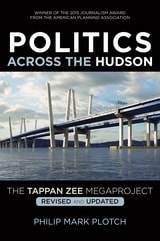
Politics Across the Hudson
The Tappan Zee MegaprojectPhilip Mark Plotch
Rutgers University Press, 2015
The State of New York built one of the world’s longest, widest, and most expensive bridges—the new Tappan Zee Bridge—stretching more than three miles across the Hudson River, approximately thirteen miles north of New York City. In Politics Across the Hudson, urban planner Philip Plotch offers a behind-the-scenes look at three decades of contentious planning and politics centered around this bridge, recently renamed for Governor Mario M. Cuomo, the state's governor from 1983 to 1994. He reveals valuable lessons for those trying to tackle complex public policies while also confirming our worst fears about government dysfunction.
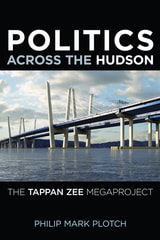
Politics Across the Hudson
The Tappan Zee MegaprojectPhilip Mark Plotch
Rutgers University Press, 2015
Population Trends in New Jersey
James W. Hughes
Rutgers University Press, 2022
The authors also highlight key trends that will continue to transform the state: domestic migration out of the state and immigration into it; increasing diversity; slower overall population growth; contracting fertility; the household revolution and changing living arrangements; generational disruptions; and suburbanization versus re-urbanization. All of these factors help place in context the result of the 2020 decennial U.S. Census.
While the book focuses on New Jersey, the Garden State is a template of demographic, economic, social, and other forces characterizing the United States in the twenty-first century.
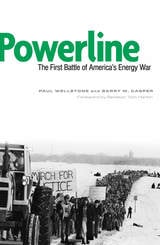
Powerline
The First Battle of America’s Energy WarPaul Wellstone
University of Minnesota Press, 2003
The inspiring story of a grassroots rebellion
Powerline describes the opposition of rural Minnesotans to the building of a high voltage powerline across 430 miles of farmland from central North Dakota to the Twin Cities suburbs. Convinced that the safety of their families and the health of their land was disregarded in favor of the gluttonous energy consumption of cities, the farmer-led revolt began as questioning and escalated to rampant civil disobedience, peaking in 1978 when nearly half of Minnesota’s state highway patrol was engaged in stopping sabotage of the project.
After construction was completed, the powerline proved difficult to defend and unprecedented guerrilla warfare brought many towers to the ground (due to “bolt weevils”). Through pulse-quickening personal interviews and big-picture analysis, Powerline lays bare the latent and unexpected power of the people of rural America—and resonates strongly with today’s energy debates.
Practicing Utopia
An Intellectual History of the New Town MovementRosemary Wakeman
University of Chicago Press, 2016
In Practicing Utopia, Rosemary Wakeman gives us a sweeping view of the new town movement as a global phenomenon. From Tapiola in Finland to Islamabad in Pakistan, Cergy-Pontoise in France to Irvine in California, Wakeman unspools a masterly account of the golden age of new towns, exploring their utopian qualities and investigating what these towns can tell us about contemporary modernization and urban planning. She presents the new town movement as something truly global, defying a Cold War East-West dichotomy or the north-south polarization of rich and poor countries. Wherever these new towns were located, whatever their size, whether famous or forgotten, they shared a utopian lineage and conception that, in each case, reveals how residents and planners imagined their ideal urban future.
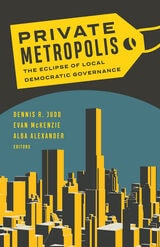
Private Metropolis
The Eclipse of Local Democratic GovernanceDennis R. Judd
University of Minnesota Press, 2021
Examines the complex ecology of quasi-public and privatized institutions that mobilize and administer many of the political, administrative, and fiscal resources of today’s metropolitan regions
In recent decades metropolitan regions in the United States have witnessed the rise of multitudes of “shadow governments” that often supersede or replace functions traditionally associated with municipalities and other local governments inherited from the urban past. Shadow governments take many forms, ranging from billion-dollar special authorities that span entire urban regions, to public–private partnerships and special districts created to accomplish particular tasks, to privatized gated communities, to neighborhood organizations empowered to receive private and public funds. They finance and administer public services ranging from the prosaic (garbage collection and water utilities) to the transformative (economic development and infrastructure). Private Metropolis demonstrates that this complex ecosystem of local governance has compromised and even eclipsed democratic processes by moving important policy decisions out of public sight.
The quasi-public institutions of urban governance generally escape the budgetary and statutory restraints imposed on traditional local governments and protect policy decisions from the limitations and vagaries of electoral politics. Moving major policy decisions into a privatized and corporatized realm facilitates efficiency and speed, but at the cost of democratic oversight. Increasingly, the urban electorate is left debating symbolic issues only tangentially connected to the actual distribution of the resources that affect people’s lives.
The essays in Private Metropolis grapple with the difficult and timely questions that arise from this new ecology of governance: What are the consequences of the proliferation of special authorities, privatized governments, and public–private arrangements? Is the trade-off between democratic accountability and efficiency worth it? Has the public sector, with its messiness and inefficiencies—but also its checks and balances—ceded too much power to these new institutions? By examining such questions, this book provokes a long-overdue debate about the future of urban governance.
Contributors: Douglas Cantor, California State U, Long Beach; Ellen Dannin, Pennsylvania State U; Jameson W. Doig, Princeton U; Mary Donoghue; Peter Eisinger, New School; Steven P. Erie, U of California, San Diego; Rebecca Hendrick, U of Illinois at Chicago; Sara Hinkley, U of California, Berkeley; Amanda Kass, U of Illinois at Chicago; Scott A. MacKenzie, U of California, Davis; David C. Perry, U of Illinois at Chicago; James M. Smith, U of Indiana South Bend; Shu Wang, Michigan State U; Rachel Weber, U of Illinois at Chicago.
Regional Planning for a Sustainable America
How Creative Programs Are Promoting Prosperity and Saving the EnvironmentMontgomery, Carleton K
Rutgers University Press, 2012
Regional Planning for a Sustainable America is the first book to represent the great variety of today’s effective regional planning programs, analyzing dozens of regional initiatives across North America.
The American landscape is being transformed by poorly designed, sprawling development. This sprawl—and its wasteful resource use, traffic, and pollution—does not respect arbitrary political boundaries like city limits and state borders. Yet for most of the nation, the patterns of development and conservation are shaped by fragmented, parochial local governments and property developers focused on short-term economic gain. Regional planning provides a solution, a means to manage human impacts on a large geographic scale that better matches the natural and economic forces at work. By bringing together the expertise of forty-two practitioners and academics, this book provides a practical guide to the key strategies that regional planners are using to achieve truly sustainable growth.
Regions That Work
How Cities and Suburbs Can Grow TogetherManuel Pastor, Jr.
University of Minnesota Press, 2000
"A remarkable and timely book. . . . Must reading." William Julius Wilson
Offering a new vision of community-based regionalism, this book arrives just as "smart growth" measures and other attempts to link cities and suburbs are beginning to make their mark on the political and analytical scene. The authors make a powerful case for emphasizing equity, arguing that metropolitan areas must reduce poverty in order to grow and that low-income individuals must make regional connections in order to escape poverty.
A hard-hitting analysis of Los Angeles demonstrates that the roots of the unrest of 1992 lay in regional economic deterioration and that the recovery was slowed by insufficient attention to the poor. Regions That Work then provides a history and critique of community-development corporations, a statistical analysis of the poverty-growth relationship in seventy-four metro areas, a detailed study of three regions that have produced superior equity outcomes, and a provocative call for new policies and new politics.
Roads, Runways and Resistance
From the Newbury Bypass to Extinction RebellionSteve Melia
Pluto Press, 2021
'As a movement for social change it is important that we understand our own history. This is a compelling read.'
From the anti-roads protests of the 1990s to HS2 and Extinction Rebellion, conflict and protest have shaped the politics of transport. In 1989, Margaret Thatcher's government announced 'the biggest road-building programme since the Romans.' This is the inside story of the thirty tumultuous years that have followed.
Roads, Runways and Resistance draws on over 50 interviews with government ministers, advisors and protestors - many of whom, including 'Swampy', speak here for the first time about the events they describe. It is a story of transport ministers undermined by their own Prime Ministers, protestors attacked or quietly supported by the police, and smartly-dressed protestors who found a way onto the roof of the Houses of Parliament.
Today, as a new wave of road building and airport expansion threatens to bust Britain's carbon budgets, climate change protestors find themselves on a collision course with the government. Melia asks, what difference did the protests of the past make? And what impacts might today's protest movements have on the transport of the future?
Second Tier Cities
Rapid Growth beyond the MetropolisAnn Markusen
University of Minnesota Press, 1999
Analyzes and compares the rapid growth of medium-sized cities.
Over the past thirty years, transnational investment, trade, and government policies have encouraged the decentralization of national economies, disrupting traditional patterns of urban and regional growth. Many smaller cities-such as Seattle, Washington; Campinas, Brazil; Oita, Japan; and Kumi, Korea-have grown markedly faster than the largest metropolitan regions. These “second tier cities” are home to specialized industrial complexes that have taken root, provided significant job growth, and attracted mobile capital and labor.
The culmination of an ambitious five-year, fourteen-city research project conducted by an international team of economists and geographers, Second Tier Cities examines the potential of these new regions to balance uneven regional development, create good, stable jobs, and moderate hyper-urbanization. Comparing across national borders, the contributors describe four types of second tier cities: Marshallian industrial districts, hub-and-spoke cities, satellite platforms, and government-anchored complexes. They find that both industrial and regional policies have been important contributors to the rise of second tier cities, though the former often trump the latter. Lessons for local, national, and international policymakers are drawn. The authors are critical of devolution and argue that it must be accompanied by strong labor and environmental standards and mechanisms to overcome differential regional resource endowments.Contributors: Clelio Campolina Diniz, U Federal de Minas Gerais, Brazil; Masatomi Funaba, Kobe U of Commerce, Japan; Elyse Golob, NYC Economic Development Goup; Mia Gray, Cambridge U; Jun Ho Jeong, Oxford U; Sam Ock Park, Seoul National U; Mohammad Razavi; Fabiana Borges T. Santos, U Federal de Minas Gerais, Brazil; and Masayuki Sasaki, Kanzawa U, Japan.
Separate Societies
William Goldsmith
Temple University Press, 1992
Separate Societies
Poverty and Inequality in U.S. CitiesAuthored by William W. Goldsmith and Edward J. Blakely with a foreword by President Bill Clinton
Temple University Press, 2010
“Economic and political forces no longer combat poverty—they generate poverty!" exclaim William Goldsmith and Edward Blakely in their report on the plight of American's urban poor. In this revised and updated edition of their 1992 book Separate Societies,the authors present a compelling examination of the damaging divisions that isolate poor city minority residents from the middle-class suburban majority. They pay special attention to how the needs of the permanently poor have been unmet through the alternating years of promises and neglect, and propose a progressive turn away from 30 years of conservative policies.
Separate Societies vividly documents how the urban working class has been pushed out of industrial jobs through global economic restructuring, and how the Wall Street meltdown has aggravated underemployment, depleted public services, and sharpened racial and class inequalities.
The authors insist that the current U.S. approach puts Americans out of work and lowers the standard of living for all. As such, Goldsmith and Blakely urge the Obama administration to create better urban policy and foster better metropolitan management to effectively and efficiently promote equality.
Showroom City
Real Estate and Resistance in the Furniture Capital of the WorldJohn Joe Schlichtman
University of Minnesota Press, 2022
A unique and engaging account of local urban decision-making within the globalizing world
High Point, North Carolina, is known as the “Furniture Capital of the World.” Once a manufacturing stronghold, most of its furniture factories have closed over the past forty years, with production shipped off to low-wage countries. Yet as manufacturing left, the city tightened its hold on a biannual global exposition that serves as the world’s furniture fashion runway. At the High Point Market, visitors from more than one hundred nations traverse twelve million square feet of meticulous design. Downtown buildings—once courthouses, movie theaters, post offices, and gas stations—are now chic showroom spaces, even as many sit empty between each exposition.
In Showroom City, John Joe Schlichtman applies an ethnographic lens to the global exposition’s relationship with High Point after it defeated rival Chicago in the 1960s and established itself as the world’s dominant furniture center. In recent decades, following trends in global finance, private equity firms were increasingly behind downtown High Point’s real estate transactions, coordinated by buyers far removed from the region. Then, in one massive transaction in 2011, a firm funded by Bain Capital purchased every major showroom building, and the majority of downtown real estate was under one owner.
Showroom City is a story of exclusionary growth and unchecked development, of a city flailing to fill the void left by its dwindling factories. But beyond that Schlichtman engages the general lessons behind both High Point’s deindustrialization and its stunning reinvention as a furniture fashion, merchandising, and design node. With great nuance, he delves deeply to reveal how power operates locally and how citizens may affirm, exploit, influence, and resist the takeover of their community.

Spiral to the Stars
Mvskoke Tools of FuturityLaura Harjo
University of Arizona Press, 2019
Geographer Laura Harjo demonstrates that Mvskoke communities have what they need to dream, imagine, speculate, and activate the wishes of ancestors, contemporary kin, and future relatives—all in a present temporality—which is Indigenous futurity.
Organized around four methodologies—radical sovereignty, community knowledge, collective power, and emergence geographies—Spiral to the Stars provides a path that departs from traditional community-making strategies, which are often extensions of the settler state. Readers are provided a set of methodologies to build genuine community relationships, knowledge, power, and spaces for themselves. Communities don’t have to wait on experts because this book helps them activate their own possibilities and expertise. A detailed final chapter provides participatory tools that can be used in workshop settings or one on one.
This book offers a critical and concrete map for community making that leverages Indigenous way-finding tools. Mvskoke narratives thread throughout the text, vividly demonstrating that theories come from lived and felt experiences. This is a must-have book for community organizers, radical pedagogists, and anyone wishing to empower and advocate for their community.
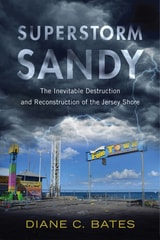
Superstorm Sandy
The Inevitable Destruction and Reconstruction of the Jersey ShoreBates, Diane C
Rutgers University Press, 2015
Diane C. Bates offers a wide-ranging look at the Jersey Shore both before and after Sandy, examining the many factors—such as cultural attachment, tourism revenues, and governmental regulation—that combined to create a highly vulnerable coastal region. She explains why the Shore is so important to New Jerseyans, acting as a key cultural touchstone in a state that lacks a central city or even a sports team to build a shared identity among the state’s residents. She analyzes post-Sandy narratives about the Jersey Shore that trumpeted the dominance of human ingenuity over nature (such as the state’s “Stronger than the Storm” advertising campaign) or proclaimed a therapeutic community (“Jersey Strong”)—narratives rooted in emotion and iconography, waylaying any thought of the near-certainty of future storms. The book also examines local business owners, politicians, real estate developers, and residents who have vested interests in the region, explaining why the Shore was developed intensively prior to Sandy, and why restoration became an imperative in the post-storm period.
Engagingly written and insightful, Superstorm Sandy highlights the elements that compounded the disaster on the Shore, providing a framework for understanding such catastrophes and preventing them in the future.
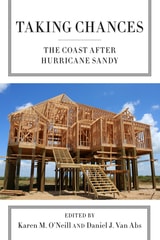
Taking Chances
The Coast after Hurricane SandyO'Neill, Karen M.
Rutgers University Press, 2016

The Administrative Partitioning of Costa Rica
Marilyn April Dorn
University of Chicago Press, 1989
The Federal Landscape
An Economic History of the Twentieth-Century WestGerald D. Nash
University of Arizona Press, 1999
Historian Gerald D. Nash has written the first account of the epic growth of the economy of the American West during the twentieth century, showing how national interests shaped the West over the course of the past hundred years. In a book written for a broad readership, he tells the story of how America’s hinterland became the most dynamic and rapidly growing part of the country.
The Federal Landscape relates how in the nineteenth century the West was largely developed by individual enterprise but how in the twentieth Washington, D.C., became the central player in shaping the region. Nash traces the development of this process during the Progressive Era, World War I, the New Deal, World War II, the affluent postwar years, and the cold-war economy of the 1950s. He analyzes the growth of western cities and the emergence of environmental issues in the 1960s, the growth of a vibrant Mexican-U.S. border economy, and the impact of large-scale immigration from Latin America and Asia at century’s end.
Although specialists have studied many particular facets of western growth, Nash has written the only book to provide a much-needed overview of the subject. By addressing subjects as diverse as public policy, economic development, environmental and urban issues, and questions of race, class, and gender, he puts the entire federal landscape in perspective and shows how the West was really won.
The Future City on the Inland Sea
A History of Imaginative Geographies of Lake SuperiorEric D. Olmanson
Ohio University Press, 2007
Winner of the AAG’s John Brinckerhoff Jackson Prize
Winner of the Great Lakes American Studies Association/Ohio University Press Book Award
Throughout the nineteenth century, the southern shores of Lake Superior held great promise for developers imagining the next great metropolis. These new territories were seen as expanses to be filled, first with romantic visions, then with scientific images, and later with vistas designed to entice settlement and economic development. The Future City on the Inland Sea describes the attempts of explorers under government, commercial, or scientific sponsorship to project their imaginative visions on a region where the future did not happen as planned.
Author Eric D. Olmanson takes a fresh look at the settlements in the vicinity of Chequamegon Bay and the Apostle Islands by analyzing the texts and images left by the missionaries, geologists, ordinance surveyors, newspaper editors, and boosters. The Future City on the Inland Sea shows how new visions of the place absorbed and replaced the old ones, eventually producing what might be called for the first time “a region.”
More than a regional geography, The Future City on the Inland Sea is an appraisal of these early efforts to meld geographies of physical nature with those of human ideals, a demonstration of how thoroughly and paradoxically those two realms are entangled.
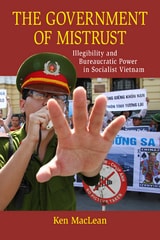
The Government of Mistrust
Illegibility and Bureaucratic Power in Socialist VietnamKen MacLean
University of Wisconsin Press, 2013

The Language of Planning
Essays on the Origins and Ends of American Planning ThoughtAlbert Z. Guttenberg
University of Illinois Press, 1993

The New American City Faces its Regional Future
A Cleveland PerspectiveDavid C. Sweet
Ohio University Press, 1999
The fate of Cleveland, Ohio, rides on a web of interdependencies on a regional scale. People and communities throughout that area of Ohio are being forced to adjust to new civic roles. The city of Cleveland must understand how it fits into Greater Cleveland. And suburbs must understand their dependence on the historic central city and be drawn into the Cleveland community.
In this sweeping study by local and national experts, these and more specific issues are raised and examined in depth. The New American City Faces Its Regional Future captures the dynamic thinking concerned with Cleveland and its surrounding region. The authors address questions of importance not only to Cleveland and its region but also to communities across the country that are facing similar issues. How does the city want to grow in the future? How can it become a more livable community? As the population of the region moves farther and farther out from the established urban areas, consuming more and more land, and as it enters its third century, these questions will need to be addressed. This book takes some first, important steps toward providing the answers.
The Rise of the Entrepreneurial State
State and Local Economic Development Policy in the United StatesPeter K. Eisinger
University of Wisconsin Press, 1989
Eisinger’s meticulous research uncovers state and local governments’ transition from supply-side to demand-side strategies of market creation. He shows that, instead of relying solely on the supply-side strategies of tax breaks and other incentives to encourage business relocation, some governments promoted innovation and the creation of new business approaches.
Toward Oregon 2050
Planning a Better FutureMegan Horst
Oregon State University Press, 2024
In this compelling volume, leading experts in land use and urban planning, in cooperation with other scholars and community partners, envision various possible futures and begin the work of developing statewide plans to guide Oregon through the decades ahead. Building on the state’s policy innovation and planning legacy, contributors to Toward Oregon 2050 address current challenges such as housing scarcity, income inequality, the rural-urban divide, and climate change. They offer recommendations on a range of issues, from culture to incarceration, transportation to voting rights, all with the goal of imagining what a fair and equitable Oregon might look like.
Some of the imagined futures—with worsening effects of climate change, environmental harms, and social inequities—are not bright for many Oregonians. Other futures include enhanced resiliency to forest fires and flooding, more Oregonians in high-paying jobs and in secure housing, and more children walking and biking to school. But those positive futures are not guaranteed, and getting there won’t be easy. They’ll require all stakeholders—state and local government, members of all political parties, private businesses, non-profit organizations, and individual residents—to play a role in ensuring a better future for the next generation of Oregonians.
Intended for all Oregonians who care about their state’s future, Toward Oregon 2050 will also appeal to scholars and planners who have long looked to Oregon for inspiration and lessons learned. The book invites readers to envision the future of Oregon and to contribute their part toward a better future for the state.
Transforming Cities and Minds through the Scholarship of Engagement
Economy, Equity, and EnvironmentLorlene Hoyt
Vanderbilt University Press, 2013
Across the country from Camden to Oakland, the contributors engaged with community partners--hospitals, churches, community development corporations, community foundations, and other rooted institutions--to help restore old cities to life. Their collaborative thesis project engaged them with one another and university staff; it may offer a new paradigm for graduate education.
Urban Land Use Planning, Fifth Edition
Philip R. Berke, David R. Godschalk, and Edward J. Kaiser, with Daniel A. Rodriguez
University of Illinois Press, 2006
Divided into three sections, this edition of Urban Land Use Planning deftly balances an authoritative, up-to-date discussion of current practices with a vision of what land use planning should become. It explores the societal context of land use planning and proposes a model for understanding and reconciling the divergent priorities among competing stakeholders; it explains how to build planning support systems to assess future conditions, evaluate policy choices, create visions, and compare scenarios; and it sets forth a methodology for creating plans that will influence future land use change.
Discussions new to the fifth edition include how to incorporate the three Es of sustainable development (economy, environment, and equity) into sustainable communities, methods for including livability objectives and techniques, the integration of transportation and land use, the use of digital media in planning support systems, and collective urban design based on analysis and public participation.
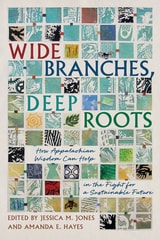
Wide Branches, Deep Roots
How Appalachian Wisdom Can Help in the Fight for a Sustainable FutureJessica M Jones
West Virginia University Press, 2026
To be Appalachian is to define oneself in terms of a place. Where we’re from plays a tremendous role in who we are, through storytelling about our homeplaces and the people who have loved them. However, what goes largely unaddressed is how this love of place can contribute to sustainability within the region, which has notoriously faced on-going environmental threats from extraction industries. The reality is that our relationship with the environment is thorny and intertwined with our identities, histories, and economic realities. The authors in the collection get down among the thorns to explore what sustainability means in Appalachia and how we can utilize the power of traditional folkways to achieve it.
This collection of over thirty pieces explores the connections between Appalachia’s stories, traditions, and modern events and the pathway to regional sustainability. The contributors — writers and scholars — examine how our definitions of sustainability have been formed, the power of education to encourage or inhibit it, and what moves are being made toward efficacy in the future. They also offer specific actions readers can take to better understand and build sustainability where they live.
Contributors: Greg Bealer, Luc Biscan-White, David Blackmore, Aysha Bodenhamer, Ivy Brashear, Matthew Calloway, Nicole Drewitz-Crockett, Christina Fisanick, Deborah Fleming, Amanda V. Garner, Karie Gunter-Seymour, Richard Hague, Amanda E. Hayes, Lockie Hunter, Jessica M. Jones, Kristen LeFevers, Sarah Long, Meghan Moore-Hubbard, Barbara Marie Minney, Jessica Radicic, Elizabeth Emmerth Rexroad, Barbara Sabol, Larry Smith, Patrice Stank, Taylor Nasim Stone, Paul Thomas, Elizabeth Tussey, and Betsy Weems.