Results by title
4038 books match the query 'Social aspects' and 296 start with a
A Book of Waves
Stefan Helmreich
Duke University Press, 2023
A COVID Charter, A Better World
Toby Miller
Rutgers University Press, 2021
A COVID Charter, A Better World outlines the steps needed to reform public policies and fix the structural vulnerabilities that the current pandemic has made so painfully clear. Leading scholar Toby Miller argues that we must resist neoliberalism’s tendency to view health in terms of individual choices and market-driven solutions, because that fails to preserve human rights. He addresses the imbalance of geopolitical power to explain how we arrived at this point and shows that the pandemic is more than just a virus—it’s a social disease. By examining how the U.S., Britain, Mexico, and Colombia have responded to the COVID-19 crisis, Miller investigates corporate, scientific, and governmental decision-making and the effects those decisions have had on disadvantaged local communities. Drawing from human rights charters ratified by various international organizations, he then proposes a COVID charter, calling for a new world that places human lives above corporate profits.
A Camera in the Garden of Eden
The Self-Forging of a Banana RepublicBy Kevin Coleman
University of Texas Press, 2016
In the early twentieth century, the Boston-based United Fruit Company controlled the production, distribution, and marketing of bananas, the most widely consumed fresh fruit in North America. So great was the company’s power that it challenged the sovereignty of the Latin American and Caribbean countries in which it operated, giving rise to the notion of company-dominated “banana republics.”
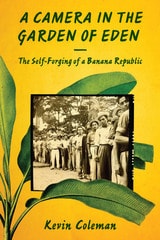
In A Camera in the Garden of Eden, Kevin Coleman argues that the “banana republic” was an imperial constellation of images and practices that was checked and contested by ordinary Central Americans. Drawing on a trove of images from four enormous visual archives and a wealth of internal company memos, literary works, immigration records, and declassified US government telegrams, Coleman explores how banana plantation workers, women, and peasants used photography to forge new ways of being while also visually asserting their rights as citizens. He tells a dramatic story of the founding of the Honduran town of El Progreso, where the United Fruit Company had one of its main divisional offices, the rise of the company now known as Chiquita, and a sixty-nine day strike in which banana workers declared their independence from neocolonial domination. In telling this story, Coleman develops a new set of conceptual tools and methods for using images to open up fresh understandings of the past, offering a model that is applicable far beyond this pathfinding study.
A Century of Brazilian Documentary Film
From Nationalism to ProtestDarlene J. Sadlier
University of Texas Press, 2022
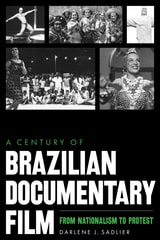
Since the late nineteenth century, Brazilians have turned to documentaries to explain their country to themselves and to the world. In a magisterial history covering one hundred years of cinema, Darlene J. Sadlier identifies Brazilians’ unique contributions to a diverse genre while exploring how that genre has, in turn, contributed to the making and remaking of Brazil.
A Century of Brazilian Documentary Film is a comprehensive tour of feature and short films that have charted the social and political story of modern Brazil. The Amazon appears repeatedly and vividly. Sometimes—as in a prize-winning 1922 feature—the rainforest is a galvanizing site of national pride; at other times, the Amazon has been a focus for land-reform and Indigenous-rights activists. Other key documentary themes include Brazil’s swings from democracy to dictatorship, tensions between cosmopolitanism and rurality, and shifting attitudes toward race and gender. Sadlier also provides critical perspectives on aesthetics and media technology, exploring how documentaries inspired dramatic depictions of poverty and migration in the country’s Northeast and examining Brazilians’ participation in streaming platforms that have suddenly democratized filmmaking.
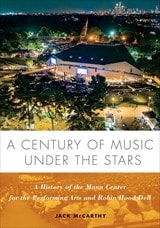
A Century of Music Under the Stars
A History of the Mann Center for the Performing Arts and Robin Hood DellMcCarthy, Jack, and The Mann Center for the Performing Arts
Temple University Press, 2025
The Dell, which opened in 1930, and the Mann, which opened in 1976, were initially built as summer homes for The Philadelphia Orchestra. As McCarthy fondly recounts, the Mann Center evolved to host the world’s top artists across many musical genres. Contemporary audiences have gathered on the Great Lawn for concerts by performers including James Taylor, The Roots, Phish, Diana Ross, John Legend, and others.
The venues, however, are more than just the music; they are about the beautiful natural setting, communal atmosphere, and spectacular view of the Philadelphia skyline. A Century of Music Under the Stars is a revealing and celebratory look back at beloved Philadelphia cultural icons. This informative and illuminating history will provide happy memories for generations of music lovers.
A Century of Nature
Twenty-One Discoveries that Changed Science and the WorldEdited by Laura Garwin and Tim Lincoln
University of Chicago Press, 2003
A Century of Transnationalism
Immigrants and Their Homeland ConnectionsEdited by Nancy L. Green and Roger Waldinger
University of Illinois Press, 2016
A Civil Economy
Transforming the Marketplace in the Twenty-First CenturySeveryn T. Bruyn
University of Michigan Press, 2000
A Cold War State of Mind
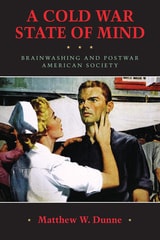
Brainwashing and Postwar American SocietyMatthew W. Dunne
University of Massachusetts Press, 2013
First popularized during the 1950s, the concept of “brainwashing” is often viewed as an example of Cold War paranoia, an amusing relic of a bygone era. Yet as Matthew W. Dunne shows in this study, over time brainwashing came to connote much more than a sinister form of Communist mind control, taking on broader cultural and political meanings.
Moving beyond well-known debates over Korean War POWs and iconic cultural texts like The Manchurian Candidate, Dunne explores the impact of the idea of brainwashing on popular concerns about freedom, individualism, loyalty, and trust in authority. By the late 1950s the concept had been appropriated into critiques of various aspects of American life such as an insistence on conformity, the alleged “softening” of American men, and rampant consumerism fueled by corporate advertising that used “hidden” or “subliminal” forms of persuasion. Because of these associations and growing anxieties about the potential misuse of psychology, concerns about brainwashing contributed to a new emphasis on individuality and skepticism toward authority in the 1960s. The notion even played an unusual role in the 1968 presidential race, when Republican frontrunner George Romney's claim that he had been “brainwashed” about the Vietnam War by the Johnson administration effectively destroyed his campaign.
In addition to analyzing the evolving meaning of brainwashing over an extended period of time, A Cold War State of Mind explores the class and gender implications of the idea, such as the assumption that working-class POWs were more susceptible to mind control and that women were more easily taken in by the manipulations of advertisers.
A Community of Writers
Paul Engle and the Iowa Writers' WorkshopDana, Robert
University of Iowa Press, 1999
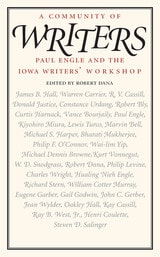
With these words, written long before his Iowa Writers' Workshop became world famous, much imitated, and academically rich, Paul Engle captured the spirit behind his beloved workshop. Now, in this collection of essays by and about those writers who shared the energetic early years, Robert Dana presents a dynamic, informative tribute to Engle and his world.
The book's three sections mingle myth and history with style and grace and no small amount of humor. The beginning essays are given over to memories of Paul Engle in his heyday. The second group focuses particularly on those teachers—Robert Lowell, John Berryman, Kurt Vonnegut, for example—who made the workshop hum on a day-to-day basis. Finally, the third section is devoted to storytelling: tall tales, vignettes, surprises, sober and not-so-sober moments. Engle's own essay, "The Writer and the Place," describes his "simple, and yet how reckless" conviction that "the creative imagination in all of the arts is as important, as congenial, and as necessary, as the historical study of all the arts."
Today, of course, there are hundreds of writers' workshops, many of them founded and directed by graduates of the original Iowa workshop. But when Paul Engle arrived in Iowa there were exactly two. His indomitable nature and great persuasive powers, combined with his distinguished reputation as a poet, loomed large behind the enhancement of the Iowa Writers' Workshop. This volume of fine and witty essays reveals the enthusiasm and drive and sheer pleasure that went into Iowa's renowned workshop.
A Companion to John Dewey's "Democracy and Education"
D. C. Phillips
University of Chicago Press, 2016
Phillips bridges several critical pitfalls of Democracy and Education that often prevent contemporary readers from fully understanding it. Where Dewey sorely needs a detailed example to illustrate a point—and the times are many—Phillips steps in, presenting cases from his own classroom experiences. Where Dewey casually refers to the works of people like Hegel, Herbart, and Locke—common knowledge, apparently, in 1916—Phillips fills in the necessary background. And where Dewey gets convoluted or is even flat-out wrong, Phillips does what few other scholars would do: he takes Dewey to task. The result is a lively accompaniment that helps us celebrate and be enriched by some of the most important ideas ever offered in education.
A Confluence of Transatlantic Networks
Elites, Capitalism, and Confederate Migration to BrazilLaura Jarnagin
University of Alabama Press, 2013
A Confluence of Transatlantic Network demonstrates how portions of interconnected trust-based kinship, business, and ideational transatlantic networks evolved over roughly a century and a half and eventually converged to engender, promote, and facilitate the migration of southern elites to Brazil in the post–Civil War era. Placing that migration in the context of the Atlantic world sharpens our understanding of the transborder dynamic of such mainstream nineteenth-century historical currents as international commerce, liberalism, Protestantism, and Freemasonry. The manifestation of these transatlantic forces as found in Brazil at midcentury provided disaffected Confederates with a propitious environment in which to try to re-create a cherished lifestyle.
A Contest without Winners
How Students Experience Competitive School ChoiceKate Phillippo
University of Minnesota Press, 2019
Seeing the consequences of competitive school choice policy through students’ eyes
While policymakers often justify school choice as a means to alleviate opportunity and achievement gaps, an unanticipated effect is increased competition over access to coveted, high-performing schools. In A Contest without Winners, Kate Phillippo follows a diverse group of Chicago students through the processes of researching, applying to, and enrolling in public high school. Throughout this journey, students prove themselves powerful policy actors who carry out and redefine competitive choice.
Phillippo’s work amplifies the voices of students—rather than the parents, educators, public intellectuals, and policymakers who so often inform school choice research—and investigates how students interact with and emerge from competitive choice academically, developmentally, and civically. Through students’ experiences, she shows how competitive choice legitimates and exacerbates existing social inequalities; collides with students’ developmental vulnerability to messages about their ability, merit, and potential; and encourages young people’s individualistic actions as they come to feel that they must earn their educational rights. From urban infrastructure to income inequality to racial segregation, Phillippo examines the factors that shape students’ policy enactment and interpretation, as policymakers and educators ask students to compete for access to public resources.
With competitive choice, even the winners—the lucky few admitted to their dream schools—don’t outright win. A Contest without Winners challenges meritocratic and market-driven notions of opportunity creation for young people and raises critical questions about the goals we have for public schooling.
A Cultural Arsenal for Democracy
The World War II Work of US MuseumsClarissa J. Ceglio
University of Massachusetts Press, 2022
Unsurprisingly, exhibitions served as the primary vehicle through which museums, large and small, engaged their publics with wartime topics with fare ranging from displays on the cultures of Allied nations to "living maps" that charted troop movements and exhibits on war preparedness. Clarissa J. Ceglio chronicles debates, experiments, and collaborations from the 1930s to the immediate postwar years, investigating how museums re-envisioned the exhibition as a narrative medium and attempted to reconcile their mission with new modes of storytelling.
A Day in "The Hole"
Risk, Loss, and Excess in Downtown LimaDaniella Gandolfo
University of Chicago Press, 2025
A single day in a semilegal market in Lima, Peru, reveals a social world that defies conventional economic logic.
In the heart of Lima’s historic center, the markets of El Hueco (“The Hole”) and sprawling Mesa Redonda pulse with life, with thousands of vendors selling everything from knockoff electronics to religious icons. In A Day in “The Hole,” anthropologist Daniella Gandolfo immerses readers in a single, tumultuous day—the thirty-fourth anniversary of a vendors’ cooperative—while examining the dynamics that sustain these marketplaces.
Through a blend of cinematic storytelling and incisive anthropological insight, Gandolfo reveals a world with its own unique codes. She inspects how vendors embrace expenditure over profit and instability over order, and moving through the sights and sounds of El Hueco and Mesa Redonda, she finds a dissident economy that is as much about survival as it is about spectacle. Gandolfo redefines how we think about urban economies and the unexpected ways these defiant communities thrive in this textured portrait of Lima’s markets and the people who animate them.
A Decolonial Feminism
Francoise Verges
Pluto Press, 2021
A Dream of Arcadia
Anti-Industrialism in Spanish LIterature, 1895–1905By Lily Litvak
University of Texas Press, 1975
The dream of “progress” that animated many nineteenth-century artistic and political movements gave way at the turn of the century to a dissatisfaction with the Industrial Civilization and a recurrent pessimism about a future dominated by mechanization. Art Nouveau, which was both a style and a movement, embodied this dissatisfaction, marking the turn-of-the-century period with an aesthetic that consciously set out to revolutionize literature, the arts, and society within the framework of a brutalizing, wildly burgeoning Industrial Civilization. Generally associated with northern European culture, Art Nouveau also had a great impact in the south, particularly in Spain.
A Dream of Arcadia is the first work to explore Spain’s fertile and imaginative Art Nouveau. Through the eyes of four major Spanish writers, Lily Litvak views several different aspects of the turn-of-the-century struggle against the advances of industrialism in Spain. Her interpretation of the early works of Ramón del Valle Inclán, Miguel de Unamuno, José Martínez Ruiz (Azorín), and Pío Baroja exposes a longing for a preindustrial arcadia based on a return to nature, the revival of handicrafts and medieval art, an attraction to rural primitive societies, and a revulsion against the modern city. Set against the European literary and artistic background of the period, her observations place the Spanish manifestations of Art Nouveau within the context of the better-known northern phenomena. Of particular interest is her discussion of the influences of John Ruskin, William Morris, and the Pre-Raphaelites, which demonstrates how the general European mood was articulated in Spain.
Litvak concludes that Valle Inclán, Unamuno, Azorín, and Baroja must be considered as more than simply fin de siècle writers, for they became part of a general movement, generated by Art Nouveau, that spans an entire century. A Dream of Arcadia demonstrates that Art Nouveau was more than a flash on Europe's artistic horizon; it is a philosophy with ramifications that have led to communes, handcrafted articles, and nomadic adolescents in search of truth.
A Fan's Life
The Agony of Victory and the Thrill of DefeatPaul Campos
University of Chicago Press, 2022
The Pass. The Curse. The Double Doink. A sports fan’s life is not just defined by intense moments on a field, it’s scarred by them. For a real fan, winning isn’t everything—losing is. The true fans, it’s said, are those who have suffered the most, enduring lives defined by irrational obsession, fervid hopes, and equally gut-wrenching misery. And as Paul Campos shows, those deep feelings are windows not just onto an individual fan’s psychology but onto some of our shared concepts of community, identity, and belonging—not all of which are admirable. In A Fan’s Life, he seeks not to exalt a particular team but to explore fandom’s thorniest depths, excavating the deeper meanings of the fan’s inherently unhappy life.
A Fan’s Life dives deep into the experience of being an ardent fan in a world defined more and more by the rhetoric of “winners” and “losers.” In a series of tightly argued chapters that suture together memoir and social critique, Campos chronicles his lifelong passion for University of Michigan football while meditating on fandom in the wake of the unprecedented year of 2020—when, for a time, a global pandemic took away professional and collegiate sports entirely. Fandom isn’t just leisure, he shows; it’s part of who we are, and part of even our politics, which in the age of Donald Trump have become increasingly tribal and bloody. Campos points toward where we might be heading, as our various partisan affiliations—fandoms with a grimly national significance—become all the more intense and bitterly self-defining. As he shows, we’re all fans of something, and making sense of fandom itself might offer a way to wrap our heads around our increasingly divided reality, on and off the field.

A Feminist Theory of Violence
A Decolonial PerspectiveFrançoise Vergès
Pluto Press, 2022
***Winner of an English PEN Award 2022***
The mainstream conversation surrounding gender equality is a repertoire of violence: harassment, rape, abuse, femicide. These words suggest a cruel reality. But they also hide another reality: that of gendered violence committed with the complicity of the State.
In this book, Françoise Vergès denounces the carceral turn in the fight against sexism. By focusing on 'violent men', we fail to question the sources of their violence. There is no doubt as to the underlying causes: racial capitalism, ultra-conservative populism, the crushing of the Global South by wars and imperialist looting, the exile of millions and the proliferation of prisons - these all put masculinity in the service of a policy of death.
Against the spirit of the times, Françoise Vergès refuses the punitive obsession of the State in favour of restorative justice.

A Florida Fiddler
The Life and Times of Richard SeamanGregory Hansen
University of Alabama Press, 2007
Exploring Florida's cultural landscape through the life of a legendary fiddler.
This biography of 97-year-old Richard Seaman, who grew up in Kissimmee Park, Florida, relies on oral history and folklore research to define the place of musicianship and storytelling in the state's history from one artist's perspective. Gregory Hansen presents Seaman’s assessment of Florida’s changing cultural landscape through his tall tales, personal experience narratives, legends, fiddle tune repertory, and descriptions of daily life.
Seaman’s childhood memories of fiddling performances and rural dances explain the role such gatherings played in building and maintaining social order within the community. As an adult, Seaman moved to Jacksonville, Florida, where he worked as a machinist and performed with his family band. The evolution of his musical repertory from the early 1920s through the 1950s provides a resource for reconstructing social life in the rural south and for understanding how changes in musical style reflect the state's increasingly urban social structure. Hansen includes a set of Seaman's fiddle tunes, transcribed for the benefit of performer and researcher alike. The thirty tall tales included in the volume constitute a representative sample of Florida’s oral tradition in the early years of the 20th century.
A Games Changer
The International Olympic Committee, Tokyo 2020, and COVID-19Stephen R. Wenn
University of Arkansas Press, 2025
From the emergence of the COVID pandemic in early 2020 through the delayed staging of the Tokyo Olympic games in summer 2021, A Games Changer takes the reader behind the scenes to explore the myriad challenges the International Olympic Committee (IOC) and Japanese officials faced during the months of uncertainty leading up not only to the postponement of the Games but also to their delayed.
Drawing on a thorough review of contemporary newspaper and magazine coverage as well as personal interviews with current and former IOC officials, Stephen R. Wenn and Robert K. Barney examine Japan’s rising excitement in 2019 as preparations for the Games accelerated; whispers of a mysterious disease spreading first in China, then worldwide; organizers’ initial resolve to press forward with the Games; the tumultuous discussions that ultimately resulted in the joint March 2020 decision by Japanese Prime Minister Shinzo Abe and IOC President Thomas Bach to postpone the Games; and the numerous negotiations with venues, media, and sponsors required to extend contracts and protect all parties’ health. Wenn and Barney reveal how human relationships—among planners, politicians, competitors, and vaccine researchers—were vital to presenting an Olympics where, in July and August 2021, world records were set, deferred dreams were achieved, and fears of a superspreader event went unrealized.
While tracing the struggles of multiple athletes who had to pause their Olympic hopes and training as COVID-19 closed the world, Wenn and Barney focus on the journey of Canadian decathlete Damian Warner and his coach, Gar Leyshon. Denied his usual training venues, he prepared for the rescheduled Games with ingenuity, determination, and adaptability, reflective of the resilience demonstrated by Tokyo’s Olympians around the globe. The authors’ close account of Warner’s two days in Tokyo recaptures the excitement and drama of sport that home viewers sorely needed amid pandemic lockdowns and incalculable personal loss.
A Genealogy of Terror in Eighteenth-Century France
Ronald Schechter
University of Chicago Press, 2018
For centuries prior to the French Revolution, the word “terror” had largely positive connotations. Subjects flattered monarchs with the label “terror of his enemies.” Lawyers invoked the “terror of the laws.” Theater critics praised tragedies that imparted terror and pity. By August 1794, however, terror had lost its positive valence. As revolutionaries sought to rid France of its enemies, terror became associated with surveillance committees, tribunals, and the guillotine. By unearthing the tradition that associated terror with justice, magnificence, and health, Schechter helps us understand how the revolutionary call to make terror the order of the day could inspire such fervent loyalty in the first place—even as the gratuitous violence of the revolution eventually transformed it into the dreadful term we would recognize today. Most important, perhaps, Schechter proposes that terror is not an import to Western civilization—as contemporary discourse often suggests—but rather a domestic product with a long and consequential tradition.
A Geology of Media
Jussi Parikka
University of Minnesota Press, 2015
Media history is millions, even billions, of years old. That is the premise of this pioneering and provocative book, which argues that to adequately understand contemporary media culture we must set out from material realities that precede media themselves—Earth’s history, geological formations, minerals, and energy. And to do so, writes Jussi Parikka, is to confront the profound environmental and social implications of this ubiquitous, but hardly ephemeral, realm of modern-day life.
Exploring the resource depletion and material resourcing required for us to use our devices to live networked lives, Parikka grounds his analysis in Siegfried Zielinski’s widely discussed notion of deep time—but takes it back millennia. Not only are rare earth minerals and many other materials needed to make our digital media machines work, he observes, but used and obsolete media technologies return to the earth as residue of digital culture, contributing to growing layers of toxic waste for future archaeologists to ponder. He shows that these materials must be considered alongside the often dangerous and exploitative labor processes that refine them into the devices underlying our seemingly virtual or immaterial practices.
A Geology of Media demonstrates that the environment does not just surround our media cultural world—it runs through it, enables it, and hosts it in an era of unprecedented climate change. While looking backward to Earth’s distant past, it also looks forward to a more expansive media theory—and, implicitly, media activism—to come.
A Good That Transcends
How US Culture Undermines Environmental ReformEric T. Freyfogle
University of Chicago Press, 2017
A lawyer by training, with expertise in property rights, Freyfogle uses his legal knowledge to demonstrate that bad land use practices are rooted in the way in which we see the natural world, value it, and understand our place within it. While social and economic factors are important components of our current predicament, it is our culture, he shows, that is driving the reform crisis—and in the face of accelerating environmental change, a change in culture is vital. Drawing upon a diverse array of disciplines from history and philosophy to the life sciences, economics, and literature, Freyfogle seeks better ways for humans to live in nature, helping us to rethink our relationship with the land and craft a new conservation ethic. By confronting our ongoing resistance to reform as well as pointing the way toward a common good, A Good That Transcends enables us to see how we might rise above institutional and cultural challenges, look at environmental problems, appreciate their severity, and both support and participate in reform.
A Heart for the Work
Journeys through an African Medical SchoolClaire L. Wendland
University of Chicago Press, 2010
Burnout is common among doctors in the West, so one might assume that a medical career in Malawi, one of the poorest countries in the world, would place far greater strain on the idealism that drives many doctors. But, as A Heart for the Work makes clear, Malawian medical students learn to confront poverty creatively, experiencing fatigue and frustration but also joy and commitment on their way to becoming physicians. The first ethnography of medical training in the global South, Claire L. Wendland’s book is a moving and perceptive look at medicine in a world where the transnational movement of people and ideas creates both devastation and possibility.
Wendland, a physician anthropologist, conducted extensive interviews and worked in wards, clinics, and operating theaters alongside the student doctors whose stories she relates. From the relative calm of Malawi’s College of Medicine to the turbulence of training at hospitals with gravely ill patients and dramatically inadequate supplies, staff, and technology, Wendland’s work reveals the way these young doctors engage the contradictions of their circumstances, shedding new light on debates about the effects of medical training, the impact of traditional healing, and the purposes of medicine.
A Journey Around Our America
A Memoir on Cycling, Immigration, and the Latinoization of the U.S.By Louis G. Mendoza
University of Texas Press, 2012
Immigration and the growing Latino population of the United States have become such contentious issues that it can be hard to have a civil conversation about how Latinoization is changing the face of America. So in the summer of 2007, Louis Mendoza set out to do just that. Starting from Santa Cruz, California, he bicycled 8,500 miles around the entire perimeter of the country, talking to people in large cities and small towns about their experiences either as immigrants or as residents who have welcomed—or not—Latino immigrants into their communities. He presented their enlightening, sometimes surprising, firsthand accounts in Conversations Across Our America: Talking About Immigration and the Latinoization of the United States.
Now, in A Journey Around Our America, Mendoza offers his own account of the visceral, emotional, intellectual, and spiritual dimensions of traveling the country in search of a deeper, broader understanding of what it means to be Latino in the United States in the twenty-first century. With a blend of first- and second-person narratives, blog entries, poetry, and excerpts from conversations he had along the way, Mendoza presents his own aspirations for and critique of social relations, political ruminations, personal experiences, and emotional vulnerability alongside the stories of people from all walks of life, including students, activists, manual laborers, and intellectuals. His conversations and his experiences as a Latino on the road reveal the multilayered complexity of Latino life today as no academic study or newspaper report ever could.

A Jumble of Needs
Women’s Activism and Neoliberalism in the Colonias of the SouthwestRebecca Dolhinow
University of Minnesota Press, 2010

A Kiss across the Ocean
Transatlantic Intimacies of British Post-Punk and US LatinidadRichard T. Rodríguez
Duke University Press, 2022

A Laboratory of Her Own
Women and Science in Spanish CultureVictoria L. Ketz
Vanderbilt University Press, 2021
While women's historic exclusion from STEM fields has been receiving increased scrutiny worldwide, women within the Spanish context have been perhaps even more peripheral given the complex sociocultural structures emanating from gender norms and political ideologies dominant in nineteenth- and twentieth-century Spain. Nonetheless, Spanish female cultural producers have long been engaged with science and technology, as expressed in literature, art, film, and other genres. Spanish arts and letters offer diverse representations of the relationships between women, gender, sexuality, race, and STEM fields.
A Laboratory of Her Own studies representations of a diverse range of Spanish women and scientific cultural products from the late nineteenth through the twenty-first centuries. STEM topics include the environment, biodiversity, temporal and spatial theories, medicine and reproductive rights, neuroscience, robotics, artificial intelligence, and quantum physics. These scientific themes and other issues are analyzed in narratives, paintings, poetry, photographs, science fiction, medical literature, translation, newswriting, film, and other forms.

A Land Not Forgotten
Indigenous Food Security and Land-Based Practices in Northern OntarioMichael A. Robidoux
University of Manitoba Press, 2017
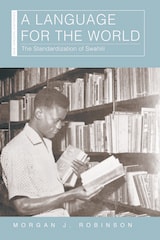
A Language for the World
The Standardization of SwahiliMorgan J. Robinson
Ohio University Press, 2022
This intellectual history of Standard Swahili explores the long-term, intertwined processes of standard making and community creation in the historical, political, and cultural contexts of East Africa and beyond.
Morgan J. Robinson argues that the portability of Standard Swahili has contributed to its wide use not only across the African continent but also around the globe. The book pivots on the question of whether standardized versions of African languages have empowered or oppressed. It is inevitable that the selection and promotion of one version of a language as standard—a move typically associated with missionaries and colonial regimes—negatively affected those whose language was suddenly deemed nonstandard. Before reconciling the consequences of codification, however, Robinson argues that one must seek to understand the process itself. The history of Standard Swahili demonstrates how events, people, and ideas move rapidly and sometimes surprisingly between linguistic, political, social, or temporal categories.
Robinson conducted her research in Zanzibar, mainland Tanzania, and the United Kingdom. Organized around periods of conversation, translation, and codification from 1864 to 1964, the book focuses on the intellectual history of Swahili’s standardization. The story begins in mid-nineteenth-century Zanzibar, home of missionaries, formerly enslaved students, and a printing press, and concludes on the mainland in the mid-twentieth century, as nationalist movements added Standard Swahili to their anticolonial and nation-building toolkits. This outcome was not predetermined, however, and Robinson offers a new context for the strong emotions that the language continues to evoke in East Africa.
The history of Standard Swahili is not one story, but rather the connected stories of multiple communities contributing to the production of knowledge. The book reflects this multiplicity by including the narratives of colonial officials and anticolonial nationalists; East African clerks, students, newspaper editors, editorialists, and their readers; and library patrons, academic linguists, formerly enslaved children, and missionary preachers. The book reconstructs these stories on their own terms and reintegrates them into a new composite that demonstrates the central place of language in the history of East Africa and beyond.
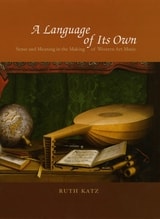
A Language of Its Own
Sense and Meaning in the Making of Western Art MusicRuth Katz
University of Chicago Press, 2009
The Western musical tradition has produced not only music, but also countless writings about music that remain in continuous—and enormously influential—dialogue with their subject. With sweeping scope and philosophical depth, A Language of Its Own traces the past millennium of this ongoing exchange.
Ruth Katz argues that the indispensible relationship between intellectual production and musical creation gave rise to the Western conception of music. This evolving and sometimes conflicted process, in turn, shaped the art form itself. As ideas entered music from the contexts in which it existed, its internal language developed in tandem with shifts in intellectual and social history. Katz explores how this infrastructure allowed music to explain itself from within, creating a self-referential and rational foundation that has begun to erode in recent years.
A magisterial exploration of a frequently overlooked intersection of Western art and philosophy, A Language of Its Own restores music to its rightful place in the history of ideas.
A Latin American Music Reader
Views from the SouthJavier F Leon
University of Illinois Press, 2016
Contributors include Marina Alonso Bolaños, Gonzalo Camacho Díaz, José Jorge de Carvalho, Claudio F. Díaz, Rodrigo Cantos Savelli Gomes, Juan Pablo González, Rubén López-Cano, Angela Lühning, Jorge Martínez Ulloa, Maria Ignêz Cruz Mello, Julio Mendívil, Carlos Miñana Blasco, Raúl R. Romero, Iñigo Sánchez Fuarros, Carlos Sandroni, Carolina Santamaría-Delgado, Rodrigo Torres Alvarado, and Alejandro Vera.
A Leaf of Voices
Stories of the American Civil War in the Words of Those Who Lived and Died, 1861-65Jennifer McSpadden
Indiana Historical Society Press, 2014
A Mass Conspiracy to Feed People
Food Not Bombs and the World-Class Waste of Global CitiesDavid Boarder Giles
Duke University Press, 2021
A Menorah for Athena
Charles Reznikoff and the Jewish Dilemmas of Objectivist PoetryStephen Fredman
University of Chicago Press, 2001
Stephen Fredman illuminates the relationship of Jewish intellectuals to modernity through a close look at Reznikoff's life and writing. He shows that when we regard the Objectivists as modern Jewish poets, we can see more clearly their distinctiveness as modernists and the reasons for their profound impact upon later poets, such as Allen Ginsberg and Charles Bernstein. Fredman also argues that to understand Reznikoff's work more completely, we must see it in the context of early, nonsectarian attempts to make the study of Jewish culture a force in the construction of a more pluralistic society. According to Fredman, then, the indelible images in Reznikoff's poetry open a window onto the vexed but ultimately successful entry of Jewish immigrants and their children into the mainstream of American intellectual life.
A Nation of Family and Friends?
Sport and the Leisure Cultures of British Asian Girls and WomenAarti Ratna
Rutgers University Press, 2024
Ratna also examines two key cultural objects - the popular films "Bend it Like Beckham" and “Dhan Dhana Dhan Goal” - to examine in detail the gendered representation of South Asian soccer players’ engagement in amateur and elite levels of the sport. She critiques studies of women’s football fandom and sport that fail to acknowledge social differences relating to race, class, age, disability, and sexuality. By linking the social forces (across time and space) that differentially affect their sporting choices and leisure lifestyles, Ratna portrays the women of the South Asian diaspora as active agents in the shaping of their life courses and as skilled navigators of the complexities affecting their own identities. Ultimately Ratna examines the intersections of class, caste, age, generation, gender, and sexuality, to provide a rich and critical exploration of British Asian women's sport and leisure choices, pleasures, and lived realities.
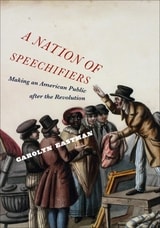
A Nation of Speechifiers
Making an American Public after the RevolutionCarolyn Eastman
University of Chicago Press, 2009
In the decades after the American Revolution, inhabitants of the United States began to shape a new national identity. Telling the story of this messy yet formative process, Carolyn Eastman argues that ordinary men and women gave meaning to American nationhood and national belonging by first learning to imagine themselves as members of a shared public.
She reveals that the creation of this American public—which only gradually developed nationalistic qualities—took place as men and women engaged with oratory and print media not only as readers and listeners but also as writers and speakers. Eastman paints vibrant portraits of the arenas where this engagement played out, from the schools that instructed children in elocution to the debating societies, newspapers, and presses through which different groups jostled to define themselves—sometimes against each other. Demonstrating the previously unrecognized extent to which nonelites participated in the formation of our ideas about politics, manners, and gender and race relations, A Nation of Speechifiers provides an unparalleled genealogy of early American identity.
A People's History of Baseball
Mitchell Nathanson
University of Illinois Press, 2012
A Perturbed System
Religion and Climate Change from the End of a WorldSusannah Crockford
University of Chicago Press, 2026
Our ecological system is disturbed, and with it, every other system we’ve built to inhabit it. We do not face inevitable destruction, yet many of us cannot conceive of climate change as anything but the end of the world, an apocalypse with all its biblical trappings. Why?
In A Perturbed System, anthropologist Susannah Crockford argues that we must understand the climate emergency as a spiritual crisis, a result of Christian colonialism that we (religious or not) still struggle to describe without religious language. Climate discourse in the United States and northern Europe, Crockford shows, is framed by the same theological motifs that drove extraction, including ideas about prophecy, mediation, sacrifice, original sin, cult, messiah, and apocalypse. By listening to people on the edge of the crisis, A Perturbed System reveals a world in transition, what happens when worlds end—ecologically, socially, politically, and personally—and how we might live through these endings together.
A Place Called Appomattox
William Marvel
Southern Illinois University Press, 2007
In A Place Called Appomattox, William Marvel turns his extensive Civil War scholarship toward Appomattox County, Virginia, and the village of Appomattox Court House, which became synonymous with the end of the Civil War when Robert E. Lee surrendered to Ulysses S. Grant there in 1865. Marvel presents a formidably researched and elegantly written analysis of the county from 1848 to 1877, using it as a microcosm of Southern attitudes, class issues, and shifting cultural mores that shaped the Civil War and its denouement.
With an eye toward correcting cultural myths and enriching the historical record, Marvel analyzes the rise and fall of the village and county from 1848 to 1877, detailing the domestic economic and social vicissitudes of the village, and setting the stage for the flight of Lee’s Army toward Appomattox and the climactic surrender that still resonates today.
Now available for the first time in paperback, A Place Called Appomattox reveals a new view of the Civil War, tackling some of the thorniest issues often overlooked by the nostalgic exaggerations and historical misconceptions that surround Lee’s surrender.
A Place for Inquiry, A Place for Wonder
The Andrews ForestWilliam Robbins
Oregon State University Press, 2020
In A Place for Inquiry, A Place for Wonder, historian William Robbins turns his attention to the long-overlooked Andrews Forest and argues for its importance to environmental science and policy. From its founding in 1948, the experimental forest has been the site of wide-ranging research. Beginning with postwar studies on the conversion of old-growth timber to fast-growing young stands, research at the Andrews shifted in the next few decades to long-term ecosystem investigations that focus on climate, streamflow, water quality, vegetation succession, biogeochemical cycling, and effects of forest management. The Andrews has thus been at the center of a dramatic shift in federal timber practices from industrial, intensive forest management policies to strategies emphasizing biodiversity and healthy ecosystems.
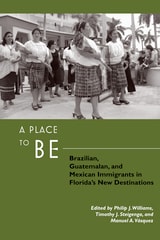
A Place to Be
Brazilian, Guatemalan, and Mexican Immigrants in Florida's New DestinationsEdited by Philip J. Williams, Timothy J. Steigenga, and Manuel A. Vásquez
Rutgers University Press, 2009
Contributors to this volume include Patricia Fortuny Loret de Mola, Carol Girón Solórzano, Silvia Irene Palma, Lúcia Ribeiro, Mirian Solfs Lizama, José Claúdio Souza Alves, Timothy J. Steigenga, Manuel A. Vásquez, and Philip J. Williams.
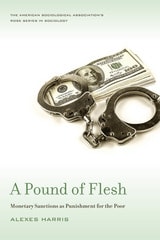
A Pound of Flesh
Monetary Sanctions as Punishment for the PoorAlexes Harris
Russell Sage Foundation, 2016
Over seven million Americans are either incarcerated, on probation, or on parole, with their criminal records often following them for life and affecting access to higher education, jobs, and housing. Court-ordered monetary sanctions that compel criminal defendants to pay fines, fees, surcharges, and restitution further inhibit their ability to reenter society. In A Pound of Flesh, sociologist Alexes Harris analyzes the rise of monetary sanctions in the criminal justice system and shows how they permanently penalize and marginalize the poor. She exposes the damaging effects of a little-understood component of criminal sentencing and shows how it further perpetuates racial and economic inequality.
Harris draws from extensive sentencing data, legal documents, observations of court hearings, and interviews with defendants, judges, prosecutors, and other court officials. She documents how low-income defendants are affected by monetary sanctions, which include fees for public defenders and a variety of processing charges. Until these debts are paid in full, individuals remain under judicial supervision, subject to court summons, warrants, and jail stays. As a result of interest and surcharges that accumulate on unpaid financial penalties, these monetary sanctions often become insurmountable legal debts which many offenders carry for the remainder of their lives. Harris finds that such fiscal sentences, which are imposed disproportionately on low-income minorities, help create a permanent economic underclass and deepen social stratification.
A Pound of Flesh delves into the court practices of five counties in Washington State to illustrate the ways in which subjective sentencing shapes the practice of monetary sanctions. Judges and court clerks hold a considerable degree of discretion in the sentencing and monitoring of monetary sanctions and rely on individual values—such as personal responsibility, meritocracy, and paternalism—to determine how much and when offenders should pay. Harris shows that monetary sanctions are imposed at different rates across jurisdictions, with little or no state government oversight. Local officials’ reliance on their own values and beliefs can also push offenders further into debt—for example, when judges charge defendants who lack the means to pay their fines with contempt of court and penalize them with additional fines or jail time.
A Pound of Flesh provides a timely examination of how monetary sanctions permanently bind poor offenders to the judicial system. Harris concludes that in letting monetary sanctions go unchecked, we have created a two-tiered legal system that imposes additional burdens on already-marginalized groups.
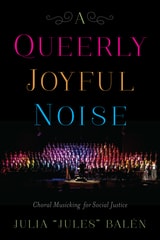
A Queerly Joyful Noise
Choral Musicking for Social JusticeJulia "Jules" Balén
Rutgers University Press, 2017
Honorable Mention, 2019 Herndon Book Prize - (SEM-GST)
A Queerly Joyful Noise examines how choral singing can be both personally transformative and politically impactful. As they blend their different voices to create something beautiful, LGBTIQ singers stand together and make themselves heard. Comparing queer choral performances to the uses of group singing within the civil rights and labor movements, Julia “Jules” Balén maps the relationship between different forms of oppression and strategic musical forms of resistance. She also explores the potential this queer communal space creates for mobilizing progressive social action.
A proud member of numerous queer choruses, Balén draws from years of firsthand observations, archival research, and extensive interviews to reveal how queer chorus members feel shared vulnerability, collective strength, and even moments of ecstasy when performing. A Queerly Joyful Noise serves as a testament to the power of music, intimately depicting how participation in a queer chorus is more than a pastime, but a meaningful form of protest through celebration.

A Question of Identity
Women, Science, and LiteratureEdited by Marina Benjamin
Rutgers University Press, 1993
A Resonant Ecology
Max Ritts
Duke University Press, 2024
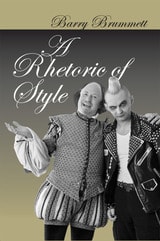
A Rhetoric of Style
Barry Brummett
Southern Illinois University Press, 2008
Exploring style in a global culture
In A Rhetoric of Style, Barry Brummett illustrates how style is increasingly a global system of communication as people around the world understand what it means to dress a certain way, to dance a certain way, to decorate a certain way, to speak a certain way. He locates style at the heart of popular culture and asserts that it is the basis for social life and politics in the twenty-first century.
Brummett sees style as a system of signification grounded largely in image, aesthetics, and extrarational modes of thinking. He discusses three important aspects of this system—its social and commercial structuring, its political consequences, and its role as the chief rhetorical system of the modern world. He argues that aesthetics and style are merging into a major engine of the global economy and that style is becoming a way to construct individual identity, as well as social and political structures of alliance and opposition. It is through style that we stereotype or make assumptions about others’ political identities, their sexuality, their culture, and their economic standing.
To facilitate theoretical and critical analysis, Brummett develops a systematic rhetoric of style and then demonstrates its use through an in-depth exploration of gun culture in the United States. Armed with an understanding of how this rhetoric of style works methodologically, students and scholars alike will have the tools to do their own analyses. Written in clear and engaging prose, A Rhetoric of Style presents a novel discussion of the workings of style and sheds new light on a venerable and sometimes misunderstood rhetorical concept by illustrating how style is the key to constructing a rhetoric for the twenty-first century.
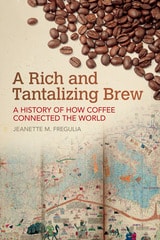
A Rich and Tantalizing Brew
A History of How Coffee Connected the WorldJeanette M. Fregulia
University of Arkansas Press, 2019
The history of coffee is much more than the tale of one luxury good—it is a lens through which to consider various strands of world history, from food and foodways to religion and economics and sociocultural dynamics.
A Rich and Tantalizing Brew traces the history of coffee from its cultivation and brewing first as a private pleasure in the highlands of Ethiopia and Yemen through its emergence as a sought-after public commodity served in coffeehouses first in the Muslim world, and then traveling across the Mediterranean to Italy, to other parts of Europe, and finally to India and the Americas. At each of these stops the brew gathered ardent aficionados and vocal critics, all the while reshaping patterns of socialization.
Taking its conversational tone from the chats often held over a steaming cup, A Rich and Tantalizing Brew offers a critical and entertaining look at how this bitter beverage, with a little help from the tastes that traveled with it—chocolate, tea, and sugar—has connected people to each other both within and outside of their typical circles, inspiring a new context for sharing news, conducting business affairs, and even plotting revolution.
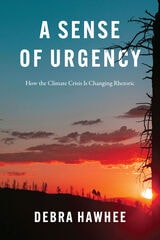
A Sense of Urgency
How the Climate Crisis Is Changing RhetoricDebra Hawhee
University of Chicago Press, 2023
Why is it difficult to talk about climate change? Debra Hawhee argues that contemporary rhetoric relies on classical assumptions about humanity and history that cannot conceive of the present crisis. How do we talk about an unprecedented future or represent planetary interests without privileging our own species? A Sense of Urgency explores four emerging answers, their sheer novelty a record of both the devastation and possible futures of climate change. In developing the arts of magnitude, presence, witness, and feeling, A Sense of Urgency invites us to imagine new ways of thinking with our imperiled planet.