Results by title
25 books match the query 'Societies and clubs'

After-School Clubs for Kids
Thematic Programming to Encourage ReadingLisa M. Shaia
American Library Association, 2014
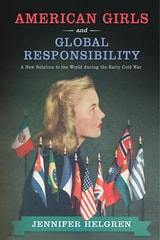
American Girls and Global Responsibility
A New Relation to the World during the Early Cold WarHelgren, Jennifer
Rutgers University Press, 2017
Jennifer Helgren argues that a new internationalist girl citizenship took root in the country in the years following World War II in youth organizations such as Camp Fire Girls, Girl Scouts, YWCA Y-Teens, schools, and even magazines like Seventeen. She shows the particular ways that girls’ identities and roles were configured, and reveals the links between internationalist youth culture, mainstream U.S. educational goals, and the U.S. government in creating and marketing that internationalist girl, thus shaping the girls’ sense of responsibilities as citizens.

Cross Currents in the International Women’s Movement, 1848–1948
Patricia Ward D'Itri
University of Wisconsin Press, 1999
This study portrays individuals, organizations, and events that contributed to the development of the world movement for women's rights between 1848 and 1948.
Equals in Learning and Piety
Muslim Women Scholars in Nigeria and North AmericaBeverly Mack
University of Wisconsin Press, 2023
Mack shows how women scholars instructed rural Hausa and Fulani women in Muslim ethics, doctrine, traditions, and behavior that followed and replaced the traumatic experience of warfare unleashed by the Jihad. She shows that these unique social engagements shaped people’s agency in the dynamic process of social change throughout the nineteenth century. Women imaginatively reconciled Muslim reformist doctrines and traditional practices in Nigeria, and these doctrines have continued to be influential in the diaspora, especially among Black American Muslims in the United States in the twenty-first century. With this major investigation of a little-studied phenomenon, Mack demonstrates the importance of women to the religious, political, and social transformation of Nigerian Muslim society.
Feminist Organizations
Harvest of the New Women's Movementedited by Myra Marx Ferree and Patricia Yancey Martin
Temple University Press, 1995
This collection of twenty-six original essays looks at contemporary feminist organizations, how they've survived, the effects of their work, the problems they face, the strategies they develop, and where the women's movement is headed. The contributors, leading feminist scholars from nine social science disciplines, examine a wide variety of local feminist organizations, past and preset, illuminating the struggles of feminist organizers and activists.
In the series Women in the Political Economy, edited by Ronnie J. Steinberg.
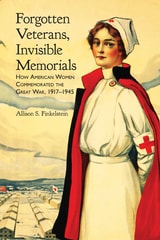
Forgotten Veterans, Invisible Memorials
How American Women Commemorated the Great War, 1917–1945Allison S. Finkelstein
University of Alabama Press, 2021
Investigates the groundbreaking role American women played in commemorating those who served and sacrificed in World War I
In Forgotten Veterans, Invisible Memorials: How American Women Commemorated the Great War, 1917–1945 Allison S. Finkelstein argues that American women activists considered their own community service and veteran advocacy to be forms of commemoration just as significant and effective as other, more traditional forms of commemoration such as memorials. Finkelstein employs the term “veteranism” to describe these women’s overarching philosophy that supporting, aiding, and caring for those who served needed to be a chief concern of American citizens, civic groups, and the government in the war’s aftermath. However, these women did not express their views solely through their support for veterans of a military service narrowly defined as a group predominantly composed of men and just a few women. Rather, they defined anyone who served or sacrificed during the war, including women like themselves, as veterans.
These women veteranists believed that memorialization projects that centered on the people who served and sacrificed was the most appropriate type of postwar commemoration. They passionately advocated for memorials that could help living veterans and the families of deceased service members at a time when postwar monument construction surged at home and abroad. Finkelstein argues that by rejecting or adapting traditional monuments or by embracing aspects of the living memorial building movement, female veteranists placed the plight of all veterans at the center of their commemoration efforts. Their projects included diverse acts of service and advocacy on behalf of people they considered veterans and their families as they pushed to infuse American memorial traditions with their philosophy. In doing so, these women pioneered a relatively new form of commemoration that impacted American practices of remembrance, encouraging Americans to rethink their approach and provided new definitions of what constitutes a memorial. In the process, they shifted the course of American practices, even though their memorialization methods did not achieve the widespread acceptance they had hoped it would.
Meticulously researched, Forgotten Veterans, Invisible Memorials utilizes little-studied sources and reinterprets more familiar ones. In addition to the words and records of the women themselves, Finkelstein analyzes cultural landscapes and ephemeral projects to reconstruct the evidence of their influence. Readers will come away with a better understanding of how American women supported the military from outside its ranks before they could fully serve from within, principally through action-based methods of commemoration that remain all the more relevant today.
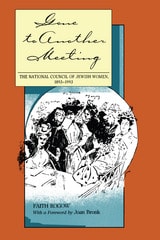
Gone to Another Meeting
The National Council of Jewish Women, 1893-1993Faith Rogow
University of Alabama Press, 1993
The first comprehensive history of the oldest national religious Jewish women's organization in the United States
Gone to Another Meeting charts the development of the National Council of Jewish Women (NCJW) and its impact on both the Jewish Community in the United States and American Society in general.
Founded in 1893 by Hannah Greenebaum Solomon, NCJW provided a conduit through which Jewish women’s voices could be heard and brought a Jewish voice to America’s women’s rights movement. NCJW would come to represent both the modernization and renewal of traditional Jewish womanhood. Through its emphasis on motherhood, its adoption of domestic feminism, and its efforts to carve a distinct Jewish niche in the late 19th-century Progressive social reform movement in the largely Christian world of women’s clubs, NCJW was instrumental in defining a uniquely American version of Jewish womanhood.
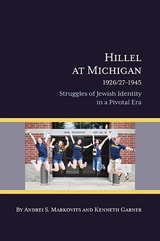
Hillel at Michigan, 1926/27-1945
Struggles of Jewish Identity in a Pivotal EraAndrei S. Markovits and Kenneth Garner
Michigan Publishing Services, 2016
The study analyzes Hillel's challenges as a big-tent, catch-all institution trying to represent all Jewish students on campus regardless of their religious orientation, cultural preferences, and ideological predilections. It looks at Hillel's interactions with the then powerful Jewish fraternities and sororities that provided the main locus of Jewish life on campus at the time, as well as its relations with the University's leadership and many of its cultural and political constituencies. Most of these activities occurred at a time when anti-Semitism was rife in the United States, particularly in the larger Detroit area, home to Henry Ford and Father Charles Edward Coughlin.
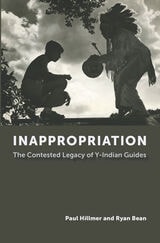
Inappropriation
The Contested Legacy of Y-Indian GuidesPaul Hillmer
University of Missouri Press, 2023
The Y-Indian Guides was a father-son (and later parent-child) program that encouraged real and enduring bonds through play and an authentic appreciation of family. While “playing Indian” seemed harmless to most participants during the program’s heyday, Paul Hillmer and Ryan Bean demonstrate the problematic nature of its methods. In the process of seeking to admire and emulate Indigenous Peoples, Y-Indian Guide participants often misrepresented American Indians and reinforced harmful stereotypes. Ultimately, this history demonstrates many ways in which American culture undermines and harms its Indigenous communities.

Intimate Practices
Literacy and Cultural Work in U.S. Women's Clubs, 1880-1920Anne Ruggles Gere
University of Illinois Press, 1997
Winner of the 1995 University of Illinois Press-National Women's Studies
Association manuscript prize
Women's clubs at the turn of the century were numerous, dedicated to
a number of issues, and crossed class, religious, and racial lines. Emphasizing
the intimacy engendered by shared reading and writing in these groups,
Anne Ruggles Gere contends that these literacy practices meant that club
members took an active part in reinventing the nation during a period
of major change. Gere uses archival material that documents club members'
perspectives and activities around such issues as Americanization, womanhood,
peace, consumerism, benevolence, taste, and literature--and offers a rare
depth of insight into the interests and lives of American women from the
fin de siècle through the beginning of the roaring twenties.
Intimate Practices is unique in its exploration of a range of
women's clubs--Mormon, Jewish, white middle-class, African American, and
working class--and paints a vast and colorful multicultural, multifaceted
canvas of these widely-divergent women's groups.
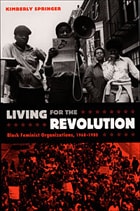
Living for the Revolution
Black Feminist Organizations, 1968–1980Kimberly Springer
Duke University Press, 2005
The organizations that Springer examines were the first to explicitly use feminist theory to further the work of previous black women’s organizations. As she describes, they emerged in response to marginalization in the civil rights and women’s movements, stereotyping in popular culture, and misrepresentation in public policy. Springer compares the organizations’ ideologies, goals, activities, memberships, leadership styles, finances, and communication strategies. Reflecting on the conflicts, lack of resources, and burnout that led to the demise of these groups, she considers the future of black feminist organizing, particularly at the national level. Living for the Revolution is an essential reference: it provides the history of a movement that influenced black feminist theory and civil rights activism for decades to come.
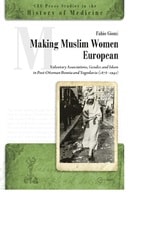
Making Muslim Women European
Voluntary Associations, Gender, and Islam in Post-Ottoman Bosnia and Yugoslavia (1878-1941)Fabio Giomi
Central European University Press, 2021
This social, cultural, and political history of Slavic Muslim women of the Yugoslav region in the first decades of the post-Ottoman era is the first to provide a comprehensive overview of the issues confronting these women. It is based on a study of voluntary associations (philanthropic, cultural, Islamic-traditionalist, and feminist) of the period.
It is broadly held that Muslim women were silent and relegated to a purely private space until 1945, when the communist state “unveiled” and “liberated” them from the top down. After systematic archival research in Bosnia, Croatia, Serbia, and Austria, Fabio Giomi challenges this view by showing: • How different sectors of the Yugoslav elite through association publications, imagined the role of Muslim women in post-Ottoman times, and how Muslim women took part in the construction or the contestation of these narratives. • How associations employed different means in order to forge a generation of “New Muslim Women” able to cope with the post-Ottoman political and social circumstances. • And how Muslim women used the tools provided by the associations in order to pursue their own projects, aims and agendas. The insights are relevant for today’s challenges facing Muslim women in Europe. The text is illustrated with exceptional photographs.T
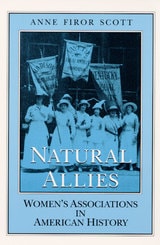
Natural Allies
Women's Associations in American HistoryAnne Firor Scott
University of Illinois Press, 1991
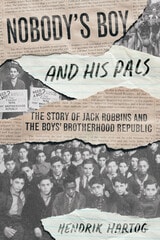
Nobody's Boy and His Pals
The Story of Jack Robbins and the Boys’ Brotherhood RepublicHendrik Hartog
University of Chicago Press, 2024
In 1914, social reformer Jack Robbins and a group of adolescent boys in Chicago founded the Boys’ Brotherhood Republic, an unconventional and unusual institution. During a moral panic about delinquent boys, Robbins did not seek to rehabilitate and/or punish wayward youths. Instead, the boys governed themselves, democratically and with compassion for one another, and lived by their mantra “So long as there are boys in trouble, we too are in trouble.” For nearly thirty years, Robbins was their “supervisor,” and the will he drafted in the late 1950s suggests that he continued to care about forgotten boys, even as the political and legal contexts that shaped children’s lives changed dramatically.
Nobody’s Boy and His Pals is a lively investigation that challenges our ideas about the history of American childhood and the law. Scouring the archives for traces of the elusive Jack Robbins, Hendrik Hartog examines the legal histories of Progressive reform, childhood, criminality, repression, and free speech. The curiosity of Robbins’s story is compounded by the legal challenges to his will, which wound up establishing the extent to which last wishes must conform to dominant social values. Filled with persistent mysteries and surprising connections, Nobody’s Boy and His Pals illuminates themes of childhood and adolescence, race and ethnicity, sexuality, wealth and poverty, and civil liberties, across the American Century.
Push Back, Move Forward
The National Council of Women's Organizations and Coalition AdvocacyLaura R. Woliver
Temple University Press, 2018
The coalition known as the National Council of Women’s Organizations no longer exists today, but the history and the lessons learned from the NCWO’s activism remain as important as ever—perhaps even more so in this age of Trump. Laura Woliver spent fifteen years doing fieldwork and conducting research and interviews to understand how the NCWO coalition group functioned. The result is her impressive study, Push Back, Move Forward.
Woliver explores the foundational work of the NCWO and member groups to promote women’s economic security, citizen status, and political rights. She investigates women’s access to previously “male only” organizations, such as private clubs; the increase in voter participation generated by measures such as early voting; advocacy campaigns for such benefit programs as Social Security and the Affordable Care Act; and global human and women’s rights activism. In addition, she examines the accomplishments of women of color, both alongside and within the NCWO, who orient their politics toward achieving justice and attaining rights.
Push Back, Move Forward artfully documents this important group’s activities while also gleaning larger lessons about coalition organizations.
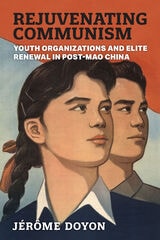
Rejuvenating Communism
Youth Organizations and Elite Renewal in Post-Mao ChinaJérôme Doyon
University of Michigan Press, 2023
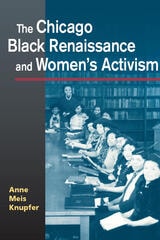
The Chicago Black Renaissance and Women's Activism
Anne Meis Knupfer
University of Illinois Press, 2006
The book examines various groups of black female activists, including writers and actresses, social workers, artists, school teachers, and women's club members to document the impact of social class, gender, nativity, educational attainment, and professional affiliations on their activism. Together, these women worked to sponsor black history and literature, to protest overcrowded schools, and to act as a force for improved South Side housing and employment opportunities. Knupfer also reveals the crucial role these women played in founding and sustaining black cultural institutions, such as the first African American art museum in the country; the first African American library in Chicago; and various African American literary journals and newspapers. As a point of contrast, Knupfer also examines the overlooked activism of working-class and poor women in the Ida B. Wells and Altgeld Gardens housing projects.
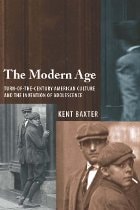
The Modern Age
Turn-of-the-Century American Culture and the Invention of AdolescenceKent Baxter
University of Alabama Press, 2008
The Modern Age examines the discourses that have come to characterize adolescence and argues that commonplace views of adolescents as impulsive, conflicted, and rebellious are constructions inspired by broader cultural anxieties that characterized American society in early-twentieth-century America.
The idea of adolescence, argues Kent Baxter, came into being because it fulfilled specific historical and cultural needs: to define a quickly expanding segment of the population, and to express concerns associated with the movement into a new era. Adolescence—a term that had little currency before 1900 and made a sudden and pronounced appearance in a wide variety of discourses thereafter—is a “modern age” not only because it sprung from changes in American society that are synonymous with modernity, but also because it came to represent all that was threatening about “modern life.”
Baxter provides a preliminary history of adolescence, focusing specifically on changes in the American educational system and the creation of the juvenile justice system that carved out a developmental space between the child and the adult. He looks at the psychological works of G. Stanley Hall and the anthropological works of Margaret Mead and explores what might have inspired their markedly negative descriptions of this new demographic. He examines the rise of the Woodcraft Indian youth movement and its promotion of “red skin” values while also studying the proliferation of off-reservation boarding schools for Native American youth, where educators attempted to eradicate the very “red skin” values promoted by the Woodcraft movement.
Finally Baxter studies reading at the turn of the century, focusing specifically on Horatio Alger (the Ragged Dick series) and Edward Stratemeyer (the Tom Swift, Nancy Drew, and Hardy Boys series) and what those works reveal about the “problem” of adolescence and its solutions in terms of value, both economic and moral.
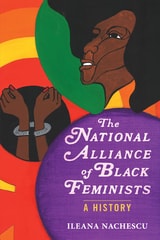
The National Alliance of Black Feminists
A HistoryIleana Nachescu
University of Illinois Press, 2025
Ileana Nachescu places the NABF’s history as the bridge between Black women’s social activism in the 1970s and the intellectual activism of the 1980s. Her account details the NABF’s work and how it reflected the group’s strong humanist belief in the transformation of all human beings. Nachescu also shows that the NABF’s post-Eighties erasure from movement histories is consistent with how many white feminists marginalized women of color and rejected their leadership. From there, Nachescu examines Black lesbians’ vibrant support of the NABF and shows how respectability politics pressured the group to support its lesbian membership in private but maintain a public silence on the issue.
A rare in-depth look at an overlooked organization, The National Alliance of Black Feminists tells an untold story of Black women’s liberation in the Midwest.
The New Woman in Alabama
Social Reforms and Suffrage, 1890–1920Mary Martha Thomas
University of Alabama Press, 1992
How Alabama women reshaped public life during the Progressive Era.
Between 1890 and 1920, middle-class white and black Alabama women created many clubs and organizations that took them out of the home and provided them with roles in the public sphere. Beginning with the Alabama Woman’s Christian Temperance Union in the 1880s and followed by the Alabama Federation of Women’s Clubs and the Alabama Federation of Colored Women’s Clubs in the 1890s, women spearheaded the drive to eliminate child labor, worked to improve the educational system, upgraded the jails and prisons, and created reform schools for both boys and girls.
Suffrage was also an item on the Progressive agenda. After a brief surge of activity during the 1890s, the suffrage drive lay dormant until 1912, when women created the Alabama Equal Suffrage Association. During their campaigns in the 1915 and 1919 to persuade the legislature to enfranchise women, the leaders learned the art of politics—how to educate, organize, lobby, and count votes. Women seeking validation for their roles as homemakers and mother demanded a hearing in the political arena for issues that affected them and their families. In the process they began to erase the line between the public world of men and the private world of women. These were the New Women who tackled the problems created by the industrialization and urbanization of the New South. By 1920 Alabama women had created new public spaces for themselves in these voluntary associations. As a consequence of their involvement in reform crusades, the women’s club movement, and the campaign for woman suffrage, women were no longer passive and dependent. They were willing and able to be rightful participants.
Thomas’s book is the first of its kind to focus on the reform activities of women during the Progressive Era, and the first to consider the southern woman and all the organizations of middle-class black and white women in the South and particularly in Alabama. It is also the first to explore the drive of Alabama women to obtain the vote. The development of political power among southern women progressed slowly. Demolishing as it did the myth of the “Southern Lady.” Traditionally confined to the domestic sphere, southern women had no experience in public decision making and were discouraged from attaining the skills necessary for participation in public debate. The division of women by race and class further impeded their political education. But through their participation in so-called women’s issues—child labor laws, temperance, and educational reform—women gained experience in influencing political leaders. Black and white women’s clubs provided the framework for state-wide lobbying.
Only in the wake of their success with domestic issues tackled through club organizations and temperance unions did women dare seek the right to vote. They learned how to wield political power through acceptable “ladylike” avenues, and it was this experience that led to their long but eventually successful drive for woman suffrage. The New Woman eventually found a way to replace the Southern Lady.
The Women's Joint Congressional Committee and the Politics of Maternalism, 1920-30
Jan Doolittle Wilson
University of Illinois Press, 2006
Jan Doolittle Wilson offers the first comprehensive history of the umbrella organization founded by former suffrage leaders in order to coordinate activities around women's reform. Encompassing nearly every major national women's organization of its time, the Women's Joint Congressional Committee (WJCC) evolved into a powerful lobbying force for the legislative agendas of more than twelve million women. Critics and supporters alike came to recognize it as "the most powerful lobby in Washington."
Examining the WJCC's most consequential and contentious campaigns, Wilson traces how the group's strategies, rhetoric, and success generated congressional and grassroots support for their far-reaching, progressive reforms. But the committee's early achievements sparked a reaction by big business that challenged and ultimately limited the programs these women envisioned. Using the WJCC as a lens, Wilson analyzes women's political culture during the 1920s. She also sheds new light on the initially successful ways women lobbied for social legislation, the limitations of that process for pursuing class-based reforms, and the enormous difficulties the women soon faced in trying to expand public responsibility for social welfare.
A volume in the series Women in American History, edited by Anne Firor Scott, Susan Armitage, Susan K. Cahn, and Deborah Gray White
Women and Politics in Uganda
Aili Mari Tripp
University of Wisconsin Press, 2000
Tripp explores why the women’s movement grew so dramatically in such a short time after the National Resistant Movement took over in 1986. Unlike many African countries where organizations and institutions are controlled by a ruling party or regime, the Ugandan women’s movement gained its momentum by remaining autonomous.
Women of the Far Right
The Mothers' Movement and World War IIGlen Jeansonne
University of Chicago Press, 1996
Unlike leftist antiwar movements, the mothers' movement was not pacifist; its members opposed the war on Germany because they regarded Hitler as an ally against the spread of atheistic communism. They also differed from leftist women in their endorsement of patriarchy and nationalism. God, they believed, wanted them to fight the New Deal liberalism that imperiled their values and the internationalists, communists, and Jews, whom they saw as subjugating Christian America.
Jeansonne examines the motivations of these women, the political and social impact of their movement, and their collaborations with men of the far right and also with mainstream isolationists such as Charles Lindbergh. Drawing on files kept by the FBI and other confidential documents, this book sheds light on the history of the war era and on women's place within the far right.

Women's Activism in Contemporary Russia
Linda Racioppi
Temple University Press, 1997
Linda Racioppi and Katherine O'Sullivan See present a concise history of women's situation in tsarist Soviet Russia, which shows how their ability to organize was constrained by social strictures and state policies. They also analyze how the state-sponsored Soviet Women's Committee and new groups like the Independent Women's Forum, the Women's League, and the International Institute for Entrepreneurial Development responded to the challenges and opportunities of the transition. The authors examine the dynamics among these groups as well. The personal life histories of the activists reflect the ways women have responded to the changing political, economic, and social landscape in the former Soviet Union.
Women's Organizations and Democracy in South Africa
Contesting AuthorityShireen Hassim
University of Wisconsin Press, 2006
The transition to democracy in South Africa was one of the defining events in twentieth-century political history. The South African women’s movement is one of the most celebrated on the African continent. Shireen Hassim examines interactions between the two as she explores the gendered nature of liberation and regime change. Her work reveals how women’s political organizations both shaped and were shaped by the broader democratic movement. Alternately asserting their political independence and giving precedence to the democratic movement as a whole, women activists proved flexible and remarkably successful in influencing policy. At the same time, their feminism was profoundly shaped by the context of democratic and nationalist ideologies. In reading the last twenty-five years of South African history through a feminist framework, Hassim offers fresh insights into the interactions between civil society, political parties, and the state.
Hassim boldly confronts sensitive issues such as the tensions between autonomy and political dependency in feminists’ engagement with the African National Congress (ANC) and other democratic movements, and black-white relations within women’s organizations. She offers a historically informed discussion of the challenges facing feminist activists during a time of nationalist struggle and democratization.
Winner, Victoria Schuck Award for best book on women and politics, American Political Science Association
“An exceptional study, based on extensive research. . . . Highly recommended.”—Choice
“A rich history of women’s organizations in South African . . . . [Hassim] had observed at first hand, and often participated in, much of what she described. She had access to the informants and private archives that so enliven the narrative and enrich the analysis. She provides a finely balanced assessment.”—Gretchen Bauer, African Studies Review