Results by title
36 books match the query 'War & Military'
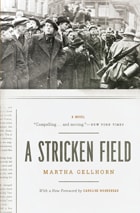
A Stricken Field
A NovelMartha Gellhorn
University of Chicago Press, 2011
Martha Gellhorn was one of the first—and most widely read—female war correspondents of the twentieth century. She is best known for her fearless reporting in Europe before and during WWII and for her brief marriage to Ernest Hemingway, but she was also an acclaimed novelist.
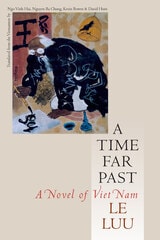
A Time Far Past
A Novel of Viet NamLe Luu
University of Massachusetts Press, 1997
In its intricate sketching of complicated alliances, personal debts, and human interactions, A Time Far Past explores the complex layering of family and village history and Party and feudal authority. It also paints a vivid picture of the vast dislocations in Vietnamese culture caused by the political and military turmoil of the Indochina wars.
A Time Far Past was enormously popular in Vietnam, where it was first published in 1986, selling more than 120,000 copies and winning that country's national prize for fiction.
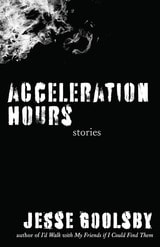
Acceleration Hours
StoriesJesse Goolsby
University of Nevada Press, 2020
2020 Foreword INDIE awards, longlist
From the author of the critically-acclaimed novel, I’d Walk with My Friends If I Could Find Them, Jesse Goolsby’s Acceleration Hours is a haunting collection of narratives about families, life, and loss during America’s twenty-first-century forever wars. Set across the mountain west of the United States, these fierce, original, and compelling stories illuminate the personal search for human connection and intimacy. From a stepfather’s grief to an AWOL soldier and her journey of reconciliation to a meditation on children, violence, and hope, Acceleration Hours is an intense and necessary portrayal of the many voices living in a time of perpetual war.
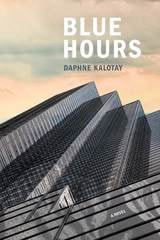
Blue Hours
A NovelDaphne Kalotay
Northwestern University Press, 2019
A mystery linking Manhattan circa 1991 to eastern Afghanistan in 2012, Blue Hours tells of a life-changing friendship between two memorable heroines. When we first meet Mim, she is a recent college graduate who has disavowed her lower middle class roots to befriend Kyra, a dancer and daughter of privilege, until calamity causes their estrangement. Twenty years later, Kyra has gone missing from her NGO’s headquarters in Jalalabad, and Mim—now a recluse in rural New England—embarks on a journey to find her. In its nuance, originality, and moral complexity, Blue Hours becomes an unexpected page-turner.
Company K
William March
University of Alabama Press, 1989
Through fragmented testimonies of Marines, the novel exposes the psychological and moral wreckage left in the wake of modern warfare.
This book was originally published in 1933. It is the first novel by William March, pen name for William Edward Campbell. Stemming directly from the author's experiences with the US Marines in France during World War I, the book consists of 113 sketches, or chapters, tracing the fictional Company K's war exploits and providing an emotional history of the men of the company that extends beyond the boundaries of the war itself.
William Edward Campbell served courageously in France as evidenced by his chestful of medals and certificates, including the Croix de Guerre, the Distinguished Service Cross, and the Navy Cross. However, without the medals and citations we would know of his bravery. For it is clear in the pages of Company K that this book was written by a man who had been to war, who had clearly seen his share of the worst of it, who had somehow survived, and who had committed himself afterward to the new bravery of sense-making embodied in the creation of major literary art. It is of that bravery that we still have the record of magnificent achievement, the brave terrible gift of Company K.
Corner of the Dead
Lynn Lurie
University of Massachusetts Press, 2008
"I use the camera to block my view," says Lisette. This is the start of her double vision—trying to forget and trying to recall—and her struggle to come to terms with the human capacity for cruelty. But the grim reality in Peru is so overpowering that she carries it with her back to New York and through the rest of her life. Having abandoned a lover along with the fight, she desperately tries to find meaning beyond that of mere survival.
Desert Mementos
Stories of Iraq and NevadaCaleb S. Cage
University of Nevada Press, 2017
Cage captures similarities in the respective desert landscapes of both Iraq and Nevada, but it is not just a study in contrasting landscapes. The inter-connected stories explore similarities and differences in human needs from the perspectives of vastly different cultures. Specifically, the stories deftly capture the overlap in the respective desert landscapes of each region, the contrasting cultures and worldviews, and the common need for hope. Taken together, the stories represent the arc of a year-long deployment by young soldiers. Cage’s stories are bound together by the soldier’s searing experiences in the desert, bookended by leaving and returning home to Nevada, which in many ways can be just as disorienting as patrolling the Iraq desert.
Fear in the Middle of a Vast Field and Other Stories
Mustafa Taj Aldeen Almosa; translated by Maisaa Tanjour and Alice Holttum
University of Texas Press, 2025
Short stories by a celebrated playwright bare the horrors of the Syrian civil war.
A selection of stories by Syrian author and playwright Mustafa Taj Aldeen Almosa about characters enduring the horrors of the Syrian civil war. With exquisite wit and lightness of touch, Almosa portrays the internal world of characters facing great physical violence or psychological pressures. Using both realism and fantastic elements, Almosa weaves short stories that are strange, violent, and delicate at the same time. This collection is an invaluable attempt to denounce war, to exist, to love life in all its manifestations and to learn how to cope with loss and disappointment. It is a cry against fear and death as much as it is an ode and a homage to life and love in times of both war and peace.
Hitler, My Father
A Novel of World War Two, Hitler's Unknown Lover, and Son.Rodney Merten
Parkhurst Brothers, Inc., 2017
An adoring young woman encounters Adolph Hitler when her youth group sings for him. He demands her company in private, and she becomes pregnant, bearing his child but never being contacted by Hitler again. The plot follows her life as an outcast believed to be lying about the child’s parentage, and the life of her son told through her correspondence, diary entries, and from the point of view of a researcher who writes a generation later. Based on facts and documented history, author Ron Merten tells this tale with just enough creativity to make the story fascinating.
Holy Week
A Novel of the Warsaw Ghetto UprisingJerzy Andrzejewski
Ohio University Press, 2006
At the height of the Nazi extermination campaign in the Warsaw Ghetto, a young Jewish woman, Irena, seeks the protection of her former lover, a young architect, Jan Malecki. By taking her in, he puts his own life and the safety of his family at risk. Over a four-day period, Tuesday through Friday of Holy Week 1943, as Irena becomes increasingly traumatized by her situation, Malecki questions his decision to shelter Irena in the apartment where Malecki, his pregnant wife, and his younger brother reside. Added to his dilemma is the broader context of Poles’ attitudes toward the “Jewish question” and the plight of the Jews locked in the ghetto during the final moments of its existence.
Few fictional works dealing with the war have been written so close in time to the events that inspired them. No other Polish novel treats the range of Polish attitudes toward the Jews with such unflinching honesty.
Jerzy Andrzejewski’s Holy Week (Wielki Tydzien, 1945), one of the significant literary works to be published immediately following the Second World War, now appears in English for the first time.
This translation of Andrzejewski’s Holy Week began as a group project in an advanced Polish language course at the University of Pittsburgh. Class members Daniel M. Pennell, Anna M. Poukish, and Matthew J. Russin contributed to the translation; the instructor, Oscar E. Swan, was responsible for the overall accuracy and stylistic unity of the translation as well as for the biographical and critical notes and essays.
Homefront
StoriesVictoria Kelly
University of Nevada Press, 2024
Foreword INDIES 2024 Silver Winner for War & Military (Adult Fiction)!
Inspired by Victoria Kelly’s experiences as the wife of a fighter pilot during three wartime deployments, this collection follows women whose lives have been impacted by war and military service as they struggle with their fragile ideas of home.
In “Prayers of an American Wife,” a Navy wife grapples with loneliness when she discovers that her neighbor, also a Navy wife, is having an affair while their husbands are deployed on the same aircraft carrier. Tensions rise in “The Strangers of Dubai” as a soldier on leave tries to buy his wife a souvenir from an Afghan vendor. After attending eight funerals with fellow military wives whose husbands died in the Iraq war, the protagonist in “Finding the Good Light” divorces her Navy husband and tries to start a new life as a movie star. These, along with the eleven other stories in this collection, explore the emotional landscape of the resilient women who remain on the homefront.
Kelly’s stories offer readers an intimate, eye-opening look into the sacrifices and steadfastness of military family members.
How to Quiet a Vampire
A SotieBorislav Pekic
Northwestern University Press, 2005
Delving far deeper than mere intellect, however, Borislav Pekic was himself a frequent political agitator and occasional prisoner, and he drew on his first hand knowledge of police methods and life under totalitarianism to paint a chilling portrait of a supposedly free-thinking intellectual acting in the service of repression. At the same time he questions whether Rutkowski's ideology puts him outside the philosophical tradition he so admires—or if the line separating European thought from totalitarianism is not as clear as we like to think.
Lilliputin
Tales from a WarJan Nemec
Seagull Books, 2023
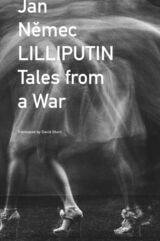
A Czech man in Ukraine in search of his alter ego. A gang of homeless kids driven from a cellar by tenants using it as a shelter from the war. A German couple who ‘rented a womb’ in Ukraine, whose child is now stuck in Kyiv. A teenager partnered with a Valkyrie for the distribution of lavash in besieged Mariupol delays his flight until it is too late. A Russian academic mounting a protest in the center of Moscow dressed in a costume from Swan Lake. They may not be soldiers at the front, but for the characters in these stories, life will never again be as it was before the Russian invasion of Ukraine. In this collection of short stories—two set in Ukraine, two in the West, and one in Russia—Czech author Jan Nemec has produced a work of remarkable immediacy.
Lodgers
Nenad Velickovic
Northwestern University Press, 2005
Published as the siege of Sarajevo ended, Lodgers is a hilarious, unsentimental report from the front lines of the Balkan wars of the 1990s. Detergent mixed with flour, museum relics sold to U.N. peacekeepers, the magic power of laminated accreditation-all of the folly and the horror of that time are revealed in the sarcastic report of the novel's teenage would-be authoress.
Maja lives in the basement of a Sarajevo museum, enduring with equal annoyance Serb artillery and vegetarian meals that taste like fried sponge. Her father, the museum director, zealously guards the treasures upstairs while their aged co-lodger Julio plots to trade them away. Maja's mother copes with yoga while dour stepbrother Davor endures the endless crying and cravings of his pregnant wife. Floating amidst it all is Maja's grandmother, blind and deaf, yet drawn to any conversation involving food.
Need and crisis propel Maja and her companions from one humorous situation to another. Yet her pitch-perfect gallows humor makes it clear that the brutalities of war penetrate these small moments of life-and even the self-centeredness of a teenaged girl. A best seller in the Balkans and widely translated in Europe, Lodgers is an uncompromising novel about a modern tragedy.
Manassas
A Novel of the WarUpton Sinclair
University of Alabama Press, 2000
Centers on the moral dimension of the conflict as it traces a young Mississippi boy’s conversion from pro-slavery Southerner to abolitionist Union soldier
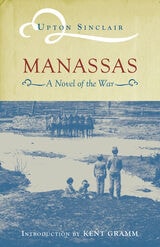
Allan Montague, born on a Mississippi plantation about twenty years before the Civil War, has grown up with slavery and considers it natural. When his father moves to Boston for business and takes the boy with him, young Allan carries a knife given to him by his cousin to use in killing abolitionists.
The first abolitionist young Allan meets in Boston is Levi Coffin, the reputed founder of the Underground Railroad. In this first of many meetings with historical figures, Allan forms a friendship with Coffin, who eventually takes him to hear a speech by former slave Frederick Douglass. Douglass's powerful words cement Allan's transformation into an abolitionist—a transformation that will lead him back to his Deep South home with the hope of freeing slaves and eventually back to the North and the fateful Battle of Manassas.
Kent Gramm, author of the introduction for this new edition of Manassas, calls the novel “a modern version of the morality play,” with the United States as the central character. “The real story, he writes, is the moral phenomenon of the Civil War.” It is a powerful book that deserves to be revived, read, and studied.
Minimal Damage
Stories of VeteransH. Lee Barnes
University of Nevada Press, 2013
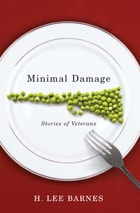
In the seven stories and novella of Minimal Damage, veterans search for dignity in a civilian life that has no need for men who were soldiers. Finding themselves psychically scarred, in crisis, on the fringes of society, or in battle with their memories, these men are living "like warts on America's ass." The characters range from the enigmatic Mr. K, who runs a reality television show and once led an escape from a Korean pow camp, to the doomed Billy Debecki, who regains his dignity in the last minutes of his life by remembering that he once willingly risked his life to save an enemy soldier. In one story, a man who was never a soldier finds a path toward reconciliation with his brother, a former Marine. In another, a man recalls becoming a soldier by watching the humanity of a fellow recruit disintegrate in basic training. In the novella "Snake Boy," a homeless Vietnam vet is kidnapped by a snake-handling evangelist. In proper, upstanding lives and lost, drifting ones, the depth of damage is never immediately apparent for these men. In war, chance, luck, and arbitrary timing conspire to determine a soldier's fate. As civilians, the same uncontrollable forces influence who finds a place in society and who is doomed to keep searching. With emotion, humor, and clarity, Barnes creates characters who show us what it is to live with the trauma of having experienced combat. The fractured souls and lives of these men remind us that the damage doesn't remain on the battlefield. Western Literature Series.
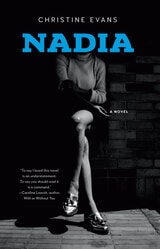
Nadia
Christine Evans
University of Iowa Press, 2023
Nadia moves between the competing perspectives of two survivors of the 1990s Balkan Wars who have escaped to London, only to discover that the war has followed them there. Nadia is a young refugee who just wants to forget the past—until Iggy starts temping at her London office. Afraid he may be a sniper from the war she fled, Nadia starts seeing threats everywhere, alongside unsettling visions of her lost girlfriend, Sanja. As her volatile connection with Iggy unravels, Nadia is forced to face the ethically shaky choices she made to escape the war, her survivor guilt, and her disavowed queer sexuality.
Christine Evans's novel takes us to the recent past of a war that broke apart a European country and that presciently foreshadowed the rise of ethno-nationalism in the West. Tense, suspenseful, and mordantly funny, Nadia tracks the complex ways in which a past marked by political violence can shadow and disrupt the present.
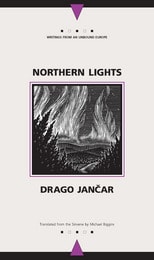
Northern Lights
Drago Jancar
Northwestern University Press, 2001
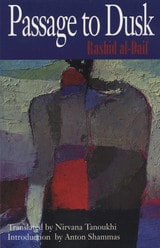
Passage to Dusk
By Rashid al-Daif
University of Texas Press, 2001
Passage to Dusk deals with the Lebanese civil war of the 1970s in a postmodern, poetic style. The narrative focuses on the deranged, destabilized, confused, and hyper-perceptive state of mind created by living on the scene through a lengthy war. The story is filled with details that transcend the willed narcissism of the main character, while giving clues to the culture of the time. It is excellent fiction, written in a surrealistic mode, but faithful to the characters of the people of Lebanon, their behavior during the war, and their contradictions. Issues of gender and identity are acutely portrayed against Lebanon's shifting national landscape.
The English-language reader has not been much exposed to Lebanese literature in translation, and Rashid al-Daif is one of Lebanon's leading writers. He has been translated into eight languages, including French, German, Italian, Polish, and Spanish. Translator Nirvana Tanoukhi manages to preserve Daif's unusual, moving, and at times humorous style in her English rendition.
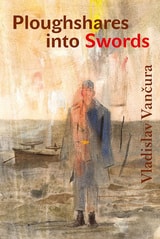
Ploughshares into Swords
Vladislav Vancura
Karolinum Press, 2021
Originally published in 1925, Ploughshares into Swords is an expressionist antiwar novel in which Vladislav Vančura tells the story of the denizens of the Ouhrov estate in language as baroque as the manor that ties them all together. The fragmented narrative introduces the reader to such characters as Baron Danowitz, his sons, his French concubine, the farmhand František Hora, and the mentally disabled murderer Řeka in the autumn of 1913, before revealing their fates during World War I. Ranging from the peaceful farmlands of Bohemia to the battlefields of Galicia, taking in the pubs of Budapest and the hospitals of Krakow, the novel constitutes an unsentimental and naturalistic approach to the war that created Czechoslovakia. Ploughshares into Swords is a stunning novel by one of Czech literature’s most important writers. This modernist masterpiece, reminiscent of the work of Isaac Babel and William Faulkner, is now available in English for the very first time.
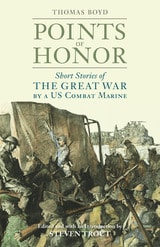
Points of Honor
Short Stories of the Great War by a US Combat MarineThomas Boyd, Edited and with an Introduction by Steven Trout
University of Alabama Press, 2018
Points of Honor: Short Stories of the Great War by a US Combat Marine is based on author Thomas Alexander Boyd’s personal experiences as an enlisted Marine. First published in 1925 and long out of print, this edition rescues from obscurity a vivid, kaleidoscopic vision of American soldiers, US Marines mostly, serving in a global conflict a century ago. It is a true forgotten masterpiece of World War I literature.
The stories in Points of Honor deal almost entirely with Marines in the midst of battle—or faced with the consequences of military violence. The eleven stories in this collection offer a panoramic view of war experience and its aftermath, what Boyd described as “a mass of more human happenings.” The themes are often antiheroic: dehumanization, pettiness, betrayal by loved ones at home, and the cruelty of military justice. But Boyd’s vision also accommodates courage and loyalty. Like all great works of war literature, this collection underscores the central paradox of armed conflict—its ability to bring out both the best and worst in human beings.
This reissue of Points of Honor is edited, annotated, and introduced by Steven Trout. Trout provides an overview of Thomas Boyd’s war experience and writing career and situates the stories within the broader context of World War I American literature.
Points of Honor received strong reviews at the time of its initial publication and remains an overwhelming reading experience today. While each of the stories is a freestanding work of art, when read together they carry the force of a novel.
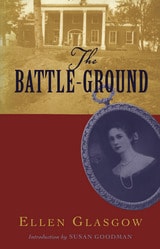
The Battle-Ground
Ellen Glasgow
University of Alabama Press, 2000
Captures the war's human toll and explores its social consequences
The Battle-Ground, Ellen Glasgow's fourth novel, was her first bestseller, with more than 21,000 copies sold in just two weeks. The novel committed her to a project almost unparalleled in American literary history: a novelistic meditation on the South from the decade before the Confederacy to the middle of the 20th century. The Battle-Ground speaks of a South before and during the Civil War in its struggles to become part of a nation still in the making. The overthrow of the aristocratic tradition, the transfer of hereditary power to a rural underclass, the continued disenfranchisement of African Americans, and the evolving status of women--these topics, which came to bind the more than a dozen volumes of Glasgow's self-styled "social history," initially coalesced in The Battle-Ground.
The Battle-Ground conspicuously departs from the tradition of Southern romances popularized by Thomas Nelson Page, and contemporary reviewers praised the book for its historical accuracy. Glasgow, an ardent Anglophile, bragged that military officers in Great Britain studied its descriptions of battle. With her, realism had not only crossed the Atlantic, it had "crossed the Potomac."
But Glasgow never sensationalizes the Civil War, whose bloodiest scenes she flanks with domestic officers, the sharing of rations, the warmth of camp, and reminders of home. Her vision of the war centers less on its corruption or barbarity than on its occasions for small decencies and their power of humanization. Glasgow cannot separate the war from its greater social implications--it is a place, as her title suggests, that tests the soul of a nation as well as individual men and women. The importance of The Battle-Ground in Southern literary history cannot be overemphasized, for Glasgow's reimagining of the Civil War had a profound impact on the next generation of Southern writers, including Allen Tate, Stark Young, and Margaret Mitchell.

The Cocaine Salesman
Conny Braam
Haus Publishing, 0
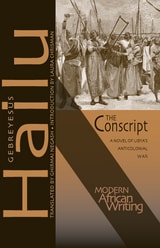
The Conscript
A Novel of Libya’s Anticolonial WarGebreyesus Hailu
Ohio University Press, 2013
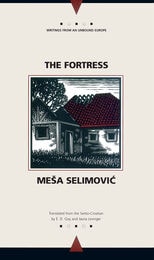
The Fortress
A NovelMesa Selimovic, translated from the Serbian by Edward Dennis Goy and Jasna Levinger-Goy
Northwestern University Press, 1999
Set in Bosnia in the late 1700s, the novel sometimes functions as an artful metaphor for the communist Yugoslavia of Selimovic's day. At other times, the author explores the nuances of Ottoman rule in the Balkans. Muslim Ahmet's sustaining marriage to a young Christian woman provides a multicultural tension that strongly resonates with contemporary readers and sensibilities.
The Loss
A Novella and Two Short StoriesVladimir Makanin
Northwestern University Press, 1998
In his celebrated short story "The Prisoner of the Caucasus," two Russian soldiers take a Chechen prisoner during the war, and as events unfold, Makanin reveals the casual brutality of the war but also the secret truths of the character's lives. In the novella The Loss, Pekalov, a drunkard and dreamer obsessed with the idea of building a tunnel under the Ural River, disappears in a ditch while working and is made a saint by the people of his village. "Klyucharyov and Alimushkin" tells the story of what happens when one man becomes remarkably lucky while the other loses all his luck.
The Lucifer Cypher
J. E. Fender
University Press of New England, 2012
The Pistol
James Jones
University of Chicago Press, 2003
The Young Lions
Irwin Shaw
University of Chicago Press, 2000
In the immediate aftermath of World War II, countless American writers attempted to use fiction to convey the complicated experience they'd just undergone. Few of the novels that emerged from that period were as ambitious and powerful as The Young Lions, a sweeping, dramatic account of war from the point of view of ordinary solders that depicts the danger, excitement, trauma, and loss of a no-holds-barred global war.
When Irwin Shaw published The Young Lions, he was known solely as a writer of short stories, and his panoramic, detailed, unforgettable account of the war was met with nothing short of awe. Shaw tells his story from the points of view of a perceptive young Nazi, a jaded American film producer, and a shy Jewish boy just married to the love of his life. Together they enable us to see, decades lateer, as no other novelist has since, the scope, confusion, and complexity of war.
This is a landmark novel that Washington Post critic Jonathan Yardley ranked with wartime classics like From Here to Eternity, The Naked and the Dead, and The Caine Mutiny. As James Salter writes in his foreword, "The Second World War was the central event of Shaw’s generation. The writers who stand in some glory about its forgotten battlefields and whose novels came from firsthand knowledge—Mailer, heller, James Jones, Michener—include, indomitable in their midst. Irwin Shaw. He need not to have bowed to any of them then, or, if he were still alive, now."
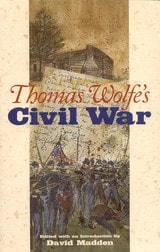
Thomas Wolfe's Civil War
Thomas Wolfe
University of Alabama Press, 2004
An anthology of Thomas Wolfe’s short stories, novel excerpts, and plays illuminating the Civil War
This collection of Thomas Wolfe’s writings demonstrates the centrality of the Civil War to Wolfe’s literary concerns and identity. From Look Homeward, Angel to The Hill Beyond and The Web and the Rock, Wolfe perpetually returned to the themes of loss, dissolution, sorrow, and romance engendered in the minds of many southerners by the Civil War and its lingering aftermath. His characters reflect time and again on Civil War heroes and dwell on ghostlike memories handed down by their mothers, fathers, and grandfathers. Wolfe and his protagonists compare their contemporary southern landscape to visions they have conjured of its appearance before and during the war, thereby merging the past with the present in an intense way. Ultimately, Wolfe’s prose style—incantatory and rhapsodic—is designed to evoke the national tragedy on an emotional level.
Selections of Wolfe’s writings in this collection include short stories ("Chickamauga," "Four Lost Men," "The Plumed Knight"), excerpts from his novels (O Lost, the restored version of Look Homeward, Angel, The Hills Beyond, and Of Time and the River) and a play, Mannerhouse, edited and introduced by David Madden. Madden, who makes the provocative claim that everything a southern writer writes derives from the Civil War experience, also highlights many issues essential to understanding Wolfe’s absorption with the Civil War.
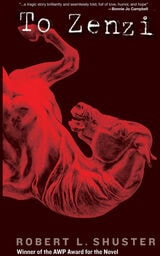
To Zenzi
Robert L. Shuster
New Issues Poetry and Prose, 2021
Shuttling between the insanity of the Führer’s bunker and the chaotic streets, Tobias must contend with a scheming Martin Bormann, a deceitful deserter, the Russian onslaught, and his own compounding despair—all while falling for Zenzi, a girl of Jewish descent (a mischling) who relays secret news of death camps and convinces Tobias to make a treacherous escape to the Americans.
With thrilling risks in plotting and prose, with moments of pathos and absurdity, Shuster richly conjures a mad, tragic world.
Ualalapi
Fragments from the End of EmpireUngulani Ba Ka Khosa
Tagus Press, 2017
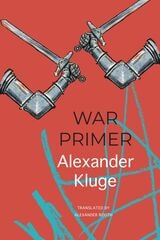
War Primer
Alexander Kluge
Seagull Books, 2024
“War is back again.” So begins Alexander Kluge’s latest book, prompted by a war of aggression that, though being waged in Europe, is of global importance. Blending simple stories with multimedia and reflecting on human responses and hope, the author does not aim to take sides nor make an appeal. Rather, he is concerned with what he calls “mole war,” the tenacious and often subterranean survival of war—what war makes of people and what life of its own it is capable of.
Kluge’s book is based on an iconic model, the primer, and named after a famous one: Bertolt Brecht’s. Here we find simple stories underpinned with montages, film stills, and sequences. The author was ten years old when—sitting at his school desk and with his finger on the map—he followed German tanks on their journey to Stalingrad. In the time between then and his ninety-first birthday in February 2023, this chronicler of emotions has studied the costumes of war again and again: War is mortal but does not die quickly. How can we respond to its demands?
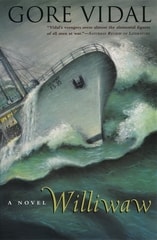
Williwaw
A NovelGore Vidal
University of Chicago Press, 2003
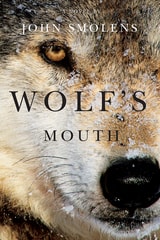
Wolf's Mouth
John Smolens
Michigan State University Press, 2016
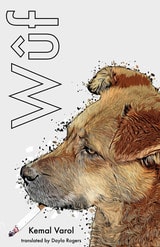
Wûf
By Kemal Varol; translated by Dayla Rogers
University of Texas Press, 2020
Told through the voice of a canine narrator, Wûf is a surrealist wartime love story set in Turkey in the 1990s. The novel follows Mikasa, a street dog who recounts a tale of tragic wartime love at a kennel where he finds solace in storytelling and cigarettes. A book that took the Turkish literary world by storm, Kemal Varol’s Wûf tackles universal themes of love and loss with both humor and pathos. Translated by PEN/Heim Award winner Dayla Rogers, the novel renders in English a one-of-a-kind love story with a narrator its readers won’t soon forget.