Results by title
33 books match the query 'Wittgenstein, Ludwig'
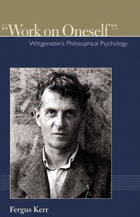
"Work on Oneself"
Wittgenstein's Philosophical Psychology (Institute for the Psychological Sciences Monograph Series, Volume 1)Fergus Kerr
Catholic University of America Press, 2008
A Different Order of Difficulty
Literature after WittgensteinKaren Zumhagen-Yekplé
University of Chicago Press, 2020
Beckett after Wittgenstein
Andre Furlani
Northwestern University Press, 2015
Among the best-represented authors in Samuel Beckett’s library was Ludwig Wittgenstein, yet the philosopher’s relevance to the Nobel laureate’s work is scarcely acknowledged and seldom elucidated. Beckett after Wittgenstein is the first book to examine Beckett’s formative encounters with, and profound affinities to, Wittgenstein’s thought, style, and character.
While a number of influential critics, including the philosopher Alain Badiou, have discerned a transition in Beckett’s work beginning in the late 1950s, Furlani is the first to identify and clarify how this change occurs in conjunction with the writer’s sustained engagement with Wittgenstein’s thought on, for example, language, cognition, subjectivity, alterity, temporality, belief, hermeneutics, logic, and perception. Drawing on a wealth of Beckett’s archival materials, much of it unpublished, Furlani’s study reveals the extent to which Wittgenstein fostered Beckett’s views and emboldened his purposes.
Conventional Realism and Political Inquiry
Channeling WittgensteinJohn G. Gunnell
University of Chicago Press, 2020
John G. Gunnell argues for conventional realism as a theory of social phenomena and an approach to the study of politics. Drawing on Wittgenstein’s critique of “mentalism” and traditional realism, Gunnell argues that everything we designate as “real” is rendered conventionally, which entails a rejection of the widely accepted distinction between what is natural and what is conventional. The terms “reality” and “world” have no meaning outside the contexts of specific claims and assumptions about what exists and how it behaves. And rather than a mysterious source and repository of prelinguistic meaning, the “mind” is simply our linguistic capacities. Taking readers through contemporary forms of mentalism and realism in both philosophy and American political science and theory, Gunnell also analyzes the philosophical challenges to these positions mounted by Wittgenstein and those who can be construed as his successors.
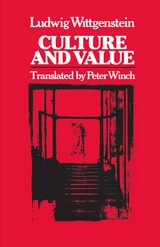
Culture and Value
Ludwig Wittgenstein
University of Chicago Press, 1980
Throughout his life, Ludwig Wittgenstein reliably set down his thoughts in notebooks. This volume offers a selection of the most interesting and important of the remarks from those notebooks that deal with matters other than technical philosophical issues. In these pages, Wittgenstein reflects on religion, the work of philosophy, genius, music, architecture, and much more. Peter Winch's translation of Wittgenstein's remarks on culture and value presents all entries chronologically, with the German text alongside the English and a subject index for reference.
Incapacity
Wittgenstein, Anxiety, and Performance BehaviorSpencer Golub
Northwestern University Press, 2014
In this highly original study of the nature of performance, Spencer Golub uses the insights of Ludwig Wittgenstein into the way language works to analyze the relationship between the linguistic and the visual in the work of a broad range of dramatists, novelists, and filmmakers, among them Richard Foreman, Mac Wellman, Peter Handke, David Mamet, and Alfred Hitchcock. Like Wittgenstein, these artists are concerned with the limits of language’s representational capacity. For Golub, it is these limits that give Wittgenstein’s thought a further, very personal significance—its therapeutic quality with respect to the Obsessive Compulsive Disorder from which he suffers.
Underlying what Golub calls “performance behavior” is Wittgenstein’s notion of “pain behavior”—that which gives public expression to private experience. Golub charts new directions for exploring the relationship between theater and philosophy, and even for scholarly criticism itself.
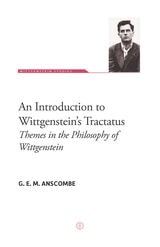
Introduction Wittgensteins Tractatus
G.E.M. Anscombe
St. Augustine's Press, 2000
Kafka and Wittgenstein
The Case for an Analytic ModernismRebecca Schuman
Northwestern University Press, 2015
In Kafka and Wittgenstein, Rebecca Schuman undertakes the first ever book-length scholarly examination of Ludwig Wittgenstein’s philosophy of language alongside Franz Kafka’s prose fiction. In groundbreaking readings, she argues that although many readers of Kafka are searching for what his texts mean, in this search we are sorely mistaken. Instead, the problems and illusions we portend to uncover, the im-portant questions we attempt to answer—Is Josef K. guilty? If so, of what? What does Gregor Samsa’s transformed body mean? Is Land-Surveyor K. a real land surveyor?— themselves presuppose a bigger delusion: that such questions can be asked in the first place. Drawing deeply on the entire range of Wittgenstein’s writings, Schuman can-nily sheds new light on the enigmatic Kafka.
Last Writings on the Philosophy of Psychology, Volume 1
Ludwig Wittgenstein
University of Chicago Press, 1996
G. H. von Wright and Heikki Nyman both teach at the University of Helsinki.
Leading a Human Life
Wittgenstein, Intentionality, and RomanticismRichard Eldridge
University of Chicago Press, 1997
Eldridge sees Wittgenstein as a Romantic protagonist, engaged in an ongoing internal dialogue over the nature of intentional consciousness, ranging over ethics, aesthetics, and philosophy of mind. The picture of the human mind that emerges through this dialogue unsettles behaviorism, cognitivism, and all other scientifically oriented orthodoxies. Leading a human life becomes a creative act, akin to writing a poem, of continuously seeking to overcome both complacency and skepticism. Eldridge's careful reconstruction of the central motive of Wittgenstein's work will influence all subsequent scholarship on it.

Logic and Sin in the Writings of Ludwig Wittgenstein
Philip R. Shields
University of Chicago Press, 1992
"Shields argues that the appearance throughout Wittgenstein's writings of such concepts as ritual, limit, transgression, a change of will, pride, temptation, and judgment implies a relation between religion and the logical aspects of Wittgenstein's philosophy."—Choice
"Of the many recent books about Wittgenstein, Logic and Sin is one of the very few that are well worth having"—Fergus Kerr, Modern Theology
"What Shields has uncovered in Wittgenstein's religious sensibility is something genuine and profound. . . . Shields has not just written an important book on Wittgenstein but an enlightening work that invites further reflection."—Eric O. Springsted, Cross Currents
Nature as Guide
Wittgenstein and the Renewal of Moral TheologyDavid Goodill, OP
Catholic University of America Press, 2022
Notebooks, 1914-1916
Ludwig Wittgenstein
University of Chicago Press, 1984
"When the first edition of this collection of remarks appeared in 1961 we were provided with a glimpse of the workings of Wittgenstein's mind during the period when the seminal ideas of the Tractatus Logico-Philosophicus were being worked out. This second edition provided the occasion to be struck anew by the breadth, rigor, and above all the restlessness of that mind."—T. Michael McNulty, S. J., The Modern Schoolman
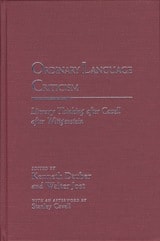
Ordinary Language Criticism
Literary Thinking after Cavell after WittgensteinKenneth Dauber and Walter Jost
Northwestern University Press, 2003
Resisting master formulations and overarching theories, Ordinary Language Criticism does not so much dismiss the excitement of the last two decades of literary theorizing as it reminds us of the excitement of the shared common enterprises to which theory may still contribute. In this, the volume and the model it offers have wide implications for the academy, in which a widespread ersatz-sophistication has shorted the circuit between literary works and the real lives of those reading and teaching them.
With a definitive introduction by editors Kenneth Dauber and Walter Jost, and elaborations and practical examples by major figures such as Cavell himself, Martha Nussbaum, Marjorie Perloff, Anthony Cascardi, and Charles Altieri, among others, this volume clearly shows and explains how ordinary language criticism differs from current trends and what it exactly it can accomplish in theory and practice. These essays prove that by attending more faithfully to what we actually do when we read, we can make reading more productive--can reveal how extraordinary and rich, how really sophisticated, the ordinary actually is.
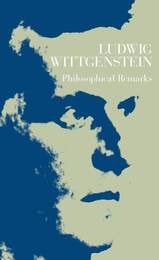
Philosophical Remarks
Ludwig Wittgenstein
University of Chicago Press, 1980
"[Philosophical Remarks] contains the seeds of Wittgenstein's later philosophy of mind and of mathematics. Principally, he here discusses the role of indispensable in language, criticizing Russell's The Analysis of Mind. He modifies the Tractatus's picture theory of meaning by stressing that the connection between the proposition and reality is not found in the picture itself. He analyzes generality in and out of mathematics, and the notions of proof and experiment. He formulates a pain/private-language argument and discusses both behaviorism and the verifiability principle. The work is difficult but important, and it belongs in every philosophy collection."—Robert Hoffman, Philosophy
"Any serious student of Wittgenstein's work will want to study his Philosophical Remarks as a transitional book between his two great masterpieces. The Remarks is thus indispensible for anyone who seeks a complete understanding of Wittgenstein's philosophy."—Leonard Linsky, American Philosophical Association
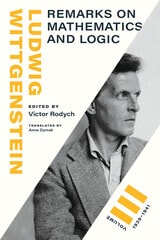
Remarks on Mathematics and Logic
Volume III, 1939–1941Ludwig Wittgenstein
University of Chicago Press, 0
The second of five planned volumes, this book collects Wittgenstein’s unabridged writings on mathematics and logic composed between 1939 and 1941.
In 1956, a significant but abridged portion of Ludwig Wittgenstein’s 1937–1944 writings for a continuation of what became Philosophical Investigations was published as Remarks on the Foundations of Mathematics. Now, in these five German-English facing-page volumes, the writings of Remarks on Mathematics and Logic are presented in full as Wittgenstein wrote them: in chronological order, without editorial omissions, selections, or rearrangements.
Volume III contains materials from 1939 to 1941, including previously unpublished—one manuscript and four manuscript parts—and one manuscript from which selections were made for previous abridgements.
The topics covered in this volume include surveyability and perspicuity in mathematics; Cantor and Gödel; Russellian logicism; geometrical cogency of proofs; consensus as part of the phenomenon of our calculating; rule-following and unwinding; consistency proofs; calculation as invention rather than discovery; superstitious fear of contradictions; why mathematicians cannot philosophize about mathematics; mathematical propositions are overdetermined; the idea of a mathematical reality; the connection between the sense of a mathematical proposition and its use; positioning a proposition in a system; an unproved mathematical proposition as the expression of a problem; the role of mathematical propositions in descriptions (of reality).
This edition will be the authoritative source for Wittgenstein’s writings in their original context.
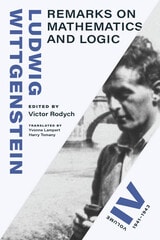
Remarks on Mathematics and Logic
Volume IV, 1941–1943Ludwig Wittgenstein
University of Chicago Press, 0
In 1956, a significant but abridged portion of Ludwig Wittgenstein’s 1937–1944 writings for a continuation of what became Philosophical Investigations was published as Remarks on the Foundations of Mathematics. Now, in the five German-English facing pages volumes of Remarks on Mathematics and Logic, these writings are presented in full as Wittgenstein wrote them: in chronological order, without editorial omissions, selections, or rearrangements.
Volume IV contains materials from 1941 to 1943, including one previously unpublished manuscript and three manuscripts from which selections were made for the previous abridgment. The topics covered in this volume include the philosophy of mathematics, mathematical foundationalism, surveyability in mathematics, language-games and proof-networks, Gödelian undecidability, pictures in mathematics, Cantorian diagonal proofs, applied mathematics without pure mathematics, and mathematics and chess, among others.
This German-English facing pages edition presents Wittgenstein’s writings in their original context—as Wittgenstein wrote them, in chronological order, and without editorial omissions, selections, or rearrangements.
Remarks on the Philosophy of Psychology, Volume 1
Ludwig Wittgenstein
University of Chicago Press, 1980
This bilingual edition of the Remarks on the Philosophy of Psychology presents the first English translation of an essential body of Wittegenstein's work. It elaborates Wittgenstein's views on psychological concepts such as expectation, sensation, knowing how to follow a rule, and knowledge of the sensations of other persons. It also shows strong emphasis on the "anthropological" aspect of Wittgenstein's thought. Philosophers, as well as anthropologists, psychologists, and sociologists will welcome this important publication.
Remarks on the Philosophy of Psychology, Volume 2
Ludwig Wittgenstein
University of Chicago Press, 1980
This bilingual edition of the Remarks on the Philosophy of Psychology presents the first English translation of an essential body of Wittgenstein's work. It elaborates Wittgenstein's views on psychological concepts such as expectation, sensation, knowing how to follow a rule, and knowledge of the sensations of other persons. It also shows strong emphasis on the "anthropological" aspect of Wittgenstein's thought. Philosophers, as well as anthropologists, psychologists, and sociologists will welcome this important publication.
Revolution of the Ordinary
Literary Studies after Wittgenstein, Austin, and CavellToril Moi
University of Chicago Press, 2017
Moi first introduces Wittgenstein’s vision of language and theory, which refuses to reduce language to a matter of naming or representation, considers theory’s desire for generality doomed to failure, and brings out the philosophical power of the particular case. Contrasting ordinary language philosophy with dominant strands of Saussurean and post-Saussurean thought, she highlights the former’s originality, critical power, and potential for creative use. Finally, she challenges the belief that good critics always read below the surface, proposing instead an innovative view of texts as expression and action, and of reading as an act of acknowledgment. Intervening in cutting-edge debates while bringing Wittgenstein, Austin, and Cavell to new readers, Revolution of the Ordinary will appeal beyond literary studies to anyone looking for a philosophically serious account of why words matter.
Slow Cures and Bad Philosophers
Essays on Wittgenstein, Medicine, and BioethicsCarl Elliott, ed.
Duke University Press, 2001
As Elliott explains in his introduction, Wittgenstein’s philosophy runs against the grain of most contemporary bioethics scholarship, which all too often ignores the context in which moral problems are situated and pays little attention to narrative, ethnography, and clinical case studies in rendering bioethical judgments. Such anonymous, impersonal, rule-writing directives in which health care workers are advised how to behave is what this volume intends to counteract. Instead, contributors stress the value of focusing on the concrete particulars of moral problems and write in the spirit of Wittgenstein’s belief that philosophy should be useful. Specific topics include the concept of “good dying,” the nature of clinical decision making, the treatment of neurologically damaged patients, the moral treatment of animals, and the challenges of moral particularism.
Inspired by a philosopher who deplored “professional philosophy,” this work brings some startling insights and clarifications to contemporary ethical problems posed by the realities of modern medicine.
Contributors. Larry Churchill, David DeGrazia, Cora Diamond, James Edwards, Carl Elliott, Grant Gillett, Paul Johnston, Margaret Olivia Little, James Lindemann Nelson, Knut Erik Tranoy
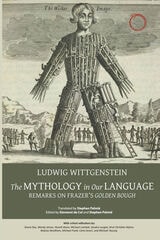
The Mythology in Our Language
Remarks on Frazer's Golden BoughLudwig Wittgenstein
HAU, 2018
In 1931 Ludwig Wittgenstein wrote his famous Remarks on Frazer’s “Golden Bough,” published posthumously in 1967. At that time, anthropology and philosophy were in close contact—continental thinkers drew heavily on anthropology’s theoretical terms, like mana, taboo, and potlatch, in order to help them explore the limits of human belief and imagination. Now the book receives its first translation by an anthropologist, in the hope that it can kick-start a new era of interdisciplinary fertilization.
Wittgenstein’s remarks on ritual, magic, religion, belief, ceremony, and Frazer’s own logical presuppositions are as lucid and thought-provoking now as they were in Wittgenstein’s day. Anthropologists find themselves asking many of the same questions as Wittgenstein—and in a reflection of that, this volume is fleshed out with a series of engagements with Wittgenstein’s ideas by some of the world’s leading anthropologists, including Veena Das, David Graeber, Wendy James, Heonik Kwon, Michael Lambek, Michael Puett, and Carlo Severi.

The Possibility of Language
Internal Tensions in Wittgenstein's TractatusMaria Cerezo
CSLI, 2003
Thinking in the Ruins
Wittgenstein and Santayana on ContingencyMichael P. Hodges
Vanderbilt University Press, 2000
Santayana is often regarded as an aesthetician and metaphysician, but Wittgenstein's work is usually seen as antithetical to the philosophical approaches favored by Santayana. In this insightful new study, Michael Hodges and John Lachs argue that behind the striking differences in philosophical style and vocabulary there is a surprising agreement in position. The similarities have largely gone unnoticed because of their divergent styles, different metaphilosophies, and separate spheres of influence. Hodges and Lachs show that Santayana's and Wittgenstein's works express their philosophical responses to contingency. Surprisingly, both thinkers turn to the integrity of human practices to establish a viable philosophical understanding of the human condition.
Both of these important twentieth-century philosophers formed their mature views at a time when the comfortable certainties of Western civilization were crumbling all around them. What they say is similar at least in part because they wished to resist the spread of ruin by relying on the calm sanity of our linguistic and other practices. According to both, it is not living human knowledge but a mistaken philosophical tradition that demands foundations and thus creates intellectual homelessness and displacement. Both thought that, to get our house in order, we have to rethink our social, religious, philosophical, and moral practices outside the context of the search for certainty. This insight and the projects that flowed from it define their philosophical kinship.
Thinking in the Ruins will enhance our understanding of these monumental thinkers' intellectual accomplishments and show how each influenced subsequent American philosophers. The book also serves as a call to philosophers to look beyond traditional classifications to the substance of philosophical thought.
Thinking with Tolstoy and Wittgenstein
Expression, Emotion, and ArtHenry W. Pickford
Northwestern University Press, 2015
In this highly original interdisciplinary study incorporating close readings of literary texts and philosophical argumentation, Henry W. Pickford develops a theory of meaning and expression in art intended to counter the meaning skepticism most commonly associated with the theories of Jacques Derrida.
Pickford arrives at his theory by drawing on the writings of Wittgenstein to develop and modify the insights of Tolstoy’s philosophy of art. Pickford shows how Tolstoy’s encounter with Schopenhauer’s thought on the one hand provided support for his ethical views but on the other hand presented a problem, exemplified in the case of music, for his aesthetic theory, a problem that Tolstoy did not successfully resolve. Wittgenstein’s critical appreciation of Tolstoy’s thinking, however, not only recovers its viability but also constructs a formidable position within contemporary debates concerning theories of emotion, ethics, and aesthetic expression.
This New Yet Unapproachable America
Lectures after Emerson after WittgensteinStanley Cavell
University of Chicago Press, 2013
Transcendence and Wittgenstein's Tractatus
Michael P. Hodges
Temple University Press, 1990
Although Wittgenstein claimed that his first book, the Tractatus Logico-Philosophicus, was essentially an ethical work, it has been viewed insistently as a purely logical one. His later work, Philosophical Investigations, is generally seen as presenting totally different ideas from his earlier writings. In this book, Michael Hodges shows how Wittgenstein’s later work emerged from his earlier Tractatus, and he unifies the early philosophy, both its well-known logical aspects and the lesser known ethical dimensions, in terms of the notion of transcendence.
Hodges studies the Tractatus in light of Wittgenstein’s own claim that the Philosophical Investigations can only be understood when read against the background of the Tractatus. At the heart of an understanding of the earlier work is the idea of transcendence which structures both Wittgenstein’s logical and ethical insights. Seen in terms of this notion, the rigorous unity of Wittgenstein’s early thinking becomes apparent and the gestalt shift to the later philosophy comes clearly into focus.

Wittgenstein & Critical Theory
Beyond Postmodern Criticism and Toward Descriptive InvestigationsSusan B. Brill
Ohio University Press, 1994
Brill’s work discusses at length the implications of Wittgenstein for literary criticism and theory. The volume specifically investigates the implications of Wittgenstein’s work for a number of contemporary critical orientations (notably poststructualism, feminism, and psychology). In addition, the research includes actual applications of Wittgenstein for literary criticism: diverse literary texts (including a number of poems and stories by Native American authors) are approached via a Wittgensteinian method as a means of discerning which critical approaches might be more or less efficacious. Not only does the book provide a solid introduction to Wittgensteinian philosophy for the critical scholars, but it also provides a clear methodology useful to critics seeking a means to navigate through the entanglement of contemporary criticism and theory.
Brill argues that a reliance upon the philosophy of Ludwig Wittgenstein can enable literary critics to escape the seemingly endless dialectic between modern and postmodern theory. Instead of debating which theory is theoretically best, we need to describe when theories work—and when they do not.
Wittgenstein and Modernism
Edited by Michael LeMahieu and Karen Zumhagen-Yekplé
University of Chicago Press, 2016
Michael LeMahieu Karen Zumhagen-Yekplé bring together scholars in both twentieth-century philosophy and modern literary studies to put Wittgenstein into dialogue with some of modernism’s most iconic figures, including Samuel Beckett, Saul Bellow, Walter Benjamin, Henry James, James Joyce, Franz Kafka, Adolf Loos, Robert Musil, Wallace Stevens, and Virginia Woolf. The contributors touch on two important aspects of Wittgenstein’s work and modernism itself: form and medium. They discuss issues ranging from Wittgenstein and poetics to his use of numbered propositions in the Tractatus as a virtuoso performance of modernist form; from Wittgenstein’s persistence metaphoric use of religion, music, and photography to an exploration of how he and Henry James both negotiated the relationship between the aesthetic and the ethical.
Covering many other fascinating intersections of the philosopher and the arts, this book offers an important bridge across the disciplinary divides that have kept us from a fuller picture of both Wittgenstein and the larger intellectual and cultural movement of which he was a part.
Wittgenstein's Ladder
Poetic Language and the Strangeness of the OrdinaryMarjorie Perloff
University of Chicago Press, 1996
"This book has the lucidity and the intelligence we have come to expect from Marjorie Perloff.—Linda Munk, American Literature
"[Perloff] has brilliantly adapted Wittgenstein's conception of meaning and use to an analysis of contemporary language poetry."—Linda Voris, Boston Review
"Wittgenstein's Ladder offers significant insights into the current state of poetry, literature, and literary study. Perloff emphasizes the vitality of reading and thinking about poetry, and the absolute necessity of pushing against the boundaries that define and limit our worlds."—David Clippinger, Chicago Review
"Majorie Perloff has done more to illuminate our understanding of twentieth century poetic language than perhaps any other critic. . . . Entertaining, witty, and above all highly original."—Willard Bohn, Sub-Stance
Wittgenstein's Lectures on the Foundations of Mathematics, Cambridge, 1939
Ludwig Wittgenstein
University of Chicago Press, 1989
He sat on a chair in the middle of the room, with some of the class sitting in chairs, some on the floor. He never used notes. He paused frequently, sometimes for several minutes, while he puzzled out a problem. He often asked his listeners questions and reacted to their replies. Many meetings were largely conversation.
These lectures were attended by, among others, D. A. T. Gasking, J. N. Findlay, Stephen Toulmin, Alan Turing, G. H. von Wright, R. G. Bosanquet, Norman Malcolm, Rush Rhees, and Yorick Smythies. Notes taken by these last four are the basis for the thirty-one lectures in this book.
The lectures covered such topics as the nature of mathematics, the distinctions between mathematical and everyday languages, the truth of mathematical propositions, consistency and contradiction in formal systems, the logicism of Frege and Russell, Platonism, identity, negation, and necessary truth. The mathematical examples used are nearly always elementary.
Wittgenstein's Tractatus
An IntroductionH. O. Mounce
University of Chicago Press, 1981
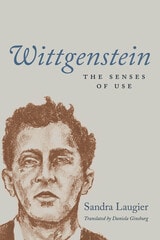
Wittgenstein
The Senses of UseSandra Laugier
University of Chicago Press, 2025
One of philosopher Ludwig Wittgenstein’s most consequential claims was that the meaning of the word, its sense, is its use in language. This deceptively simple claim, the foundation of what became known as ordinary language philosophy, has animated thinkers across disciplinary bounds from metaphysics to ethics and more. In The Senses of Use, Sandra Laugier embarks on a fresh journey through Wittgenstein’s corpus that emphasizes the place of ordinary life and language in its thought. Through his Tractatus Logico-Philosophicus, Philosophical Investigations, and rich posthumously published works, Laugier offers a compelling new look at Wittgenstein as a philosopher of mind.