Results by title
30 books match the query 'Women legislators'
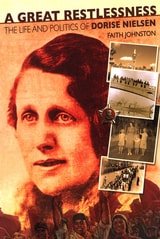
A Great Restlessness
The Life and Politics of Dorise NielsenFaith Johnston
University of Manitoba Press, 2006
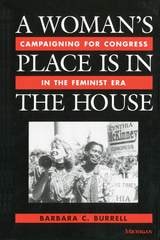
A Woman's Place Is in the House
Campaigning for Congress in the Feminist EraBarbara Burrell
University of Michigan Press, 1994
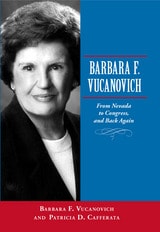
Barbara F. Vucanovich
From Nevada to Congress, and Back AgainBarbara F. Vucanovich
University of Nevada Press, 2014
CHALLENGING PARTIES, CHANGING PARLIAMENT
Women and Elected Office in Contemporary Western EuropeMiki Caul Kittilson
The Ohio State University Press, 2006
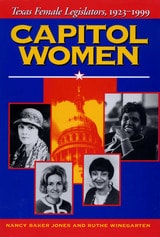
Capitol Women
Texas Female Legislators, 1923-1999By Nancy Baker Jones and Ruthe Winegarten
University of Texas Press, 2000
Along with bar rooms and bordellos, there has hardly been a more male-focused institution in Texas history than the Texas Legislature. Yet the eighty-six women who have served there have made a mark on the institution through the legislation they have passed, much of which addresses their concerns as citizens who have been inadequately represented by male lawmakers.
This first complete record of the women of the Texas Legislature places such well-known figures as Kay Bailey Hutchison, Sissy Farenthold, Barbara Jordan, Irma Rangel, Eddie Bernice Johnson, Susan Combs, and Judith Zaffirini in the context of their times and among the women and men with whom they served. Drawing on years of primary research and interviews, Nancy Baker Jones and Ruthe Winegarten offer concise biographies and profiles of all eighty-six women who have served or currently hold office in the Texas Legislature.
The biographies describe the women lawmakers' lives, campaign strategies, and legislative successes and defeats. Four introductory essays provide historical and cultural context for the biographies, which are arranged chronologically to give a sense of the passage of time, of relationships among and between women, and of the issues of their eras.
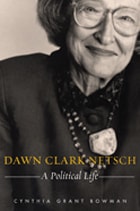
Dawn Clark Netsch
A Political LifeCynthia Grant Bowman
Northwestern University Press, 2010
Illinois Democratic politics has recently produced the most skilled and inspirational politician in memory . . . and has also reminded us of the need for further reform. It is fitting, then, that the latest installment of the Chicago Lives series turns to Dawn Clark Netsch, a leading reformer of Illinois politics since the 1950s and the first woman major party nominee for governor of Illinois.
Netsch was a pioneer, or the first of her gender, in almost every endeavor she undertook. From the very beginning of her career, when she led the move to desegregate Northwestern University's undergraduate dorms, her passion for social justice extended beyond the rights of women to rights for racial minorities and those of all sexual orientations. Bowman charts Dawn Clark Netsch's remarkable political career, from her work behind the scenes as assistant to Governor Otto Kerner and as a participant in the 1970 Constitutional Convention to her later service in elected office, first as Illinois state senator for eighteen years and later as Illinois comptroller, and culminating in her historic run for governor in 1994. Throughout, Netsch lost neither her genteel yet unpretentious demeanor, nor her passion for progressive politics as exemplified by her early mentor, Governor Adlai E. Stevenson.

Desire to Serve
The Autobiography of Congresswoman Eddie Bernice JohnsonCheryl Wattley
University of North Texas Press, 2024
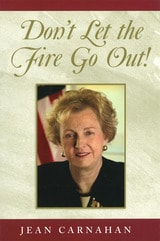
Don't Let the Fire Go Out!
Jean Carnahan
University of Missouri Press, 2004
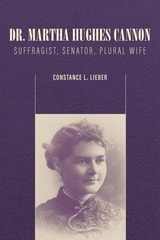
Dr. Martha Hughes Cannon
Suffragist, Senator, Plural WifeConstance L. Lieber
Signature Books, 2022

Ferraro
My StoryGeraldine Ferraro with Linda Bird Francke and with a foreword by Marie Wilson
Northwestern University Press, 2004
Ferraro's run for vice-president was an important moment in American history. The time is right for telling a new generation this story of women's collective political power and the difference women office holders can and do make to public policy.
Gender in Campaigns for the U.S. House of Representatives
Barbara Burrell
University of Michigan Press, 2014
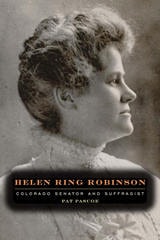
Helen Ring Robinson
Colorado Senator and SuffragistPat Pascoe
University Press of Colorado, 2011
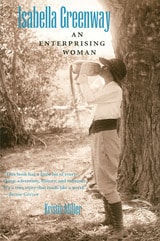
Isabella Greenway
An Enterprising WomanKristie Miller
University of Arizona Press, 2004
Isabella Greenway's life was linked with both Theodore Roosevelt and Franklin D. Roosevelt. Her infancy was spent on a snow-swept ranch in North Dakota, where young TR was a neighbor and a friend. In her teens, she captivated Edith Wharton's New York as a glamorous debutante. A bridesmaid in the wedding of Eleanor and Franklin Roosevelt, Isabella was the bride of Robert Ferguson, a Scottish nobleman and one of TR's Rough Riders. They went west when he developed tuberculosis; after his death, she married his fellow Rough Rider, Arizona copper magnate John Greenway.
In Tucson, the energetic Isabella ran an airline, worked with disabled veterans, and founded the world-famous Arizona Inn. When the Great Depression brought hard times, Eleanor Roosevelt recruited Isabella to work for the Democratic Party. Isabella played a decisive role in Franklin Roosevelt's nomination to the presidency in 1932; the New York Times called her "the most-talked-of woman at the National Democratic Convention." She was elected to Congress as Arizona's only US Representative, and again drew national media attention when she challenged FDR for not being sufficiently progressive.
Miller's meticulous biography captures a life of adventure and romance, from southern tobacco country to the ballrooms of New York, from western ranches to the dome of the US Capitol. She shows national politics played out behind the scenes, Isabella's lifelong friendship with Eleanor Roosevelt, and the drama of a loyal wife caring for a dying husband despite having fallen in love with a younger man. The book also shows Greenway's considerable influence on the development of Arizona's business and politics in the early decades of statehood. Although Isabella Greenway died in 1953, the Arizona Inn—a tribute to her enterprise—remains a premier resort hotel, celebrating its 75th anniversary in 2005. This book, too, celebrates Isabella's energy, vision, indomitable spirit, and love of life.
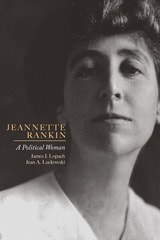
Jeannette Rankin
A Political WomanJames J. Lopach
University Press of Colorado, 2015
—Jeannette Rankin (1880-1973)
Jeannette Rankin, the first woman elected to Congress, stands tall among American icons. The representative from Montana won her seat at a time when women didn't have the right to vote in most states. Her firm stances inspired both admiration and fury across party lines, and she gained nearly canonical status among feminists and pacifists. In Jeannette Rankin: A Political Woman, James Lopach and Jean Luckowski demythologize Rankin, showing her to be a talented, driven, and deeply divided woman.
Until now, no biography has explored Rankin's inconsistencies. The authors extensively consulted the correspondence of her family members and contemporaries, uncovering ties between her politics and her familial and personal relationships. They reveal how she succeeded through her wealthy brother's influence as well as her own extraordinary efforts; how she drew inspiration not from her rural roots but from the radical hotbed of Greenwich Village; and how she championed an independent, woman-centered life while deferring to family.
Revealing her complexities along with her accomplishments, Jeannette Rankin: A Political Woman will be the definitive biography of this path-breaking politician for years to come.

Millicent Fenwick
Her WaySchapiro, Amy
Rutgers University Press, 2003
Amy Schapiro has written the first biography of Millicent Fenwick, the popular and colorful New Jersey congresswoman. Affectionately remembered as the pipe-smoking grandmother who served as the model for Garry Trudeau’s Doonesbury character Lacey Davenport, Fenwick defied such simplistic expectations to become, in the words of Walter Cronkite, “the conscience of Congress.”
Born in 1910 into comfortable circumstances, Fenwick faced tragedy at an early age when her mother was lost in the sinking of the Lusitania. Following an upper-class childhood and a failed marriage, she began a fourteen-year career at Vogue magazine.
In the 1960s, Fenwick became involved in the civil rights movement and took part in local and state politics in New Jersey. Blessed with striking good looks and a sharp wit, she cut a glamorous figure, rising quickly through the ranks of the state Republican Party at a time when most of her peers were retiring. When this colorful, outspoken figure—one of only five New Jersey women ever elected to Congress— went to Washington in 1974 at age sixty-four, her victory was portrayed by the media as a “geriatric triumph.”
Schapiro’s extensive interviews with Fenwick’s son, Hugh, who granted her exclusive rights to Fenwick’s personal papers, oral histories, letters, and photographs, provide rare insight into the life and career of one of America’s most memorable politicians.
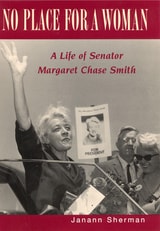
No Place for a Woman
A Life of Senator Margaret Chase SmithSherman, Janann
Rutgers University Press, 1999
No Place for a Woman is the first biography to analyze Margaret Chase Smith’s life and times by using politics and gender as the lens through which we can understand this Maine senator’s impact on American politics and American women. Sherman’s research is based upon more than one hundred hours of personal interviews with Senator Smith, and extensive research in primary and government documents, including those from the holdings of the Margaret Chase Smith Library.
Stateswomen
A Centennial History of Arkansas Women Legislators, 1922-2022Lindsley Armstrong Smith
University of Arkansas Press, 2022
The first comprehensive study dedicated to these trailblazing Arkansas legislators, Stateswomen will surely inspire history buffs, community-minded citizens, and political hopefuls alike.

The Difference Women Make
The Policy Impact of Women in CongressMichele L. Swers
University of Chicago Press, 2002
Swers combines quantitative analyses of bills with interviews with legislators and their staff to compare legislative activity on women's issues by male and female members of the House of Representatives during the 103rd (1993-94) and 104th (1995-96) Congresses. Tracking representatives' commitment to women's issues throughout the legislative process, from the introduction of bills through committee consideration to final floor votes, Swers examines how the prevailing political context and members' positions within Congress affect whether and how aggressively they pursue women's issues.
Anyone studying congressional behavior, the role of women, or the representation of social identities in Congress will benefit from Swers's balanced and nuanced analysis.
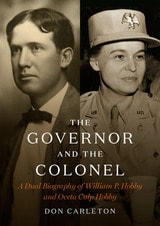
The Governor and the Colonel
A Dual Biography of William P. Hobby and Oveta Culp HobbyBy Don Carleton
University of Texas Press, 2020
William P. “Will” Hobby Sr. and Oveta Culp Hobby were one of the most influential couples in Texas history. Both were major public figures, with Will serving as governor of Texas and Oveta as the first commander of the Women’s Army Corps and later as the second woman to serve in a presidential cabinet. Together, they built a pioneering media empire centered on the Houston Post and their broadcast properties, and they played a significant role in the transformation of Houston into the fourth largest city in the United States. Don Carleton’s dual biography details their personal and professional relationship—defined by a shared dedication to public service—and the important roles they each played in local, state, and national events throughout the twentieth century.
This deeply researched book not only details this historically significant partnership, but also explores the close relationships between the Hobbys and key figures in twentieth-century history, from Texas legends such as LBJ, Sam Rayburn, and Jesse Jones, to national icons, including the Roosevelts, President Eisenhower, and the Rockefellers. Carleton's chronicle reveals the undeniable impact of the Hobbys on journalistic and political history in the United States.

The Joy of Politics
Surviving Cancer, a Campaign, a Pandemic, an Insurrection, and Life’s Other Unexpected CurveballsAmy Klobuchar
University of Minnesota Press, 2023
An intimate and revelatory memoir on personal challenges, political turmoil, and the state of American democracy―now in paperback with a new preface
During the past few years, as our country has faced unprecedented challenges, Senator Amy Klobuchar has been in the room where it happens―on the Senate floor for critical votes during the pandemic, at the debate podium during one of the most crucial presidential primaries in U.S. history, and in the Capitol on January 6, 2021, when insurrectionists stormed the building, interrupting the certification of the Electoral College. It was well past midnight when Klobuchar stood beside then–Vice President Pence to officially certify President Biden's victory.
In her candid, honest, and at times bitingly funny memoir, the pragmatic senator shares insider stories from these historic moments, while also inviting readers into her personal life. An underdog in the 2020 Democratic presidential primary campaign, she built surprising early momentum, only to suspend her candidacy in order to support Joe Biden. Within weeks of returning to work in the Senate, the sudden onslaught of Covid-19 hit her family directly: her husband was hospitalized for a week and spent a month in isolation. Klobuchar shares her experience facing a cancer diagnosis while her beloved father succumbs to Alzheimer's. She recounts the dramatic narrative of January 6 and how close we came to losing our democracy. And, with her signature humor, she reveals what it's like to work with some of her more . . . well, interesting . . . colleagues.
At the crux of these stories is a narrative of resilience—of personal resilience and the resilience of a nation—and, improbably, joy.
The Latina Advantage
Gender, Race, and Political SuccessBy Christina E. Bejarano
University of Texas Press, 2013
Challenging common assumptions and offering new alternatives in the debate over the current political status of women, this data-driven study indicates that minority female political candidates often have a strong advantage over male opponents when seeking political office.
During the first decade of the 21st century, racial/ethnic minority women have made significant strides in U.S. politics, comprising large portions of their respective minority delegations both in Congress and in state legislatures. This trend has been particularly evident in the growing political presence of Latinas, yet scholars have offered no clear explanations for this electoral phenomenon—until now.
In The Latina Advantage, Christina E. Bejarano draws on national public opinion datasets and a close examination of state legislative candidates in Texas and California to demonstrate the new power of the political intersection between race and gender. Underscoring the fact that racial/ethnic minority women form a greater share of minority representatives than do white women among white elected officials, Bejarano provides empirical evidence to substantiate previous theoretical predictions of the strategic advantage in the intersectionality of gender and ethnicity in Latinas. Her evidence indicates that two factors provide the basis for the advantage: increasingly qualified candidates and the softening of perceived racial threat, leading minority female candidates to encounter fewer disadvantages than their male counterparts.
Overturning the findings of classic literature that reinforce stereotypes and describe minority female political candidates as being at a compounded electoral disadvantage, Bejarano brings a crucial new perspective to dialogues about the rapidly shifting face of America’s electorate.

The Only Woman in the Room
The Norma Paulus StoryNorma Paulus
Oregon State University Press, 2017
Paulus came from a family of Roosevelt Democrats, but when a friend campaigned for a Republican seat in the state legislature, she switched parties. As she put it, “The Republicans were in politics for all the right reasons.” Amid the nationwide political upheavals of the late 1960s, Oregon’s Republicans, led by popular governor Tom McCall, seemed to be her kind of people—principled, pragmatic, and committed to education, the environment, and equality for all citizens under the law.
Paulus’s appointment by Governor McCall to the Marion-Polk Boundary Commission in 1969, a precursor to Oregon’s urban growth boundaries, helped launched her on a long and distinguished career of public service. She ran successfully for the Oregon House of Representatives in 1970, the first women to do so in the district. After three terms in the House, where she championed environmental causes, women’s rights and government transparency, she was elected Oregon’s Secretary of State in 1976—the first woman to hold that office and be elected to a statewide office in Oregon. She was the Republican candidate for governor in 1986, served a stint on the Northwest Power and Conservation Council, went on to become Oregon’s superintendent of public instruction, and headed the Oregon Historical Society.
During her years of public service, spanning the 1970s through the early 2000s, Norma Paulus occupied a distinctive niche in Oregon’s progressive political ecosystem. Her vivid personality and strong convictions endeared her to a broad swath of citizens. Beautiful and opinionated, charming and forceful, Paulus was widely covered in statewide and national newspapers and television during her eventful, sometimes controversial career. Now, The Only Woman in the Room sums up her life and work in a lively, anecdotal history that will appeal to historians, political scientists, newshounds, and ordinary citizens alike.
Walking the Gendered Tightrope
Theresa May and Nancy Pelosi as Legislative LeadersMelissa Haussman and Karen M. Kedrowski
University of Michigan Press, 2023

When You Dare to Say Yes
Jill Derby and Nevada ActivismJill Derby
University of Nevada Press, 2024
Derby’s account of the awakening of her post-college experience living abroad and stories of her global travels infuse this memoir with an international perspective and entertaining vignettes. Ultimately, Derby shares her personal understanding of the transformative power of living among different cultures.
Winning Their Place
Arizona Women in Politics, 1883-1950Heidi J. Osselaer
University of Arizona Press, 2009
This landmark book chronicles for the first time the participation of Arizona women in the state’s early politics. Incorporating impressive original research, Winning Their Place traces the roots of the political participation of women from the territorial period to after World War II. Although women in Arizona first entered politics for traditional reasons—to reform society and protect women and children—they quickly realized that male politicians were uninterested in their demands. Most suffrage activists were working professional women, who understood that the work place discriminated against them. In Arizona they won the vote because they demanded rights as working women and aligned with labor unions and third parties that sympathized with their cause. After winning the vote, the victorious suffragists ran for office because they believed men could not and would not represent their interests.
Through this process, these Arizona women became excellent politicians. Unlike women in many other states, women in Arizona quickly carved out a place for themselves in local and state politics, even without the support of the reigning Democratic Party, and challenged men for county office, the state legislature, state office, Congress, and even for governor. This fascinating book reveals how they shattered traditional notions about “a woman’s place” and paved the way for future female politicians, including the “Fab Five” and countless others who have changed the course of Arizona history.
Women Legislators in Central America
Politics, Democracy, and PolicyBy Michelle A. Saint-Germain and Cynthia Chavez Metoyer
University of Texas Press, 2008
During the years between 1980 and 1999, in the midst of war and economic crisis, a record number of women were elected to national legislatures in Central American republics. Can quantitative increases in the presence of elected women in Central America produce qualitative political changes?
In this detailed study, Michelle A. Saint-Germain and Cynthia Chavez Metoyer explore the reasons for this unprecedented political rise of women, and what effect it has had on the region. Focusing on Costa Rica, El Salvador, Guatemala, Honduras, and Nicaragua, the authors analyze national and regional indicators to evaluate various hypotheses concerning the reasons for women's electoral success in the region, as well as to make comparisons with findings from other world regions. They find that the election of more women depends on three things: the presence of a crisis, a pool of politically experienced women, and a culture of gender consciousness. They also compare the characteristics of Central American women legislators to women in other national legislatures around the world.
The authors document how elected women have used their policy-making power to begin to change the lives of all Central Americans, women and men alike. In more than seventy-five in-depth, personal interviews, these women legislators reflect on their lives, political careers, and gender identities in their own words, providing deep insights into recent events in this region.

Women Take Their Place in State Legislatures
The Creation of Women's CaucusesAnna Mitchell Mahoney
Temple University Press, 2019
How do women strategically make their mark on state legislatures? Anna Mitchell Mahoney’s book traces the development of women’s state legislative caucuses and the influence both gender and party have on women’s ability to organize collectively. She provides a comprehensive analysis of how and why women organize around their gender identity in state legislatures—or why they do not.
Women Take Their Place in State Legislatures includes a quantitative analysis of institutional-level variables and caucus existence in all 50 states. Case studies of caucus attempts in New Jersey, Colorado, Pennsylvania, and Iowa between 2006 and 2010 examine attempts at creating women’s caucuses that succeeded or failed, and why. Mahoney’s interviews with 180 state legislators and their staff explore the motivations of caucus creators and participants. Ultimately, she finds that women’s organizing is contextual; it demonstrates the dynamic nature of gender.
Mahoney also provides insights into broad questions regarding gendered institutions, collective action, and political party governance. Women Take Their Place in State Legislatures fills a lacuna in the evaluation of women in government.
Women in Politics in the American City
Myra Holman
Temple University Press, 2014
This book provides the first comprehensive evaluation of the influence of gender on the behavior of mayors and city council members in the United States. Holman considers the effects of gender in local, urban politics and analyzes how a leader's gender does-and does not-influence policy preferences, processes, behavior, and outcomes.
Holman effectively uses original survey data to evaluate policy attitudes, combined with observations of city council meetings and interviews with leaders and community members. In doing so, she demonstrates the importance of considering the gender of leaders in local office.
Women in Politics in the American City emphasizes that the involvement of women in local politics does matter and that it has significant consequences for urban policy as well as state and local democracy.
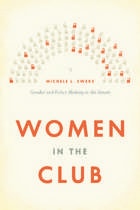
Women in the Club
Gender and Policy Making in the SenateMichele L. Swers
University of Chicago Press, 2013
In the run-up to the 2012 presidential election, Democrats and Republicans were locked in a fierce battle for the female vote. Democrats charged Republicans with waging a “war on women,” while Republicans countered that Democratic policies actually undermined women’s rights. The women of the Senate wielded particular power, planning press conferences, appearing on political programs, and taking to the Senate floor over gender-related issues such as workplace equality and reproductive rights.
The first book to examine the impact of gender differences in the Senate, Women in the Club is an eye-opening exploration of how women are influencing policy and politics in this erstwhile male bastion of power. Gender, Michele L. Swers shows, is a fundamental factor for women in the Senate, interacting with both party affiliation and individual ideology to shape priorities on policy. Women, for example, are more active proponents of social welfare and women’s rights. But the effects of gender extend beyond mere policy preferences. Senators also develop their priorities with an eye to managing voter expectations about their expertise and advancing their party’s position on a given issue. The election of women in increasing numbers has also coincided with the evolution of the Senate as a highly partisan institution. The stark differences between the parties on issues pertaining to gender have meant that Democratic and Republican senators often assume very different roles as they reconcile their policy views on gender issues with the desire to act as members of partisan teams championing or defending their party’s record in an effort to reach various groups of voters.
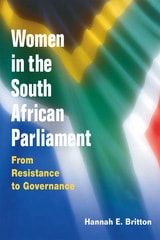
Women in the South African Parliament
FROM RESISTANCE TO GOVERNANCEHannah Evelyn Britton
University of Illinois Press, 2005
Although the international press closely chronicled the dismantling of South Africa's apartheid policies, it paid little attention to the unique role women from a variety of political parties played in establishing the new government. Utilizing interviews, participant observation, and archival research, Women in the South African Parliament tells an inspiring story of liberation, showing how these women achieved electoral success, learned to work with lifelong enemies, and began to transform Parliament by creating more space for women's voices during a critical time in the life of their democracy.
Arguing from her detailed analysis of the strategies and political tactics used by these South African women, both individually and collectively, Hannah Britton contends that, contrary claims in earlier studies of the developing world, mobilization by women prior to a transition to democracy can lead to gains after the transition--including improvements in constitutional mandates, party politics, and representation. At the same time, Britton demonstrates that not even national leadership can ensure power for all women and that many who were elected to South Africa's first democratic parliament declined to run again, feeling they could have a greater impact working in their own communities.