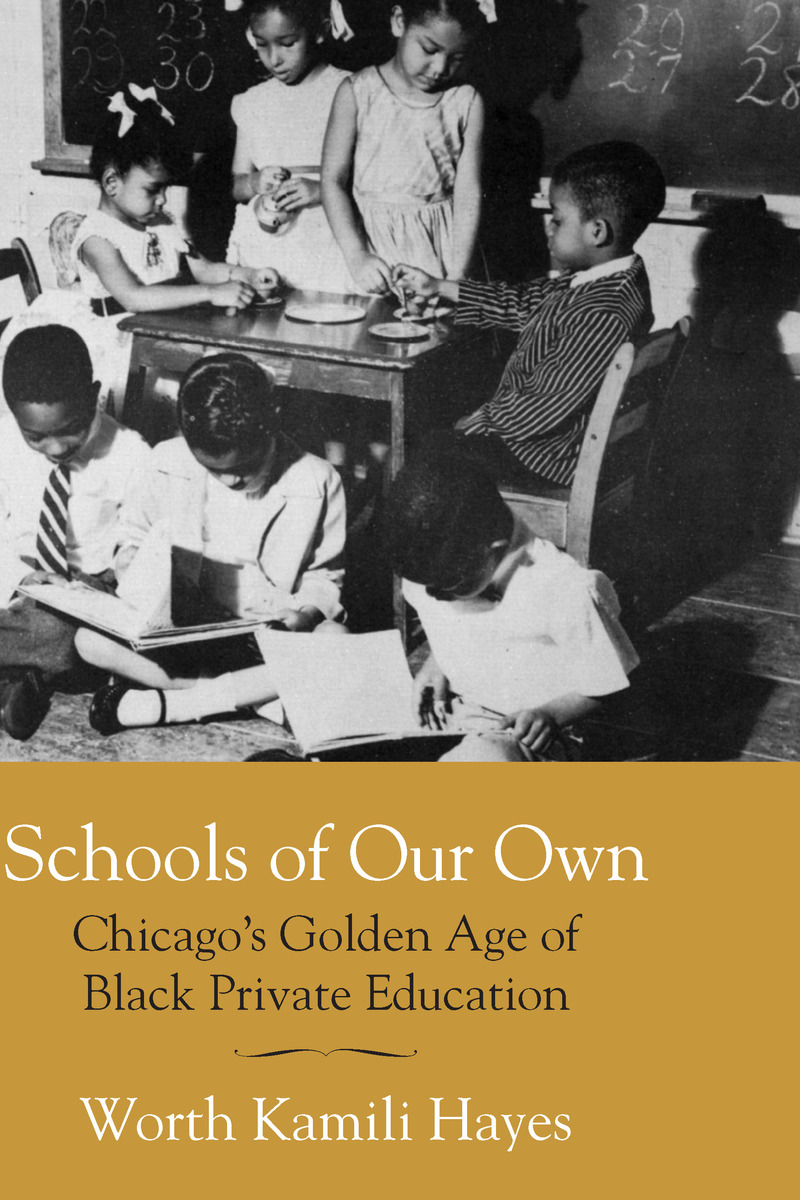
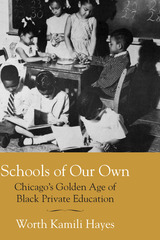
“Building on transformative African American educational history scholarship and centering the work, values, and brilliance of Black women educators, Schools of Our Own expands what we know about the multiplicity of Black efforts to secure and enact educational opportunities in the mid 20th century that respected and embraced Black children.” —Michelle Purdy, author of Transforming the Elite: Black Students and the Desegregation of Private Schools
"Hayes . . . enters a vast historiography, building on the scholarship of Wesley Hogan’s Many Minds, One Heart: SNCC’s Dream for a New America and other scholars of the black freedom struggle; Peter Irons and researchers of Black education; and scholars of urban history, including Arnold Hirsch." —L. A. Cowles, Nicholls State University, CHOICE— -
"Hayes examines three African American private schools within the context of Black education in Chicago, arguing that many African Americans, including Black educators in public schools, saw Black private schools as an opportunity to create quality education for their children as an alternative to public school integration. Recommended." —CHOICE
“Schools of Our Own is an important contribution that extends our understanding of the development of education in Chicago and the agency and self-determination of black Chicagoans. It reinforces our understanding of the longstanding efforts of African Americans to use schools for social mobility and personal advancement, and how this cultural value and expectation was transplanted from the American South to urban centers like Chicago when southern blacks migrated north.” —Christopher Span, author of From Cotton Field to Schoolhouse— -
“Schools of Our Own is an important historical contribution exploring the diversity of black private schools. It serves as a missing piece of the historical puzzle, perfectly nestled between what we already know about black education in Chicago.” —Dionne Danns, author of Desegregating Chicago’s Public Schools
— -
"Hayes examines three African American private schools within the context of Black education in Chicago, arguing that many African Americans, including Black educators in public schools, saw Black private schools as an opportunity to create quality education for their children as an alternative to public school integration. Recommended." —CHOICE
“Schools of Our Own is an important contribution that extends our understanding of the development of education in Chicago and the agency and self-determination of black Chicagoans. It reinforces our understanding of the longstanding efforts of African Americans to use schools for social mobility and personal advancement, and how this cultural value and expectation was transplanted from the American South to urban centers like Chicago when southern blacks migrated north.” —Christopher Span, author of From Cotton Field to Schoolhouse— -
“Schools of Our Own is an important historical contribution exploring the diversity of black private schools. It serves as a missing piece of the historical puzzle, perfectly nestled between what we already know about black education in Chicago.” —Dionne Danns, author of Desegregating Chicago’s Public Schools
— -
“Building on transformative African American educational history scholarship and centering the work, values, and brilliance of Black women educators, Schools of Our Own expands what we know about the multiplicity of Black efforts to secure and enact educational opportunities in the mid 20th century that respected and embraced Black children.” —Michelle Purdy, author of Transforming the Elite: Black Students and the Desegregation of Private Schools
"Hayes . . . enters a vast historiography, building on the scholarship of Wesley Hogan’s Many Minds, One Heart: SNCC’s Dream for a New America and other scholars of the black freedom struggle; Peter Irons and researchers of Black education; and scholars of urban history, including Arnold Hirsch." —L. A. Cowles, Nicholls State University, CHOICE— -