
 A SCHOLARLY BOOK REPOSITORY
768 start with A start with A


This book offers a unique insider's perspective on the unfolding discovery of a crucial link in our evolution: Proconsul, a fossil ape named whimsically after a performing chimpanzee called Consul.
The Ape in the Tree is written in the voice of Alan Walker, whose involvement with Proconsul began when his graduate supervisor analyzed the tree-climbing adaptations in the arm and hand of this extinct creature. Today, Proconsul is the best-known fossil ape in the world.
The history of ideas is set against the vivid adventures of Walker's fossil-hunting expeditions in remote regions of Africa, where the team met with violent thunderstorms, dangerous wildlife, and people isolated from the Western world. Analysis of the thousands of new Proconsul specimens they recovered provides revealing glimpses of the life of this last common ancestor between apes and humans.
The attributes of Proconsul have profound implications for the very definition of humanness. This book speaks not only of an ape in a tree but also of the ape in our tree.
In this masterwork, Russell H. Tuttle synthesizes a vast research literature in primate evolution and behavior to explain how apes and humans evolved in relation to one another, and why humans became a bipedal, tool-making, culture-inventing species distinct from other hominoids. Along the way, he refutes the influential theory that men are essentially killer apes—sophisticated but instinctively aggressive and destructive beings.
Situating humans in a broad context, Tuttle musters convincing evidence from morphology and recent fossil discoveries to reveal what early primates ate, where they slept, how they learned to walk upright, how brain and hand anatomy evolved simultaneously, and what else happened evolutionarily to cause humans to diverge from their closest relatives. Despite our genomic similarities with bonobos, chimpanzees, and gorillas, humans are unique among primates in occupying a symbolic niche of values and beliefs based on symbolically mediated cognitive processes. Although apes exhibit behaviors that strongly suggest they can think, salient elements of human culture—speech, mating proscriptions, kinship structures, and moral codes—are symbolic systems that are not manifest in ape niches.
This encyclopedic volume is both a milestone in primatological research and a critique of what is known and yet to be discovered about human and ape potential.

What can the study of young monkeys and apes tell us about the minds of young humans? In this fascinating introduction to the study of primate minds, Juan Carlos Gómez identifies evolutionary resemblances—and differences—between human children and other primates. He argues that primate minds are best understood not as fixed collections of specialized cognitive capacities, but more dynamically, as a range of abilities that can surpass their original adaptations.
In a lively overview of a distinguished body of cognitive developmental research among nonhuman primates, Gómez looks at knowledge of the physical world, causal reasoning (including the chimpanzee-like errors that human children make), and the contentious subjects of ape language, theory of mind, and imitation. Attempts to teach language to chimpanzees, as well as studies of the quality of some primate vocal communication in the wild, make a powerful case that primates have a natural capacity for relatively sophisticated communication, and considerable power to learn when humans teach them.
Gómez concludes that for all cognitive psychology’s interest in perception, information processing, and reasoning, some essential functions of mental life are based on ideas that cannot be explicitly articulated. Nonhuman and human primates alike rely on implicit knowledge. Studying nonhuman primates helps us to understand this perplexing aspect of all primate minds.

Apocalyptic visions and prophecies from Zarathustra to yesterday form the luxuriant panorama in Eugen Weber's profound and elegant book. Beginning with the ancients of the West and the Orient and, especially, with those from whom we received our religions, the Jews and earliest Christians, Weber finds that an absolute belief in the end of time, when good would do final battle with evil, was omnipresent. Within centuries, apocalyptic beliefs inspired Crusades, scientific discoveries, works of art, voyages such as those of Columbus, rebellions and reforms. In the new world, American abolitionists, who were so critical to the movement to end slavery, believed in a final reckoning. The nineteenth and twentieth centuries' apocalyptic movements veered toward a lunatic fringe, and Weber rescues them from obloquy. From this more than two millennia history, he redresses the historical and religious amnesia that has consigned the study of apocalypses and millennial thought to the ash heap of thought and belief.
Weber, a master storyteller, turns detective in this latest book as he finds these alternative rationalities in the West, Asia, Africa, and South America. He writes with profound respect for the millennial pulse in history while never losing his urbane and witty style of writing. As we approach our second millennium beset by a host of apocalyptic predictions and cults, this book offers a map of understanding of the creeds we ignore at our peril.
Winner of the Eugene M. Emme Astronautical Literature Award
A Bloomberg View Must-Read Book of the Year
A Choice Outstanding Academic Title of the Year
“A substance-rich, original on every page exploration of how the space program interacted with the environmental movement, and also with the peace and ‘Whole Earth’ movements of the 1960s.”
—Tyler Cowen, Marginal Revolution
The summer of 1969 saw astronauts land on the moon for the first time and hippie hordes descend on Woodstock. This lively and original account of the space race makes the case that the conjunction of these two era-defining events was not entirely coincidental.
With its lavishly funded mandate to put a man on the moon, the Apollo mission promised to reinvigorate a country that had lost its way. But a new breed of activists denounced it as a colossal waste of resources needed to solve pressing problems at home. Neil Maher reveals that there were actually unexpected synergies between the space program and the budding environmental, feminist and civil rights movements as photos from space galvanized environmentalists, women challenged the astronauts’ boys club and NASA’s engineers helped tackle inner city housing problems. Against a backdrop of Saturn V moonshots and Neil Armstrong’s giant leap for mankind, Apollo in the Age of Aquarius brings the cultural politics of the space race back down to planet Earth.
“As a child in the 1960s, I was aware of both NASA’s achievements and social unrest, but unaware of the clashes between those two historical currents. Maher [captures] the maelstrom of the 1960s and 1970s as it collided with NASA’s program for human spaceflight.”
—George Zamka, Colonel USMC (Ret.) and former NASA astronaut
“NASA and Woodstock may now seem polarized, but this illuminating, original chronicle…traces multiple crosscurrents between them.”
—Nature

The life and miracles of a pagan holy man.
This biography of a first-century AD holy man has become one of the most widely discussed literary works of later antiquity. In a grandly baroque style style Philostratus portrays a charismatic teacher and religious reformer from Tyana in Cappadocia (modern central Turkey) who travels the length of the known world, from the Atlantic to the river Ganges. His miracles, which include extraordinary cures and mysterious disappearances, together with his apparent triumph over death, caused pagans to make Apollonius a rival to Jesus of Nazareth.
In his three-volume Loeb edition of this third-century work, Christopher Jones gives a much improved Greek text and an elegant translation with full explanatory notes. The Life of Apollonius is formally a biography (by far the longest that survives from antiquity), but in reality a combination of travel narrative, rhetorical showpiece, and much else. In the introduction, Jones addresses the question of how far the Life is history and how far fiction. He also discusses the survival and reception of the work through Late Antiquity and up to modern times, and the role that it continues to play in controversies about Christianity.

The life and miracles of a pagan holy man.
This biography of a first-century AD holy man has become one of the most widely discussed literary works of later antiquity. In a grandly baroque style style Philostratus portrays a charismatic teacher and religious reformer from Tyana in Cappadocia (modern central Turkey) who travels the length of the known world, from the Atlantic to the river Ganges. His miracles, which include extraordinary cures and mysterious disappearances, together with his apparent triumph over death, caused pagans to make Apollonius a rival to Jesus of Nazareth.
In his three-volume Loeb edition of this third-century work, Christopher Jones gives a much improved Greek text and an elegant translation with full explanatory notes. The Life of Apollonius is formally a biography (by far the longest that survives from antiquity), but in reality a combination of travel narrative, rhetorical showpiece, and much else. In the introduction, Jones addresses the question of how far the Life is history and how far fiction. He also discusses the survival and reception of the work through Late Antiquity and up to modern times, and the role that it continues to play in controversies about Christianity.

The life and miracles of a pagan holy man.
Philostratus’ colorful biography of Apollonius of Tyana, recounting the sayings and miracles of a Pythagorean sage, incidentally provoked a long-lasting debate between pagans and Christians. This volume, which completes the Loeb Classical Library edition of the Life of Apollonius of Tyana, provides full context for that much discussed third-century portrayal of a charismatic religious teacher.
Here is a new translation of the surviving letters of Apollonius, augmented and illuminated by recent discoveries. These letters reveal Apollonius’ personality and his religious and philosophical ideas. New for this edition is a selection of ancient reports about Apollonius from authors such as St. Jerome and St. Augustine.
Philostratus’ biography was quickly caught up in the religious struggles that marked the rise of Christianity. An official in Diocletian’s empire named Hierocles used it as ammunition in an anti-Christian polemic, initiating a controversy that lasted well into modern times. The reply by Eusebius, the fourth-century bishop of Caesarea, was originally included in editions of the Life of Apollonius in order to serve as a spiritual antidote and to provide cover for the publishers; today it is an essential chapter in the history of Philostratus’ masterpiece.

First brought to Florence by Lorenzo de’ Medici as a celebrity preacher, Girolamo Savonarola (1452–1498), a Dominican friar, would ultimately play a major role in the events that convulsed the city in the 1490s and led to the overthrow of the Medici themselves. After a period when he held close to absolute power in the great Renaissance republic, Savonarola was excommunicated by the Borgia pope, Alexander VI, in 1497 and, after a further year of struggle, was hanged and burned in Florence’s Piazza della Signoria in 1498.
The Latin writings brought together in this volume consist of various letters, a formal apologia, and his Dialogue on the Truth of Prophecy, all written in the last year of his life. They defend his prophetic mission and work of reform in Florence while providing a fascinating window onto the mind of a religious fanatic. All these works are here translated into English for the first time.

Oratory and philosophy from a Latin novelist.
Apuleius, one of the great stylists of Latin literature, was born ca. AD 125 in Madauros to a politically prominent family and received an elite education in the provincial capital Carthage and at Athens, where he began a lifelong allegiance to Platonic philosophy. In the later 150s, he married Pudentilla of Oea, a wealthy widow, and seems to have enjoyed a distinguished public career in Africa and perhaps as an advocate in Rome.
Although Apuleius is best known for his picaresque novel Metamorphoses or The Golden Ass (LCL 44, 453), he also wrote and declaimed on a wide variety of subjects. This edition contains the other surviving works of Apuleius that are considered genuine. Apologia is a speech delivered probably in 158/59 in which Apuleius defends himself against in-laws who had accused him of having used sinister means, including magic, to induce Pudentilla to marry him. The Florida is a collection of twenty-three excerpts from speeches by Apuleius, probably all of them delivered in Africa; the title refers either to their florid style or to their resemblance to an anthology, perhaps both. De Deo Socratis (On Socrates’ God) takes the form of a speech addressed to a cultured, nonspecialist Latin-speaking audience that locates Socrates’ invisible guide and protector (daimonion) within the more general concept of daimones as forces intermediary between gods and humans.
The Loeb Classical Library edition of Apuleius is in three volumes.

Austere apologetics.
Q. Septimus Florens Tertullianus (ca. AD 150–222) was born a soldier’s son at Carthage, educated in Greek and Roman literature, philosophy, and medicine, and later studied law to became a pleader, remaining a clever and often tortuous arguer. At Rome he became a learned and militant Christian. After visiting churches in Greece (and Asia Minor?) he returned to Carthage and in his writings there founded a Christian Latin language and literature, toiling to fuse enthusiasm with reason; to unite the demands of the Bible with the practice of the Church; and to continue to vindicate the Church’s possession of the true doctrine in the face of unbelievers, Jews, Gnostics, and others. In some of his many works he defended Christianity, in others he attacked heretical people and beliefs; in others he dealt with morals. In this volume are his Apologeticus and De Spectaculis.
Of Minucius, an early Christian writer of unknown date, we have only Octavius, a vigorous and readable debate between an unbeliever and a Christian friend of Minucius, the lawyer Octavius Ianuarius. Minucius himself acts as presiding judge. Octavius wins the argument. The whole work presents a picture of social and religious conditions in Rome, apparently about the end of the second century.
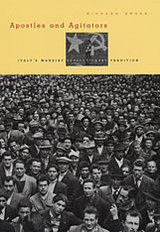
One of the most controversial questions in Italy today concerns the origins of the political terror that ravaged the country from 1969 to 1984, when the Red Brigades, a Marxist revolutionary organization, intimidated, maimed, and murdered on a wide scale.
In this timely study of the ways in which an ideology of terror becomes rooted in society, Richard Drake explains the historical character of the revolutionary tradition to which so many ordinary Italians professed allegiance, examining its origins and internal tensions, the men who shaped it, and its impact and legacy in Italy. He illuminates the defining figures who grounded the revolutionary tradition, including Carlo Cafiero, Antonio Labriola, Benito Mussolini, and Antonio Gramsci, and explores the connections between the social disasters of Italy, particularly in the south, and the country's intellectual politics; the brand of "anarchist communism" that surfaced; and the role of violence in the ideology. Though arising from a legitimate sense of moral outrage at desperate conditions, the ideology failed to find the political institutions and ethical values that would end inequalities created by capitalism.
In a chilling coda, Drake recounts the recent murders of the economists Massimo D'Antona and Marco Biagi by the new Red Brigades, whose Internet justification for the killings is steeped in the Marxist revolutionary tradition.
Enduring and influential early Christian texts.
The writings of the Apostolic Fathers give a rich and diverse picture of Christian life and thought in the period immediately after New Testament times. Some of them were accorded almost Scriptural authority in the early Church. This new Loeb edition of these essential texts reflects current idiom and the latest scholarship.
Here are the Letters of Ignatius, bishop of Antioch, among the most famous documents of early Christianity; these letters, addressing core theological questions, were written to a half dozen different congregations while Ignatius was en route to Rome as a prisoner, condemned to die in the wild-beast arena. Also in this collection is a letter to the Philippian church by Polycarp, bishop of Smyrna and friend of Ignatius, as well as an account of Polycarp’s martyrdom. There are several kinds of texts in the Apostolic Fathers collection, representing different religious outlooks. The manual called the Didache sets forth precepts for religious instruction, worship, and ministry. The Epistle of Barnabas searches the Old Testament, the Jewish Bible, for testimony in support of Christianity and against Judaism. Probably the most widely read in the early Christian centuries was The Shepherd of Hermas, a book of revelations that develops a doctrine of repentance.
THIS EDITION HAS BEEN REPLACED BY A NEWER EDITION.
The writings of the Apostolic Fathers give a picture of Christian life and thought in the period immediately after New Testament times. Some of them were accorded almost Scriptural authority in the early Church. The nine texts subsumed under this title include the epistles of Ignatius, bishop of Antioch, which were written while Ignatius was en route to Rome as a prisoner, condemned to die in the wild-beast arena. Here too is the "Didache," a book of precepts in religious instruction, worship, and ministry; and the "Epistle of Barnabas," which attempts to sever the connection between Judaism and the Old Testament. "The Shepherd of Hermas" is a book of revelations and a doctrine of repentance; and the "Martyrdom of Polycarp" gives an account of the persecution of Christians at Smyrna.
Enduring and influential early Christian texts.
The writings of the Apostolic Fathers give a rich and diverse picture of Christian life and thought in the period immediately after New Testament times. Some of them were accorded almost Scriptural authority in the early Church. This new Loeb edition of these essential texts reflects current idiom and the latest scholarship.
Here are the Letters of Ignatius, bishop of Antioch, among the most famous documents of early Christianity; these letters, addressing core theological questions, were written to a half dozen different congregations while Ignatius was en route to Rome as a prisoner, condemned to die in the wild-beast arena. Also in this collection is a letter to the Philippian church by Polycarp, bishop of Smyrna and friend of Ignatius, as well as an account of Polycarp’s martyrdom. There are several kinds of texts in the Apostolic Fathers collection, representing different religious outlooks. The manual called the Didache sets forth precepts for religious instruction, worship, and ministry. The Epistle of Barnabas searches the Old Testament, the Jewish Bible, for testimony in support of Christianity and against Judaism. Probably the most widely read in the early Christian centuries was The Shepherd of Hermas, a book of revelations that develops a doctrine of repentance.

The dramatic story of Mehdi Hasan and Ellen Donnelly, whose marriage convulsed high society in nineteenth-century India and whose notorious trial and fall reverberated throughout the British Empire, setting the benchmark for Victorian scandals.
In April 1892, a damning pamphlet circulated in the south Indian city of Hyderabad, the capital of the largest and wealthiest princely state in the British Raj. An anonymous writer charged Mehdi Hasan, an aspiring Muslim lawyer from the north, and Ellen Donnelly, his Indian-born British wife, with gross sexual misconduct and deception. The scandal that ensued sent shock waves from Calcutta to London. Who wrote this pamphlet, and was it true?
Mehdi and Ellen had risen rapidly among Hyderabad’s elites. On a trip to London they even met Queen Victoria. Not long after, a scurrilous pamphlet addressed to “the ladies of Hyderabad” charged the couple with propagating a sham marriage for personal gain. Ellen, it was claimed, had been a prostitute, and Mehdi was accused of making his wife available to men who could advance his career. To avenge his wife and clear his name, Mehdi filed suit against the pamphlet’s printer, prompting a trial that would alter their lives.
Based on private letters, courtroom transcripts, secret government reports, and scathing newspaper accounts, Benjamin Cohen’s riveting reconstruction of the couple’s trial and tribulations lays bare the passions that ran across racial lines and the intimate betrayals that doomed the Hasans. Filled with accusations of midnight trysts and sexual taboos, An Appeal to the Ladies of Hyderabad is a powerful reminder of the perils facing those who tried to rewrite society’s rules. In the struggle of one couple, it exposes the fault lines that would soon tear a world apart.

When does imitation of an author morph into masquerade? Although the Roman writer Ovid died in the first century CE, many new Latin poems were ascribed to him from the sixth until the fifteenth century. Like the Appendix Vergiliana, these verses reflect different understandings of an admired Classical poet and expand his legacy throughout the Middle Ages.
The works of the “medieval Ovid” mirror the dazzling variety of their original. The Appendix Ovidiana includes narrative poetry that recounts the adventures of both real and imaginary creatures, erotic poetry that wrestles with powerful desires and sexual violence, and religious poetry that—despite the historical Ovid’s paganism—envisions the birth, death, and resurrection of Christ.
This is the first comprehensive collection and English translation of these pseudonymous medieval Latin poems.

Frank Kermode is the preeminent practitioner of the art of criticism in the English-speaking world. As such his task entails the readiness to evaluate in general terms the widest range of texts, both ancient and modern, and also the ability to make public sense of the seemingly arcane debates about theories of literature as they pertain to the ongoing process of evaluation. It has been Kermode’s distinction to make a virtue—as all the best critics have done—of the necessarily occasional nature of his profession. That virtue is evident in every page of this set of essays.
This is a book in which Kermode asks the reader to share his pleasure in the literature of a set of major writers—Milton, Eliot, Stevens. He vividly evokes Milton after the Restoration of Charles II, with a fine speculative discussion of the interplay between his personal and political circumstances and the preoccupations of his poetry. He sets before us T. S. Eliot living in a condition of permanent exile, Wallace Stevens in his old age dwelling poetically in Connecticut, and author/critic William Empson, whose singular career was marked by both the pleasure of the text and the delight in conceptual issues that characterizes so much of the contemporary taste for theory. Other essays draw our attention to debates on the literary canon and problems of biblical criticism and their implications for the study of narrative in particular and the interpretation of secular literary texts in general.
These are professional essays that nevertheless defy the excesses of modern professionalism. Nowhere is this more evident than in the polemical Prologue to the book, in which Kermode sorts out the good from the meretricious in contemporary criticism. He argues that some proclaimed theorists “seem largely to have lost interest in literature,” while the best, like Paul de Man and Jacques Derrida, have never lost what Kermode prizes most highly, the very appetite or hunger for poetry and literature. Always readable, elegant even on gnarled matters, and courteous in contexts where others are bad-tempered, An Appetite for Poetry is the work of one of the most distinguished minds of our time. In reaffirming the professional responsibilities of criticism now being neglected, it displays a generous hospitality to new ideas.
This book analyzes the different ways mathematics is applicable in the physical sciences, and presents a startling thesis--the success of mathematical physics appears to assign the human mind a special place in the cosmos.
Mark Steiner distinguishes among the semantic problems that arise from the use of mathematics in logical deduction; the metaphysical problems that arise from the alleged gap between mathematical objects and the physical world; the descriptive problems that arise from the use of mathematics to describe nature; and the epistemological problems that arise from the use of mathematics to discover those very descriptions.
The epistemological problems lead to the thesis about the mind. It is frequently claimed that the universe is indifferent to human goals and values, and therefore, Locke and Peirce, for example, doubted science's ability to discover the laws governing the humanly unobservable. Steiner argues that, on the contrary, these laws were discovered, using manmade mathematical analogies, resulting in an anthropocentric picture of the universe as "user friendly" to human cognition--a challenge to the entrenched dogma of naturalism.
A leader in world archaeology argues that the archaeological record can and should be used to reconstruct the social structure of past societies, that archaeology ought, in effect, to become social archaeology. Colin Renfrew believes that the goal is to discover how and why cultures change through time and space. In the thirteen essays collected in this volume he examines various approaches to the problem.
Renfrew begins with specific demonstrations of what can be learned about social organization from the archaeological record. He looks for regularities in the spatial organization of societies and shows what they reveal about social dominance and power. He considers trade and exchange in the broadest context as human interaction. He relates chiefdoms and monument building to the mobilization of labor. Renfrew next moves to the dynamic issue of how cultures change. He examines the use of systems thinking in archaeology, proposing it as a way to avoid overly simple explanations, and demonstrates the power of new statistical techniques and computer programs.
In a final provocative section Renfrew suggests that sudden changes in the archaeological record—the "collapse" of civilizations—should not be seen as anomalies to be explained by the action of some outside agent but rather as predictable instances of "systems collapse."

How do mothers reconcile conflicting loyalties--to their religious traditions, and to the daughters whose freedoms are also constrained by those traditions? Searching for answers, Tova Hartman Halbertal interviewed mothers of teenage daughters in religious communities: Catholics in the United States, Orthodox Jews in Israel.
Sounding surprisingly alike, both groups described conscious struggles between their loyalties and talked about their attempts to make sense of and pass on their multiple commitments. They described accommodations and rationalizations and efforts to make small changes where they felt that their faith unjustly subordinated women. But often they did not feel they could tell their daughters how troubled they were. To keep their daughters safe within the protective culture of their ancestors, the mothers had to hide much of themselves in the hope that their daughters would know them more completely in the future.
Moving and unique, this book illuminates one of the moral questions of our time--how best to protect children and preserve community, without being imprisoned by tradition.
For much of the twentieth century, the May Fourth movement of 1919 was seen as the foundational moment of modernity in China. Recent examinations of literary and cultural modernity in China have, however, led to a questioning of this view. By approaching May Fourth from novel perspectives, the authors of the eight studies in this volume seek to contribute to the ongoing critique of the movement.
The essays are centered on the intellectual and cultural/historical motivations and practices behind May Fourth discourse and highlight issues such as strategies of discourse formation, scholarly methodologies, rhetorical dispositions, the manipulation of historical sources, and the construction of modernity by means of the reification of China’s literary past.
Economists and theologians usually inhabit different intellectual worlds. Economists investigate the workings of markets and tend to set ethical questions aside. Theologians, anxious to take up concerns raised by market outcomes, often dismiss economics and lose insights into the influence of market incentives on individual behavior. Mary L. Hirschfeld, who was a professor of economics for fifteen years before training as a theologian, seeks to bridge these two fields in this innovative work about economics and the thought of St. Thomas Aquinas.
According to Hirschfeld, an economics rooted in Thomistic thought integrates many of the insights of economists with a larger view of the good life, and gives us critical purchase on the ethical shortcomings of modern capitalism. In a Thomistic approach, she writes, ethics and economics cannot be reconciled if we begin with narrow questions about fair wages or the acceptability of usury. Rather, we must begin with an understanding of how economic life serves human happiness. The key point is that material wealth is an instrumental good, valuable only to the extent that it allows people to flourish. Hirschfeld uses that insight to develop an account of a genuinely humane economy in which pragmatic and material concerns matter but the pursuit of wealth for its own sake is not the ultimate goal.
The Thomistic economics that Hirschfeld outlines is thus capable of dealing with our culture as it is, while still offering direction about how we might make the economy better serve the human good.
In contemporary discussions of abortion, both sides argue well-worn positions, particularly concerning the question, When does human life begin? Though often invoked by the Catholic Church for support, Thomas Aquinas in fact held that human life begins after conception, not at the moment of union. But his overall thinking on questions of how humans come into being, and cease to be, is more subtle than either side in this polarized debate imagines. Fabrizio Amerini—an internationally-renowned scholar of medieval philosophy—does justice to Aquinas’ views on these controversial issues.
Some pro-life proponents hold that Aquinas’ position is simply due to faulty biological knowledge, and if he knew what we know today about embryology, he would agree that human life begins at conception. Others argue that nothing Aquinas could learn from modern biology would have changed his mind. Amerini follows the twists and turns of Aquinas’ thinking to reach a nuanced and detailed solution in the final chapters that will unsettle familiar assumptions and arguments.
Systematically examining all the pertinent texts and placing each in historical context, Amerini provides an accurate reconstruction of Aquinas’ account of the beginning and end of human life and assesses its bioethical implications for today. This major contribution is available to an English-speaking audience through translation by Mark Henninger, himself a noted scholar of medieval philosophy.
With the capture of East Jerusalem by Israel in the Six-Day War, the historic spot became a magnifying lens for the conflict between Arabs and Jews. Gerald Caplan, a community psychiatrist renowned for his work with normal people under stress, explores in this study points of friction between the two populations and offers new insight into the sources of tension.
Dr. Caplan investigated the relations between Arabs and Jews in a variety of settings, ranging from a moment of crisis, the burning of a mosque, to more routine, everyday contacts, as in government offices and the market place. These interactions suggested a characteristic pattern of negotiating disputes, which was borne out in the course of a stand-up confrontation between the Arabs and the Israeli government over the payment of taxes. Fortified with his new understanding of the dynamics of Arab-Jewish behavior, Dr. Caplan then embarked on a pioneering effort to establish a vocational education program for the Arabs of Jerusalem.
His experiences, described in this book, enlarge the function of the community mental health consultant well beyond its traditional bounds. The conclusions are applicable throughout the world, wherever dissonance and strife prevail--be it Boston, Belfast, or Berlin.
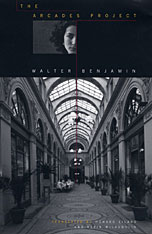
"To great writers," Walter Benjamin once wrote, "finished works weigh lighter than those fragments on which they labor their entire lives." Conceived in Paris in 1927 and still in progress when Benjamin fled the Occupation in 1940, The Arcades Project (in German, Das Passagen-Werk) is a monumental ruin, meticulously constructed over the course of thirteen years--"the theater," as Benjamin called it, "of all my struggles and all my ideas."
Focusing on the arcades of nineteenth-century Paris-glass-roofed rows of shops that were early centers of consumerism--Benjamin presents a montage of quotations from, and reflections on, hundreds of published sources, arranging them in thirty-six categories with descriptive rubrics such as "Fashion," "Boredom," "Dream City," "Photography," "Catacombs," "Advertising," "Prostitution," "Baudelaire," and "Theory of Progress." His central preoccupation is what he calls the commodification of things--a process in which he locates the decisive shift to the modern age.
The Arcades Project is Benjamin's effort to represent and to critique the bourgeois experience of nineteenth-century history, and, in so doing, to liberate the suppressed "true history" that underlay the ideological mask. In the bustling, cluttered arcades, street and interior merge and historical time is broken up into kaleidoscopic distractions and displays of ephemera. Here, at a distance from what is normally meant by "progress," Benjamin finds the lost time(s) embedded in the spaces of things.

No single symposium or volume could do justice to the amount of information now available on Ecuadorian prehistory. This volume and the symposium on which it was based are devoted, therefore, to the archaeology of Formative Ecuador in order to bring new information on one of the most important periods of the region’s past to the attention of New World scholars.
While the volume includes two chapters on ideology and iconography, the focus is distinctly archaeological, with an emphasis on the fundamentals of archaeological science, including settlement patterns, subsistence, health, and ceramic variability.
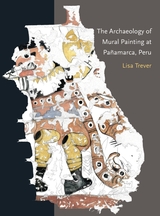
The archaeological site of Pañamarca was once a vibrant center of religious performance and artistic practice within the ancient Moche world. During the seventh and eighth centuries CE, architects and mural painters created lofty temples and broad-walled plazas that were brilliantly arrayed with images of mythological heroes, monstrous creatures, winged warriors in combat, ritual processions, and sacrificial offerings.
This richly illustrated volume offers a nuanced account of the modern history of exploration, archaeology, and image making at Pañamarca; it also offers detailed documentation of the new fieldwork carried out by the authors at the site. That fieldwork led to the discoveries of 1,200-year-old mural paintings, presented here in detail for the first time. Created in a cultural context a thousand years before the use of written scripts, the art and architecture of Pañamarca cannot be studied via ancient histories or commentaries, but only through layers of physical evidence from archaeological excavations and documentation. This volume will serve as a definitive reference work on mural painting at Pañamarca, as well as a new primary resource for Pre-Columbian studies and for studies in global ancient art, architecture, and archaeology more broadly.
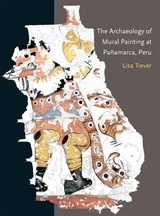
The archaeological site of Pañamarca was once a vibrant center of religious performance and artistic practice within the ancient Moche world. During the seventh and eighth centuries CE, architects and mural painters created lofty temples and broad-walled plazas that were brilliantly arrayed with images of mythological heroes, monstrous creatures, winged warriors in combat, ritual processions, and sacrificial offerings.
This richly illustrated volume offers a nuanced account of the modern history of exploration, archaeology, and image making at Pañamarca; it also offers detailed documentation of the new fieldwork carried out by the authors at the site. That fieldwork led to the discoveries of 1,200-year-old mural paintings, presented here in detail for the first time. Created in a cultural context a thousand years before the use of written scripts, the art and architecture of Pañamarca cannot be studied via ancient histories or commentaries, but only through layers of physical evidence from archaeological excavations and documentation. This volume will serve as a definitive reference work on mural painting at Pañamarca, as well as a new primary resource for Pre-Columbian studies and for studies in global ancient art, architecture, and archaeology more broadly.


Robert Venturi exploded onto the architectural scene in 1966 with a radical call to arms in Complexity and Contradiction. Further accolades and outrage ensued in 1972 when Venturi and Denise Scott Brown (along with Steven Izenour) analyzed the Las Vegas strip as an archetype in Learning from Las Vegas. Now, for the first time, these two observer-designer-theorists turn their iconoclastic vision onto their own remarkable partnership and the rule-breaking architecture it has informed.
The views of Venturi and Scott Brown have influenced architects worldwide for nearly half a century. Pluralism and multiculturalism; symbolism and iconography; popular culture and the everyday landscape; generic building and electronic communication are among the many ideas they have championed. Here, they present both a fascinating retrospective of their life work and a definitive statement of its theoretical underpinnings.
Accessible, informative, and beautifully illustrated, Architecture as Signs and Systems is a must for students of architecture and urban planning, as well as anyone intrigued by these seminal cultural figures. Venturi and Scott Brown have devoted their professional lives to broadening our view of the built world and enlarging the purview of practitioners within it. By looking backward over their own life work, they discover signs and systems that point forward, toward a humane Mannerist architecture for a complex, multicultural society.

Architrenius, a satirical allegory in dactylic hexameters completed in 1184 by the Norman poet Johannes de Hauvilla, follows the journey of its eponymous protagonist, the “arch-weeper,” who stands in for an emerging class of educated professionals tempted by money and social standing. Architrenius’s quest for moral instruction leads through vivid tableaux of the vices of school, court, and church, from the House of Gluttony to the Palace of Ambition to the Mount of Presumption. Despite the allegorical nature of Architrenius, its focus is not primarily religious. Johannes de Hauvilla, who taught at an important cathedral school, probably Rouen, uses his stylistic virtuosity and the many resources of Latin poetry to condemn a secular world where wealth and preferment were all-consuming. His highly topical satire anticipates the comic visions of Jean de Meun, Boccaccio, and Chaucer.
This edition of Architrenius brings together the most authoritative Latin text with a new English translation of an important medieval poem.
The Constitution of the United States is the product of a revolution in political thought as momentous as the winning of American independence. This profusely illustrated volume is a magnificent tribute to the oldest surviving charter of a federal republic. In a felicitous blend of words and pictures, Richard B. Bernstein retells the entire story of this revolution: the problems under the Articles of Confederation; the intense, often vituperative debate between Americans and Europeans over the brave new republican experiment; the arguing, reasoning, and reconciliation of interests before, during, and after the Federal Convention in 1787; the often bitter struggle for ratification in the thirteen states and the critical importance of The Federalist in the accompanying propaganda war; the beginnings of government under the Constitution; and the states' adoption of the Bill of Rights.
The delegates to the Federal Convention were the foremost men of their states and regions—bookish but not reclusive, activist but not undisciplined, principled but not rigid. Bernstein's colorful description of the intellectual and political ferment they first created and then controlled brings to life their heroic effort. Along with these lost chapters of our history, he shows how experiments in government were a critical part of Americans' attempts to define their identity as a nation and a people.
The Constitution was the result of no miracle; the outcome was never foreordained. A blend of theory and practicality, it was to be understood by all, not just by experts, and was no talisman against evils or unyielding to new experiences. As it bound up the founding generation, it was to be a guide to their successors. Illuminating his discussion—and our understanding—of the Constitution is a huge array of rare, in some cases unique, documents assembled by The New York Public Library for its exhibition commemorating the bicentennial of the Constitution.
More than half a century after the Universal Declaration of Human Rights defined what a human being is and is entitled to, Catharine MacKinnon asks: Are women human yet? If women were regarded as human, would they be sold into sexual slavery worldwide; veiled, silenced, and imprisoned in homes; bred, and worked as menials for little or no pay; stoned for sex outside marriage or burned within it; mutilated genitally, impoverished economically, and mired in illiteracy--all as a matter of course and without effective recourse?
The cutting edge is where law and culture hurts, which is where MacKinnon operates in these essays on the transnational status and treatment of women. Taking her gendered critique of the state to the international plane, ranging widely intellectually and concretely, she exposes the consequences and significance of the systematic maltreatment of women and its systemic condonation. And she points toward fresh ways--social, legal, and political--of targeting its toxic orthodoxies.
MacKinnon takes us inside the workings of nation-states, where the oppression of women defines community life and distributes power in society and government. She takes us to Bosnia-Herzogovina for a harrowing look at how the wholesale rape and murder of women and girls there was an act of genocide, not a side effect of war. She takes us into the heart of the international law of conflict to ask--and reveal--why the international community can rally against terrorists' violence, but not against violence against women. A critique of the transnational status quo that also envisions the transforming possibilities of human rights, this bracing book makes us look as never before at an ongoing war too long undeclared.

The Greek epic account of the quest for the golden fleece.
Apollonius Rhodius’ Argonautica, composed in the 3rd century BC, is the epic retelling of Jason’s quest for the golden fleece. Along with his contemporaries Callimachus and Theocritus, Apollonius refashioned Greek poetry to meet the interests and aesthetics of a Hellenistic audience, especially that of Alexandria in the Ptolemaic period following Alexander’s death. In this carefully crafted work of 5,835 hexameter verses in four books, the author draws on the preceding literary traditions of epic (Homer), lyric (Pindar), and tragedy (especially Euripides) but creates an innovative and complex narrative that includes geography, religion, ethnography, mythology, adventure, exploration, human psychology, and, most of all, the coming of age and love affair of Jason and Medea. It greatly influenced Roman authors such as Catullus, Virgil, and Ovid, and was imitated by Valerius Flaccus.
This new edition of the first volume in the Loeb Classical Library offers a fresh translation and improved text.

The Roman epic retelling of the quest for the golden fleece.
Valerius Flaccus, Gaius, Latin poet who flourished in the period ca. AD 70–90, composed in smooth and sometimes obscure style an incomplete epic Argonautica in eight books, on the auest for the golden fleece. The poem is typical of his age, being a free re-handling of the story already told by Apollonius Rhodius, to whom he is superior in arrangement, vividness, and description of character. Valerius’ poem shows much imitation of the language and thought of Virgil, and much learning. The chief interest of the epic lies in the relationship between Medea and Jason, especially the growth of Medea’s love, where Valerius is at his best. The long series of adventures and various Roman allusions suggest that the poet meant to do honor to Vespasian (to whom the epic is dedicated) with special reference to that emperor’s ships in waters around Britain.
Apollonius was a Greek grammarian and epic poet of Alexandria in Egypt and lived late in the 3rd century and early in the 2nd century BCE. While still young he composed his extant epic poem of four books on the story of the Argonauts. When this work failed to win acceptance he went to Rhodes where he not only did well as a rhetorician but also made a success of his epic in a revised form, for which the Rhodians gave him the 'freedom' of their city; hence his surname. On returning to Alexandria he recited his poem again, to applause. In 196 Ptolemy Epiphanes made him the librarian of the Museum (the university) at Alexandria.
Apollonius's Argonautica is one of the better minor epics, remarkable for originality, powers of observation, sincere feeling, and depiction of romantic love. His Jason and Medea are natural and interesting, and did much to inspire Virgil (in a very different setting) in the fourth book of the Aeneid.
Jihad, with its many terrifying associations, is a term widely used today, though its meaning is poorly grasped. Few people understand the circumstances requiring a jihad, or "holy" war, or how Islamic militants justify their violent actions within the framework of the religious tradition of Islam. How Islam, with more than one billion followers, interprets jihad and establishes its precepts has become a critical issue for both the Muslim and the non-Muslim world.
John Kelsay's timely and important work focuses on jihad of the sword in Islamic thought, history, and culture. Making use of original sources, Kelsay delves into the tradition of shari'a--Islamic jurisprudence and reasoning--and shows how it defines jihad as the Islamic analogue of the Western "just" war. He traces the arguments of thinkers over the centuries who have debated the legitimacy of war through appeals to shari'a reasoning. He brings us up to the present and demonstrates how contemporary Muslims across the political spectrum continue this quest for a realistic ethics of war within the Islamic tradition.
Arguing the Just War in Islam provides a systematic account of how Islam's central texts interpret jihad, guiding us through the historical precedents and Qur'anic sources upon which today's claims to doctrinal truth and legitimate authority are made. In illuminating the broad spectrum of Islam's moral considerations of the just war, Kelsay helps Muslims and non-Muslims alike make sense of the possibilities for future war and peace.

Over the past four decades Ruth R. Wisse has been a leading scholar of Yiddish and Jewish literary studies in North America, and one of our most fearless public intellectuals on issues relating to Jewish society, culture, and politics. In this celebratory volume, edited by four of her former students, Wisse’s colleagues take as a starting point her award-winning book The Modern Jewish Canon (2000) and explore an array of topics that touch on aspects of Yiddish, Hebrew, Israeli, American, European, and Holocaust literature.
Arguing the Modern Jewish Canon brings together writers both seasoned and young, from both within and beyond the academy, to reflect the diversity of Wisse’s areas of expertise and reading audiences. The volume also includes a translation of one of the first modern texts on the question of Jewish literature, penned in 1888 by Sholem Aleichem, as well as a comprehensive bibliography of Wisse’s scholarship. In its richness and heft, Arguing the Modern Jewish Canon itself constitutes an important scholarly achievement in the field of modern Jewish literature.
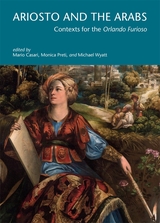
Among the most dynamic and influential literary texts of the European sixteenth century, Ludovico Ariosto’s Orlando Furioso (1532) emerged from a world whose horizons were rapidly changing. The poem is a prism through which to examine various links in the chain of interactions that characterized the Mediterranean region from late antiquity through the medieval period into early modernity and beyond. Ariosto and the Arabs takes as its point of departure Jorge Luis Borges’s celebrated short poem “Ariosto y los Arabes” (1960), wherein the Furioso acts as the hinge of a past and future literary culture circulating between Europe and the Middle East. The Muslim “Saracen”—protagonist of both historical conflict and cultural exchange—represents the essential “Other” in Ariosto’s work, but Orlando Furioso also engages with the wider network of linguistic, political, and faith communities that defined the Mediterranean basin of its time.
The sixteen contributions assembled here, produced by a diverse group of scholars who work on Europe, Africa, and Asia, encompass several intertwined areas of analysis—philology, religious and social history, cartography, material and figurative arts, and performance—to shed new light on the relational systems generated by and illustrative of Ariosto’s great poem.

Nicomachean Ethics VI is considered one of classical philosophy’s greatest achievements. Aristotle on Practical Wisdom is the first full-scale commentary on this work to be issued in over a century, and is the most comprehensive and philosophically illuminating to date. A meticulous translation coupled with facing-page analysis enables readers to engage directly with the account of phronêsis or practical wisdom that Aristotle is developing, while a full introduction locates that account in the context of his ethical thought and of later ethical thought more generally. The commentary discusses the text line by line, illuminating obscure passages, explaining technical ones, and providing a new overall interpretation of the work and the nature of practical reason.
A companion volume, Action, Contemplation, and Happiness, expands on this interpretation to provide a startling new picture of Aristotle’s thought as a whole. Although the two books can be approached separately, together they constitute one of the most daring and original contemporary readings of Aristotle’s philosophy. Aimed at committed students of these notoriously difficult writings, C. D. C. Reeve’s engaging and lucid books should find a wide audience among philosophers, classicists, and all readers willing to wrestle with a thinker of unparalleled subtlety, depth, and scope.

In the spirit of Voltaire—and occasionally in the spirit of P. G. Wodehouse—P. B. and J. S. Medawar have crafted for the life sciences a source of reference that is meant for browsing, a book both authoritative and filled with delights. The authors’ breadth of knowledge is encyclopedic— arranged, appropriately enough, from A to Z—but more than that, they illuminate the ideas of biology with wit and intelligence and uncommon good sense. They bridge the chasm in our culture between the technically and the humanistically trained, breaking the code of jargon that limits access to scientific understanding. The Medawars’ special gift is to offer, at the same time, a pleasurable introduction for the layman and a source of new insight for the specialist.
In this book we can find a clear and meaningful definition of interferon, a useful explanation of the immune system, and thoughtful essays on sociobiology, eugenics, and aging. But we also find: “It is a popular fallacy that chewing gum regains its flavor if removed from the mouth and parked, say, under a chair.”
Whether in a serious discussion of cancer or a whimsical reflection on “chicken and egg” imagery in science, the Medawars’ blend of fact, literary allusion, historical anecdote, mythical and folk tradition, and even professional gossip is a rewarding exercise in biology as a humanistic endeavor.
Aristotle was the founder not only of logic but also of modal logic. In the Prior Analytics he developed a complex system of modal syllogistic which, while influential, has been disputed since antiquity—and is today widely regarded as incoherent. In this meticulously argued new study, Marko Malink presents a major reinterpretation of Aristotle’s modal syllogistic. Combining analytic rigor with keen sensitivity to historical context, he makes clear that the modal syllogistic forms a consistent, integrated system of logic, one that is closely related to other areas of Aristotle’s philosophy.
Aristotle’s modal syllogistic differs significantly from modern modal logic. Malink considers the key to understanding the Aristotelian version to be the notion of predication discussed in the Topics—specifically, its theory of predicables (definition, genus, differentia, proprium, and accident) and the ten categories (substance, quantity, quality, and so on). The predicables introduce a distinction between essential and nonessential predication. In contrast, the categories distinguish between substantial and nonsubstantial predication. Malink builds on these insights in developing a semantics for Aristotle’s modal propositions, one that verifies the ancient philosopher’s claims of the validity and invalidity of modal inferences.
Malink recognizes some limitations of this reconstruction, acknowledging that his proof of syllogistic consistency depends on introducing certain complexities that Aristotle could not have predicted. Nonetheless, Aristotle’s Modal Syllogistic brims with bold ideas, richly supported by close readings of the Greek texts, and offers a fresh perspective on the origins of modal logic.

“Inspiring and informative…deserves to be widely read.”
—Wall Street Journal
“This fun book offers a philosophical take on number systems and revels in the beauty of math.”
—Science News
Because we have ten fingers, grouping by ten seems natural, but twelve would be better for divisibility, and eight is well suited to repeated halving. Grouping by two, as in binary code, has turned out to have its own remarkable advantages.
Paul Lockhart presents arithmetic not as rote manipulation of numbers—a practical if mundane branch of knowledge best suited for filling out tax forms—but as a fascinating, sometimes surprising intellectual craft that arises from our desire to add, divide, and multiply important things. Passionate and entertaining, Arithmetic invites us to experience the beauty of mathematics through the eyes of a beguiling teacher.
“A nuanced understanding of working with numbers, gently connecting procedures that we once learned by rote with intuitions long since muddled by education…Lockhart presents arithmetic as a pleasurable pastime, and describes it as a craft like knitting.”
—Jonathon Keats, New Scientist
“What are numbers, how did they arise, why did our ancestors invent them, and how did they represent them? They are, after all, one of humankind’s most brilliant inventions, arguably having greater impact on our lives than the wheel. Lockhart recounts their fascinating story…A wonderful book.”
—Keith Devlin, author of Finding Fibonacci

The first complete English translation of one of the great court epics of Sanskrit literature.
Kirātārjunīya, or Arjuna and the Hunter, is one of the great court epics of the Sanskrit literary canon. Written by the sixth-century poet Bharavi, it is also the first and most remarkable reinterpretation of a pivotal episode in the Mahābhārata, India’s ancient epic. The warrior Arjuna travels to the Himalayas to perform penance and win a boon from the god Shiva that will help his brothers, the Pandavas, overcome their enemies in righteous war. Appearing in the guise of a hunter, Shiva tests Arjuna’s courage in combat, ultimately reveals himself, and bestows upon the hero an invincible weapon.
In Bharavi’s hands, the episode is turned into a masterful contemplation of heroic action, ethical conduct, ascetic discipline, and religious devotion—core values in India’s classical civilization and enduring themes in Indian literature. But the poem’s fame rests above all on its aesthetic achievement. With its elegant, epigrammatic verse, powerful imagery, dramatic speeches, and vivid descriptions, Arjuna and the Hunter, now made available for the first time in a complete English translation and accompanied by the Sanskrit original in the Devanagari script, will dazzle and move contemporary readers no less powerfully than its first courtly connoisseurs.

How do civilians control the military? In the wake of September 11, the renewed presence of national security in everyday life has made this question all the more pressing. In this book, Peter Feaver proposes an ambitious new theory that treats civil-military relations as a principal-agent relationship, with the civilian executive monitoring the actions of military agents, the "armed servants" of the nation-state. Military obedience is not automatic but depends on strategic calculations of whether civilians will catch and punish misbehavior.
This model challenges Samuel Huntington's professionalism-based model of civil-military relations, and provides an innovative way of making sense of the U.S. Cold War and post-Cold War experience--especially the distinctively stormy civil-military relations of the Clinton era. In the decade after the Cold War ended, civilians and the military had a variety of run-ins over whether and how to use military force. These episodes, as interpreted by agency theory, contradict the conventional wisdom that civil-military relations matter only if there is risk of a coup. On the contrary, military professionalism does not by itself ensure unchallenged civilian authority. As Feaver argues, agency theory offers the best foundation for thinking about relations between military and civilian leaders, now and in the future.

This is the first publication of inscriptions left in the Sinai desert by medieval Armenian and Georgian pilgrims to the Holy Land. The book contains the evidence discovered in 1979 and 1980 on the routes leading to Mount Sinai (Uebel Musa) from East and West.
The Armenian and Georgian inscriptions, which date from the seventh to later than the fifteenth century, are of prime importance for historical and paleographical studies. This edition gives original photographs of the inscriptions, transcriptions with transliteration and English translation, and elaborate notes on the paleography. The Introduction deals in a fully comparative manner with the epigraphic evidence, and studies the itineraries of the pilgrims through the Sinai peninsula.
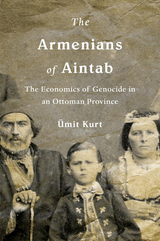
A Turk’s discovery that Armenians once thrived in his hometown leads to a groundbreaking investigation into the local dynamics of genocide.
Ümit Kurt, born and raised in Gaziantep, Turkey, was astonished to learn that his hometown once had a large and active Armenian community. The Armenian presence in Aintab, the city’s name during the Ottoman period, had not only been destroyed—it had been replaced. To every appearance, Gaziantep was a typical Turkish city.
Kurt digs into the details of the Armenian dispossession that produced the homogeneously Turkish city in which he grew up. In particular, he examines the population that gained from ethnic cleansing. Records of land confiscation and population transfer demonstrate just how much new wealth became available when the prosperous Armenians—who were active in manufacturing, agricultural production, and trade—were ejected. Although the official rationale for the removal of the Armenians was that the group posed a threat of rebellion, Kurt shows that the prospect of material gain was a key motivator of support for the Armenian genocide among the local Muslim gentry and the Turkish public. Those who benefited most—provincial elites, wealthy landowners, state officials, and merchants who accumulated Armenian capital—in turn financed the nationalist movement that brought the modern Turkish republic into being. The economic elite of Aintab was thus reconstituted along both ethnic and political lines.
The Armenians of Aintab draws on primary sources from Armenian, Ottoman, Turkish, British, and French archives, as well as memoirs, personal papers, oral accounts, and newly discovered property-liquidation records. Together they provide an invaluable account of genocide at ground level.
The arms race has become a global phenomenon. Each year the world spends a staggering sum on armaments: total military expenditure is almost equal to the entire national income of the poorer half of mankind; aid given underdeveloped countries is a mere 5 percent of money spent for military purposes; resources devoted to medical research are less than a quarter of those devoted to military research and development. How have military expenditures increased to their present high levels? On what kinds of weapons of destruction is this huge amount of money spent? How successful have plans been to stop escalation?
Informed judicious answers to these questions can be found in Arms Uncontrolled. The authors examine where military money goes, the trade in arms, technology on today's battlefield, antisubmarine warfare, chemical and biological weapons, the birth and growth of strategic nuclear forces, the nuclear deterrence debate, nuclear weapon proliferation, as well as the efforts made so far toward arms control and disarmament. Will the onward rush of military technology end in disaster? Should individuals act to bring pressure on political leaders to change policy? This book informs the general reader without polemics or bias. It is an admirable review, written by two experts, of the recent arms race and the attempts to curb it, from World War II to the recent Vladivostok talks.
Since Pakistan gained independence in 1947, only once has an elected government completed its tenure and peacefully transferred power to another elected government. In sharp contrast to neighboring India, the Muslim nation has been ruled by its military for over three decades. Even when they were not directly in control of the government, the armed forces maintained a firm grip on national politics. How the military became Pakistan’s foremost power elite and what its unchecked authority means for the future of this nuclear-armed nation are among the crucial questions Aqil Shah takes up in The Army and Democracy.
Pakistan’s and India’s armies inherited their organization, training, and doctrines from their British predecessor, along with an ethic that regarded politics as outside the military domain. But Pakistan’s weak national solidarity, exacerbated by a mentality that saw war with India looming around every corner, empowered the military to take national security and ultimately government into its own hands. As the military’s habit of disrupting the natural course of politics gained strength over time, it arrested the development of democratic institutions.
Based on archival materials, internal military documents, and over 100 interviews with politicians, civil servants, and Pakistani officers, including four service chiefs and three heads of the clandestine Inter-Services Intelligence, The Army and Democracy provides insight into the military’s contentious relationship with Pakistan’s civilian government. Shah identifies steps for reforming Pakistan’s armed forces and reducing its interference in politics, and sees lessons for fragile democracies striving to bring the military under civilian control.
At Indian independence in 1947, the country’s founders worried that the army India inherited—conservative and dominated by officers and troops drawn disproportionately from a few “martial” groups—posed a real threat to democracy. They also saw the structure of the army, with its recruitment on the basis of caste and religion, as incompatible with their hopes for a new secular nation.
India has successfully preserved its democracy, however, unlike many other colonial states that inherited imperial “divide and rule” armies, and unlike its neighbor Pakistan, which inherited part of the same Indian army in 1947. As Steven I. Wilkinson shows, the puzzle of how this happened is even more surprising when we realize that the Indian Army has kept, and even expanded, many of its traditional “martial class” units, despite promising at independence to gradually phase them out.
Army and Nation draws on uniquely comprehensive data to explore how and why India has succeeded in keeping the military out of politics, when so many other countries have failed. It uncovers the command and control strategies, the careful ethnic balancing, and the political, foreign policy, and strategic decisions that have made the army safe for Indian democracy. Wilkinson goes further to ask whether, in a rapidly changing society, these structures will survive the current national conflicts over caste and regional representation in New Delhi, as well as India’s external and strategic challenges.

A richly illustrated, captivating study of army ants, nature’s preeminent social hunters.
A swarm raid is one of nature’s great spectacles. In tropical rainforests around the world, army ants march in groups by the thousands to overwhelm large solitary invertebrates, along with nests of termites, wasps, and other ants. They kill and dismember their prey and carry it back to their nest, where their hungry brood devours it. They are the ultimate social hunters, demonstrating the most fascinating collective behavior.
In Army Ants we see how these insects play a crucial role in promoting and sustaining the biodiversity of tropical ecosystems. The ants help keep prey communities in check while also providing nutrition for other animals. Many species depend on army ants for survival, including a multitude of social parasites, swarm-following birds, and flies. And while their hunting behavior, and the rules that govern it, are clearly impressive, army ants display collective behavior in other ways that are no less dazzling. They build living nests, called bivouacs, using their bodies to protect the queen and larvae. The ants can even construct bridges over open space or obstacles by linking to one another using their feet. These incredible feats happen without central coordination. They are the result of local interactions—self-organization that benefits the society at large.
Through observations, stories, and stunning images, Daniel Kronauer brings these fascinating creatures to life. Army ants may be small, but their collective intelligence and impact on their environment are anything but.

Winner of the ASCAP Deems Taylor Award in Concert Music Books
Proposing that Arnold Schoenberg has been more discussed than heard, more tolerated than loved, Allen Shawn puts aside ultimate judgments about Schoenberg’s place in music history to explore the composer’s fascinating world in a series of linked essays—“soundings”—that are both searching and wonderfully suggestive. Approaching Schoenberg primarily from the listener’s point of view, Shawn plunges into the details of some of Schoenberg’s works while at the same time providing a broad overview of his involvements in music, painting, and the history through which he lived.
Over sixty percent of all infectious human diseases, including tuberculosis, influenza, cholera, and hundreds more, are shared with other vertebrate animals. Arresting Contagion tells the story of how early efforts to combat livestock infections turned the United States from a disease-prone nation into a world leader in controlling communicable diseases. Alan Olmstead and Paul Rhode show that many innovations devised in the fight against animal diseases, ranging from border control and food inspection to drug regulations and the creation of federal research labs, provided the foundation for modern food safety programs and remain at the heart of U.S. public health policy.
America’s first concerted effort to control livestock diseases dates to the founding of the Bureau of Animal Industry (BAI) in 1884. Because the BAI represented a milestone in federal regulation of commerce and industry, the agency encountered major jurisdictional and constitutional obstacles. Nevertheless, it proved effective in halting the spread of diseases, counting among its early breakthroughs the discovery of Salmonella and advances in the understanding of vector-borne diseases.
By the 1940s, government policies had eliminated several major animal diseases, saving hundreds of thousands of lives and establishing a model for eradication that would be used around the world. Although scientific advances played a key role, government interventions did as well. Today, a dominant economic ideology frowns on government regulation of the economy, but the authors argue that in this case it was an essential force for good.
International environmental law is often closer to home than we know, affecting the food we eat, the products we buy, and even the air we breathe. Drawing on more than two decades of experience as a government negotiator, consultant, and academic, Daniel Bodansky brings a real-world perspective on the processes by which international environmental law develops, and influences the behavior of state and non-state actors.
In self-contained chapters that offer a clear guide to a complex field, Bodansky answers fundamental questions about how international environmental law works. What role can law play in addressing global environmental challenges such as climate change, ozone depletion, and loss of biodiversity? How do environmental problems come onto the international agenda? What are the obstacles to international cooperation, and what can international environmental law do to address them? How do international rules develop? How are they put into practice and what makes them effective?
A concise and lively guide for college and university teachers, this collection of essays provides insights and solid advice for beginners as well as more experienced teachers. For the past eight years, the Harvard–Danforth Center for Teaching and Learning has been organizing programs that seek to improve university instruction. As part of these programs, the Center sponsors a faculty seminar on teaching lead by noted Harvard Professor C. Roland Christensen. The authors of this book—teachers in a wide variety of academic fields—were all participants in the seminar. In writing the book together, they drew on the Center’s resources and on their combined store of skills, techniques, and attitudes.
Topics include preparing for the first day of class, delivering good lectures, leading effective discussions, using the rhythms of the semester, teaching essay writing, grading and evaluation, and learning how to become a better teacher. The authors offer workable solutions for problems that every instructor faces and suggest strategies that will enrich the classroom experience for both teachers and students.


Whether you are selling a house, closing a business deal, settling a divorce, arbitrating a labor dispute, or trying to hammer out an international treaty, Howard Raiffa’s new book will measurably improve your negotiating skills.
Although it is a sophisticated self-help book—directed to the lawyer, labor arbitrator, business executive, college dean, diplomat—it is not cynical or Machiavellian: Raiffa emphasizes problems and situations where, with the kinds of skills he aims to develop, disputants can achieve results that are beneficial to all parties concerned. Indeed, he argues that the popular “zero-sum” way of thinking, according to which one side must lose if the other wins, often makes both sides worse off than they would be when bargaining for joint mutual gains.
Using a vast array of specific cases and clear, helpful diagrams, Raiffa not only elucidates the step-by-step processes of negotiation but also translates this deeper understanding into practical guidelines for negotiators and “intervenors.” He examines the mechanics of negotiation in imaginative fashion, drawing on his extensive background in game theory and decision analysis, on his quarter-century of teaching nonspecialists in schools of business and public policy, on his personal experiences as director of an international institute dealing with East/West problems, and on the results of simulated negotiation exercises with hundreds of participants.
There are popular books on the art of winning and scholarly books on the science of negotiation, but this is the first book to bridge the two currents. Shrewd, accessible, and engagingly written, it shows how a little analysis sprinkled with a touch of art can work to the advantage of any negotiator.
READERS
Browse our collection.
PUBLISHERS
See BiblioVault's publisher services.
STUDENT SERVICES
Files for college accessibility offices.
RECENTLY PUBLISHED


UChicago Accessibility Resources
home | accessibility | search | about | contact us
BiblioVault ® 2001 - 2025
The University of Chicago Press