
 A SCHOLARLY BOOK REPOSITORY
71 start with B start with B
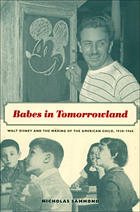
In vivid detail, Sammond describes how the latest thinking about human development was translated into the practice of child-rearing and how magazines and parenting manuals characterized the child as the crucible of an ideal American culture. He chronicles how Walt Disney Productions’ greatest creation—the image of Walt Disney himself—was made to embody evolving ideas of what was best for the child and for society. Bringing popular child-rearing manuals, periodicals, advertisements, and mainstream sociological texts together with the films, tv programs, ancillary products, and public relations materials of Walt Disney Productions, Babes in Tomorrowland reveals a child that was as much the necessary precursor of popular media as the victim of its excesses.
A daring, deep investigation into ethnographic cinema that challenges standard ways of writing film history and breaks important new ground in understanding archives
Bad Film Histories is a vital work that unsettles the authority of the archive. Katherine Groo daringly takes readers to the margins of the film record, addressing the undertheorization of film history and offering a rigorous corrective. Taking ethnographic cinema as a crucial case study, Groo challenges standard ways of thinking and writing about film history and questions widespread assumptions about what film artifacts are and what makes them meaningful. Rather than filling holes, Groo endeavors to understand the imprecisions and absences that define film history and its archives.
Bad Film Histories draws on numerous works of ethnographic cinema, from Edward S. Curtis’s In the Land of the Head Hunters, to a Citroën-sponsored “croisière” across Africa, to the extensive archives of the Maison Lumière and the Musée Albert-Kahn, to dozens of expedition films from the 1910s and 1920s. The project is deeply grounded in poststructural approaches to history, and throughout Groo draws on these frameworks to offer innovative and accessible readings that explain ethnographic cinema’s destabilizing energies.
As Groo describes, ethnographic works are mostly untitled, unauthored, seemingly infinite in number, and largely unrestored even in their digital afterlives. Her examination of ethnographic cinema provides necessary new thought for both film scholars and those who are thrilled by cinema’s boundless possibilities. In so doing, she boldly reexamines what early ethnographic cinema is and how these films produce meaning, challenging the foundations of film history and prevailing approaches to the archive.
This largely forgotten era in the development of American libel law provides crucial historical context for contemporary debates about the news media, public discourse, and the role of a free press. File argues that the legal thinking surrounding these cases laid the groundwork for the more friendly libel standards the press now enjoys and helped to establish today's regulations of press freedom amid the promise and peril of high-speed communication technology.
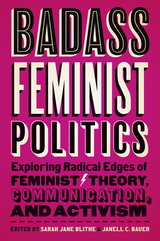
Badass Feminist Politics includes a diverse range of engaging feminist political projects to not only analyze the work being done on the ground but provide an overview for action that can be taken on by those seeking to engage in feminist activism in their own communities. Contributors included here are working for equality and equity and resisting violent, racist, homophobic, transphobic, xenophobic, and sexist language and action during this tension-filled political moment. Collectively, the book explores what it means to live and communicate feminist politics in everyday choices and actions, and how we can facilitate learning by analyzing these examples. Taking up current issues and new theoretical perspectives, the authors offer novel perspectives into what it means to live feminist politics. This book is a testament to resilience, resistance, communication, and forward thinking about what these themes all mean for new feminist agendas. Learning how to resist oppressive structures through words and actions is particularly important for students. Badass Feminist Politics features scholars from non-dominant groups taking up issues of marginalization and oppression, which can help people accomplish their social justice goals of inclusivity on the ground and in the classroom.

With contributions from a diverse group of media and communications scholars from around the globe, Bangladesh’s Changing Mediascape presents a pioneering study of the trends, patterns, and prospects shaping the contemporary Bangladeshi media. Among the many topics discussed here are the difference among specific media formats, including television, newspapers, radio, film, and photography; policy issues; and the challenge that new media poses to governance in a developing nation faced with innumerable economic, social, and political problems. Eschewing the currently dominant development communication model, the editors argue that market forces rather than planned state interventions will contribute to a more equitable communication environment.
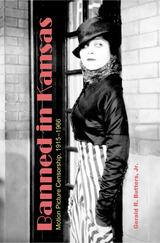
In 1915, Kansas became one of only a handful of states to establish its own film censorship board. The Kansas board controlled screen content in the state for more than fifty years, yet little is known about its activities. This first book-length study of state film censorship examines the unique political, social, and economic factors that led to its implementation in Kansas, examining why censorship legislation was enacted, what the attitudes of Kansans were toward censorship, and why it lasted for half a century.
Cinema historian Gerald Butters places the Kansas Board of Review’s attempts to control screen content in the context of nationwide censorship efforts during the early part of the twentieth century. He tells how factors such as Progressivism, concern over child rearing, and a supportive press contributed to censorship, and he traces the board’s history from the problems posed by the emergence of “talkies” through changing sexual mores in the 1920s to challenges to its power in the 1950s.
In addition to revealing the fine points of film content deemed too sensitive for screening, Butters describes the daily operations of the board, illustrating the difficulties it encountered as it wrestled not only with constantly shifting definitions of morality but also with the vagaries of the political and legal systems. Stills from motion pictures illustrate the type of screen content the board attempted to censor.
As Kansas faced the march of modernity, even state politicians began to criticize film censorship, and Butters tells how by the 1960s the board was fighting to remain relevant as film companies increasingly challenged its attempts to control screen content. Banned in Kansas weaves a fascinating tale of the enforcement of public morality, making it a definitive study for cinema scholars and an entertaining read for film buffs.
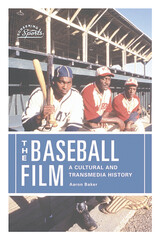
This study offers an extensive look at nearly one hundred years of baseball-themed movies, documentaries, and TV shows. Film and sports scholar Aaron Baker examines works like A League of their Own (1992) and Sugar (2008), which dramatize the underrepresented contributions of female and immigrant players, alongside classic baseball movies like The Natural that are full of nostalgia for a time when native-born white men could use the game to achieve the American dream. He further explores how biopics have both mythologized and demystified such legendary figures as Ty Cobb, Babe Ruth, Lou Gehrig, Jackie Robinson and Fernando Valenzuela.
The Baseball Film charts the variety of ways that Hollywood presents the game as integral to American life, whether showing little league as a site of parent-child bonding or depicting fans’ lifelong love affairs with their home teams. Covering everything from Bull Durham (1988) to The Bad News Bears (1976), this book offers an essential look at one of the most cinematic of all sports.
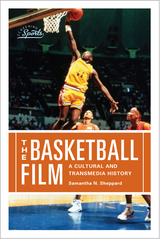
The Basketball Film: A Cultural and Transmedia History reveals how stories about the game extend far beyond the court. From classic Hollywood dramas to independent documentaries, basketball films capture the rhythms of play while reflecting deeper struggles over race, identity, community, and aspiration. This groundbreaking study examines the basketball court as both a stage and a mirror for American life—where questions of belonging, opportunity, and cultural power are played out on and off the court. Moving across film, television, and video games, the book traces how basketball’s visual culture has evolved alongside the sport’s rise to global prominence. Through close readings of both celebrated and overlooked works, The Basketball Film offers an expansive and engaging portrait of how basketball has been imagined, represented, and mythologized across popular culture, revealing what the game continues to mean to audiences and players alike.
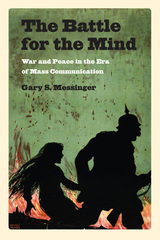
Most people typically think of armed conflict in physical terms, involving guns and bombs, ships and planes, tanks and missiles. But today, because of mass communication, war and the effort to prevent it are increasingly dependent on non-physical factors—the capacity to persuade combatants and citizens to engage in violence or avoid it, and the packaging of the information on which decision making is based. This book explores the many ways that mass communication has revolutionized international relations, whether the aim is to make war effectively or to prevent it.
Gary Messinger shows that over the last 150 years a succession of breakthroughs in the realm of media has reshaped the making of war and peace. Along with mass newspapers, magazines, books, motion pictures, radio, television, computer software, and telecommunication satellites comes an array of strategies for exploiting these media to control popular beliefs and emotions. Images of war now arrive in many forms and reach billions of people simultaneously. Political and military leaders must react to crowd impulses that sweep around the globe. Nation-states and nongovernmental groups, including terrorists, use mass communication to spread their portrayals of reality.
Drawing on a wide range of media products, from books and articles to films and television programs, as well as his own research in the field of propaganda studies, Messinger offers a fresh and comprehensive overview. He skillfully charts the path that has led us to our current situation and suggests where we might go next.
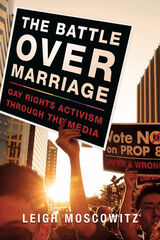
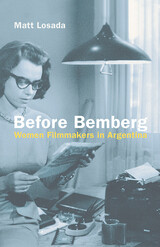
Watch some of the films discussed in the book with English subtitles (https://www.youtube.com/channel/UCF_6F4am5024rklIWwExUVA?view_as=subscriber).

As Faith shows, the believers in chemical weapons staffing the CWS allied with supporters in the military, government, and private industry to lobby to add chemical warfare to the country's permanent arsenal. Their argument: poison gas represented an advanced and even humane tool in modern war, while its applications for pest control and crowd control made a chemical capacity relevant in peacetime. But conflict with those aligned against chemical warfare forced the CWS to fight for its institutional life--and ultimately led to the U.S. military's rejection of battlefield chemical weapons.
An incisive look at a pervasive presence in our lives, Behind the Search Box places the search engine industry’s rise and ongoing success within an original political economy of digital capitalism.
The annual Beijing Film Academy Yearbook continues to showcase the best academic debates, discussions, and research published in the prestigious Journal of Beijing Film Academy from the previous year. This volume brings together specially selected articles, covering the most up-to-date topics in Chinese cinema studies appearing for the first time in English, in order to bridge the gap in cross-cultural research in cinema and media studies, as well as to encourage new conversations.
This book is the latest offering in Intellect China Library series, which publishes work by Chinese scholars that have not previously been available to English-language academia. Covering the subjects of film studies, visual arts, performing arts, media, and cultural studies, the series aims to foster intellectual debate and to promote closer cross-cultural intellectual exchanges by introducing important works of Chinese scholarship to readers.
The annual Beijing Film Academy Yearbook continues to showcase the best academic debates, discussions, and research published in the prestigious Journal of Beijing Film Academy from the previous year. This volume brings together specially selected articles, appearing for the first time in English, to bridge the gap in cross-cultural research in cinema and media studies.
This book is the latest offering in the Intellect China Library series, which publishes work by Chinese scholars that have not previously been available to English-language academia. Covering the subjects of film studies, visual arts, performing arts, media, and cultural studies, the series aims to foster intellectual debate and promote closer cross-cultural intellectual exchanges by introducing important works of Chinese scholarship to readers.
The annual Beijing Film Academy Yearbook highlights the best academic debates, discussions, and research from the previous year, as previously published in the highly prestigious Journal of Beijing Film Academy. This volume brings together specially selected articles, appearing for the first time in English, to bridge the gap in cross-cultural research in cinema and media studies.
The book is the latest in the Intellect China Library series to produce work by Chinese scholars that have not previously been available to English-language academia. Covering the subjects of film studies, visual arts, performing arts, and media and cultural studies, the series aims to foster intellectual debate and to promote closer cross-cultural intellectual exchanges by introducing important works of Chinese scholarship to readers.
Beijing Film Academy 2022 offers an essential collection of the most thought-provoking debates, discussions, and research from China’s leading institution for film and media studies. For the first time in English, this volume presents carefully selected articles from the prestigious Journal of Beijing Film Academy, providing scholars and students with unparalleled access to a significant body of work from Chinese academics.
This book covers a wide range of topics–from film studies and visual arts to performing arts and media culture and provides critical insights into contemporary cinematic and media discourse in China. As part of the Intellect China Library series, it fosters cross-cultural intellectual exchange and bridges the gap between Chinese scholarship and global academia.
An indispensable resource for film and media scholars, this yearbook serves as a vital tool for understanding the evolving landscape of Chinese cinema and its global impact.
Founded in Galveston in 1842 with the launch of the Daily News, the Belo Corporation entered the twenty-first century as a powerhouse conglomerate, owning four daily newspapers (including the Dallas Morning News), twenty-six television and cable stations, and over thirty interactive Web sites. The first comprehensive work to bring to life this remarkable success story, Belo blends biography with a history of corporate strategies.
Drawing on company archives and private papers of key figures, including A. H. Belo and G. B. Dealey, former company archivist Judith Garrett Segura brings to life important chapters in the cultural life of Texas, from Galveston's days as the largest and most vibrant town in the Republic of Texas, through the wars that followed statehood, periods of economic hardship, and the effects of sweeping social change. Turning points in the company's history, such as the sale of its Galveston paper when company revenues were dramatically affected by candid reporting of Ku Klux Klan activities in the 1920s, highlight crucial elements of the press's role in the life of a community. Segura also charts technological advances, from the telegraph and the typographers' union to the dawn of the Information Age. Finally, she includes the most complete portrait of the Dallas Times Herald Company to date, documenting the rise and fall of Belo's chief rival.
This is a story of frontier survival and futuristic thinking, marketing genius and historic reporting, nurtured by a family of mavericks.
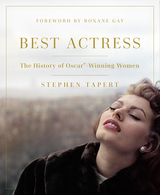
This lavishly illustrated coffee table book offers a vital examination of the first 75 women to have won the Best Actress Oscar over the span of 90 years. From inaugural recipient Janet Gaynor to Frances McDormand’s 2018 acceptance speech that assertively brought women to the forefront, Best Actress: The History of Oscar®-Winning Women serves to promote a new appreciation for the cinematic roles these women won for, as well as the real-life roles many of them played – and still play – in advancing women’s rights and equality. Stories range from Bette Davis’ groundbreaking battle against the studio system; to the cutting-edge wardrobes of Katharine Hepburn, Diane Keaton and Cher; to the historical significance of Halle Berry’s victory; to the awareness raised around sexual violence by the performances of Jodie Foster, Brie Larson, and others.
Showcasing a dazzling collection of 200 photographs, many of which have never before been seen or published, Best Actress honors the legacies of these revered and extraordinary women while scrutinizing the roadblocks that they continue to overcome.
Contributors. Ann Anagnost, Una Chung, Patricia Ticineto Clough, Steve Goodman, Sora Y. Han, Stefano Harney, May Joseph, Randy Martin, Brian Massumi, Luciana Parisi, Jasbir Puar, Amit S. Rai, Eugene Thacker, Çağatay Topal, Craig Willse
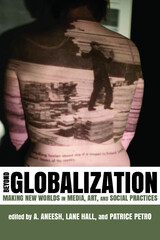
Does living in a globally networked society mean that we are moving toward a single, homogenous world culture? Or, are we headed for clashes between center and periphery, imperial and subaltern, Western and non-Western, First and Third World? The interdisciplinary essays in Beyond Globalization present us with another possibility—that new media will lead to new kinds of “worldmaking.”
This provocative volume brings together the best new work of scholars within such diverse fields as history, sociology, anthropology, film, media studies, and art. Whether examining the inauguration of a virtual community on the website Second Life or investigating the appropriation of biotechnology for transgenic art, this collection highlights how mediated practices have become integral to global culture; how social practices have emerged out of computer-related industries; how contemporary apocalyptic narratives reflect the anxieties of a U.S. culture facing global challenges; and how design, play, and technology help us understand the histories and ideals
behind the digital architectures that mediate our everyday actions.
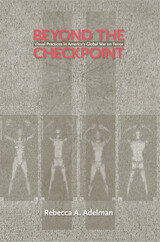
Tracing the connections between citizenship and spectatorship, and moving beyond the close reading of visual representations, this book focuses on the institutions and actors that create, monitor, and regulate the visual landscape of the GWOT. Adelman looks around and through common images to follow the complex patterns of practice by which institutions and audiences engage them in various contexts. In the process, she proposes a new methodology for studying visual cultures of conflict, and related phenomena like violence, terror, and suffering that are notoriously difficult to represent.
Attending to previously unanalyzed dimensions of this conflict, this book illustrates the complexity of GWOT visual culture and the variegated experiences of citizenship that result as Americans navigate this terrain.
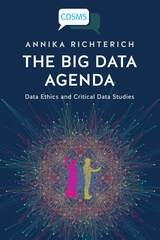
This book highlights that the capacity for gathering, analysing, and utilising vast amounts of digital (user) data raises significant ethical issues. Annika Richterich provides a systematic contemporary overview of the field of critical data studies that reflects on practices of digital data collection and analysis. The book assesses in detail one big data research area: biomedical studies, focused on epidemiological surveillance. Specific case studies explore how big data have been used in academic work.
The Big Data Agenda concludes that the use of big data in research urgently needs to be considered from the vantage point of ethics and social justice. Drawing upon discourse ethics and critical data studies, Richterich argues that entanglements between big data research and technology/ internet corporations have emerged. In consequence, more opportunities for discussing and negotiating emerging research practices and their implications for societal values are needed.
An electronic version of this book is freely available, thanks to the support of libraries working with Knowledge Unlatched. KU is a collaborative initiative designed to make high quality books Open Access for the public good. More information about the initiative and details about KU's Open Access programme can be found at www.knowledgeunlatched.org.
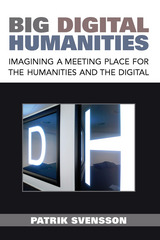
Svensson’s own unique perspective and special stake in the Digital Humanities conversation comes from his role as director of the HUMlab at Umeå University. HUMlab is a unique collaborative space and Digital Humanities center, which officially opened its doors in 2000. According to its own official description, the HUMlab is an open, creative studio environment where “students, researchers, artists, entrepreneurs and international guests come together to engage in dialogue, experiment with technology, take on challenges and move scholarship forward.” It is this last element “moving scholarship forward” that Svensson argues is the real opportunity in what he terms the “big digital humanities,” or digital humanities as practiced in collaborative spaces like the HUMlab, and he is uniquely positioned to take an account of this evolving dimension of Digital Humanities practice.
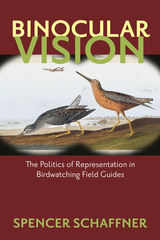
From meadows to marshlands, seashores to suburbs, field guides help us identify many of the things we find outdoors: plants, insects, mammals, birds. In these texts, nature is typically represented, both in words and images, as ordered, clean, and untouched by human technology and development. This preoccupation with species identification, however, has produced an increasingly narrow view of nature, a “binocular vision,” that separates the study of individual elements from a range of larger, interconnected environmental issues. In this book, Spencer Schaffner reconsiders this approach to nature study by focusing on how birds are presented in field guides.
Starting with popular books from the late nineteenth century and moving ultimately to the electronic guides of the current day, Binocular Vision contextualizes birdwatching field guides historically, culturally, and in terms of a wide range of important environmental issues. Schaffner questions the assumptions found in field guides to tease out their ideological workings. He argues that the sanitized world represented in these guides misleads readers by omitting industrial landscapes and so-called nuisance birds, leaving users of the guides disconnected from environmental degradation and its impact on bird populations.
By putting field guides into direct conversation with concerns about species conservation, environmental management, the human alteration of the environment, and the problem of toxic pollution, Binocular Vision is a field guide to field guides that takes a novel perspective on how we think about and interact with the world around us.
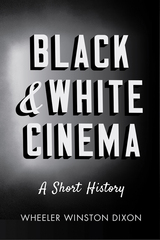
Black and White Cinema is the first study to consider the use of black-and-white as an art form in its own right, providing a comprehensive and global overview of the era when it flourished, from the 1900s to the 1960s. Acclaimed film scholar Wheeler Winston Dixon introduces us to the masters of this art, discussing the signature styles and technical innovations of award-winning cinematographers like James Wong Howe, Gregg Toland, Freddie Francis, and Sven Nykvist. Giving us a unique glimpse behind the scenes, Dixon also reveals the creative teams—from lighting technicians to matte painters—whose work profoundly shaped the look of black-and-white cinema.
More than just a study of film history, this book is a rallying cry, meant to inspire a love for the artistry of black-and-white film, so that we might work to preserve this important part of our cinematic heritage. Lavishly illustrated with more than forty on-the-set stills, Black and White Cinema provides a vivid and illuminating look at a creatively vital era.
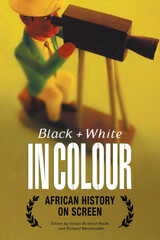
Black and White in Colour: African History on Screen considers how the African past has been represented in a wide range of historical films. Written by a team of eminent international scholars, the volume provides extensive coverage of both place and time and deals with major issues in the written history of Africa. Themes include the slave trade, imperialism and colonialism, racism, and anticolonial resistance. Many of the films will be familiar to readers: they include Out of Africa, Hotel Rwanda, Breaker Morant, Cry Freedom, The Battle of Algiers, and Chocolat.
This collection of essays is a highly original and useful contribution to African historiography, as well as a significant addition to the growing body of work within the emerging subdiscipline of “film and history.” It will appeal to those interested in African history and the ways in which films use the past to raise questions about the present.
Contributors: Mahir Saul, Ralph A. Austen, Robert Baum, Robert Harms, Nigel Worden, Carolyn Hamilton and Litheko Modisane, Richard Mendelsohn, Shamil Jeppie, Bill Nasson, Nigel Penn, Ruth Watson, Patrick Harries, David Moore, Teresa Barnes, Vivian Bickford-Smith, Mohamed Adhikari, and David Philips.


Working together as writers, directors, producers, actors, and consultants, the Black Pack created some of the most provocative and enduring Black films and television shows of the twentieth century, including classic productions like In Living Color, Coming to America, Hollywood Shuffle, and The Arsenio Hall Show. The Black Pack collective was armed with a signature comedic style which combined politically-Black satire with edgy social humor that entertained millions, shattered box-office records, and slyly critiqued America’s racial condition. Amid escalating social tensions in the 1980s, the Black Pack’s comedic output transformed anger into art, wielding the cloak of humor as a rebellious tool to confront unjust business practices in Hollywood and challenge racial narratives embedded in American culture. Their work empowered unapologetically Black voices and expanded creative possibilities for Black artists in the entertainment industry.
In The Black Pack, Artel Great delivers the most comprehensive analysis of this groundbreaking comedy collective, uncovering how the group’s socially and politically-charged humor defied systemic barriers to achieve unprecedented commercial success and establish a cultural legacy that continues to inspire media creators today and across new generations.
A short, sharp, and provocative book, Blow Up the Humanities has esteemed scholar Toby Miller declaring that there are two humanities in the United States. One is the venerable, powerful humanities of private universities; the other is the humanities of state schools, which focus mainly on job prospects. There is a class division between the two—both in terms of faculty research and student background—and it must end.
Miller critically lays waste to the system. He examines scholarly publishing as well as media and cultural studies to show how to restructure the humanities by studying popular cultural phenomena, like video games. Miller ultimately insists that these two humanities must merge in order to survive and succeed in producing an aware and concerned citizenry.
Long before internet archives and the anytime, anywhere convenience of streaming, people collected, traded, and shared radio and television content via informal networks that crisscrossed transnational boundaries.
Eleanor Patterson’s fascinating cultural history explores the distribution of radio and TV tapes from the 1960s through the 1980s. Looking at bootlegging against the backdrop of mass media’s formative years, Patterson delves into some of the major subcultures of the era. Old-time radio aficionados felt the impact of inexpensive audio recording equipment and the controversies surrounding programs like Amos ‘n’ Andy. Bootlegging communities devoted to buddy cop TV shows like Starsky and Hutch allowed women to articulate female pleasure and sexuality while Star Trek videos in Australia inspired a grassroots subculture built around community viewings of episodes. Tape trading also had a profound influence on creating an intellectual pro wrestling fandom that aided wrestling’s growth into an international sports entertainment industry.
Villalobos focuses on representations of “border killers” in literature, film, and theater. The author develops a metaphor of “maquilization” to describe the mass-production of masculine violence as a result of neoliberalism. The author demonstrates that the killer is an interchangeable cog in a societal factory of violence whose work is to produce dead bodies. By turning to cultural narratives, Villalobos seeks to counter the sensationalistic and stereotyped media depictions of border residents as criminals. The cultural works she examines instead indict the Mexican state and the global economic system for producing agents of violence.
Focusing on both Mexico’s northern and southern borders, Border Killers uses Achille Mbembe’s concept of necropolitics and various theories of masculinity to argue that contemporary Mexico is home to a form of necropolitical masculinity that has flourished in the neoliberal era and made the exercise of death both profitable and necessary for the functioning of Mexico’s state-cartel-corporate governance matrix.
How the cinematic gaze reveals the hidden operations of border zones
Examining a variety of documentary films made along the borders of Europe since the turn of the twenty-first century, Border Mediascapes takes a cinematic eye to the technologies employed in governing spatial movement. Working at the intersections of social sciences, political theory, contemporary media, and cinema aesthetics, this book expands our understanding of the border as not just a static political boundary inscribed on a map but a complex, dynamic network of human and nonhuman agents.
Francesco Zucconi asserts that contemporary borders are environments defined by media: a perpetually shifting set of interactions between physical bodies and sensors, surveillance cameras, satellites, mapping programs, digital signage, and cellular devices. Analyzing documentaries filmed by or in collaboration with migrants, Border Mediascapes demonstrates how cinema can be used to reveal the otherwise unseen apparatuses that facilitate systematized practices of recognition, expulsion, and erasure.
As he details the ways specific border technologies measure and identify individuals as part of the larger project of territorial control, Zucconi illustrates the effectiveness of cinema for capturing the entanglement of geopolitics and biopolitics. Viewing the cinematic perspective as simultaneously analytical, critical, and complicit with the new technological frontier, Zucconi shows how the medium can deepen our understanding of borders as sites of power, resistance, and resilience.
Retail e-book files for this title are screen-reader friendly with images accompanied by short alt text and/or extended descriptions.
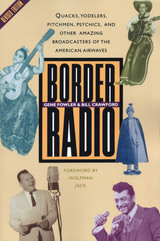
Before the Internet brought the world together, there was border radio. These mega-watt "border blaster" stations, set up just across the Mexican border to evade U.S. regulations, beamed programming across the United States and as far away as South America, Japan, and Western Europe.
This book traces the eventful history of border radio from its founding in the 1930s by "goat-gland doctor" J. R. Brinkley to the glory days of Wolfman Jack in the 1960s. Along the way, it shows how border broadcasters pioneered direct sales advertising, helped prove the power of electronic media as a political tool, aided in spreading the popularity of country music, rhythm and blues, and rock, and laid the foundations for today's electronic church. The authors have revised the text to include even more first-hand information and a larger selection of photographs.
A comparative media analysis of the representation of the U.S.–Mexico border
Border tunnels at the U.S.–Mexico border are ubiquitous in news, movies, and television, yet, because they remain hidden and inaccessible, the public can encounter them only through media. Analyzing the technologies, institutional politics, narrative tropes, and aesthetic decisions that go into showing border tunnels across multiple forms of media, Juan Llamas-Rodriguez argues that we cannot properly address border issues without attending to—and fully understanding—the fraught relationship between their representation and reality.
Llamas-Rodriguez reveals that every media text about border tunnels, whether meant for entertainment, cable news, video games, or speculative design, implicitly takes a position on the politics of the border. The examples laid out in Border Tunnels will teach readers how to look differently at the border as it is commonly presented in various forms of media, from ABC’s Nightline and CNN’s Anderson Cooper 360º to reality TV, propaganda videos, and even digital effects in Hollywood action films. Llamas-Rodriguez examines how creative decisions in the production, promotion, and distribution of these media texts either emphasize or downplay issues such as border security, racial dynamics of migration, and sustainability of the borderlands.
Focusing on tunnels to show how media representations can influence all kinds of audiences—even those physically near the border—Border Tunnels helps us make sense of this pressing social issue, ultimately advancing understanding of the U.S.–Mexico border in all of its complexity and precariousness.

At the turn of the twentieth century, the Kansas City Star was a trust-busting newspaper acclaimed for its crusading progressive spirit; fifty years later it was a busted trust, targeted in the most important antitrust action ever brought against an American daily. Now Harry Haskell tells the tale of the Star’s rise and decline against the richly textured backdrop of Kansas City—the story of how a newspaper and a city grew together and ultimately grew apart.
Boss-Busters and Sin Hounds takes readers into the city room and executive offices of one of the most respected American newspapers, whose influence extended beyond its own community to international affairs. Re-creating life at the Star from the inside, the book traces the shifting fortunes of a great newspaper and the compelling “power of purpose” it exerted from the birth of the progressive movement in the 1880s to the 1950s.
This fascinating tale—with underlying themes of sin and redemption, high-minded ideals and gutter politics—is populated by a cast of larger-than-life characters, ranging from power brokers to presidents and including such Kansas City notables as Tom Pendergast, J. C. Nichols, and Frank Walsh. But at heart this is the story of three men with contrasting personalities and agendas who shaped the newspaper over more than three-quarters of a century: William Rockhill Nelson, among the last of the great “personal” editors from journalism’s golden age; the scholarly Henry J. Haskell, who led the Star to its peak of influence in the 1930s and ’40s; and Roy A. Roberts, who went on to combine the roles of newspaper publisher and political kingmaker.
Along the way, Haskell recounts such milestones as the Star’s role in the City Beautiful movement that helped transform America’s urban centers; the nation’s entry into two global wars; a bold but ill-starred experiment in employee ownership; and the paper’s on-again, off-again battle with Boss Pendergast’s legendary political machine. And he brings into focus issues that remain timely today, from social and political reform to the very role of newspapers in a democracy, while also drawing parallels with recent American history—disillusionment with liberalism, the hijacking of the GOP by the far right, America’s go-it-alone attitude—that are as alarming as they are instructive.
As Haskell shows, the evolution of American journalism from crusading newspapers to pawns of corporate culture was already under way in the early 1900s and was substantially complete by midcentury. Boss-Busters and Sin Hounds chronicles the glory days of an illustrious newspaper as it opens new windows on a city’s history.
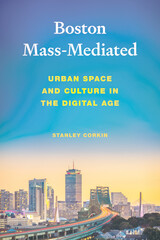
In the mid-nineteenth century, Boston fashioned itself as a global hub. By the early 1970s, it was barely a dot on the national picture. It had gained a reputation as a decaying city rife with crime and dysfunctional politics, as well as decidedly retrograde race relations, prominently exemplified by white resistance to school integration. Despite this historical ebb in its national and international presence, it still possessed the infrastructure—superb educational institutions such as Harvard and MIT, world-class sports teams like the Celtics and Red Sox, powerful media outlets like The Boston Globe, and extensive shipping capacity—required to eventually thrive in an age of global trade and mass communication.
In Boston Mass-Mediated, Stanley Corkin explores the power of mass media to define a place. He examines the tensions between the emergent and prosperous city of the late twentieth and early twenty-first centuries and its representation in a range of media genres such as news journalism, professional sports broadcasting, and popular films like Mystic River and The Departed. This mass media, with its ever-increasing digital reach, has emphasized a city restricted by tropes suggestive of an earlier Boston—racism, white ethnic crime, Catholicism, and a pre-modern insularity—even as it becomes increasingly international and multicultural. These tropes mediate our understanding and experience of the city. Using Boston as a case study, Corkin contends that our contemporary sense of place occurs through a media saturated world, a world created by the explosion of digital technology that is steeped in preconceptions.
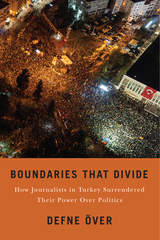
Turkey presents a striking example of the most recent wave of global authoritarian turns. The two-decade-long transition in the country’s political system also transformed its media environment. As mainstream journalists gradually yielded their places to sycophants, much more willing to praise the government in their news, the mainstream media that once oversaw—however imperfectly—political decisions started devoting its full service to cheerleading the government. Simultaneously, a new sphere of critical journalism began to emerge, with mainstream media journalists joining their fellows in the peripheries of the media. Considering the transformation of Turkey’s news media as the decay of a democratic institution, this book asks, How does the media break down under the rule of an elected government?
Drawing on fieldwork and in-depth interviews, the book traces the ruling AKP’s manipulation of social divides to consolidate power and journalists’ navigation of the resulting climate of fear, hope, doubt, and anger. The book shows how Turkey’s news media surrendered its power over politics as some journalists embraced disinformation as a path to heightened status, others turned to self-censorship for protection, and still others resisted capture through continuous but fragmented efforts.
The book portrays journalists as central actors in media decay, while also revealing that resilience to decay emerges where rising demand for “news” meets the contentious mobilization of journalists. Although focused on Turkey, the book’s insights extend far beyond, offering urgent lessons about the future of journalism in an age of populism, polarization, and institutional erosion.
How are images made, and how should we understand their limits, capacities, and forces in digital media?
While functioning as representations or mediations of the political, images also act through the technologies and social processes that they claim only to represent. In both capacities, images can be innovative, but they can also reproduce harmful phenomena such as racism, misogyny, and conspiracy. Boundary Images investigates the political, material, and visual work that images do to cross and blur the boundaries between the technological and biological and between humans, machines, and nature. Exploring the limits of the visual and beyond what can be seen, Boundary Images posits these boundaries as starting points for the production of new and radically different ways of knowing about the world.


Beginning with the inception of the Essence brand in the late 1960s, Timeka N. Tounsel examines the individuals and institutions that have reconfigured Black women’s empowerment as a business enterprise. Ultimately, these commercial gatekeepers have constructed an image economy that operates as both a sacred space for Black women and an easy hunting ground for their dollars.
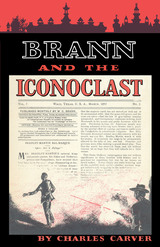
"They wouldn't let him rest—even in his grave." Thus Charles Carver opens his story of the climactic years of a journalist who had poured out such blazing prose that readers from England to Hawaii mourned his murder.
The impact of William Cowper Brann's Iconoclast upon the town of Waco, Texas, in the 1890's was like a rocket burst in a quiet sky. Rebelling against Victorian hypocrisy, the newspaperman took aim at organized virtue, exemplified for him by Baylor University and other Baptist organizations.
Dr. Roy Bedichek, noted author and naturalist, knew Brann, and after reading this book in manuscript said, "I am at once delighted and disappointed: disappointed to find my teen-age hero reduced to size... delighted with the art of the biographer.... It has genuine literary excellence... is a chapter in the history of the publishing business in Texas that needs to be put into print...."
Walter Benjamin reimagined through the forgotten power of radio
Philosopher and cultural critic Walter Benjamin (1892–1940) has long been recognized for his influence on the fields of literature, film, media studies, critical legal theory, and philosophy. Bringing fresh attention to an often-overlooked aspect of his oeuvre, Bridging Benjamin examines the dozens of radio broadcasts he produced, primarily for children, between 1927 and 1933. Delivered after the academic rejection of his notoriously complex Trauerspiel, these shows became a testing ground for Benjamin’s developing ideas and experimental pedagogy. Though they were cast off as inconsequential by both Benjamin and his contemporaries, Dominic Smith reveals the broadcasts to be a fruitful site for a novel, “derailed” interpretation of Benjamin’s larger body of work.
Reading Benjamin’s radio production as a dynamic site of philosophical experimentation, Smith uses it as a channel and amplifier for three integral but underappreciated aspects of Benjamin’s work: his philosophies of technology, place, and education. Showing how he used broadcast media to explore the increasing “virtualization” of place in networked society, Bridging Benjamin encourages an embrace of Benjamin in contrast to his divisive historical counterparts in the philosophy of technology, such as Martin Heidegger and Carl Schmitt.
Interpreting Benjamin’s broadcasts as a form of peripatetic thinking—deeply embedded in place, yet mobile and mediated—Bridging Benjamin offers a compelling model for reassessing attachments to the technologies and practices shaping our contemporary worlds.
Retail e-book files for this title are screen-reader friendly.
European media is experiencing a paradoxical form of growth: as media outlets surge and new technologies develop, major broadcasting companies are consolidating like never before. In Broadcasters and Citizens in Europe, an esteemed group of contributors look at what this paradox might mean for the European community. Are broadcasting audiences better informed than they were twenty years ago? And how has the advent of the European Union changed media practices? This essential volume explores a new media world in the context of a continent in flux.
---Ruth Teer-Tomaselli, UNESCO Chair in Communication for Southern Africa, Culture, Communication and Media Studies, University of KwaZulu-Natal
digitalculturebooks is an imprint of the University of Michigan Press and the Scholarly Publishing Office of the University of Michigan Library dedicated to publishing innovative and accessible work exploring new media and their impact on society, culture, and scholarly communication. Visit the website at www.digitalculture.org.
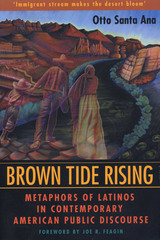
2002 – Best Book on Ethnic and Racial Political Ideology and/or Political Theory – Organized Section on Race, Ethnicity, and Politics of the American Political Science Association
"...awash under a brown tide...the relentless flow of immigrants..like waves on a beach, these human flows are remaking the face of America...." Since 1993, metaphorical language such as this has permeated mainstream media reporting on the United States' growing Latino population. In this groundbreaking book, Otto Santa Ana argues that far from being mere figures of speech, such metaphors produce and sustain negative public perceptions of the Latino community and its place in American society, precluding the view that Latinos are vested with the same rights and privileges as other citizens.
Applying the insights of cognitive metaphor theory to an extensive natural language data set drawn from hundreds of articles in the Los Angeles Times and other media, Santa Ana reveals how metaphorical language portrays Latinos as invaders, outsiders, burdens, parasites, diseases, animals, and weeds. He convincingly demonstrates that three anti-Latino referenda passed in California because of such imagery, particularly the infamous anti-immigrant measure, Proposition 187. Santa Ana illustrates how Proposition 209 organizers broadcast compelling new metaphors about racism to persuade an electorate that had previously supported affirmative action to ban it. He also shows how Proposition 227 supporters used antiquated metaphors for learning, school, and language to blame Latino children's speech—rather than gross structural inequity—for their schools' failure to educate them. Santa Ana concludes by calling for the creation of insurgent metaphors to contest oppressive U.S. public discourse about minority communities.
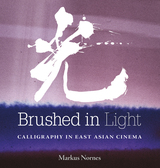
Drawing on a millennia of calligraphy theory and history, Brushed in Light examines how the brushed word appears in films and in film cultures of Korea, Japan, Taiwan, Hong Kong, and PRC cinemas. This includes silent era intertitles, subtitles, title frames, letters, graffiti, end titles, and props. Markus Nornes also looks at the role of calligraphy in film culture at large, from gifts to correspondence to advertising. The book begins with a historical dimension, tracking how calligraphy is initially used in early cinema and how it is continually rearticulated by transforming conventions and the integration of new technologies. These chapters ask how calligraphy creates new meaning in cinema and demonstrate how calligraphy, cinematography, and acting work together in a single film. The last part of the book moves to other regions of theory. Nornes explores the cinematization of the handwritten word and explores how calligraphers understand their own work.



Business as Usual reveals how American capitalism has been promoted in the most ephemeral of materials: public service announcements, pamphlets, educational films, and games—what Caroline Jack calls “sponsored economic education media.” These items, which were funded by corporations and trade groups who aimed to “sell America to Americans,” found their way into communities, classrooms, and workplaces, and onto the airwaves, where they promoted ideals of “free enterprise” under the cloaks of public service and civic education. They offered an idealized vision of US industrial development as a source of patriotic optimism, framed business management imperatives as economic principles, and conflated the privileges granted to corporations by the law with foundational political rights held by individuals. This rhetoric remains dominant—a harbinger of the power of disinformation that so besets us today. Jack reveals the funding, production, and distribution that together entrenched a particular vision of corporate responsibility—and, in the process, shut out other hierarchies of value and common care.
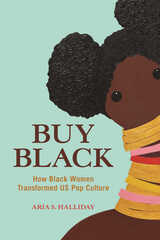
Far-ranging and bold, Buy Black reveals what attitudes inform a contemporary Black sensibility based in representation and consumerism. It also traces the parameters of Black symbolic power, mapping the sites where intraracial ideals of blackness, womanhood, beauty, play, and sexuality meet and mix in consumer and popular culture.
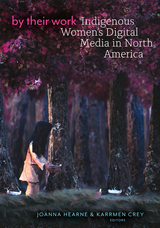
A first-of-its-kind collection to transform our understanding of digital media from Indigenous women creators
Indigenous women form a vital force in digital media production now and have over the past several decades—in fact, nearly three quarters of the projects at the 2017 imagineNATIVE Film and Media Arts Festival were created by women. By Their Work highlights the prismatic nature of Indigenous women’s digital media, connecting the digital arts with their creative labor and adaptive activism.
Joanna Hearne and Karrmen Crey bring together a collection of essays and interviews to highlight the voices of powerful and important media makers, from Indigenous video game creators to animators to social media influencers and from theorists of early Indigenous digital media to current practitioners, including trans and nonbinary creators often left out of public narratives about the digital. Creating a space to hear critical voices on Indigenous media history, theory, and production, the contributors share stories, genealogies, and practices behind Indigenous women’s power and presence in the digital world.
Focusing on the history of digital media as a whole, this collection presents a compelling case for Indigenous women’s crucial roles across the history of digital forms and platforms. In doing so, By Their Work transforms digital Indigenous studies in the twenty-first century.
Contributors: Nanobah Becker; Reilley Bishop-Stall, McGill U; Meagan Byrne; Tawny Trottier Cale; Dana Claxton; Crystal Harrison Collin; Elizabeth Day; Kristin L. Dowell, Florida State U; Miranda Due; Heid E. Erdrich; Marcella Ernest, U of New Mexico; Marisa Erven; David Gaertner, U of British Columbia; Carol Geddes; Faye Ginsburg, New York U; Patuk N. Glenn; Lisa Jackson; Jacqueline Land, William Jewell College; Jason Edward Lewis, Concordia University, Montreal; Joshua D. Miner, U of Kansas; Salma Monani, Gettysburg College; Jas M. Morgan, Simon Fraser U; Archer Pechawis, York U; Mikhel Proulx, Queen’s U Canada; Ryan Rice; Jolene Rickard, Cornell U; Channette Romero, U of Georgia; Wendi Sierra, Texas Christian U; Skawennati.

From Attali's "cold social silence" to Baudrillard's hallucinatory reality, reproduced music has long been the target of critical attack. In Bytes and Backbeats, however, Steve Savage deploys an innovative combination of designed recording projects, ethnographic studies of contemporary music practice, and critical analysis to challenge many of these traditional attitudes about the creation and reception of music. Savage adopts the notion of "repurposing" as central to understanding how every aspect of musical activity, from creation to reception, has been transformed, arguing that the tension within production between a naturalizing "art" and a self-conscious "artifice" reflects and feeds into our evolving notions of creativity, authenticity, and community.
At the core of the book are three original audio projects, drawing from rock & roll, jazz, and traditional African music, through which Savage is able to target areas of contemporary practice that are particularly significant in the cultural evolution of the musical experience. Each audio project includes a studio study providing context for the social and cultural analysis that follows. This work stems from Savage's experience as a professional recording engineer and record producer.
READERS
Browse our collection.
PUBLISHERS
See BiblioVault's publisher services.
STUDENT SERVICES
Files for college accessibility offices.
RECENTLY PUBLISHED





UChicago Accessibility Resources
home | accessibility | search | about | contact us
BiblioVault ® 2001 - 2026
The University of Chicago Press