
 A SCHOLARLY BOOK REPOSITORY
117 start with C start with C


This book is also freely available online as an open access digital edition. The open access publication was financially supported by the Social Science Research Master and partly also by the Health, Care and the Body Programme Group of the Department of Anthropology, both at the Amsterdam Institute of Social Science Research, University of Amsterdam.
Since its inception in Manchester in 1821 as a response to the 1819 Peterloo Massacre, the Guardian has been a key institution in the definition and development of liberalism. The stereotype of the 'Guardianista', an environmentally-conscious, Labour-voting, progressively-minded public sector worker endures in the popular mythology of British press history.
Yet the title has a complex lineage and occupies an equivocal position between capital and its opponents. It has both fiercely defended the need for fearless, independent journalism and handed over documents to the authorities; it has carved out a niche for itself in the UK media as a progressive voice but has also consistently diminished more radical projects on the left.
Published to coincide with its 200th anniversary, Capitalism's Conscience brings together historians, journalists and activists in an appraisal of the Guardian's contribution to British politics, society and culture - and its distinctive brand of centrism. Contextualising some of the main controversies in which the title has been implicated, the book offers timely insights into the publication's history, loyalties and political values.

Traditionally, popular music has long been said to intrinsically contest, resist, and defy the powers that be. This new book challenges this long-standing orthodoxy, arguing that popular music is not so much a form of resistance to authority, but it often perpetuates the very power it is supposed to be raging against: neoliberal capitalism.
This misconception of popular music came to dominance in the mid-1980s and persists today, even when the vast majority of people have been disempowered, impoverished, and marginalized at home, at work, and in politics. This book explains why such a robust, pervasive, and persistent set of ideas about popular music has taken such a tenacious hold despite substantive evidence to the contrary.
When health authorities quarantined guests aboard the Diamond Princess on February 5, 2020, the cruise ship abruptly shifted from a dream vacation vessel to a public health nightmare. Over the next three weeks, 712 passengers tested positive for coronavirus, with fourteen deaths, and the ship outbreak quickly became the largest cluster of cases outside of China. Guests began to routinely share quarantine updates on social media, ranging from the quality of the ship’s food to their sense of imprisonment. These Facebook, Twitter, Instagram, YouTube, and TikTok accounts became a key source of information for news outlets like the Associated Press, and they helped to set the tone for how the media would cover and frame the pandemic for the next several years.
Unlike past outbreaks, epidemics, and pandemics, COVID-19 emerged in a 21st-century digital landscape of instant communication and abundant online platforms, with older models of news and entertainment media mingling with new types of citizen-produced content. In Capturing COVID, Katherine A. Foss makes sense of how this contemporary media landscape shaped the public’s knowledge and perceptions of the new pandemic. The book focuses on crucial media moments, including the initial reporting from Wuhan; news and social media content on the Diamond Princess quarantine; stories of inequality, stigma, and injustice; narratives of the vaccine rollout; and representations of pandemic life in popular culture. Drawing on press releases, interviews, websites, blogs, social media posts, and other publicly available materials, and guided by critical media analysis, Foss illuminates how this new digital era profoundly shaped the progression of the pandemic. This media landscape kept people informed and connected, but also led to the politicization of the virus, rampant mis/disinformation, and stigmatizing messaging that contributed to public distrust and division. Capturing COVID deftly helps make sense of the entire affair.
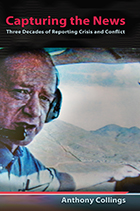
Anthony Collings found himself in his share of difficult situations in his thirty-four years as a newsman. Like being captured by AK-47–toting Syrians in Lebanon in 1981 while looking for missiles that threatened a new outbreak of hostilities with Israel, or being “detained” by the KGB in Moscow in 1967 during his first foreign posting for the Associated Press filing stories about Soviet dissidents.
Brimming with entertaining stories about journalism, especially the chaotic early years at CNN when he and his colleagues established the first major cable news network, Collings’s book reveals the dangers and pressures of covering the news and the difficulties of overcoming obstacles to the truth. He recalls smuggling tapes out of Poland after the Communists had imposed martial law; flying dangerously near Libya’s “Line of Death”; interviewing world figures from Brezhnev to Kaddafi and Arafat; and winning awards for covering Iran-Contra and the Oklahoma City bombing. Collings brings fresh insights to the Oliver North affair and examines how the press was suckered in its coverage of the Jessica Lynch prisoner-of-war story in 2003. He voices his concerns regarding oversimplified reporting of complex issues and poses provocative questions about covering terrorism.
In this book, Collings presents an insider’s appraisal of the American news media’s failings and accomplishments. Easy to read, informative, and thoughtful, Capturing the News will enlighten general readers interested in how journalists cover current affairs, while offering newsmen food for thought about the craft and ethics of journalism.

The Celebrity Persona Pandemic explores how the construction of a public persona is fetishized in contemporary culture. As social media has progressively led to a greater focus on the production of the self, so this book looks at the most visible versions of persona through figures such as Stephen Colbert, Cate Blachett, and Justin Bieber, as well as fictional characters like Spock and Harry Potter. Ultimately, P. David Marshall closely studies how persona culture shapes our notions of value and significance, and dramatically shifts cultural politics.
Forerunners is a thought-in-process series of breakthrough digital works. Written between fresh ideas and finished books, Forerunners draws on scholarly work initiated in notable blogs, social media, conference plenaries, journal articles, and the synergy of academic exchange. This is gray literature publishing: where intense thinking, change, and speculation take place in scholarship.
"They're closing in on me, Dick, and I'm afraid they're going to get me," said Frank Wood, publisher of the Green Bay News-Chronicle, in a phone call to his friend and colleague, Richard McCord. Drained of cash and spirit, Wood could not hold out much longer against a devouring giant, the Gannett Company. As editor and publisher of the nationally distinguished weekly Santa Fe Reporter, McCord had successfully fended off Gannett's "Operation Demolition" when it moved into town. Now Wood was seeking the help of a survivor.
Startling case histories of the dubious tactics practiced by Gannett, unsparing insights into the newspaper industry, and harsh conclusions all come together in the dramatic story of these two men's efforts to save the small Green Bay daily from being obliterated at the hands of the nation's largest newspaper chain. Their success is a metaphor for one of the oldest triumphs of the world: that of David over Goliath.
"McCord has done something marvelous with this. He's taken a deeply disturbing nationwide trend and put it on a small midwestern stage with real characters. The Chain Gang's message needs to be heard by as many Americans as read newspapers. Already Gannett's monopoly tactics have impoverished communities across the country. McCord is one man fighting back, coolly, rationally, creatively, and stubbornly. Let's join him."—Michael Shnayerson, Contributing Editor, Vanity Fair
"More graphically than almost any other available record of the era, the Gannett piracy is what has happened to this country, tolled where the price is truly paid, in the lives of communities and people."—Roger Morris, winner of the Investigative Reporters and Editors' National Award for Distinguished Investigative Journalism
"Richard McCord's The Chain Gang takes the losing battle for the soul of American newspapers from the euphoric accounts on financial pages to show what corporate news chains can mean in human terms to the people and the vitality of the victimized cities and towns. His is a unique account of the power and depredations of the Gannett Chain under its glib empire builder, Allen Neuharth. It goes behind the facade of slick public relations and financial killings for investors to show what happens when a ruthless and ambitious wheeler-dealer gets control of our news."—Ben H. Bagdikian, media critic and Pulitzer Prize winner
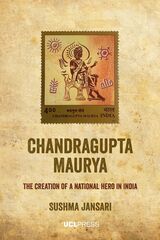
The writing and reception of history fundamentally influence how we engage with the past, and nowhere is that more clear than in the rise from obscurity of Chandragupta Maurya (350–295 BCE), the first emperor of the Mauryan Empire. The key moment in the transformation of Chandragupta into a contemporary national icon was a peace-making meeting between Chandragupta and Seleucus, founder of the Seleucid empire and one of Alexander the Great’s generals. But no reliable account exists in early sources, and it is not even clear which ruler was victorious in battle. That uncertainty enabled British and Indian historians of the nineteenth and twentieth centuries to interpret the sources in radically different ways. With Chandragupta representing India and Seleucus standing in for Britain, British scholars argued that Seleucus defeated Chandragupta, while Indian academics contended the opposite. In India, the image of Chandragupta as an idealized hero who vanquished the foreign invader has prevailed and found expression in contemporary popular culture. In plays, films, television series, comic books, and historical novels, Chandragupta is the powerful and virtuous Hindu ruler par excellence. Sushma Jansari shows how that transformation came about and points out the lessons we can learn from it for understanding other historical figures.

In China Pop! Sheng-mei Ma analyzes the propaganda-laced millennial Chinese pop culture—particularly TV dramas, films, and web novels—that streams online for over one billion Sinophone consumers in China and in diaspora. In part 1, Ma lays bare the “seductive art of propaganda” by reviewing TV series aired during the Chinese Communist Party Centennial in 2021 and the ways pop culture and propaganda are spliced. In part 2, he zeroes in on how the shared traumatic shock of the Cultural Revolution continues to echo. Parts 3 and 4 cross the Pacific to incorporate analysis of media originating outside of China, such as white depictions of revolutionary zeal and Asian American portrayals of immigrant characters that fetishize Asianness and reanimate stereotypes. With methodological daring, Ma challenges existing scholarship by blending the professional and the personal through a lively and accessible autotheoretical approach. China Pop! walks the East-West cultural tightrope to critique a wide range of pop culture from both sides of the Pacific and sheds new light on the workings of propaganda on its intended audiences and its wider, more subtle reaches in both political and cultural spheres.

In Chinese Cinema: Identity, Power, and Globalization, a variety of scholars explore the history, aesthetics, and politics of Chinese cinema as the Chinese film industry grapples with its place as the second-largest film industry in the world. Exploring the various ways that Chinese cinema engages with global politics, market forces, and film cultures, this edited volume places Chinese cinema against an array of contexts informing the contours of Chinese cinema today. The book also demonstrates that Chinese cinema in the global context is informed by the intersections and tensions found in Chinese and world politics, national and international co-productions, the local and global in representing Chineseness, and the lived experiences of social and political movements versus screened politics in Chinese film culture.
Eldridge reveals how the black press not only reported the war but also weighed its significance in the context of the civil rights movement.
Eldridge examines not only the role of reporters during the war, but also those of editors, commentators, and cartoonists. Especially enlightening is the research drawn from extensive oral histories by prominent journalist Ethel Payne, the first African American woman to receive the title of war correspondent. She described a widespread practice in black papers of reworking material from major white papers without providing proper credit, as the demand for news swamped the small budgets and limited staffs of African American papers. The author analyzes both the strengths of the black print media and the weaknesses in their coverage.
The black press ultimately viewed the Vietnam War through the lens of African American experience, blaming the war for crippling LBJ’s Great Society and the War on Poverty. Despite its waning hopes for an improved life, the black press soldiered on.
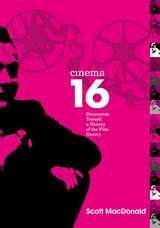
Vogel's commitment to the broadest range of cinema practice led him to develop a programming strategy, inherited from the European cine-club movement, that involved confronting audiences with such a wide range of cinematic forms that viewers left the theater considering not only the often remarkable films Vogel showed, but the place of Cinema itself in modern life.
Cinema 16: Documents Toward a History of the Film Society is the first book on Cinema 16. Scott MacDonald provides a sense of the life and work of the society, using the complete Cinema 16 program announcements, selected letters between Vogel and the filmmakers whose films he showed; selections from the program notes that accompanied Cinema 16 screenings, theoretical essays by Vogel on curating independent cinema; conversations between MacDonald and Cinema 16 members; photographs and stills; and a variety of other documents.
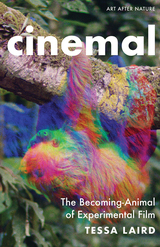
A foray through the wilds where experimental films and animals collide
Like the flash of a tropical bird’s iridescent wing, cinema can be furtive and intensely beautiful—and it can leave a viewer craving more. Cinemal is Tessa Laird’s passionate inquiry into the ways that films mimic the majesty, mystery, and movements of animals,her field notes from countless hair-raising encounters with films in their natural habitat.
Part of a growing focus on nonhuman animals in film, Cinemal ventures to the “furry underbelly” of global experimental film practice, focusing on films from New Zealand, Australia, and South America. Laird examines how animals are depicted in film and analyzes the various animal qualities of cinema, like scratching and sniffing, vibrant colors, and voices (barking, howling, or echolocation). Burrowing into the work of filmmakers such as Arthur and Corinne Cantrill, Sriwhana Spong, and Ana Vaz, Laird’s energetic prose embodies the films she discusses, seamlessly combining personal anecdotes with art theory and philosophy to spread a wide sensory buffet.
Lively and optimistic, Laird uses cinematic animal tropes to encourage readers to rethink what it means to be human. She argues that, in a time of ecological collapse, such an impulse is a necessary means of imagining other, healthier ways of being in this world. Connecting us with the more-than-human, Cinemal lures us toward the beastly becomings of film and, ultimately, our own animal natures.
Retail e-book files for this title are screen-reader friendly.
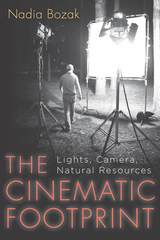
Film is often used to represent the natural landscape and, increasingly, to communicate environmentalist messages. Yet behind even today’s “green” movies are ecologically unsustainable production, distribution, and consumption processes. Noting how seemingly immaterial moving images are supported by highly durable resource-dependent infrastructures, The Cinematic Footprint traces the history of how the “hydrocarbon imagination” has been central to the development of film as a medium.
Nadia Bozak’s innovative fusion of film studies and environmental studies makes provocative connections between the disappearance of material resources and the emergence of digital media—with examples ranging from early cinema to Dziga Vertov’s prescient eye, from Chris Marker’s analog experiments to the digital work of Agnès Varda, James Benning, and Zacharias Kunuk. Combining an analysis of cinema technology with a sensitive consideration of film aesthetics, The Cinematic Footprint offers a new perspective on moving images and the natural resources that sustain them.
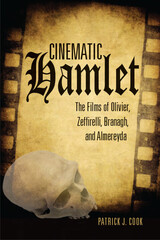
Hamlet has inspired four outstanding film adaptations that continue to delight a wide and varied audience and to offer provocative new interpretations of Shakespeare’s most popular play. Cinematic Hamlet contains the first scene-by-scene analysis of the methods used by Laurence Olivier, Franco Zeffirelli, Kenneth Branagh, and Michael Almereyda to translate Hamlet into highly distinctive and remarkably effective films.
Applying recent developments in neuroscience and psychology, Patrick J. Cook argues that film is a medium deploying an abundance of devices whose task it is to direct attention away from the film’s viewing processes and toward the object represented. Through careful analysis of each film’s devices, he explores the ways in which four brilliant directors rework the play into a radically different medium, engaging the viewer through powerful instinctive drives and creating audiovisual vehicles that support and complement Shakespeare’s words and story.
Cinematic Hamlet will prove to be indispensable for anyone wishing to understand how these films rework Shakespeare into the powerful medium of film.

In 1916, a group of Korean farmers and their children gathered to watch a film depicting the enthronement of the Japanese emperor. For this screening, a unit of the colonial government’s news agency brought a projector and generator by train to their remote rural town. Before the formation of commercial moviegoing culture for colonial audiences in rural Korean towns, many films were sent to such towns and villages as propaganda. The colonial authorities, as well as later South Korean postcolonial state authorities, saw film as the most effective medium for disseminating their political messages. In Cine-Mobility, Han Sang Kim argues that the force of propaganda films in Korea was derived primarily not from their messages but from the new mobility of the viewing position.
From the first film shot in Korea in 1901 through early internet screen cultures in late 1990s South Korea, Cine-Mobility explores the association between cinematic media and transportation mobility, not only in diverse and discrete forms such as railroads, motorways, automobiles, automation, and digital technologies, but also in connection with the newly established rules and restrictions and the new culture of mobility, including changes in gender dynamics, that accompanied it.
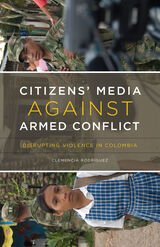
For two years, Clemencia Rodríguez did fieldwork in regions of Colombia where leftist guerillas, right-wing paramilitary groups, the army, and drug traffickers made their presence felt in the lives of unarmed civilians. Here, Rodríguez tells the story of the ways in which people living in the shadow of these armed intruders use community radio, television, video, digital photography, and the Internet to shield their communities from armed violence’s negative impacts.
Citizens’ media are most effective, Rodríguez posits, when they understand communication as performance rather than simply as persuasion or the transmission of information. Grassroots media that are deeply embedded in the communities they serve and responsive to local needs strengthen the ability of community members to productively react to violent incursions. Rodríguez demonstrates how citizens’ media privilege aspects of community life not hijacked by violence, providing people with the tools and the platform to forge lives for themselves and their families that are not entirely colonized by armed conflict and its effects.
Ultimately, Rodríguez shows that unarmed civilian communities that have been cornered by armed conflict can use community media to repair torn social fabrics, reconstruct eroded bonds, reclaim public spaces, resolve conflict, and sow the seeds of peace and stability.
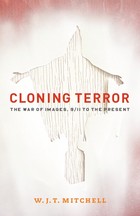
The phrase “War on Terror” has quietly been retired from official usage, but it persists in the American psyche, and our understanding of it is hardly complete. Nor will it be, W. J. T Mitchell argues, without a grasp of the images that it spawned, and that spawned it.
Exploring the role of verbal and visual images in the War on Terror, Mitchell finds a conflict whose shaky metaphoric and imaginary conception has created its own reality. At the same time, Mitchell locates in the concept of clones and cloning an anxiety about new forms of image-making that has amplified the political effects of the War on Terror. Cloning and terror, he argues, share an uncanny structural resemblance, shuttling back and forth between imaginary and real, metaphoric and literal manifestations. In Mitchell’s startling analysis, cloning terror emerges as the inevitable metaphor for the way in which the War on Terror has not only helped recruit more fighters to the jihadist cause but undermined the American constitution with “faith-based” foreign and domestic policies.
Bringing together the hooded prisoners of Abu Ghraib with the cloned stormtroopers of the Star Wars saga, Mitchell draws attention to the figures of faceless anonymity that stalk the ever-shifting and unlocatable “fronts” of the War on Terror. A striking new investigation of the role of images from our foremost scholar of iconology, Cloning Terror will expand our understanding of the visual legacy of a new kind of war and reframe our understanding of contemporary biopower and biopolitics.
For years, pundits have trumpeted the earthshattering changes that big data and smart networks will soon bring to our cities. But what if cities have long been built for intelligence, maybe for millennia? In Code and Clay, Data and Dirt Shannon Mattern advances the provocative argument that our urban spaces have been “smart” and mediated for thousands of years.
Offering powerful new ways of thinking about our cities, Code and Clay, Data and Dirt goes far beyond the standard historical concepts of origins, development, revolutions, and the accomplishments of an elite few. Mattern shows that in their architecture, laws, street layouts, and civic knowledge—and through technologies including the telephone, telegraph, radio, printing, writing, and even the human voice—cities have long negotiated a rich exchange between analog and digital, code and clay, data and dirt, ether and ore.
Mattern’s vivid prose takes readers through a historically and geographically broad range of stories, scenes, and locations, synthesizing a new narrative for our urban spaces. Taking media archaeology to the city’s streets, Code and Clay, Data and Dirt reveals new ways to write our urban, media, and cultural histories.
Nicholas J. Schlosser draws on broadcast transcripts, internal memoranda, listener letters, and surveys by the U.S. Information Agency to profile RIAS. Its mission: to undermine the German Democratic Republic with propaganda that, ironically, gained in potency by obeying the rules of objective journalism. Throughout, Schlosser examines the friction inherent in such a contradictory project and propaganda's role in shaping political culture. He also portrays how RIAS's primarily German staff influenced its outlook and how the organization both competed against its rivals in the GDR and pushed communist officials to alter their methods in order to keep listeners.
From the occupation of Berlin through the airlift to the construction of the Berlin Wall, Cold War on the Airwaves offers an absorbing view of how public diplomacy played out at a flashpoint of East-West tension.
In recent years research into creative labour and cultural work has usually addressed the politics of production in these fields, but the sociotechnical and aesthetic dimensions of collaborative creative work have been somewhat overlooked.
This book aims to address this gap. Through case studies that range from TV showrunning to independent publishing, from the film industry to social media platforms such as Tumblr and Wattpad, this collection develops a critical understanding of the integral role collaboration plays in contemporary media and culture. It draws attention to diverse kinds of creative collaboration afforded via the intermediation of digital platforms and networked publics. It considers how these are incorporated into emergent market paradigms and investigates the complicated forms of subjectivity that develop as a consequence. But it also acknowledges historical continuities, not least in terms of the continued exploitation of ‘support personnel’ and of resulting artistic conflicts but also of alternative models that resist the precarious nature of contemporary cultural work.
Finally, this volume attempts to situate creative collaboration in broader social and economic contexts, where the experience and outcomes of such work have proved more problematic than the rich potential of their promise would lead us to expect.
The Editors: James Graham is Senior Lecturer in the Faculty of Arts and Creative Industries, Middlesex University, London. Alessandro Gandini is Lecturer in Digital Media Management and Innovation in the Department of Digital Humanities, Kings College, London.
Collateral Damage provides an overview of how political communication influences the process of incorporation with the broad society as well as its political parties. Sean Richey shows that how politicians talk about immigrants affects how their children perceive America and their feelings about the nation. These perceptions and feelings in turn greatly influence the children’s desire to incorporate into American political society. He also shows that regardless of a speaker’s intended outcome, what is said can still have a deleterious effect on incorporation desire, a communicative process that he terms “collateral damage.” Richey uses new experimental and survey evidence, as well as the rhetoric of Donald Trump as a test case, to examine how anti-immigration communication influences the incorporation of the children of immigrants.

Winner of the 2023 Association for Ethnic Studies Outstanding Book Award
A study of anti-Blackness and white supremacy across four continents demonstrates that colorblindness is neither new nor a subtype of racist ideology, but a constitutive technology of racism
In Colorblind Tools, Marzia Milazzo offers a transnational account of anti-Blackness and white supremacy that pushes against the dominant emphasis on historical change pervading current racial theory. This emphasis on change, she contends, misses critical lessons from the past.
Bringing together a capacious archive of texts on race produced in Brazil, Cuba, Mexico, Panama, the United States, and South Africa from multiple disciplines and genres, Milazzo uncovers transnational continuities in structural racism and white supremacist discourse from the inception of colonial modernity to the present. In the process, she traces the global workings of what she calls colorblind tools: technologies and strategies that at once camouflage and reproduce white domination. Whether examining Rijno van der Riet’s defense of slavery in the Cape Colony, discourses of racial mixture in Latin American eugenics and their reverberations in contemporary scholarship, the pitfalls of white “antiracism,” or Chicana indigenist aesthetics, Milazzo illustrates how white people collectively disavow racism to maintain power across national boundaries, and how anti-Black and colonial logics can be reproduced even in some decolonial literatures. Milazzo’s groundbreaking study proves that colorblindness is not new, nor is it a subtype of racist ideology or a hallmark of our era. It is a constitutive technology of racism—a tool the master cannot do without.
An analysis of the hit television series Columbo and the investigative methods of its eponymous main character.
In the iconic detective show, which aired from 1968 to 2003, Lieutenant Columbo was known for his Socratic method of rhetorical inquiry. Feigning ignorance and employing a barrage of questions about minute details, the detective enacts a persona of “antipotency,” or counter authoritativeness, to affect the villains' underestimation of his attention to inconsistencies, abductive reasoning, and rhetorical efficacy. In his predominantly dialogue-based investigations, Columbo exhausts his suspects by asking a battery of questions concerning all minor details of the case—an aggravating, tedious provocation for the killer trying to maintain innocence.
In this engaging interdisciplinary study, Christyne Berzsenyi explores the character and his influences, dissects his methods of investigation, and assesses the show’s enduring legacy in academia and popular culture. While critical and theoretical, the text is also accessible to interdisciplinary readers, practical in application, and amusing for Columbo buffs.

Film scholar Blair Davis also considers how the genre’s visual style is equally important as its weighty themes, and he details how advances in digital effects have allowed filmmakers to incorporate elements of comic book art in innovative ways. As he reveals, comic book movies have inspired just as many innovations to Hollywood’s business model, with film franchises and transmedia storytelling helping to ensure that the genre will continue its reign over popular culture for years to come.
Winner, BASEES George Blazyca Award in East European Studies
Comics and Nation offers a fresh perspective on the role of popular culture in the one-hundred-year history of the Polish state, from its foundation in 1918 to the present. Drawing on dozens of press articles, interviews, and readers’ letters, Ewa Stanczyk discusses how journalists, artists, and audiences used comics to probe the boundaries of national culture and scrutinize the established notions of Polishness. Critical moments of Poland’s political transformation ––the establishment of the interwar Polish Republic, the Cold War, the liberalization of the 1970s, the 1989 democratic transition, the turn to memory politics in the 2000s––have all been reflected in the history of Polish comics. Stanczyk offers new insights into how the production of homegrown comics and the influx of foreign works enabled commentators to express their fears, hopes, and disillusionment with political, economic, and cultural changes in Poland and beyond. At its core, Comics and Nation rethinks the impact of popular culture and transnational exchange on Polish nation building, citizenship formation, and the legitimation of power.
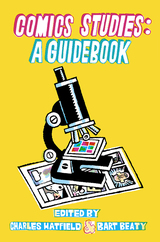
In the twenty-first century, the field of comics studies has exploded. Scholarship on graphic novels, comic books, comic strips, webcomics, manga, and all forms of comic art has grown at a dizzying pace, with new publications, institutions, and courses springing up everywhere. The field crosses disciplinary and cultural borders and brings together myriad traditions. Comics Studies: A Guidebook offers a rich but concise introduction to this multifaceted field, authored by leading experts in multiple disciplines. It opens diverse entryways to comics studies, including history, form, audiences, genre, and cultural, industrial, and economic contexts. An invaluable one-stop resource for veteran and new comics scholars alike, this guidebook represents the state of the art in contemporary comics scholarship.
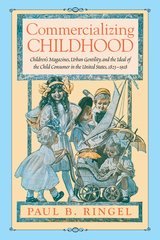
In this deeply researched and engaging book, Paul B. Ringel combines an analysis of the stories in nineteenth-century American children's magazines with the backstories of their authors, editors, and publishers to explain how this hugely successful industry trained generations of American children to become genteel consumers. Ringel demonstrates how these publications, which were read in hundreds of thousands of homes, played to two conflicting impulses within American families: to shield children from commercial influences by offering earnest and moral entertainment and to help children learn how to prosper in an increasingly market-driven society.
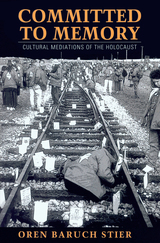
Stier discusses how these memorializations emerge, paying attention to the ways cultural memory is embodied individually, institutionally, and technologically. He defines and examines four modes of mediation: iconic, videotestimonial, museological, and ritual-ceremonial. In each context, he analyzes how Holocaust memory is inscribed, framed, displayed, and performed through a variety of media in a range of settings. Topics include the use of Holocaust-era railway cars, Art Spiegelman's Maus volumes, novels by Emily Prager, Martin Amis, and Elie Wiesel, and a CD-ROM that incorporates excerpts from Holocaust survivor testimonies. Institutions examined range from Washington's U.S. Holocaust Memorial Museum to Los Angeles's Museum of Tolerance, from Yale's Fortunoff Video Archive for Holocaust Testimonies to the Visual History Foundation created by Steven Spielberg, to the international teen pilgrimage that is the March of the Living.
In the end, Committed to Memory asks what role forgetting can and does play in the memorial landscape, demonstrating how critical attention to our memorial investments, and to the mechanics and media of memory's construction and transmission, can uncover what is both gained and lost in these commitments.
On contemporary communication in its various human and nonhuman forms
Contemporary communication puts us not only in conversation with one another but also with our machinery. Machine communication—to communicate not just via but also with machines—is therefore the focus of this volume. Diving into digital communications history, Finn Brunton brings to the fore the alienness of computational communication by looking at network timekeeping, automated trolling, and early attempts at communication with extraterrestrial life. Picking up this fascination with inhuman communication, Mercedes Bunz then performs a close reading of interaction design and interfaces to show how technology addresses humans (as very young children). Finally, Paula Bialski shares her findings from a field study of software development, analyzing the communicative forms that occur when code is written by separate people. Today, communication unfolds merely between two or more conscious entities but often includes an invisible third party. Inspired by this drastic shift, this volume uncovers new meanings of what it means “to communicate.”

‘An authoritative analysis of the role of communication in contemporary capitalism and an important contribution to debates about the forms of domination and potentials for liberation in today’s capitalist society.’ — Professor Michael Hardt, Duke University, co-author of the tetralogy Empire, Commonwealth, Multitude, and Assembly
‘A comprehensive approach to understanding and transcending the deepening crisis of communicative capitalism. It is a major work of synthesis and essential reading for anyone wanting to know what critical analysis is and why we need it now more than ever.’ — Professor Graham Murdock, Emeritus Professor, University of Loughborough and co-editor of The Handbook of Political Economy of Communications
Communication and Capitalism outlines foundations of a critical theory of communication. Going beyond Jürgen Habermas’ theory of communicative action, Christian Fuchs outlines a communicative materialism that is a critical, dialectical, humanist approach to theorising communication in society and in capitalism. The book renews Marxist Humanism as a critical theory perspective on communication and society.
The author theorises communication and society by engaging with the dialectic, materialism, society, work, labour, technology, the means of communication as means of production, capitalism, class, the public sphere, alienation, ideology, nationalism, racism, authoritarianism, fascism, patriarchy, globalisation, the new imperialism, the commons, love, death, metaphysics, religion, critique, social and class struggles, praxis, and socialism.
Fuchs renews the engagement with the questions of what it means to be a human and a humanist today and what dangers humanity faces today.
The history of communications in the Ottoman Empire and Turkey contradicts the widespread belief that communications is a byproduct of modern capitalism and other Western forces. Burçe Çelik uses a decolonial perspective to analyze the historical commodification and militarization of communications and how it affected production and practice for oppressed populations like women, the working class, and ethnic and religious minorities. Moving from the mid-nineteenth century through today, Çelik places networks within the changing geopolitical landscape and the evolution of modern capitalism in relationship to struggles involving a range of social and political actors. Throughout, she challenges Anglo- and Eurocentric assumptions that see the non-West as an ahistorical imitation of, or aberration from, the development of Western communications.
Ambitious and comprehensive, Communications in Turkey and the Ottoman Empire merges political economy with social history to challenge Western-centered assumptions about the origins and development of modern communications.
Drawing on the perspectives of literary and cultural studies, science studies and feminist theory, radio history, and the new field of radio studies, these essays consider the development of radio as technology: how it was modeled on the telephone, early conflicts between for-profit and public uses of radio, and amateur radio (HAMS), local programming, and low-power radio. Some pieces discuss how radio gives voice to different cultural groups, focusing on the BBC and poetry programming in the West Indies, black radio, the history of alternative radio since the 1970s, and science and contemporary arts programming. Others look at radio’s influence on gender (and gender’s influence on radio) through examinations of Queen Elizabeth’s broadcasts, Gracie Allen’s comedy, and programming geared toward women. Together the contributors demonstrate how attention to the variety of ways radio is used and understood reveals the dynamic emergence and transformation of communities within the larger society.
Contributors. Laurence A. Breiner, Bruce B. Campbell, Mary Desjardins, Lauren M. E. Goodlad, Nina Hunteman, Leah Lowe, Adrienne Munich, Kathleen Newman, Martin Spinelli, Susan Merrill Squier, Donald Ulin, Mark Williams, Steve Wurzler
Andrea Wenzel models new practices of community-centered journalism that build trust across boundaries of politics, race, and class, and prioritize solutions while engaging the full range of local stakeholders. Informed by case studies from rural, suburban, and urban settings, Wenzel's blueprint reshapes journalism norms and creates vigorous storytelling networks between all parts of a community. Envisioning a portable, rather than scalable, process, Wenzel proposes a community-centered journalism that, once implemented, will strengthen lines of local communication, reinvigorate civic participation, and forge a trusting partnership between media and the people they cover.
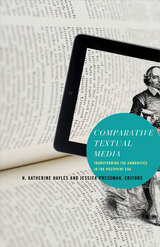
For the past few hundred years, Western cultures have relied on print. When writing was accomplished by a quill pen, inkpot, and paper, it was easy to imagine that writing was nothing more than a means by which writers could transfer their thoughts to readers. The proliferation of technical media in the latter half of the twentieth century has revealed that the relationship between writer and reader is not so simple. From telegraphs and typewriters to wire recorders and a sweeping array of digital computing devices, the complexities of communications technology have made mediality a central concern of the twenty-first century.
Despite the attention given to the development of the media landscape, relatively little is being done in our academic institutions to adjust. In Comparative Textual Media, editors N. Katherine Hayles and Jessica Pressman bring together an impressive range of essays from leading scholars to address the issue, among them Matthew Kirschenbaum on archiving in the digital era, Patricia Crain on the connection between a child’s formation of self and the possession of a book, and Mark Marino exploring how to read a digital text not for content but for traces of its underlying code.
Primarily arguing for seeing print as a medium along with the scroll, electronic literature, and computer games, this volume examines the potential transformations if academic departments embraced a media framework. Ultimately, Comparative Textual Media offers new insights that allow us to understand more deeply the implications of the choices we, and our institutions, are making.
Contributors: Stephanie Boluk, Vassar College; Jessica Brantley, Yale U; Patricia Crain, NYU; Adriana de Souza e Silva, North Carolina State U; Johanna Drucker, UCLA; Thomas Fulton, Rutgers U; Lisa Gitelman, New York U; William A. Johnson, Duke U; Matthew G. Kirschenbaum, U of Maryland; Patrick LeMieux; Mark C. Marino, U of Southern California; Rita Raley, U of California, Santa Barbara; John David Zuern, U of Hawai‘i at Mānoa.

The first book to intervene in debates on computation in the digital humanities
Bringing together leading experts from across North America and Europe, Computational Humanities redirects debates around computation and humanities digital scholarship from dualistic arguments to nuanced discourse centered around theories of knowledge and power. This volume is organized around four questions: Why or why not pursue computational humanities? How do we engage in computational humanities? What can we study using these methods? Who are the stakeholders?
Recent advances in technologies for image and sound processing have expanded computational approaches to cultural forms beyond text, and new forms of data, from listservs and code repositories to tweets and other social media content, have enlivened debates about what counts as digital humanities scholarship. Providing case studies of collaborations between humanities-centered and computation-centered researchers, this volume highlights both opportunities and frictions, showing that data and computation are as much about power, prestige, and precarity as they are about p-values.
Contributors: Mark Algee-Hewitt, Stanford U; David Bamman, U of California, Berkeley; Kaspar Beelen, U of London; Peter Bell, Philipps U of Marburg; Tobias Blanke, U of Amsterdam; Julia Damerow, Arizona State U; Quinn Dombrowski, Stanford U; Crystal Nicole Eddins, U of Pittsburgh; Abraham Gibson, U of Texas at San Antonio; Tassie Gniady; Crystal Hall, Bowdoin College; Vanessa M. Holden, U of Kentucky; David Kloster, Indiana U; Manfred D. Laubichler, Arizona State U; Katherine McDonough, Lancaster U; Barbara McGillivray, King’s College London; Megan Meredith-Lobay, Simon Fraser U; Federico Nanni, Alan Turing Institute; Fabian Offert, U of California, Santa Barbara; Hannah Ringler, Illinois Institute of Technology; Roopika Risam, Dartmouth College; Joshua D. Rothman, U of Alabama; Benjamin M. Schmidt; Lisa Tagliaferri, Rutgers U; Jeffrey Tharsen, U of Chicago; Marieke van Erp, Royal Netherlands Academy of Arts and Sciences; Lee Zickel, Case Western Reserve U.
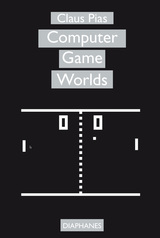
With Computer Game Worlds, Claus Pias sets out to answer these questions. Tracing computer games from their earliest forms to the unstoppable commercial and cultural phenomena they have become today, Pias then provides a careful epistemological reconstruction of the process of playing games, both at computers and by computers themselves. The book makes a valuable theoretical contribution to the ongoing discussion about computer games.
Computers, Surveillance, and Privacy was first published in 1996. Minnesota Archive Editions uses digital technology to make long-unavailable books once again accessible, and are published unaltered from the original University of Minnesota Press editions.
From computer networks to grocery store checkout scanners, it is easier and easier for governments, employers, advertisers, and individuals to gather detailed and sophisticated information about each of us. In this important new collection, the authors question the impact of these new technologies of surveillance on our privacy and our culture.
Although surveillance-literally some people "watching over" others-is as old as social relationships themselves, with the advent of the computer age this phenomenon has acquired new and distinctive meanings. Technological advances have made it possible for surveillance to become increasingly global and integrated-both commercial and government-related personal data flows more frequently across national boundaries, and the flow between private and public sectors has increased as well.
Addressing issues of the global integration of surveillance, social control, new information technologies, privacy violation and protection, and workplace surveillance, the contributors to Computers, Surveillance, and Privacy grapple with the ramifications of these concerns for society today. Timely and provocative, this collection will be of vital interest to anyone concerned with resistance to social control and incursions into privacy.
Contributors: Jonathan P. Allen, Colin J. Bennett, Simon G. Davies, Oscar H. Gandy Jr., Calvin C. Gotlieb, Rob Kling, Gary T. Marx, Abbe Mowshowitz, Judith A. Perrolle, Mark Poster, Priscilla M. Regan, James B. Rule.
David Lyon is professor of sociology at Queen's University, Canada. His previous books include The Electronic Eye: The Rise of Surveillance Society (Minnesota, 1994). Elia Zureik is also professor of sociology at Queen's University, Canada, and coedited (with Dianne Hartling) The Social Context of the New Information and Communication Technologies (1987).
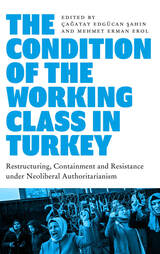
Decades of neoliberal authoritarianism have propelled Turkey into crisis. Regime change, economic disaster and Erdogan’s ambition to impose ‘one-man rule’ have shaken the foundations of Turkish political life, but what does this mean for workers?
Moving beyond the headlines and personalities, this book uncovers the real condition of the working class in modern Turkey. Combining field research and in-depth interviews, it offers cutting-edge analyses of workplace struggles, trade unionism, the AKP’s relationship with neoliberalism, migration, gender, agrarian change and precarity, as well as the Covid-19 pandemic and its impact on workers.
Bringing together Turkish activists and scholars, this book is an inside look at the dynamics and contradictions of working-class resistance against Turkey’s neoliberal authoritarian regime; from worker self-management to organized labor and rural struggles.
Graffiti makes for messy politics. In film and television, it is often used to create a sense of danger or lawlessness. In bathroom stalls, it is the disembodied expression of gossip, lewdness, or confession. But it is also a resistive tool of protest, making visible the disparate voices and interests that come together to make a movement.
In Conflict Graffiti, John Lennon dives into the many permutations of graffiti in conflict zones—ranging from the protest graffiti of the Black Lives Matter movement in Ferguson and the Tahrir Square demonstrations in Egypt, to the tourist-attraction murals on the Israeli Separation Wall and the street art that has rebranded Detroit and post-Katrina New Orleans. Graffiti has played a crucial role in the revolutionary movements of these locales, but as the conflict subsides a new graffiti and street art scene emerges—often one that ushers in postconflict consumerism, gentrification, militarization, and anesthetized forgetting.
Graffiti has an unstable afterlife, fated to be added to, transformed, overlaid, photographed, reinterpreted, or painted over. But as Lennon concludes, when protest movements change and adapt, graffiti is also uniquely suited to shapeshift with them.
This new anthology takes stock of our empirical and historical understanding of the two-sided nature of media and tracks the recent turn in media studies to examining practice itself. A unique discussion of the intersection of media theory and practice theory, Connect and Divide explores how distributions of knowledge, labor, and power may be hidden in what remains untraceable about media, shedding vital light on the social implications of media theory today.

Ann Romines interweaves personal observation with scholarly analysis to address these questions. Writing from a feminist perspective and drawing on resources of gender studies, cultural studies, and new historicist reading, she examines both the content of the novels and the process of their creation. She explores the relationship between mother and daughter working as collaborative authors and calls into question our assumptions about plot, juvenile fiction, and constructions of gender on the nineteenth-century frontier and in the Depression years when the Little House books were written.
This is a book that will appeal both to scholars and to general readers who might welcome an engaging and accessible companion volume to the Little House novels.
Constructing the Outbreak demonstrates how news reporting on epidemics communicates more than just information about pathogens; rather, prejudices, political agendas, religious beliefs, and theories of disease also shape the message. Analyzing seven epidemics spanning more than two hundred years—from Boston's smallpox epidemic and Philadelphia's yellow fever epidemic in the eighteenth century to outbreaks of diphtheria, influenza, and typhoid in the early twentieth century—Katherine A. Foss discusses how shifts in journalism and medicine influenced the coverage, preservation, and fictionalization of different disease outbreaks. Each case study highlights facets of this interplay, delving into topics such as colonization, tourism, war, and politics. Through this investigation into what has been preserved and forgotten in the collective memory of disease, Foss sheds light on current health care debates, like vaccine hesitancy.

This book is written as a survey for students who are interested in the nature and role of consumer culture in modern societies. Drawing on a wide range of studies and disciplines, Celia Lury examines the rise of consumer culture and the changing relations between the production and consumption of cultural goods. Rejecting the Marxist principle of production as the lone economic determinant in capitalist society, Lury presents consumerism as an equally active player in the free market. Rather than existing as opposites, production and consumerism are seen as complements, feeding off each other in an endless cycle. As the author writes, “the use or appropriation of an object is more often than not both a moment of consumption and production, of undoing and doing, of destruction and construction.”
Lury weaves unique arguments over the expansive nature of consumption, including explanations as to how poorer segments of society do in fact contribute to consumer culture and how a commodity moves beyond its function and assumes a cultural and symbolic meaning. Not only does the author explore the way an individual’s position in social groups structured by class, gender, race and age affects the nature of his or her participation in consumer culture, but also how this culture itself is instrumental in the defining of social and political groups and the forming of an individual’s self-identity.
Clearly written and well illustrated, Consumer Culture is a lively and engaging introduction to a topic which is of growing importance in media and cultural studies and in the sociology of culture. It will enable readers to understand and ultimately to have better control over the means of consumption.
Horrified, saddened, and angered: That was the American people’s reaction to the 9/11 attacks, Hurricane Katrina, the Virginia Tech shootings, and the 2008 financial crisis. In Consuming Catastrophe, Timothy Recuber presents a unique and provocative look at how these four very different disasters took a similar path through public consciousness. He explores the myriad ways we engage with and negotiate our feelings about disasters and tragedies—from omnipresent media broadcasts to relief fund efforts and promises to “Never Forget.”
Recuber explains how a specific and “real” kind of emotional connection to the victims becomes a crucial element in the creation, use, and consumption of mass mediation of disasters. He links this to the concept of “empathetic hedonism,” or the desire to understand or feel the suffering of others.
The ineffability of disasters makes them a spectacular and emotional force in contemporary American culture. Consuming Catastrophe provides a lively analysis of the themes and meanings of tragedy and the emotions it engenders in the representation, mediation and consumption of disasters.
Analyzing the cultural texts of filmmakers such as Ava DuVernay, Tanya Hamilton, Kasi Lemmons, Gina Prince-Bythewood, and Dee Rees—and including interviews she conducted with three of the filmmakers—Baker emphasizes the importance of applying an intersectional perspective that centers on the shared experiences of Black women and the role of film as a form of artistic expression and a tool of social resistance.

Contemporary Opera in Flux bridges the gaps between expanding literature on opera, theater, new music, postmodern dramaturgy, and posthuman aesthetics, while also confronting larger questions of identity, representation, and narrative agency that are at the forefront of contemporary music scholarship. This collection of essays engages critically with the past out of a conviction that, amid general public perceptions of opera as anachronistic or elitist, contemporary opera has emerged as an artistic incubator for experimentation.

It was not just The Tunnel's subject matter that sparked controversy, but the medium itself. The surprisingly fast ascendance of television news as the country's top choice for information threatened the self-defined supremacy of print journalism and the de facto cooperation of government officials and reporters on Cold War issues. In Contested Ground, Mike Conway argues that the production and reception of television news and documentaries during this period reveals a major upheaval in American news communications.

Context Providers explores the ways in which digital art and culture are challenging and changing the creative process and our ways of constructing meaning. The authors introduce the concept of artists as context providers—people who establish networks of information in a highly collaborative creative process, blurring boundaries between disciplines. Technological change has affected the function of art, the role of the artist, and the way artistic productions are shared, creating a need for flexible information filters as a framework for establishing meaning and identity. Context Providers considers the work of media artists today who are directly engaging the scientific community through collaboration, active dialogue, and creative work that challenges the scientific.
The rhetoric of contemporary food production and consumption with a focus on social boundaries
The rhetoric of food is more than just words about food, and food is more than just edible matter. Cookery: Food Rhetorics and Social Production explores how food mediates both rhetorical influence and material life through the overlapping concepts of invention and production. The classical canon of rhetorical invention entails the process of discovering one’s persuasive appeals, whereas the contemporary landscape of agricultural production touches virtually everyone on the planet. Together, rhetoric and food shape the boundaries of shared living.
The essays in this volume probe the many ways that food informs contemporary social life through its mediation of bodies—human and extra-human alike—in the forms of intoxication, addiction, estrangement, identification, repulsion, and eroticism. Our bodies, in turn, shape the boundaries of food through research, technology, cultural trends, and, of course, by talking about it.
Each chapter explores food’s persuasive nature through a unique prism that includes intoxication, dirt, “food porn,” strange foods, and political “invisibility.” Each case offers new insights about the relations between rhetorical influence and embodied practice through food. As a whole Cookery articulates new ways of viewing food’s powers of persuasion, as well as the inherent role of persuasion in agricultural production.
The purpose of Cookery, then, is to demonstrate the deep rhetoricity of our modern industrial food system through critical examinations of concepts, practices, and tendencies endemic to this system. Food has become an essential topic for discussions concerned with the larger social dynamics of production, distribution, access, reception, consumption, influence, and the fraught question of choice. These questions about food and rhetoric are equally questions about the assumptions, values, and practices of contemporary public life.

Thomas Frank coined the term ‘the conquest of cool’. This book shows how this conquest is at the heart of the dynamics of contemporary capitalism.
Jim McGuigan argues that 'cool capitalism' incorporates disaffection into capitalism itself, absorbing rebellion and thereby neutralising opposition to the present system of culture and society.
McGuigan explores a huge variety of cultural examples, from the sleek images of mainstream advertising, to the fringes of artistic production, offering a vigourous critique of our understanding of subversion, resistance and counter-culturalism.
Has capitalism really colonised our planet? McGuigan shows that there is still some space left for rebellion against the seductive power of the free market economy.

Histories of early cinema often focus on technological, social, and aesthetic developments in the medium. But cinema also posed legal challenges throughout the world and continues to do so in the era of digital media and AI. The methods used to establish and defend copyright varied across national contexts and changed over time, shaping how films were circulated and preserved. This edited volume includes essays based on conference papers given at the 17th Domitor conference and includes case studies from a range of national, historical, and cultural contexts.
The essays in this volume address an array of themes, including copyright and early intermediality, piracy and censorship, international distribution, infamy and defamation, and publicity, privacy, and rights to the image. Although these essays center the first decades of cinema, the rights they address continue to resonate today. Since intellectual property law is constantly struggling to stay abreast of technological innovation, this collection has special relevance in a new era of global production and digital technologies that is as momentous as the invention of cinema. Claiming, defining, and defending rights are returned to the spotlight as AI draws upon the past of cinema to shape its future.

A captivating meditation on coral beyond iconic tropical corals
Coralations is a philosophical exploration of the media that come into focus when we shift our attention from the highly recognizable coral of the tropics. Focusing on soft corals and deep-water corals leads to different narratives about climate change and involves different analogies to media. Through thought-provoking analyses of photography, science fiction, visual art, and scientific images, Melody Jue renews our curiosity and broadens our understanding of corals beyond the dominant narratives about their endangerment. Coralations shows how paying attention to particular corals can change what we take for granted.
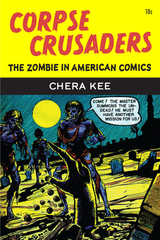
Using archival research into Golden Age comics and extended analyses of comics from the 1940s to today, Corpse Crusaders explores the profound influence early action/adventure and superheroic generic conventions had on shaping comic book zombies. It takes the reader from the 1940s superhero, the Purple Zombie, through 1950s revenge-from-the-grave zombies, to the 1970s anti-hero, Simon Garth (“The Zombie”) and the gruesome heroes-turned-zombies of Marvel Zombies. In becoming immersed in superheroic logics early on, the zombie in comics became a figure that, unlike the traditional narrative uses of other monsters, actually served to defend the status quo. This continuing trend not only provides insight into the overwhelming influence superheroes have had on the comic book medium, but it also provides a unique opportunity to explore the ways in which zombiism and superheroism parallel each other. Corpse Crusaders explores the ways that truth, justice, and the American way have influenced the undead in comics and turned what is often a rebellious figure into one that works to save the day.

Corridor offers a series of conceptually provocative readings that illuminate a hidden and surprising relationship between architectural space and modern American fiction. By paying close attention to fictional descriptions of some of modernity’s least remarkable structures, such as plumbing, ductwork, and airshafts, Kate Marshall discovers a rich network of connections between corridors and novels, one that also sheds new light on the nature of modern media.
The corridor is the dominant organizational structure in modern architecture, yet its various functions are taken for granted, and it tends to disappear from view. But, as Marshall shows, even the most banal structures become strangely visible in the noisy communication systems of American fiction. By examining the link between modernist novels and corridors, Marshall demonstrates the ways architectural elements act as media. In a fresh look at the late naturalist fiction of the 1920s, ’30s, and ’40s, she leads the reader through the fetus-clogged sewers of Manhattan Transfer to the corpse-choked furnaces of Native Son and reveals how these invisible spaces have a fascinating history in organizing the structure of modern persons.
Portraying media as not only objects but processes, Marshall develops a new idiom for Americanist literary criticism, one that explains how media studies can inform our understanding of modernist literature.
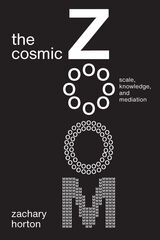
Horton uses the cosmic zoom as a starting point to develop a cross-disciplinary theory of scale as mediated difference. He considers the origins of our notions of scale, how scalar mediation functions differently in analog and digital modes, and how cosmic zoom media has influenced scientific and popular views of the world. Analyzing literature, film, digital media, and database history, Horton establishes a much-needed framework for thinking about scale across multiple domains and disciplines.

An exploration of cosplay and its relationship with the realms of its global fandom, performance, and the modes of fictional existence
Flourishing far beyond its Japanese roots, cosplay has become an international phenomenon with fervid fans who gather at enormous, worldwide conventions annually. Here, author Frenchy Lunning offers an intimate, sensational tour through cosplay’s past and present, as well as its global lure.
Through a culmination of years of personal research on cosplay, and growing out of Lunning’s wealth of scholarship, conference presentations, and cosplayer interviews, Cosplay is a unique and necessary examination of identity, performance, play, and otaku fandom and culture in relation to contemporary theories. With discussions covering construction, masquerades, and community through performance, Lunning presents cosplay as a dynamic and ever-evolving global practice. She combines the fascinating viewpoints of cosplayers with observational, in-depth research on cosplay history and practice, and a deep dive into critical theory involving the modes of fictional existence, in order to understand its global expansion.
Augmented with beautiful photographs, this is an engrossing, lively read that explores a complicated and often misunderstood history and meditates on how cosplay allows its participants to create and construct meaning and identity.
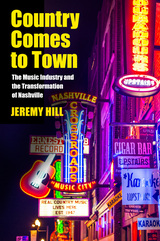
Country music evokes a simple, agrarian past, with images of open land and pickup trucks. While some might think of the genre as a repository of nostalgia, popular because it preserves and reveres traditional values, Jeremy Hill argues that country music has found such expansive success because its songs and its people have forcefully addressed social and cultural issues as well as geographic change. Hill demonstrates how the genre and its fans developed a flexible idea of “country,” beyond their rural roots, and how this flexibility allowed fans and music to “come to town,” to move into and within urban spaces, while retaining a country “character.”
To understand how the genre has become the far-reaching commercial phenomenon that it is today, Hill explores how various players within the country music fold have grappled with the notion of place. He shows both how the industry has transformed the city of Nashville and how country music—through song lyrics, imagery associated with the music, and branding—has reshaped ideas about the American landscape and character. As the genre underwent significant change in the last decades of the twentieth century, those who sought to explain its new styles and new locations relied on a traditional theme: “You can take the boy out of the country, but you can't take the country out of the boy.” Hill demonstrates how this idea—that you can still be “country” while no longer living in a rural place—has been used to expand country's commercial appeal and establish a permanent home in the urban space of Nashville.
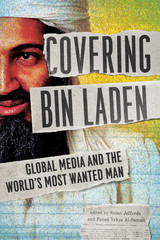
In Covering Bin Laden, editors Susan Jeffords and Fahed Yahya Al-Sumait collect perspectives from global scholars exploring a startling premise: that media depictions of Bin Laden not only diverge but often contradict each other, depending on the media provider and format, the place in which the depiction is presented, and the viewer's political and cultural background. The contributors analyze the representations of the many Bin Ladens, ranging from Al Jazeera broadcasts to video games. They examine the media's dominant role in shaping our understanding of terrorists and why/how they should be feared, and they engage with the ways the mosaic of Bin Laden images and narratives have influenced policies and actions around the world.
Contributors include Fahed Al-Sumait, Saranaz Barforoush, Aditi Bhatia, Purnima Bose, Ryan Croken, Simon Ferrari, Andrew Hill, Richard Jackson, Susan Jeffords, Joanna Margueritte-Giecewicz, Noha Mellor, Susan Moeller, Brigitte Nacos, Courtney C. Radsch, and Alexander Spencer.

Films discussed include: My Darling Clementine, Red River, Duel in the Sun, Pursued, Fort Apache, Broken Arrow, The Gunfighter, High Noon, Shane, The Searchers, Gunfight at the OK Corral, The Magnificent Seven, The Alamo, Lonely Are the Brave, Ride the High Country, and The Man Who Shot Liberty Valance.
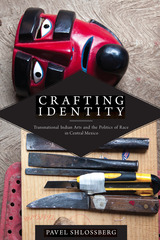
The first ethnographic study of its kind, the book examines how indigenous and mestizo mask makers, both popular and elite, view and contest relations of power and inequality through their craft. Using data from his interviews with mask makers, collectors, museum curators, editors, and others, Pavel Shlossberg places the artisans within the larger context of their relationships with the nation-state and Mexican elites, as well as with the production cultures that inform international arts and crafts markets. In exploring the connection of mask making to capitalism, the book examines the symbolic and material pressures brought to bear on Mexican artisans to embody and enact self-racializing stereotypes and the performance of stigmatized indigenous identities.
Shlossberg’s weaving of ethnographic data and cultural theory demystifies the way mask makers ascribe meaning to their practices and illuminates how these practices are influenced by state and cultural institutions. Demonstrating how the practice of mask making negotiates ethnoracial identity with regard to the Mexican state and the United States, Shlossberg shows how it derives meaning, value, and economic worth in the eyes of the state and cultural institutions that mediate between the mask maker and the market.
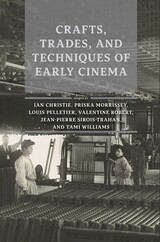
The intermedial approaches deployed in this collection bring into focus the influence of multiple professional worlds and cultural practices on the nascent film medium, as well as the necessary adaptations and transformations required by the latter. This circulatory dynamic concerns people and practices, studied in a non-diffusionist approach taking into account transcultural interactions. Chapters examine the mechanisms of professionalization and identity-building as they relate to professions such as filmmaker or colorist, as well as to more unexpected occupations such as accountant, censor, or chemical engineer.
The notion of technique is broadly defined. Several of the volume’s chapters deal with cameras or special effects, as well as with new historical investigation into mysterious technical devices such as shutters, cue systems or working samples. Going beyond this preoccupation with materiality, the collected studies also approach technique as a human and cultural activity, and thus as a set of gestures, crafts, and expertise. The book more specifically opens up a reflection on the skills of screen performers and on the training that brought the institutionalization of body techniques and film acting. The book further illustrates to an unprecedented extent that the first film workers were frequently women.
Several chapters are dedicated to the unconventional careers of specific film workers, with particular attention being given to the diversity and complexity of professional trajectories. Indeed, this book demonstrates that the invention of cinema was deeply enmeshed with the rise of international networks, which resulted in the standardization of technical practices within corporate and national contexts being ultimately shaped by globalization.
Real-life crime, crime reconstruction and crime as entertainment are categories that are now so interdependent that the media itself is in danger of confusing the genres as it seeks to profit from their undoubted appeal. This intertextuality is a key theme in this collection. The contributors highlight and theorise the symbiosis that exists between real crime and its representations, from media moral panics, policing the crisis and representing order to the postmodern confusion of crime and spectacle, trial by media and trials on media. As recent debates have shown all too starkly, the media's neutrality in this critical area is ever more problematic.
This is an invaluable introduction to new thinking in a pressing contemporary debate.

As disability representation increases, though, new possibilities are emerging. Crip Love Onscreen also draws attention to the exceptional through a close reading of screen narratives (such as 50 First Dates,Love and Other Drugs,American Horror Story: Freak Show, and more) that push against neoliberal, heteronormative, and ableist values. Drawing on the work of queer/crip scholars and activists, Rainey-Smithback uncovers glimpses of what Tobin Siebers calls a “sexual culture for disabled people”—a space and way of being that expands sexual access and sexual experience.

By closely examining the ways that disabled girls represent themselves, Anastasia Todd goes beyond a critique of the figure of the privileged, disabled girl subject in the national imagination to explore how disabled girls circulate their own capacious re-envisioning of what it means to be a disabled girl. In analyzing a range of cultural sites, including YouTube, TikTok, documentaries, and GoFundMe campaigns, Todd shows how disabled girls actively upend what we think we know about them and their experience, recasting the meanings ascribed to their bodyminds in their own terms. By analyzing disabled girls’ self-representational practices and cultural productions, Todd shows how disabled girls deftly theorize their experiences of ableism, sexism, racism, and ageism, and cultivate communities online, creating archives of disability knowledge and politicizing other disabled people in the process.
This beautifully written and deeply personal book is an informative and fascinating read that will be of interest to anyone interested in Critical Media and Communication Studies and the Political Economy of Communication.

Critical Fandom positions fan authors as rhetoricians and fan fiction as an action. Every fan author navigates—implicitly or explicitly—the politics of their fandom, the media they love, their lived experiences, digital technologies, reader expectations, and a larger culture. To better understand critical fans, Cara Marta Messina analyzes Archive of Our Own tagging practices, fan fictions, and interviews from four different fandoms.
Fans of The Legend of Korra celebrate queer relationships while understanding representation is just the first step in the face of systemic homophobia. Game of Thrones fan authors challenge racism and heteronormativity in both the community and the show. In online forums for Black Panther, fans make space for sapphic romances and explore the humanity of Erik Killmonger, ultimately contending with harmful stereotypes of radical Black men. And the Our Flag Means Death fandom demonstrates how a show can flourish when it centers queerness, especially for trans fans. Even in these moments of joy, there’s conflict. Critical Fandom seeks to answer what comes next.
How digital humanities can shape and be shaped by the infrastructures that sustain our world
Critical Infrastructure Studies and Digital Humanities reimagines the digital humanities (DH) through the expanding field of critical infrastructure studies. Featuring voices from around the globe, this volume explores how DH builds on and extends theories and technologies of infrastructure that affect society, culture, and knowledge in different national and regional contexts. Examining DH’s own infrastructural genealogy, the contributors offer readers critical reflections and bold visions for the future as they address issues of environmentalism, decolonization, Indigenous sovereignty, multilingualism, labor justice, feminism, national development, and beyond from a variety of disciplinary perspectives embedded in concrete digital systems. Including innovative “infrastructure manifests,” the essays in this book illuminate how DH can both study and shape the systems that sustain culture, scholarship, and connection.
Contributors: Anne Beaulieu, U of Groningen; Kyle Booten, U of Connecticut; Ann Borda, U of Melbourne; Susan Brown, U of Guelph; Toby Burrows, U of Western Australia; Ashley Caranto Morford, Weber State U; Javier Cha, U of Hong Kong; Jing Chen, Nanjing U; Arianna Ciula, King’s College London; Maya Dodd, FLAME U, Pune, India; Martin Paul Eve, Birkbeck, U of London; Allan Gomez, Philly Community Wireless; Matthew N. Hannah, Purdue U; Matthew Hockenberry, Fordham U; Arun Jacob, U of Toronto; Mike Jones, U of Tasmania; Lucie Kolb, Basel Academy of Art and Design FHNW; Ian M. Miller, St. John’s U, New York; Sylvia K. Miller, Duke U; Sarah Montoya, Mellon Humanities Postdoctoral Fellow; Saumyaa Naidu, independent researcher; Sharika Parmar, FLAME U, Pune, India; Kush Patel, Srishti Manipal Academy of Higher Education, Bengaluru; Miriam Posner, UCLA; Puthiya Purayil Sneha, International Institute of Information Technology, Hyderabad; Paul Spence, King’s College London; Lik Hang Tsui, City U of Hong Kong; Deb Verhoeven, U of Alberta; Miguel Vieira, King’s College London; Devren Washington, Philly Community Wireless; Alex Wermer-Colan, Temple U and Philly Community Wireless; Darren Wershler, Concordia U; Grant Wythoff, Princeton U and Philly Community Wireless.
Retail e-book files for this title are screen-reader friendly with images accompanied by short alt text and/or extended descriptions.

It introduces a theoretical framework that engages with important themes including the crisis-ridden structural transformation of the media industry, media economics in the age of digital communications, media concentration, science communication and open access publishing, media technologies, the role of advertising in capitalism, and the contradictions of alternative media in capitalism.
This new book analyses the strategies, usages and wider implications of crowdsourcing and crowdfunding platforms in the culture and communication industries that are reshaping economic, organizational and social logics. Platforms are the object of considerable hype with a growing global presence. Relying on individual contributions coordinated by social media to finance cultural production (and carry out promotional tasks) is a significant shift, especially when supported by morphing public policies, supposedly enhancing cultural diversity and accessibility.
The aim of this book is to propose a critical analysis of these phenomena by questioning what follows from decisions to outsource modes of creation and funding to consumers. Drawing on research carried out within the ‘Collab’ programme backed by the French National Research Agency, the book considers how platforms are used to organize cultural labour and/or to control usages, following a logic of suggestion rather than overt injunction. Four key areas are considered: the history of crowdfunding as a system; whose interests crowdfunding may serve; the implications for digital labour and lastly crowdfunding’s interface with globalization and contemporary capitalism. The book concludes with an assessment of claims that crowdfunding can democratize culture.
READERS
Browse our collection.
PUBLISHERS
See BiblioVault's publisher services.
STUDENT SERVICES
Files for college accessibility offices.
RECENTLY PUBLISHED






UChicago Accessibility Resources
home | accessibility | search | about | contact us
BiblioVault ® 2001 - 2026
The University of Chicago Press