
 A SCHOLARLY BOOK REPOSITORY
2150 start with C start with C

Control and Subversion investigates the relationship of gender to the inner workings of social control, such as exposing ways in which Tajik society threatens men’s masculinity, thereby bringing them to force family members into conformity, irrespective of the suffering this may cause. It examines how masculine and feminine gender characteristics influence personal relationships and explores gender relations at their most intimate – from the secret musings of adolescent girls, through the painful experiences of young men, to the trauma of sexual initiation. Although largely concentrating on contemporary life, the book also discusses historical materials and Soviet influence on Tajik society. Control and Subversion is essential reading for anyone interested in Central Asia, Muslim societies, the lives of Muslim women, or gender in a Muslim context.

Controlling Anger examines the dilemmas facing rural people who live within the broader context of political instability. Following Uganda’s independence from Britain in 1962, the Bagisu men of Southeastern Uganda developed a reputation for extreme violence.
Drawing on a wide range of historical sources including local court records, statistical survey analysis, and intensive fieldwork, Suzette Heald portrays and analyzes the civil violence that grew out of intense land shortage, the marginalization of the Gisu under British rule, and the construction of male gender identity among the Gisu. Now available in a paperback edition with a new preface by the author, Controlling Anger is an important contribution to rural sociology in Africa.
Criminal justice expenditures have more than doubled since the 1980s, dramatically increasing costs to the public. With state and local revenue shortfalls resulting from the recent recession, the question of whether crime control can be accomplished either with fewer resources or by investing those resources in areas other than the criminal justice system is all the more relevant.
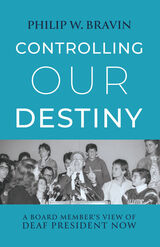
Bravin recounts the discussions and decision-making that happened behind the scenes leading up to and following the ill-fated announcement. He reflects on the integrity of the process and the internal conflict he experienced as a deaf person who supported a deaf president yet felt compelled to abide by his duties as a board member. After the protests, his leadership was recognized when he was selected as the first deaf chair of the board. Photographs and documents add depth to Bravin’s account, many of which will be seen by the public for the first time. I. King Jordan, the first deaf president of Gallaudet, provides a foreword in which he shares his own unique insight into these events.
Controlling Our Destiny captures the energy and the urgency of DPN. Readers will understand the complexities of the presidential search process and the cultural and historical contexts that triggered the protest. Bravin’s memoir contemplates power, access, community, and the enduring legacy of a movement that inspired deaf people around the world.
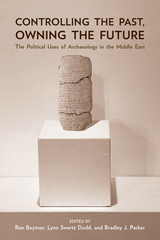
The diverse contributions to this volume share a common framework in which the political use of the past is viewed as a process of social discourse. According to this model, political appropriations are seen as acts of social communication designed to accrue benefits to particular groups. Thus the contributors pay special attention to competing social visions and the filters these impose on archaeological data. But they are also attentive to the potential consequences of their own work. Indeed, as the editors remind us, “people’s lives may be affected, sometimes dramatically, because of the material remains that surround them.”
Rounding out this important volume are critiques by two top scholars who summarize and synthesize the preceding chapters.
For eighteen years following the Civil War, the police in St. Paul, Minnesota, informally regulated brothel prostitution. Each month, the madams who ran the brothels were charged with keeping houses of ill fame and fined in the city’s municipal court. In effect, they were paying licensing fees in order to operate illegal enterprises. This arrangement was open; during this period, the city’s newspapers published hundreds of articles about vice and its regulation.
Joel Best claims that the sort of informal regulation in St. Paul was common in the late nineteenth century and was far more typical than the better known but brief experiment with legalization tried in St. Louis. With few exceptions, the usual approach to these issues of social control has been to treat informal regulation as a form of corruption, but Best’s view is that St. Paul’s arrangement exposes the assumption that the criminal justice system must seek to eradicate crime. He maintains that other policies are possible.
In a book that integrates history and sociology, the author has reconstructed the municipal court records for most of 1865–83, using newspaper articles, an arrest ledger kept by the St. Paul police, and municipal court dockets. He has been able to trace which madams operated brothels and the identities of many of the prostitutes who lived and worked in them.


Surveying American political, social, and intellectual life from the late 17th to the end of the 19th century, Burke examines in detail the contested discourse about equality—the way Americans thought and wrote about class, class relations, and their meaning in society.
Burke explores a remarkable range of thought to establish the boundaries of class and the language used to describe it in the works of leading political figures, social reformers, and moral philosophers. He traces a shift from class as a legal category of ranks and orders to socio-economic divisions based on occupations and income. Throughout the century, he finds no permanent consensus about the meaning of class in America and instead describes a culture of conflicting ideas and opinions.
Sperling explains how women were not allowed to marry beneath their social status while men could, especially if their brides were wealthy. Faced with a shortage of suitable partners, patrician women were forced to offer themselves as "a gift not only to God, but to their fatherland," as Patriarch Giovanni Tiepolo told the Senate of Venice in 1619. Noting the declining birth rate among patrician women, Sperling explores the paradox of a marriage system that preserved the nobility at the price of its physical extinction. And on a more individual level, she tells the fascinating stories of these women. Some became scholars or advocates of women's rights, some took lovers, and others escaped only to survive as servants, prostitutes, or thieves.
In Converging on Cannibals, Jared Staller demonstrates that one of the most terrifying discourses used during the era of transatlantic slaving—cannibalism—was coproduced by Europeans and Africans. When these people from vastly different cultures first came into contact, they shared a fear of potential cannibals. Some Africans and European slavers allowed these rumors of themselves as man-eaters to stand unchallenged. Using the visual and verbal idioms of cannibalism, people like the Imbangala of Angola rose to power in a brutal world by embodying terror itself.
Beginning in the Kongo in the 1500s, Staller weaves a nuanced narrative of people who chose to live and behave as “jaga,” alleged cannibals and terrorists who lived by raiding and enslaving others, culminating in the violent political machinations of Queen Njinga as she took on the mantle of “Jaga” to establish her power. Ultimately, Staller tells the story of Africans who confronted worlds unknown as cannibals, how they used the concept to order the world around them, and how they were themselves brought to order by a world of commercial slaving that was equally cannibalistic in the human lives it consumed.
Donawerth traces the development of women’s rhetorical theory through the voices of English and American women (and one much-translated French woman) over three centuries. She demonstrates how they cultivated theories of rhetoric centered on conversation that faded once women began writing composition textbooks for mixed-gender audiences in the latter part of the nineteenth century. She recovers and elucidates the importance of the theories in dialogues and defenses of women’s education by Bathsua Makin, Mary Astell, and Madeleine de Scudéry; in conduct books by Hannah More, Lydia Sigourney, and Eliza Farrar; in defenses of women’s preaching by Ellen Stewart, Lucretia Mott, Catherine Booth, and Frances Willard; and in elocution handbooks by Anna Morgan, Hallie Quinn Brown, Genevieve Stebbins, and Emily Bishop. In each genre, Donawerth explores facets of women’s rhetorical theory, such as the recognition of the gendered nature of communication in conduct books, the incorporation of the language of women’s rights in the defenses of women’s preaching, and the adaptation of sentimental culture to the cultivation of women’s bodies as tools of communication in elocution books.
Rather than a linear history, Conversational Rhetoric follows the starts, stops, and starting over in women’s rhetorical theory. It covers a broad range of women’s rhetorical theory in the Anglo-American world and places them in their social, rhetorical, and gendered historical contexts. This study adds women’s rhetorical theory to the rhetorical tradition, advances our understanding of women’s theories and their use of rhetoric, and offers a paradigm for analyzing the differences between men’s and women’s rhetoric from 1600 to 1900.

In the summer of 2007, Louis G. Mendoza set off on a bicycle trip across the United States with the intention of conducting a series of interviews along the way. Wanting to move beyond the media’s limited portrayal of immigration as a conflict between newcomers and “citizens,” he began speaking with people from all walks of life about their views on Latino immigration. From the tremendous number of oral histories Mendoza amassed, the resulting collection offers conversations with forty-three different people who speak of how they came to be here and why they made the journey. They touch upon how Latino immigration is changing in this country, and how this country is being changed by Latinoization. Interviewees reflect upon the concerns and fears they’ve encountered about the transformation of the national culture, and they relate their own experiences of living and working as “other” in the United States.
Mendoza’s collection is unique in its vastness. His subjects are from big cities and small towns. They are male and female, young and old, affluent and impoverished. Many are political, striving to change the situation of Latina/os in this country, but others are “everyday people,” reflecting upon their lives in this country and on the lives they left behind. Mendoza’s inclusion of this broad swath of voices begins to reflect the diverse nature of Latino immigration in the United States today.
Whether physical or metaphorical, institutional or interpersonal, violence is everywhere. A seemingly immutable fact of life, it is nonetheless rarely engaged with at the conceptual level. What does violence actually mean? And is it an inevitable part of the human condition?
Conversations on Violence brings together many of the world's leading critical scholars, artists, writers and cultural producers to provide a kaleidoscopic exploration of the concept of violence. Through in-depth interviews with thirty figures including Marina Abramovic, Kehinde Andrews and Simon Critchley, Brad Evans and Adrian Parr interrogate violence in all its manifestations, including its role in politics, art, gender discrimination and decolonisation.
Provocative, eye-opening and bracingly original, Conversations on Violence sheds light on a defining political and ethical concern of our age.

Now available in English, the conversations are rich in Lévi-Strauss's candid appraisals of some of the best-known figures of the Parisian intelligentsia: surrealists André Breton and Max Ernst, with whom Lévi-Strauss shared a bohemian life in 1940s Manhattan; de Beauvoir, Sartre, and Camus, the stars of existentialism; Leiris, Foucault, Dumézil, Jacob, Lacan, and others. His long friendships with Jakobson and Merleau-Ponty are recalled, as well as his encounters with prominent figures in American anthropology: Lowie, Boas (who suddenly died in his chair beside Lévi-Strauss at a banquet at Columbia University), Benedict, Linton, Mead, and Kroeber.
Lévi-Strauss speaks frankly about how circumstances and his own inclinations, after his early fieldwork in Brazil, led him to embrace theoretical work. His straightforward answers to Eribon's penetrating questions—What is a myth? What is structuralism? Are you a philosopher?—clarify his intellectual motives and the development of his research; his influential role as an administrator, including the founding of the Laboratory of Social Anthropology and of the journal L'Homme; the course of his writings, from Elementary Structures of Kinship to The Jealous Potter; and his thoughts on the conduct of anthropology today.
Never before has Lévi-Strauss spoken so freely on so many aspects of his life: his initial failure to be elected to the Collège de France; his reaction to the events of May 1968; his regrets at not being a great investigative reporter or playwright; his deep identification with Wagner, Proust, and Rousseau. This is a rare opportunity to become acquainted with a great thinker in all his dimensions.
Conversion of a Continent brings together twelve original essays that document and explore competing explanations for how and why conversion has occurred. Contributors draw on various insights from social movement theory to religious studies to help outline its impact on national attitudes and activities, gender relations, identity politics, and reverse waves of missions from Latin America aimed at the American immigrant community.
Unlike other studies on religious conversion, this volume pays close attention to who converts, under what circumstances, the meaning of conversion to the individual, and how the change affects converts’ beliefs and actions. The thematic focus makes this volume important to students and scholars in both religious studies and Latin American studies.
A nuanced critique of the ambivalent relationships among religion, capitalism, and humanitarian aid, Conversionary Sites draws important connections between religion and science, capitalism and charity, and the US and the Global South.

An intimate portrait, based on newly discovered archival sources, of one of the most famous Jewish artists of the Italian Renaissance who, charged with a scandalous crime, renounced his faith and converted to Catholicism.
In 1491 the renowned goldsmith Salomone da Sesso converted to Catholicism. Born in the mid-fifteenth century to a Jewish family in Florence, Salomone later settled in Ferrara, where he was regarded as a virtuoso artist whose exquisite jewelry and lavishly engraved swords were prized by Italy’s ruling elite. But rumors circulated about Salomone’s behavior, scandalizing the Jewish community, who turned him over to the civil authorities. Charged with sodomy, Salomone was sentenced to die but agreed to renounce Judaism to save his life. He was baptized, taking the name Ercole “de’ Fedeli” (“One of the Faithful”). With the help of powerful patrons like Duchess Eleonora of Aragon and Duke Ercole d’Este, his namesake, Ercole lived as a practicing Catholic for three more decades. Drawing on newly discovered archival sources, Tamar Herzig traces the dramatic story of his life, half a century before ecclesiastical authorities made Jewish conversion a priority of the Catholic Church.
A Convert’s Tale explores the Jewish world in which Salomone was born and raised; the glittering objects he crafted, and their status as courtly hallmarks; and Ercole’s relations with his wealthy patrons. Herzig also examines homosexuality in Renaissance Italy, the response of Jewish communities and Christian authorities to allegations of sexual crimes, and attitudes toward homosexual acts among Christians and Jews. In Salomone/Ercole’s story we see how precarious life was for converts from Judaism, and how contested was the meaning of conversion for both the apostates’ former coreligionists and those tasked with welcoming them to their new faith.
In the late 1870s, Jefferson County, Alabama, and the town of Elyton (near the future Birmingham) became the focus of a remarkable industrial and mining revolution. Together with the surrounding counties, the area was penetrated by railroads. Surprisingly large deposits of bituminous coal, limestone, and iron ore—the exact ingredients for the manufacture of iron and, later, steel—began to be exploited. Now, with transportation, modern extractive techniques, and capital, the region’s geological riches began yielding enormous profits.
This book is about the men who worked involuntarily in the Banner Coal Mine, owned by the Pratt Consolidated Coal Company. And it is about the repercussions and consequences that followed an explosion at the mine in the spring of 1911 that killed 128 convict miners.
The rhetoric of contemporary food production and consumption with a focus on social boundaries
The rhetoric of food is more than just words about food, and food is more than just edible matter. Cookery: Food Rhetorics and Social Production explores how food mediates both rhetorical influence and material life through the overlapping concepts of invention and production. The classical canon of rhetorical invention entails the process of discovering one’s persuasive appeals, whereas the contemporary landscape of agricultural production touches virtually everyone on the planet. Together, rhetoric and food shape the boundaries of shared living.
The essays in this volume probe the many ways that food informs contemporary social life through its mediation of bodies—human and extra-human alike—in the forms of intoxication, addiction, estrangement, identification, repulsion, and eroticism. Our bodies, in turn, shape the boundaries of food through research, technology, cultural trends, and, of course, by talking about it.
Each chapter explores food’s persuasive nature through a unique prism that includes intoxication, dirt, “food porn,” strange foods, and political “invisibility.” Each case offers new insights about the relations between rhetorical influence and embodied practice through food. As a whole Cookery articulates new ways of viewing food’s powers of persuasion, as well as the inherent role of persuasion in agricultural production.
The purpose of Cookery, then, is to demonstrate the deep rhetoricity of our modern industrial food system through critical examinations of concepts, practices, and tendencies endemic to this system. Food has become an essential topic for discussions concerned with the larger social dynamics of production, distribution, access, reception, consumption, influence, and the fraught question of choice. These questions about food and rhetoric are equally questions about the assumptions, values, and practices of contemporary public life.
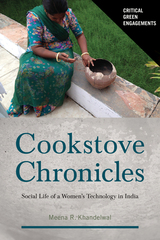
Based on anthropological research in Rajasthan, Cookstove Chronicles argues that the supposedly obsolete chulha persists because it offers women control over the tools needed to feed their families. Their continued use of old stoves alongside the new is not a failure to embrace new technologies but instead a strategy to maximize flexibility and autonomy. The chulha is neither the villain nor hero of this story. It produces particulate matter that harms people’s bodies, leaves soot on utensils and walls, and accelerates glacial melting and atmospheric warming. Yet it also depends on renewable biomass fuel and supports women’s autonomy as a local, do-it-yourself technology.
Meena Khandelwal, a feminist anthropologist, describes her collaboration with engineers, archaeologists, and others. She employs critical social theory and reflections from fieldwork to bring together research from a range of fields, including history, geography, anthropology, energy and environmental studies, public health, and science and technology studies (STS). In so doing she not only demystifies multidisciplinary research but also highlights the messy reality of actual behavior.
Cookstove Chronicles critically examines why, despite extensive development efforts, use of the chulha persists. It offers an important new framework for looking at development, technology, environmental change, and human behavior.
Thomas Frank coined the term ‘the conquest of cool’. This book shows how this conquest is at the heart of the dynamics of contemporary capitalism.
Jim McGuigan argues that 'cool capitalism' incorporates disaffection into capitalism itself, absorbing rebellion and thereby neutralising opposition to the present system of culture and society.
McGuigan explores a huge variety of cultural examples, from the sleek images of mainstream advertising, to the fringes of artistic production, offering a vigourous critique of our understanding of subversion, resistance and counter-culturalism.
Has capitalism really colonised our planet? McGuigan shows that there is still some space left for rebellion against the seductive power of the free market economy.
Disentangling the motivations and institutions that foster group cooperation among competitive individuals remains one of the few great conundrums within evolutionary theory. The breadth and material focus of archaeology provide a much needed complement to existing research on cooperation and collective action, which thus far has relied largely on game-theoretic modeling, surveys of college students from affluent countries, brief ethnographic experiments, and limited historic cases. In Cooperation and Collective Action, diverse case studies address the evolution of the emergence of norms, institutions, and symbols of complex societies through the last 10,000 years. This book is an important contribution to the literature on cooperation in human societies that will appeal to archaeologists and other scholars interested in cooperation research.
In the villages and small towns of Oaxaca, Mexico, as in much of rural Latin America, cooperation among neighbors is essential for personal and community survival. It can take many forms, from godparenting to sponsoring fiestas, holding civic offices, or exchanging agricultural or other kinds of labor. This book examines the ways in which the people of Santa Ana del Valle practice these traditional cooperative and reciprocal relationships and also invent new relationships to respond to global forces of social and economic change at work within their community.
Based on fieldwork he conducted in this Zapotec-speaking community between 1992 and 1996, Jeffrey Cohen describes continuities in the Santañeros' practices of cooperation, as well as changes resulting from transnational migration, tourism, increasing educational opportunities, and improved communications. His nuanced portrayal of the benefits and burdens of cooperation is buttressed by the words of many villagers who explain why and how they participate-or not-in reciprocal family and community networks. This rich ethnographic material offers a working definition of community created in and through cooperative relationships.
It is well-known that there is a complicated relationship between Native American Tribes and the US government. Relations between Tribes and the federal government are dominated by the principle that the government is supposed to engage in meaningful consultations with the tribes about issues that affect them.
In Cooperation without Submission, Justin B. Richland, an associate justice of the Hopi Appellate Court and ethnographer, closely examines the language employed by both Tribes and government agencies in over eighty hours of meetings between the two. Richland shows how Tribes conduct these meetings using language that demonstrates their commitment to nation-to-nation interdependency, while federal agents appear to approach these consultations with the assumption that federal law is supreme and ultimately authoritative. In other words, Native American Tribes see themselves as nations with some degree of independence, entitled to recognition of their sovereignty over Tribal lands, while the federal government acts to limit that authority. In this vital book, Richland sheds light on the ways the Tribes use their language to engage in “cooperation without submission.”
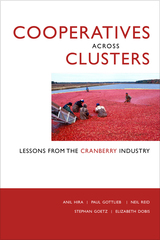
Most agricultural production is of commodity or undifferentiated products. Producers suffer from a roller-coaster ride of price swings, over- or under-production, weather and pest threats, and the inability of family famers to capture anything beyond a small percentage of the final price.
Cooperatives Across Clusters provides lessons from the cranberry industry, a commodity product organized mostly into family farms in seven different clusters around North America. The industry is remarkable in that it's substantially organized around one large cooperative, Ocean Spray. The authors examine how the cooperative came to be, the challenges of coordination and industry leadership across the diverging clusters, and the lessons for cooperation for other agricultural industries.
The book provides a multi-layered contribution to agricultural economics. First, it examines location decisions and what factors supersede growing conditions to allow industries to arise around production. Second, it explores pathways available for farmers to try to overcome, through cooperative organization, the natural boom-bust cycles of commodity price swings. Third, it looks at how cooperative decisions are made, and the challenges of providing industry leadership, including research and development and collective marketing, through a cooperative that faces continual defections and new problems. Finally, through in-depth historical, statistical, and field research, it provides a comprehensive study of the cranberry industry and suggests ways farmers can grow the industry. Agricultural policymakers, farmers, industry specialists, and researchers of agriculture and clusters more generally will find this to be an important and informative new resource.
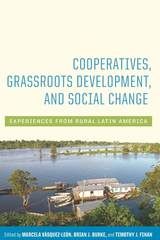
Cooperatives, Grassroots Development, and Social Change presents examples from Paraguay, Brazil, and Colombia, examining what is necessary for smallholder agricultural cooperatives to support holistic community-based development in peasant communities. Reporting on successes and failures of these cooperative efforts, the contributors offer analyses and strategies for supporting collective grassroots interests. Illustrating how poverty and inequality affect rural people, they reveal how cooperative organizations can support grassroots development strategies while negotiating local contexts of inequality amid the broader context of international markets and global competition.
The contributors explain the key desirable goals from cooperative efforts among smallholder producers. They are to provide access to more secure livelihoods, expand control over basic resources and commodity chains, improve quality of life in rural areas, support community infrastructure, and offer social spaces wherein small farmers can engage politically in transforming their own communities.
The stories in Cooperatives, Grassroots Development, and Social Change reveal immense opportunities and challenges. Although cooperatives have often been framed as alternatives to the global capitalist system, they are neither a panacea nor the hegemonic extension of neoliberal capitalism. Through one of the most thorough cross-country comparisons of cooperatives to date, this volume shows the unfiltered reality of cooperative development in highly stratified societies, with case studies selected specifically because they offer important lessons regarding struggles and strategies for adapting to a changing social, economic, and natural environment.
Contributors:
Luis Barros
Brian J. Burke
Charles Cox
Luis Alberto Cuéllar Gómez
Miguel Ricardo Dávila Ladrón de Guevara
Elisa Echagüe
Timothy J. Finan
Andrés González Aguilera
Sonia Carolina López Cerón
Joana Laura Marinho Nogueira
João Nicédio Alves Nogueira
Jessica Piekielek
María Isabel Ramírez Anaya
Rodrigo F. Rentería-Valencia
Lilliana Andrea Ruiz Marín
Marcela Vásquez-León

The Copan Sculpture Museum in western Honduras features the extraordinary stone carvings of the ancient Maya city known as Copan. The city’s sculptors produced some of the finest and most animated buildings and temples in the Maya area, in addition to stunning monolithic statues and altars. The ruins of Copan were named a UNESCO World Heritage site in 1980, and more than 150,000 national and international tourists visit the ancient city each year.
Opened in 1996, the Copan Sculpture Museum was initiated as an international collaboration to preserve Copan’s original stone monuments. Its exhibits represent the best-known examples of building façades and sculptural achievements from the ancient kingdom of Copan. The creation of this on-site museum involved people from all walks of life: archaeologists, artists, architects, and local craftspeople. Today it fosters cultural understanding and promotes Hondurans’ identity with the past.
In The Copan Sculpture Museum, Barbara Fash—one of the principle creators of the museum—tells the inside story of conceiving, designing, and building a local museum with global significance. Along with numerous illustrations and detailed archaeological context for each exhibit in the museum, the book provides a comprehensive introduction to the history and culture of the ancient Maya and a model for working with local communities to preserve cultural heritage.
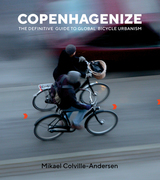
Enter urban designer Mikael Colville-Andersen. He has worked for dozens of global cities on bicycle planning, strategy, infrastructure design, and communication. He is known around the world for his colorful personality and enthusiasm for the role of bike in urban design. In Copenhagenize, he shows cities how to effectively and profitably re-establish the bicycle as a respected, accepted, and feasible form of transportation.
Building on his popular blog of the same name, Copenhagenize offers vivid project descriptions, engaging stories, and best practices, alongside beautiful and informative visuals to show how to make the bicycle an easy, preferred part of everyday urban life.
Copenhagenize will serve as inspiration for everyone working to get the bicycle back into our cities. It will give planners and designers the ammunition to push back against the Automobile Age and convince the skeptics of the value of the life-sized city. This is not a guide on how to become Copenhagen, but how to learn from the successes and failures (yes, failures) of Copenhagen and other cities around the world that are striving to become more livable.
We need to act in order to save our cities—and us—from ourselves. Copenhagenize shows the path forward.

Only by understanding the enduring poverty of Brazil can one hope to understand the recent growth of Protestant evangelical churches there, Cecília Loreto Mariz contends. Her study investigates how religious groups support individualism and encourage the poor to organize. Groups with shared values are then able to develop strategies to cope with poverty and, ultimately, to transform the social structure.
Interviews with members and leaders of religious groups, accounts of meetings, and close readings of religious literature contribute to a realistic account of Christian base communities and Assembly of God churches, folk Catholic tradition, and Afro Brazilian Spiritism.

In urban development, co-production refers to a strategy that prioritizes collaboration across multiple institutions and with citizens, aiming to enable conflict resolution and transformative change. However, critics contend that these theoretical ambitions often have limited practical impact. Co-production of Knowledge in Action examines how co-production is articulated and deployed in cities such as Lima, Freetown, Kampala, Dar es Salaam, and Delhi. It engages with ongoing experiences of co-production-inspired action, mapping the different aspirations that inform co-production practices and their impacts on urban communities. Critiquing co-production strategies for urban development in relation to practical experiences in these cities, this volume adopts a postcolonial approach to knowledge production as a means to transform urban planning practices.

Cops and Kids analyzes how police regulated juvenile behavior in turn-of-the-century America. Focusing on Los Angeles, Chicago, and Detroit, it examines how police saw their mission, how they dealt with public demands, and how they coped daily with kids. Whereas most scholarship in the field of delinquency has focused on progressive-era reformers who created a separate juvenile justice system, David B. Wolcott’s study looks instead at the complicated, sometimes coercive, relationship between police officers and young offenders. Indeed, Wolcott argues, police officers used their authority in a variety of ways to influence boys’ and girls’ behavior. Prior to the creation of juvenile courts, police officers often disciplined kids by warning and releasing them, keeping them out of courts. Establishing separate juvenile courts, however, encouraged the police to cast a wider net, pulling more young offenders into the new system. While some departments embraced “child-friendly” approaches to policing, others clung to rough-and-tumble methods. By the 1920s and 1930s, many police departments developed new strategies that combined progressive initiatives with tougher law enforcement targeted specifically at growing minority populations.
Cops and Kids illuminates conflicts between reformers and police over the practice of juvenile justice and sheds new light on the origins of lasting tensions between America’s police and urban communities.
The new edition of Cops, Teachers, Counselors furthers the exploration of forces that shape the contours of frontline work. This line of inquiry is at the heart of street-level bureaucracy research, a field of study cutting across disciplines, including public administration, political science, social work, law and society, education, and criminal justice. The oft-cited 2003 edition pioneered a qualitative method of inquiry using workers’ own voices and storytelling about fairness in the delivery of services. This NSF-supported field research reveals the ways workers engage in moral judgments, more than implementing laws and policies, to account for their decisions and actions.
The new edition wraps an expanded framing around the original chapters, while maintaining a lively, approachable presentation style. It takes on a more enriched perspective of legality than the original, while retaining a focus on frontline work as a powerful source of cultural ordering. In addition to examining workers’ stories of encounters, attention is given to the agency of the governed during interactional moments, the power dynamics in play during both interpersonal and group encounters, and patterns of practice that converge across distinctive service domains. The original edition describes two narratives that shape frontline workers’ decisional judgments and the interplay between legality and morality: the state-agent and citizen-agent narratives. This edition adds the knowledge-agent narrative that stresses the importance of professional and field learning to decisional judgments.
The book examines routine encounters of cops, teachers, and counselors with diverse publics when questions of justice and fairness are at play. This new edition speaks to contemporary issues at a time when frontline workers gained broad recognition for their heroic contributions to communities during the Covid 19 pandemic, as well as sustained condemnation for their embodiment of the brutal expression of racialized state power in police actions. The authors conclude with a focus on the significance of place and trust in building social inclusion on the frontlines of public service.
Steven Maynard-Moody is Director of the Policy Research Institute and Professor of Public Administration at the University of Kansas.
Michael Musheno is Professor of Justice and Policy Studies at Lycoming College and Professor Emeritus of Justice Studies, Arizona State University.
From off-brand products to elevator music, the “generic” is discarded as the copy, the knockoff, and the old. In The Copy Generic, anthropologist Scott MacLochlainn insists that more than the waste from the culture machine, the generic is a universal social tool, allowing us to move through the world with necessary blueprints, templates, and frames of reference. It is the baseline and background, a category that orders and values different types of specificity yet remains inherently nonspecific in itself. Across arenas as diverse as city planning, social media, ethnonationalism, and religion, the generic points to spaces in which knowledge is both overproduced and desperately lacking. Moving through ethnographic and historical settings in the Philippines, Europe, and the United States, MacLochlainn reveals how the concept of the generic is crucial to understanding how things repeat, circulate, and are classified in the world.
From downloading music and movies to accessing free software, digital media is forcing us to rethink the very idea of intellectual property.
While big companies complain about lost profits, the individual has never enjoyed such freedom and autonomy.
Berry explores this debate in a concise way, offering an ideal introduction for anyone not versed in the legalistic terminology that -- up until now -- has dominated coverage of this issue.
Looking at the historical development of the free software and the open source movement he examines its growth, politics and potential impact, showing how the ideas that inspired the movement have now begun to influence the wider cultural landscape. He explores whether free software offers us the potential to re-think our relationship with technology in the information society.
This book will appeal to students of media and journalism, and anyone interested in new opportunities for creating a truly independent and democratic media.

A captivating meditation on coral beyond iconic tropical corals
Coralations is a philosophical exploration of the media that come into focus when we shift our attention from the highly recognizable coral of the tropics. Focusing on soft corals and deep-water corals leads to different narratives about climate change and involves different analogies to media. Through thought-provoking analyses of photography, science fiction, visual art, and scientific images, Melody Jue renews our curiosity and broadens our understanding of corals beyond the dominant narratives about their endangerment. Coralations shows how paying attention to particular corals can change what we take for granted.

Why, essays ask, is a cloistered monk solving murders? How can an author combine a valid detective and an effective healer?

Although the treasury of King Croesus held great quantities of gold and silver plate, the Lydians clearly loved fine ceramic wares imported from Greece. This preference was entirely appropriate for the capital of the expansive Lydian Kingdom, which occupied a pivotal position between the city states of the Greeks and the gigantic empire of the Persians. The importation of Greek pottery corresponds to the visits from poets, philosophers, and politicians mentioned by the historian Herodotus.
This collaborative work consists of three generously illustrated sections presenting the ceramic finds excavated at Sardis, but produced in the mainland Greek centers of Corinth, Athens, and Sparta. Judith Snyder Schaeffer analyzes the Corinthian imports, Nancy H. Ramage the Attic, and Crawford H. Greenewalt, Jr., the Lakonian. Their study of this material from the Harvard-Cornell excavations at Sardis offers new evidence of the taste for specific Greek wares and shapes in Anatolia before the time of Alexander the Great.

The leading figure of these projects is the corn wolf, whom Wittgenstein used in his fierce polemic on Frazer’s Golden Bough. For just as the corn wolf slips through the magic of language in fields of danger and disaster, so we are emboldened to take on the widespread culture of academic—or what he deems “agribusiness”—writing, which strips ethnography from its capacity to surprise and connect with other worlds, whether peasant farmers in Colombia, Palestinians in Israel, protestors in Zuccotti Park, or eccentric yet fundamental aspects of our condition such as animism, humming, or the acceleration of time.
A glance at the chapter titles—such as “The Stories Things Tell” or “Iconoclasm Dictionary”—along with his zany drawings, testifies to the resonant sensibility of these works, which lope like the corn wolf through the boundaries of writing and understanding.
According to Maria I. Diedrich, it was the last of these concerns, Cannon's interest in what she and her husband called "the future of the race"—a term conflating ideas of class, race, and ethnicity—that inspired many of her varied reform activities. From the vantage point of today it may seem hard to understand how a social reformer and outspoken feminist could also embrace eugenicist principles. Yet, in the context of the time such views were not uncommon among progressive thinkers.
Far from being an extremist or even exceptional, Cornelia James Cannon was a woman representative of her social class and historical moment. By disentangling the threads of Cannon's life and thought, Diedrich seeks to shed light on the experiences of other progressive reformers of the interwar years whose interest in social justice often went hand in hand with racially exclusive notions of Americanness.
When Justice Oliver Wendell Holmes determined in 1927 that sterilization was a legitimate means of safeguarding the nation’s health, he was asserting the state’s right to regulate the production of the national body. His opinion represented a culmination of arguments about reproduction and immigration that had been circulating for years but that intensified during the Progressive Era. Arguments about reproductive and immigration practices surged to the foreground, and tectonic shifts in the conceptual schemes and practices of reproduction in the United States followed.
Drawing on feminist historiography and genre studies, Corporal Rhetoric: Regulating Reproduction in the Progressive Era explores the rhetoric of medical research, new technologies, and material practices that shifted the idea of childbirth as an act of God or Nature to a medical procedure enacted by male physicians on the bodies of women made passive by both drugs and discourse. Barbara Schneider considers how efficiency, the hallmark of scientific management, was raised to a cardinal virtue by its inclusions in the powerful mediums of presidential speeches, national educational policies, and eugenics discourse to reclassify babies, long regarded as gifts, as either valuable assets or defective products.
Schneider shows how the legal system drew upon medicine, scientific management, and the emerging discipline of sociology to restrict women’s labor in order to preserve reproductive capacity, categorized by Supreme Court opinions as a public good rather than a private capacity. Throughout, she ties the arguments developed during this era to current debates about mothering rhetorics, reproductive rights, immigration, and conceptions of the nation.
By weaving together medical research reports, clinical practices, case studies, legal opinions and legislative acts, and the epistemology of scientific management, Schneider illuminates the network that women such as Margaret Sanger, Jane Addams, Lillian Gilbreth and multiple others negotiated as they sought to give women room to exercise their reproductive capacity. Through her analysis of the machinery of these discourses and the material uptake of their genres in the daily practices of reproductive bodies, Schneider offers a provisional theory of corporal rhetoric that begins to answer the call for a new material theory of the body.
Late Editions 5, Corporate Futures, questions this idea of a "cultural landscape" by focusing on the the marked investment of corporations in the concept of culture, long the purview of anthropologists and, more recently, those involved in the humanistic disciplines. Emerging in the discourse of the workplace—and traveling beyond it to traditionally alternative associations—is the idea of a "corporate culture" with its own organization, management policies and practices, and ethos. How can we understand this culture of corporations, and to what extent does it reflect self-contained communities or fragmented human existence in groups under conditions of postmodernity? Corporate Futures tackles these issues and questions through conversations with managers, financial and risk analysts, and other participants in national and international organizations.
The results—engaging, intriguing, speculative, current—continue the work begun in earlier volumes to map the terrain of the present and navigate the uncertain future.
Praise for Late Editions: "If the succeeding volumes are as compassionate and informed as the first, this series could become an essential postmodern guidebook to the world's changing cultural terrain. I plan on letting it ease me into the next century."—Catherine Gysin, Utne Reader
Sarah Milne spent more than a decade working for and observing global conservation projects in Cambodia. During this time, she saw how big environmental NGOs can operate rather like corporations. Their core practice involves rolling out appealing and deceptively simple policy ideas, like Payments for Ecosystem Services (PES). Yet, as policy ideas prove hard to implement, NGOs must also carefully curate evidence from the field to give the impression of success and effectiveness.
In Corporate Nature, Milne delves inside the black box of mainstream global conservation. She reveals how big international NGOs struggle in the face of complexity—especially in settings where corruption and political violence prevail. She uses the case of Conservation International’s work in Cambodia to illustrate how apparently powerful NGOs can stumble in practice: policy ideas are transformed on the ground, while perverse side effects arise, like augmented authoritarian power, illegal logging, and Indigenous dispossession.
The real power of global conservation NGOs is therefore not in their capacity to control what happens in the field but in their capacity to ignore or conceal failings. Milne argues that this produces an undesirable form of socionature, called corporate nature, that values organizational success over diverse knowledges and ethical conduct.

The book examines the diverse approaches to CSR, with a particular focus on how those approaches are siloed within discrete disciplines such as business, law, the social sciences, and human rights. Bridging these disciplines and addressing and critiquing all the conceptual domains of CSR, the book also explores how CSR silos develop as a function of the competition between different interests. Ultimately, the contributors show that CSR actions across all arenas of power are interdependent, continually in dialogue, and mutually constituted. Organizing a diverse range of viewpoints, this book offers a much-needed synthesis of a crucial element of today’s globalized world and asks how businesses can, through their actions, make it better for everyone.
The 2008 elections shattered historical precedents and pushed race and gender back to the forefront of our national consciousness. The wide range of reactions to the efforts of Barack Obama, Hillary Clinton, and Sarah Palin dramatically reflected ongoing conflicts over diversity in our society, especially in the venue where people are most likely to encounter them: work. As more and more people who aren’t white men enter corporate America, we urgently need to learn how to avoid clashes over these issues and how to resolve them when they do occur.
Thomas Kochman and Jean Mavrelis have been helping corporations successfully do that for over twenty years. Their diversity training and consulting firm has helped managers and employees at numerous companies recognize and overcome the cultural bases of miscommunication between ethnic groups and across gender lines—and in Corporate Tribalism they seek to share their expertise with the world. In the first half of the book, Kochman addresses white men, explicating the ways that their cultural background can motivate their behavior, work style, and perspective on others. Then Mavrelis turns to white women, focusing on the particular problems they face, including conflicts with men, other women, and themselves. Together they emphasize the need for a multicultural—rather than homogenizing—approach and offer constructive ideas for turning the workplace into a more interactive community for everyone who works there.
Written with the wisdom and clarity gained from two decades of hands-on work, Corporate Tribalism will be an invaluable resource as we look toward a future beyond the glass ceiling.
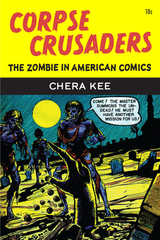
Using archival research into Golden Age comics and extended analyses of comics from the 1940s to today, Corpse Crusaders explores the profound influence early action/adventure and superheroic generic conventions had on shaping comic book zombies. It takes the reader from the 1940s superhero, the Purple Zombie, through 1950s revenge-from-the-grave zombies, to the 1970s anti-hero, Simon Garth (“The Zombie”) and the gruesome heroes-turned-zombies of Marvel Zombies. In becoming immersed in superheroic logics early on, the zombie in comics became a figure that, unlike the traditional narrative uses of other monsters, actually served to defend the status quo. This continuing trend not only provides insight into the overwhelming influence superheroes have had on the comic book medium, but it also provides a unique opportunity to explore the ways in which zombiism and superheroism parallel each other. Corpse Crusaders explores the ways that truth, justice, and the American way have influenced the undead in comics and turned what is often a rebellious figure into one that works to save the day.

Corpse Magic is a response to the global ubiquity of violence. In this bracing new work, the influential anthropologist Michael Taussig puts killings in Colombia, by gangs and guerrillas, police and the military, and agents of agribusiness, in conversation with mass shootings and police killings, disproportionately of Black people, in the United States. In both contexts, he examines the effects of violent killing on its victims, its perpetrators, and those who witness and relive it through media footage.
Drawing from literature, religion, philosophy, and anthropology, Taussig traces the idea that the act of killing “infects” the killer and spreads outward, then connects this concept of contagion to beliefs in Colombia and elsewhere that the souls of the slain possess those of their slayers and that magic can be used to empower or thwart corpses as agents of vengeance. In this powerful and imaginative work, Taussig asks what kind of power the dead continue to have; what kinds of magic can manage that power; and what, if anything, can stop seemingly endless cycles of violence.
The goal of the Corpus of Maya Hieroglyphic Inscriptions is to document in photographs and detailed line drawings all known Maya inscriptions and their associated figurative art. When complete, the Corpus will have published the inscriptions from over 200 sites and 2,000 monuments. The series has been instrumental in the remarkable success of the ongoing process of deciphering Maya writing, making available hundreds of texts to epigraphers working around the world.
Volume 1 includes a Spanish translation of the Introduction text and six appendices: sources of sculpture and their codes; list of abbreviations and symbols used in the Corpus series; table of tun-endings between 8.1.15.0.0 and 10.9.3.0.0; a complete Calendar Round in tabular form, giving the position of tun-endings between 8.1.15.0.0 and 10.9.3.0.0; a method for the quick computation of Calendar Round position, by John S. Justeson; and Moon Age tables, by Lawrence Roys.
The goal of the Corpus of Maya Hieroglyphic Inscriptions is to document in photographs and detailed line drawings all known Maya inscriptions and their associated figurative art. As monuments continue to be discovered, the CMHI series is ongoing and far from complete. It has been instrumental in the remarkable success of the ongoing process of deciphering Maya writing, making available hundreds of texts to epigraphers working around the world, in addition to assisting studies among Maya communities and scholars.
This folio-sized volume documents thirty stelae at Yaxchilan, a Classic Maya city located on the Usumacinta River in the state of Chiapas, Mexico. Precisely rendered line drawings and three-dimensional scans bring out details of the monuments that would otherwise be invisible to the naked eye. These illustrations are accompanied by descriptions of the stelae in English and Spanish.
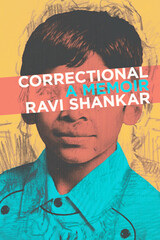
Shankar’s bold and complex self-portrait—and portrait of America—challenges us to rethink our complicity in the criminal justice system and mental health policies that perpetuate inequity and harm. Correctional dives into the inner workings of his mind and heart, framing his unexpected encounters with law and order through the lenses of race, class, privilege, and his bicultural upbringing as the first and only son of South Indian immigrants. Vignettes from his early life set the scene for his spectacular fall and subsequent struggle to come to terms with his own demons. Many of them, it turns out, are also our own.

Peter Wolfe has produced an informative study of le Carré’s works, showing how le Carré’s five years in the Service (British Intelligence) helped him become a keen observer, social historian, and expert in bureaucratic politics. He has supplanted the technological flair marking much of today's spy fiction with moral complexity and psychological depth. He shows us what spies are like, how they feel about spying, and how spying affects their minds and hearts.
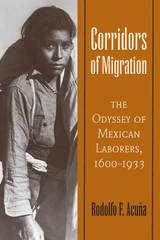
In the San Joaquin Valley Cotton Strike of 1933, frenzied cotton farmers murdered three strikers, intentionally starved at least nine infants, wounded dozens of people, and arrested more. While the story of this incident has been recounted from the perspective of both the farmers and, more recently, the Mexican workers, this is the first book to trace the origins of the Mexican workers’ activism through their common experience of migrating to the United States.
Rodolfo F. Acuña documents the history of Mexican workers and their families from seventeenth-century Chihuahua to twentieth-century California, following their patterns of migration and describing the establishment of communities in mining and agricultural regions. He shows the combined influences of racism, transborder dynamics, and events such as the industrialization of the Southwest, the Mexican Revolution, and World War I in shaping the collective experience of these people as they helped to form the economic, political, and social landscapes of the American Southwest in their interactions with agribusiness and absentee copper barons.
Acuña follows the steps of one of the murdered strikers, Pedro Subia, reconstructing the times and places in which his wave of migrants lived. By balancing the social and geographic trends in the Mexican population with the story of individual protest participants, Acuña shows how the strikes were in fact driven by choices beyond the Mexican workers’ control. Their struggle to form communities graphically retells how these workers were continuously uprooted and their organizations destroyed by capital. Corridors of Migration thus documents twentieth-century Mexican American labor activism from its earliest roots through the mines of Arizona and the Great San Joaquin Valley cotton strike.
From a founding scholar of Chicano studies and the author of fifteen books comes the culmination of three decades of dedicated research into the causes and effects of migration and labor activism. The narrative documents how Mexican workers formed communities against all odds.
In Corrupt Illinois, veteran political observers Thomas J. Gradel and Dick Simpson take aim at business-as-usual. Naming names, the authors lead readers through a gallery of rogues and rotten apples to illustrate how generations of chicanery have undermined faith in, and hope for, honest government. From there, they lay out how to implement institutional reforms that provide accountability and eradicate the favoritism, sweetheart deals, and conflicts of interest corroding our civic life.
Corrupt Illinois lays out a blueprint to transform our politics from a pay-to-play–driven marketplace into what it should be: an instrument of public good.


Addressing several recent high-profile scandals, contributors examine both the short- and the long-term ramifications of corporate corruption: the means by which Martha Stewart has been used as an icon and a scapegoat in the ImClone case while broader critical issues have failed to receive the attention they demand; the divisive ways in which the antifeminist Independent Women’s Forum—along with other neocon organizations and pundits—has moved the debate regarding the deregulation of the financial services sector far to the right of the far right; the collapse of Enron and what it means for corporate governance; the global implications of U.S. corporate corruption; the confusion over public and private business transactions in Argentina; the moral panic ensuing from the random violence caused by the Washington, D.C. area snipers precisely as the U.S. was launching a war on Iraq because of its supposed weapons of mass destruction; and the emergence of a new business model and icon, the hiphop mogul.
Contributors. Peter Bratsis, David M. Brennan, Jane Marcus-Delgado, Randy Martin, Nancy Shaw, Ella Shohat, Christopher Holmes Smith, Barbara Spindel, Susan Willis
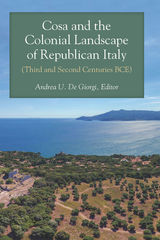
This important new volume examines archaeological evidence of Roman colonization of the Middle Republican period. Themes of land use, ethnic accommodation and displacement, colonial identity, and administrative schemes are also highlighted. In delving deeply into the uniqueness of select colonial contexts, these essays invite a novel discussion on the phenomenon of colonialism in the political landscape of Rome’s early expansion. Roman urbanism of the Middle Republican period brought to the Italian peninsula fundamental changes, an important example of which, highlighted by a wealth of studies, is the ebullience of a dense network of colonies, as well as a mix of senatorial tactics and individual initiatives that underpinned their foundation. Whether Latin, Roman, or Maritimae, colonies created a new mesh of communities and imposed a new topography; more subtly, they signified the mechanisms of the rising hegemony. This book brings to the fore the diversity, agendas, and overall impact of a “settlement device” that changed the Italian landscape and introduced a new idea of Roman town.


Horton uses the cosmic zoom as a starting point to develop a cross-disciplinary theory of scale as mediated difference. He considers the origins of our notions of scale, how scalar mediation functions differently in analog and digital modes, and how cosmic zoom media has influenced scientific and popular views of the world. Analyzing literature, film, digital media, and database history, Horton establishes a much-needed framework for thinking about scale across multiple domains and disciplines.
The volume is divided into three sections: investigations into Mesoamerican horizon-based astronomy, the cosmological principles expressed in Mesoamerican religious imagery and rituals related to astronomy, and the aspects of Mesoamerican calendars related to archaeoastronomy. It also provides cutting-edge research on diverse topics such as records of calendar and horizon-based astronomical observation (like the Dresden and Borgia codices), iconography of burial assemblages, architectural alignment studies, urban planning, and counting or measuring devices.
Contributors—who are among the most respected in their fields— explore new dimensions in Mesoamerican timekeeping and skywatching in the Olmec, Maya, Teotihuacano, Zapotec, and Aztec cultures. It will be of great interest to students and scholars of anthropology, archaeology, art history, and astronomy.
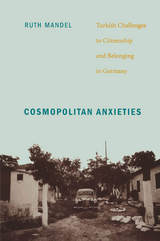
Mandel explains that within Germany the popular understanding of what it means to be German is often conflated with citizenship, so that a German citizen of Turkish background can never be a “real German.” This conflation of blood and citizenship was dramatically illustrated when, during the 1990s, nearly two million “ethnic Germans” from Eastern Europe and the former Soviet Union arrived in Germany with a legal and social status far superior to that of “Turks” who had lived in the country for decades. Mandel analyzes how representations of Turkish difference are appropriated or rejected by Turks living in Germany; how subsequent generations of Turkish immigrants are exploring new configurations of identity and citizenship through literature, film, hip-hop, and fashion; and how migrants returning to Turkey find themselves fundamentally changed by their experiences in Germany. She maintains that until difference is accepted as unproblematic, there will continue to be serious tension regarding resident foreigners, despite recurrent attempts to realize a more inclusive and “demotic” cosmopolitan vision of Germany.
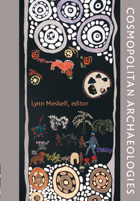
The contributors describe various forms of cosmopolitan engagement involving sites that span the globe. They take up the links between conservation, natural heritage and ecology movements, and the ways that local heritage politics are constructed through international discourses and regulations. They are attentive to how communities near heritage sites are affected by archaeological fieldwork and findings, and to the complex interactions that local communities and national bodies have with international sponsors and universities, conservation agencies, development organizations, and NGOs. Whether discussing the toll of efforts to preserve biodiversity on South Africans living near Kruger National Park, the ways that UNESCO’s global heritage project universalizes the ethic of preservation, or the Open Declaration on Cultural Heritage at Risk that the Archaeological Institute of America sent to the U.S. government before the Iraq invasion, the contributors provide nuanced assessments of the ethical implications of the discursive production, consumption, and governing of other people’s pasts.
Contributors. O. Hugo Benavides, Lisa Breglia, Denis Byrne, Chip Colwell-Chanthaphonh, Alfredo González-Ruibal, Ian Hodder, Ian Lilley, Jane Lydon, Lynn Meskell, Sandra Arnold Scham

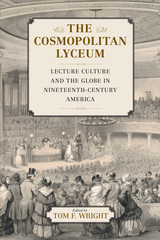
From the 1830s to the 1900s, a circuit of lecture halls known as the “lyceum movement” flourished across the United States. At its peak, up to a million people a week regularly attended talks in local venues, captivated by the words of visiting orators who spoke on an extensive range of topics. The movement was a major intellectual and cultural force of this nation-building period, forming the creative environment of writers and public figures such as Frederic Douglass, Ralph Waldo Emerson, Anna Dickinson, and Mark Twain.
The phenomenon of the lyceum has commonly been characterized as inward looking and nationalistic. Yet as this collection of essays reveals, nineteenth-century audiences were fascinated by information from around the globe, and lecturers frequently spoke to their fellow Americans of their connection to the world beyond the nation and helped them understand “exotic” ways of life. Never simple in its engagement with cosmopolitan ideas, the lyceum provided a powerful public encounter with international currents and crosscurrents, foreshadowing the problems and paradoxes that continue to resonate in our globalized world.
This book offers a major reassessment of this important cultural phenomenon, bringing together diverse scholars from history, rhetoric, and literary studies. The twelve essays use a range of approaches, cover a wide chronological timespan, and discuss a variety of performers both famous and obscure. In addition to the volume editor, contributors include Robert Arbour, Thomas Augst, Susan Branson, Virginia Garnett, Peter Gibian, Sara Lampert, Angela Ray, Evan Roberts, Paul Stob, Mary Zboray, and Ronald Zboray.
“Profound, beautifully written, and inspiring. It proves that Nussbaum deserves her reputation as one of the greatest modern philosophers.”
—Globe and Mail
“At a time of growing national chauvinism, Martha Nussbaum’s excellent restatement of the cosmopolitan tradition is a welcome and much-needed contribution…Illuminating and thought-provoking.”
—Times Higher Education
The cosmopolitan political tradition in Western thought begins with the Greek Cynic Diogenes, who, when asked where he came from, said he was a citizen of the world. Rather than declare his lineage, social class, or gender, he defined himself as a human being, implicitly asserting the equal worth of all human beings.
Martha Nussbaum pursues this “noble but flawed” vision and confronts its inherent tensions. The insight that politics ought to treat human beings both as equal and as having a worth beyond price is responsible for much that is fine in the modern Western political imagination. Yet given the global prevalence of material want, the conflicting beliefs of a pluralistic society, and the challenge of mass migration and asylum seekers, what political principles should we endorse? The Cosmopolitan Tradition urges us to focus on the humanity we share rather than on what divides us.
“Lucid and accessible…In an age of resurgent nationalism, a study of the idea and ideals of cosmopolitanism is remarkably timely.”
—Ryan Patrick Hanley, Journal of the History of Philosophy
By examining new archives, proposing new theoretical formulations, and suggesting new possibilities of political practice, the contributors critically probe the concept of cosmopolitanism. On the one hand, cosmopolitanism may be taken to promise a form of supraregional political solidarity, but on the other, these essays argue, it may erode precisely those intimate cultural differences that derive their meaning from particular places and traditions. Given that most cosmopolitan political formations—from the Roman empire and European imperialism to contemporary globalization—have been coercive and unequal, can there be a noncoercive and egalitarian cosmopolitan politics? Finally, the volume asks whether cosmopolitanism can promise any universalism that is not the unwarranted generalization of some Western particular.
Contributors. Ackbar Abbas, Arjun Appadurai, Homi K. Bhabha, T. K. Biaya, Carol A. Breckenridge, Dipesh Chakrabarty, Ousame Ndiaye Dago, Mamadou Diouf, Wu Hung, Walter D. Mignolo, Sheldon Pollock, Steven Randall

Building on many of the topics in his highly acclaimed earlier work, these essays treat a number of contentious issues, many of them deeply embedded in America's past and present political polarization. Essays include "Amalgamation and Hypodescent," "Enough Already: Universities Do Not Need More Christianity," "Cultural Relativism," "Why Are Jews Preeminent in Science and Scholarship: The Veblen Thesis Reconsidered," and "The One Drop Rule and the One Hate Rule." Hollinger is at his best in his judicious approach to America's controversial history of race, ethnicity, and religion, and he offers his own thoughtful prescriptions as Americans and others throughout the world struggle with the pressing questions of identity and solidarity.

Heilman and Cohen reveal that American Jewish Orthodoxy is not a monolith by distinguishing its three broad varieties: the "traditionalists," the "centrists," and the "nominally" orthodox. To illuminate this full spectrum of orthodoxy the authors focus on the "centrists," taking us through the dimensions of their ritual observances, religious beliefs, community life, and their social, political, and sexual attitudes. Both parochial and cosmopolitan, orthodox and liberal, these Jews are characterized by their dualism, by their successful involvement in both the modern Western world and in traditional Jewish culture. In painting this provocative and fascinating portrait of what Jewish Orthodoxy has become in America today, Heilman and Cohen's study also sheds light on the larger picture of the persistence of religion in the modern world.
In a volume that represents the culmination of his life’s work in considering the relationship between culture and landscape, eminent scholar Yi-Fu Tuan argues that “cosmos” and “hearth” are two scales that anchor what it means to be fully and happily human. Illustrating this contention with examples from both his native China and his home of the past forty years, the United States, Tuan proposes a revised conception of culture, one thoroughly grounded in one’s own society but also embracing curiosity about the world. Optimistic and deeply human, this important volume lays out a path to being “at home in the cosmos.”
Hardcover:In this moving meditation on the difficult choices facing humanity in the next millennium, celebrated scholar Yi-Fu Tuan reaffirms his faith in the value of a cosmopolitan worldview. In a volume that represents the culmination of his life's work in considering the relationship between culture and landscape, Tuan argues that “cosmos” and “hearth” are two scales that anchor what it means to be fully and happily human. Hearth is our house and neighborhood, family and kinfolk, habit and custom. Cosmos, by contrast, is the larger reality-world, civilization, and humankind. Tuan addresses the extraordinary revival of interest in the hearth in recent decades, examining both the positive and negative effects of this renewed concern. Among the beneficent outcomes has been a revival of ethnic culture and sense of place. Negative repercussions abound, however, manifested as an upsurge in superstition, excessive pride in ancestry and custom, and a constricted worldview that when taken together can inflame local passions, leading at times to violent conflict-from riots in American cities to wars in the Balkans. In Cosmos and Hearth, Tuan takes the position that we need to embrace both the sublime and the humble, drawing what is valuable from each. Illustrating the importance of both cosmos and hearth with examples from his country of birth, China, and from his home of the past forty years, the United States, Tuan proposes a revised conception of culture, the “cosmopolitan hearth,” that has the coziness but not the narrowness and bigotry of the traditional hearth. Tuan encourages not only being thoroughly grounded in one’s own culture but also the embracing of curiosity about the world. Optimistic and deeply human, Cosmos and Hearth lays out a path to being “at home in the cosmos.” Born in China and educated in Australia, the Philippines, England, and the United States, Yi-Fu Tuan is professor of geography at the University of Wisconsin, Madison, and the author of Space and Place: The Perspective of Experience (Minnesota, 1977), Landscapes of Fear (Minnesota, 1982), The Good Life (1986), and Passing Strange and Wonderful: Aesthetics, Nature, and Culture (1993). Excerpt: “Thinking yields a twofold gain: although it isolates us from our immediate group it can link us both seriously and playfully to the cosmos-to strangers in other places and times; and it enables us to accept a human condition that we have always been tempted by fear and anxiety to deny, namely, the impermanence of our state wherever we are, our ultimate homelessness. A cosmopolite is one who considers the gain greater than the loss. Having seen something of the splendid spaces, he or she will not want to return, permanently, to the ambiguous safeness of the hearth.”
Boasting more than 130 paintings and engravings, Painted Bluff is perhaps the most elaborate prehistoric pictograph site east of the Mississippi River. Positioned at several levels on a dramatic sandstone cliff along the Tennessee River in northern Alabama, the spectacular paintings and engravings depict mythical creatures, dancing humans, and mystical portals. The Cosmos Revealed: Precontact Mississippian Rock Art at Painted Bluff, Alabama is the first complete documentation of one of the most important archaeological sites in eastern North America. Through art, the site materializes a model or “cosmogram” of the Mississippian Native American view of the universe, offering connections between the visible and invisible worlds for Native spiritual leaders and other visitors.
Discovered by Euro-Americans in the early 1800s, the site became known as “Painted Bluff” because of its pictographs, but inexplicably it has only recently been subjected to the intensive archaeological study it deserves. Under the auspices of the Tennessee Valley Authority (TVA), the authors of this volume have documented and assessed the site since 2005, and efforts have been made to reverse some of the vandalism that has occurred over many decades and to stabilize natural degradation of the cliff and its artwork.
Including more than one hundred remarkable prehistoric paintings on the cliff face that have been recorded, mapped, and photographed, this book synthesizes the research done on Painted Bluff to date and documents the entire site. Richly illustrated chapters cover the historical background, geology and archaeology, documentation methods, types of rock art, stratigraphy, paint recipes, TVA management, graffiti removal, and a summary that broadly synthesizes the meaning, timeframe, artistry, organization, conceptual boundaries, and the cosmos revealed. This groundbreaking study features 113 color photographs and a complete catalog of the pictographs and petroglyphs at the site.
The Baniwa Indians of the Northwest Amazon have engaged in millenarian movements since at least the middle of the nineteenth century. The defining characteristic of these movements is usually a prophecy of the end of this present world and the restoration of the primordial, utopian world of creation. This prophetic message, delivered by powerful shamans, has its roots in Baniwa myths of origin and creation.
In this ethnography of Baniwa religion, Robin M. Wright explores the myths of creation and how they have been embodied in religious movements and social action—particularly in a widespread conversion to evangelical Christianity. He opens with a discussion of cosmogony, cosmology, and shamanism, and then goes on to explain how Baniwa origin myths have played an active role in shaping both personal and community identity and history. He also explores the concepts of death and eschatology and shows how the mythology of destruction and renewal in Baniwa religion has made the Baniwa people receptive to both Catholic and Protestant missionaries.

An examination of male screen sex appeal and the ways that race, ethnicity, and national origin combine with performance tools and film and television style to aid or inhibit actors’ circulation on an increasingly global stage.
Sex appeal is complicated, especially for screen actors. Looking good is not enough. Charisma and charm have to register when the camera rolls. And sexiness has to travel. Today’s heartthrobs are expected to raise temperatures all around the world.
Cosmosexuals theorizes male sex appeal as a form of capital in an age of international stardom. Screen scholar Mark Gallagher assembles a diverse cast—Idris Elba, Pedro Pascal, Simu Liu, Ryan Gosling, and more—analyzing how each actor uses his appearance, voice, and movement to perform in ways that viewers across cultural divides register as sexually appealing. Cosmosexuals also explores the intersection of global sex appeal and exoticism in historical and contemporary contexts—from the malleable racial identities of Omar Sharif and Conrad Veidt to Mads Mikkelsen’s “accented whiteness”—and assesses the barriers that confine nonwhite actors, in spite of their talent or celebrity. Far more than handsome faces and chiseled abs, male sex symbols emerge as laborers subject to disciplinary regimes steeped in patriarchy, racism, and structural inequity. As such, they have much to tell us about the economies of taste at work in the construction of screen masculinity and the terms of human desire.

An exploration of cosplay and its relationship with the realms of its global fandom, performance, and the modes of fictional existence
Flourishing far beyond its Japanese roots, cosplay has become an international phenomenon with fervid fans who gather at enormous, worldwide conventions annually. Here, author Frenchy Lunning offers an intimate, sensational tour through cosplay’s past and present, as well as its global lure.
Through a culmination of years of personal research on cosplay, and growing out of Lunning’s wealth of scholarship, conference presentations, and cosplayer interviews, Cosplay is a unique and necessary examination of identity, performance, play, and otaku fandom and culture in relation to contemporary theories. With discussions covering construction, masquerades, and community through performance, Lunning presents cosplay as a dynamic and ever-evolving global practice. She combines the fascinating viewpoints of cosplayers with observational, in-depth research on cosplay history and practice, and a deep dive into critical theory involving the modes of fictional existence, in order to understand its global expansion.
Augmented with beautiful photographs, this is an engrossing, lively read that explores a complicated and often misunderstood history and meditates on how cosplay allows its participants to create and construct meaning and identity.
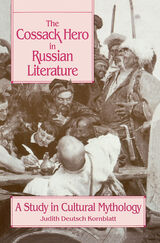
This is the first book to study the development of the Cossack hero and to identify him as part of Russian cultural mythology. Kornblatt explores the power of the myth as a literary image, providing new and challenging readings of Pushkin, Gogol, Tolstoi, and a host of other writers.
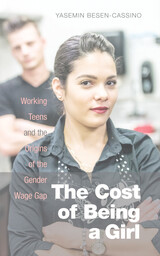
The gender wage gap is one of the most persistent problems of labor markets and women’s lives.
Most approaches to explaining the gap focus on adult employment despite the fact that many Americans begin working well before their education is completed. In her critical and compelling new book, The Cost of Being a Girl, Yasemin Besen-Cassino examines the origins of the gender wage gap by looking at the teenage labor force, where comparisons between boys and girls ought to show no difference, but do.
Besen-Cassino’s findings are disturbing. Because of discrimination in the market, most teenage girls who start part-time work as babysitters and in other freelance jobs fail to make the same wages as teenage boys who move into employee-type jobs. The “cost” of being a girl is also psychological; when teenage girls work retail jobs in the apparel industry, they have lower wages and body image issues in the long run.
Through in-depth interviews and surveys with workers and employees, The Cost of Being a Girl puts this alarming social problem—which extends to race and class inequality—in to bold relief. Besen-Cassino emphasizes that early inequalities in the workplace ultimately translate into greater inequalities in the overall labor force.

Blake R. Silver spent a year immersed in student life at a large public university. He trained with the Cardio Club, hung out with the Learning Community, and hosted service events with the Volunteer Collective. Through these day-to-day interactions, he witnessed how students sought belonging and built their social worlds on campus. Over time, Silver realized that these students only achieved inclusion at significant cost. To fit in among new peers, they clung to or were pushed into raced and gendered cultural assumptions about behavior, becoming “the cool guy,” “the nice girl,” “the funny one,” “the leader,” “the intellectual,” or “the mom of the group.” Instead of developing dynamic identities, they crafted and adhered to a cookie-cutter self, one that was rigid and two-dimensional. Silver found that these students were ill-prepared for the challenges of a diverse college campus, and that they had little guidance from their university on how to navigate the trials of social engagement or the pressures to conform. While colleges are focused on increasing the diversity of their enrolled student body, Silver’s findings show that they need to take a hard look at how they are failing to support inclusion once students arrive on campus.
Young people are told that college is a place where they will “find themselves” by engaging with diversity and making friendships that will last a lifetime. This vision of an inclusive, diverse social experience is a fundamental part of the image colleges sell potential students. But what really happens when students arrive on campus and enter this new social world? The Cost of Inclusion delves into this rich moment to explore the ways students seek out a sense of belonging and the sacrifices they make to fit in.
Blake R. Silver spent a year immersed in student life at a large public university. He trained with the Cardio Club, hung out with the Learning Community, and hosted service events with the Volunteer Collective. Through these day-to-day interactions, he witnessed how students sought belonging and built their social worlds on campus. Over time, Silver realized that these students only achieved inclusion at significant cost. To fit in among new peers, they clung to or were pushed into raced and gendered cultural assumptions about behavior, becoming “the cool guy,” “the nice girl,” “the funny one,” “the leader,” “the intellectual,” or “the mom of the group.” Instead of developing dynamic identities, they crafted and adhered to a cookie-cutter self, one that was rigid and two-dimensional. Silver found that these students were ill-prepared for the challenges of a diverse college campus, and that they had little guidance from their university on how to navigate the trials of social engagement or the pressures to conform. While colleges are focused on increasing the diversity of their enrolled student body, Silver’s findings show that they need to take a hard look at how they are failing to support inclusion once students arrive on campus.
This essential introduction to Costa Rica includes more than fifty texts related to the country’s history, culture, politics, and natural environment. Most of these newspaper accounts, histories, petitions, memoirs, poems, and essays are written by Costa Ricans. Many appear here in English for the first time. The authors are men and women, young and old, scholars, farmers, workers, and activists. The Costa Rica Reader presents a panoply of voices: eloquent working-class raconteurs from San José’s poorest barrios, English-speaking Afro-Antilleans of the Limón province, Nicaraguan immigrants, factory workers, dissident members of the intelligentsia, and indigenous people struggling to preserve their culture. With more than forty images, the collection showcases sculptures, photographs, maps, cartoons, and fliers. From the time before the arrival of the Spanish, through the rise of the coffee plantations and the Civil War of 1948, up to participation in today’s globalized world, Costa Rica’s remarkable history comes alive. The Costa Rica Reader is a necessary resource for scholars, students, and travelers alike.
This new scholarly debate includes not only economists, but also contributors from philosophy, cognitive psychology, legal studies, and public policy who can further illuminate the justification and moral implications of this method and specify alternative measures.
These articles originally appeared in the Journal of Legal Studies.
Contributors:
- Matthew D. Adler - Gary S. Becker
- John Broome - Robert H. Frank
- Robert W. Hahn - Lewis A. Kornhauser
- Martha C. Nussbaum - Eric A. Posner
- Richard A. Posner - Henry S. Richardson
- Amartya Sen - Cass R. Sunstein
- W. Kip Viscusi
Drawing on years of fieldwork, Enriquez shows how forcing artists to adopt “neutral” market solutions reinforces, and generates, overlapping racial and class-based inequalities. Lacking the social and financial resources of their middle-class peers, working-class musicians find it difficult to uphold institutional goals of connecting the city’s cultural roots to global markets and consumers. Enriquez also links the artists’ situation to that of cultural and creative workers around the world. As she shows, musical sponsorship in Recife and the contemporary gig economy elsewhere employ processes that, far from being neutral, uphold governmental and corporate ideologies that produce social stratification.
Rich and vibrant, The Costs of the Gig Economy offers a rare English-language portrait of the changing musical culture in Recife.
The traditional costumes worn by people in the Andes—women's woolen skirts, men's ponchos, woven belts, and white felt hats—instantly identify them as natives of the region and serve as revealing markers of ethnicity, social class, gender, age, and so on. Because costume expresses so much, scholars study it to learn how the indigenous people of the Andes have identified themselves over time, as well as how others have identified and influenced them.
Costume and History in Highland Ecuador assembles for the first time for any Andean country the evidence for indigenous costume from the entire chronological range of prehistory and history. The contributors glean a remarkable amount of information from pre-Hispanic ceramics and textile tools, archaeological textiles from the Inca empire in Peru, written accounts from the colonial period, nineteenth-century European-style pictorial representations, and twentieth-century textiles in museum collections. Their findings reveal that several garments introduced by the Incas, including men's tunics and women's wrapped dresses, shawls, and belts, had a remarkable longevity. They also demonstrate that the hybrid poncho from Chile and the rebozo from Mexico diffused in South America during the colonial period, and that the development of the rebozo in particular was more interesting and complex than has previously been suggested. The adoption of Spanish garments such as the pollera (skirt) and man's shirt were also less straightforward and of more recent vintage than might be expected.
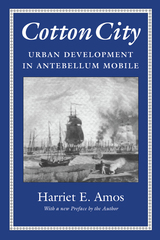
The exploration of the North-South relationship and the growth of of antebellum Mobile.
Cotton City offers a compelling exploration of Mobile, Alabama’s transformation into a thriving urban center during the antebellum period. Historian Harriet E. Amos examines how economic ambition, civic planning, and the cotton trade shaped the city’s development between 1819 and 1861. Through detailed archival research, Amos reveals how Mobile’s leaders sought to modernize infrastructure, expand commerce, and assert the city’s regional importance—all while navigating the tensions of slavery, class, and Southern identity.
This richly contextualized study highlights the interplay between urban growth and the broader forces of the Southern economy, making Cotton City a vital contribution to the histories of the American South, urbanization, and antebellum society.
READERS
Browse our collection.
PUBLISHERS
See BiblioVault's publisher services.
STUDENT SERVICES
Files for college accessibility offices.
RECENTLY PUBLISHED



UChicago Accessibility Resources
home | accessibility | search | about | contact us
BiblioVault ® 2001 - 2025
The University of Chicago Press