
 A SCHOLARLY BOOK REPOSITORY
128 start with C start with C
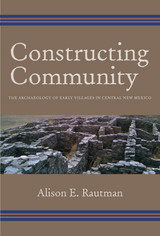
Rautman tackles a very broad topic: how archaeologists use material evidence to infer and imagine how people lived in the past, how they coped with everyday decisions and tensions, and how they created a sense of themselves and their place in the world. Using several different lines of evidence, she reconstructs what life was like for the Ancestral Pueblo people of Salinas, and identifies some of the specific strategies that they used to develop and sustain their villages over time.
Examining evidence of each site’s construction and developing spatial layout, Rautman traces changes in community organization across the architectural transitions from pithouses to jacal structures to unit pueblos, and finally to plaza-oriented pueblos. She finds that, in contrast to some other areas of the American Southwest, early villagers in Salinas repeatedly managed their built environment to emphasize the coherence and unity of the village as a whole. In this way, she argues, people in early farming villages across the Salinas region actively constructed and sustained a sense of social community.
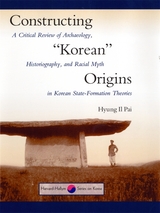
In this wide-ranging study, Hyung Il Pai examines how archaeological finds from throughout Northeast Asia have been used in Korea to construct a myth of state formation. This myth emphasizes the ancient development of a pure Korean race that created a civilization rivaling those of China and Japan and a unified state controlling a wide area in Asia.
Through a new analysis of the archaeological data, Pai shows that the Korean state was in fact formed much later and that it reflected diverse influences from throughout Northern Asia, particularly the material culture of Han China. Her deconstruction of the uses of the archaeological finds by nationalistic historians reveals how they have been utilized to legitimate Korean nationalism and a particular form of national identity.
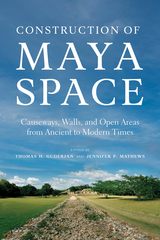
Through fifteen engaging chapters, contributors examine the construction of spatial features by ancient, historic, and contemporary Maya elite and nonelite peoples to understand how they used spaces differently. Through cutting-edge methodologies and case studies, chapters consider how and why Maya people connected and divided the spaces they used daily in their homes, in their public centers, in their sacred places such as caves, and across their regions to inform us about the mental constructs they used to create their lives and cultures of the past.
Contributors
Elias Alcocer Puerto
Alejandra Alonso Olvera
Traci Ardren
Jaime J. Awe
Alejandra Badillo Sánchez
Nicolas C. Barth
Grace Lloyd Bascopé
Adolpho Iván Batún-Alpuche
Elizabeth Beckner
M. Kathryn Brown
Bernadette Cap
Miguel Covarrubias Reyna
Juan Fernandez Diaz
Alberto G. Flores Colin
Thomas H. Guderjan
C. Colleen Hanratty
Héctor Hernández Álvarez
Scott R. Hutson
Joshua J. Kwoka
Whitney Lytle
Aline Magnoni
Jennifer P. Mathews
Stephanie J. Miller
Shawn G. Morton
Holley Moyes
Shannon Plank
Dominique Rissolo
Patrick Rohrer
Carmen Rojas Sandoval
Justine M. Shaw
J. Gregory Smith
Travis W. Stanton
Karl A. Taube
Daniel Vallejo-Cáliz
Constructions of Time and History in the Pre-Columbian Andes explores archaeological approaches to temporalities, social memory, and constructions of history in the pre-Columbian Andes. The authors examine a range of indigenous temporal experiences and ideologies, including astronomical, cyclical, generational, eschatological, and mythical time.
This nuanced, interdisciplinary volume challenges outmoded anthropological theories while building on an emic perspective to gain greater understanding of pre-Columbian Andean cultures. Contributors to the volume rethink the dichotomy of past and present by understanding history as indigenous Andeans perceived it—recognizing the past as a palpable and living presence. We live in history, not apart from it. Within this framework time can be understood as a current rather than as distinct points, moments, periods, or horizons.
The Andes offer a rich context by which to evaluate recent philosophical explorations of space and time. Using the varied materializations and ritual emplacements of time in a diverse sampling of landscapes, Constructions of Time and History in the Pre-Columbian Andes serves as a critique of archaeology’s continued and exclusive dependence on linear chronologies that obscure historically specific temporal practices and beliefs.
Contributors: Tamara L. Bray, Zachary J. Chase, María José Culquichicón-Venegas, Terence D’Altroy, Giles Spence Morrow, Matthew Sayre, Francisco Seoane, Darryl Wilkinson
Chapters address place-making in Chaco Canyon, recent trends in landscape archaeology, the formation of identities, landscape boundaries, and the movement associated with these aspects of place-making. They address how interaction of peoples with objects brings landscapes to life. Representing a diverse cross section of Southwestern archaeologists, the authors of this volume push the boundaries of archaeological method and theory, building a strong foundation for future Southwest studies.
This book will be of interest to professional and academic archaeologists, as well as students working in the American Southwest.
William Andrefsky Jr. / Andrew P. Bradbury / Philip J. Carr / CarolynConklin /
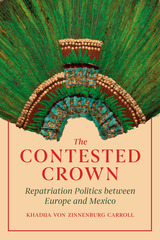
In The Contested Crown, Khadija von Zinnenburg Carroll meditates on the case of a spectacular feather headdress believed to have belonged to Montezuma, emperor of the Aztecs. This crown has long been the center of political and cultural power struggles, and it is one of the most contested museum claims between Europe and the Americas. Taken to Europe during the conquest of Mexico, it was placed at Ambras Castle, the Habsburg residence of the author’s ancestors, and is now in Vienna’s Welt Museum. Mexico has long requested to have it back, but the Welt Museum uses science to insist it is too fragile to travel.
Both the biography of a cultural object and a history of collecting and colonizing, this book offers an artist’s perspective on the creative potentials of repatriation. Carroll compares Holocaust and colonial ethical claims, and she considers relationships between indigenous people, international law and the museums that amass global treasures, the significance of copies, and how conservation science shapes collections. Illustrated with diagrams and rare archival material, this book brings together global history, European history, and material culture around this fascinating object and the debates about repatriation.
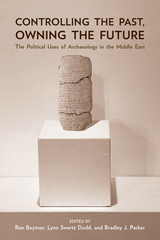
The diverse contributions to this volume share a common framework in which the political use of the past is viewed as a process of social discourse. According to this model, political appropriations are seen as acts of social communication designed to accrue benefits to particular groups. Thus the contributors pay special attention to competing social visions and the filters these impose on archaeological data. But they are also attentive to the potential consequences of their own work. Indeed, as the editors remind us, “people’s lives may be affected, sometimes dramatically, because of the material remains that surround them.”
Rounding out this important volume are critiques by two top scholars who summarize and synthesize the preceding chapters.

The Copan Sculpture Museum in western Honduras features the extraordinary stone carvings of the ancient Maya city known as Copan. The city’s sculptors produced some of the finest and most animated buildings and temples in the Maya area, in addition to stunning monolithic statues and altars. The ruins of Copan were named a UNESCO World Heritage site in 1980, and more than 150,000 national and international tourists visit the ancient city each year.
Opened in 1996, the Copan Sculpture Museum was initiated as an international collaboration to preserve Copan’s original stone monuments. Its exhibits represent the best-known examples of building façades and sculptural achievements from the ancient kingdom of Copan. The creation of this on-site museum involved people from all walks of life: archaeologists, artists, architects, and local craftspeople. Today it fosters cultural understanding and promotes Hondurans’ identity with the past.
In The Copan Sculpture Museum, Barbara Fash—one of the principle creators of the museum—tells the inside story of conceiving, designing, and building a local museum with global significance. Along with numerous illustrations and detailed archaeological context for each exhibit in the museum, the book provides a comprehensive introduction to the history and culture of the ancient Maya and a model for working with local communities to preserve cultural heritage.
By contextualizing classes and their kinship behavior within the overall political economy, Crafting Prehispanic Maya Kinship provides an example of how archaeology can help to explain the formation of disparate classes and kinship patterns within an ancient state-level society.
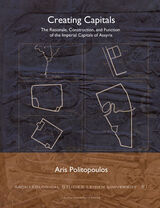
The Assyrian Empire moved and rebuilt its capital city three times—at Kar-Tukulti-Ninurta, Kalhu, Dur-Šarruken, and Nineveh. Creating Capitals explores why and how Assyria constructed these capitals as well as how they functioned within the empire. Drawing on extensive research, Aris Politopoulos offers a sweeping comparative analysis of these four ancient cities and proposes a new framework for understanding the construction of capitals in human history.
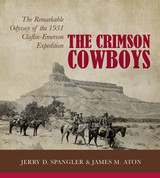
In 1931 a group from Harvard University’s Peabody Museum accomplished something that had never been attempted in the history of American archaeology: a six-week, four-hundred-mile horseback survey of Fremont prehistoric sites through some of the West’s most rugged terrain. The expedition was successful, but a report on the findings was never completed. What should have been one of the great archaeological stories in American history was relegated to boxes and files in the basement of the Peabody Museum at Harvard.
Now, based on over a thousand pages of documents (field journals, correspondence, and receipts) and over four hundred photographs, this book recounts the remarkable day-to-day adventures of this crew of one professor, five students, and three Utah guides who braved heat, fatigue, and the dangerous canyon wilderness to reveal vestiges of the Fremont culture in the Tavaputs Plateau and Uinta Basin areas. To better tell this story, authors Spangler and Aton undertook extensive fieldwork to confirm the sites; their recent photographs and those of the original expedition are shared on these pages. This engaging narrative situates the 1931 survey and its discoveries within the history of American archaeology.
Click here for a podcast with the APEX hour and Jim Aton about The Crimson Cowboys.
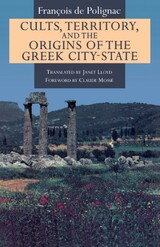
Combining archaeological and textual evidence, de Polignac argues that the eighth-century settlements that would become the city-states of classical Greece were defined as much by the boundaries of "civilized" space as by its urban centers. The city took shape through what de Polignac calls a "religious bipolarity," the cults operating both to organize social space and to articulate social relationships being not only at the heart of the inhabited area, but on the edges of the territory. Together with the urban cults, these sanctuaries "in the wild" identified the polis and its sphere of influence, giving rise to the concept of the state as a territorial unit distinct from its neighbors. Frontier sanctuaries were therefore often the focus of disputes between emerging communities. But in other instances, in particular in Greece's colonizing expeditions, these outer sanctuaries may have facilitated the relations between the indigenous populations and the settlers of the newly founded cities.
Featuring extensive revisions from the original French publication and an updated bibliography, this book is essential for anyone interested in the history and culture of ancient Greece.
The Cultural Foundations of Early South American Societies examines the remarkable transformation of the Central Andes and the tropical Amazon beginning around 7000 BCE, when the Indigenous inhabitants began to develop food production, permanent settlements, monumental architecture, and complex social organizations. Moving beyond traditional chronological categories of “Archaic” and “Formative,” the fourteen essays in this volume reveal how early South American societies followed diverse trajectories, especially in the development of agro-maritime lifestyles on the Pacific coast, animal domestication in the Andean highlands, and plant cultivation in the Amazonian lowlands.
Through regional case studies spanning from southern Ecuador to northern Argentina and the eastern tropical lowlands, the contributors—primarily archaeologists—trace early community formation, technological innovation, landscape transformation, and the emergence of elaborate symbolism and craft production; these analyses offer fresh perspectives on how such developments established the foundations for later state-level societies, providing essential insights into the deep cultural history and varied pathways to social complexity in the ancient Americas.
Cultural Resource Management (CRM) refers to the discovery, evaluation, and preservation of culturally significant sites, focusing on but not limited to archaeological and historical sites of significance. CRM stems from the National Historic Preservation Act, passed in 1966. In 1986, archaeologists reviewed the practice of CRM in the Great Basin. They concluded that it was mainly a system of finding, flagging, and avoiding—a means of keeping sites and artifacts safe. Success was measured by counting the number of sites recorded and acres surveyed.
This volume provides an updated review some thirty years later. The product of a 2016 symposium, its measures are the increase in knowledge obtained through CRM projects and the inclusion of tribes, the general public, industry, and others in the discovery and interpretation of Great Basin prehistory and history. Revealing both successes and shortcomings, it considers how CRM can face the challenges of the future. Chapters offer a variety of perspectives, covering highway archaeology, inclusion of Native American tribes, and the legacy of the NHPA, among other topics.

Drawing on court transcripts, gallery archives, exhibition reviews, private correspondence—and a striking series of cartoons and photographs—The Culture of Property traverses the history of gender, material culture, urban life, colonialism, Irish and Scottish nationalism, and British citizenship. This fascinating book challenges recent scholarship in museum studies in light of ongoing culture wars. It should be required reading for cultural policy makers, museum professionals, and anyone interested in the history of art and Britain.
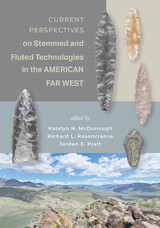
This volume provides the most comprehensive overview of archaeological research into the late Pleistocene and early Holocene occupation of the North American Far West in over a decade. It focuses on the relationship between stemmed and fluted point technologies in the region, which has recently risen to the forefront of debate about the initial settlement of the Americas. Established and early career researchers apply a wide range of analytical approaches to explore chronological, geographical, and technological aspects of these tools and what they reveal about the people who made them. While such interrelationships have intrigued archaeologists for nearly a century, until now they have not been systematically examined together in a single curated volume.
Contributions are organized into three main sections: stemmed point technologies, fluted point technologies, and broader interactions. Topics range from regional overviews of chronologies and technologies to site-level findings containing extensive new data. The culmination of many years of work by dozens of researchers, this volume lays new groundwork for understanding technological innovation, diversity, and exchange among early Indigenous peoples in North America.
READERS
Browse our collection.
PUBLISHERS
See BiblioVault's publisher services.
STUDENT SERVICES
Files for college accessibility offices.
RECENTLY PUBLISHED




UChicago Accessibility Resources
home | accessibility | search | about | contact us
BiblioVault ® 2001 - 2026
The University of Chicago Press