
 A SCHOLARLY BOOK REPOSITORY
240 start with C start with C
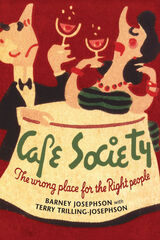
Set against the drama of the Great Depression, the conflict of American race relations, and the inquisitions of the House Un-American Activities Committee, Cafe Society tells the personal history of Barney Josephson, proprietor of the legendary interracial New York City night clubs Cafe Society Downtown and Cafe Society Uptown and their successor, The Cookery. Famously known as "the wrong place for the Right people," Cafe Society featured the cream of jazz and blues performers--among whom were Billie Holiday, boogie-woogie pianists, Big Joe Turner, Lester Young, Buck Clayton, Big Sid Catlett, and Mary Lou Williams--as well as comedy stars Imogene Coca, Zero Mostel, and Jack Gilford, and also gospel and folk singers. A trailblazer in many ways, Josephson welcomed black and white artists alike to perform for mixed audiences in a venue whose walls were festooned with artistic and satiric murals lampooning what was then called "high society."
Featuring scores of photographs that illustrate the vibrant cast of characters in Josephson's life, this exceptional book speaks richly about Cafe Society's revolutionary innovations and creativity, inspired by the vision of one remarkable man.
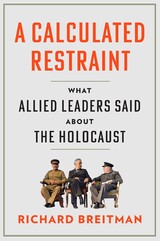
An eminent historian of the Holocaust examines why Churchill, Roosevelt, and Stalin, though faced with mounting evidence of the Nazi extermination of Jews, were reluctant to speak out against the atrocities.
The Allied leaders rarely spoke directly about the Holocaust in public. When Churchill and Stalin alluded to Nazi mass murder of civilians in early speeches, they said much less than they knew. Not until December 1942 did Allied governments issue a joint statement about Nazi Germany’s policy of exterminating the Jews of Europe. Roosevelt deferred his own public statement until March 1944. Why didn’t these leaders speak up sooner?
Through close readings of public and private statements, Richard Breitman pieces together the competing motivations that drove each leader’s response to the atrocities. All three knew that their reactions would be politically sensitive, as Nazi propagandists frequently alleged that the Allies were fighting on behalf of Jews, and that Jews were the puppet masters behind their governments. At a time of globally prevalent antisemitism, these calumnies had force. After the German invasion of the USSR, moreover, Stalin clearly wanted to focus on the threat to the Soviet state and people. At the same time, Churchill and Roosevelt realized that complete silence would prompt accusations of willful blindness. They usually finessed this dilemma by denouncing Nazi atrocities in general, prioritizing wartime constraints over moral considerations.
Timely and incisive, A Calculated Restraint sheds new light on the relationship between World War II and the Holocaust. Ultimately, the Allied leaders’ responses cannot be reduced to a matter of character. What they said—and chose not to say—about the Holocaust must be understood in light of the political and military exigencies that drove their decision-making.
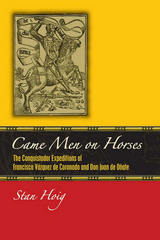
Guided by myths of golden cities and worldly rewards, policy makers, conquistador leaders, and expeditionary aspirants alike came to the new world in the sixteenth century and left it a changed land. Came Men on Horses follows two conquistadors—Francisco Vázquez de Coronado and Don Juan de Oñate—on their journey across the southwest.
Driven by their search for gold and silver, both Coronado and Oñate committed atrocious acts of violence against the Native Americans, and fell out of favor with the Spanish monarchy. Examining the legacy of these two conquistadors Hoig attempts to balance their brutal acts and selfish motivations with the historical significance and personal sacrifice of their expeditions. Rich human details and superb story-telling make Came Men on Horses a captivating narrative scholars and general readers alike will appreciate.
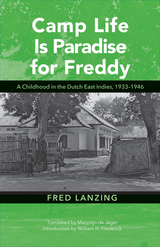
“Children see and hear what is there; adults see and hear what they are expected to and mainly remember what they think they ought to remember,” David Lowenthal wrote in The Past Is a Foreign Country. It is on this fraught foundation that Fred Lanzing builds this memoir of his childhood in a Japanese internment camp for Dutch colonialists in the East Indies during the World War II.
When published in the Netherlands in 2007, the book triggered controversy, if not vitriol, for Lanzing’s assertion that his time in the camp was not the compendium of horrors commonly associated with the Dutch internment experience. Despite the angry reception, Lanzing’s account corresponds more closely with the scant historical record than do most camp memoirs. In this way, Lanzing’s work is a substantial addition to ongoing discussions of the politics of memory and the powerful—if contentious—contributions that subjective accounts make to historiography and to the legacies of the past.
Lanzing relates an aspect of the war in the Pacific seldom discussed outside the Netherlands and, by focusing on the experiences of ordinary people, expands our understanding of World War II in general. His compact, beautifully detailed account will be accessible to undergraduate students and a general readership and, together with the introduction by William H. Frederick, is a significant contribution to literature on World War II, the Dutch colonial experience, the history of childhood, and Southeast Asian history.
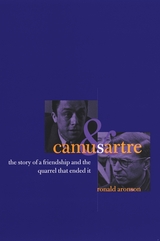
Albert Camus and Jean-Paul Sartre first met in 1943, during the German occupation of France. The two became fast friends. Intellectual as well as political allies, they grew famous overnight after Paris was liberated. As playwrights, novelists, philosophers, journalists, and editors, the two seemed to be everywhere and in command of every medium in post-war France. East-West tensions would put a strain on their friendship, however, as they evolved in opposing directions and began to disagree over philosophy, the responsibilities of intellectuals, and what sorts of political changes were necessary or possible.
As Camus, then Sartre adopted the mantle of public spokesperson for his side, a historic showdown seemed inevitable. Sartre embraced violence as a path to change and Camus sharply opposed it, leading to a bitter and very public falling out in 1952. They never spoke again, although they continued to disagree, in code, until Camus's death in 1960.
In a remarkably nuanced and balanced account, Aronson chronicles this riveting story while demonstrating how Camus and Sartre developed first in connection with and then against each other, each keeping the other in his sights long after their break. Combining biography and intellectual history, philosophical and political passion, Camus and Sartre will fascinate anyone interested in these great writers or the world-historical issues that tore them apart.
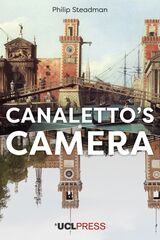
Canaletto’s Camera provides a revelatory look at how the Venetian master Antonio Canaletto (1697–1768) used the camera obscura, a precursor to the modern camera, to create his meticulous cityscapes. Drawing on new research, Steadman examines Canaletto’s connections to contemporary scientists and his reliance on measured architectural drawings, discovering previously unrecognized techniques that shaped his iconic views of Venice and London.
By analyzing Canaletto’s sketches and reconstructing an 18th-century camera obscura, Steadman and his colleagues have recreated the artist’s process, demonstrating how he traced real scenes, altered them in his finished works, and even engaged in a form of early photomontage. Through digital overlays and side-by-side comparisons with contemporary photographs, the book challenges assumptions about Canaletto’s realism and artistic manipulation.
Lavishly illustrated and deeply engaging, Canaletto’s Camera is a compelling read for art historians, scholars of optical devices, and those fascinated by the intersection of art and science.
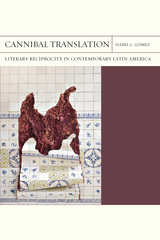
Winner of the 2024 ACLA Harry Levin Prize • Honorable Mention MLA Katherine Singer Kovacs Prize
A bold comparative study illustrating the creative potential of translations that embrace mutuality and resist assimilation
Cannibal translators digest, recombine, transform, and trouble their source materials. Isabel C. Gómez makes the case for this model of literary production by excavating a network of translation projects in Latin America that includes canonical writers of the twentieth century, such as Haroldo and Augusto de Campos, Rosario Castellanos, Clarice Lispector, José Emilio Pacheco, Octavio Paz, and Ángel Rama. Building on the avant-garde reclaiming of cannibalism as an Indigenous practice meant to honorably incorporate the other into the self, these authors took up Brazilian theories of translation in Spanish to fashion a distinctly Latin American literary exchange, one that rejected normative and Anglocentric approaches to translation and developed collaborative techniques to bring about a new understanding of world literature.
By shedding new light on the political and aesthetic pathways of translation movements beyond the Global North, Gómez offers an alternative conception of the theoretical and ethical challenges posed by this artistic practice. Cannibal Translation: Literary Reciprocity in Contemporary Latin America mobilizes a capacious archive of personal letters, publishers’ records, newspapers, and new media to illuminate inventive strategies of collectivity and process, such as untranslation, transcreation, intersectional autobiographical translation, and transpeaking. The book invites readers to find fresh meaning in other translational histories and question the practices that mediate literary circulation.
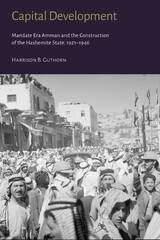
Amman, the capital of Jordan, contends with a crisis of identity rooted in how it grew to become a symbol for the Anglo-Hashemite government first, and a city second. As a representation of the new centralized authority, Amman became the seat of the Mandatory government that orchestrated the development of Transjordan, the British mandate established in 1921.
Despite its diminutive size, the city grew to house all the components necessary for a thriving and cohesive state by the end of the British mandate in 1946. However, in spite of its modernizing and regulatory ambitions, the Transjordan government did not control all facets of life in the region. Instead, the story of Transjordan is one of tensions between the state and the realities of the region, and these limitations forced the government to scale down its aspirations. This book presents the history of Amman’s development under the rule of the British mandate from 1921–46 and illustrates how the growth of the Anglo-Hashemite state imbued the city with physical, political, and symbolic significance.

The story of a bold political experiment in nineteenth-century France to establish power through finance.
Amid the rise of industrial capitalism and revolutionary upheaval, French reformers asserted that finance should be reimagined as an instrument of economic and social transformation rather than left to the logic of private profit and speculation. In the 1850s, under Napoleon III’s authoritarian regime, this vision took institutional form as the Bonapartist state strategically deployed finance, broadened market participation, and sponsored new banks with the promise of directing investment toward infrastructure and industry. Yet this effort to harness and mobilize capital ran into a problem: The financial markets refused to be tamed.
Drawing on rich archival sources—from police surveillance and courtroom transcripts to investment manuals and petitions for incorporation—Capital Untamed reveals how the financial markets became an instrument of political power, frustrated state ambitions, and ultimately escaped attempts at mastery. In this striking debut, historian Charlotte Robertson shows how the French state and its citizens navigated a turbulent era of European capitalism animated by debates over the social purpose of financial capital. Ultimately, politicians’ efforts to establish legitimacy by reorganizing finance—and their confrontations with the limits of that project—set the stage for a form of modern discontent with the financial system that survives to this day.

The legends that die hardest are those of the romantic outlaw, and those of swashbuckling pirates are surely among the most durable. Swift ships, snug inns, treasures buried by torchlight, palm-fringed beaches, fabulous riches, and, most of all, freedom from the mean life of the laboring man are the stuff of this tradition reinforced by many a novel and film.
It is disconcerting to think of such dashing scoundrels as slaves to economic forces, but so they were—as Robert Ritchie demonstrates in this lively history of piracy. He focuses on the shadowy figure of William Kidd, whose career in the late seventeenth century swept him from the Caribbean to New York, to London, to the Indian Ocean before he ended in Newgate prison and on the gallows. Piracy in those days was encouraged by governments that could not afford to maintain a navy in peacetime. Kidd’s most famous voyage was sponsored by some of the most powerful men in England, and even though such patronage granted him extraordinary privileges, it tied him to the political fortunes of the mighty Whig leaders. When their influence waned, the opposition seized upon Kidd as a weapon. Previously sympathetic merchants and shipowners did an about-face too and joined the navy in hunting down Kidd and other pirates.
By the early eighteenth century, pirates were on their way to becoming anachronisms. Ritchie’s wide-ranging research has probed this shift in the context of actual voyages, sea fights, and adventures ashore. What sort of men became pirates in the first place, and why did they choose such an occupation? What was life like aboard a pirate ship? How many pirates actually became wealthy? How were they governed? What large forces really caused their downfall?
As the saga of the buccaneers unfolds, we see the impact of early modern life: social changes and Anglo-American politics, the English judicial system, colonial empires, rising capitalism, and the maturing bureaucratic state are all interwoven in the story. Best of all, Captain Kidd and the War against the Pirates is an epic of adventure on the high seas and a tale of back-room politics on land that captures the mind and the imagination.
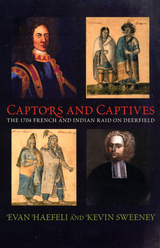
Haefeli and Sweeney reconstruct events from multiple points of view, through the stories of a variety of individuals involved. These stories begin in the Native, French, and English communities of the colonial Northeast, then converge in the February 29 raid, as a force of more than two hundred Frenchmen, Abenakis, Hurons, Kahnawake Mohawks, Pennacooks, and Iroquois of the Mountain overran the northwesternmost village of the New England frontier. Although the inhabitants put up more of a fight than earlier accounts of the so-called Deerfield Massacre have suggested, the attackers took 112 men, women, and children captive. The book follows the raiders and their prisoners on the harsh three-hundred-mile trek back to Canada and into French and Native communities. Along the way the authors examine how captives and captors negotiated cultural boundaries and responded to the claims of competing faiths and empires—all against a backdrop of continuing warfare.
By giving equal weight to all participants, Haefeli and Sweeney range across the fields of social, political, literary, religious, and military history, and reveal connections between cultures and histories usually seen as separate.

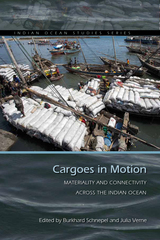
An innovative collection of essays that foregrounds specific cargoes as a means to understand connectivity and mobility across the Indian Ocean world.
Scholars have long appreciated the centrality of trade and commerce in understanding the connectivity and mobility that underpin human experience in the Indian Ocean region. But studies of merchant and commercial activities have paid little attention to the role that cargoes have played in connecting the disparate parts of this vast oceanic world. Drawing from the work of anthropologists, geographers, and historians, Cargoes in Motion tells the story of how material objects have informed and continue to shape processes of exchange across the Indian Ocean.
By following selected cargoes through both space and time, this book makes an important and innovative contribution to Indian Ocean studies. The multidisciplinary approach deepens our understanding of the nature and dynamics of the Indian Ocean world by showing how transoceanic connectivity has been driven not only by economic, social, cultural, and political factors but also by the materiality of the objects themselves.
Essays by:
- Edward A. Alpers
- Fahad Ahmad Bishara
- Eva-Maria Knoll
- Karl-Heinz Kohl
- Lisa Jenny Krieg
- Pedro Machado
- Rupert Neuhöfer
- Mareike Pampus
- Hannah Pilgrim
- Burkhard Schnepel
- Hanne Schönig
- Tansen Sen
- Steven Serels
- Julia Verne
- Kunbing Xiao

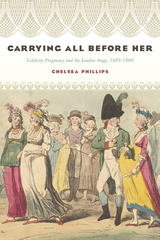
The rise of celebrity stage actresses in the long eighteenth century created a class of women who worked in the public sphere while facing considerable scrutiny about their offstage lives. Such powerful celebrity women used the cultural and affective significance of their reproductive bodies to leverage audience support and interest to advance their careers, and eighteenth-century London patent theatres even capitalized on their pregnancies. Carrying All Before Her uses the reproductive histories of six celebrity women (Susanna Mountfort Verbruggen, Anne Oldfield, Susannah Cibber, George Anne Bellamy, Sarah Siddons, and Dorothy Jordan) to demonstrate that pregnancy affected celebrity identity, impacted audience reception and interpretation of performance, changed company repertory and altered company hierarchy, influenced the development and performance of new plays, and had substantial economic consequences for both women and the companies for which they worked. Deepening the fields of celebrity, theatre, and women's studies, as well as social and medical histories, Phillips reveals an untapped history whose relevance and impact persists today.
"Besides the impact of their content, the clarity and reach of these essays force one to consider foundational questions concerning philosophy and its history."—Richard Watson, Journal of the History of Philosophy

In 2001, Vanity Fair declared that the Age of Irony was over. Joan Didion has lamented that the United States in the era of Barack Obama has become an "irony-free zone." Jonathan Lear in his 2006 book Radical Hope looked into America’s heart to ask how might we dispose ourselves if we came to feel our way of life was coming to an end. Here, he mobilizes a squad of philosophers and a psychoanalyst to once again forge a radical way forward, by arguing that no genuinely human life is possible without irony.
Becoming human should not be taken for granted, Lear writes. It is something we accomplish, something we get the hang of, and like Kierkegaard and Plato, Lear claims that irony is one of the essential tools we use to do this. For Lear and the participants in his Socratic dialogue, irony is not about being cool and detached like a player in a Woody Allen film. That, as Johannes Climacus, one of Kierkegaard’s pseudonymous authors, puts it, “is something only assistant professors assume.” Instead, it is a renewed commitment to living seriously, to experiencing every disruption that shakes us out of our habitual ways of tuning out of life, with all its vicissitudes. While many over the centuries have argued differently, Lear claims that our feelings and desires tend toward order, a structure that irony shakes us into seeing. Lear’s exchanges with his interlocutors strengthen his claims, while his experiences as a practicing psychoanalyst bring an emotionally gripping dimension to what is at stake—the psychic costs and benefits of living with irony.
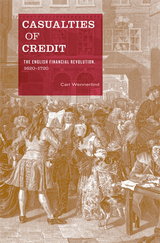
Modern credit, developed during the financial revolution of 1620–1720, laid the foundation for England’s political, military, and economic dominance in the eighteenth century. Possessed of a generally circulating credit currency, a modern national debt, and sophisticated financial markets, England developed a fiscal–military state that instilled fear in its foes and facilitated the first industrial revolution. Yet a number of casualties followed in the wake of this new system of credit. Not only was it precarious and prone to accidents, but it depended on trust, public opinion, and ultimately violence.
Carl Wennerlind reconstructs the intellectual context within which the financial revolution was conceived. He traces how the discourse on credit evolved and responded to the Glorious Revolution, the Scientific Revolution, the founding of the Bank of England, the Great Recoinage, armed conflicts with Louis XIV, the Whig–Tory party wars, the formation of the public sphere, and England’s expanded role in the slave trade. Debates about credit engaged some of London’s most prominent turn-of-the-century intellectuals, including Daniel Defoe, John Locke, Isaac Newton, Jonathan Swift and Christopher Wren. Wennerlind guides us through these conversations, toward an understanding of how contemporaries viewed the precariousness of credit and the role of violence—war, enslavement, and executions—in the safeguarding of trust.
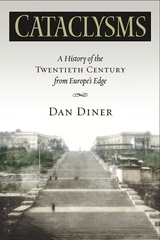
Influenced by continental historical, legal, and social thought, Dan Diner views the totality of world history evolving from an Eastern and Southeastern European angle. A work of great synthesis, Cataclysms chronicles twentieth century history as a “universal civil war” between a succession of conflicting dualisms such as freedom and equality, race and class, capitalism and communism, liberalism and fascism, East and West.
Diner’s interpretation rotates around cataclysmic events in the transformation from multinational empires into nation states, accompanied by social revolution and “ethnic cleansing,” situating the Holocaust at the core of the century’s predicament. Unlike other Eurocentric interpretations of the last century, Diner also highlights the emerging pivotal importance of the United States and the impact of decolonization on the process of European integration.
This collection features essays that consider the role of anti-Semitism in the recounting of the Holocaust; the place of the catastrophe in the narrative of twentieth-century history; the questions of agency and victimhood that the Holocaust inspires; the afterlife of trauma in literature written about the tragedy; and the gaps in remembrance and comprehension that normal historical works fail to notice.
Contributors:
Omer Bartov, Dan Diner, Debòrah Dwork, Saul Friedländer, Geoffrey Hartman, Dominick LaCapra, Paul Mendes-Flohr, Anson Rabinbach, Frank Trommler, Shulamit Volkov, Froma Zeitlin
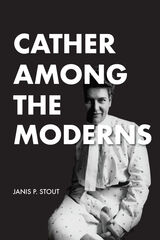
Willa Cather is often pegged as a regionalist, a feminine and domestic writer, or a social realist. In Cather Among the Moderns, Janis P. Stout firmly situates Cather as a visionary practitioner of literary modernism, something other scholars have hinted at but rarely affirmed. Stout presents Cather on a large, dramatic stage among a sizable cast of characters and against a brightly lit social and historical backdrop, invoking numerous figures and instances from the broad movement in the arts and culture that we call modernism.
Early on, Stout addresses the matter of gender. The term “cross-dresser” has often been applied to Cather, but Stout sees Cather’s identity as fractured or ambiguous, a reading that links her firmly to early twentieth-century modernity. Later chapters take up topics of significance both to Cather and to twentieth-century American modernists, including shifting gender roles, World War I’s devastation of social and artistic norms, and strains in racial relations. She explores Cather’s links to a small group of modernists who, after the war, embraced life in New Mexico, a destination of choice for many artists, and which led to two of Cather’s most fully realized modernist novels, The Professor’s House and Death Comes for the Archbishop.
The last chapter addresses Cather’s place within modernism. Stout first places her in relation to Ezra Pound and T. S. Eliot with their shared ties to tradition even while making, sometimes startling, innovations in literary form, then showing parallels with William Faulkner with respect to economic disparity and social injustice.
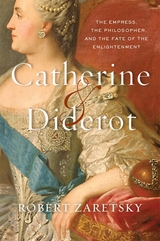
A dual biography crafted around the famous encounter between the French philosopher who wrote about power and the Russian empress who wielded it with great aplomb.
In October 1773, after a grueling trek from Paris, the aged and ailing Denis Diderot stumbled from a carriage in wintery St. Petersburg. The century’s most subversive thinker, Diderot arrived as the guest of its most ambitious and admired ruler, Empress Catherine of Russia. What followed was unprecedented: more than forty private meetings, stretching over nearly four months, between these two extraordinary figures. Diderot had come from Paris in order to guide—or so he thought—the woman who had become the continent’s last great hope for an enlightened ruler. But as it soon became clear, Catherine had a very different understanding not just of her role but of his as well. Philosophers, she claimed, had the luxury of writing on unfeeling paper. Rulers had the task of writing on human skin, sensitive to the slightest touch.
Diderot and Catherine’s series of meetings, held in her private chambers at the Hermitage, captured the imagination of their contemporaries. While heads of state like Frederick of Prussia feared the consequences of these conversations, intellectuals like Voltaire hoped they would further the goals of the Enlightenment.
In Catherine & Diderot, Robert Zaretsky traces the lives of these two remarkable figures, inviting us to reflect on the fraught relationship between politics and philosophy, and between a man of thought and a woman of action.
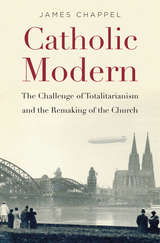
In 1900 the Catholic Church stood staunchly against human rights, religious freedom, and the secular state. According to the Catholic view, modern concepts like these, unleashed by the French Revolution, had been a disaster. Yet by the 1960s, those positions were reversed. How did this happen? Why, and when, did the world’s largest religious organization become modern?
James Chappel finds an answer in the shattering experiences of the 1930s. Faced with the rise of Nazism and Communism, European Catholics scrambled to rethink their Church and their faith. Simple opposition to modernity was no longer an option. The question was how to be modern. These were life and death questions, as Catholics struggled to keep Church doors open without compromising their core values. Although many Catholics collaborated with fascism, a few collaborated with Communists in the Resistance. Both strategies required novel approaches to race, sex, the family, the economy, and the state.
Catholic Modern tells the story of how these radical ideas emerged in the 1930s and exercised enormous influence after World War II. Most remarkably, a group of modern Catholics planned and led a new political movement called Christian Democracy, which transformed European culture, social policy, and integration. Others emerged as left-wing dissidents, while yet others began to organize around issues of abortion and gay marriage. Catholics had come to accept modernity, but they still disagreed over its proper form. The debates on this question have shaped Europe’s recent past—and will shape its future.
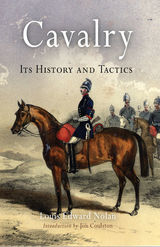
A New Edition of One of the Great Military Treatises of the Nineteenth Century
First published in 1853, Cavalry: Its History and Tactics had a major impact on military theorists and officers for decades—it was reprinted as a manual during the American Civil War—and its influence on European cavalry performance can be traced into World War I. It is an intelligent work which discusses the history and development of cavalry over the ages, advocates a program of reform for Britain’s horsed troops, and covers many aspects of equipment, training, drill, organization, formation, and battlefield tactics. The author, an experienced and gifted cavalryman, first served in the Austrian army, then joined the British army’s 15th Hussars in 1839, fought in India, and became the regimental riding master. Captain Nolan’s 1852 tour of European armies, wide reading in many languages, and service in Europe and India makes Cavalry an extraordinary statement on mid-nineteenth-century theory and practice.
As historian Jon Coulston explains in his introduction, Nolan was writing at the cusp of technological change, drawing upon the experiences of the Napoleonic Wars, continental suppression of the 1848 Revolutions, and Britain’s wars in India, but with an eye to firepower developments on the eve of the Crimean War. In 1854, at the Battle of Balaklava, Nolan rode with the written order which unleashed the Charge of the Light Brigade, an action in which he lost his life. Presented here as the first modern reprint, complete with a new introduction and further reading, Nolan’s Cavalry remains a hallmark of military history.
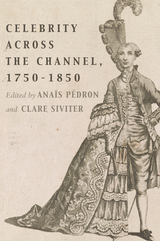


The renowned historian Ivan T. Berend discusses populist demagoguery through the presentation of eighteen politicians from twelve European countries spanning World War I to the present. Berend defines demagoguery, reflects on its connections with populism, and examines the common features and differences in the demagogues’ programs and language.
Mussolini and Hitler, the “model demagogues,” are only briefly discussed, as is the election of Donald Trump in the United States and its impact on Europe. The eighteen detailed portraits include two communists, two fascists, and several right-wing and anti-EU politicians, extending across the full range of demagoguery. The author covers Béla Kun, the leader of the Hungarian Soviet Republic in 1919, weaving through Codreanu and Gömbös from the 1930s, on to Stahremberg and Haider in Austria, and then more broadly throughout Europe from Ceaușescu, Milošević, Tuđjman, Izetbegović, Berlusconi, Wilders, to the two Le Pens, Farage, and Boris Johnson, Orbán and the two Kaczyńskis. Each case includes an analysis of the time and place and is illustrated with quotations from the demagogues’ speeches.
This book is a warning about the continuing threat of populist demagogues both for their subjects and for history itself. Berend insists on the crucial importance for Europe to understand the reality behind their promises and persuasive language as imperative to impeding their success.
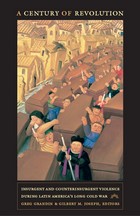
Contributors
Michelle Chase
Jeffrey L. Gould
Greg Grandin
Lillian Guerra
Forrest Hylton
Gilbert M. Joseph
Friedrich Katz
Thomas Miller Klubock
Neil Larsen
Arno J. Mayer
Carlota McAllister
Jocelyn Olcott
Gerardo Rénique
Corey Robin
Peter Winn
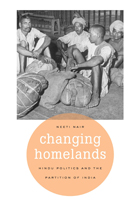
Changing Homelands offers a startling new perspective on what was and was not politically possible in late colonial India. In this highly readable account of the partition in the Punjab, Neeti Nair rejects the idea that essential differences between the Hindu and Muslim communities made political settlement impossible. Far from being an inevitable solution, the idea of partition was a very late, stunning surprise to the majority of Hindus in the region.
In tracing the political and social history of the Punjab from the early years of the twentieth century, Nair overturns the entrenched view that Muslims were responsible for the partition of India. Some powerful Punjabi Hindus also preferred partition and contributed to its adoption. Almost no one, however, foresaw the deaths and devastation that would follow in its wake.
Though much has been written on the politics of the Muslim and Sikh communities in the Punjab, Nair is the first historian to focus on the Hindu minority, both before and long after the divide of 1947. She engages with politics in post-Partition India by drawing from oral histories that reveal the complex relationship between memory and history—a relationship that continues to inform politics between India and Pakistan.


This study explores how General History of the Pyrates was at the heart of early eighteenth-century British debates about commerce, colonialism, and law. Examining how pirates are depicted as both monsters and Great Men, Noel Chevalier untangles the contradictions within a Britain emerging as a colonial superpower, where ruthlessness and ambition were both feared and praised. Traveling the high seas to plunder treasure from foreign lands, pirates were not so different from the British capitalists who built fortunes from resource extraction, the plantation economy, and the transatlantic slave trade. Connecting the work to later books like Gulliver’s Travels and The Beggar’s Opera that satirized the era and its power-hungry prime minister Robert Walpole, Chevalier shows how the pirate became an iconic figure in 1720s Britain, a time of cold-hearted capitalism and rapacious colonial expansion.
Ghislaine Dunant's unforgettable biography of Delbo, La vie retrouvée (2016), captivated French readers and was awarded the Prix Femina. Now translated into English for the first time, Charlotte Delbo: A Life Reclaimed depicts Delbo's lifelong battles as a working-class woman, as a survivor, as a leftist who broke from the Communist Party, and most of all, as a writer whose words compelled others to see.
What happens when the liberty of ancient nobility collides with the revolutionary ideals of equality? This groundbreaking study explores how the American, French, Haitian, and Greek Revolutions redefined freedom—and how French Romantic figure Chateaubriand grappled with that transformation. Tracing his travels across England, North America, and the Mediterranean, this book uncovers Chateaubriand’s seductive visions of “paradises lost,” which were taken up, challenged, and reimagined by Anglophone and Hispanic writers.
From Charlotte Brontë to Harriet Beecher Stowe, from Byron to Bolaño authors found in Chateaubriand a conflicted but powerful voice at the crossroads of liberty, race, religion, and empire. This is the first comprehensive study to situate Chateaubriand within the histories of colonialism and global revolution, revealing a literary legacy that remains startlingly relevant in today’s struggles over equality.
Published by Bucknell University Press. Distributed worldwide by Rutgers University Press.
An exploration of the elaborate relationship between farmers, aerial sprayers, agriculturalists, crop pests, chemicals, and the environment.
The controversies in the 1960s and 1970s that swirled around indiscriminate use of agricultural chemicals—their long-term ecological harm versus food production benefits—were sparked and clarified by biologist Rachel Carson’s Silent Spring (1962). This seminal publication challenged long-held assumptions concerning the industrial might of American agriculture while sounding an alarm for the damaging persistence of pesticides, especially chlorinated hydrocarbons such as DDT, in the larger environment.
In Chemical Lands: Pesticides, Aerial Spraying, and Health in North America’s Grasslands since 1945 David D. Vail shows, however, that a distinctly regional view of agricultural health evolved. His analysis reveals a particularly strong ethic in the North American grasslands where practitioners sought to understand and deploy insecticides and herbicides by designing local scientific experiments, engineering more precise aircraft sprayers, developing more narrowly specific chemicals, and planting targeted test crops. Their efforts to link the science of toxicology with environmental health reveal how the practitioners of pesticides evaluated potential hazards in the agricultural landscape while recognizing the production benefits of controlled spraying.
Chemical Lands adds to a growing list of books on toxins in the American landscape. This study provides a unique Grasslands perspective of the Ag pilots, weed scientists, and farmers who struggled to navigate novel technologies for spray planes and in the development of new herbicides/insecticides while striving to manage and mitigate threats to human health and the environment.
A brilliant and timely reflection on irony in contemporary American culture
“This book is a powerful and persuasive defense of sophisticated irony and subtle humor that contributes to the possibility of a genuine civic trust and democratic life. R. Jay Magill deserves our congratulations for a superb job!”
—Cornel West, University Professor, Princeton University
“A well-written, well-argued assessment of the importance of irony in contemporary American social life, along with the nature of recent misguided attacks and, happily, a deep conviction that irony is too important in our lives to succumb. The book reflects wide reading, varied experience, and real analytical prowess.”
—Peter Stearns, Provost, George Mason University
“Somehow, Americans—a pragmatic and colloquial lot, for the most part—are now supposed to speak the Word, without ironic embellishment, in order to rebuild the civic culture. So irony’s critics decide it has become ‘worthy of moral condemnation.’ Magill pushes back against this new conventional wisdom, eloquently defending a much livelier American sensibility than the many apologists for a somber ‘civic culture’ could ever acknowledge."
—William Chaloupka, Chair and Professor, Department of Political Science, Colorado State University
The events of 9/11 had many pundits on the left and right scrambling to declare an end to the Age of Irony. But six years on, we're as ironic as ever. From The Simpsons and Borat to The Daily Show and The Colbert Report, the ironic worldview measures out a certain cosmopolitan distance, keeping hypocrisy and threats to personal integrity at bay.
Chic Ironic Bitterness is a defense of this detachment, an attitude that helps us preserve values such as authenticity, sincerity, and seriousness that might otherwise be lost in a world filled with spin, marketing, and jargon. And it is an effective counterweight to the prevailing conservative view that irony is the first step toward cynicism and the breakdown of Western culture.
R. Jay Magill, Jr., is a writer and illustrator whose work has appeared in American Prospect, American Interest, Atlantic Monthly, Foreign Policy, International Herald Tribune, New York Times, Wall Street Journal, and Print, amongother periodicals and books. A former Harvard Teaching Fellow and Executive Editor of DoubleTake, he holds a Ph.D. in American Studies from the University of Hamburg in Germany. This is his first book.
Artist Raquel Valle-Sentíes’s portraits bring visual dimension, while essays delve deeply into the authors’ lives for details that inform their literary, artistic, feminist, and political trajectories and sensibilities. The collection brilliantly intersects artistic visual and literary cultural productions, allowing complex themes to emerge, such as the fragility of life, sexism and misogyny, Chicana agency and forging one’s own path, the struggles of becoming a writer and battling self-doubt, economic instability, and political engagement and activism.
Arranged chronologically by birth order of the authors, the book can be read cover to cover for a genealogical overview, or scholars and general readers can easily jump in at any point and read about an individual author, regardless of the chronology.
Biographies included in this work include Raquel Valle-Sentíes, Angela de Hoyos, Montserrat Fontes, Gloria E. Anzaldúa, Norma E. Cantú, Denise Elia Chávez, Carmen Tafolla, Cherríe Moraga, Ana Castillo, Lorna Dee Cervantes, Sandra Cisneros, and Demetria Martínez.
Contributors
Cordelia E. Barrera
Mary Pat Brady
Norma E. Cantú
María Jesus Castro Dopacio
Carlos Nicolás Flores
Myrriah Gómez
Maria Magdalena Guerra de Charur
Gabriella Gutiérrez y Muhs
Georgina Guzmán
Cristina Herrera
María Esther Quintana
Eliza Rodríguez y Gibson
Meagan Solomon
Lourdes Torres
Raquel Valle-Sentíes
Jen Yáñez-Alaniz
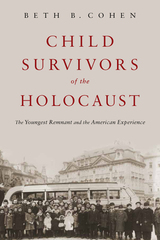
The majority of European Jewish children alive in 1939 were murdered during the Holocaust. Of 1.5 million children, only an estimated 150,000 survived. In the aftermath of the Shoah, efforts by American Jews brought several thousand of these child survivors to the United States. In Child Survivors of the Holocaust, historian Beth B. Cohen weaves together survivor testimonies and archival documents to bring their story to light. She reveals that even as child survivors were resettled and “saved,” they struggled to adapt to new lives as members of adoptive families, previously unknown American Jewish kin networks, or their own survivor relatives. Nonetheless, the youngsters moved ahead. As Cohen demonstrates, the experiences both during and after the war shadowed their lives and relationships through adulthood, yet an identity as “survivors” eluded them for decades. Now, as the last living link to the Holocaust, the voices of Child Survivors are finally being heard.

Mark Jones examines the making of a new child’s world in Japan between 1890 and 1930 and focuses on the institutions, groups, and individuals that reshaped both the idea of childhood and the daily life of children. Family reformers, scientific child experts, magazine editors, well-educated mothers, and other prewar urban elites constructed a model of childhood—having one’s own room, devoting time to homework, reading children’s literature, playing with toys—that ultimately became the norm for young Japanese in subsequent decades.
This book also places the story of modern childhood within a broader social context—the emergence of a middle class in early twentieth century Japan. The ideal of making the child into a “superior student” (yutosei) appealed to the family seeking upward mobility and to the nation-state that needed disciplined, educated workers able to further Japan’s capitalist and imperialist growth. This view of the middle class as a child-centered, educationally obsessed, socially aspiring stratum survived World War II and prospered into the years beyond.

“An instant classic.”—Calvin Bedient, New Republic
Mexico’s greatest modern poet reflects upon the twilight of modernity.
If Octavio Paz was “one of the greatest poets that the Spanish-language world has ever produced,” as Mario Vargas Llosa once said, he was also an astoundingly erudite critic. Here, in his 1971–1972 Norton Lectures, the Nobel laureate offers a potent and prescient diagnosis of the condition of poetry in the wake of literary modernism.
Poetry’s relationship with modernity, Paz argues, has always been tempestuous. If modern temporality posited the forward march of history toward the gates of a secular future, poetry is the “world of nonsequential time...a spiral sequence which turns ceaselessly without ever returning completely to its beginning.” And if modernity is the age of revolution, a negation of the past propelled by critical rationality, poetry chafes against the strictures of reason, aimlessly dwelling in dreams, eroticism, mythology, and other realms inaccessible to revolutionary fervor. Meanwhile, avant-garde attempts to embrace the “aesthetics of change” and recreate the revolutionary spirit in verse have exhausted themselves. What’s left, Paz maintains, is to return to the sinuous temporality of the poem itself, the irresolvable tension between the historical text and the abolition of history in the lyrical present.
Mapping the changing meanings of modernity across a wide range of poetic movements, from English and German Romanticism, French Surrealism, and Latin American modernismo to the avant-garde experiments of Vicente García-Huidobro, Children of the Mire is not only a dazzlingly cosmopolitan work of literary criticism. It is also a revealing portrait of the one of the defining voices of Latin American literature.
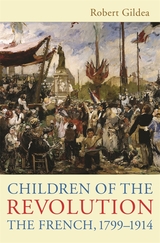
For those who lived in the wake of the French Revolution, from the storming of the Bastille to Napoleon’s final defeat, its aftermath left a profound wound that no subsequent king, emperor, or president could heal. Children of the Revolution follows the ensuing generations who repeatedly tried and failed to come up with a stable regime after the trauma of 1789. The process encouraged fresh and often murderous oppositions between those who were for, and those who were against, the Revolution’s values. Bearing the scars of their country’s bloody struggle, and its legacy of deeply divided loyalties, the French lived the long nineteenth century in the shadow of the revolutionary age.
Despite the ghosts raised in this epic tale, Robert Gildea has written a richly engaging and provocative book. His is a strikingly unfamiliar France, a country with an often overwhelming gap between Paris and the provinces, a country torn apart by fratricidal hatreds and a tortured history of feminism, the site of political catastrophes and artistic triumphs, and a country that managed—despite a pervasive awareness of its own fall from grace—to fix itself squarely at the heart of modernity. Indeed, Gildea reveals how the collective recognition of the great costs of the Revolution galvanized the French to achieve consensus in a new republic and to integrate the tumultuous past into their sense of national identity. It was in this spirit that France’s young men went to the front in World War I with a powerful sense of national confidence and purpose.
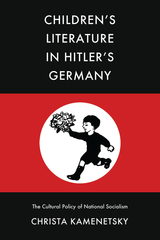
Between 1933 and 1945, National Socialists enacted a focused effort to propagandize children’s literature by distorting existing German values and traditions with the aim of creating a homogenous “folk community.” A vast censorship committee in Berlin oversaw the publication, revision, and distribution of books and textbooks for young readers, exercising its control over library and bookstore content as well as over new manuscripts, so as to redirect the cultural consumption of the nation’s children. In particular, the Nazis emphasized Nordic myths and legends with a focus on the fighting spirit of the saga heroes, their community loyalty, and a fierce spirit of revenge—elements that were then applied to the concepts of loyalty to and sacrifice for the Führer and the fatherland. They also tolerated select popular series, even though these were meant to be replaced by modern Hitler Youth camping stories.
In this important book, first published in 1984 and now back in print, Christa Kamenetsky demonstrates how Nazis used children’s literature to selectively shape a “Nordic Germanic” worldview that was intended to strengthen the German folk community, the Führer, and the fatherland by imposing a racial perspective on mankind. Their efforts corroded the last remnants of the Weimar Republic’s liberal education, while promoting an enthusiastic following for Hitler.

Gaudiopolis (The City of Joy) was a pedagogical experiment that operated in a post–World War II orphanage in Budapest. This book tells the story of this children’s republic that sought to heal the wounds of wartime trauma, address prejudice and expose the children to a firsthand experience of democracy. The children were educated in freely voicing their opinions, questioning authority, and debating ideas.
The account begins with the saving of hundreds of Jewish children during the Siege of Budapest by the Lutheran minister Gábor Sztehlo together with the International Red Cross. After describing the everyday life and practices of self-rule in the orphanage that emerged from this rescue operation, the book tells how the operation of the independent children’s home was stifled after the communist takeover and how Gaudiopolis was disbanded in 1950.
The book then discusses how this attempt of democratization was erased from collective memory. The erasure began with the banning of a film inspired by Gaudiopolis. The Communist Party financed Somewhere in Europe in 1947 as propaganda about the construction of a new society, but the film’s director conveyed a message of democracy and tolerance instead of adhering to the tenets of socialist realism. The book breaks the subsequent silence on “The City of Joy,” which lasted until the fall of the Iron Curtain and beyond.
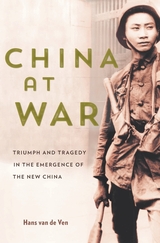
China’s mid-twentieth-century wars pose extraordinary interpretive challenges. The issue is not just that the Chinese fought for such a long time—from the Marco Polo Bridge Incident of July 1937 until the close of the Korean War in 1953—across such vast territory. As Hans van de Ven explains, the greatest puzzles lie in understanding China’s simultaneous external and internal wars. Much is at stake, politically, in how this story is told.
Today in its official history and public commemorations, the People’s Republic asserts Chinese unity against Japan during World War II. But this overwrites the era’s stark divisions between Communists and Nationalists, increasingly erasing the civil war from memory. Van de Ven argues that the war with Japan, the civil war, and its aftermath were in fact of a piece—a singular process of conflict and political change. Reintegrating the Communist uprising with the Sino-Japanese War, he shows how the Communists took advantage of wartime to increase their appeal, how fissures between the Nationalists and Communists affected anti-Japanese resistance, and how the fractious coalition fostered conditions for revolution.
In the process, the Chinese invented an influential paradigm of war, wherein the Clausewitzian model of total war between well-defined interstate enemies gave way to murky campaigns of national liberation involving diverse domestic and outside belligerents. This history disappears when the realities of China’s mid-century conflicts are stripped from public view. China at War recovers them.


“A timely book...An impressive roster of authors collectively provides a broad overview of the many aspects of the relationship, going well beyond diplomacy and politics. The essays also work beautifully by themselves.” —Odd Arne Westad, author of Empire and Righteous Nation
“Offers a wide range of accessible essays on topics from international relations to culture, in a tone that is lively and argumentative but always balanced. Overall, the book has a powerful message: the United States needs informed and clear-eyed engagement with China.” —Rana Mitter, author of China’s Good War
For decades, Americans have described China as a rising power. But China has already risen. What does this mean for the United States, for the global economy, and for international security? Tackling key issues, providing historical perspective, and demystifying stereotypes, Maria Adele Carrai, Jennifer Rudolph, Michael Szonyi, and an all-star group of China experts offer essential insights into the many dimensions of the world’s most important bilateral relationship.
Ranging across questions of security, economics, military development, climate change, public health, science and technology, education, and the worrying flashpoints of Hong Kong, Taiwan, and Xinjiang, the concise essays that compose this book are ideal vantage points on the tensions as well as the potential collaborations between China and the United States. The China Questions 2 makes clear that we are faced not with another Cold War but with something more complex that must be understood on its own terms.
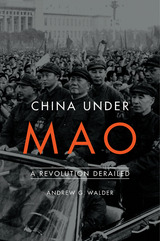
China’s Communist Party seized power in 1949 after a long period of guerrilla insurgency followed by full-scale war, but the Chinese revolution was just beginning. China Under Mao narrates the rise and fall of the Maoist revolutionary state from 1949 to 1976—an epoch of startling accomplishments and disastrous failures, steered by many forces but dominated above all by Mao Zedong.
“Walder convincingly shows that the effect of Maoist inequalities still distorts China today…[It] will be a mind-opening book for many (and is a depressing reminder for others).”
—Jonathan Mirsky, The Spectator
“Andrew Walder’s account of Mao’s time in power is detailed, sophisticated and powerful…Walder takes on many pieces of conventional wisdom about Mao’s China and pulls them apart…What was it that led so much of China’s population to follow Mao’s orders, in effect to launch a civil war against his own party? There is still much more to understand about the bond between Mao and the wider population. As we try to understand that bond, there will be few better guides than Andrew Walder’s book. Sober, measured, meticulous in every deadly detail, it is an essential assessment of one of the world’s most important revolutions.”
—Rana Mitter, Times Literary Supplement

A Foreign Affairs Best Book of the Year
An illuminating portrait of how Shanghai’s Catholic community surged back to life after the Cultural Revolution—and of a Church divided between allegiance to the Vatican and loyalty to the Communist party-state.
During the Cultural Revolution, the Chinese state sought to eradicate religious life throughout the country. But by 1978, two years after the death of Mao Zedong, the Communist Party under Deng Xiaoping cautiously embraced the revival of religion. At the same time, in Rome, the newly elected Pope John Paul II made a point of renewing outreach to China. Paul P. Mariani tracks the fate of Chinese Catholicism in the wake of these transformative leadership changes, focusing on the influential Catholic community in Shanghai.
Even as Chinese Catholicism came back to life in the 1980s, the way forward was hardly an easy one. Earlier policies of the 1950s had fractured the Catholic community into a state-approved “patriotic” church that answered to the government and an underground church loyal to Rome. Even after the Cultural Revolution, Mariani shows, this divide remained firmly intact. The resulting tensions were on vivid display in Shanghai, owing to the leadership of the Jesuit priest Louis Jin Luxian. Formerly a member of the underground church, Jin realigned with the state church during the revival and was consecrated bishop of Shanghai without papal approval in 1985. Bishop Jin used his position to revitalize the local Catholic community, but his cooperation with the party put him ever at odds with underground church leaders.
Sensitive to the ideals, compromises, and disappointments of Catholics on both sides of the rift, China’s Church Divided reveals how the community navigated the irreconcilable differences between a worldwide Church centered in Rome and a regime wary of foreign spiritual authority.
The Chinese Maritime Customs began publishing China's foreign trade statistics in the early 1860s. Over time, its publications accumulated into an impressive collection. By arranging the relevant data of more than 80 years in a systematic form, this Handbook has removed a major stumbling block confronting research in this area. It contains all important statistical series in the Customs publications, including about 100 in commodities, 20 in countries, 10 in ports, and over 80 in shipping. It also introduces an adjusted imports and exports series which is more consistent than the Customs own data.
In addition to providing a few hundred well arranged relevant statistical series, this Handbook traces the development and changes in concept and procedure in the Customs statistics.
A Foreign Affairs Book of the Year
A Spectator Book of the Year
“Insightful…a deft, textured work of intellectual history.”
—Foreign Affairs
“A timely insight into how memories and ideas about the second world war play a hugely important role in conceptualizations about the past and the present in contemporary China.”
—Peter Frankopan, The Spectator
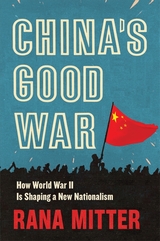
For most of its history, China frowned on public discussion of the war against Japan. But as the country has grown more powerful, a wide-ranging reassessment of the war years has been central to new confidence abroad and mounting nationalism at home.
Encouraged by reforms under Deng Xiaoping, Chinese scholars began to examine the long-taboo Guomindang war effort, and to investigate collaboration with the Japanese and China’s role in the post-war global order. Today museums, television shows, magazines, and social media present the war as a founding myth for an ascendant China that emerges as victor rather than victim. One narrative positions Beijing as creator and protector of the international order—a virtuous system that many in China now believe to be under threat from the United States. China’s radical reassessment of its own past is a new founding myth for a nation that sees itself as destined to shape the world.
“A detailed and fascinating account of how the Chinese leadership’s strategy has evolved across eras…At its most interesting when probing Beijing’s motives for undertaking such an ambitious retooling of its past.”
—Wall Street Journal
“The range of evidence that Mitter marshals is impressive. The argument he makes about war, memory, and the international order is…original.”
—The Economist
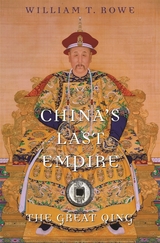
In a brisk revisionist history, William Rowe challenges the standard narrative of Qing China as a decadent, inward-looking state that failed to keep pace with the modern West.
The Great Qing was the second major Chinese empire ruled by foreigners. Three strong Manchu emperors worked diligently to secure an alliance with the conquered Ming gentry, though many of their social edicts—especially the requirement that ethnic Han men wear queues—were fiercely resisted. As advocates of a “universal” empire, Qing rulers also achieved an enormous expansion of the Chinese realm over the course of three centuries, including the conquest and incorporation of Turkic and Tibetan peoples in the west, vast migration into the southwest, and the colonization of Taiwan.
Despite this geographic range and the accompanying social and economic complexity, the Qing ideal of “small government” worked well when outside threats were minimal. But the nineteenth-century Opium Wars forced China to become a player in a predatory international contest involving Western powers, while the devastating uprisings of the Taiping and Boxer rebellions signaled an urgent need for internal reform. Comprehensive state-mandated changes during the early twentieth century were not enough to hold back the nationalist tide of 1911, but they provided a new foundation for the Republican and Communist states that would follow.
This original, thought-provoking history of China’s last empire is a must-read for understanding the challenges facing China today.

Dazzled by the model of Japan’s Western-style constitutional government, Chinese officials and elite activists made plans to establish locally elected councils. By October 1911, government agencies had reported the establishment of about 5,000 councils.
Throughout the period, data on self-government reforms collected from localities were compiled in provincial capitals, then collated, summarized, and archived in Beijing. Simultaneously, directives were being sent from the capital to the provinces. From this wealth of previously unexamined material, Roger R. Thompson draws a portrait-in-motion of the reforms. He demonstrates the energy and significance of the late-Qing local-self-government movement, while making a compelling case that it was separate from the well-studied phenomenon of provincial assemblies and constitutionalism in general.
China's Politics in Perspective was first published in 1962. Minnesota Archive Editions uses digital technology to make long-unavailable books once again accessible, and are published unaltered from the original University of Minnesota Press editions.
In a concise, readable diagnosis of present-day China, this book provides the perspective which is needed for a realistic view of the Chinese situation today.
Professor Quigley introduces the reader to contemporary political, economic, and social conditions on the mainland and on Nationalist-held Taiwan by briefly reviewing the basic tenets of Confucianism and other classical philosophies, the principal aspects of the imperial system, and the domestic and foreign influences which contributed to the collapse of monarchy in 1911. He recalls the revolutionary doctrine of Sun Yat-sen and surveys the nature and conduct of government under the first and second republics and the forces that operated for and against the transfer of liberal ideals from paper to practice. After showing how the Communist leadership gained its foothold and present control, he discusses the ideologies of Mao Tse-tung and Chiang Kai-shek, the structure and administration of their governments and major parties, their economic, social, and foreign policies, the independence movement on Taiwan, the prospects for democracy and the dilemma in which the United States has been placed by the victory of the Communists over a wartime ally.
In addition to being appropriate for general readers and for study groups interested in contemporary affairs, the book is especially suitable for use as a college text.
With the Qing Dynasty reform efforts (1901–1911), abolition of the civil service examination (1905), and the end of the monarchy (1912), the first three decades of the twentieth century brought important changes to the elite of Zhejiang Province. This book examines the social backgrounds, public activities, careers, and decision-making of local and provincial elites—that is, nonprofessional men who had taken on public duties when the multiplying problems of government had resulted in a general breakdown of public functions.
While elites in early twentieth-century China have often been caricatured as militarists, corrupt bureaucrats, evil landlords, and ineffectual reformers, they have not been clearly understood or closely analyzed. Since the seventeenth century, elites had been assuming increasing responsibility for funding and managing public projects, and by the twentieth century had expanded their activities still further. In the first three decades of the century, they experienced substantial personal and communitarian development; it was the structures and processes developed by these elites that subsequent regimes—Guomindang, Japanese, or Communist—had to build upon and adapt.
Keith Schoppa divides the counties of Zhejiang Province into four zones according to level of political and economic development and scrupulously analyzes the complex processes of remolding society at the local and provincial levels. By delving beneath the heroic figures and large movements of Chinese political life in this century, he reveals the common factors that make China a part of the worldwide story of reconstruction, reform, and developmental change.
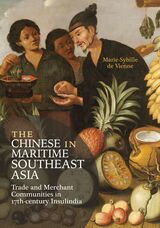
Connections between Asian and European markets increased dramatically in the seventeenth century, indicating a turning point in the global history of trade. The Dutch East-India Company (or VOC) was central to this process; however, counter to the VOC’s aims, the winners of the game in maritime Southeast Asia were often Chinese merchants. As this book shows, at the time, these merchants were the only economic agents capable of trading both in major Southeast Asian commercial hubs and developing exchanges with China and Japan. The Chinese operated with a flexibility of means and a fluidity of management that allowed them to react rapidly and quickly gain returns on investment. In Batavia, as in other Southeast Asian emporiums, the increasingly numerous and diverse Chinese elites assumed direct responsibility for the management of their community; this made them the most important non-European free community in the city during the second half of the seventeenth century.
The Chinese in Maritime Southeast Asia tells this remarkable story through an examination of the VOC’s abundant sources, which record relations between the Chinese minority and the Dutch rulers who relied upon them.
Imperialism, pernicious as it was in most respects, served as the prime catalyst for social change in China throughout the turbulent period from 1895 to 1913. Starting with this premise, Edward Rhoads traces the social, political, and economic history of the republican revolution. In his view, after the Boxer uprising, the Manchu court, usually called supine and reactionary, instituted a program of reform that was a serious, comprehensive, and often successful attempt at radical social transformation. It failed, but it politicized the Chinese people to an unprecedented degree--and it marks the entrance of China into the modern era.
The post-Boxer reforms attracted many revolutionaries and defused a serious revolutionary threat. Contrary to traditional accounts, Sun Yat-sen and his Revolutionary Alliance did not move easily from success to success. On the eve of the 1911 revolution, in fact, the movement was disorganized and demoralized. Its ultimate victory came less from its own efforts than from the failure of the incumbent rulers to win the support of the nonrevolutionary elite.

Observers and historians continue to marvel at the diversity and complexity of the Ottoman Empire. This book explores the significant and multifaceted role that Orthodox Christian networks played in the sultan’s realm from the 17th century until WWI. These multi-ethnic, multi-lingual, and multi-confessional formations contributed fundamentally to the political, economic, social, and cultural development of the Empire as well as to its gradual disintegration.
Bringing together scholars from most Balkan countries, Christian Networks in the Ottoman Empire describes the variety of Orthodox Christian networks under Ottoman rule. The examples examined include commercial relations, intellectual networks, educational systems, religious dynamics, consular activities, and revolutionary movements, and involve Muslims and Christians, Romanians and Serbs, Bulgarians and Greeks, Albanians and Turks. The contributions show that the Christian populations and their elites were an integral part of Ottoman society.
The geographical spread of the formal and informal networks enriches our understanding of the terms ‘center’ and ‘periphery.’ They were either centered within the official Ottoman borders and extended their activities to other states and empires, or vice versa, located elsewhere, but also active in the Ottoman Empire. A common feature of these formations is their constant fluctuation, which enables a dynamic understanding of Ottoman history.
Readers do not always take into account how books that combine image and text make their meanings. But for the Pre-Raphaelite poet Christina Rossetti, such considerations were central.
Christina Rossetti and Illustration maps the production and reception of Rossetti’s illustrated poetry, devotional prose, and work for children, both in the author’s lifetime and in posthumous twentieth-century reprints.
Lorraine Janzen Kooistra’s reading of Rossetti’s illustrated works reveals for the first time the visual-verbal aesthetic that was fundamental to Rossetti’s poetics. Her exhaustive archival research brings to light new information on how Rossetti’s commitment to illustration and attitudes to copyright and control influenced her transactions with publishers and the books they produced. Janzen Kooistra also tracks the poet’s reception in the twentieth century through a complex web of illustrated books produced for a wide range of audiences.
Analyzing an impressive array of empirical data, Janzen Kooistra shows how Rossetti’s packaging for commodity consumption—by religious presses, publishers of academic editions and children’s picture books, and makers of erotica and collectibles—influenced the reception of her work and her place in literary history.

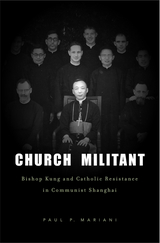
By 1952 the Chinese Communist Party had suppressed all organized resistance to its regime and stood unopposed, or so it has been believed. Internal party documents—declassified just long enough for historian Paul Mariani to send copies out of China—disclose that one group deemed an enemy of the state held out after the others had fallen. A party report from Shanghai marked “top-secret” reveals a determined, often courageous resistance by the local Catholic Church. Drawing on centuries of experience in struggling with the Chinese authorities, the Church was proving a stubborn match for the party.
Mariani tells the story of how Bishop (later Cardinal) Ignatius Kung Pinmei, the Jesuits, and the Catholic Youth resisted the regime’s punishing assault on the Shanghai Catholic community and refused to renounce the pope and the Church in Rome. Acting clandestinely, mirroring tactics used by the previously underground CCP, Shanghai’s Catholics persevered until 1955, when the party arrested Kung and 1,200 other leading Catholics. The imprisoned believers were later shocked to learn that the betrayal had come from within their own ranks.
Though the CCP could not eradicate the Catholic Church in China, it succeeded in dividing it. Mariani’s secret history traces the origins of a deep split in the Chinese Catholic community, where relations between the “Patriotic” and underground churches remain strained even today.
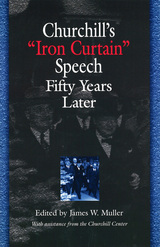
Winston Churchill's visit to Fulton, Missouri, on March 5, 1946, marked the first public recognition of the cold war that was to follow World War II. Churchill delivered his most famous speech, "The Sinews of Peace," which became best known by the phrase he used to describe the cold-war division of Europe, the "iron curtain."
In the United States and Britain, wartime alliances had fostered favorable feelings toward the Soviet Union. By 1946 democratic citizens on both sides of the Atlantic had begun to consider communist Russia a friend. In his speech at Fulton, Churchill exhibited breathtaking flexibility and a clear recognition of the main threat as he reminded the public that true friendship must be reserved for countries sharing a common love of liberty. The "Iron Curtain" speech defined postwar relations with the Soviet Union for citizens of Western democracies. Although it initially provoked intense controversy in the United States and Britain, criticism soon gave way to wide public agreement to oppose Soviet imperialism.
Opening with the full text of the address Churchill delivered in Fulton and concluding with Margaret Thatcher's fiftieth-anniversary address surveying the challenges facing Western democracies in this post-cold war climate, the book brings together essays that reflect on the past fifty years, recognizing Churchill's speech as a carefully conceived herald of the cold war for the Western democracies. These powerful essays offer a fresh appreciation of the speech's political, historical, diplomatic, and rhetorical significance.
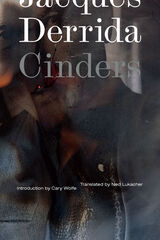
“More than fifteen years ago,” Jacques Derrida writes in the prologue to this remarkable and uniquely revealing book, “a phrase came to me, as though in spite of me. . . . It imposed itself upon me with the authority, so discreet and simple it was, of a judgment: ‘cinders there are’ (il y a là cendre). . . . I had to explain myself to it, respond to it—or for it.”
In Cinders Derrida ranges across his work from the previous twenty years and discerns a recurrent cluster of arguments and images, all involving in one way or another ashes and cinders. For Derrida, cinders or ashes—at once fragile and resilient—are “the better paradigm for what I call the trace—something that erases itself totally, radically, while presenting itself.”
In a style that is both highly condensed and elliptical, Cinders offers probing reflections on the relation of language to truth, writing, the voice, and the complex connections between the living and the dead. It also contains some of his most essential elaborations of his thinking on the feminine and on the legacy of the Holocaust (both a word—from the Greek hólos, “whole,” and kaustós, “burnt”—and a historical event that invokes ashes) in contemporary poetry and philosophy. In turning from the texts of other philosophers to his own, Cinders enables readers to follow the trajectory from Derrida’s early work on the trace, the gramma, and the voice to his later writings on life, death, time, and the spectral.
Among the most accessible of this renowned philosopher’s many writings, Cinders is an evocative and haunting work of poetic self-analysis that deepens our understanding of Derrida’s critical and philosophical vision.
Péter Forgács, based in Budapest, is best known for his award-winning films built on home movies from the 1930s to the 1960s that document ordinary lives soon to intersect with offscreen historical events. Cinema’s Alchemist offers a sustained exploration of the imagination and skill with which Forgács reshapes such film footage, originally intended for private and personal viewing, into extraordinary films dedicated to remembering the past in ways that matter for our future.
Contributors: Whitney Davis, U of California, Berkeley; László F. Földényi, U of Theatre, Film and Television, Budapest; Marsha Kinder, U of Southern California; Tamás Korányi; Scott MacDonald, Hamilton College; Tyrus Miller, U of California, Santa Cruz; Roger Odin, U of Paris III Sorbonne–Nouvelle; Catherine Portuges, U of Massachusetts Amherst; Michael S. Roth, Wesleyan U; Kaja Silverman, U of Pennsylvania; Ernst van Alphen, Leiden U, the Netherlands; Malin Wahlberg, Stockholm U.

In 1916, a group of Korean farmers and their children gathered to watch a film depicting the enthronement of the Japanese emperor. For this screening, a unit of the colonial government’s news agency brought a projector and generator by train to their remote rural town. Before the formation of commercial moviegoing culture for colonial audiences in rural Korean towns, many films were sent to such towns and villages as propaganda. The colonial authorities, as well as later South Korean postcolonial state authorities, saw film as the most effective medium for disseminating their political messages. In Cine-Mobility, Han Sang Kim argues that the force of propaganda films in Korea was derived primarily not from their messages but from the new mobility of the viewing position.
From the first film shot in Korea in 1901 through early internet screen cultures in late 1990s South Korea, Cine-Mobility explores the association between cinematic media and transportation mobility, not only in diverse and discrete forms such as railroads, motorways, automobiles, automation, and digital technologies, but also in connection with the newly established rules and restrictions and the new culture of mobility, including changes in gender dynamics, that accompanied it.
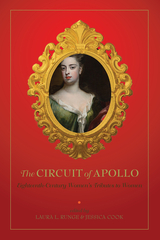
Published by University of Delaware Press. Distributed worldwide by Rutgers University Press.
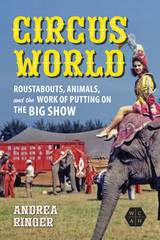
Andrea Ringer examines the industry-wide circus world--the collection of shows that traveled by rail, wagon, steamboat, and car--and the traditional and nontraditional laborers who created it. Performers and their onstage labor played an integral part in the popularity of the circus. But behind the scenes, other laborers performed the endless menial tasks that kept the show on the road. Circus operators regulated employee behavior both inside and outside the tent even as the employees themselves blurred the line between leisure and labor until, in all parts of the show, the workers could not escape their work.
Illuminating and vivid, Circus World delves into the gender, class, and even species concerns within an extinct way of life.
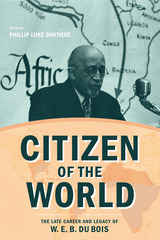
From his birth in 1868 until his death in 1963, Du Bois sought the liberation of black people in the United States and across the world through intellectual and political labor. His tireless efforts documented and demonstrated connections between freedom for African-descended people abroad and black freedom at home.
In concert with growing scholarship on his twilight years, the essays in this volume assert the fundamental importance of considering Du Bois’s later decades not as a life in decline that descended into blind ideological allegiance to socialism and communism but as the life of a productive, generative intellectual who responded rationally, imaginatively, and radically to massive mid-century changes around the world, and who remained committed to freedom’s realization until his final hour.
The stories told here capture a wide-ranging debate about the workings of the national security state and the meaning of American citizenship. Some of the participants in this debate—women like war bride Ellen Knauff and Pentagon employee Annie Lee Moss—were able to make their own experiences compelling examples of the threats posed by the national security regime. Others, such as Ruth Reynolds and Lolita Lebrón, who advocated an end to American empire in Puerto Rico, or the psychiatrist Fredric Wertham, who sought to change the very definition of national security, were less successful. Together, however, they exposed the gap between democratic ideals and government policies.
Friedman traverses immigration law and loyalty boards, popular culture and theoretical treatises, U.S. court-rooms and Puerto Rican jails, to demonstrate how Cold War repression made visible in new ways the unevenness and limitations of American citizenship. Highlighting the ways that race and gender shaped critiques and defenses of the national security regime, she offers new insight into the contradictions of Cold War political culture.
Did women have a civic identity in eighteenth-century France? In Citoyennes: Women and the Ideal of Citizenship in Eighteenth-Century France, Annie Smart contends that they did. While previous scholarship has emphasized the ideal of domestic motherhood or the image of the republican mother, Smart argues persuasively that many pre-revolutionary and revolutionary texts created another ideal for women–the ideal of civic motherhood. Smart asserts that women were portrayed as possessing civic virtue, and as promoting the values and ideals of the public sphere.
Contemporary critics have theorized that the eighteenth-century ideal of the Republic intentionally excluded women from the public sphere. According to this perspective, a discourse of “Rousseauean” domestic motherhood stripped women of an active civic identity, and limited their role to breastfeeding and childcare. Eighteenth-century France marked thus the division between a male public sphere of political action and a female private sphere of the home.
Citoyennes challenges this position and offers an alternative model of female identity. This interdisciplinary study brings together a variety of genres to demonstrate convincingly that women were portrayed as civic individuals. Using foundational texts such as Jean-Jacques Rousseau’s Emile, or on Education (1762), revolutionary gouaches of Lesueur, and vaudeville plays of Year II of the Republic (1793/1794), this study brilliantly shows that in text and image, women were represented as devoted to both the public good and their families.
In addition, Citoyennes offers an innovative interpretation of the home. Through re-examining sphere theory, this study challenges the tendency to equate the home with private concerns, and shows that the home can function as a site for both private life and civic identity.
Citoyennes breaks new ground, for it both rectifies the ideal of domestic Rousseauean motherhood, and brings a fuller understanding to how female civic identity operated in important French texts and images.
Published by University of Delaware Press. Distributed worldwide by Rutgers University Press.
Examines Miami’s turbulent transformation from a segregated vacation destination to a global, multicultural metropolis
City of Hope, City of Rage gives a fascinating account of three turbulent and transformative decades in the history of Miami. Marked by mass immigration, racially motivated uprisings, economic inequity, rising crime, and social change, Miami’s history from 1968 to 1994 saw the city evolve rapidly from a predominantly white southern city and vacation spot into a global, Hispanic-majority metropolis with an international tourist base. And yet Miami remains highly segregated today.
Exploring beyond the clichés of the Magic City as a bastion of hope for immigrants, a fantasy of beaches and art deco architecture, or a hotbed of drugs and crime, historian Seth A. Weitz reveals the social, political, and cultural shifts that transformed the city. Utilizing archival research and personal stories to reveal the diverse experiences of Miami’s Black, Latinx, Jewish, and LGBTQ+ communities, Weitz explores the struggles for social justice, the rise of the drug trade, and the ongoing fight to mold Miami’s image.
A Miami native, Weitz challenges simplistic narratives about the city, revealing a place defined by hope, rage, and struggle for identity. Illuminating the way Miami is defined and who gets to define it, City of Hope, City of Rage offers a fresh perspective on this vibrant and complex city, making it a valuable resource for anyone interested in Miami’s unique history.
Michelson had a serene boyhood in an upper middle-class Jewish family in Riga, Latvia--at least until 1940, when the fifteen-year old Michelson witnessed the annexation of Latvia by the Soviet Union. Private properties were nationalized, and Stalin's terror spread to Soviet Latvia. Soon after, Michelson's family was torn apart by the 1941 Nazi invasion of the Soviet Union. He quickly lost his entire family, while witnessing the unspeakable brutalities of war and genocide.
Michelson's memoir is an ode to his lost family; it is the speech of their muted voices and a thank you for their love. Although badly scarred by his experiences, like many other survivors he was able to rebuild his life and gain a new sense of what it means to be alive.
His experiences will be of interest to scholars of both the Holocaust and Eastern European history, as well as the general reader.
In the midst of the Philippine-American War, twenty-two-year-old Robert Dexter Carter served in Manila as a civilian quartermaster clerk. Through his letters to his family, he provided a vivid picture of army life in Manila—the sights, the smells, and his responses to the native culture. In addition to his letters, his diary and several related articles present a firsthand account of the historic voyage of the United States Army Transport Grant through the Suez Canal to Manila in early 1899. Carter’s writings not only tell of his sometimes harrowing experiences, but also reveal the aspirations and fears of a young man not quite sure of his next steps on life’s journey.
Carter’s father, Robert Goldthwaite Carter, was a war hero and a longtime friend of Maj. Gen. Henry W. Lawton. Carter obtained his position through Lawton’s influence, and his respect for Lawton is clear throughout his writings. A frequent guest in the Lawton home, the young clerk was introduced to many notable figures both military and civilian. Carter’s letters, particularly to his father, are full of news and gossip related to his commander. In other letters, he reveals the kindness and generosity of Mrs. Lawton, who took time to look out for Carter while he was in the hospital and often loaned him books.
This well-researched and expertly edited work casts light on the role of support troops in war, a subject too often minimized or ignored. Shay begins each chapter with an introduction that establishes the setting, the context of events, and the disposition of Carter and his compatriots and provides notes and commentary to place the letters in context. By choosing not to edit the offensive expletives of a sometimes arrogant and racist young man, Shay presents a fully nuanced portrait of a young American exploring the larger world in a time of turmoil.
Enhanced by photographs from collections at the Library of Congress and the Military History Institute, as well as many of Carter’s own whimsical drawings, the book will appeal to armchair historians and scholars alike.

The idea that society progresses through stages of development, from savagery to civilization, arose in eighteenth-century Europe. Albert Craig traces how Fukuzawa Yukichi, deeply influenced by the Scottish Enlightenment, “translated” the idea for Japanese society, both enriching and challenging the concept.
Fukuzawa, an official in the Tokugawa government, saw his career collapse when the shogunate ended in 1867. Reinventing himself as a thinker and writer, he made his life work the translation and interpretation of the Western idea of the stages of civilization. He interpreted key Scottish intellectuals— Adam Smith, Adam Ferguson, William Robertson, John Millar; relied on American geographies to help explain how societies progress; and focused on invention as a key to civilization.
By defining the role of “less developed” nations in the world order, Fukuzawa added a new dimension to the stage theory. But by the end of the 1880s, he had come to dismiss the philosophy of natural rights as “the fatuous idealism of Christian ministers.” Though civilization—as represented by Britain—was still his goal for Japan, he no longer saw the West as a uniformly beneficial moral force.
This engaging history offers an illuminating look at an important figure and the world of ideas in nineteenth-century Japan.
Honorable Mention for the 2019 Sonya Rudikoff Prize, awarded by the Northeast Victorian Studies Association
Civilizing War traces the historical transformation of civil war from a civil affair into an uncivil crisis. Civil war is today synonymous with the global refugee crisis, often serving as grounds for liberal-humanitarian intervention and nationalist protectionism.
In Civilizing War, Nasser Mufti situates this contemporary conjuncture in the long history of British imperialism, demonstrating how civil war has been and continues to be integral to the politics of empire. Through comparative readings of literature, criticism, historiography, and social analysis, Civilizing War shows how writers and intellectuals of Britain’s Anglophone empire articulated a “poetics of national rupture” that defined the metropolitan nation and its colonial others.
Mufti’s tour de force marshals a wealth of examples as diverse as Thomas Carlyle, Benjamin Disraeli, Friedrich Engels, Arthur Conan Doyle, Rudyard Kipling, Joseph Conrad, V. S. Naipaul, Nadine Gordimer, and Michael Ondaatje to examine the variety of forms this poetics takes—metaphors, figures, tropes, puns, and plot—all of which have played a central role in Britain’s civilizing mission and its afterlife. In doing so, Civilizing War shifts the terms of Edward Said’s influential Orientalism to suggest that imperialism was not only organized around the norms of civility but also around narratives of civil war.

From the novels of Charles Dickens and George Gissing to anonymous magazine articles and pamphlets, resistance to reform found expression in the nostalgic appreciation of a threatened urban landscape and anxiety about domestic autonomy in an era of networked sanitary services. Cleansing the City emphasizes the disruptions and disorientation occasioned by purification—a process we are generally inclined to see as positive. By recovering these sometimes oppositional, sometimes ambivalent responses, Michelle Allen elevates a significant undercurrent of Victorian thought into the mainstream and thus provides insight into the contested nature of sanitary modernization.

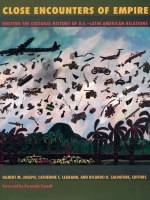
Exploring a variety of nineteenth- and twentieth-century encounters in Latin America, these theoretically engaged essays by distinguished U.S. and Latin American historians and anthropologists illuminate a wide range of subjects. From the Rockefeller Foundation’s public health initiatives in Central America to the visual regimes of film, art, and advertisements; these essays grapple with new ways of conceptualizing public and private spheres of empire. As such, Close Encounters of Empire initiates a dialogue between postcolonial studies and the long-standing scholarship on colonialism and imperialism in the Americas as it rethinks the cultural dimensions of nationalism and development.
In this provocative book, Matthew Lenoe traces the origins of Stalinist mass culture to newspaper journalism in the late 1920s. In examining the transformation of Soviet newspapers during the New Economic Policy and the First Five Year Plan, Lenoe tells a dramatic story of purges, political intrigues, and social upheaval.
Under pressure from the party leadership to mobilize society for the monumental task of industrialization, journalists shaped a master narrative for Soviet history and helped create a Bolshevik identity for millions of new communists. Everyday labor became an epic battle to modernize the USSR, a fight not only against imperialists from outside, but against shirkers and saboteurs within. Soviet newspapermen mobilized party activists by providing them with an identity as warrior heroes battling for socialism. Yet within the framework of propaganda directives, the rank-and-file journalists improvised in ways that ultimately contributed to the creation of a culture. The images and metaphors crafted by Soviet journalists became the core of Stalinist culture in the mid-1930s, and influenced the development of socialist realism.
Deeply researched and lucidly written, this book is a major contribution to the literature on Soviet culture and society.
C.L.R. James (1901–1989) made important contributions in a host of fields—literature, criticism, cultural studies, political theory, history, and philosophy. One of the most astute minds of this century, he served as mentor for two generations of international intellectuals. He contributed enormously to their understanding of the colonial question, the Negro question, the Russian question, the role of dialectics in proletarian struggle, and the theory and practice of Marxism in the Americas. In addition to The Black Jacobins, his incisive account of the Haitian revolution of the 1790s, and Notes on Dialectics, James published a range of other books, including a classic work on the game of cricket and a study of Herman Melville.
This collection of essays offers a variety of fresh perspectives on James's life and writings. Included are reminiscences of those who knew James well and critical essays by eminent scholars. The book is the first to offer a full treatment of James's many contributions to twentieth-century intellectual life.
Clément Marot (1496–1544), a royal poet in Renaissance France who ushered in new verse forms and renewed existing ones, stands as one of the most important literary voices of the first half of the sixteenth century. Clément Marot’s Epistles represents a first attempt to offer a sustained English-language translation and critical edition of what is widely considered his most personal, historically relevant, and crowning verse form. Aiming for integrality and poetic precision, the volume translates and sets to verse all seventy-four of Marot’s epistles, employing the same meter and rhyme scheme used by the poet in the original compositions. Likewise focused on capturing Marot’s poetic voice, thus maintaining idiomatic and literary integrity, the resulting translation is an attempt to relate the playfulness and pathos of Marot’s verse, rendering it accessible to an anglophone public.
Beyond the more traditional verse epistles included in the primary base text, Marot’s authorized complete works from 1538, the volume also offers translations of the introductory prose epistles penned by Marot for his Adolescence clémentine of 1532 and the 1538 edition (Lyon, Dolet), as well as the coq-à-l’âne and other versified satirical epistles, the “artificial epistle” retelling of a popular medieval romance, and more. A robust critical apparatus includes ample footnotes, an extensive introduction, illustrations, a bibliography, a chronological table, and a concordance with the principal modern French-language editions of Marot’s epistles.
The book should appeal to English-speaking historians and literary scholars alike, as well as to poetry lovers, who will appreciate a new acquaintance with this distinctive voice from poetry’s past.
Opera houses were fixtures of Appalachian life from the end of the Civil War through the 1920s. Most towns and cities had at least one opera house during this golden age. Coal mining and railroads brought travelers, money, and change to the region. Many aspects of American life converged in the opera house.
Coal and Culture: Opera Houses in Appalachia is a critical appreciation of the opera house in the coal-mining region of Appalachia from the mid-1860s to the early 1930s. Author William Faricy Condee demonstrates that these were multipurpose facilities that were central to the life of their communities. In the era before radio, movies, television, and malls, these buildings were essential. They housed little, if any, opera, but were used for almost everything else, including traveling theater, concerts, religious events, lectures, commencements, boxing matches, benefits, union meetings, and—if the auditorium had a flat floor—skating and basketball.
The only book on opera houses that stresses their cultural context, Condee’s unique study will interest cultural geographers, scholars of Appalachian studies, and all those who appreciate the gaudy diversity of the American scene.
This book is about the Americanization of Yugoslav culture and everyday life during the nineteen-sixties. After falling out with the Eastern bloc, Tito turned to the United States for support and inspiration. In the political sphere the distance between the two countries was carefully maintained, yet in the realms of culture and consumption the Yugoslav regime was definitely much more receptive to the American model. For Titoist Yugoslavia this tactic turned out to be beneficial, stabilising the regime internally and providing an image of openness in foreign policy.
Coca-Cola Socialism addresses the link between cultural diplomacy, culture, consumer society and politics. Its main argument is that both culture and everyday life modelled on the American way were a major source of legitimacy for the Yugoslav Communist Party, and a powerful weapon for both USA and Yugoslavia in the Cold War battle for hearts and minds.
Radina Vučetić explores how the Party used American culture in order to promote its own values and what life in this socialist and capitalist hybrid system looked like for ordinary people who lived in a country with communist ideology in a capitalist wrapping. Her book offers a careful reevaluation of the limits of appropriating the American dream and questions both an uncritical celebration of Yugoslavia’s openness and an exaggerated depiction of its authoritarianism.
Jones focuses on the progressive development of international law to disclose an underlying code of ethics that enjoys broad support in the world community. Unlike studies that concentrate on what others think that states ought to do, Code of Peace analyzes what states themselves consider proper behavior. Using history as both narrative and argument, Jones shows how the existing ethical code has evolved cumulatively since World War I from a complex interplay between theory and practice. More than an abstract treatise or a merely technical analysis, Jones's study is grounded in the circumstances of war and peace in this century. Treaties and agreements, she argues, are forging a consensus on such principles as human rights, self-determination, and cooperation between states. Jones shows how leaders and representatives of nations, drawing on a rich heritage of philosophical thoughts as well as on their own experiences in a violent world of self-interested conflict, have shaped their thought to the taming of that world in the cause of peace. That is the striking thing about this code: states whose relations are marked by so frequent a recourse to war that they can fairly be called "warlords" have created and pledged themselves to a code of peace.
The implications of Code of Peace for establishing a normative foundation for peace are profound. Historically sound and timely, impeccably researched and elegantly written, the book will be of immediate and lasting value to anyone concerned with the stability of the modern world.

In 1842, the Qing Empire signed a watershed commercial treaty with Great Britain, beginning a century-long period in which geopolitical and global economic entanglements intruded on Qing territory and governance. Previously understood as an era of “semi-colonialism,” Stacie A. Kent reframes this century of intervention by shedding light on the generative force of global capital.
Based on extensive research, conducted with British and Chinese government archives, Coercive Commerce shows how commercial treaties and the regulatory regime that grew out of them catalyzed a revised arts of governance in Qing-administered China. Capital, which had long been present in Chinese merchants’ pocketbooks, came to shape and even govern Chinese statecraft during the “treaty era.” This book contends that Qing administrators alternately resisted and adapted to this new reality through taxation systems such as transit passes and the Imperial Maritime Customs Service by reorganizing Chinese territory into a space where global circuits of capital could circulate and reproduce at an ever greater scale.
Offering a deep dive into the coercive nature of capitalism and the historically specific ways global capital reproduction took root in Qing China, Coercive Commerce will interest historians of capital and modern China alike.
In September 1958, Guinea claimed its independence, rejecting a constitution that would have relegated it to junior partnership in the French Community. In all the French empire, Guinea was the only territory to vote “No.” Orchestrating the “No” vote was the Guinean branch of the Rassemblement Démocratique Africain (RDA), an alliance of political parties with affiliates in French West and Equatorial Africa and the United Nations trusts of Togo and Cameroon. Although Guinea’s stance vis-à-vis the 1958 constitution has been recognized as unique, until now the historical roots of this phenomenon have not been adequately explained.
Clearly written and free of jargon, Cold War and Decolonization in Guinea argues that Guinea’s vote for independence was the culmination of a decade-long struggle between local militants and political leaders for control of the political agenda. Since 1950, when RDA representatives in the French parliament severed their ties to the French Communist Party, conservative elements had dominated the RDA. In Guinea, local cadres had opposed the break. Victimized by the administration and sidelined by their own leaders, they quietly rebuilt the party from the base. Leftist militants, their voices muted throughout most of the decade, gained preeminence in 1958, when trade unionists, students, the party’s women’s and youth wings, and other grassroots actors pushed the Guinean RDA to endorse a “No” vote. Thus, Guinea’s rejection of the proposed constitution in favor of immediate independence was not an isolated aberration. Rather, it was the outcome of years of political mobilization by activists who, despite Cold War repression, ultimately pushed the Guinean RDA to the left.
The significance of this highly original book, based on previously unexamined archival records and oral interviews with grassroots activists, extends far beyond its primary subject. In illuminating the Guinean case, Elizabeth Schmidt helps us understand the dynamics of decolonization and its legacy for postindependence nation-building in many parts of the developing world.
Examining Guinean history from the bottom up, Schmidt considers local politics within the larger context of the Cold War, making her book suitable for courses in African history and politics, diplomatic history, and Cold War history.
READERS
Browse our collection.
PUBLISHERS
See BiblioVault's publisher services.
STUDENT SERVICES
Files for college accessibility offices.
RECENTLY PUBLISHED




UChicago Accessibility Resources
home | accessibility | search | about | contact us
BiblioVault ® 2001 - 2026
The University of Chicago Press