
 A SCHOLARLY BOOK REPOSITORY
33 start with C start with C
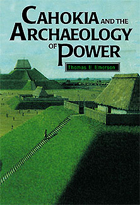
Examines the authority a ruling elite exercised over the surrounding countryside through a complex of social, political, and religious symbolism
This study uses the theoretical concepts of agency, power, and ideology to explore the development of cultural complexity within the hierarchically organized Cahokia Middle Mississippian society of the American Bottom from the 11th to the 13th centuries. By scrutinizing the available archaeological settlement and symbolic evidence, Emerson demonstrates that many sites previously identified as farmsteads were actually nodal centers with specialized political, religious, and economic functions integrated into a centralized administrative organization. These centers consolidated the symbolism of such 'artifacts of power' as figurines, ritual vessels, and sacred plants into a rural cult that marked the expropriation of the cosmos as part of the increasing power of the Cahokian rulers.
During the height of Cahokian centralized power, it is argued, the elites had convinced their subjects that they ruled both the physical and the spiritual worlds. Emerson concludes that Cahokian complexity differs significantly in degree and form from previously studied Eastern Woodlands chiefdoms and opens new discussion about the role of rural support for the Cahokian ceremonial center.
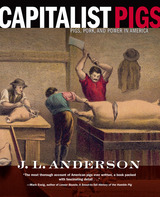
Pigs are everywhere in United States history. They cleared frontiers and built cities (notably Cincinnati, once known as Porkopolis), served as an early form of welfare, and were at the center of two nineteenth-century “pig wars.” American pork fed the hemisphere; lard literally greased the wheels of capitalism.
J. L. Anderson has written an ambitious history of pigs and pig products from the Columbian exchange to the present, emphasizing critical stories of production, consumption, and waste in American history. He examines different cultural assumptions about pigs to provide a window into the nation’s regional, racial, and class fault lines, and maps where pigs are (and are not) to reveal a deep history of the American landscape. A contribution to American history, food studies, agricultural history, and animal studies, Capitalist Pigs is an accessible, deeply researched, and often surprising portrait of one of the planet’s most consequential interspecies relationships.
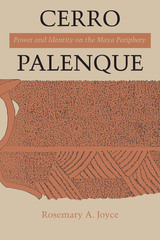
Excavations at Cerro Palenque, a hilltop site in the Ulua Valley of northwest Honduras, revolutionized scholars’ ideas about the Terminal Classic period (roughly ad 850–1050) of Maya history and about the way in which cultures of the southeast Maya periphery related to the Lowland Maya. In this pathfinding study, Rosemary Joyce combines archaeological data gleaned from site research in 1980–1983 with anthropological theory about the evolution of social power to reconstruct something of the culture and lifeways of the prehispanic inhabitants of Cerro Palenque.
Joyce organizes her study in a novel way. Rather than presenting each category of excavated material (ceramics, lithics, etc.) in a separate chapter, she integrates this data in discussions of what people did and where they did it, resulting in a reconstruction of social activity more than in a description of material culture.
Joyce’s findings indicate that the precolumbian elites of the Ulua Valley had very strong and diversified contacts with Lowland Maya culture, primarily through the Bay of Honduras, with far less contact with Copán in the Highlands. The elites used their contacts with these distant, powerful cultures to reinforce their difference from the people they ruled and the legitimacy of their privileged status. Indeed, their dependence on foreign contacts ultimately led to their downfall when their foreign partners reorganized their economic and social order during the Terminal Classic period.
Although archaeological research in the region has been undertaken since the 1890s, Cerro Palenque is the first full-length study of an Ulua Valley site ever published. Joyce’s pioneering approach—archaeological ethnography—will be of interest to scholars dealing with any prehistoric people whose material remains provide the only clues to their culture.

Simon Pirani investigates the interaction of power, money and people in Russia during the presidencies of Vladimir Putin and his successor Dmitry Medvedev.
Profiling the Putin team, including contingents from the security services and pro-market economic "reformers", Pirani argues that the economic growth it presided over during the oil boom was one-sided. The gap between rich and poor widened. Now the boom is over, inequalities will multiply further. As well as explaining Russia's economic trajectory, the book provides a unique account of the social movements that are working against an increasingly authoritarian government to change Russia for the better.
This is the perfect introduction for undergraduates approaching Russia for the first time and those who wish to know how Russia will change during the economic crisis.
By delving into the history of American Jews’ philanthropic giving to Israelis, Fleisch assesses the core nature of power sharing between both sides of the Jewish diaspora to the United States through in-depth contemporary case studies of the relationship between sixteen non-governmental organizations and their American Jewish donors. Field observation, document analysis, and interviews with leaders, activists, and select donors alike serve a critical role here, as Fleisch assesses whether these contemporary philanthropic associations repeat classic dynamics of power-sharing or whether they represent a marked departure from the Checkbook Zionism of old. The result is a new paradigm for evaluating power sharing that can be applied to future considerations of development in the Israel-Diaspora relationship.

In Chinese Cinema: Identity, Power, and Globalization, a variety of scholars explore the history, aesthetics, and politics of Chinese cinema as the Chinese film industry grapples with its place as the second-largest film industry in the world. Exploring the various ways that Chinese cinema engages with global politics, market forces, and film cultures, this edited volume places Chinese cinema against an array of contexts informing the contours of Chinese cinema today. The book also demonstrates that Chinese cinema in the global context is informed by the intersections and tensions found in Chinese and world politics, national and international co-productions, the local and global in representing Chineseness, and the lived experiences of social and political movements versus screened politics in Chinese film culture.

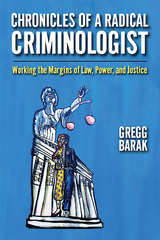
What holds this book together is the story of how resisting the crimes of the powerful while struggling locally for social justice is the essence of critical criminology. His seven chapters are divided into three parts—academic freedom, academic activism, and academic praxis—and these connected stories link the author's own academic career in Berkeley, California; Las Vegas, Nevada; Chicago; Alabama; Ann Arbor, Michigan; and across the United States. Barak's eventful scholarly life involved efforts to overcome laws against abortion and homosexuality; to formalize protective practices for women from domestic violence and sexual assault; to oppose racism and classism in the criminal justice system; to challenge the wars on gangs, drugs, and immigrants; and to confront the policies of mass incarceration and the treatment of juvenile offenders.
That strategy seems to make sense, but in Citizens, Cops, and Power, Steve Herbert reveals the reasons why it rarely, if ever, works. Drawing on data he collected in diverse Seattle neighborhoods from interviews with residents, observation of police officers, and attendance at community-police meetings, Herbert identifies the many obstacles that make effective collaboration between city dwellers and the police so unlikely to succeed. At the same time, he shows that residents’ pragmatic ideas about the role of community differ dramatically from those held by social theorists.
Surprising and provocative, Citizens, Cops, and Power provides a critical perspective not only on the future of community policing, but on the nature of state-society relations as well.
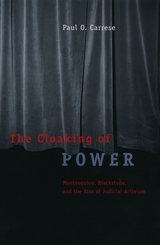

In the revolutionary decade between 1979 and 1992, it would have been difficult to find three political systems as different as death-squad-dominated El Salvador, peaceful social-democratic Costa Rica, and revolutionary Sandinista Nicaragua. Yet when the fighting was finally ended by a peace plan initiated by Costa Rica's President Oscar Arias, all three had found a common destination in democracy and free markets. To explain this extraordinary turn of events is the task of this landmark book, which fuses political economy and cultural analysis.
Both the divergent political histories and their convergent outcome were shaped by a single commodity that has dominated these export economies from the nineteenth century to the present--coffee. Jeffery Paige shows that the crises of the 1980s had their roots in the economic and political crises of the 1930s, when the revolutionary left challenged the ruling coffee elites of all three countries. He interweaves and compares the history, economics, and class structures of the three countries, thus clarifying the course of recent struggles. The heart of the book is his conversations with sixty-two leaders of fifty-eight elite dynasties, who for the first time tell their own stories of the experience of Central American revolution.
Paige's analysis challenges not only Barrington Moore's influential theory of dictatorship and democracy but also contemporary approaches to "transitions to democracy." It also shows that a focus on either political economy or culture alone cannot account for the transformation of elite ideology, and that revolution in Central America is deeply rooted in the personal, familial, and class histories of the coffee elites.
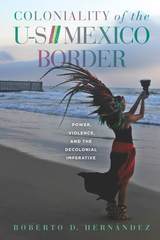
In Coloniality of the U-S///Mexico Border, Hernández offers an exemplary case and lens for understanding what he terms the “epistemic and cartographic prison of modernity/coloniality.” He adopts “coloniality of power” as a central analytical category and framework to consider multiple forms of real and symbolic violence (territorial, corporeal, cultural, and epistemic) and analyzes the varied responses by diverse actors, including local residents, government officials, and cultural producers.
Based on more than twenty years of border activism in San Diego–Tijuana and El Paso–Ciudad Juárez, this book is an interdisciplinary examination that considers the 1984 McDonald’s massacre, Minutemen vigilantism, border urbanism, the ongoing murder of women in Ciudad Juárez, and anti-border music.
Hernández’s approach is at once historical, ethnographic, and theoretically driven, yet it is grounded in analyses and debates that cut across political theory, border studies, and cultural studies. The volume concludes with a theoretical discussion of the future of violence at—and because of—national territorial borders, offering a call for epistemic and cartographic disobedience.
Winner, BASEES George Blazyca Award in East European Studies
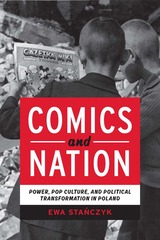
Comics and Nation offers a fresh perspective on the role of popular culture in the one-hundred-year history of the Polish state, from its foundation in 1918 to the present. Drawing on dozens of press articles, interviews, and readers’ letters, Ewa Stanczyk discusses how journalists, artists, and audiences used comics to probe the boundaries of national culture and scrutinize the established notions of Polishness. Critical moments of Poland’s political transformation ––the establishment of the interwar Polish Republic, the Cold War, the liberalization of the 1970s, the 1989 democratic transition, the turn to memory politics in the 2000s––have all been reflected in the history of Polish comics. Stanczyk offers new insights into how the production of homegrown comics and the influx of foreign works enabled commentators to express their fears, hopes, and disillusionment with political, economic, and cultural changes in Poland and beyond. At its core, Comics and Nation rethinks the impact of popular culture and transnational exchange on Polish nation building, citizenship formation, and the legitimation of power.

Seeing the camp as a persistent political instrument in Israel–Palestine and beyond
The Common Camp underscores the role of the camp as a spatial instrument employed for reshaping, controlling, and struggling over specific territories and populations. Focusing on the geopolitical complexity of Israel–Palestine and the dramatic changes it has experienced during the past century, this book explores the region’s extensive networks of camps and their existence as both a tool of colonial power and a makeshift space of resistance.
Examining various forms of camps devised by and for Zionist settlers, Palestinian refugees, asylum seekers, and other groups, Irit Katz demonstrates how the camp serves as a common thread in shaping lands and lives of subjects from across the political spectrum. Analyzing the architectural and political evolution of the camp as a modern instrument engaged by colonial and national powers (as well as those opposing them), Katz offers a unique perspective on the dynamics of Israel–Palestine, highlighting how spatial transience has become permanent in the ongoing story of this contested territory.
The Common Camp presents a novel approach to the concept of the camp, detailing its varied history as an apparatus used for population containment and territorial expansion as well as a space of everyday life and subversive political action. Bringing together a broad range of historical and ethnographic materials within the context of this singular yet versatile entity, the book locates the camp at the core of modern societies and how they change and transform.
African Studies Association Women’s Caucus’s Aidoo-Snyder Book Prize winner
A Choice Outstanding Academic Title
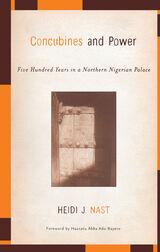
The monumental palace of Kano, Nigeria, was built circa 1500 and is today inhabited by more than one thousand persons. Historically, its secluded interior housed hundreds of concubines whose role in the politics, economics, and culture of Kano city-state has been largely overlooked. In this pioneering work, Heidi J. Nast demonstrates how human-geographical methods can tell us much about a site like the palace, a place bereft of archaeological work or relevant primary sources.
Drawing on extensive ethnographic work and mapping data, Concubines and Power presents new evidence that palace concubines controlled the production of indigo-dyed cloth centuries before men did. The women were also key players in the assessment and collection of the state's earliest grain taxes, forming a complex and powerful administrative hierarchy that used the taxes for palace community needs. In addition, royal concubines served as representatives of their places of origin, their freeborn children providing the king with additional human capital to cement territorial alliances through marriage.
Social forces undoubtedly shaped and changed concubinage for hundreds of years, but Nast shows how the women’s reach extended far beyond the palace walls to the formation of the state itself.
Pulitzer Prize Finalist
Winner of the Frederick Douglass Book Prize
Winner of the Merle Curti Award
“McCurry strips the Confederacy of myth and romance to reveal its doomed essence. Dedicated to the proposition that men were not created equal, the Confederacy had to fight a two-front war. Not only against Union armies, but also slaves and poor white women who rose in revolt across the South. Richly detailed and lucidly told, Confederate Reckoning is a fresh, bold take on the Civil War that every student of the conflict should read.”
—Tony Horwitz, author of Confederates in the Attic
“McCurry challenges us to expand our definition of politics to encompass not simply government but the entire public sphere. The struggle for Southern independence, she shows, opened the door for the mobilization of two groups previously outside the political nation—white women of the nonslaveholding class and slaves…Confederate Reckoning offers a powerful new paradigm for understanding events on the Confederate home front.”
—Eric Foner, The Nation
“Perhaps the highest praise one can offer McCurry’s work is to say that once we look through her eyes, it will become almost impossible to believe that we ever saw or thought otherwise…At the outset of the book, McCurry insists that she is not going to ask or answer the timeworn question of why the South lost the Civil War. Yet in her vivid and richly textured portrait of what she calls the Confederacy’s ‘undoing,’ she has in fact accomplished exactly that.”
—Drew Gilpin Faust, New Republic
“A brilliant, eye-opening account of how Southern white women and black slaves fatally undermined the Confederacy from within.”
—Edward Bonekemper, Civil War News
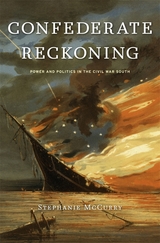
The story of the Confederate States of America, the proslavery, antidemocratic nation created by white Southern slaveholders to protect their property, has been told many times in heroic and martial narratives. Now, however, Stephanie McCurry tells a very different tale of the Confederate experience. When the grandiosity of Southerners’ national ambitions met the harsh realities of wartime crises, unintended consequences ensued. Although Southern statesmen and generals had built the most powerful slave regime in the Western world, they had excluded the majority of their own people—white women and slaves—and thereby sowed the seeds of their demise.
Wartime scarcity of food, labor, and soldiers tested the Confederate vision at every point and created domestic crises to match those found on the battlefields. Women and slaves became critical political actors as they contested government enlistment and tax and welfare policies, and struggled for their freedom. The attempt to repress a majority of its own population backfired on the Confederate States of America as the disenfranchised demanded to be counted and considered in the great struggle over slavery, emancipation, democracy, and nationhood. That Confederate struggle played out in a highly charged international arena.
The political project of the Confederacy was tried by its own people and failed. The government was forced to become accountable to women and slaves, provoking an astounding transformation of the slaveholders’ state. Confederate Reckoning is the startling story of this epic political battle in which women and slaves helped to decide the fate of the Confederacy and the outcome of the Civil War.
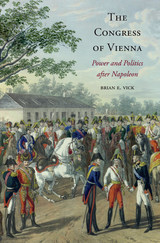
Convened following Napoleon’s defeat in 1814, the Congress of Vienna is remembered as much for the pageantry of the royals and elites who gathered there as for the landmark diplomatic agreements they brokered. Historians have nevertheless generally dismissed these spectacular festivities as window dressing when compared with the serious, behind-the-scenes maneuverings of sovereigns and statesmen. Brian Vick finds this conventional view shortsighted, seeing these instead as two interconnected dimensions of politics. Examining them together yields a more complete picture of how one of the most important diplomatic summits in history managed to redraw the map of Europe and the international system of the nineteenth and twentieth centuries.
The Congress of Vienna investigates the Vienna Congress within a broad framework of influence networks that included unofficial opinion-shapers of all kinds, both men and women: artists and composers, entrepreneurs and writers, hosts and attendees of fashionable salons. In addition to high-profile negotiation and diplomatic wrangling over the post-Napoleonic fates of Germany, Italy, and Poland, Vick brings into focus other understudied yet significant issues: the African slave trade, Jewish rights, and relations with Islamic powers such as the Ottoman Empire and Barbary Corsairs. Challenging the usual portrayal of a reactionary Congress obsessed with rolling back Napoleon’s liberal reforms, Vick demonstrates that the Congress’s promotion of limited constitutionalism, respect for religious and nationality rights, and humanitarian interventions was influenced as much by liberal currents as by conservative ones.
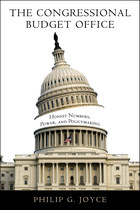
Created in 1974, the U.S. Congressional Budget Office (CBO) has become one of the most influential forces in national policymaking. A critical component of our system of checks and balances, the CBO has given Congress the analytical capacity to challenge the president on budget issues while it protects the public interest, providing honest numbers about Congress's own budget proposals. The book discusses the CBO’s role in larger budget policy and the more narrow "scoring" of individual legislation, such as its role in the 2009–2010 Obama health care reform. It also describes how the first director, Alice Rivlin, and seven successors managed to create and sustain a nonpartisan, highly credible agency in the middle of one of the most partisan institutions imaginable.
The Congressional Budget Office: Honest Numbers, Power, and Policy draws on interviews with high-level participants in the budget debates of the last 35 years to tell the story of the CBO. A combination of political history, economic history, and organizational development, The Congressional Budget Office offers an important, first book-length history of this influential agency.
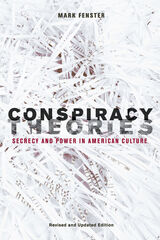
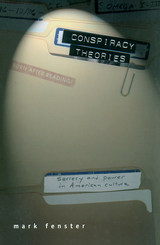
In this new edition of the landmark work, and the first in-depth look at the conspiracy communities that formed to debunk the 9/11 Commission Report, Fenster shows that conspiracy theories play an important role in U.S. democracy. Examining how and why they circulate through mass culture, he contends, helps us better understand society as a whole. Ranging from The Da Vinci Codeto the intellectual history of Richard Hofstadter, he argues that dismissing conspiracy theories as pathological or marginal flattens contemporary politics and culture because they are—contrary to popular portrayal—an intense articulation of populism and, at their essence, are strident calls for a better, more transparent government. Fenster has demonstrated once again that the people who claim someone’s after us are, at least, worth hearing.
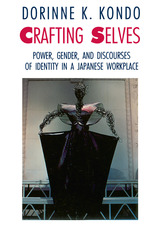
"Kondo's work is significant because she goes beyond disharmony, insisting on complexity. Kondo shows that inequalities are not simply oppressive-they are meaningful ways to establish identities."—Nancy Rosenberger, Journal of Asian Studies
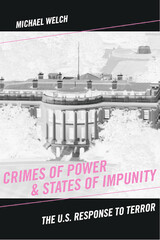
Welch continues the work he began in Scapegoats of September 11th and argues that current U.S. policies, many enacted after the attacks, undermine basic human rights and violate domestic and international law. He recounts these offenses and analyzes the system that sanctions them, offering fresh insight into the complex relationship between power and state crime. Welch critically examines the unlawful enemy combatant designation, Guantanamo Bay, recent torture cases, and collateral damage relating to the war in Iraq. This book transcends important legal arguments as Welch strives for a broader sociological interpretation of what transpired early this century, analyzing the abuses of power that jeopardize our safety and security.

Jenifer L. Barclay and Stefanie Hunt-Kennedy edit a collection of interdisciplinary essays that consider how and why physical, sensory, intellectual, and psychological disabilities are underrepresented, erased, or distorted in the historical record. The contributors draw on the methodology and practice of cripping to uncover disability in contested archives and explore ways to build inclusive archives accountable to, and centered on, disabled people and disability justice. Throughout, they show ableness informing the politics of the archive as a physical space, a discriminatory record, and a collection of silences.
An essential contribution to research methods and disability justice, Cripping the Archive offers a blueprint for intersectional and interdisciplinary approaches that bridge disability studies, history, and archival studies.
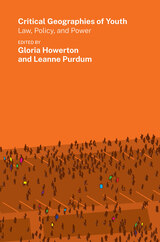
Young people will bear the brunt of the impacts of present and emerging crises occurring at all scales, from the national to the global. This volume brings together scholars and activists from various backgrounds to analyze youth interactions with law and politics, focusing specifically on the US legal landscape. It uses the lens of youth geographies to consider how legal and political systems shape our spaces, and provides leading-edge perspectives through case studies of child labor, compulsory education, asylum claims, criminalization of youth, youth activism, and more.
Of special interest in this volume is the tension between young people as both objects of law and policy and creative agents of change. Despite being directly affected by law and policy, young people are denied access to many legally sanctioned paths to shape them. Yet youth find ways to work within and mold the social, political, and legal spheres and set the stage for alternative futures.

An illuminating new history of World War II–era Smolensk, a region at the crossroads of the two great dictatorships of the twentieth century.
During the Cold War, the Smolensk Archive held the only collection of Communist Party documents available to Western scholars, becoming the foundation for generations of scholarship on Soviet history. Crucibles of Power returns to the Smolensk Region with fresh eyes and fresh sources. Prizewinning historian Michael David-Fox traces the experiences of Smolensk residents between the interwar years and the end of World War II, a period during which the city and region passed from Stalinist rule to Nazi occupation and back. The result is a revelatory examination of choice and power under dueling forms of murderous totalitarianism.
Exploring the life-and-death decisions of a fascinating cast of characters—from young women in the Communist Youth League to a defense lawyer during Stalin’s Great Terror who became Smolensk’s collaborationist mayor during the German occupation—David-Fox shows how deeply the Stalinist and Nazi regimes relied on the cooptation of average citizens motivated by greed and need, but always within the orbit of ideology. Challenging today’s Russian nationalist narrative of heroic WWII resistance, he finds that large numbers of Russians aided the Nazi occupation of Smolensk in order to protect themselves, secure their own self-interest, or pursue vendettas against a Soviet state they found no less corrupt or oppressive than its German foe.
At a time when much of the world is tilting away from liberal democracy and toward authoritarianism, Crucibles of Power masterfully unravels the threads of dictatorial rule. Smolensk emerges as a laboratory for understanding the mechanics of both outright coercion and subtler forms of power, as well as the enabling behavior of ordinary citizens acquiescing to extraordinary crimes.

The period between the fall of the Han in 220 and the reunification of the Chinese realm in the late sixth century receives short shrift in most accounts of Chinese history. The period is usually characterized as one of disorder and dislocation, ethnic strife, and bloody court struggles. Its lone achievement, according to many accounts, is the introduction of Buddhism. In the eight essays of Culture and Power in the Reconstitution of the Chinese Realm, 200-600, the authors seek to chart the actual changes occurring in this period of disunion, and to show its relationship to what preceded and followed it.
This exploration of a neglected period in Chinese history addresses such diverse subjects as the era's economy, Daoism, Buddhist art, civil service examinations, forays into literary theory, and responses to its own history.
David Swartz focuses on a central theme in Bourdieu's work—the complex relationship between culture and power—and explains that sociology for Bourdieu is a mode of political intervention. Swartz clarifies Bourdieu's difficult concepts, noting where they have been misinterpreted by critics and where they have fallen short in resolving important analytical issues. The book also shows how Bourdieu has synthesized his theory of practices and symbolic power from Durkheim, Marx, and Weber, and how his work was influenced by Sartre, Levi-Strauss, and Althusser.
Culture and Power is the first book to offer both a sympathetic and critical examination of Bourdieu's work and it will be invaluable to social scientists as well as to a broader audience in the humanities.
A trailblazing exploration of the political stakes of curiosity
Curiosity is political. Who is curious, when, and how reflects the social values and power structures of a given society. In Curiosity and Power, Perry Zurn explores the political philosophy of curiosity, staking the groundbreaking claim that it is a social force—the heartbeat of political resistance and a critical factor in social justice. He argues that the very scaffolding of curiosity is the product of political architectures, and exploring these values and architectures is crucial if we are to better understand, and more ethically navigate, the struggle over inquiry in an unequal world.
Curiosity and Power explores curiosity through the lens of political philosophy—weaving in Nietzsche, Foucault, and Derrida in doing so—and the experience of political marginalization, demonstrating that curiosity is implicated equally in the maintenance of societies and in their transformation. Curiosity plays as central a role in establishing social institutions and fields of inquiry as it does in their deconstruction and in building new forms of political community. Understanding curiosity is critical to understanding politics, and understanding politics is critical to understanding curiosity.
Drawing not only on philosophy and political theory but also on feminist theory, race theory, disability studies, and trans studies, Curiosity and Power tracks curiosity in the structures of political marginalization and resistance—from the Civil Rights Movement to building better social relationships. Curiosity and Power insists that the power of curiosity be recognized and engaged responsibly.
READERS
Browse our collection.
PUBLISHERS
See BiblioVault's publisher services.
STUDENT SERVICES
Files for college accessibility offices.
RECENTLY PUBLISHED



UChicago Accessibility Resources
home | accessibility | search | about | contact us
BiblioVault ® 2001 - 2026
The University of Chicago Press