
 A SCHOLARLY BOOK REPOSITORY
51 start with D start with D
In Data Analysis in Qualitative Research, Iddo Tavory and Stefan Timmermans provide a how-to guide filled with tricks of the trade for researchers who hope to take excellent qualitative data and transform it into powerful scholarship. In their previous book, Abductive Analysis: Theorizing Qualitative Research, Timmermans and Tavory offered a toolkit for innovative theorizing in the social sciences. In this companion, they go one step further to show how to uncover the surprising revelations that lie waiting in qualitative data—in sociology and beyond.
In this book, they lay out a series of tools designed to help both novice and expert scholars see and understand their data in surprising ways. Timmermans and Tavory show researchers how to “stack the deck” of qualitative research in favor of locating surprising findings that may lead to theoretical breakthroughs, whether by engaging with theory, discussing research strategies, or walking the reader through the process of coding data. From beginning to end of a research project, Data Analysis in Qualitative Research helps social scientists pinpoint the most promising paths to take in their approach.


Leonelli is the first scholar to use a study of contemporary data-intensive science to provide a philosophical analysis of the epistemology of data. In analyzing the rise, internal dynamics, and potential impact of data-centric biology, she draws on scholarship across diverse fields of science and the humanities—as well as her own original empirical material—to pinpoint the conditions under which digitally available data can further our understanding of life. Bridging the divide between historians, sociologists, and philosophers of science, Data-Centric Biology offers a nuanced account of an issue that is of fundamental importance to our understanding of contemporary scientific practices.


Now in paperback!
The volume covers Qumran scholarship in separate countries: the USA, Canada, Israel, France, Germany, Spain, the Netherlands, Scandinavia, Italy, and Eastern Europe. Each essay carries a detailed bibliography for the respective country. Biographies of all the major scholars active in the field are briefly given as well. This book thereby exhaustively surveys past and present Qumran research, outlining its particular development in various circumstances and national contexts. For the first time, perspectives and information not recorded in any other publication are highlighted.
Features:
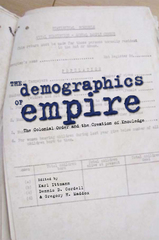
The Demographics of Empire is a collection of essays examining the multifaceted nature of the colonial science of demography in the last two centuries. The contributing scholars of Africa and the British and French empires focus on three questions: How have historians, demographers, and other social scientists understood colonial populations? What were the demographic realities of African societies and how did they affect colonial systems of power? Finally, how did demographic theories developed in Europe shape policies and administrative structures in the colonies? The essays approach the subject as either broad analyses of major demographic questions in Africa’s history or focused case studies that demonstrate how particular historical circumstances in individual African societies contributed to differing levels of fertility, mortality, and migration. Together, the contributors to The Demographics of Empire question demographic orthodoxy, and in particular the assumption that African societies in the past exhibited a single demographic regime characterized by high fertility and high mortality.

Design Integrations calls for an innovative rethinking of design education, one that recognizes the changing modes of design and the shifting forms of user experience. The contributors urge new methods of approach that focus on interdisciplinary collaboration between the academic and business worlds. These essays, among the first to focus on the future of design, often in-depth explorations of inter-institutional projects, cross-cultural learning experiences, and a multinational healthcare project. Design Integrations will be of interest to design teachers and practitioners alike.
This book offers definitions and a brief background to practice-based research in the arts, contextualization of practice-based methods, a step-by-step approach to designing research projects, chapter summaries, examples of practice-related research, exercises for progressing methods design and evaluating research approach, and lists for further reading. This textbook can serve as the foundation for a wider, online “living” textbook for practice-related research in the arts.
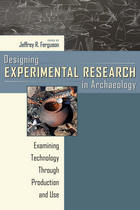
Each chapter addresses a particular classification of material culture-ceramics, stone tools, perishable materials, composite hunting technology, butchering practices and bone tools, and experimental zooarchaeology-detailing issues that must be considered in the development of experimental archaeology projects and discussing potential pitfalls. The experiments follow coherent and consistent research designs and procedures and are placed in a theoretical context, and contributors outline methods that will serve as a guide in future experiments. This degree of standardization is uncommon in traditional archaeological research but is essential to experimental archaeology.
The field has long been in need of a guide that focuses on methodology and design. This book fills that need not only for undergraduate and graduate students but for any archaeologist looking to begin an experimental research project.


In 2006 anthropologists Paul Rabinow and Gaymon Bennett set out to rethink the role that human sciences play in biological research, creating the Human Practices division of the Synthetic Biology Engineering Research Center—a facility established to create design standards for the engineering of new enzymes, genetic circuits, cells, and other biological entities—to formulate a new approach to the ethical, security, and philosophical considerations of controversial biological work. They sought not simply to act as watchdogs but to integrate the biosciences with their own discipline in a more fundamentally interdependent way, inventing a new, dynamic, and experimental anthropology that they could bring to bear on the center’s biological research.
Designing Human Practices is a detailed account of this anthropological experiment and, ultimately, its rejection. It provides new insights into the possibilities and limitations of collaboration, and diagnoses the micro-politics which effectively constrained the potential for mutual scientific flourishing. Synthesizing multiple disciplines, including biology, genetics, anthropology, and philosophy, alongside a thorough examination of funding entities such as the National Science Foundation, Designing Human Practices pushes the social study of science into new and provocative territory, utilizing a real-world experience as a springboard for timely reflections on how the human and life sciences can and should transform each other.
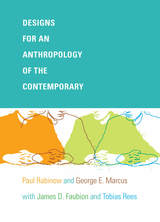
Both Rabinow and Marcus participated in the milestone collection Writing Culture: The Poetics and Politics of Ethnography. Published in 1986, Writing Culture catalyzed a reassessment of how ethnographers encountered, studied, and wrote about their subjects. In the opening conversations of Designs for an Anthropology of the Contemporary, Rabinow and Marcus take stock of anthropology’s recent past by discussing the intellectual scene in which Writing Culture intervened, the book’s contributions, and its conceptual limitations. Considering how the field has developed since the publication of that volume, they address topics including ethnography’s self-reflexive turn, scholars’ increased focus on questions of identity, the Public Culture project, science and technology studies, and the changing interests and goals of students. Designs for an Anthropology of the Contemporary allows readers to eavesdrop on lively conversations between anthropologists who have helped to shape their field’s recent past and are deeply invested in its future.
The authors continue their prior explorations of the contemporary in past works: How to conceptualize, test, and give form to breakdowns of truth and conduct, as well as how to open up possibilities for the remediation of such breakdowns. They offer a surprising and contrasting pair of case studies of two figures who engaged with contemporary breakdowns: Salman Rushdie and Gerhard Richter. Approaching Richter’s artistic struggles with form and technique in the long wake of modernism and Rushdie’s struggles to find a narrative form—as well as a form for living—to respond to the Iranian fatwa issued against him, they show how both men formulated different new approaches to anthropology for the twenty-first century.
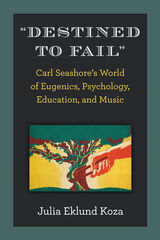
A little-known fact about the prominent US psychologist and educator Carl E. Seashore (1866–1949) is that he was deeply involved in the American eugenics movement. He was among the US academics to support eugenics long before German Nazis embraced it. A titan in a host of disciplines and a proponent of radical education reform, Seashore used his positional power to promote a constellation of education reforms consistent with central precepts of eugenics. Many of these reforms, including tracking, gifted and talented programs, and high-stakes standardized testing, were adopted and remain standard practice in the United States today. He promulgated the idea that musical talent is biologically inheritable, and he developed the first standardized tests of musical talent; these tests were used by early-twentieth-century researchers in their attempts to determine whether there are race differences in musical talent. Seashore’s ideas and work profoundly shaped music education’s research trajectory, as well as enduring “commonsense” beliefs about musical ability. An intersectional analysis, “Destined to Fail” focuses on the relationship between eugenics and Seashore’s views on ability, race, and gender. Koza concludes that Seashore promoted eugenics and its companion, euthenics, because he was a true believer. She also discusses the longstanding silences surrounding Seashore’s participation in eugenics. As a diagnosis and critique of the present, “Destined to Fail” identifies resemblances and connections between past and present that illustrate the continuing influence of eugenics—and the systems of reasoning that made early-twentieth-century eugenics imaginable and seem reasonable—on education discourse and practice today. It maps out discursive, citational, and funding connections between eugenicists of the early twentieth-century and contemporary White supremacists; this mapping leads to some of Donald Trump’s supporters and appointees.
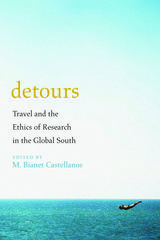
Influenced by the works of anthropologists Ruth Behar and Renato Rosaldo, the scholars and journalists in this volume consider how first encounters—those initial, awkward attempts to learn about a culture and a people—evolved into enduring and critical engagements. Contemplating the ethics and racial politics of traveling and doing research abroad, they call attention to the power and privilege that permit researchers to enter people’s lives, ask intimate questions, and publish those disclosures. Focusing on Latin America and the Caribbean, they ask, Why this place? What keeps us coming back? And what role do we play in producing narratives of inequality, uneven development, and global spectacle?
The book examines the “politics of return”—the experiences made possible by revisiting a field site over extended periods of time—of scholars and journalists who have spent decades working in and writing about Latin America and the Caribbean. Contributors aren’t telling a story of enlightenment and goodwill; they focus instead on the slippages and conundrums that marked them and raised questions of their own intentions and intellectual commitments.
Speaking from the intersection of race, class, and gender, the contributors explore the hubris and nostalgia that motivate returning again and again to a particular place. Through personal stories, they examine their changing ideas of Latin America and the Caribbean and how those places have shaped the people they’ve become, as writers, as teachers, and as activists.
This text has been structured around the six critical elements of the ACRL Framework for Information Literacy in Higher Education, contextualizing these elements by fitting them into the research and writing process. The book focuses on providing students with the critical-thinking and problem-solving skills needed to: (1) identify the conversation that exists around a topic, (2) clarify their own perspective on that topic, and (3) efficiently and effectively read and evaluate what others have said that can inform their perspective and research. The critical-thinking and problem-solving skills practiced here are good preparation for what students will encounter in their academic and professional lives.
As an experienced writing instructor, the author has evaluated the final written products of hundreds of students who were trained through one-shot workshops and first-year introductory courses. She has applied that knowledge to create the tasks in this book so that students have the skills to successfully find, evaluate, and use sources and then produce a paper that incorporates valid research responsibly and effectively.

While the tale of Roberto Busa and the Index Thomisticus has become an origin myth for Digital Medieval Studies, less attention has been paid to the critical role of the World Wide Web as a platform and impetus for this digital turn. This volume focuses on early Medieval Studies research created with, operating through, and dependent upon the internet itself, profiling ground-breaking projects that define the genres of internet-based scholarship we now take for granted, including sourcebooks, searchable databases, digital editions and corpora, and born-digital medieval scholarship. The collection reveals how internet-based products rely upon and support a more collaborative model of research, teaching, and learning in Medieval Studies than the more individualistic, discrete one that defined earlier work in the field.
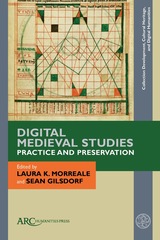
In the last decade, the terms “digital scholarship” and “digital humanities” have become commonplace in academia, spurring the creation of fellowships, research centres, and scholarly journals. What, however, does this “digital turn” mean for how you do scholarship as a medievalist? While many of us would never describe ourselves as “DH people,” computer-based tools and resources are central to the work we do every day in offices, libraries, and classrooms. This volume highlights the exciting ways digital methods are expanding and re-defining how we understand, represent, and teach the Middle Ages, and provides a new model for how this work is catalogued and reused within the scholarly community. The work of its contributors offers valuable insights into how “the digital” continues to shape the questions medievalists ask and the ways they answer them, but also into how those questions and answers can lead to new tools, approaches, and points of reference within the field of digital humanities itself.
Abbott tells what every senior researcher knows: that research is not a mechanical, linear process, but a thoughtful and adventurous journey through a nonlinear world. He breaks library research down into seven basic and simultaneous tasks: design, search, scanning/browsing, reading, analyzing, filing, and writing. He moves the reader through the phases of research, from confusion to organization, from vague idea to polished result. He teaches how to evaluate data and prior research; how to follow a trail to elusive treasures; how to organize a project; when to start over; when to ask for help. He shows how an understanding of scholarly values, a commitment to hard work, and the flexibility to change direction combine to enable the researcher to turn a daunting mass of found material into an effective paper or thesis.
More than a mere how-to manual, Abbott’s guidebook helps teach good habits for acquiring knowledge, the foundation of knowledge worth knowing. Those looking for ten easy steps to a perfect paper may want to look elsewhere. But serious scholars, who want their work to stand the test of time, will appreciate Abbott’s unique, forthright approach and relish every page of Digital Paper.

Discerning Experts uncovers factors that can generate systematic bias and error, and recommends how the process can be improved. As the first study of the internal workings of large environmental assessments, this book reveals their strengths and weaknesses, and explains what assessments can—and cannot—be expected to contribute to public policy and the common good.

The latest volume in the NBER’s Economics of Aging series, Discoveries in the Economics of Aging assembles incisive analyses of the most recent research in this expanding field of study. A substantive focus of the volume is the well-documented relationship between health and financial well-being, especially as people age. The contributors explore this issue from a variety of perspectives within the context of the changing demographic landscape. The first part of the volume explores recent trends in health measurement, including the use of alternative measurement indices. Later contributions explore, among other topics, alternate determinants of health, including retirement, marital status, and cohabitation with family, and the potential for innovations, interventions, and public policy to improve health and financial well-being.
Discovering Addiction brings the history of human and animal experimentation in addiction science into the present with a wealth of archival research and dozens of oral-history interviews with addiction researchers. Professor Campbell examines the birth of addiction science---the National Academy of Sciences's project to find a pharmacological fix for narcotics addiction in the late 1930s---and then explores the human and primate experimentation involved in the succeeding studies of the "opium problem," revealing how addiction science became "brain science" by the 1990s.
Psychoactive drugs have always had multiple personalities---some cause social problems; others solve them---and the study of these drugs involves similar contradictions. Discovering Addiction enriches discussions of bioethics by exploring controversial topics, including the federal prison research that took place in the 1970s---a still unresolved debate that continues to divide the research community---and the effect of new rules regarding informed consent and the calculus of risk and benefit. This fascinating volume is both an informative history and a thought-provoking guide that asks whether it is possible to differentiate between ethical and unethical research by looking closely at how science is made.
This volume includes new studies of minority and immigrant families, school achievement, culture, race and gender, poverty, identity, and experiments and interventions meant to improve family and child contexts. Discovering Successful Pathways in Children's Development will be of enormous value to everyone interested in the issues of human development, education, and social welfare, and among professionals charged with the task of improving the lives of children in our communities.
Although traditional philosophy of science has regarded scientific discovery—the questions of creativity in science—as a subject for psychological rather than philosophical study, Schaffner argues that recent work in cognitive science and artificial intelligence enables researchers to rationally analyze the nature of discovery. As a philosopher of science who holds an M.D., he has examined biomedical work from the inside and uses detailed examples from the entire range of the life sciences to support the semantic approach to scientific theories, addressing whether there are "laws" in the life sciences as there are in the physical sciences. Schaffner's novel use of philosophical tools to deal with scientific research in all of its complexity provides a distinctive angle on basic questions of scientific evaluation and explanation.

When insulin was discovered in the early 1920s, even jaded professionals marveled at how it brought starved, sometimes comatose patients with diabetes back to life. Defying the average timeline, the 1923 Nobel Prize in Physiology or Medicine was awarded for its discovery. To recount the fascinating story behind the discovery of insulin, in this classic work Michael Bliss draws on archival records and personal interviews with witnesses to the events. He unearths scientists’ memoirs and confidential appraisals of insulin by members of the Nobel Committee, bringing science to life and resolving a longstanding controversy about scientific collaboration at its most fractious and fascinating: who among the Canadian team of Frederick Banting, Charles Best, James Collip, and John Macleod ultimately deserves credit for the discovery of insulin? Or is credit due farther afield—to Georg Zuelzer in Berlin, E.L. Scott in Chicago, Israel Kleiner in New York, Nicolas Paulescu in Bucharest, John Murlin in Rochester?
Bliss’s life-and-death saga illuminates one of the most important breakthroughs in the history of medicine. With a new preface by the author and a foreword by historian Alison Li, this enlarged edition celebrates the lasting impact of insulin’s discovery and ongoing importance.


This revised and expanded edition features new chapters addressing:
- The diagnosis of "sex addiction"in the 1970s and its social and political implications.
- New developments within the field of sexology, including the "Viagra Revolution" that began in the 1990s.
- The pharmaceutical industry's role in the development of sexual enhancements and the search for the female equivalent of Viagra.
This revised and expanded edition features new chapters addressing:
•The diagnosis of "sex addiction"in the 1970s and its social and political implications.
•New developments within the field of sexology, including the "Viagra Revolution" that began in the 1990s.
•The pharmaceutical industry's role in the development of sexual enhancements and the search for the female equivalent of Viagra.
This study uses a series of medieval texts to address a set of urgent critical issues in Humanities centring on categories of L/literature, history, periodization, languages, and descriptions of script. These categories are inherited from the foundation of modern disciplines and fields of study, superimposed on what could be more flexible modes of scholarship. They are reinforced by modern academics in ways that hinder nuance, intellectual nimbleness, and new interpretative possibilities. Readers and researchers of English Language, Literature, Book Historical/Media Studies, and History are obliged by delimiting labels to navigate problematic foundational approaches and sources that confine and frustrate scholarly investigation. Through a series of cogent case studies, all situated from 1050 to 1250, the book highlights how restrictive and hierarchical modern scholarly categories can sometimes be.

Writing studies has long been marked by a multitude of methods and interlocking purposes, partaking of not just humanities approaches but also social scientific ones, with data drawn from interviews and surveys alongside historical and philosophical arguments and with corpus analytics in large-scale collections jostling against small-scale case studies of individuals. These areas of study aren’t always cleanly separable; shifting modes mark the discipline as open and welcoming to many different angles of research. The field needs to embrace that vantage point and generate new degrees of familiarity with methods beyond those of any individual scholar.
Not only a training genre and not only a knowledge-making genre, the dissertation is also a discipline-producing genre. Illustrating what the field has been studying, and how, Distant Readings of Disciplinarity supports more fruitful collaborations within and across research areas and methods.
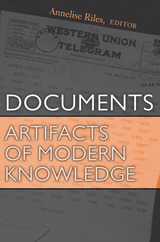
Documents are everywhere in modern life, from the sciences to bureaucracy to law; at the same time, fieldworkers document social realities by collecting, producing, and exchanging documents of their own. Capping off a generation of reflection and critique about the promises and pitfalls of ethnographic methods, the contributors explore how ethnographers conceive, grasp, appreciate, and see patterns, demonstrating that the core of the ethnographic method now lies in the way ethnographers respond to, and increasingly share the professional passions and problems of, their subjects.
"Sophisticated and provocative. The original and unique focus of this volume effectively opens up a new arena of critique that will move ethnography and qualitative inquiry forward in a way that few other works do."
—George Marcus, Department of Anthropology, Rice University
"This edited collection asks how an understanding of documentary forms sheds light on the creation and circulation of modern forms of knowledge, expertise, and governance. This is a major intervention in how we understand the everyday practice and techne of the documentary impulse and documentary apparatuses of law, bureaucratic review, and other institutions of modernity, as well as linguistic anthropology, literary theory, and law. The topic of Documents is not just of interest because of epistemological quandaries in the human sciences over textualization and interpretation, but also because the domains to which we increasingly turn our attention are themselves auto-documentary."
Contributors: Mario Biagioli, Donald Brenneis, Carol Heimer, Hirokazu Miyazaki, Adam Reed, Annelise Riles, and Marilyn Strathern.
Annelise Riles is Professor of Law and Anthropology at Cornell University.
In Does Science Need a Global Language?, Scott L. Montgomery seeks to answer this question by investigating the phenomenon of global English in science, how and why it came about, the forms in which it appears, what advantages and disadvantages it brings, and what its future might be. He also examines the consequences of a global tongue, considering especially emerging and developing nations, where research is still at a relatively early stage and English is not yet firmly established.
Throughout the book, he includes important insights from a broad range of perspectives in linguistics, history, education, geopolitics, and more. Each chapter includes striking and revealing anecdotes from the front-line experiences of today’s scientists, some of whom have struggled with the reality of global scientific English. He explores topics such as student mobility, publication trends, world Englishes, language endangerment, and second language learning, among many others. What he uncovers will challenge readers to rethink their assumptions about the direction of contemporary science, as well as its future.

In this intimate narrative, Bearzi recounts her experiences at sea, tracing her own evolution as a woman and a scientist from her earliest travails to her transformation into an advocate for conservation and dolphin protection. These compelling, in-depth descriptions of her fieldwork also present a captivating look into dolphin social behavior and intelligence. The central part of the book is devoted to the metropolitan bottlenose dolphins of California, as Bearzi draws on her extensive experience to offer insights into the daily lives of these creatures—as well as the difficulties involved in collecting the data that transforms hunches into hypotheses and eventually scientific facts. The book closes by addressing the critical environmental and conservation problems facing these magnificent, socially complex, highly intelligent, and emotional beings.
An honest, down-to-earth analysis of what it means to be a marine biologist in the field today, Dolphin Confidential offers an entertaining, refreshingly candid, and always informative description of life among the dolphins.
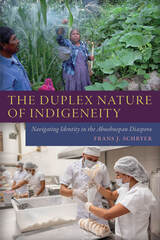
Using a variety of sources, perspectives, and methods, Schryer takes a duplexity approach, which allows understanding the complexity of social reality and its complementary nature—it identifies fields, clusters, and layers as interconnected components of social life. The innovative methods consist of the combination of ethnographic description and an ethnohistorical census that provides information on every person going back to approximately 1850. That census is further examined with the use of inferential and non-inferential statistical techniques, archival research in locations not normally accessible to scholars, Facebook, phone interviews conducted over several years, and help from Nahuatl-speaking people whose perspectives on the findings generate additional information and insights.
Unique in this presentation, which dips into the lives of generations of people to draw insight on those who lay claim to transnational Indigeneity, Schryer’s work contributes to research and theoretical discussion in the field of migration and globalization studies through a close examination of one Indigenous community over the course of many years, utilizing a mix of qualitative and quantitative research methods in anthropology.

The Dynamics of Deterrence is the first comprehensive treatment of deterrence theory since the mid-1960s. Frank C. Zagare introduces a new theoretical framework for deterrence that is rigorous, consistent, and illuminating. By placing the deterrence relationship in a "theory of moves" framework, Zagare is able to remedy the defects of other models. His approach is illustrated by and applied to a number of complex deterrence situations: the Berlin crisis of 1948, the Middle East crises of 1967 and 1973, and The Falkland/Malvinas crisis of 1980. He also examines the strategic relationship between the United States and the Soviet Union from 1945 to the present.
Zagare studies the dynamics of both mutual and unilateral deterrence games in nuclear and non-nuclear situations, and the impact of credibility, capability, and power asymmetries on deterrence stability. He shows that his theory is applicable for analyzing deterrence situations between allies as well as between hostile states. One of the additional strengths of his model, however, is its general usefulness for other levels and settings, such as deterrence games played by husband and wife, parent and child, employer and employee, and the state and its citizens. With its lucid prose and illustrative examples, The Dynamics of Deterrence will be of interest to a wide audience in international relations, peace studies, and political science.
READERS
Browse our collection.
PUBLISHERS
See BiblioVault's publisher services.
STUDENT SERVICES
Files for college accessibility offices.
RECENTLY PUBLISHED




UChicago Accessibility Resources
home | accessibility | search | about | contact us
BiblioVault ® 2001 - 2026
The University of Chicago Press