
 A SCHOLARLY BOOK REPOSITORY
139 start with E start with E


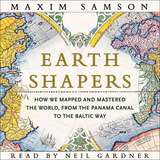
Mountains, meridians, rivers, and borders—these are some of the features that divide the world on our maps and in our minds. But geography is far less set in stone than we might believe, and, as Maxim Samson’s Earth Shapers contends, in our relatively short time on this planet, humans have become experts at fundamentally reshaping our surroundings.
From the Qhapaq Ñan, the Inca’s “great road,” and Mozambique’s colonial railways to a Saudi Arabian smart city, and from Korea’s sacred Baekdu-daegan mountain range and the Great Green Wall in Africa to the streets of Chicago, Samson explores how we mold the world around us. And how, as we etch our needs onto the natural landscape, we alter the course of history. These fascinating stories of connectivity show that in our desire to make geographical connections, humans have broken through boundaries of all kinds, conquered treacherous terrain, and carved up landscapes. We crave linkages, and though we do not always pay attention to the in-between, these pathways—these ways of “earth shaping,” in Samson’s words—are key to understanding our relationship with the planet we call home.
An immense work of cultural geography touching on ecology, sociology, history, and politics, Earth Shapers argues that, far from being constrained by geography, we are instead its creators.
The globetrotting story of how humans have harnessed the geographical landscape and written ourselves onto our surroundings.
Mountains, meridians, rivers, and borders—these are some of the features that divide the world on our maps and in our minds. But geography is far less set in stone than we might believe, and, as Maxim Samson’s Earth Shapers contends, in our relatively short time on this planet, humans have become experts at fundamentally reshaping our surroundings.
From the Qhapaq Ñan, the Inca’s “great road,” and Mozambique’s colonial railways to a Saudi Arabian smart city, and from Korea’s sacred Baekdu-daegan mountain range and the Great Green Wall in Africa to the streets of Chicago, Samson explores how we mold the world around us. And how, as we etch our needs onto the natural landscape, we alter the course of history. These fascinating stories of connectivity show that in our desire to make geographical connections, humans have broken through boundaries of all kinds, conquered treacherous terrain, and carved up landscapes. We crave linkages, and though we do not always pay attention to the in-between, these pathways—these ways of “earth shaping,” in Samson’s words—are key to understanding our relationship with the planet we call home.
An immense work of cultural geography touching on ecology, sociology, history, and politics, Earth Shapers argues that, far from being constrained by geography, we are instead its creators.
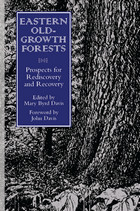
Through authoritative essays by leading ecologists, historians, and land managers, the book explores what defines old-growth in the East—its structure, species, and ecological functions—and why it matters now more than ever. You’ll gain the tools to recognize old-growth characteristics in the field, understand the threats facing these ancient forests, and make informed decisions about preservation and restoration strategies.
Beyond ecology, the book weaves in the cultural significance of these forests, showing how they have shaped human experience and imagination over time. This multidimensional perspective helps readers appreciate old-growth not just as a biological asset, but as a living archive of the past and a pillar of future resilience.
By the end, readers will walk away with clarity, motivation, and practical knowledge to advocate for and help protect old-growth forests across the region. Eastern Old-Growth Forests is both a call to action and a foundational reference for preserving what little remains—and what still might be restored.
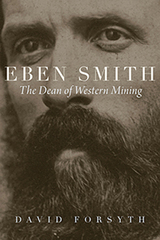
The mining teams Smith formed with Chaffee and with industrialist David Moffat were among the most successful and respected in Colorado, and many in the state held Smith in high regard. Yet despite the credit he received during his lifetime for establishing Colorado’s mining industry, Smith has not received much attention from historians, perhaps because he was content to leave public-facing duties to his partners while he concerned himself with managing mine operations.
From Smith’s early years and his labor in the mines to his rise to prominence as an investor and developer, Forsyth shows how Smith used the mining and milling knowledge he acquired in California to become a leader in technological innovation in Colorado’s mining industry.

Although food-production systems for the world's rural poor typically have had devastating effects on the planet's wealth of genes, species, and ecosystems, that need not be the case in the future. In Ecoagriculture, two of the world's leading experts on conservation and development examine the idea that agricultural landscapes can be designed more creatively to take the needs of human populations into account while also protecting, or even enhancing, biodiversity. They present a thorough overview of the innovative concept of "ecoagriculture" - the management of landscapes for both the production of food and the conservation of wild biodiversity. The book:
- examines the global impact of agriculture on wild biodiversity
- describes the challenge of reconciling biodiversity conservation and agricultural goals
- outlines and discusses the ecoagriculture approach
- presents diverse case studies that illustrate key strategies
- explores how policies, markets, and institutions can be re-shaped to support ecoagriculture
Ecoagriculture explores new approaches to agricultural production that complement natural environments, enhance ecosystem function, and improve rural livelihoods. It features a wealth of real-world case studies that demonstrate the applicability of the ideas discussed and how the principles can be applied, and is an important new work for policymakers, students, researchers, and anyone concerned with conserving biodiversity while sustaining human populations.
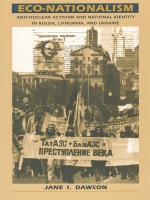
Dawson combines a theoretical framework based on models of social movements with extensive field research to compare the ways in which nationalism, regionalism, and other political demands were incorporated into anti-nuclear movements in Russia, Lithuania, Ukraine, Armenia, Tatarstan, and Crimea. These comparative case studies form the core of the book and trace differences among the various regional movements to the distinctive national identities of groups involved. Reflecting the new opportunities for research that have become available since the late 1980s, these studies draw upon Dawson’s extended on-site observation of local movements through 1995 and her unique access to movement activists and their personal archives.
Analyzing and documenting a development with sobering and potentially devastating implications for nuclear power safety in the former USSR and beyond, Eco-nationalism’s examination of social activism in late and postcommunist societies will interest readers concerned with the politics of global environmentalism and the process of democratization in the post-Soviet world.


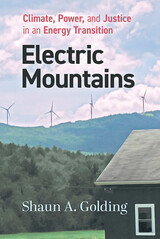
Committed environmentalists in one of North America’s most progressive regions desperately wanted energy policies that address the climate crisis. For many of them, wind turbines on Northern New England’s iconic ridgelines symbolize the energy transition that they have long hoped to see. For others, however, ridgeline wind takes on a very different meaning. When weighing its costs and benefits locally and globally, some wind opponents now see the graceful structures as symbols of corrupted energy politics.
This book derives from several years of research to make sense of how wind turbines have so starkly split a community of environmentalists, as well as several communities. In doing so, it casts a critical light on the roadmap for energy transition that Northern New England’s ridgeline wind projects demarcate. It outlines how ridgeline wind conforms to antiquated social structures propping up corporate energy interests, to the detriment of the swift de-carbonizing and equitable transformation that climate predictions warrant. It suggests, therefore, that the energy transition of which most of us are a part, is probably not the transition we would have designed ourselves, if we had been asked.
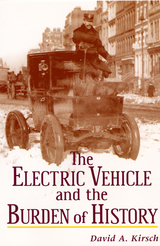
In the late 1890s, at the dawn of the automobile era, steam, gasoline, and electric cars all competed to become the dominant automotive technology. By the early 1900s, the battle was over and internal combustion had won. Was the electric car ever a viable competitor? What characteristics of late nineteenth-century American society led to the choice of internal combustion over its steam and electric competitors? And might not other factors, under slightly differing initial conditions, have led to the adoption of one of the other motive powers as the technological standard for the American automobile?
David A. Kirsch examines the relationship of technology, society, and environment to choice, policy, and outcome in the history of American transportation. He takes the history of the Electric Vehicle Company as a starting point for a vision of an “alternative” automotive system in which gasoline and electric vehicles would have each been used to supply different kinds of transport services. Kirsch examines both the support—and lack thereof—for electric vehicles by the electric utility industry. Turning to the history of the electric truck, he explores the demise of the idea that different forms of transportation technology might coexist, each in its own distinct sphere of service.
A main argument throughout Kirsch’s book is that technological superiority cannot be determined devoid of social context. In the case of the automobile, technological superiority ultimately was located in the hearts and minds of engineers, consumers and drivers; it was not programmed inexorably into the chemical bonds of a gallon of refined petroleum. Finally, Kirsch connects the historic choice of internal combustion over electricity to current debates about the social and environmental impacts of the automobile, the introduction of new hybrid vehicles, and the continuing evolution of the American transportation system.





Electronic Media and Technoculture anchors contemporary discussion of the digital future within a critical tradition about the media arts, society, and culture. The collection examines a range of phenomena, from boutique cyber-practices to the growing ubiquity of e-commerce and the internet. The essays chart a critical field in media studies, providing a historical perspective on theories of new media. The contributors place discussions of producing technologies in dialogue with consuming technologies, new media in relation to old media, and argue that digital media should not be restricted to the constraining public discourses of either the computer, broadcast, motion-picture, or internet industries. The collection charts a range of theoretical positions to assist readers interested in new media and to enable them to weather the cycles of hardware obsolescence and theoretical volatility that characterize the present rush toward digital technologies.
Contributors include Ien Ang, John Caldwell, Cynthia Cockburn, Helen Cunningham, Hans Magnus Enzensberger, Guillermo Gómez-Peña, Arthur Kroker, Bill Nichols, Andrew Ross, Ellen Seiter, Vivian Sobchack, Allucquère Rosanne Stone, Ravi Sundaram, Michael A. Weinstein, Raymond Williams, and Brian Winston.
John Thornton Caldwell is chair of the film and television department at the University of California at Los Angeles. He is a filmmaker and media artist and author of Televisuality: Style, Crisis, and Authority in American Television (also from Rutgers University Press).


Foregrounding African women’s ingenuity and labor, this pioneering case study shows how women in rural Mali have used technology to ensure food security through the colonial period, environmental crises, and postcolonial rule.
By advocating for an understanding of rural Malian women as engineers, Laura Ann Twagira rejects the persistent image of African women as subjects without technological knowledge or access and instead reveals a hidden history about gender, development, and improvisation. In so doing, she also significantly expands the scope of African science and technology studies.
Using the Office du Niger agricultural project as a case study, Twagira argues that women used modest technologies (such as a mortar and pestle or metal pots) and organized female labor to create, maintain, and reengineer a complex and highly adaptive food production system. While women often incorporated labor-saving technologies into their work routines, they did not view their own physical labor as the problem it is so often framed to be in development narratives. Rather, women’s embodied techniques and knowledge were central to their ability to transform a development project centered on export production into an environmental resource that addressed local taste and consumption needs.



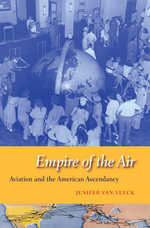
From the flights of the Wright brothers through the mass journeys of the jet age, airplanes inspired Americans to reimagine their nation’s place within the world. Now, Jenifer Van Vleck reveals the central role commercial aviation played in the United States’ rise to global preeminence in the twentieth century. As U.S. military and economic influence grew, the federal government partnered with the aviation industry to carry and deliver American power across the globe and to sell the very idea of the “American Century” to the public at home and abroad.
Invented on American soil and widely viewed as a symbol of national greatness, the airplane promised to extend the frontiers of the United States “to infinity,” as Pan American World Airways president Juan Trippe said. As it accelerated the global circulation of U.S. capital, consumer goods, technologies, weapons, popular culture, and expertise, few places remained distant from the influence of Wall Street and Washington. Aviation promised to secure a new type of empire—an empire of the air instead of the land, which emphasized access to markets rather than the conquest of territory and made the entire world America’s sphere of influence.
By the late 1960s, however, foreign airlines and governments were challenging America’s control of global airways, and the domestic aviation industry hit turbulent times. Just as the history of commercial aviation helps to explain the ascendance of American power, its subsequent challenges reflect the limits and contradictions of the American Century.

Bailey argues that technological society does not simply disenchant the world with its reductive methods and mechanical metaphors, then shape machines with political motives, but is also borne by a deeper, subversive undertow of enchantment. Addressing examples to explore the complexities of these enchantments, his thought is full of illuminating examinations of seductively engaging technologies ranging from the old camera obscura to new automobiles, robots, airplanes, and spaceships.
This volume builds on the work of numerous scholars, including Jacques Ellul and Jean Brun on the phenomenological and spiritual aspects of technology, Carl Jung on the archetypal collective unconscious approach to myth, and Martin Heidegger on Being itself. Bailey creates a dynamic, interdisciplinary, postmodern examination of how our machines and their environments embody not only reason, but also desires.
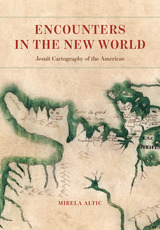
In 1540, in the wake of the tumult brought on by the Protestant Reformation, Saint Ignatius of Loyola founded the Society of Jesus, also known as the Jesuits. The Society’s goal was to revitalize the faith of Catholics and to evangelize to non-Catholics through charity, education, and missionary work. By the end of the century, Jesuit missionaries were sent all over the world, including to South America. In addition to performing missionary and humanitarian work, Jesuits also served as cartographers and explorers under the auspices of the Spanish, Portuguese, and French crowns as they ventured into remote areas to find and evangelize to native populations.
In Encounters in the New World, Mirela Altic analyzes more than 150 of their maps, most of which have never previously been published. She traces the Jesuit contribution to mapping and mapmaking from their arrival in the New World into the post-suppression period, placing it in the context of their worldwide undertakings in the fields of science and art. Altic’s analysis also shows the incorporation of indigenous knowledge into the Jesuit maps, effectively making them an expression of cross-cultural communication—even as they were tools of colonial expansion. This ambiguity, she reveals, reflects the complex relationship between missions, knowledge, and empire. Far more than just a physical survey of unknown space, Jesuit mapping of the New World was in fact the most important link to enable an exchange of ideas and cultural concepts between the Old World and the New.

A History Today Book of the Year
A world-renowned astronomer and an esteemed science writer make the provocative argument for space exploration without astronauts.
Human journeys into space fill us with wonder. But the thrill of space travel for astronauts comes at enormous expense and is fraught with peril. As our robot explorers grow more competent, governments and corporations must ask, does our desire to send astronauts to the Moon and Mars justify the cost and danger? Donald Goldsmith and Martin Rees believe that beyond low-Earth orbit, space exploration should proceed without humans.
In The End of Astronauts, Goldsmith and Rees weigh the benefits and risks of human exploration across the solar system. In space humans require air, food, and water, along with protection from potentially deadly radiation and high-energy particles, at a cost of more than ten times that of robotic exploration. Meanwhile, automated explorers have demonstrated the ability to investigate planetary surfaces efficiently and effectively, operating autonomously or under direction from Earth. Although Goldsmith and Rees are alert to the limits of artificial intelligence, they know that our robots steadily improve, while our bodies do not. Today a robot cannot equal a geologist’s expertise, but by the time we land a geologist on Mars, this advantage will diminish significantly.
Decades of research and experience, together with interviews with scientific authorities and former astronauts, offer convincing arguments that robots represent the future of space exploration. The End of Astronauts also examines how spacefaring AI might be regulated as corporations race to privatize the stars. We may eventually decide that humans belong in space despite the dangers and expense, but their paths will follow routes set by robots.
The book examines criticism on interactive fiction from both proponents and skeptics and examines similarities and differences between print and hypertext fiction. It looks closely at critically acclaimed interactive works, including Stuart Moulthrop's Victory Garden and Michael Joyce's Afternoon: A Story that illuminate how these hypertext narratives "work." While she sees this as a still-evolving technology and medium, the author identifies possible developments for the future of storytelling from outstanding examples of Web-based fiction and CD-ROM narratives, possibilities that will enable narratives to both portray the world with greater realism an to transcend the boundaries of novels and films, character and plot alike.
Written to be accessible to a wide range of readers, this lively and accessibly-written volume will appeal to those interested in technology and cyberculture, as well as to readers familiar with literary criticism and modern fiction.
J. Yellowlees Douglas is the Director of the William and Grace Dial Center for Written and Oral Communication, University of Florida. She is the author of numerous articles and essays on the subject of hypertext and interactive literature.

Networks the intricate relationship between rapidly advancing digital technologies and environmental degradation and reveals the costs of our globally connected world.
Taking a step back from the screens of electronic devices and exploring the profound impacts of digital technologies on our environment, Enduring Digital Damage lifts the veil on the “hidden costs” in our modern technological world.
Dustin Edwards traces key moments in the lifecycle of technology—such as the extraction of raw materials to the disposal of electronic waste—to uncover the often overlooked consequence of our digital age. He illuminates how data centers, mining operations, and other digital infrastructures contribute to environmental harm and how the rapidly increasing demand for land use and water access is essential to sustain our growing digital needs. Weaving together narratives of technological advancement and ecological destruction, Edwards presents a comprehensive analysis of the true cost of our digital lives. By drawing on case studies, cultural critique, and a critical examination of labor and sustainability, Enduring Digital Damage reveals the deeper histories and ongoing struggles that make our digital lives possible, urging readers to imagine the possibility of a less harmful and extractive world.
Gary Paul Nabhan here reveals the rich diversity of plants found in tropical forests and their contribution to modern crops, then tells how this diversity is being lost to agriculture and lumbering. He then relates "local parables" of Native American agriculture—from wild rice in the Great Lakes region to wild gourds in Florida—that convey the urgency of this situation and demonstrate the need for saving the seeds of endangered plants. Nabhan stresses the need for maintaining a wide gene pool, not only for the survival of these species but also for the preservation of genetic strains that can help scientists breed more resilient varieties of other plants.
Enduring Seeds is a book that no one concerned with our environment can afford to ignore. It clearly shows us that, as agribusiness increasingly limits the food on our table, a richer harvest can be had by preserving ancient ways.
This edition features a new foreword by Miguel Altieri, one of today's leading spokesmen for sustainable agriculture and the preservation of indigenous farming methods.
Energy Culture is a provocative book about oil’s firm grip on our politics and everyday lives. It brings together essays and artwork produced in a collaborative environment to stimulate new ways of thinking and to achieve a more just and sustainable world.
The original work collected in Energy Culture creatively engages energy as a social form through lively arguments and artistic research organized around three vectors of inquiry. The first maps how fossil fuels became, and continue to be, embedded in North American society, from the ideology of tar sands reclamation projects to dreams of fiber optic cables running through the Northwest Passage. The second comprises creative and artistic responses to the dominance of fossil fuels in everyday life and to the challenge of realizing new energy cultures. The final section addresses the conceptual and political challenges posed by energy transition and calls into question established views on energy. Its contributions caution against solar capitalism, explore the politics of sabotage, and imagine an energy efficient transportation system called “the switch.” Imbued with a sense of urgency and hope, Energy Culture exposes the deep imbrications of energy and culture while pointing provocatively to ways of thinking and living otherwise.
The most comprehensive book on this topic, Energy for Sustainability has been the go-to resource for courses. This new edition has been thoroughly revised and updated to inform and guide students and practitioners who will steer this transformation.
Drawing on a combined 80 years of teaching experience, John Randolph and Gilbert Masters take a holistic and interdisciplinary approach. Energy for Sustainability can help techies and policymakers alike understand the mechanisms required to enable conversion to energy that is clean, affordable, and secure. Major revisions to this edition reflect the current changes in technology and energy use and focus on new analyses, data, and methods necessary to understand and actively participate in the transition to sustainable energy.
The book begins with energy literacy, including patterns and trends, before covering the fundamentals of energy related to physics, engineering, and economics. The next parts explore energy technologies and opportunities in three important energy sectors: buildings, electricity, and transportation. The final section focuses on policy and planning, presenting the critical role of public policy and consumer and investor choice in transforming energy markets to greater sustainability. Throughout the book, methods for energy and economic analysis and design give readers a quantitative appreciation for and understanding of energy systems. The book uses case studies extensively to demonstrate current experience and illustrate possibilities.
Students will gain an understanding of what it takes to achieve clean, affordable, sustainable energy. Supplemental materials are available at www.islandpress.org/energy
The book begins by providing a historical perspective on energy use by human civilizations and then covers energy fundamentals and trends; buildings and energy; sustainable electricity; sustainable transportation and land use; and energy policy and planning. Included in these topical areas are in-depth discussions of all of the most promising sources of renewable energy, including solar photovoltaic systems, wind turbines, and biofuels. In addition, the authors offer a thorough presentation of “green” building design, the impact of land use and transportation patterns on energy use, and the policies needed to transform energy markets at the local, state, and national levels. Throughout, the authors first provide the necessary theory and then demonstrate how it can be applied, utilizing cutting-edge practices and technologies, and the most current available data.
Since the dawn of the industrial age, the explosive growth in economic productivity has been fueled by oil, coal, and natural gas. World energy use nearly doubled between 1975 and 2005. China’s energy use has been doubling every decade. The implications for the environment are staggering. One way or another, our reliance on fossil fuels will have to end. Energy for Sustainability evaluates the alternatives and helps students understand how, with good planning and policy decisions, renewable energy and efficiency can support world demands at costs we can afford—economically, environmentally, and socially.

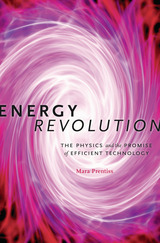
Energy can be neither created nor destroyed—but it can be wasted. The United States wastes two-thirds of its energy, including 80 percent of the energy used in transportation. So the nation has a tremendous opportunity to develop a sensible energy policy based on benefits and costs. But to do that we need facts—not hyperbole, not wishful thinking. Mara Prentiss presents and interprets political and technical information from government reports and press releases, as well as fundamental scientific laws, to advance a bold claim: wind and solar power could generate 100 percent of the United States’ average total energy demand for the foreseeable future, even without waste reduction.
To meet the actual rather than the average demand, significant technological and political hurdles must be overcome. Still, a U.S. energy economy based entirely on wind, solar, hydroelectricity, and biofuels is within reach. The transition to renewables will benefit from new technologies that decrease energy consumption without lifestyle sacrifices, including energy optimization from interconnected smart devices and waste reduction from use of LED lights, regenerative brakes, and electric cars. Many countries cannot obtain sufficient renewable energy within their borders, Prentiss notes, but U.S. conversion to a 100 percent renewable energy economy would, by itself, significantly reduce the global impact of fossil fuel consumption.
Enhanced by full-color visualizations of key concepts and data, Energy Revolution answers one of the century’s most crucial questions: How can we get smarter about producing and distributing, using and conserving, energy?

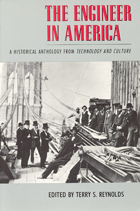
Spanning two centuries and the various subdisciplines of the field, these essays demonstrate the paradoxical role engineers have played in building (although usually not controlling) the infrastructure on which America's prosperity is based. This collection of seventeen essays traces the rise of the engineering profession and its evolving contribution to the development of America's material and economic success. Topics addressed include:
*American engineering's birth from European traditions
*Impact of science on engineering practice
*Changing relationship between engineers and bureaucratic organizations
*Growth of engineering professional institutions
Thoughtfully organized and unique in its scope, this volume will be a welcome overview for both students and scholars of the history of technology.
These essays were originally published in the journal Technology and Culture.


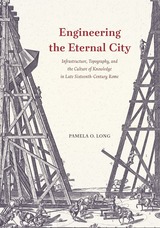
This portrait of an early modern Rome examines the many conflicts, failures, and successes that shaped the city, as decision-makers tried to control not only Rome’s structures and infrastructures but also the people who lived there. Taking up visual images of the city created during the same period—most importantly in maps and urban representations, this book shows how in a time before the development of modern professionalism and modern bureaucracies, there was far more wide-ranging conversation among people of various backgrounds on issues of engineering and infrastructure than there is in our own times. Physicians, civic leaders, jurists, cardinals, popes, and clerics engaged with painters, sculptors, architects, printers, and other practitioners as they discussed, argued, and completed the projects that remade Rome.
Engineering the Farm offers a wide-ranging examination of the social and ethical issues surrounding the production and consumption of genetically modified organisms (GMOs), with leading thinkers and activists taking a broad theoretical approach to the subject. Topics covered include:
- the historical roots of the anti-biotechnology movement
- ethical issues involved in introducing genetically altered crops
- questions of patenting and labeling
- the "precautionary principle" and its role in the regulation of GMOs
- effects of genetic modification on the world's food supply
- ecological concerns and impacts on traditional varieties of domesticated crops
- potential health effects of GMOs
Contributors argue that the scope, scale, and size of the present venture in crop modification is so vast and intensive that a thoroughgoing review of agricultural biotechnology must consider its global, moral, cultural, and ecological impacts as well as its effects on individual consumers. Throughout, they argue that more research is needed on genetically modified food and that consumers are entitled to specific information about how food products have been developed.
Despite its increasing role in worldwide food production, little has been written about the broader social and ethical implications of GMOs. Engineering the Farm offers a unique approach to the subject for academics, activists, and policymakers involved with questions of environmental policy, ethics, agriculture, environmental health, and related fields.
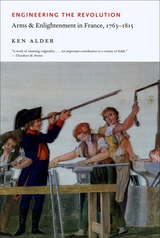
Engineering the Revolution documents the forging of a new relationship between technology and politics in Revolutionary France, and the inauguration of a distinctively modern form of the “technological life.” Here, Ken Alder rewrites the history of the eighteenth century as the total history of one particular artifact—the gun—by offering a novel and historical account of how material artifacts emerge as the outcome of political struggle. By expanding the “political” to include conflict over material objects, this volume rethinks the nature of engineering rationality, the origins of mass production, the rise of meritocracy, and our interpretation of the Enlightenment and the French Revolution.

Genetic engineering, nanotechnology, astrophysics, particle physics: We live in an engineered world, one where the distinctions between science and engineering, technology and research, are fast disappearing. This book shows how, at the dawn of the twenty-first century, the goals of natural scientists—to discover what was not known—and that of engineers—to create what did not exist—are undergoing an unprecedented convergence.
Sunny Y. Auyang ranges widely in demonstrating that engineering today is not only a collaborator with science but its equal. In concise accounts of the emergence of industrial laboratories and chemical and electrical engineering, and in whirlwind histories of the machine tools and automobile industries and the rise of nuclear energy and information technology, her book presents a broad picture of modern engineering: its history, structure, technological achievements, and social responsibilities; its relation to natural science, business administration, and public policies. Auyang uses case studies such as the development of the F-117A Nighthawk and Boeing 777 aircraft, as well as the experiences of engineer-scientists such as Oliver Heaviside, engineer-entrepreneurs such as Henry Ford and Bill Gates, and engineer-managers such as Alfred Sloan and Jack Welch to give readers a clear sense of engineering’s essential role in the future of scientific research.
READERS
Browse our collection.
PUBLISHERS
See BiblioVault's publisher services.
STUDENT SERVICES
Files for college accessibility offices.
RECENTLY PUBLISHED






UChicago Accessibility Resources
home | accessibility | search | about | contact us
BiblioVault ® 2001 - 2025
The University of Chicago Press