
 A SCHOLARLY BOOK REPOSITORY
541 start with F start with F

No one has figured more prominently in the study of the German philosopher Gottlob Frege than Michael Dummett. His magisterial Frege: Philosophy of Language is a sustained, systematic analysis of Frege's thought, omitting only the issues in philosophy of mathematics. In this work Dummett discusses, section by section, Frege's masterpiece The Foundations of Arithmetic and Frege's treatment of real numbers in the second volume of Basic Laws of Arithmetic, establishing what parts of the philosopher's views can be salvaged and employed in new theorizing, and what must be abandoned, either as incorrectly argued or as untenable in the light of technical developments.
Gottlob Frege (1848-1925) was a logician, mathematician, and philosopher whose work had enormous impact on Bertrand Russell and later on the young Ludwig Wittgenstein, making Frege one of the central influences on twentieth-century Anglo-American philosophy; he is considered the founder of analytic philosophy. His philosophy of mathematics contains deep insights and remains a useful and necessary point of departure for anyone seriously studying or working in the field.

For many philosophers, modern philosophy begins in 1879 with the publication of Gottlob Frege's Begriffsschrift, in which Frege presents the first truly modern logic in his symbolic language, Begriffsschrift, or concept-script. Danielle Macbeth's book, the first full-length study of this language, offers a highly original new reading of Frege's logic based directly on Frege's own two-dimensional notation and his various writings about logic.
Setting out to explain the nature of Frege's logical notation, Macbeth brings clarity not only to Frege's symbolism and its motivation, but also to many other topics central to his philosophy. She develops a uniquely compelling account of Frege's Sinn/Bedeutung distinction, a distinction central to an adequate logical language; and she articulates a novel understanding of concepts, both of what they are and of how their contents are expressed in properly logical language. In her reading, Frege's Begriffsschrift emerges as a powerful and deeply illuminating alternative to the quantificational logic it would later inspire.
The most enlightening examination to date of the developments of Frege's thinking about his logic, this book introduces a new kind of logical language, one that promises surprising insight into a range of issues in metaphysics and epistemology, as well as in the philosophy of logic.
Widespread interest in Frege’s general philosophical writings is, relatively speaking, a fairly recent phenomenon. But it is only very recently that his philosophy of mathematics has begun to attract the attention it now enjoys. This interest has been elicited by the discovery of the remarkable mathematical properties of Frege’s contextual definition of number and of the unique character of his proposals for a theory of the real numbers.
This collection of essays addresses three main developments in recent work on Frege’s philosophy of mathematics: the emerging interest in the intellectual background to his logicism; the rediscovery of Frege’s theorem; and the reevaluation of the mathematical content of The Basic Laws of Arithmetic. Each essay attempts a sympathetic, if not uncritical, reconstruction, evaluation, or extension of a facet of Frege’s theory of arithmetic. Together they form an accessible and authoritative introduction to aspects of Frege’s thought that have, until now, been largely missed by the philosophical community.
An analytical study of the French apanages from their creation to the end of the Capetian period, this pioneering book offers an explanation of why the French kings began the practice of granting fiefs to their younger sons, and why they introduced the curious inheritance restrictions which limited succession in an apanage to direct heirs of the original holder. The author also examines the connection of the apanages with the royal government in terms of sovereignty, jurisdiction, administration, military obligations, and financial affairs, showing how difficult it was to draw distinctions between the two spheres of government.
Since the original apanages were granted from lands only recently conquered from the English, they had the important practical effect of introducing the notion of French royal authority into areas that had not known it for centuries. People living in these lands became used to the fact that "the king" was the king of France, not of England. A clear understanding of the relationship of the apanages to the monarchy, the author maintains, is at the same time a large step toward an understanding of how the monarchy gained control of France and,ultimately, made a nation out of her fragmented provinces.
In tracing the evolution of the institutional conception of positive law, this volume makes an important contribution to the study of positive law. It also provides the first extensive translation of important writings on the theory of the institution, which has had continuing influence in France but has been known only by repute in English-speaking countries.
Supplementing the selections from the most significant works of Hauriou, Renard, and Delos are critiques that provide a contemporary focus to institutionalist thought. They include pieces by the noted jurists Jean Brèthe de la Gressaye, André Hauriou (the son), François and Bernard Geny, and Marcel Waline, as well as a retrospective essay prepared by Delos especially for this volume.
The writings themselves range over a number of areas--sociology, psychology, law, and philosophy--and they cover such subjects as juridical method, public law, individual rights and the state, Hauriou's famous "Notes" on decisions of the Conseil d'Etat, natural law, and the social order.
This comprehensive history of the French labor movement is notable for a number of reasons. It is a critical account of “unions in crisis” in a Democracy in crisis. It offers the only full description of the highly regulated collective bargaining system in France, and it shows why in France there are strikes against the Government as well as against private industry. It analyzes the Communist Party capture of the most influential labor combine—the General Federation of Labor—despite the fact that much of the rank and file do not concern themselves with political parties.
Val Lorwin gives his readers a good many reasons why the unfortunate situation which we know today has developed, and he provides a few indications as to how French labor may get out of the impasse into which it has slipped. He discusses the Government role in labor politics, and explains why French workers do not pay dues, and why poverty-stricken unions persist in striking. At the bottom of all French labor troubles, he points out, is the concept of class struggle; healthy, dynamic French economic growth will be achieved only when the labor unions adopt a more responsible position.
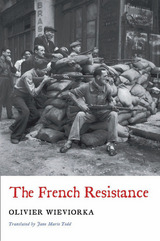
“Whatever happens, the flame of French resistance must not and will not go out.” As Charles de Gaulle ended his radio address to the French nation in June 1940, listeners must have felt a surge of patriotism tinged with uncertainty. Who would keep the flame burning through dark years of occupation? At what cost?
Olivier Wieviorka presents a comprehensive history of the French Resistance, synthesizing its social, political, and military aspects to offer fresh insights into its operation. Detailing the Resistance from the inside out, he reveals not one organization but many interlocking groups often at odds over goals, methods, and leadership. He debunks lingering myths, including the idea that the Resistance sprang up in response to the exhortations of de Gaulle’s Free French government-in-exile. The Resistance was homegrown, arising from the soil of French civil society. Resisters had to improvise in the fight against the Nazis and the collaborationist Vichy regime. They had no blueprint to follow, but resisters from all walks of life and across the political spectrum formed networks, organizing activities from printing newspapers to rescuing downed airmen to sabotage. Although the Resistance was never strong enough to fight the Germans openly, it provided the Allies invaluable intelligence, sowed havoc behind enemy lines on D-Day, and played a key role in Paris’s liberation.
Wieviorka shatters the conventional image of a united resistance with no interest in political power. But setting the record straight does not tarnish the legacy of its fighters, who braved Nazism without blinking.
In the English response to the increasingly bloody French Revolution, Seamus Deane finds a new perspective on English political thought as well as a striking indication of the sharpening of national consciousness. Ranging widely among the major and lesser thinkers of the period, he has produced a complex picture of cultural affinity and national hostility. The group dominated by Edmund Burke, which included Southey, Wordsworth, and Carlyle, viewed the Revolution as the culmination of a great conspiracy, led by intellectuals, to overthrow all that was sacred and traditional. The radical group, led by Godwin, Shelley, and Hazlitt, welcomed the Revolution but were perturbed by its excesses.
The English debate about the French Revolution tended to focus on the specifically French characteristics that made it what it was, in sharp contrast to the culture and experience that produced the relatively peaceful English revolution of 1688. To see the Revolution as an essentially French phenomenon allowed it to be understood as alien to English circumstances and inclinations. This permitted the English to deny that its basic doctrines had any claim to universality and also led to an enhanced definition of the English national character. In his analysis of major writers, popular political novelists, and pamphleteers, Deane interprets the intellectual indebtedness of individual English writers to their French counterparts, reflects on the power of the written word to influence events, and dissects polemical styles and language. His book constitutes an important chapter of English intellectual history.
In unprecedented detail, Leslie Choquette narrates the peopling of French Canada across the seventeenth and eighteenth centuries, the lesser known colonial phase of French migration. Drawing on French and Canadian archives, she carefully traces the precise origins of individual immigrants, describing them by gender, class, occupation, region, religion, age, and date of departure. Her archival work is impressive: of the more than 30,000 emigrants who embarked for Quebec and the Maritimes during the French Regime, nearly 16,000 are chronicled here.
In considering the pattern of emigration in the context of migration history, Choquette shows that, in many ways, the movement toward Canada occurred as a byproduct of other, perennial movements, such as the rural exodus or interurban labor migrations. Overall, emigrants to Canada belonged to an outwardly turned and mobile sector of French society, and their migration took place during a phase of vigorous Atlantic expansion. They crossed the ocean to establish a subsistence economy and peasant society, traces of which lingered on into the twentieth century.
Because Choquette looks at the entire history of French migration to Canada—its social and economic aspects as well as its place in the larger history of migration—her work makes a remarkable contribution in the field of immigration history.
That rosy tomato perched on your plate in December is at the end of a great journey—not just over land and sea, but across a vast and varied cultural history. This is the territory charted in Fresh. Opening the door of an ordinary refrigerator, it tells the curious story of the quality stored inside: freshness.
We want fresh foods to keep us healthy, and to connect us to nature and community. We also want them convenient, pretty, and cheap. Fresh traces our paradoxical hunger to its roots in the rise of mass consumption, when freshness seemed both proof of and an antidote to progress. Susanne Freidberg begins with refrigeration, a trend as controversial at the turn of the twentieth century as genetically modified crops are today. Consumers blamed cold storage for high prices and rotten eggs but, ultimately, aggressive marketing, advances in technology, and new ideas about health and hygiene overcame this distrust.
Freidberg then takes six common foods from the refrigerator to discover what each has to say about our notions of freshness. Fruit, for instance, shows why beauty trumped taste at a surprisingly early date. In the case of fish, we see how the value of a living, quivering catch has ironically hastened the death of species. And of all supermarket staples, why has milk remained the most stubbornly local? Local livelihoods; global trade; the politics of taste, community, and environmental change: all enter into this lively, surprising, yet sobering tale about the nature and cost of our hunger for freshness.

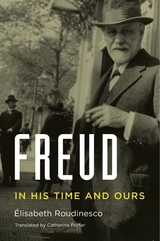
Élisabeth Roudinesco offers a bold and modern reinterpretation of the iconic founder of psychoanalysis. Based on new archival sources, this is Freud’s biography for the twenty-first century—a critical appraisal, at once sympathetic and impartial, of a genius greatly admired and yet greatly misunderstood in his own time and in ours.
Roudinesco traces Freud’s life from his upbringing as the eldest of eight siblings in a prosperous Jewish-Austrian household to his final days in London, a refugee of the Nazis’ annexation of his homeland. She recreates the milieu of fin de siècle Vienna in the waning days of the Habsburg Empire—an era of extraordinary artistic innovation, given luster by such luminaries as Gustav Klimt, Stefan Zweig, and Gustav Mahler. In the midst of it all, at the modest residence of Berggasse 19, Freud pursued his clinical investigation of nervous disorders, blazing a path into the unplumbed recesses of human consciousness and desire.
Yet this revolutionary who was overthrowing cherished notions of human rationality and sexuality was, in his politics and personal habits, in many ways conservative, Roudinesco shows. In his chauvinistic attitudes toward women, and in his stubborn refusal to acknowledge the growing threat of Hitler until it was nearly too late, even the analytically-minded Freud had his blind spots. Alert to his intellectual complexity—the numerous tensions in his character and thought that remained unresolved—Roudinesco ultimately views Freud less as a scientific thinker than as the master interpreter of civilization and culture.
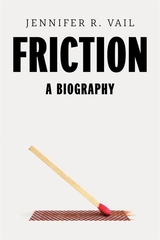
From the first spark of fire to the frontiers of energy, medicine, and space, a pioneering account of the invisible force that connects it all.
Friction, the force that resists motion, is synonymous with difficulty and complication. If you’ve ever replaced tires worn smooth by the road or reached for a can of WD-40 to fix a creaking door hinge, then you know the headache this force can cause.
In this book, Jennifer Vail reveals beneath the difficulty and complication a force as enigmatic and intriguing as it is central to the human story. She traces how, from the moment we first harnessed the power of fire to the Industrial Revolution and beyond, the quest to manipulate friction has driven innovation, culture, and even our own evolution. Today, as scientists study friction in the most unexpected of places, they’re learning why some viruses lie dormant for years while others devastate our cells immediately; where elusive dark matter might be found; and how the climate crisis ought finally be addressed. And yet, for all they’ve learned, scientists still haven’t cracked the greatest mystery of all: how to bridge the distinct laws that govern friction at its largest and smallest scales.
Connecting the discoveries of historical luminaries like Newton, da Vinci, and the Wright brothers to the latest breakthroughs in engineering, Friction is a captivating biography of this unsung hero of the physical world.

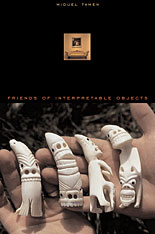
A strikingly original work, Friends of Interpretable Objects re-anchors aesthetics in the object of attention even as it redefines the practice, processes, meaning, and uses of interpretation.
Miguel Tamen's concern is to show how inanimate objects take on life through their interpretation--notably, in our own culture, as they are collected and housed in museums. It is his claim that an object becomes interpretable only in the context of a "society of friends." Thus, Tamen suggests, our inveterate tendency as human beings to interpret the phenomenal world gives objects not only a life but also a society. As his work unfolds, "friends" also takes on a legal sense, as advocates, introduced to advance the argument that the social life of interpreted and interpretable objects engenders a related web of social obligations.
Focusing on those who, through interpretation, make objects "speak" in settings as different as churches, museums, forests, and distant galaxies--those who know the best interests of corporations, endangered species, and works of art--Tamen exposes the common ground shared by art criticism, political science, tort law, and science. Learned and witty, with much to teach art historians, environmentalists, anthropologists, curators, and literary critics, his book utterly reorients our understanding of how we make sense of our world.
This book is the first comprehensive study tracing the origins and growth of English radicalism from the time of John Wilkes’s defiant fight for the rights of parliamentary electors to the final suppression of radical societies in 1799. It spans the age of revolution in England as the revolution absorbed reverberations from the American colonies and France, and was sometimes diverted by happenings in Scotland and Ireland.
“The Friends of Liberty” was the name English reformers took under George Ill's reign as they fought aristocratic rule and imperial domination within the English empire and abroad. They supported universal manhood suffrage, annual parliaments, social justice, the right of association, and they fought government suppression. At the height of their activity they were attacked as Jacobins, but the unfair denigration only hastened the beginnings of working class political consciousness and the formation of English conservatism.
Albert Goodwin contributes greatly to a profound understanding of the origins of popular radicalism in three ways. He reifies radicalism in urban areas beyond London—in the provincial cities of Manchester, Sheffield, Norwich, Birmingham, Derby, and Leicester. He places radicalism into a continental context. Finally, he traces radical thought from its seventeenth-century origins, through metropolitan Wilkite radicalism, Painite republicanism, and to Godwinian and Spencerian utopianism.

The question of whether true friendship could exist in an era of patronage occupied Renaissance Florentines as it had the ancient Greeks and Romans whose culture they admired and emulated. Rather than attempting to measure Renaissance friendship against a universal ideal defined by essentially modern notions of disinterestedness, intimacy, and sincerity, in this book Dale Kent explores the meaning of love and friendship as they were represented in the fifteenth century, particularly the relationship between heavenly and human friendship.
She documents the elements of shared experience in friendships between Florentines of various occupations and ranks, observing how these were shaped and played out in the physical spaces of the city: the streets, street corners, outdoor benches and loggias, family palaces, churches, confraternal meeting places, workshops of artisans and artists, taverns, dinner tables, and the baptismal font.
Finally, Kent examines the betrayal of trust, focusing on friends at moments of crisis or trial in which friendships were tested, and failed or endured. The exile of Cosimo de’ Medici in 1433 and his recall in 1434, the attempt in 1466 of the Medici family’s closest friends to take over their patronage network, and the Pazzi conspiracy to assassinate Lorenzo and Giuliano de’ Medici in 1478 expose the complexity and ambivalence of Florentine friendship, a combination of patronage with mutual intellectual passion and love—erotic, platonic, and Christian—sublimely expressed in the poetry and art of Michelangelo.
The master of Old Comedy.
Aristophanes of Athens, one of the world’s greatest comic dramatists, has been admired since antiquity for his iridescent wit and beguiling fantasy, exuberant language, and brilliant satire of the social, intellectual, and political life of Athens at its height. The Loeb Classical Library edition of his plays is in four volumes.
The Introduction to the edition is in Volume I. Also in the first volume is Acharnians, in which a small landowner, tired of the Peloponnesian War, magically arranges a personal peace treaty; and Knights, perhaps the most biting satire of a political figure (Cleon) ever written.
Three plays are in Volume II. Socrates’ “Thinkery” is at the center of Clouds, which spoofs untraditional techniques for educating young men. Wasps satirizes Athenian enthusiasm for jury service. In Peace, a rollicking attack on war-makers, the hero travels to heaven on a dung beetle to discuss the issues with Zeus.
The enterprising protagonists of Birds create a utopian counter-Athens ruled by birds. Also in Volume III is Lysistrata, in which our first comic heroine organizes a conjugal strike of young wives until their husbands end the war between Athens and Sparta. Women again take center stage in Women at the Thesmophoria, this time to punish Euripides for portraying them as wicked.
Frogs, in Volume IV, features a contest between the traditional Aeschylus and the modern Euripides, yielding both sparkling comedy and insight on ancient literary taste. In Assemblywomen Athenian women plot to save Athens from male misgovernance—with raucously comical results. Here too is Wealth, whose gentle humor and straightforward morality made it the most popular of Aristophanes’ plays from classical times to the Renaissance.
Only a few of us seek immortality, and fewer still by writing. But Arthur Inman challenged the odds. He calculated that if he kept a diary and spared no thoughts or actions, was entirely honest and open, and did not care about damage or harm to himself or others, he would succeed in gaining attention beyond the grave that he could not attain in life.
The diary became a many-layered and strikingly animated work of a gifted writer, by turns charming, repellent, shocking, cruel, and comical. But the diary is also an uninhibited history of his times, of his eccentricities and fantasies, of his bizarre marriage arrangements and sexual adventures. Inman’s explorations of his own troubled nature made him excessively curious about the secret lives of others. Like some ghostly doctor-priest, he chronicled their outpourings of head and heart as vividly as he did his own. The diary reads like a nonfiction novel as it moves inexorably toward disaster.
This is an abridged version of the celebrated two-volume work published by Harvard as The Inman Diary: A Public and Private Confession.

In a stunningly original work about the impact of cultural perceptions in international relations, Simei Qing offers a new perspective on relations between the United States and China after World War II.
From debates over Taiwan in the Truman administration to military confrontation in Korea to relations with the Soviet Union, Qing explores how policies on both sides became persistently counterproductive. Implicit moral and cultural values became woven into policy rationales for both China and the United States. Cultural visions of modernity and understandings of identity played a critical role in each nation's evaluation of the other's intentions and in defining interests and principles in their diplomatic relationship.
Based on American, Russian, and newly declassified Chinese sources, this book reveals rarely examined assumptions that were entrenched in mainstream policy debates on both sides, and sheds light on the origins and development of U.S.-China confrontations that continue to resonate today. Simei Qing also provides a compelling look at the vital role of deeply anchored visions in the origins of human military conflicts.
The American Civil War and the Paris Commune of 1871, Philip Katz argues, were part of the broader sweep of transatlantic development in the mid-nineteenth century--an age of democratic civil wars. Katz shows how American political culture in the period that followed the Paris Commune was shaped by that event.
The telegraph, the new Atlantic cable, and the news-gathering experience gained in the Civil War transformed the Paris Commune into an American national event. News from Europe arrived in fragments, however, and was rarely cohesive and often contradictory. Americans were forced to assimilate the foreign events into familiar domestic patterns, most notably the Civil War. Two ways of Americanizing the Commune emerged: descriptive (recasting events in American terms in order to better understand them) and predictive (preoccupation with whether Parisian unrest might reproduce itself in the United States).
By 1877, the Commune became a symbol for the domestic labor unrest that culminated in the Great Railroad Strike of that year. As more powerful local models of social unrest emerged, however, the Commune slowly disappeared as an active force in American culture.
What does history mean today? What is its relevance to the modern world? In contemplating fundamental questions about history and the Western legacy, the noted classical historian Christian Meier offers a new interpretation on how we view the world.
Meier sees an “absence” of history in contemporary Europe and throughout the West—an absence he attributes to the way modern historians have written about history and, more important, to the dramatic transformations of the twentieth century. He argues for the central legacy of Western civilization. He tackles the difficulty of reconciling a historical perspective with our era of extreme acceleration, when experience is shaped less by inheritance and legacy than by the novelty of changes wrought by science and globalization. Finally, Meier contemplates the enormity of the Holocaust, which he sees as a test of “understanding” history. If it is part of the whole arc of the Western legacy, how do we fit it with the rest?
This engaging and thought-provoking meditation challenges us to rethink the role of history in Western culture and a changing world.
What makes people fight and risk their lives for countries other than their own? Why did diverse individuals such as Lord Byron, George Orwell, Che Guevara, and Osama bin Laden all volunteer for ostensibly foreign causes? Nir Arielli helps us understand this perplexing phenomenon with a wide-ranging history of foreign-war volunteers, from the wars of the French Revolution to the civil war in Syria.
Challenging narrow contemporary interpretations of foreign fighters as a security problem, Arielli opens up a broad range of questions about individuals’ motivations and their political and social context, exploring such matters as ideology, gender, international law, military significance, and the memory of war. He shows that even though volunteers have fought for very different causes, they share a number of characteristics. Often driven by a personal search for meaning, they tend to superimpose their own beliefs and perceptions on the wars they join. They also serve to internationalize conflicts not just by being present at the front but by making wars abroad matter back at home. Arielli suggests an innovative way of distinguishing among different types of foreign volunteers, examines the mixed reputation they acquire, and provides the first in-depth comparative analysis of the military roles that foreigners have played in several conflicts.
Merging social, cultural, military, and diplomatic history, From Byron to bin Laden is the most comprehensive account yet of a vital, enduring, but rarely explored feature of warfare past and present.
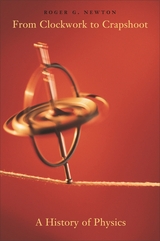
Science is about 6000 years old while physics emerged as a distinct branch some 2500 years ago. As scientists discovered virtually countless facts about the world during this great span of time, the manner in which they explained the underlying structure of that world underwent a philosophical evolution. From Clockwork to Crapshoot provides the perspective needed to understand contemporary developments in physics in relation to philosophical traditions as far back as ancient Greece.
Roger Newton, whose previous works have been widely praised for erudition and accessibility, presents a history of physics from the early beginning to our day--with the associated mathematics, astronomy, and chemistry. Along the way, he gives brief explanations of the scientific concepts at issue, biographical thumbnail sketches of the protagonists, and descriptions of the changing instruments that enabled scientists to make their discoveries. He traces a profound change from a deterministic explanation of the world--accepted at least since the time of the ancient Greek and Taoist Chinese civilizations--to the notion of probability, enshrined as the very basis of science with the quantum revolution at the beginning of the twentieth century. With this change, Newton finds another fundamental shift in the focus of physicists--from the cause of dynamics or motion to the basic structure of the world. His work identifies what may well be the defining characteristic of physics in the twenty-first century.
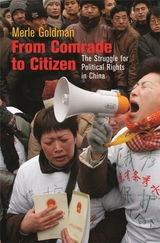
A leading scholar of China's modern political development examines the changing relationship between the Chinese people and the state. Correcting the conventional view of China as having instituted extraordinary economic changes but having experienced few political reforms in the post-Mao period, Merle Goldman details efforts by individuals and groups to assert their political rights.
China's move to the market and opening to the outside world have loosened party controls over everyday life and led to the emergence of ideological diversity. Starting in the 1980s, multi-candidate elections for local officials were held, and term limits were introduced for communist party leaders. Establishment intellectuals who have broken away from party patronage have openly criticized government policies. Those intellectuals outside the party structures, because of their participation in the Cultural Revolution or the 1989 Tiananmen Square demonstrations, have organized petitions, published independent critiques, formed independent groups, and even called for a new political system.
Despite the party's repeated attempts to suppress these efforts, awareness about political rights has been spreading among the general population. Goldman emphasizes that these changes do not guarantee movement toward democracy, but she sees them as significant and genuine advances in the assertion of political rights in China.
This book is the first systematic account of the law and economics of the family. It explores the implications of economics for family law—divorce, adoption, breach of promise, surrogacy, prenuptial agreements, custody arrangements—and its limitations.
Before a family forms, prospective partners engage in a kind of market activity that involves searching and bargaining, for which the economic analysis of contract law provides useful insights. Once a couple marries, the individuals become a family and their decisions have important consequences for other parties, especially children. As a result, the state and community have vital interests in the family.
Although it may be rational to breach a contract, pay damages, and recontract when a better deal comes along, this practice, if applied to family relationships, would make family life impossible—as would the regular toting up of balances between the partners. So the book introduces the idea of covenant to consider the role of love, trust, and fidelity, concepts about which economic analysis and contract law have little to offer, but feminist thought has a great deal to add. Although families do break up, children of divorce are still bound to their parents and to each other in powerful ways.
In this engaging analysis of a crucial period in Dickens's life, Alexander Welsh corrects our picture of the novelist's development and advocates a new approach to biographical criticism. Welsh centers our attention on an early crisis in Dickens's life and writing. His starting point is 1842, when the thirty year-old established writer (already author of The Pickwick Papers, Oliver Twist, Nicholas Nickleby, and The Old Curiosity Shop) traveled in America advocating international copyright. Welsh argues that the frustration and chagrin Dickens felt on this trip—when the American press accused him of hypocritical self-interest—had a demonstrable impact on his creative development. New powers of characterization are evident in the novels published in the decade that followed: Martin Chuzzlewit, Dombey and Son, and David Copperfield, books named for heroes who became progressively more like projections of the author himself.
In these novels Dickens also asserts his kinship with Moliere, Milton, and Shakespeare. Playing boldly on Tartuffe, Paradise Lost, and King Lear, he lays claim to his own identity as a writer. Welsh shows that as much weight should be given to such literary concerns as to Dickens's recollection—in this same stage of his career—of the childhood trauma memorably inscribed in Copperfield.
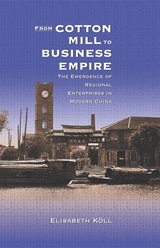
The demise of state-owned enterprises, the transformation of collectives into shareholding cooperatives, and the creation of investment opportunities through stock markets indicate China's movement from a socialist, state-controlled economy toward a socialist market economy. Yet, contrary to high expectations that China's new enterprises will become like corporations in capitalist countries, management often remains under the control of the onetime bureaucrats who ran the socialist enterprises.
The concepts, definitions, and interpretations of property rights, corporate structures, and business practices in contemporary China have historical, institutional, and cultural roots. In tracing the development under founder Zhang Jian (1853-1926) and his successors of the Dasheng Cotton Mill in Nantong into a business group encompassing, among other concerns, cotton, flour, and oil mills, land development companies, and shipping firms, the author documents the growth of regional enterprises as local business empires from the 1890s until the foundation of the People's Republic in 1949. She focuses on the legal and managerial evolution of limited-liability firms in China, particularly issues of control and accountability; the introduction and management of industrial work in the countryside; and the integration and interdependency of local, national, and international markets in Republican China.

The notion of the individual was initially translated into Korean near the end of the nineteenth century and took root during the early years of Japanese colonial influence. Yoon Sun Yang argues that the first literary iterations of the Korean individual were prototypically female figures appearing in the early colonial domestic novel—a genre developed by reform-minded male writers—as schoolgirls, housewives, female ghosts, femmes fatales, and female same-sex partners. Such female figures have long been viewed as lacking in modernity because, unlike numerous male characters in Korean literature after the late 1910s, they did not assert their own modernity, or that of the nation, by exploring their interiority. Yang, however, shows that no reading of Korean modernity can ignore these figures, because the early colonial domestic novel cast them as individuals in terms of their usefulness or relevance to the nation, whether model citizens or iconoclasts.
By including these earlier narratives within modern Korean literary history and positing that they too were engaged in the translation of individuality into Korean, Yang’s study not only disrupts the canonical account of a non-gendered, linear progress toward modern Korean selfhood but also expands our understanding of the role played by translation in Korea’s construction of modern gender roles.

For those who believe that globalization is a purely modern phenomenon, this book holds a startling and absorbing lesson. From Egypt to Babylon immerses readers in a world of exotic empires and states as they waxed and waned and interacted in a period of extraordinary internationalism—all before the rise of the Persian Empire.
The ancient Egyptians, Minoans, Mycenaeans, Hittites, Canaanites, Hurrians, Aramaeans, Israelites, Urartians, Mannaeans, Assyrians, Phrygians, Kassites, Chaldaeans, Elamites, Scythians, Medes, and Persians: these are the societies who for a millennia peopled the world from the Aegean and Egypt in the west to what we know now as Iraq and Iran in the east. In a concise introduction, illustrated with objects drawn largely from the collections of the British Museum, this book takes the reader through the vast and varied landscape of this period, where a far-flung world was linked by military expansion, diplomatic relations, and movement of goods and peoples that brought about profound cultural exchanges and technological and social revolutions. The story brings the reader from the foundations of the Egyptian empire through the turmoil at the end of the second millennium bce to the unprecedented political unification of the whole region by kings of Persia.
From Egypt to Babylon weaves together the political histories of the region’s diverse societies for the first time, tracing shifting fortunes and burgeoning colonies, trading connections and cultural pressures in what was truly the world’s first international age.
The American philosopher Wilfrid Sellars ranks as one of the leading twentieth-century critics of empiricism—a philosophical approach to knowledge that seeks to ground it in human sense experience. Sellars stood in the forefront of a recoil within analytic philosophy from the foundationalist assumptions of contemporary empiricists. From Empiricism to Expressivism is a far-reaching reinterpretation of Sellars from one of the philosopher’s most brilliant intellectual heirs.
Unifying and extending Sellars’s most important ideas, Robert Brandom constructs a theory of pragmatic expressivism which, in contrast to empiricism, understands meaning and knowledge in terms of the role expressions play in social practices. The key lies in Sellars’s radical reworking of Kant’s idea of the categories: the idea that the expressive job characteristic of many of the most important philosophical concepts is not to describe or explain the empirical world but rather to make explicit essential features of the conceptual framework that makes description and explanation possible.
Brandom reconciles otherwise disparate elements of Sellars’s system, revealing a greater level of coherence and consistency in the philosopher’s arguments against empiricism than has usually been acknowledged. From Empiricism to Expressivism clarifies what Sellars had in mind when he talked about moving analytic philosophy from its Humean to its Kantian phase, and why such a move might be of crucial importance today.
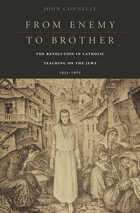
In 1965 the Second Vatican Council declared that God loves the Jews. Before that, the Church had taught for centuries that Jews were cursed by God and, in the 1940s, mostly kept silent as Jews were slaughtered by the Nazis. How did an institution whose wisdom is said to be unchanging undertake one of the most enormous, yet undiscussed, ideological swings in modern history?
The radical shift of Vatican II grew out of a buried history, a theological struggle in Central Europe in the years just before the Holocaust, when a small group of Catholic converts (especially former Jew Johannes Oesterreicher and former Protestant Karl Thieme) fought to keep Nazi racism from entering their newfound church. Through decades of engagement, extending from debates in academic journals, to popular education, to lobbying in the corridors of the Vatican, this unlikely duo overcame the most problematic aspect of Catholic history. Their success came not through appeals to morality but rather from a rediscovery of neglected portions of scripture.
From Enemy to Brother illuminates the baffling silence of the Catholic Church during the Holocaust, showing how the ancient teaching of deicide—according to which the Jews were condemned to suffer until they turned to Christ—constituted the Church’s only language to talk about the Jews. As he explores the process of theological change, John Connelly moves from the speechless Vatican to those Catholics who endeavored to find a new language to speak to the Jews on the eve of, and in the shadow of, the Holocaust.

From his birth in the lowest stratum of the samurai class to his assassination at the hands of right-wing militarists, Takahashi Korekiyo (1854-1936) lived through tumultuous times that shaped the course of modern Japanese history. Takahashi is considered "Japan's Keynes" in many circles because of the forward-thinking (and controversial) fiscal and monetary policies--including deficit financing, currency devaluation, and lower interest rates--that he implemented to help Japan rebound from the Great Depression and move toward a modern economy.
Richard J. Smethurst's engaging biography underscores the profound influence of the seven-time finance minister on the political and economic development of Japan by casting new light on Takahashi's unusual background, unique talents, and singular experiences as a charismatic and cosmopolitan financial statesman.
Along with the many fascinating personal episodes--such as working as a houseboy in California and running a silver mine in the Andes--that molded Takahashi and his thinking, the book also highlights four major aspects of Takahashi's life: his unorthodox self-education, his two decades of service at the highest levels of government, his pathbreaking economic and political policies before and during the Depression, and his efforts to stem the rising tide of militarism in the 1930s. Deftly weaving together archival sources, personal correspondence, and historical analysis, Smethurst's study paints an intimate portrait of a key figure in the history of modern Japan.
The fundamental texts of the great classical period in modern logic, some of them never before available in English translation, are here gathered together for the first time. Modern logic, heralded by Leibniz, may be said to have been initiated by Boole, De Morgan, and Jevons, but it was the publication in 1879 of Gottlob Frege’s Begriffsschrift that opened a great epoch in the history of logic by presenting, in full-fledged form, the propositional calculus and quantification theory.
Frege’s book, translated in its entirety, begins the present volume. The emergence of two new fields, set theory and foundations of mathematics, on the borders of logic, mathematics, and philosophy, is depicted by the texts that follow. Peano and Dedekind illustrate the trend that led to Principia Mathematica. Burali-Forti, Cantor, Russell, Richard, and König mark the appearance of the modern paradoxes. Hilbert, Russell, and Zermelo show various ways of overcoming these paradoxes and initiate, respectively, proof theory, the theory of types, and axiomatic set theory. Skolem generalizes Löwenheim’s theorem, and he and Fraenkel amend Zermelo’s axiomatization of set theory, while von Neumann offers a somewhat different system. The controversy between Hubert and Brouwer during the twenties is presented in papers of theirs and in others by Weyl, Bernays, Ackermann, and Kolmogorov. The volume concludes with papers by Herbrand and by Gödel, including the latter’s famous incompleteness paper.
Of the forty-five contributions here collected all but five are presented in extenso. Those not originally written in English have been translated with exemplary care and exactness; the translators are themselves mathematical logicians as well as skilled interpreters of sometimes obscure texts. Each paper is introduced by a note that sets it in perspective, explains its importance, and points out difficulties in interpretation. Editorial comments and footnotes are interpolated where needed, and an extensive bibliography is included.
The science of mind been plagued by intractable philosophical puzzles, chiefamong them the distortions of memory and therelation between mind and body. SigmundFreud's clinical practice forced him to grapplewith these problems, and out of that strugglepsychoanalysis emerged.
From Freud's Consulting Room charts the development of his ideasthrough his clinical work, the successes and failures of his most dramatic and significant case histories, and the creation of a discipline recognizably distinct from its neighbors.

A Wired Most Fascinating Book of the Year
“An important book that reminds us that navigation remains one of our most underappreciated arts.”
—Tristan Gooley, author of The Lost Art of Reading Nature’s Signs
“If you want to understand what rats can teach us about better-planned cities, why walking into a different room can help you find your car keys, or how your brain’s grid, border, and speed cells combine to give us a sense of direction, this book has all the answers.”
—The Scotsman
How is it that some of us can walk unfamiliar streets without losing our way, while the rest of us struggle even with a GPS? Navigating in uncharted territory is a remarkable feat if you stop to think about it. In this beguiling mix of science and storytelling, Michael Bond explores how we do it: how our brains make the “cognitive maps” that keep us orientated and how that anchors our sense of wellbeing. Children are instinctive explorers, developing a spatial understanding as they roam. And yet today few of us make use of the wayfinding skills that we inherited from our nomadic ancestors.
Bond tells stories of the lost and found—sailors, orienteering champions, early aviators—and explores why being lost can be such a devastating experience. He considers how our understanding of the world around us affects our psychology and helps us see how our reliance on technology may be changing who we are.
“Bond concludes that, by setting aside our GPS devices, by redesigning parts of our cities and play areas, and sometimes just by letting ourselves get lost, we can indeed revivify our ability to find our way, to the benefit of our inner world no less than the outer one.”
—Science
“A thoughtful argument about how our ability to find our way is integral to our nature.”
—Sunday Times
West German filmmakers have tried to repeatedly over the past half-century to come to terms with Germany’s stigmatized history. How can Hitler and the Holocaust, how can the complicity and shame of the average German be narrated and visualized? How can Auschwitz be reconstructed? Anton Kaes argues that a major shift in German attitudes occurred in the mid-1970s—a shift best illustrated in films of the New German Cinema, which have focused less on guilt and atonement than on personal memory and yearning for national identity.
To support his claim, Kaes devotes a chapter to each of five complex and celebrated films of the modern German era: Hans Jürgen Syberberg's Hitler, a Film from Germany, a provocative restaging of German history in postmodern tableaux; The Marriage of Maria Braun, the personal and political reflection on postwar Germany with which Rainer Werner Fassbinder first caught the attention of American and European audiences; Helma Sanders-Brahms's feminist and autobiographical film Germany, Pale Mother, relating the unexplored role of German women during and after the war; Alexander Kluge's The Patriot, a self-reflexive collage of verbal and visual quotations from the entire course of the German past; and, finally, Edgar Reitz's Heimat, a 16-hour epic rendering of German history from 1918 to the present from the perspective of everyday life in the provinces.
Despite radical differences in style and form, these films are all concerned with memory, representation, and the dialogue between past and present Kaes draws from a variety of disciplines, interweaving textual interpretation, cultural history, and current theory to create a dynamic approach to highly complex and multi-voiced films. His book will engage readers interested in postwar German history, politics, and culture; in film and media studies; and in the interplay of history, memory, and film.
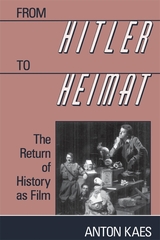
West German filmmakers have tried to repeatedly over the past half-century to come to terms with Germany’s stigmatized history. How can Hitler and the Holocaust, how can the complicity and shame of the average German be narrated and visualized? How can Auschwitz be reconstructed? Anton Kaes argues that a major shift in German attitudes occurred in the mid-1970s—a shift best illustrated in films of the New German Cinema, which have focused less on guilt and atonement than on personal memory and yearning for national identity.
To support his claim, Kaes devotes a chapter to each of five complex and celebrated films of the modern German era: Hans Jürgen Syberberg's Hitler, a Film from Germany, a provocative restaging of German history in postmodern tableaux; The Marriage of Maria Braun, the personal and political reflection on postwar Germany with which Rainer Werner Fassbinder first caught the attention of American and European audiences; Helma Sanders-Brahms's feminist and autobiographical film Germany, Pale Mother, relating the unexplored role of German women during and after the war; Alexander Kluge's The Patriot, a self-reflexive collage of verbal and visual quotations from the entire course of the German past; and, finally, Edgar Reitz's Heimat, a 16-hour epic rendering of German history from 1918 to the present from the perspective of everyday life in the provinces.
Despite radical differences in style and form, these films are all concerned with memory, representation, and the dialogue between past and present Kaes draws from a variety of disciplines, interweaving textual interpretation, cultural history, and current theory to create a dynamic approach to highly complex and multi-voiced films. His book will engage readers interested in postwar German history, politics, and culture; in film and media studies; and in the interplay of history, memory, and film.
In From Kant to Husserl, Charles Parsons examines a wide range of historical opinion on philosophical questions, from mathematics to phenomenology. Amplifying his early ideas on Kant’s philosophy of arithmetic, Parsons uses Kant’s lectures on metaphysics to explore how his arithmetical concepts relate to the categories. He then turns to early reactions by two immediate successors of Kant, Johann Schultz and Bernard Bolzano, to shed light on disputed questions regarding interpretation of Kant’s philosophy of mathematics. Interested, as well, in what Kant meant by “pure natural science,” Parsons considers the relationship between the first Critique and the Metaphysical Foundations of Natural Science. His commentary on Kant’s Transcendental Aesthetic departs from mathematics to engage the vexed question of what it tells about the meaning of Kant’s transcendental idealism.
Proceeding on to phenomenology, Parsons examines Frege’s evolving idea of extensions, his attitude toward set theory, and his correspondence, particularly exchanges with Russell and Husserl. An essay on Brentano brings out, in the case of judgment, an alternative to the now standard Fregean view of negation, and, on truth, alternatives to the traditional correspondence view that are still discussed today. Ending with the question of why Husserl did not take the “linguistic turn,” a final essay included here marks the only article-length discussion of Husserl Parsons has ever written, despite a long-standing engagement with this philosopher.
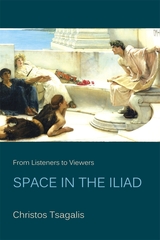
What do we mean by “space” in the Iliad? The aim of this book is to offer a systematic and comprehensive presentation of the different types and functions of space in the earliest work of Greek literature. By adopting a twofold division between simple and embedded story space, the former pertaining to the actions of characters and the latter to their thoughts, Christos Tsagalis shows how character drawing and authority are deeply influenced by active spatial representation.
Similes and descriptive passages, in which space looms large, are also viewed in a new light as the author explores the relation between space designated in the similes and in the corresponding action of the main narrative. Given the importance in cognitive theory of the role of memory in an oral medium such as epic song, the book analyzes Homeric modes of visual memory, implicit knowledge, and mnemonic formats in order to better understand the composition and presentation of descriptive and ekphrastic passages, with special emphasis on the numerous prized objects and the monumental shield of Achilles.
This compact history traces the computer industry from its origins in 1950s mainframes, through the establishment of standards beginning in 1965 and the introduction of personal computing in the 1980s. It concludes with the Internet’s explosive growth since 1995. Across these four periods, Martin Campbell-Kelly and Daniel Garcia-Swartz describe the steady trend toward miniaturization and explain its consequences for the bundles of interacting components that make up a computer system. With miniaturization, the price of computation fell and entry into the industry became less costly. Companies supplying different components learned to cooperate even as they competed with other businesses for market share. Simultaneously with miniaturization—and equally consequential—the core of the computer industry shifted from hardware to software and services. Companies that failed to adapt to this trend were left behind.
Governments did not turn a blind eye to the activities of entrepreneurs. The U.S. government was the major customer for computers in the early years. Several European governments subsidized private corporations, and Japan fostered R&D in private firms while protecting its domestic market from foreign competition. From Mainframes to Smartphones is international in scope and broad in its purview of this revolutionary industry.
What do the Chinese literature and film inspired by the Cultural Revolution (1966–1976) have in common with the Chinese literature and film of the May Fourth movement (1918–1930)? This new book demonstrates that these two periods of the highest literary and cinematic creativity in twentieth-century China share several aims: to liberate these narrative arts from previous aesthetic orthodoxies, to draw on foreign sources for inspiration, and to free individuals from social conformity.
Although these consistencies seem readily apparent, with a sharper focus the distinguished contributors to this volume reveal that in many ways discontinuity, not continuity, prevails. Their analysis illuminates the powerful meeting place of language, imagery, and narrative with politics, history, and ideology in twentieth-century China.
Drawing on a wide range of methodologies, from formal analysis to feminist criticism, from deconstruction to cultural critique, the authors demonstrate that the scholarship of modern Chinese literature and film has become integral to contemporary critical discourse. They respond to Eurocentric theories, but their ultimate concern is literature and film in China’s unique historical context. The volume illustrates three general issues preoccupying this century’s scholars: the conflict of the rural search for roots and the native soil movement versus the new strains of urban exoticism; the diacritics of voice, narrative mode, and intertextuality; and the reintroduction of issues surrounding gender and subjectivity.
The economic growth of South Korea has been a remarkable success story. After the Korean War, the country was one of the poorest economies on the planet; by the twenty-first century, it had become a middle-income country, a member of the Organization of Economic Cooperation and Development (the club of advanced economies), and home to some of the world’s leading industrial corporations. And yet, many Koreans are less than satisfied with their country’s economic performance, given the continuing financial volatility and sluggish growth since the Korean economic crisis of 1997–1998.
From Miracle to Maturity offers a comprehensive qualitative and quantitative analysis of the growth of the Korean economy, starting with the aggregate sources of growth (growth of the labor force, the stock of capital, and productivity) and then delving deeper into the roles played by structural change, exports, foreign investment, and financial development. The authors provide a detailed examination of the question of whether the Korean economy is now underperforming and ask, if so, what can be done to solve the problem.
Tracing teachers' experiences in the Third Reich and East Germany, Charles Lansing analyzes developments in education of crucial importance to both dictatorships. Lansing uses the town of Brandenburg an der Havel as a case study to examine ideological reeducation projects requiring the full mobilization of the schools and the active participation of a transformed teaching staff. Although lesson plans were easily changed, skilled teachers were neither quickly made nor easily substituted. The men and women charged in the postwar era with educating a new “antifascist” generation were, to a surprising degree, the same individuals who had worked to “Nazify” pupils in the Third Reich. But significant discontinuities existed as well, especially regarding the teachers' professional self-understanding and attitudes toward the state-sanctioned teachers' union. The mixture of continuities and discontinuities helped to stabilize the early GDR as it faced its first major crisis in the uprising of June 17, 1953.
This uniquely comparative work sheds new light on an essential story as it reconceptualizes the traditional periodization of postwar German and European history.

When Vesuvius erupted in 79 CE, the force of the explosion blew the top right off the mountain, burying nearby Pompeii in a shower of volcanic ash. Ironically, the calamity that proved so lethal for Pompeii's inhabitants preserved the city for centuries, leaving behind a snapshot of Roman daily life that has captured the imagination of generations.
The experience of Pompeii always reflects a particular time and sensibility, says Ingrid Rowland. From Pompeii: The Afterlife of a Roman Town explores the fascinating variety of these different experiences, as described by the artists, writers, actors, and others who have toured the excavated site. The city's houses, temples, gardens--and traces of Vesuvius's human victims--have elicited responses ranging from awe to embarrassment, with shifting cultural tastes playing an important role. The erotic frescoes that appalled eighteenth-century viewers inspired Renoir to change the way he painted. For Freud, visiting Pompeii was as therapeutic as a session of psychoanalysis. Crown Prince Hirohito, arriving in the Bay of Naples by battleship, found Pompeii interesting, but Vesuvius, to his eyes, was just an ugly version of Mount Fuji. Rowland treats readers to the distinctive, often quirky responses of visitors ranging from Wolfgang Amadeus Mozart, Charles Dickens, and Mark Twain to Roberto Rossellini and Ingrid Bergman.
Interwoven throughout a narrative lush with detail and insight is the thread of Rowland's own impressions of Pompeii, where she has returned many times since first visiting in 1962.
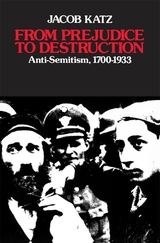
Jacob Katz here presents a major reinterpretation of modern anti-Semitism, which blends history of ideas about the Jews gradually became transformed and then, around 1879, picked up so much social force as to result in the premeditated and systematic destruction of the Jewish people of Europe.
Mr. Katz revises the prevalent thesis that medieval and modern animosities against Jews were fundamentally different. He also rejects the scapegoat theory, according to which the Jews were merely a lightning rod for underlying economic and social tensions. On the contrary, he argues, there were very real tensions between Jews and non-Jews, because the Jews were a highly visible and cohesive group and so came into conflict with non-Jews in competing for social and economic rewards.
In the late 19th century, Mr. Katz argues, hatred of the Jews shifted from their religion to more essential aspects of their character and behavior. The term “anti-Semitism,” he explains, which first came into use around 1870, was meant to describe this change. Thus, ironically, just as Jews were being integrated into the political state, skillful propagandists such as Theodore Fritzche and Houston Stewart Chamberlain were extraordinarily successful in spreading notions of Jewish racial inferiority and its threat to the pure Aryan stock. And so when Hitler came on the scene, the seeds of Jewish race hatred were widely sown.
The struggle for civil rights among black Americans has moved into the voting booth. How such a shift came about—and what it means—is revealed in this timely reflection on black presidential politics in recent years.
Since 1984, largely as a result of Jesse Jackson’s presidential bid, blacks have been galvanized politically. Drawing on a substantial national survey of black voters, Katherine Tate shows how this process manifested itself at the polls in 1984, 1988, and 1992. In an analysis of the black presidential vote by region, income, age, and gender, she is able to identify unique aspects of the black experience as they shape political behavior, and to answer longstanding questions about that behavior.
Unique in its focus on the black electorate, this study illuminates a little-understood and tremendously significant aspect of American politics. It will benefit those who wish to understand better the subtle interplay of race and politics, at the voting booth and beyond.
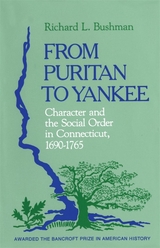
The years from 1690 to 1765 in America have usually been considered a waiting period before the Revolution. Richard L. Bushman, in his penetrating study of colonial Connecticut, takes another view. He shows how, during these years, economic ambition and religious ferment profoundly altered the structure of Puritan society, enlarging the bounds of liberty and inspiring resistance to established authority.
This is an investigation of the strains that accompanied the growth of liberty in an authoritarian society. Mr. Bushman traces the deterioration of Puritan social institutions and the consequences for human character. He does this by focusing on day-to-day life in Connecticut—on the farms, in the churches, and in the town meetings. Controversies within the towns over property, money, and church discipline shook the “land of steady habits,” and the mounting frustration of common needs compelled those in authority, in contradiction to Puritan assumptions, to become more responsive to popular demands.
In the Puritan setting these tensions were inevitably given a moral significance. Integrating social and economic interpretations, Mr. Bushman explains the Great Awakening of the 1740s as an outgrowth of the stresses placed on the Puritan character. Men, plagued with guilt for pursuing their economic ambitions and resisting their rulers, became highly susceptible to revival preaching.
The Awakening gave men a new vision of the good society. The party of the converted, the “New Lights,” which also absorbed people with economic discontents, put unprecedented demands on civil and ecclesiastical authorities. The resulting dissension moved Connecticut, almost unawares, toward republican attitudes and practices. Disturbed by the turmoil, many observers were, by 1765, groping toward a new theory of social order that would reconcile traditional values with their eighteenth-century experiences.
Vividly written, full of illustrative detail, the manuscript of this book has been called by Oscar Handlin one of the most important works of American history in recent years.
A Project Syndicate Best Read of the Year
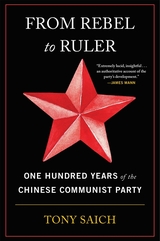
On the centennial of the founding of the Chinese Communist Party, the definitive history of how Mao and his successors overcame incredible odds to gain and keep power.
Mao Zedong and the twelve other young men who founded the Chinese Communist Party in 1921 could hardly have imagined that less than thirty years later they would be rulers. On its hundredth anniversary, the party remains in command, leading a nation primed for global dominance.
Tony Saich tells the authoritative, comprehensive story of the Chinese Communist Party—its rise to power against incredible odds, its struggle to consolidate rule and overcome self-inflicted disasters, and its thriving amid other communist parties’ collapse. Saich argues that the brutal Japanese invasion in the 1930s actually helped the party. As the Communists retreated into the countryside, they established themselves as the populist, grassroots alternative to the Nationalists, gaining the support they would need to triumph in the civil war. Once in power, however, the Communists faced the difficult task of learning how to rule. Saich examines the devastating economic consequences of Mao’s Great Leap Forward and the political chaos of the Cultural Revolution, as well as the party’s rebound under Deng Xiaoping’s reforms.
Leninist systems are thought to be rigid, yet the Chinese Communist Party has proved adaptable. From Rebel to Ruler shows that the party owes its endurance to its flexibility. But is it nimble enough to realize Xi Jinping’s “China Dream”? Challenges are multiplying, as the growing middle class makes new demands on the state and the ideological retreat from communism draws the party further from its revolutionary roots. The legacy of the party may be secure, but its future is anything but guaranteed.
“The definitive, candid, and absorbing history of a political organization…A vital account, based on magnificent research, that shows the party as a colossal, relentless, and enduring machine.”—Jane Perlez, former Beijing Bureau Chief, New York Times
“If you were to travel back in time to 1921 and predict that the Communist Party of China would rule over the world’s second-largest economy 100 years later, no one would believe you. In this definitive primer, Tony Saich explains how the impossible came true.”—Yuen Yuen Ang, Project Syndicate
“An extremely lucid, insightful history of the Chinese Communist Party. Saich’s readable narrative takes the CCP from its origins as a tiny group of revolutionaries…to the powerful, repressive rulers of a world power today.”—James Mann, author of The China Fantasy
Mao Zedong and the twelve young men who founded the Chinese Communist Party in 1921 could hardly have imagined that less than thirty years later, they would rule China. Over a century later the party remains in command, leading a nation primed for global dominance.
From Rebel to Ruler is a landmark history of the Chinese Communist Party—its rise against incredible odds, its struggle to consolidate power and overcome self-inflicted disasters, and its ability to thrive long after the collapse of the Soviet Union and dissolution of other communist parties. Leninist systems are thought to be rigid, yet the Chinese Communist Party has proved adaptable. Tony Saich shows that the party owes its endurance to its flexibility. But is it nimble enough to realize Xi Jinping’s “China Dream”? Challenges are multiplying, as a restless middle class makes new demands and the party strays ever further from its revolutionary roots.
The Harvard University Information Technology Quarterly (formerly Newsletter), from which this collection of articles has been drawn, is highly regarded both for its wide range of exploration and for the depth of its discussion of new and emerging computer-related technologies. Included in this book are articles covering the origin and development of semiconductor technology, the microprocessor, telephony, xerography, electronic typesetting, videodisc technology, computer graphics, artificial intelligence, and robotics.
This book also discusses the impact of information technology on the university and the university library and continues an examination of information technology's role in the educational process. Each of the articles provides historical background and attractive illustrations that enrich the reader's understanding. From Sand to Circuits is both a fascinating compendium of models for understanding information technology and a lucid, highly enjoyable collection of essays.
When Rome was at its height, an emperor’s male beloved, victim of an untimely death, would be worshipped around the empire as a god. In this same society, the routine sexual exploitation of poor and enslaved women was abetted by public institutions. Four centuries later, a Roman emperor commanded the mutilation of men caught in same-sex affairs, even as he affirmed the moral dignity of women without any civic claim to honor. The gradual transformation of the Roman world from polytheistic to Christian marks one of the most sweeping ideological changes of premodern history. At the center of it all was sex. Exploring sources in literature, philosophy, and art, Kyle Harper examines the rise of Christianity as a turning point in the history of sexuality and helps us see how the roots of modern sexuality are grounded in an ancient religious revolution.
While Roman sexual culture was frankly and freely erotic, it was not completely unmoored from constraint. Offending against sexual morality was cause for shame, experienced through social condemnation. The rise of Christianity fundamentally changed the ethics of sexual behavior. In matters of morality, divine judgment transcended that of mere mortals, and shame—a social concept—gave way to the theological notion of sin. This transformed understanding led to Christianity’s explicit prohibitions of homosexuality, extramarital love, and prostitution. Most profound, however, was the emergence of the idea of free will in Christian dogma, which made all human action, including sexual behavior, accountable to the spiritual, not the physical, world.
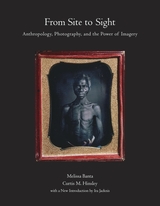
In 1986 the Peabody Museum of Archaeology and Ethnology at Harvard mounted From Site to Sight, a groundbreaking traveling exhibition on the historic and contemporary uses of photography in anthropology. Using visual materials from the vast photographic archives of the Peabody Museum and the work of members of Harvard’s anthropology department, the accompanying catalog investigates how anthropologists have employed the camera as a recording and analytic tool and as an aesthetic medium. Photographs ranging from daguerreotypes to satellite images are presented in an examination of the possibilities and limitations of using the camera as a fact-gathering and interpretive tool. The authors also explore the broader implications of the uses—and misuses—of visual imagery within the human sciences.
From Site to Sight has been a foundational text for scholars and students in the developing field of visual anthropology, illustrating the role of photographic imagery in anthropology and archaeology from the disciplines’ formative years to the 1980s. Long out of print, this classic publication is now available in an enhanced thirtieth anniversary edition with a new introductory essay by Ira Jacknis.

Bethlehem, Pennsylvania, was once synonymous with steel. But after the factories closed, the city bet its future on a new industry: casino gambling. On the site of the former Bethlehem Steel plant, thousands of flashing slot machines and digital bells replaced the fires in the blast furnaces and the shift change whistles of the industrial workplace. From Steel to Slots tells the story of a city struggling to make sense of the ways in which local jobs, landscapes, and identities are transformed by global capitalism.
Postindustrial redevelopment often makes a clean break with a city’s rusted past. In Bethlehem, where the new casino is industrial-themed, the city’s heritage continues to dominate the built environment and infuse everyday experiences. Through the voices of steelworkers, casino dealers, preservationists, immigrants, and executives, Chloe Taft examines the ongoing legacies of corporate presence and urban development in a small city—and their uneven effects.
Today, multinational casino corporations increasingly act as urban planners, promising jobs and new tax revenues to ailing communities. Yet in an industry premised on risk and capital liquidity, short-term gains do not necessarily mean long-term commitments to local needs. While residents often have few cards to play in the face of global capital and private development, Taft argues that the shape economic progress takes is not inevitable, nor must it always look forward. Memories of corporations’ accountability to communities persist, and citizens see alternatives for more equitable futures in the layered landscapes all around them.
W. V. Quine is one of the most eminent philosophers alive today. Now in his mid-eighties he has produced a sharp, sprightly book that encapsulates the whole of his philosophical enterprise, including his thinking on all the key components of his epistemological stance--especially the value of logic and mathematics. New readers of Quine may have to go slowly, fathoming for themselves the richness that past readers already know lies between these elegant lines. For the faithful there is much to ponder.
In this short book, based on lectures delivered in Spain in 1990, Quine begins by locating his work historically. He provides a lightning tour of the history of philosophy (particularly the history of epistemology), beginning with Plato and culminating in an appreciative sketch of Carnap's philosophical ambitions and achievements. This leads, in the second chapter, to an introduction to Quine's attempt to naturalize epistemology, which emphasizes his continuities with Carnap rather than the differences between them. The next chapters develop the naturalistic story of the development of science to take account of how our conceptual apparatus is enhanced so that we can view the world as containing re-identifiable objects. Having explained the role of observation sentences in providing a checkpoint for assessing scientific theories, and having despaired of constructing an empirical criterion to determine which sentences are meaningful, Quine in the remaining chapters takes up a variety of important issues about knowledge. He concludes with an extended treatment of his views about reference and meaning and his attitudes toward psychological and modal notions.
The presentation is distinctive, and the many small refinements of detail and formulation will fascinate all who know Quine's philosophy.
From Stone to Star chronicles one of the great scientific adventures of our time. Written by the eminent geochemist Claude Allègre, it offers a fascinating glimpse into the sophisticated isotopic detective work that has established a geologic chronology of the earth and transformed our understanding of its genesis and history. In eighteenth- and nineteenth-century Europe geologists exploring the earth's surface collected fossils and hotly debated the origin of the layered and folded rocks in which they were embedded.
The development of seismology, the study of earthquakes, in this century shifted the focus from the terrestrial crust to the earth's deep interior. But our knowledge of the chemistry of the earth and of the solar system has been revolutionized by advances in modern laboratory technology and analysis of meteorites and lunar rocks. High resolution mass spectrometry has allowed scientists to explore the very hearts of atoms. The Apollo mission brought back our first samples of the lunar surface, and unmanned space probes have gathered detailed photographs of distant planets.
From Stone to Star provides an engaging account of this exciting new chapter in scientific discovery. Scientists can now measure the isotopic composition of atoms with extreme precision. As miraculous as it may seem, a minute quantity of meteorite yields more information about the structure of the earth and the primitive history of the solar system than years of fieldwork on the earth's surface. Allègre, who was a project scientist during the interplanetary space missions, scrupulously avoids technical jargon. His lucid prose and abiding passion for his subject succeed in creating a superbly readable introduction to the history, methods, and theories of modern geology.
A young Jewish boy—the old, much-fought-over city of Vilnius—the rumblings and then the reality of World War I—all combine in this book to create a striking historical document of a period during which Europe and the Western world were changed forever. In the streets and alleys of Vilnius actor Joseph Buloff came of age, learning the arts of shape-altering necessary for survival during successive occupations by Cossacks, Germans, Bolsheviks, and Poles; it is this fascinating vanished milieu that he brings to life in From the Old Marketplace.
For a little boy, the old marketplace was full of enchantment, a world in itself, and Buloff brilliantly describes the eccentric inhabitants who peopled his childhood: Berchick the orphan, Barve's son the intellectual and historian, the starveling Matzek, Arkashka the Cossack, Joseph's mother, the saintly yet practical Sarah, and his father, Benjamin, who made a fortune in America and lost it again in Europe.
The boy came to realize his own Jewishness when Russian persecution forced the Jews to make the synagogue the center of their world. He was driven by brutality, hunger, and ostracism to transform himself in spirit into the imaginary Chantille Jeantaigne Delacroix, scourge of evil, avenger of his people, Conqueror of Death. Joseph's accounts of daily life under unbelievably hard circumstances range from down-to-earth facts to soaring flights of fantasy—and his desperate acting in order to stay alive brought him his true vocation, first on the scrounging amateur stage and then in the professional theatre.
This book is an inquiry into the possibilities of politics in exile. Russian Mensheviks, driven out of Soviet Russia and their party stripped of legal existence, functioned abroad in the West—in Berlin, Paris, and New York—for an entire generation. For several years they also continued to operate underground in Soviet Russia. Bereft of the usual advantages of political actors, the Mensheviks succeeded in impressing their views upon social democratic parties and Western thinking about the Soviet Union.
The Soviet experience through the eyes of its first socialist victims is recreated here for the first time from the vast storehouse of archival materials and eyewitness interviews. The exiled Mensheviks were the best informed and most perceptive observers of the Soviet scene through the 1920s and 1930s. From today’s perspective the Mensheviks’ analyses and reflections strikingly illuminate the causes of the failure of the Soviet experiment.
This book also probes the fate of Marxism and democratic socialism as it tracks the activities and writings of a remarkable group of men and women—including Raphael Abramovitch, Fedor and Lidia Dan, David Dallin, Boris Nicolaevsky, Solomon Schwarz, and Vladimir Woytinsky—entangled in the most momentous events of this century. Their contribution to politics and ideas in the age of totalitarianism merits scrutiny, and their story deserves to be told.

Oscar and Lilian Handlin show us how the new voyagers in the twentieth century--from Asia, Africa, Australia, and Latin America--record their experiences in the United States. The narratives of the non-Europeans, they find, clearly reflect the circumstances of their composition, as well as the political prejudices of their authors. These literary products have earned far less attention than those of the English, French, Germans, and Russians, and this volume proposes to redress the balance.
The earliest of the thirty-one travel accounts was written by Rabindranath Tagore in 1924, and the most recent by V. S. Naipaul in 1989. Many accounts are newly translated from Arabic, Persian, Hebrew, and Spanish. Some authors are well known, but the less famous are equally insightful. Some insights are weighty, many are amusing. Octavio Paz, a sympathetic observer who admired his country's neighbor, was uneasy that the most powerful country in the world sustained "a global ideology…as outdated as the doctrine of free enterprise, the steam boat, and other relics of the nineteenth century." The Israeli journalist Hanoch Bartov observed that "God conceived the car first, with man an afterthought, created for the car's use (a Southern California legend)." In coming to a truer understanding of the United States, these writers noted the frightening repercussions of unsettled lives, perceived class differentiation, contentions regarding the status of women, the sense of national unity amid diversity, and countless other issues of concern to those who try to find meaning in the contemporary world.

From the almshouses of seventeenth-century Puritans to the massive housing projects of the mid-twentieth century, the struggle over housing assistance in the United States has exposed a deep-seated ambivalence about the place of the urban poor. Lawrence J. Vale's groundbreaking book is both a comprehensive institutional history of public housing in Boston and a broader examination of the nature and extent of public obligation to house socially and economically marginal Americans during the past 350 years.
First, Vale highlights startling continuities both in the way housing assistance has been delivered to the American poor and in the policies used to reward the nonpoor. He traces the stormy history of the Boston Housing Authority, a saga of entrenched patronage and virulent racism tempered, and partially overcome, by the efforts of unyielding reformers. He explores the birth of public housing as a program intended to reward the upwardly mobile working poor, details its painful transformation into a system designed to cope with society's least advantaged, and questions current policy efforts aimed at returning to a system of rewards for responsible members of the working class. The troubled story of Boston public housing exposes the mixed motives and ideological complexity that have long characterized housing in America, from the Puritans to the projects.
The way we create and organize knowledge is the theme of From the Tree to the Labyrinth, a major achievement by one of the world’s foremost thinkers on language and interpretation. Umberto Eco begins by arguing that our familiar system of classification by genus and species derives from the Neo-Platonist idea of a “tree of knowledge.” He then moves to the idea of the dictionary, which—like a tree whose trunk anchors a great hierarchy of branching categories—orders knowledge into a matrix of definitions. In Eco’s view, though, the dictionary is too rigid: it turns knowledge into a closed system. A more flexible organizational scheme is the encyclopedia, which—instead of resembling a tree with finite branches—offers a labyrinth of never-ending pathways. Presenting knowledge as a network of interlinked relationships, the encyclopedia sacrifices humankind’s dream of possessing absolute knowledge, but in compensation we gain the freedom to pursue an infinity of new connections and meanings.
Moving effortlessly from analyses of Aristotle and James Joyce to the philosophical difficulties of telling dogs from cats, Eco demonstrates time and again his inimitable ability to bridge ancient, medieval, and modern modes of thought. From the Tree to the Labyrinth is a brilliant illustration of Eco’s longstanding argument that problems of interpretation can be solved only in historical context.
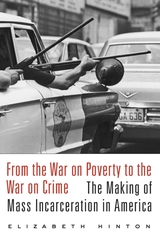
Co-Winner of the Thomas J. Wilson Memorial Prize
A New York Times Notable Book of the Year
A New York Times Book Review Editors’ Choice
A Wall Street Journal Favorite Book of the Year
A Choice Outstanding Academic Title of the Year
A Publishers Weekly Favorite Book of the Year
In the United States today, one in every thirty-one adults is under some form of penal control, including one in eleven African American men. How did the “land of the free” become the home of the world’s largest prison system? Challenging the belief that America’s prison problem originated with the Reagan administration’s War on Drugs, Elizabeth Hinton traces the rise of mass incarceration to an ironic source: the social welfare programs of Lyndon Johnson’s Great Society at the height of the civil rights era.
“An extraordinary and important new book.”
—Jill Lepore, New Yorker
“Hinton’s book is more than an argument; it is a revelation…There are moments that will make your skin crawl…This is history, but the implications for today are striking. Readers will learn how the militarization of the police that we’ve witnessed in Ferguson and elsewhere had roots in the 1960s.”
—Imani Perry, New York Times Book Review
One of the most vigorous sciences of our time, astrophysics constantly changes under the impact of new discoveries about everything from our own sun to the most distant and exotic of extragalactic phenomena. In chapters written especially for this volume, twelve distinguished scientists actively pursuing astrophysical research offer up-to-date reviews and commentary on new developments in their fields. With a little grounding in astronomy or physics, the reader will find this book an invaluable source of basic information on the most recent work in this field.
Frontiers of Astrophysics can be used as classroom reading, either as a main text or as supplementary reading in astronomy or physics courses, and it can be read with profit by anyone who wants current knowledge presented without complex mathematical arguments. Published within months after the contributions were written, this book is the most convenient and contemporary source on these topics: formation of the solar system (W.R. Ward); new developments in solar research (R. W. Noyes); early phases of stellar evolution (S.E. Storm); endpoints of stellar evolution (A.G.W. Cameron); neutron stars, black holes and supernocvae (H. Gursky); infrared astronomy (G.G. Fazio); gaseous nebulae and their interstellar environment (E.K. Chaisson); chemistry of the interstellar medium (A. Dalgarno); radio observations of galactic masers (J.M. Moran): active galaxies (K. Brecher); galaxies and cosmology (M. Davis); the mass of the universe and intergalactic matter (G.B. Field).

Theories of social justice are necessarily abstract, reaching beyond the particular and the immediate to the general and the timeless. Yet such theories, addressing the world and its problems, must respond to the real and changing dilemmas of the day. A brilliant work of practical philosophy, Frontiers of Justice is dedicated to this proposition. Taking up three urgent problems of social justice neglected by current theories and thus harder to tackle in practical terms and everyday life, Martha Nussbaum seeks a theory of social justice that can guide us to a richer, more responsive approach to social cooperation.
The idea of the social contract--especially as developed in the work of John Rawls--is one of the most powerful approaches to social justice in the Western tradition. But as Nussbaum demonstrates, even Rawls's theory, suggesting a contract for mutual advantage among approximate equals, cannot address questions of social justice posed by unequal parties. How, for instance, can we extend the equal rights of citizenship--education, health care, political rights and liberties--to those with physical and mental disabilities? How can we extend justice and dignified life conditions to all citizens of the world? And how, finally, can we bring our treatment of nonhuman animals into our notions of social justice? Exploring the limitations of the social contract in these three areas, Nussbaum devises an alternative theory based on the idea of "capabilities." She helps us to think more clearly about the purposes of political cooperation and the nature of political principles--and to look to a future of greater justice for all.

The most exciting development in legal thinking since World War II has been the growth of interdisciplinary legal studies—the application of the social sciences and the humanities to law in the hope of making law less formalistic, more practical, better grounded empirically, bettered tailored to social goals. Judge Richard A. Posner has been a leader in this movement, and his new book explores its rapidly expanding frontier.
The book examines five principal areas or directions of interdisciplinary study: economics, history, psychology, the epistemology of law and the empirical study of law. These approaches are seen to interpenetrate and to compose a coherent body of legal theory—a unified framework for understanding such seemingly disparate phenomena as the economics of free speech, the intellectual history of economic analysis of law, the relation between income and liberty, the law of possession, the psychology of legal decisionmaking, the role of emotion in law, and the use of citation analysis to evaluate judges and law professors. The book carries on Posner’s project of analyzing the law as an institution of social governance.
READERS
Browse our collection.
PUBLISHERS
See BiblioVault's publisher services.
STUDENT SERVICES
Files for college accessibility offices.
RECENTLY PUBLISHED




UChicago Accessibility Resources
home | accessibility | search | about | contact us
BiblioVault ® 2001 - 2026
The University of Chicago Press