
 A SCHOLARLY BOOK REPOSITORY
63 start with F start with F
Explore a diversity of feminist readings of the Bible
This latest volume in the Bible and Women series is concerned with documenting, through word and image, both well-known and largely unknown women and their relationship to the Bible from the period of the late eighteenth century up to the beginning of the twentieth century. The essays in this collection illustrate the broad range of treatment of the Holy Scripture. Paul Chilcote, Marion Ann Taylor, Christiana de Groot, Elizabeth M. Davis, and Pamela S. Nadell offer perspectives on the Anglo-American sphere during this period. Marina Cacchi, Adriano Valerio, Inmaculada Blasco Herranz, and Alexei Klutschewski and Eva Maria Synek illuminate the areas of southern and eastern Europe. Angela Berlis, Ruth Albrecht, Doris Brodbeck, Ute Gause, and Michaela Sohn-Kronthaler examine women from the German-speaking world and their texts. Bernhard Schneider, Magda Motté, Katharina Büttner-Kirschner, and Elfriede Wiltschnigg treat the subject area of religious literature and art.
Features
- Insight into how women participated in academic exegesis and applied biblical figures as models for structuring their own lives
- Exploration of genres used by women, including letters, diaries, autobiographical records, stories, novels, songs, poems, and specialized exegetical treatises and commentaries on individual books of the Bible
- Detailed analyses of women’s interpretations ranging from those that sought to confirm traditions to those that challenged them

The Islamic self-help classes in this book exist at the nexus of sacred texts, aphorisms, and social media engagements, scaffolded by the neoliberal economy that shapes idealized Muslim subjectivities. Within a context whereby the Singapore state discursively frames Malayness in terms of cultural deficiency, Malay Muslim women’s inward focus on transformative ethics rather than societal change underscores the appeal of gendered pious self-help discourses. At the same time, Jamil’s referencing of Black, Indigenous, and Ethnic studies offers a compelling analytical frame that places affective transformation within the context of racial capitalism, historical trauma, and embodied healing.
A provocative and rich ethnography, Faithful Transformations tells the stories of Malay Muslim women desiring piety and self-improvement as minoritized subjects in contemporary Singapore while exploring the limitations of self-care.
Over the past two decades, same-sex couples raising children have become more visible within US political and popular culture. Thanks to widely circulated images of well-mannered, well-dressed, and well-off two-parent families, a select number of LGBT-identified parents have gained recognition as model American citizens. In Familiar Perversions, Liz Montegary shows how this seemingly progressive view of same-sex parenting has taken shape during a period of growing racial inequality and economic insecurity in the United States. This book evaluates the recent successes of the “family equality” movement, while asking important questions about its relationship to neoliberalism, the policing of sexual cultures, and the broader context of social justice organizing at the turn of the twenty-first century.
Montegary’s investigation of the politics of LGBT family life takes us on a journey that includes not only activist events and the courtrooms where landmark decisions about same-sex families were made, but also parenting workshops, cruise ships, and gay resort towns. Through its sustained historical analysis, Familiar Perversions lays critical groundwork for imagining a queer family movement that can support and strengthen the diverse networks of care, kinship, and intimacy on which our collective survival depends.
The contributors examine the ways in which Indonesian women and men are enmeshed in networks of power and then pursue the stories of those who, sometimes at great political risk, challenge these powers. In this juxtaposition of voices and stories, we see how indigenous patriarchal fantasies of feminine behavior merged with Dutch colonial notions of proper wives and mothers to produce the Indonesian government’s present approach to controlling the images and actions of women. Facing the theoretical challenge of building a truly cross-cultural feminist analysis, Fantasizing the Feminine takes us into an ongoing conversation that reveals the contradictions of postcolonial positionings and the fragility of postmodern identities.
This book will be welcomed by readers with interests in contemporary Indonesian politics and society as well as historians, anthropologists, and other scholars concerned with literature, gender, and cultural studies.
Contributors. Benedict R. O’G. Anderson, Sita Aripurnami, Jane Monnig Atkinson, Nancy K. Florida, Daniel S. Lev, Dédé Oetomo, Laurie J. Sears, Ann Laura Stoler, Saraswati Sunindyo, Julia I. Suryakusuma, Jean Gelman Taylor, Sylvia Tiwon, Anna Lowenhaupt Tsing, Diane L. Wolf

Simidele Dosekun's interviews and critical analysis consider the female subjectivities these women are performing and desiring. She finds that the women embody the postfeminist idea that their unapologetically immaculate beauty signals—but also constitutes—feminine power. As empowered global consumers and media citizens, the women deny any need to critique their culture or to take part in feminism's collective political struggle. Throughout, Dosekun unearths evocative details around the practical challenges to attaining their style, examines the gap between how others view these women and how they view themselves, and engages with ideas about postfeminist self-fashioning and subjectivity across cultures and class.
Intellectually provocative and rich with theory, Fashioning Postfeminism reveals why women choose to live, embody, and even suffer for a fascinating performative culture.

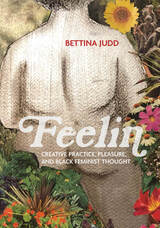
How creativity makes its way through feeling—and what we can know and feel through the artistic work of Black women
Feeling is not feelin. As the poet, artist, and scholar Bettina Judd argues, feelin, in African American Vernacular English, is how Black women artists approach and produce knowledge as sensation: internal and complex, entangled with pleasure, pain, anger, and joy, and manifesting artistic production itself as the meaning of the work. Through interviews, close readings, and archival research, Judd draws on the fields of affect studies and Black studies to analyze the creative processes and contributions of Black women—from poet Lucille Clifton and musician Avery*Sunshine to visual artists Betye Saar, Joyce J. Scott, and Deana Lawson.
Feelin: Creative Practice, Pleasure, and Black Feminist Thought makes a bold and vital intervention in critical theory’s trend toward disembodying feeling as knowledge. Instead, Judd revitalizes current debates in Black studies about the concept of the human and about Black life by considering how discourses on emotion as they are explored by Black women artists offer alternatives to the concept of the human. Judd expands the notions of Black women’s pleasure politics in Black feminist studies that include the erotic, the sexual, the painful, the joyful, the shameful, and the sensations and emotions that yet have no name. In its richly multidisciplinary approach, Feelin calls for the development of research methods that acknowledge creative and emotionally rigorous work as productive by incorporating visual art, narrative, and poetry.
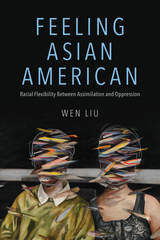
Asian Americans have become the love-hate subject of the American psyche: at times celebrated as the model minority, at other times hated as foreigners. Wen Liu examines contemporary Asian American identity formation while placing it within a historical and ongoing narrative of racial injury. The flexible racial status of Asian Americans oscillates between oppression by the white majority and offers to assimilate into its ranks. Identity emerges from the tensions produced between those two poles. Liu dismisses the idea of Asian Americans as a coherent racial population. Instead, she examines them as a raced, gendered, classed, and sexualized group producing varying physical and imaginary boundaries of nation, geography, and citizenship. Her analysis reveals repeated norms and acts that capture Asian Americanness as part of a racial imagination that buttresses capitalism, white supremacy, neoliberalism, and the US empire.
An innovative challenge to persistent myths, Feeling Asian American ranges from the wartime origins of Asian American psychology to anti-Asian attacks to present Asian Americanness as a complex political assemblage.

The essays in Feeling Democracy examine how both reactionary and progressive politics are driven largely by emotional appeals to the public. The contributors in this collection cover everything from immigrants’ rights movements to white nationalist rallies to show how solidarities forged around gender, race, and sexuality become catalysts for a passionate democratic politics. Some essays draw parallels between today’s activist strategies and the use of emotion in women-led radical movements from the 1960s and 1970s, while others expand the geographic scope of the collection by considering Asian decolonial politics and Egyptian pro-democracy protests.
Incorporating scholarship from fields as varied as law, political science, philosophy, psychoanalysis, and history, Feeling Democracy considers how emotional rhetoric in politics can be a double-edged sword—often wielded by authoritarian populists who seek to undermine democracy but sometimes helping to bring about a genuine renewal of participatory democracy.

Feminine Feminists was first published in 1994. Minnesota Archive Editions uses digital technology to make long-unavailable books once again accessible, and are published unaltered from the original University of Minnesota Press editions.
What does it mean to be a woman today in Italy, a country with the lowest birthrate in the world and the heaviest maternal stereotype? Does being a feminist exclude practices of cultural femininity? What are Italian women's cultural productions? These questions are at the center of this volume, which looks at how feminism and femininity are embedded in a broad spectrum of Italian cultural practices.
In recent years, several books have introduced the American public to Italian women's voices. This volume goes beyond others in its range of theoretical topics and modes, considering cultural practices not only in their popular, material appearance, but also in the disciplines and forms of knowledge that order information and circumscribe behavior.The essays, all by well-known scholars in Italian studies, reflect the authors' specific critical interests in cinema, fashion, literary texts, feminist theory, and popular culture, past and present. Some address the culture of everyday life, while others examine feminism and femininity in the context of philosophy, ethics, or national identity within a global culture. Some begin with the conviction that performing "femininity"—whether in appearance or in nurturing practices—can be culturally liberating. Others put this notion to the critical test. By situating the problem of femininity within the discussion of feminism, this volume takes on larger issues within feminist discourse. Its bold examination of the component of femininity within the context of women's experiences offers readers rare insight into Italian women's culture and into the multicultural possibilities of feminism.Contributors: Beverly Allen,
Serena Anderlini-D'Onofrio, Lucia Chiavola Birnbaum, Renate Holub, Carol Lazzaro-Weis, Maria Marotti, Áine O'Healy, Graziella Parati, Eugenia Paulicelli, Robin Pickering-Iazzi, Maurizio Viano.Giovanna Miceli Jeffries is a lecturer in the department of French and Italian at the University of Wisconsin, Madison.

Contributors. Cameron Awkward-Rich, Marquis Bey, Kay Gabriel, Jules Gill-Peterson, Emma Heaney, Margaux L. Kristjansson, Greta LaFleur, Grace Lavery, Durba Mitra, Beans Velocci, Joanna Wuest



The first book of essays to explore the intersection of these two vital disciplines.
Documentary and feminist film studies have long been separate or parallel universes that need to converse or collide. The essays in this volume, written by prominent scholars and filmmakers, demonstrate the challenges that feminist perspectives pose for documentary theory, history, and practice. They also show how fuller attention to documentary enriches and complicates feminist theory, especially regarding the relationship between gender and sexuality, race and ethnicity, class and nation.
Feminism and Documentary begins with a substantial historical introduction that highlights several of the specific areas that contributors address: debates over realism, the relationship between filmmaker and subject, historical thinking about documentary and thinking about the historical documentary, biography and autobiography, and the use of psychoanalysis. Other essays, most of which appear here for the first time, range from broad overviews to close analyses of particular films and videos and from discussions of well-known works such as Roger and Me and Don’t Look Back to lesser known texts that might revise the canon. The collection includes an extensive filmography and videography with useful distribution information and a bibliography of work in this neglected area of scholarship. Lucid, sophisticated, and eye-opening, this book will galvanize documentary studies and demonstrate the need for women’s and cultural studies to grapple with visual media. Contributors: Michelle Citron, Northwestern U; Gloria J. Gibson, Indiana U; Chris Holmlund, U of Tennessee; Alexandra Juhasz, Pitzer College; Ann Kaneko; Anahid Kassabian, Fordham U; David Kazanjian, U of California, Berkeley; Susan Knobloch; Silvia Kratzer-Juilfs; Deborah Lefkowitz; Julia Lesage, U of Oregon; Laura U. Marks, Carleton U, Ottawa; Paula Rabinowitz, U of Minnesota; Michael Renov, USC; Patricia R. Zimmermann, Ithaca College.
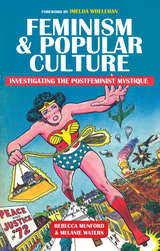
In Feminism and Popular Culture, Rebecca Munford and Melanie Waters consider why the twenty-first century media landscape is so haunted by the ghosts of these traditional figures that feminism otherwise laid to rest. Why, over fifty years since Betty Friedan’s critique, does the feminine mystique exert such a strong spectral presence, and how has it been reimagined to speak to the concerns of a postfeminist audience?
To answer these questions, Munford and Waters draw from a rich array of examples from contemporary film, fiction, music, and television, from the shadowy cityscapes of Homeland to the haunted houses of American Horror Story. Alongside this comprehensive analysis of today’s popular culture, they offer a vivid portrait of feminism’s social and intellectual history, as well as an innovative application of Jacques Derrida’s theories of “hauntology.” Feminism and Popular Culture thus not only considers how contemporary media is being visited by the ghosts of feminism’s past, it raises vital questions about what this means for feminism’s future.

Multidisciplinary and international in their collective focus, the essays range from a study of Madonna as an Italian American woman who is revising the cultural meanings of an ethnic feminism to a unique interview with Mairead Keane, the national head of the Women’s Department of the Irish political party Sinn Fein. Turning the prism of postmodern feminism onto such diverse cultural objects as literary and literary critical texts, contemporary film, and music, these essays intervene in debates regarding technology, sexuality, and politics. Challenging modern feminisms to articulate their inescapable relation to postmodern society, this expanded edition of a special issue of boundary 2 also explores ways in which feminism can work as the cutting edge of a global postmodernism.
Contributors. Salwa Bakr, Claire Detels, Margaret Ferguson, Carla Freccero, Marjorie Garber, Barbara Harlow, Laura E. Lyons, Anne McClintock, Toril Moi, Linda Nicholson, Mary Poovey, Andrew Ross, David Simpson, Kathyrn Bond Stockton, Jennifer Wicke
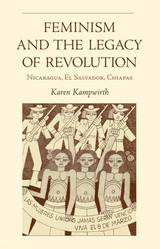
In many Latin American countries, guerrilla struggle and feminism have been linked in surprising ways. Women were mobilized by the thousands to promote revolutionary agendas that had little to do with increasing gender equality. They ended up creating a uniquely Latin American version of feminism that combined revolutionary goals of economic equality and social justice with typically feminist aims of equality, nonviolence, and reproductive rights.
Drawing on more than two hundred interviews with women in Nicaragua, El Salvador, and the Mexican state of Chiapas, Karen Kampwirth tells the story of how the guerrilla wars led to the rise of feminism, why certain women became feminists, and what sorts of feminist movements they built. Feminism and the Legacy of Revolution: Nicaragua, El Salvador, Chiapas explores how the violent politics of guerrilla struggle could be related to the peaceful politics of feminism. It considers the gains, losses, and internal conflicts within revolutionary women’s organizations.
Feminism and the Legacy of Revolution challenges old assumptions regarding revolutionary movements and the legacy of those movements for the politics of daily life. It will appeal to a broad, interdisciplinary audience in political science, sociology, anthropology, women’s studies, and Latin American studies as well as to general readers with an interest in international feminism.
Misunderstanding and denigration of postmodern feminism are widespread. Elizabeth Flynn’s Feminism Beyond Modernism comes to its defense in a cogent and astute manner by first distinguishing between postmodern and antimodern feminisms and then reclaiming postmodern feminism by reconfiguring its relationship to modernism.
Too often postmodern feminism is unfairly identified as opposed to modernism and associated with subjectivism and relativism. Flynnaddresses these problems by provisionally defining postmodern feminism as problematizing and critiquing modernism without directly opposing it. Flynn also suggests that feminist traditions that reject modernism, such as radical and cultural feminisms, are antimodern rather than postmodern.
In this interdisciplinary study, Flynn defines feminist traditions broadly, situating her discussions within the contexts of literary studies and rhetoric and composition while simultaneously exploring the troubled relationship between these fields. Departing from accepted definitions of modernism, Flynn distinguishes between aesthetic modernism and Enlightenment modernism and uses the work of John Locke, Sigmund Freud, Charlotte Perkins Gilman, Michel Foucault, Donna Haraway, and others as benchmarks for historical placement. In addition, rereadings of works by Virginia Woolf, Adrienne Rich, Alice Walker, Louise Rosenblatt, and others demonstrate the complex ways in which they respond to modernist pressures and tendencies. From this context, Flynn’s Feminism Beyond Modernism reconfigures feminist traditions by defining postmodern feminism as a critique of modernism rather than as an antimodern opponent.


Recently rediscovered in Italy and abroad, the works of Carla Lonzi tend to fall under the remit of art history or feminist theory. Art historians focus on the texts written in the 1960s, when Lonzi was still actively working as a critic, whereas feminist scholars engage with her more openly political interventions, published after her declared embrace of a separatist feminism. In 1970 Lonzi decided to leave the art world for good and dedicate herself to her newly founded feminist collective, Rivolta Femminile. While recognizing the break in Lonzi’s life and work, this anthology maps the overall arc of her intellectual and political production, giving equal weight to her seminal contributions to art criticism and her trailblazing feminist writings. A comprehensive collection of texts from the most influential and iconic figure of Italian second-wave feminism, Feminism in Revolt seeks to shed light on Lonzi’s versatile approach to literary genres and compositions by juxtaposing essayistic texts, poems, diary excerpts, and manifestos.

Contributors:
Ruth Schwartz Cowan
Linda Marie Fedigan
Scott Gilbert
Evelynn M. Hammonds
Evelyn Fox Keller
Pamela E. Mack
Michael S. Mahoney
Emily Martin
Ruth Oldenziel
Nelly Oudshoorn
Carroll Pursell
Karen Rader
Alison Wylie
"Reading her is to believe that another world is possible."—The Guardian
More than just a slogan on a t-shirt, feminism is a radical tool for fighting back against structural violence and injustice. Feminism, Interrupted is a bold call to seize feminism back from the cultural gatekeepers and return it to its radical roots.
Writer and organizer Lola Olufemi explores state violence against women, the fight for reproductive justice, transmisogyny, gendered Islamophobia and solidarity with global struggles, showing that the fight for gendered liberation can change the world for everybody when we refuse to think of it solely as women's work. Chapters include:
*Know your history
*The sexist state
*The fight for reproductive justice
*The savior complex: Muslim women and gendered Islamophobia
*Complicated consent: How to support sex workers
*The answer to sexual violence is not more prisons
*Feminism and food
*Solidarity is a doing word
Including testimonials from Sisters Uncut, migrant groups working for reproductive justice, prison abolitionists and activists involved in the international fight for Kurdish and Palestinian rights, Olufemi emphasizes the link between feminism and grassroots organizing. Reclaiming feminism from the clutches of the consumerist, neoliberal model, Feminism, Interrupted shows that when “feminist” is more than a label, it holds the potential for radical transformative work.
Olufemi writes in her Introduction, "Feminism is a political project about what could be. It’s always looking forward, investing in future we can’t quite grasp yet. It’s a way of swishing, hoping, aiming at everything that has been deemed impossible. It’s a task that has to be approached seriously. This book is for anyone who is beginning to think critically….If this book makes you pick up another book, or watch a documentary, search the archive, reach for a poetry book—if it spars or reignites your interest in feminism, then it has served its purpose."
Feminism without Borders opens with Mohanty's influential critique of western feminism ("Under Western Eyes") and closes with a reconsideration of that piece based on her latest thinking regarding the ways that gender matters in the racial, class, and national formations of globalization. In between these essays, Mohanty meditates on the lives of women workers at different ends of the global assembly line (in India, the United Kingdom, and the United States); feminist writing on experience, identity, and community; dominant conceptions of multiculturalism and citizenship; and the corporatization of the North American academy. She considers the evolution of interdisciplinary programs like Women's Studies and Race and Ethnic Studies; pedagogies of accommodation and dissent; and transnational women's movements for grassroots ecological solutions and consumer, health, and reproductive rights. Mohanty's probing and provocative analyses of key concepts in feminist thought—"home," "sisterhood," "experience," "community"—lead the way toward a feminism without borders, a feminism fully engaged with the realities of a transnational world.

Comparing “still new” feminism—as she first encountered it in the early 1970s—with the more established academic discipline that women’s studies has become, Gallop makes a case for the intertwining of learning and pleasure. Refusing to acquiesce to an imperative of silence that surrounds such issues, Gallop acknowledges—and describes—her experiences with the eroticism of learning and teaching. She argues that antiharassment activism has turned away from the feminism that created it and suggests that accusations of harassment are taking aim at the inherent sexuality of professional and pedagogic activity rather than indicting discrimination based on gender—that antiharassment has been transformed into a sensationalist campaign against sexuality itself.
Feminist Accused of Sexual Harassment offers a direct and challenging perspective on the complex and charged issues surrounding the intersection of politics, sexuality, feminism, and power. Gallop’s story and her characteristically bold way of telling it will be compelling reading for anyone interested in these issues and particularly to anyone interested in the ways they pertain to the university.

The Feminist Avant-Garde in American Poetry offers a historical and theoretical account of avant-garde women poets in America from the 1910s through the 1990s and asserts an alternative tradition to the predominantly male-dominated avant-garde movements. Elisabeth Frost argues that this alternative lineage distinguishes itself by its feminism and its ambivalence toward existing avant-garde projects; she also thoroughly explores feminist avant-garde poets' debts and contributions to their male counterparts.
Tracing the rhetoric of feminist activism across generations, cultures, and movements.
In 1917, Alice Paul and other suffragists famously picketed in front of the White House while holding banners with short, pithy sayings such as “Mr. President: How long must women wait for Liberty?” Their juxtaposition of this short phrase with the image of the White House (a symbol of liberty and justice) relies on the same rhetorical tactics as memes, a genre contemporary feminists use frequently to make arguments about reproductive rights, Black Lives Matter, sex-positivity, and more. Many such connections between feminists of different spaces, places, and eras have yet to be considered, let alone understood. Feminist Connections: Rhetoric and Activism across Time, Space, and Place reconsiders feminist rhetorical strategies as linked, intergenerational, and surprisingly consistent despite the emergence of new forms of media and intersectional considerations.
Contributors to this volume highlight continuities in feminist rhetorical practices that are often invisible to scholars, obscured by time, new media, and wildly different cultural, political, and social contexts. Thus, this collection takes a nonchronological approach to the study of feminist rhetoric, grouping chapters by rhetorical practice rather than time, content, or choice of media.
By connecting historical, contemporary, and future trajectories, this collection develops three feminist rhetorical frameworks: revisionary rhetorics, circulatory rhetorics, and response rhetorics. A theorization of these frameworks explains how feminist rhetorical practices (past and present) rely on similar but diverse methods to create change and fight oppression. Identifying these strategies not only helps us rethink feminist rhetoric from an academic perspective but also allows us to enact feminist activist rhetorics beyond the academy during a time in which feminist scholarship cannot afford to remain behind its hallowed yet insular walls.
The editors divide the works into three categories. In the first section, contributors offer readings that demonstrate how feminist thought can be put into operation through digital practice or via analytical approaches, methodologies, and interpretations. A second section structured around infrastructure considers how technologies of knowledge creation, publication, access, and sharing can be formed or reformed through feminist values. The final section focuses on pedagogies and proposes feminist strategies for preparing students to become critical and confident readers with and against technologies.
Aimed at readers in and out of the classroom, Feminist Digital Humanities reveals the many ways scholars have pushed beyond critique to practice digital humanities in new ways.
Contributors: Daniela Agostinho, Monika Barget, Jenny Bergenmar, Susan Brown, Tanya E Clement, Katrine Dirckinck-Holmfeld, Jaime Lee Kirtz, Cecilia Lindhé, Laura Mandell, Lisa Marie Rhody, Mark Sample, Susan Schreibman, Andie Silva, Nikki L. Stevens, Ravynn K. Stringfield, Dhanashree Thorat, Nanna Bonde Thylstrup, Kristin Veel, Astrid von Rosen, and Jacqueline Wernimont
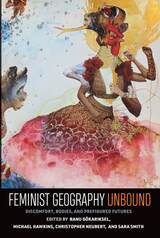
Feminist Geography Unbound is a call to action—to expand imaginations and to read and travel more widely and carefully through terrains that have been cast as niche, including Indigenous and decolonial feminisms, Black geographies, and trans geographies. The original essays in this collection center three themes to unbind and enable different feminist futures: discomfort as a site where differences generate both productive and immobilizing frictions, gendered and racialized bodies as sites of political struggle, and the embodied work of building the future.
Drawing on diverse theoretical backgrounds and a range of field sites, contributors consider how race, gender, citizenship, and class often determine who feels comfort and who is tasked with producing it. They work through bodies as terrains of struggle that make claims to space and enact political change, and they ask how these politics prefigure the futures that we fear or desire. The book also champions feminist geography as practice, through interviews with feminist scholars and interludes in which feminist collectives speak to their experience inhabiting and transforming academic spaces. Feminist Geography Unbound is grounded in a feminist geography that has long forced the discipline to grapple with the production of difference, the unequal politics of knowledge production, and gender’s constitutive role in shaping social life.
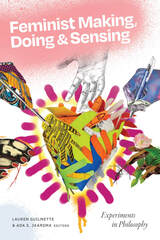
Feminist Morality makes a vital contribution to the ongoing debate in feminist theory on the importance of motherhood. For philosophers and other readers outside feminist theory, it offers a feminist moral and social critique in clear and accessible terms.
Feminism and liberalism need each other, argues Judith Baer. Her provocative book, Feminist Post-Liberalism, refutes both conservative and radical critiques. To make her case, she rejects classical liberalism in favor of a welfare—and possibly socialist—post-liberalism that will prevent capitalism and a concentration of power that reinforces male supremacy. Together, feminism and liberalism can better elucidate controversies in American politics, law, and society.
Baer emphasizes that tolerance and self-examination are virtues, but within both feminist and liberal thought these virtues have been carried to extremes. Feminist theory needs liberalism's respect for reason, while liberal theory needs to incorporate emotion. Liberalism focuses too narrowly on the individual, while feminism needs a dose of individualism.
Feminist Post-Liberalism includes anthropological foundations of male dominance to explore topics ranging from crime to cultural appropriation. Baer develops a theory that is true to the principles of both feminist and liberal ideologies.

While fostering new ways of thinking about film history, A Feminist Reader in Early Cinema illuminates the many questions that the concept of "early cinema" itself raises about the relation of gender to modernism, representation, and technologies of the body. The contributors bring a number of disciplinary frameworks to bear, including not only film studies but also postcolonial studies, dance scholarship, literary analysis, philosophies of the body, and theories regarding modernism and postmodernism.
Reflecting the stimulating diversity of early cinematic styles, technologies, and narrative forms, essays address a range of topics—from the dangerous sexuality of the urban flâneuse to the childlike femininity exemplified by Mary Pickford, from the Shanghai film industry to Italian diva films—looking along the way at birth-control sensation films, French crime serials, "war actualities," and the stylistic influence of art deco. Recurring throughout the volume is the protean figure of the New Woman, alternately garbed as childish tomboy, athletic star, enigmatic vamp, languid diva, working girl, kinetic flapper, and primitive exotic.
Contributors. Constance Balides, Jennifer M. Bean, Kristine Butler, Mary Ann Doane, Lucy Fischer, Jane Gaines, Amelie Hastie, Sumiko Higashi, Lori Landay, Anne Morey, Diane Negra, Catherine Russell, Siobhan B. Somerville, Shelley Stamp, Gaylyn Studlar, Angela Dalle Vacche, Radha Vatsal, Kristen Whissel, Patricia White, Zhang Zhen
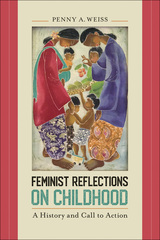
In Feminist Reflections on Childhood, Penny Weiss rediscovers the radically feminist tradition of advocating for the liberatory treatment of youth. Weiss looks at both historical and contemporary feminists to understand what issues surrounding the inequality experienced by both women and children were important to the authors as feminist activists and thinkers. She uses the writings of Mary Wollstonecraft, Elizabeth Cady Stanton, and Simone de Beauvoir to show early feminist arguments for the improved status and treatment of youth. Weiss also shows how Charlotte Perkins Gilman, a socialist feminist, and Emma Goldman, an anarchist feminist, differently understood and re-visioned children’s lives, as well as how children continue to show up on feminist agendas and in manifestos that demand better conditions for children’s lives.
Moving to contemporary theory, Feminist Reflections on Childhood also looks at how feminist disability theory is well-positioned to recognize the voices of children, and how queer theory provides lessons on contemporary trends that provide visions and strategies for more constructive adult-child relations. Weiss, who includes her own experiences as a mother and foster mother throughout the book, closes her distinctively feminist takes on childhood with a consideration of speculative fiction stories that offer examples of what feminists think makes childhood (un)livable.
2023 George Freedley Memorial Award, Finalist
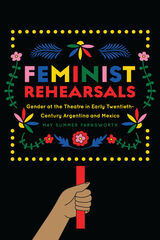
As feminism gained prominence in twentieth-century popular culture, dramatic conventions progressed accordingly, offering larger and more diverse roles for women characters. Feminist Rehearsals documents the early stages of feminist theatre in Argentina and Mexico, revealing how various aspects of performance culture—spectator formation, playwriting, professional acting and directing, and dramatic techniques—paralleled political activism and championed the goals of the women’s rights movement. Through performance and protest, feminists enacted new identities and pushed for myriad social and legislative reforms during a time when women were denied suffrage and full citizenship status. Together, feminist theatre and demonstrations politicized women spectators’ collective presence and promoted women’s rights in the public sphere.
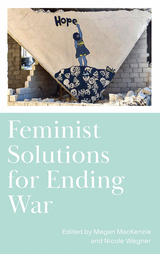
‘War is a man’s game,’ or so goes the saying. Whether this is true or not, patriarchal capitalism is certainly one of the driving forces behind war in the modern era. So can we end war with feminism? This book argues that this is possible, and is in fact already happening.
Each chapter provides a solution to war using innovative examples of how feminist and queer theory and practice inform pacifist treaties, movements and methods, from the international to the domestic spheres. Chapters propose a range of solutions that include arms abolition, centering Indigenous knowledge, economic restructuring, and transforming how we ‘count’ civilian deaths.
Ending war requires challenging complex structures, but the solutions found in this edition have risen to this challenge. By thinking beyond the violence of the capitalist patriarchy, this book makes the powerful case that the possibility of life without war is real.
The Feminist Spectator as Criticbroke new ground as one of the pioneering books on feminist spectatorship, encouraging resistant readings to generate feminist meanings in performance. Approaching live spectatorship through a range of interdisciplinary methods, the book has been foundational in theater studies, performance studies, and gender/sexuality/women's studies. This updated and enlarged second edition celebrates the book's twenty-fifth anniversary with a substantial new introduction and up-to-the-moment bibliography, detailing the progress to date in gender equity in theater and the arts, and suggesting how far we have yet to go.

The first book to situate feminisms and technical communication in relationship as the focal point, Feminist Technical Communication traces the thread of feminisms through technical communication’s connection to social justice studies. Clark theorizes “slow crisis,” a concept made readable to technical communicators by apparent feminisms that can help technical communicators readily recognize and address social justice problems. Clark then applies this framework to the Deepwater Horizon Disaster, an extended crisis that has been publicly framed by a traditional view of efficiency that privileges economic impact. Through rich description of apparent feminist information-gathering techniques and a layered analysis this study offers application far beyond this single disaster, making available new crisis-response possibilities that consider the economy without eliding ecological and human health concerns.
Feminist Technical Communication offers a methodological approach to the systematic interrogation of power structures that operate on hidden misogynies. This book is useful to technical communicators, scholars of technical communication and rhetoric, and readers interested in gender studies and public health and is an ideal text for graduate-level seminars focused on feminisms, social justice, and cultural studies.

Is there such a thing as a "feminist technology"? If so, what makes a technology feminist? Is it in the design process, in the thing itself, in the way it is marketed, or in the way it is used by women (or by men)?
In this collection, feminist scholars trained in diverse fields consider these questions by examining a range of products, tools, and technologies that were specifically designed for and marketed to women. Evaluating the claims that such products are liberating for women, the contributors focus on case studies of menstrual-suppressing birth control pills, home pregnancy tests, tampons, breast pumps, Norplant, anti-fertility vaccines, and microbicides. In examining these various products, this volume explores ways of actively intervening to develop better tools for designing, promoting, and evaluating feminist technologies. Recognizing the different needs and desires of women and acknowledging the multiplicity of feminist approaches, Feminist Technology offers a sustained debate on existing and emergent technologies that share the goal of improving women's lives.
Contributors are Jennifer Aengst, Maia Boswell-Penc, Kate Boyer, Frances Bronet, Shirley Gorenstein, Anita Hardon, Deborah G. Johnson, Linda L. Layne, Deana McDonagh, and Sharra L. Vostral.
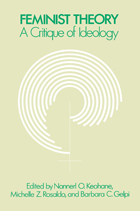
Feminist Theory: A Critique of Ideology meets that challenge. Collected from several issues of Signs–Journal of Women in Culture and Society, these essays explore the relationships between objectivity and masculinity, between psychology and political theory, and between family and state. In pursuing these critical explorations, the contributors–liberal, Marxist, socialist, and radical feminists–examine the foundations of power, of sexuality, of language, and of scientific thought.


***Winner of an English PEN Award 2022***
The mainstream conversation surrounding gender equality is a repertoire of violence: harassment, rape, abuse, femicide. These words suggest a cruel reality. But they also hide another reality: that of gendered violence committed with the complicity of the State.
In this book, Françoise Vergès denounces the carceral turn in the fight against sexism. By focusing on 'violent men', we fail to question the sources of their violence. There is no doubt as to the underlying causes: racial capitalism, ultra-conservative populism, the crushing of the Global South by wars and imperialist looting, the exile of millions and the proliferation of prisons - these all put masculinity in the service of a policy of death.
Against the spirit of the times, Françoise Vergès refuses the punitive obsession of the State in favour of restorative justice.
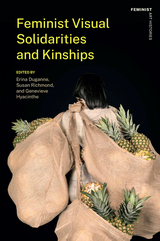
Feminist Visual Solidarities and Kinships considers global feminist coalitional practices in the contemporary visual arts through three key frameworks: transnational solidarity, archives, and kinships and care. The edited volume features emerging and established scholars and artists whose diverse perspectives inspire connections as well as critical points of divergence over the meanings of “feminism,” “transnationalism,” and “art.” Representing grassroots activism, artistic practice, and scholarly and curatorial inquiry, the diversity of approaches, writing styles, and chapter lengths depart from conventional modes of academic writing and provide pedagogical opportunities for students and scholars to use these contributions in a variety of learning environments not limited to the traditional classroom.
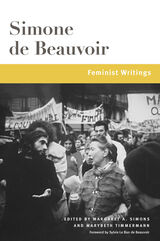
By turns surprising and revelatory, this sixth volume in the Beauvoir Series presents newly discovered writings and lectures while providing new translations and contexts for Simone de Beauvoir's more familiar writings. Spanning Beauvoir's career from the 1940s through 1986, the pieces explain the paradoxes in her political and feminist stances, including her famous 1972 announcement of a "conversion to feminism" after decades of activism on behalf of women.
Feminist Writings documents and contextualizes Beauvoir's thinking, writing, public statements, and activities in the services of causes like French divorce law reform and the rights of women in the Iranian Revolution. In addition, the volume provides new insights into Beauvoir's complex thinking and illuminates her historic role in linking the movements for sexual freedom, sexual equality, homosexual rights, and women's rights in France.
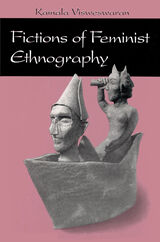
Although feminist ethnography is an emerging genre, the question of what the term means remains open. Recent texts that fall under this rubric rely on unexamined notions of "sisterhood" and the recovery of "lost" voices. Writing about her work with women in Southern India, Kamala Visweswaran addresses such troubled questions in the essays that make up Fictions of Feminist Ethnography. Blurring distinctions between ethnographic and literary genres, the author employs the narrative strategies of history, fiction, autobiography and biography, deconstruction, and postcolonial discourse to reveal the fictions of ethnography and the ethnography in fiction. In the process of reflecting on the nature of anthropology itself Visweswaran devises an experimental approach to writing feminist ethnography.
What sets this work apart from other self-reflexive feminist ethnographies is its rigorous engagement with the concrete inequalities, refusals, and misunderstandings between the author and the women she worked with in India. In each essay, she takes up the specific ellipses of power differentials in her field research and works out their epistemological consequences. The result is a series of contextualizations of the politics of identity in the field, at "home," and within the lives of women who particpated in the Indian nationalist movement. We learn in lucid detail about the partiality of knowledge and the inevitable difficulties and violations involved in representing the lives of women, both inside and outside the United States. Clearly and forcefully written, this book should be of interest not only to anthropologists but also to cultural theorists and critics, feminist scholars and writers, and other social scientists who grapple with epistemological and political issues in their fields.
A comparative analysis of women’s struggle for change in India.
The women’s movement in India has a long and rich history in which millions of women live, work, and struggle to survive in order to remake their family, home, and social lives. Whether fighting for safe contraception, literacy, water, and electricity or resisting sexual harassment, they are participating in vibrant and active women’s movements that are thriving in many parts of India today.
Fields of Protest explores the political and cultural circumstances under which groups of women organize to fight for their rights and self-worth. Starting with Bombay and Calcutta, Raka Ray discusses the creation of “political fields”-structured, unequal, and socially constructed political environments within which organizations exist, flourish, or fail. Women’s organizations are not autonomous or free agents; rather, they inherit a “field” and its accompanying social relations, and when they act, they act in response to it and within it. Drawing on the literature of both social movements and feminism, Ray analyzes the striking differences between the movements in these two cities.Using an innovative and comparative perspective, Ray offers a unique look at Indian activist women and adds a new dimension to the study of women’s movements on a global level.
An unparalleled exploration of NOW’s trajectory, from its founding to the present—and its future
A new wave of feminist energy has swept the globe since 2016—from women’s marches and the #MeToo movement to transwomen’s inclusion and exclusion in feminism and participation in institutional politics. Amid all this, an organization declared dead or dying for thirty years—the National Organization for Women—has seen a membership boom. NOW presents an intriguing puzzle for scholars and activists alike. Considered one of the most stable organizations in the feminist movement, it has experienced much conflict and schism. Scholars have long argued that factionalism is the death knell of organizations, yet NOW continues to thrive despite internal conflicts.
Fighting for NOW seeks to better understand how bureaucratic structures like NOW’s simultaneously provide stability and longevity, while creating space for productive and healthy conflict among members. Kelsy Kretschmer explores these ideas through an examination of conflict in NOW’s local chapters, its task forces and committees, and its satellite groups. NOW’s history provides evidence for three basic arguments: bureaucratic groups are not insulated from factionalism; they are important sites of creativity and innovation for their movements; and schisms are not inherently bad for movement organizations. Hence, Fighting for NOW is in stark contrast to conventional scholarship, which has conceptualized factionalism as organizational failure. It also provides one of the few book-length explorations of NOW’s trajectory, from its founding to the modern context.
Scholars will welcome the book’s insights that draw on open systems and resource dependency theories, as well as its rethinking of how conflict shapes activist communities. Students will welcome its clear and compelling history of the feminist movement and of how feminist ideas have changed over the past five decades.
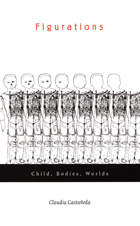
Castañeda investigates the construction of the child as both a natural and cultural body, the character of its embodiment, and its imaginative appeal in various settings. The sites through which she tracks the bodily production and deployment of the child include nineteenth-century developmental science; cognitive neuroscience in the late twentieth century; international adoption; rumors and media coverage of child-organ stealing; and poststructuralist theory. Her work reveals the extent to which the child's cultural significance and value lie in its status as a body whose incompleteness makes it "available" for such varied uses. Figurations establishes the child as a key figure for understanding and rethinking the politics of nature, culture, bodies, and subjects in changing "global" worlds.
The anthology incorporates different genres of writing—such as poetry, testimonials, critical essays, and historical analysis—and stimulates the reader to engage spirituality in a critical, personal, and creative way. This interdisciplinary work is the first that attempts to theorize the radical interconnection between women of color, spirituality, and social activism. Before transformative political work can be done, the authors say in multiple ways, we must recognize that our spiritual need is a desire to more fully understand our relations with others. Conflict experienced on many levels sometimes severs those relations, separating us from others along racial, class, gender, sexual, national, or other socially constructed lines.
Fleshing the Spirit offers a spiritual journey of healing, health, and human revolution. The book’s open invitation to engage in critical dialogue and social activism—with the spirit and spirituality at the forefront—illuminates the way to social change and the ability to live in harmony with life’s universal energies.
Contributors
Volume Editors
Elisa Facio
Irene Lara
Chapter Authors
Angelita Borbón
Norma E. Cantú
Berenice Dimas
C. Alejandra Elenes
Alicia Enciso Litschi
Oliva M. Espín
Maria Figueroa
Patrisia Gonzales
Inés Hernández- Avila
Rosa María Hernández Juárez
Cinthya Martinez
Lara Medina
Felicia Montes
Sarahi Nuñez- Mejia
Laura E. Pérez
Brenda Sendejo
Inés Talamantez
Michelle Téllez
Beatriz Villegas


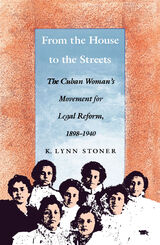
Stoner draws on rich primary sources—texts, personal letters, journal essays, radio broadcasts, memoirs from women’s congresses—which allow these women to speak in their own voices. In reconstructing the mentalité of Cuban feminists, who came primarily from a privileged social status, Stoner shows how feminism drew from traditional notions of femininity and a rejection of gender equality to advance a cause that assumed women’s expanded roles were necessary for social progress. She also examines the values of the progressive male politicians who supported feminists and worked to change Cuban laws.
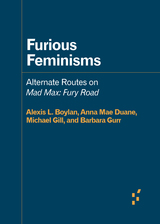
A provocative peek into this complicated film as a space for subversion, activism, and imaginative power
While both fans and foes point to Mad Max: Fury Road’s feminist credentials, Furious Feminisms asks: is there really anything feminist or radical happening on the screen? The four authors—from backgrounds in art history, American literature, disability studies, and sociology—ask what is possible, desirable, or damaging in theorizing feminism in the contested landscape of the twenty-first century. Can we find beauty in the Anthropocene? Can power be wrested from a violent system without employing and perpetuating violence?
This experiment in collaborative criticism weaves multiple threads of dialogue together to offer a fresh perspective on our current cultural moment.
Forerunners: Ideas First
Short books of thought-in-process scholarship, where intense analysis, questioning, and speculation take the lead
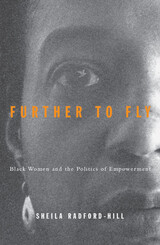
How feminism has failed African American women and why they must fight back.
Amid the longest-running economic boom in American history and despite the emergence of a significant black middle class, the lot of low-income black people in general-and black women in particular-seems more troubling than ever. Their plight, Sheila Radford-Hill argues in this book, is directly related to the diminution of black women’s traditional power as culture bearers and community builders. A cogent critique of feminist theory and practice, Further to Fly identifies the failure of feminism to connect with the social realities it should seek to explain, in particular the decline of black women’s empowerment.
Further to Fly searches out the causes and effects of this decline, describing the ways in which, since the 1960s, black women have been stripped of their traditional status as agents of change in the community-and how, as a result, the black community has faltered. Radford-Hill explores the shortcomings of second-wave black and white feminism, revealing how their theoretical underpinnings have had unintended (and often unacknowledged) negative consequences for black women’s lives and their communities.While acknowledging that African American women have made significant contributions to the black struggle for justice in America, Radford-Hill argues that more needs to be done. She combines social criticism and critical analysis to argue that black women must revive their legacy of activism and reclaim the tradition of nurturing in the black community, proposing specific tactics that can be used to revive the support networks that help determine the obligations of community members and guide how people interact on an everyday level. As a deft account of genesis and effects of black women’s diminishing power, and as a sobering analysis of the devastating blunders of feminist theory and practice, this work makes a compelling argument for an "authentic feminism," one that aggressively connects the realities of women’s experiences, needs, aspirations, and responsibilities.READERS
Browse our collection.
PUBLISHERS
See BiblioVault's publisher services.
STUDENT SERVICES
Files for college accessibility offices.
RECENTLY PUBLISHED







UChicago Accessibility Resources
home | accessibility | search | about | contact us
BiblioVault ® 2001 - 2026
The University of Chicago Press