
 A SCHOLARLY BOOK REPOSITORY
7 start with G start with G


The authors of this book retell the political and economic history of East-Central Europe, the post-communist Balkans, and the Baltic states and speculate about their future from the vantage point of three competing forces operating in the region: territorial imperialism, globalization, and nationalism.
Exposed to imperial aspirations, the geographic area from the Baltic Sea to the Black Sea has in the past 150 years been subject to alternating waves of globalization and nationalism. The nineteenth century Eastern European empires were open to forces of economic globalization, but all collapsed at the end of World War One. Emerging nation-states embraced the logic of Western-led globalization but were subjugated by Nazi and Soviet empires, which pursued policies of economic autarchy. The demise of the Soviet empire marked the revival of pre-1939 nation-states and the re-entry of forces of liberalism and globalization into the region, with multiple crises of economic transition, ethnic militancy, new forms of authoritarianism, and external security threats. By 2010 negative, nationalist-populist reactions against crises that globalization brought to Eastern Europe became the dominant political trend. The analysis involves the consideration about the very contemporary factors of Brexit and COVID, as well as Russia’s and China’s influences, and their effects on Eastern Europe.


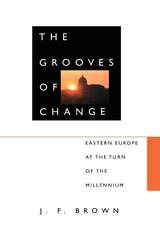
While acknowledging that the term “Eastern Europe” began to fall into disuse with the end of the cold war, Brown uses it as a framework for discussing the enduring features of the modern history of this region: its basic continuity, the prominence of ethnic and national factors, and its dependence on great powers or combinations of powers outside it. He explains the significance of the growing gulf between East Central Europe and South Eastern Europe, the overall political and economic deprivation and its effect on the people, the urgency of change, and the complex dynamics within Eastern Europe that have defied definitions and generalization. Finally, Brown points to the need for continuing assistance by the United States and the West and suggests what the twenty-first century may bring to this constantly changing part of the world.
Those seeking a clear overview of events in Eastern Europe during the recent psat and the state of these nations now will benefit from this incisive study by J. F. Brown.

Reined into the service of the Cold War confrontation, antifascist ideology overshadowed the narrative about the Holocaust in the communist states of Eastern Europe. This led to the Western notion that in the Soviet Bloc there was a systematic suppression of the memory of the mass murder of European Jews. Going beyond disputing the mistaken opposition between “communist falsification” of history and the “repressed authentic” interpretation of the Jewish catastrophe, this work presents and analyzes the ways as the Holocaust was conceptualized in the Soviet-ruled parts of Europe.
The authors provide various interpretations of the relationship between antifascism and Holocaust memory in the communist countries, arguing that the predominance of an antifascist agenda and the acknowledgment of the Jewish catastrophe were far from mutually exclusive. The interactions included acts of negotiation, cross-referencing, and borrowing. Detailed case studies describe how both individuals and institutions were able to use anti-fascism as a framework to test and widen the boundaries for discussion of the Nazi genocide. The studies build on the new historiography of communism, focusing on everyday life and individual agency, revealing the formation of a great variety of concrete, local memory practices.
READERS
Browse our collection.
PUBLISHERS
See BiblioVault's publisher services.
STUDENT SERVICES
Files for college accessibility offices.
RECENTLY PUBLISHED



UChicago Accessibility Resources
home | accessibility | search | about | contact us
BiblioVault ® 2001 - 2026
The University of Chicago Press